Today, people in the village of Khirbet Selem in southern Lebanon came together for the funeral of Wissam Tawil. He was a high-ranking leader in the group Hezbollah and had been killed the day before in a likely attack by Israel.
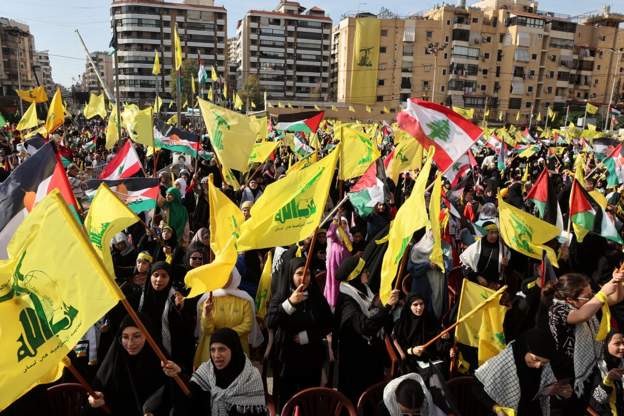
The coffin, covered with Hezbollah’s yellow flag, was carried in a parade through the streets, with people singing prayers.
His death was a big event in the ongoing problem between Hezbollah, a strong Lebanese group supported by Iran, and Israel.
Tawil, a high-ranking member of Hezbollah’s Radwan force, was killed in the recent fighting. This has made people worried that there will be a big war.
Hezbollah keeps on attacking Israel from across the border. They hit positions in Israel. There are also reports that another important leader of the group was killed in southern Lebanon by Israel.
So far, Hezbollah has planned its attacks carefully, and the fighting has mostly stayed near the borders.
Israel sees the group as a strong enemy because it has many well-trained fighters and a lot of rockets, including missiles that can reach far into Israel.
Israeli leaders say it’s very important to make the northern part of the country safe again – even if they have to use the army.
Some people, like Defence Minister Yoav Gallant, have said that if the situation gets worse, there could be a very strong reaction. They are saying that the military could do to Beirut what it has already done to Gaza.
Tag: Hezbollah
-
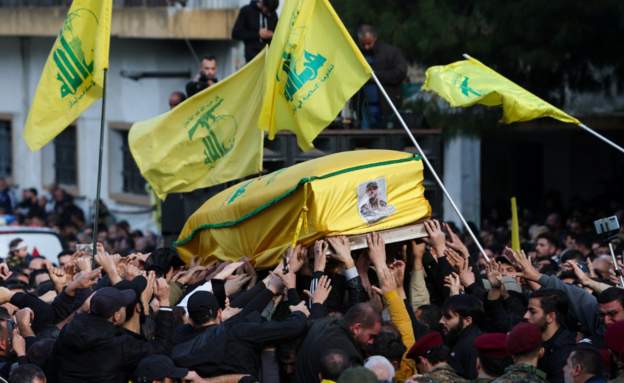
Prayers chanted by mourners for deceased Hezbollah commander
-
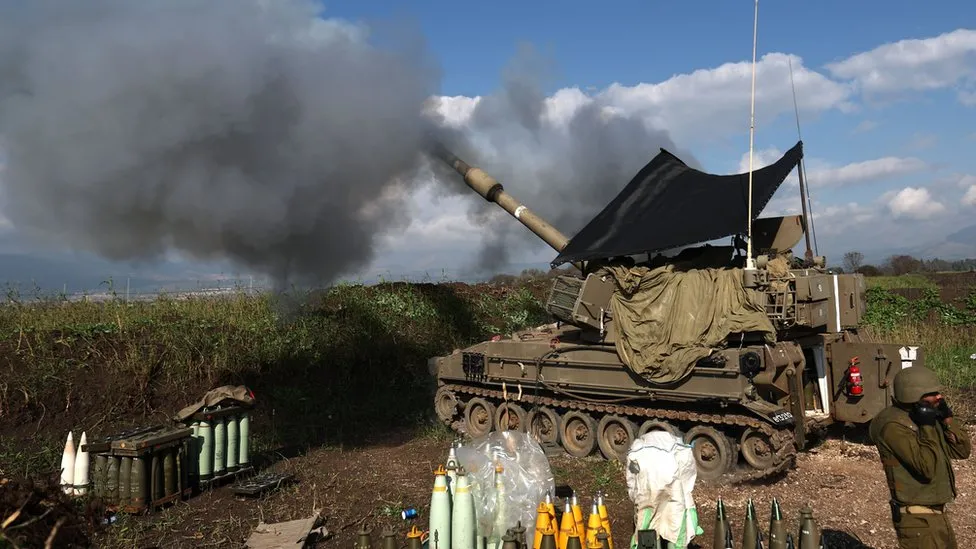
Residents near Israel’s border fear northward invasion
Efrat Eldan Schechter is from the Northern Galilee and never thought about moving anywhere else until the events of 7 October.
When she saw and heard about what was happening in southern Israel that morning, with Hamas fighters coming from Gaza, it reminded her of the stories from the “Yom Kippur” or 1973 Middle East war, when Israel was attacked on two fronts at the same time.
I was really scared. “Everyone was still asleep and I was worried that the same thing might happen again like in 1973, and that Hezbollah might come for us,” says Efrat, as we talk in her front garden with the sound of Israeli artillery in the background.
“I woke everyone up right away, packed everything quickly, and drove to a family member’s house in the middle of Israel. ”
After a month, the family went back to their home near Kiryat Shmona. They were upset because they still live in a dangerous area close to where the war is happening. Efrat calls it a “buffer zone” and they are still at risk of being hit by rockets from Hezbollah in southern Lebanon.
The mother of three is worried that nothing will happen to stop Hezbollah from invading Israel, as they are waiting at the border. “I can’t sleep peacefully. ” I want the government to ensure that we are safe here.
Since the fighting started on 8 October, there have been clashes between Hezbollah and Israel in the north along the border.
But the fighting is very serious and dangerous – officials say that nine soldiers and four civilians have been killed in Israel, while authorities in Lebanon have reported that 123 people have been killed, including at least 21 civilians.
The small towns in northern Israel are empty like ghost towns now. More than 80,000 people have been moved to places in the south, but Nissan Zeevi is one of the few who has chosen to stay. The man who does business and helps with civil defense shows me around his kibbutz, Kfar Giladi, which is just north of Kiryat Shmona. The view is beautiful as you look at the green Hula valley and Mount Hermon far away, but this border has always been dangerous.
Nissan thinks most people can’t go back home or work until there’s a guarantee of long-lasting peace, just like Efrat. He is really upset that the UN Security Council rule 1701, which helped stop the 2006 war in Lebanon between Israel and Hezbollah, has not been completely followed.
Nissan says it’s very important that 1701 demands that armed groups (like Hezbollah) in southern Lebanon stop being so involved in the military. And that hasn’t been done.
Nissan is part of a group called Lobby 1701. They want Israel to use either diplomacy or military action to implement a resolution.
“He wants the government to handle Hezbollah and get rid of the danger from southern Lebanon,” he tells me, pointing to the many Lebanese villages he can see from his home, where he says a lot of the incoming attacks come from.
I asked Nissan if he would support more action by the Israeli government in southern Lebanon and he said yes, definitely. He also mentioned that he is not the only one who feels this way. Many people in Israel want the same thing. He also says if we don’t do this, we will have another problem like 7 October.Last month, I went to the small towns in southern Lebanon. Israel is saying that Hezbollah is hiding in communities and using them to launch attacks, so they are conducting strikes on those areas every day. Just like in Israel, many people have left these places and many have died. People on both sides of the border are experiencing loss.
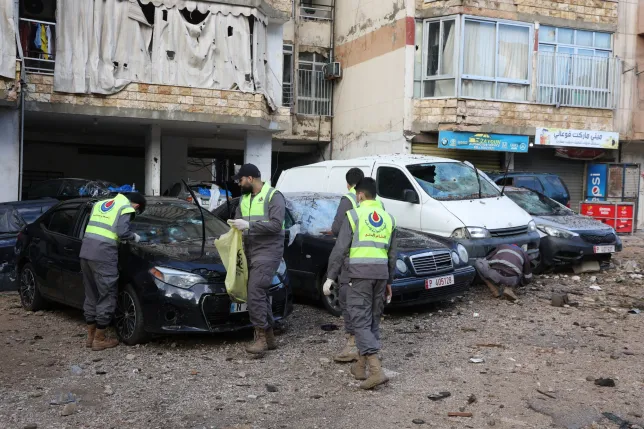
The chance of the small fight at the border turning into a big war got higher on Monday. A leader of Hezbollah, Wissam Tawil, was killed in an air strike on his car in Khirbet Selim. It is thought that Israel carried out a drone attack in Beirut last week, which killed Hamas’s deputy leader, Saleh al-Arouri, in a Hezbollah area.
This is bad news for people who work near the front line and are trying to earn a living.
Farmer Ofer “Poshko” Moskovitz from Kibbutz Misgav Am cannot harvest the valuable avocados from his farm because the Israeli army thinks it is too risky for him to work in his orchards, which are next to the border with Lebanon, to the northwest of Kiryat Shmona.
However, not like most people I talked to in the north, this calm and cheerful farmer believes that a bigger war can be prevented.
“I’m not worried because Israel is a powerful country,” says Ofer as we walk through hundreds of nearly ripe, green avocados scattered on the ground. He keeps saying: “No one wants war here. ” We want to handle it diplomatically and they are trying to find a solution – the army and diplomatic efforts are working together.
Ofer doesn’t show much hope or confidence in this place.
Sarit Zahavi lives near the border and started the Alma Research Institute in northern Israel. She spends a lot of time studying the politics of Israel’s neighboring countries.
“We are in a very dangerous situation. If there is a diplomatic agreement, it will bring peace and a stop to fighting. ” “And everyone will think it’s good news,” she says to me.
In my opinion, if there is a ceasefire, no one will make sure it happens. Hezbollah will keep getting stronger and keep improving its ability to attack Israel.
Not many people in northern Israel believe that talking can stop a big war. Hezbollah’s leader, Hassan Nasrallah, has promised to fight back against Israel, and Israel is also getting ready for things to possibly get worse.
On Monday, Israel did a lot of bombing near its border, right when the US Secretary of State Anthony Blinken came to Tel Aviv.
With the very bad war in Gaza and the new things happening in the north, it seems very hard for Secretary Blinken. -
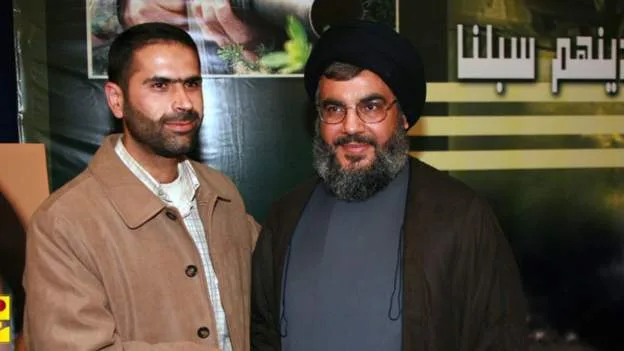
Hezbollah provides Nasrallah and Soleimani with photos of deceased commander
Hezbollah has shared a bunch of pictures on Telegram.
Wissam Tawil, a high-ranking leader in the special Radwan force of the group, was killed today.
The picture shows Tawil and Hassan Nasrallah, leader of Hezbollah, shaking hands.
Someone took a picture of him sitting next to Qasem Soleimani, who was the leader of the Quds Force in Iran and was killed by US forces in 2020. -
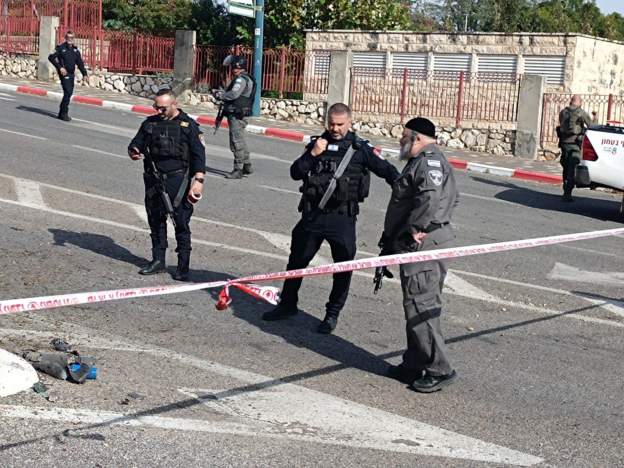
City in northern Israel hit by rocket
Israeli police are managing a rocket that landed in the city of Kiryat Shmona, close to the border with Lebanon.
No one got hurt or had their things broken, but the attack happened after Israel and a strong group in Lebanon called Hezbollah had been fighting for a while. Hezbollah is friends with Hamas.
Attacks have been happening between borders for a while. The situation got worse after a Hamas leader was killed in Beirut last week.
IDF says it attacked many Hezbollah targets in Lebanon, including places where rockets are launched and a Hezbollah military base.
Hezbollah said they have attacked Israeli military places and have had success, like barracks and a radar site in northern Israel. -
Hezbollah chief issues “no rules” war warning to Israel over death of Hamas leader
The leader of Hezbollah in Lebanon said that Israel’s killing of Hamas’s deputy leader in Beirut was a very serious and dangerous crime, and they cannot stay quiet about it.
Sayyed Hassan Nasrallah expressed his sympathy on TV to his friends for what he called a ‘serious attack by Israel’ on Tuesday night that killed Saleh al-Arouri.
He promised that his group would fight without any limits or rules if Israel attacked Lebanon. He also said that anyone who starts a war with them will regret it.
Tuesday’s attack hit the southern part of Dahiyeh. Analysts think it could be a message to the militants that their main area can also be reached.
It was the first attack in Beirut after almost three months of almost daily fighting between Israel and Hezbollah near the border.
The team shot rockets into the border on October 8 to help Hamas, after attacks on southern Israel the day before caused fighting.
Hezbollah was started by Iran’s Revolutionary Guards in 1982. It is a part of a group that doesn’t like Israel and the United States, and is supported by Tehran.
It battled with Israel for a whole month in 2006.
Nasrallah said that Hezbollah acted fast on October 8 and the shelling across the border stopped Israel from bombing Lebanon. He also said that Israel’s ability to prevent these attacks had failed.
He talked on Wednesday to remember four years since the US drone killed Quds Force leader Qassem Soleimani in Baghdad.
He said many people were killed in two explosions at a ceremony in Iran to remember Soleimani on purpose.
President Ebrahim Raisi of Iran spoke out against the terrible and cruel attack, and Iran’s top leader Ayatollah Khamenei promised to retaliate for the violent bombings.
Harsh criminals will be punished severely, and there will be a tough response.
Nasrallah gave his third speech since October 7.
In his first speech in early November, he said that stopping the Israeli attacks on Gaza was important to prevent a regional conflict in the United States.
In another speech about a week later, he said that the fight against Israel would continue.
On Wednesday, he said he will talk more about what Hezbollah is doing in the south on Friday. -

Four people slain in cross-border battle with Israel – Hezbollah
Hezbollah says four of its fighters were killed in Lebanon on Wednesday evening in a shooting from across the border with Israel.
The Israeli army says it bombed places used by terrorists and said there were attacks from Lebanon into Israel.
People are worried that there might be a big war in the area after a leader of Hamas was killed in Lebanon.
The comments from Hezbollah and Israel on Wednesday made people less worried about a big war happening because of what’s happening in Gaza.
The Palestinian Red Crescent says that an Israeli attack has hit its building in Khan Younis, Gaza.
The US Secretary of State Antony Blinken is traveling to the Middle East tonight. This is his fourth trip to the region since October 7th.
Hamas attacked Israel on 7 October and killed at least 1,200 people. Another 240 people were taken hostage.
The health department in Gaza, controlled by Hamas, says that over 22,000 people have died in the area since Israel began its attack.
-
Who is the leader of Hezbollah?
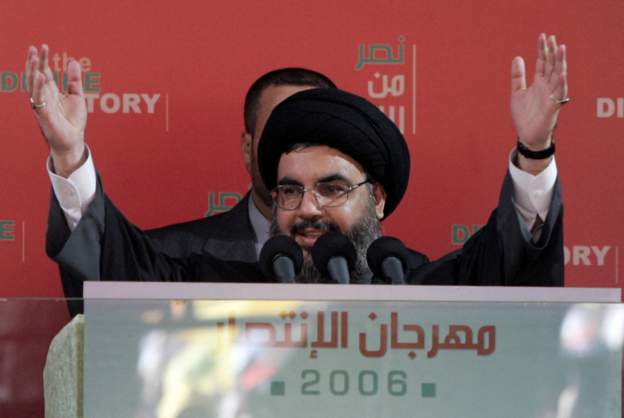
Hassan Nasrallah, the leader of Hezbollah, has been talking for a little while. He has been speaking highly of the 7 October Hamas attacks on Israel which caused the death of over 1,400 individuals. Our reporters in the area are observing the speech and will give analysis on what he says and how it could impact the ongoing conflict.
For now, here’s some more information about the secretive leader of a group that is considered a terrorist organization by the UK, US, Israel, and other countries.
A religious leader from the Shia Muslim community, Nasrallah has been in charge of Hezbollah since 1992. He was instrumental in making it both a political and military power.
He has a strong connection with Iran and its leader, Ayatollah Ali Khamenei. This connection started in 1981 when Iran’s first leader, Ayatollah Ruhollah Khomeini, chose him to be his representative in Lebanon.
Nasrallah has not been seen in public for a long time, supposedly because he is afraid that Israel might try to kill him.
However, Hezbollah still greatly admires him and he gives speeches on TV every week. -
Hezbollah chief commends Hamas for their strikes on Israel
The head of a group called Hezbollah in Lebanon, which is very powerful in politics and military, has finally given his opinion on the war between Israel and Gaza.
Hassan Nasrallah gave a speech from a hidden place, and many people gathered at a rally in Lebanon’s capital Beirut to listen. He spoke highly about the attacks that happened in Israel on 7 October, which sadly took the lives of 1,400 people.
He said that Hamas, a banned terrorist group in the UK, US, and other countries, made good and fair decisions. However, he also said that the attacks on Israel were completely done by Palestinians.
In his speech, he strongly criticized the United States, saying they were to blame for the war in Gaza.
Nasrallah also said thank you to the groups supported by Iran in Yemen and Iraq. The Houthi rebels in Yemen have been using drones to attack Israel, and Shia Iraqi militias have been attacking US forces in Iraq and Syria.
Iran supports a group called the Axis of Resistance. This group includes Hezbollah, a powerful force. It also includes militias in Iraq, Syria’s President Bashar al-Assad, the Houthis, and Hamas.