Tag: High Court Judges

  • 21 new High Court judges sworn in by Akufo-Addo

    21 new High Court judges sworn in by Akufo-Addo

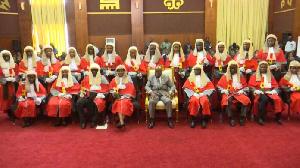
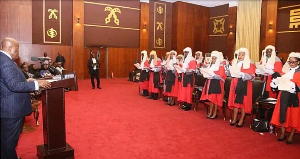
    President Nana Addo Dankwa Akufo-Addo has officially appointed 21 new judges to the High Court, emphasising the importance of maintaining the judiciary’s integrity and fostering a culture of professionalism within the legal system.

    The swearing-in, which occurred on September 30, 2024, Abigail Animah Asare, Dorinda Smith-Arthur, Veronique Praba Tetteh, Charles Kwasi Acheampong, Arith Nsemoh, Abdul Razak Musah, Samuel Djanie Kotey, Stephen Kumi, Abbas Abubakari Adams, Felix Datsomor, Agnes Opoku-Barnieh, Afia Owusuaa Appiah, Ellen Ofei-Ayeh, Winnie Amoatey-Owusu, Enid Marful-Sau, Kizita Naa Koowa Quarshie, Ernest Pascal Gemadzie, Nathan Parker Yarney, Oliver Abada, Frimpong Amoako, and Akosua Dansoa Asiama Christopher.

    During a concise ceremony at Jubilee House in Accra, the President urged the new judges to recognize that their responsibilities extend beyond legal knowledge and skills; they must also embody impartiality and possess the courage to administer justice fairly and without bias.

    He said underpinning this was extreme professionalism and the rule of law.

    The President said much of the judiciary’s work began and often ended at the High Court, stating that the Ghanaian people were looking to the judges to demonstrate honesty, sound judgement, and a strong commitment to the rule of law.

    “But beyond qualifications, it is their sense of fairness, independence of mind, and devotion to the rule of law that will ultimately define their service as High Court justices,” he said while congratulating them on their elevation.

    President Akufo-Addo noted that the determination of Ghanaians to build a nation governed by justice, equity, and fairness could only be guaranteed by the judiciary, particularly the High Court, which played a central role in maintaining and preserving those values.

    “The responsibilities that lie before you as High Court justices are thus indeed formidable.

    “You are tasked with upholding the fundamental human rights of every citizen, acting as impartial arbiters in disputes between the state and its citizens, and between citizens themselves. You must be the bulwark that defends the liberties of our people and promotes the orderly and just development of our nation,” he said.

    President Akufo-Addo emphasised that the authority and respect held by the High Court were crucial for the nation’s effective functioning, stressing that the role of the newly appointed justices went beyond just interpreting the law; “it also involved ensuring that justice is delivered fairly and with integrity.”

    To this end, he called on all 21 new justices to exemplify honesty, good judgement, and a strong commitment to the rule of law, since the Ghanaian people were counting on them to uphold these principles.

    “I say this: your task is not merely one of interpreting the law…It is also about showing that justice is served impartially and with integrity. The Ghanaian people are looking to you to demonstrate honesty, sound judgement, and a strong attachment to the rule of law,” he stressed.

    President Akufo-Addo also urged the judges to avoid corruption in their roles, stating, “Even the slightest hint of corruption irreversibly undermines the authority and effectiveness of our courts and other institutions.”
  •  Akufo-Addo inducts two high court judges

     Akufo-Addo inducts two high court judges

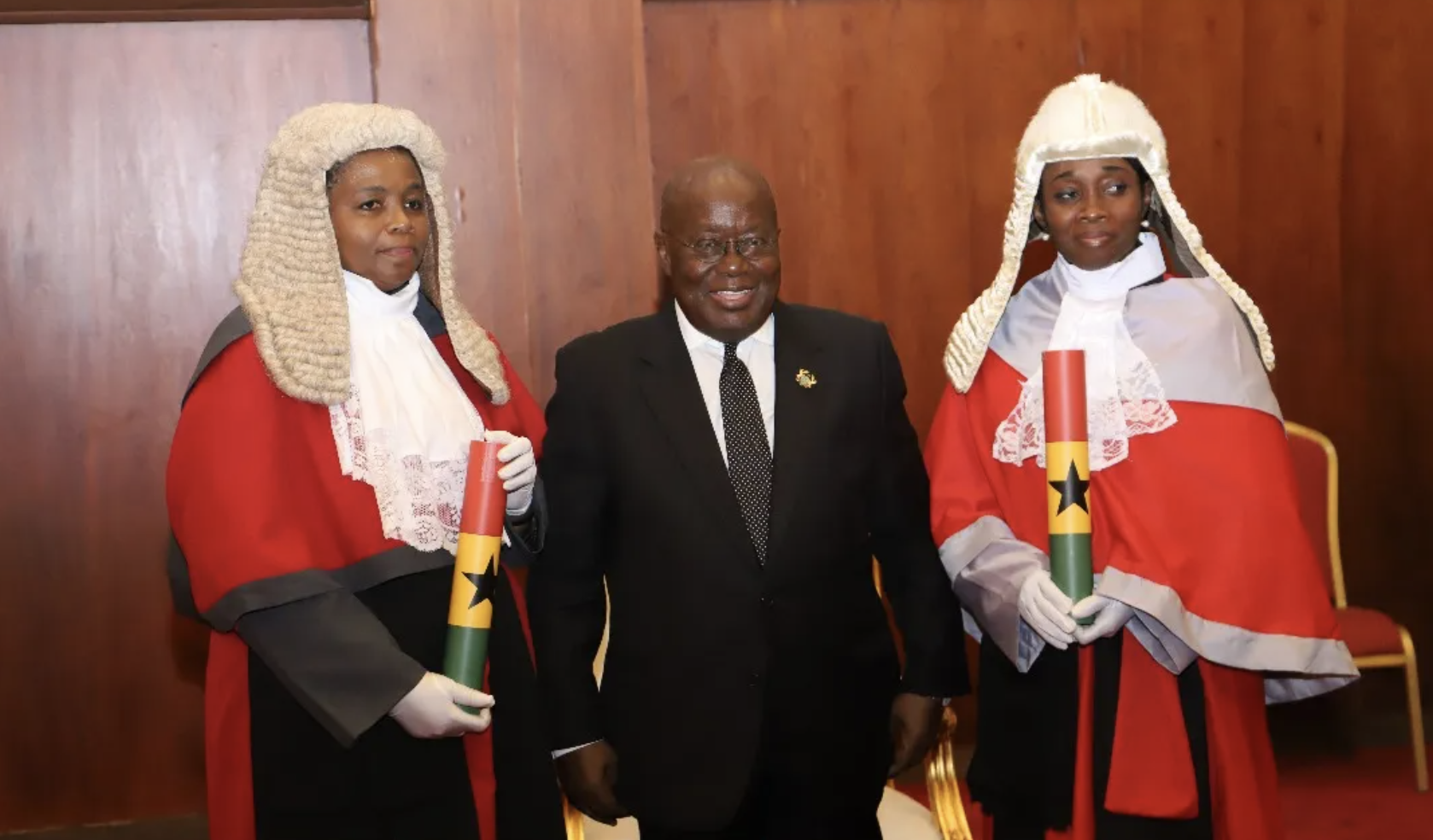
    President Akufo-Addo officially on Monday, August 28, inaugurated two new High Court Judges, urging them to administer the law with fairness, rigor, and impartiality, devoid of any bias or prejudice.

    According to him, the judiciary must earn the public’s respect through the quality of the justice it delivers and the conduct of its members.

    Dorothy Ayodele Kingsly-Nyinah and Ama Sefenya Ayittey have been appointed as the new judges.

    The President congratulated them on their appointment during a ceremony at the Jubilee House in Accra, during which he administered the judicial oath, the oath of allegiance, and the oath of secrecy.

    He urged them to stand out in their work by being honest, ethical, and knowledgeable about the law.

    The President described as unacceptable “the situation where Judges proffered judgements on the basis of decisions from lower courts and cite them as law and even less so when Judges cited no authority at all for their rulings and give an order without reasons.”

    They should know their case law and ensure that their decisions and judgments are motivated correctly.

    President Akufo-Addo implored the judges to ensure that they adjudicate cases with fear or favour, ill will or affection, and they must at all material times, protect the fundamental rights of the citizens.

    He further admonished them to be mindful of unjustified delays that portrayed Ghana as a location where litigation took an excessive amount of time, emphasising that “This affects the country’s attractiveness as an investment destination.”

    In order to keep Ghanaians’ trust and maintain the country’s reputation as one where the rule of law is upheld, the President urged the judges to use technology to advance the rule of law.

    “We know that harnessing the power of technology to advance the rule of law is critical in this modern era, if we are to maintain the confidence of the Ghanaian people and shore-up our country’s reputation as a country governed by the rule of law.

    “I encourage both of you to take full advantage of the E-justice system in order to expedite the conduct of cases that comes before you and enhance the management of cases before the court,” he said.

    Justice Kingsly-Nyinah thanked the President for the confidence reposed in her and her colleague.

    She pledged that they would carry out their duties in accordance with the constitution and all other laws, and that justice would be perceived to be done equitably.

  • Mother triumphs in fight for new investigation into death of her crippled daughter

    Mother triumphs in fight for new investigation into death of her crippled daughter

    The mother of a disabled woman who committed suicide after having her benefits reduced has succeeded in getting a new inquest into her daughter’s death from the Court of Appeal.

    Last year, Joy Dove appealed a decision reached by two High Court judges.

    Jodey Whiting, her 42-year-old daughter from Stockton-on-Tees, passed away in February 2017 just two weeks after her disability benefits were terminated because she failed to show up for a work capability exam.

    Judges had refused to order a new inquest to investigate the role of the Department for Work and Pensions (DWP) in the death.

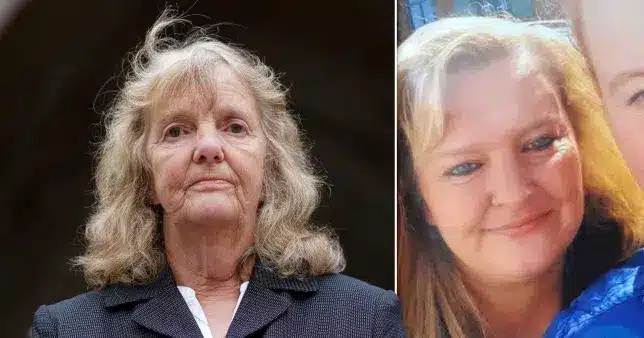
    Joy Dove, the mother of Jodey Whiting, outside the Royal Courts of Justice in London, is asking the Court of Appeal judges to grant a new inquest into the death of her daughter, Jodey Whiting, who killed herself in 2017. Picture date: Tuesday January 31, 2023. PA Photo. See PA story COURTS Whiting. Photo credit should read: Tom Pilgrim/PA Wire
    Joy Dove, the mother of Jodey Whiting, outside the Royal Courts of Justice in London (Picture: PA)

    Lady Justice Whipple, sitting with Lord Justice Lewis and Lord Justice William Davis, said in the ruling that a fresh inquest is ‘desirable in the interests of justice’.

    The judge said the public has a ‘legitimate interest’ in knowing whether Ms Whiting’s death was connected with the abrupt stopping of her benefits.

    A government spokesperson responded to the news: ‘Our sincere condolences remain with Ms Whiting’s family. DWP is ready to assist the new Coroner with their investigation. We cannot comment on active legal proceedings.’

    Ms Whiting had received benefits for more than a decade due to serious, long-term physical and mental health issues, including severe pain and a history of self-harm.

    The family of a tragic mum who committed suicide after her benefits were stopped have received a full apology from the Department for Work and Pensions (DWP). An inquest heard Jodey Whiting's benefits were stopped because she missed a health assessment - despite her never seeing the appointment letter. The mum-of-nine and grandmother-of-ten took her own life in February 2017, but the DWP continued to send her letters and even left a voicemail on her phone three months after her death. Collect picture of Jodey Whiting. Daughter Leah Bell, 19, Mam Joy Dove, 63, daughter Emma Bell, 23, niece Demi Wathen, 19, and daughter Chloey Bell, 17. Tribute with the family of Jodey Whiting, in Thornaby. *With video.
    Jodey Whiting’s benefits were stopped because she missed a health assessment (Picture: Evening Gazette)

    The coroner at the original inquest, which lasted 37 minutes, recorded a verdict of suicide.

    Jeremy Hyam KC, representing Ms Dove during the appeal process, had described Jodey as a ‘much-loved daughter, mother and grandmother’.

    He previously said: ‘The (High Court) described the DWP’s errors, as reported by the independent case examiner, as “shocking”.

    ‘The inquest into Ms Whiting’s death did not – because it was not available – consider this evidence at all.

    ‘(The psychiatric) evidence, if accepted at a fresh inquest, shows a clear causal connection between the DWP failures, a subsequent depressive impact and the likely activation of her suicidal ideation in the period immediately before she took her own life.’

    Lawyers representing the DWP had argued the High Court reached the correct conclusion and that Ms Dove’s appeal should be dismissed.

    Jonathan Dixey, for the department, said that in order to succeed, Ms Dove would have to establish that there was a legal duty on the DWP to ‘take steps to avert a real and immediate risk of a benefit claimant committing suicide’.

    He added: ‘The DWP did not exercise any or any sufficient control over Ms Whiting. Moreover, the DWP is not resourced or endowed with powers to control those who claim or receive benefits payments.’

    Ms Dove previously wrote a book detailing her situation and battle with the DWP, entitled ‘A Mother’s Job.’

  • 20 new High Court judges sworn in

    20 new High Court judges sworn in

    20 High Court judges have been sworn in by President Akufo-Addo following their promotion.

    The 16 judges from the Circuit Court were all promoted to the third highest court of the bench following recommendations by the Judicial Council.

    The newly sworn-in Justices are; Kwame Polley, William Appiah Twumasi, Baah Forson Agyapong, Marian Affoh, Nana Brew, Abena Amponsah Buansi, Ellen Lordina Serwaa Mireku, Priscilla Dapaah Mireku, Alexander Oworae,Joyce Boahen, Edward Twum and Gwendolyn Millicent Owusu.

    The rest are Rosemary Baah Tosu, Frederick Kwabena Twumasi, Adelaide Abui Keddey, Harry Acheampong- Opoku, Kenneth Edem Kudjordjie, John-Mark Nuku Alifo, Kwesi Adjenim-Boateng, George Aikins Ampiah- Bonney and Marie-Louise Simmons.

    President Nana Akufo-Addo while swearing them in said his government will continue to invest in infrastructure for the judiciary in order to ensure justice delivery is improved.

    According to the President, the government is currently putting up 16 bungalows across the country to accommodate High Court judges in the various regions.

    President Nana Akufo-Addo urged the judges to ensure that they deliver justice without fear or favour.

    He said the government is committed to improving infrastructure to ensure that the judiciary is able to work properly.

    For his part, Justice Kwame Polley on behalf of his colleagues thanked the President and pledged to work according to the provisions of the laws of Ghana.

    Source: Ghanaweb

  • 60 district courts, 60 judges bungalows, 3 new high courts coming in October Akufo-Addo

    President Nana Akufo-Addo, says sixty (60) district courts, sixty (60) bungalows for judges, and three (3) new high courts for three (3) of the six (6) newly created regions will be commissioned before the start of the legal year in October.

    According to President Akufo-Addo, Government has taken note of the inadequate numbers of courts in various parts of the country, resulting in citizens travelling long distances to gain access to courts, and has decided to remedy this situation.

    Speaking at the swearing-in of ten (10) new High Court Judges, on Monday, 18th July 2022, at Jubilee House, the President stated that Government, through the Administrator of the District Assembly Common Fund, is constructing one hundred (100) new courts and bungalows for Judges in all sixteen (16) Regions of the country.

    They are broken down in the various Regions as follows twenty (20) courts and twenty (20) bungalows in Ashanti; twelve (12) courts and twelve (12) bungalows in Eastern; eight (8) courts and eight (8) bungalows in Greater Accra; eight (8) courts and eight (8) bungalows in Volta; eight (8) courts and eight (8) bungalows in Ahafo; seven (7) courts and seven (7) bungalows in Western; and five (5) courts and five (5) bungalows in Bono East.

    The rest are five (5) courts and five (5) bungalows in North East; four (4) courts and four (4) bungalows in Oti; four (4) courts and four (4) bungalows in Western North; four (4) courts and four (4) bungalows in Central; four (4) courts and four (4) bungalows in Bono; three (3) courts and three (3) bungalows in Northern; three (3) courts and three (3) bungalows in Savannah; three (3) courts and three (3) bungalows in Upper East; and two (2) courts and two (2) bungalows in Upper West.

    “Sixty percent (60%) of these courts and bungalows have been completed, and will be commissioned before the start of the legal year in October. The remaining forty percent (40%) will be duly completed and commissioned by the end of the first quarter of 2023,” President Akufo-Addo said.

    He continued, “Six new Regional High Courts are also being constructed in the newly created regions, i.e., Ahafo, Bono East, North East, Oti, Savannah and Western North. Three of the Courts, that is those in Ahafo, Bono East and Oti Regions, will be completed and ready for commissioning, again, before October. The other three, that is those in North East, Savannah and Western North, which are at eighty percent (80%) completion, will be ready for commissioning by the end of the first quarter of 2023.”

    It will also be recalled in April last year, the President cut the sod for commencement of work on a new, modern Court of Appeal complex in Kumasi, together with twenty (20) townhouses and a guesthouse to serve as permanent residences for Court of Appeal Judges based in Kumasi, who will be mandated to handle appeals from the northern part of the country.

    President Akufo-Addo noted that “they will be completed and commissioned in September”, adding that “two hundred and ten (210) vehicles were, earlier this year, distributed to all judges in the Supreme Court, Court of Appeal, High Courts and Lower Courts.”

    These, the President reiterated, are all initiatives being undertaken by Government to strengthen the capacity of the Judiciary.

    High Court Judges

    Swearing the new High Court Judges in, upon the advice of the Judicial Council, given in accordance with the provisions of article 144 clause 3 of the Constitution, he indicated that they are eminently fit and qualified for the position of Justices of the High Court, and have the impartiality of mind and independence of spirit necessary to hold this high office.

    They are Her Honour Mercy Adei Kotei, Mrs. Cynthia Martinson, Dr. Bridget Kafui Antonio-Apedzi, Ms. Nabeela Naeema Wahab, His Honour Ebenezer Osei-Darko, His Honour Bernard Bentil, His Honour Alexander Graham, Mr. George Kwame Gyan-Kontoh, Mr. Richard Apietu and Mr. Eric Ansah Ankomah.

    With the High Court described as a superior court of record, with original, general jurisdiction as a tribunal of first instance, President Akufo-Addo told the new Judges to exhibit honesty, integrity and a sound knowledge of the law.

    “A corrupt or incompetent judge is a danger to the public interest and judicial administration. The situation, where judges proffer judgements on the basis of decisions from lower courts and cite them as law, is not acceptable, and even less so, when judges cite no authority at all for their rulings, and give orders without reasons,” he added.

    The President continued, “You must be learned, know your case law and ensure your decisions and judgements are properly motivated. The principle of stare decisis, the ancient common law doctrine of precedent, has been, and continues to be the time-honored foundation for the coherent development of the law, and should not be lightly discarded.”

    Source:classfmonline.com