Ghana Aids Commission has raised serious concerns about the lack of sufficient funding to tackle HIV/AIDS across the country.
Speaking to JoyNews on Thursday, October 3, the Commission’s Director General, Kyeremeh Atuahene, outlined the financial difficulties they face, stressing that these constraints are obstructing key efforts to prevent the spread of the virus, provide treatment, and support those living with HIV/AIDS.
Atuahene emphasised that the shortage of resources is a major obstacle to the Commission’s objectives, which include reducing new HIV infections and enhancing the lives of affected individuals.
Due to the funding gap, access to critical services like testing, counselling, and antiretroviral treatment has become increasingly limited, hampering the fight against the disease.
As a consequence, numerous individuals remain unaware of their HIV status, further fuelling the spread of the virus.
The Commission stressed the critical need for heightened awareness, particularly within vulnerable groups, to curb new infections and encourage those living with HIV to access treatment.
Beyond the urgent need for financial assistance, the Commission called for stronger partnerships with government agencies, NGOs, and international organisations to gather resources and bolster efforts in the fight againstHIV/AIDS.
“What we do not have is the necessary resources to help us scale the services to ensure that everybody who needs prevention, treatment, and care services receives them, so that we will be able to reduce new infections and AIDS-related deaths and increase the uptake of HIV prevention and treatment services,” he said.
The Ministry of Health has refuted claims that the locked containers from the Global Fund at the Tema port contain essential drugs for tuberculosis (TB) and HIV/AIDS treatment.
This denial comes in response to concerns raised by health-focused civil society organizations (CSOs), who warned of potential repercussions from the Global Fund if the containers are not promptly cleared.
The Ministry’s Public Relations Officer, Isaac Offei Baah, clarified that the containers primarily hold mosquito nets, not medications for TB or HIV/AIDS, despite assertions by CSOs that the drugs are deteriorating at the ports.
He reiterated the Ministry’s stance amidst the ongoing controversy.
“I want to put it on record that we have mosquito nets, and we don’t have anything like HIV drugs or TB drugs [locked up at the port].”
“Once it is something that has been given to the people of Ghana, we are working towards getting them out and putting them to good use.”
“So for clarity sake, we don’t have any HIV drugs locked up at the port that we have not cleared. All those ones were cleared somewhere last April,” he said.
Executive Director of the Africa Center for Health Policy Research and Analysis, Dr. Thomas Anaba, has revealed that the backlog of medical supplies donated by the Global Fund has resulted in a spike in cases of tuberculosis, malaria, and HIV/AIDS.
The supplies, which encompass antiretroviral drugs for HIV/AIDS patients and mosquito nets for expectant mothers, have been detained at the Tema Port since July 2023 due to import duties.
Due to the delays in clearing these goods, the Global Fund has halted further shipments of crucial medical supplies.
Speaking to Bernard Avle on the Citi Breakfast Show on Citi FM, Dr. Anaba expressed concerns about the potential escalation of tuberculosis, malaria, and AIDS cases compared to last year’s statistics.
“There is an increase in the cases of tuberculosis and HIV/AIDS from last year’s figure, and the complications of people dying from AIDS has also increased. Women getting malaria during pregnancy has increased because of this.”
“Ghana has the statistics of how many people get tuberculosis, malaria and AIDS every year and this can be planned with a top-up percentage of 10 percent and then we can budget for how much of these drugs that we need and then we contact Global Fund on how much they can give us ahead of time and then we budget for money to clear the drugs.”
He recommended that Ghana proactively communicate its supply needs to the Global Fund in advance and allocate funds for timely clearance to prevent future delays.
The Global Fund has ceased shipments of vital medical supplies to Ghana, citing delays in clearing previous donations held up at the Tema Port.
Among the affected items are life-saving antiretroviral drugs crucial for HIV/AIDS patients.
Expressing profound concern, the Africa Center for Health Policy Research and Analysis (ACHPR&A) has rebuked the government’s sluggish response in releasing these essential supplies.
Dr. Thomas Anaba, the Executive Director of ACHPR&A, voiced his dissatisfaction during an interview with Citi News, criticizing the government’s lackadaisical approach to clearing vital health commodities.
Dr. Anaba underscored the urgency of the situation, highlighting the inefficacy of a recent visit by a Global Fund delegation, which failed to yield progress.
The delays have also prompted alarm at the Ghana AIDS Commission and a coalition of Civil Society Organizations (CSOs) dedicated to HIV, tuberculosis, and malaria.
The CSOs have announced plans for a protest on April 17 to condemn the prolonged detention of critical medical supplies. Dr. Anaba explained,”A 12-member delegation from the Global Fund paid a working visit to this country to follow up on the locked-up commodities. In spite of all their efforts, they did not make any headway, and the commodities still remain uncleared at the ports.
“They have, therefore, indicated that Ghana risks losing all Global Fund support if the government fails to act on the matter. To start with, they have already suspended all commodity shipments to the country until the ones at the ports are cleared. This development has dire consequences for the hundreds of thousands of our compatriots on free medications donated by the Global Fund”.
Private legal practitioner, Maurice Ampaw has shed light on the origins of his feud with founder of Ebenezer Miracle Worship Centre Prophet Ebenezer Adarkwa Yiadom, widely known as Opambour.
According to Mr Ampaw, the conflict arose when Opambour allegedly used supernatural means to lure away his girlfriend, who sought healing for her father at Opambour’s church.
Mr Ampaw claimed that Opambour falsely informed his girlfriend that Mr Ampaw had been infected with HIV/AIDS, tarnishing his image and causing the girlfriend to reject him sexually.
“There was a time when my girlfriend’s father was seriously ill, so she went to Opambour’s church for healing. She slept at his place for four days and wasn’t answering my calls. I was disturbed, so when she finally came to my place, I attempted to have sexual intercourse with her, but she denied me.
“She gave an excuse that there was a prophecy about me, so I had to go for deliverance from Opambour before we could continue the relationship. When I asked her to explain, she indicated that Opambour said that her boyfriend is a womanizer and has been infected with HIV/AIDS too,” he narrated while speaking in an interview with RTV.
“So, when I realised Opambour was interested in her, we broke up the relationship,” he added.
During a recent church service, Opambour took the opportunity to question the rationality of Maurice Ampaw and those who stood against him.
The pastor expressed his disapproval of Ampaw labeling him as a “comedian” and someone lacking the divine anointing of God.
“Is the person okay? Is he senseless? What nonsense is this? I crack jokes during my service so that people can have relief from the stress of this life. I am done doing that; they are going to see real fire from henceforth. Tell them,” Opambour earlier charged.
Dr. Lawyer Maurice Ampaw after having sex with his client and his client’s sister accuses Prophet Ebenezer Opambour for informing the Lady he’s been infected with HIV/AIDS
Prophet Ebenezer Opambour has Promised to curse him and his entire family including the unborn since he has… pic.twitter.com/1QsHRJW8hd
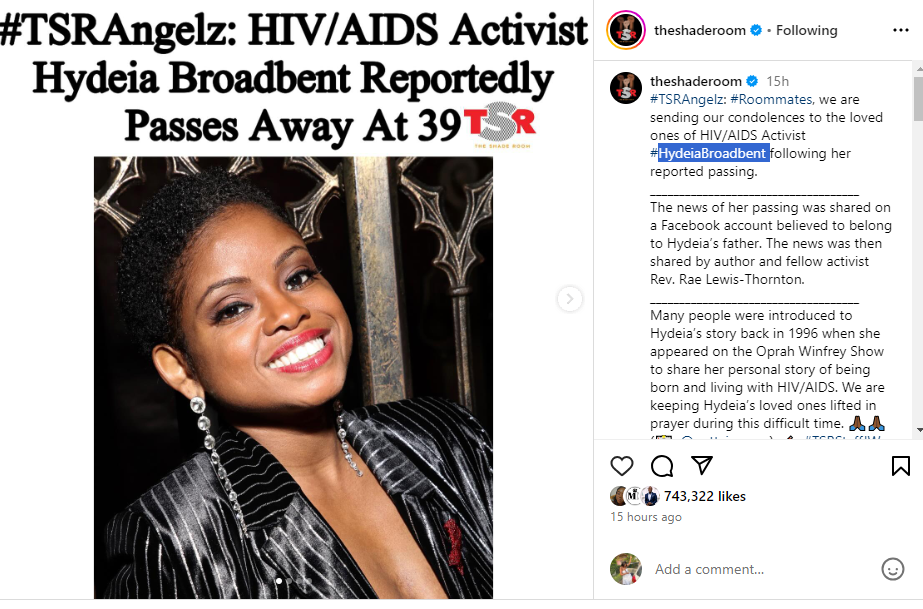
Hydeia Broadbent, a prominent advocate for HIV awareness who bravely shared her journey of living with the virus from a young age, passed away at her residence in Las Vegas on Tuesday. She was 39 years old.
Her father, Loren Broadbent, confirmed her passing. No specific cause was provided.
Broadbent began her advocacy at the tender age of 6, courageously discussing her experiences with HIV on various television platforms. Her aim was to combat the panic and stigma surrounding AIDS during an era marked by an HIV epidemic, as stated on her website.
In 1992, at the age of 7, Broadbent was interviewed alongside Magic Johnson, the renowned basketball player who had become a prominent figure in the fight against HIV and AIDS following his own diagnosis.
“I want people to know that we’re just normal people,” Broadbent, her face crumpling as she fought through tears, told Johnson. “We are normal people,” he gently reassured her. Johnson posted a clip of the conversation online in a tribute Wednesday.
“I think it just opened a lot of people’s eyes that HIV can happen to anybody, with me being so young,” Broadbent told The New York Times in 2006 about the interview with Johnson.
“My daughter didn’t have a formal education because of her illness,” her mother, Patricia, told the Times in 2001 for an article about teenagers living with AIDS. “My priority was not school, but keeping her healthy for the time she had.”
Broadbent persisted in her public advocacy for HIV and AIDS well into adulthood. Her efforts garnered significant recognition, particularly within the African American community. Ebony magazine acknowledged her influence by including her twice in their list of the “Most Influential 150 African Americans,” in both 2008 and 2011, as outlined in her biography.
As she matured, Broadbent dedicated herself to combating the stigma and dispelling misinformation surrounding AIDS. She worked tirelessly to educate the public about prevention
“I have dedicated my whole life to this fight,” she told CNN in 2012. “I don’t hate my life. I feel like I’m really blessed. But at the same time, my life doesn’t have to be their life. I didn’t have a choice when it came to HIV/AIDS, and people do have a choice.”
A woman living with HIV/AIDS has confessed to having unprotected sex with multiple partners despite being aware of her status. She attributes this risky behavior to coping with the grief of losing her husband and five children to the disease. While expressing guilt, she reveals that engaging in prostitution is her only means of livelihood.
The woman fears disclosing her status to her sexual partners due to potential consequences such as rejection, stigma, or loss of income. She is apprehensive that her neighbors might spread the news, jeopardizing her livelihood.
Dr. Steve Kyeremeh Atuahene, the Director General of the Ghana AIDS Commission, deems her actions dangerous and illegal. He emphasizes that knowingly spreading HIV is a prosecutable offense under Ghanaian law. Dr Atuahene urges those living with HIV to prioritize prevention, treatment, and responsible behavior.
The incident sheds light on broader challenges in HIV/AIDS prevention and awareness in Ghana. The latest demographic survey by the Ghana Statistical Service indicates a significant increase in new HIV infections, categorizing the country as one facing a fast-track infection rate. Out of 16,574 new infections in 2022, females accounted for 10,927 cases, while males accounted for 5,647.
Dr Atuahene points out that same-sex relationships, deemed illegal in Ghana, contribute to the spread of the virus. He underscores the importance of treatment, urging those living with HIV to adhere to preventive measures and avoid risky behavior.
This revelation highlights the need for intensified efforts in HIV/AIDS education, destigmatization, and support for those affected. The intersection of health, social, and economic factors underscores the complexity of addressing such challenges and the importance of a comprehensive approach in mitigating the impact of HIV/AIDS in Ghana.
A concerning trend has been observed among young women in Ghana, where a significant portion are engaging in unprotected sex despite being aware of the potential risks, including HIV and other Sexually Transmitted Diseases (STDs).
The 2022 Ghana Demographic and Health Survey, conducted by the Ghana Statistical Service (GSS), reveals that 80 percent of women between the ages of 15 and 24 are involved in unprotected sex.
Surprisingly, this behaviour persists even though 79 percent of these young women are well-informed about the health benefits associated with the consistent use of condoms.
The statistics are particularly alarming given the existing data that indicates a higher rate of HIV contraction among women compared to men.
In August 2023, the Ghana AIDS Commission reported that females accounted for two-thirds of the total new HIV infections in the country.
Out of the 16,574 new HIV infections recorded in 2022, 10,927 cases were among females, while males accounted for 5,647 cases.
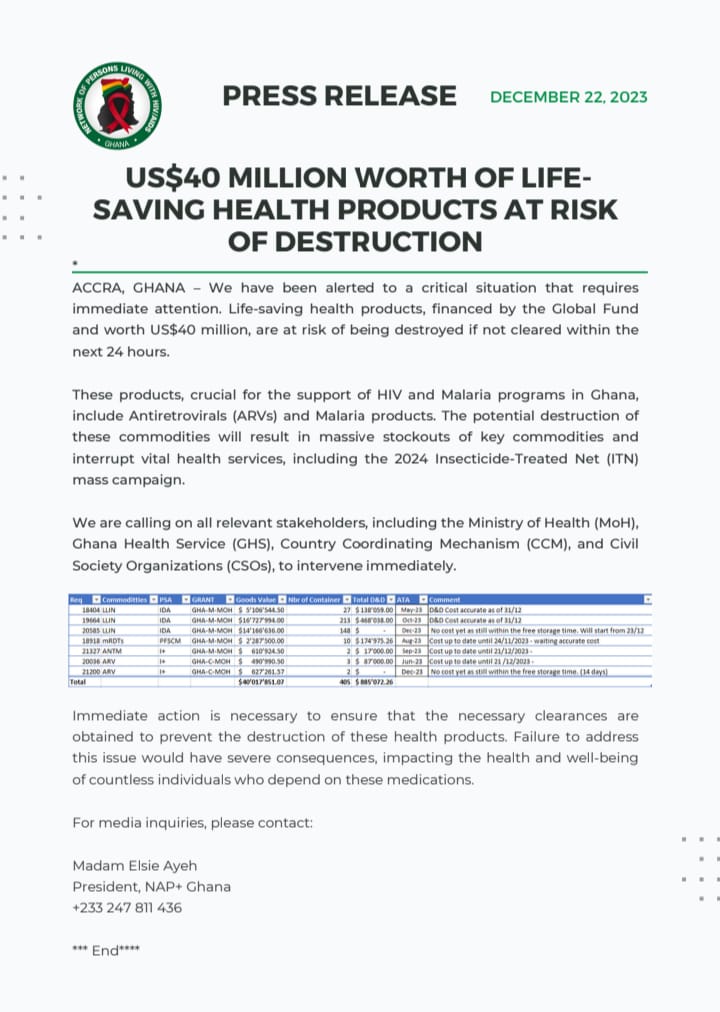
The Network of Persons Living with HIV/AIDS has issued an urgent plea to key stakeholders to swiftly intervene in the clearance process of essential health products valued at a significant US$40 million.
The imperative nature of this intervention is underscored by the potential threat of these crucial health items facing destruction.
In a comprehensive statement released on Friday, the network emphasized that the at-risk products, including Antiretrovirals (ARVs) and Malaria products, play a vital role in supporting Ghana’s HIV and Malaria programs.
The imminent danger of their destruction looms large, posing a severe risk of widespread stockouts of these indispensable commodities. Such stockouts could result in the interruption of critical health services, including the scheduled 2024 Insecticide-Treated Net (ITN) mass campaign.
The network urgently called upon various stakeholders, including the Ministry of Health (MoH), Ghana Health Service (GHS), Country Coordinating Mechanism (CCM), and Civil Society Organizations (CSOs), to take immediate and concerted action to address this impending crisis.
The statement stressed, “Immediate action is necessary to ensure that the requisite clearances are obtained promptly, preventing the destruction of these vital health products. Failure to address this issue would have severe consequences, impacting the health and well-being of countless individuals who depend on these medications.”
The call for intervention extends beyond a mere procedural matter, emphasizing the far-reaching implications on public health if swift measures are not taken to avert the potential destruction of these critical health supplies.
The network’s plea underscores the urgency and gravity of the situation, urging collective efforts to safeguard the health and well-being of those reliant on these essential medications.
A nutritional scientist at the Kwame Nkrumah University of Science and Technology, Dr. Charles Apprey, has highlighted malnutrition as a significant issue affecting individuals living with HIV/AIDS.
On the occasion of World AIDS Day, he urges the government to implement creative interventions in the health sector to enhance the nutritional well-being of those living with the disease.
Nutrition plays a crucial role in the care and management of individuals with HIV/AIDS, impacting their immune function. Improving the nutritional status of HIV/AIDS patients can enhance the immune system, reduce the risk of opportunistic infections, delay viral progression, and improve the absorption or tolerance of antiretroviral medication.
A research study on the nutritional status of HIV-positive clients undergoing High Active Anti-retroviral Therapy (HAART) at a public hospital in Ghana revealed a high prevalence of malnutrition among these patients.
A member of the research team and a nutritional scientist at Kwame Nkrumah University of Science and Technology is Dr. Charles Apprey.
“I think the biggest trigger is the fact that if you look at the national prevalence of HIV-AIDS, you realize Koforidua is almost leading in terms of the prevalence. And that means, there’s a high level of people or a high number of people in the region living with HIV.”
“So, we decided to look at the nutritional status of HIV/AIDs patients, because usually there’s a triangle between good health, immune system, and your nutrition level,” he said.
Malnutrition Hinders Progress Toward Sustainable Development Goals for HIV/AIDS Patients
The prevalence of malnutrition among HIV/AIDS patients poses a challenge to the attainment of Sustainable Development Goal targets 3.3 and 3.4, which aim to halt the AIDS epidemic and prevent premature deaths from malnutrition.
Dr. Yasmine Hardy, an infectious disease physician at Komfo Anokye Teaching Hospital (KATH), sheds light on the underlying causes of malnutrition among individuals living with HIV/AIDS.
“Quite a number of patients or people who have HIV have malnutrition, especially those who come in to start medications initiallyand they come in the advanced stage of HIV
By advanced stage, I mean that the HIV virus,has increased making it difficult for their bodies to fight against infection, “she added.
In order to assist HIV/AIDS patients with food selection, Dr. Charles Apprey advocates for clinicians to include dieticians on their teams
“Once you have HIV, it means that your immune system is already compromised, so I encourage clinicians to add dietitians and nutritionists to their team so that they’re also able to help them to choose their food and their diets wisely.
But if you’re able to choose your food well, what it means is that you’re always going
to have the immune system working optimally,” he advised.
The Ashanti region is one of the regions with the highest rate of HIV cases at 1.6%.
Although stakeholders are committed to reducing the transmission of the disease and improving the health of patients, Dr. Yasmine Hardy is worried about the unwillingness of HIV/AIDS patients to receive medication.
“Sometimes patients don’t come for medication, especially when their quality of life has improved and that’s a major worry to me as a physician” she bemoaned.
Patients have been advised to continue treatment after they have been tested and treated for HIV/AIDS.
An estimated 1.3 million individuals worldwide acquired HIV in 2022, marking a 38% decline in new HIV infections since 2010 and 59% since the peak in 1995.
While there have been significant improvements in recent years, there remains a need for continued efforts to combat HIV/AIDS effectively
Upper East Region is facing a significant rise in new HIV infections among adolescents, prompting a call for intensified efforts to address underlying causes and provide targeted support to this vulnerable group.
Sulemana Majeed, the Regional HIV/AIDS Focal Person, has expressed concern, stating that the HIV prevalence among adolescents ranges from 1.8 to 2.0 percent.
Majeed emphasises that without pragmatic measures to reduce the prevalence rate, the future for adolescents in the region appears bleak.
“The cause for worry is that the future generation, the adolescents whom we feel should stay negative and maintain their status because they are the productive force for the future, are those who are getting the new infection.”
The worrying aspect, according to Mr. Majeed, is that “it is not even the late adolescents; it is early adolescents between 10 to 14 years who are getting infected with the virus.”
The increasing trend of HIV infections among adolescents in the Upper East Region is attributed to factors such as a lack of HIV education, ignorance, and the vulnerability of young individuals to peer pressure for early sexual activity.
The Regional HIV/AIDS Focal Person, Sulemana Majeed, highlighted that with a population exceeding 1 million, over 7,000 people in the region are estimated to have been infected with the virus.
Approximately 5,000 individuals are still receiving medications at health facilities, while others have discontinued treatment for various reasons, such as feeling better, travel without informing facilities, or unfortunate deaths unrelated to HIV.
Majeed conveyed these concerns to the media after a health walk held in commemoration of World AIDS Day, celebrated over the weekend due to the concurrent National Farmers Day on December 1.
The theme for this year’s World AIDS Day celebration was “Let Communities Lead,” aiming to encourage individuals infected and most affected by HIV and AIDS to take on roles and initiatives that contribute to ending the disease as a public health concern by 2030.
A health walk, organized by the Ghana HIV and AIDS Network (GHANET) in collaboration with the Network of Persons Living with HIV (NAP+) and other stakeholders, marked the occasion. The event served as an opportunity to raise awareness about HIV self-testing (HIVST) and address various aspects related toHIV and AIDS.
The National Public Relations Officer of GHANET, Patrick Anamoo, said Ghana has now included blood-based methods of HIVST owing to the successful evaluations of the oral method. “CheckNOW is a blood-based method of HIVST that gives test results in just 15 minutes.
It is based on 3rd generation HIVST technology, which detects HIV-1 and HIV-2 antibodies in a fingerstick blood sample,” he explained.
Mr. Anamoo expressed confidence that the multiplication of HIVST testing options will help Ghana achieve the first 95 of the 95-95-95 UNAIDS targets. The Upper East Regional Chair of NAP+ says stigma remains a challenge to the fight to reduce the virus.
Uganda Aids Commission (UAC) has introduced translated versions of the national stigma and discrimination guidelines to enhance accessibility for individuals with visual and hearing impairments.
This initiative includes Braille materials for the visually impaired and sign language resources for those with hearing impairments.
The primary objective of this effort is to ensure that people with hearing and visual impairments have access to essential information related to HIV/AIDS, as explained by Dr. Vincent Bagambe, the Director of Planning and Strategic Information at UAC. It is recognized that individuals with disabilities are particularly susceptible to HIV infections.
In 2021, the Uganda Aids Commission initiated the National Policy Guidelines on Ending Stigma and Discrimination against persons living with HIV/AIDS. This policy framework emphasizes the importance of safeguarding the privacy and confidentiality of individuals living with HIV.
Justification “We realised that although we are making good progress in the fight against HIV/Aids, the progress is not uniform, there are some people being left behind and unfortunately, people with disabilities are among the groups that are vulnerable to acquiring new HIV infections and even those living with HIV are behind in accessing care and treatment,” Dr Bagambe said.
He added: “Persons with disabilities who are living with HIV are stigmatised by community members, health workers . Some of these people even fear accessing treatment and care. So to fight all this stigma and improve access to care, we have come up with these guidelines in braille and sign language form.”
Dr Bagambe said UAC has in the past lacked funds to translate the materials.
“Translating is a costly exercise, you need special material. You must use experts to translate the content into the braille, engage the community so that when the guidelines are translated, they are actually communicating the correct message,” Dr Bagambe said.
Mr Charles Byekwaso, the acting executive director of Uganda National Association of the Blind, decried difficulties in accessing information, including on health matters..
“All the work that agencies and government do, they put it in print very well knowing that for us we don’t see so you cannot read print unless someone endeavours to read it to you, which is tiresome. So we have no independence in accessing information,” Mr Byekwaso said.
He added : “So we are very happy that Uganda Aids Commission has come up to support the production of the stigma and discrimination document into braille and we believe it will also be produced into other formats like the human narration, large print for those who partly see, audio, machine reading for you.”
The National Network of Persons Living with HIV/AIDS in Ghana (NAP+) has revealed that its members have not yet seen or received the antiretroviral medications from Team Port that have been cleared.
The health ministry announced that the drugs have been cleared and distribution is in progress, but Elsie Ayeh, the president of NAP+, claims that the drugs have not yet been distributed.
In an interview with Ghanaweb, she recalled calling National AIDS Control to ask why there was a delay; she was not given a specific time for the medication to be distributed.
“They have just been cleared from the port, it hasn’t yet reached us. There has to be some allocation made before the distribution gets to us. They are doing the allocation and it will move on to wherever it has to go but it hasn’t,” she said.
Reacting to the number of days it takes for the drugs to reach the affected persons, she said “I don’t even know. Sometimes, they tell us it’s already gone and it’s not there. So for me, I can’t spell it out.”
She, however, added that the members of NAP+ are waiting patiently for the antiretroviral drug allocation and distribution.
“All our members are on standby so that, immediately it hits any facility, they let us know. Yes, we’ve heard it (distribution of drugs), but whether it will actually happen is something else,” Elsie added.
On Monday, October 16, 2023, the Ministry of Health made an official announcement that they had successfully resolved the issue of stalled antiretroviral drugs at the Team ports, which was caused by a lack of funds.
As per the ministry’s press release, the clearance of these drugs took place on Friday, October 13, 2023. The statement also confirmed that the distribution of these crucial antiretroviral medications was already in progress.
In an effort to gain further insight into the delay, GhanaWeb attempted to contact the National AIDS Control for their perspective. However, their calls went unanswered.
Ugandan parliamentarians have been informed that the drug regulators have been aware for a long time that medications used to treat HIV/AIDS have been given to farm animals.
The committee in Parliament that deals with HIV/Aids is looking into a research done by a university. This study is about giving animals in East Africa medications to treat their illnesses and make them gain weight.
The study discovered that pigs and chickens were given ARVs, but the findings were not made known to the public.
“He said that we were worried about making the situation seem worse than it actually is, and how that might affect our economy if we want to sell food to other countries. So we were looking for other ways to handle that problem. ”
Their report found that the ARVs were mostly used to treat African swine fever, a disease that affects pigs and has no cure at the moment. It also confirmed that the medications were being used to help chickens with Newcastle Disease.
Newcastle Disease is a condition that affects animals, as defined by the World Organisation for Animal Health.
Bird flu is a very contagious and serious illness that affects birds all over the world, including domestic chickens.
Last week, Makerere University’s College of Health gave a new study to the parliamentary committee. The study said that people believe pigs who are given ARVs (antiretroviral drugs) grow bigger and faster and get sick less often.
It was found that about one-third of the chicken tissue and half of the pig meat from markets in the capital city, Kampala, and the northern city of Lira had traces of ARV residues.
People are worried that eating this food may cause some people to become resistant to drugs they need to take. It could also put at risk the money given by donors who provide the drugs to treat HIV and Aids.
People on social media are really mad about the parliamentary session because they are upset that the NDA didn’t share their earlier findings.
The NDA’s spokesperson tried to make the scandal seem less important by saying they have taken action to stop drug abuse, specifically in animals.
Abiaz Rwamiri said that the ongoing operations have resulted in the arrest and punishment of several wrongdoers.
In just under a month following the introduction of HIV self-testing kits in Accra, the program has garnered more than 70,000 users.
Launched on July 21, 2023, the self-testing kit had received more than 33,000 community requests during the launch period, and the number has now surged past 70,000.
This was disclosed by the Programme Manager of the National Aids Control Programme, Dr Ayisi Addo.
Dr. Ayisi Addo further added that there have been over 11,000 requests online and distributions of the HIV test kits are ongoing across the country.
However, during an interview with GNA, Dr Ayisi Addo conveyed his worry about how new infections are recorded despite the many measures put in place to cap the number of HIV/AIDS infections.
“We have been doing all these things and yet in 2022, by the end of that year, 354,000 people were estimated to have HIV, while still picking a little over 16,000 new infections,” he said.
The doctor on this note appealed to Ghanaians to accept and embrace the HIV self-testing kit to curb the frightening numbers.
“I am appealing to Ghanaians to embrace this new game changer. We have come very far from a state where one will have to go to a laboratory, which takes like two to three weeks to produce the results to now self-testing in the privacy and comfort of the individual,” he added.
Over a thousand people are currently living with HIV/AIDS in the Dormaa West District, according to Ebenezer Bennie, the AIDS Coordinator for the district.
According to him, the affected persons include children and pregnant women who are on anti-retroviral drugs.
In a conversation with Nsoromma FM, Ebenezer Bennie also revealed that more than 200 of the over 700 people who voluntarily underwent testing in the first half of the year were found to be HIV/AIDS positive.
He urged the general public to participate in voluntary testing so they could learn their status and properly plan their lives.
Recently, Dr. Kyeremeh Atuahene, Director-General of the Ghana AIDS Commission, revealed that 354,927 people in the nation are HIV positive overall.
He stated that there are 115,235 men and 239,692 women among the total.
Speaking at the 2022 National and Sub-National HIV Estimates and Projections, Dr. Atuahene added that Greater Accra was the region with the highest number of HIV estimates (85, 403), followed by Ashanti Region (72, 429), and Eastern Region (46, 339).
He stated that 9,359 people had died from AIDS, with 4,353 male and 5,006 female.
According to Dr. Atuahene, the nation saw 16,574 new HIV infections, with 5,647 male cases and 10,927 female cases.
He stated that there were 2,868 children under the age of 14 and 13,706 adults aged 15 and over.
He said the HIV epidemic remained a challenge, with certain regions and vulnerable populations disproportionately affected, adding “It is essential that we confront these disparities head-on and ensure that our response inclusive and reaches those most in need.”
According to Dr. Atuahene, data on HIV estimates and projections were produced using an upgraded version of the software that could calculate progress towards the “95-95-95” targets and provide the specific strategic data needed to enhance geographic planning and target setting for the creation of national HIV strategic plans.
The ‘95-95-95’ seeks to diagnose 95 per cent of all HIV-positive individuals, provide antiretroviral therapy (ART) for 95 per cent of those diagnosed and achieve viral suppression for 95 per cent of those treated by 2030.
Dr. Atuahene expressed concern about how susceptible women are to the illness and gave advice on how they can fend it off.
“I would like to stress that the numbers clearly show the vulnerability of women and for that reason women must take the necessary prevention actions that would ensure that they do not have HIV,” he added.
He advised men to help women protect themselves by encouraging them to use condoms for every sex had outside of marriage or other committed relationships, regardless of how stable or unstable they may be.
The UNAIDS Country Director for Ghana stated that his organisation would keep giving countries technical assistance in order to produce estimates for the number of new infections, HIV-positive individuals, and AIDS-related deaths, among other variables.
For him, these projections were the outcome of a collaborative process that included participation from national authorities, partners, and other country stakeholders in order to provide a scientifically appropriate way to describe HIV epidemic levels and trends in countries (including sub-national level), the various regions, and at a global level.
According to him, HIV estimates were used as the basis for the creation of national HIV policies, plans, strategies, and programmes that bring different stakeholders together in support of a set of predetermined objectives.
People living with HIV/AIDS in Ghana are facing a shortage of anti-retroviral drugs (ARVs) due to a lack of funding for the Ghana AIDS Commission (GAC), the agency responsible for coordinating the national response to the epidemic.
Director-General of the Commission, Dr. Kyeremeh Atuahene, has disclosed that due to the lack of sufficient government support, the distribution of medicines has been limited to two to three months, a significant reduction from the original allocation of six months.
The situation has become critical as the Commission struggles to meet the growing demand for anti-retroviral drugs. As a result, rationing has become necessary, placing the lives of HIV/AIDS patients at risk.
Dr. Atuahene passionately called upon both individuals and groups to extend their support to the AIDS fund, aiming to bridge the alarming funding gap, which presently stands at a staggering 66%.
Addressing the gravity of the situation, Dr. Atuahene drew a poignant analogy, comparing the shortage of medicine to depriving people on oxygen of the essential gas, ultimately leading to fatal consequences. Such a crisis threatens to undermine the significant progress made in managing HIV/AIDS and places vulnerable individuals in a precarious position.
At present, there is no dedicated budget allocation for HIV programs, leaving the Commission largely reliant on sporadic contributions from the National Health Insurance Scheme (NHIS).
However, this sporadic funding is woefully inadequate to meet the increasing needs of the HIV-infected population. The funding gap remains a pressing concern, leaving the Commission with limited resources to address the growing epidemic effectively.
According to the GAC, Ghana recorded 16,574 new HIV infections in 2022, compared to 18,036 in 2021. The new infections were spread across all age groups, with the majority among people aged 15 and above. Adolescent girls and young women accounted for 20% of new infections in 2021.
In the long run, the rationing of anti-retroviral drugs could result in increased mortality rates, stalled progress in reducing new infections, and a strained healthcare system.
HIV/AIDS patients may experience worsened health outcomes, and the nation may face increased economic burdens due to a higher prevalence of untreated HIV cases.
To combat this crisis and protect the lives of those living with HIV/AIDS, urgent action is needed from the Ghanaian government and the international community.
Allocating a specific budget for HIV programs and strengthening partnerships with global health initiatives can provide a more stable funding base.
Additionally, efforts to raise public awareness and encourage domestic contributions through initiatives like the AIDS fund can supplement existing resources.
The Director-General of the Ghana AIDS Commission, Dr. Kyeremeh Atuahene, has raised concerns about the challenging financial situation the commission is facing due to the withdrawal of donor support and reduced government funding.
During the Public Accounts Committee sitting in Accra on Wednesday, July 26, 2023, he highlighted the dire impact this funding shortage is having on the commission’s operations.
Dr. Atuahene revealed that the commission is currently not receiving any funding from donors, which is severely undermining their ability to function effectively.
“Presently, we do not receive any funding from donors. This is severely undermining our operations, especially as government funding is also dwindling,” he noted.
Additionally, the level of government funding has also decreased, further exacerbating the situation.
To address this pressing challenge, the Ghana AIDS Commission is actively seeking alternative partnerships and initiatives to generate funds for carrying out its mandate.
Dr. Atuahene explained that they are analyzing the financial situation and working with partners to come up with a sustainability assessment and financial planning for the AIDS response.
Furthermore, the commission has taken various initiatives to engage the general public and seek their support in implementing the national AIDS response.
One such initiative is the USSD code *9898#, which has been introduced to allow the public to contribute and help bridge the significant financial gap faced by the commission.
Despite the funding constraints, the Ghana AIDS Commission remains committed to fulfilling its mandate and continuing its efforts to combat HIV/AIDS in the country.
“The Ghana AIDS Commission has a mandate to mobilize resources with support of the National HIV/AIDS Response as per the act that created the commission, Act 938. And so what we are doing currently is to analyze the financial situation and look at the sustainability of the AIDS response. We are working with our partners in coming up with a sustainability assessment and planning for the finances of the AIDS response.
“We have also worked on a number of initiatives to actually reach out to the general public to support the commission in implementing the national AIDS response. So we currently have the USSD code *9898# which we have put out for the general public to help the commission fill the huge financial gap,” he stated.
The Ghana AIDS Commission has announced the distribution of over 200,000 HIV/AIDS Self-test kits nationwide.
This initiative follows the recent launch of the HIV/AIDS Self-test on July 19 by the government, facilitated through the Ministry of Health.
The purpose is to empower the public to conveniently check their status within the comfort of their homes or any location of their choice.
Dr. Kyeremeh Atuahene, the Director-General of the Ghana AIDS Commission, shared that plans are already in motion to provide training to local pharmacists on the distribution and proper use of the test kit.
He mentioned that even before the pilot launch, some pharmacy shops were already selling self-test kits, as they have been available for several years.
As the expansion program progresses, the goal is to involve pharmacists in the distribution process, recruiting and training them to offer the program’s test kits to the public.
“As far as pharmacists are concerned, in fact before we started the pilot, some pharmacy shops were already selling self-test kits. Because self-test kits have been available since before this decade, so people have been selling them.”
“We hope that in the expansion programme, pharmacists will also be recruited and trained to distribute some of the programme’s test kits,” he noted.
Days after parliament passed a divisive anti-gay bill, the normally bustling HIV/AIDS treatment center in Kampala, Uganda, is nearly deserted.The staff reports that the daily average of 50 patients has decreased, and that unused antiretroviral medications are piling up.
A resident medical officer at a US-funded clinic, warned that new waves of HIV infections were forming as vulnerable people stayed away from treatment centers, afraid of being identified and arrested under the new laws.
“The LGBT community in Uganda is on lockdown now,” he said. “They don’t have preventive services. They cannot access condoms … they cannot access ARTS (antiretroviral).”
Under the bill, which President Yoweri Museveni signed into law last week, gay sex is punishable by life in prison while “aggravated homosexuality”, including the transmission of HIV, is punishable by death.
Until this year, the Kampala clinic had been a beacon of success for the fight against HIV in Uganda, where 1.4 million people live with the virus and 17,000 die a year as a result of its ravages, according to the Uganda AIDS Commission.
Now, when patients do come in, it’s often out of absolute necessity. The HIV cases presenting has thus become more severe as people skip treatments.
A US official suggested that the law would reverse the country’s advancements in fighting HIV/AIDS.
That statement was rebuked by Ugandan prime minister, Dr. Jane Ruth Aceng Ocero, who responded that the government would ensure that prevention programs would remain accessible to those that needed them.
Nonetheless, the trend of HIV patients staying away from treatment centers is being mirrored on a national level, according to Mary Borgman, country director for the US President’s Emergency Plan for AIDS Relief (PEPFAR), which funds the Kampala clinic and about 80 other drop-in centers across Uganda.
She said fear had increasingly been deterring people from coming in for treatment ever since the anti-gay bill was introduced in parliament in March.
The people living with the virus are not the only ones afraid of repercussions. Many medical officials are reluctant to provide services to gay patients, as they fear being accused of defending and promoting homosexuality.
Reporting gay activity
Lillian Mworeko, the East African regional coordinator for the International Community of Women living with HIV/AIDS, said some providers feared that offering medical services to LGBTQ patients could be classed as “promoting” homosexuality, an offense punishable by 20 years in prison under the new law.
The Ugandan bill toughened up an existing British colonial-era law, under which gay sex was already illegal. Proponents say the new legislation is needed to counter what they allege are efforts by LGBTQ Ugandans to recruit children into homosexuality.
The amended version signed by Museveni didn’t criminalize merely identifying as LGBTQ, as a previous version did, and revised a measure that required people to report gay activity to only oblige reporting when a child was involved.
Though acclaimed nationally by public opinion and seen as a clear statement against the propagation of “corrupt western mores” in African societies, local activists have denounced the backwardness of the law, pointing out that homosexuality existed in precolonial Africa, was accepted in most cultures than others and was not considered unnatural or a sin.
“The majority of these people, like transgender or queer people, have gone through a lot already,” shared a medical officer.
At the Kampala clinic, run by local charity Icebreakers Uganda, one of the medical officers said he understood the fears of LGBTQ people in Uganda who often endured painful lives, featuring rejection by their families and arrests.
Due to a lag in community engagement, the National STIs and AIDS Control Programmehas stated that the initial intention to introduce the HIV/AIDS self-test kit this month is unlikely to occur.
It claims to be continuing testing test kit samples and sensitization in a few towns across the nation as part of a pilot program in the hopes of compiling all findings prior to the launch.
When released, the self-test kit will be available for purchase in all pharmacies across the country, allowing people to learn their HIV status.
Dr. Stephen Ayisi Addo, Programme Manager for National STIs and AIDS Control Programme, told Citi News that the government does not intend to rush the process.
“We need to make sure that the grounds are well-watered, and Monitoring and Evaluation issues addressed. So we are expecting reports from the community sensitization. Once we get preliminary reports that it is good for us to go, we will go. We do not want to rush so that when we launch people will ask too many questions that we will not be able to answer.”
It was expected that from March 2023, HIV self-test kits will be made available at pharmacies and health facilities across the country for purchase to enable people to self-test to know their HIV status.
The introduction of the self-test kit meant that HIV testing could now be done on the doorstep of people and at any space, they considered to be private and confidential.
Upon the rollout, the self-test kit would be free for now at health facilities but at the pharmacies, they would attract service charges.
The face of HIV has now changed because of the progress that has been made in research and its management.
“Because Ghana has had over 260,000 PLHIV on treatment, it was uncommon to come across people who were seriously ill with the disease.”
The Ghana AIDS Commission has said it has spent $323.7 million on HIV/AIDS-related activities in the last three years.
According to the Commission, the total HIV/AIDS-related expenditure for 2019, 2020, and 2021 will be $88,648,568, $107,280,242, and $127,828,300, respectively.
Director General of the Ghana AIDS Commission, Dr Kyeremeh Atuahene, who disclosed this, also revealed that the spending for the years mentioned came from the government, the private sector, and international donors.
Dr. Atuahene stated this during the launch and distribution of the National AIDS Spending Assessment (NASA) report for 2019-2021.
NASA is a comprehensive and systemic resource tracking method for HIV/AIDS programmes that describes the financial flow, actual disbursements, and expenditures.
The report is hinged on three dimensions, including financing, provision, and consumption, and the overall estimates of the expenditures of the public, private sectors, and international donors on the national HIV and AIDS response.
Health facilities have been urged by the Ghana AIDS Commission (GAC) to take into account the condition of HIV-positive people and lower out-of-pocket expenses for HIV services.
This is because many of them are forced to stop receiving therapy as a result of the practice.
Dr Kyeremeh Atuahene, the Director General of the Ghana AIDS Commission, said the intervention had become crucial as more than 32 per cent of persons living with HIV (PLHIV) in 2021 alone discontinued treatment because they could not afford to pay.
Dr Atuahene made this known at the launch and dissemination of the National AIDS Spending Assessment (NASA) report for 2019, 2020, and 2021.
NASA is a comprehensive and systemic resource tracking method that describes the financial flow, actual disbursements, and expenditures on HIV and AIDS programmes.
It describes the HIV and AIDS financial flow and expenditures for both health and non-health activities for the period while identifying and addressing funding gaps.
He said over the last three years, out-of-pocket payments by PLHIV and households increased from almost 22 million dollars in 2019 to almost 28 million dollars in 2020 and about a 32million dollars in 2021%.
The Director General said those “catastrophic expenditures” affected PLHIV, and households and had impacted the number of HIV-related deaths in the country.
“It is very concerning because the policy of the government is that, the full range of HIV services from testing to treatment and the entire scope of case management is supposed to be free,” he added.
The Director General said, however, PLHIVs were made to pay due to the challenge of delays in NHIS fund releases to service providers and other related issues, including laboratory services.
The Director General appealed to the Government, especially the Ministry of Finance to ensure that NHIS received its releases on time and in the right amount. He said situations, where PLHIV were discontinuing treatment clearly, showed how deepening the situation was in inequalities concerning access to HIV services and access to health services in general.
Dr Atuahene said as a country committed to achieving universal health coverage, the situation undermined the objectives and efforts to end HIV and AIDS by the year 2030 as well as commitments to living no one behind and must be fixed.
He said it was important that government and the people worked together to achieve those goals and for that to happen, there should be no barrier to access to health care services, especially for persons living with HIV.
Dr Kyeremeh Atuahene, Director-General of the Ghana AIDS Commission, has warned Ghanaians against engaging in transactional sex.
Speaking to Joy FM, the AIDS Commission boss said Ghana’s target of achieving zero HIV infections by 2030 is achievable, but only if the youth of the country desist from transactional and commercial sexual activities.
“Some young people see sex as a means of making income. We have hookups, which entail young men and women offering themselves as sexual providers to sugar mummies and daddies. All these expose them to HIV/Aids,” he said.
According to Dr Atuahene, HIV, unlike other diseases such as COVID-19 and tuberculosis, is contracted through deliberate actions, hence the need for the youth to be cautious in their sexual escapades.
“Nobody can force the pathogen into your body. You decide to have sex and it does not come out of the blue,” he noted.
He also urged the youth to practice abstinence and safe sex, while noting the availability of HIV/AIDS treatment.
In the first half of 2022, 495 Ghanaians tested positive for HIV.
The figure represents two per cent of the total number of 948, 094 who got tested for HIV within the period in review.
A new study has revealed that more people died in 2019 from two of the deadliest pathogens, S. aureus and E. coli, than from HIV/AIDS (864,000 deaths) across the world.
The analysis conducted by the Global Burden of Disease & Antimicrobial Resistance Collaborators show that HIV research received $42 billion dollars, while E. coli research received $800 million.
According to the full study, which will be published in The Lancet on Monday, November 21, common bacterial infections were the second leading cause of death in 2019 and responsible for one in every eight deaths worldwide.
The analysis identifies bacterial infections as a global public health priority, ranking second only to ischaemic heart disease as the leading cause of death in 2019.
The latest finding raises concerns about the funding and research gaps on the two deadliest pathogens, but the authors argue that such funding gaps may have arisen due to a lack of data on the global burden of these infections until now.
The new study provides the first global estimates of mortality associated with 33 common bacterial pathogens and 11 major infection types that lead to sepsis death.
Estimates were generated for all ages and genders in 204 countries and territories that have country-level data available.
The authors used 343 million individual records and pathogen isolates from the Global Burden of Disease 2019 and Global Research on Antimicrobial Resistance (GRAM) studies to estimate deaths associated with each pathogen and the type of infection responsible. 7.7 million of the estimated 13.7 million infection-related deaths in 2019 were linked to the 33 bacterial pathogens studied.
In 2019, deaths caused by these bacteria accounted for 13.6% of all global deaths and more than half of all sepsis-related deaths. Lower respiratory infections (LRI), bloodstream infections (BSI), and peritoneal and intra-abdominal infections accounted for more than 75% of the 7.7 million bacterial deaths (IAA).
E. coli (950 000 deaths), S. pneumoniae (829,000), K. pneumonia (790,000), and Pseudomonas aeruginosa (559,000) were the other pathogens linked to more than 500,000 deaths. The leading bacterial pathogens were linked to a similar number of female and male deaths.
The most lethal pathogens and age-standardised mortality rates varied by location. With 230 deaths per 100,000 people, Sub-Saharan Africa had the highest mortality rate. The high-income super-region, which includes Western Europe, North America, and Australasia, had the lowest mortality rate, with 52 deaths per 100,000 people.
In 135 countries, S. aureus was the leading bacterial cause of death, followed by E. coli (37), S. pneumoniae (24), and K. pneumoniae and Acinetobacter baumannii (4 countries each).
Pathogens linked to the most deaths varied by age. S. aureus was linked to the most deaths in adults over the age of 15 years, accounting for 940,000 deaths. Salmonella enterica serovar Typhi was responsible for 49,000 deaths in children aged 5 to 14 years. S. pneumoniae was the most lethal pathogen in children older than newborns but under the age of five, accounting for 225,000 deaths. K. pneumoniae was the pathogen responsible for the most neonatal deaths, accounting for 124,000 deaths.
The authors admit that their study has some limitations, many of which are due to a lack of data for some parts of the world, particularly many low- and middle-income countries (LMICs), where the estimated disease burden is highest.
According to Authia Gray, study co-author and PostBachelor Fellow at IHME at the University of Washington’s School of Medicine, country-level estimates for parts of the world where people are most affected by bacterial infections have been noticeably absent until now.
“These new data could act as a guide to help address the disproportionately high burden of bacterial infections in low- and middle-income countries and may ultimately help save lives and prevent people losing years of their lives to illness,” he said.
According to the study, building stronger health systems with increased diagnostic laboratory capacity, implementing control measures, and optimising antibiotic use are all critical to reducing the disease burden caused by common bacterial infections.
Civil Society Organisations (CSOs) in the fight against HIV/AIDS have expressed concern over the inactivation of the National HIV/ AIDS fund six years after it was passed into law.
According to them, the inactivation of the fund was partly to blame for stalled progress and disruption in gains made towards the HIV/AIDS fight in Ghana, over the years.
Thus, in the face of dwindling donor funding to the area, the CSOs have appealed to the government to as a matter of urgency, activate the fund in its 2023 budget.
They made the call in Accra at the launch of the 2022 World HIV/ AIDS day on the theme; “Equalise; a call to action, a forceful appeal to the government, civil society, private sector, and individuals to work together to remove all inequalities that perpetuate the spread of the HIV epidemic.”
President of the Ghana HIV and AIDS Network (GHANET), Ernest Amoabeng Ortsin, in a remark, said the National HIV and AIDS fund was needed to preserve the lives of over 250,000 Ghanaians currently surviving on life-saving anti-retroviral (ART) drugs.
He stated that about eight percent (20,000) of this number were children and needed to be supported to remain on medications and realise their potential in life.
“According to the Ghana AIDS Commission (GAC) Act, 938 as amended in 2016, the only person who can activate the fund is the Minister of Finance.
I, therefore, wish to appeal to the Minister, Mr. Ken Ofori-Atta, to unfailingly activate the fund in the 2023 budget which will be read exactly two weeks from today,” he stated.
Mr. Ortsin maintained that it was expected that the Global Fund which presently was a major donor for Ghana’s HIV/ AIDS interventions to withdraw its activities in view of new global interests, as such, “as a country, we need to take our destiny into our own hands.”
“This is why GHANET and all CSOs in health are calling on the President and the Minister of Finance to activate the fund as immediately as possible.”
The Director-General of the GAC, Dr. Kyeremeh Atuahene disclosed that in the last five years, the country has averagely recorded 21,000 new HIV infections.
From January to June this year, Ghana had already crossed the average mark, recording 23,495 new HIV infections which are, two percent of 948,094 people who undertook HIV testing during the period.
The DG said high-risk behaviours, and complacency amidst disregard for preventive tools were contributing to the spread of the disease, urging members of the public to take responsibility for protecting themselves from HIV infection.
Currently, Ghana is doing 71-99-79 of the UNAIDS 95-95-95 target which aims to diagnose 95 percent of the HIV population, have 95 percent on anti-retrovirals, and 95 percent, achieving viral suppression of the disease.
After almost two decades of the discovery of the Goat Serum in the fight against HIV and AIDS, funders of the test in the country are calling on the Noguchi Memorial Institute for Medical Research (NMIMR) to make public the findings of the research.
The funders, the Grace Eureka Bio-Medical Research Product International based in Accra, on August 5, 2022 wrote to the institute to make available for publication the results of the test with the World Health Organisation (WHO) seal of certification.
The letter, signed by the President and Chief Executive Officer (CEO) of Grace Eureka, Dr Edward Siaw Sefa, a copy of which the Daily Graphic has sighted, had the topic: “Preparation and In Vitro Testing of Goat Anti-Serum to Human Immunodeficiency Virus types One and Two”.
It requested the NMIMR to make available certified results and attach the requisite contact details of scientists involved in the study to a member of the Council of State, Richard K. Atikpo.
The letter said the discovery of the serum was Ghana’s opportunity to save the world from the scourge of HIV and AIDS.
A serum is a protein-rich liquid of an animal used to provide immunity to a pathogen or toxin by inoculation or as a diagnostic agent.
Positive test
However, in a sharp rebuttal, a former Deputy Director of the institute, Prof. Michael Wilson, who was at post at the time of the test, said it was not the place of the institute to publish the findings.
He said the contract between the institute and the researcher of the goat serum, Dr Gary Davis (now deceased), then a Director at Grace Eureka, was for the NMIMR to do a test tube research to ascertain whether the serum was potent in the fight against HIV and AIDS.
In an interview with the Daily Graphic in Accra, Prof. Wilson said in 2005, Dr Davis and his team from Grace Eureka contracted the services of the NMIMR to run the test on the goat serum.
According to him, the test came out positive, meaning that the serum in its test tube form was found to be potent.
He added that the institute then gave copies of the results to Grace Eureka and Dr Davis, who by then had fallen out with each other.
Prof. Wilson said that was all that was required of the institute and, therefore, he was surprised that almost 20 years later, a letter had surfaced claiming that the institute did not publish the results and should, therefore, make them available to the funders again.
Asked what should have been the next steps after the results had been made available to the parties involved, Prof. Wilson said there should have been further tests or experiments on animals to determine whether the serum was safe and not toxic and then move on to do clinical trials, which should be preceded by a safety trial.
Ghana’s opportunity
However, Dr Sefa said he was alarmed at a recent Daily Graphic report which said 23,495 people had tested positive for HIV in the first half of 2022.
The figure is two per cent of the 948,094 people who undertook HIV testing from January to June 2022.
The figure is said to be from different segments of the population, namely: men, pregnant women, non-pregnant women, homosexuals and female sex workers.
Dr Sefa said the situation of HIV and AIDS in the country was still scary and needed a quick intervention.
According to him, the goat serum had been used on different occasions in some parts of the world and Ghana where it had been proved to be efficacious.
He said the scientist, Dr Davies, had already done the test tube test in the USA, which had also proved that the serum was viable.
He said the goat serum had to be tested in Ghana upon a request by the National Institute of Health (NIH) of the USA to enable Grace Eureka to undertake further work for clinical trials to begin.
Dr Sefa said the clinical trial could not be done because a lot of impediments were put in the way of Grace Eureka internationally and locally, after which Dr Davies died after he returned to the USA.
NMIMR test
In 2005 when the NMIMR did the test and it was published by the Daily Graphic, some HIV and AIDS champions rubbished it as not being the answer to the cure.
Prof. Nana Kofi Ayisi, who performed the laboratory experiment on the goat serum, however, insisted that the work was significant and “gives cause for hope”.
Prof. Ayisi, in an interview with the Daily Graphic at that time, explained that “the essence of the laboratory test was to confirm earlier tests that had proved that HIV antibodies could be produced in goats for clinical trails to be undertaken”.
Prostitution dates back to ancient societies and occurs in various forms within communities but when and how did it become common among universitystudents?
Over the years, the name prostitution or Commercial sex work has evolved to what is now known as Hookup or Slay Queens.
Despite being a criminal offence in Ghana, some students are finding ways and means to engage in illegal activity for various reasons.
A brief study conducted on selected university campuses has revealed that the proliferation of commercial sex work among students is for financial, material, and emotional gains. Student sex workers have devised various strategies to combine academic work and sex work.
Student sex workers seek out their potential clients by hanging out in pubs and nightclubs on and around university campuses at night and/or leaving contact details on their various social media handles.
Some student sex workers also convert their hostel rooms into brothels. Price negotiation is based on the environment, duration, the sex workers’ perceived safety of the sexual act, customers’ preferences for styles, and positions adopted for sex.
A level 400 student at the University of Ghana speaking on condition of anonymity said she engages in the act to pay her fees and also to keep up with the increasing financial burden on her. According to her, she is not perturbed that the laws of the country are against prostitution as long as she gets her daily bread.
“Prostitution started right from the bible [ancient times and recorded in the bible], or you don’t know? So what has the law got to do with me? So far as I disguise myself, nobody will know my sister… I have to do what I have to do to survive, the financial pressure is real and that [prostitution] is my only option.”
The Criminal code 1960 Act 29, sections 273-279, specifically makes it an offense to engage in prostitution. Section 273 – Persons Trading in Prostitution:
(1) Any person who
(a) knowingly lives wholly or in part on the earnings of prostitution; or
(b) is proved to have, for the purposes of gain, exercised control, direction or influence over the movements of a prostitute in such manner as to aid, abet, or compel the prostitution with any person or generally, shall be guilty of a misdemeanor.
“Oh honestly, I was desperate because I was in my final year as an undergraduate student in the University of Ghana and all my mates from high school that were in different schools had completed and were doing well so I wanted to use all means possible to get money. Currently I am pursuing a master’s programme at GIMPA and I am able to fund my education because of this sugar mummy… So how I go fit stop! You barb?” A male student who referred to himself as Johnny at the Ghana Institute of Management and Public Administration said.
Obiora, a Nigerian student at the University of Ghana also said “shebi you know I be Nigerian? Eheh! Na my friend tell me say work dey… wey I fit do get money so me too gree follow her come. But the truth be say she no tell me say na olosho oh, na later I come find out but anyhow shaa edey ok so make I kuku do am as money no dey house. My mama don sick wey my papa na one rubbish man so you sef you for understand now”.
Even though they say that prostitution is a gold mine being exploited by students, there are risks involved. Some of them are assaulted, others contract sexually transmitted diseases, while some after giving out their bodies are not paid for and threats.
Johnny also added “This is funny but…my client’s husband almost caught me. The woman wasn’t aware that the husband was going to come home so we were resting when we heard the door bell ringing and a call followed afterwards and it was a call from the husband. I remember the words vividly “darling please open the door I am home, I wanted to surprise you”. You should have seen how my heart left my body haha but I managed to escape.”
Is there a way out?
Well until the problem of unemployment is resolved, prostitution will continue to increase especially among students. Realistically, we all know that it cannot be fully eradicated but there are a few things that can help curb the menace.
Recent statistics by the National STIs and HIV/AIDS Control Programme revealed a total of 23,495 people in Ghana tested positive for HIV in the first half of this year (January to June).
The figure is two percent of the 948,094 people who undertook HIV testing from January to June 2022. The majority of the newly infected people were youth. This means something urgent must be done to fight prostitution among students.
Parents must be interested and more responsible in the lifestyles and upkeep of their children in universities than allowing students to fend for themselves.
This one may sound exhausting but I believe students can apply for evening or weekend jobs.
Students must not also look for the easy way out but rather look out for the weekend and paid part-time jobs to help them meet their financial demands.
Students who intend to make money can also enroll in skill training programmes such as soap making, wig making, and dressmaking which can provide an avenue to establish a business after school.
The writer is a student at the Ghana Institute of Journalism (GIJ)
DISCLAIMER: Independentghana.com will not be liable for any inaccuracies contained in this article. The views expressed in the article are solely those of the author’s, and do not reflect those of The Independent Ghana
Available research has proven that knowing your HIV status does not only decrease the risk of an infected person spreading the disease to others, but also offers the person the opportunity to seek early treatment.
Consequently, the President of the Ghana HIV & AIDS Network
(GHANET), Mr. Ernest Ortsin, is entreating the public to get tested for HIV in order to eradicate the disease from the country’s territory.
The advice to the public follows recent data which indicates that there has been a surge in the number of people affected by HIV/ AIDS in the country. According to the National STIs and HIV/AIDS Control Programme, a total of 23,495 people tested positive for HIV in the first half of this year.
He explained that this helps in achieving the UNAIDS’ 95-95-95 ambition, which seeks to diagnose 95% of all HIV-positive individuals, provide antiretroviral therapy (ART) for 95% of those diagnosed, and achieve viral suppression for 95% of those treated by 2030.
USAIDS is the Joint-United Nations Programme on HIV/AIDS. It is an innovative joint venture of the United Nations family, which brings together the efforts and resources of 11 UN system organizations to unite the world against AIDS.
Speaking at a workshop held at the Mensvic Hotel in Accra, Mr Ortsin further mentioned that one factor derailing the fight against HIV is fake antiretroviral drugs on the
market.
He, thus, advised Ghanaians to desist from the use of unapproved and fake medication, particularly herbal medicine labelled as a cure for HIV, since there is no proof that herbal medicine can cure the disease.
“Even the anti-retroviral medication does not cure HIV/ AIDS, they only suppress the viral load, so there is no cure as of now for the disease. People should be bold to report when they get to know their HIV status for the right treatment to lead normal lives,” he added.
About HIV
HIV, an abbreviation of Human Immunodeficiency Virus (HIV), is a virus that attacks the body’s immune system. If not treated, HIV can lead to AIDS. It is a deadly disease that has resulted in the death of many.
According to statistics from the World Health Organization (WHO), the rate of infection, heightened since the beginning of the COVID-19 pandemic, with
84.2 million [64.0–113.0 million] people infected and about 40.1 million [33.6–48.6 million] people dead from the disease. Additionally, 38.4 million [33.9–43.8million] people were living with HIV at the end of 2021 globally.
Also, data from UNAIDS indicates that 1.5 million [1.1 million–2.0 million] people will become newly infected with HIV in 2021. It adds that 650 000 [510 000–860 000] people died from AIDS-related illnesses in 2021. 28.7 million people were accessing antiretroviral therapy in 2021.
In efforts to curtail the spread of the disease, there have been various initiatives and sensitization programmes introduced globally to help combat the disease.
This includes the use of medicines to treat HIV, using medicines to prevent HIV, using condoms, having only low-risk sex, only having partners with the same HIV status, and not having sex can all effectively reduce risk. On how Ghana can significantly reduce the rate of spread, Mr Ortsin called for public education on a new therapy, Pre-Exposure Prophylaxis (PreP) and other treatment processes.
A total of 23,495 people tested positive for HIV in the first half of this year, according to statistics from the National STIs and HIV/AIDS Control Programme.
As result, a network of institutions leading the HIV and AIDS response in the country has begun national stakeholder engagements as part of processes to review interventions for better outcomes.
The Ghana HIV&AIDS Network (GHANET), a non-profit organisation leading HIV interventions in the country, said the move had become necessary because despite efforts at reducing new infections and ending AIDS, the desired impact seemed far from being achieved.
Speaking at one of such stakeholder engagements in Accra, the President of the network, Ernest Ortsin, said the surge, coupled with undesired outcomes, justified how critical it had become for stakeholders to have a rethink of existing interventions to help keep the surge under control.
Event
The workshop was organised by the network, in collaboration with the National AIDS Control Programme (NACP).
It was on the theme: “Rethinking HIV interventions for vulnerable populations in the country”.
Participants included media persons, policy makers, representatives of the security agencies, traditional and religious leaders, market women, among others.
They deliberated on new programmes and interventions to adopt for action in the next Country Operational Plan (COP).
Interventions, challenges
A public health consultant and Vice-Chair of the Country Coordinating Mechanism of the Global Fund, Dr Nii Nortey Hanson-Nortey, mentioned the key focus of national interventions to include mass education, testing, administration of pre- and post-exposure prophylaxis, promotion of condom use and anti-retroviral treatment.
He, however, said stigmatisation, the use of only clinical approach for the administration of pre- and post-exposure prophylaxis and anti-retroviral treatment as some of the major setbacks in its effort.
The consultant added that stigma reduction, risk and behavioural change communication, which were some of the pragmatic measures in tackling the spread of the disease, were characterised by non-targeted and fatigued messaging, as well as cultural norms, and said they were the reasons a rethinking was necessary.
Dr Hanson-Nortey also claimed that there were indications of insufficient political will, weak health systems and inadequate support for community-based organisations which were hampering progress.
“People should begin to rethink and not hide their HIV/AIDS status; after all, it is like a chronic disease which is not only acquired through sex but also contracted,” he said.
He also said there should be access to condoms for both genders, irrespective of their ages, since research had shown that increasing the availability of condoms helped in the reduction of the HIV/AIDS burden
“Our social system makes it difficult for a young person to go to the pharmacy to purchase a condom because he/she will be tagged as being a prostitute and soliciting for sex,” he said.
According to him, stigma in communities had a widespread impact on both HIV/AIDS treatment and prevention, including making individuals less willing to be tested or put on treatment.
Way forward
Other speakers said reducing new infections and ending AIDS were a shared responsibility because their impact was felt by all.
They said people must know their status to ensure maximum treatment percentage coverage, which could lead to a high percentage of people with viral load suppression and unable to transmit.
They also advised people to stay safe by adhering to preventive protocols, such as avoiding unprotected sex with people they were not sure of, among other measures.
The NACP Monitoring and Evaluation Officer, Rev. Kenneth Ayeh Danso, said in 2021, data estimated that 345,599 people lived with HIV and AIDS in the country.
“As of June 2022, only 262,042 people were on anti-retroviral therapy (ART), consisting of five per cent children and 75 per cent females.
“The statistics are an indication that men are not reporting, a situation that needs to be reversed for us to reach the 95-95-95 goals,” he said.
Programme Manager at the National AIDS/STI Control Programme, Dr Stephen Ayisi Addo, wants education on HIV prevention to be heightened in the country until a cure or vaccine is discovered.
This, according to him, is necessary to prevent new infections or reduce the number of positive patients.
“We are calling on civil society groups, chiefs, religious and traditional leaders, to help to talk about HIV and AIDS in the communities so that we prevent new infections,” Dr. Ayisi Addo stated.
Dr. Ayisi Addo, therefore, appealed to the public to support People Living with HIV and AIDS in the communities to help reduce stigmatization and discrimination.
He noted that, unlike other health conditions, HIV was cumulative so anyone who tested positive would be adding to the numbers.
Dr. Ayisi Addo made the call at the Ghana News Agency (GNA) Dialogue platform.
The media platform allows state and non-state and commercial and business operators to communicate to the world.
He encouraged people to access testing and not wait to fall sick before visiting the hospital, stating that there were about 380,000 people living with HIV in Ghana but not all of them were aware.
In addition, he said that people living with HIV had the same life expectancy even more than other people because of treatment.
Dr Ayisi Addo recommended that an enabling environment be created to motivate people to know their status and rather not point fingers at those who had declared their status or look down on them since that would cause them to hide and in effect place others at risk.
The NACP Programme Manager also advised HIV patients on treatment to adhere to their schedule because if they took their medication, the virus was suppressed, undetectable and cannot be transmitted while when they withdraw the virus come back again.
“The message now is there is treatment so even if you know your status, it is not a death sentence,” he said, stressing that whereas the face of HIV had changed, the problem persisted and there were conditions to continue to stay healthy even when one tested positive.
Mr Francis Ameyibor, Regional Manager, Ghana News Agency, Tema, said the Agency had shaped itself as a catalyst for change to promote national development.
The Programmes Manager of the National AIDS/STI Control Programme, Dr. Stephen Ayisi Addo, has reiterated the need to prioritise and disseminate data on HIV/AIDS.
He said achieving epidemic control would be a mirage if the target population is not regularly updated.
Speaking at the launch of the National HIV/AIDS Research Conference, NHARCON 2023, in Accra, Dr. Ayisi Addo said 23,495 positive cases and 932 deaths were recorded in the first half of this year.
He added that the Bono Region continues to lead the prevalence rate.
Director General of the Ghana AIDS Commission, Dr. Kyeremeh Atuahene, has admitted that awareness creation of HIV/AIDS, has gone down, attributing it to the lack of funds. He said the Commission is working to mobilise resources to engage more young people in the education drive.
Speaking on the sidelines of the launch of NHARCON, Dr. Atuahene said vigorous campaign will help more people to get tested and get them to access treatment.
The Ashanti Region in Ghana accounts for about 4,000 of the 23,495 individuals who tested positive for the human immunodeficiency virus/acquired immunodeficiency syndrome during the first half of this year (January to June).
Dr. Thomas Agyako-Poku, the regional coordinator for HIV/AIDS, told Elisha Adarkwah of Class 91.3 FM in an interview that the regional rate is one-fifth of the national rate.
Dr. Agyarko stated that the Ashanti Region is one of the areas with the highest percentage of persons living with HIV/AIDS in the nation, adding, “We’ve been hanging around 3%.”
He said, not only have the Ashanti and the Greater Accra regions always led the rate when it comes to the national count of people living with the disease but also the Ashanti Region does not go beyond the fourth position.
He attributed the prevalence rate of the disease in the region to it being an economic centre of the country.
He said if the region could bring down its figure, it would go a long way to reduce the national figure.
Dr Agyarko, therefore, advised the public to protect themselves against the disease while urging those with it to take their medication to reduce its spread.
Mrs. Titilope Dada, 30, sobbed a lot for weeks after receiving a hepatitis B diagnosis in February 2021, believing it to be a death sentence.
She had hepatitis B, which was diagnosed during a pre-employment medical screening at a health facility.
She was aware of the illness since she was educated, but she never thought she could be infected.
The trauma
“I was shocked and scared when told my result was positive and went online to read about the disease before going back to the hospital for a confirmatory test.
“Most of what I read online was scary, but the doctors were able to calm me down, and ordered more tests to be able to decide if I will commence treatment immediately. I am now on treatment and can tell you that it is not as bad as I imagined it or as I read on the internet,†she said.
Mrs. Dada claimed that because she was diagnosed a few months (four to five months) before getting married, it was difficult for her to accept the diagnosis and begin treatment.
“I was perplexed, as I have been living a healthy lifestyle and wondered how I contracted it. I started treatment as advised by the doctors after informing my family though it crossed my mind to cancel my wedding. My parents, siblings, and husband have been supportiveâ€, she explained.
Narrating how she has been coping with the treatment, Mrs. Dada, now pregnant with her first baby, lamented that access to hepatitis drugs is tedious as she sometimes orders them from Lagos State and spends over 10,000 Naira per month out-of-pocket on drugs and over 25,000 when she has to conduct tests and hospital fees.
Life during treatmentÂ
After 18 months of knowing her status, Mrs. Dada said the trying times for her were when she had the liver biopsy test to check if she had not developed liver cancer and also having to come to terms with using drugs every day.
“My advice is that people should get tested to know their status. People who test negative should get vaccinated with the hepatitis B vaccine as soon as possible. However, if it turns out positive, they should start the treatment early as hepatitis B is treatable.
“I am living a happy life and expecting my first baby, my family is very supportive, and I am moving on in my career. I now know that having hepatitis is not the end of the world, but I wish the government get more involved with providing support for testing and treatment of hepatitis, and they should also create more awareness for it like HIV/AIDSâ€, she said.
Hepatitis control effort
According to the 2018 Nigeria HIV/AIDS Indicator and Impact Survey (NAIIS), Nigeria has a prevalence rate of 8.1% and 1.0% for hepatitis B and C.
However, most people infected with the disease are unaware of their status as there is
low awareness about the infection, leading to under-reported, under-diagnosed, and under-treated cases.
Dr. Adegboyega Akere, a Consultant Gastroenterologist at University College Hospital, Ibadan, Oyo State, said the low awareness level of hepatitis among the populace is one leading cause of liver cancer or liver cirrhosis in the country.
Dr. Akere said patients often present to the hospital at advanced stages of liver cancer or with liver cirrhosis which could have been prevented if detected earlier.
“Nigeria needs to embark on intensive awareness to meet the 2030 target of eliminating the disease, he said.
To curb the menace of hepatitis disease in the country, the minister of health, Dr. Osagie Ehanire, said the Federal Ministry of Health, with support from its partners, is taking concrete steps to ensure that hepatitis care is brought closer to every Nigerian.
Dr. Ehanire said at a press briefing to mark the 2022 World Hepatitis Day (WHD) that Nigeria has aligned with the new World Health Organization’s (WHO) Global Health Sector Strategy for Viral Hepatitis strategy.
“Nigeria has developed its own National Strategic Framework for Viral Hepatitis aimed at achieving the global target of eliminating viral hepatitis by 2030, he said.
Furthermore, WHO Country Representative (WR) Dr. Walter Kazadi Mulombo said WHO has been providing strategic leadership, technical assistance, and implementation support to the government to respond to viral hepatitis.
Dr. Mulombo further added that creating awareness and providing adequate domestic resources is a way to tackle the diseases in Nigeria.
WHO works on the five viral hepatitis strategic pillars – Supporting hepatitis B Birth dose and pentavalent vaccination for children (NPHCDA), prevention of mother-to-child transmission (Family and reproductive health), Blood and injection safety at the National Blood services commission), Harm reduction among People who inject drugs ( Hospital services) and diagnosis and treatment of hepatitis B and C (hospital).
The Minister of Health, Kwaku Agyeman-Manu, has expressed concern over the rising number of Non-communicable Diseases (NCDs) related deaths in the country.
According to him, Non-Communicable Diseases (NCDs) such as hypertension, diabetes, cancers among others are killing more people compared to malaria and HIV/AIDS.
He was speaking in an interview on the sidelines of the International Strategic Dialogue on Non-communicable Diseases (NCDs)on April 12, 2022, in Accra.
Ghana’s Health Minister decries rising cases of Non-Communicable Diseases
First Lady Mrs. Rebecca Akufo-Addo who has been working towards the fight against child cancers, noted with concern the high number of non-communicable diseases among children. She has therefore stressed the need for the training of more health workers in handling of NCDs.
The Presidential Advisor on Health, Dr. Anthony Nsiah Asare noted that many people are dying of NCDs. He called on world leaders to work restlessly to reverse the trend.
Dr. Nsiah Asare outlined some efforts being made by the government of Ghana and launched the Global Non-communicable Diseases (NCD) Compact 2020-2030 which aims to save by 2030, the lives of 50 million people from dying prematurely.
Other world leaders who joined the dialogue virtually and in person stated their resolve to help reduce non-communicable diseases (NCD) in their respective countries, as it is estimated that some 41 million people die of NCDs each year.
The chief of Menekpo, under Manya Krobo traditional area in Krobo Odumase, has debunked rumours about Krobo being the hotspot for HIV/AIDS in the Eastern region and Ghana at large.
According to Nene Teye Adjiso III, people across the region visit health facilities within the Krobo district to test their status of the viral infection.
As a result, the facilities in the enclave record a lot of visitors creating the impression that Krobos are the lead carriers of the virus which is incorrect.
The falsehood in the minds of the people according to him began to be rumoured in the area and that came to the attention of his friend who visited the area to check the veracity of the news being disseminated.
“So for him, he was looking round to see how Krobos have grown lean, and to his surprise, everybody was looking fine. But this was the sector that the tests were taken and it has gone a long way to reduce, if not to eradicate, the canker,†the chief said.
He made the remarks on behalf of Nene Sackitey II, Konor of Manya Krobo Traditional Area and the President of Eastern regional House of chiefs at the 75th anniversary lectures of St Martins De Porres at Agormanya on the theme 75 years of Holistic Quality health care delivered in Krobo land.
Nene Teye Adjiso III applauded the tremendous efforts being made by the managements and staff of the Hospital in the reduction of the deadly viral and quality health care provided for the past 75 years.
Nene concluded by appealing to the Catholic church to provide more health infrastructures at the hospital “as they say Oliver twist ask for more†to continue serving the people of Krobo land.
The Bolgatanga Municipality in the Upper East Region remains a hotshot for HIV infection, health experts have said.
Sulemana Majeed, Regional HIV Coordinator, who disclosed this at a media briefing, said, “Bolgatanga has always been above the national figure, which calls for an increase sensitisation and education.â€
The media engagement was part of a series of activities by the GHS and the Ghana AIDS Commission to solicit the support of journalists to increase public awareness on HIV and help prevent, control and manage the spread of the virus among the public.
Mr Majeed said the Regional figure for HIV infection was 1.9 per cent and noted that the disease was gradually becoming more urbanised with lots of population influx with activities, including commercial sex activities at certain areas within the Bolgatanga township.
He emphasized that the HIV hotspot was not static and peculiar to certain areas in the Region but had over the years swung among the Districts, adding that Navrongo in the Kassena-Nankana Municipality used to be a hotspot.
“It moved to Sandema in the Builsa North Municipality for about five years and to the Bolgatanga Municipality. So if you go by the HIV Sentinel Survey (HSS) data, Bolgatanga will be considered as our hotspot,†the HIV Coordinator said.
He said per the HSS sites of HIV prevalence, the Bolgatanga Municipality recorded increases from 2.8 per cent in 2018 to 3.6 per cent in 2019, and indicated that though there was a decrease to 2.6 per cent in 2020, the prevalence rate was still high in the Bolgatanga Municipality.
He said Navrongo recorded a constant figure of 1.6 per cent in 2017 and 2018 respectively, with increases to 2.0 per cent in 2019, and 2.2 per cent in 2020, while the Builsa North Municipality saw a consistent increase from 1.0 per cent in 2017 to 1.1 per cent in 2018 and from 1.2 per cent in 2019 to 1.3 per cent in 2020.
The situation, he noted, was not different in the Bawku Municipality as it equally recorded increases from 0.4 per cent in 2017, to 0.6 per cent in 2018, 1.2 per cent in 2019, and 1.3 per cent in 2020.
On the number of positive HIV cases per population, Mr Majeed said the first five hotspot Districts were Nabdam, Bolgatanga East, Builsa North, Bongo, and Bolgatanga Municipality.
Nabdam District, he said recorded 214 HIV cases per population, “So per every 100,000 population in Nabdam, 214 of them would be HIV positive, Bolgatanga East is 175, Builsa North is 152, Bongo 149 and Bolgatanga Municipality is 112 per 100,000 population.â€
Dr Josephat Nyuzaghl, Deputy Regional Director of the GHS in charge of Public Health, called on journalists, especially broadcast journalists at various radio stations across the Region, to support the Health Directorate to educate and increase awareness of HIV among members of the public to curtail the spread.
Jesus Alodina Abolunga, Focal person on HIV and AIDS at the Birim Central Municipal Assembly, has called on the public to remain conscious of the prevalence during this Yuletide.
He said as of 2020, the total number of people who had tested positive of the virus in the Municipality were 1,152 comprising 293 males, 776 females, and 83 children.
Mr Abolunga who made the call in an interview with the Ghana News Agency said both the young and old were at risk but the Municipality has targeted the youth from 15-45 years, educating them on preventive measures.
He said 87 per cent of the 1,152 persons were on medication and advised them not to go to herbalists for treatment but focus on antiretroviral therapy (ART) treatment.
“Getting infected by the disease does not mean you are going to die, you will live long provided you are on medication,” he added.
Mr Abolunga, who is also the Monitoring and Evaluation officer, explained that sensitisation and education were being done on radio and in churches and other organizations.
He advised the public to desist from reckless sexual behaviour and unprotected sex.
He also called for a stop to stigmatising AIDS patients, saying, “A stigmatised person can feel fear or shame which can lead to anxiety or depression.â€
The call is seen as timely, as Ghanaians are looking forward to having time off work to celebrate Christmas but the impact of it can be profound and not always positive.
Christmas is an annual festival commemorating the birth of Jesus Christ, observed primarily on December 25.
The negative effects range from family conflicts, alcohol misuse to heightened loneliness, reckless sexual behaviour, and domestic violence.
However, the positive impact of Christmas is that it motivates many people to donate or pack presents for underprivileged children and families, issues are settled during this period, and there is a family reunion.
An estimated 2,128 new HIV infections have been recorded in the Eastern region, according to the Ghana AIDS Commission.
The situation has been attributed to reckless and risky sexual behaviours including unprotected sexual intercourse involving young men and women in the region.
Already, People living with HIV in Eastern Region are 47,8166, but only 30,538 are accessing the antiretroviral drug.
The Acting Eastern Regional Technical Coordinator of the Technical Unit of the Ghana AIDS Commission, Ebenezer Appiah Agyekum Abrokwah said,
“We are seeing an increase in prevalence in even Eastern region. We are getting more people tested and we are getting more HIV cases. Our estimated new infections are about 2000. We know that about 80% of HIV transmission is through unprotected sex with an infected person so basically, the idea or arrows point to unprotected sex.
“Young people are engaging in risky sexual behaviour and also we are seeing that there is a lot more exposure of young people to a lot of sexually suggestive stuff like the contents we see on TV, contents we are watching on the internet, lifestyle that is being advocated out there by the older population so we see a lot of young women and young men engaging in risky sexual behaviourâ€
Ebenezer Appiah Agyekum -Abrokwa also bemoaned that, many of these people who tested positive have refused to access antiretroviral drugs for management of the virus.
“Another thing is that people are not going for treatment after they test positive. so in places where there is high rural Communities where access to health centres is a bit difficult you realize that people are not able to easily go to the hospital to access treatment, now we are told that health has been decentralized so even health centres and CHPS are always giving antiretroviral so when people are not accessing it then they are still in denial about their status or maybe their religious beliefs do not allow them to access the drug.â€
This was revealed during the inauguration of the Upper Manya Krobo District HIV/AIDS Advocacy Committee at Asesewa.
The nine-member committee is chaired by the District Chief Executive, Joe Sam with Shirley Tiah, the District HIV Focal Person as the secretary. Other members of the committee are Emmanuel Nuetey Siakwa, Abraham Martey, Abass Jubilila, and Lansah Asumah. The rest are Theophilus Agbodjadh, Rev. Devine Nartey and Mrs. Grace Adza Awude
The committee is aimed at providing advocacy for HIV and AIDS prevention and control and fostering effective coordination among stakeholders towards the reduction of the menace in the district.
As of last year, people living with HIV in the Upper Manya Krobo district were two thousand and eighty- one (2081) with new infections being eighty-seven (87).
The acting Eastern Regional Technical Coordinator of the Technical Unit of the Ghana AIDS Commission, Ebenezer Appiah Agyekum Abrokwah charged the committee to engage local information centres to help disseminate information on HIV and AIDS regularly to educate the populace on the disease. He said the committee should also ensure that Alert Clubs in schools are revamped and advocacy meetings with local council of churches and traditional authorities are held.
He also tasked the committee to follow up on persons who test positive for HIV to encourage them to take the anti-retroviral drugs.
The Chairman of the Committee, Joe Sam who is also the DCE for the area said the formation of the committee is timely.
He was optimistic that the committee will do everything possible to change the trend in the district.
Antiretroviral medications for persons living with HIV have run out in several hospitals across the country forcing medics to ration one bottle of drugs for three patients.
The Ghana Network of Persons Living with HIV and AIDS (NAP+ Ghana), fears the situation “can cause increased defaulter rates, needless AIDS-related deaths and increased new infectionsâ€
In a statement signed by its National President Elsie Ayeh, NAP+ bemoaned, “Members of our community since July this year, have experienced intermittent shortage resulting in rationing of ARVs being recurrent for clients in the Greater Accra, Eastern, Volta, Central and Ashanti Regions.â€
The statement further pointed out that Ghana will continue to lose out on its UNAIDS target of ensuring that 90% of persons are tested for HIV; 90% of patients are placed on antiretroviral therapy and 90% on ARVs achieve viral suppression.
“For the Ghana Network of Persons Living with HIV and AIDS (NAP+ Ghana) and all persons living with HIV, the time is running out for us, as we achieved 55:77:68 as against the UNAIDS 90:90:90 Fast Track targets. We cannot afford to sit aloof to watch all the efforts, results and gains in HIV care, treatment and support go down the drain due to lack of political leadership and inefficiencies in our health systems and health financing,†the statement read.
The team further asked, “GOVERNMENT TO CONSCIENCIOUSLY OWN THE HIV AND AIDS RESPONSE IN GHANA.†THE SHORTAGE OF ARVS FOR BOTH ADULTS AND PEDIATRICS MUST STOP.â€
The situation could affect the lives of some 342, 307 males, females and children living with HIV/AIDS if not resolved with urgency.
Legislators in Mozambique’s parliament are urging the government to allocate more funds to tackle the HIV/Aids epidemic, in the week that marks World Aids day.
The budget allocated to combat the epidemic has been reducing year after year – the budget has decreased from $2.9m (£2.1m) in 2015 to about $1.6m in 2020.
Meanwhile, a report by the the parliamentary office to combat HIV records an increase in infections.
It says contributing factors include an increase in population mobility, the growing number of multiple marital partners and the proliferation of mining lorry drivers and gold miners are contributing for the increase in new infections.
The office says it has also recorded an increase in the number of sex workers.
They have warned that budget cuts will affect the fight against HIV.
The legislators say the epidemic has killed 50,000 people in the country over the past five years.
Mozambique has the fourth highest rate of HIV in the world, after South Africa, Nigeria and Russia.
According to official data, Mozambique has 2.2 million people living with HIV.
The Kpone-Kantamanso Municipal Assembly (KKMA) has inaugurated a nine-member Committee to help curb the spread of HIV/AIDS in the Municipality.
The Committee chaired by Mr Solomom Tettey Appiah, Municipal Chief Executive, is expected to initiate interventions to mobilize resources, both financial and technical towards developing programmes to reduce stigmatisation of patients, as well as sensitise residents on HIV/AIDS matters.
The Committee members are Municipal Director of Health, Person Living with Disability, Civil Society Organisations, a Christian group, Federation of Muslims and Ahmadiyya Mission, Traditional Council, Municipal Director of Education, and the Municipal HIV focal person.
Mr Kyeremeh Atuahene, Director-General, Ghana AIDS Commission (GAC) in an address read on his behalf by Madam Afriyie, Technical Coordinator of the Technical Support Unit, said Municipal and District AIDS Committees of the Commission had been replaced with a slightly modified membership under section (9) of the Commission’s enabling Act.
He noted that GAC had adopted the United Nations Sustainable Development Goals three to end AIDS by 2030 which aimed of ensuring that all people infected with HIV in the country would know their status, adding that all persons diagnosed with HIV would have anti-retroviral therapy.
Mr Atuahene stated that “the estimated national HIV prevalence is 1.70 with the number of people living with HIV and AIDS estimated at 342,307 made up of 316,352 adults and 25,955 childrenâ€, and therefore called on the Committee, and Ghanaians to support the Commission to end HIV AIDS scourge by 2030.
Madam Rita Afriyie, the Technical Coordinator of the Technical Support Unit, called for equal attention and focus on other exiting diseases such as HIV/AIDS as the outbreak of the COVID-19 pandemic had shifted focus from other diseases.
Director-General of Ghana Aids Commission (GAC), Kyeremeh Atuahene, has asked men to ensure they have enough condoms on them wherever they go to avoid emergencies that could lead to contracting HIV or AIDS infections.
He claimed it was necessary because HIV was mainly spread by men and “using condoms was the most effective way to protect each other from new infections.â€
Mr Atuahene said this when the GAC paid a working visit to the Ghana National Fire Service in Accra on Wednesday to present about 72,000 pieces of lubricated condoms and Behavioral Communication Change (BCC) materials on HIV and AIDS to the service to be distributed to all fire service stations across the country.
He said the commission would as part of the HIV and AIDS awareness month celebration donate condoms and BCC material to all uniform service staff.
Such institutions include the GNFS, the Police, Immigration, and Ghana Armed Forces among others to enable them to protect themselves from new HIV infections when they leave home to perform national duties elsewhere.
The GAC Director said presently HIV infections had soared in the country with staff of the uniform service found to be the groups with high HIV prevalence during the early stages of the pandemic.
“The HIV new infections have been around 20,000 over the last five years and that is not too good, we have to reduce new infections to the barest minimum because that is one of the ways to eliminate AIDS by 2030,†he said.
He appealed to the public to desist from stigmatizing persons living with HIV and AIDS saying; “the only thing that stops stigma is when affected persons voice out.â€
Mr Atuahaene called on Ghanaians to support HIV and AIDS prevention activities, treatment and care in the workplace to help stop the spread of the virus in communities.
Mr Edwin Ekow Blankson, Chief Fire Officer of the GNFS, said there was the need to find new avenues to stop the spread of the virus.
“HIV is not on the decline but the rise, we should all stand up and fight it,†he said.
Divisional Officer I Charles Addo, HIV\AIDS Focal Person who received the items on behalf of the GNFS, expressed gratitude to the GAC for their gesture and assured that materials would serve the intended purpose.
The National AIDS Control Programme (NACP) 2019 HIV Sentinel Survey Report said Ghana recorded 19,000 new HIV/AIDS cases with an estimated 14,000 deaths in 2018.
The Programme Manager of the National AIDS/STI Control Programme, Dr Stephen Ayisi Addo, said in 2019 the routine deaths dropped marginally to 11,797 and in 2020, between January and June, Ghana had recorded 798 deaths.
People living with HIV in 2019 totalled 339,727 but rose to 345,534 in 2020.
Dr Addo, at the launch of the Sentinel Report, said the Bono Region had taken the lead as the region with the highest prevalence followed by the Greater Accra Region, with the Oti Region recording the least.
The Report catalogues the prevalence of HIV and syphilis among Anti-Natal Care (ANC) and Sexually Transmitted Infections (STI) clients. It also information on the trends in HIV and syphilis among ANC and STI clients at sentinel sites.
It is also to provide data for the estimation and projection of HIV prevalence in the general population of Ghana to inform intervention programmes.
Dr Addo, who presented the Report, said though the results indicated that the prevalence of the disease was down, the Programme remained focused on achieving epidemic control by 2030.
“By 2030, our projections are that we would have epidemic control where we would have eliminated mother-to-child transfusion. We are first targeting our 90/90 vision by 2023, 95/95 by 2025, then finally epidemic control by 2030,†he said.
He said there were still high rates of infections in urban centres than in rural centres, adding that the HIV prevalence for 2019 among pregnant women was 2.0 per cent.
He said HIV prevalence among STI clients was 5.7 per cent, a decrease from 9.2 per cent, and Syphilis prevalence among STI clients remained at 0.3 per cent.
“Median Syphilis prevalence for 2019 was 0.2 per cent in urban and 0.4 per cent in rural locations, whilst mean Syphilis prevalence was 0.5 per cent in urban and 0.7 per cent in rural locations,†he said.
Dr Ayisi called for financial support for the National AIDS Fund, especially private sector support, to help cater for patients.
Director of Family Health Division of the Ghana Health Service, Dr Kofi Issah, said the fight against HIV/AIDS should not be hindered by the COVID-19.
“Due to the outbreak of Covid-19 around the world, all attention has been geared towards the virus, relegating HIV/AIDs to the background. Both viruses need to be pursued without leaving any behind because both are national concerns,†he said.
Dr Issah said NACP should maintain the quality of data it collected since it was the primary source of data for National HIV estimates and projections.
“You need to continuously enhance additional demographic analysis and sustain survey in new regions to establish trend,†he said.
More than 142,000 Persons Living with HIV (PLHIV) in Ghana do not know their status because they have not tested, says the Ghana Aids Commission (GAC).
Again, the Commission maintained that more than 46,000 Ghanaians who knew their status were not on live saving treatment (ARVs).
Mr Kyeremeh Atuahene, Director General of the GAC made this known during a virtual media briefing and National Dissemination of 2019 HIV Estimates and Projections Meeting.
He further revealed that the nearly 190,000 PLHIV who were not on Antiretroviral Treatment (ART) sustained the high level of annual new infections.
Mr Atuahene noted that young people aged from 15-24 years accounted for 28 per cent of the total number of new infections where, as adolescent girls and young women for one in five of all infections.
He pointed out that the annual average of infections have remained more than 20,000 although new infections had reduced by about five per cent between 2015 and 2019.
This trend if allowed to continue, 200,000 more newly infected Ghanaians would be added to the HIV population over the next 10 years, said the Director General of the GAC.
Mr Atuahene noted that it was the determination of the Commission to end the epidemic as a public health threat by 2030.
The National and Sub-National HIV Estimates and Projections are done yearly to generate HIV data on prevalence, and PLHIV population among others for purposes of planning, management of national programmes and global reporting.
The 2019 Report had been produced by the National Estimates Team with Technical Support from the UNAIDS Reference Group.
Some persons living with HIV/AIDS (PLHIV) in the Tamale Metropolis have appealed for isolation of Antiretroviral Therapy (ART) centres at hospitals in this period of the COVID-19 pandemic to assure them of safety as they visit the hospitals to access their drugs.
They said ART centres at hospitals in the Metropolis were also open to other patients, which made them crowded all the time.
According to them, they are scared by the situation whenever they have to go for their drugs fearing COVID-19 spread fast in crowded areas.
Mr Langa Amadu, Northern Regional Secretary of the Ghana Network of Persons Living with HIV/AIDS (NAP Ghana), made the appeal when the GNA contacted him to learn about how the COVID-19 pandemic was impacting the lives of PLHIV in the metropolis.
In the Tamale Metropolis, antiretroviral drugs are delivered at wards and departments that are also open to other patients at the Tamale Teaching Hospital, Tamale Central Hospital, Tamale West Hospital and Builpela Health Centre.
This arrangement is to de-stigmatise PLHIV as they also go to the wards and departments just like other patients to access their drugs.
The PLHIV visit the hospitals once in a month to collect quantities of their drugs that to last for the month and some considered as stable patients were also given quantities that could last for more than a month.
According to the Ghana AIDS Commission, there are about 340,000 PLHIV in the country.
Mr Amadu said even though they preferred the current arrangement, the COVID-19 posed danger to their health due to their underlying health conditions.
This necessitates the need to isolate the ART centres during the COVID-19 pandemic such that they would not get infected as they mingled with other patients at the wards and departments in their attempt to access their drugs.
He said even though the current arrangement was preferable, PLHIV did not have personal protective equipment (PPE).
“We have lost our jobs. Our members sell at social gatherings and markets. For fear of getting infected at those places, they do not go to sell again. They cannot acquire hand sanitisers and face masks to protect themselves when going for the drugs.â€
He said “We are scared but we do not have a choice. We have to go for the drugs because our survival depends on it. We need hand sanitizer, face masks and gloves because whenever you are going for the drugs, you will board vehicles, you will touch things, and you are likely to get infected with the disease.â€
He said if isolation centres could not be created, then PLHIV, who were stable, should be given quantities of drugs that could last for a long time so that they would not be frequenting the hospitals, which would predispose them to the disease.
Mr Amadu spoke about the need for PLHIV to eat balanced diets to stay healthy in this period of COVID-19, saying “We have lost our jobs. We do not get nutritious meals to consume because we cannot afford them. Meanwhile, antiretroviral drugs make us hungry quickly. We need support.â€
He said “previously, we received food rations, but it has been suspended. We are appealing that in this COVID-19 period, the food rations should be resumed to help boost our nutritional status so that we don’t remain susceptible to the disease”.
Madam Amina Ibrahim, Northern Regional Treasurer of NAP Ghana, said some PLHIV travelled from Walewale and other farther places to Tamale to access the drugs, adding that some of those PLHIV “Do not do any business and find it difficult to come for the drugs. So, sometimes, we parcel the drugs and send to them. In this COVID-19 period, they are suffering.â€
Madam Amina appealed to the government to consider PLHIV as beneficiaries of the stimulus packages for small business operators in the country.
Dr Fred Nana Opoku, Director of Technical Services, Ghana AIDS Commission, acknowledged the challenges confronting PLHIV in the country, saying on the issue of isolating ART centres, the Commission would have to do a detailed analysis of the situation to inform what policy response to institute.
He expressed the need for hospitals delivering antiretroviral drugs to adhere to the social distancing protocol and urged patients and health staff to wear face masks to reduce the risk of spread of the COVID-19.
COVID-19Â is most likely to affect vulnerable patients through secondary conditions and several underlying health problems, a resident doctor at the Department of Family Medicine at the Korle-Bu Teaching Hospital has said.
According to Dr Ernest Anim Opare, the Coronavirus pandemic has placed persons with HIV/AIDS, Hepatitis B, Cancer, and Diabetes at higher risk due to the rate at which their immune system has been compromised.
He intimated that the virus causes mild or moderate symptoms for most people. But for some, especially those with health problems and obese persons, it can cause more severe illness and lead to death.
In spite of these factors that suggest persons with immunodeficiency can barely survive the coronavirus disease, Dr Opare believes such persons can fight the virus.
To prevent sickness, he said persons with compromised immune system can avoid exposure to the virus by using everyday preventive measures like social distancing, frequent hand washing, maintaining of a healthy lifestyle by eating right, getting at least eight hours of sleep and reducing stress; and continue their medication.
However, he encouraged persons suffering from obesity to be mindful of their eating habits and urged them to engage in regular exercises to boost their chances of fighting the deadly virus.
“Unhealthy nutritional habits could increase the risk of developing obesity that beyond being a chronic state of inflammation, it is often complicated by heart disease, diabetes, and lung disease that have been demonstrated to increase the risk for more serious complications of CoVID-19.†He reiterated.
Member of Parliament for Hohoe, Dr Bernice Adiku Heloo, has urged government to as a matter of urgency include persons living with HIV/AIDS in the ongoing social intervention programmes targeted at the poor and vulnerable as a result of the partial lockdown due to the Coronavirus pandemic.
Government through the Ministry of Gender, Children and Social Protection has started feeding, clothing and accommodating some 15, 000 head porters and homeless persons who have been displayed since the lockdown was pronounced.
According to the MP, persons living with HIV/AIDS already have a compromised immune system and are susceptible to the coronavirus hence the need to pay special attention to their needs.
She noted that since most persons living with HIV/AIDS are poor, vulnerable and cannot afford to feed themselves during this period, it is important government prioritise them in the ongoing social intervention efforts to cushion them.
Dr Heloo also encouraged government to work with identifiable groups such as NAP+ who work with persons with the disease for the necessary assistance.
A slay queen has caused fear and panic via a text message to 16 boys of the University of Ghana Pentagon Hall who bonked her and told their friends.
The text message which has generated whole lots of buzz on social media surfaces accused the first boy who slept with her of spreading the news his friends to also go and try their luck. The boys managed to chop her and thought she is cheap.
In all, a total of 16 boys who are all friends slept with the said slay queen one after the other at different times.
After the episode, the slay queen has now disclosed she has HIV/AIDS and the boys should go and check.
The Tema General Hospital within the Tema Metropolis of the Greater Accra Region records an average of 18 new cases of HIV infections weekly, MyNewsGh.com reports.
Mrs. Ruth EwuraAdjoa Panford, Principal Physician Assistant at the ART clinic who revealed this to SVTV Africa, said the Hospital has two clinic days and the least of the cases recorded on each of these days is 5
“We have two clinic days in a week. On average, on each clinic day which is either a Tuesday or Thursday, we get a minimum of 5 and a maximum of 12 new cases. So, we get an average of 9 persons on a clinic dayâ€, she revealed.
She stressed “there are times we get as high as 40, 50 or 60 in a given monthâ€
The alarming figures she explained is because the Tema General Hospital is a referral hospital and serving smaller health facilities which refer clients to the facility reason why there are increasing figures.
“The number of cases does not mean that people within Tema alone are those who are getting infected but a situation where other facilities including Ada are refer patients to the Tema General Hospital for the necessary counselling and health facilitiesâ€, she explained.
In her view, the facility has expanded the clinic to cater to the increasing number of new infected cases but appealed to persons who have been diagnosed with the virus to stick to their anti-retro-viral drugs to stay healthy and subdue the virus.
Commenting on the 2019 figures, she disclosed that there has been a slight decline in the number of new infections as compared to 2018.
Last year, one thousand and seventy-two persons, made up of 636 females and 436 males in 2019, tested positive to the Human Immunodeficiency Virus (HIV) in Tema.
Eight hundred and seventeen of the number tested at Tema South where Tema General Hospital, a referral hospital is located while Tema North accounted for 103 of the cases; Manhean and Community One Clinics tested 78 and 74 respectively.