Sheikh Hasina, the leader of Bangladesh, won the election for the fourth time in a row, even though some people had concerns about how the election was handled.
Ms Hasina’s party, the Awami League, and its friends won 223 out of 300 seats in the election. This means Ms. Hasina will be the leader for the next five years.
The Bangladesh Nationalist Party is not going to participate in the election, so it is expected that Ms Hasina’s party and their friends will win all the seats.
The BNP said the poll was not fair.
On Sunday, many BNP leaders and supporters were arrested before the result.
According to the official numbers, only about 40% of people voted, but some people think that even those numbers might be too high. In 2018, more than 80% of the eligible voters participated in the election.
Political expert Badiul Alam Majumder said to the BBC that the election commission was increasing the number of voters who turned up to vote. “He said that the number of people who voted, reported by the election commission, doesn’t seem accurate compared to what we have seen from various sources and media reports. ”
Independents, most of them from the Awami League, won 45 seats and the Jatiya Party won eight seats. The results will be announced on Monday.
Ms Hasina is serving her fifth term as prime minister. She first became prime minister in 1996 and was re-elected in 2009. She has been in power ever since.
“I am doing everything I can to make sure that democracy stays in this country,” she said to reporters when she voted.
Awami League leader Obaidul Quader said that Ms Hasina told party members not to have parades or parties to celebrate their win.
Human Rights Watch (HRW) thinks that almost 10,000 activists were arrested after a protest on 28 October got violent. At least 16 people died and more than 5,500 were hurt. It said the government is putting the Awami League’s political enemies in prison.
The Awami League said they did not do the things people accused them of doing.
Some people are worried that the Awami League winning again might lead to one party having too much power.
Not many people think the government will ease its strict measures, especially if opposition parties and civil society groups keep questioning its legitimacy.
The BNP did not participate in the election because the Awami League did not agree to their request for a separate person to run the election.
Tarique Rahman, the acting chairman of the BNP, said in an email from London where he has lived since 2008, that our peaceful and non-violent movement will keep going strong.
Mr Rahman, the son of Ms Hasina’s enemy, former Prime Minister Khaleda Zia, also said that BNP party workers did not start fires before the election.
Ms Zia is not allowed to leave her house because she is accused of being involved in corrupt activities.
In 2018, Mr Rahman was found guilty of planning a grenade attack at a political event in 2004. He was not present at the trial and was given a life sentence in prison. Ms Hasina got hurt and at least 20 other people died in that event.
“He said that the accusations against me are not true and are based on political revenge. ”
The BNP told people not to vote.
Ms Hasina’s supporters say she has brought much-needed political stability to Bangladesh.
We kept using the democratic process that has given us political stability. Law Minister Anisul Huq thinks that the world should give credit to Sheikh Hasina for that.
Ms Hasina’s biggest accomplishment in the last 15 years is that she has made the people of Bangladesh feel more confident. “They have started to believe in themselves,” he said.
Bangladesh looks different under Ms Hasina. The country with mostly Muslim people used to be very poor, but it has done well economically since 2009 because of its leader.
It is now one of the fastest-growing economies in the area, even doing better than its big neighbor India. The amount of money each person makes has gone up three times in the last ten years and the World Bank thinks that more than 25 million people have been helped out of being poor in the last 20 years. It is also the second biggest maker of clothes in the world, after China.
But in the middle of 2022, the economy became very troubled because of the pandemic and a worldwide slowdown.
The government might have trouble dealing with the problems that come from higher prices and the terms of a loan from the IMF.
Other countries are starting to put pressure on us too.
In September, the US started stopping Bangladeshi officials from getting visas if they were found to be interfering with the country’s democratic election.
The UN and other groups are worried about people being mistreated and not allowed to speak up.
But Hasina knows that as long as India supports her, she can prevent any big punishments from the West.
Rich countries know that if they take away benefits from Bangladesh’s clothing industry, it would affect many workers, especially women.
Ms Hasina became the prime minister of the country in 1996 for the first time. She got elected again in 2009 and has been in charge ever since, making her the leader of Bangladesh for the longest time.
At the end of her time as prime minister, she will be 81 years old. Many people in Bangladesh, including supporters of the Awami League, are wondering who will take her place.
Some experts say that the election outcome was obvious, but what comes next is not sure.
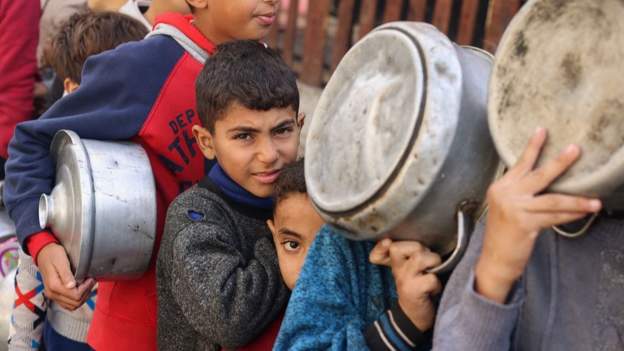
The Israeli military is accused by Human Rights Watch of employing starvation as a “weapon of war” in the ongoing conflict.
The group alleges that Israel has deliberately blocked the delivery of essential supplies, including water, food, and fuel, while obstructing humanitarian assistance.
International laws prohibit the use of starvation as a tactic in warfare. In response, Israel’s foreign ministry spokesperson, Lior Haiat, labeled Human Rights Watch as “antisemitic” in statements to AFP news agency.
“Human Rights Watch… did not condemn the attack on Israeli citizens and the massacre of October 7 and has no moral basis to talk about what’s going on in Gaza if they turn a blind eye to the suffering and the human rights of Israelis,” he said.
Human Rights Watch (HRW) has declared that Hamas has committed war crimes and released statements regarding the attack on October 7.
Israeli soldiers are moving into more areas of the Gaza Strip and telling people to leave, especially in the middle and south.
One way it is giving out these instructions is by using a map on the internet.
that separates the Gaza Strip into many smaller sections.
People who live in the area are asked to pay attention to what is happening and to do what the IDF tells them through the news and other media.
Today, it posted on social media to tell people in 20 areas in southern Gaza to leave their homes.
The map showed arrows pointing to the south, telling people to go there.
The IDF has told people to leave an area by dropping flyers and making phone calls with warnings. They sometimes use QR codes on the flyers to show a map of safe places.
Many people have criticized its way of doing things.
Sari Bashi from Human Rights Watch said Israel wants people without electricity or internet to scan a barcode to find out where they should go.
She also said Israel is telling people to run away “when there’s nowhere safe to go” and no safe way to get there.
The UN says that most people in Gaza had to leave their homes because of the war. The US told Israel to keep civilians safe, and Israel says it is doing its best to do that.
A man from Gambia who lives in Germany has been given a life sentence for being part of a group that killed people for the ex-president of Gambia, Yahya Jammeh.
The man’s name is Bai L. Drove for the group called the “Junglers”. He was proven to have done very bad things, like killing and trying to kill people, and he was found guilty.
In 2019, during a Gambia investigation, three people accused Mr Jammeh of ordering many murders, including the 2013 killings of two US-Gambian businessmen and journalist Deyda Hydara.
Bai L committed a few crimes. The news agency AFP says that someone is being accused of helping to stop Hydara’s car before he was killed and then driving one of the attackers away.
After being president for 22 years, Mr. Jammeh didn’t want to give up being president when he lost the election in 2016. After other regions sent armies to make him leave, he decided to live in a different place.
According to Human Rights Watch, the trial could happen in Germany because it has the power to prosecute serious crimes no matter where they happened.
Human Rights Watch (HRW), a group that defends people’s rights, has accused Rwanda of using oppressive methods to go after its critics outside of the country, even if those critics have asked for help from other countries.
The text is saying that there are acts of violence, such as killings and disappearances, as well as surveillance and misuse of law enforcement. These actions are meant to isolate people who may criticize the government.
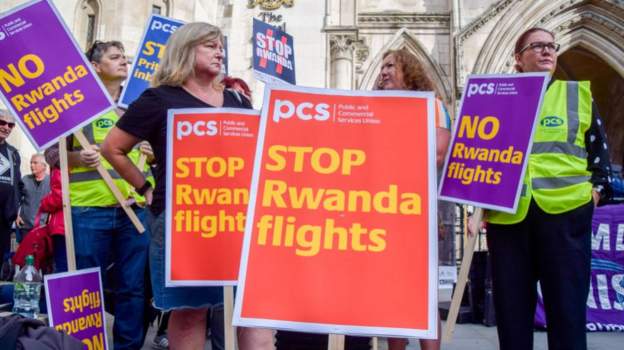
A report has been released as the highest court in the UK listens to the government‘s appeal. The government wants to send asylum seekers back to Rwanda, but a previous ruling prevented them from doing so.
The UK said that Rwanda is not a safe country.
Yasmine Ahmed, the UK director of Human Rights Watch, said that the findings show that Rwanda is not a country that the UK should depend on to follow international standards or the rule of law when it comes to asylum seekers.
Rwanda says the allegations are not true. Government spokesperson Yolande Makolo says HRW is not telling the truth and is trying to push a political agenda.
The HRW talked to about 150 people from different parts of the world since President Paul Kagame won the election in 2017.
The text says that it has recorded cases of mistreatment against people from Rwanda who live in different countries like Australia, Belgium, Canada, France, Kenya, Mozambique, South Africa, Tanzania, Uganda, the UK, and the US. It also includes their family members living in Rwanda.
A lawyer and an opposition politician were detained by Tanzanian police on charges of inciting and plotting to organise massive rallies intended to topple the government.
Through an attorney, Mpaluka Nyagali and Boniface Anyasile Mwabukusi both denied wrongdoing.
According to Human Rights Watch, this follows the imprisonment or threat of prosecution of 22 people who had opposed parliament for authorising a port management agreement between Tanzania and an Emirati corporation.
The Tanzanian government has been accused of selling off its nation, although this accusation has been refuted by activists, people, and opposition leaders.
The lack of a time frame for the end of Emirati management of the ports in the deal particularly worries critics.
According to Tanzanian activist Maria Sarungi-Tsehai, who spoke on the BBC’s Newsday show, the country’s human rights situation has been deteriorating and there has been significant public opposition to the port contract, which has resulted in crackdowns.
“Mostly citizens who are not politicians” were being targeted, and she claimed that “it’s never been this bad.”
The two arrested, according to her, were transferring the matter to a higher court for an appeal when they were detained. They had been involved in a case at a regional court seeking to prevent an Emirati corporation from managing Tanzania’s ports, which they lost.
On Thursday, the Tanzanian High Court rejected a request to stop a corporation from the United Arab Emirates from managing Tanzania’s ports.
Four Tanzanians who opposed a 2022 agreement between Tanzania and the UAE filed the petition. According to the agreement, DP World, an Emirati logistics business, will take over administration of a few ports on Tanzania’s mainland.
On June 10, the agreement was accepted by Tanzania’s parliament.
Many activists, residents, and opposition politicians criticised the transaction for what they perceived as the Tanzanian government selling off their nation.
Human Rights Watch (HRW) denounced the Tanzanian government in August for intimidating and imprisoning anyone who opposed the transaction. It happened after the government had detained and arrested 18 people on June 19 in Dar es Salaam for opposing the accord.
Oryem Nyeko, an HRW researcher in Tanzania, stated that the government should respect the right to freedom of expression and assembly and pay attention to critics rather than cracking down on them.
The UAE company has already signed into agreements to develop or manage several African ports, including the Banana port in the Democratic Republic of the Congo, the Bosaso port in Puntland, the Berbera port in Somaliland, and the Ain Sokhna port in Egypt.
Additionally, the UAE has expressed interest in running the adjoining ports of Mombasa, Lamu, and Kisumu.
Human Rights Watch, a New York-based organization, claims that there have been numerous homicides, rapes, and acts of looting in northeast Mali this year, prompting thousands of people to escape and seek safety.
Six attacks were reported in the Gao region and two in Menaka between January and June, according to a report released by the rights organization on Thursday. Unconfirmed claims from aid workers and eyewitness indicate that thousands of residents were forced to evacuate and hundreds were killed.
Numerous witnesses told authorities that the fighters rode motorbikes and pickup trucks, carried assault rifles and occasionally rocket-propelled grenade launchers, and wore recognizable turbans.
Late in March, Qasim received a call informing him that his brother, a Taliban government employee in Afghanistan, had suffered critical injuries in a suicide attack close to Kabul’s Ministry of Foreign Affairs.
The 32-year-old and his family hurried to the hospital, but when they arrived, the physicians informed him that his brother had already passed away.
A security checkpoint was struck by the explosion as government workers were departing for the day. It struck at the centre of the “Green Zone,” the capital’s strongly defended diplomatic quarter, which existed up to the fall of the old Afghan government in August 2021. Later, Islamic State Khorasan, also known as ISIS-K, claimed responsibility for the incident. This was the group’s second attack on the ministry this year as it focuses its firepower on high-profile targets in an effort to topple the Taliban’s government and erode public trust in its guarantees of security.
“The Taliban are saying that they protect us, but really they cannot. Still we face threats from different groups in Afghanistan. I don’t know who is really behind these incidents, ISIS or others,” Qasim, who asked that his last name not be used due to security concerns, told CNN.
“Currently we don’t have security in Afghanistan at all, whenever we go out we don’t know if we will come home alive or not,” he added.
In the nearly two years since the Taliban seized control of Afghanistan, ISIS-K has scaled up the volume and complexity of attacks across the country, putting pressure on the new government and raising concerns in the West about the possible regeneration of a group that could once again pose a serious threat internationally.
ISIS-K and the Taliban, both Sunni Islamist extremist groups, are enemies with differing ideologies, fighting each other for control over parts of the country — and recruits.
ISIS-K’s recent attacks have largely been aimed at the Taliban and other symbolic targets, as well as at Afghanistan’s Shia Muslim minorities, in particular the ethnic Hazaras. Bombings have increased in urban areas, leaving hundreds injured and dead. Between late 2022 and early 2023, ISIS-K attacked the Pakistani and Russian embassies, hit a hotel where Chinese business representatives were staying and carried out an explosion at an air force compound.
The group has frequently published its claims in its weekly newsletter, Al Naba, alleging that it has struck on 283 occasions in Afghanistan since the Taliban’s takeover, killing at least 670 people and injuring 1,200 — a significant uptick in casualties per attack.
With media restrictions severely affecting journalists’ ability to report independently in the country, and an absence of Western intelligence, it’s difficult to verify these figures. In an address to the Security Council in March, the head of the UN Assistance Mission in Afghanistan (UNAMA), Roza Otunbayeva, said that ISIS-K posed “a growing threat,” and raised concerns over the Taliban’s capacity to cope with that challenge. But the Taliban have insisted that it has full control.
In light of patchy information on the ground, analysts are increasingly turning to open sources to assess the state of play in Afghanistan.
Afghan Witness, a project run by the UK-based Centre for Information Resilience, which monitors human rights in the country, this week released a new dataset of verified abuses and violent incidents since the Taliban’s takeover. The data, which is available in a live map, includes 367 pieces of open-source evidence — largely videos and images shared on social media — about 70 ISIS-K attacks since August 2021. Taken together, they reveal a gradual shift in the group’s activities in Afghanistan — from a few small-scale attacks targeting Taliban patrols and checkpoints in rural areas, such as the eastern Nangarhar province, where ISIS has maintained a presence since 2015, to a concentration of attacks in urban areas, including in the capital, Kabul, Herat in the west, and Mazar-i-Sharif and Kunduz in the north.
Before the Taliban’s return to power, ISIS-K had not claimed any attacks in Mazar-i-Sharif, Afghanistan’s third most populous city, but since then the group has claimed nine, including a blast in March that killed the Taliban governor of Balkh province in his office. In the first year under the Taliban’s new government, ISIS-K claimed eight attacks in Kunduz city.
Afghan Witness’ data on verified attacks and ISIS-K claims reflect the group’s continued targeting of civilians, notably the Hazara community in Kabul, Herat and other cities, though attacks have slowed over the past few months as the group has focused on higher-profile Taliban targets.
“It is clear from the data and propaganda that they are pursuing elements of strategies used elsewhere, such as the targeting of minorities to promote sectarianism, and they have become increasingly bold in targeting high-profile and symbolic targets within Afghanistan,” said David Osborn, team leader of Afghan Witness.
“Recently, the Taliban appear to have conducted a series of raids against the Islamic State, coinciding with a reduced number of attacks by the group. This is the picture we get from open source but in the long term it is unclear how far the Taliban’s actions will blunt Islamic State-Khorasan’s capability inside Afghanistan,” he added.
Despite the Taliban’s promises of a more moderate form of rule than when they were last in power two decades ago, they have reintroduced harsh measures in line with their strict interpretation of Islamic law, or Sharia, including public executions, flogging and banning women from education and the workplace.
As the Taliban try to minimize the threat ISIS-K poses, attacks on civilians continue.
“We’ve seen Islamic State-Khorasan target Shia Hazara as they attend schools, mosques and festivities. What is most striking is the helplessness of those caught up in the violence and the constant state of instability and fear that is created by the attacks,” Osborn said of Afghan Witness’ research. These communities feel the de facto authorities won’t defend them, after years having been persecuted by the Taliban themselves, he added.
Nearly half of the attacks verified by Afghan Witness hit crowds as they gathered in public spaces, including markets, schools, hospitals, funerals, weddings and religious services.
In October 2021, two months after the US withdrawal, ISIS-K fighters bypassed Taliban security to access Imam Bargah Mosque, the largest Shia mosque in Kandahar, a city in the south of the country, during Friday prayers. They shot the temple guards, then detonated their explosive vests among the crowds, claiming to have killed and wounded more than 100 people. At the time, CNN was able to confirm more than 30 deaths.
A year later, in September 2022, a suicide bombing struck Kaaj Educational Center in Kabul’s Dasht-e-Barchi district — a predominantly Hazara and Shia neighborhood that had suffered several devastating ISIS-K attacks before the Taliban took over — killing at least 25 people. The students, many of them girls, were taking a practice university entrance exam. The attack, videos of which were verified by Afghan Witness, was not claimed by ISIS-K, but, according to analysts, bore the hallmarks of the group.
Earlier that month, Human Rights Watch (HRW) said that Taliban authorities “had an obligation to protect at-risk communities” from repeated ISIS-K attacks, but that those authorities were failing to provide them with security, based on interviews with 21 survivors and their family members. Richard Bennett, the UN special rapporteur on human rights in Afghanistan, has also called for investigations into attacks on Hazara, Shia and Sufi communities, which he described as bearing the hallmarks of “crimes against humanity.”
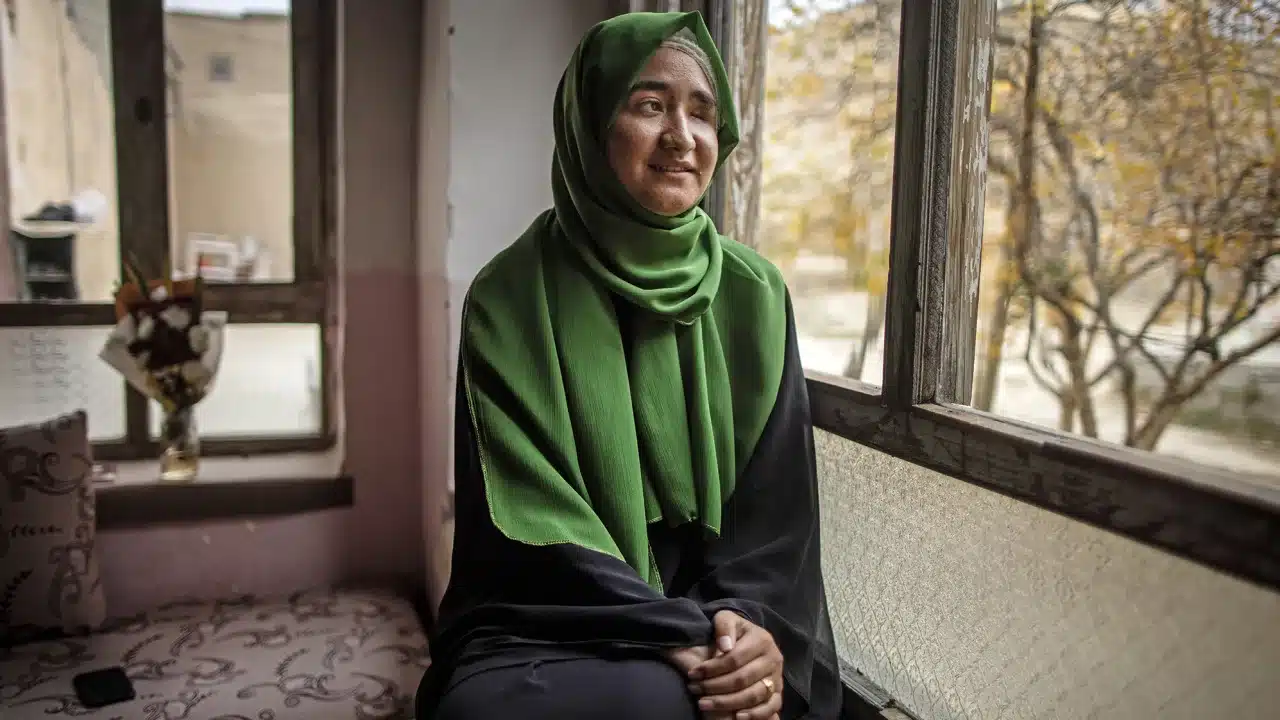
Fatima Amiri, 18, was among the students sitting the exam when gunfire erupted. She lost an ear and an eye in the attack that also shattered her jaw, and is still receiving medical treatment for her injuries. She recalls students screaming as a gunman opened fire on them at their desks, followed by the sound of an explosion, and her peers lying bloody around her on the floor.
“I saw many of my classmates were dying. I tried to escape. All the ways were closed. I climbed on a wall and jumped, I was in a bad condition full of blood,” she said. “I am now a half-normal human being with one eye and one ear.”
“We know that the Taliban cannot protect us. No one feels safe currently in Afghanistan.”
ISIS-K’s attacks have stoked anxiety among US officials about the group’s capabilities, with some warning that it could soon develop the ability to strike Western targets.
Gen. Michael “Erik” Kurilla, head of the US Central Command (CENTCOM), told lawmakers in March that ISIS-K had become more emboldened, aiming to grow its ranks and inspire or direct attacks in the region and beyond. He estimated that the group would be able to conduct “an external operation against US or Western interests abroad in under six months, with little to no warning.” Pressed about where terrorist attacks originating in Afghanistan might be directed, Kurilla said Europe or Asia were more likely targets than the United States.
Kurilla’s statement highlights one of the chief concerns among Western intelligence — that now, in the wake of the US withdrawal, it is difficult if not impossible to assess the Taliban’s effectiveness in curtailing ISIS-K. With no military or diplomatic presence on the ground, and drones now having to fly many hours from distant bases to get to Afghanistan for reconnaissance, intelligence access is incredibly limited, according to US officials and analysts.
For that reason, some have disparaged the Biden administration’s “over-the-horizon” strategy — aimed at striking terrorists without American boots on the ground — as “over the rainbow.” They point to the botched US drone strike in Kabul that killed 10 civilians, including an aid worker and seven children, as an example of the pitfalls for intelligence agencies even before the complete withdrawal, and the killing of al Qaeda leader Ayman al-Zawahiri as one of the sole successes to date.
In a 2023 threat assessment report by US intelligence agencies, the Office of the Director of National Intelligence said that ISIS-K “almost certainly retains the intent to conduct operations in the West and will continue efforts to attack outside Afghanistan.”
The US has not recognized the Taliban as the government of Afghanistan. US officials are not cooperating with the Taliban to counter ISIS-K, nor does the US share any intelligence information with them, CENTCOM spokesperson Maj. John Moore told CNN. Instead, the Taliban are fighting the group — which the US estimates now numbers between 2,000 and 2,500 fighters in Afghanistan — on its own.
The uptick in violence has put the Taliban in a difficult spot. After two decades fighting their own insurgency, they are grappling with delivering security and sticking to their signature pledge under the US-Taliban Doha Agreementin 2020, to prevent any group from using Afghanistan to threaten the safety of the US and its allies.
Taliban security forces have been waging ongoing operations and night raids against ISIS-K. The raids often target civilians accused of harboring or helping ISIS-K members, with the Taliban assaulting and detaining people without due process, according to research by Human Rights Watch (HRW). In some cases, Taliban authorities have forcibly disappeared or killed detainees, dumping or displaying bodies in public areas.
“The Taliban have been going after them in ways that are actually counterproductive because they have tackled them in the same way that everyone who’s been in power in Afghanistan has tackled insurgencies, which is as brutally as possible, which means you stir up a lot of resentment in local communities, and that stirs up more recruits,” Patricia Gossman, associate director for HRW’s Asia division, said. “We documented a number of raids by the Taliban in Kunar and Nangarhar, which ended up with a lot of people being killed who may or may not have had anything to do with ISIS-K.”
The US National Security Council claimed in April that the Taliban had killed the ISIS-K leader who plotted the deadly 2021 suicide bombing at the Kabul international airport’s Abbey Gate, which was carried out amid chaotic evacuation efforts, killing 13 US service members and more than 170 Afghans who were trying to flee the country. In the days prior to the attack, the suicide bomber was among thousands of prisoners who were freed by the Taliban from Parwan detention facility at Bagram air base and Pul-e-Charkhi prison.
“In 2021, ISIS-K was reduced to a couple of cells in the country and a very tiny, small stronghold in Kunar Province, and that was it. However, in the less than stellar handover procedure, in that chaos, the Taliban opened the prisons, including Bagram, which was a big mistake … they underestimated that there were also a couple of thousand ISIS-K members, who, once freed, just walked off,” said Hans-Jakob Schindler, senior director of the Counter Extremism Project, who served as a member and then as coordinator of the UN Security Council’s ISIL, al Qaeda and Taliban Monitoring Team.
“The organization was very diligently able to reestablish itself.”
UN Secretary-General António Guterres reported in January 2022 that the number of ISIS-K recruits had doubled in less than a year, from approximately 2,200 to nearly 4,000 fighters, with up to half of them foreign terrorist fighters, according to one assessment. Their ranks were buoyed by the prison breaks, and their diverse membership has meant the Taliban risk defections by countering them, Schindler said, adding that could spur anti-Taliban factionalism. Since the group was established in 2015, ISIS-K has included a number of former Taliban, as well as Pakistani fighters, including from the Tehrik-e Taliban Pakistan (TTP) which was designated as a foreign terrorist organization by the United States in 2010.
The group, operating in compartmented cells, is capitalizing on loose tactical partnerships and a large number of unaffiliated fighters, or freelance jihadists, who now have greater access than ever before to a large number of capabilities following the United States’ hurried departure, according to Javid Ahmad, a nonresident senior fellow with the Atlantic Council’s South Asia Center who is tracking ISIS-K’s activities.
“They now have unfettered access to the black market, for purchasing not just light weapons, but fertilizers for explosives, smaller commercial drones, which they can customize. They have access to sophisticated communication equipment. They are buying laser-guided sniper weapons. They have access to night vision goggles. And oftentimes when they do targeted assassinations, that’s how they do it,” said Ahmad, formerly Afghanistan’s ambassador to the United Arab Emirates, who has worked with the US defense community.
Ahmad and Schindler both say that the ISIS-K bombing at the entrance of the foreign ministry, past at least three checkpoints, reflects the group’s growing access to intelligence and its capacity to execute complex operations. And though it has not yet demonstrated its ability to carry out attacks outside of Afghanistan, it has ambitions to do so, they agree.
“We are about to repeat the same mistake that we did in the 1990s, believing that Afghanistan … has very little if anything to do with us,” Schindler said. “We took the eye off the ball and we are about to do the same thing again.”
Leaked classified documents from the Pentagon, obtained by The Washington Post in April, portray Afghanistan as a staging ground for ISIS-K, and suggest the group is a growing threat to the US, Europe and Asia. The US intelligence assessment, which was disseminated on the Discord messaging platform, revealed the group’s efforts to coordinate several external operations, targeting embassies, churches, business centers and the 2023 FIFA World Cup soccer tournament, the Post reported.
Responding to a question about the leaks, Vedant Patel, the US State Department’s deputy spokesperson, said: “The degradation of ISIS in the region continues to be a top priority for this administration and it’s something that we continue to work collectively on with our allies and partners.”
The Taliban rejected the report, with its spokesperson, Zabihullah Mujahid, saying in a statement on Twitter that the Islamic Emirate of Afghanistan “has full control over the country and does not allow anyone to use Afghanistan against the security of any other country,” adding that terrorist groups like ISIS-K had been “severely affected and are in the process of being destroyed.”
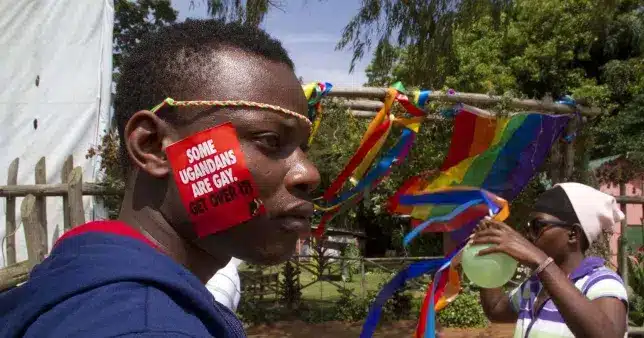
The 2023 Anti-Homosexuality Bill confirms an already existing punishment of life in prison for same-sex conduct, while also increasing to 10 years the sentence for an attempt at same-sex conduct.
Violations draw severe penalties, including death for ‘aggravated homosexuality’ and life in prison for gay sex.
‘Aggravated homosexuality’ involves gay sex with people under the age of 18 or when the perpetrator is HIV positive, among other categories, according to the law.
People holding rainbow flags take part in the Gay Pride parade in Entebbe on August 8, 2015 (Picture: AFP)
It also creates new offences that will further curtail any activism on LGBTQ+ rights, which supporters say threaten traditional values in the conservative and religious nation.
Anyone advocating for the rights of LGBTQ+ people, or financially supporting organisations that do so, could face up to 20 years’ imprisonment.
The bill also criminalises any person who fails to report someone they suspect of participating in same-sex acts to the police, calling for a fine or imprisonment for six months.
Effectively, this targets families or friends of LGBTQ+ people failing to report their loved ones.
Member of Parliament from Bubulo contituency, John Musira, dressed in an anti-gay gown (Picture: Reuters)
‘Our creator God is happy [about] what is happening. I support the bill to protect the future of our children,’ lawmaker David Bahati said during a debate on the bill.
‘This is about the sovereignty of our nation, nobody should blackmail us, nobody should intimidate us.’
The legislation will be sent to president Yoweri Museveni to be signed into law.
Frank Mugisha, a prominent Ugandan LGBTQ+ activist denounced the legislation as ‘very extreme and draconian’.
‘It criminalises being an LGBTQ+ person. They are also trying to erase the entire existence of any LGBTQ+ Ugandan,’ he warned.
President Museveni has not commented on the current proposal but he has long opposed LGBTQ+ rights.
But in 2013 he signed an anti-LGBTQ law that was widely condemned by Western countries before a domestic court struck it down on procedural grounds.
When American soldiers imprisoned Salah Nsaif in Iraq’s infamous Abu Ghraib jail in 2003, he was 32 years old.
He fled his nation twenty years ago and now lives in distant Sweden with his wife and three kids, but the horrors of that country’s war never quite leave him.
“What occurred to me hurt a great deal. When I left Iraq, it affected mypersonal relationships, Salah told CNN, adding that he felt imprisoned by his own thoughts. “I withdrew myself because I didn’t want to see my child or anyone else. It took me a while to get over my nightmares.
Two decades after the start of the US-led war in the country, Iraqis say that while some of the physical wounds may have healed over time, the psychological trauma from the conflict and its aftermath persists to this day.
On March 20, 2003, US President George W. Bush announced the beginning of the invasion of Iraq under the pretext of disarming it from weapons of mass destruction, a claim that was later debunked.
The invasion of Iraq evolved into an eight-year occupation with American military bases, checkpoints and soldiers dotted all over the country. It was followed by a civil war and a brutal Islamist insurgency that saw Iraq overwhelmed by sectarian violence and communal divisions.
For Salah and his family, the scars of imprisonment are felt to this day, both physically and mentally.
He was stripped naked several times, deprived of food, beaten, taunted by dogs and kept in solitary confinement, he told CNN.
Seeking professional mental health treatment is less common in Arab countries than in Western societies due to a social stigma. That’s why Salah didn’t consult a psychiatrist, he said. Instead, he sought comfort from his family, but it wasn’t always easy.
“You know, in Iraq, we have this culture of not talking to a doctor or a psychiatrist. We don’t even think about it,” he told CNN. “I needed to get out of this circle of fear and anxiety and move forward. At home things were difficult during the first few years with my wife – she became like an alien to me.”
Salah was working as a journalist with the Qatar-based news channel Al Jazeera in Diyala, northeastern Iraq when US forces detained him.
He was never charged with a crime, according to Katherine Gallagher, a lawyer from the US-based Center for Constitutional Rights representing him in a 2008 lawsuit against a US government military contractor that was responsible for the interrogations in Abu Ghraib.
In the years that followed the invasion and the toppling of Saddam Hussein’s government, over 20,000 Iraqi prisoners of war were detained by US army officials.
Approximately 120,000 civilians were killed between the US military invasion and withdrawal, according to Iraq Body Count, an online database that tracks official statements, reports from hospitals and non-governmental organizations to document casualties from the Iraq war.
The Abu Ghraib prison scandal shook the world when it was exposed in 2004. Images of naked, leashed prisoners piled on top of each other in fetal positions as American soldiers smiled at the camera came to define the brutality of the war for many Iraqis.
“They would put a black bag over my head and force me to take my clothes off. They would leave me naked in my cell for days,” Salah said.
In the years that followed, documents that came to be known as the Torture Memos revealed such methods were authorized by the Bush administration under enhanced interrogation techniques. Human Rights Watch said this generally meant torture, sexual assault, and rape.
Abu Ghraib was first used by Hussein to detain Iraqis. The US military took over control from 2003 until 2006. Iraqi officials officially closed it in 2014.
Salah and his family immigrated to Sweden in 2017 and now hold Swedish citizenship. He and his children don’t talk about his ordeal. “They know what happened to me and that I was tortured… but never discussed the details. They just know it from Google.”
Alexandra Chen, a UK-based trauma specialist, told CNN that the trauma of war can be passed down generations, decades after the conflict ends.
“(If) one’s hypervigilance was a key element of them surviving a particularly traumatic period of their life,” she said, then that may “become methylated in your DNA so that your children and your grandchildren, in particular, have that ability to survive.”
Escaping these memories remains difficult for Salah. Twenty years later, he is still waiting for justice.
When the United States withdrew its forces from Iraq in 2011, many Iraqis thought it was the dawn of a new era, one that would heal the horrific remnants of war.
But by the end of that year, a fanatical militant group reemerged that would wreak havoc in the country and far beyond it. The Islamic State of Iraq and Syria (ISIS) had by 2014 taken over large swathes of Iraq and Syria, imposing its radical version of Islamic law in the territories it governed.
Abbas Al Duliami was five years old when the US occupied Iraq. He lived in Baghdad for the first few years until his family fled to Syria in 2007 to escape the carnage. Although he was young, he said he was robbed of a childhood.
Chen says this is prevalent in younger Iraqis.
“We assume that when they’re so young they don’t remember anything”, said Chen, adding that science shows the first five years of life are the most sensitive for brain growth.
Abbas returned to Baghdad with his family in 2011 hoping to start over, but ISIS threatened that new life with more upheaval, leading them to move again.
Now finishing his education in the United Arab Emirates, he said nightmares of war continue to haunt him.
“Growing up during these years was hard because I was a kid watching people being kidnapped or killed on the streets for years. It stays with me,” he told CNN.
For those who weren’t fortunate enough to escape, the trauma became a permanent part of their lives.
Ghofran Mohammed, 28, who still lives in Baghdad, was eight years old when the US invaded. She recalls watching soldiers arrest people daily.
She never spoke about the war with a mental health professional and said her family encouraged her to move on from the trauma.
“My parents told me to forget what I saw and continue my life and education after they saw I was traumatized,” she told CNN.
Chen, the trauma specialist, says children can absorb their parents’ distress when they start believing that they are the cause of the distress. That can affect their romantic relationships and their relationships with children, she says.
While therapy helps, she adds, it’s not the solution. “This is not rocket science. And the solution… in addition to the prevention of traumas, is for the wars to stop.”
Netanyahu government makes first climbdown on plan to weaken Israel’s judiciary
The government of Israeli Prime Minister Benjamin Netanyahu announced a change Monday to a key part of its controversial plans to overhaul the country’s judicial system. Opposition leaders inside and outside the legislature immediately rejected the proposed changes as insufficient. The concession would give Israeli governments less power to select new judges – but still more power than it has now. The lawmaker leading the overhaul process, Simcha Rothman, announced the change to government plans, and also said parliament would delay passage of other elements of the plan until after the parliament’s Passover holiday in April.
Background: The original bill to change how judges are selected would have established a selection committee where coalition-appointed members would have a clear majority. The new plan reduces the power of the coalition, giving them a one-seat majority of appointed spots on the judge selection committee. In another concession, it says that once two supreme court judges have been appointed by the committee, further judges can only be selected by a supermajority of the committee.
Why it matters: The change announced by the government marks its first climbdown in the face of massive public protests and international pressure. For months, hundreds of thousands of Israelis have regularly taken to the streets to protest the overhaul. They’ve been joined by senior figures in Israel’s security, high-tech, financial and academic fields. Leaders of the Israel’s allies, including the US and Germany, have also expressed concern, calling for “consensus” to be reached on the reforms instead of the government imposing unilateral measures.
Iranian president invited to visit Riyadh by Saudi king – Iranian official
Saudi Arabia’s King Salman bin Abdulaziz has written to Iranian President Ebrahim Raisi inviting him to Riyadh, Deputy Chief of Staff for Political Affairs to Iran’s President Mohammad Jamshidi tweeted on Sunday, adding that Raisi welcomed the invitation and stressed Iran’s readiness to expand cooperation. There has been no confirmation by Saudi Arabia of the letter or invitation. Separately, Iranian Foreign Minister Hossein Amirabdollahian said during a news conference on Sunday that the two countries had agreed to hold a meeting between their top diplomats.
Background: On March 10, Saudi Arabia and Iran agreed to restore ties in a Chinese-brokered deal seven years after diplomatic relations were severed between the two countries. Riyadh cut ties with Tehran in 2016 after its embassy was attacked following the Saudi execution of a prominent Shiite cleric, Nimr al-Nimr.
Why it matters: A rapprochement between Iran and Saudi Arabia could have a significant impact in calming regional tensions after decades of rivalry between the two that saw them engage in proxy conflicts in the Middle East. The Saudi finance minister said last week that it could even spur Saudi investment in Iran.
Yemen’s Houthis and government say prisoner exchange deal reached
The two sides in Yemen’s conflict on Monday said they had agreed to exchange some 880 detainees after talks in Switzerland facilitated by the United Nations and the International Committee of the Red Cross, Reuters reported. Yemen’s Iran-aligned Houthi group said it would release 181 detainees, including 15 Saudi and three Sudanese, in exchange for 706 prisoners from the government, according to statements on Twitter by the head of the Houthis’ prisoner affairs committee Abdul Qader al-Murtada and the group’s chief negotiator Mohammed Abdulsalam.
Background: The exchange of around 15,000 conflict-related detainees has been under discussion as a key confidence-building measure under a December 2018 UN-mediated deal known as the Stockholm Agreement. UN special envoy Hans Grundberg told the UN Security Council last week that there were intense diplomatic efforts at different levels to end the fighting in Yemen.
Why it matters: There is hope that a deal could facilitate broader efforts to end the hostilities, which have been helped by the resumption of ties between Iran and Saudi Arabia this month. The conflict in Yemen has widely been seen as a proxy war between Saudi Arabia and Iran.
A group of archeologists in the United Arab Emirates on Monday found what they believe to be the oldest pearling town in the Persian Gulf on Siniya Island, just east of the Umm al-Quwain emirate.
The 12-hectare (30-acre) town functioned between the late 6th and mid-8th centuries, predating the Islamic civilization, according to the Umm al-Quwain Department of Tourism and Archeology.
The findings show the town to be one of the “largest surviving urbanized settlements ever found” in what is today the UAE, and is believed to have housed thousands of residents, many of whom relied on the pearling industry. The houses were built from local beach rocks and materials from the surrounding environment and roofs were made of palm trunks.
While other pearling settlements are known to have existed in the region, this one is particularly unique, said Timothy Power, associate professor of archaeology at UAE University. Not only because of its age and size, but also because it was not seasonal, but rather operated year-round, he said.
“This is a different order of settlements, this is a proper town,” Power told CNN, adding that it was densely populated with a range of housing types, and included various socio-economic groups.
Residents of the town were likely Christian, as the settlement is located near an ancient Christian monastery that was discovered just last year, Power said.
The practice of pearling, where divers recover pearls from oysters or mussels from seas and lakes, has been part of the region’s heritage for more than 7,000 years, according to the Umm al-Quwain Department of Tourism.
“We know from historical clauses that there were other important pearling markets in this period,” Power said, but it was clear that pearling was a key industry for this town.
At peak times of the pearling market, huge numbers of people were involved in the industry, Power said. In neighboring Abu Dhabi, he added, almost two-thirds of the male population were involved in pearling in the 19th century.
Human rights organizations say that authorities are “harming hundreds of thousands… to advance a dubious government development agenda.”
According to Human Rights Watch, more than 200,000 Nigerians displaced by long-running violence are struggling for food and shelter after authorities in the northeast closed some of the camps they were living in and stopped aid.
Borno state, the epicenter of the Boko Haram conflict, announced in October 2021 that it would close all camps housing thousands of internally displaced people and return some of them to their communities. It cited increased security and the need to wean displaced people off humanitarian aid.
In a report released on Wednesday, Human Rights Watch said people removed from the camps were struggling to meet their most basic needs, including food and shelter, in the places where they had returned or resettled.
More than 140,000 people had been removed from eight camps in Borno while food aid to two more camps had been stopped as of August this year, Human Rights Watch said. Those two camps hold more than 74,000 people and will close this year.
“The Borno state government is harming hundreds of thousands of displaced people already living in precarious conditions to advance a dubious government development agenda to wean people off humanitarian aid,” Anietie Ewang, Nigeria researcher at Human Rights Watch, said in the report.
“By forcing people from camps without creating viable alternatives for support, the government is worsening their suffering and deepeningtheir vulnerability,” she said.
Borno state commissioner for information Babakura Abba Jato told Reuters he could not immediately comment on the report.
The state government says some areas formerly occupied by Boko Haram fighters are now safe for citizens to return to, and it has rebuilt some communities although aid groups say they remain vulnerable to attacks.
Some of the camps and settlements for displaced people have been hit by a cholera outbreak, and children have been the worst hit.
Last month, about 2,000 people started moving into a new residential complex in Ngarannam that had been rebuilt by the United Nations and the state government.
Ngarannam, 50km (31 miles) south of Borno’s capital, Maiduguri, was overrun by Boko Haram in 2015.
Human Rights Watch is warning that more than 200,000 people in north-east Nigeria who have been displaced by an Islamist insurgency are struggling to meet their basic needs for food and shelter.
The rights group said the problem was exacerbated by the Borno state authorities shutting down camps for internally displaced people.
It said by August this year more than 140,000 people had been removed from the camps and told to go home.
The state government said they needed to be weaned off humanitarian aid and that the security situation had improved.
According to a Human Rights Watch report, the Bahraini government is using “political isolation laws” and a variety of other tactics to keep the opposition out of the public office and other aspects of public life.
The report released on Monday details the alleged use of Bahrain’s 2018 laws to prevent political opponents from running for parliament seats or serving on the boards of governors of civic organisations, describing the practises as “targeted marginalisation of opposition figures from social, political, civil, and economic life.”
“Bahrain has spent the last decade cracking down on peaceful opposition and the political isolation laws are yet another example of the government’s repression expanding into new spheres,” said Joey Shea, Middle East and North Africa researcher with the rights group, which is based in the United States.
“These draconian laws have made a mockery of Bahrain’s upcoming parliamentary ‘elections,’ which can neither be free nor fair when you make any political opposition essentially illegal.”
Human Rights Watch said that it interviewed activists, civil society members, and opposition figures, and reviewed and analysed government statements, laws, and court records.
The group added the laws in question introduced new punitive consequences by punishing individual members of two major opposition parties, al-Wefaq and Wa’ad, that were dissolved in 2016 and 2017, respectively.
Shea said the two parties were “hugely popular political parties” before they were dissolved.
“Not only these groups were dissolved by the judiciary, but the 2018 law also takes the repression further by barring individual members from running for parliament, not even part of these societies,” she told Al Jazeera.
Al-Wefaq won 18 out of 40 seats in the 2010 parliamentary polls, which is the last election the party joined
Crackdown
The report also said that the law targets activists and human rights defenders who were arrested in the government’s large-scale crackdown duringthe peaceful 2011 pro-democracy and anti-government uprising and in its aftermath.
The final clause of the political isolation laws, concerning individuals who have “disrupted” constitutional life in Bahrain, has been interpreted by Bahraini lawyers and civil society to prevent former MPs and others from running for office again, Human Rights Watch said.
In addition to cases of people barred from running for office, the group said it documented three cases of civil society organisations that struggled to form a board and carry on with their activities due to the effect of these laws.
The report says the group also documented the continued detentions and summons of Bahraini citizens for speech-related offenses.
“The Bahraini government should repeal the 2018 political isolation laws, end the practice of denying certificates of good behavior to punish perceived opponents and restore full legal, political, and civil rights to all Bahraini citizens,” according to the group.
Human Right Watch also called on the international community, including close allies like the US, United Kingdom, and European Union member states, to pressure Bahraini authorities to end the “repression of peaceful opposition and civil society”.