Ghana Water Company Limited (GWCL) has been ordered by an International Chamber of Commerce (ICC) arbitration tribunal to pay US$235 million to Befesa Desalination Developments Ghana Limited, the operator of the Teshie desalination plant, following a dispute over the termination of a water purchase agreement.
In October 2025, GWCL shut down the plant without reaching an agreement with the Spanish-owned company over unresolved contractual issues and concerns over maintenance.
Shortly after the case was referred to the International Chamber of Commerce (ICC) for arbitration, the tribunal proceedings lasted about a year, after which Cox announced on Monday, September 21, that the two final decisions had been issued by the ICC on September 17.
Cox said the amount, net of taxes, relates to payments arising from the termination of the agreement under which Ghana Water purchased treated seawater from the plant. Interest on the award will run from April 1, 2026, despite the verdict being delivered in September.
On the other hand, GWCL raised counterclaims, including a US$144.5 million claim. However, the ICC rejected the claims and ordered the utility company to cover part of the company’s legal costs.
Impact of the plant shutdown
According to reports, more than 500,000 residents in Teshie, Nungua, Spintex, Sakumono and La continue to face rationed water supply, with many residents relying heavily on water tankers, boreholes and sachet water.
In February 2026, President John Mahama directed the Finance Minister, the Attorney-General and Ghana Water to negotiate with the plant’s shareholders to resolve the dispute and facilitate the resumption of operations.
Ghana Water Limited Managing Director Adam Mutawakilu subsequently said the utility was working to reach a settlement that would allow the plant to resume supplying water to affected communities.
Cause of dispute
The financial dispute is linked to the cost of water supplied by the plant. Ghana Water had reportedly been purchasing desalinated water at GH¢6.75 per cubic metre, while the approved tariff allowed it to sell the water at GH¢1.47 per cubic metre, resulting in a loss of GH¢5.28 on every cubic metre sold.
The US$126 million plant was commissioned in 2015 under a 25-year build-own-operate-transfer arrangement. It was designed to produce 60,000 cubic metres of water daily to serve up to 500,000 people in the Teshie-Nungua catchment.
Cox acquired the assets of the former Spanish engineering company Abengoa in 2023 and later became the majority owner of the Ghanaian project company.
The latest award adds to Ghana’s exposure to international arbitration claims and puts further financial pressure on the state as it works to resolve disputes involving major infrastructure and investment projects.
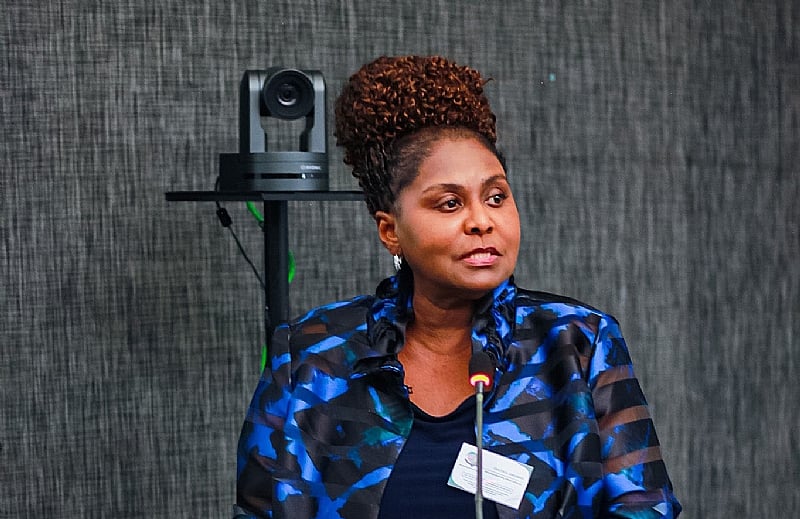
Ghanaian international lawyer and human rights advocate, Evelyn Ama Ankumah, has been named a Special Adviser without portfolio to the Office of the Prosecutor (OTP) at the International Criminal Court (ICC) in The Hague, Netherlands.
Her appointment, alongside Judge Sanji Monageng from Botswana, strengthens the ICC’s advisory team with two distinguished African legal experts.
Announcing the appointments on Tuesday, ICC Prosecutor Karim Khan underscored the significant contributions the new advisers are expected to bring to the OTP.
“Their expertise will significantly enhance the Office’s work on critical issues,” he stated. “Their involvement will undoubtedly provide tremendous benefits to our Rome Statute stakeholders and staff. I deeply appreciate their generosity in offering their time, extensive experience, and valuable insights.”
Ms. Ankumah is the founder of Africa Legal Aid (AFLA), a Hague-based organisation that champions access to justice and accountability in Africa. Her legal career spans Africa, Europe, and North America, with a strong focus on gender-sensitive and victim-centred approaches to international criminal justice.
A former Research Fellow at Maastricht University, she authored a seminal book on the African Commission on Human and Peoples’ Rights and has been instrumental in shaping key legal frameworks for international justice, including the Review of the Kampala Amendments on the Crime of Aggression. She also leads the Gender Mentoring Training Programme for judges.
Ms. Ankumah played a vital role in the establishment of the International Criminal Court Bar Association (ICCBA) and is an active member of the International Gender Champions Network. As a writer and editor, she has published six books and over 40 editions of the AFLA Quarterly journal, continuing her advocacy for justice and human rights.
Judge Sanji Monageng
Judge Monageng, a seasoned legal professional with over 30 years of experience, served as an ICC judge from 2009 to 2018. She held several leadership roles, including Appeals Division Judge and First Vice President of the ICC.
Her judicial career spans multiple African countries, having served as a judge in Eswatini and The Gambia, as well as chairing the African Commission on Human and Peoples’ Rights. In recognition of her contributions to justice and human rights, she received the Human Rights Award from the International Association of Women Judges in 2014.
The Role of Special Advisers
The ICC appoints Special Advisers based on their outstanding professional credentials, bringing together a diverse network of global experts. These appointments, offered on a pro bono basis, are designed to enhance the OTP’s capacity in specialized legal areas while ensuring cultural, linguistic, and gender diversity within the advisory body.
“Their specific expertise reinforces the OTP’s capabilities to effectively and efficiently discharge its mandate under the [Rome] Statute [of the ICC], and to strengthen specialization on a wide range of issues and priority areas identified by the Prosecutor,” the ICC statement emphasized.
With these appointments, both Ms. Ankumah and Judge Monageng will contribute their legal expertise to advancing the ICC’s mission of international justice and accountability.
Attorney General (AG), Godfred Dame, has emphasized the need for African countries to amend their domestic legislation to recognize international crimes such as war crimes, crimes against humanity, and genocide.
According to AG, this recognition can be achieved through the domestication of the Rome Statute, enabling national courts to assume jurisdiction over these crimes, or by passing specific legislation that aligns with international standards for punishment.
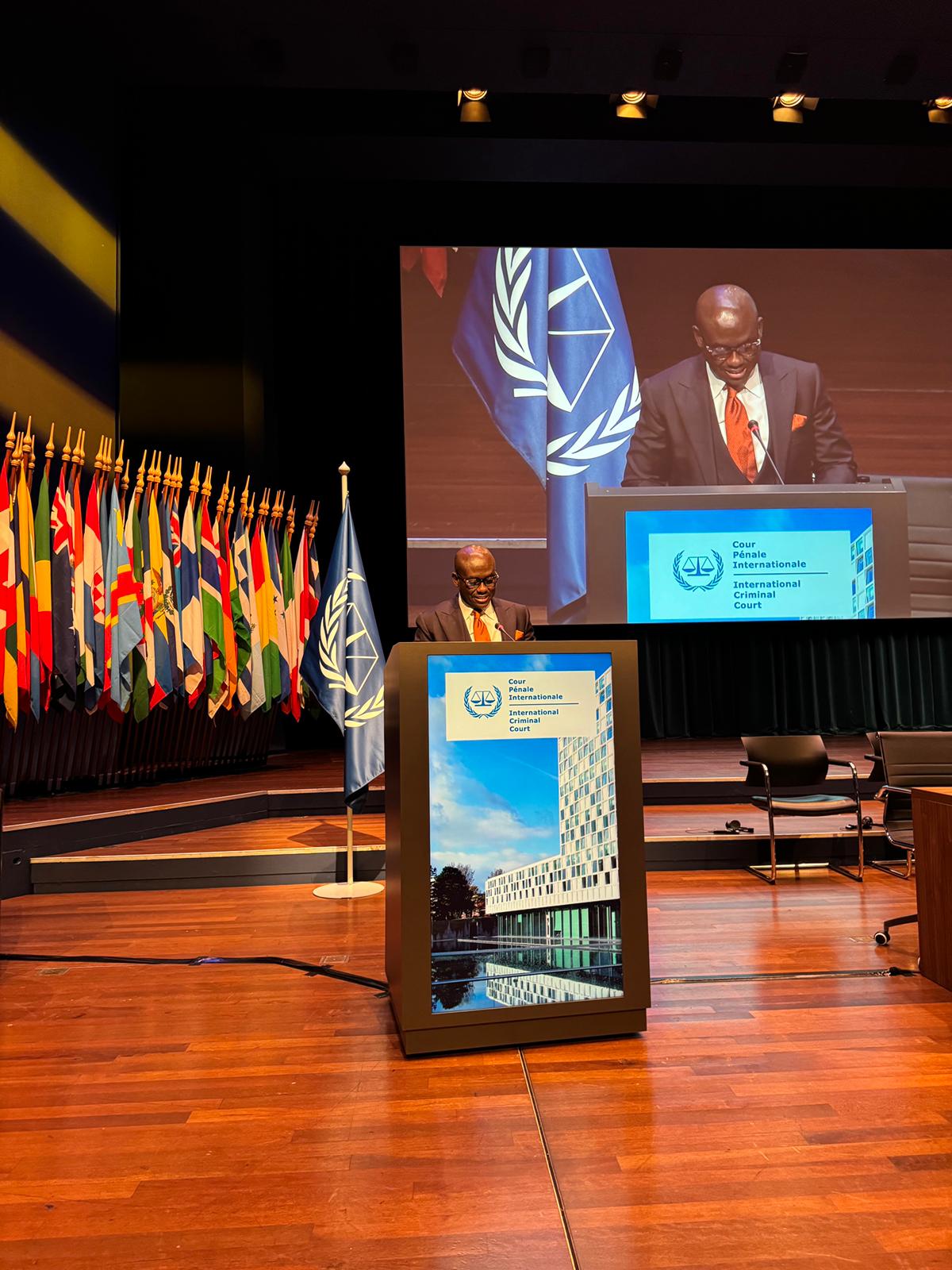
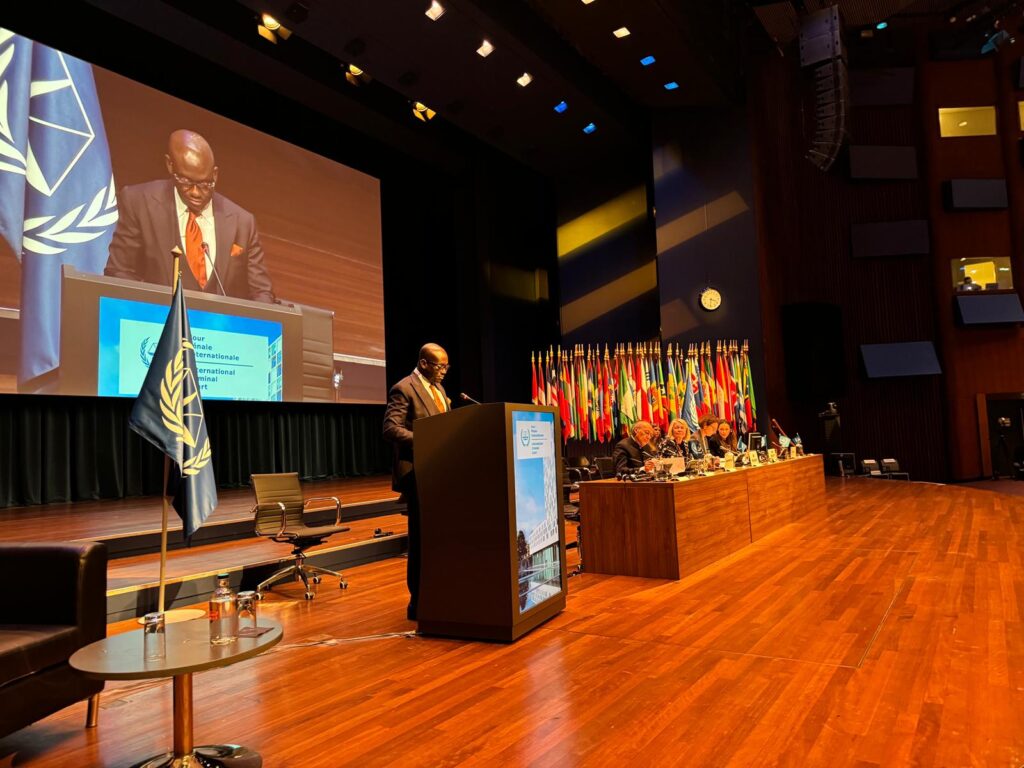
During a recent speech at the Annual Conference of States Parties to the International Criminal Court on Monday the AG added that the call for legal reform is integral to strengthening Africa’s role in international justice and supporting the International Criminal Court (ICC) in its mission.
“Domestic legislations of African countries must recognise war crimes, crimes against humanity and genocide as specific offences,” he said.
Mr Dame emphasized that national laws should be harmonized with international legal frameworks to ensure that perpetrators of such heinous crimes are held accountable within domestic courts.
He stated, “The passage of a specific legislation affirming the creation of such offences with punishment duly prescribed according to international standards and a forum for punishment of same within our respective domestic legal jurisdictions duly stipulated” is crucial for ensuring justice at the national level.
Mr Dame has also embraced the International Criminal Court (ICC)’s recent initiatives to investigate international crimes beyond Africa’s borders.
“Ghana welcomes the opening of preliminary investigations into several situations outside the African continent by the Court and the establishment of OTP offices abroad,” he noted.
This development, Mr Dame pointed out, helps dispel the perception that the ICC focuses disproportionately on Africa.
He explained, “This development and its visible outcomes could help dispel the perception that the Court unduly concentrates on Africa, especially as international crimes under the Statute know no geographical boundaries.”
According to the Attorney General, it is essential that the ICC’s mandate be applied universally, with the Court’s searchlight focusing on war crimes, genocide, and crimes against humanity globally.
He noted that amidst increasing cyber and political threats to the security of the ICC, Ghana has reaffirmed its unwavering support for the Court’s independence.
Mr. Dame led Ghana’s delegation, which included Ghana’s Ambassador to the Netherlands, Francis Danti Kotia, and Deputy Head of Mission, Yaowi Senalor.
The Twenty-Third Session of the Assembly of States Parties (ASP) to the Rome Statute of the International Criminal Court (ICC) in The Hague is scheduled to conclude on December 7, 2024.
Ghana’s Attorney-General and Minister for Justice, Godfred Dame, has emphasized the need for fairness and equity in the recruitment of staff for the International Criminal Court (ICC).
Speaking at the Annual Conference of States Parties to the ICC in The Hague, Netherlands, on Monday, November 2, Mr. Dame called for a broader geographical and gender balance in recruitment, ensuring high standards of efficiency, competence, and integrity.
“This will no doubt give equal opportunity to competent nationals of all States Parties to bring their varied experiences and perspectives to bear at the Court to enhance institutional efficiency while ensuring impartiality in the workings of the Court,” Mr. Dame explained.
In his address, the Attorney-General also urged African nations to enact domestic legislations that recognize war crimes, crimes against humanity, and genocide as specific offences. He stressed that this could be achieved either through the domestication of the Rome Statute, allowing national courts to assume jurisdiction over offences defined by the Statute, or through the passage of specific legislation affirming these crimes and prescribing punishments in line with international standards.
“This may be achieved either through the domestication of the Rome Statute into our laws, so that national courts assume jurisdiction over offences created by the Rome statute, or the passage of a specific legislation affirming the creation of such offences with punishment duly prescribed according to international standards and a forum for punishment of same within our respective domestic legal jurisdictions duly stipulated,” he said.
A-G Dame at The Hague
Mr. Dame also emphasized the importance of strong national jurisdictions for the effective prosecution of international crimes, acknowledging that the ICC alone cannot address all international crimes.
“The ICC by itself lacks the capacity to investigate and prosecute all international crimes committed in the territories of states,” he stated. “The Court must be seen to have its searchlight everywhere and to be responsive to war crimes, genocide, crimes against humanity and the crimes of aggression committed anywhere without equivocation.”
Additionally, the Attorney-General commended Ambassador Päivi Kaukoranta and the Bureau for their leadership in guiding the States Parties, thanking them for their diligent work throughout the year. He also recognized the ICC’s support for the Africa Centre of International Criminal Justice (ACICJ) at the GIMPA Law School in Ghana, which focuses on promoting international criminal law and justice across Africa and the world.
Mr. Dame led Ghana’s delegation at the conference, which included Ambassador Francis Danti Kotia and Deputy Head of Mission, Yaowi Senalor.
The Twenty-Third Session of the Assembly of States Parties (ASP) to the Rome Statute of the International Criminal Court (ICC) in The Hague is scheduled to conclude on December 7, 2024.
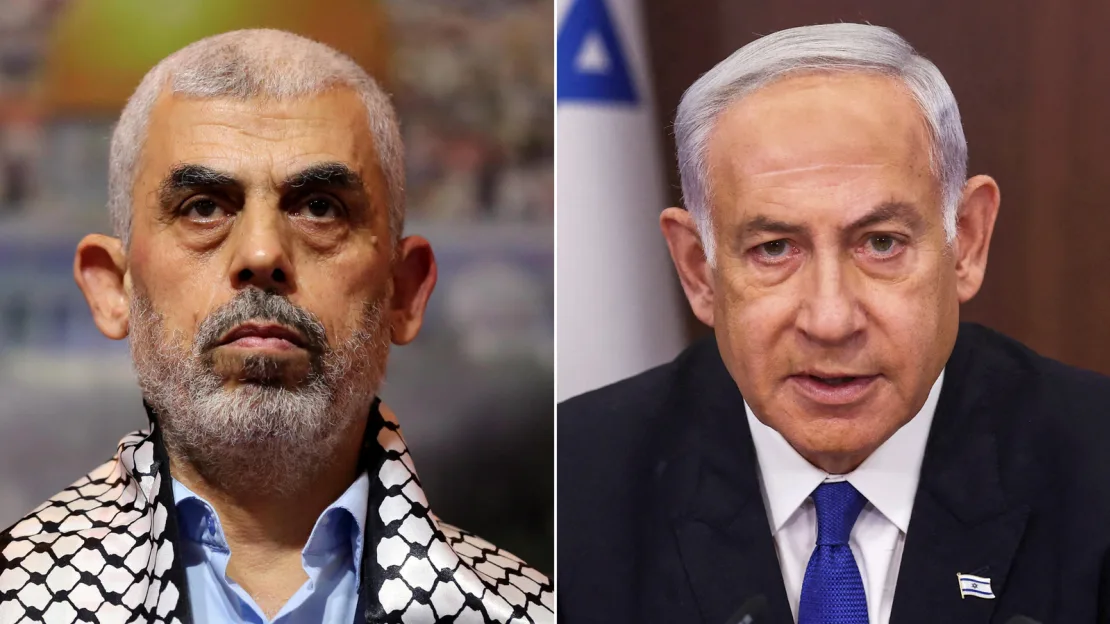
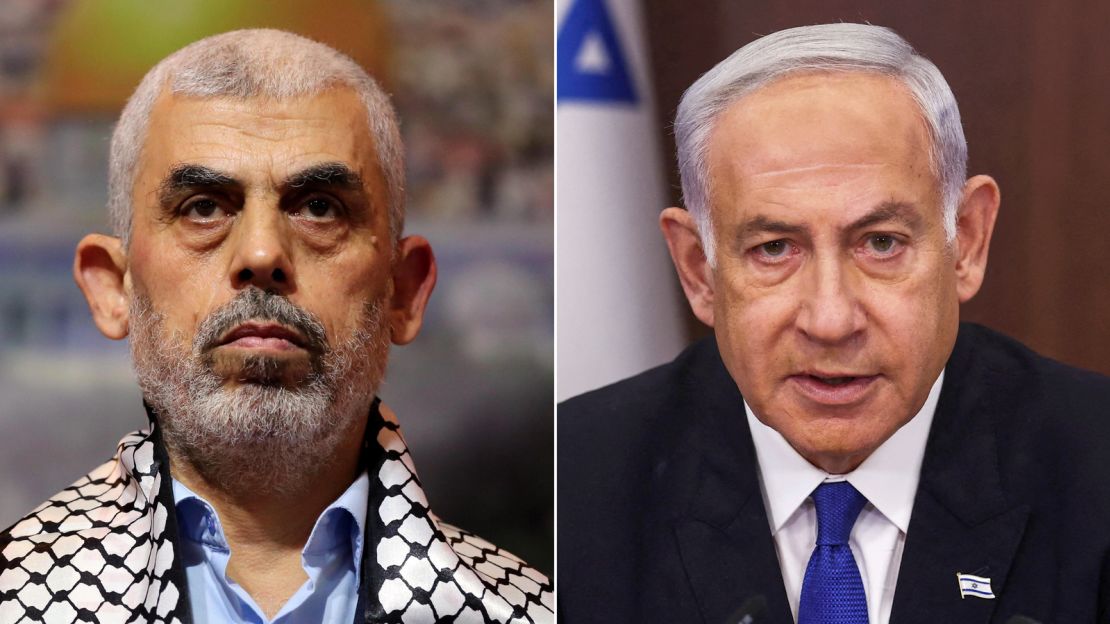
The International Criminal Court (ICC) is pursuing arrest warrants for Hamas leader in Gaza, Yahya Sinwar, and Israeli Prime Minister Benjamin Netanyahu on charges of war crimes and crimes against humanity related to the October 7 attacks on Israel and the ensuing conflict in Gaza.
This announcement was made by the ICC’s prosecutor, Karim Khan, during an exclusive interview with CNN’s Christiane Amanpour on Monday.
Khan revealed that the ICC is also seeking warrants for Israel’s Defense Minister Yoav Gallant and two other senior Hamas leaders — Mohammed Deif, head of the Al Qassem Brigades, and Ismail Haniyeh, Hamas’ political chief.
The warrants for the Israeli officials mark a historic move as it is the first instance of the ICC targeting the top leader of a U.S. ally. This decision places Netanyahu alongside Russian President Vladimir Putin, who has an ICC warrant over the war in Ukraine, and the late Libyan leader Moammar Gadhafi, who faced ICC charges for crimes against humanity before his death in October 2011.
By requesting warrants for both Israeli and Hamas leaders simultaneously, the ICC risks criticism for equating a recognized terror organization with a democratically elected government.
A panel of ICC judges will now review Khan’s application for the arrest warrants.
Khan said the charges against Sinwar, Haniyeh and al-Masri include “extermination, murder, taking of hostages, rape and sexual assault in detention.”
“The world was shocked on the 7th of October when people were ripped from their bedrooms, from their homes, from the different kibbutzim in Israel,” Khan told Amanpour, adding that “people have suffered enormously.”
On October 7, Hamas-led militants killed approximately 1,200 people across multiple locations in southern Israel and took around 250 hostages into Gaza. Many of these hostages are still being held, which, according to ICC prosecutor Karim Khan, means that crimes are continuing against numerous innocent Israelis. Khan highlighted that families are anxiously waiting for the return of their loved ones.
In his interview with CNN’s Christiane Amanpour, Khan revealed that his team possesses a “variety of evidence” to support the application for arrest warrants against Yahya Sinwar, Ismail Haniyeh, and Mohammed Deif. This evidence includes authenticated video footage, photographs from the attacks, and testimonies from eyewitnesses and survivors.
Responding to the announcement by Khan, Hamas said in a statement that it “strongly condemns the attempts of the ICC Prosecutor to equate victims with aggressors by issuing arrest warrants against a number of Palestinian resistance leaders without legal basis.”
‘Nobody is above the law’
The charges against Netanyahu and Gallant include “causing extermination, causing starvation as a method of war, including the denial of humanitarian relief supplies, deliberately targeting civilians in conflict,” Khan told Amanpour.
“The fact that Hamas fighters need water doesn’t justify denying water from all the civilian population of Gaza,” he added.
More than 35,500 Palestinians have been killed and more than 79,000 wounded in Gaza since October 7, the Ministry of Health in Gaza said on Monday. CNN cannot independently verify the figures.
Hamas leader Yahya Sinwar, at left, and Israeli Prime Minister Benjamin Netanyahu, at right, are pictured. Getty Images/Shutterstock
Benny Gantz, a member Israel’s war cabinet, criticized Khan’s decision immediately after it was announced, saying that Israel was fighting “with one of the strictest moral codes in history, while complying with international law and boasting a robust independent judiciary.”
“Drawing parallels between the leaders of a democratic country determined to defend itself from despicable terror to leaders of a blood-thirsty terror organisation is a deep distortion of justice and blatant moral bankruptcy,” he said, adding that the decision by the prosecutors “is in itself a crime of historic proportion to be remembered for generation.”
When reports surfaced last month that the ICC chief prosecutor was considering this course of action, Netanyahu said that any ICC arrest warrants against senior Israeli government and military officials “would be an outrage of historic proportions,” and that Israel “has an independent legal system that rigorously investigates all violations of the law.”
Asked by Amanpour about the comments made by Netanyahu, Khan said: “Nobody is above the law.”
He said that if Israel disagrees with the ICC, “they are free, notwithstanding their objections to jurisdiction, to raise a challenge before the judges of the court and that’s what I advise them to do.”
Israel and the United States are not members of the ICC. However, the ICC claims jurisdiction over Gaza, East Jerusalem, and the West Bank after Palestinian leaders formally agreed to be bound by the court’s founding principles in 2015.
The ICC announcement on Monday is separate from the case currently being heard by the International Court of Justice (ICJ), which involves an accusation from South Africa that Israel is committing genocide in its war against Hamas following the October 7 attacks.
While the ICJ considers cases involving countries and nations, the ICC is a criminal court that brings cases against individuals for war crimes or crimes against humanity.
Monday’s announcement is not the first time the ICC has acted in relation to Israel. In March 2021, Khan’s office launched an investigation into possible crimes committed in the Palestinian territories since June 2014 in Gaza and the West Bank.
Located in The Hague, Netherlands, and created by a treaty called the Rome Statute first brought before the United Nations, the ICC operates independently. Most countries—124 of them—are parties to the treaty, but there are notable exceptions, including Israel, the US, and Russia.
If the court grants Khan’s application and issues arrest warrants for the five men, any country that is a member would have to arrest them and extradite them to The Hague.
Under the rules of the court, all signatories of the Rome Statute are obligated to cooperate fully with its decisions. This would make it extremely difficult for Netanyahu and Gallant to travel internationally, including to many countries that are among Israel’s closest allies, such as Germany and the United Kingdom.
Former Russian President Dmitry Medvedev has called the bluff of the International Criminal Court (ICC) over the arrest warrant issued against President Vladimir Putin.
Responding to the ICC’s directive, Dmitry Medvedev noted that the Court would not be able to lift a finger against the Russian President due to the repercussions they believe might ensue.
According to him, the ICC’s assertion is not far from the truth as “It is quite possible to imagine a hypersonic missile being fired from the North Sea from a Russian ship at The Hague courthouse.”
“That’s why they won’t start a war either. They’ll be afraid to,” he added in a lengthy Telegram post.
He further noted that the court is “only a miserable international organization, not the population of a NATO country.”
Medvedev also advised the court’s judges to “look carefully into the sky.”
He again stated that the arrest warrant for Putin heralds the collapse of international law, calling it “a grim sunset of the whole system of international relations.
This came a day after the UN denounced the forced deportations as war crimes.
US President Joe Biden says the arrest warrant for Putin is justified.
According to the warrant, Putin might be detained in any of the more than 100 nations that acknowledge the ICC’s jurisdiction.
Putin joins former presidents of Sudan and Libya, Omar al-Bashir and Muammar Gaddafi, as the third sitting president to be named in an ICC warrant.
It has been a week since the arrest warrant was issued and President Putin, who recently hosted China President Xi Jinping, remains a free man.
Later this year, Putin is scheduled to attend a five-nation economic meeting in South Africa. The South African administration has stated that it will seek clarifications before Putin’s arrival.
On Tuesday, March 21, Ghana’s attorney general and minister of justice, Godfred Yeboah Dame, met with the deputy prime minister of the United Kingdom and the Lord Chancellor, Dominic Raab.
The meeting at King Charles Street addressed a variety of subjects relating to the two countries’ judicial systems.
Mr Raab expressed his profound appreciation for Ghana’s strong support for the work of the International Criminal Court(ICC), evidenced through what he described as the “powerful statement” delivered by Ghana’s Attorney-General.
Mr Dame represented the African continent at the conference on Monday at Lancaster House, as well as unequivocal statements by the President of Ghana at various international fora.
In his view, Ghana was the beacon of hope and inspiration.
The UK Deputy Prime Minister, Lord Chancellor and Secretary of State for Justice noted the steps Ghana’s Attorney-General was making to bring reform into criminal justice delivery in Ghana and stated that same was in the right direction.
He further indicated that for the United Kingdom, similar issues relating to prison reform as well as constitutional changes, in order to make decisions from the UK domestic courts assume greater prominence following the exit of the UK from the European Union, were very pressing.
Mr Raab noted that the passage of the plea bargaining law by Ghana will tremendously ease congestion in the courts of Ghana and expressed the desire to assist Ghana in any way possible with a smooth implementation of that law, given the UK’s experience with same.
Mr Dame underscored the need to urgently reform the processes for justice delivery in criminal cases in Ghana to make it more efficient and serve the public interest.
He noted that delays in criminal justice delivery constituted the greatest problem in that regard.
He disclosed to the UK Deputy Prime Minister who is also the Secretary of State for Justice the imminence of a bill to scrap interlocutory appeals, reform the jury system in Ghana and introduce leave to appeal certain decisions into the justice system in Ghana.
Mr Dame further highlighted the steps his administration is taking to introduce an alternative sentencing regime.
In civil matters, he indicated that the capacity of the Office of the Attorney-General and Ministry of Justice of Ghana had to be boosted in order to be able to handle the litany of arbitration cases constantly filed against the Government of Ghana.
This was well received by Mr Dominic Raab, who affirmed the preparedness to facilitate any assistance from the UK’s Ministry of Justice as well as the Foreign and Commonwealth Office.
The UK Deputy Prime Minister and Ghana’s Attorney-General exchanged complimentary gifts for each other and pledged their support for a closer UK-Ghana cooperative alliance which would result in an exchange of technical and other related support to both countries.
In attendance at the meeting were top officials of the UK Ministry of Justice and Alfred Tuah Yeboah, Deputy Attorney-General and Deputy Minister for Justice, Helen A. A. Ziwu, the Solicitor-General and Yvonne Atakora Obuobisa, the Director of Public Prosecutions.
The day ended with a private dinner session hosted by Papa Owusu-Ankomah, Ghana’s High Commissioner to the United Kingdom at his residence in London.