Tag: IMANI Africa

  • IMANI’s Selorm Branttie faults Cybersecurity Amendment Bill as vague and oppressive

    IMANI’s Selorm Branttie faults Cybersecurity Amendment Bill as vague and oppressive

    Vice President for Innovation and Technology at IMANI Africa, Selorm Branttie, has criticised the 2025 Cybersecurity (Amendment) Bill, describing it as ambiguous and potentially oppressive.

    In an interview with Joy FM, he observed that several sections of the draft law are vaguely written and overly broad, making it challenging to separate minor online infractions from serious cyber offences.

    Mr. Branttie warned that such lack of clarity could lead to misinterpretation and abuse, allowing ordinary digital activities to be unfairly criminalised.

    “A lot of the lettering for the Cybersecurity Bill, for example, is ambiguous in terms of the kinds of offenses that are being discussed and the ramifications for you being seen as contravening some of these offences makes them draconian, makes it unsuitable for the current day and age and society that we have” he said on

    “You are looking at things that could either be minor or major, and bottling it up into just one category and then criminalising all of it.”

    Mr. Branttie noted that several Ghanaians maintain additional social media profiles or alternative online identities for valid purposes such as protecting their privacy or adhering to workplace policies.

    He explained that, as the bill currently stands, such practices could easily be misconstrued as dishonest or unlawful.

    According to him, the absence of precise definitions and a clear categorisation of offences could give authorities undue power, potentially paving the way for the harassment of individuals, journalists, or political critics under the pretext of enforcing cybersecurity measures.

    “It’s a dangerous to have laws like this, or some of the stipulations in laws like this dictating the what should be the government’s response or the security aparatus’ response to some of these things that happen digitally because in the wrong hands, this could be used to abuse the personal rights of many indivuduals and could be used to target people percieved as political opponents or people perceived as not liked by anybody who is in authority,” he explained.

    Mr. Branttie called on Parliament to carefully revise the language of the bill before its approval to ensure it maintains a fair balance between strengthening national cybersecurity and upholding citizens’ online rights.

    He recommended that legislators work closely with technical professionals, civil society groups, and private sector stakeholders to refine the scope of offences, classify their severity, and establish transparent oversight systems.

    IMANI Africa, a policy think tank recognised for its advocacy in governance and technology, has long championed openness and fairness in the formulation of Ghana’s digital regulations.

    The 2025 Cybersecurity (Amendment) Bill aims to update the Cybersecurity Act, 2020 (Act 1038) by addressing new digital threats, reinforcing the country’s online security systems, and expanding enforcement authority for state institutions.

    Nonetheless, sections of the public and digital rights organisations caution that certain provisions, if not properly clarified, could threaten privacy, restrict free speech, and compromise data protection.

    The draft legislation is presently under review by Parliament’s Communications Committee, with stakeholder engagements expected to continue in the coming weeks.

    Ghana has witnessed a sharp rise in financial damage caused by online sextortion and blackmail, with losses hitting GH¢499,044 within the first four months of 2025.As per data by the Cyber Security Authority (CSA) this is nearly five times the GH¢103,663 recorded over the same period in 2024, pointing to an alarming trend in digital exploitation.

    In its recent advisory, the Authority revealed a slight uptick in the number of reported incidents from January to April 2025, surpassing the 155 cases logged during the comparable period last year.

    These schemes are typically launched through fake social media profiles—often using attractive images to entice users into romantic exchanges.

    Once trust is established, victims are coerced into sharing intimate visuals, which are then weaponized to extort money.

    Perpetrators usually demand mobile money payments under threat of publishing the explicit material. But paying doesn’t always end the torment—victims often face continued harassment even after fulfilling ransom demands.

    To cover their tracks, scammers frequently move chats to encrypted apps like WhatsApp, Telegram, or Signal, making detection more difficult.

    The CSA has advised the public to exercise caution by avoiding interactions with unknown digital identities, refraining from sharing any explicit content online, and reporting any suspicious encounters through its round-the-clock support services.

    Since the start of January 2023, victims targeted by online impersonation have incurred substantial losses amounting to GH¢49.5 million, as reported by the Cyber Security Authority (CSA).

    Online impersonation, also known as identity theft, involves malicious actors adopting the persona of notable figures such as politicians, businesspeople, government officials, diplomats, or reputable brands. This is done either for financial gain or to subject victims to harassment, intimidation, or threats.

    The CSA recently issued an official public warning, revealing that between January and July of 2023, they received a total of 58 reports regarding online impersonation cases. These incidents have resulted in victims collectively losing an alarming sum of GH¢49.5 million.

    This development follows a joint operation carried out by the Economic and Organised Crime Office (EOCO), the Bank of Ghana (BoG), and the Cyber Security Authority (CSA). This operation involved raids on illicit lending applications at three separate locations in Accra, which led to the arrest of 422 suspects. The task force’s investigations encompassed 270 cases involving cyberbullying, fraud, extortion, and the misuse of customer data.

    These investigations unveiled 150 unlicensed digital loan application platforms. The operators of these platforms were found to be engaged in disconcerting practices, including issuing death threats and unauthorized sharing of private messages, images, and videos. These actions were made possible by exploiting permissions unwittingly granted by unsuspecting victims on their digital platforms.

    Modus operandi

    As detailed in the alert, impostors employ deceptive strategies by fabricating false profiles or accounts that mimic legitimate individuals or well-known brands. They use coercive techniques to push their unsuspecting victims, including associates and business partners, into making impulsive decisions without thorough consideration.

    Online impersonation can manifest in various forms, such as job and recruitment scams. In these scenarios, scammers pretend to be government agencies or reputable employers, offering attractive job opportunities that demand victims to part with money or reveal personal information.

    Another common scheme is advance fee fraud, where scammers pose as wealthy businesspeople, representatives of respected companies, government entities, or distant relatives. They convince victims to make upfront payments for goods, services, or financial gains that ultimately never materialize.

    Furthermore, the investment scam involves impostors presenting themselves as investment service providers, financial advisors, or fund managers. They make alluring pledges of substantial profits with minimal risk, which ultimately serve as tactics to defraud victims.

    Lastly, contract scams involve scammers impersonating entities responsible for awarding contracts, often masquerading as representatives of government agencies. They dangle the promise of non-existent contracts, demanding fees in exchange for these fictitious opportunities.

    Recommendations

    Consequently, the CSA strongly advises the general public to exercise caution when it comes to unsolicited communications, particularly those originating from unknown sources or individuals.

    “Be suspicious of any promise of jobs, protocol advantage for recruitment slots, financial gains, gifts or lucrative opportunities. Genuine government officials would not contact anyone via social media to offer them a job or contract,” it said in the alert.

    The public is strongly encouraged to exercise careful consideration and carry out thorough investigations to confirm the authenticity of both individuals and organizations before participating in any financial dealings.

    Furthermore, individuals are advised to promptly report any suspicions regarding impersonators or scammers to the appropriate law enforcement authorities within the country. Alternatively, they can report such incidents to the Cyber Security Authority’s (CSA) 24-hour cybersecurity incident-reporting contact points. These avenues can be used to report cybercrimes, as well as to seek guidance and support for online activities.
  • Ghanaians want President Mahama to show results beyond promises  – IMANI Africa

    Ghanaians want President Mahama to show results beyond promises – IMANI Africa

    A recent report by think tank IMANI Africa has revealed that scores of Ghanaians are not pleased with the National Democratic Congress (NDC) administration’s efforts so far. IMANI Africa’s  the Public Understanding and Literacy for Sentiment and Election Analysis (PULSE) focused on comprehensive review of political sentiment in Ghana.

    The responses were generated from Facebook, X (formerly Twitter), YouTube, TikTok, podcasts, newsfeeds, and the wider web between January and June 2025.

    According to the results gathered majority of Ghanaians had confidence in the Mahama-led government prior to taking office. However, the narrative has changed in recent months, with rising scepticism fueled by governance controversies, policy contradictions on fiscal discipline and anti-corruption, and the lack of visible results.

     As per the report, the majority want the government to “address job insecurity head-on, create genuine opportunities, and rebuild trust through delivery”.

    “Public sentiment was strongly positive (65–70%) during the inauguration and the launch of the #ResettingGhana agenda. The swearing-in of Ghana’s first female Vice President, Jane Naana Opoku-Agyemang, reinforced hope for progressive governance. Civil society and independents adopted a “watchful optimism,” while the opposition maintained relative quiet,” part of the report noted.

    Read the report below:

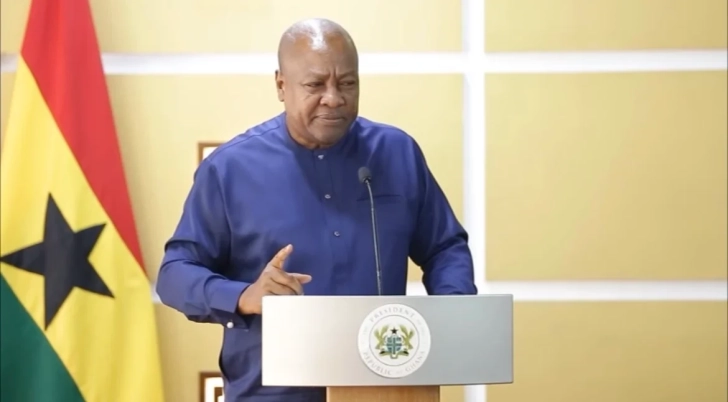
    Meanwhile, President Mahama has called on African leaders and stakeholders to address the challenges facing Africa’s democracy with urgency, to sustain the rule of law, and make it attractive to the youth again.

    He made these remarks while delivering a keynote speech at the just-ended two-day Democracy Dialogue 2025 held at the Accra International Conference Centre under the theme “Why democracies die”. In his speech, he highlighted a 2024 survey conducted by Afrobarometer and released in July last year, which suggested that more of the youth prefer a military regime over democracy.

    President Mahama noted, “For those who attended my inauguration: if you were not on Black Star Square but were locked in a room and only heard the announcements of presidents coming up to greet me, you would have noticed that the loudest applause was for the countries that have overthrown democracy and are under military dictatorship. That should give us pause for thought. That should make us ask ourselves why democracy is dying.

    That’s why today’s topic is relevant: What are the things we need to do to sustain democracy? Democracy will not survive by itself if we don’t work for it. Surveys such as Afrobarometer show that many young people now say they would prefer to live under a military government. That should give us pause for thought”.

    He warned African leaders of the need to address the challenges faced by their citizens or risk losing their democracies to military rulers and other anti-democracy forces.

    In reference to the recent topplings, particularly in the Sahel, mostly referred to as the “Coup Belt”, President Mahama recommended the need to strengthen African institutions, including the judiciary, parliaments, and electoral bodies, adding the need to deliver development by providing proper roads, educational and healthcare facilities, as well as providing jobs for the youth.

    He said, “The first is that we must strengthen institutions; independent courts, parliaments, and our electoral bodies. The second is that we must deliver development, because democracy without development, democracy without roads, schools, hospitals, and jobs, will always be at risk. Third, we must educate our citizens.

    “As Thomas Sankara said, a soldier without political education or ideological training is a potential criminal. The same is true of leadership without ethical grounding.Fourth, we must protect media and civic space. A free press is democracy’s immune system. Finally, we must build regional solidarity, because the fall of democracy in one nation weakens democracy in all others”.

    He added, “Like Amadou Toumani Touré said: whatever system of government you have, autocracy, democracy, theocracy, if it does not deliver opportunities and prosperity to the people, it will not survive”.

    President Mahama outlined weak institutions, leadership deficits, exclusion and inequality as some of the challenges confronting Africa’s democracy in particular.

    After outlining the challenges confronting Africa’s democracy, President Mahama called for more forums like the ‘Democracy Dialogue’ to identify, discuss, and solve them to make democracy attractive to the youth.

    He said citizens have grown weary of corruption, tired of misgovernance, and tired of the lack of opportunity, hence the need for accountability among leaders.

    “That is why I said we need a reset of our democracy, our economy, and our governance. We need to make governance accountable. Anybody who wants to serve in public office must be prepared to account to the people. ….Those of us who believe in democracy must continue to use dialogues like this to see what is wrong with our implementation of democracy so that we can make a reset that makes the youth continue to have faith in democratic governance and not romanticise unconstitutional government,” he stressed.

    President Mahama also mentioned that it is for all the stated reasons why he has called for a reset. The Mahama-led administration assumed office with what he describes as a “reset agenda,” an economic recovery and social transformation move to help stabilise and ensure economic growth.

    Before he assumed power, one of the major highlights in his campaign message was to reset the country, and after just nine months in power. Many have lauded his efforts so far, despite challenges such as galamsey and other poor road networks marring his measures.

    In the educational sector, he announced free tuition for freshers entering university and other public tertiary institutions by allocating GH¢452.9 million via the Ghana Education Trust Fund (GETFund).

    In the transport sector, the Mahama-led administration has paid GH¢809 million to the contractor working on the Pokuase-Nsawam Road (Greater Accra to Eastern Corridor) for four interchanges planned for Amasaman, Pobiman, Medie, and Nsawam Junction.

    Also, the government, on September 16, cut sod for the construction of the Afienya road, promising a one-year completion.During the event, Roads Minister, Kwame Governs Agbodz, affirmed that “This is not a campaign promise, it’s a bold intervention. The contractor on this stretch can deliver in less than 24 months.”

    In the health sector, the government has invested GH¢2 Billion in Medical Equipment & Training between 2025 and 2028, as announced by the Ministry of Finance in April.Also, the Ga North Municipal Hospital (Accra) received $1.5 million worth of equipment in September 2025. The equipment includes anaesthesia machines, incubators, ECGs, sterilisers, delivery sets, and more.

  • Supreme Court declares moot injunction on removal of security heads

    Supreme Court declares moot injunction on removal of security heads

    The apex court has ruled that the suit filed by Imani Ghana and security expert Prof Kwesi Aning to restrain the President from removing the Inspector-General of Police and other heads of security agencies is moot.

    In a ruling on March 25, a five-member panel of the apex court, which had Justice Paul Baffoe Bonney as its President, said the pendency of the application for an interlocutory injunction does not stop the president from performing his public and administrative function. 

    Imani Ghana and security expert Prof Kwesi Aning jointly filed a suit at the Supreme Court, seeking to restrain the President from removing the Inspector-General of Police and other heads of security agencies until an ongoing case relating to the matter is decided in May 2025.

    According to the plaintiffs, the security heads in question would be unfairly treated if they were removed before the Supreme Court delivers its ruling.

    The development followed widespread reports that the President intended to dismiss the Inspector-General of Police, Dr George Akuffo Dampare and other key security officials.

    In their suit, the plaintiffs prayed the court to grant an order of interlocutory injunction restraining the Defendant, including His Excellency the President of the Republic, and the respective councils of the Ghana Immigration Service, Ghana Police Service, National Fire Service, and Ghana Prisons Service, from removing, terminating, dismissing, sacking, suspending, or otherwise interfering with the positions of the Director-General of the Ghana Prisons Service, the Comptroller of the Ghana Immigration Service, the Director-General of the National Fire Service, and the Inspector-General of Police.

    The plaintiffs further argued that the suit raises serious constitutional issues, with the balance of convenience heavily favouring the applicants.

    They contended that the government would suffer no harm should the court grant the application, as the verdict is imminent. Moreover, should the plaintiffs fail in their case, the Executive would still have the authority to remove the security heads in question.

    The suit concluded by stating that the application is just, appropriate, and necessary under the circumstances, urging the court to grant the injunction to prevent any premature dismissals before the case is fully adjudicated.

    The Supreme Court has fixed May 7, this year to give judgment on the substantive case.

    So far, President Mahama has replaced the heads of several security agencies. Outgone officers include former Ghana Prisons Service boss Isaac Kofi Egyir, former Fire Service chief Julius A. Kuunuor, and ex-Immigration Service head Kwame Asuah Takyi.

    They have been replaced with DDGP 3 Patience Baffoe-Bonnie as Director-General of Prisons, DCFO Daniella Mawusi Ntow Sarpong as Chief Fire Officer, and DCI Samuel Basentale Amadu as Comptroller-General of Immigration.

    COP Christian Tetteh Yohuno has replaced Dr George Akuffo Dampare as the Inspector General of Police. Article 202 (3) of the Constitution states that the power to appoint persons to hold or to act in an office in the Police Service shall vest in the President, acting in accordance with the advice of the Police Council.

  • IMANI Africa explains why NPP’s gold purchase programme not viable

    IMANI Africa explains why NPP’s gold purchase programme not viable

    A policy think tank, IMANI Africa, has explained why the Gold Purchase Programme is not Ghana’s answer to the country’s cedi depreciation and economic challenges.

    According to a Senior Research Associate at IMANI Africa, Dennis Asare, there are various issues with the programme that will affect its feasibility.

    Speaking at IMANI’s “2024 IMANIfesto,” he questioned the policy’s efficacy, explaining that the initial implementation only reduced the exchange rate by 3%.

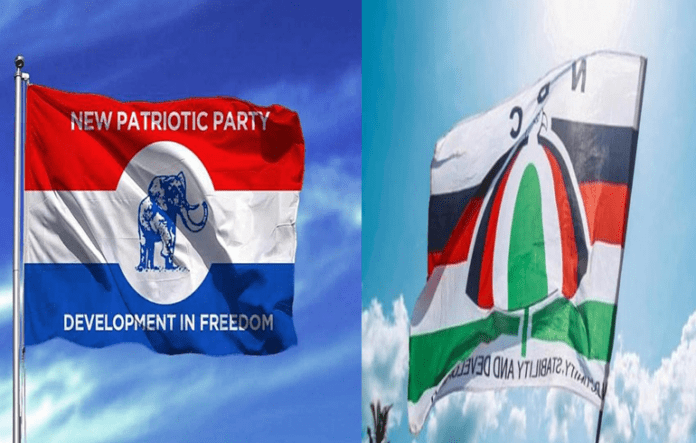
    This initiative was proposed by the New Patriotic Party (NPP) in their manifesto. It involves the Bank of Ghana purchasing gold from the local market, particularly from small-scale mining operations, to strengthen national reserves and support the cedi.

    He said: “They want to continue the Gold Purchase Programme to shore up our country’s reserves, which we see that other countries are doing the same thing. What the Bank of Ghana does is that they buy about 20% of gold from the market.

    “Now they also want to look at sustainable small-scale mining, buy a lot of that gold, and ensure that they are able to shore up our forex reserves. What we are saying is that, if you look at this promise alone, this year, there was an increase in terms of small-scale mining. But in periods where small-scale mining output does not grow, if this is going to be one of the anchor promises for addressing our exchange issues, how then does the BoG get more gold to address that?” he questioned.

    IMANI Africa has warned that the Gold Purchase Programme, on its own, will not achieve long-term stability for the local currency unless accompanied by deeper structural reforms.

    “Another challenge is that if we buy gold from large-scale miners in cedis, because some of their capital expenditure is in dollar denomination, they will still have to convert the cedi to the dollar; what we paid in cedis, they will have to convert some of it to the dollar so that they can finance their operations.

    “Those underlying dynamics must be worked out so well that we can control our exchange rate. What we think is that since they started doing this, the exchange rate in terms of depreciation has dropped by just 3%, and year by year, it has been depreciating more than 20%,” Dennis Asare added.

    The think tank also pointed out that the programme is unlikely to succeed, as it relies on gold prices remaining exceptionally high to meet its goals, which is not a feasible expectation.

    “So, this programme may not be effective because what will make this programme effective is that gold prices must be so high that you can buy a lot more to shore up your forex reserves, which we don’t think is possible within the shortest possible time, looking at the global market,” the Senior Research Associate stated.

  • IMANI fiscal recklessness index report calls out glaring financial irregularities in state institutions

    IMANI fiscal recklessness index report calls out glaring financial irregularities in state institutions

    Policy think-tank IMANI Africa has called for the establishment of an independent council to address fiscal recklessness in public sector financial management, as a report cites Finance Ministry as worst culprit.

    This follows the release of IMANI Afica’s collaborative report with Oxfam Ghana, which evaluated financial irregularities among Ministries, Departments, and Agencies (MDAs) in its third edition of Fiscal Recklessness Index.

    The report ranked the Finance Ministry as the most reckless institution in Ghana, attributing over GH₵ 4.9 billion in financial losses in 2023 to various irregularities.

    Speaking at a media briefing, Senior Research Associate at IMANI Africa, Dennis Asare, criticised the Finance Ministry for its incompetence, stating:
    “The Ministry of Finance is considered the most fiscally reckless institution because nearly 90% of the identified irregularities can be traced back to it.”

    Mr. Asare added that these significant financial losses could have been redirected to essential social intervention programmes such as the Livelihood Empowerment Against Poverty (LEAP) initiative and the Ghana School Feeding Programme.

    He called for the creation of a legally backed, independent fiscal authority to provide critical oversight of the country’s financial system.
    “We need a stronger fiscal council, not just a committee. All political parties agree on the importance of such an institution. Now is the time to formalise it with legal backing and ensure it has the authority to perform its critical oversight functions effectively,” he urged.

    However, former Auditor-General Daniel Yaw Domelevo opposed the idea of establishing a Fiscal Council as a solution to fiscal mismanagement in the public sector.


    His view is that: “the Attorney-General, the Auditor-General, the Director-General of the Internal Audit Agency, and the Public Accounts Committee—these institutions, we should wake them up.”

  • We’re committed to legislative business, NPP is not – NDC MPs

    We’re committed to legislative business, NPP is not – NDC MPs

    Bawku Central MP Mahama Ayariga has challenged the New Patriotic Party (NPP) caucus in Parliament to recognize their accountability for the delays in government proceedings.

    His statement follows the NPP’s boycott of Tuesday’s parliamentary session, led by Alexander Afenyo-Markin, after the National Democratic Congress (NDC) MPs gained control of the majority side of the Chamber.

    On October 22, Speaker Alban Bagbin adjourned Parliament indefinitely, citing a Supreme Court ruling that paused his declaration of four vacant parliamentary seats.

    In an interview with Citi News, Ayariga emphasized the NDC’s willingness to return to Parliament whenever the Speaker calls the House back into session, reiterating their dedication to legislative work.

    “We are in opposition and we are not responsible for conducting government business, but we came in our numbers, ready to assist them [NPP MPs] conduct government business. He [Afenyo-Markin] came and he was more interested in preserving his post as a former Majority Leader.

    “So if you say that we have wasted public resources, no. We were in the chamber, ready to do business. He is the one who ran away from his own business. So who is the one who is wasting public resources?”

  • GIPC no longer generating funds, dependent on ‘meager’ govt grant – Bright Simons

    GIPC no longer generating funds, dependent on ‘meager’ govt grant – Bright Simons

    Vice President of IMANI Africa, Bright Simons, has expressed concern about the Ghana Investment Promotion Center’s (GIPC) recent pivot towards taxpayer funding due to a significant drop in its traditional revenue sources.

    In a tweet, Simons brought attention to GIPC’s unexpected financial strain, revealing that the agency is now actively seeking public funds to continue its operations.

    Previously, GIPC enjoyed a stable income by providing essential services to investors. These services included issuing registration certificates, validating technology transfers, processing work permits, and supplying investment data.

    Mr Simons noted that the fees for these services were substantial—for instance, a “strategic investment” classification could cost up to $10,000, and a technology transfer approval for a $5 million project could be priced at $55,000 annually.

    He added that, GIPC operated independently, generating nearly 11 million GHS from service fees and an additional 1 million GHS from development partners in the second quarter of 2022.

    By contrast, the second quarter of 2024 saw GIPC report zero income from these revenue sources. Consequently, the agency has had to rely on approximately $35,000 in central government funding to cover its salaries and operations.

    Mr Simons pointed out that this abrupt revenue decline has led GIPC to reconsider its self-financing strategy, now pushing for a shift to a predominantly tax-funded model.

    The agency argues that its role provides significant national benefits, justifying the need for taxpayer support to sustain its activities.
    “The question is: what happened?” Simons asked, reflecting the confusion surrounding GIPC’s current financial situation. He implied that while Ghana’s fiscal challenges might have deterred some investors, this alone does not fully explain the drastic drop in GIPC’s revenue. Despite a reported 50% drop in investments between 2022 and 2023, the agency also noted a 16% increase in inbound investment in the first quarter of 2024 compared to the same period in 2023.

    Full article below:

    There is something very strange happening to the Ghana Investment Promotion Center (GIPC), the body set up to drive foreign investment into Ghana.

    For many years, it derived most of its money from providing services to investors. Businesses hoping to set up in Ghana would pay for registration certificates, technology transfer validation, work permit processing, and data services, etc.

    For example, if as an investor you wanted your project classified as a “strategic investment”, GIPC would take a cool $10,000. If you want them to give you some stats on investment trends, it would cost you ~$250. If you have a foreign partner that wants to transfer their technology to you for use in Ghana and GIPC estimates that the technology would be worth $5m, they will charge you $55,000 year. All these fees have allowed the agency a pretty nice existence for a while. But now something strange is happening.

    In the second quarter of 2022, GIPC generated nearly 11 million GHS from these service fees and an additional ~1 million GHS from Ghana’s “development partners”. This year, care to know how much they generated from services or from donors in the second quarter?

    ZERO. ZILCH. 0. NOTHING.

    The agency relied entirely on about $35,000 provided by the central government to pay salaries and run programs. GIPC is now trying to convince the government to forget about the whole concept of a self-financing investment promotion agency. It wants to be predominantly tax-funded. It says that citizens get a lot of value from its existence and should pay for the full privilege.

    The question is: what happened? The reader’s first suspicion might be that Ghana’s fiscal crisis has scared away investors who are thus no longer paying GIPC because, well, they are not coming in the first place. But that is true only up to a point. GIPC says there was a drop by 50% in investments coming into Ghana between 2022 and 2023. That is a big drop but it is, obviously, not a drop to zero.

    In fact, GIPC says that the first quarter of 2024 saw a 16% increase in inbound investment inflow compared to the same period in 2023. The tone of the agency aligns with the Finance Ministry: the economic recovery is strong and steady. So, where is the service fee income, then?

    We could all hazard a guess. Investors may still be trickling in, but they are wising up. GIPC has been collecting fees and doing precious little to enhance the business environment. So, if you can avoid paying somehow, why bother?

    Or, perhaps, they – the investors, I mean – make pledges, GIPC captures those as inbound investment, but they actually don’t step up? That could also account for the yawning gap between the record of hundreds of millions of dollars of inbound foreign investment and the searing fact of zero fee income at the country’s main investment agency.

    One cue is to be found in a flurry of agreements GIPC signed with UAE/Dubai entities to boost investment into Ghana in 2021/22. The UAE is now Africa’s largest source of investment. Yet, in spite of GIPC’s wooing and frantic agreement signing, including full blown courtship with an obscure entity called X-Fusion, UAE investors have snubbed Ghana for virtually the whole of 2023 and 2024.

    Instead of pushing to become a fully tax-funded agency, GIPC needs to review its bouquet of services carefully and ask itself: if we were savvy investors, would we pay for any of this?

  • Be pragmatic and realistic with some of your  promises – Franklin Cudjoe warns Bawumia

    Be pragmatic and realistic with some of your promises – Franklin Cudjoe warns Bawumia

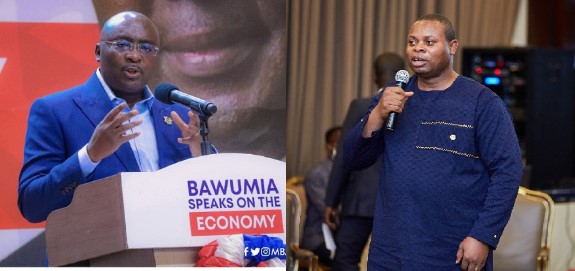
    President of the policy think tank IMANI Africa, Franklin Cudjoe, has urged the New Patriotic Party’s (NPP) flagbearer, Dr. Mahamudu Bawumia, to adopt a more realistic and analytical approach to his campaign promises.

    During the NPP’s manifesto launch in Takoradi on August 18, Dr. Bawumia vowed to cut transportation costs by 40% through the introduction of electric vehicles.

    Speaking on Channel One TV’s The Big Issue, Mr. Cudjoe critically assessed the feasibility of this pledge, raising doubts about the practicality of such a policy.

    He highlighted the lack of necessary infrastructure to support electric vehicles, including concerns about maintenance, accessibility, and the readiness of Ghanaians to transition to this new technology.

    Mr. Cudjoe also pointed to Dr. Bawumia’s previous unmet promises, such as providing vehicles for Okada riders, suggesting that a more gradual and realistic approach to policy implementation would be more effective.

    He advised Dr. Bawumia to consider a balanced energy strategy that includes traditional energy sources alongside clean energy initiatives.

    Additionally, Mr. Cudjoe expressed disappointment that the manifesto failed to address the country’s current economic difficulties, questioning the viability of the proposed private sector partnerships as a solution.

    “I don’t doubt the fact that we need to move to the electric vehicle system and all that, but do we have the infrastructure yet? How many people can hop on such buses?

    Do we have a proper way of maintaining them? I think those little things, if we don’t do them quite well, that’s what will come back and bite Bawumia quite well.”

    “You remember when he promised that Okada people were going to be using cars, we haven’t heard anything on that yet and it’s important that he takes baby steps in some of these things. I think he should rather draw on the traditional source of energy rather than this fixation on clean energy or transition element of our energy space.”

    I would have wished I heard a lot more on how we can get out of the chaos his administration has led us into, but unfortunately I didn’t hear anything like that so it makes me wonder whether the plan they have in place with private sector side, whether they are going to deliver.”

  • ‘Financially constrained’ Rosy Royal isn’t the investor for Royal Ghana Gold Refinery – IMANI Africa claims

    IMANI Africa’s Honorary Vice President, Bright Simons, has exposed serious concerns regarding the Royal Ghana Gold Refinery, a project recently celebrated as a milestone in Ghana’s quest to add value to its mineral resources.

    According to Simons, the Indian company Rosy Royal Minerals, which is purportedly a key investor in the refinery, lacks the financial capacity to fulfill this role, casting doubt on the entire venture’s credibility.

    The Royal Ghana Gold Refinery, a joint venture between Rosy Royal Minerals and the Bank of Ghana, with the latter holding a 20% stake, is said to have the capacity to refine 400 kilograms of gold per day.

    However, Simons has questioned whether Rosy Royal Minerals is truly the investor behind this project.

    During an interview with JoyNews’ Kwaku Asante, Simons revealed alarming details about the company’s financial standing, which he argues disqualifies it from being a legitimate partner in such a significant national enterprise.

    “The company that it says is coming to partner with the Bank of Ghana to do this refinery work does not have the capacity at all. They run some quarries in a few states in India. It is a pretty small company,” Simons disclosed. He pointed out that Rosy Royal Minerals is not even a gold mining company, let alone a gold refinery, and has been struggling financially for some time.

    IMANI Africa’s investigations into the company’s financial health uncovered that Rosy Royal Minerals’ last audited financial statement showed a meagre $3,000 in revenue while recording $250,000 in losses.

    “We examined the company’s books in great detail. The company has never made any investment overseas worth any amount to be interesting,” Simons stated.

    This raises significant doubts about the claim that Rosy Royal Minerals could invest the $20 million or $25 million allegedly needed to establish and operate the refinery.

    Simons further revealed that the actual technical work for the refinery is being carried out not by Rosy Royal Minerals but by a small consultancy in New York, Rare Tech.

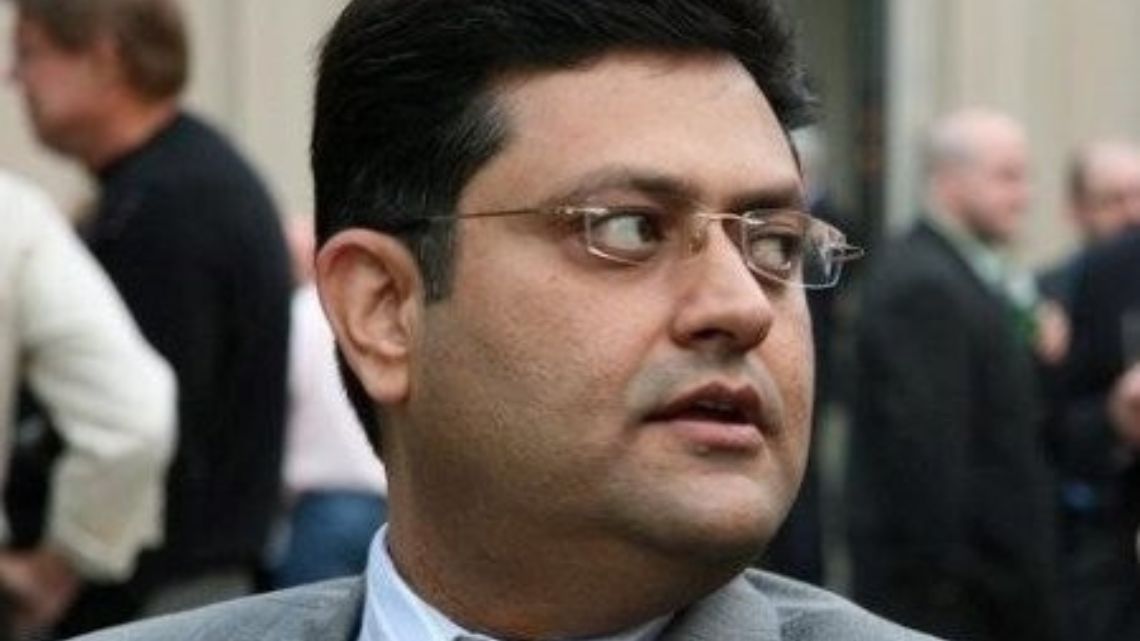
    “It turns out it is a small consultancy…in India based in New York called Rare Tech. This is basically a one-man shop, owned by Sandeep Chadha,” he said, highlighting that the company’s involvement in the project is minimal at best.

    The discovery that Rosy Royal Minerals lacks the financial capacity and that a one-man consultancy is managing the technical aspects of the refinery raises serious concerns about the project’s legitimacy.

    “This is beginning to look like a scandal now,” Simons warned, suggesting that the real motive behind the refinery might be to capture control of the Bank of Ghana’s Domestic Gold Purchase Programme, rather than to genuinely add value to Ghana’s gold resources.

    IMANI Africa’s findings indicate that Rosy Royal Minerals is not the investor it is claimed to be, raising questions about the true nature of the Royal Ghana Gold Refinery and the intentions behind its establishment.

    Simons has called for greater scrutiny and transparency regarding the project to ensure that Ghana’s mineral wealth is not compromised by dubious partnerships and questionable business practices.

    Find the full interview below.

  • Technical aspects of Royal Ghana Gold refinery handled by a one-man shop – IMANI Africa

    Technical aspects of Royal Ghana Gold refinery handled by a one-man shop – IMANI Africa

    Bright Simons, Honorary Vice President of IMANI Africa, has revealed startling details about the Royal Ghana Gold Refinery, a project touted as a major step in Ghana’s efforts to add value to its mineral resources.

    Simons claims that the technical aspects of the refinery are being managed by a small, independent consultancy, Rare Tech, owned by Dr Sandeep Chadha, rather than the primary partner, Rosy Royal Minerals of India, raising significant concerns about the project’s legitimacy and operational capacity.

    The Royal Ghana Gold Refinery, a joint venture between Rosy Royal Minerals and the Bank of Ghana—with the latter holding a 20% stake—has the capacity to refine 400 kilograms of gold per day.

    However, in an interview with JoyNews’ Kwaku Asante, Simons disclosed that the company allegedly responsible for partnering with the Ghanaian government does not have the technical or financial capacity to run such an operation.

    According to Simons, “The company that it says is coming to partner with the Bank of Ghana to do this refinery work does not have the capacity at all. They run some quarries in a few states in India. It is a pretty small company.”

    Upon further investigation, Simons and his team at IMANI discovered that the actual technical work for the refinery is being conducted by a small consultancy based in New York and not by Rosy Royal Minerals itself.

    “It turns out it is a small consultancy in India based in New York called Rare Tech. This is basically a one-man shop, owned by Sandeep Chadha,” Simons explained.

    This revelation suggests that the core technical operations of the refinery are in the hands of a single individual, raising concerns about the project’s sustainability and the expertise being brought to the table.

    On its website, the Royal Ghana Gold Limited says Dr Chadha is “responsible for running all facets of the business” and not Rare Tech. Dr Sandeep is referred to as the Chief Executive Officer (CEO) of the company.

    Simons also pointed out that Rosy Royal Minerals, the supposed main partner in the venture, has no personnel directly involved in the operations of the refinery.

    This further supports the notion that the actual technical and operational work is outsourced to an external party with minimal resources.

    “We also find out that they actually don’t have any personnel at the Royal Ghana Gold refinery,” Simons said, highlighting the disconnect between the company’s supposed role and its actual involvement.

    The implications of this arrangement are troubling, particularly given the high stakes involved in managing Ghana’s gold resources.

    Simons expressed concern that this setup could be part of a larger scheme to exert control over the Bank of Ghana’s Domestic Gold Purchase Programme.

    “This is beginning to look like a scandal now. It looks like somebody had an intention to position this refinery as grand so they can put the Ghana Gold programme under it and use this as a mechanism to control the Purchasing Programme,” he warned.

    In light of these revelations, Simons urged the public and relevant stakeholders to scrutinize the Royal Ghana Gold Refinery project more closely. He emphasized the need for transparency and accountability, especially given the questionable nature of the technical and operational arrangements surrounding the refinery.

    In conclusion, Simons’ revelations cast significant doubt on the legitimacy and effectiveness of the Royal Ghana Gold Refinery, calling into question whether the project can truly deliver on its promises of adding value to Ghana’s mineral resources and boosting the national economy.

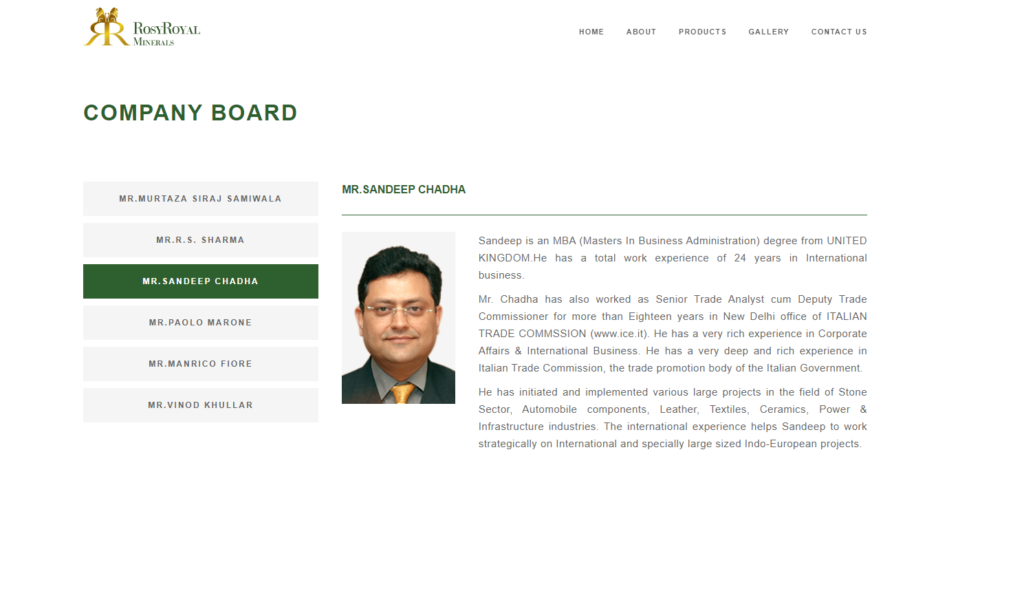
    Per checks by The Independent Ghana, Sandeep Chadha is a member of the Rosy Royal Company Board, per the company’s website, indicating some connection to Rosy Royal Minerals.

    It is imperative to note that Sandeep Chadha has a tie with the Rosy Royal Company Board and not Rare Tech.

    Profile of Sandeep per Rosy Royal Minerals

    Sandeep is an MBA (Masters In Business Administration) degree from UNITED KINGDOM. He has a total work experience of 24 years in International business.

    Mr. Chadha has also worked as Senior Trade Analyst cum Deputy Trade Commissioner for more than Eighteen years in New Delhi office of the ITALIAN TRADE COMMISSION (www.ice.it). He has a very rich experience in Corporate Affairs & International Business. He has a very deep and rich experience in the Italian Trade Commission, the trade promotion body of the Italian Government.

    He has initiated and implemented various large projects in the field of Stone Sector, Automobile components, Leather, Textiles, Ceramics, Power & Infrastructure industries. The international experience helps Sandeep to work strategically on International and specially large sized Indo-European projects.
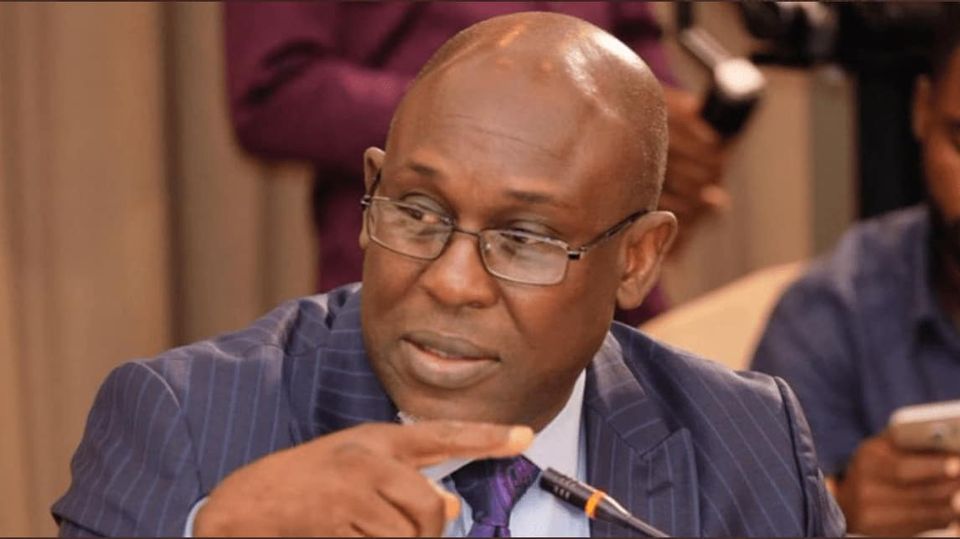
    Rare Tech

    Rare Tech, per its website, is one of India’s leading consulting firms with 28 years of excellence in strategy and management Consulting. We serve clients across India, Europe and Africa. We are a dynamic group of 15+ professionals led by Mr. Sandeep Chadha (MD) who has been with firm since inception, making it the India’s boutique consulting practice. 

    Our sector expertise spans Precious metals (Gold Refineries); Mechanical Engineering, Automobiles, Pharmaceuticals/Chemicals, Consumer Goods and Retail, Infrastructure, Engineering, Metals, Building Industry (including Ceramics & Stone sector) and Healthcare.”

    A click on the latest update however shows a dead link.

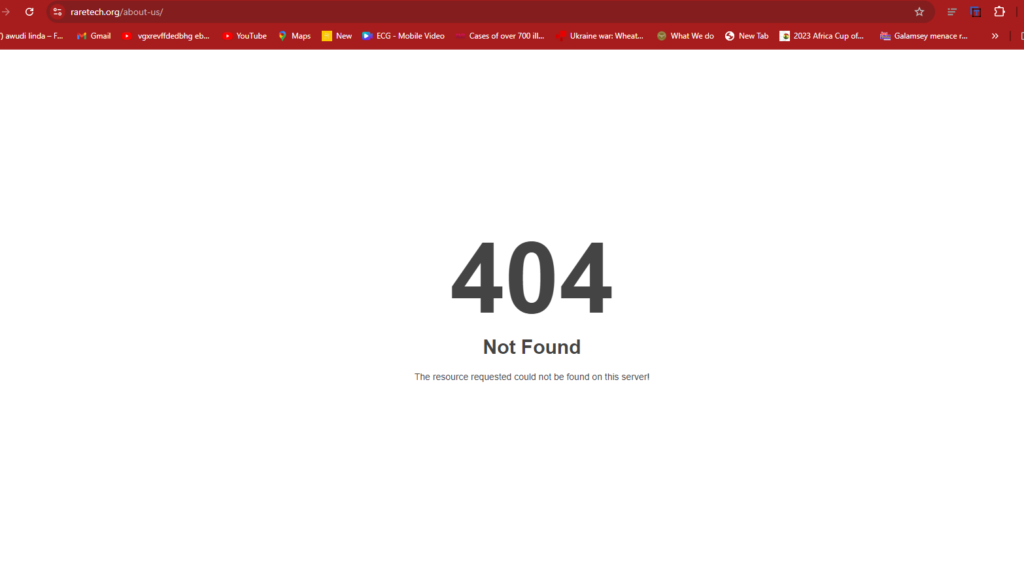
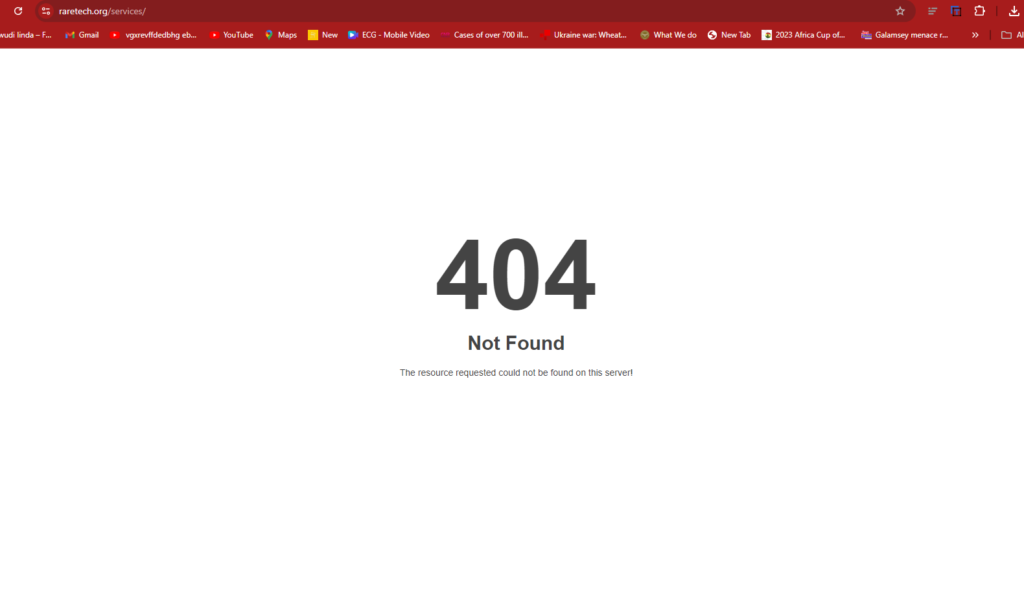
    Also, clicks on “About Us”, “Services”, “Consultancy“, show dead links.

  • Indian company partnering gov’t for Royal Ghana Gold Refinery is struggling financially – IMANI Africa

    Indian company partnering gov’t for Royal Ghana Gold Refinery is struggling financially – IMANI Africa

    The Honorary Vice President of IMANI Africa, Bright Simons, has raised serious concerns about the financial stability of Rosy Royal Minerals, the Indian company partnering with the Ghanaian government on the newly commissioned Royal Ghana Gold Refinery.

    The refinery, which is being hailed as a significant step forward in Ghana’s efforts to add value to its mineral resources, may be built on shaky financial foundations, according to Simons.

    The Royal Ghana Gold Refinery is a joint venture between Rosy Royal Minerals and the Bank of Ghana, with the latter holding a 20% stake.

    The refinery, located in Accra, has the capacity to refine 400 kilograms of gold per day and plans to source its gold dore from small-scale and artisanal miners initially, with future expansion plans to process gold from large-scale mining operations.

    However, Bright Simons has cast doubt on the viability of this partnership, revealing that Rosy Royal Minerals is financially unstable and lacks the capacity to invest in such a significant project.

    “The company that it says is coming to partner with the Bank of Ghana to do this refinery work does not have the capacity at all. They run some quarries in a few states in India. It is a pretty small company,” Simons said in an interview with JoyNews’ Kwaku Asante.

    Simons further detailed his concerns by pointing to Rosy Royal’s most recent financial statements. “Its last audited financial statement showed the company made $3,000 in revenue and $250,000 in losses. How would such a company want to invest $20 million?” he questioned.
    This discrepancy led IMANI Africa to investigate further, uncovering that Rosy Royal Minerals has never made any significant overseas investments, which casts doubt on their ability to finance the refinery.

    The investigation also revealed that Rosy Royal Minerals does not have any personnel at the Royal Ghana Gold Refinery, raising further questions about the legitimacy of the partnership.

    “Who has that? It turns out it is a small consultancy in India based in New York called Rare Tech. This is basically a one-man shop, owned by Sandeep Chadha,” Simons explained.

    He expressed concern that the technical aspects of the refinery are being handled by an independent consultant with no direct ties to Rosy Royal Minerals.

    Simons also highlighted the broader implications of this partnership, suggesting that the Bank of Ghana might be left to shoulder the financial burden due to Rosy Royal’s lack of capacity. He speculated that the refinery could be used as a mechanism to control the Bank of Ghana’s Domestic Gold Purchase Programme.
    “This is beginning to look like a scandal now. It looks like somebody had an intention to position this refinery as grand so they can put the Ghana Gold programme under it and use this as a mechanism to control the Purchasing Programme,” he warned.

    In his analysis, Simons drew a link between the refinery project and the controversial Agyapa royalties deal, which was suspended in 2021 following public outcry.

    He cautioned that the Royal Ghana Gold Refinery might be a backdoor method to reintroduce the Agyapa deal, potentially allowing certain entities to gain undue control over Ghana’s gold resources.

    “This refinery could be the front through which somebody captures mandatory control of a portion of Ghana’s gold when we have been fighting a battle against Agyapa for several years now,” Simons asserted.

    In conclusion, Simons urged the public to critically assess the viability and intentions behind the Royal Ghana Gold Refinery, given the questionable financial stability of Rosy Royal Minerals and the potential for the project to undermine Ghana’s control over its valuable mineral resources.

    Find the full interview below:

  • Franklin Cudjoe joins calls for scrapping of COVID-19 levy; says its killing Ghanaians

    Franklin Cudjoe joins calls for scrapping of COVID-19 levy; says its killing Ghanaians

    Founder and President of IMANI Africa, Franklin Cudjoe, has criticized the government for maintaining the COVID-19 levy despite widespread appeals from the business community for its removal.

    The government maintains that the levy is essential for managing the ongoing financial repercussions of the pandemic.

    Prior to the mid-year budget review, the business community urged the removal of various redundant taxes, including the COVID-19 levy. Nevertheless, the government has justified its decision to keep the levy in place.

    Abena Osei-Asare, Minister of State at the Finance Ministry, explained to the Public Accounts Committee of Parliament on Wednesday that although the immediate threat of COVID-19 has lessened, the financial impacts continue.

    In an interview with Selom Adonoo on Big Issue on Channel One TV, Mr. Cudjoe emphasized the burden that taxes impose on Ghanaians and called on the Akufo-Addo administration to promptly abolish the COVID-19 levy.

    He also criticized the lack of infrastructure development despite the government collecting numerous taxes.

    “Look at the haemorrhage we have been experiencing in terms of the way taxes received are wasted. So, there’s a certain anomaly to think that it’s only the government that can deliver development to persons and individuals. I’m not too sure that we should be conceptualising the essence of government…

    In the face of the wanton distraction that has happened to COVID-19 money, you recall that there was a special audit done for all COVID-19 received funds.

    “I disagree fundamentally with the purposes of taxation, yes, some amount of taxation should go to the government for driving infrastructural-related purposes. Even then, we should have the private sector being part of it…

    I have a challenge with the COVID-19 tax and I think it is important that even though we are under economic challenges, largely imposed by our own doing. This whole conversation about COVID-19 tax is quite unnerving.”

  • Current Akufo-Addo’s Cabinet seem to have weak research capacity – Bright Simons

    Current Akufo-Addo’s Cabinet seem to have weak research capacity – Bright Simons

    Vice President of IMANI Africa, Bright Simons, has alleged that the cabinet under president Akufo-Addo’s administration lack adequate research capacity.

    According to Mr Simons, this deficiency has allowed ministers to advance optimistic narratives without adequate factual support.

    Taking to the X platform, Mr Simons also highlighted that the Energy and Finance Ministers successfully persuaded the government to allocate over $83 million from Ghana’s already strained finances to host the new Africa Energy Bank (AEB).

    “Despite Ghana’s dire finances, the Energy & Finance Ministers convinced the Prez & govt to divert precious scarce dollars (>$83m) in an ill-timed adventure to host the new Africa Energy Bank claiming that Ghana was in “pole position” for the bid. Well, Ghana lost out.

    Same thing happened with the foreign debt restructuring. The Finance Minister has convinced the President & Govt that it will lead to more cash inflows & stronger Cedi. Truth is: restructuring is still NOT done & when over it will lead to MORE outflows & pressures on the Cedi.

    “Both cases point to one thing: the current Cabinet & presidential administration seem to have weak research capacity making it easy for ministers to get their way with rosy narratives. Case in point: 5G. Also: e-levy was promoted as an alternative to IMF & Cabinet bought it,” he wrote.

    Mr Simons’ remarks came following Nigeria’s announcement as the chosen host country for the AEB as reported by its oil minister on Thursday.

    Nigeria’s successful bid was endorsed at an extraordinary meeting of the Council of Ministers of the African Petroleum Producers Organization (APPO), positioning Nigeria as a leader in Africa’s energy sector.

    Minister of State Petroleum Resources, Heineken Lokpobiri, emphasized Nigeria’s commitment to the AEB initiative, citing the country’s ratification of the bank’s charter and a $100 million investment, which exceeds the required $83.33 million for member states.

    The Africa Energy Bank, a collaboration between Afrexim Bank and APPO, aims to fund energy projects across the continent and facilitate its transition to sustainable energy sources.

    Algeria, Benin, and Ghana were also in contention to host the AEB, after Ivory Coast and South Africa did not meet the necessary requirements.

  • The heart of corruption in Ghana is Akufo-Addo’s office – Franklin Cudjoe

    The heart of corruption in Ghana is Akufo-Addo’s office – Franklin Cudjoe

    The founder and president of IMANI Africa, Franklin Cudjoe, has explained why the creation of the Office of the Special Prosecutor (OSP) has not significantly impacted Ghana’s fight against corruption.

    Mr Cudjoe argued that the country’s struggle with corruption largely stems from the seat of government, the Office of the President.

    He emphasized that to effectively combat corruption, efforts must begin at the highest levels of government, according to citinewsroom.com.

    Mr Cudjoe noted that once corrupt acts are committed, the OSP is rendered ineffective because those involved have the financial means to protect themselves.

    “Charity begins at home, and so fighting corruption should start at the Presidency because that is where all the crooked things are cooked.

    “Look at the Scholarship Secretariat scandal; is it not from there? This Ministry of Special Initiatives, was it not harboured at the Presidency, which led to all these dams that were constructed like dugouts and wasted money all over the place. Just take a cursory look at that office,” he is quoted to have said on The Big Issue programme on Citi FM.

    He added, “So, even creating the Office of the Special Prosecutor was like battling after the facts were established, and people with deep pockets will fight you because they have made enough money to fight you through. We at IMANI say that fighting corruption and waste begins at the Presidency.”

    Mr Cudjoe’s comments follow President Akufo-Addo’s decision to forward a petition for the removal of Kissi Agyebeng as Special Prosecutor to the Chief Justice.

    The petition, dated April 30, 2024, was submitted by former Special Prosecutor Martin Amidu and was relayed to Justice Gertrude Torkonoo on May 6, 2024.

    Mr Amidu’s petition cited procurement irregularities in acquiring vehicles for the OSP and alleged misconduct involving judges and the administration of justice.

    Additional accusations included violations of citizens’ rights through arrests and detentions, breaches of the right to information, and the inappropriate appointment of staff to the office.

    Under Article 146 of the Constitution, the Chief Justice is currently assessing whether there is sufficient initial evidence to establish a committee for Agyebeng’s potential impeachment.

  • Charity begins at home, fighting corruption should start at the Presidency – Franklin Cudjoe

    Charity begins at home, fighting corruption should start at the Presidency – Franklin Cudjoe

    President of IMANI Africa, Franklin Cudjoe, emphasized the crucial need to initiate the fight against corruption from the Presidency itself.

    Cudjoe argued that the root of corrupt practices often lies within the highest echelons of power, making it imperative to start tackling the issue at its source.

    During the interview with Selorm Adonoo, Cudjoe criticized the effectiveness of the Office of the Special Prosecutor in Ghana’s anti-corruption efforts, labeling it as a “defeatist approach.”

    He highlighted specific instances of corruption within the Presidency, such as the Scholarship Secretariat scandal and questionable projects under the Ministry of Special Initiatives, which he claimed were emblematic of the challenges in combating corruption.

    Cudjoe stated, “Charity begins at home, and so fighting corruption should start at the Presidency because that is where all the crooked things are cooked. Look at the Scholarship Secretariat scandal; is it not from there? This Ministry of Special Initiatives, was it not harboured at the Presidency, which led to all these dams that were constructed like dugouts and wasted money all over the place. Just take a cursory look at that office.

    “So, even creating the Office of the Special Prosecutor was like battling after the facts were established, and people with deep pockets will fight you because they have made enough money to fight you through. We at IMANI say that fighting corruption and waste begins at the Presidency.”

    In line with IMANI Africa’s stance, Cudjoe emphasized the necessity of a proactive strategy that targets corruption and wasteful practices directly at the highest levels of government.

  • Creation of OSP in Ghana’s corruption fight was a defeatist approach- Franklin Cudjoe

    Creation of OSP in Ghana’s corruption fight was a defeatist approach- Franklin Cudjoe

    President of IMANI Africa, Franklin Cudjoe, emphasized that the fight against corruption should commence at the highest levels of government.

    During an interview on The Big Issue on Citi FM, he highlighted the need for a proactive approach to combat corruption effectively.

    Cudjoe criticized the creation of the Office of the Special Prosecutor in Ghana, calling it a reactive measure that fails to address the root causes of corruption.

    He pointed out specific instances of corruption within the Presidency, such as the Scholarship Secretariat scandal and questionable projects under the Ministry of Special Initiatives.

    According to Cudjoe, addressing corruption at the source, namely the Presidency, is crucial to prevent further misuse of public funds and ensure accountability.

    He emphasized that IMANI Africa advocates for a comprehensive strategy that targets corruption from its origins.
    “Charity begins at home, and so fighting corruption should start at the Presidency because that is where all the crooked things are cooked. Look at the Scholarship Secretariat scandal; is it not from there? This Ministry of Special Initiatives, was it not harboured at the Presidency, which led to all these dams that were constructed like dugouts and wasted money all over the place. Just take a cursory look at that office.

    “So, even creating the Office of the Special Prosecutor was like battling after the facts were established, and people with deep pockets will fight you because they have made enough money to fight you through. We at IMANI say that fighting corruption and waste begins at the Presidency.”

  • SALL residents have never been disenfranchised – EC replies IMANI Africa

    SALL residents have never been disenfranchised – EC replies IMANI Africa

    The Electoral Commission (EC) has refuted allegations by President of IMANI Africa, Franklin Cudjoe, that it disenfranchised residents of Santrokofi, Apkafu, Lolobi, and Lipke (SALL).

    In a statement released on Wednesday, May 15, the EC clarified that it did not disenfranchise the people in the newly formed Guan Constituency.

    In a comprehensive seven-point clarification, the EC affirmed that it adhered to all legal procedures in establishing the constituency and did not disenfranchise any individuals in the process.

    The EC denounced the allegations as false and advised the public to disregard them.

    The EC emphasized that it is not in their interest to disenfranchise any citizens and provided a detailed account of the events leading to the inability of SALL (now the Guan Constituency) residents to vote in the 2020 Parliamentary Election.

    “It is unfortunate that IMANI continues to peddle falsehood and untruths about the Commission at every point and turn. His [Franklin Cudjoe’s] narrative that the Commission disenfranchised the people of SALL, now the Guan Constituency, is FALSE. We urge the public to verify information put out by IMANI, with the Commission for the truth and the facts.”

    Below is the full statement.

    INABILITY OF SALL (GUAN CONSTITUENCY) TO VOTE I N THE 2020 PARLIAMENTARY ELECTION-DISREGARD FALSEHOOD AND MISINFORMATION FROM IMANI PRESIDENT

    The Electoral Commission has received an audio circulating on social media in which the President of Imani accuses the Commission of disenfranchising the people of Santrokofi, Apkafu, Lolobi and Lipke (SALL). We wish to state categorically that his accusations are false and without basis. The Commission never disenfranchised the good people of the newly created Guan Constituency. It is not in our interest to do so.

    Here are the facts surrounding the inability of the residents of SALL now the Guan Constituency, to vote in the 2020 Parliamentary Election.

    1. The Legislative Instrument (L. I. 2416) which created the Guan District (SALL) was laid in Parliament on the 6th of October, 2020 by the Ministry of Local Government and Rural Development (MLGRD). It matured on the 9th of November, 2020, roughly a month to the 2020 General Elections.
    2. Parliament went on recess on the 9th of November, 2020, the same day the L.I. creating the Guan District matured and returned on the 14th of December, 2020, one week after the 2020 General Elections.
    3. On the 10th of November 2020, the Electoral Commission received a letter from the Ministry of Local Government and Rural Development informing it of the creation of the Guan District (SALL). The letter requested the Commission to take steps to create a new Constituency.
    4. The Commission drafted a new Constitutional Instrument (C.I.) to bring into force the Guan Constituency and forwarded the draft C.I. to the Attorney General’s Department for its review on the 13th of November, 2020 as required by law.
    5. It is important to state that for a C.I. to mature and come into force, the law requires the Electoral Commission to lay the C.I. in Parliament for twenty-one (21) sitting days. This means that Parliament should be in session during the twenty-one (21) day period when the C.I. is laid.
    6. With Parliament on recess, the Commission could not lay the C.I. to bring the Guan Constituency into effect as required by law.
    7. The question is, how could the Commission proceed to create a new Constituency when Parliament was on recess and when the law required the Commission to lay the C.I. before Parliament for twenty-one (21) sitting days?

    How can any well-meaning person accuse the Commission of disenfranchising the good people of SALL when the facts are so clear?

    It is unfortunate that IMANI continues to peddle falsehood and untruths about the Commission at every point and turn. His narrative that the Commission disenfranchised the people of SALL, now the Guan Constituency, is FALSE. We urge the public to verify information put out by IMANI, with the Commission for the truth and the facts.

    To enable the public ascertain the truth, we have attached the letter from the Ministry of Local Government and Rural Development to the Commission requesting it to create the new Constituency and the Commission’s letter to the Attorney General seeking to create the new Constituency.

  • The most pragmatic EC Chair Ghana has had is Afari Gyan – Franklin Cudjoe

    The most pragmatic EC Chair Ghana has had is Afari Gyan – Franklin Cudjoe

    The President of IMANI Africa, Franklin Cudjoe, has lauded the Former Chairman of the Electoral Commission (EC), Dr. Kwadwo Afari Gyan, as the most practical Electoral Commissioner Ghana has ever known.

    In an interview with Selorm Adonoo on The Big Issue on Citi TV, Mr. Cudjoe commended Mr. Gyan’s pragmatic approach to overseeing the country’s electoral procedures.

    Mr. Cudjoe credited the successful organization of numerous elections during Afari Gyan’s tenure to his adept handling of Ghana’s intricate political landscape, a contrast to the current situation under the leadership of Commissioner Jean Mensa.

    While acknowledging that Mr. Gyan faced his own set of challenges, Mr. Cudjoe emphasized his pragmatism.

    “…By far he’s [Afari Gyan] been the most pragmatic of all the ECs [Chairs] that we have had.”

    He further indicated that “…I am so pained that just pragmatic simple stuff that she [Jean Mensa] could have pumped some sense into the other commissioners and then get a befitting EC whose public confidence would have been probably 70 or 80 by now. She failed abysmally.”

  • Sell National Cathedral site to complete abandoned hospital projects – IMANI Africa to Akufo-Addo

    Sell National Cathedral site to complete abandoned hospital projects – IMANI Africa to Akufo-Addo

    The president of the IMANI Centre for Policy and Education, Franklin Cudjoe, has urged President Akufo-Addo to divest the contentious National Cathedral site.

    Mr Cudjoe has proposed that the proceeds from this sale, valued at approximately US$58 million, be allocated to completing vital hospital projects across the nation.

    His recommendation arises amidst mounting concerns over the sluggish pace of the Agenda 111 initiative, a flagship program initiated by President Akufo-Addo in August 2021.

    Cudjoe stresses the importance of prioritizing the finalization of crucial healthcare infrastructure projects over other ventures.

    He critiques the government’s strategy of spreading resources thinly across all 111 hospitals, likening it to the unfinished National Cathedral project.

    “The Health Minister should do the commissioning. Nana should focus on properly completing 15 out of the 111 District hospitals before his tenure ends. He requires $1.5 billion to complete 70% of Agenda 111. Pray for him, as finding that money in this tight economy will be difficult without a stroke of luck or a lottery win.

    “Which is why whatever he has now should be used to properly complete 15 to 20 of these hospitals instead of allocating it thinly across all 111 and leaving them resembling the ungodly and unsightly Cathedral site. Also, can he allow auctioneers to sell his man-made wonder, the Cathedral site, to art collectors? We could get money to help complete at least one district hospital.

    “P.S. My friend Kofi Tonto reminds me that the Health Minister is a designated nominee of the president, pending approval by Parliament, so he can’t commission the project.

    “Well, I still think the designated nominee remains the CEO of the National Health Insurance Authority, doesn’t he? If not, then a deputy health minister should do the commissioning,” he said in a Facebook post.

  • Who secured 10 BVDs and how was the auction publicized? – Imani to EC

    Who secured 10 BVDs and how was the auction publicized? – Imani to EC

    IMANI Africa has expressed reservations regarding the Electoral Commission (EC)’s management of 10 outdated Biometric Verification Devices (BVDs) reportedly uncovered at a recycling facility.

    In a statement issued on Friday, April 26, 2024, the EC clarified that the 10 BVDs discovered at a recycling plant in Madina were antiquated devices that had been lawfully auctioned.

    In response to the EC’s clarification, IMANI Africa raised concerns about the procedural aspects of the auction, seeking clarification on various fronts.

    The organization specifically questioned the identity and licensing status of the auctioneers involved, as well as the methodology employed during the auction.

    Moreover, IMANI Africa requested information regarding the identities of the successful bidders and the reasoning behind their acquisition of outdated devices intended for electoral use.

    Furthermore, the organization expressed doubt about a commercial recycling plant’s involvement in handling such devices, given the potential sensitivity of the data they may contain.

    IMANI Africa urged the Electoral Commission to furnish transparent and comprehensive information regarding the auction and disposal process of these BVDs, emphasizing the paramount importance of maintaining public confidence in the electoral system.

  • IMANI Africa to hit Akufo-Addo govt with ‘dumsor’ demo

    IMANI Africa to hit Akufo-Addo govt with ‘dumsor’ demo

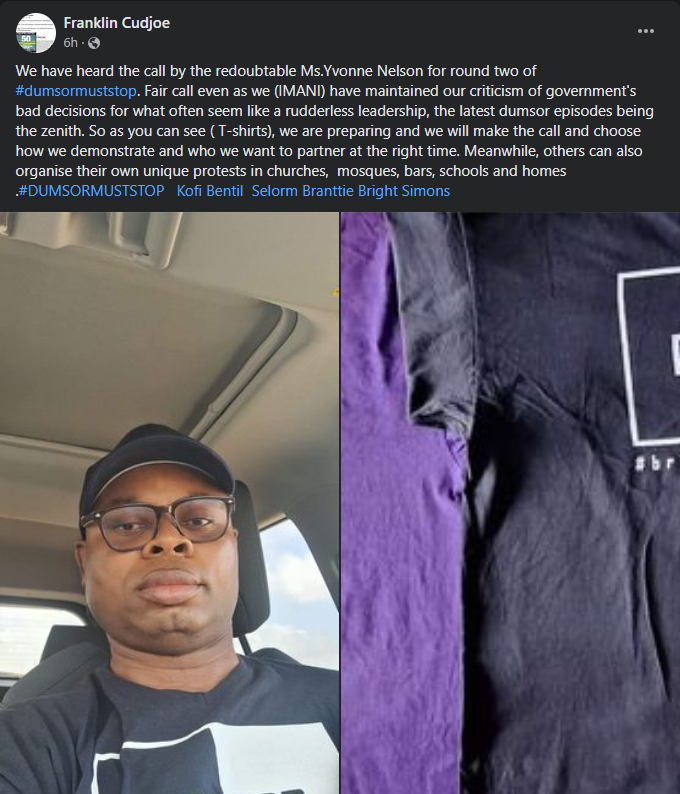
    President of IMANI Africa, Franklin Cudjoe, has announced his think tank’s plans to organize a demonstration against the government over the ongoing power outages, known as “dumsor.”

    He emphasized that IMANI will conduct their protest at their own pace, and individuals who share their grievances are welcome to organize their demonstrations.

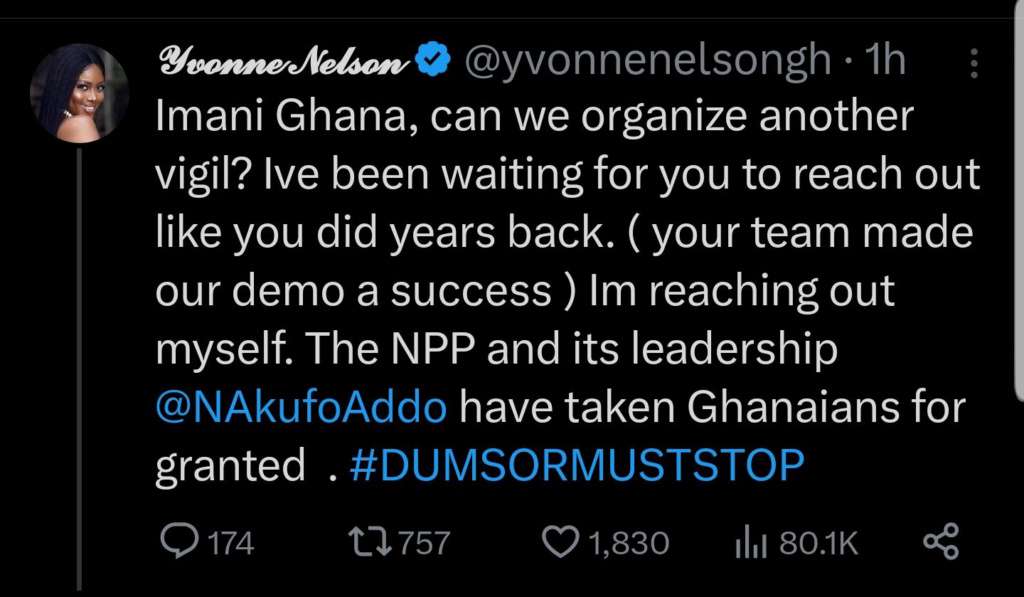
    This disclosure comes after actress Yvonne Nelson called for IMANI to join her in organizing another demonstration, reminiscent of the one held in 2015.

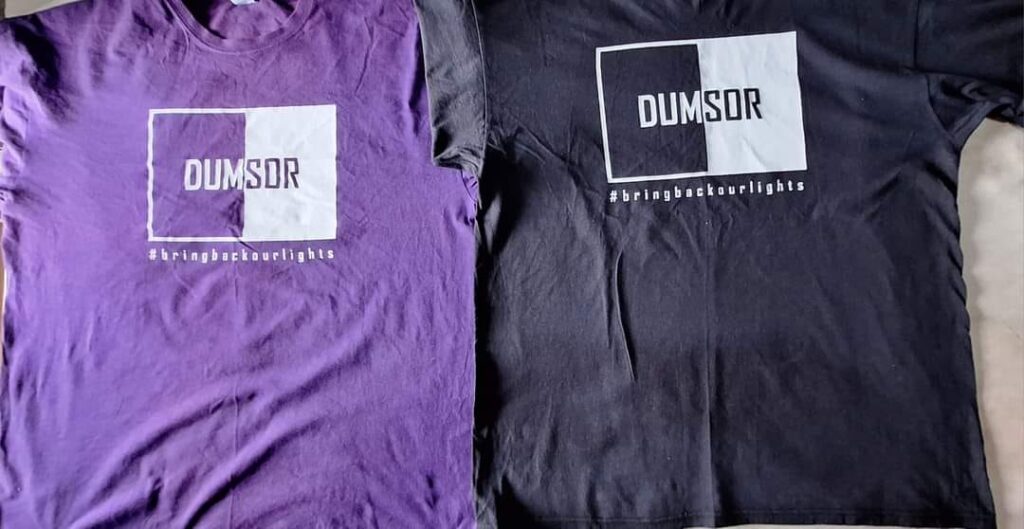
    “We have heard the call by the redoubtable Ms Yvonne Nelson for round two of #dumsormuststop. Fair call even as we (IMANI) have maintained our criticism of the government’s bad decisions for what often seems like a rudderless leadership, the latest dumsor episodes being the zenith. So as you can see ( T-shirts), we are preparing and we will make the call and choose how we demonstrate and who we want to partner at the right time.”

    “Meanwhile, others can also organise their own unique protests in churches, mosques, bars, schools and homes,” Mr Cudjoe wrote on his Facebook platform.

    Yvonne Nelson’s call comes amidst recent intermittent power outages, with many Ghanaians clamoring for a load-shedding timetable from the Electricity Company of Ghana (ECG).

    In her post on X on Monday, April 22, Ms. Nelson expressed her readiness for IMANI’s outreach for the vigil, citing the organization’s involvement in a similar event in 2015.

    She criticized President Akufo-Addo and the New Patriotic Party (NPP), accusing them of taking the country for granted and emphasizing that such neglect should no longer be tolerated.

    However, Mr. Cudjoe, in a Facebook post on Tuesday, April 23, responded sharply, stating that IMANI will choose partners for their protest, and Yvonne Nelson is free to organize her demonstration.

  • We’re in perilous times;  I pity Ghanaians – Franklin Cudjoe on fuel hikes, dumsor

    We’re in perilous times;  I pity Ghanaians – Franklin Cudjoe on fuel hikes, dumsor

    CEO of IMANI Africa, Franklin Cudjoe, has voiced concerns regarding the challenges facing Ghanaians in the energy sector.

    Ghanaians are not only contending with erratic power supply but also grappling with a surge in fuel prices.

    The second pricing window of April 16, 2024, saw several Oil Marketing Companies (OMCs) increasing fuel prices.

    A recent survey by Citi News at various OMC outlets revealed a notable hike in fuel costs.

    For example, Goil, a state-owned entity, raised petrol prices from GHȼ14.15 to GHȼ14.99 per litre in the current pricing window.

    Diesel is now priced at GHȼ14.80 per litre, up from GHȼ14.74.

    In addition to these challenges, commuters in Lapaz and other regions are facing a 20% increase in transport fares, contrary to government and Ghana Private Road Transport Union (GPRTU) directives advising against fare hikes.

    During his appearance on The Big Issue on Citi TV and Citi FM last Saturday, Mr Cudjoe empathised with Ghanaians and expressed his hope for a prompt resolution to these issues.

    “We are in perilous times really and I really pity the Ghanaian. I was listening to the vox pop in the run-up to the program and people were complaining, and you could see these are deep-seated concerns… So it is sad, I just wish there was a magic wand to deal with this matter,” he remarked.

  • Govt waiting for a former footballer to build a national airline – Bright Simons

    Govt waiting for a former footballer to build a national airline – Bright Simons

    The Vice President of IMANI Africa, Bright Simons, has characterized Ghana as a nation prone to dependency and being reliant on external aid. 

    Taking to the X platform, he highlighted the contrasting approaches taken by Ghana and Nigeria in various endeavors, including the establishment of national airlines.

    According to him, both Ghana and Nigeria have invested significant time and financial resources over the years in attempts to launch national airlines.

     However, the outcomes have varied considerably.

    In Nigeria, Mr Simons noted that the government’s efforts to establish a national carrier ended in farce. 

    Despite considerable investments, bureaucratic obstacles, financial mismanagement, and operational inefficiencies plagued the project, ultimately leading to its failure. 

    In contrast, the success story of Air Peace, a fully private Nigerian airline, stands in stark contrast to Nigeria’s aviation struggles. 

    Operating independently of government of Nigeria  support, Air Peace successfully launched flights to Europe, showcasing the resilience and potential of private enterprise within Nigeria’s aviation industry.

    Yet, in Ghana, the government is placing its hopes on a former footballer to resolve the issue.

    “Ghana & Nigeria have spent years & $millions trying to launch a “national airline”. In Nigeria’s case, it descended into farce. A fully private Nigerian airline, Air Peace, has on its own launched flights to Europe. In Ghana, the govt hopes a former footballer will save the day,” he wrote.

  • Franklin Cudjoe lauds Bawumia’s digitization drive amidst network challenges

    Franklin Cudjoe lauds Bawumia’s digitization drive amidst network challenges

    The President of IMANI Africa, Franklin Cudjoe, has emphasized the crucial role of Vice President Dr. Mahamudu Bawumia’s digitalization efforts in light of recent internet disruptions.

    He underscored the importance of Dr. Bawumia’s initiatives, especially during times when the nation and other West African countries are grappling with internet interruptions affecting businesses.

    Mr Cudjoe urged the Vice President and his team to establish a transparent framework facilitating partnerships for satellite technology provision to mitigate future internet disruptions.

    He highlighted the significance of reliable internet access, comparing it to essential lifeblood.

    In a post on his Facebook page, Franklin Cudjoe expressed concern over reported incidents of underground fiber optic cable cuts and subsequent internet access challenges.

    “The reported cuts in underground fibre optic cables and the lack of Internet access tell how the Internet is almost equal to blood. Surely you appreciate Bawumia’s digitalisation drive. Now his team should be thinking about a transparent framework that encourages true public-private partnership in the provision of satellite technology for communication.

    “Nothing like SUBAH, KELNI GVG, and jocular clever scams like the location apps when Google exists,” he wrote on his Facebook page,

    He advocated for a strategic approach, emphasizing genuine public-private partnerships over past controversial schemes like SUBAH, KELNI GVG, and other location-based applications, particularly when reliable alternatives like Google exist.

    Mr Cudjoe’s remarks come amidst widespread internet outages across Ghana since March 14, attributed to undersea fiber optic cable cuts.

    The National Communications Authority (NCA) has alerted the public that four subsea cables connecting Ghana to Europe via Cote d’Ivoire and Senegal remain out of service.

    The NCA anticipates resolving these issues within approximately five weeks to restore normal internet connectivity nationwide.

  • Akufo-Addo’s ministerial reshuffle worsened Ghanaians’ resentment towards NPP – IMANI Africa

    Akufo-Addo’s ministerial reshuffle worsened Ghanaians’ resentment towards NPP – IMANI Africa

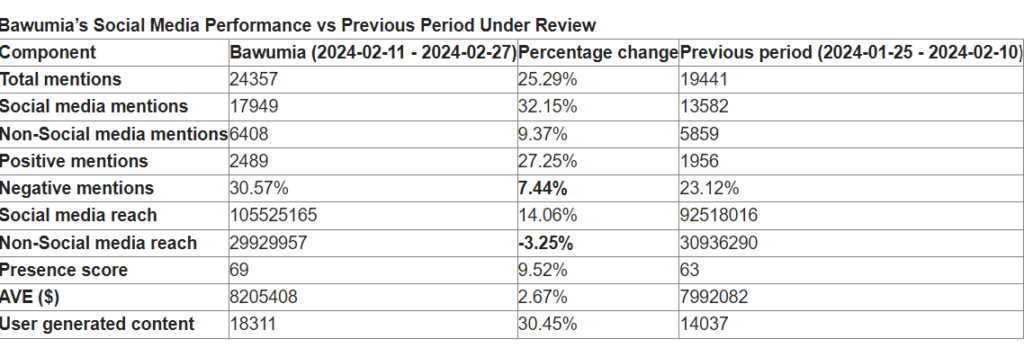
    President Akufo-Addo’s recent reshuffle failed to significantly impact the positive sentiments surrounding the ruling New Patriotic Party (NPP), as per data from IMANI Africa’s Public Understanding and Literacy for Sentiment and Election (PULSE).

    According to the report obtained by JoyNews, the reshuffle appeared to generate more negative sentiments towards the NPP.

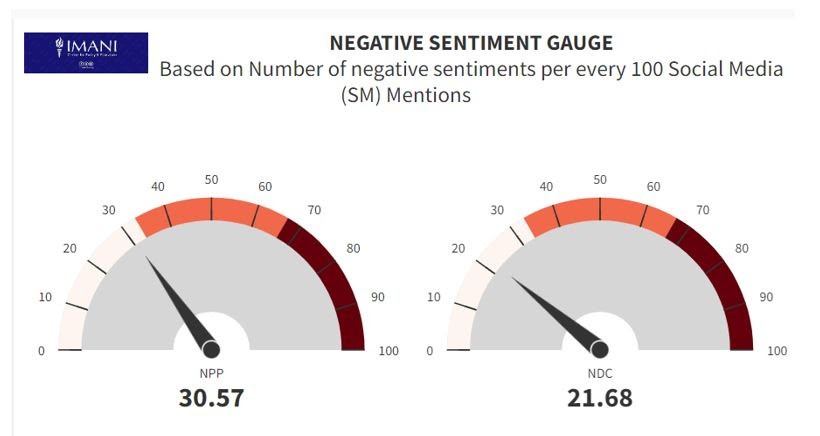
    Covering the period from February 11 to February 26, 2024, the report revealed that while both party candidates experienced an increase in purely negative sentiments, the NPP witnessed a higher percentage rise – from around 21% to just over 28%.

    This marked a 7% increase in negative sentiment compared to the NDC’s approximately 4% increment during the same period.

    The report suggested that, overall, more people harbored negative feelings about both parties, with the NPP receiving more mentions and a growing negative sentiment.

    Despite the reshuffle, the Periodic Social Media Sentiment Analysis Report published in March indicated that the NPP continued to lead in social media mentions.

    “The inference here is that generally more people feel negative about both parties, with NPP however having more mentions and more growing negative sentiment”, it added.

    The report noted that the NPP’s dominant presence on social media might be due to being the ruling party, with more commentators focusing on their policies and the messages of their presidential candidate than those of the NDC.

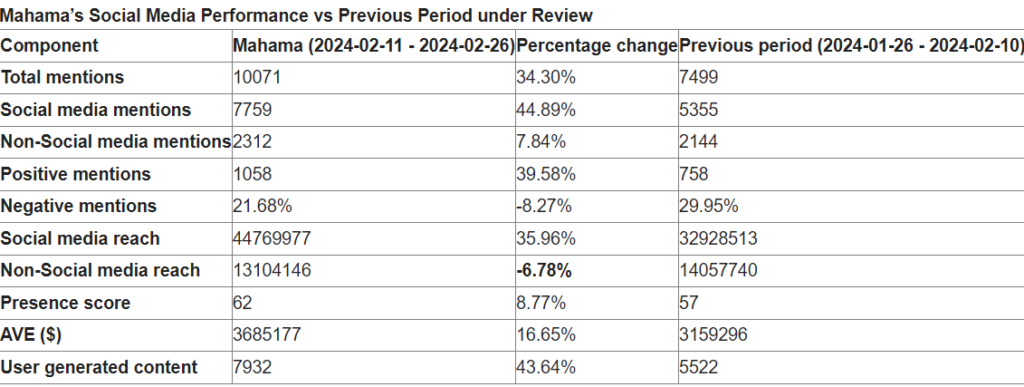
    The data also revealed that former President John Dramani Mahama experienced an 8.27% reduction in negative sentiments during the observed period. Additionally, his reach on non-social media web sources decreased by 6.78%, indicating a significant drop.

    “while there was the ministerial reshuffle during the period, the gap in mentions and social reach was nevertheless still dominant. The NPP is probably being mentioned more as the ruling party with more social media commentators putting their policies forward, as well as the current messages of their presidential candidate under the spotlight, more than they are doing with the candidate of the NDC.”

    Background:
    On February 14, President Akufo-Addo announced a ministerial reshuffle, the first major overhaul since assuming office in January 2017.

    The reshuffle involved the removal and reassignment of ministers, including Finance Minister Ken Ofori-Atta, Roads Minister Kwame Amoako-Atta, and Health Minister Kwaku Agyemang Manu.

  • My very good friend Akufo-Addo is beyond disappointment – Franklin Cudjoe

    My very good friend Akufo-Addo is beyond disappointment – Franklin Cudjoe

    The Founder and President of IMANI Africa, Franklin Cudjoe, has expressed his indifference towards President Akufo-Addo’s governance, stating that he has become immune to the disappointments from his friend, the president.

    In an interview on Adom FM on Monday, February 26, 2024, Mr Cudjoe revealed that he no longer takes the president’s statements seriously.“I’ve stopped being disappointed in my friend, the president.

    In fact, I have stopped listening to him actually. It is now not about being disappointed, I have gone beyond that. As one would put it ‘I’m now beyond be careful’.“The person himself said that has done all he could and that the next captain would come and fix things.

    He added, “You know he is a very good friend; he has said very interesting things about me publicly and I like him for that, but he has completely disappointed me.”

    Highlighting the president’s acknowledgment of having done all he could and passing the responsibility to the next leader, Mr Cudjoe emphasized that despite their friendship and the positive things said about him, President Akufo-Addo has completely let him down.

    These comments were made in the context of discussing the upcoming State of the Nation’s Address (SONA) scheduled for Tuesday, February 27, 2024.Mr Cudjoe urged the president to issue an apology to the Ghanaian people for the current state of the country during his address.

  • I don’t want to hear anything about Akufo-Addo; I have given up on him – Franklin Cudjoe

    I don’t want to hear anything about Akufo-Addo; I have given up on him – Franklin Cudjoe

    The Founder and President of IMANI Africa, Franklin Cudjoe, has expressed his indifference towards President Akufo-Addo’s governance, stating that he has become immune to the disappointments from his friend, the president.

    In an interview on Adom FM on Monday, February 26, 2024, Mr Cudjoe revealed that he no longer takes the president’s statements seriously.

    “I’ve stopped being disappointed in my friend, the president. In fact, I have stopped listening to him actually. It is now not about being disappointed, I have gone beyond that. As one would put it ‘I’m now beyond be careful’.

    “The person himself said that has done all he could and that the next captain would come and fix things.

    He added, “You know he is a very good friend; he has said very interesting things about me publicly and I like him for that, but he has completely disappointed me.”

    Highlighting the president’s acknowledgment of having done all he could and passing the responsibility to the next leader, Mr Cudjoe emphasized that despite their friendship and the positive things said about him, President Akufo-Addo has completely let him down.

    These comments were made in the context of discussing the upcoming State of the Nation’s Address (SONA) scheduled for Tuesday, February 27, 2024.

    Mr Cudjoe urged the president to issue an apology to the Ghanaian people for the current state of the country during his address.

  • “There will be no breathing room at all for the next president!” – IMANI Boss on taxes

    “There will be no breathing room at all for the next president!” – IMANI Boss on taxes

    President of IMANI Africa, Franklin Cudjoe has voiced his concerns over the relentless imposition of taxes by the current New Patriotic Party (NPP) government, expressing sympathy for Ghana’s future president.

    The latest addition to the tax burden is the implementation of the Value Added Tax (VAT) on residential electricity consumption, effective January 1. Franklin Cudjoe anticipates the likelihood of further taxes, given the government’s pursuit of increased revenue.

    In an interview on The Big Issue on Citi TV, Mr Cudjoe underscored the crucial need for prudent economic management. He shared his apprehensions for the next president, who will grapple with the challenges posed by the numerous tax policies.

    “I think it is important to be very careful how we want to deal with this economy. I pity the next president of this country because what it means is that you are going to deal with this nonsense of taxes and there will be no breathing room at all,” he stated.

    The continuous introduction of taxes has sparked discussions about the economic implications and the burden it places on the country’s leadership. Mr Cudjoe’s remarks add to the ongoing discourse, highlighting the potential challenges awaiting Ghana’s future president in navigating the economic landscape shaped by these taxation policies.

  • Cheddar is injecting a different dimension into our politics; his event shouldn’t have been cancelled – Kofi Bentil

    Cheddar is injecting a different dimension into our politics; his event shouldn’t have been cancelled – Kofi Bentil

    Vice President of policy think tank IMANI Africa, Kofi Bentil, has voiced his concern over the cancellation of ‘The Convention,’ the event scheduled to unveil the face behind #TheNewForce, which eventually turned out to be Nana Kwame Bediako, popularly known as Cheddar.  

    Mr Bentil, known for his advocacy on various social and political issues, believes that Cheddar is introducing a distinctive dimension to Ghana’s political landscape, and the cancellation of his event should not have happened.

    Kofi Bentil expressed his disappointment over the cancellation, stating, the President should not have gone anywhere near the event. 

    “The president should not go anywhere near this program. This is someone arranging a meeting and then someone [from the Presidency] decides that they are going to cancel the meeting for very bad, wrong reasons,” he said on January 13. 

    He called for an investigation into the matter, pointing out that the letter issued was mandated by the presidency, and he wondered if all letters issued by the presidency had the proper authority.

    “Our presidency sometimes seems to issue things, and you don’t know who is singing what and that for me, is more worrying than the event itself,” Mr. Bentil said.

    According to him, that is more worrying than the event itself.

    His comments were prompted by Professor Agyemang Duah’s assertion on the show, stating that President Akufo-Addo should have addressed the cancellation of ‘The Convention.’

    Prof. Duah emphasised that the President was expected to make a pronouncement and denounce the cancellation if he did not approve or knew about it, stating that persons behind it had embarrassed him as the head of state.

    “If it were the case that somebody did that, then somebody must take the fall to protect the president. In our governance system, you don’t get anybody taking the fall to protect a higher person like the president,” Prof. Agyemang Duah stated.

    On the back of this, Mr Bentil criticised the cancellation of the New Force event organized by Nana Kwame Bediako and disagreed with attempts to hinder his political ambitions.

    “He says he’s our salvation and he’s here to save us, let’s take it as it is, he’s wearing a Voodoo mask and he says we shouldn’t be afraid of him, let’s take it like that. He’s going to inject some kind of levity into the political campaign.

    “What we should not do is to deploy serious state resources to try and cancel his event. The cancellation is more news than the event and I think we should be spearing the use of state resources,” he said.

    The Senior Vice President of IMANI-Africa emphasised that the cancellation of the event was entirely unnecessary and urged the government to allow Mr. Bediako to proceed with his plans.

    “In the scheme of things politically and nationally, I really do not think that this rises to the kind of event that requires presidential intervention. This is a young man who is injecting a different dimension into our politics, just let him,” said Mr. Bentil.

  • NPP dominated social media with 14M reach, NDC 3.1M in December – IMANI Africa

    NPP dominated social media with 14M reach, NDC 3.1M in December – IMANI Africa

    In its recent analysis of the social media presence of Ghana’s leading political parties, IMANI Africa revealed that during December, the New Patriotic Party (NPP) had a significant social media reach of approximately 14 million, while the National Democratic Congress (NDC) lagged behind with a reach of about 3.1 million.

    According to IMANI’s Public Understanding and Literacy for Sentiment and Election analysis (PULSE), NPP garnered 266,000 interactions, surpassing NDC’s 192,000-plus interactions stemming from comments and posts.

    The report underscored that the social media discourse overwhelmingly favored NPP, and traditional web-based sources reflected a dominance of around 90% of content related to the party.

    Introducing a new metric called Advertising Value Equivalent, the report estimated the value of the social media reach as if the content were paid for.

    In December, NPP’s Advertising Value Equivalent exceeded $1.14 million, while NDC’s was a more modest $251,000-plus.

    Selorm Branttie, Leader Researcher at IMANI Africa, highlighted the substantial difference in total media engagement on social media between NPP and NDC.

    Vice President of IMANI Africa, Kofi Bentil, emphasized the significance of these facts, stating on his Facebook page, “Facts are sacred. Start work.”

  • 5 more taxes were approved by parliament to sponsor Akufo-Addo’s flashy spending in 2024 – IMANI Africa

    5 more taxes were approved by parliament to sponsor Akufo-Addo’s flashy spending in 2024 – IMANI Africa

    Ghana’s Parliament has granted approval for five new taxes, raising concerns about potential economic challenges in the upcoming year.

    The Founding President and Chief Executive Officer of IMANI Centre for Policy and Education, Franklin Cudjoe, has expressed worry, cautioning Ghanaians to prepare for increased economic hardships following the parliamentary approvals.

    Known for his outspoken views on policy matters, Mr Cudjoe referred to President Akufo-Addo as “big daddy” in a Facebook post, suggesting that the sanctioned taxes are intended to support extravagant spending in 2024, an election year.

    In his post, Cudjoe remarked, “Parliament on Friday night approved 5 more taxes to help Nana Addo’s Big Daddy state splash out big time in 2024 – an election year – inflicting more economic pain.”

    The controversial decision also encompasses a range of ambiguous tax exemptions, excluding agricultural inputs.

    Cudjoe justified this exclusion by highlighting the persistent high food inflation, stating, “A reduction in food inflation will see overall inflation reduced to manageable limits by mid-2024.”

    Expressing confidence in the Agriculture Minister’s ability to prevent fertilizer misuse, Mr Cudjoe added, “A reduction in food inflation will see overall inflation reduced to manageable limits by mid-2024.”

    “I am hopeful the current Agric Minister will rely on his precocious security background to ensure fertilizers do not end up on donkeys carted away to Togo and Burkina as happened under his predecessor.”

    Scheduled to take effect on January 1, 2024, the approved taxes will further burden citizens and businesses financially.

    Cudjoe concluded his post with a cautionary quote from the famous American lawyer Gideon Tucker: “No man’s life, liberty or property are safe while the Legislature is in session.”

    “And Ghana’s Parliament decided to impose these taxes at night, so spend wisely this Christmas,” he emphasized.

  • EC never faced technical challenge during District Level Elections – IMANI Africa

    EC never faced technical challenge during District Level Elections – IMANI Africa

    President of IMANI Africa, Franklin Cudjoe, criticized the Electoral Commission (EC) for attributing the recent shortcomings in the District Assembly election to “technical challenges.”

    In his scathing assessment, Cudjoe argues that the EC’s explanation not only lacks sincerity but also reveals deeper-seated issues pertaining to the Commission’s overall planning and transparency.

    Mr Cudjoe brings attention to a noticeable contradiction within the EC’s narrative.

    Despite their earlier assurances of preparedness weeks before the election, the Commission now cites last-minute technical difficulties as the cause of the disruptions.

    “This whole conversation about technical issues for the lapse the EC had cannot be true. You see if they are saying that maybe someone’s name was misspelled or something on the ballot, maybe yes. You can’t tell me that 12 hours or 6 hours to the elections, you didn’t know that you didn’t have all the accoutrement.

    “These are not technical issues, they are just blatant disregard for the processes, it should have been ready two weeks earlier”.

    This incongruity, according to Cudjoe, suggests a fundamental flaw in the Commission’s ability to anticipate and address logistical challenges in a timely manner.

    The seasoned analyst dismisses the notion that the encountered issues were purely technical, asserting that the revelation of insufficient resources hours before the election demonstrates a blatant disregard for established electoral processes.

    Mr Cudjoe contends that such essential components should have been adequately prepared at least two weeks in advance.

    Furthermore, he took the EC to task for what he perceives as a “headstrong” approach and a lack of collaboration with stakeholders.

    According to him, the exclusion of voices from diverse political parties contributes to avoidable problems, as evident in the recent election disruptions.

    “The EC has been very headstrong…If they had internalized some of these issues, I don’t know why they would then wake up and tell us recently that in the main 2024 polls, they will close polls at 3 pm. What kind of signs went into that type of decision?

    “Well, if you are going to have an election and this District level election is an example of some of the processes that were bungled, would you think that 3 pm should applied to every polling station? Would you want to do something like that”? he added.

  • $140m judgement debt could have been avoided – IMANI Africa

    $140m judgement debt could have been avoided – IMANI Africa

    A Senior Research Associate at IMANI Africa, Dennis Asare, believes that the $140 million Trafigura judgment debt could have been avoided.

    He also placed blame on the Attorney General’s office for advising the government to terminate the power purchase agreement with the Ghana Power Generating Company (GPGC), a subsidiary of Trafigura.

    In 2017, the government acted on the advice of the Attorney General and terminated the agreement due to high tariffs, which they claimed would have cost the state $115,480,000.

    Other reasons cited included alleged illegality, lack of capacity for GPGC to enter into a Power Purchase Agreement, failure to obtain necessary permits, and the installation of used plant contrary to policy.

    However, according to the IMANI Research Associate, with proper due diligence, the government could have avoided this debt, which now threatens to cost the country some of its assets in the UK.

    “You could see that at every point in time, the IPP was trying to find a way to ensure that this agreement went through but the government had already decided from the Power Purchase Agreement Committee’s report that this one must be terminated.

    “And so they were looking for opportunities right within the agreement to get off this deal. And you can say it is part of our poor planning as well as the ill advice from the Attorney-General’s office. I see that this is a cost that could have been avoided,” he told JoyNews in an interview.

    The Ghana High Commission building in the UK, which houses visa and other services, the commissioner’s residence, the Ghana International Bank building, and other properties are in jeopardy of being auctioned to settle a $140 million judgment debt awarded to Singaporean firm, Trafigura.

    Trafigura, the majority owner of the power company GPGC, obtained the award in January 2021 following a London arbitral tribunal’s finding that Ghana had unlawfully terminated a contract for the installation and operation of two power plants.

    While the government asserts that the Finance Ministry is taking steps to settle the debt, Ghana’s High Commissioner to the United Kingdom, Papa Owusu Ankomah, attributes the default to the government’s financial constraints.

    Dennis Asare points out that since the ruling was made in 2021, the government had ample time to negotiate a payment plan with Trafigura. The government’s current denial puts several crucial assets of Ghana, including Regina House, which houses the International Bank of Ghana, at risk.

    “We had the opportunity to negotiate and plan how to pay out the debt and we’ve not been able to do that and currently there is no fund available in terms of mitigating some of the judgement debts that may arise out of the termination of contracts,” he stated.

  • Govt wants to delay payment tranches for the $140 million judgment debt to later years

    Govt wants to delay payment tranches for the $140 million judgment debt to later years

    Vice President of the policy think tank IMANI Africa, Bright Simons, has suggested that the government is coming to terms with the likelihood that there is no easy resolution to the $140 million judgement debt claim by GPGC, a subsidiary of the international commodities company Trafigura.

    Consequently, he mentioned that the government is contemplating a strategy to restructure payments in upcoming years as part of the negotiation for a payment arrangement.

    He wrote on X: “Our sources indicate that the govt of Ghana has begun to realize that it has to beat a legal retreat & start negotiating a payment plan with Trafigura re the $140m judgment debt as it has no other leverage with them. As usual, they want to shift payment tranches to future years.”

    Background

    Trafigura subsidiary is at risk of seizing Ghanaian state properties in London to fulfill a US$140 million award. This comes after a court ruled that there was no need to serve interim charging orders through diplomatic channels, as reported by the Global Arbitration Review.

    In the United Kingdom, the High Court has dismissed the Government of Ghana’s challenge regarding the procedures used to serve the country’s proceedings related to a judgment debt claim by GPGC, a subsidiary of the international commodities company Trafigura.

    The company had taken legal action against the Ghanaian government over the termination of two power agreements and was granted a judgment debt of US$140 million by a UK court.

    Ghana argued that, under existing laws, the company should have served the government through diplomatic channels, contrary to a ruling that allowed alternative services.

    The High Court ruled that Ghana’s attempt to use the State Immunity Act provisions as a basis for preventing Trafigura from serving them with judgment debt documents via postal and email methods was not valid.

    Trafigura subsequently used email to send court documents through the finance ministry, with all correspondence duly acknowledged, and court dates were agreed upon, as the Government of Ghana instructed its legal representatives to engage with the company.

    “Trafigura, a multinational commodities-trading company based in Singapore, is the majority owner of GPGC, a power company that secured the award in January 2021 after an arbitral tribunal found that Ghana had unlawfully terminated a contract for the installation and operation of two power plants,” Global Arbitration Review wrote in an October 13 publication.

    In GPGC v The Government of the Republic of Ghana, GPGC was represented by James Willan KC and Catherine Jung of Essex Court Chambers, instructed by Stephenson Harwood.

    Ghana was represented by Stephen Houseman KC and Luke Tattershall, also of Essex Court, instructed by White & Case.

  • Mahama’s remarks on NPP-judiciary was necessary and proper – IMANI Vice president

    Mahama’s remarks on NPP-judiciary was necessary and proper – IMANI Vice president

    Lawyer and Senior Vice President of IMANI Africa, Kofi Bentil, has backed former President Mahama’s NPP-packed judiciary comment, calling it proper and very necessary.


    This comes after the NDC flagbearer alleged that the incumbent president has congregated the judiciary with NPP affiliated judges
    He made these remarks during the 2nd Annual Lawyers Conference of the NDC on August 28.


    Critics, including the Ghana Bar Association, described these remarks as disrespectful and unnecessary for the independence and integrity of the judiciary.


    But the IMANI vice president shares the opposite opinion. He believes Mr Mahama has every right as a presidential aspirant to worry about the state of the judiciary.


    During an interview on Joy News’ News File on September 18, 2023, Kofi Bentil said, “It is also okay for the politician to have worries and as far as I’m concerned, the observation or the statement that President Mahama made was proper !It was necessary for a person of his standing seeking to become president to make the kinds of observations and ask the kinds of questions he does.

    “Nobody should hold it against him that this may be a problem”.


    According to Kofi Bentil, it is commonplace for a ruling party to appoint people who share their political values and beliefs, people who subscribe to their mandate—to positions in that regard.

    “For me, as a matter of fact, you don’t expect them to appoint people who do not believe in your political persuasion.
    “Of course, he may put a political spin on it by saying that the opponent or the other party is appointing judges who believe in their political, you know, whatever. So for me, that is not the problem,” he added.


    Additionally, he recommends that amid all the realities that seem to be ‘overlooked’, it is incumbent on us to recognise and appreciate the concerns expressed by the former president and strive to attain a posture where, despite partisan affiliations, these judges in question will regard the rule of law and rule accordingly to uphold the country’s judicial system’s justice and integrity.


    “It’s a good conversation to have. Let us not pretend that it is not necessary.”


    We need to get to a point where, regardless of their political affiliation, we are getting judges or putting judges in place who will rule and continue to rule according to the laws and evidence before them.


    “But let us continue to work towards the higher virtues so that we will continue to have the justices we have, he recommended.

  • Each director of the BoG board receives a record $8000 every month – IMANI president alleges

    Each director of the BoG board receives a record $8000 every month – IMANI president alleges

    President of IMANI Africa, Bright Simons, has alleged that each independent director serving on the Bank of Ghana’s board receives a monthly payment of US$8,000, equivalent to GH89852.36 Ghanaian Cedi.

    As stipulated in the Bank’s 2022 annual report, the board consists of thirteen directors, including the governor, his two deputies, and ten other directors.

    The IMANI president continued that, comparatively, this compensation money is higher than that of other countries like Nigeria and Kenya, Mr Simons said in a Twitter post on August 9, 2023.

    Simons made this statement amid the controversy and discussions surrounding the Bank’s leadership and the distressing loss it has caused the state.

    “The Bank of Ghana has 10 independent Directors. It seems some people, especially in the Political Opposition, are not happy that they are paid $8,000 a month (86,000 GHS).

    Given the calibre of people needed to helm a central bank board, what would folks be comfortable with?” he quizzed.

    “One approach might be to compare the case in other similar economies. In Kenya, there are 6 independent directors, with each earning ~260,000 KES a month ($2,000). In Nigeria, there are 7, each earning 2.3 million Naira ($3,000). But there are private boards paying way more,” he added in another tweet.

    The ten independent directors are as follows:
    Dr. Samuel Nii-Noi Ashong – Non-Executive Director
    Mr. Joseph B. Alhassan – Non-Executive Director
    Dr. Kwame Owusu-Nyantekyi – Non-Executive Director
    Mr. Andrew Boye-Doe – Non-Executive Director
    Mrs. Comfort F. Ocran – Non-Executive Director
    Mr. Jude Kofi Bucknor – Non-Executive Director
    Dr. Regina Ohene-Darko Adutwum – Non-Executive Director
    Mr. Charles Adu Boahen – Non-Executive Director (Till November 24, 2022)
    Ms. Angela Kyerematen Jimoh – Non-Executive Director
    Prof. Eric Osei-Assibey – Non-Executive Director

    The Annual Report and Financial Statement of the Bank of Ghana reveal that the institution incurred a loss of GH60.8 billion from its audited financial statement for the 2022 fiscal year.

    BoG’s loss comes after it saw a GHS GHS¢1.2 billion profit in 2021.

    But BoG leadership attributes this loss to the decline in the Group’s net worth position due to the impact of the Domestic Debt Exchange Programme (DDEP) and the impairment of some assets.

    Meanwhile, the parliamentary Minority has issued a 21-day ultimatum to the bank’s leadership to step down due to this loss.


  • US$8,000 is paid monthly to each independent director of BoG – Bright Simons

    Each independent director on the board of the Bank of Ghana is allegedly paid US$8,000 per month, according to Bright Simons of IMANI Africa.

    According to the Bank’s 2022 annual report, there are thirteen directors total, including the governor, his two vice presidents, and the remaining 10 directors.

    He points out that the number is higher than average compared to other African nations, particularly Kenya and Nigeria.

    His message was sent at a time when the Minority in Parliament is pressuring the bank’s leadership to leave due to a loss that, according to the most recent report, is equal to $6 billion USD.

    “The Bank of Ghana has 10 independent Directors. It seems some people, esp in the Political Opposition, are not happy that they are paid ~$8,000 a month (~86,000 GHS).

    Given the calibre of people needed to helm a central bank board, what would folks be comfortable with?” he quizzed.

    The ten independent directors are as follows:

    Dr. Samuel Nii-Noi Ashong – Non-Executive Director
    Mr. Joseph B. Alhassan – Non-Executive Director
    Dr. Kwame Owusu-Nyantekyi – Non-Executive Director
    Mr. Andrew Boye-Doe – Non-Executive Director
    Mrs. Comfort F. Ocran – Non-Executive Director
    Mr. Jude Kofi Bucknor – Non-Executive Director
    Dr. Regina Ohene-Darko Adutwum – Non-Executive Director
    Mr. Charles Adu Boahen – Non-Executive Director (Till 24/11/2022)
    Ms. Angela Kyerematen Jimoh – Non-Executive Director
    Prof. Eric Osei-Assibey – Non-Executive Director

  • “Giving money and power to gov’t is like giving whiskey and car keys to teenagers” – Franklin Cudjoe talks down ‘more taxes’

    “Giving money and power to gov’t is like giving whiskey and car keys to teenagers” – Franklin Cudjoe talks down ‘more taxes’

    Ahead of the 2023 Mid- Year Budget review, President and Founder of IMANI Africa, Franklin Cudjoe, has outlined eight reasons why the Akufo-Addo government cannot introduce new taxes.

    In a Facebook post dated July 31, 2023, Cudjoe stated that one of the justifications for the government’s inability to introduce new taxes in the mid-year budget review is that taxation is an unproductive approach to generating revenue.

    Furthermore, he emphasised that the introduction of new taxes by the government would have a detrimental impact on businesses and go against President Akufo-Addo’s pledge to shift the nation’s focus from taxation to production, as outlined in his manifesto.

    Below are the reason the IMANI boss gave for the government not to introduce new taxes:

    1.Some taxes imposed by the government is not only a lazy way of raising money to finance poorly thought policies and a very large and unproductive size of government, it drives millions of severely poor citizens further into extreme penury. These taxes a reverse of what was promised in the ruling NPP government’s manifesto- from taxation to production.

    2. There is no worse tyranny than to force a man to pay for what he does not want merely because you think it would be good for him.—Robert A. Heinlein,
    3. The wages of sin are death, but by the time taxes are taken out, it’s just sort of a tired feeling.—Paula Poundstone

    4..Government’s view of the economy could be summed up in a few short phrases: If it moves, tax it. If it keepsmoving, regulate it. And if it stopsmoving, subsidize it.– Ronald Reagan.

    5. Giving money and power to government is like giving whiskey and car keys to teenage boys.– P. J. O’Rourke

    6. The real goal should be reduced government spending, rather than balanced budgets achieved by ever rising tax rates to cover ever rising spending.– Thomas Sowell

    7. Which countries contain the most peaceful, the most moral, and the happiest people? Those people are found in the countries where the law least interferes with private affairs; where the government is least felt; where the individual has the greatest scope, and free opinion the greatest influence; where the administrative powers are fewest and simplest; where taxes are lightest and most nearly equal–Frederic Bastiat.

    8. Elections should be held on April 16th- ( April 18th for Ghana??) the day after we pay our income taxes. That is one of the few things that might discourage politicians from being big spenders.–Thomas Sowell.

  • Ghana’s economic woes blamed twice on IMF, World Bank

    Ghana’s economic woes blamed twice on IMF, World Bank

    The World Bank and the International Monetary Fund have been accused of idly watching as Ghana borrows to unsustainable levels.

    So far, there have been two accusations lodged. First, it was claimed that the World Bank participated actively in power purchasing agreements but only watched as the country negotiated several arrangements that were not in the country’s best interests.

    President of the policy think tank IMANI Africa, Franklin Cudjoe, claimed that while the World Bank is actively involved in Ghana’s energy sector recovery program, the Bank’s claim that a significant portion of the nation’s debt originates from that sector is unfounded.

    In a post on June 5, 2023, he wrote “It is true that some take or pay power contracts signed by the NDC were very expensive. The current government set up committees to review them. However, the terms of these contracts were extended.

    “In effect, as ACEP’s Ben Boakye puts it, the same power plants the World Bank director complains about have been extended to long-term agreements without caution from the Bank”.

    The World Bank in Ghana has been a very active financial supporter of Ghana’s Energy Sector Recovery Programme for the past four years. So, there you are,” he added.

    An Economist Dr. Yamson has also questioned the World Bank for not cautioning Ghana enough on reckless borrowing.

    ”I have always said that sometimes the Fund and the Bank have to share in the blame because they themselves don’t say it as it should be said. They were aware, long time, that the government was doing things that would push this country into a crisis.”

    “When we were borrowing literally every year were they not aware? All that they’ll put in their report is that excessive borrowing will lead you to debt distress, a simple sentence. And beyond that what else did they do? Did they say to government stop? Never,” he said.

  • Social media users express displeasure over ‘shady’ sale by Tema Oil Refinery

    Social media users express displeasure over ‘shady’ sale by Tema Oil Refinery

    A recent report has it that Tema Oil Refinery has entered into a lease agreement with a consortium known as Torentco Asset Management (TAM) for a duration of six years, with a reported lease value of $22 million.

    The group is allowed to refine up to 8 million barrels of oil a year by paying $1 million every year as rent.

    However, social media users have expressed their displeasure with the details of the deal.

    According to them, the Tema Oil Refinery is worth about $700 million but is being leased at $22 million which is a bad deal.

    Some have noted that the government is quietly going through the deal in order to sneak in revenue for the incoming political season.

    The Vice President of IMANI Africa, Bright Simons wrote on Twitter on June 16, 2023: “Ghana’s PPA is trying to pass the buck of tackling the govt’s shady lease of state-owned Tema Oil Refinery to Torentco (TAM). Here is a crude summary of the deal. Many murky issues!” $22m is all one needs to take over TOR’s assets & exploit them? Has TOR been deliberately sabotaged?” he asked.

    The Executive Director of ACEP, Ben Boakye also wrote: “3 weeks ago CSOs were pumped about an illicit sale of GNPC’s assets to PetroSA. It turns out that PetroSA was being bankrolled by a local company for the acquisition. Btw, nothing would happen since the alarm & calls 4 accountability. We’ve moved on to a new scandal, TOR. #IMF”

    Find the full details of the deal as presented by Bright Simons below:

    Check out the reactions below

    Ghana’s PPA is trying to pass the buck of tackling the govt’s shady lease of state-owned Tema Oil Refinery to Torentco (TAM). Here is a crude summary of the deal. Many murky issues!
    $22m is all one needs to take over TOR’s assets & exploit?
    Has TOR been deliberately sabotaged? pic.twitter.com/vS931RaiqV— Bright Simons (@BBSimons) June 16, 2023

    Imagine you have a start up that will make $700million in 6years and selling it for $22million.
    That it what the government is doing at TOR but we’re busy with Yvonne Nelson.
    The sector minister is tipped to be Bawumia’s running mate. They’re building a warchest to buy your votes— Receipts Guy (@receiptsguy) June 19, 2023

    Under the watch of @MatthewOPrempeh , Tema Oil Refinery will be a private man’s property. He will pay $22 million and make a profit of $700 million pic.twitter.com/nVYzo340w6— Kwaku ???????? (@kwaku_rafiki) June 19, 2023

    They are Leasing Tema Oil refinery to a private company for 6 years.
    The private company pays 20 million USD to Government while they make over 700 million dollars

    Government is doing this as solution to it’s incompetence that has made TOR a corruption hub

    Haha Ama Ghana

    — Kay???? (@KayPoissonOne) June 20, 2023

    Tema Oil Refinery to go private?
    This government eh ???? pic.twitter.com/luvHe10CZu— Beno SarkCess (@BenopaOnyx1) June 20, 2023

    them dey come turn Tema oil refinery to a private company? Ei how— Mempeasem President (@AsieduMends) June 20, 2023

    Do you think Tema Oil Refinery is the usual NPP/NDC politics? Ghanaians like you & I have been ‘sucking’ the company dry. & when the company become insolvent; the usual blackmail begins — protests & pickets. So why don’t you [staff] stop stealing people’s crude brought to TOR? pic.twitter.com/1UWaY5LA5Y— yaw abban. (@YAbbanx) June 20, 2023

    Tema Oil Refinery over the years had become a cash cow for politicians and some corrupt public servants. Only God knows how many times it has been revived & collapsed in its management. Energy Minister was shocked after learning that $2.5m worth of crude got missing from TOR. pic.twitter.com/eFzLauF5zw— yaw abban. (@YAbbanx) June 20, 2023

    Tema Oil Refinery has a $500m debt sitting in its books. When crude is brought to TOR for refining, losses are recorded every damn time. People who bring their crude charges TOR to pay for the losses as a result of corrupt staff & looters.— yaw abban. (@YAbbanx) June 20, 2023

  • We cannot arrest Bryan Acheampong – Kofi Bentil

    We cannot arrest Bryan Acheampong – Kofi Bentil

    Kofi Bentil, senior vice president of IMANI Africa, asserts that Bryan Acheampong, the Abetifi MP, cannot be imprisoned because of his controversial remarks.

    In spite of the remarks being offensive, Mr. Bentil claimed that no criminal charges could be brought against them.

    He claims that the police will have a difficult time proving their case in court.

    On Saturday, April 15, Mr. Bentil made a contribution to JoyNews’ Newsfile show and asked the MP and all politicians to exercise caution when making such statements.

    “I have listened to what he said and honestly there is a portion of it that you can take with a pinch of salt as a political speech made in the heat of a moment after a political rally on a political platform. 

    “Yes, I have condemned it and we must all condemn it but the question is does it rise to the level of a criminal offence for which he must be arrested, investigated and prosecuted and jailed? No, it cannot be proven,” he said. 

    Abetifi MP Bryan Acheampong has said that the current New Patriotic Party (NPP) will not hand over power to the National Democratic Congress (NDC).

    According to him, the party will use whatever means necessary to remain in power in the 2024 general election.

    He added that if the NDC dares to use threats, and brute force in the 2024 election, the NPP will show them that they have the men.

    According to him, the NDC will collapse and the NPP we will show them that “we have the men”.

    Mr Acheampong said this will never happen and that the NPP will stand on a platform to hand over power to the NDC.

    Following his comments, the NDC through its legal team has petitioned also the CID to immediately arrest and prosecute him. 

    Per the petition, the NDC called for the arrest and prosecution of the Minister for Food and Agriculture over what they described as “reckless, dangerous, instigation and unparliamentary comments.”

    Due to this, the governing New Patriotic Party (NPP) has petitioned the Criminal Investigations Department (CID) of the Police Service to arrest ex-president John Mahama for allegedly making treasonable remarks. 

    The National Organiser of the party Henry Nana Boakye popularly known as ‘Nana B’ said the NPP wants the CID to arrest the National Chairman of the opposition NDC, Mr Johnson Asiedu Nketia. 

    According to him, Mr Asiedu Nketia has also made comments that portend great danger to the peace and stability of the country.

  • Power producers, fuel suppliers to get haircut over government’s $1.5 bn debt? – Bright Simons

    Power producers, fuel suppliers to get haircut over government’s $1.5 bn debt? – Bright Simons

    Ghana’s power sector and other important projects may be in some danger due to the country’s current debt status.

    The Vice President of IMANI Africa, Bright Simons, has stated that the government has informed power suppliers of its decision to restructure over the $1.5 billion it owes.

    According to Bright Simons, while the power producers assume this may be an extension of the time for payment, some analysts believe there may be a haircut.

    In a tweet on March 2, 2023, he said “Govt of Ghana has finally informed the main power producers & fuel suppliers that the ~$1.5bn it owes them will also be restructured. The companies of course assume that this means stretching out the payments over time. But some analysts say they should also prepare for HAIRCUTS.”

    A corresponding note in his tweet added that “The power sector is in a particularly concerning state given the government’s significant and rising debt in this sector. The Government of Ghana has engaged the independent power producers in talks regarding the take-out of existing multi-sourced senior loans by the government-owned Ghana.”

    “Infrastructure Investment Fund (GIIF) in a bid to reduce the overall cost of power. This process began as far back as the end of 2019 when the government announced that it would use part of the proceeds of its 2020 Eurobond sale to refinance the loans.

    “To date, none of the loans have been refinanced and government debt to independent power producers continues to rise. It has been estimated that debt in the energy sector is at risk of growing to US$12.5 billion by 2023 without significant reform. However, the government has recently reiterated that the completion of these take-outs is expected to save the economy an estimated US$13.2 billion over the term of the renegotiated power purchase agreements,” it stated.

    “Separate from the debt issue in the energy sector is the growing demand for electricity in Ghana and the need for improved gas supply reliability. The 2022 Electricity Supply Plan for the Ghana Power System highlights that existing generating capacity will be inadequate to serve the projected demand for electricity in Ghana and as such, there is a need to secure increased gas supply to existing power generation facilities and to initiate procurement of additional generation capacity,” it further said.

  • Banks should prepare for write-offs due to cocoa bills – Bright Simons

    Banks should prepare for write-offs due to cocoa bills – Bright Simons

    In light of the bleak outlook for COCOBOD’s refinancing, Bright Simons, vice president of IMANI Africa, has urged banks and investors to prepare for substantial write-offs.

    He claims that the board has acknowledged the possibility that cocoa bills may be challenging to refinance.

    Bright Simons wrote on January 27, 2023, “Meanwhile, Cocobod finally recognizes that ambitions to raise $3 billion to refinance cocoa bills are a pipe dream,” on his Twitter page.
    Planned substantial write-offs should be taken into account by banks and other investors.

    Earlier this week, the Bank of Ghana stated it had secured an agreement with the Ghana Cocoa Board and commercial banks to allow the of use COCOBOD’s deposits and placements held at the various banks to cater for retail customers who may not want to roll over their cocoa bills.

    This comes after the cocoa regulator [COCOBOD] recently defaulted on payments of its matured 182-day bill for the first time, rolling over outstanding securities of GH¢940.4 million, without the consent of investors.

    But the Central Bank in a statement issued on January 23, 2023, admitted that after a meeting held with COCOBOD, “it was agreed that all institutional investors will roll over their maturing cocoa bill for Tender 6155 adding that “financial institutions have agreed to roll over their cocoa bills investments.”

    Despite this, the BoG said it has been informed that some financial institutions rather sold their instruments to their retail clients.

    “To reduce the cash flow challenges on retail holders of cocoa bills, the Bank of Ghana, Cocobod and the commercial banks have agreed to allow banks to use Cocobod’s deposits/placements held at the various banks to cater for retail customers who may not want a roll-over of their cocoa bills,” the Central Bank said.

    “We, therefore, expect that this short-term cash flow challenges facing Cocoa Board will be resolved soon to enable Cocobod meet its obligations to investors,” it added.

    It, however, pointed out that the COCOBOD has assured the BoG that the outlook for the 2023 crop season looks promising while cocoa purchasing is also making headway.

  • This new minority leadership will succeed, but they will falter too – Franklin Cudjoe

    This new minority leadership will succeed, but they will falter too – Franklin Cudjoe

    The Founding President of Imani Africa has reacted to the appointment of a new parliamentary leadership for the opposition National Democratic Congress (NDC).

    According to him, the previous leadership played their roles well, guiding their colleague MPs to provide knowledgeable opposition to the government.

    He added, however, that he believes these new leaders will succeed but will falter too.

    In a Facebook post, he said Haruna Iddrisu and Mohammed Muntaka are ripe for bigger roles, adding that the new leaders should support them when the time comes.

    “I have followed the fallout from the change in minority leadership, and I must admit both sides, for and against the decision of the executive leadership of the NDC party, make compelling arguments. In fact, I have to admit that Honourable Haruna Iddrisu, Hon. Muntaka and Hon. Avedzi have not only cleverly shepherded their colleague MPs to provide distinctively knowledgeable opposition to the government but have also dignified their respective roles to almost being peerless.

    “And it was from such rarity in quality leadership that birthed the current leadership in Hon. Ato Forson, Hon. Agbodza and Hon. Buah. These ‘new’ made men will succeed, but they will falter too, and whose giant shoulders will they fall on in crisis moments other than those of Hon. Iddrisu and Hon. Muntaka?  And yet, Hon. Iddrisu and Hon. Muntaka are ripe for much bigger roles, whose time will come with the support of the very men replacing them in Parliament and the party’s rank and file, which must not be divided. The country needs a viable alternative to the current economic atrophy. The NDC must be worthy, but in unity,” he posted on Facebook.

     There have been mixed reactions after the NDc announced the list of new leaders in parliament.

    According to some MPs, the caucus was not engaged before the appointment was made.

    Others have also welcomed the idea, as they believe the appointment is a step in the right direction for the party to win power in 2024.

    Meanwhile, the chairman of the party, Johnson Asiedu Nketiah, has indicated that reshuffling its leadership in Parliament aligns with the party’s agenda ahead of the 2024 elections.

    According to him, the 2024 elections will primarily focus on the economy; thus, the party must surround the people with finance and economic experts to ensure they can assist Ghanaians in doing things better.

    Source: Ghanaweb

  • Under Mahama, Ghana’s IMF engagement was “one of the most transparent in the world.” – Oxfam

    Under Mahama, Ghana’s IMF engagement was “one of the most transparent in the world.” – Oxfam

    One of the world’s most transparent processes in 2015 was Ghana’s interaction with the International Monetary Fund (IMF), according to Oxfam, a coalition of international organizations working to end poverty.

    According to a report by Oxfam, the transparency was based on how the previous administration approached the fund by consulting with civil society organizations (CSOs).

    Oxfam claims that Ghana’s involvement with the IMF in 2015 was one of the most transparent in the world, with robust participation from CSOs pursuing a public interest agenda. IMANI Africa’s Bright Simons published an excerpt from the study on Twitter with the following caption.

    He added that as an actor in the CSO sector, he agreed with Oxfam: “I also find that the current IMF process is the opposite: with zero govt interest in openness & engagement.”

    Mahama government goes to IMF

    In 2015, Ghana’s economy was in trouble, hobbled by widening current account and budget deficits, rampant inflation, and a depreciating currency. Credit dried up as interest rates rose and banks’ bad loans piled up.

    At the root of Ghana’s woes was out-of-control government spending, largely to pay salaries of an overgrown civil service.

    The program

    In early 2015, Ghana turned to the IMF for a $918 million loan to help stabilize the economy. IMF advisors, working with the Ghanaian government, developed a three-part program:

    Extract from IMF report: Box 2: Ghana

    Of all the case studies, Ghana represented the most successful example of meaningful engagement between CSOs and the IMF. This success was due to several factors which collectively amplified the power of Ghanaian civil society with respect to the IMF.

    These included: the formation of a joint coalition of over 11 CSOs in 2014, known as the Civil Society Platform on the IMF Programme – now the Economic Governance Platform (EGP); structured preparation and capacity building among the coalition prior to and during IMF engagement; the support of Global North actors such as Oxfam in accessing IMF decision makers and political stakeholders at headquarters level; detailed research and published analysis of the issues up for discussion;*# and public-facing awareness and advocacy campaigns which included experts and stakeholders from different sectors.

    These combined factors meant the coalition’s goals and concerns could not be ignored.

    The Civil Society Platform on the IMF Programme [the Platform’) was principally responsible for ensuring the success of civil society negotiations with the IMF.

  • Government facing class action lawsuits over domestic debt exchange

    Government facing class action lawsuits over domestic debt exchange

    Bright Simons of IMANI Africa has warned that government’s decision to include individual bondholders in its Domestic Debt Exchange programme (DDE) is set to be challenged in the courts.

    According to him, three groups representing individual bondholders are mobilizing to file a class action lawsuits against the government.

    Individual bondholders were included in the DDE which was announced by Minister of Finance late last year after labour organizations forced government to remove pensions from the DDE programme.

    “It was anticipated that adding individual/retail investors to Ghana’s debt default will increase the risk of litigation,” Simons noted in a January 7, 2023 tweet,

    Adding: “At least 3 groups representing individual bondholders have commenced mobilisation to file class action lawsuits. One group is led by a former SEC Boss.”

    Ghana is currently facing economic headwinds on the back of a cedi that depreciated massively in 2022 against the dollar, galloping inflation as well as credit downgrades by the three major ratings agencies.

    Government is hoping to close a deal on debt restructuring at home in order to be able to access an International Monetary Fund (IMF) facility to support the failing economy.

    Minister of Finance Ken Ofori-Atta on December 6 announced that government was restructuring bonds held by institutional investors, putting them into four groups stretching 15 years. With interest also spread in four tranches in four years.

    The programme faced stiff opposition from major professional groups and workers union in the country because of its pension component.

    Ken Ofori-Atta outlines Domestic Debt Exchange programme

    Source: Ghanaweb

  • No IMANI executive had a private meeting with Menzgold – Bright Simons

    Claims that IMANI Africa, the vice president of a policy think tank, had a private meeting with Nana Appiah Mensah of Menzgold or the management of Menzgold have been refuted.

    Bright claims that no discussions on any issue have ever taken place in any kind of meeting with the corporation.

    The truth concerning IMANI’s participation with Menzgold will eventually come to light, according to Nana Appiah Mensah, also known as NAM1, in a tweet on December 24.
    He claims he has evidence to support his assertions, including a previously recorded meeting with IMANI that has been securely “vaulted.”

    He wrote: “Time has painfully conceived. It will certainly birth the TRUTH one day.”

    NAM1’s tweet was in response to a statement made by the President of IMANI, Franklin Cudjoe, on December 24 that read, “NAM1 must be smiling and waving at us now. This life no balance”.

    However, Bright Simons responded by saying “IMANI as an org has never met Menzgold or its founders/execs in any context. 2. No exec of IMANI has met them or Menzgold privately on ANY subject EVER. 3. The suggestion that some info in a “vault” relates to secret meetings is ENTIRELY false & borders on defamation.”

    Bright Simons also noted that the claims by NAM1 were “perverse and actionable at law”.

    Meanwhile, the IMANI Veep referenced a GhanaWeb article with the headline “Menzgold has become a public policy issue – IMANI suggests way forward” to point out that the only analytical work done on Menzgold by IMANI urged SEC, not BoG, to take the lead & questioned the gold-based business model. That is it.”

  • No IMANI executive had a private meeting with Menzgold – Bright Simons

    IMANI Africa’s vice president has refuted reports that his organization met privately with Nana Appiah Mensah of Menzgold or the Menzgold management.

    Bright claims that no meetings of any kind have ever taken place with the corporation regarding any issue.

    In a tweet on December 24, Nana Appiah Mensah, also known as NAM1, predicted that the truth regarding IMANI’s connection to Menzgold will come to light over time.
    He claims that he has evidence to support his assertions, including a previously documented and securely “vaulted” meeting with IMANI.

    He wrote: “Time has painfully conceived. It will certainly birth the TRUTH one day.”

    NAM1’s tweet was in response to a statement made by the President of IMANI, Franklin Cudjoe on December 24 that read, “NAM1 must be smiling and waving at us now. This life no balance”.

    However, Bright Simons responded by saying “IMANI as an org has never met Menzgold or its founders/execs in any context. 2. No exec of IMANI has met them or Menzgold privately on ANY subject EVER. 3. The suggestion that some info in a “vault” relates to secret meetings is ENTIRELY false & borders on defamation.”

    Bright Simons also noted that the claims by NAM1 are “perverse and actionable at law”.

    Meanwhile, the IMANI Veep referenced a GhanaWeb article with the headline “Menzgold has become a public policy issue – IMANI suggests way forward” to point out that The only analytical work done on Menzgold by IMANI urged SEC, not BoG, to take the lead & questioned the gold-based business model. That is it.”

  • Debt Restructuring: New Plan Still Doesn’t Meet Demands of Creditors – Bright Simons

    Bright Simons, the vice president of IMANI Africa, has raised worry over the government’s decision to forego involving a formal advisory group that would have represented the majority of the outstanding debt during talks for the implementation of the IMANI Africa.

    Even while he said the new plan put forth by the Finance Ministry in a press release dated December 24, 2022 was admirable, the modified terms still don’t reflect the necessary cooperation with creditors to direct the process.

    “The new proposal, whilst showing capacity for flexibility, still falls short of the co-creation demands being made by creditors. It is not clear why the government prefers to engage with creditors without a coordinating mechanism such as a formal advisory committee representing the bulk of outstanding debt. Perhaps it fears that such a process might undermine its negotiation position by removing the “divide and conquer” option. The danger with the attempt to preserve the fragmentation of the creditor community is the likelihood of inertia being traded for lack of organised resistance,” Bright Simons noted in a write-up that identified 7 flaws in Ghana’s Debt Restructuring and how to fix them.

    He also argued that the Finance Ministry’s apparent efforts to harden its resolve and try and hold the line without further concessions will have very little influence to deter holdouts.

    “The leaked attorney general report has revealed major chinks in the government’s legal armor: there is very limited prospect that holdouts will get a worse deal from the Ghanaian courts. And given the one-year moratorium on interest payments affecting all creditors, the time delay penalty – stemming from litigation – is less onerous for holdouts if government chooses to outrightly default on their bonds,” Bright Simons said.

    The amended GH¢137.3 billion domestic bond exchange programme is expected to be published this week.

    The amended terms would be set forth fully in an Amended and Restated Exchange Memorandum, a statement issued by the Finance Ministry dated 24th December, 2022 said.

    As part of efforts by the government to restructure the debt programme, individual investors have been included.

    Individual bondholders were originally exempted from the domestic debt exchange, however, after government excluded pension funds following pressure from organised labour, the programme is expanded to cover individual investments.

    In addition to the modifications, there would be eight new instruments to the composition of the new bonds, for a total of 12 new bonds, one maturing each year starting January 2027 and ending January 2038. 

    The government is also setting a non-binding target minimum level of overall participation of 80 per cent of aggregate principal amount outstanding of eligible bonds among others. 

  • National Cathedral: Bright Simmons raises alarm over ‘mysterious’ $6m paid to consultant

    Senior Vice president of Imani Africa, Bight Simmons, asserted that the Ghanaian government spent $6 million on a consultant for the National Cathedral project.

    According to him, it is unclear what has been done by this consultant, who he names as Cary Summers, to merit the amount of money as payment.

    Sharing this in a tweet, Bright Simmons said this is a mystery.

    “As the year draws to a close, one of the mysteries that remain unexplained is what Mr. Cary Summers did to earn ~$6 million as a consultant to Ghana’s ‘National Cathedral,” he wrote.

    The Imani Vice President also questioned why the government of Ghana owes the Nehemiah Group, which has been involved in the creation, construction, and/or operations of numerous global projects over the last twenty years, one of which is Ghana’s National Cathedral.

    “Why does Ghana still owe his Nehemiah Group? Maybe without the GHC80m to share in 2023, answers will come,” he added.

    So far, there have been questions and doubts as to the progress of work on the $400 million project.

    Details available on wikipedia.com say that by the end of 2022, the government of Ghana had spent over $58 million on the project, with about half of it going to architect David Adjaye’s firm, Adjacent & Associates.