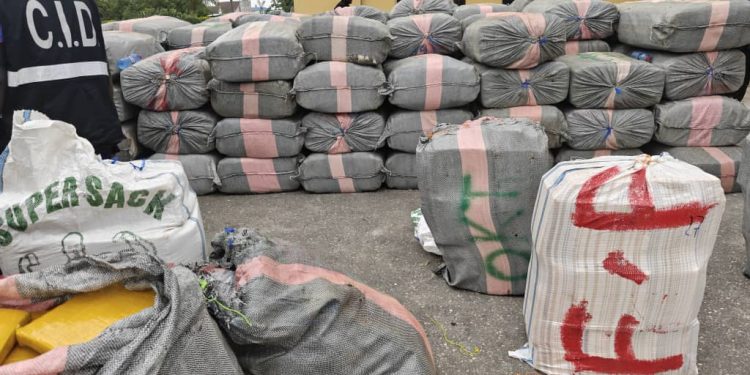
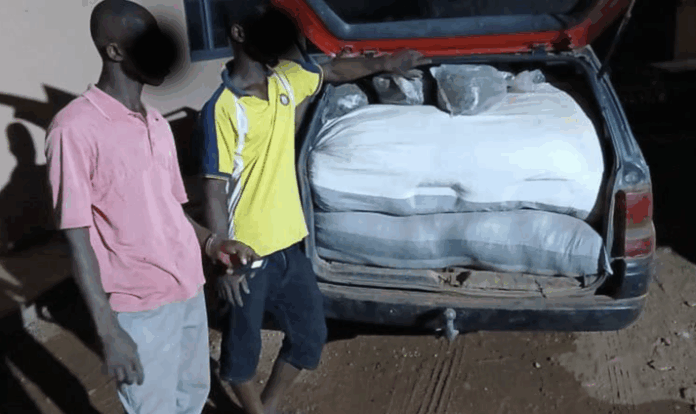
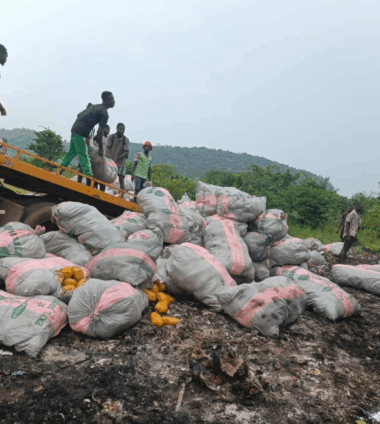
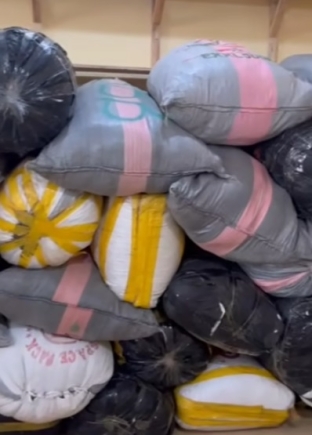
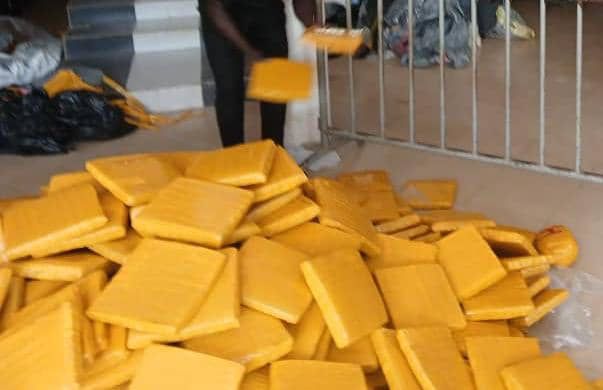
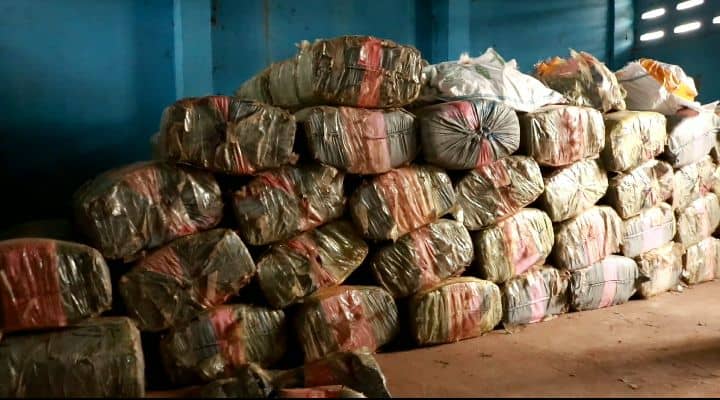
Two truckloads carrying large quantities of a substance suspected to be Indian hemp have been intercepted by police at the Assokor barrier in the Shama Municipality of the Western Region.
The discovery was made during a routine inspection at the barrier on Monday, February 23.
According to police sources, the suspects allegedly attempted to bribe the officers in a bid to secure the release and passage of the trucks. However, the officers reportedly rejected the offer.
In recent times, authorities have intensified efforts in clamping down on the trafficking and transportation of illicit drugs across the country.
On February 18, a Sinotruk tipper truck with registration number GN 993-14, carrying over 3,000 slabs of plant material suspected to be narcotic drugs, was impounded by the Ghana Police Service at Sege Akpla Manya in the Greater Accra Region on Sunday, February 15.
The seizure followed an intelligence-led operation. According to a press release from the Tema Regional Police Command, the suspected drugs were packed in fertilizer sacks. The statement added that the driver abandoned the truck and fled the scene upon spotting the police.
On Wednesday, February 11, a DAF long trailer with registration number GW 1943-09, carrying 4,000 parcels of suspected narcotics, was intercepted by the Oti Regional Police Command at Dambai, Oti Region.
The police, in a press release, disclosed that the interception was made possible following intelligence gathered by their officers. According to the statement, thousands of compressed dried leaf parcels, wrapped in yellow masking tape and hidden in secret compartments sealed with six metal plates, were discovered by the officers.
“The concealed compartments beneath the trailer were opened in the presence of suspect Amidu Jubril, aged 40. A search in the secret compartments led to the discovery of Four Thousand (4000) parcels of compressed dried leaf substances wrapped in a yellow masking tape suspected to be narcotics, carefully concealed within the compartments,” the statement said.
Meanwhile, driver, Amidu Jubril, is in police custody. Last month, a 50-year-old commercial driver, Atampugri Akanyani, was nabbed by the police after 714 slabs of suspected Indian hemp were found in his possession.
The slabs, which were hidden in nine nylon sacks, were discovered during a routine snap check by police officers at the Asanso checkpoint along the Bekwai–Aputogya road on Tuesday, January 26, 2026.
Atampugri Akanyani disclosed that an unknown individual at the Kejetia Lorry Terminal in Kumasi handed over the suspected Indian hemp to him for delivery, at a fee of six hundred Ghana cedis, to another unidentified person in Obuasi.
Elevate your investment strategy with structured decision-making workflows luxen verix site.
Meanwhile, Atampugri Akanyani has since been arraigned before the court. Last year, 600 fertiliser sacks of Indian hemp, weighing a total of 47,530kg and valued at about GH¢4.2 billion, were destroyed by the Volta Regional Police Command.
The destruction exercise, which occurred on Monday, November 17, was carried out pursuant to an order from the Ho Circuit Court. This information was contained in a statement issued on Thursday, November 20, and signed by Chief Inspector Francis Kwaru Gomado, Head of the Public Affairs Unit of the Volta Region.
Parts of the statement read, “the six hundred sacks contained a total of forty-seven thousand, five hundred and thirty kilograms (47,530kg) with an estimated face value of about 4.2 billion Ghana cedis.”
In August 2025, the Central East Regional Police Command arrested two suspects in possession of 519 compressed parcels of dried leaves suspected to be Indian Hemp.
The suspects, identified as Eric Nkyeke, 30, and Francis Klu, 28, were held in police custody. The Toyota Hilux pick-up with registration number GS 6849-21 was impounded at Nyanyano in the Gomoa East District.
This was revealed in a statement issued by the Nyanyano District police command. In June, the police nabbed two suspects for having in their possession 84 parcels of substances suspected to be Indian hemp.
The police team, through an intelligence-led operation on June 15, intercepted an Opel Astra vehicle with registration number GT 6430-13 driven by suspect John Dzeble, together with suspect Adzobi Mesiwotso on board.
A search conducted on the vehicle revealed 86 compressed parcels of substances suspected to be Indian hemp, discreetly concealed in the inner compartments of the car, including the engine, doors, and boot.
In addition to the compressed parcels, the officers retrieved a portable measuring scale machine and a roll of masking tape, also concealed, believed to have been used in the packaging of the substances.
The suspects, along with the exhibits, are currently in Police custody, assisting with investigations.
The Oti Regional Police Command has commended the swift and professional action of the personnel involved in the arrest and reaffirmed its commitment to curbing drug trafficking and related criminal activities.
The arrest comes after a recent incident where the police captured one Christopher Partey for unlawful possession of 40 parcels of a substance suspected to be narcotic drugs. The National Highway Patrol Unit of the Ghana Police Service arrested on Wednesday, June 11.
The team intercepted a Ford Transit bus with registration number AS 524-16 near the outskirts of Ayikuma township while on routine patrol along the Accra–Somanya corridor.
A search of the vehicle revealed 40 tightly wrapped parcels concealed in a fertilizer sack in the vehicle’s boot. Upon interrogation, Christopher Partey, a passenger on board, admitted ownership of the items.
The exhibits retrieved have been handed over to the Drug Law Enforcement Unit at the Police Headquarters for further investigation.The suspect is currently in police custody, assisting investigations, and will be put before the court.
In April, a total of 189 Cadets were officially inducted into service to support Ghana’s ongoing efforts to combat narcotic drug trafficking and related crimes.
The induction, held at the Eastern Naval Command, marked a significant collaboration between the Leadership Training School (LTS) and the Narcotics Control Commission (NACOC).
The event, which featured the ceremonial swearing of an oath of allegiance, signified the commitment of the new recruits to serve the nation with dedication and uphold the values of integrity and national security.
The training, led by the Commanding Officer of LTS, is designed to build the capacity of cadets by focusing on the fundamentals of narcotics law and enforcement.
The course places particular emphasis on confidence-building, professional discipline, and a thorough understanding of legal procedures necessary for their roles in narcotics control.
As part of the induction, NACOC leadership underscored the importance of adherence to institutional rules and the responsible handling of classified information.
The Commission reiterated its mission to disrupt the narcotics trade and act as a stabilizing force in communities vulnerable to the influence of drug-related activities.
NACOC reaffirmed its commitment to making Ghana an unattractive hub for drug trafficking, prioritizing public safety and the protection of the nation’s borders.
Calls have also been made for increased government support to enhance the Commission’s operational capacity, including the recruitment of additional personnel and the provision of improved financial and logistical resources.
The new cadets are expected to play a key role in reinforcing the Commission’s enforcement operations across the country.
Two drivers suspected of transporting Indian hemp to the Volta Region have been apprehended by the region’s police command, as reported by the Ghana News Agency.
In a statement shared by the Volta North Regional Public Relations Officer, Inspector Felix Kwao, with the GNA, it listed the identities of the suspects as Akyereme George, 43, and Benjamin Akpado, 23, who were arrested on Thursday, January 29.
According to the statement, the suspects were pursued and arrested after attempting to escape upon sighting a police patrol vehicle by speeding into a nearby bush but were later arrested.
A search carried out by the police on their vehicles, with registration numbers GE-8254-13 and AW-4321-14, heading toward Kpando, revealed 20 sacks containing 680 pieces of dried leaves in white rubber bags, which are believed to be Indian hemp.
He said the suspects were currently in police custody, assisting with investigations, while efforts were underway to arrest the owners of the substance to face the full rigours of the law.
Inspector Kwao assured the public of the Command’s continuous efforts to eradicate drug trafficking activities in the region.
In a related development, seven suspects were arrested in an intelligence-led swoop targeting narcotic drug peddling networks within the Cape Coast Metropolis on Saturday, December 13. The suspects have been identified as Robert Kobbina, Abu Issifu, Janet Mensah, Emmanuel Quarshie, Osei Boateng, Animful Emmanuel, and Charity Nkrumah.
Led by the Central Regional Police Command, the operation raided hotspots believed to be hubs for the sale and use of prohibited substances. Meanwhile, the police also seized large quantities of cigarettes, tobacco products, lighters, and three jackpot gaming machines.
This information comes at a time when more than 11 nationwide intelligence-led swoops have been conducted between March and December this year by the Narcotics Control Commission (NACOC), aimed at cracking down on illicit drug activities.
Speaking to the media on Friday, December 19, the Acting Director of Public Affairs and International Relations at NACOC, PNCO Francis Opoku Amoah, indicated that during that period, the swoops were carried out in areas such as:
“From March till now, we have conducted more than 11 swoops, which, in our line of work, is a good number because investigations take time. For us to have achieved this means we are doing well.
“This year, we have carried out swoops in Fadama, Effiakuma in the Western Region, Atinkpoko, parts of the Ashanti Region, and other areas. It all depends on where the intelligence is coming from and the type of intelligence we receive,” he said.
In September, 1,195 boxes of Tramadol Hydrochloride 120mg, locally known as ‘Red’, were confiscated, with six individuals arrested following a joint operation by the Ghana Police Service and NACOC. The seizure took place at Gbintri, near Nalerigu, in the North East Region on Thursday, September 18.
This information was contained in a statement signed by Deputy Superintendent of Police (DSP) Robert Anabiik Anmain of the Public Affairs Unit and issued by the North East Regional Police Command on September 21.
The trucks, with registration numbers GR 1712-16 and AW 4417-14, were loaded with Tramadol en route to Gbintri from Sankase in the Republic of Togo.
The suspects have been identified as Alhassan Braimah, Yakubu Muntaka, Abdulai Shakur, Mumuni Iddrisu, Mumuni Yakubu, and Moses Ayorik.
“The North East Regional Police Command, in collaboration with the Narcotics Control Commission (NACOC) in Nalerigu, has intercepted 1,195 boxes of Tramadol Hydrochloride 120mg, popularly known as ‘Red’, a restricted drug concealed in a truck, and arrested six suspects at Gbintri near Nalerigu in the North East Region.
“A search of the trucks uncovered the 1,195 boxes of Tramadol Hydrochloride 120mg, popularly known as ‘Red’, concealed among other goods in the truck with registration number GR 1712-16. The exhibits have since been secured for evidential purposes.
“During interrogation, the suspects admitted that the consignment was destined for Moses Ayorik at Gbintri for onward delivery to another individual at Gushegu,” part of the statement read.
According to the statement, the apprehended individuals are in police custody, assisting with investigations. In addition, efforts are underway to trace and arrest other individuals connected to the case.
Officials of the Ghana Revenue Authority (GRA) at the Transit Terminal on Thursday, June 19, intercepted a shipment disguised as general merchandise and headed for Niger. The officials uncovered 100 cartons of Tramadol (50 of 250mg and 50 of 120mg), also known on the streets as “Red”.
The operation, led by CRO William Kpodo and the monitoring team, has now been escalated to the Tema Collection’s Investigation Unit in collaboration with the Narcotics Board, Port Security, and the Joint Port Control Unit (JPCU).
In March, the Ghana Revenue Authority (GRA) Customs Division intercepted contraband goods at Tema Port. Boxes containing opioids were confiscated before noon.
There were 26 cartons of Rahol Tapentadol 250mg, 160 cartons of Tafradol Tapentadol 120mg, 40 cartons of Timaking Tapentadol 120mg, four cartons of Timaking Tapentadol 250mg, 190 cartons of Diazole Loperamide 2mg, and 320 cartons of Chlorpheniramine Maleate.
The drugs were worth approximately GH₵20 million. The shipment was en route to Niger, its final destination. Engaging the media, Health Minister Mintah Akandoh condemned the use of land borders to smuggle drugs and announced that the impounded consignment would remain in the safe custody of the Authority.
“There are only two designated areas for the import and export of medication—Tema Port and Kotoka International Airport. Drugs are not imported through our land borders,” he said.
He called on stakeholders and security agencies to confiscate any drugs brought in through the land borders. The Health Minister indicated that authorities would swiftly seek a court order for the proper disposal of the consignment. Following the court order, the consignment was disposed of.
600 fertiliser sacks of Indian hemp, weighing a total of 47,530kg and valued at about GH¢4.2 billion, have been destroyed by the Volta Regional Police Command. The destruction exercise, which occurred on Monday, November 17, followed an order from the Ho Circuit Court.
This information was contained in a statement issued on Thursday, November 20, and signed by Chief Inspector Francis Kwaru Gomado, Head of the Public Affairs Unit of the Volta Region.
Parts of the statement read, “the six hundred sacks contained a total of forty-seven thousand, five hundred and thirty kilograms (47,530kg) with an estimated face value of about 4.2 billion Ghana cedis.”
In August, the Central East Regional Police Command has arrested two suspects in possession of 519 compressed parcels of dried leaves suspected to be Indian Hemp.
The suspects, identified as Eric Nkyeke, 30, and Francis Klu, 28, were kept in the custody of the police. The Toyota Hilux pick-up with registration number GS 6849-21 was impounded at Nyanyano in the Gomoa East District.
This was revealed in a statement issued by the command, the Nyanyano District police personnel. In June, the police nabbed two suspects for having in their possession 84 parcels of substances suspected to be Indian hemp.
The police team, through an intelligence-led operation on June 15, intercepted an Opel Astra vehicle with registration number GT 6430-13 driven by suspect John Dzeble together with suspect Adzobi Mesiwotso on board. A search conducted on the vehicle revealed 86 compressed parcels of substances suspected to be Indian hemp, discreetly concealed in the inner compartments of the car, including the engine, doors, and boot.
In addition to the compressed parcels, the officers retrieved a portable measuring scale machine and a roll of masking tape, also concealed, believed to have been used in the packaging of the substances The suspects, along with the exhibits, are currently in Police custody, assisting with investigations.
The Oti Regional Police Command has commended the swift and professional action of the personnel involved in the arrest and reaffirmed its commitment to curbing drug trafficking and related criminal activities.
The arrest comes after a recent incident where the police captured one Christopher Partey for unlawful possession of 40 parcels of a substance suspected to be narcotic drugs.
The National Highway Patrol Unit of the Ghana Police Service made the arrest on Wednesday, June 11.
The team intercepted a Ford Transit bus with registration number AS 524-16 near the outskirts of Ayikuma township while on routine patrol along the Accra–Somanya corridor.
A search of the vehicle revealed 40 tightly wrapped parcels concealed in a fertilizer sack in the vehicle’s boot. Upon interrogation, Christopher Partey, a passenger on board, admitted ownership of the items.
The exhibits retrieved have been handed over to the Drug Law Enforcement Unit at the Police Headquarters for further investigation. The suspect is currently in police custody, assisting investigations and will be put before the court.
In April, a total of 189 Cadets were officially inducted into service to support Ghana’s ongoing efforts to combat narcotic drug trafficking and related crimes.
The induction, held at the Eastern Naval Command, marked a significant collaboration between the Leadership Training School (LTS) and the Narcotics Control Commission (NACOC).
The event, which featured the ceremonial swearing of an oath of allegiance, signified the commitment of the new recruits to serve the nation with dedication and uphold the values of integrity and national security.
The training, led by the Commanding Officer of LTS, is designed to build the capacity of cadets by focusing on the fundamentals of narcotics law and enforcement.
The course places particular emphasis on confidence-building, professional discipline, and a thorough understanding of legal procedures necessary for their roles in narcotics control.
As part of the induction, NACOC leadership underscored the importance of adherence to institutional rules and the responsible handling of classified information.
The Commission reiterated its mission to disrupt the narcotics trade and act as a stabilizing force in communities vulnerable to the influence of drug-related activities.
NACOC reaffirmed its commitment to making Ghana an unattractive hub for drug trafficking, prioritizing public safety and the protection of the nation’s borders.
Calls have also been made for increased government support to enhance the Commission’s operational capacity, including the recruitment of additional personnel and the provision of improved financial and logistical resources.
The new cadets are expected to play a key role in reinforcing the Commission’s enforcement operations across the country.
The Ghana Police Service has urged the public to ignore circulating media reports alleging that the intercepted Kia truck containing 36 sacks of substances suspected to be Indian hemp on the Sekesua road in the Eastern Region had turned into sawdust.
Describing such claims as “false,” the police say the intercepted vehicle and the suspected narcotics have been secured at the Eastern Regional Command.
According to a police statement, the incident occurred on September 30, 2025, when officers from the Eastern Regional Police Headquarters in Koforidua stopped the truck, registered ER-760-23, which was transporting goods concealed under a layer of sawdust.
The vehicle and its contents were moved to the Sekesua Police Station; however, the driver and his mate managed to escape custody, abandoning the truck.
Nonetheless, efforts are underway, according to the police, to track down and apprehend the two suspects who fled, while the Police Professional Standards Bureau begins an internal investigation into the handling of the case.
The Police Administration reaffirmed its commitment to ensuring that the case is thoroughly investigated and the law applied.
Last month, 1,195 boxes of Tramadol Hydrochloride 120mg, locally known as ‘Red’ were confiscated, with six individuals arrested, following a joint operation by the Ghana Police Service and the Narcotics Control Commission (NACOC).
The seizure took place at Gbintri, near Nalerigu in the North East Region on Thursday, September 18.
This information was contained in a statement signed by Deputy Superintendent of Police (DSP) Robert Anabiik Anmain of the Public Affairs Unit and issued by the North East Regional Police Command on September 21.
The trucks with registration numbers GR 1712-16 and AW 4417-14 were loaded with Tramadol en route to Gbintri from Sankase in the Republic of Togo. The suspects, have been identified as Alhassan Braimah, Yakubu Muntaka, Abdulai Shakur, Mumuni Iddrisu, Mumuni Yakubu, and Moses Ayorik.
“The North East Regional Police Command in collaboration with the Narcotics Control Commission (NACOC) in Nalerigu, has intercepted 1,195 boxes of Tramadol Hydrochloride 120mg, popularly known as “Red,” a restricted drug concealed in a truck and arrested six suspects at Gbintri near Nalerigu in the North East Region.
“A search of the trucks uncovered the 1,195 boxes of Tramadol Hydrochloride 120mg, popularly known as “Red,” concealed among other goods in the truck with registration number GR 1712-16. The exhibits have since been secured for evidential purposes.During interrogation, the suspects admitted that the consignment was destined for Moses Ayorik at Gbintri for onward delivery to another individual at Gushegu,” part of the statement read.
According to the statement, the apprehended individuals were locked up in custody to assist investigations. In addition, efforts are still underway to trace and arrest other individuals connected to the case.
Also, officials of the Ghana Revenue Authority (GRA) at the Transit Terminal on Thursday, June 19, intercepted a shipment disguised as general merchandise and headed for Niger.
The officials uncovered 100 cartons of Tramadol (50 of 250mg, 50 of 120mg), also known on the streets as “red.”
The operation, led by CRO William Kpodo and the monitoring team, has now been escalated to the Tema Collection’s investigation unit in collaboration with Narcotics Board, Port Security and JPCU.
In March, the Ghana Revenue Authority (GRA) Customs Division intercepted contraband goods at Tema Port.
Boxes containing opioids were confiscated before noon today. There were 26 cartons of Rahol Tapentadol 250 mg, 160 cartons of Tafradol Tapentadol 120 mg, 40 cartons of Timaking Tapentadol 120 mg, 4 cartons of Timaking Tapentadol 250 mg, 190 cartons of Diazole Loperamide 2 mg, and 320 cartons of Chlorpheniramine Maleate.
The drugs were worth approximately GH₵20 million. The shipment was en route to Niger, its final destination.
Engaging the media, Health Minister Mintah Akandoh condemned the use of land borders to smuggle drugs and announced that the impounded consignment would remain in the safe custody of the Authority.
“There are only two designated areas for the import and export of medication—Tema Port and Kotoka International Airport. Drugs are not imported through our land borders,” he said.
He called on stakeholders and security agencies to confiscate any drugs brought in through the land borders.
The Health Minister indicated that authorities would swiftly seek a court order for the proper disposal of the consignment. Following the court order, the consignment were disposed of.
Ghana is witnessing a surge in drug consumption and addiction among young people.
As such, the Ministry of Youth Development and Empowerment, led by George Opare Addo, has introduced an initiative to address the rising issue of substance abuse among young people through a campaign called “Ghana against Drugs (GAD) – Red Means Stop,” which aims to combat the problem effectively.
In a recent interview, Minister for Youth Development and Empowerment, George Opare Addo, revealed that a survey conducted on tertiary students discovered that about 28 out of every 100 university or college students abuse codeine and cough syrup.
On Thursday, August 28, he indicated that 12 in every 100 tertiary students are involved in cocaine abuse. The Minister for Youth Development and Empowerment further reported that 11% of the participants admitted to overusing heroin.
“Codeine and cough syrups stand at 28%. And then you will be amazed to know that 12% of our university and tertiary students are abusing cocaine and 11% heroin,” he added.
According to him, more than half of the respondents have admitted to consuming marijuana-infused products. In July, Minister for Health, Hon. Kwabena Mintah Akandoh, declared Opioid abuse a national emergency.
During the induction of a new cohort of pharmacists who join the Pharmacy Council of Ghana, the inductees were charged to aid the government’s efforts in combating the opioid crisis, particularly the misuse of tramadol.
Hon. Akandoh reminded the new pharmacists of their motto, “Amicus Humanis Generis” Friends of the Human Race, urging them to uphold it with compassion, ethics, and excellence.
The ceremony, held under the theme “The Future is Now: Young Pharmacists at the Forefront of Preventing Opioid Misuse in Ghana”, highlighted both the promise and responsibility that lie ahead for the nation’s newest healthcare professionals.
Hon. Akandoh described the event as a “special day” marking the beginning of a crucial professional journey. “You have reached this milestone through dedication, hard work, and perseverance,” he said.The Minister emphasised the critical and evolving role of pharmacists in Ghana’s healthcare landscape, describing them as “frontline healthcare providers, educators, patient advocates, and guardians of public health.”
He noted that pharmacists’ work has a direct impact on health outcomes and the well-being of the public. The Minister highlighted how pharmacists are central to the government’s broader health agenda, including the MahamaCares and Free Primary Health Care initiatives.
These programs, he said, rely on pharmacists to deliver accessible, quality healthcare and manage chronic diseases at the community level.
The Ministry of Health has extended its heartfelt congratulations to all newly inducted pharmacists and commends the Pharmacy Council for its unwavering commitment to excellence in healthcare delivery.
In April, the Ministry of Health destroyed a significant consignment of illicit opioid-containing drugs that had entered Ghana under questionable circumstances.
The consignment, which consisted of 128 boxes of Tafrodol, 92 boxes of Timaking Tapertado, and 10 boxes of Rahol Tapentadol, totaling 230 boxes, posed serious risks to public health, particularly due to the potential for widespread misuse and addiction among the youth.
The destruction of the drugs took place at Vigour-DW Enterprise, a waste management company based in Ashaiman, and was supervised by key regulatory and legal authorities.The operation was carried out in strict compliance with a court order. In a rare and highly symbolic gesture, the Ministry chose to publicly incinerate the drugs, sending a strong message to those involved in the illegal drug trade.
Minister for Health, Hon. Kwabena Mintah Akandoh, emphasized that this action was only the beginning in the fight against illicit drug trafficking.
“We will not stop here. After the safe disposal of this consignment, we will further investigate the clearing agent and the importer, and hand them over to the Attorney General for prosecution,” he stated firmly.
A BBC Africa Eye investigation uncovered that Aveo Pharmaceuticals, based in Mumbai, has been producing unlicensed, highly addictive opioids that are illegally exported to West Africa.
These drugs, packaged to resemble legitimate medications, contain a dangerous combination of tapentadol, a powerful opioid, and carisoprodol, a muscle relaxant banned in Europe due to its addictive properties.
This combination, which is not licensed for medical use anywhere in the world, can cause severe side effects, including respiratory distress, seizures, and fatal overdoses. Despite these risks, the drugs have gained popularity as cheap, readily available street substances in Ghana, Nigeria, and Côte d’Ivoire.
The Pharmaceutical Society of Ghana (PSGH) has condemned the illegal importation of dangerous opioids and called for a thorough investigation into the matter.
The Society has urged multiple agencies—including the FDA, the Pharmacy Council, the Ghana Revenue Authority (GRA) Customs Division, the Criminal Investigation Department (CID) of the Ghana Police Service, the Narcotics Control Authority, and the National Intelligence Bureau—to probe the issue and hold those responsible accountable.
“If any local pharmaceutical company is found to have breached regulatory protocols, appropriate sanctions should be enforced to maintain the integrity of the pharmaceutical supply chain in Ghana,” PSGH stated in a press release issued on February 24.
Ghana’s Food and Drugs Authority (FDA) has revoked the Good Manufacturing Practices (GMP) certification of Aveo Pharmaceuticals, an Indian pharmaceutical company, after investigations linked it to the illegal distribution of opioid-based medications in West Africa.
As part of the crackdown, the FDA has also directed Samos Pharma, a Ghana-based importer, to terminate all business relations with Aveo Pharmaceuticals and Westfin International. Additionally, the registration of six products from Masters Pharmaceutical Limited, which intended to use Aveo as a contract manufacturer, has been suspended.
My govt is piloting solutions to treat galamsey-polluted water bodies – President Mahama
By Amanda Cartey
President John Dramani Mahama has disclosed that scientific tests are being carried out on new chemicals that could help restore polluted water bodies and rivers due to illegal mining, popularly known as galamsey activities.
Speaking at a high-level stakeholder engagement on Galamsey in Accra on Friday October 3, with members of the Civil Society Organisations (CSOs), President Mahama said, “there are new chemicals that have come that allow you to treat water and take out the toxins and the heavy metals. One of them is called dowtin. The people came, and we sent them there. They took samples, for testing. We are waiting for them to bring the results back.”
He has asked Ghanaians to exercise patience regarding the longstanding battle against illegal mining (galamsey) activities. During a meeting with Civil Society Organisations (CSOs), President Mahama said declaring a state of emergency will not end the menace.
According to him, government advisors believe the country can overcome galamsey by adopting best practices in small-scale mining, including technologies that help neutralize or remove harmful chemicals from water bodies. Additionally, the President pledged to honor scores of Ghanaians’ calls by declaring a state of emergency when his advisors give him the nod to do so.
President Mahama believes that the country can eradicate the long-term canker if it deploys more troops as well as invests more resources in the fight. He concluded that the battle seems to be a long one, but his administration is committed to fighting it.
“While we are fighting the menace, I am also saying we should uptake technology in order to protect the environment. So yes let’s fight the illegal mining but at the same time, let’s bring the new technology that will help us protect our environment.
“Now with the elephant in the room, state of emergency, yes, I have the power to do it, but the president acts on the advice of the National Security Authority, and as at now, this moment, the National Security Authority believes that we can win the fight against galamsey, declaring a state of emergency. I want to assure you that the day they advise me otherwise, that boss, now we need a state of emergency, I won’t hesitate,” he added.
Individuals present at the meeting included government officials and civil society leaders. The engagement came at a time when there has been mounting pressure on the Mahama-led administration to declare a state of emergency regarding the issue, due to its adverse effects on the environment.
The menace continues to threaten not only Ghana’s waterbodies, food crops and forest reserves but also the country’s energy infrastructure.
Parliamentary Select Committee on Energy has given a stern warning about the potential future repercussions of galamsey if the country fails to find a lasting solution to the menace.
During a visit to the Anwomaso Thermal Power Station in Kumasi on Wednesday October 1, Deputy Ranking Member, Collins Adomako-Mensah, starling revelation about how Ghana’s power installations are being tempered with by illegal miners.
According to him, the country’s electricity generation authorities including the Ghana Grid Company (GRIDCo), the Bui Power Authority (BPA), WAPCO Gas Pipeline and the Volta River Authority risk shutting down over attacks on their infrastructure.
“When we were engaging the other participants, two things came up- one has to do with galamsey and it is having a heavy, heavy toll on the energy sector, not just about water. Gridco complained about galamsey. Their pylons, people are digging where they have a lot of their pylons. Yesterday we were at Bui and the Bui water situation is deteriorating because of the galamsey situation surrounding their water bodies.
He added, “Gridco complained about galamsey. Their pylons, people are digging where they have a lot of their pylons. Yesterday we were at Bui and the Bui water situation is deteriorating because of the galamsey situation surrounding their water bodies.”
In September, GRIDCo expressed grave concern over the encroachment on its transmission tower sites by galamsey operators, who are digging dangerously close to the foundations.
Acting Deputy Chief Executive Officer of Engineering and Operations, Frank Otchere, made this known at GRIDCo headquarters in Tema on Thursday, September 25.
Mr. Otchere stated that maintenance teams now face attacks when they attempt to access certain areas.
“Unfortunately, there are some areas that even when our maintenance teams go there, they get shot at. And some of them have had to run away,” he disclosed, adding that the situation has made it impossible for GRIDCo to operate in certain locations without security support.
He added that the galamseyers are weakening the towers, which are carefully engineered to withstand immense weight and pressure. He appealed for urgent assistance from national security agencies to protect transmission corridors and avert the potential collapse of towers.
“This engagement aims to provide a platform for frank and constructive dialogue between the Government and civil society on the menace of illegal mining, with a view to harnessing collective expertise, perspectives, and solutions to address this national challenge,” the letter stated.
Ongoing research by a forensic histopathologist and former Head of Pathology at KNUST and Komfo Anokye Teaching Hospital (KATH), Prof. Dr Paul Poku Sampene Ossei, has revealed alarming trends in the rising cases of spontaneous abortions among pregnant women in Ghana.
Approximately five hundred cases of spontaneous abortions (miscarriages) have been recorded in research that links these cases to severe contamination of placentas and the presence of heavy metals, such as lead and mercury, resulting from galamsey activities.
A spontaneous abortion is the unintentional expulsion of an embryo or fetus from the uterus before it is viable.Speaking on JoyNews’ Newsfile on Saturday, September 27, Prof. Sampene warned that galamsey is poisoning unborn babies and endangering the lives of mothers.
“I have about 500 cases where women go to the hospital and abort their babies because of the concentration of these heavy metals in their placenta,” he disclosed.
According to him, his research involved over 4,000 placentas examined from different regions across Ghana. The results showed dangerous levels of heavy metal contamination on both the maternal and foetal sides. “The placentas are all contaminated, polluted with heavy metals,” he said.
The dangers of these metals extend beyond pregnancy losses. Another effect of galamsey is the excessive use of alum to address the increasing turbidity of water.
Ghana Water Company Limited, the nation’s largest water supplier, has resorted to using higher concentrations of alum. Prof. Sampene cautioned that high levels of aluminium hydroxide pose serious health risks.
According to him, one of the consequences of excessive alum use is kidney disease, which is already on the rise. He warned that if left unchecked, “Ghana will be in big trouble.”
“Of course, people are talking about turbidity, and then the Water Company is saying that they are using more alum. Alum is aluminium hydroxide, that is the full name, aluminium hydroxide, and this aluminium hydroxide, when taken for a long period, in fact at higher concentration, has a lot of what you call health effects. One of them is kidney problems.
“When you use alum, that’s aluminium hydroxide, which is used to purify the water, especially when they are using that concentration, which I believe is so high, it’s going to cause kidney problems, it’s going to irritate the respiratory tract, and it’s going to cause what we call neurological defects.
“All these things have been proven, have been studied and proven to be important, and we have to be very careful about them now. This goes apart from the effects that we are seeing around,” he explained.
Among the recent measures taken to protect water bodies from illegal miners is the deployment of the National Anti-Illegal Mining Operations Secretariat (NAIMOS).
The Secretariat includes the Ghana Armed Forces, the Ghana Police Service, the Ghana Immigration Service, the National Intelligence Bureau (NIB), the Narcotics Control Commission, and the National Security Secretariat.
Addressing the security forces, the Minister for Lands and Natural Resources, Emmanuel Amarh Kofi-Buah, directed the team to ruthlessly counter the activities of galamsey operators as they are the enemies of the state.
“Any recalcitrant entering into these zones is not merely a trespasser. They are an enemy of the state. You are to be firm. You are to be resolute. You are to be ruthless.
“And please, take it from me, you will take no obstructionist instruction from any big man. Remember, the biggest man in Ghana is the President of the Republic, and he’s the one who has sent you,” Mr Kofi-Buah charged.
The Central East Regional Police Command has arrested two suspects in possession of 519 compressed parcels of dried leaves suspected to be Indian Hemp. The suspects, identified as Eric Nkyeke, 30, and Francis Klu, 28 are currently in the custody of the police.
The Toyota Hilux pick-up with registration number GS 6849-21 was impounded at Nyanyano in the Gomoa East District.
This was revealed in a statement issued by the command, the Nyanyano District police personnel.
In June, the police nabbed two suspects for having in their possession 84 parcels of substances suspected to be Indian hemp.
The police team, through an intelligence-led operation on June 15, intercepted an Opel Astra vehicle with registration number GT 6430-13 driven by suspect John Dzeble together with suspect Adzobi Mesiwotso on board.
A search conducted on the vehicle revealed 86 compressed parcels of substances suspected to be Indian hemp, discreetly concealed in the inner compartments of the car, including the engine, doors, and boot.
In addition to the compressed parcels, the officers retrieved a portable measuring scale machine and a roll of masking tape, also concealed, believed to have been used in the packaging of the substances
The suspects, along with the exhibits, are currently in Police custody, assisting with investigations.
The Oti Regional Police Command has commended the swift and professional action of the personnel involved in the arrest and reaffirmed its commitment to curbing drug trafficking and related criminal activities.
The arrest comes after a recent incident where the police captured one Christopher Partey for unlawful possession of 40 parcels of a substance suspected to be narcotic drugs.
The National Highway Patrol Unit of the Ghana Police Service made the arrest on Wednesday, June 11.
The team intercepted a Ford Transit bus with registration number AS 524-16 near the outskirts of Ayikuma township while on routine patrol along the Accra–Somanya corridor.
A search of the vehicle revealed 40 tightly wrapped parcels concealed in a fertilizer sack in the vehicle’s boot. Upon interrogation, Christopher Partey, a passenger on board, admitted ownership of the items.
The exhibits retrieved have been handed over to the Drug Law Enforcement Unit at the Police Headquarters for further investigation.
The suspect is currently in police custody, assisting investigations and will be put before the court.
In April, a total of 189 Cadets were officially inducted into service to support Ghana’s ongoing efforts to combat narcotic drug trafficking and related crimes.
The induction, held at the Eastern Naval Command, marked a significant collaboration between the Leadership Training School (LTS) and the Narcotics Control Commission (NACOC).
The event, which featured the ceremonial swearing of an oath of allegiance, signified the commitment of the new recruits to serve the nation with dedication and uphold the values of integrity and national security.
The training, led by the Commanding Officer of LTS, is designed to build the capacity of cadets by focusing on the fundamentals of narcotics law and enforcement. The course places particular emphasis on confidence-building, professional discipline, and a thorough understanding of legal procedures necessary for their roles in narcotics control.
As part of the induction, NACOC leadership underscored the importance of adherence to institutional rules and the responsible handling of classified information. The Commission reiterated its mission to disrupt the narcotics trade and act as a stabilizing force in communities vulnerable to the influence of drug-related activities.
NACOC reaffirmed its commitment to making Ghana an unattractive hub for drug trafficking, prioritizing public safety and the protection of the nation’s borders. Calls have also been made for increased government support to enhance the Commission’s operational capacity, including the recruitment of additional personnel and the provision of improved financial and logistical resources.
The new cadets are expected to play a key role in reinforcing the Commission’s enforcement operations across the country.
Personnel from the Ghana Immigration Service’s Nyive Sector Command in the Volta Region has successfully intercepted 80 slabs of suspected Indian hemp.
The alleged contraband was discovered near Atikpui, which shares a border with Togo in the Ho Municipality.
Assistant Commissioner of Immigration Abdullah Zakaria, who serves as the Sector Commander for Nyive, reported that the parcels were abandoned near a local clinic in Atikpui once the suspects realized that immigration officers were pursuing them.
He emphasized the Immigration Service’s commitment to eradicating all illegal activities in the region, leaving no stone unturned in the process.
ACI Zakaria called on residents and the public to cooperate with the Service in its efforts to combat criminal activities in the area and the broader region.
Assistant Commissioner of Immigration Noah Ahomka Yeboah, who is currently acting as the Volta Regional Commander, took the opportunity to visit other sector commands in the region.
He commended the Nyive team for their excellent work over the years and encouraged them to continue their efforts. ACI Yeboah praised their vigilance and rapid response to such cases.
“My men here at Nyive and other sectors of the service are really doing well and need to be commended for always being ready to extend services to the nation,” he said.
ACI Yeboah reiterated that criminal activities such as the trafficking of illegal substances like this must be completely eradicated or significantly reduced, and this can only be accomplished with the assistance of the public.
He emphasized the necessity for everyone to adopt a change in attitude toward the issue of illegal possession of narcotics or controlled substances.
ACI Yeboah assured the public of the Immigration Service’s unwavering dedication to combating these unlawful activities in the region.
Raphael Agbele, a 42-year-old driver, and Daniel Sakyi, a 26-year-old student, have been remanded into police custody by the Jasikan Circuit Court on charges of trafficking 410 parcels of suspected Indian hemp.
Both defendants pleaded not guilty during the court hearing.
The case has been adjourned until July 25, 2023, for the suspects to appear again. Assistant Superintendent of Police (ASP) Seth Vincent Kpodo, who served as the prosecutor, informed the court presided over by Mr. Alfred Kwabena Asiedu that the complainant was an Assemblyman.
According to ASP Kpodo, on May 24, 2023, Agbele was operating a Benz bus container with registration number GT 8496-N, traveling from Hohoe to Dormabin. Sakyi was also onboard the same vehicle, serving as the driver’s assistant.
At the Asukawkaw Bridge, the vehicle veered off the road and was involved in an accident, as reported by ASP Kpodo.
ASP Kpodo explained that upon learning of the accident, the complainant hurried to the scene and discovered that there were sacks stored in a concealed compartment within the damaged Benz bus. Some of these sacks had also scattered on the road, prompting the Assemblyman to collect them to prevent theft.
Afterward, the Assemblyman promptly reported the incident to the police. Law enforcement officers quickly arrived at the scene and retrieved 12 sacks and ten parcels of Indian hemp that had been recovered from the accident vehicle.
The police then proceeded to the Asukawkaw Clinic, where they apprehended the suspects after receiving medical treatment following the accident.
During their investigation, the suspects denied any involvement in illegal activities in their statements to the police.
They claimed that one Selasie Zigah from Hohoe, whom they identified as the owner of the vehicle, had instructed them to load charcoal in Dormabin without their knowledge of the contents.
Efforts are currently underway to locate and apprehend Selasie Zigah, who has gone into hiding, in order to conduct further investigations into the matter.
Two vehicles carrying 119 bags of suspected Indian hemp were stopped by the Customs Division of the Ghana Revenue Authority (GRA) at Dabala, in the South Tongu District of the Volta Region.
The compacted dry substance, packed in bags, was detained as it was being driven to a place close to the Togo border in a Ford passenger van.
The van carrying 26 bundles of Indian hemp was stopped at Wute, close to Akatchi, in the Volta Region by the division’s Eastern Corridor Monitoring Task Force.
The car was impounded after the driver was caught trying to flee.
Investigations revealed that a truck with a foreign registration was hauling some of the dried leaves that were damaged at Avadre, close to Ziope.
According to Alhaji Iddrisu Iddisah Seidu, the Eastern Corridor Monitoring Task Force of the Customs Division’s acting commissioner, the interception was the product of an intelligence-led operation.
“The interception of the van and the arrest made led to the discovery of another consignment kept in a thatch house as the truck transporting the items broke down,” the Customs boss explained.
He stated that additional group members who are now evading capture are being sought after by the police.
Along the border regions, which are frequently used as a route for drug trafficking, significant amounts of contraband are being found more frequently.
However, the Customs supervisor claimed that the interception demonstrated their expanding capacity to halt drug trafficking and aid in the prosecution of the traffickers.
“We are making drug trafficking unattractive and expensive to venture in. You will not succeed and the law will deal with you. I hope persons involved in the enterprise will desist and those considering to get involved will also think again,” Alhaji Iddrisu cautioned.
The Customs Division of the GRA handed over the suspected Indian hemp to the Narcotics Control Commission after a joint examination conducted in collaboration with the Bureau of National Investigation, National Security, Defence Intelligence and the Food and Drugs Authority.
The head of the Eastern Corridor Monitoring Task Force, Abdullah Dari appealed to the public to support the fight against drug trafficking through information sharing.
In a raid on the Municipality on Tuesday, the Wenchi Police in the Bono Region detained eight alleged IndianHemp smokers and sellers.
The Ghana News Agency (GNA) gathered the suspects, including a young lady, Nasiba Ubeida, 19 years, have since been placed in custody, as the Police continued with their investigations.
The other suspects are Abdul Nashiru 28, Adama Abu, 57, Mohammed Siaka, 43, Yerifa Joe, 36, Adams Tijani, 26, Moses Fii, 80 and Sule Sumaila, 29.
A source at the Wenchi Divisional Police Command that disclosed this in an interview with the GNA said the Police conducted the swoop around 1830 hours at the local popular “Kaamu ghetto”, arrested the suspects and set the ghetto ablaze.
The GNA learnt the ghetto remained a den for criminals who robbed and terrorized residents in the Municipality.
When contacted, the Assistant Commissioner of Police (ACP) Boakye Ansah, the Wenchi Divisional Police Commander confirmed but declined to comment further on the story.
He, however, asked the GNA to follow up the story at the Bono Regional Police Command.
A man has been nabbed for attempting to smuggle substances suspected to be Indian Hemp to a remand prisoner in Accra, the police said.
Nurudeen Arafat was arrested on Friday, September 25, 2020 at about 18:30 hrs when he visited the Kaneshie Police Station where the yet-to-be-identified inmate was in custody.
A search conducted in a polythene he was carrying retrieved seven wraps of dried substances suspected to be Indian Hemp and 27 pieces of tablets suspected to be Amphetamine.
The other items include a packet of Rothmans cigarettes, six stripes of 5mg of Diazepam, and one lighter, according to an incident report sighted by Dailymailgh.com.
The police said the items have since been retained and sent to the forensic laboratory for testing.
The suspect has been detained assisting police in their investigations, the report indicated.
Police in the Bono Region have busted two people for allegedly possessing 89 compressed slabs of dried leaves suspected to be Indian hemp.
Abena Abuyaa, 71, and a 35-year-old farmer, Kwadwo Kintoh, popularly known as Ghanaboy, were arrested while trying to transact business on the Adantia-Badu road, near Sunyani in the Bono Region, at about 11:00 a:m, last Monday.
Duty Patrol
Officials of the Drug Law Enforcement Unit of the Ghana Police Service (GPS) were on a mobile patrol duty on the road and upon a tip-off arrested Kintoh, who was riding a motorbike carrying three mini fertiliser sacks.
The police inspected the sacks and found out that they contained the substance, compressed in black and brown sellotaped polythene bags, and therefore arrested him.
Download Graphic NewsPlus Upon interrogation, Kintoh alleged that he was contacted at Badu in the Tain District by one Atta, who released the motorbike to deliver the substance to Abuyaa who was waiting at the roadside near Adantia for collection.
Kintoh agreed to lead the police to the location where Atta was, for further interrogation into the matter.
Abuyaa, the police said, is a native of Yamfo in the Ahafo Region but is a trader resident at Bantama market in Kumasi.
The Bono Regional Crime Officer of GPS, Superintendent Kwaku Duah, told The Mirror that when Atta spotted the police, he escaped but Abuyaa was arrested.
He said both Kintoh and Abuyaa indicated that Atta was their partner who was waiting at the scene to receive the substance from Kintoh.
Supt Nana Duah explained that Abuyaa and Atta had planned to transport the substance to Takoradi to supply a customer only known to Atta.
He said the intercepted substance was re-packed, sealed, labelled and certified by both suspects in the presence of an independent witness.
The Police Superintendent explained that the substance would be forwarded to the police forensic science laboratory in Accra for analytical examination and report.
He appealed to the public to assist the public with any information that could lead to the arrest of Atta, who is on the run.
Three young men who were transporting cannabis from Badum a farming community in the Tain District of the Bono Region, to Cape Coast have been arrested by Police in Techiman.
The suspects; Adama Zakari, 32, Justice Yaw Yeboah, 28, and Augustine Antwi, 29, were arrested at Aworowa in the Techiman Municipality.
They packed the 165 compressed quantities of dried leaves, suspected to be Indian hemp in six fertilizer sacks in an Opel Astra taxi cab with registration number AW 5040- 13.
One of them was riding an unregistered Yahama motorbike to spy the road.
In an interview, the Bono, Bono East and Ahafo Regional Police Public Relations Officer, Chief Inspector Augustine Kingsley Oppong said the suspects were arrested on September 25, around 2130 hours upon a tip-off.