Tag: Indian

  • Konongo-Kumasi Highway: Tragic accident claims 3 lives, including 2 Indian nationals

    Konongo-Kumasi Highway: Tragic accident claims 3 lives, including 2 Indian nationals

    On Monday, a tragic head-on collision on the Konongo-Kumasi Highway claimed the lives of three individuals, including two Indian nationals.

    The accident involved a Nissan pickup (registration number GN 1645-21) and a Mitsubishi Fuso articulated truck (registration number GT 8794-W).

    The Ghana National Fire Service (GNFS) reported that the Nissan, carrying two individuals believed to be Indian nationals in their 30s, collided with the truck.

    According to police reports, the incident occurred around 4:20 pm when the Nissan, driven by 42-year-old Obeng Michael, was traveling towards Kumasi.

    As Michael attempted to overtake vehicles while ascending a hill near New Koforidua along the highway, the collision transpired with the oncoming articulated truck driven by 54-year-old Mohammad Nassam, who was transporting poly tanks.

    Following the crash, an operation led by SubO Sarpong Francis Boateng rescued one injured person from the scene.

    The deceased victims were later transported to the Steward morgue for preservation, while investigations into the incident are ongoing.

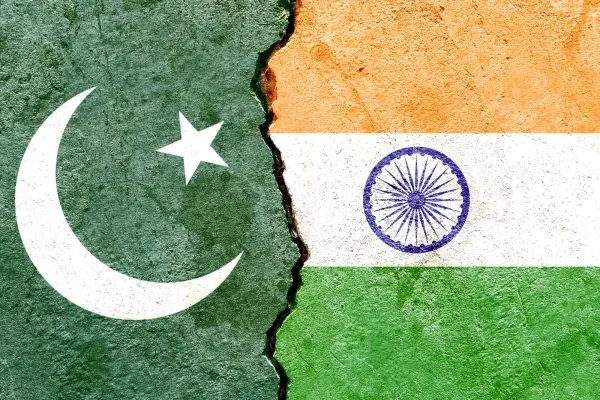
  • Pakistan struggles to manage internal insurgency, shifts blame to India

    Pakistan struggles to manage internal insurgency, shifts blame to India

    Pakistan expert Tilak Devashree has emphasized that Pakistan, grappling with internal insurgency challenges, is pointing fingers at India for the ongoing atrocities in Balochistan. This strategic blame-shifting is seen as an attempt to divert attention from Pakistan’s acknowledged inability to effectively address the escalating situation.

    Highlighting a longstanding pattern, Tilak Devashree, a Pakistan expert, emphasized that Pakistan has a historical tendency of deflecting responsibility by not acknowledging its mistakes and externalizing them.

    “Pakistan is not able to handle its internal insurgency and has been blaming India and Afghanistan for it,” he told ANI.

    While answering the blame Pakistan has put on India for the ongoing situation of Baloch people, he said, “This is just an excuse, and they are not able to tackle the situation, so they are blaming it (India).”

    Emphasising that the actual problem is the Pakistan Army, Devashree said that either their army does not have the potential to control the situation or they do not want to do it.

    “For the last 2.5 years, the Taliban government has been there and they have been harbouring the Taliban for 20 years now; there is no such influence on them. so how can they blame India for it…? The basic problem is that the army is not able to control this situation. Either they don’t have the potential to do it or they don’t want to do it, neither TTP nor the Baloch,” he said.

    This Baloch insurgency has been going on since 2003, and they are not able to control it, he highlighted.

    “Pakistan is known for not accepting its own mistakes and will always externalise them,” Devashree emphasised.

    Underscoring the deportation of Afghan refugees from Pakistan, he said that as the Taliban is not cooperating with Pakistan, they are pressurizing them.

    “They said that the Taliban is not cooperating with us, so to pressure on the Taliban, they have pushed 8.7 million undocumented Afghans out of their country in these harsh winters,” he said, reiterating, “But the problem is with the Pakistani army.”

    Moreover, Devashree told ANI that the Pakistan Army wanted to keep this hidden, but it has been exposed now.

    On being asked whether the concerns and protests across the world will put any pressure on Pakistan or not, Devahsree replied, “Yes, of course,” adding that the Baloch people who are currently settled abroad are protesting and through their protests, people will get to know the atrocities done to them.

    “Baloch people who are currently settled in London, the US, Germany, and New York, whenever they protest, people will get to know what exactly the issue is and why these people are protesting in this bitter cold,” he stressed.

    “It will definitely impact Pakistan, but we still have to see how much it will impact the media and the politicians,” he added.

    Further talking about the upcoming general elections in Pakistan, scheduled for February 8, he said that the Pakistani army is trying to ensure that Pakistan Tehreek-e-Insaf (PTI) founder Imran Khan does not contest the elections, raising concerns about the credibility of the electoral process.

    “The Pakistani army is trying to ensure that Imran Khan does not contest elections and the PTI does not get enough seats; this is one of their strategies,” he said.

    Additionally, he said, “Nawaz Sharif PML-N comes as the single largest party but not in a majority of its own. If there is a coalition party or it gets support from smaller parties, then it can be controlled.”

    Now, the army has two options to keep Imran Khan out of the elections: “either to hold elections that are not credible, second, or to postpone elections.”

    To which he added, “Both of these options are not good…”

    Devashree further emphasised that the elections will not be credible at all as they have been harassing PTI.

    “Presently, I think the elections will not be credible at all, as they have been harassing PTI… they have disqualified candidates, they are not being allowed to visit polling stations, and a lot of people are behind bars. this shows the elections are not credible,” he added.

    The much-awaited general elections will take place on February 8, 2024, with the national poll organising authority finally issuing the schedule following the Supreme Court’s order.

  • Indian tunnel collapse: Operation might continue all night – Official

    Indian tunnel collapse: Operation might continue all night – Official

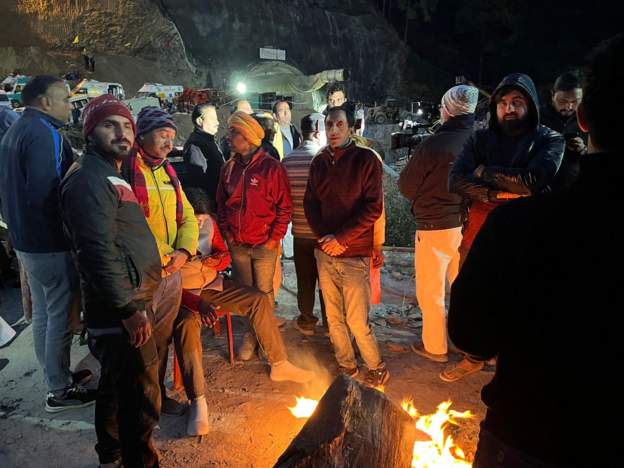
    Retired Lt-Gen Syed Ata Hasnain from the NDMA said that he believes the operation will continue throughout the whole night.

    Lt-Gen Hasnain said it will take “at least three to four hours” to rescue all the workers stuck in the tunnel.

    He said it will take 3-5 minutes to get each of the 41 people out. Three teams from the National Disaster Response Force will help with the evacuation, and State Disaster Response Force teams will also be there to help.

    He said that the paramedics will go inside the tunnel when people are being evacuated.

    For the last two hours, there has been a flurry of activity outside the tunnel.

    The tunnel’s opening is lined with dozens of ambulances. There are also a number of high-ranking officials present.

    Chinook helicopters from the Indian Air Force have also been used to remove employees who might require emergency medical attention.

    There’s a general air of nervousness and excitement at the location.

  • Maternal mortality rates in US have risen over the past 20 years

    Maternal mortality rates in US have risen over the past 20 years

    Based on recent study, maternal mortality rates in the US have doubled over the past 20 years, with black moms experiencing the greatest rates of death.

    According to a research published in JAMA, American Indian and Alaska Native women experienced the most increases.

    The study indicated that among all racial and ethnic groupings, maternal death rates were higher in southern states.

    Maternal mortality is defined as passing away during pregnancy or up to a year later.

    In 1999, there were an estimated 12.7 deaths per 100,000 live births and in 2019 that figure rose to 32.2 deaths per 100,000 live births in 2019, according to the research, which did not study data from the pandemic years.

    Unlike other studies, this one examined disparities within states instead of measuring rates at the national level, and it monitored five racial and ethnic groups.

    Dr Allison Bryant, one of the study’s authors, said the findings were a call to action “to understand that some of it is about health care and access to health care, but a lot of it is about structural racism”.

    She said some current policies and procedures “may keep people from being healthy”.

    Black women had the highest median maternal death rate per 100,000 live births, which had tripled in some north-eastern states over 20 years, the research found.

    “Often, states in the south are called out as having the worst maternal mortality rates in the nation, whereas California and Massachusetts have the best. But that doesn’t tell the whole story,” Dr Bryant said.

    “It’s essential to look at the disparities between populations that exist even in the ‘best’ states.”

    While southern states had the highest maternal mortality rates for any demographic, figures showed they were especially high for black women.

    The study found Midwest and Great Plains states had the highest death rates for American Indian and Alaskan Native women.

    Missouri Governor Mike Parson recently signed a budget bill that includes $4.4m (£3.47m) for a maternal mortality prevention plan.

    Maternal mortality rates for black women have long been an issue across the socioeconomic spectrum.

    US Olympic champion sprinter Tori Bowie died in May from childbirth complications at the age of 32, her agent said.

    Common causes of death within a year of pregnancy include mental health conditions, excessive bleeding, cardiac conditions, pregnancy-related high blood pressure, infections and blood clots, according to the US Centers for Disease Control and Prevention.

    The JAMA study had some limitations – the researchers did not always have access to the cause of maternal death information and the way maternal deaths are recorded on death certificates changed in the US during the course of this study.

    Dr Bryant said that if they were to study the years after 2019, during Covid-19, there would be a “continued increase in the risk of maternal mortality across all populations”.

    More on this story

  • India’s under-construction bridge collapses a second time

    India’s under-construction bridge collapses a second time

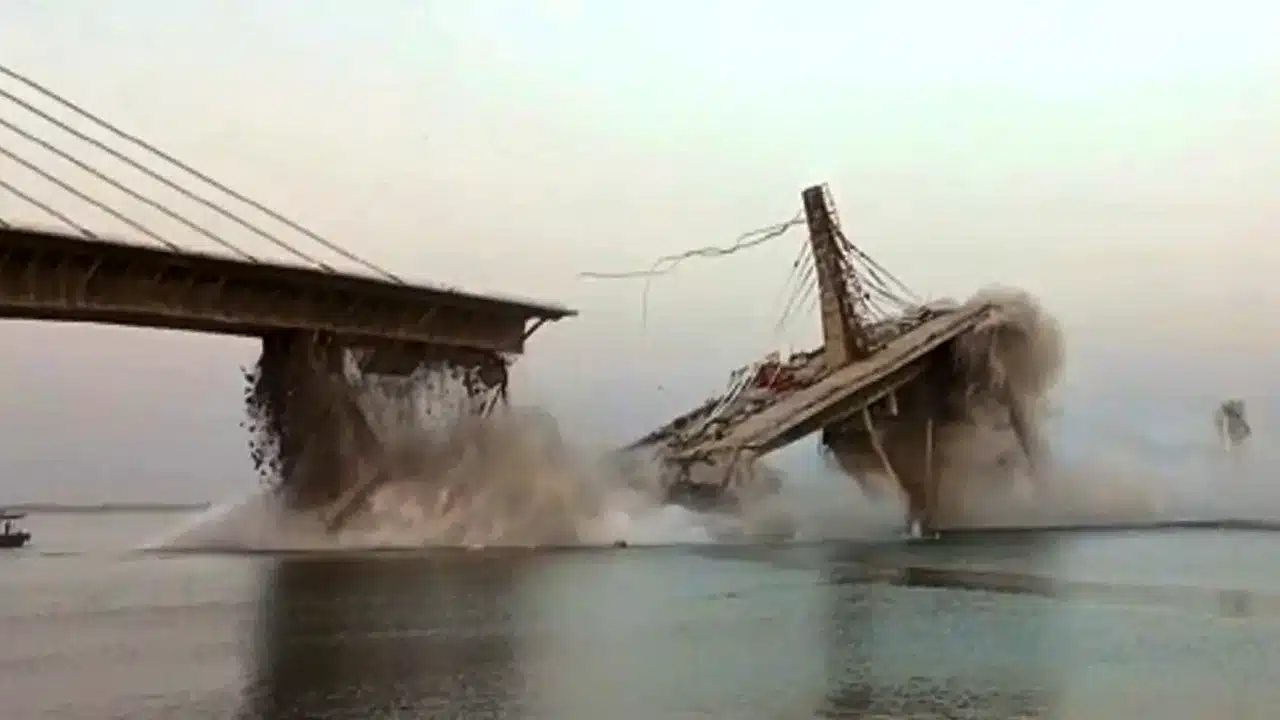
    For the second time in less than a year, a four-lane concrete bridge being built in the eastern Indian state of Bihar over the River Ganges has fallen, once again casting doubt on the quality of its construction.

    On camera, the 3-kilometer-long (1.8-mile-long) bridge can be seen violently collapsing into the river on Sunday, spewing dust and debris into the air and causing waves to ripple across the revered river.

    Two times since building on the Sultanganj Bridge began in 2017, the most recent of which occurred on Sunday. The first collapse occurred in April of last year. It’s unclear what caused the bridge to fall last year or whether those issues had been fixed.

    Crowds of people on the river bank can be seen filming the bridge and shouting as it tumbles down. CNN has not been able to confirm reports of any injuries.

    On Monday, Bihar’s chief minister Nitish Kumar said he had ordered an inquiry into the incident.

    In a statement Monday, the Canadian design and engineering firm behind the bridge, McElhanney, it was aware of the “partial collapse” of the bridge and is “deeply concerned” about the safety and well-being of those affected by the incident.

    The company will “cooperate with any investigation,” the statement added.

    CNN has reached out to SP Singla Constructions, who was building the bridge, but did not receive an immediate response.

    According to McElhanney, the bridge was expected to include four lanes of traffic and a footpath, providing “an important new link across the Ganges.”

    It was also expected to ease congestion on the state’s three existing road bridges, the firm said on its website.

    The Sultanganj Bridge is not the only one to have collapsed in India in the last year. Last October, a suspension bridge gave way in the town of Morbi in Gujarat, killing 135 people.

  • Indian teenager girl publicly stabbed to death

    Indian teenager girl publicly stabbed to death

    In India‘s capital, a 16-year-old girl was brutally stabbed and beaten to death on Sunday, igniting new outrage over men’s violence against women and the protection of women in the nation.

    Security camera footage of the event, which lasted for more than a minute, shows a number of people passing by while the attacker strikes the victim repeatedly.

    One man is all that is seen attempting to help, and he swiftly flees after failing to remove the attacker from the victim.

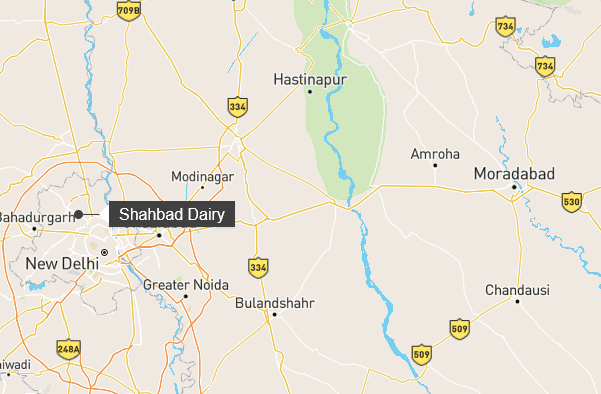
    The body of the victim, who has not been identified, was found Sunday evening in the Shahbad Dairy area of the northern Delhi neighborhood of Rohini, where the incident took place.

    On Monday afternoon, Indian police said they had arrested a male suspect named Sahil in connection with the murder.

    Sahil, a mechanic, was detained in Bulandshahr in neighboring Uttar Pradesh state, Ravi Kumar Singh, Deputy Police Commissioner for Outer Delhi, told reporters on Monday.

    Delhi’s Special Commissioner of Police Deependra Pathak told Indian news channel Times Now that the initial investigation pointed toward a so called “crime of passion.”

    Speaking to Indian news agency ANI, the girl’s father said the family has demanded a “stringent punishment for the accused.”

    The incident is the latest in a long line of killings and rapes that have triggered anger about whether enough is being done both to protect women in India and punish attackers.

    “A minor girl is brutally murdered openly in Delhi,” Delhi’s Chief Minister Arvind Kejriwal wrote on Twitter. “This is very sad and unfortunate. The criminals have become fearless, and there is no fear of the police.”

    “The safety of the people of Delhi is of paramount importance,” he added.

    Swati Maliwal, chairperson of the Delhi Commision for Women, told ANI she’s never seen such a frightening incident.

    “Delhi has become extremely unsafe for women and girls,” she added.

    India has long struggled to address gender violence. A 2018 Thompson Reuters Foundation survey of experts on women’s issues ranked the country as the most dangerous place in the world to be a woman.

    The frequency of crimes against women in India also appears to be increasing. According to data from India’s National Crime Records Bureau, crimes against women were 20% higher in 2020 compared to 2013 – the last year before the ruling Bharatiya Janata Party (BJP) came to power.

    Activists say the real statistics are likely just the tip of the iceberg, given that many forms of violence against women, such as rape, are often underreported.

    Yogita Bhayana, founder of People Against Rapes in India, said the problem is largely rooted in old societal norms.

    “We learn to live with this kind of situation in our country which is very unfortunate,” Bhayana told CNN. “The basic patriarchal fabric is totally rotten and right now we need to fix that.”

    “Putting cameras and putting marshals is not going to be enough,” she added. “The work has to be done on the mindset of the men and the boys.”

  • Indian official drains reservoir to recover phone dropped while taking selfie

    Indian official drains reservoir to recover phone dropped while taking selfie

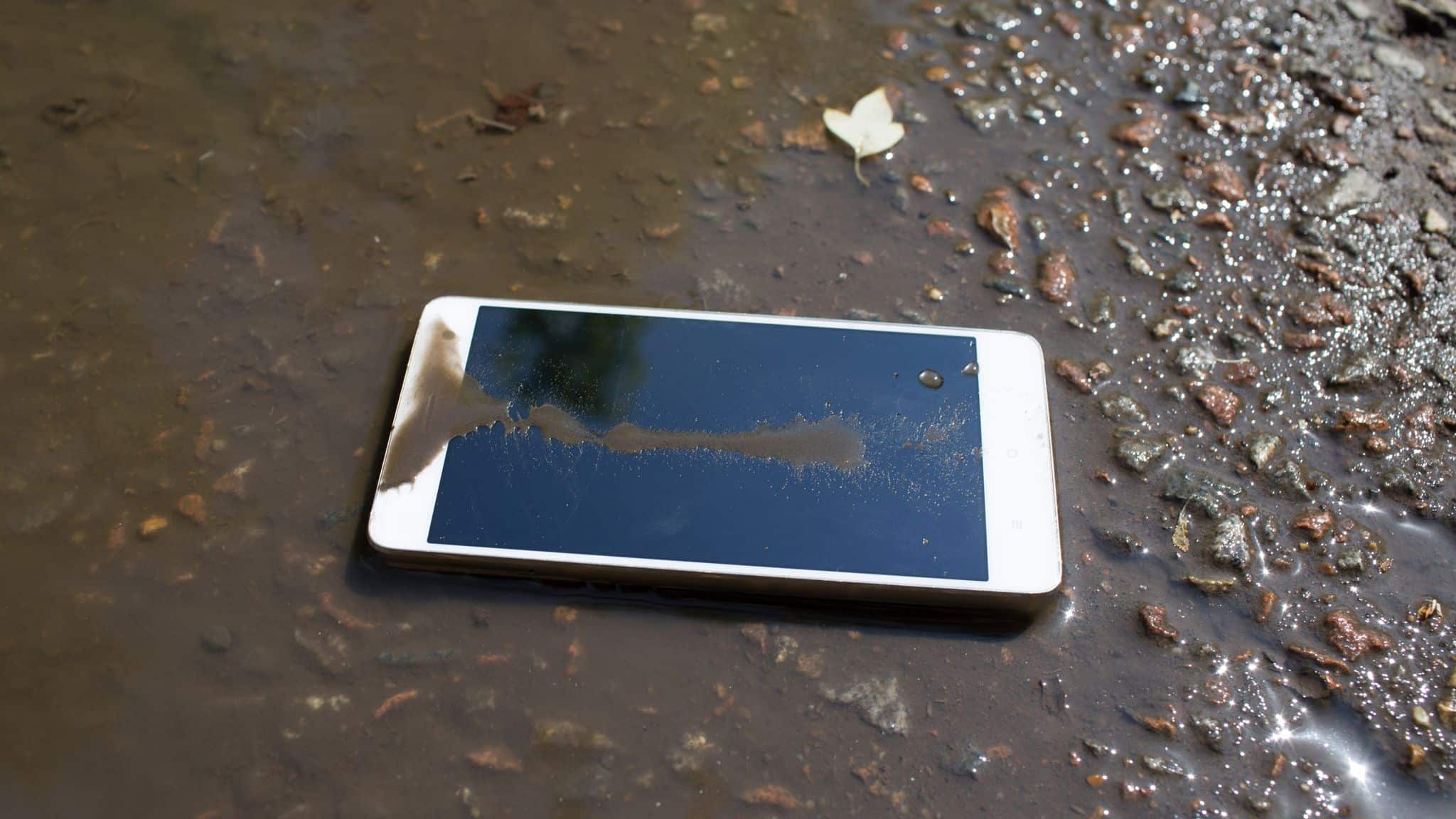
    A government official in India who drained a reservoir to retrieve a phone he dropped while taking a selfie has been suspended from his job.

    More than 2 million liters of water were pumped out of the Paralkot reservoir, over a period of four days, in an effort to retrieve the Samsung handset belonging to Rajesh Vishwas, a local food inspector.

    Vishwas had been out with friends last Sunday afternoon when it slipped from his grasp at the scenic spot in the central Indian state of Chhattisgarhwith.

    In a video statement shared by the Indian Express, Vishwas said he rented a diesel pump to “drain some water into a nearby canal” in an effort to retrieve the phone and that he did this after asking for permission from a sub-divisional officer.

    He also said that he had asked others at the reservoir to try to retrieve the phone, but they had been unable to reach it as there was too much water.

    His version of events is at odds with that of his employer, who suspended him on the grounds of misusing his position – noting he had wasted millions of liters of water at a time of severe heat.

    His suspension order, seen by CNN, also claims that Vishwas did not receive permission to drain the water.

    In his video statement, however, Vishwas insists the water he drained was from the overflow section of the dam and “not in usable condition” anyway.

  • The defense ministers of India and China to speak face to face

    The defense ministers of India and China to speak face to face

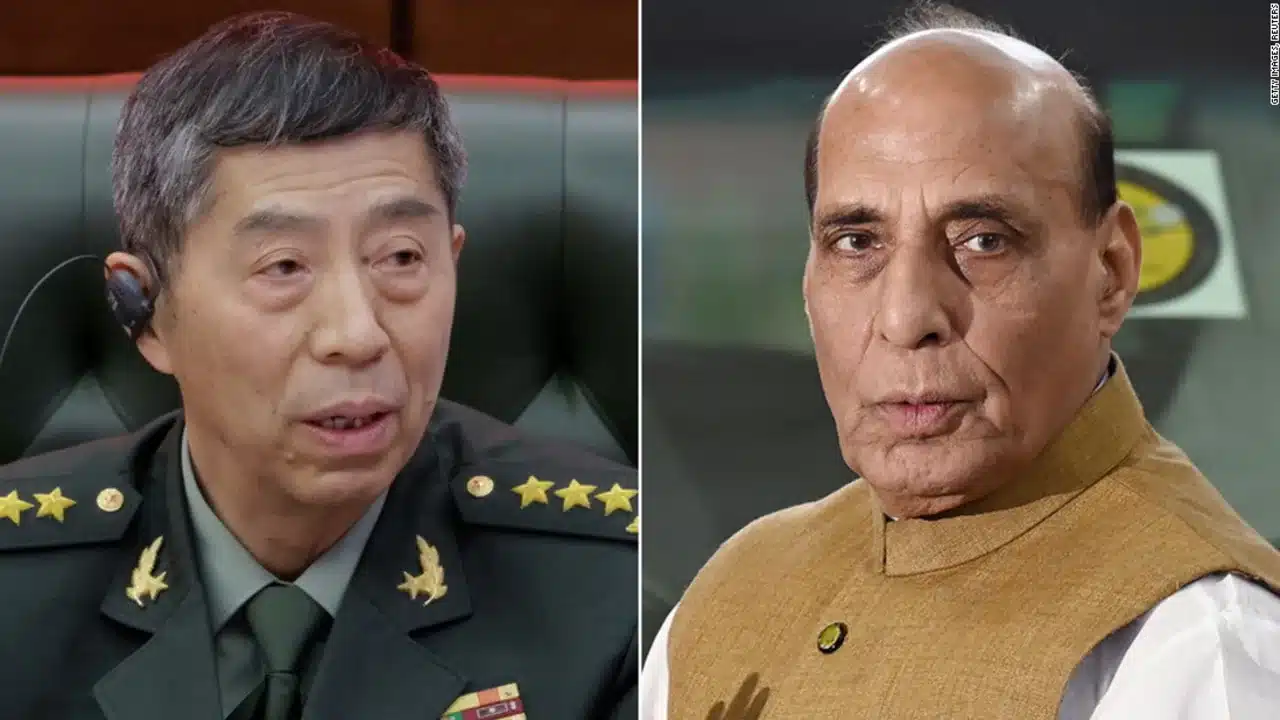
    The Indian and Chinese defense ministers will meet in New Delhi on Thursday. This will be the first time the two nuclear-armed neighbors have met on Indian soil since violent fighting along their disputed border in the Himalayas claimed the lives of numerous soldiers.

    A. Bharat Bhushan Babu, a spokesman for the Indian defense ministry, told CNN on Thursday that China’s recently appointed defense minister Li Shangfu will meet his Indian counterpart Rajnath Singh outside of the Shanghai Cooperation Organization (SCO) military ministers’ meeting.

    Along with peers from Russia and many Central Asian nations, Li, who assumed the position last month, is in New Delhi.

    This is the first time a Chinese defense minister has visited India since a deadly clash along their hotly disputed border claimed the lives of at least 20 Indian and four Chinese soldiers in Aksai Chin-Ladakh in 2020.

    Tensions between the two countries have been simmering ever since, and escalated in December when a brawl between troops from both sides in the Tawang Sector of India’s northeastern territory of Arunachal Pradesh resulted in minor injuries.

    The lengthy disputed border has long been a source of friction between New Delhi and Beijing, with the agitation spilling into war before. In 1962 a month-long conflict ended in a Chinese victory and India losing thousands of square miles of territory.

    On Tuesday, China’s Ministry of Defense said Li will “communicate and exchange views on issues of the international and regional situations as well as defense and security cooperation,” at the SCO gathering.

    Earlier this month, he met Russian President Vladimir Putin in Moscow in his first overseas trip since assuming the role, as China and Russia continue to bolster ties while Western countries ramp up pressure on Beijing to push Putin to end his war against Ukraine.

    Li, a general and veteran of China’s military modernization drive, was sanctioned by the United States in 2018 over transactions with Russia’s state-controlled arms exporter Rosoboronexport, when he led the Chinese military’s Equipment Development Department.

    India, which is moving closer to the US as it tries to counter the rise of an increasingly assertive China, also relies heavily on Russian arms to equip its military.

    Li’s visit comes four days after India and China concluded the 18th round of talks to attempt to resolve the border issue.

    India assumed the chair of the SCO summit in 2023. The grouping’s foreign ministers are expected to meet in the western Indian coastal state of Goa on May 4-5.

    Pakistan’s Foreign Minister Bilawal Bhutto Zardari’s visit to the country will be the most senior-level one in seven years.

  • 13 people in India die from heatstroke after attending a government award ceremony

    13 people in India die from heatstroke after attending a government award ceremony

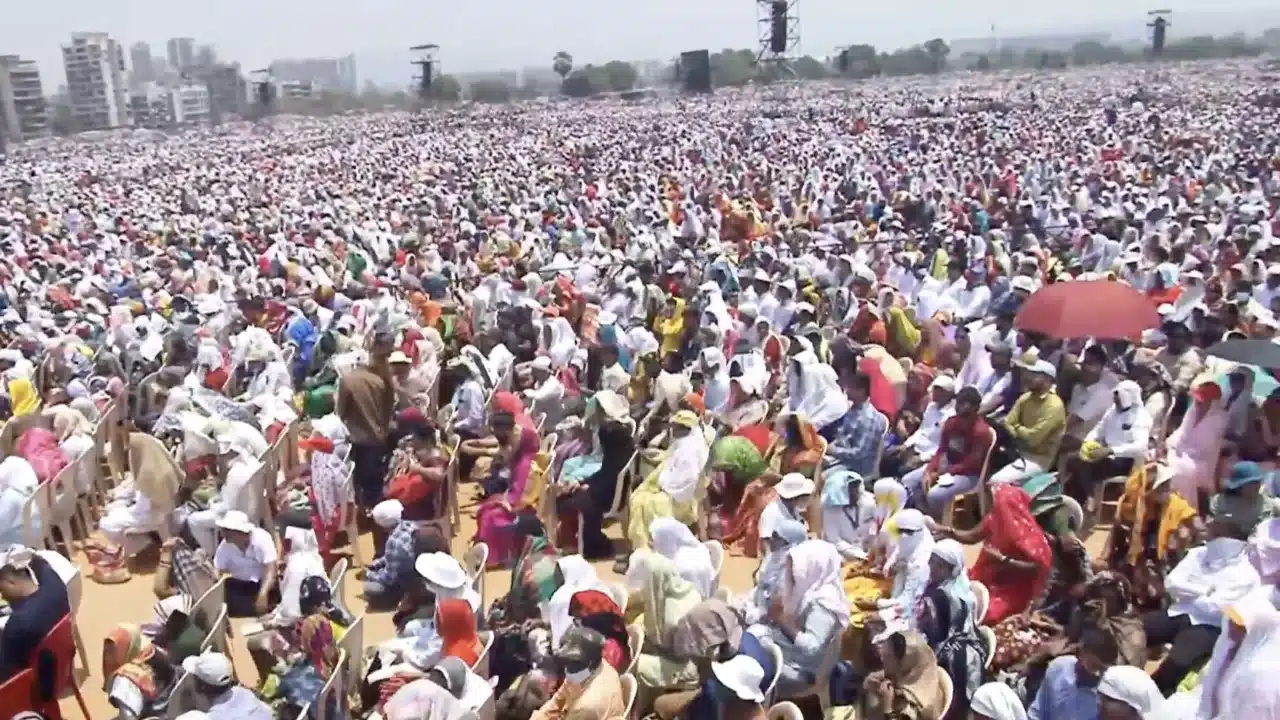
    According to police officials, at least 13 persons have passed away from heatstroke in the western Indian state of Maharashtra after attending a state award ceremony on Sunday where a senior government official was present.

    Between 50 and 60 individuals were hospitalized in Navi Mumbai, the place where the event was held, according to a city police official who wanted to remain anonymous because he is not permitted to speak to the media.

    The total number of people affected by the event’s intense heat is thought to be significantly higher because many people would have sought out medical attention in their neighborhood.

    The state government will provide 500,000 rupees ($6,095) in compensation to the families of the deceased and cover medical expenses of those undergoing treatment, according to a statement from Maharashtra Chief Minister Eknath Shinde’s office issued Sunday.

    In the statement, Shinde described the deaths following the ceremony as “very painful and unfortunate.”

    During the event, the guest of honor, Home Minister Amit Shah, praised the crowd for braving the 42C (107 Fahrenheit) temperatures to attend the outdoor ceremony.

    Temperatures in the state are expected to remain high this week, according to India’s Meteorological Department, though the department had not issued a heat wave alert for Maharashtra as of Monday.

    Heat waves in India usually take place between March and July, but in recent years these hot spells have become more intense, more frequent and longer.

    Last year, India experienced a searing heatwave, where parts of the country reached more than 49C (120F). By July, India had recorded 24 heatwave deaths, Reuters reported, citing data provided by India’s science and technology and earth sciences minister, Jitendra Singh.

  • Married mother-of-two gambles herself away to Landlord

    Gambling addiction is a real thing, and in extreme cases, it can create some truly bizarre situations, like people running out of money and gambling themselves away.

    An Indian man recently filed a bizarre petition with police in Pratapgarh, Uttar Pradesh, claiming that his wife and mother of two children had gambled away all their financial savings as well as herself. Apparently, the woman was addicted to a game called Ludo and often played with her landlord while her husband was away working as a migrant. He would send her money regularly, but instead of saving it or buying things for the family, she gambled with the landlord until she lost it all. One day, she became so desperate that she put herself on the line, and, after losing, moved in with the landlord as per their agreement, abandoning the children.

    The unidentified man told police that his wife, referred to only as ‘Renu’ by Indian media, lost all the money that he had sent her over the six months he spent working in Rajasthan’s Jaipur city, before upping the ante and losing herself to the landlord of the family’s rented house. She lost and called her husband to let him know what had happened and that she was moving in with the landlord, as per their bet.

    Upon hearing the weird news that his wife was a gambling addict who had lost herself to their landlord, the man left his job in Jaipur and came home to take care of his two kids and file a complaint with the local police.

    “We are trying to get in touch with the man [the landlord] and will start an investigation as soon as we contact him,” police official Subodh Gautam told India Today.

    Apparently, police assistance may be necessary, as the husband claims that he contacted his wife after she moved in with the landlord and tried to convince her to return home, but she is apparently committed to honoring her bet.

    Source: Oddity Central

  • India PM Modi lays foundation for Ayodhya Ram temple amid coronavirus surge

    Indian PM Narendra Modi has laid the foundation stone for a Hindu temple in the northern city of Ayodhya.

    Hindu mobs demolished a medieval mosque there in 1992, saying it was built on the ruins of a temple for Lord Ram, a revered deity.

    Hindus and Muslims claimed ownership over the site for decades. Last year, the top court gave the site to Hindus, ending a decades-long legal battle.

    The inauguration comes amid a massive surge in coronavirus cases in India.

    The dispute, which goes back more than a century, has been one of India’s thorniest court cases. The Supreme Court gave Muslims another plot of land in the city to construct a mosque.

    The construction of the temple is a core promise made by Mr Modi’s governing Bharatiya Janata Party (BJP), and is seen as a huge symbolic gesture for its strident Hindu nationalist base.

    A local told the BBC he is “ecstatic” that Lord Ram would finally have “a proper home”.

    Officials have said they will follow COVID-19 protocols, but BBC Hindi’s Sarvapriya Sangwan, who is at the venue, reports that crowds gathered on the road leading up to it and beyond the barricades.

    People have also climbed onto rooftops to get a glimpse of the venue, and some are chanting ‘Jai Shri Ram’ (Hail Lord Ram). Most are not wearing masks or following social distancing, our reporter says.

    But the area surrounding the event has been cordoned off, and is restricted to invitees – some 310 people, including 135 religious figures – and security personnel only.

    UP Chief Minister Yogi Adityanath and other senior BJP leaders are attending the event.

    The inauguration is somewhat muted affair amid the pandemic. India has been reporting record daily totals – it has recorded more than 1.9 million cases and nearly 40,000 deaths from the virus.

    Uttar Pradesh, the state where Ayodhya is located, has confirmed more than 100,000 COVID-19 cases so far.

    What has been planned?

    Mr Modi is to lay a symbolic silver brick in the sanctum sanctorum, or innermost sanctuary, of the site as scores of devotees watch the event on giant screens across the city.

    Hymns about Lord Ram are being played, and the roads are decked with flowers. Many shop fronts too have been painted yellow and saffron flags have been put up everywhere – both colours that Hindus consider auspicious.

    Local police and teams of specialised personnel are patrolling on high alert. Officers in riot gear are also in place in case of any violence.

    Indian TV channels will offer wall-to-wall coverage to the event.

    Media reports say that devotees from across the country have been sending silver and gold – in the form of coins, bricks and bars – to use in the construction of the temple. Police officers are said to have been ordered to guard these precious metals.

    As many as 200,000 bricks inscribed with “Shri Ram” (Lord Ram) that have been collected from devotees over the years will be used to build the foundation of the temple, according to the Times of India.

    Chandrakant Sompura, the chief architect of the proposed temple, told news website The Print that the structure would be designed in the “Nagara” style of temple architecture – a popular north Indian temple building style.

    The inner sanctum of the temple – where the idol of the primary deity is housed – will be octagonal. The temple will include a large structure of three floors with 366 pillars and five domes.

    Mr Sompura said that a memorial wall in honour of those who were involved with the temple movement would be erected.

    What was the Ayodhya issue about?

    At the centre of the row was a 16th-Century mosque that was demolished by Hindu mobs in 1992, sparking riots that killed nearly 2,000 people.

    Many Hindus believe that the Babri Masjid was actually constructed on the ruins of a Hindu temple that was demolished by Muslim invaders.

    Muslims say they offered prayers at the mosque until December 1949 when some Hindus placed an idol of Ram in the mosque and began to worship the idols.

    Over decades the two religious groups went to court many times over who should control the site.

    What was the final ruling?

    In its unanimous verdict, the Supreme Court said that a report by the Archaeological Survey of India (ASI) provided evidence that the remains of a building “that was not Islamic” was beneath the structure of the demolished Babri mosque.

    The court said that, given all the evidence presented, it had determined that the disputed land should be given to Hindus for a temple to Lord Ram, while Muslims would be given land elsewhere to construct a mosque.

    It then directed the federal government to set up a trust to manage and oversee the construction of the temple.

    However, the court added that the demolition of the Babri mosque was against the rule of law.

    Source: bbc.com

  • Kashmir clash: 20 Indian troops killed in fighting with Chinese forces

    At least 20 Indian soldiers were killed in a clash with Chinese forces in Ladakh in the disputed Kashmir region, Indian officials say.

    The incident follows rising tensions and is the first deadly clash in the border area in at least 45 years.

    The Indian army initially said three of its soldiers had been killed, adding that both sides suffered casualties.

    But later on Tuesday, officials a number of critically injured soldiers had died of their wounds.

    India’s external affairs ministry accused China of breaking an agreement struck the previous week to respect the Line of Actual Control (LAC) in the Galwan Valley.

    What have both sides said about the incident? Early on Tuesday, the Indian army said three of its soldiers, including an officer, had died in a clash in the area.

    Later in the day, it released a statement saying the two sides had disengaged.

    It added that “17 Indian troops who were critically injured in the line of duty” and died from their injuries, taking the “total that were killed in action to 20”.

    China did not confirm any casualties but accused India in turn of crossing the border onto the Chinese side.

    Chinese foreign ministry spokesman Zhao Lijian said India had crossed the border twice on Monday, “provoking and attacking Chinese personnel, resulting in serious physical confrontation between border forces on the two sides”, AFP news agency reported.

    Local media outlets reported that the Indian soldiers had been “beaten to death” but there was no confirmation from the military. China’s Global Times newspaper reported that “solemn representations” had been made with India.

    How tense is the area? The LAC is poorly demarcated. The presence of rivers, lakes and snowcaps means the line can shift. The soldiers either side – representing two of the world’s largest armies – come face to face at many points.

    Both sides insist no bullet has been fired in four decades, and the Indian army said on Tuesday that “no shots were fired” in this latest skirmish.

    But there have been tense confrontations between the two nuclear powers along the border in recent weeks.

    India has accused China of sending thousands of troops into Ladakh’s Galwan valley and says China occupies 38,000sq km (14,700sq miles) of its territory. Several rounds of talks in the last three decades have failed to resolve the boundary disputes.

    The two countries have fought only one war so far, in 1962, when India suffered a humiliating defeat.

    In May, dozens of Indian and Chinese soldiers exchanged physical blows in a clash on the border in the north-eastern state of Sikkim. And in 2017, the two countries clashed in the region after China tried to extend a border road through a disputed plateau.

    There are several reasons why tensions are rising now – but competing strategic goals lie at the root, and both sides blame each other.

    India has built a new road in what experts say is the most remote and vulnerable area along the LAC in Ladakh. And India’s decision to ramp up infrastructure seems to have infuriated Beijing.

    The road could boost Delhi’s capability to move men and materiel rapidly in case of a conflict.

    India also disputes part of Kashmir – an ethnically diverse Himalayan region covering about 140,000sq km – with Pakistan.

    Disclaimer : “Opinions expressed in this article are the sole responsibility of the author(s) and do not in any way reflect those of backend.theindependentghana.com. Our outfit will hereby not be liable for any inaccuracies contained in this article.”

    Source: BBC

  • Indian man dies after five hospitals refuse treatment

    After being turned away from five hospitals in India’s capital, Delhi, a COVID-19 positive man traveled 800km (497 miles) via train to Bhopal city for treatment over the weekend.

    But he died hours after being admitted to a hospital in Bhopal on Sunday, reports the Times of India newspaper.

    Authorities are trying to trace passengers who were on the train with the man. Officials are also concerned about how the man, who reportedly had a high fever, was able to board the train in Delhi – as authorities are meant to screen all passengers for temperature.

    His 18-year-old son said his mother had a “severe asthmatic attack” on Sunday when she found out that her husband had died.

    “I sent tweets and e-mails to the Delhi chief minister and health minister and even to the prime minister’s office but in the end, we lost,” his son said.

    Other residents in the city have complained about being turned away from hospitals. And the Delhi government’s smartphone app to track available hospital beds has added to the confusion.

    The app showed vacancies at several city hospitals – which then told news channel NDTV they actually did not have any space for new

    Source: bbc.com

  • Infections rise rapidly in India’s capital

    Delhi added around 1,000 new infections on Monday, taking the total in the Indian capital to nearly 30,000.

    Its highest daily spike – more than 1,500 – was recorded earlier this month, but its upward trajectory has experts worried as the city eases out of lockdown this week. Delhi has also reported more than 800 deaths.

    A five-member expert committee of top doctors told reporters that Delhi could be looking at 100,000 COVID-19 cases by the end of June if current trends continue. Reports suggesting that patients are already being turned away from hospitals in the city have only added to concerns about how hospitals will cope.

    The western city of Mumbai, India’s financial capital, is still the worst-hit in the country with more than 50,000 cases. After a strict lockdown was imposed in the early stages of the pandemic, the virus is now on the rise in India as restrictions ease. There are more than 250,000 total cases and 7,466 deaths.

    Source: bbc.com

  • Indian capital’s chief minister ‘unwell’ as city battles virus

    Delhi’s chief minister, Arvind Kejriwal, has a fever and cough, common symptoms of the Coronavirus, according to media reports. He is expected to be tested later today.

    The news comes as the Indian capital struggles to cope with a spike in infections – it has confirmed more than 27,000 cases and 761 deaths so far.

    And Kejriwal said on Sunday that hospital beds in the city would be reserved for residents amid reports that patients are struggling to get admitted for treatment.

    Meanwhile, India has taken steps to further relax its stringent lockdown – shopping centres, restaurants, temples and offices are open from Monday.

    Delhi is the second-worst affected state in India, which, overall, has recorded 256,611 cases.

    Source: bbc.com

  • Pakistan shoots down Indian drone as Kashmir tensions rise

    Pakistan’s army said Thursday it had shot down a small Indian surveillance drone in Kashmir, as tensions rose over continued cross-border shelling in the disputed territory.

    According to a statement from the army media wing, the Indian quadcopter — about the same size as a commercially available hobby drone — had crossed 600 metres (650 yards) over the de facto border known as the Line of Control (LoC).

    “This blatant act was aggressively responded to by Pakistan Army troops shooting down Indian quadcopter,” the statement read.

    An Indian army spokesman said the drone “is not ours”.

    The incident came as Pakistan and India accuse each other of violating ceasefire terms at the LoC, with sporadic shelling reported from both sides.

    Relations between the nuclear-armed neighbours nosedived in February last year, with India launching an air strike inside Pakistan after accusing its neighbour of harbouring a group that staged a suicide bomb attack that killed 40 Indian paramilitaries in Kashmir.

    Pakistan launched its own raid the next day and later shot down an Indian fighter jet and captured its pilot, taking the arch-rivals to the brink of war.

    The sky-high animosity between the two countries deescalated after Pakistan returned the downed pilot to India.

    Tensions also recently spiked when New Delhi revoked the partial autonomy of Indian Kashmir in August.

    Kashmir has been divided between India and Pakistan since independence in 1947, and has been the spark of two wars and numerous flare-ups between the two foes.

    Source: AFP