Tag: International Criminal Court (ICC)

  • ICC opens fresh investigations into Sudan violence

    ICC opens fresh investigations into Sudan violence

    Chief Prosecutor of the International Criminal Court (ICC), has announced on Thursday, July 14, 2023, the initiation of a fresh investigation into suspected war crimes in Sudan.

    Karim Khan made the announcement in a report to the UN Security Council, after three months of war between feuding generals that have plunged the northeast African country back into chaos.

    The ICC has been investigating crimes in Sudan’s Darfur region since 2005 after a referral by the UN Security Council, and the Hague-based court has charged former leader Omar al-Bashir with offenses including genocide.

    “The simple truth is that we are… in peril of allowing history to repeat itself — the same miserable history,” Khan told the UNSC.

    “The current security situation in Sudan and the escalation of violence during the current hostilities are matters of great concern,” he said as he announced the fresh probe.

    Khan said there had been a “wide range of communications” about alleged war crimes and crimes against humanity in Sudan since the fighting broke out in April.

    Alleged sexual and gender based crimes were a “focus” of the new investigation, he added.

    Around 3,000 people have been killed and three million displaced since violence erupted between Sudan army chief Abdel Fattah al-Burhan and his former deputy Mohamed Hamdan Daglo’s Rapid Support Forces (RSF) paramilitary group.

    The pair were key figures in a 2021 military coup that derailed the country’s transition to civilian rule, following the ousting and detention of Bashir in 2019.

    – Mass grave –

    Allegations of atrocities have mounted during the fighting, with the top UN official in Sudan calling Wednesday for the warring sides to face “accountability.”

    The UN has also warned of fresh crimes in Darfur, saying Thursday that the bodies of at least 87 people allegedly killed last month by the RSF and their allies had been buried in a mass grave in Darfur.

    Khan said the risk of further war crimes was “deepened by the clear and long-standing disregard demonstrated by relevant actors, including the government of Sudan, for their obligations.”

    The lack of justice for crimes in Darfur in the early 2000s, when Bashir set his Janjaweed militia upon non-Arab minorities, had “sown the seeds for this latest cycle of violence and suffering,” he added.

    Bashir was charged with genocide, war crimes and crimes against humanity including murder, rape and torture and the court has been demanding his extradition to The Hague ever since, without success.

    After Bashir was toppled in 2019, Khartoum announced it would hand him over to the court for prosecution, but this never happened.

    Even before the recent fighting there was a “further deterioration in cooperation from Sudanese authorities,” Khan said.

    Bashir, 79, as well as Ahmad Harun and Abdel Raheem Hussein, two leading figures in the former dictator’s government who are also wanted by the ICC, are still at large.

    So far the only suspect to face trial for violence committed in Sudan is senior Janjaweed militia leader Ali Muhammad Ali Abd al-Rahman, also known by the nom de guerre Ali Kushayb.

    Rahman’s defense lawyers are expected to open their case next month, and Khan said the latest Sudan fighting “cannot be permitted to jeopardize” the trial.

    The United Nations says 300,000 people were killed and 2.5 million people displaced in the 2003-4 Darfur conflict.

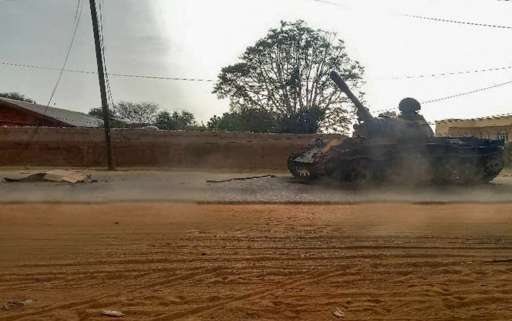
    A summit of leaders from Sudan’s neighbors met in Cairo on Thursday, urging an end to the fighting, but gun battles, explosions and the roar of fighter jets again shook the capital Khartoum, residents told AFP.
  • ICC probes alleged Darfur war crimes

    ICC probes alleged Darfur war crimes

    The International Criminal Court (ICC) has initiated a fresh investigation into the reported war crimes occurring in Sudan’s Darfur region.

    The conflict between the Sudanese army and the paramilitary Rapid Support Forces (RSF) has led to a surge in ethnic violence.

    Karim Khan, the chief prosecutor of the ICC, disclosed that the investigations would encompass various atrocities, including attacks on civilians, mass sexual assaults, and the destruction of homes and markets.

    This inquiry will be carried out under the existing mandate for Darfur, which dates back to 2005.

    The previous investigation conducted under this mandate resulted in genocide charges being brought against former Sudanese President Omar al-Bashir.

    The renewed investigation seeks to address ongoing allegations of war crimes in the region.

  • Russian soldier is charged of war crimes in absentia over audio files

    Russian soldier is charged of war crimes in absentia over audio files

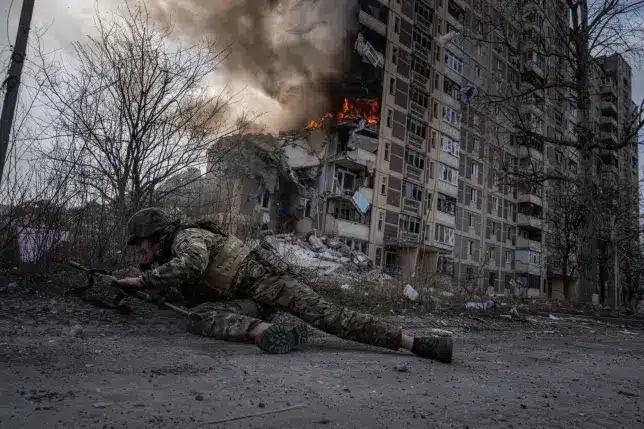
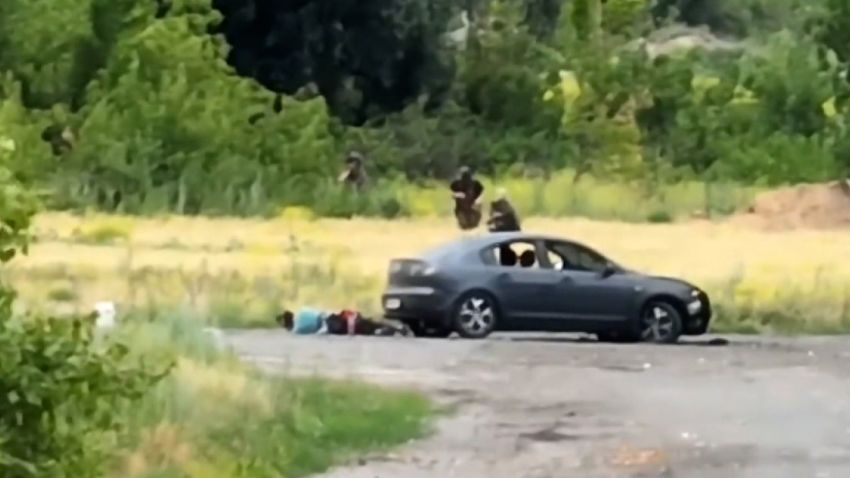
    The Ukrainian police have accused a Russian soldier of war crimes in absentia for allegedly shooting a civilian during an unprecedented attack that was captured on camera by a Ukrainian drone.

    The soldier’s wife and a friend’s intercepted phone calls from a months-long probe into the Russian attack near the city of Izium last June are among the evidence gathered against him.

    Prior to a news conference to announce the accusations on Tuesday in Kharkiv, the audio files were given exclusively to CNN.

    Police identified the soldier as Klim Kerzhaev – a 25-year-old commander from Moscow, who served in the 2nd Motorized Rifle Division of the 1st Tank Army in the Western Military District. He is accused of the attempted murder of a civilian – a war crime under Article 438 of the Criminal Code of Ukraine.

    The attack was also captured on aerial footage by Ukrainian soldiers, who launched a unique rescue mission by attaching a piece of paper with the words “follow me” to a small drone – an operation which featured in a recent documentary by Ukrainian filmmaker Lyubomyr Levytsky.

    “We are watching this as if it’s on TV, like a soap opera. A horror movie where Russians kill civilians,” the head of the investigation department for Kharkiv Police, Serhii Bolvinov, told CNN.

    In addition to the drone footage, Bolvinov said their investigation included forensic examinations of the vehicle and the scene – conducted after Izium was liberated by Ukrainian troops in September – along with evidence gathered by cyber police who tracked down the soldier’s social media accounts and phone calls.

    CNN requested comment on the case from the Russian Ministry of Defense at the time of publication on Tuesday, after the embargo on the information was lifted.

    Bolvinov said this is just one of hundreds of alleged Russian war crimes that his team are currently investigating in the Kharkiv region alone, including the discovery of hundreds of bodies in mass graves in Izium. He has more thant 900 investigators on his team, and most of their current work is focused on war crimes cases.

    On Friday, the International Criminal Court issued arrest warrants for Russian President Vladimir Putin and Russian official Maria Lvova-Belova– on the charge of illegally deporting thousands of Ukrainian children into Russia.

    Last summer, married couple Valeria Ponomarova and Andrii Bohomaz were driving to Izium in Ukraine to help Bohomaz’s sick, elderly parents escape the Russian-held city.

    The couple took a wrong turn and inadvertently strayed close to the frontlines where Russian troops were based, and their car was hit by incoming fire.

    Ukrainian soldiers based nearby had spotted the incident from afar using a reconnaissance drone – which they dispatched closer to the scene to capture the extraordinary footage of the couple attempting to flee.

    The video shows the couple abandoning the car to run to safety, but turning around when explosions landed too close to them. They were fired upon again, leaving Bohomaz badly injured. Ponomarova tried to move her husband behind the car and wrap towels around his wounds to stem the bleeding.

    Russian soldiers were based around 30 meters (98 feet) away from the couple’s car, according to police, so it was too dangerous for Ukrainian troops to extract the couple.

    So they sent the drone back after recharging it and attaching a white piece of paper to it with the words “follow me” – to guide Ponomarova to safer territory.

    She saw a drone overhead, but wasn’t sure whose side it was on. “I turned and just fell on my knees and I just screamed with the most agonizing cry,” said Valeria Ponomarova. “I didn’t know [whose drone] it was. Our forces, or the enemy,” she later said during the documentary.

    Ponomarova said she eventually followed the drone, thinking it was the only way to get help to her injured husband.

    But soon after she left, a team of Russian soldiers approached the car on foot, and picked up the injured Bohomaz and threw him in a nearby ditch.

    Miraculously, he survived.

    The drone footage showed that Ponomarova didn’t see this happening behind her, as she continued on foot down the battle-scarred road, even stepping around lines of anti-tank mines.

    When the soldiers successfully got Ponomarova to safety, they told her it wasn’t possible to return for her husband, as Russian troops were at the scene.

    So far, one Russian soldier has been accused. In addition to the drone footage, the evidence compiled by Ukrainian investigators against him includes recordings of intercepted phone calls with his wife and a friend.

    In one of the expletive-laden conversations, the soldier told his wife that he “f***ing killed a man today,” after firing on a car from his Soviet-era infantry fighting vehicle. Immediately after this, the soldier reverts back to casual conversation, asking his wife to “put some money on my phone today, okay?”

    In a call to a friend a day later, he repeated the confession of killing a man, and when his friend asked how it felt, he replied, “the f***ing car got shot up. I don’t give a f***.” CNN has translated the raw audio intercepts provided by police, but cannot independently verify the files.

    Bohomaz managed to pull himself out of the trench to seek help despite serious injuries.

    “I heard that it was starting to rain and I began to shiver,” Bohomaz said in the “Follow Me” documentary. “After a night in the trench I came to my senses from the rain.”

    “I understood that I had to get out somehow,” he added.

    Bohomaz managed to limp to safety towards the Ukrainian position.

    “It took about 30 or 40 minutes,” he said. “But I walked with stops, because I felt a lot of pain.”

    Nine months since surviving the attack, Bohomaz is still in treatment for multiple shrapnel wounds to his brain, chest and spine.

    CNN reached out to the couple for comment on the legal process which is starting against the Russian soldier, but did not receive a response.

    “It’s a terrible crime,” Bolvinov said. “Their lives could have ended at this crossroads, but luckily they managed to survive.”

  • Putin subjected to international arrest warrant for war crimes committed in Ukraine

    Putin subjected to international arrest warrant for war crimes committed in Ukraine

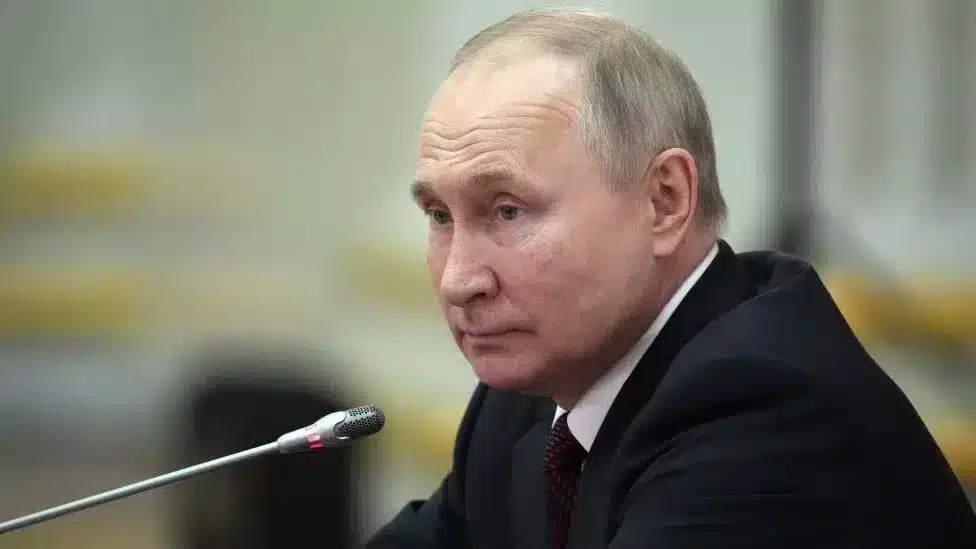
    Vladimir Putin is wanted by the International Criminal Court after it accused him of committing war crimes in Ukraine.

    The arrest order aims to bring him before a court in The Hague, Netherlands for allegedly smuggling Ukrainian minors into Russia from seized territory.

    Human rights organizations and the UN have published reports describing a “vast network” of convoys and detention centers where Russian invaders routinely forcibly evict residents from their homes.

    Allegations include children, the elderly and people with disabilities being separated from their families, as well as detainees being beaten, electrocuted and threatened with execution.

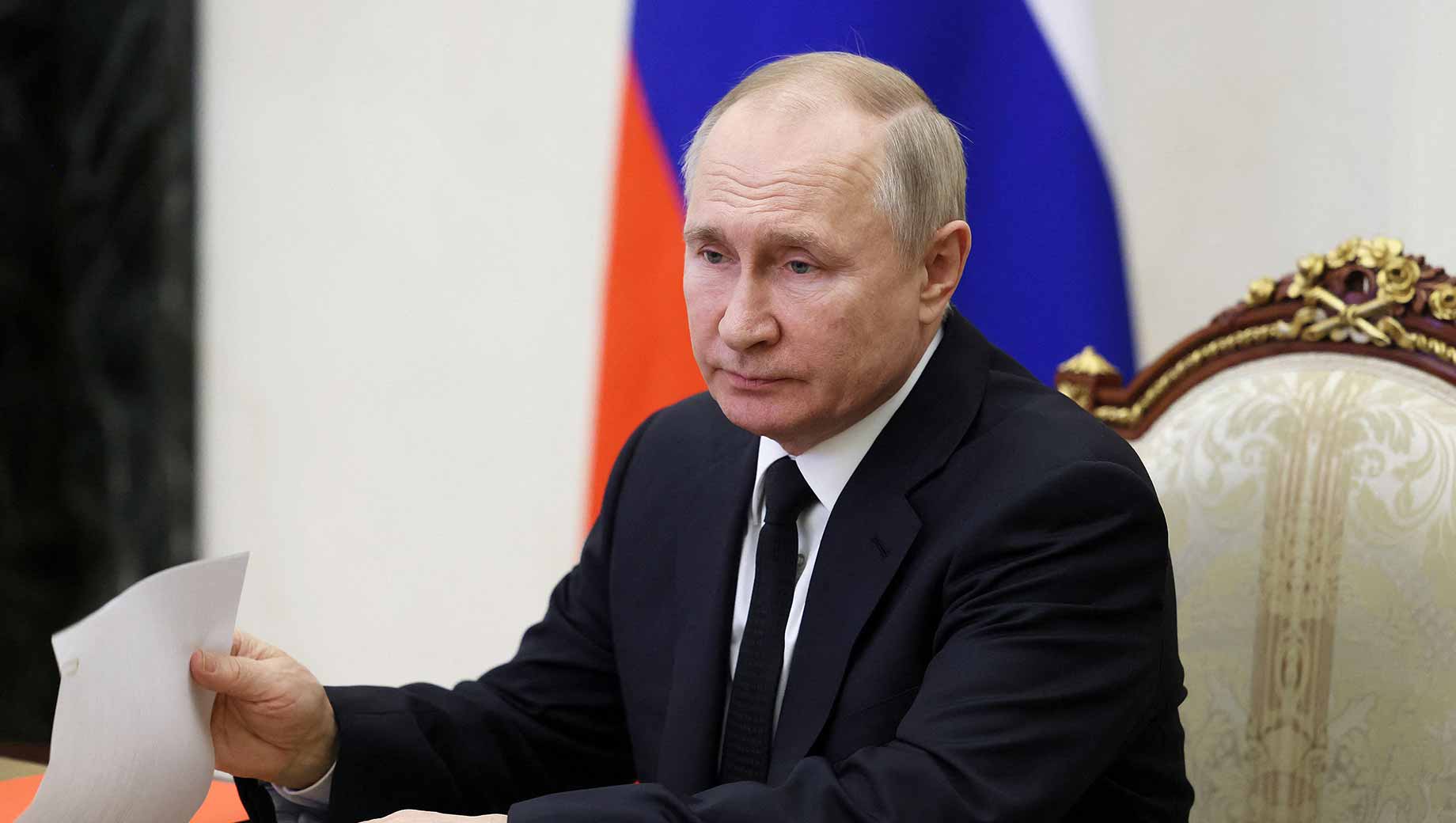
    FILE - Russian President Vladimir Putin gestures while speaking at a news conference following a meeting of the State Council at the Kremlin in Moscow, Russia on Dec. 22, 2022. Russia's economy has weathered the West's unprecedented economic sanctions far better than expected. But with restrictions finally tightening on the Kremlin's chief moneymaker ??? oil ??? the months ahead will be an even tougher test of President Vladimir Putin's fortress economy. (Sergey Guneyev, Sputnik, Kremlin Pool Photo via AP, File)
    The 70-year-old is accused of personally overseeing the forced deportation of civilians.
    A young girl in the Russian-controlled Donbas region cries as she boards a train leaving her city last April.

    In one case discovered by Amnesty International, an 11-year-old boy from Mariupol was separated from his mum after they were captured last April and has not seen her since.

    Many of the children end up thousands of miles away, banned from contacting their parents and ‘re-educated’ to become pro-Russia, according to the US-based Conflict Observatory.

    A UN report in November said they are then placed up for adoption by Russian families and pressured into applying for Russian citizenship, which is sped up as officials falsely label them ‘orphans’.

    In its warrant, the International Criminal Court (ICC) says there are ‘reasonable grounds to believe that President Putin bears individual criminal responsibility’ for the ‘unlawful transfer’ and ‘unlawful deportation’ of people.

    A view of the town of Bakhmut, the site of the heaviest battles with the Russian troops, Donetsk region, Ukraine, Wednesday, March 15, 2023. (AP Photo/Roman Chop)
    Bakhmut is the latest warzone city in which families have been forced to flee their homes.
    ZERNOGRAD, ROSTOV-ON-DON REGION, RUSSIA - FEBRUARY 23, 2022: Children evacuated from Donbass and volunteers are seen at a temporary accommodation center at a dormitory of Azov Black Sea Engineering Institute. As tension escalated in east Ukraine on 18 February, 2022, the leaders of the Donetsk and Lugansk People's Republics announced a mass evacuation of civilians to Russia. On 19 February 2022, the two republics announced general mobilisation. According to Russia's acting Emergencies Minister Alexander Chupriyan, over 70 Russian regions are ready to accommodate evacuated residents of the Donetsk and Lugansk People's Republics. Maxim Grigoryev/TASS EDITORIAL USE ONLY. NO COMMERCIAL USE. NO ADVERTISING (Photo by Maxim Grigoryev\TASS via Getty Images)
    Children ‘evacuated’ from Russian-controlled territory are allegedly subjected to ‘re-education.

    He is accused of directly ordering the scheme and ‘failing to exercise control’ over the soldiers and and officials running it.

    Also accused in the warrant is Russia’s Commissioner for Children’s Rights, Maria Lvova-Belova, who is also said to have been personally involved in the war crimes.

    The chances of the pair willingly appearing before the ICC are virtually nil, but the warrant means they would be arrested if they ever set foot in any of the 123 countries which have signed up to its laws.

    International Criminal Court issues arrest warrant for Vladimir Putin

    Making Putin a ‘wanted man’ also sends a wake-up call to other war criminals that ‘their day in court may be coming, regardless of rank of position’, Balkees Jarrah of Human Rights Watch told Metro.co.uk.

    The 70-year-old is arguably the most powerful target of the court in its 21-year history, and the most high-profile leader to be formally accused of war crimes since the Nuremberg trials of Nazi officials.

    He is only the third Russian to be issued with such a warrant after a former general and former prison boss were indicted last year for torturing hostages and deporting civilians during the 2008 war between Russia and Georgia.

  • Moscow declares ICC’s arrest warrants as meaningless

    Moscow declares ICC’s arrest warrants as meaningless

    A government spokesperson stated on Friday that Moscow rejects the International Criminal Court’s (ICC) decision to issue an arrest warrant for Russian President Vladimir Putin.

    The official at the centre of an alleged plot to forcibly deport thousands of Ukrainian children to Russia, Maria Lvova-Belova, received a warrant from the ICC as well.

    Russia views the warrants as having “no meaning,” including from a “legal point of view,” according to Maria Zakharova, a representative for the foreign ministry of Russia.

    “Russia is not a member of the Rome Statute of the International Criminal Court and bears no obligations under it,” Zakharova said. “Russia does not cooperate with this body, and possible (pretenses) for arrest coming from the International Court of Justice will be legally null and void for us.”

    How war crime prosecutions work: Located in The Hague, Netherlands, and created by a treaty called the Rome Statute, the International Criminal Court operates independently.

    Most countries on Earth are parties to the treaty, but there are very large and notable exceptions, including — pivotally — Russia, the US and Ukraine.

    Anyone accused of a crime in the jurisdiction of the court, which includes countries that are members of the ICC, can be tried. The court tries people, not countries, and focuses on those who hold the most responsibility: leaders and officials.

    While Ukraine is not a member of the court, it has previously accepted its jurisdiction.

    However, the ICC does not conduct trials in absentia, so Putin or any other Moscow official would either have to be handed over by Russia or arrested outside of Russia to face ICC proceedings.

  • ICC issues arrest warrant for Putin

    ICC issues arrest warrant for Putin

    Judges order the issuance of an arrest warrant for the Russian president in connection with the alleged kidnapping of Ukrainian children; Moscow rejects this decision.

    For alleged war crimes in Ukraine, the International Criminal Court (ICC) has issued an arrest warrant for Vladimir Putin, the president of Russia.

    In a statement released on Friday, the Hague-based court said the warrant was issued due to Putin’s alleged involvement in the forcible removal and transfer of children from the occupied territories of Ukraine to Russia.

    “There are reasonable grounds to believe that Mr Putin bears individual criminal responsibility for the aforementioned crimes,” added the court, which has no police force of its own to enforce warrants.

    The ICC also issued a warrant for the arrest of Maria Alekseyevna Lvova-Belova, the commissioner for children’s rights in the office of the Russian president on similar allegations.

    Russia, which denies committing atrocities since it invaded Ukraine in February last year, does not recognise the ICC’s jurisdiction and does not extradite its nationals.

    “The decisions of the International Criminal Court have no meaning for our country, including from a legal point of view,” Russian foreign ministry spokeswoman Maria Zakharova said on her Telegram channel after the ICC’s announcement.

    “Russia is not a party to the Rome Statute of the International Criminal Court and bears no obligations under it.”

    But ICC President Piotr Hofmanski told Al Jazeera it was “completely irrelevant” that Russia had not ratified the Rome Statute.

    “According to the ICC statute, which has 123 state parties, two-thirds of the whole international community, the court has jurisdiction over crimes committed in the territory of a state party or a state which has accepted its jurisdiction,” he said. “Ukraine has accepted the ICC twice – in 2014 and then in 2015.”

    Hofmanski said 43 states had referred “the situation in Ukraine to the court, which means they have formally triggered our jurisdiction.

    “The court has jurisdiction over crimes committed on anyone on the territory of Ukraine from November 2013 onwards regardless of nationality of the alleged perpetrators.”

    The warrants came a day after a United Nations-backed inquiry accused Russia of committing wide-ranging war crimes in Ukraine, including the forced deportations of children in areas it controls.

    Ukraine’s Prosecutor General Andriy Kostin hailed the ICC’s decision.

    “The world received a signal that the Russian regime is criminal and its leadership and henchmen will be held accountable,” he said in a statement on social media. “This is a historic decision for Ukraine and the entire system of international law.”

    James Bays, Al Jazeera’s diplomatic editor, described the ICC’s move as “very serious”.

    He said there were many who welcomed the announcement but there were others who raised questioned whether this would be a problem for diplomacy going forward.

    “Now you have the head of state of Russia, a permanent member of the UN Security Council, who is now a wanted man by the ICC,” he said.

    “This is going to be a headache for some of those who are going to have to deal with President Putin – how are other countries going to deal with him?” Bays added. “Will President Putin be able to travel?”

  • Russia-Ukraine war:Prosecute Putin this year,says top British lawyer

    Russia-Ukraine war:Prosecute Putin this year,says top British lawyer

    According to the man who masterminded the prosecution of former Serbian leader Slobodan Milosevic, says  Russian President Vladimir Putin should stand trial in Ukraine this year for war crimes committed there.

    Sir Geoffrey Nice told the BBC that Mr Putin was a “guilty man” in the wartime attacks on civilian targets.

    The British barrister voiced his surprise that prosecutors and politicians were not “stating this out much more freely and honestly”.

    Russia denies any involvement in war crimes.

    But, speaking to Radio 4’s Broadcasting House programme, Sir Geoffrey described Moscow’s actions during the invasion as “crimes against humanity” – as civilian targets were being attacked.

    Crimes against humanity are considered to be among the most serious offences under the so-called “rules” of war.

    These laws ban attacks on civilians – or infrastructure vital to their survival – and are set out in international treaties such as the Geneva Conventions.

    For example, Russia’s repeat attacks on the Ukrainian energy grid over the winter have been described as war crimes because of the harm done to civilians. Russia insists it is hitting military targets only.

    Moscow’s troops have been accused by the international community of thousands of abuses since their full-scale invasion of the neighbouring country last February.

    The prosecutor-general in Kyiv says more than 62,000 war crimes have so far been recorded, including the deaths of more than 450 children. The BBC has not been able to verify these figures.

    Sir Geoffrey worked with International Criminal Tribunal for the Former Yugoslavia (ICTY) between 1998 and 2006.

    He led the case against former Serbian leader Slobodan Milosevic, who went on trial in The Hague in 2002 for war crimes committed in Croatia, Bosnia and Kosovo.

    Mr Milosevic – once known as the “butcher of the Balkans” – died in prison before the trial concluded.

    Commenting on the war in Ukraine, Sir Geoffrey said the case “couldn’t be clearer” against Mr Putin, and there was “no doubt” of a chain of command leading to the man in the Kremlin.

    This meant the “most important thing” was to try the Russian leader himself, rather than low-ranking soldiers, he told Broadcasting House.

    He added that any trial “could be tomorrow morning, as far as I’m concerned” and should be held by Ukrainians in the Ukrainian language. Mr Putin himself would not need to be present, he said.

    Sir Geoffrey speculated over a possible reason why the Russian leader had not faced tougher action so far – suggesting there could be a move to exempt him from prosecution as part of a peace deal.

    He said the International Criminal Court (ICC) – which has jurisdiction over Ukraine – “has still not made a pronouncement about Putin’s responsibility for this crime”.

    Sir Geoffrey said this “reluctance” raised the question of whether there was some sort of “political advantage” to not indicting the president.

    But he said the idea of any peace settlement that prevented a trial of Mr Putin was an “appalling prospect” which would be “a complete denial of justice to the people of Ukraine”.

    In response, the ICC rejected any assertion of “pressure or influence” on the prosecutor, Karim Khan, to delay any investigations.

    Mr Khan had “gone on record repeatedly… to demonstrate that accountability is an imperative that must be achieved”, an ICC statement said.

    It added that the prosecutor had been working on the ground in Ukraine to collect evidence of war crimes – and arrest warrants would be issued when enough proof had been gathered.

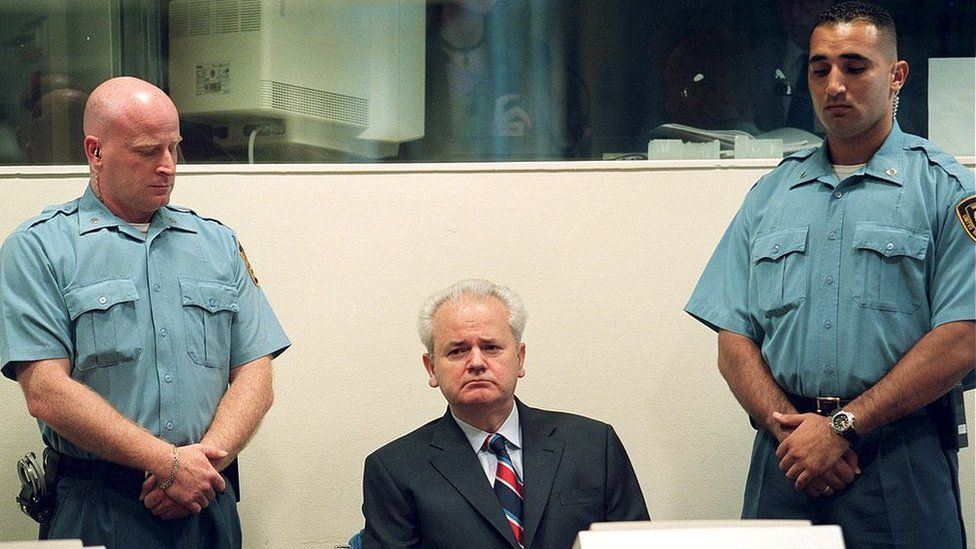
    Slobodan Milosevic accompanied by two guards during a hearing in 2001 ahead of his trial in The Hague
  • Nizar Banat: Family requests ICC investigation into activist’s death

    A case has been brought before the International Criminal Court (ICC) by the family of a Palestinian activist who passed away while being held by Palestinian security forces.

    During a raid in the occupied West Bank in June 2021, Nizar Banat, an outspoken opponent of the Palestinian Authority (PA), was beaten on the head and body.

    His family pleaded with the ICC to bring charges against the guilty parties because they no longer trusted the PA’s judicial system.

    The first time a Palestinian has taken their government to court is in this instance.

    The PA has not commented on the move, but it has apologised for Banat’s death and charged 14 low-ranking security officers with taking part in the beating and other offences.

    Banat, who was 42, was known for social media posts in which he accused powerful individuals of corruption and called on Western countries to stop providing financial assistance to the PA, which governs parts of the West Bank that are not under full Israeli control.

    He was arrested and allegedly tortured eight times by the PA’s forces in the years before his death.

    On 24 June 2021, Banat was sleeping at his cousin’s home in the southern West Bank city of Hebron when it was raided by Preventive Security Service officers. His family allege that the officers beat him with metal bars before taking him away. He later died while still in their custody.

    A Palestinian human rights group said a post mortem indicated that Banat’s death was “unnatural”, with evidence of “bruises and abrasions in many areas of the body”, including the head, neck and chest, as well as “binding marks on the wrists and rib fractures”.

    His death sparked rare protests in Ramallah, with crowds demanding the resignation of President Mahmoud Abbas, who has been in power since 2005 and cancelled long-delayed elections last year.

    Military prosecutors subsequently charged a Preventive Security Service commander and 13 other officers who were involved in the arrest. They all pleaded not guilty at the start of their military trial in September 2021.

    The Banat family’s lawyer, Hakan Camuz, said “multiple postponements, witnesses smearing and the grotesque temporary release” of the defendants for a nine-day holiday in June had marred the proceedings to the point where they had decided to drop the military case.

    They instead resolved to submit a referral to ICC’s prosecutor, who will conduct a preliminary examination to decide whether there is a reasonable basis to initiate an investigation.

    “For those of us who live in corrupt countries where genuine justice is out of reach, the ICC remains our hope for an unpoliticised investigation and prosecution of criminals,” Banat’s brother, Ghassan, said outside the court in The Hague on Thursday.

    “The way they killed him and are trying to get away with it reflects the level of impunity and of moral corruption that plagues this regime,” he added.

    The ICC prosecutor opened a formal investigation into alleged war crimes in the occupied territories last year, following a request from the Palestinians. Israel, which rejects the ICC’s jurisdiction, said it would not co-operate.

  • Shireen Abu Akleh killing: Al Jazeera proceeds to ICC for justice

    Qatari broadcaster says , the evidence presented refutes Israeli claims that the Palestinian journalist was killed in a crossfire.

    The Al Jazeera Media Network has asked the International Criminal Court (ICC) to investigate and prosecute those responsible for the death of veteran Palestinian-American journalist Shireen Abu Akleh.

    Abu Akleh, a 25-year Al Jazeera television correspondent, was killed by Israeli forces on May 11 while covering an Israeli military raid on a refugee camp in Jenin, in the northern occupied West Bank.

    The 51-year-old Jerusalem native and US citizen was a well-known and respected journalist who gave Palestinians a voice through her coverage of Israel’s occupation.

    ‘A wider pattern’

    The request includes a dossier on a comprehensive six-month investigation by Al Jazeera that gathers all available eyewitness evidence and video footage as well as new material on the killing of Abu Akleh.

    The request submitted to the ICC is presented “in the context of a wider attack on Al Jazeera, and journalists in Palestine”, said Rodney Dixon KC, a lawyer for Al Jazeera, referring to incidents such as the bombing of the network’s Gaza office on May 15, 2021.

    “It’s not a single incident, it’s a killing that is part of a wider pattern that the prosecution should be investigating to identify those who are responsible for the killing, and to bring charges against them,” he said.

    “The focus is on Shireen, and this particular killing, this outrageous killing. But the evidence we submit looks at all of the acts against Al Jazeera because it has been targeted as an international media organisation.

    “And the evidence shows that what the [Israeli] authorities are trying to do is to shut it up,” Dixon told Al Jazeera.

    Al Jazeera hopes the ICC prosecutor “does actually start the investigation of this case” after the network’s request, Dixon said. The network’s request complements the complaint submitted to the ICC by Abu Akleh’s family in September, supported by the Palestinian Press Syndicate and the International Federation of Journalists.

    A new documentary by Al Jazeera’s Fault Lines shows how Abu Akleh and other journalists, wearing protective helmets and bulletproof vests clearly marked with the word “PRESS”, were walking down a road in view of Israeli forces when they came under fire.

    Abu Akleh was shot in the head as she tried to shield herself by a carob tree. Al Jazeera producer Ali al-Samoudi was also shot in the shoulder.

    The new evidence submitted by Al Jazeera shows “Shireen and her colleagues were directly fired at by the Israeli Occupation Forces (IOF)”, Al Jazeera Media Network said in a statement on Tuesday.

    The statement added the evidence overturns claims by Israeli authorities that Shireen was killed in crossfire and that it “confirms, without any doubt, that there was no firing in the area where Shireen was, other than the IOF shooting directly at her”.

    “The evidence shows that this deliberate killing was part of a wider campaign to target and silence Al Jazeera,” the statement said.

    Next steps

    Lina Abu Akleh, who has campaigned for justice for her aunt through media work and meetings with lawmakers in the US, where her aunt was a citizen, hopes Al Jazeera’s request will push the ICC to launch an independent investigation.

    Walid al-Omari, the Al Jazeera bureau chief in Jerusalem and a friend and colleague of Abu Akleh said that it is critical to keep the case alive in public opinion. “We don’t think Israel should escape from accountability.”

    Once the ICC has reviewed the evidence it will decide whether it will investigate Abu Akleh’s killing as part of ongoing investigations.

    In 2021, the ICC decided it has jurisdiction over the situation in the occupied Palestinian territory. Al Jazeera’s submission requests that the killing of Abu Akleh become part of this wider investigation.

    “We’re making a request for an investigation that leads to charges being brought and those responsible being prosecuted,” said Dixon.

    Investigations carried out by the United Nations, Palestinian and Israeli human rights organisations, and international news outlets concluded that Abu Akleh was killed by an Israeli soldier.

    The Abu Akleh family has called for a “thorough, transparent investigation” by the US FBI and Department of State to reveal the chain of command that led to the death of a US citizen.

    “In short, we would like [US President] Biden to do in Shireen’s case what his and previous US administrations have failed to do when other American citizens were killed by Israel: Hold the killers accountable,” Lina Abu Akleh wrote in Al Jazeera in July.

    In November the US  announced an FBI probe into the killing of Abu Akleh, news welcomed by her family.

    But, Dixon cautioned, this probe should not be a reason for the ICC not to act.

    “They can they can work together with … the FBI, so that this case doesn’t fall between the cracks, and that those responsible are identified and put on trial.”

    Debunking shifting narratives

    The Fault Lines documentary also looks closely at Israel’s shifting narratives.

    Israel initially falsely blamed armed Palestinians for Abu Akleh’s death, but in September said there was a “high probability” an Israeli soldier “accidentally hit” the journalist but that it would not launch a criminal investigation.

    Hagai El-Ad, director of Israeli human rights organisation B’Tselem, which swiftly debunked the false claim by Israel that a Palestinian gunman was responsible for Abu Akleh’s death, told Fault Lines: “They’re also very used to getting away with lying about killings of Palestinians both in the public arena and in the legal arena.”

    “The reason why Al Jazeera made this request is because the Israeli authorities have done nothing to investigate the case. In fact, they’ve said that they will not investigate, that there’s no suspicion of a crime,” said Dixon.

    Al Jazeera Media Network calls the killing a “blatant murder” and a “heinous crime”.

    “Al Jazeera reiterates its commitment to achieving justice for Shireen and to exploring all avenues to ensure that the perpetrators are held accountable and brought to justice,” said the Network.

  • Guinea’s former military leader, Moussa Dadis Camara, is accused of murdering stadium spectators

    An investigation of one of Guinea’s deadliest killings is being conducted by Moussa Dadis Camara, a former military leader.

    Following a 12-year exile, Capt. Camara returned to “clean his name which has been dragged through the dirt,” according to his attorney, who spoke to the BBC.

    More than 150 people were killed, and women and girls were raped at a 2009 protest against military rule.

    “I was raped, assaulted, floored by a soldier who even asked me if he could cut off my arms,” one woman said.

    “I can no longer lift my arm”, 63-year-old Anissa, not her real name, told the BBC. She is a former member of an opposition party.

    “I had the shoulder blade broken, the foot split, they had to sew that up. My hips were split.”

    Ten other former officials are going on trial alongside Capt Camara, who is charged with having command responsibility over the soldiers who carried out the alleged crimes.

    The International Criminal Court (ICC) chief prosecutor Karim Khan welcomed the start of the trial: “On this important day I applaud the people of Guinea, the survivors, and those who lost loved ones”.

    “The start of this trial is only the beginning. My Office will be watching very closely. The presumption of innocence is critical,” Mr Khan said.

    It has also been welcomed by the UN’s Acting High Commissioner for Human Rights, Nada Al-Nashif: “Victims and relatives have been waiting for 13 years for truth, justice, and reparations. Today’s opening of this long-awaited judicial process is a crucial step for Guinea in its fight against impunity.”

    The trial should be carried out in “in a victim-sensitive manner, and in accordance with international standards”, Ms Al-Nashif added.

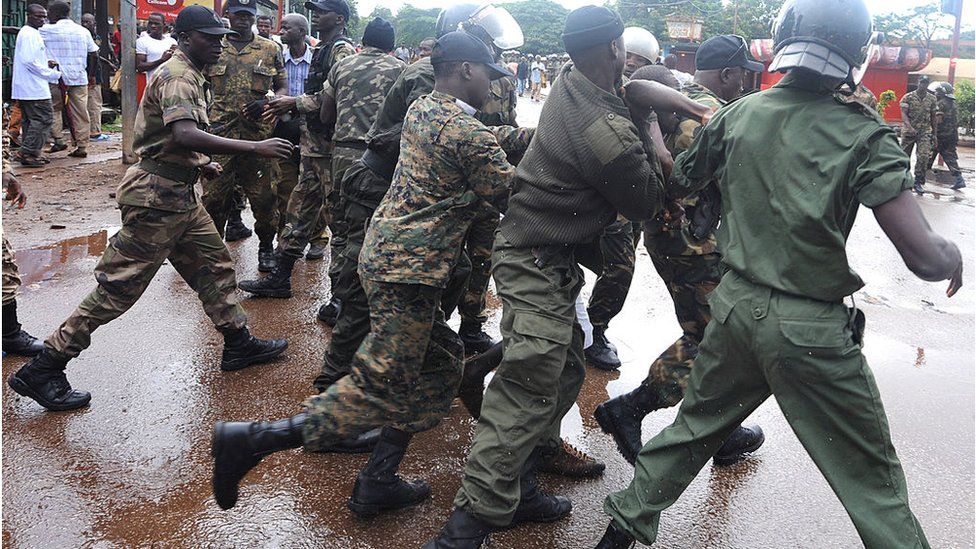
    On the day of the killings, on 28 September 2009, security forces tried to stop the rally going ahead and allegedly blocked off the exits to a stadium in the capital, Conakry, before opening fire. Some protesters were shot dead or attacked with knives, while others were trampled on.

    The long-delayed trial will be the first involving human rights violations on this scale in Guinea, says rights group Human Rights Watch.

    ‘We demand justice’

    The many years of waiting have been difficult for the victims but they say that they are pleased the trial is finally going ahead.

    “We demand justice, nothing else but justice,” said Anissa.

    She said she was still emotionally scarred from what happened to her and does not like returning to the stadium where she was assaulted.

    “Even today it scares me. It’s the scars that come back. It is the trauma that comes back. So I can’t, I really can’t.”

    Victims of rape are often stigmatized in Guinea and it is believed that many victims of sexual assault in the stadium have not come forward because of this.

    Military men who look like they are arresting someone
    IMAGE SOURCE,AFP Image caption, The violence meted out at Conakry stadium still haunts victims years later

    Capt Camara, 58, seized power in 2008 when long-time President Lansana Conté died, but he was ousted and fled the country not long after the Conakry killings and following an assassination attempt. He had been living in Burkina Faso before returning to Guinea on Sunday.

    He was detained ahead of the trial, according to his lawyer, Pépé Antoine Lamah, who said this was a violation of the law.

    After Capt Camara left Guinea, an investigation was set up to establish the facts surrounding the tragedy – it sat from 2010 to 2017. During that time some alleged perpetrators were charged, including Capt Camara.

    In 2018, a committee was set up to organize the trial, but concerns were raised about the lack of progress because it was not meeting regularly.

    It was the current military junta head – Col Mamady Doumbouya – who came to power after a coup in 2021, who ordered the trial to be held.