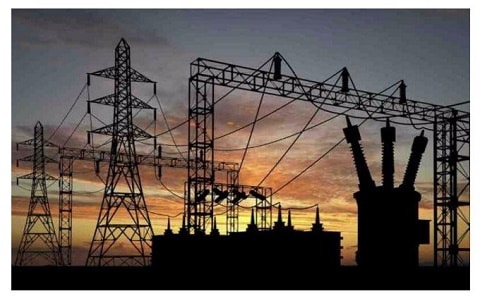
The International Monetary Fund (IMF) has indicated that the government may consider reinstating the 15 percent value-added tax (VAT) on electricity if inflation rates continue to decline.
The IMF’s July 2024 Country Staff Report suggests that reintroducing the VAT is a potential course of action as inflationary pressures decrease.
With recent data from the Ghana Statistical Service showing a drop in annual inflation to 20.9 percent in July, down from 22.8 percent in June, the government may reconsider the VAT policy.
“On the revenue side, implementation of VAT on residential electricity (expected yield 0.17 percent of GDP) was suspended due to strong social resistance. The authorities are committed to implementing this measure when the inflation dynamics are more conducive,” the IMF said on page 10 of the report.
Originally, the government had postponed the VAT on electricity due to significant public opposition, particularly from residential users concerned about the added financial burden.
This tax was initially part of broader revenue measures implemented as part of the IMF-supported recovery plan following the COVID-19 pandemic.
A directive from the Ministry of Finance, dated January 1, 2024, and signed by former minister Ken Ofori-Atta, instructed the Electricity Company of Ghana (ECG) and Northern Electricity Distribution Company (NEDCo) to impose the VAT on residential consumers who surpassed a specified consumption threshold.
“On behalf of the Government, Ministry of Finance would like to inform ECG and NEDCO to suspend the implementation of the VAT directive pending further engagement with key stakeholders, including Organised Labour.
“The Ministry expects that these engagements will birth innovative, robust, and inclusive approaches to bridging the existing fiscal gap, while bolstering economic resilience.”
However, on February 7, 2024, the government halted the VAT implementation following a threat of nationwide protests from Organised Labour, who had planned demonstrations for February 13, 2024, if the tax was not retracted.
The International Monetary Fund (IMF) has expressed concerns about potential risks posed by Ghana‘s upcoming general elections in December 2024, which could impact the gains achieved under its program with the country.
The IMF emphasized the importance of maintaining progress in domestic revenue mobilization and tightening expenditure controls to prevent any policy setbacks ahead of the elections.
Despite these concerns, the IMF noted Ghana’s overall strong performance under the program, meeting quantitative targets and implementing structural reforms aimed at enhancing economic resilience and improving public finances.
The IMF also praised Ghana for measures taken to stabilize inflation and bolster foreign reserves.
“These efforts should be supported by continued progress in improving tax administration, strengthening expenditure control and management of arrears, enhancing fiscal rules and institutions”, the IMF advised.
The International Monetary Fund (IMF) has emphasized that debt transparency is not only beneficial for individual countries but also crucial for the IMF’s operations.
The IMF noted that hidden and opaque debt forms hinder its ability to fulfill its core mandate.
For instance, collateralized loans, complex financing methods, and confidentiality agreements complicate the IMF’s efforts to accurately assess a country’s debt and aid in economic recovery.
In a publication titled “Hidden Debt Hurts Economies, Better Disclosure Laws Can Help Ease the Pain,” the IMF highlighted its efforts to promote debt transparency through technical assistance and program engagements. The publication stated, “Well-designed laws make it harder to hide debt. However, there are insufficient such laws, despite their proven benefits.
To achieve critical transparency, countries and their international partners must advocate for reforms to enhance domestic legal frameworks, benefiting borrowers, legitimate creditors, and the broader system.
Uncovering hidden debts has never been more important.”
The IMF also pointed out that ineffective oversight by legislatures and supreme audit institutions (national government audit bodies), which are vital for accountability, can impede public debt disclosure.
The Fund urged legislative bodies to monitor and scrutinize public debt on behalf of the people and to have staff capable of understanding highly technical reports.
Many legislatures employ committee systems, such as budget and public accounts committees, to allow for specialization among legislators.
In the United States, for example, the Treasury Secretary must send the annual public debt report to the House Ways and Means and Senate Finance committees, rather than to Congress as a whole.
The IMF also recommended that laws grant supreme audit institutions the authority and necessary powers to monitor and audit government debt and debt operations.
Ghana is on the verge of finalizing a Memorandum of Understanding (MoU) with its bilateral creditors, marking a significant step in the debt restructuring process.
Managing Director of the International Monetary Fund (IMF), Kristaline Georgieva, expressed optimism about the progress during a roundtable engagement in Accra.
Georgieva stated, “There is very tangible progress made towards signing a Memorandum of Understanding with bilateral creditors” the Managing Director of the IMF stated.
The IMF Director’s remarks came during her two-day working visit to Ghana, where she emphasized the importance of reaching a fair deal with Eurobond holders and private creditors.
She cautioned that Ghana’s three bailout packages could be at risk if a satisfactory restructuring agreement isn’t reached with Eurobond holders.
Georgieva’s meeting with President Akufo-Addo underscored the critical nature of the ongoing negotiations, referencing potential setbacks similar to Zambia’s if a balanced deal isn’t achieved.
“Ghana is indeed benefiting from the experiences of countries that have gone for debt restructuring under the common framework. The sooner we do a great deal the better for the country. To do a deal that may actually reverse progress is not going to be good for the country. You cannot allow the Eurobond creditors to twist your arm. Why? Because you have done a very painful domestic debt restructuring, you have agreed in principle on debt restructuring with the official creditors of Ghana under certain conditions. The deal with the Eurobond has to be a fair deal vis-a-visa what was already done otherwise we risk seeing what happened in Zambia,” she stated.
Ghana is facing the task of restructuring around $13 billion owed to Eurobond holders.
Reflecting on Ghana’s performance under the IMF Programme, Georgieva acknowledged the country’s success in meeting key targets related to inflation rate and economic growth.
“Because we are climbing a mountain and we are doing quite well, we are not yet at the top, we need to keep climbing so there’s radiation of responsibility we need to complete with private creditors but complete defending the interest of the country.”
She praised Ghana’s decision to seek IMF support, noting that the current developments validate the wisdom of stabilizing the economy through international cooperation.
As negotiations continue, the focus remains on securing a fair deal that benefits Ghana while upholding the country’s economic stability and growth prospects.
Ghana remains trapped in debt distress, as disclosed by the International Monetary Fund (IMF) in its recent Staff Report on Ghana’s “2023 Article IV Consultation.” Despite the ongoing debt restructuring efforts, the IMF highlighted that the attached Debt Sustainability Analysis (DSA) indicates substantial and prolonged breaches of standard thresholds.
The Fund emphasized that Ghana’s debt remains unsustainable, echoing the findings of the DSA published in May 2023. The report comes in the aftermath of a meeting held on October 6, 2023, between a team from the IMF and the Government of Ghana, focusing on policies supporting the IMF arrangement under the Extended Credit Facility (ECF) program.
Background:
In 2023, Ghana initiated a debt restructuring program as a prerequisite for securing the IMF program, with the aim of bringing the country’s debt to sustainable levels. The comprehensive debt restructuring strategy aimed to mitigate the risk of debt distress under the IMF-World Bank Debt Sustainability Framework for low-income countries (LIC-DSF). The plan targeted external debt service relief and a reduction in domestic financing pressures.
IMF’s Insight into Ghana’s Debt Sustainability:
The IMF underscored that Ghana’s macroeconomic framework forms the basis of the Debt Sustainability Analysis, with the staff baseline scenario aligned with the trajectory envisioned under the Fund-supported program. The objective is to restore macroeconomic stability and debt sustainability in the medium term.
The report highlighted that Ghana’s fiscal and external positions significantly deteriorated due to the COVID-19 pandemic, global financial conditions, and the conflict in Ukraine.
These external shocks, coupled with existing fiscal and debt vulnerabilities, resulted in a surge in public and external debt.
Consequently, Ghana lost international market access in late 2021, and the macroeconomic situation became more challenging in 2022, with substantial losses.
According to the IMF, the economic slowdown and large fiscal deficits prompted a surge in public debt from 63.0% of GDP in 2019 to 93.3% of GDP at the end of 2022.
Domestic debt reached 50% of GDP in 2022, with 16.0% held by the Bank of Ghana, while public external debt stood at 43.3% of GDP.
Ghana’s energy sector is grappling with arrears amounting to $1.6 billion, equivalent to 2.3 percent of the Gross Domestic Product (GDP) as of the close of 2022, according to recent findings.
The International Monetary Fund (IMF) has expressed further apprehension, revealing that non-energy sector arrears reached approximately GH¢35 billion, constituting 5.8% of the GDP.
In its 2023 Article IV Consultation, the IMF disclosed that the government persistently accrued payables in the initial half of 2023, surpassing the related program indicative target (IT).
The Bretton Wood institution highlighted the government’s accumulation of substantial arrears in recent years, with a stock-taking exercise conducted by authorities indicating an overall arrear stock at the end of 2022 largely aligning with initial program assumptions.
The report underscored a decline in non-energy sector payables, contrasting with a surge in energy sector payables attributed to low recoveries, stringent financing conditions, and pending negotiations with Independent Power Producers (IPPs).
While energy sector payables are solely monitored under the Indicative Target, the IMF emphasized that adjusting the primary balance to accommodate the accumulation of energy sector payables during the first half of 2023 would still result in outperformance of the end-June primary balance target.
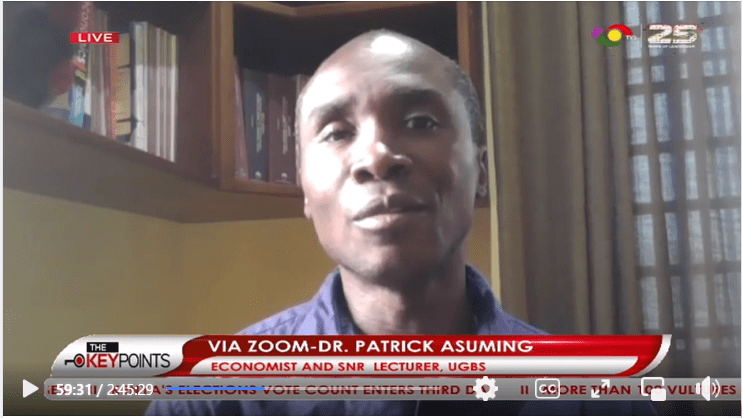
Senior lecturer at the University of Ghana Business School, Dr. Patrick Asuming, has raised allegations against the Ghanaian government, accusing them of manipulating the International Monetary Fund (IMF) to secure loans without adhering to the required economic stabilization measures.
Dr. Asuming contends that the government has mastered the art of obtaining IMF loans while failing to implement the prescribed measures recommended by the financial institution.
According to him, the government’s disregard for many of the IMF’s outlined measures has contributed to economic instability, leading to a recurring dependence on the IMF for financial assistance.
Dr. Asuming shared these concerns during an interview on Joy FM on November 16, 2023 that, “I have said in the past that we have learned how to dribble the IMF. If you look at the measures in our IMF 17, a lot of them are in IMF 16, and I think it is also the reason why some people begin to question the IMF itself.”
He added, “When you see that there are clear cases that the government has refused to implement the measures they have agreed, and yet we keep coming back, so people legitimately question them.”
In recent months, the state of the Ghanaian economy has become a significant point of discussion, marked by challenges such as soaring inflation, a depreciating currency, and a noticeable decline in the overall quality of life, coupled with a high cost of living.
The government has consistently attributed these economic struggles to the aftermath of COVID-19 and the Russia-Ukraine war.
Last year, in response to these challenges, the government secured a US$3 billion loan from the International Monetary Fund (IMF), with the first tranche of US$600 million already credited to the government account.
Ghana has reached out to theInternational Monetary Fund (IMF) seeking their assistance in tackling the issue of corruption within the country.
This request is in line with Ghana’s commitments under the $3 billion IMF programme, from which Ghana is anticipating a second installment of $600 million in November.
The IMF programme’s primary objectives are to address Ghana’s existing economic challenges and foster transparency and anti-corruption measures.
As part of this comprehensive program, the Ghanaian government has made a formal request to the IMF for technical support to conduct a corruption diagnostic assessment within its governance framework.
This assessment is crucial as it will contribute significantly to the ongoing efforts aimed at updating the National Anti-Corruption Action Plan.
Additionally, the government is set to rectify weaknesses within the current asset declaration system for public officials by enacting a new Conduct of Public Officers Act.
During a press briefing at the IMF-World Bank meetings in Marrakech, Morocco, the IMF’s African Department Director, Abebe Aemro Selassie, provided an update on Ghana’s progress.
He emphasized that this initiative represents Ghana’s dedication to promoting good governance and fighting corruption, as specified in the IMF programme.
Selassie stated, “On the governance diagnostic report, I think the request has been made [but] I’m not sure where we are in terms of being able to provide that, but as soon as we have the resources, we will do that. And it’s just a matter of time, I believe.”
Meanwhile, the IMF has pledged to provide all necessary support to the creditors to ensure that Ghana receives the second installment of IMF funds and can proceed with the programme.
Selassie further explained, “Action is also needed from the creditor side, and I have to tell you that, you know, whereas it took, I think, something like 9 months or more for Zambia to get the official creditor committee to be created, in Ghana’s case it was fairly rapid. So that’s what allowed us to go to the board and get the program approved. And we’re very hopeful that the ongoing discussions among official creditors will also expeditiously allow us to conclude the upcoming review. Again, the most recent Mission reached an agreement with the government on policies that are needed to tackle the most recent issues and also put in place an important budget for next year. So Ghana has done its fair share, and it’s for creditors to take steps, and we’re not going to be asking the government to do more adjustments because creditors haven’t asked either, so you know we will provide all the information necessary so creditors can move to allow us to go to the board as soon as possible.”
During a press conference in Accra on Sunday, June 18, Finance Minister Ken Ofori-Atta stated that several structural reforms are currently in progress regarding the $3 billion International Monetary Fund (IMF) deal.
He explained that these reforms align with the government’s Public Financial Management Strategy, which aims to shift operations from Central Government to General Government.
This shift, he said, is critical as it facilitates clear oversight over key state institutions including Metropolitan, Municipal and District Assemblies (MMDAs), State Owned Enterprises (SOEs) especially Cocobod and Electricity Company of Ghana ECG, and others in the energy sector- and other quasi-State Institutions, whose operations have a significant and direct fiscal impact on Ghana’s economy.
To put it in perspective, he said “about 25% of our assessed debt burden emanates from noncentral Government operations, mainly from State Owned Enterprises (SOEs) such as COCOBOD and those in the Energy Sector.
“Our ability to institute better governance standards of these institutions to address their liabilities and promote their growth will be significantly improved, especially in this period of collective reform.
“Crucially, we must all remain committed to the agreed wide-ranging and strong structural reforms designed to address structural weaknesses and build resilience in key areas including tax policy and tax administration, expenditure commitment control and arrears clearance, financial stability, financial sector plans, review of statutory funds, governance and corruption, debt management, fiscal credibility, and energy sector/cocoa sector SOEs reformation.”
Mr Ofori-Ofori-Atta further indicated that “with legacy debt in the Energy Sector reaching about US$2 billion as at the end of May 2023, and an estimated shortfall of US$5.9 billion between 2023 and 2025, due to the current conditions of SOEs and Independent Power Producers (IPPs) in the value chain in the sector, the sector has been prioritised for comprehensive reforms.
“It is expected that structural reforms in the sector should reduce the shortfall by at least US$2.95 billion over the period.”
It is recalled that Fitch Ratings earlier said that the energy sector in Ghana represented the largest driver of Ghana’s national debt, with the country owing independent power producers a staggering $1.58 billion.
Fitch Ratings also revealed that while Ghana initially approached the IPPs to restructure their debts as part of the External and Domestic Debt Restructuring, the companies objected to the proposal.
The Chief Executive of the Ghana National Chamber of Commerce and Industry (GNCCI), Mark Badu-Aboagye, has assured the populace that the current economic crisis will soon be a thing of the past.
Speaking on JoyNews’ PM Express: Business Edition, Mr Badu-Aboagye said with government’s conclusion of the International Monetary Fund (IMF) deal, Ghana’s economy will certainly transform.
He was optimistic about the future adding that “the outlook is good.”
“It will get better, but for this year, things will be a bit rough so if you’re taking a decision for the year, you should know that these adjustments are going to affect you,” he told host George Wiafe on Thursday.
Touching on the conditionalities that accompany the IMF deal, Mr Badu-Aboagye said the government rolled most of them before the deal was complete, hence, things will only get better from here.
“I strongly believe that we will sail through this difficult moment. And of course, for this year, we do not expect that people will make a lot of profit even by looking at the economic activities.
“But next year, it will pick up and in subsequent years it will pick up. And I think the reason is that most of the conditionalities were front-loaded so we are feeling the pinch now, ones we get used to it the good things will follow,” he said.
The Bank of Ghana received $604 million on Friday, May 19, which is the first tranche of the International Monetary Fund’s $3 billion bailout to Ghana.
Prior to the bailout, the Governor of the central bank, Dr. Ernest Addison noted that the money would boost the country’s reserves and the Cedi which is already doing very well in recent times.
The IMF deal expected to restore confidence in the economy however has far-reaching consequences for the ordinary Ghanaian and businesses.
Ghana is currently grappling with significant challenges in its energy sector, prompting the government to propose a series of reforms as part of its International Monetary Fund (IMF) programme.
The IMF has identified several issues plaguing the sector, including below-cost-recovery tariffs, substantial distribution losses, and excess capacity, which have led to significant financial burdens for the central government.
These challenges have resulted in annual transfers equivalent to two percent of GDP since 2019, along with mounting payables to independent power producers (IPPs) and fuel suppliers.
To tackle these pressing concerns, Ghanaian authorities, with the support of the World Bank, have developed an energy sector reform programme aimed at revitalising the entire sector.
The programme encompasses various aspects, such as renegotiating Purchasing Power Agreements (PPAs) to mitigate take-or-pay liabilities, tariff adjustments, improving the operational performance of energy state-owned enterprises (SOEs), subsidy reforms, reducing distribution losses, and enhancing collections.
However, the implementation of these measures is expected to be a challenging and time-consuming process.
In an attempt to bridge the financial gap, the Public Utilities Regulatory Commission (PURC) recently raised electricity tariffs by nearly 30 percent, with cumulative increases reaching 57 percent since mid-2022.
Further quarterly tariff adjustments are planned for 2023 to account for exchange rate and price fluctuations and bring tariffs closer to cost-recovery levels. Nonetheless, it remains uncertain whether these adjustments will be sufficient to alleviate the sector’s financial strain.
Recognizing the need to protect vulnerable households from the impact of tariff adjustments, the government intends to redefine lifeline tariffs to better target low-volume users and the poorest households.
Additionally, a mapping exercise will be conducted to assess the effectiveness of the existing cash transfer program in supporting economically disadvantaged households with electricity access.
The goal is to calibrate the program more effectively, although concerns persist regarding its ability to adequately address the needs of the most vulnerable.
Despite the proposed reforms, there are lingering concerns about the transparency and sustainability of Ghana’s energy sector. Previous budgets have faced criticism for relying on overly optimistic revenue projections and unrealistic spending cuts.
While the 2023 budget aims to address these issues by adopting more realistic assumptions, doubts remain regarding the government’s ability to fully implement the reforms and ensure transparency within the sector.
The success of the reform programme hinges on effective execution and collaboration among various stakeholders. However, given the complex nature of the challenges faced by Ghana’s energy sector, achieving significant progress may prove to be an uphill battle.
Moreover, the projected reduction in the sector’s financial shortfall appears modest, raising doubts about the government’s ability to create sufficient fiscal space for priority spending.
While Ghana’s efforts to reform the energy sector are commendable, the road ahead is riddled with uncertainties.
The true test lies in the implementation and effectiveness of these measures, as well as the government’s commitment to transparency and long-term sustainability.
Only time will reveal whether these proposed reforms can genuinely address the deep-rooted issues and pave the way for a more stable and resilient energy sector in Ghana.
On May 17, 2023, the International Monetary Fund (IMF) is anticipated to make a decision about Ghana’s request for a $3 billion Extended Credit Facility.
According to a media advisory captured on the Fund’s website, the Executive Board of the Fund brief will hold a virtual press conference on Thursday, May 18 at 10.30 am Washington D.C time to brief journalists on the outcomes.
Key persons to partake in the press briefing is the IMF Mission Chief for Ghana, Stephane Roudet, Ghana’s Finance Minister, Ken Ofori-Atta, Bank of Ghana Governor, Dr Ernest Addison and Tatiana Mossot, Senior Communications Officer with the IMF.
The press briefing will be held via Zoom but will be televised on most channels in Ghana at 14:30 GMT, according to a circular issued by Ghana’s Ministry of Finance on May 16, 2023.
Ahead of this development, Minister of State in charge of Finance, Dr. Mohammed Amin Adam disclosed that the first tranche of the loan facility consisting of $600 million is expected to be disbursed into the Central Bank’s account by Wednesday, May 17, 2023.
He added that the second tranche of the funds will also hit the Central Bank’s account by November or December this year after the Fund has conducted a successful review of the first loan tranche under the programme.
Dr Amin Adam added that the rest of the funds will be disbursed in equal tranches of $360 million after the IMF has further completed its semi-annual reviews of the extended credit facility.
“The funds will boost Ghana’s coffers and help it work towards the target of foreign reserves amounting to the equivalent of three months of imports by 2026,” the minister of State earlier told Reuters.
Ghana is not on the schedule of meetings for the Board of the International Monetary Fund (IMF) for the rest of April 2023.
This comes after the government missed an initial March 2023 deadline to present Ghana’s $3 billion bailout programme to the IMF board announced by President Nana Addo Dankwa Akufo-Addo and the Minister for Finance Ken Ofori-Atta.
The schedule of meetings for the board, on the IMF website, shows that it will meet five countries including Moldova, Central African Republic, Nepal, Eswatini and Lao People’s Democratic Republic between April 26, 2023 and May 3, 2023.
The IMF, however, indicated that its schedule is subject to change and “the agenda for each meeting is typically finalized the day before the meeting”.
Ghana missing out on the IMF board’s meeting for April casts doubt as to whether Ghana will be getting the $3 billion bailout in mid-May as some proponents of the government have indicated.
This is because the IMF board might take weeks to approve Ghana’s bailout even if it receives the country’s programme in the first week of May 2023.
The Fund is expected to assess whether the country’s policies are consistent with debt sustainability when it receives the programme from the government of Ghana.
“This assessment is based on a Debt Sustainability Assessment (DSA) conducted jointly by the IMF and World Bank to determine whether the government is able to meet all its current and future payment obligations.
“It is a forward-looking exercise that needs to take into account the authorities’ policies. In the case of Ghana, the DSA document will be presented to the Board at the same time as the program request,” a statement on the IMF website read.
Meanwhile, the Minister for Finance, Ken Ofori-Atta has indicated that Ghana has met all the pre-conditions, hence government will get a programme with the IMF.
“What the IMF is looking forward to before it can go to its board for Ghana’s programme approval is the assurance from the Paris Club of Bilateral Creditors that that group is committed to extending the needed financing support,” Ofori-Atta said.
View the schedule of the IMF for the rest of April 2023 and the 1st Week in May below:
Ghana’s projection to secure an Executive Board approval from the International Monetary Fund (IMF) for its $3 billion loan-support programme by the end of the second quarter of 2023 is likely to happen.
This is because Ghana’s largest bilateral creditor, China, which the country owes $1.7 billion, has agreed to speed up processes for its debt treatment.
“China [and all creditors] has agreed that it [debt treatment] has to be speedily dispensed. That is a great step forward because once you recognise that you have to do it in time and at the earliest, it moves faster. So, I expect a resolution for these countries,” Nirmala Sitharaman, Finance Minister, Republic of India said.
She was speaking at a press briefing of the Group of 20 Presidency’s (G20) second Finance Ministers and Central Bank Governors (FMCBG) at the ongoing 2023 IMF/World Bank Group (WBG) Spring Meetings in Washington DC, US.
“We had around the table, Sri Lanka, Zambia, Ghana, Chad [which] has already been attended to, and Ethiopia. So, discussions were to ensure that the resolutions for these countries should happen on time. All stakeholders in this matter should come on board to talk,” she said.
She added that: “The point is that it [debt treatment] is very time-consuming and even when the IMF says it is handling your affair, it does take time, and we found that almost all of them, inclusive of public and private creditors, of them, said it must be addressed at the earliest time.”
During an investor presentation on the sidelines of the spring meetings, Ghana’s Finance Minister, Ken Ofori-Atta, said the Government is expecting an IMF Executive Board engagement and approval in the second quarter of 2023.
The Government is having preliminary and technical discussions with Bondholders Committee Advisors and Bilateral Creditors Secretariat and Technical Teams – as well as Bilateral and Private Creditors – which are expected to conclude by the end of April, to gain financial assurances for the $3bn loan-support programme.
“The restructuring of the external debt is necessary to restore debt sustainability and ensure the full financing of the programme,” Mr Ofori-Atta said.
He emphasised that Ghana’s creditor engagement strategy would be anchored on transparency, good faith efforts for a collaborative process to restore debt sustainability, fair treatment across creditors -consistent with IMF debt sustainability analysis.
Already, the IMF, World Bank Group and the Group of 20 Presidency (G20), have all pledged to increase concessional financing to Ghana to address the country’s current debt challenges.
“Work will be undertaken on principles regarding cut-off dates, formal debt service suspension at the beginning of the process, treatment of arrears, and perimeter of debt to be restructured, including domestic debt [for Ghana and other developing countries],” Kristalina Georgieva, Managing Director, IMF said on Wednesday.
Ghanaian authorities in December last year, reached a Staff-Level Agreement with the IMF, and currently awaiting the Fund’s Executive Board approval for the three-tier $3 billion loan-support programme under the Extended Credit Facility (ECF).
The country completed its Domestic Debt Exchange Programme (DDEP) and engaging its external creditors for debt operations for the loan facility, which is aimed at restoring macroeconomic stability, while protecting vulnerable.
Currently, some officials from Ghana, including Members of Parliament (MPs) and Members of the Economic Management team, are with the Finance Minister and the Governor of the Bank of Ghana, at the ongoing IMF/World Bank Spring Meetings to engage commercial, bilateral, and multilateral creditors to secure the IMF Board approval.
Dormaahene Osagyefo Oseadeeyo Agyemang Badu II has entreated government to retract its request to the International Monetary Fund (IMF) should the credit facility’s approval be linked to acceptance of the LGBTQ community.
According to him, the beliefs, practices and traditions of Ghana are priceless to be exchanged for a tabooed activity worth $3 billion.
Speaking to a gathering at Dormaa, he stated that no amount of influence from the United States would cause Ghanaians to embrace homosexuality.
“How much are we going for from the IMF? Three billion dollars? It is little. Just because of this money, we prayed for the Vice President of the United States of America. When she came recently, did you listen to what she said. We should allow homosexuality. Take your money. Take your America,” he said.
“We don’t want any LGBTQ money. We will eat our kontomire,” the Dormaahene stressed.
During her stay in Ghana as part of her 9-day tour of Africa, Vice President of the United States, Kamala Harris entreated that the rights of LGBTQ members to recognised as human rights. Her comments has however been opposed by many including Speaker Alban Bagbin, Ningo-Prampram MP, Sam Nartey George among others.
Ghana in July 2022 reached out to the IMF for economic assistance but its been eight months and the Fund is yet to approve the West African country’s request.
It has been alleged that the Proper Human Sexual Rights and Ghanaian Family Values Bill 2021 also known as anti-LGBTQ bill currently in Parliament is among the reasons for the delay.
The claim is yet to be confirmed or refuted by the government.
Meanwhile, Ghana is working on obtaining assurances from its creditors including China to guarantee an approval from the IMF Board Chair.
Isaac Adongo, the deputy ranking member of the Finance Committee of the House of Representatives, has hinted that given China’s current economic and geopolitical circumstances, Ghana will likely have difficulty obtaining any sort of debt forgiveness from the Asian power.
Speaking about the challenges Ghana is facing in its request to China for softer terms to repay debts owed to China, Mr. Adongosaid that China’s political and economic ideology is at odds with the conditions of the Paris Club, which increases the risk for any debt relief.
“We need our friendly nations and the bilateral countries to come together and form a committee, but it has been difficult to get China to come to the table even though China is our biggest bilateral lender. The complexity of the China situation is that there are some bits of geopolitics involved where China does not see the Paris Club as anything other than a Western influence and would always want to have equal arrangements with individual countries.”
Mr. Adongo also stressed that the timing of Ghana’s engagement with China is not encouraging as there are other African countries seeking the same help from the Asian powerhouse.
“Unfortunately for us, we have arrived in China at a time when other African countries are already queueing to borrow from them and so it will be difficult for Ghana to jump that queue because whatever China agrees with Ghana will have to be fair with the other countries we came to meet. And also, traditionally, China does not believe that a sovereign country can be poor but does believe that a country can be broke like we are broke but have asserts and other means through which they can collect their money and so China is not a believer of forgiving debts.”
The Bolgatanga Centrallawmaker further bemoaned Ghana’s insignificant progress in achieving debt sustainability though the government had decided to conduct its infamous domestic debt exchange programme in hope of reducing the nation’s debt stock.
The Asantehene Otumfuo Osei Tutu II, according to certified economist Bernard Oduro Takyi, is the only one who can assist Ghana in overcoming the current obstacle preventing it from receiving the $3 billion bailout from theInternational Monetary Fund (IMF).
According to him, the only obstacle remaining before the government can convince the IMF board that Ghana’s debt is manageable and the $3 billion bailout should be approved is the Chinese government, which is now the only obstacle.
“The Chinese government is going to drag its feet and will not meet Ghana over the money we owe them. What they are likely to do is demand control of key assets of Ghana because we have failed to honour the agreement, we had with them.
“The only way out is for the government to fall on the Otumfuo. It took Otumfuo for Kufuor to get debt cancellation. The only way out is for the Otumfuo to lead the delegation anybody else forget it, it won’t wash.
“The Otumfuo’s seat goes beyond the country… in Africa, he is one of the most respected monarchs. He can speak to Buckingham Palace for the King of England to intervene for Ghana. If any other person leads Ghana’s delegation will not wash,” he said in Twi in an Onua TV interview, on Thursday.
Oduro Takyi, a leading member of the New Patriotic Party (NPP) who has defected to the National Democratic Congress (NDC), added that the last person to be leading the country to seek reprieve for its international debt is the Minister of Finance, Ken Ofori-Atta.
He explained that international lenders to Ghana including China see Ofori-Atta as the cause of the problems in Ghana and they will not be willing to sit with him to discuss the country’s debt.
The government of Ghana started engaging external debtors with the view to getting debt cancellation, especially from the Paris club of creditors.
China holds a third of Ghana’s external debts amounting to $1.7 billion out of a total of $5.7 billion.
Ken Ofori-Atta, according to a Joy News report, told Svenja Schulze, the German Development Minister that China has committed to a bilateral negotiation.
“The big elephant in the room is China as in how they will comport themselves in the comparability of treatment because China wants to do bilateral. We would be visiting China by the end of the week to really discuss how they can envelop as quickly as possible,” he said.
Svenja Schulze on her part assured of German support in helping Ghana to get fair treatment at the Paris club.
Ghana’s economy will collapse in the coming week should Finance Minister, Ken Ofori-Atta, be unable to restructure the country’s debt to receive a credit facility worth $3 billion from the International Monetary Fund (IMF).
Addressing Pensioner bondholders who were displeased over their inclusion in government’s Domestic Debt Exchange Programme (DDEP) on February 6, 2023, the minister said “We need to be mindful that we really need to be successful in going to the fund by this March to avoid what we all experienced last year which we all don’t want to experience again.”
In 2022, Ghana’s economy was characterised by high inflation, doubled depreciation, hiked fuel prices and transportation fare. The economy has been in crisis since then and government needs to restructure its debt to stabilise the economy.
Government has relatively much to do in order to successfully implement its DDEP launched in December 2022.
Last week, government managed to address its issues with pensioners, who had been picketing at the Finance Ministry for about two weeks, by excluding them from the programme.
However, government is yet to resolve its challenges with the Individual Bondholders Forum.
According to the forum, the government is yet to pay them over GH¢4 billion in interest and principal on which the government defaulted. These outstanding bonds matured on February 6, 2023.
The forum announced that they would be picketing at the Independent Square from February 20-24, 2023.
As of Monday and Tuesday, members of the Forum were not sighted at the said venue.
It is unknown whether they are making headway in their engagement with the government since Finance Minister, Ken Ofori-Atta, has assured that all outstanding coupons will be paid after February 21, 2023.
Also, it is February 22, and there are no reports of the outstanding matured bond being paid.
In the meantime, the government of Ghana is working on having China cancel its debt.
The Member of Parliament for Yapei-Kusawgu has urged the newly assigned resident advisor for financial sector supervision at the Bank of Ghana (BoG) to keep a close eye on the activities of the Central Bank.
This comes after the International Monetary Fund assigned a Resident Advisor to provide technical assistance and help build the capacity of the banking supervision function.
John Jinapor, who lauded the move, posited that there is a mistrust in the Governor of the Bank, Dr. Ernest Addison, which therefore requires proper supervision of the bank’s activities.
Speaking on the floor of parliament on February 16, 2023, the former deputy energy minister expressed concern over the Central Bank’s decision to advance funds for government expenditures in 2022.
“I am not surprised that the IMF has appointed Leonard Chumo as the Financial Sector Advisor for the Bank of Ghana. Let me thank you and welcome you to Ghana but let me plead with you to please open your eyes at the Bank of Ghana,” the lawmaker stressed.
“…I cannot trust that Governor [Dr. Ernest Addison] one way or one bit and I beg you [Leonard Chumo] to open your eyes in scrutinizing the documents and ensure that the right thing is done,” John Jinapor added.
Meanwhile, the Bank of Ghana has come under intense criticism for its action which resulted in the printing of new cedi notes to the tune of GH¢44.5 billion to support government expenditure in 2022.
The BoG in its response contended that the decision was a crisis management tool since the Fiscal Responsibility Act, 2018 which was suspended by the Parliament of Ghana had not been reinstated.
It further added that the economy would have collapsed and faced a halt as access to the International Capital Market was closed while the domestic market was also struggling.
But analysts believe that the move was entirely wrong and has since caused inflationary pressures in the Ghanaian economy.
While interacting with some students from Harvard University in the United States at the Jubilee House on Wednesday, the president said “as we speak and hopefully by the end of this month or latest by the middle of February, a full-blown IMF agreement will be put in place.”
President Akufo-Addo believes that the economic assistance will help “rebuild the confidence of outsiders in our economy and our own self-confidence in the manner in which the economy can proceed.”
The government has reached a Staff-Level Agreement with the IMF team, however, it is yet to be presented to the Fund’s Management and Executive Board for approval.
IMF’s Mission for Ghana, Stéphane Roudet, has revealed that government must first prove that “the programme is fully financed” and the “fiscal consolidation path, comprehensive debt restructuring that the authorities have launched will be sufficient to reestablish debt sustainability” before the Staff-Level Agreement can be presented.
Until then, Ghana would be unable to access the $3billion in its new three-year arrangement under the Extended Credit Facility (ECF) with the Fund.
He remains optimistic at a time when his government is yet to implement one of its debt restructuring measures, Debt Domestic Exchange. Debt restructuring is one of the conditions Ghana is supposed to meet before it receives support from the IMF.
There has been serious pushback from bondholders, who insist they will not sign on to the Debt Domestic Exchange programme.
Convener of the individual bondholder’s forum, Senyo Hosi has described the programme as suppressive and has urged individual bondholders to reject the offer.
“Anybody who’s been contacted by your bank, write back to your bank saying you will not accept it. Anybody who has his money in any of the funds, whether it is the data bank, M fund, or a balance fund, etc do not accept it. It does not augur well for your good or that sort of economy, you are under no compulsion to accept it,” he said.
The deadline for the invitation to the programme is Monday, January 16, 2023.
Source: The Independent Ghana| Andy Ogbarmey-Tettey
According to a report by Oxfam, the transparency was based on how the previous administration approached the fund by consulting with civil society organizations (CSOs).
He added that as an actor in the CSO sector, he agreed with Oxfam: “I also find that the current IMF process is the opposite: with zero govt interest in openness & engagement.”
Mahama government goes to IMF
In 2015, Ghana’s economy was in trouble, hobbled by widening current account and budget deficits, rampant inflation, and a depreciating currency. Credit dried up as interest rates rose and banks’ bad loans piled up.
At the root of Ghana’s woes was out-of-control government spending, largely to pay salaries of an overgrown civil service.
The program
In early 2015, Ghana turned to the IMF for a $918 million loan to help stabilize the economy. IMF advisors, working with the Ghanaian government, developed a three-part program:
Extract from IMF report: Box 2: Ghana
Of all the case studies, Ghana represented the most successful example of meaningful engagement between CSOs and the IMF. This success was due to several factors which collectively amplified the power of Ghanaian civil society with respect to the IMF.
These included: the formation of a joint coalition of over 11 CSOs in 2014, known as the Civil Society Platform on the IMF Programme – now the Economic Governance Platform (EGP); structured preparation and capacity building among the coalition prior to and during IMF engagement; the support of Global North actors such as Oxfam in accessing IMF decision makers and political stakeholders at headquarters level; detailed research and published analysis of the issues up for discussion;*# and public-facing awareness and advocacy campaigns which included experts and stakeholders from different sectors.
These combined factors meant the coalition’s goals and concerns could not be ignored.
The Civil Society Platform on the IMF Programme [the Platform’) was principally responsible for ensuring the success of civil society negotiations with the IMF.
In a year when government and theInternational Monetary Fund (IMF) are expressing differing sentiments about Ghana’s economic prospects following a difficult 2022, it is obvious that 2023 is going to be full of uncertainties.
While government is bullish that the US$3billion bailout programme it agreed with the IMF at staff level last December can restore much-needed stability following a disastrous 2022, when inflation reached over 50 percent, the Bretton Woods institution on the other hand is predicting a difficult year ahead. Come what may, the economy’s various sectors will be impacted to varied degrees depending on both internal and external factors.
The Business and Financial Times (B&FT) takes a dive into the economy’s various sectors and offers brief outlooks as to what to expect in 2023. Enjoy the read.
The Q3 2022 GDP marked a slowdown from the 6.5 percent growth rate seen in the same period of 2021 – the lowest in eight quarters during the COVID-19 pandemic and since 2020 Q3 when GDP logged at -3.3 percent.
Through 2023, the reduced growth will come on the back of rising price pressures and monetary-tightening weighing on private consumption and investment, and as government spending declines. Government is anticipated to resume rigorous fiscal consolidation while continuing its attempts to rationalise expenditures.
Additionally, it is anticipated that the central bank’s hawkish monetary policy stance, which it has adopted to stabilise the cedi and control inflation and expectations, will have a negative impact on the expansion of private-sector lending.
During 2022, the central bank cumulatively increased the benchmark policy rate by 1250 basis points to 27 percent – the highest rate in almost two decades. Inflation currently sits at 50.3 percent, thus 5.1 times outside the upper limit of the central bank’s medium-term inflation target band, and continues to adversely impact economic activity and consumer behaviour.
The central bank has noted that it may remain hawkish at least through Q1-2023 until inflation shows signs of moderation, and the implementation of other available monetary tools to control money supply and rein-in inflation take effect.
The tighter monetary policy stance of various central banks around the globe, and global recession risks, could also potentially weigh on Ghana’s economy. The central bank expects inflation to peak in Q1-2023, then decline to around 25 percent by the end of 2023.
Effectively, the Q4-2022 growth outturn is expected within the band of 1.7 percent to 2.5 percent year-on-year, given the factors at end-2022.
Debt restructuring
Due to the country’s high risk of debt distress and urgent need for IMF assistance, it is anticipated that the US$3billion deal will be approved by the Fund’s executive board by mid-2023 after a staff-level agreement was approved in December 2022. However, a successful debt restructuring is still essential.
Financial sector to remain under immense pressure in 2023
The financial sector is set to come under scrutiny as the country navigates economic uncertainty, with banks and the broader securities industry set to come under sustained scrutiny.
The Bank of Ghana’s Monetary Policy Report shows that despite a robust performance in the first 10 months of 2022, when the value of the industry’s assets accelerated to GH¢249.9billion, cracks had begun to appear in the once-resilient sector.
Currently, banks are rebalancing their portfolios and cutting back on new advances due to increasing pressure and a decline in Capital Adequacy Ratio amid concerns over Non-Performing Loans. This trend is expected to continue.
The Domestic Debt Exchange Programme will also put additional pressure on this segment, since commercial and rural banks as well as institutional investors hold about 60 percent of the nation’s domestic debt.
Deposits, which remain a major component of banks’ funding mix, are anticipated to take a hit as customers hold onto cash due to increasing lack of confidence. However, the likelihood of a run on banks remains very unlikely.
Despite the industry’s NPL ratio declining from 16.4 percent in October 2021 to 14 percent in October 2022, the nominal stock of NPLs increased to GH¢11.3billion in October 2022 from GH¢8.4billion in October 2021. Analysts remain concerned that tighter economic conditions will only raise the stock further.
However, to further alleviate thissituation, the Bank of Ghana has granted relief measures such as reducing the Cash Reserve Requirement ratio and access to a GH¢15billion Financial Stability Fund (FSF). Although analysts have already expressed concern about the source of funding for the FSF, particularly as none of the development partners which have been touted to contribute to it has yet to make any commitment.
On the stock market front, where a loss of 12.38 percent was recorded in 2022 compared to more than 43 percent gain in 2021, limited activity is expected this fiscal year – while financial and technology stocks are anticipated to be bright spots.
Unlike technology stocks, however, financial stocks are expected to experience some level of pressure from uncertainty in the wider industry. The consensus among industry experts is that, irrespective of the direct economic losses the financial sector might experience in the medium term, the loss of investor confidence will pose the biggest challenge this year and beyond.
Tricky year ahead for mining
Locally, the mining industry is undergoing a number of reforms – including the domestic gold purchasing programme and ‘gold for oil’ barter policy.
While the policies are envisioned to build on the country’s gold reserves, compel miners to retain at least 20 percent of their revenue in local currency, ease pressure on the cedi and ultimately help to restore economic stability, the Ghana Chamber of Mines says compelling its members to retain a high percentage in cedi could have negative repercussions for the industry, due to its wobbly nature.
Other challenges like the ongoing redundancies of mine workers and illegal mining remain a threat to the sector’s future. Gold output for 2022 is projected at 3 million ounces, up from 2.7 million in 2021.
Energy sector faces daunting future
The energy sector – comprising petroleum upstream and downstream and power (electricity), ideally should be at the centre of what is seen as a ‘year of bouncing back’ from the shackles of 2022. However, the sector faces mounting challenges ranging from dwindling production volumes, high cost of fuel and lack of liquidity in the power sector, among others.
In the upstream sector, the first three quarters of 2022 saw windfall revenue of US$1.6billion, US$550.5million more than 2021, due to high international prices but against a lower output. Should this price surge trend continue in 2023, industry watchers expect that the impact of dwindling production volumes will not be felt.
However, given that demand and supply uncertainties remain a concern owing to the Russia-Ukraine conflict, the COVID pandemic and expected global economic recession, a fall in international oil prices could spell doom for government.
This could be exacerbated by the falling production volumes, with Ghana having failed to add to its three producing fields – Jubilee, TEN and Sankofa – since 2018. The situation, compounded by government’s reluctance to incentivise exploration according to the Ghana Upstream Petroleum Chamber, does not portend well for the upstream industry.
Similar to the upstream industry, the downstream faces price volatility challenges which could make or undo government’s efforts to restore microeconomic stability.
Crude prices on the international market are expected to remain stable in the first quarter of 2023, which should be welcoming news for local consumers; but going into the rest of the year, China’s easing of economic restrictions and the EU’s sanctions on Russia may drive prices up. The expected contraction in the global economy, which is likely to drive down demand, may also bring about lower prices.
Meanwhile, the defining moment for the power sub-sector rests on whether government can settle its indebtedness to independent power producers, which currently stands at over US$1billion.
The quarterly review of utility tariffs – where a substantial hike in tariffs is expected in the coming weeks on the back of rising inflation, currency depreciation and high fuel prices – could further increase the burden on consumers. Equally important to the power sub-sector’s future will be how the Electricity Company of Ghana can effectively collect revenue to pay for the power it buys from power producing companies.
Agriculture
Although government spending on the agricultural sector in 2023 has increased marginally to 1.95 percent above the previous year’s figure of 1.86 percent, many industry players believe more funding is needed.
Ghana is a signatory to the Comprehensive African Agricultural Development Programme of 2003 (Malabo Declaration), in which member-countries were expected to increase agricultural investment to 10 percent of annual budgets to culminate into, at least, six percent growth in the sector annually; but the country has failed to do so since then.
Though it is unlikely that government will prioritise financing in the agricultural sector, it is still necessary that spending in the sector increases from the current 1.86 percent. This will ensure the necessary measures are put in place to ensure food security going forward.
Meanwhile, the Managing Director for GIRSAL, Kwesi Korboe, indicated last year that 2022 witnessed willingness on the part of banks to lend to agribusiness – cutting across the value chain.
“We have also done a lot of work in the area of policy and issued more guarantees this year. We have seen an upward trajectory of growth in terms of the value of guarantees we are issuing and number of agribusinesses we are supporting. We also have an agreement with the Development Bank of Ghana that we think will be beneficial to the sector,” he said.
But to increase gains in the sector, it is necessary that much attention be paid to policy decisions so as to ensure efficiency in the sector, attract investors for the value chain and encourage import substitution.
It is also important, as suggested by some experts, that various stakeholders must be deliberate in organising training for directors of banks and other financial institutions who are key policymakers, so as to gain more interest and raise awareness. It is high time the agricultural sector received the necessary attention to make it more attractive as calls for youth to venture into it increase.
Tourism holds a positive view
With key tourism initiatives including the ‘Beyond the Return’ agenda, Ghana continues to enjoy a high level of goodwill in its quest to become a tourism hub in the sub-region and the continent as a whole.
As the country becomes a major destination for African-Americans in the diaspora, Ghana’s heritage and historical tourism credentials are unmatched on the continent – and this trend is expected to continue into the long-term.
For 2023, total global tourist spend is projected to exceed US$1.4trillion, according to Euromonitor International’s index. This means the country must be strategic in order to attract a chunk of this expenditure.
Last year, there was an estimated one million visitors into the country (international arrivals). Official figures from the Ghana Tourism Authority (GTA) indicate that there were some 645,047 visitors from January to September 2022.
With key projects, including the anticipated completion of the Kwame Nkrumah Mausoleum by March this year and starting the construction of amphitheatres across the country, the Tourism Ministry is surely rallying all available resources to increase diaspora visitor numbers into the country.
According to the ministry, an amount GH¢350million has been allocated to modernise tourist attraction sites and embark on product development, as part of a broader plan to enhance the sector’s fortunes.
The sector’s modernisation will continue this year, according to the ministry, while it is further projected that government will continue allocainge more resources into the sector.
Consequently, the Tourism Development Fund (TDF) is targetting some GH¢19.6million in revenue for 2023 against the GH¢15.9million collected in 2022. The Fund is key in the country’s tourism promotion.
There is also a significant potential to expand upon Ghana’s niche tourism segments, with some of West Africa’s largest national parks, diverse wildlife and UNESCO World Heritage sites spread across the country.
Ghana, just like Kenya and South Africa which are known for their successful wildlife tourism industries, has the potential to expand its ecotourism resources through the development of wildlife and natural sites: including Mole National Park, Kakum National Park, the Ankasa Conservation Area, the Shai Hills Resource Reserve and the Wli waterfalls – the highest falls in West Africa.
In addition, Ghana has a vast array of wildlife, with 773 recorded species of birds, the Bobiri Forest and Butterfly Sanctuary, the Boabeng-Fiema Monkey Sanctuary and several national parks that are home to elephants and other large animals. The potential for ecotourism, as well as wildlife and wellness tourism resorts, is substantial given the large area of Ghana’s natural reserves and its expansive coastline.
Could 2023 be the year to finally unlock the country’s tourism potential?
ICT, digital economy in focus
With government’s strategic digitalisation agenda positioning the country as a fertile ground for data science research and development, the Ghanaian digital economy is expected to provide unique opportunities to accelerate economic growth and connect citizens to services and jobs.
The development is also expected to create the right tools and environment necessary to develop Artificial Intelligence (AI) solutions for the country’s agriculture, health, education and financial sectors this year – a move expected to help in the restoration of macroeconomic stability.
And for the ICT sector or the digital economy to play a critical role in solving the country’s uncertain macroeconomic outlook in 2033, there’s a need for an effective digital transformation agenda.
The Ministry of Communications and Digitalisation has already started stakeholder engagement efforts on the draft economy policy for inputs to ensure inclusiveness and comprehensiveness.
With telecom services as the main driver of the country’s ICT for Accelerated Development (ICT4AD) policy – unlocking economic pathways by leveraging the mobile phone as a tool for connectivity, information services and digital financial services over the last decade – the country’s ICT sector and digital economy are expected to see massive advancement.
Areas such as the local tech entrepreneurial ecosystem, related skills development, digital government platforms and the explosion of data and other emerging technologies – such as artificial intelligence, advanced data analytics, IoT, blockchain metaverse and quantum computing – are all expected to leverage on these advancements.
The sector will also experience some activities in the development XR in Ghana and Africa, which is an emerging umbrella-term for all the immersive technologies similar to augmented reality (AR), virtual reality (VR) and mixed reality (MR).
Last but not least, the ICT sector will be rigorously regulated this year. Laws governing the sector are expected to see greater enforcement by the National Information Technology (NITA). This is to ensure that the ICT ecosystem is governed by globally acceptable standards and professionals with the requisite certification and capacity to man the systems being deployed to put the sector at the forefront of the country’s economic development and transformation.
Free SHS survival could determine sustainability
Funding for the Free Senior High School (SHS) policy over the past six years has been a combination of government of Ghana’s tax revenue streams and the Annual Budget Funding Amount (ABFA); or simply put, oil revenue.
These funding sources for the policy have received much criticism from industry players, who maintain that the current funding module is unsustainable as it is primarily taking away a huge chunk of the sector’s allocation at the expense of investment into critical infrastructure.
For instance, data from the Public Interest and Accountability Committee (PIAC) show that from an oil revenue allocation of 38.7 percent in 2021 to 40.5 percent in 2022, Free SHS is being funded solely from oil revenue in 2023. This complete shift from what has been practiced for the past six years seems to be a sign of what to expect for the next three years under the pending IMF programme.
The ABFA, which is the amount of oil revenue that goes into the national budget, has four priority areas – of which the education sector is one. If all funding allocations to the education sector for the next three years are channelled into the funding of Free SHS, then other sectors of education such as basic education infrastructure, construction of new Junior High Schools (JHSs) in remote areas for primary schools without JHS, and textbooks for the new curriculum could all suffer a setback this year and beyond.
The return of government to the International Monetary Fund (IMF) is expected to further tighten its spending ability and limit allocations to the education sector far below the international benchmark of at least 15 to 20 percent of projected expenditure, by about eight percent.
Notwithstanding, the World Bank is currently reviewing governments’ flagship programmes including the Free SHS initiative. The expectation is that this will better inform government on the way forward regarding the initiative’s implementation and sustainability.
Implications
Due to the overconcentration of government spending on the Free SHS, other levels of the education sector are feeling the pinch.
For example, three years after the commencement of a new curriculum for basic schools, under 30 percent of textbooks have been released to schools – covering only three subjects: English, Science and Creative Arts. This leaves the remaining subjects to the discretion of schools’ heads and teachers.
These limited textbooks were procured with Ghana Education Trust Fund (GETFund) inflows, raising questions over the cap placed on the Fund by the Finance Ministry.
With this complete shift from what has been the practice for the past 6 years, if the Free SHS is able to survive on the ABFA without significantly impacting the ability of other critical projects and programmes, it is tempting to conclude that the policy can then survive at least for the next three years under IMF stewardship.
SMEs must innovate to stay afloat
Small and Medium Enterprises (SMEs) and startups undoubtedly have a major role to play in the country’s economic recovery journey. Contributing about 60 percent to the country’s Gross Domestic Product (GDP) and accounting for 90 percent of all businesses, SMEs also provide around 80 percent of the total employment in Ghana.
The space was not spared the challenging times of 2022 but has witnessed quite a number of funding opportunities from financial institutions, the Ghana Enterprises Agency (GEA) and non-governmental organisations; and also embraced events geared toward strengthening their activities to ensure business sustainability.
However, SMEs must rethink and reassess their operations and consider cutting back or outsourcing to manage their cost of production, especially since all indicators are pointing to increases in their cost of production this year. Instructively, the key concern for the industry this year is how it can successfully navigate the ongoing economic crisis so as to ensure growth and sustainability.
Parliament
The first meeting of the Third Session of the 8th Parliament of the Fourth Republic is expected to commence this month, after the House adjourned “sine die” (without any appointed date for resumption) in December last year.
Upon resumption, President Nana Addo Dankwa Akuffo-Addo is expected to present the State of the Nation Address to the House. As is usual with the practice of the House, bills are expected to be presented. The House will also work on some bills, if there are any at the committee level; and some other instruments at various stages of consideration may be presented as well.
The First Meeting will also see the Speaker of Parliament admitting Papers, Petitions and Motions for debate, as well as questions for sector ministers to answer.
This year, the two major parties – the ruling New Patriotic Party (NPP) and National Democratic Congress (NDC) – are gearing-up for their internal elections. This will likely present a challenge to certain aspects of parliamentary business, as incumbent members may abandon their legislative duties to focus on retaining their tickets.
Absenteeism has been a topic for discussion, and a major challenge to business. Successive Speakers have attempted to deal with the situation in their own way. The current Speaker Alban Bagbin’s position is no different on the matter of absenteeism, particularly for MPs who double as ministers.
The Eighth Parliament is in its third year and so much has happened already, including the E-levy brawl and the eventful night of inauguration for the 8th Parliament. With the current economic crisis faced by the country, the current IMF deal and the cedi’s performance against the dollar, this meeting promises to be an interesting one with various economic uncertainties.
Hanke calculated inflation (using his independent global tracker) to be 77% in a tweet from January 10, 2023, which is 27 percentage points higher than the stated rate of 50%.
He used the phrase “going down the tubes” to emphasize that the current problems indicated that the economy was doomed to disaster.
“Ghana is in 8th place in this week’s inflation table. On Jan 5, I measured Ghana’s #inflation at a stunning 77%/y. #Ghana’s economy is going down the tubes. To rein in inflation, GHA must install a currency board,” his tweet read.
It is not the first time he is calling for a currency board to be put in place to help salvage the economy.
Hanke has also been very critical of government’s resort to the International Monetary Fund (IMF) amid an economic crunch that government has partly blamed on aftershocks of the COVID-19 pandemic and the Russia-Ukraine war.
Ghana had a torrid 2022 amid an economic crisis that forced government to seek an IMF facility at a time the cedi was rapidly depreciating, inflation was galloping and government was faced with multiple downgrades by rating agencies.
Government has promised to turn around the economic fortunes of the country after sealing a Staff-Level agreement with the IMF with the hope that funds from the US$3 billion facility will be released early this year.
He emphasized that the economy will have fully recovered from both internal and foreign shocks by April of this year.
“The year of austerity in 2023. But for the Ghanaian economy, it should also be the year of macro stability and predictability. Although it won’t be simple, businesses thrive on stability, and because of that, I see a slow but steady rebound for the economy starting in April “GhanaWeb read what Gabby Asare Otchere-Darko wrote in a post.
Read the full story originally published on January 5, 2023 by www.ghanaweb.com.
Leading member of the ruling New Patriotic Party (NPP), Gabby Asare Otchere-Darko, has labelled 2023 a year of austerity with a projection that proper economic recovery will kick in from April.
In his view, even though austerity is expected, 2023 should also be a year of macro stability and predictability for the economy.
Gabby’s views were contained in a January 3, 2023 tweet which read: “2023 is the Year of Austerity. But it should also be the year of macro stability and predictability for the Ghanaian economy.
“It will not be easy, but businesses thrive on stability and with that I can see a slow but gradual recovery for the economy from April.”
Ghana had a torrid 2022 amid an economic crisis that forced government to seek an International Monetary Fund (IMF) facility at a time the cedi was rapidly depreciating, inflation was galloping and government was faced with multiple downgrades by rating agencies.
The government has serially blamed the crisis partly on the aftershocks of the COVID pandemic and the ongoing Russia-Ukraine war.
It has promised to turn around the economic fortunes of the country after sealing a Staff-Level agreement with the IMF with the hope that funds from the US$3 billion facility will be released early this year.
The GFL Secretary General, Mr. Abraham Koomson, made the announcement on Friday at the Ghana News Agency Industrial News Hub Platform in Tema. He claimed that the management of institutions by the government and its agencies directly affected whether there was industrial unrest or labor peace.
He stated that in order for Ghana to emerge from its economic crisis the next year, the government needs forge alliances and have open dialogue with labor leaders.
2023 offered the government an opportunity to listen to labour leaders as social partners to create a platform for deliberations and working together to accelerate Ghana’s development and ease economic burdens, he said.
“The government needs to be willing to share ideas and involve social partners in deliberations on economic matters of the country instead of keeping conversations within its domains and seeking for help when issues get worse,” he said.
“Social partners can help the government in analysing key development issues and avoid situations like going to the International Monetary Fund (IMF) for assistance.”
Mr Koomson explained that social partnerships would accelerate inclusive growth and transform the Ghanaian economy, create opportunities, and create jobs to improve the living standards of the citizenry.
He said labour would continue to fight for what was right for employees, including better working conditions and value addition to the workforce to promote development.
He called for unity within the labour front to collectively fight for the interests of workers, adding: “We must rise up and fight for our fair share of the national cake”.
Mr Koomson said because of disunity among the labour unions successive governments had exploited the divisions and infiltrated into the leadership to pursue their political interests instead of fighting against labour injustice.
It was inappropriate for any labour union to put their political interests above the needs of workers, he said, and called for pragmatic solutions to the disjointed labour front.
He questioned why some workers retired on their full salary with other entitlements while others retired on virtually nothing.
“These are errors and unfair treatment in the labour front, which we must all work together to correct going forward”.
“We all work for the same state, either we all retire on our full salaries and other benefits or we all go home without it. The animal farm policies must give way”.
An Economist Prof. Lord Mensah says the $3 billion bailout from the International Monetary Fund (IMF) will fail if government still refuses to make some cuts in its expenditure.
Government sought an IMF intervention to help restore the economy as the country battles its worst economic crisis in decades.
On December 5, 2022, the government launched a domestic debt exchange programme which is part of a key requirement for the government to obtain an economic programme from the International Monetary Fund.
Holders of approximately GH¢137.3 billion of principal amount outstanding of certain domestic notes and bonds issued by the Government were invited to exchange their Eligible Bonds for a package of new bonds to be issued by the Government.
Speaking to Citi News on the issue, Prof. Lord Mensah said the IMF intervention will be fruitless less government agrees to make some cuts.
“Government should look at what they are also going to sacrifice. We cannot stick to the same structures that got us into the economic mess we found ourselves in. If the government wants one party to sacrifice, the issue will be what are they [government] also sacrificing?”
“We recommend that government at least changes the governance structure, ad remove some offices to ensure that we cut cost.”
On Monday, December 5, 2022, the government announced the commencement of the domestic debt exchanage program, which aims to restructure the nation’s domestic debt to assure sustainability.
This program is especially pertinent given Ghana’s present economic difficulties, which include high inflation and interest rates, a declining cedi, and recent multiple credit rating downgrades as a result of a worsening economic climate.
Overall, government’s policy for investors in this domestic debt exchange programme appears to be focused on minimising the impact on individual bondholders and assuring them that their investments will not be affected.
Government states that it will not implement a principal haircut on eligible bonds and that Treasury bills will be completely exempted from the exchange programme. Individual bondholders will not be affected and will be able to exchange their existing bonds for new ones with longer maturities and stepped-up interest rates.
Government also emphasises that this domestic debt exchange programme is part of a broader agenda to restore debt and financial sustainability, and that it is working toward a restructuring of its external indebtedness. It is also seeking support from the International Monetary Fund.
Leading Indicators
Inflation in Ghana has been on the rise in recent months, reaching an annual rate of 50.3% in November 2022. This has put pressure on the country’s central bank to raise interest rates to curb inflation.
The monetary policy committee (MPC) of the Bank of Ghana (BoG) concluded its last MPC meetings of the year in November 2022 by raising the benchmark interest rate another 250bps to 27.0% – continuing its fight against surging inflation and re-anchoring inflation expectations. This brings full-year rate increases to a historic 1,250bps (12.50%) in 2022.
A higher benchmark rate is targeted at reducing demand for goods and services, thus slowing the rate of inflation. However, this can also have negative consequences for the financial market as higher interest rates can make it more difficult for businesses to access credit, which could in turn slow economic growth and job creation.
Headline inflation is expected to peak in Q1-2023 and settle around 25% at end of Q3-2023 in their baseline scenario. However, implementation of the 2.5% increment in VAT and the pass-through effects of exchange rate losses remain significant risks.
The cedi, Ghana’s currency, has also been struggling in recent months – depreciating against the dollar and other major currencies. The cedi lost 0.73 against the greenback on the BoG’s interbank market in Nov 2022.
Cumulatively, the local currency has depreciated by some 52% this year, rendering imported goods more expensive and reducing the purchasing power of businesses. This has also made it more difficult for government to repay its foreign debt, as it must use more cedis to buy the same amount of dollars or other foreign currencies.
Per 2023 budget, the Public Debt-to-GDP ratio stood at 75.9 percent at the end of September 2022; largely reflecting the impact of currency depreciation. The external debt as a percentage of total debt stock was 58.1 percent as at end of September 2022, up from the 48.4 percent recorded in 2021.
The sharp growth in external debt stock was largely on account of the local currency’s sharp depreciation. The Ghana cedi’s depreciation added GH¢93.86billion to the external debt stock compared to the transaction effect of GH¢7.55billion.
Overall, the rate of debt accumulation increased from 20.7 percent at end-December 2021 to 32.7 percent for end-September 2022; reflecting the impact from depreciation of the Ghana cedi on external debt.
Impact on the financial market
Against this backdrop, the Domestic Debt Exchange programme can be seen as a potentially positive development for the financial market in Ghana. By swapping high-interest domestic bonds with lower-interest ones, the programme can save government millions of dollars in interest payments, which could be used to help boost the economy and address other challenges such as inflation and the depreciating cedi.
However, the DDE programme could also have negative consequences for the financial market which might be complex and very much uncertain. While it has potential to improve the country’s fiscal health and reduce the debt burden, it could also lead to increased volatility in the market.
The proposed interest rate being offered in this domestic debt exchange programme is 10% per year, with a stepped-up schedule starting at 0% in 2023, 5% in 2024 and 10% from 2025 until maturity. This proposed interest rate may have a number of impacts on investors.
Instructively, one potential impact of the DDE programme is on attractiveness of the new bonds compared to existing ones. Given that the current interest rate on existing bonds hovers around 38.82% for the 2-yr note and 48.71 % for the 20-yr bond, the proposed interest rate of 10% per year may be seen as less attractive to investors.
The debt restructuring programme’s details further dampened investor sentiment and sent investors into a quandary, as there could be a potential loss on their investment in the long term. Signals from the secondary market as of Friday, December 9, 2022 showed selling interest remained elevated while buying interest was elusive.
Trading activities hovered around the medium- to long-term papers. At the far end of the curve, Jul-2033 (Coupon of 11.65%) was actively traded and settled at 40.50%, while Nov-2026 (Coupon of 19.00%) at the belly of the curve cleared at 39.03%.
The market very much expects yields to continue their upward trajectory as participants offload their holdings to reduce exposure amid elevated risk due to the proposed debt exchange programme.
In the context of Ghana’s current economic challenges – including elevated inflation, a depreciating cedi and interest rate increases – it will be important to closely monitor the effects of the DDE programme and make any necessary adjustments to ensure its success.
It is worth noting that the exchange programme is not the only measure being taken by the government of Ghana to address the country’s economic challenges. For example, government has also implemented measures to increase revenue and reduce spending, such as increasing taxes and cutting subsidies.
Additionally, government has been working with international organisations such as the International Monetary Fund (IMF) to obtain financial assistance and support as the staff level agreement (SLA) has been achieved in record time, marking a significant milestone in Ghana’s quest for policy support for its post-COVID-19 economic recovery efforts.
Disputes over the proposed DDE programme
Despite any possible success the domestic debt exchange programme could make, it has faced opposition from some groups within the financial sector and the public at large. These groups have argued that the programme is not sustainable in the long-term, and that it exposes investors to significant risks.
One of the main concerns raised by opponents of the programme is lower interest rates on the new instruments being offered as part of the exchange. These lower rates may not be sufficient to compensate investors for the risks associated with holding Ghanaian debt and may make the new instruments less attractive to investors. This could limit the programme’s overall success, and hence make it more difficult for government to attract investors’ participation.
Another concern raised by opponents of the programme is its potential impact on the country’s credit rating. The programme will successfully reduce the overall cost of Ghana’s domestic debt, but has led to further a downgrade of the country’s credit rating since it was first announced. This could make it more difficult and expensive for government to borrow in the future and could have negative consequences for the country’s economy.
Despite these concerns, government remains committed to the domestic debt exchange programme and continues to believe it is a necessary and effective tool for addressing the country’s economic challenges.
The programme has been adjudged appropriate for reducing overall cost of the country’s domestic debt, and improving investor confidence and liquidity in the domestic debt market. This, when fully completed, will afford government some fiscal space to operate – as it envisages reducing, particularly, the domestic interest cost in 2023; which is estimated at GH¢31.29billion out of the total GH¢52.55billion.
These could lay the foundation for a more sustainable financial market in Ghana, and also contribute to overall stability of the country’s economy.
Addressing investors’ concerns
Government can take steps to address concerns about the programme’s potential impact on the country’s credit rating. These could include implementing policies that improve overall sustainability of the country’s debt and reduce the risks associated with holding Ghanaian debt. By taking such steps, government could help convince the financial sector that the domestic debt exchange programme is a worthwhile investment and can help attract more investors.
Overall, Ghana’s government will need to take a proactive approach to address the concerns raised by opponents of the domestic debt exchange programme. By implementing policies that increase the attractiveness of new instruments being offered as part of the exchange, and which provide investors with greater confidence in the programme’s long-term sustainability, government can convince the financial sector to join the programme and support the country’s economic growth and development.
What’s next?
In conclusion, the Domestic Debt Exchange programme is a significant initiative that has potential to improve the country’s fiscal health and reduce its debt burden. The proposed interest rate may have an impact on the overall level of interest rates in the economy.
If government is successful in attracting a large number of investors to participate in the exchange programme and the new bonds are widely held, this could lead to an increase in overall supply of government bonds in the market. This, in turn, could put downward pressure on interest rates more broadly, as the increased supply of bonds may lead to a decline in their prices and a corresponding increase in their yields.
On the other hand, if government is unable to attract sufficient investor interest in the new bonds, this could lead to a decline in the supply of government bonds – which could put upward pressure on interest rates.
However, it is important to carefully monitor its implementation and effects and take any necessary steps to ensure its success. By working together, government, the financial market and other stakeholders can help to support the stability and growth of Ghana’s economy.
It is also worth noting that success for the DDE programme will not depend only on the actions of government and the financial market. The broader economic environment will also play a role in determining the programme’s success. For example, factors such as global economic conditions and commodity prices could impact Ghana’s economy, and in turn effectiveness of the DDE programme.
Furthermore, the DDE programme’s success will also depend on the willingness and ability of Ghanaians to support and participate in it. For example, individual investors and institutions holding domestic bonds will need to willingly exchange their bonds for new ones with different terms for the programme to achieve its goals.
To support the DDE programme’s success, it will be important for government to communicate clearly and transparently with the public about the programme and its benefits. By providing clear and accurate information, government can help build trust and support among the public – which will be essential for the programme’s success.
This follows the Fund’s announcement on December 13 that it had reached an agreement with Ghana at the staff level for an extended credit facility worth US$3 billion over three years, among other things, to restore macroeconomic stability.
“Very good meeting with President @NAkufoAddo. I congratulated him on Ghana reaching a staff-level agreement for IMF support. We stand with Ghana and remain committed to helping deliver relief to Ghanaians,” the IMF boss wrote.
Meanwhile, the Staff-Level Agreement secured with the IMF is subject to IMF Management and Executive Board approval and receipt of the necessary financing assurances by Ghana’s partners and creditors.
“The economic program aims to restore macroeconomic stability and debt sustainability while laying the foundation for stronger and more inclusive growth,” the IMF said on its website on December 13.
“The Ghanaian authorities have committed to a wide-ranging economic reform program, which builds on the government’s Post-COVID-19 Program for Economic Growth (PC-PEG) and tackles the deep challenges facing the country,” the statement read in part.
“Key reforms aim to ensure the sustainability of public finances while protecting the vulnerable. The fiscal strategy relies on frontloaded measures to increase domestic resource mobilization and streamline expenditure. In addition, the authorities have committed to strengthening social safety nets, including reinforcing the existing targeted cash-transfer program for vulnerable households and improving the coverage and efficiency of social spending,” it added.
The Ghana Union of Traders Associations (GUTA) has applauded efforts of the fiscal and monetary authorities in the development, highlighting its predicted influence on the businesses of its members, given the cedi’s exceptional performance versus its key trading partners, particularly the US dollar.
The local currency had had a difficult year when compared to the US dollar, losing about 60% of its value by mid-November, when it was trading at just over GH15 for one US dollar.
However, over the course of the past week – following announcement of the domestic debt exchange programme terms, the staff-level agreement with the International Monetary Fund (IMF) and a sustained campaign by the Bank of Ghana (BoG) to sanitise the foreign exchange (FX) space – the cedi has been on an upward trajectory, closing trading on Wednesday, December 14, 2022 at GH¢9.3 = US$1, according to the BoG; almost halving the peak year-to-date depreciation.
Commenting on the welcome development, GUTA in a communique stated that it “wishes to appreciate the efforts being made by government and the Bank of Ghana to stabilise the cedi”.
“We urge government to continue with more efforts to sustain the programme and bring relief to the business community. We hope to see further and continuous appreciation of the cedi, and envisage that the economy will turn around in the shortest possible time,” added the statement signed by GUTA president Dr. Joseph Obeng.
Appeal to members
With the cedi’s rally expected to be maintained in the near-term, as US dollars hitherto hoarded by speculators begin to flood the market, the Association appealed for its members to make adjustments to retail prices.
“As the value of the cedi begins to appreciate, GUTA wishes to appeal for members of the business community to also adjust prices of goods and services accordingly so as to make the consuming public feel the impact of this positive trend,” GUTA said.
This comes as inflation for November accelerated to an almost three-decade high at 50.3 percent, beating market expectations.
BoG’s efforts
The central bank, in response to artificial depreciation of the cedi, undertook a number of measures to remedy the situation – some of which have come into effect, with others still being rolled out.
At the conclusion of an emergency meeting of its Monetary Policy Committee in August, the BoG announced that it was “working collaboratively with the mining firms, international oil companies and their bankers to purchase all foreign exchange arising from the voluntary repatriation of export proceeds from mining, and oil and gas companies”.
In October, the apex bank met with directors of banks and the Association of Forex Bureau Operators – cautioning the latter to comply with the Forex Bureau Act and warning them to stop setting forward rates, which had led to rate speculation and unneeded market panic; both of which contributed to the local currency’s rapid fall.
This was followed by the revocation of the licences of two forex bureaus in Accra for breaching provisions in the Forex Bureau Act as well as the arrest of at least 70 illegal black market FX operators.
Following President Nana Addo Dankwa Akufo-Addo’s address to the nation, the Bank, in November, announced that it will no longer provide forex support for the import of some commodities, primarily rice, poultry, vegetable oils, toothpicks, pasta, fruit juice, bottled water, and ceramic tiles.
On Saturday, December 10, 2022, the US ambassador praised the nation’s choice to apply for an IMF economic bailout in an interview with Accra-based Joy FM.
According to her, as a member of the board of the IMF, she will support the government’s efforts in securing a deal with the IMF.
She urged the government to step up its negotiations with the IMF
The IMF did not immediately respond to a request for comment. A spokesperson for Ghana’s finance ministry said they cannot comment beyond that the negotiations were ongoing.
Two sources said that the IMF program was expected to be an extended credit facility, which provides financial assistance to countries.
One of those sources and a third source said that major hurdles in the negotiations were overcome this week which sped up the process.
Ghana turned to the IMF for help in July, and an IMF team is currently in the country until Tuesday.
Finance Minister Kenneth Ofori-Atta has said he is hoping for a relief package of up to $3 billion, possibly over a three-year period, as the West African country faces its worst economic crisis in a generation.
The cocoa, gold, and oil-producing West African nation has said it needs the deal by the end of the year.
The government has begun restructuring its debt this week by rolling out a plan to swap $10.5 billion in local bonds with new ones, but has not yet announced plans for a foreign debt restructuring.
One source close to the matter said that the conditions for an external debt restructuring were the final hurdle and that an agreement was expected to be reached on Friday.
The Ministry’s official Twitter account posted a picture from the Bloomberg report illustrating the cedi’s gains.
The graph that shows the Ghana cedi’s 10% point weekly gain against the US dollar as the largest weekly advance.
“World Beater: Amid a debt crisis, Ghana’s cedi rallies,” the picture’s caption read.
The Vietnam dong, Chilean peso, Costa Rican colon, and Chinese yuan are all behind the cedi.
The dollar rose to as high as US$1 to over 15 cedis months back. The local currency has rallied to retake some grounds. The dollar at the close of week was going for a little above 12 cedis.
Some analysts have attributed the gains to the passage of the 2023 budget by Parliament and the announcement of a domestic debt exchange programme by Finance Minister Ken Ofori-Atta.
Ghana is currently facing economic headwinds with a domestic debt programme facing opposition from stakeholders – largely from institutional bondholders.
Government is hoping to close a deal on debt restructuring at home in order to be able to access an International Monetary Fund (IMF) facility to support the failing economy.
Minister of Finance Ken Ofori-Atta on December 6 announced that government was restructuring bonds held by institutional investors, putting them into four groups stretching 15 years. With interest also spread in four tranches in four years.
Ghana’s currency took the title of the world’s best performer against the dollar this week amid optimism the debt-distressed country is moving closer to unlocking an International Monetary Fund bailout.
The cedi has rallied 10% in the past five days, the biggest advance among about 150 currencies tracked by Bloomberg. That’s a turnaround for an exchange rate that had lost half of its value this year and occupied the bottom slot in the charts.
As part of negotiations with the International Monetary Fund (IMF), the government has disclosed the specifics of a domestic debt exchange that will take place after the Debt Sustainability Analysis is finished .
Domestic bondholders are expected to exchange their current instruments for new ones in accordance with the scheme, Finance Minister Ken Ofori-Atta stated in a televised statement on Sunday.
According to him, existing domestic bonds as of 1st December 2022, will be exchanged for a set of four new bonds maturing in 2027, 2029, 2032, 2037.
Commenting on the development on Starr Today with Joshua Kojo Mensah, Mr. Gatsi indicated that the gloomy picture the conditions are showing is not the fault of the IMF.
“So I believe that the government is on the move to ensure that they comply with the pre-condition given by the IMF. We have not displayed the amount of money we borrowed. The IMF was aware of our engagement with the HIPC initiative and most African countries have not shown from the benefit they got from the HIPC initiative. There are no cogent reasons for external debt holders to be providing debt forgiveness etc.
“So I believe from that perspective they are trying to teach us a great lesson and by now all of us will be angry. When the government has overborrowed and not using the funds very well, we will all be alive to answer,” the Dean of the Cape Coast University Business School stated.
However, an economist, Mensah Tukornu has said the government has lied to Ghanaians about the E.S.L.A and Daakye bonds it acquired.
“We don’t have an honest government. This is very sad. People are going to die as a result of this announcement. I am telling you the facts. Because this is the same way this same government spent about 25 billion Ghana cedis to wipe away or to rationalize between seven to nine billion they have alleged to have caused by banks,” Mr. Tukornu stated.
Government has said it is setting up a financial stability fund with the help of development partners to provide liquidity support to banks, pension funds, insurance companies, fund managers, and collective investment schemes to ensure that they are able to meet their obligations to their clients.
As part of the debt restructuring, Finance Minister, Ofori-Atta at a press conference over the weekend said “domestic bondholders will be asked to exchange their instruments for new ones”.
Also, “existing domestic bonds, as of December 1, 2022, will be exchanged for four new bonds maturing in 2027, 2029, 2032 and 2037”.
“The annual coupon on all of these new bonds will be set at 0% in 2023, 5% in 2024 and 10% from 2025 until maturity”, he announced Sunday evening December 4, 2022.
Coupon payments will be semi-annual, he said.
He noted that the government’s commitment to Ghanaians and the investor community, in line with negotiations with the IMF, is to restore macroeconomic stability in the shortest possible time and enable investors to realise the benefits of this debt exchange.
The Majority Caucus in Parliament has mended all cracks in their front ahead of the November 24 reading of the 2023 Budget Statement by embattled Minister of Finance, Ken Ofori-Atta.
A meeting between the lawmakers and leaders of the New Patriotic Party (NPP) was held on November 23 at which a number of agreements were reached.
The main points are that the Minister will be supported in presenting the budget and seeing through its appropriation as well as be allowed to see through the current phase of negotiations with the International Monetary Fund, IMF.
The meeting comes on the back of a renewed call by some 98 NPP MPs who had threatened to boycott the budget presentation if Ofori-Atta appears to present it.
A statement co-signed by Majority Chief Whip, Frank Annoh-Dompreh and NPP General Secretary Justin Kodua Frimpong read in part: “At a meeting this evening, the 22 of November 2022, involving the Majority Caucus, the Leadership of the Party and the Council of Elders, it has been agreed by all to refocus and recline to the earlier position requested by the President.”
The three broad areas agreed on were as follows
1. The demand be stood down until the conclusion of the round of negotiations with the International Monetary Fund (IMF) which would feed into the 2023 Budget;
2. The presentation of the 2023 Budget Statement and Economic Policy on the 24th November 2022 by the Finance Minister on behalf of the President; and
3. The subsequent presentation and passage of the Appropriation Bill
“The meeting agreed that the President would act upon the initial request of the NPP Parliamentary Caucus after the conclusion of these matters,” the statement added.
GhanaWeb Excellence Awards nominees reveal video
0 seconds of 20 minutes, 2 seconds, Volume 34.375%
Find the full statement below:
22nd November 2022.
RESOLUTION OF IMPASSE IN THE NPP PARLIAMENTARY GROUP.
Over the past two weeks, especially, after the President had engaged the Majority Caucus over calls for the ouster of the Minister of Finance as well as the Minister of State at the Ministry of Finance and a statement on the engagement had been issued, the country has, witnessed a heightened public/media discussion on same subject matter.
There have been occasional individual interventions some of which have not helped the resolution of the issue in contention. On the other hand, some of these interventions have contributed to escalate tensions and suspicions.
At a meeting this evening, the 22 of November 2022, involving the Majority Caucus, the Leadership of the Party and the Council of Elders, it has been agreed by all to refocus and recline to the earlier position requested by the President, to wit:
1. The demand be stood down until the conclusion of the round of negotiations with the International Monetary Fund (IMF) which would feed into the 2023 Budget;
2. The presentation of the 2023 Budget Statement and Economic Policy on the 24th November 2022 by the Finance Minister on behalf of the President; and
3. The subsequent presentation and passage of the Appropriation Bill
The meeting agreed that the President would act upon the initial request of the NPP Parliamentary Caucus after the conclusion of these matters.
In the meantime, the Leadership of the Parliamentary group and the Leadership of the Party counselled the Honourable Members of the Parliamentary Party to resort to the Caucus ‘communication channels and, to the largest extent possible, work together as one Caucus unit.
Leadership and the Party in this regard call upon the Members of Parliament to attend to all Government Businesses in the House including, in particular, the 2023 Budget Statement and Economic Policy and all connected matters.
SIGNED
HON. ANNOH-DOMPREH, (MP) MAJORITY CHIEF WHIP, PARLIAMENT OF GHANA
JUSTIN KODUA FRIMPONG, GENERAL SECRETARY NEW PATRIOTIC PARTY
Jeremy Hunt previously told Laura Kuenssberg “this year we have the fastest growth in the G7. We’re catching up fast in that respect”.
The International Monetary Fund (IMF)predicts that the UK economy will grow by 3.6% in 2022. This is faster than any other country in the G7, a group of the world’s richest countries.
However, the latest figures show the UK economy shrunk by 0.2% between July and September and the Bank of England has forecast a “very challenging” two-year recession.
Despite stalling growth at the moment, the UK economy is bigger than it was in 2021 when the country was under lockdown for the first few months of the year.
The Bank of Ghana has debunked allegations by the Member of Parliament, Isaac Adongo, that the Central Bank lent a total of GH¢70 billion to the government from 2021 till date.
According to them, the allegations are false and unfounded.
In a press statement debunking the claims and providing “the facts”, the BoG said:
“The Bank of Ghana’s attention has been drawn to a press engagement by the Member of Parliament for Bolgatanga Central, Hon. Isaac Adongo, on 8th November 2022 during which he provided some false data and made unfounded allegations.”
“The allegations aimed at impugning the hard-won credibility of the Bank of Ghana and its Management,” it added.
The Bank of Ghana detailed the facts as follows:
A (i) Claims on Government
The claims on government represent the stock of debt held by the Bank of Ghana and reflect accumulated claims for over twenty years, including legacy assets such as the Telecom Malaysia Bonds issued in relation to the privatization of Ghana Telecom and Tema Oil Refinery Bonds. At the end of December 2020, the claims on Government stock position stood at GH¢34.1 billion and includes the GH¢10 billion Covid-19 bond purchased by the Bank of Ghana.
It would be recalled that in 2020, a request was made by the Government, through the Minister of Finance, to suspend the Fiscal Responsibility Act due to the Covid-19 pandemic. This was approved by Parliament together with the trigger of Section 30 of the Bank of Ghana Act, 2002 (Act 612) as amended, and paved the way for the Government to issue a Covid-19 Bond which was purchased by the Bank of Ghana at the policy rate, with a moratorium of two years.
At the end of December 2021, claims on Government rose to GH¢34.8 billion, and have recently risen further to GH¢40.2 billion at the end of October 2022, reflecting an increase of GH¢5.3 billion in 2022, which was the result of the pre-mature unwinding of positions held by some banks.
A (ii) On-lending Claims: PRGF, ECF, SDR
On lending claims are facilities granted by the international Monetary Fund (IMF) for onward lending to Government by the Bank of Ghana. IMF instruments and resources have been redesigned to provide budget support rather than balance of payments support, including recent resources from the ECF programme with Ghana and the RCF that was provided during the Covid-19 pandemic, and are therefore on-lent to the Government.
These are denominated in US dollars and revalued in line with exchange rate changes. From the table, these claims have increased by an amount of GH¢17.8 billion from the beginning of the year to October 2022.
This reflects a revaluation of these claims in the Bank of Ghana’s books to accounting for exchange rate developments. This figure does not reflect Bank of Ghana’s lending to the Government but rather resources from the IMF that were required to be passed on to Government in line with approvals by the IMF Board. And the increase in the amount in 2022 does not reflect new cash transactions but rather merely a book-entry figure, driven in large part, by the depreciation of the currency.
Even though there was intermittent short-term liquidity extension by the Bank, consistent with the Law to enable the Government fund its expenditures, the Government fully paid back its indebtedness to the Bank of Ghana by the end of 2021. This is evidenced by the Zero overdraft position at end 31st December 2021 in the table above.
In the first quarter of 2022, Ghana’s credit rating was downgraded and effectively shut out of the International Capital Markets. Consequently, there were no inflows from external sources to support budget implementation and the government started experiencing unsuccessful auctions on weekly basis. In the process, the Bank of Ghana had to step in and provide financing to keep government machinery running, and in particular, help prevent a domestic debt default situation.
This activity is clearly shown in the Overdraft line in the table, which stood at GH¢25.6 billion as of October 2022. This support is temporary and consistent with crisis management as we work with the International Monetary Fund to design a debt operation that will lift the burden of debt servicing off the budget. The central bank has been transparent on these issues as spelled out in the September 2022 MPC Press release.
Bank of Ghana’s Swaps, Repurchase Agreements, and Sale Buy-Back Instruments
Last but not the least, Honourable Adongo also raised the issue that the Bank of Ghana has illegally borrowed US$7 billion through bridge financing, swaps, repurchase agreements, etc., and therefore seeking funds to refinance this amount.
Swaps, repurchase agreements, and sale buyback transactions are legitimate operations conducted by all Central Banks for effective foreign exchange reserves management. The Bank of Ghana has deployed these instruments since 2011 for foreign exchange liquidity management purposes.
It is an important instrument for foreign exchange management by all central banks, as part of its treasury and reserve management functions. The global developments have resulted in tight financing conditions and these swaps have served as a significant source of foreign exchange liquidity for the economy.
The total outstanding Swaps, Repurchase Agreements, and sale and buy back transactions stood at US$2.4 billion at the end of October 2022, of which only US$720 million is expected to mature by the close of the year.
We wish to assure the public that the Bank of Ghana is a reputable institution, which is professional with high standards. We have been recognised and awarded internationally on this score and all operations and policy decisions of the Bank are conducted with a high sense of duty and integrity to the best interest of the economy.
Adongo’s claim
Addressing the media on Tuesday, November 8, 2022, Adongo said, “There are strict rules on which the Government of Ghana can borrow from the Bank of Ghana, and the strict rules are quite clear, stating that, the Bank of Ghana at any point in time should have lent more than 5 percent of the previous revenue cumulatively.”
He added that “If you consider last year’s revenue, the government cannot even borrow less than GH¢5 billion from the Bank of Ghana, but by the end of the year 2021, Dr Addison had illegally lent over GH¢35 billion and by May this year he had added GH¢22 billion.”
“As we speak today, Dr Addison has been financing the government and paying maturing debt obligations on the domestic market that the government cannot fund. We are currently looking at something in the region of GH¢70 billion of illegal borrowing by the government of Ghana through the Bank of Ghana,” the Bolgatanga Central MP stated.
He called for the dismissal of Dr Ernest Addison as the governor of the Bank of Ghana for playing a role in the mismanagement of the economy.
“How can Dr Addison still be the governor of the central bank? I call on Dr Addison, as a matter of urgency, to exit that office and give Ghana the chance to clear the mess that he has created,” Mr Adongo said.
Mr Mahama revealed that the budget for the Presidency has dramatically increased from GH¢700 million to GH¢3.1bn in the past six years.
Taken aback by the budget, the former president questioned the rationale behind the astronomical increase.
Mr John Mahama in a tweet on Tuesday, November 8, 2022, noted that the Akufo-Addo government must cut down on its expenditure to ameliorate the hardships posed by the economic crisis.
He said, “for expenditure rationalisation to be successful, it must first start in the President’s office.”
The country, he says, can recoup about GH¢1bn should the Office of the President decide to slash its budget.
Ghana has been plunged into a series of economic challenges after it recorded its first two cases of COVID-19 in March 2020.
Prices of fuel, food, and transport fares have rapidly soared in the last few years, exacerbating the plight of citizens in the aftermath of the pandemic.
The country has also been downgraded by some international rating agencies.
As a result of the country’s inability to fix its liquidity and debt challenges, Fitch Ratings downgraded Ghana’s Long-Term Local- and Foreign-Currency Issuer Default Ratings (IDRs) to ‘CC’, from ‘CCC’.
Ghana has now appealed to the International Monetary Fund (IMF)for a $3 billion bailout due to its restricted access to international financial markets and difficulties in mobilising domestic revenue to remedy the situation.
President Akufo-Addo, on October 30, 2022 also highlighted key measures to address some specific challenges that he believes are the causes of the country’s economic crisis.
He mentioned that the government will improve the revenue collection effort from the current tax-revenue to GDP ratio of 13% to between 18-20%.
He also indicated that the government will reduce Ghana’s total public debt-to-GDP ratio to about 55% in present value terms by 2028.
The President added that his administration will, among other things, review the reforms in the energy sector, cap statutory funds, implement the Tax Exemption Act, implement a new property rate regime, make a 30% cut in the salaries of political office holders, and encourage the habit of eating what you grow.
Meanwhile, some citizens dissatisfied with the government’s economic management approach have called for the resignation of the President and his Veep, Dr Mahamudu Bawumia, as well as Finance Minister Ken Ofori-Atta and the Minister of State at the Finance Ministry, Charles Adu Boahen.
Russia’s air strikes on civilian infrastructure raise the cost of Ukraine’s recovery, which will require nearly $4 billion per month to maintain power and water supplies, according to the International Monetary Fund’s chief.
In an interview with Reuters, IMF managing director Kristalina Georgieva said the organisation was focused on keeping Ukraine afloat while working on a longer-term plan.
“We still hope that we can stay within these parameters of 3-4 billion, but what changed since we had this discussion in Russia’s terrible bombing of civilian infrastructure,” she said.
“Just to get electricity back and water supply back we are moving towards the upper range of 4 billion…Just imagine a worst-case scenario.”
Georgieva also signalled that China should be allowed to join an international platform that the European Commission wants to set up this year for Ukraine.
Ukrainian refugees have been told by their government not to return until spring to help relieve pressure on the energy system following a wave of Russian attacks.
“The networks will not cope,” said Deputy Prime Minister Iryna Vereshchuk. “You see what Russia is doing.”
“We need to survive the winter,” she added.
Ukrainian President Volodymyr Zelenskysaid Russian air strikes had destroyed more than a third of the country’s energy sector.
Ms Vereshchuk said that although she would like Ukrainians to return in the spring, it was important to refrain from returning for now because “the situation will only get worse”.
“If it is possible, stay abroad for the time being,” she added.
Ukraine’s economy has suffered badly since the war began. Mr Zelensky has called on the world for help urgently to cover an expected budget deficit of $38bn (£33bn) next year.
The International Monetary Fund (IMF) said Ukraine would need $3bn every month to survive the next year – and $5bn if Moscow’s bombardment intensified.
The deputy mayor of the western city of Lviv, Serhiy Kiral, told the BBC on Saturday that Russia’s strategy was to damage critical infrastructure before the winter and bring the war to areas beyond the front line.
Russia says it began attacking Ukraine’s energy networks in retaliation for an attack on a bridge linking mainland Russia to occupied Crimea, although Kyiv has not said it was behind the bridge attack.
Areas targeted by the latest attacks include the Cherkasy region, southeast of the capital Kyiv, and the city of Khmelnytskyi, further west.
On Friday Mr Zelensky accused Russia of planting mines at a hydroelectric dam in the Kherson region of southern Ukraine, which is under the control of Moscow’s forces.
He said that if the Kakhovka hydropower plant was destroyed, hundreds of thousands of people would be in danger of flooding. Russia has denied planning to blow up the dam and said Ukraine was firing missiles at it.
Since the Russian invasion of Ukraine in February, the UN’s refugee agency has recorded about 7.7 million refugees from Ukraine across Europe, including Russia, out of a population of about 44 million.
The World Bank has warnedthat it is too expensive for governments to assist everyone with their rising energy bills.
According to the bank’s president, Covid support schemes were not targeted enough toward the most vulnerable, and the debt will take decades to repay.
The same policy, according to David Malpass, is being implemented to assist people in dealing with rising energy bills.
“Governments are saying we will take care of everyone, which is just too expensive,” he said.
It is pushing global debt to record levels and people at the bottom of the income scale are hardest hit, he said.
It comes as separate research suggests the UK’s own energy support scheme is far too expensive in its current form.
The government is limiting average bills for households using a typical amount of energy to £2,500 a year for six months but will review the support offered from April.
The National Institute of Economic and Social Research said the current scheme could cost some £30bn because it was untargeted.
It also said households could save up to £20bn per year if they were incentivized to invest in energy-saving measures like solar panels.
Covid comparison
During the pandemic, governments borrowed billions of pounds to get through lockdowns.
They paid for job retention schemes like furlough, increased benefit payments, and loans and grants for businesses that were forced to close.
Mr Malpass told the BBC’s World Service there was an accepted economic view that there should be a social safety net, some protection for people during a crisis.
The subsidies should be temporary and targeted to those who need them most, he said.
But Mr Malpass said many of the Covid subsidies were not targeted. “They went to everyone…and now the consequences are coming home.
“People will be left for years and even decades paying for that debt,” he added.
The Institute of International Finance reports that global debt topped $305 trillion earlier in the year and is expected to increase further.
The war in Ukraine is causing energy prices to spike. Across Europe, governments have introduced energy subsidies to help households pay for rising prices.
The energy crisis comes at a time when governments have already run up large amounts of debt.
Mr Malpass said he was concerned that the additional help for people will push inflation – the measure of rising prices – even higher.
In the UK inflation is at a 40-year high of 10.1%.
The International Monetary Fund expects global inflation to peak this year at 9.5% and says it will not begin to fall until 2024. It’s causing many low-income countries to default on loan repayments and pushing vulnerable people into poverty.
The Government, International Monetary Fund (IMF), and World Bank have mostly blamed the COVID-19 pandemic and the Russia-Ukraine war for Ghana’s economic difficulty.
In a Saturday conversation on a local television channel, Mr. Martin Kpebu, a private legal practitioner, Mr. Jacob Osei Yeboah, and Dr. Abu Sakara Foster, the Convention People’s Party (CPP) Presidential Candidate for the 2012 elections, argued the nation required a consensus to overcome the difficulties.
He said: “Drastic situation requires drastic measures, and we need to call for a national meeting to build consensus on, which way to go. We must accept and admit that no one group of people in Ghana can solve the problems.”
“We have a crisis, and we must first contain it by accepting that it’s a collective work to solve the situation. We must come together, build consensus, face reality and come up with long term plan,” Dr Abu Sakara, emphasised.
He called for a fundamental reform to the constitution to bind Governments to go by the country’s long-term national development plan for inclusive and sustainable growth.
On governance, he called for a shift from the attitude of “borrowing to spend” to having a prudent and fiscally disciplined economy that invested in agriculture and manufacturing.
“We must grow the economy through agriculture and manufacturing and adjust trade and investment policies into these areas. There must be an underlying conveyor belt to transition small-scale farms and agribusinesses into medium-scale and large-scale in the long term,” the Agronomist said.
Also speaking on reforms, Mr Yeboah said the time had come for Ghana to make changes to the 1992 constitution, which he noted had some defects that Government in power exploited to their advantage.
“We need to change the constitution, until the constitution is changed, we can’t develop. The NDC (National Democratic Congress) and the NPP (New Patriotic Party) are benefiting from the defects in the Constitution,” he said.
Mr Kpebu called for a constitutional process to remove both President Nana Addo Dankwa Akufo-Addo and his Vice, Dr Mahamudu Bawumia, from office, stressing that they had failed to fulfil the Article 36 requirement of the constitution.
Article 36 (1) states that: “The State shall take all necessary action to ensure that the national economy is managed in such a manner as to maximize the rate of economic development and to secure the maximum welfare, freedom and happiness of every person in Ghana and to provide adequate means of livelihood and suitable employment and public assistance to the needy.”
Mr Kpebu said: “The President and the Vice President should go, and there should be a buffer of experts constituted to support the Speaker of Parliament who will then take over as President because he is from the other side of the political divide.”
“We need a Kumepreko demonstration and then Parliament takes up from there. One third of MPs (Member of Parliament), let’s make the efforts to remove Akufo-Addo from office otherwise it will be an indictment on all of us,” the private legal practitioner said.
The Government has admitted to the economic hardship and confident that measures taken and the ongoing negotiations with the IMF for a loan support programme would help alleviate the sufferings of Ghanaians in the shortest time possible.
An IMF team met with Ukrainian officials in Vienna this week and will continue to work on Ukraine’s request for additional programme monitoring in the coming weeks, according to IMF mission leader Gavin Gray.
Gray said IMF staff met Ukrainian authorities and discussed its findings with Finance Minister Serhiy Marchenko and Governor of the National Bank of Ukraine Andriy Pyshnyi.
He added that Russia’s invasion had caused tremendous human suffering and had a severe economic impact, with the fiscal deficit rising to unprecedented levels.
But IMF officials were encouraging Ukraine to refrain from measures that erode tax revenues.
The prospect of an expedited programme from the International Monetary Fund (IMF) was given another boost this week as the United Kingdom, Germany and France pledged to support the Ghanaian economy to overcome the current crisis.
These financing commitments, came on the back of closed-door bilateral meetings hosted by the government of Ghana delegation in Washington, DC.
Finance Minister, Ken Ofori-Atta told the Ghanaian media that “Ghana still has great strengths to build on, as our productive sectors are still growing, expenditures are being contained, and the formal conclusion of IMF negotiations should support our balance of payments position. Consequently, our bilateral partners are demonstrating increased support for our recovery plan.”
Negotiations with the IMF are set to continue over the coming week as the Ghanaian delegation outlines the broad policy anchors for the Government’s flagship “Post-Covid Programme for Economic Growth” (PC-PEG).
The PC-PEG referred to in the 2022 Mid-Year Budget Statement as the Enhanced Domestic Programme (EDP), contains a set of time-bound structural reforms and fiscal consolidation measures to place Ghana’s debt levels and fiscal accounts on a sustainable path over the medium term.
A combination of IMF assistance, structural reform programmes, and increased bilateral support are expected to ease existing macroeconomic imbalances over the next few months.
Like many other countries, Ghana is operating amid a confluence of adverse shocks heightened by debt vulnerabilities.
Consequently, the completion of IMF negotiations in a timely manner continues to dominate the government’s agenda.
The International Monetary Fund (IMF) will provide support to African countries hit by food price rises, the institution’s Africa head Abebe Aemro Selassie has said.
“The surge in food prices has meant that there are a lot of people that have become food insecure.
“Global economic issues have also become difficult. Access to financing has dried up,” he told Focus on Africa, the BBC’s flagship radio programme for the continent.
“Countries have been hit much worse than we expected.”
Responding to criticism from listeners that the IMF imposes programmes seeking its help, Mr Abebe defended the IMF’s record.
“This is not your grandfather’s IMF,” he said adding that solutions are not brought in from outside and African ministers know they now have agency when dealing with the IMF.
As a result of the government’s £45 billion in unfunded tax cuts, which were revealed last month and caused havoc in the markets, Prime Minister Liz Truss is facing an open uprising inside her own party.
The foreign secretary has declined to guarantee that the government will implement all of the tax cuts outlined in the disputed mini-budget presented by the chancellor.
James Cleverlytold Sky News “the package the chancellor put forward is pro-growth and is the right answer”.
He refused to rule out further changes, however, dodging multiple questions on whether the government will stick with its plan to scrap the rise in corporation tax.
Asked if there will be no more reversals of policy, Mr Cleverly told Kay Burley: “The chancellor is making a statement on the 31 October which gives a more holistic assessment of the public finances and our response to the global headwinds that every democracy, every economy in the world is facing.
“But as I say, the foundations of that mini-budget, protecting people from energy bill prices, letting people keep more of their earnings, protecting businesses from those energy prices, making sure we are internationally competitive, all those things are really key for the growth agenda the PM is putting forward.”
Probed again on whether the government will be sticking to its tax-cutting mini-budget, the foreign secretary replied that “ultimately, that mini-budget was about protecting tens of millions of people from unaffordable energy prices”.
Pressed specifically on the government’s plan to axe the increase in corporation tax from 19% to 25% in April, Mr Cleverly said: “Well, I mean the chancellor will come to the dispatch box…”
The foreign secretary added it is “absolutely right” the government helps businesses to “stay competitive” and “stay afloat”
“We have got to make sure we can compete internationally with the other places businesses can choose to locate. We have got to make sure we are tax-competitive.”
Prime Minister Liz Truss faces open revolt in her party over the government’s £45bn package of unfunded tax cuts, which unleashed chaos in the markets after it was announced last month.
Ms Truss and Kwasi Kwarteng, the chancellor, have said the cuts are needed to get Britain’s economy growing again, as data published on Wednesday suggested the country is heading for a recession.
Mr Kwarteng will meet with International Monetary Fund (IMF) leaders in Washington DC today after the institution’s chief economist said tax cuts threatened to cause “problems“ for the UK economy.
The IMF has said Britain’s priority should be tackling inflation rather than adding to the price problem through tax giveaways to achieve economic growth.
The prime minister and her chancellor have already been forced into reversing one of the many tax-cutting policies within their plan – scrapping the 45p tax rate for the highest earners.
In her first PMQs since the mini-budget last month, Ms Truss yesterday pledged not to cut public spending to balance the books – despite a leading economics-focused think tank warning the government is billions short of the sums needed.
The Institute for Fiscal Studies has warned the government would have to cut spending or raise taxes by £62bn if it is to stabilize or reduce the national debt as promised.
On Wednesday, Mel Stride, the Tory chairman of the Commons Treasury Committee, said that given Ms Truss’s commitments to protecting public spending, there was a question over whether any plan that did not include “at least some element of the further row back” on the tax-slashing package can reassure investors.
Tories must ‘get back to being fiscally responsible
“Credibility might now be swinging towards evidence of a clear change in tack rather than just coming up with other measures that try to square the fiscal circle,” Mr Stride warned.
While David Davis, the Tory former minister, called the mini-budget a “maxi-shambles” and suggested reversing some of the tax cuts would allow Ms Truss and Mr Kwarteng to avert leadership challenges for a few months.
The foreign secretary later warned Tory MPs against attempting to replace Ms Truss as prime minister.
“Changing the leadership would be a disastrously bad idea not just politically but economically,” he told BBC Radio 4’s Today programme.
Mr Cleverly also rejected an attack by former Tory leader Sir Iain Duncan Smith – who described Bank of England Governor Andrew Bailey as “stupid”.
“Of course, he is not stupid. You don’t get to be governor of the Bank of England if you are stupid,” the foreign secretary told Sky News.
“The job of the Bank of England is to intervene. He is doing his job. It doesn’t mean we always agree with everything the Bank of England governor says or does.”
A Senior Economist and Director of Research, at the Institute of Economic Affairs (IEA), Dr. John Kwakye, says investors are worried over the pace of the Government of Ghana and the International Monetary Fund (IMF), negotiation over a US$3 billion programme.
According to him, this panic among the investor community has affected the Ghana cedi more as compared to the dollar.
He lamented in a series of tweets, that instead of managers of the economy reacting to it, they are rather sitting aloof, as if nothing is happening.
This, behaviour, Dr Kwakye added, is unacceptable.
“The IMF is moving at a snail’s pace in negotiating Ghana’s program, as if nothing is at stake. The delay and uncertainty are fueling speculation and panic in the investor community, causing continued damage to the cedi. Yet our economic managers stand aloof. This is unacceptable!” Dr. Kwakye tweeted.
He further observed that the government of Ghana at the moment does not have enough money to meet its economic obligations which have exacerbated its inflation growth.
“Sadly, the economy is being run aground. Gov’t doesn’t have money to meet its obligations. Ghana has one of the highest inflations in the world. The cedi is one of the worst-performing currencies. Our debt is rising to pre-HIPC levels. And yet our economic managers stand aloof,” Dr. Kwakye tweeted further.
Archbishop Agyin-Asare indicated that the economic challenges in the country would worsen because of the conditionalities that will come with an International Monetary Fund (IMF) bailout the government is seeking and the continuous depreciation of the Ghana Cedi.
The renowned pastor, who made these remarks during a sermon in his church on Sunday, October 9, intimated that this would be a time of test for people of faith.
“If there is a time that you need faith in your life, it is this time. This time that Ghana has gone to the IMF, it is this time. This time that our cedi is dancing, it is this time. At this time that our currency doesn’t mean anything; if you need faith, this is the time.
“Irrespective of your political persuasion, if you needed faith, this is the time. Irrespective of what you think you need faith; this is the time. Because if you are going to survive and go above, you need faith.
“…and listen to me, it is going to take some time before things settle… it is going to take some time, and so you need faith,” he reiterated.
Meanwhile, the IMF has left Ghana after initial engagements for Ghana’s bailout concluded. The negotiations for a $ 3 billion bailout for Ghana are expected to continue in the US. The Minister for Finance, Ken Ofori-Atta,has hinted that the negotiations are likely to be concluded before the presentation of the 2023 budget in November 2022.
Also, the Ghana Cedi has depreciated to a 30-year low and is regarded as one of the worst-performing currencies in the world, currently selling at over GH¢11 for a dollar.
The Government says it is encouraged with the progress so far made in its negotiations with the International Monetary Fund (IMF) for a loan support for its homegrown economic programme.
The loan facility is to help Ghana navigate through the current economic hardship and improve its fiscal balances sustainably.
Mr Ken Ofori-Atta, the Finance Minister, said the Government remained committed to working tirelessly to create a stable and resilient macroeconomic environment.
The Government would also ensure that Ghana’s debt was sustainable, and maintain social cohesion.
In a press statement issued after a two-week long engagement with the IMF team, which ended on Friday, Mr Ofori-Atta said: “The Government of Ghana remains steadfast in its resolve to fast track negotiations with the IMF, towards achieving a historic agreement that will help strengthen post-covid economic growth”.
He thanked the IMF team for its effort in ensuring that the economy of Ghana was restored post COVID-19 pandemic.
During the visit, the delegation from the IMF called on the President, Nana Addo Dankwa Akufo-Addo and held high level meetings with the Vice President, Dr Mahamadu Bawumia, Ken Ofori-Atta and the Governor of the Bank of Ghana (BoG), Dr Ernest Addison.
Similarly, the delegation met with Parliament’s Finance Committee, Trade Union Congress, private sector, civil society and development partners.
Key areas of focus according to statement by the IMF included public finance sustainability, protection of the vulnerable, bolstering the credibility of the monetary and exchange rate policies to reduce inflation and rebuild external buffers.
Others included preservation of a financial sector stability and encouragement towards private investment and growth.
Discussions with the IMF, would continue during the Annual Meeting of the World Bank and the IMF, starting October 10, 2022.
Since the government is currently negotiating with the IMF, Mr. Amidu has called nationalists and crusading civil society organizations to insist on and demand openness and accountability from them.
Mr. Amidu has therefore urged patriots and crusading civil society organizations to insist and demand transparency and accountability from the government in the manner the negotiation with the IMF is being undertaken now.
“This year, the International Monetary Fund is to be the excuse for Ghanaians being asked to tighten their belts while the political elite loosens theirs and feed fat on our sweat. We should not wait for the IMF to be used by the authors of our economic hardships to blackmail the nation and ram an austerity budget down our throats without any consultation for our inputs into and acceptance of the proposals. We must ask for transparency and accountability now. The 1992 Constitution gives us the right to do so and put Ghana First,” he wrote in a statement.
The finance minister is upbeat that the negotiation with the IMF “will be fast-tracked to ensure that key aspects of the programme are reflected in the 2023 Annual Budget Statement in November 2022.”
Mr. Ofori-Atta has also disclosed that a team of government officials will from this weekend travel to Washington, DC in the USA for two weeks to continue negotiations with the Fund to fast-track the deal.
But the former Special Prosecutor argued the People are entitled to know the content of the dialogue with the Bretton Woods Institution billed to form part of the Minister for Finance’s 2023 Budget Statement to Parliament.
He said the government has refused to be guided by the resistance its unpopular economic policies such as the E-levy were met with in the past.
“In the November 2021 Budget for the year 2022, this government rammed down our throats the E-Levy that went to Parliament without any prior consultation with the generality of the people and stakeholders. It is an understatement to say that a majority of Ghanaians were against the E-Levy but with arrogance and impunity, the government corruptly bought its way with the political elite to approve and enact the E-Levy into law. The consequent reaction from Ghanaians is there for all to see how successful a reception that policy received and is receiving.” Martin Amidu added.
IMANI-Africasays that the government must make difficult decisions on the impending restructuring of its public debt.
Leadership, in the opinion of the policy think tank, would be essential in fostering confidence along this route.
“Like all burdens, this one too will become lighter if it is shared collectively by those it affects, the people of Ghana. No time is better than now for the government to show its mettle in dispelling mounting skepticism and cynicism about its commitment and capability to get the debt crisis response right.
“Failure will have consequences too dire to contemplate,” IMANI said in its preliminary findings from an analysis of a potential sovereign debt restructuring in Ghana.
Finance Minister Ken Ofori-Atta has indicated the government is poised to tie down an IMF-supported arrangement before November ahead of the 2023 budget.
Mr Ofori Atta told reporters in the capital, Accra, on Wednesday that the 2023 budget will be presented in November, leaving the government with less than two months to wrap up an agreement with the Washington-based lender.
“We simply have not reached any agreement with the Fund on the parameters of any debt operations as we are in the process of completing the debt-sustainability analysis,” he noted.
Ghana will start to engage with local and foreign investors to help fast-track negotiations with the IMF for as much as $3 billion to support its economic program.
The governmentwill announce the names of five members of a committee put together to lead talks for national consensus building in the coming days, the minister said.
Meanwhile, the government is racing against time as key aspects of the IMF program are billed to reflect in next year’s budget.