The International Organisation for Migration (IOM) informed BBC News that around 10% of the people who died during the recent floods in Libya were migrants.
Many migrants really like Libya. According to information from the IOM, a group associated with the United Nations, more than 706,000 people who moved from one place to another lived in a country in North Africa in February 2023.
Some people live and work in Libya for a long time, while others use it as a place to stay temporarily before trying to reach Europe.
Around 400 migrants are known to have died in the floods, according to the IOM. However, this number may change as more bodies are found.
The IOM and World Health Organization have confirmed that 3,900 people have died. But, different officials have used different methods and gotten different numbers. For example, the mayor of Derna in Libya thinks that more than 20,000 people have died.
Derna was affected the most by the floods. Two dams broke because of a lot of rain and parts of the city were covered in water.
Around 10,000 migrants were living in the port city before the flood. The IOM believes that the number of migrants who died will be especially high because they were living in areas that are very prone to flooding, according to Federico Soda, the director of emergencies at the IOM.
Tag: International Organisation for Migration
-
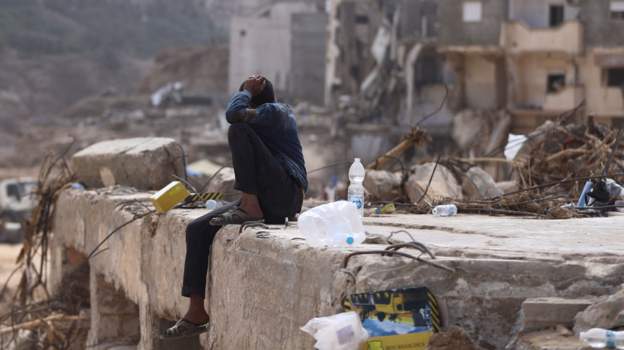
Migrants factor in about 10% of known flood deaths in Libya
-
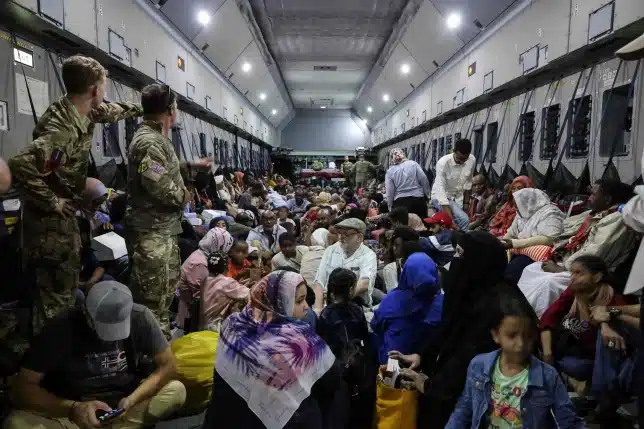
Over 1.3million displaced due to Sudan conflict – UN
The UN estimates that more than 1.3 million people have been forced from their homes as a result of the fighting in Sudan.
After more than six weeks of fighting, the Sudanese military and a potent paramilitary organisation are still engaged in combat.
Per the International Organisation for Migration (IOM) of the UN, over a million people have been compelled to leave their homes and relocate within the nation to safer locations.
An additional 320,000 people have fled to Egypt, South Sudan, Chad, Ethiopia, the Central African Republic, and Libya, which are nearby nations.
Clashes between rival forces even broke out today in Khartoum, despite a ceasefire being agreed on Monday – albeit a fragile one.
Sporadic fighting continued in several areas and residents reported hearing gunshots and explosions in central Khartoum, as well as areas close to military facilities in Omdurman.
Both sides blamed each other for violating the cease-fire.
Just five days ago, houses were left shaking after the capital was hit by airstrikes and the civil war has led to a collapse in law and order, with looting that, again, both sides have traded blame for.
Violence erupted on April 15 this year after months of escalating tensions between the military, led by General Abdel-Fattah Burhan, and the Rapid Support Forces commanded by General Mohamed Hamdan Dagalo.
The situation has worsened an already existing humanitarian crisis and right now, stocks of food, cash, and essentials in the North African nation are rapidly dwindling.
Hopes of restoring the country’s fragile transition to democracy have been completely shattered by the conflict.
At least 863 civilians have already been killed, including at least 190 children, while more than 3,530 people have been wounded, according to the most recent data from the Sudanese Doctors’ Syndicate, which mainly tracks civilian casualties.
It has pushed the country to near collapse, with urban areas in Khartoum and its neighbouring city of Omdurman turning into battlegrounds.
Egypt is hosting the largest number of those who have fled, with at least 132,360 people, followed by Chad with 80,000 and South Sudan with more than 69,000, the agency added.
All but one of Sudan’s 18 provinces has experienced displacement, with Khartoum at the top of the list with about 70% of the total number of displaced people, according to the IOM’s Displacement Tracking Matrix.
The weeklong ceasefire was brokered by the United States and Saudi Arabia and was the latest international effort to push for humanitarian aid delivery to the conflict-torn country.
A joint statement from the US and Saudi Arabia yesterday evening warned that neither the Sudanese military nor the Rapid Support Forces observed the short-term ceasefire.
The fighting has exacerbated the already dire humanitarian conditions in Sudan. According to the UN, the number of people who need assistance this year has increased by 57% to reach 24.7 million people – more than half the country’s population.
The international body said it would need £2.1billion ($2.6bn) to provide them with much-needed humanitarian assistance.
Shortly after the civil war broke out, British nationals were desperately trying to escape in terrifying circumstances.
One student who managed to flee Khartoum likened scenes in the city to that of the horror movie The Purge, while another Brit risked being shot to walk four hours to an airstrip for an evacuation flight.