Tag: International Space Station

  • Astronauts brains affected by prolonged space flights

    Astronauts brains affected by prolonged space flights

    Following a new research, astronauts’ brains are affected by spaceflights lasting six months or longer, and crew members may need to wait at least three years before going back into space.

    The brain scans of 30 astronauts were compared to scans performed after they had returned to Earth in order to determine how their brains had changed throughout their two-week, six-month, and one-year space missions. The scans showed that in the brains of astronauts who spent at least six months on voyages to the International Space Station, the ventricles, or chambers within the brain that are filled with cerebrospinal fluid, dramatically grew.

    The findings have implications for future longer-term missions as NASA and its international partners aim to establish a sustained human presence on the moon with the Artemis program, with the eventual goal of sending humans to deep-space destinations such as Mars.A study detailing the findings was published Thursday in the journal Scientific Reports.

    Cerebrospinal fluid provides the brain with protection and nourishment while removing waste. But when astronauts go to space, fluids within the body shift toward the head and push the brain higher against the skull, causing expansion of the ventricles.

    “We found that the more time people spent in space, the larger their ventricles became,” said lead study author Rachael Seidler, a professor of applied physiology and kinesiology at the University of Florida, in a statement. “Many astronauts travel to space more than one time, and our study shows it takes about three years between flights for the ventricles to fully recover.”

    Eight of the astronauts in the study went on two-week missions, while 18 ventured on six-month missions. Four astronauts had missions that lasted for about a year. During the analysis, the researchers determined that the degree to which the ventricles enlarged varied depending on how long the astronauts were in space.

    “The biggest jump comes when you go from two weeks to six months in space,” said Seidler, who is also a member of UF Health’s Norman Fixel Institute for Neurological Diseases.

    There was no further increase between six months and one year, meaning that ventricular enlargement seems to taper off after six months, which surprised the researchers, Seidler said. “This is good news for future Mars travelers who may end up spending (approximately) two years in microgravity.”

    And the impact was minimal for astronauts on two-week jaunts to space — a positive finding for the commercial space industry as short-duration space tourism flights increase in popularity.

    “People who spend just a couple of weeks show little to no change in these structures,” Seidler said. “This is good news for those going on short space junkets.”

    For 11 of the astronauts, all of whom had more than three years to recover in between missions, the researchers noted an increase in ventricular volume after each of their most recent missions. Seven of the astronauts with a shorter period of recovery between missions showed little ventricular enlargement after their most recent flight.

    While this finding sounds positive, it suggests that the brains of experienced astronauts have ventricles that remain enlarged ahead of their next mission and “have less available room or compliance for ventricular expansion with spaceflight,” the authors wrote in the study.

    The scientists don’t know how long it takes ventricles to recover fully after spaceflight, but their analysis showed that astronauts experienced a 55% to 64% recovery toward their preflight levels about six to seven months after a six-month mission to the space station.

    Based on the research results, the team concluded that astronauts need at least three years between missions to allow their ventricles to recover fully.

    The findings could be used as NASA and other space agencies plan future missions, but Seidler said more research is needed. She is beginning to work on a new project that will look at the long-term health and recovery up to five years after spaceflights lasting six months.

    “We don’t yet know for sure what the long-term consequences of this is on the health and behavioral health of space travelers, so allowing the brain time to recover seems like a good idea,” she said.

    “The findings may suggest that three years are needed for recovery. However, astronauts have very specialized skill sets and training and there may be rationale to include them on additional missions before this time.”

  • NASA astronaut activated to International Space Station cancelled at last minute

    NASA astronaut activated to International Space Station cancelled at last minute

    Following the discovery of a problem with the rocket’s ground system, SpaceX and NASA decided to cancel a crew launch to the International Space Station.

    The launch was aborted with around two minutes left in the countdown due to an issue with the TEA-TEB ignition fluid, which is used to ignite the SpaceX Falcon 9’s rocket engines during takeoff.

    SpaceX systems engineer Kate Tice commented on Monday’s webcast that the decision to cancel the launch was made “out of an excess of caution.”

    The four astronauts, who were strapped into their Crew Dragon capsule atop the rocket in the hours leading up to launch, disembarked from the spacecraft after waitingfor the 230-foot-tall (70-meter) rocket to be drained of its fuel. They’ll stay on site at Kennedy Space Center until the next launch attempt.

    NASA said it would now look to launch the SpaceX Crew-6 mission at 12:34 a.m. EST Thursday, March 2 “pending resolution of the technical issue preventing Monday’s launch.”

    The agency said it would skip a launch opportunity on Tuesday because of an unfavorable weather forecast.

    “I’m proud of the NASA and SpaceX teams’ focus and dedication to keeping Crew-6 safe,” NASA’s Administrator Bill Nelson said in a blog post.

    “Human spaceflight is an inherently risky endeavor and, as always, we will fly when we are ready.”

    The SpaceX Falcon 9 rocket and Crew Dragon capsule were slated to lift off from NASA’s Kennedy Space Center in Cape Canaveral, Florida, at 1:45 a.m. ET Monday. But the clock was stopped by engineers that oversee the ground systems with less than three minutes left.

    This mission is expected to mark the seventh astronaut flight SpaceX has carried out on NASA’s behalf since 2020.

    The Crew-6 team that will launch onthe SpaceX capsuleinclude NASA astronauts Stephen Bowen, a veteran of three space shuttle missions, and first-time flier Warren Hoburg, as well as Sultan Alneyadi, who will be the second astronaut from the UAE ever to travel to space, and Russian cosmonaut Andrey Fedyaev.

    Once Bowen, Hoburg, Fedyaev and Alneyadi are on board the ISS, they’ll work to take over operations from the SpaceX Crew-5 astronauts who arrived at the space station in October 2022.

    They’re expected to spend up to six months on board the orbiting laboratory, carrying out science experiments and maintaining the two-decade-old station.

    The mission comes as the astronauts currently on the ISS have been grappling with a separate transportation issue.

    In December, a Russian Soyuz spacecraft that had been used to transport two cosmonauts and one NASA astronaut to the space station sprang a coolant leak. After the capsule was deemed unsafe to return the astronauts, Russia’s space agency, Roscosmos, launched a replacement vehicle on February 23. It arrived at the ISS on Saturday.

  • International Space Station maneuvers to avoid debris

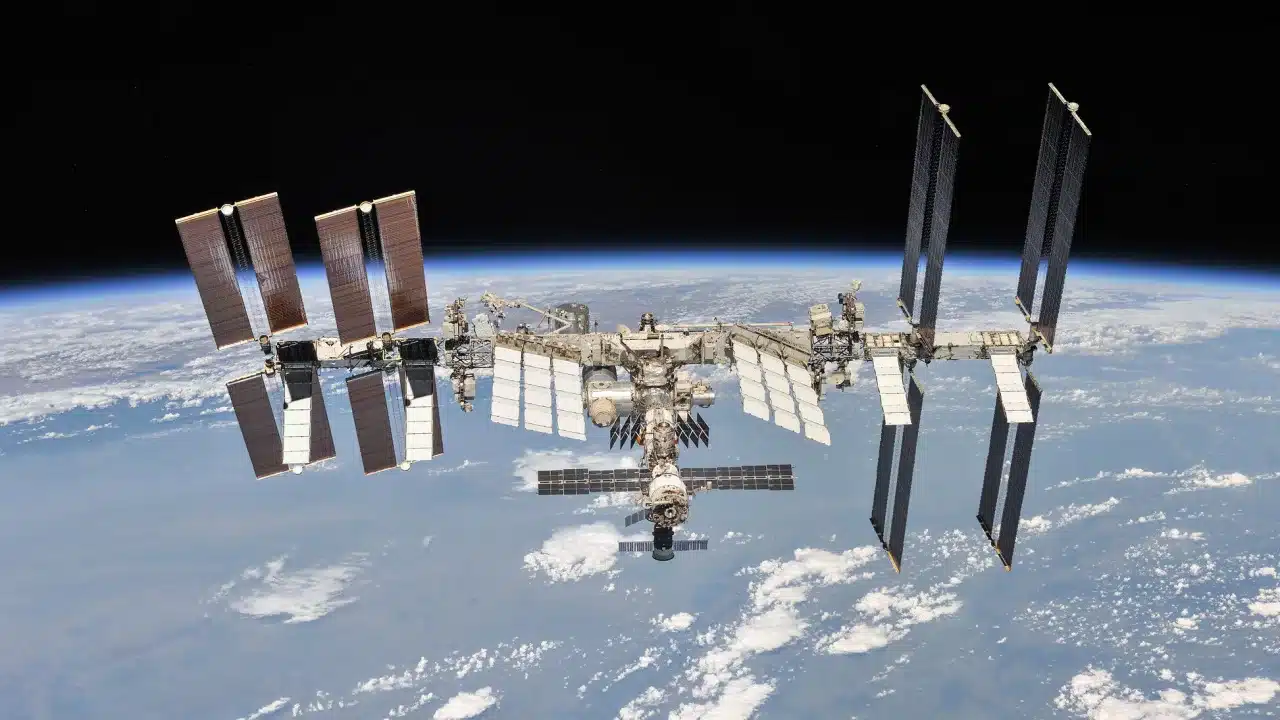
    According to NASA, the International Space Station used its thrusters to steer clear of Russian space junk.
    NASA provided the image for this license photo.

    According to NASA, the International Space Station modified its orbit on Monday night to avoid space junk.

    According to a space agency blog, “this evening, Progress 81 thrusters on the International Space Station fired for 5 minutes, 5 seconds in a Pre-Determined Debris Avoidance Maneuver to provide the complex an extra measure of distance away from the predicted track of a fragment of Russian Cosmos 1408 debris.”

    Space debris has become a major concern for human space travel and unmanned satellites as more and more manmade objects are launched into orbit.

    More than 27,000 pieces of orbital debris or space junk are tracked by the Department of Defense’s global Space Surveillance Network sensors, according to NASA.

    “Much more debris — too small to be tracked, but large enough to threaten human spaceflight and robotic missions — exists in the near-Earth space environment.”

    The International Space Station is hosting two American astronauts, a Japanese astronaut and a Russian cosmonaut. who traveled onboard SpaceX’s Endurance Crew Dragon’s Crew-5 mission Oct. 5.

    A SpaceX Falcon 9 rocket lifts off from Launchpad 39A at the Kennedy Space Center in Florida on October 5, 2022. NASA’s Crew-5 mission is on its way to the International Space Station. Photo by Pat Benic/UPI | License Photo