Tag: Israeli embassy

  • Mistreat our citizens and we will respond in equal measure – Ablakwa to Israeli Embassy

    Mistreat our citizens and we will respond in equal measure – Ablakwa to Israeli Embassy

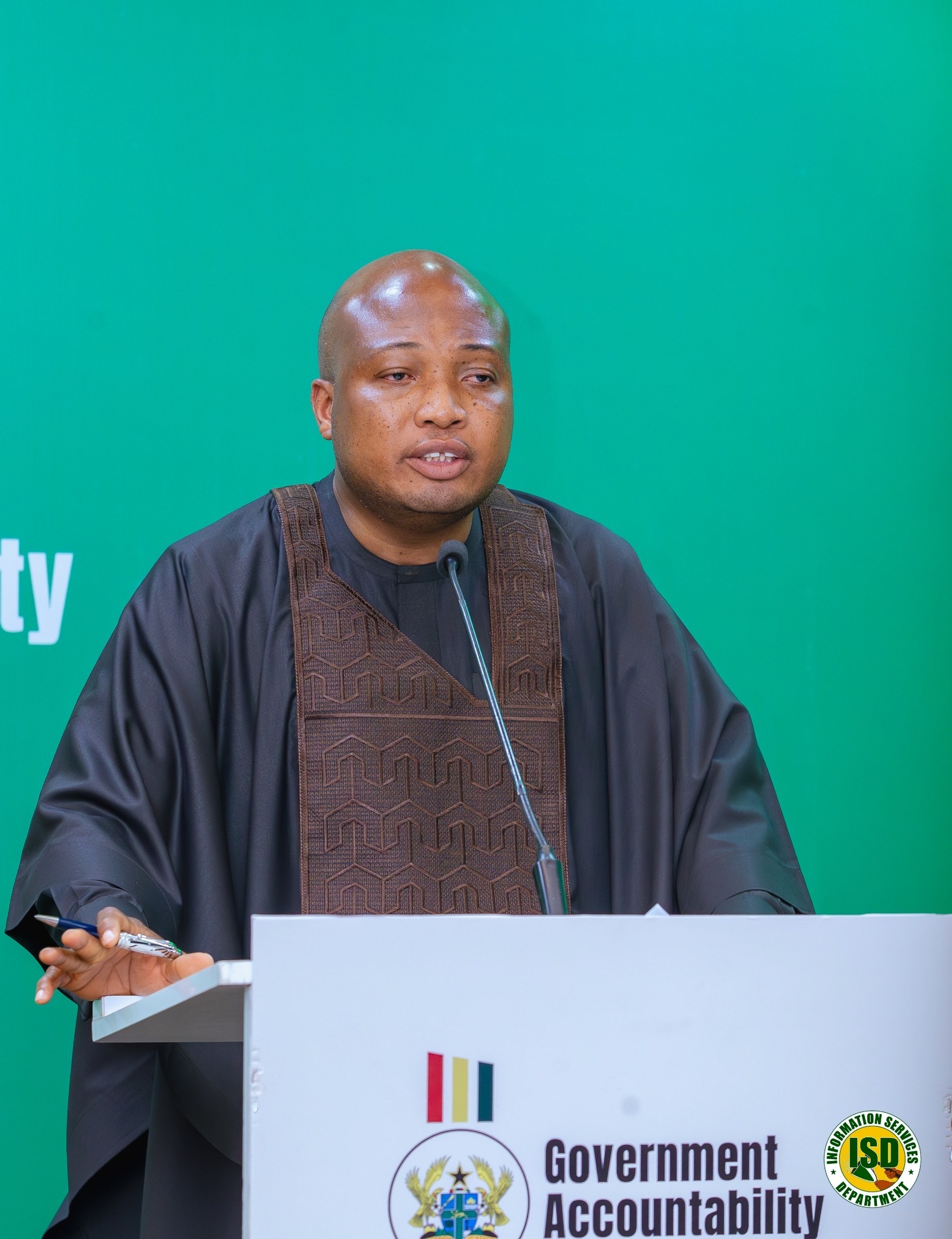
    The Minister for Foreign Affairs, Samuel Okudzeto Ablakwa, has warned the Israeli Embassy against maltreating Ghanaian nationals.

    Speaking to the media on Thursday, December 11, Mr. Ablakwa noted that Ghana will respond with equal force if any of its citizens are deported.

    According to him, “If they deport ten Ghanaians, we will deport ten. If they deport twenty, we will deport twenty. If they deport fifty, we will deport fifty. We are not going to accept this.”


    His comments are in response to a recent incident in which several Ghanaian travellers, including four members of a parliamentary delegation en route to Tel Aviv for an international cybersecurity conference, were detained and deported by Israel Embassy officials.


    Mr. Ablakwa narrated, “We were told that the Ghanaian Embassy was uncooperative, but the facts simply do not support that. Out of the six people on the list that Israel provided, one is not even Ghanaian. He is Gabonese. Our embassy had every right to verify the identity of the individuals involved.

    “One of the people listed was seriously ill, and Israeli doctors themselves advised that she should not travel until she had recovered. How can you deport someone who is unwell and needs medical attention? Another individual had already been issued a travel certificate, so there was no reason to stop their entry into Israel.”


    But in their actions, Israeli officials indicated that six Ghanaians who were supposedly due for deportation failed to provide the necessary details needed by Ghana’s Embassy in Tel Aviv to issue travel certificates.

    The matter adds to broader concerns surrounding deportation practices. In September, eleven West African nationals filed two ex-parte applications at the Labour Division of the High Court in Accra, challenging their alleged detention in Ghana after being deported from the United States (U.S).


    The eleven individuals include Nigerians Daniel Osas Aigbosa, Ahmed Animashaun, Ifeanyi Okechukwu, and Taiwo K. Lawson; Liberian national Kalu John; Togolese nationals Zito Yao Bruno and Agouda Richarla Oukpedzo Sikiratou; Gambian national Sidiben Dawda; and Malians Toure Dianke and Boubou Gassama.


    According to the applicants, they were forcibly transported to Ghana without prior notice. They allege that they were secretly moved from the U.S. detention centers between September 5 and 6 in shackles.

    They want the court to temporarily stop them from being deported back to their home countries until the court decides on their case. Their submission further revealed that Ghanaian authorities allegedly confined them in a military facility.


    They cited Article 14(1) of Ghana’s 1992 Constitution, which guarantees personal liberty, as well as Article 23, which protects the right to administrative justice. They are arguing that Ghana is violating international law by trying to send them back to countries where their lives or freedom could be at risk.


    As a result, they have demanded that the Attorney-General, the Chief of Defence Staff, and the Comptroller-General of the Ghana Immigration Service appear before the Human Rights Division of the High Court with valid reasons. The court has fixed Tuesday, September 23, to hear the case.


    In the meantime, Minister of Foreign Affairs, Samuel Okudzeto Ablakwa, has disclosed that Ghana is anticipating the arrival of forty (40) West African deportees from the United States of America.

    Speaking to Channel One TV on Wednesday, September 17, Mr. Ablakwa noted, “I can reveal to you that we’re expecting another 40 in the next few days. We vet them before they come.”


    This revelation follows criticism from the Minority in Parliament, who accused the government of accepting 14 deportees without Parliamentary approval. Ablakwa, however, clarified that a Memorandum of Understanding (MoU) with the U.S., which does not require Parliamentary ratification, necessitated the arrangement.


    Opposition Members of Parliament (MPs) have argued that President Mahama’s deal with the U.S. was never ratified and therefore unlawful.

    The Minority cited Article 75 of Ghana’s Constitution, which dictates that an international agreement must be approved by Parliament. They pointed to previous Supreme Court rulings, such as the one involving the Gitmo 2 detainees, as precedent for why executive-only agreements are unconstitutional.


    “The deal should have been brought to Parliament. It’s the same President Mahama who entered into a deal for the relocation of the Gitmo 2 to Ghana. What’s in it for our beloved country, Ghana?” NPP MP for Abirem, Charles Owiredu, wrote.


    The opposition also accused Mahama of hiding behind the Economic Community of West African States (ECOWAS) protocol on free movement, describing it as misleading.

    They argued that those protocols apply to voluntary travel, not forced deportations orchestrated by non-member states like the U.S.


    “Accepting forced deportations orchestrated by non-ECOWAS states contradicts the spirit of regional integration protocols designed for voluntary movement,” stated the Minority Caucus on the Foreign Affairs Committee.


    But the Foreign Affairs Minister has explained that the decision was driven primarily by humanitarian concerns after observing the harsh treatment of deportees abroad.


    “We didn’t agree to this because we agree with President Trump’s immigration policies. We’re not doing the U.S. a favour. We’re doing our fellow Africans a favour; we’re offering them refuge, hope, and we want them to come back home and be comfortable.

    “We solidarised with them when we saw those images, the arrests, the violation of their rights, and their being detained against their will. It was purely on a humanitarian basis; we did not take any financial benefits. We’re doing this because we want to continue to position Ghana as the Mecca for Africans,” Ablakwa stressed.


    Responding to whether the deportees will remain in Ghana, Honourable Ablakwa said, “So the choice is theirs really. For 90 days, if they want to stay here, they can stay. But so far all of them have indicated that they want to go back after some time, and we have been facilitating that.”


    At the Government Accountability Series held at the Jubilee House on Monday, September 15, Ablakwa clarified that Ghana’s agreement with the United States to accept some West African deportees was not motivated by financial or material gain.


    “It is important to state that Ghana has not received any money, compensation, or any material benefit in relation to this understanding. Our decision is grounded purely on humanitarian grounds and principle,” he said.


    On Wednesday, September 10, the first batch of West African nationals arrived in Ghana following their deportation from the U.S. During a media encounter at the Jubilee House, President John Dramani Mahama said that the batch consisted of 14 individuals, mostly Nigerians, along with one Gambian national.


    “We were approached by the U.S. to accept third-country nationals who were being removed, and we agreed that West African nationals could be accommodated, since all our fellow West Africans do not require a visa to enter Ghana. So, if they travel from the U.S. to Accra, entry is not an issue. Bringing our West African colleagues back is therefore acceptable,” President Mahama explained.


    Mahama did not explicitly detail the deal of Ghana serving as a transit hub for West African nationals deported from the U.S. A federal judge, Judge Tanya Chutkan, has expressed concern that the arrangement suggested complicity on the part of the Ghanaian government in the deportation process.


    Judge Chutkan granted an emergency hearing after lawyers for the deportees argued that their clients expected to be returned to Nigeria and Gambia, and feared torture or persecution if sent home. She instructed the Trump administration to submit a report outlining measures to prevent Ghana from returning the deportees to their home countries.


    According to her, concerns about their safety were not speculative but “real enough that the United States government agrees they shouldn’t be sent back to their home country.” Judge Chutkan described the arrangement as appearing to have been designed by U.S. officials “to make an end run” around legal requirements barring the government from deporting migrants to situations of danger.


    The deportations, she noted, form part of President Donald Trump’s broader strategy of relocating migrants to “third countries” to expedite removals and pressure undocumented immigrants to leave the U.S.


    It later emerged, following a lawsuit filed on Friday, September 12, by the American Civil Liberties Union (ACLU) and Asian Americans Advancing Justice, that five of the nationals deported to Ghana had U.S. legal protections preventing deportation to their home countries. One of them, a bisexual man, was already sent to Gambia and is reportedly in hiding.


    The others were held in an open-air facility managed by the Ghanaian military, which was described as having squalid conditions.

    The complaint alleged that the migrants were taken from a Louisiana detention facility, shackled, and flown on a U.S. military aircraft without being told their destination. Some were reportedly restrained in straitjackets for 16 hours.


    The U.S. Department of Justice, responding to Judge Chutkan’s request, argued that it no longer had custody of the migrants and therefore the court lacked authority to interfere in matters of diplomacy. They cited a Supreme Court ruling allowing deportations to third countries.


    U.S. Department of Homeland Security spokesperson Tricia McLaughlin rejected the claim that straitjackets were used during the flight, but declined to comment on allegations of circumventing immigration law.


    In January 2016, President Mahama welcomed two Yemeni nationals, Mahmud Umar Muhammad Bin Atef and Khalid Muhammed Salih Al-Dhuby, who had been detained at Guantanamo Bay for about 15 years.

    They were linked to Al-Qaeda activities, and their transfer to Ghana formed part of a bilateral agreement with the U.S. The Mahama government explained that the move was a humanitarian gesture and that the two men would stay in Ghana for two years.

    However, the deal was never submitted to Parliament as required by the Constitution.
    In June 2017, the Supreme Court ruled that the Gitmo 2 agreement was unconstitutional, ordering the government to present it to Parliament within three months or return the detainees to the U.S.

  • American airman dies after setting himself ablaze outside Israeli embassy in Washington

    American airman dies after setting himself ablaze outside Israeli embassy in Washington

    A member of the US Air Force passed away after setting himself ablaze in front of the Israeli embassy in Washington DC.

    According to the police, the man is identified as Aaron Bushnell and he is 25 years of age. He’s from San Antonio, Texas.

    The Secret Service officers put out the fire and then took the man to the hospital on Sunday afternoon.

    Before he lit himself on fire, he said he didn’t want to be part of genocide anymore.

    The man went onto a live video on Twitch and said he was in the Air Force.

    The Washington Metropolitan Police Department said that they are not sure if the video is real.

    A person from the embassy said that no one who works there got hurt in the event.

    The event occurred at 1:00pm local time (6:00pm GMT) on Sunday.

    A squad that handles bombs was called to the area because there was worry about a strange vehicle that might have been linked to the person.

    This was later said to be safe because no dangerous materials were found.

    DC police said that they are working with the US Secret Service and the Bureau of Alcohol, Tobacco, Firearms and Explosives to look into what happened.

    Mr Bushnell was very sick and had to go to the hospital.

    This has happened before, when someone set themselves on fire outside an Israeli embassy in the US.

    In December, someone protested by lighting themselves on fire in front of the Israeli consulate in Georgia.

  • Air Force man in Washington DC, sets himself on fire in front of Israeli embassy

    Air Force man in Washington DC, sets himself on fire in front of Israeli embassy

    An individual from the US Air Force suffered severe injuries after setting himself ablaze in front of the Israeli embassy in Washington.

    The Secret Service officers put out the fire and then took the man to the hospital because he had serious injuries. This all happened on Sunday afternoon.

    The US Air Force said a person who is currently serving in the military was involved in the situation, but they have not said who it is.

    The police, Secret Service, and other officials are looking into the matter.

    The man went on Twitch and told everyone that he is a member of the Air Force.

    Before he set himself on fire, he said he didn’t want to be a part of genocide anymore. He also shouted “Free Palestine” while he was burning.

    A special team that handles bombs was sent to the area because they were worried about a strange vehicle that might be related to the person.

    This was later said to be not dangerous after they didn’t find any harmful things.

    A spokeswoman for the embassy said that no embassy staff members were hurt in the incident.

    The Israeli foreign ministry said that embassy staff did not know the man.

    This has happened before when someone set themselves on fire in front of an Israeli embassy in the US.

    In December, someone protesting burned themselves in front of the Israeli consulate in Georgia.

    The police said the protester used gasoline, and they found a Palestinian flag at the place where it happened.

  • Israel removes its ambassador from South Africa

    Israel removes its ambassador from South Africa

    Israel called back its ambassador in South Africa to have a discussion.

    On Monday, the ministry spokesperson Lior Haiat said that the decision was made because of recent statements from South Africa about Israel. He didn’t give details.

    South Africa does not like what Israel is doing in Gaza with their military.

    On Tuesday, the members of parliament voted to suggest closing the Israeli embassy until there is a stop to the fighting and a promise to talk things out.

    248 people in parliament voted yes and 91 voted no.

    All politicians from the ruling African National Congress agreed with it, but we don’t know if the government will do what was suggested.

    Even though the person in charge didn’t like it, some members of parliament shouted “free, free Palestine” after the decision was made.

    Israel started a big war in Gaza because hundreds of Hamas fighters attacked them. At least 1,200 people were killed and over 200 were taken captive.

    US President Joe Biden said that a deal where Hamas would release some hostages is almost done.

    The health ministry in Gaza, which is controlled by Hamas, says that at least 13,000 people have died in the area since Israel started its campaign in response.

    Israel is saying that they are protecting themselves and want to stop Hamas and prevent another attack like the one last month.

    The Israeli Ambassador Eliav Belotserkovsky was called back to Israel just before South Africa started hosting a virtual meeting of the Brics group of countries, including China and Russia, to talk about the Israel-Hamas war.

    At the end, the Brics leaders asked for a quick and lasting break from fighting in Gaza to help people in need.

    China’s leader, President Xi Jinping, also asked for the freedom of people who are not soldiers and are being held captive.

    The President of South Africa, Cyril Ramaphosa, said it was wrong to punish all Palestinian people for the actions of a few.

    Vladimir Putin said the US is stopping other countries from making peace in the Middle East.

    South Africa asked the International Criminal Court to arrest Israel’s Prime Minister, Benjamin Netanyahu, by the middle of December.

    Minister Khumbudzo Ntshavheni said if this didn’t happen, it would show that global leadership has failed.

    South Africa, Bangladesh, Bolivia, Comoros, and Djibouti have asked the ICC to look into if war crimes and crimes against humanity happened in Gaza.

    The UN Security Council wants to have short breaks in fighting so that UN workers can go into the area that is blocked off.

    South Africa brought its diplomats back from Israel earlier this month. For five years, there has not been a South African ambassador in Israel.

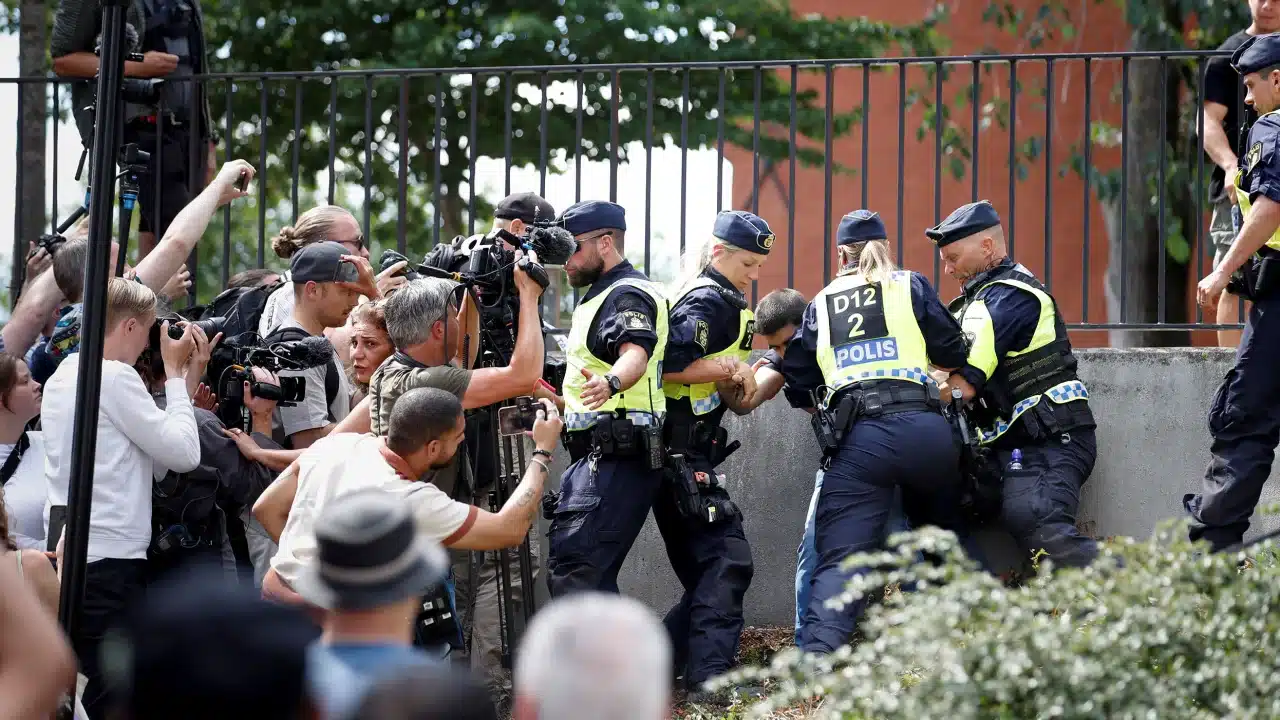
  • Sweden permits demonstrators to burn Torahs and Bibles in front of Israeli Embassy

    Sweden permits demonstrators to burn Torahs and Bibles in front of Israeli Embassy

    The Swedish national radio channel announced on Friday that the demonstration, which involves the burning of Torahs and Bibles outside the Israeli Embassy in Stockholm, had received approval from the government of Sweden.

    According to Sveriges Radio, a request to arrange a public meeting to burn the holy books on Saturday has been approved.

    In a press release on Friday, the European Jewish Congress (EJC) stated that they “strongly” denounced the Swedish government‘s decision.

    “Provocative, racist, antisemitic and sickening acts such as these have no place in any civilised society,” EJC president Ariel Muzicant said in the statement.

    “Stamping on the deepest religious and cultural sensibilities of people is the clearest expression possible to send a message that minorities are unwelcome and unrespected,” Muzicant added.

    “These actions, based on contorted and specious free speech arguments, are a disgrace to Sweden and any democratic government worthy of the name should prevent it.”

    Israeli President Isaac Herzog also condemned the Swedish authorities’ decision.

    “I unequivocally condemn the permission granted in Sweden to burn holy books. As the President of Israel, I condemned the burning of the Quran, sacred to Muslims world over, and I am now heartbroken that the same fate awaits a Jewish Bible, the eternal book of the Jewish people,” Herzog tweeted.

    At the end of June, a man burned a copy of Islam’s holy book outside a mosque in the Swedish capital, triggering violent protests at the Swedish embassy in Baghdad.

    The decision to permit that protest was made in accordance with the right of freedom of speech, Swedish police said at the time.

    A police permit obtained by CNN last month stated that the “security risks and consequences connected to a Quran burning are not of such a nature that, according to current law, they can be the basis for a decision to reject an application for a general meeting.”

    The permit for the June demonstration said that Quran burnings “mean an increased risk of a terrorist attack” and “can also have foreign policy consequences.”

    However, it added that for “security problems to be the basis for a decision to refuse a general assembly, these must have a clear connection to the planned gathering or its immediate surroundings.”

  • Liz Truss likely to move UK embassy to Jerusalem

    Liz Truss, who is following Donald Trump’s lead, says she is thinking of moving the British embassy in Israel from Tel Aviv to Jerusalem. This would be a radical change from decades of UK foreign policy.

    In a meeting on the sidelines of the UN general assembly in New York, the prime minister told Israel’s caretaker leader, Yair Lapid, about a “review of the current location” of the building, Downing Street said in a statement.

    The status of Jerusalem, which Israelis and Palestinians claim as their capital, is one of the most sensitive issues in the long-running conflict.

    East Jerusalem, along with the West Bank and Gaza Strip, has been considered occupied Palestinian territory under international law since the six-day war in 1967.

    Like the vast majority of the international community, the UK’s position until this point has been that the divided city should host consulates, rather than embassies until a final peace agreement is reached.

    Trump’s 2018 fulfillment of an election campaign promise to recognise Jerusalem as Israel’s capital prompted international condemnation and led to protests and clashes in which Israeli forces killed dozens of Palestinians. The then UK prime minister Theresa May criticised the move at the time.

    On Thursday, the Israeli prime minister tweeted his thanks to Truss for what he described as “positively considering” the move. “We will continue to strengthen the partnership between the countries,” he said.

    The Guardian understands that the embassy move was one of a range of options put forward to Truss by Foreign Office staff in late 2021 during her stint as foreign secretary. However, she did not make any substantial policy changes during her two years at the foreign office.

    The prime minister appears to have first publicly floated the idea of relocating the embassy in a letter to the Conservative Friends of Israel (CFI) parliamentary group during the Tory leadership campaign over the summer.

    She wrote: “I understand the importance and sensitivity of the location of the British embassy in Israel. I’ve had many conversations with my good friend … Lapid on this topic. Acknowledging that, I will review a move to ensure we are operating on the strongest footing within Israel.”

    At a hustings with CFI, she vowed that “under my leadership, Israel will have no stauncher friend in the world. That’s what I’ve done as foreign secretary and trade secretary. I don’t just talk the talk – I walk the walk.”

    Pressed in the House of Commons on 6 September by the backbench Tory MP Michael Fabricant to follow the US and move the embassy from Tel Aviv to Jerusalem, the Foreign Office minister Amanda Milling said: “The British embassy to Israel is in Tel Aviv. I am aware of the possibility of a review, but will not speculate further on this point.”

    Her remarks suggest the review is only just under way, but advocates of the move inside the Conservative party claim the proposal will prove less controversial than even a few years ago due to the Trump administration setting a precedent, and the thaw in relations between Israel and some Arab countries following the Abraham accords.

    Downing Street has been contacted to explain how long the review will take.

    Other than the US, only three states have embassies to Israel in Jerusalem – Kosovo, Honduras and Guatemala – which all moved from Tel Aviv after the US relocation.


  • Israeli embassy in Accra resumes full service after brief strike by diplomats

    The Embassy of Israel in Accra has announced that it has resumed full service until further notice.

    On Wednesday, October 30, 2019, the Israeli mission in Ghana announced that due to the decision of the Israeli Ministry of Finance to breach understandings that were agreed upon and signed by the Director General of the Ministry of Finance on July 21, 2019, “and to apply a one-sided procedure that alters a protocol that has been in place for several decades,” it has suspended all diplomatic activities until further notice.

    “No consular services will be provided and no one will be allowed to enter the Embassy,” the mission said.

    Israeli diplomats in Ghana go on strike, embassy suspends consular services

    Shortly after that announcement, the mission released another statement clarifying that despite the strike by its diplomats in Ghana, daily diplomatic activities will be carried out.

    The mission said consular services, meetings and events will not be suspended.

    In the latest statement issued on Thursday, October 31, 2019, the embassy stated that “all diplomatic and consular services are fully active and the embassy is working in full capacity. The Embassy will soon contact individually all those applying for consular services to resume their process.”

    Read the latest statement from the embassy below.

    Israeli investors commended for investing outside Accra

    Announcement from the Embassy of Israel, Accra

    The Embassy of Israel in Accra would like to announce that it has resumed work until further notice.

    All diplomatic and consular services are fully active and the embassy is working in full capacity. The Embassy will soon contact individually all those applying for consular services to resume their process.

    The Embassy of Israel to Ghana, Liberia and Sierra Leone is committed to working towards strengthening the already existing good relations between the countries and is doing so every day.

    We greatly appreciate all your support and patience.

    Thank you!

    Source: Myjoyonline.com