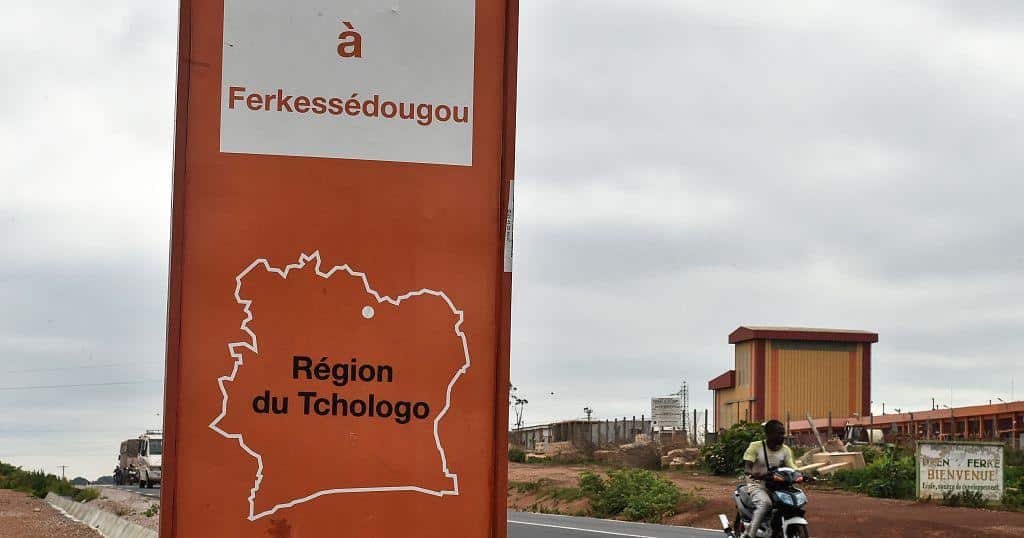
A group of aggrieved youth inNkrankwanta, in the Dormaa West District of the Bono Region, have attacked officers of the Ghana Immigration Service (GIS) who were stationed in the area to prevent illegal activities at the Nkrankwanta-Ivory Coast border.
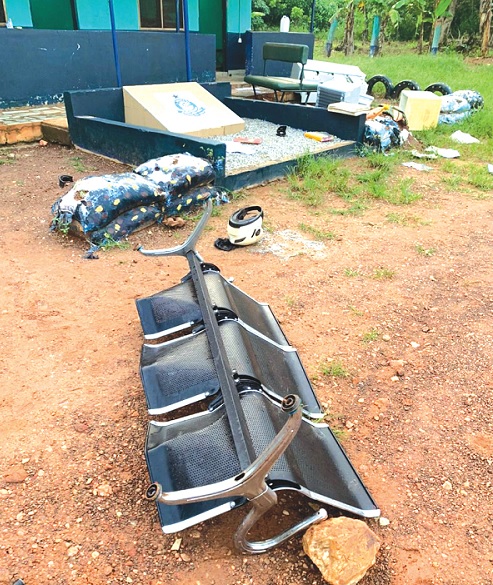
The attackers were said to have arrested some officers, who were on duty and also succeeded in vandalising the duty post, including some of the station’s operational logistics.
The agitators, yet to be identified, destroyed items such as computers, airconditioners, chairs and tables, a refrigerator, book shelves and documents, among others.
Cause of attack
It is alleged that one of the officers, stationed at the post, last Sunday knocked down a female resident with a patrol motorbike, killing her on the spot.
In reaction to the incident, the youth attacked the two officers who were on the motorbike and later stormed the station to beat other officers up and arrested some of them in their homes.
However, some of the officers managed to escape to safety and made calls to their colleagues and other opinion leaders from the community to come to their aid.
It is unclear the number of the officers who were at post during the time of the incident and the safety of the officers, including those who were arrested.
Commander visits
The Daily Graphic gathered from the Bono Regional GIS Command yesterday that the Regional Commander had led a delegation to the area to assess the extent of injuries, damages and intervene to restore calm.
“It is true, we had a report from the station, but right now, I can’t grant any further information without authorisation from the Regional Commander”, the source explained.
It said the Regional Commander had gone to the scene to ascertain the fact and situation on the ground.
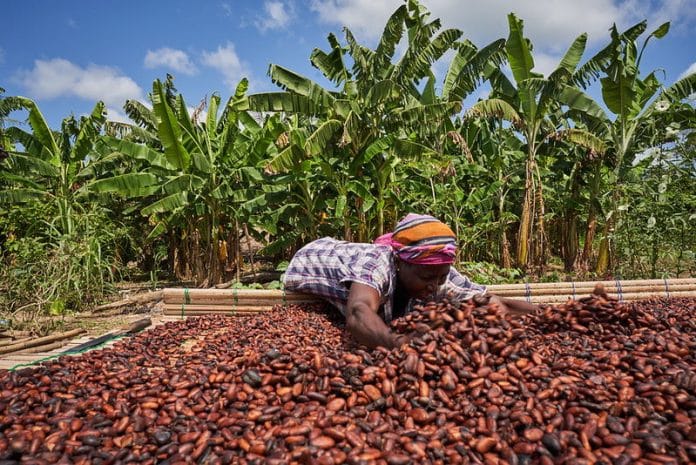
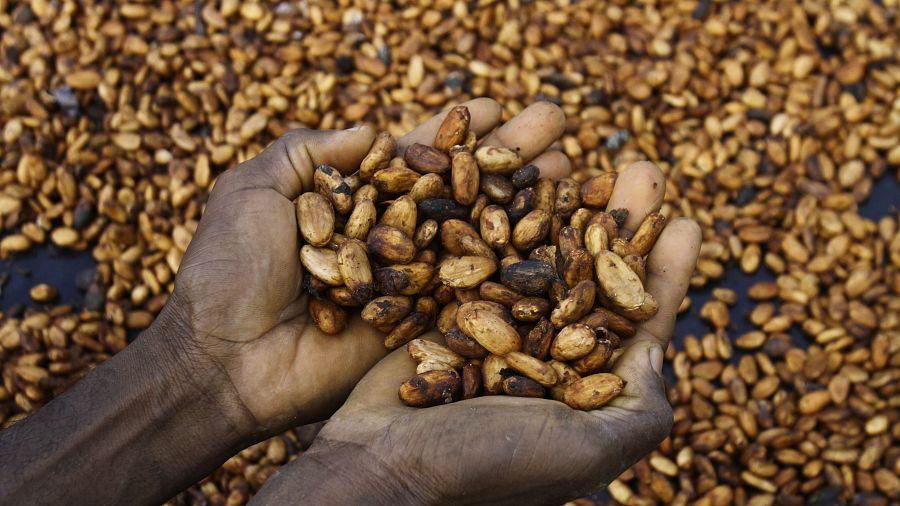
Due to mounting worries about how an El Nino weather phenomenon would affect the world’s chocolate output, cocoa prices increased last week.
Last Friday, cocoa prices reached their highest level in a month for nearest-futures contracts, building on the gains observed on Thursday due to worries about the El Nino weather event. It is worth noting that cocoa prices soared to a 12-year high in 2016 when a previous El Nino event caused a drought that severely affected global cocoa production.
This is particularly significant as the Ivory Coast, the world’s leading cocoa producer, is already facing a decline in supply.
The U.S. Climate Prediction Centre announced last Thursday that sea surface temperatures in the equatorial Pacific Ocean were 0.5 degrees celsius higher than usual, and wind patterns indicated the presence of El Nino conditions. In the previous month, the Climate Centre raised the likelihood of an El Nino weather pattern occurring between August and October to 94 percent, up from 74 percent in April.
Reduced supply from the Ivory Coast is another factor supporting cocoa prices, as reported by Barchart – a platform that monitors the Cocoa Futures Market. In the first two weeks of May, the Ivory Coast government disclosed that farmers had delivered a total of 2.09 million metric tonnes (MMT) of cocoa to the country’s ports during the 2022/23 marketing year, representing a 3.0 percent year-on-year decline.
According to a statement from the Ivory Coast agriculture minister on March 31, the mid-crop – which is the smaller of the country’s two annual harvests and began on April 1 – is expected to decrease by 25 percent compared to the previous year, reaching 450,000 metric tonnes (MT).
Quality concerns about the Ivory Coast mid-crop led to a rally in cocoa prices last month, with prices reaching their highest level in 6-3/4 years. Barchart commented that farmers had reported poor cocoa quality, with an average bean count of 120 per 100 grammes. Exporters generally prefer a count ranging from 80 to 100 per 100 grammes, with lower bean counts indicating better cocoa quality.
The decrease in cocoa supplies from Nigeria has also contributed to the price hikes. The Cocoa Association of Nigeria reported on May 24 that the country’s cocoa exports in April declined by 46 percent compared to the previous month – and 20.6 percent compared to the previous year, amounting to 9,924 metric tonnes (MT). Nigeria ranks as the world’s fifth-largest cocoa bean producer.
Cocoa prices have received additional support from projections made by the International Cocoa Organisation (ICCO) last month. The ICCO predicted that global cocoa stockpiles for the 2022/23 period would decrease by 3.5 percent year-on-year to 1.653 MMT. The organisation also highlighted the impact of weather variations, particularly in West Africa, which have compounded the expectation of a supply deficit. On the other hand, the ICCO forecasted that global cocoa production for 2022/23 would increase by 4.1 percent year-on-year to 5.017 MMT, while global cocoa grindings would decline by 0.6 percent year-on-year to 5.027 MMT.
The quarterly report released by the ICCO on December 1 provided a bullish outlook for cocoa prices. The report indicated that global cocoa production for the 2021/22 period had declined by 8.0 percent year-on-year to 4.823 MMT due to unfavourable weather conditions and diseases affecting cocoa yields.
Furthermore, the ICCO revised its previous estimate for global cocoa production downward by 419,000mt since September. The organisation also raised the projected global cocoa deficit for the 2021/22 period to 306,000mt, up from the September forecast of 230,000mt. In the previous season, global cocoa production reached a record high of 5.242 MMT, resulting in a surplus of 209,000mt in the global cocoa market.
Nevertheless, an increase in cocoa inventories is negatively impacting prices. Monitored cocoa inventories held in U.S. port warehouses reached an 8-year-3/4 month high of 5,730,012 bags on May 22. Similarly, cocoa inventories held in European port warehouses reached an 8-3/4 month high of 147,440mt on May 15, according to ICE monitoring data.
Stronger global cocoa demand
Growing global cocoa demand is driving bullish price trends in the market. According to recent reports, there are positive indicators supporting this upward trajectory. The National Confectioners Association disclosed on April 21 that cocoa grindings in North America during Q1 rose by 2.4 percent compared to the previous month, although there was a year-on-year decline of 4.4 percent totalling 109,666 metric tonnes (MT). Similarly, the Cocoa Association of Asia reported on April 20 that Q1 cocoa grindings in Asia increased by 4.09 percent year-on-year, reaching 222,028mt.
The European Cocoa Association shared its findings on April 13, revealing that cocoa grindings in Europe during Q1 experienced a 0.5 percent year-on-year growth, amounting to 375,375mt. This figure represents the highest Q1 grindings since 1999. Additionally, a cocoa exporter group, consisting of six major cocoa grinders, reported on April 19 that its Q1 cocoa processing surged by 22 percent year-on-year, totaling 189,405mt.
Weather condition
The Pacific Ocean usually experiences normal conditions when trade winds blow westward along the equator, carrying warm water from South America to Asia. As a result, cold water rises from the depths through a process known as upwelling, replenishing the water cycle. However, this natural pattern can be disrupted by two opposing climate phenomena called El Niño and La Niña, collectively known as the El Niño-Southern Oscillation (ENSO) cycle.
These events have significant global implications, affecting weather patterns, wildfires, ecosystems and economies. Typically, El Niño and La Niña episodes persist for around nine to 12 months; but there are instances when they can persist for several years. Although El Niño and La Niña events occur on average every two to seven years, there is no set schedule for their frequency. Generally, El Niño events tend to occur more frequently than La Niña events.
Ivory Coast has received a $3.5-billion loan agreement from the International Monetary Fund (IMF) to help the country tackle financial challenges and assist with its economic transformation.
The IMF announced this on Wednesday. The 40-month arrangement will “help support the country’s transformation towards upper-middle income status” over the medium term while preserving macroeconomic stability, the IMF said in a statement.
Getting the loan in full will be contingent on the West African nation making structural changes to its economy, which is squeezed by a global downturn and the ripple effects of the war in Ukraine.
IMF Deputy Managing Director Kenji Okamura said “Consecutive global shocks have strained Cote d’Ivoire’s public finances as well as regional reserves.”
The program will help the country tackle the “triple shocks” of the Covid-19 pandemic, global monetary tightening, and Russia’s invasion of Ukraine, according to the statement from the IMF.
The key target of the program’s reform agenda, meanwhile, is domestic revenue mobilization, which the IMF said was central to preserving fiscal and debt sustainability, and would help generate the “fiscal space” needed to allow for deeper economic transformation.
The first tranche of the loan worth close to $500 million will be made immediately available to the Ivorian authorities to support the budget, the IMF said.
Recently, the IMF approved a $3 billion loan agreement for Ghana.
The 2023 WAFU Zone B U20 Boys Cup of Nations tournament’s draw placed the Ghana U20 squad, the Black Satellites, in Group A.
On April 17, at the WAFU Zone B headquarters in Abidjan, the draw for the second iteration of the competition took place.
Ghana was placed in Group A after the draw and will compete there alongside the host nation, Ivory Coast, Niger, and Burkina Faso.
“Ghana will play Cote D’Ivoire, Burkian Faso, and Niger in the Group A of the WAFU B U-20 Boys Cup of Nations Cote D’Ivoire 2023.
“The pairings were revealed during the draw on Monday, April 17, 2023, in Abidjan,” the Ghana Football Association (GFA) confirmed in a communique on Monday afternoon.
Meanwhile, Nigeria, Benin, and Togo have been drawn into Group B.
The WAFU Zone B Boys championship is slated for Cote D’Ivoire from July 7-21, 2023.
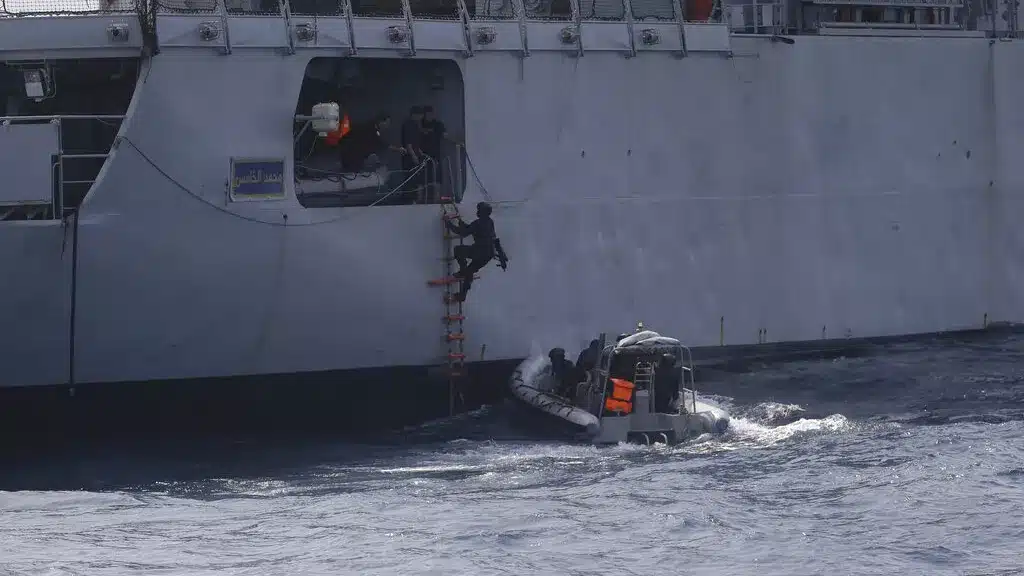
Officials reported on Tuesday that “unknown persons” stormed a tanker with a Singaporean registration about 550 kilometers off the coast of Ivory Coast.
According to the Maritime and Port Authority of Singapore, the Success 9 had twenty crew members of various nationalities when people boarded it on Monday in the Gulf of Guinea. (MPA).
The MPA said on Tuesday evening it was working closely with the shipowner, as well as the Monrovia Area Maritime Relief Coordination Center and Singapore’s Changi Command and Control Center “to review the situation . and provide the necessary assistance”.
No other details were released.
The Gulf of Guinea has long been plagued by acts of piracy, as a key delivery route from Senegal to Angola over 5,700 km. Nigerian criminal gangs are behind most of the attacks.
Since 2021, however, pirates have been carrying out attacks further afield, in international waters, according to carriers.
Their violence and sophisticated techniques have encouraged companies in the sector to call for a larger foreign naval presence as the mission launched a decade ago to stem attacks by Somali pirates.
“It appears that serious attacks are increasing in the Gulf of Guinea. We hope that more international warships equipped with helicopter assets will be able to patrol the area,” Noel Choong of the Information Center on Security told AFP on Wednesday. piracy, emanating from the International Maritime Bureau.
In March, pirates seized a Danish tanker off the Congo, kidnapping six crew members before abandoning the ship.
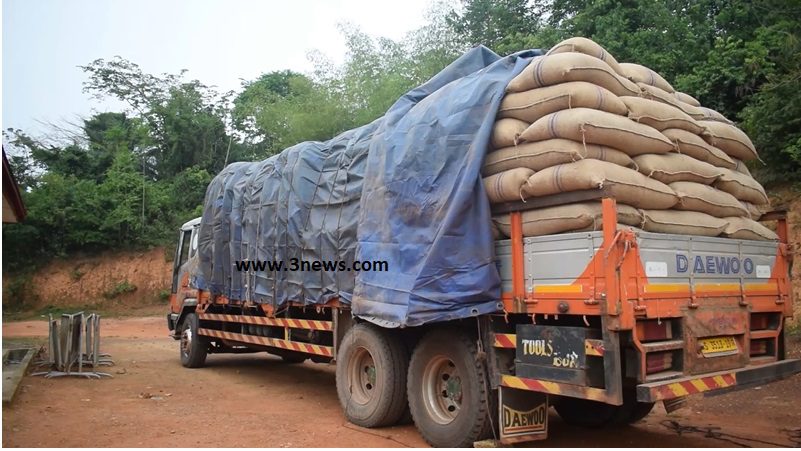
The Police in the Suaman Dadieso District in the Western North Region have intercepted 336 bags of cocoa beans which were being diverted to the neighbouring Ivory Coast for sale.
Two people, the driver and the mate of a Daewoo Kia with registration number AS 3513-19, are currently with the police, assisting in their investigations.
Cocoa smuggling activity is rampant in the Suaman Dadieso area.
Due to this, the Assembly formed a task force to monitor the activities of these smugglers.
The loaded bags of cocoa in jute sacks were intercepted by the police-civilian task force in the Dadieso-Enchi Forest Reserve.
After the interrogation, it was found that they were heading towards neighbouring Ivory Coast to sell the cocoa.
The task force therefore led the vehicle to the nearest police station.
The Suaman Dadieso District Chief Executive, Philip Kwabena Boahene, briefing the media, explained that residents in the area do not involve in cocoa smuggling but outsiders.
He said they smuggle goods through the area to dent the name of Suaman District and he will do whatever in his power to arrest those involved.
Mr. Boahene warned that the security services and the task force will arrest anyone involve in cocoa smuggling.
Did you know Baoule people from Ivory Coast are a subset of the Akan tribe?
And oh, presentIvory Coastwas founded by a great woman….
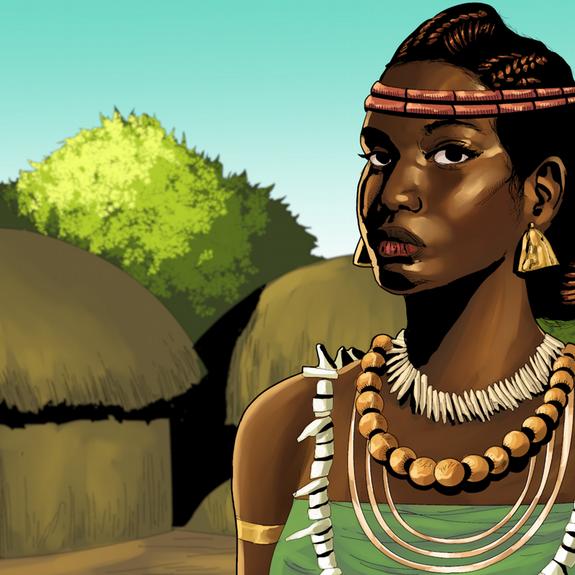
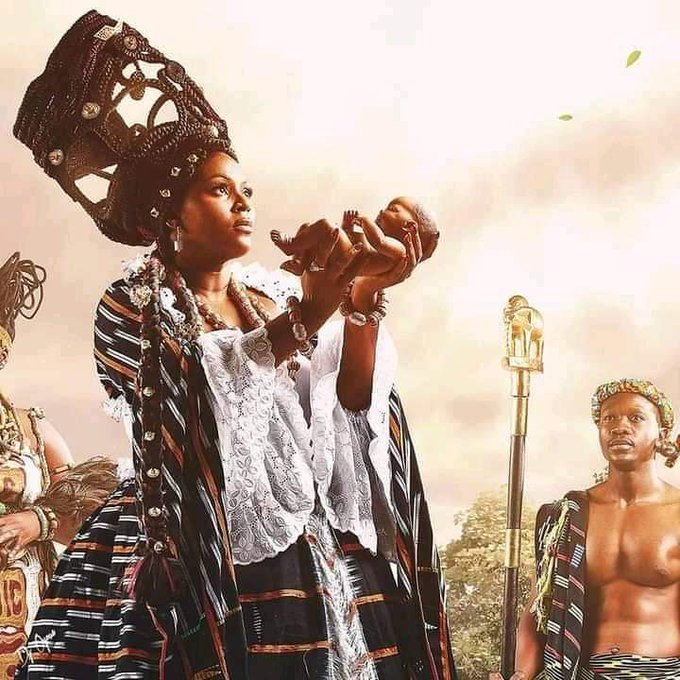
Queen Abla Pokou born between 1700 and 1720 on Tuesday, in Kumasi, was King Osei Tutu‘s niece, a co-founder of the Ashanti Empire in present-day Ghana.
Osei Tutu was ambushed and assassinated in 1718, Pokou’s second brother Dakon took over as leader of the Ashanti. The King’s reign lasted for almost two decades.
Following the passing of King Osei Tutu, a succession dispute resulted in the death of Dakon.
Pokuo got married but could not conceive, this became a challenge as she had needed to produce a son in order to succeed her brother.
One day, while Dakon and his army were engaged in battle away from the Ashanti capital of Kumasi the town was taken over by troops. Pokou was the only royal princess who survived the massacre, as such she was prepared to die at her post.
The enemy however, took her hostage, Dakon upon rival noticed her absence.
In rescuing the royal princess, Dakon appointed Tano, a warrior in leading the army to the camp of the enemy.
The warrior later married Pokuo, an heir to the golden Ashanti throne was ensured by the birth of a boy from the union.
In no time Dakon became ill and died, before his death, named a successor to the throne, since Pokuo’s son was young.
Nevertheless, Kwissi, Dakon’s rival, assassinated the successor shortly after.
Knowing that Pokou’s son would ultimately be the legitimate heir, Kwissi asked Pokou for permission to rule, but she refused.
Abla Pokou,however, fled out of fear for her safety and that of her family. She escaped with Dakon’s faithful subjects to modern-day Ivory Coast.
Queen Abla Pokou and her fugitives were unable to cross the Comoe River, upon rival.
Abla Pokuo and her people could not cross the river due to the high water caused by the continuous rain. The Comoe is a natural border between present-day Ghana and Ivory Coast.
Queen Abla Pokuo
According to the wise man with Pokuo a child from a noble lineage must be offered as sacrifice to appease the river gods. She flung her son into the river, he vanished among the waves. The trees on the bank immediately bent their trunks to create a bridge.
Another account indicates that, Abla and her escort were able to cross the river after a hippopotamus appeared on the river to pave way.
When they reached the other side, Abla Pokou she wailed and said “Bâ wouli,” to wit the child dead.
The Baoule people, who now reside in modern-day Ivory Coast, derived their name from this phrase (“ba wouli”). to serve as a reminder of the sacrifice of their leader.
Today, Abla is considered as the first and matriarch of the Baoule ethnic group in West Africa, in Ivory Coast. She reigned from around 1750 until around 1760.
She controlled a division of the great Ashanti Kingdom as it spread westward.
One of the main ethnic groups in present Ivory Coast is the Baoule people, a subset of the Akan.
She is acknowledged for her braveness to save her people and provide them with a better life.
The Queen’s jacket crafted from Baoule loincloth pays homage to the Baoule ethnic community and its heritage.
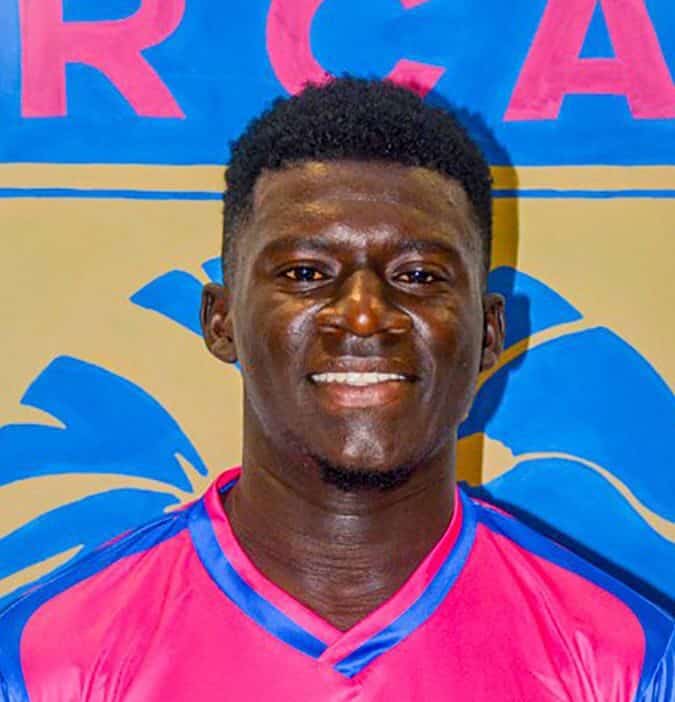
Footballer Moustapha Sylla, 21, passed away on Sunday after collapsing during a local league game.
On matchday 20 of the domestic season, Sylla, a player for Racing Club d’Abidjan—the 2020 domestic champions—fell to the ground at the Stadium Robert Champroux. Paramedics took her to the hospital, but she was later declared dead.
“The player collapsed during a Ligue 1 championship match, where his club — Racing Club d’Abidjan — were facing Sol FC d’Abodo.” former Ivory Coast Football Federation vice-president Sory Diabate told ESPN.
“He gave up his spirit after being transferred to the hospital.”
Didier Drogba, a former Chelsea player, has since demanded that more be done to safeguard the nation’s players.
In a video of the incident, Sylla appeared to stumble before losing his balance and falling to the ground motionless, prompting opposition players to signal to the referee to halt the contest.
“The club’s management address sincere condolences to his biological family,” read a statement published by his club. “Rest in peace Moustapha, rest in peace lion.”
Neither the club nor the federation gave a cause of death.
Reacting to Sylla’s death on Monday, former Ivory Coast striker and FIFA presidential hopeful Drogba called for more action to be done to protect the country’s players.
“Condolences to Ivorian football,” wrote Drogba, whose international teammate Cheick Tiote died following a cardiac arrest during training in 2017. “Three deaths of Ivorian professional league players in less than four years.
“Where are the compulsory medical visits for each professional’ player? The blood tests, the ECGs, the stress tests? When will sports medicine arrive?”
Ivory Coast centre-back Simon Deli, currently playing with Turkish side Adana Demirspor, also acknowledged the passing of the young defender.
“Rest in peace, soldier,” he posted on social media, with a photograph of the 21-year-old, while the Ivorian Federation offered its “saddest condolences to the family, as well as players and management of RCA, during these moments of pain and emotion.”
Left-back Sylla was previously on the books of Malian giants Djoliba AC, with whom he won the domestic title in 2022, before returning to his homeland with RCA in September.
All the land borders in Ivory Coast are now open for the first time in three years.
The country’s cabinet of ministers claims that “favourable health and economic developments” following the Covid-19 pandemic outbreak make it safe to abolish this prohibition.
Land borders were reopened on Thursday in order to crack down on unauthorized crossings and divert people to legitimate border crossing points instead.
The world’s top cocoa producer may be facing a bean shortage.
News agency Reuters reported Monday (Feb. 13) that Ivory Coast cocoa exporters were close to defaulting on their contracts and urgently needed up to 150,000 tonnes to honour their commitments.
Citing sources including from the domestic traders’ lobby GNI and the group which represents exporting cooperatives, Reuters mentioned a meeting that was hosted Friday by the Cocoa regulator.
Among different options, the Cocoa and Coffee Council allegedly proposed pushing back the loading period for the contracts of struggling exporters to June. So as to enable them to buy beans during the mid-crop harvest.
Last November, the Anouanze cooperative which helps farmers bring their crops to markets sounded the alarm. Saying their small-scale cocoa producers were hurting because of changing rain patterns blamed on the climate crisis.
Cocoa farming employs nearly 600,000 farmers in Ivory Coast, ultimately supporting nearly a quarter of the country’s population, according to the Coffee-Cocoa Council.
Cocoa production accounts for 15% of the nation’s GDP.
The return of 46 soldiers signals resolution of a bitter diplomatic standoff between the Ivory Coast and Mali.
Forty-six Ivorian soldiers accused by Mali of being mercenaries have returned home after six months in captivity.
The troops arrived at Ivory Coast’s Abidjan airport late on Saturday, a day after receiving a pardon from Mali’s military ruler.
Their arrest in the Malian capital of Bamako in July of last year had triggered a bitter diplomatic fight between the neighbouring countries.
Mali accused them of being mercenaries, while Ivory Coast said they were flown in to provide routine backup security for the German contingent of a United Nations peacekeeping mission.
Emerging from their plane home on Saturday, each soldier held a small Ivorian flag and smiled as they shook hands with Ivorian President Alassane Ouattara, who was waiting to greet them at the airport.
“Now that this crisis is behind us, we can resume normal relations with the brother country of Mali,” Ouattara said once they were all on Ivorian soil.
A spokesperson for the soldiers thanked Ouattara, and “the Ivorian people for their support and active solidarity”.
“We are happy and relieved to return to the motherland,” he said.
Their release comes days after a court in Bamako sentenced them to 20 years in prison on charges of conspiring against the Malian government and seeking to undermine state security. Three women, who had been among the original 49 arrested at the airport and released earlier, received death sentences in absentia.
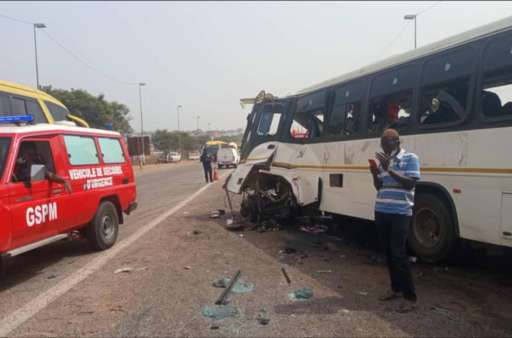
Over 70 people were injured and taken to hospitals, and among the victims who died were nine men and five women.
The Ivorian press agency reported that one of the buses was transporting mourners, including foreigners, to a funeral for a woman who had died in Europe.
The precise cause of the accident is still unknown.
In a statement posted on Facebook, the Ivorian transport minister expressed condolences to the families of the deceased.
The ministry also called on motorists and road users to be more vigilant to avoid such accidents.
Deadly road accidents are common in theWest African country amid poorly maintained roads and vehicles. Driver errors also often contribute to the accidents.
They say returns are low and that they are struggling to break free from poverty.
“Cocoa’s future is very poor. It’s very poor. It’s very poor. We don’t like it. We want the government to just increase everything for us because we spend time, our energy mostly on the side of the cocoa business, but after all, we get nothing”, said Bensil Aryetey, a farmer.
Millions of small farmers in Ivory Coast and Ghana, which together grow 60 percent of the world’s cocoa, live in grinding poverty.
The foreign minister of France has traveled to the Ivory Coast to meet with President Alassane Ouattara and his administration to discuss trade and security.
Speaking in the economic capital Abidjan on Friday, Catherine Colonna said France will remain at the side of its former French colony “in all areas.”
Around 900 French soldiers are stationed in Ivory Coast and France is one of its biggest investors.
“France believes in the potential of Ivory Coast,” she said.
“It is ready, willing – and has shown it – to accompany its progress, especially through the programme that has worked very well and continues, the famous contract of debt reduction and development that allows us to be the first foreign investor in Ivory Coast, with good results.”
Colonna also met with her Ivorian counterpart Kandia Camara, who told her she was concerned about what she called “terrorists” crossing over from neighbouring Mali and Burkina Faso.
Both countries are struggling to defeat Islamic insurgencies.
“Insecurity is everywhere”, but “in terms of security, we have always benefited from the support of France”, said Camara.
On Saturday the French foreign minister was due to meet Defence Minister Birahima Ouattara, who is the president’s brother, to discuss security issues.
Colonna also stressed that one of Ivory Coast’s challenges is to prevent young people from falling into the hands of jihadists by promoting growth. and providing employment.
And she promised to “make up for the delay” in issuing visas, especially for students.
After being acquitted by the International Criminal Court, Ivory Coast politician Charles Blé Goudé has returned home.
His charisma and fiery rhetoric earned him the moniker “street general.”
However, as a close ally of former President Laurent Gbagbo, he was accused of orchestrating some of the post-election violence a decade ago.
A brief civil war that followed the disputed 2010 presidential election killed around 3,000 people.
Mr Blé Goudé, 50, arrived in Abidjan, the capital of Ivory Coast, on a commercial flight from neighbouring Ghana on Saturday afternoon.
There was heavy security at the airport and his supporters were advised not to go there to show respect for all the victims of the 2010 conflict.
But thousands of them gathered in the suburb of Youpougon – a former stronghold of Mr Blé Goudé’s – where he was expected to make a statement, according to his entourage.
In 2010, Mr Blé Goudé was head of the pro-Gbagbo Young Patriots movement.
Mr Gbagbo had declared himself the victor of that year’s election, which the electoral commission said had been won by his main rival, and current President, Alassane Ouattara.
Fighting broke out and eventually ended when Mr Gbagbo was captured in April 2011. He was later arrested and taken to the International Criminal Court (ICC) in The Hague.
Mr Blé Goudé fled Ivory Coast the day before Mr Gbagbo’s capture, going to Ghana by road where he lived in hiding for almost two years.
He was then arrested and transferred to the ICC where he first appeared in 2014 charged with committing crimes against humanity, including accusations that he led a militia.
But both Mr Gbagbo and Mr Blé Goudé were acquitted in 2019 after the judges said that the prosecution had failed to prove its case. The decision was confirmed by the ICC’s Appeals Chamber last year.
The former president returned to Ivory Coast in June 2021, where he has since tried to play the role of a peacemaker urging reconciliation.
Mr Blé Goudé obtained a passport from the Ivorian authorities in May and shortly after got the green light to go home.
The two biggest producers of cocoa in the world, Ivory Coast and Ghana, on Monday identified some manufacturers who have made “efforts” to improve producer payments after giving them an ultimatum earlier this month.
In a joint statement, the national cocoa management bodies of the two countries, as well as the Ivory Coast-Ghana Cocoa Initiative (CIGCI), created to guarantee a minimum income to farmers, “noted the efforts made by some companies and their willingness to find solutions together for a sustainable production of cocoa that places producers at the heart of this strategy.
They “encourage all manufacturers to take action and show that they sincerely believe in sustainable cocoa production”.
For several weeks, Côte d’Ivoire and Ghana reproached the chocolate manufacturers for not paying the decent income differential (DRD), a premium of 400 dollars (390 euros) per ton, introduced in 2019 to ensure a decent income for farmers.
They had given the industry until November 20 to meet their commitments, threatening to “ban access to plantations to make crop forecasts” and “suspend sustainability programs.
These programs, aimed at fighting deforestation and child labor, allow manufacturers to claim that their chocolate is sustainably produced, a criterion often favored by consumers.
But Monday, the producer countries announced to continue discussions and the establishment of “a working group of experts” who will provide “recommendations by the end of the first quarter of 2023 to find sustainable solutions.
Questioned on the subject at a press conference, Ivorian Prime Minister Patrick Achi hoped that an “intelligent compromise” would be found.
“The solution is to process 100% of our cocoa” in Côte d’Ivoire, he continued. Currently, about a quarter of Ivorian cocoa is processed locally.
Ivory Coast’s cocoa, which accounts for 45% of global production, accounts for 14% of the country’s GDP and feeds 24% of the population of this country of about 27 million people.
Côte d’Ivoire is also considered a major regional destination for child trafficking from neighboring countries to work on its crops.
Many farm families still face persistent poverty on less than a dollar a day, a situation that is one of the factors contributing to child labor on cocoa farms.
But according to Matthias Lange, executive director of the International Cocoa Initiative (ICI), a Swiss foundation created by the chocolate industry to fight child labor, “a lot of progress has been made.”
Mr. Lange praised the establishment of the Child Labor Monitoring and Remediation System (CLMS), “a mechanism that has reduced child labor by 35% in three years and has helped remove several tens of thousands of children from the plantations,” he said.
The 2023 Nations Cup wasoriginally scheduled for June and July next year but was moved to avoid the rainy season in Ivory Coast.
Qualifiers for the finals are underway but proposed fixtures in September were rescheduled to allow Africa’s five participants in the World Cup to arrange friendly matches.
Group fixtures will resume in the next international break in March, with the final two rounds of fixtures being held next September.
Ivory Coast are playing in Group H despite already being assured of a place at the tournament.
Meanwhile, Caf is also looking for new hosts of the 2025 Nations Cup after stripping Guinea of hosting rights last month because of a lack of suitably advancing infrastructure and facilities.
The continent’s governing body set Friday as a deadline for countries to declare interest in staging the tournament and, after receiving documents and touring bidding countries, is due to announce the successful country or co-hosts on 10 February.
A display of faith
Analysis – Piers Edwards, BBC Sport Africa
Friday’s signing is significant as it shows the faith that Caf has in Ivory Coast to successfully host the 24-team Nations Cup in early 2024.
Shortly after taking charge as Caf president in early 2021, Patrice Motsepe grew alarmed by the lack of leverage he had in regard to hurrying up Cameroonian preparations for this year’s Nations Cup, given the contract had already been signed prior to his arrival.
In February, he said the signing of such a legal document between host nation and Caf should be delayed until a point whereby the African football body no longer needed the threat of removing the tournament from a host nation in order to effect various requests.
Motsepe’s successful trip to Abidjan should not be underestimated in terms of its importance in stressing that Ivory Coast is fit to host, especially coming after the 2025 finals were removed from Guinea last month owing to Caf’s concerns over the country’s readiness.
Glencore is facing fines in millions of dollars for a series of corruption offences in which it used a private plane to fly money to bribe officials in different African governments.
In June, a division of the FTSE 100 commodities behemoth admitted to paying many bribes to get access to oil supplies.
Following the filing of a number of charges by the Serious Fraud Office, it was the first time a firm had ever been found guilty of bribery under UK law (SFO).
Glencore may face fines of over £243 million, and the SFO is requesting the highest confiscation order ever against a British business of £93.4 million, as well as £4.5 million in fees.
At today’s sentence hearing at Southwark Crown Court in London, the exact sum will be decided.
Glencore’s attorney stated on Wednesday at a hearing that the company “unconditionally regrets the harm caused.”
However, prosecuting attorney Alexandra Healy asserted that “corruption was pervasive inside the enterprise” and that “offering of bribes was an accepted method of conducting business for the company.”
After a protracted inquiry, it was discovered that Glencore’s London-based oil trading department paid bribes totaling more than £24 million to get privileged access to cargoes in South Sudan, Nigeria, Cameroon, the Ivory Coast, and Nigeria.
The investigation discovered that a Glencore agent in Nigeria took over £3.6 million from a slush fund and often used a private plane to fly the money to Cameroon to bribe authorities, among a long list of other offences.
Agents, executives, and dealers for Glencore were so casual that they frequently addressed one another as “senorita” and “bro,” even when talking about bribery.
Another agent received £870,000 in 2011 to pay bribes to Equatorial Guinean authorities in exchange for access to oil cargo, and the company reportedly approved £5,000 in “hotel charges” for the agent during a trip to London.
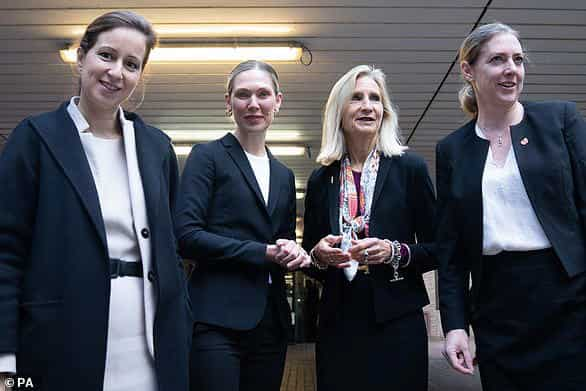
A top SFO team comprised entirely of women led the Glencore inquiry.
Photo credits: The Guardian
These included, (above) from left to right: Sara Chouraqui, joint head of fraud, bribery and corruption and Victoria Jacobson, the prosecutor for Operation Azoth – codename for the Glencore probe – as well as department director Lisa Osofsky and case controller Liz Collery.
A Glencore official made a request for approximately £700,000 from the business’ Swiss cash desk the same year, purportedly for “establishing an office in South Sudan” soon after the country gained independence.
The Minority in Parliament says government will announce a haircut on some investments within the next 14 days as part of its debt restructuring measures.
President Akufo-Addo in his economic recovery speech on Sunday, October 30, 2022, assured that government does not intend to slash the returns made on investments in its negotiations with the International Monetary Fund(IMF).
But addressing the media on Tuesday, November 1, 2022, the Minority Leader, Haruna Iddrisu insisted that there will be some form of cuts in investments in the coming days.
Mr. Iddrisu accused the president of creating the current economic mess the country currently finds itself in.
“As a Minority group, we believe the president failed to accept responsibility [during his address] that he is responsible for the sorry state of the Ghanaian economy, and he is responsible for the wrench economy which has consequences on livelihoods. Poverty has exacerbated, cost of living has gone high, cost of doing business has gone high, many businesses are folding up, and some industries are now re-routing their investments into neighbouring Ivory Coast and other countries because Ghana is no longer the investment haven as it should be.”
He also alleged that considering the happenings and conditions that come with seeking an IMF facility, haircuts on investments are inevitable.
“We are giving you only 14 days from today, and you will hear from them publicly efforts to restructure our unsustainable debt, and those efforts will necessarily include a sika mpɛ dede baba [mallam] for many persons who have investments and savings in some instruments.”
“Those of you who listen to [Kristalina] Georgieva of the IMF, you will recall a few months ago when the World Bank and the IMF, particularly led by its Managing Director, were again categorical that they didn’t see anything wrong with Government policy. We now state that there is everything wrong with Nana Addo Dankwa Akufo-Addo’s government and his economic management team’s policy on borrowing. Borrowing is a policy. You decide to borrow and how much to borrow and where to direct the borrowing. So if you now borrow to the level of debt distress, to the level of unsustainable debt, to the level that you are now talking about ratio of 105% of GDP as your debt level and then he Nana Addo Dankwa Akufo-Addo, the president of the Republic added that he hopes that Ghana’s debt to GDP will improve to 55% by 2028, we ask the question, where will he be?”
The minority caucus in parliament has said President Akufo-Addo failed to take responsibility for the economic mess during his national address to the state on Sunday, 30 October 2022.
Even though the president assured Ghanaians that there would be no haircuts on their investments, the minority caucus insists there would.
Addressing the media on Tuesday, 1 November 2022, Minority Leader Haruna Iddrisu said: “We are giving you only 14 days from today, and you will hear from them publicly, efforts to restructure our unsustainable debt, and those efforts will necessarily include a sika mpɛ dede baba [mallam] for many persons who have investments and savings in some instruments.”
“Those of you who listen to [Kristalina] Georgieva of the IMF, you will recall a few months ago when the World Bank and the IMF, particularly led by its Managing Director, were again categorical that they didn’t see anything wrong with Government policy. We now state that there is everything wrong with Nana Addo Dankwa Akufo-Addo’s government and his economic management team’s policy on borrowing. Borrowing is a policy. You decide to borrow and how much to borrow and where to direct the borrowing. So, if you now borrow to the level of debt distress, to the level of unsustainable debt, to the level that you are now talking about ratio of 105% of GDP as your debt level and then he, Nana Addo Dankwa Akufo-Addo, the president of the Republic, added that he hopes that Ghana’s debt-to-GDP will improve to 55% by 2028, we ask the question, where will he be?” M Iddrisu added.
He noted: “As a minority group, we believe the president failed to accept responsibility that he is responsible for the sorry state of the Ghanaian economy, and he is responsible for the wrench economy which has consequences on livelihoods”.
“Poverty has exacerbated, cost of living has gone high, cost of doing business has gone high, many businesses are folding up, and some industries are now re-routing their investments into neighbouring Ivory Coast and other countries because Ghana is no longer the investment haven as it should be.”
Read the president’s full speech below:
ADDRESS TO THE NATION BY THE PRESIDENT OF THE REPUBLIC, NANA ADDO DANKWA AKUFO-ADDO, ON THE ECONOMY, ON SUNDAY, 30TH OCTOBER 2022.
Fellow Ghanaians, good evening.
Back in 2020, at the outbreak of the Coronavirus pandemic, I started a regular conversation with you that came to be popularly known as Fellow Ghanaians.
It was a time of great fear of the unknown, and the entire world felt at risk. I came into your homes regularly to tell you what the experts were discovering about the virus, and what we should do.
Now that we have seen the worst of the COVID-19, I can tell you that there were moments during those times when I was distraught, there were moments when I was in despair about the apparent inadequacy of our health facilities, and there were moments when I wondered if the dire predictions made about dead bodies on our streets would truly happen.
But I knew that I owed it to all of us that, as your president, I had to hold my nerve, show leadership and take us out of the crisis. With your help and support, and the great mercies of the Almighty, we can say that we emerged from the ravages of the pandemic with one of the lowest mortality rates globally. In fact, Ghana’s handling of the pandemic won universal acclaim.
We could all see in real time the devastation that was being wreaked on economies during the pandemic, but I doubt that anyone imagined the extent of the damage. Our economy, here in Ghana, like many, many others around the globe, was thrown into turmoil.
When I said, at the height of the COVID pandemic, that we knew what to do to bring the economy back to life, but not how to bring people back to life, it was not said in jest. We had done it before, and we were on course to doing it again. Ghana’s economy grew by a remarkable 5.4% in 2021, signifying a strong recovery from the 0.5% growth recorded the previous year due to the COVID-19 pandemic. In fact, in the last quarter of 2021, our economy grew at seven percent (7%), only for the Russian invasion of Ukraine in the first quarter of this year to aggravate the effects of COVID-19, and plunge the global economy into even greater turmoil from which it has not yet recovered.
The whole world has been taken aback by the speed with which inflation has eaten away people’s incomes. Economies, big and small, have experienced, over this year alone, the highest rise in cost of living over a generation; the highest rise in government borrowing in over fifty (50) years; the highest rise in inflation for forty (40) years; the steepest depreciation in their currencies to the US dollar over the last thirty (30) years; the fastest peak in interest rates for over twenty (20) years; and the greatest threat of unemployment in peace time; with over a hundred million people being pushed into extreme poverty.
Between the end of 2019 and now, inflation in Ghana has increased by five-fold, in Togo by sixteen-fold, by eleven-fold in Senegal, and by seven-fold in Cote d’Ivoire. In truth, however, the fact that there are petrol queues in France does not make it more tolerable that the trotro price from Kasoa to Circle has doubled in the past one year, nor does it make it any more tolerable that the price of cooking oil goes up every other week.
It is important to state that mentioning the increases in prices worldwide is not meant to belittle the scope of suffering here, but simply to help us put things into some perspective, and, hopefully, learn some useful lessons about how other people are coping.
Fellow Ghanaians, this is why I am back in your homes this evening to ask for your support, as we work together to get our economy back into good shape.
In April, after the Cabinet retreat of the first quarter, and recognising the deteriorating macro economy, my government announced a thirty percent (30%) cut in budgeted discretionary expenditures, and a thirty percent (30%) cut in salaries of the President, Vice President, Ministers, Deputy Ministers, MMDCEs and political office holders, amongst other measures.
And, since July, when the Government took the difficult decision to go to the IMF to seek support, I have been speaking publicly at different fora on the subject of the economic difficulties we face, especially during my recent tours, so far, of nine (9) regions, and interacting directly with you, the Ghanaian people. It is also true that many of you have felt the need for me to come back to the Fellow Ghanaians format that brings us all together.
For us, in Ghana, our reality is that our economy is in great difficulty. The budget drawn for the 2022 fiscal year has been thrown out of gear, disrupting our balance of payments and debt sustainability, and further exposing the structural weaknesses of our economy.
We are in a crisis, I do not exaggerate when I say so. I cannot find an example in history when so many malevolent forces have come together at the same time. But, as we have shown in other circumstances, we shall turn this crisis into an opportunity to resolve not just the short-term, urgent problems, but the long-term structural problems that have bedeviled our economy.
I urge us all to see the decision to go to the International Monetary Fund in this light. We have gone to the Fund to repair, in the short term, our public finances, and restore our balance of payments, whilst we continue to work on the medium to long-term structural changes that are at the heart of our goal of constructing a resilient, robust Ghanaian economy, and building a Ghana Beyond Aid.
I am able to report to you, my fellow Ghanaians, that the negotiations to secure a strong IMF Programme, which will support the implementation of our Post COVID-19 Programme for Economic Growth and additional funding to support the 2023 Budget and development programme, are at advanced stages, and are going well.
We are determined to secure these arrangements quickly to bring back confidence and relief to Ghanaians. We are working towards reaching a deal with the IMF by the end of the year. This will give further credence to the measures the Government is taking to stabilise and grow the economy, as well as shore up our currency.
I know that the increasing cost of living is the number one concern for all of us. It is driven by fast-escalating fuel prices at the pumps, which is caused by high crude oil prices on the world market and our depreciated currency. I know that this is putting intolerable pressure on families and businesses. I know that people are being driven to make choices they should not have to make, and I know that it has led to the devaluation of capital of traders and painfully accumulated savings. Furthermore, Government is working to secure reliable and regular sources of affordable petroleum products for the Ghanaian market. It is expected that this arrangement, when successful, coupled with a stable currency will halt the escalation of fuel prices and bring relief to us all.
I hear from the market queens also that another factor fueling the high prices is the high margins that some traders are slapping on goods, for fear of future higher costs. I say to our traders, we are all in this together. Please let us be measured in the margins we seek. I have great respect and admiration for the ingenuity and hard work of our traders, especially those that take on the distribution of foodstuffs around the country, and I would hesitate to join in calling them names. I do make a heartfelt appeal that we all keep an eye out for the greater good, and not try to make the utmost profits out of the current difficulties.
In language that every market woman and, indeed, every trader in our country understands, let me say that the basic problem we face is that we are not making as much money as we need to spend, and what little money we do make is going to pay for the debts we have contracted to fund the development projects we must have. Not enough of us are paying our taxes, not enough of us are producing to generate the revenues that we need.
Nevertheless, my ambitions for Ghana remain high. All our children should be educated and trained with skills that will enable us be competitive in the world. We need to close rapidly the infrastructure gap, we need to build a world-class healthcare system, and we need to build confidence in ourselves to make ours the happy and prosperous place it deserves to be.
I believe we can and we will find the means to achieve these goals, even if the immediate measures we have to take are painful.
At the just-ended Cabinet Retreat at Peduase Lodge, my government agreed on the framework for the Post COVID-19 Programme for Economic Growth and the IMF support for its implementation, as well as the work being done by the Ministry of Finance in preparation for the 2023 budget. At the Cabinet Retreat, we took some firm decisions that should put us on the path that will take our nation out of the current economic difficulties. Let me try and give you an outline of the main decisions without getting into the technical language that baffles many of us.
To restore and sustain debt sustainability, we plan to reduce our total public debt to GDP ratio to some fifty-five percent (55%) in present value terms by 2028, with the servicing of our external debt pegged at not more than eighteen percent (18%) of our annual revenue also by 2028.
We are committed to improving the revenue collection effort, from the current tax-revenue to GDP ratio of thirteen (13%) to between eighteen and twenty percent (18-20%), to be competitive with our peers in the West Africa Region. The GRA is rolling out an extensive set of measures to support this enhanced revenue mobilisation. All of us must do our patriotic duty, and support the GRA in this exercise.
We are aiming to restore and sustain macroeconomic stability within the next three (3) to six (6) years, with a focus on ensuring debt sustainability to promote durable and inclusive growth while protecting the poor.
We have decided to review the reforms in the energy sector, capping of statutory funds, implementation of the exemptions Act and a new property rate regime. We have decided also to continue with the policy of thirty percent (30%) cut in the salaries of political office holders including the President, Vice President, Ministers, Deputy Ministers, MMDCEs, and SOE appointees in 2023, just as we will continue with the thirty percent (30%) cut in discretionary expenditures of Ministries, Departments and Agencies.
My fellow Ghanaians, the success of our efforts at diversifying the structure of the Ghanaian economy from an import-based one to a value-added exporting one is what will, in the long term, help strengthen our economy. We are making some progress with the 1D1F but our current situation requires that we take some more stringent measures to discourage the importation of goods that we can and do produce here.
To this end, we will review the standards required for imports into the country, prioritise the imports, as well as review the management of our foreign exchange reserves, in relation to imports of products such as rice, poultry, vegetable oil, tooth picks, pasta, fruit juice, bottled water and ceramic tiles, and others which, with intensified government support and that of the banking sector, can be manufactured and produced in sufficient quantities in Ghana. Government will, in May 2023, that is six (6) months from now, review the situation. We must, as a matter of urgent national security, reduce our dependence on imported goods, and enhance our self-reliance, as demanded by our overarching goal of creating a Ghana Beyond Aid.
Much as we believe in free trade, we must work to ensure that the majority of goods in our shops and market places are those we produce and grow here in Ghana. That is why we have to support our farmers and domestic industries, including those created under the 1-District-1-Factory initiative, to help reduce our dependence on imports, and allow us the opportunity to export more and more of our products, and guarantee a stable currency that will present a high level of predictability for citizens and the business community. Exports, not imports, must be our mantra! Accra, after all, hosts the headquarters of the Secretariat of the African Continental Free Trade Area.
Fellow Ghanaians, as the French would say, l’argent n’aime pas le bruit, to wit, money does not like noise, sika mpɛ dede. Where there is chaos, where there is noise, where there is unrest, you will not find money. If you talk down your money, it will go down. If you allow some unidentifiable person to talk down your money, it will go down.
The recent turbulence on the financial markets was caused by low inflows of foreign exchange, and was made worse in the last two to three weeks, in particular, by the activities of speculators and the Black Market. An anonymous two-minute audio message on a WhatsApp platform predicting a so-called haircut on Government bonds sent all of us into banks and forex bureaus to dump our cedis, and, before we knew it, the cedi had depreciated further. All of us can play a part in helping to strengthen the cedi by having confidence in the currency, and avoiding speculation. Let us keep our cedi as the good store of value it is. To those who make it a habit of publishing falsehoods, which result in panic in the system, I say to them that the relevant state agencies will act against such persons.
Indeed, some steps have been taken to restore order in the forex markets and we are already beginning to see some calm returning. We will not relent until order is completely restored. The following actions have been taken thus far:
Enhanced supervisory action by the Bank of Ghana in the forex bureau markets and the black market to flush out illegal operators, as well as ensuring that those permitted to operate legally abide by the market rules. Already some forex bureaus have had their licenses revoked, and this exercise will continue until complete order is restored in the sector;
Fresh inflows of dollars are providing liquidity to the foreign exchange market, and addressing the pipeline demand;
the Bank of Ghana has given its full commitment to the commercial banks to provide liquidity to ensure the wheels of the economy continue to run in a stabilized manner, till the IMF Programme kicks in and the financing assurances expected from other partners also come in;
Government is working with the Bank of Ghana and the oil producing and mining companies to introduce a new legal and regulatory framework to ensure that all foreign exchange earned from operations in Ghana are, initially, paid to banks domiciled in Ghana to help boost the domestic foreign exchange market; and the Bank of Ghana will enhance its gold purchase programme.
I am confident that these immediate measures designed to change the structure of our balance of payment flows, sanitise the foreign exchange market to ensure that the banks and forex bureaus operate along international best practices, together with strengthened supervision, will go a long way to sanitize our foreign exchange market, and make it more resilient against external vulnerabilities going forward.
Over the course of this week, I have held several fruitful engagements with the Trades Union Congress and Organised Labour, the Ghana Employers’ Association, the Association of Ghana Industries, the Ghana Association of Banks, the Private Enterprise Federation, the Association of Forex Bureau Operators, the Association of Market Queens and Women, all of whom represent important stakeholders of the Ghanaian economy. They expressed their concerns and proposed solutions on how best to solve our problems. I have been encouraged by the enthusiasm of these interest groups to help Government address these challenges, and I intend to continue these engagements with other groups.
I also want to assure all Ghanaians that no individual or institutional investor, including pension funds, in Government treasury bills or instruments will lose their money, as a result of our ongoing IMF negotiations. There will be no “haircuts”, so I urge all of you to ignore the false rumours, just as, in the banking sector clean-up, Government ensured that the 4.6 million depositors affected by the exercise did not lose their deposits.
Anuanom, menim sɛɛ asetenamu ayɛ din. Nanso, ma obiaa empa aba, monkͻso enya gyidie ɛwͻ mabam mu. Nhyehyɛ yɛ aa ɛtumi maa Free SHS ɛni 1-District-1-Factory ɛbaa mu nu; nhyehyɛ yɛ aa ɛboaa ma yetumi pam corona yariɛ no efri oman ni mu; saa ɛnso na maban ɛ toto niemayie saa mereyi ama ahotͻ aba oman nimu, efri sɛɛ mewͻ gydie sɛɛ ɛko no yɛ Awurade Nyankopͻn ni ko.
Anyɛmimɛi, mile akɛ nibii ewa, shi nyɛ ka shia gbeye. Nyɛ yaanͻ ni nyɛ naa hemͻ kɛ yeli akɛ gbɛjianͻto ni hani free SHS ba min, gbɛjia nͻto ni hani 1-District-1-Factory ba min, gbɛjianͻto ni hani wͻ nyɛ wͻ shwe Corona hela kɛshi wͻ man nɛ min; nakai nͻͻ ni mi amlalo ba to gbɛjianͻ koni hejͻlɛ aba maa min, ejaakɛ, miyɛ hemͻ kɛ yeli ak3, ta, Nyͻnmͻ ta lɛ ni.
My government has always been cognisant of the importance of implementing policies and social interventions to relieve Ghanaians of hardships. It is for this reason that over the first five (5) years in office government reduced electricity tariffs cumulatively by 10.9%, we provided free water and electricity as well as reduced tariffs for the entire population during a whole year of the COVID-19 pandemic; we increased the share of the District Assemblies Common Fund to persons with disabilities by 50%; we exempted Kayayei from market tolls; we expanded the LEAP by one hundred and fifty thousand (150,000) beneficiaries; we expanded School Feeding from 1.6 million children to 2.1 million children; we restored teacher and nursing training allowances; we absorbed the cost of BECE and WASSCE exam registrations for parents; no guarantor is now required to obtain student loans. The Ghanacard is sufficient; and we have implemented free TVET as well as free senior high school education.
It is obvious, fellow Ghanaians, that you have a government that cares. We are determined to restore stability to the economy, and provide relief. We are all in this together, and I am asking for your support to rescue Ghana from the throes of this economic crisis.
I have total confidence in our ability to work our way out of our current difficulties. We are not afraid of hard work. We will triumph, as we have triumphed many times before. Let us unite, and rally around our Republic, its institutions and its democratic values, and insist that, under God, we will emerge victorious from our current difficulties. For this too shall pass, as the Battle is the Lord’s.
I will be coming regularly to keep you updated about the measures your government is making to move our country forward, and tackle our economic challenges.
God bless us all and our homeland Ghana, and make her great and strong.
I thank you for your attention, and have a good evening.
The world’s top cocoa producers, Ghana and Ivory Coast, are boycotting meetings in Brussels of the World Cocoa Foundation on cocoa sustainability this Wednesday and Thursday (October 26 and 27).
Authorities in the two West African countries accuse multinational chocolate companies and traders of blocking measures to improve cocoa farmers’ incomes.
Ghana and Ivory coast’s grievances concern the Living Income Differential (LID) set at a standard of $400 per tonne and charged on top of world prices. The LID was introduced in 2019 to guarantee cocoa farmers a minimum price that would improve the income of farmers, many of whom live in poverty.
But commodity traders set a negative differential for the two nations at 260 dollars per tonne.
In July 2022 a further decision was taken to no longer sell their cocoa with negative country differentials.
Both countries account for about two-thirds of global cocoa production, but farmers in those countries earn less than 6% of revenues in a chocolate industry valued at more than $100 billion a year.
Arguing that farmers have always been given a raw deal when it comes to pricing, four civil society organizations in Ghana and Ivory Coast have thrown their weight behind the boycott.
The World Cocoa Foundation, a group representing 80% of the global market, says its 2022 meetings are to discuss steps to improve farmer pay, combat child labor and end deforestation linked to cultivation of the crop.
Ivory Coast and Ghana will not be attending the World Cocoa Foundation Partnership meeting scheduled to be held in Brussels from October 26-27.
The meeting which is the leading global conference on cocoa sustainability will miss the world’s two largest cocoa-producing countries due to pricing issues, Reuters reported.
Both Ghana Cocoa Board, COCOBOD, and Ivory Coast’s Coffee and Cocoa Council, CCC, have cited multinational chocolate companies resisting measures that aim to improve farmers’ income as the reason for their boycott.
According to the Head of Public Affairs for Cocobod, Fiifi Boafo, “The major chocolate brands have resisted and tried to find means to circumvent payment of the LID”.
Therefore, “the Chief Executive [Joseph Boahen Aidoo] is not attending the World Cocoa Foundation (WCF) meeting in Belgium and none of the executives at Cocobod will be there,” he affirmed.
Boafo accused the multinational chocolate companies of waging a silent war against a farmers’ premium, the Living Income Differential, as a direct rejection will give them bad publicity.
Adding his voice, the Director General of Ivory Coast’s Coffee and Cocoa Council (CCC), Yves Brahima Kone, also said he will not be in attending this or any other industry meetings.
He further stated that sustainability programmes launched since 2008 and aimed at tackling issues such as child labour have also benefited companies more than farmers.
Two premiums paid on Ghana and Ivory Coast cocoa beans to help alleviate farmer poverty have in recent years suffered massive discounts by chocolate companies, eroding the intended purpose.
The origin differential, an additional premium paid for the quality and reliability of cocoa beans and the Living Income Differential is a fixed amount of $400 agreed on for every tonne of cocoa sold by Ivory Coast and Ghana.
In July both regulators said they would no longer sell cocoa with a negative origin differential, fixing it at zero for Ivory Coast and at +20 pounds sterling ($22) per tonne for Ghana.
COCOBOD and CCC explained that some of the world’s major chocolate makers and cocoa traders are pushing for origin differentials as low as negative 200 pounds sterling per tonne.
“We are considering new ways to address this issue with the industry, including banning access to our cocoa farms for their sustainability programs,” The Director General of CCC said.
The World Cocoa Foundation Partnership meeting will be held from October 26-27 at The Hotel in Brussels, Belgium.
A newmobile phone designed and assembled in Ivory Coast is helping illiterate users to overcome difficulties.
Thanks to a voice control system users can now access information in 50 African languages.
“It’s a phone can easily be adapted for us. And it’s a phone which will be of great help to one of my parents who cannot read”, (…) “It is now possible for a parent to have a letter in front of him or her, take a picture of it and for it to have it read back in his or her native language. And I really liked that part” said customer Floride Jogbé.
Official numbers suggest that in Ivory Coast, 40% of people are illiterate.
For the older generation, the new voice-activated assistant is a powerful tool.
The smartphone uses an operating system unique to the Cerco company, and covers 17 languages spoken in Ivory Coast.
The founder of the company behind the new phone claims this is a response to the “frustration” illiterate users feel with technology currently on offer.
“We have a large portion of the population that is illiterate. And so, if we bring a computer or a phone as it existed before, our parents must be able to read first and then write, in order to communicate. I gave my father his first phone 15 years ago. He was very happy, but also very embarrassed to use it because every time he has to ask someone to help him dial a number. When he gets a message, he needs help reading it”, said Alain Capo-Chichi, president and founder of the company that makes the “Superphone”.
The company hopes to incorporate 1,000 African languages and reach almost a billion people in the future.
“Speaking is three times faster than writing, so when I speak, instead of writing, on one hand it’s fast, which makes life easier, but on the other hand we have an engine which allows you to interpret what you said to provide an appropriate and adapted answer to what you expect. We have done a lot of work on African languages, so it allows our parents who are not literate to directly use their phone in their language”, said the company president.
In exchange for government tax breaks, Cerco is to pay 3.5 percent of its income to the state and train around 1,200 young people each year.
According to him, the trustees and implementers of the scheme would be rolling out from district to district to register cocoa farmers onto the scheme to enjoy the pension scheme’s benefit.
Mr Mac Menu was speaking at this year’s cocoa day grand durbar which also coincided with the COCOBOD 75th anniversary on the theme “COCOBOD @75: sustaining our environment, wealth and health”, held at Suhum in the Eastern region.
He said that, though the past and previous years had been challenging globally with the cocoa sector having suffered greatly, Ghana COCOBOD had not relented on its effort to push for policies that enhanced the welfare of cocoa farmers, assuring that his outfit would continue to be innovative and pragmatic in the midst of the challenges faced.
He said it had been three years since the implementation of the living income inferential, a pricing mechanism spearheaded by Ghana and Ivory Coast to secure a $400 premium on every tone of cocoa sold to be paid directly to the cocoa farmers.
Meanwhile, he said unfavorable market prizes as well as a deliberate attempt by buyers, among others, had undermined the initiative which sought to guarantee a decent income for farmers.
But he promised that his outfit would not relent on ensuring the implementation of the policy as well as reviving dead cocoa farms, adding that collaboration with all stakeholders was underway to ensure the eradication of poverty among cocoa farmers.
For his part, the Eastern Regional Minister, Seth Kwame Acheampong, commended cocoa farmers for their contribution to Ghana’s economy over the past years.
He said the contribution of the cocoa industry to the economy and growth of the country could not be underestimated, adding that cocoa production had by far and largely remained the backbone of Ghana’s economy, contributing significantly to the country’s export, while employing a large number of people as well as support the livelihood of in the value change production.
Mr Acheampong, however, he said though cocoa production had existed in Ghana for years making a positive economic impact, the industry was confronted with the imminent danger of the sale of cocoa farms for illegal mining activities.
The practice, he said if not checked could wipe away all the gains made in the country by the cocoa sector.
He, therefore, called on the chiefs, the cocoa farmers, and the cocoa farming communities to say no to the sale of farmlands for cash to the detriment of their future and livelihoods.
The minister said all efforts must be made to protect the farmlands by encouraging the youth to rather go into cocoa farming instead of indulging in illegal mining so that they could also reap the benefits.
He, therefore, encouraged COCOBOD to strengthen its engagement with key stakeholders for the improvement of the sector.
Also for his part, the chairman for the occasion, Okyehene, Osagyefo Amoatia Ofori Panin urged COCOBOD to expand its cocoa scholarship scheme to benefit all cocoa farmers across the country.
Ivory Coast will host the WAFU Zone B qualification tournament for the African Schools Championship from November 5 to 10, 2022.Boys and Girls from Offinso College of Education JHS and Maakro M/A JHS will represent Ghana in the maiden editions of the Male and Female Competitions respectively.
The two schools emerged as the winners of School-based U-16 competition which was staged from July 19, 2022 to Saturday, July 23rd in Kumasi.
They will compete in the sub-regional tournament for a slot to participate in the first ever CAF African Schools Championship
Ghana is part of six Countries from the West African Football Union (WAFU) Zone B committed to the idea from the continental football body and will partake in the maiden edition.
The other five countries making the zonal representation for the 2022/23 season includes Benin, Burkina Faso, Ivory Coast,Niger and Togo.
The CAF Pan-African Schools Football Championship is part of the new leadership under Dr. Patrice Motsepe’s plan of developing football from a Pan-African point of view from the grassroots, with the goal of fostering a new generation of African youths.
Imagine a smartphone made by an African for Africans. That’s what Alain Capo-Chichi has accomplished in Ivory Coast with Open G — the first locally made android phone in the West African country.
Business Insider Africa gathered that the smartphones are configured to understand 16 out of the 60 local languages spoken in the country. People can use the phone by simply speaking into it.
The move is a strategic one, targeting uneducated Ivorians who may typically struggle with using regular smartphones.
He told Reuters that he was inspired to build the phone so that illiterates, like his parents, could effectively use smartphones.
“In Africa, the problem we have… is that reading and writing are not accessible to everyone. People can use their smartphones much more easily by simply speaking to them,” he said.
In the meantime, the smartphones are available for purchase in Ivory Coast. It joins a list of other smartphones made by Africans, which are competing against foreign brands for market share.
Who is Meet Alain Capo-Chichi?
He is an Ivorian entrepreneur, Founder and President of Groupe CERCO. According to information available on his LinkedIn page, he founded the company in 1998. At the time, he was just 20 years old.
Over the past 24 years, Groupe CERCO has grown and expanded its services across the continent, now available in Benin Republic, Burkina Faso, Mali, France and China.
He is also the President of the International Network of Private Higher Education Institutions in the CAMES area (RIDEPES-CAMES).
Asides from entrepreneurship, Alain Capo-Chichi is also an academic. In 2012, he graduated with a PhD in Information and Communication Sciences from University of Paris 8 in France.
He is also an Assistant Professor in Computer Engineering at University of Paris 8 and an Associate Member of the UNESCO Chair in ICTs at University of Bordeaux.
Togolese Foreign Minister Robert Dusseymet Ivorian officials in Abidjan on Tuesday for talks on 49 Ivorian soldiers who were arrested in Mali earlier this month.
The soldiers were arrested on arrival in Bamako on suspicion of being mercenaries.
Ivory Coast insists the troops were there to support the UN mission, known as Minusma, under an agreed contract between the two countries.
But the junta in Mali says its foreign ministry was not informed of the deployment via the official channels.
On Tuesday, Mr Dussey indicated that the Ivorian president and the Malian junta leaders wanted to preserve peace between their nations, according to a statement.
President Alassane Ouattara expressed his gratitude to the minister for the initiative to find a resolution to the matter, the statement added.
Ivory Coast has been calling for the immediate release of its soldiers.
Former Ivory Coast striker, Solomon Kalou has tipped the Elephants to win the 2023 TotalEnergies Africa Cup of Nations (AFCON) tournament.
According to him, the success of the national team would however be dependent on how the technical team finds the balance between the youth and experienced players in the team.
“Playing at home is always an advantage. Teams achieve extra power when playing in front of their countrymen. What we have to do is find the right balance in the team between youth and experience.
“If we succeed in doing that, the chances of the title staying in the Ivory Coast after the tournament are high,†Solomon Kalou said at the end of the draw for the 2023 AFCON last Tuesday.
Ivory Coast will next year host the rest of the continent in a tournament billed to be bigger than the 2021 edition.
For the Elephants to host and win, they must put in a lot of work.
GFA President Kurt ES Okraku has paid a maiden official visit to the West Africa Football Union Zone B (WAFU B) Secretariat in Ivory Coast on Monday morning.
The WAFU B President was met on arrival by the Executive Director Balima Boureima and other staff of the Secretariat.
Amongst the issues discussed were updates on the state of affairs at the Secretariat and preparations for the WAFU B Women’s Champions League qualification tournament to be staged next month.
The WAFU B President also outlined his plans for the zonal body and key policies he intends to roll out in WAFU B.
In his capacity as president of the zonal body, the GFA President also met the president of the Ivory Coast Normalisation Committee Mrs. Mariam Dao Gabala.
The meeting was to share ideas on the roadmap towards returning Ivorian football to normalcy and ways of developing football across the WAFU B Zone.
Mr. Okraku is expected to hold other meetings of mutual benefit for the Zone at the WAFU B Secretariat before returning to Ghana.
A number of African leaders were in Ivory Coast to join the funeral of the country’s former Prime Minister Hamed Bakayoko.
The event held on Wednesday, March 17 was attended by presidents of Ghana and Burkina Faso as well as vice-president of Equatorial Guinea and Prime Minister of Gabon.
Bakayokjo died following cancer treatment in a German hospital, President Alassane Ouattara said in a statement announcing his death.
Bakayoko had turned 56 on Monday. Ouattara called the deceased: “my son and close collaborater, torn from us too soon,” in a statement read on public television RTI.
Bakayoko took over as prime minister in July last year from Amadou Gon Coulibaly, who died after returning to the Ivory Coast from two months in France where he had been treated for heart problems.
But Bakayoko, who was also the country’s defence minister, himself travelled to France for health reasons on February 18 and was later transferred to Germany.
“Given the state of his health, he should remain in hospital for some time,” Ouattara had said on Saturday, asking people to pray for the premier.
Bakayoko’s office had been filled in his absence by Patrick Achi, previously secretary general to the west African country’s presidency.
Tene Birahima Ouattara, a younger brother of the president, was named interim defence minister.
Official results released Tuesday handed Ouattara’s party a parliamentary majority after legislative elections held at the weekend, with observers hoping the peaceful process has broken with past outbreaks of electoral violence.
A coalition of opposition parties in Ivory Coast said Thursday, they would participate in legislative elections slated for March 6.
The announcement further eases political tensions after deadly clashes. The two main opposition parties, the Ivory Coast Democratic Party (PDCI) and Ivorian Popular Front (FPI), are members of the group.
“We’re not going there for show. We are going to win the parliament and we will win it. I believe that we have to be certain, despite the difficulties, we are going to go and win these elections because the debate is at this level, at the level of parliament, this debate is at the level of the representation of the nation and we do not have the right to be absent”, its spokesman, Georges Armand Ouegnin said.
Presidential elections on October 31 were marred by an opposition boycott; calling for civil disobedience and violence that claimed scores of lives.
The RHDP is the party of President Alassane Ouattara, 78, who won a landslide victory in the October 31 poll thanks to the boycott. The opposition said that by bidding for a third term, Ouattara had sought to subvert two-term constitutional limits.
Ouattara’s camp argued that a 2016 revision of the constitution reset his term counter to zero, allowing him to seek a third term. Pre- and post-election violence claimed at least 85 lives, with around 500 injured, according to an official toll.
The bloodshed revived traumatic memories of the aftermath of disputed elections in 2010.
Prominent Ivory Coast opposition politician Pascal Affi N’Guessan, who was detained following the country’s presidential election, has been released under judicial supervision, his lawyer said Wednesday.
“He was placed under supervision and released after a hearing with the examining magistrate. He has gone home,” his attorney Pierre Dagbo Gode told AFP.
N’Guessan, a 67-year-old former prime minister, is head of a faction of the Ivorian Popular Front (FPI) of former president Laurent Gbagbo.
He was detained with other opposition figures following the October 31 election, when they declared the vote — won by incumbent Alassane Ouattara — to be illegitimate.
They issued a statement proclaiming a “national transition council” that was supposed to replace the government.
Its signatories were then accused of “plotting against the authorities of the state” and other charges.
N’Guessan was arrested on November 9.
His lawyer said “the charges have not been lifted, the case is continuing.”
The fate of the group has been a key issue in talks between the government and opposition aimed at easing the country’s prolonged crisis.
Scores of people died and hundreds were injured in clashes sparked by Ouattara’s announcement in August that he would seek a third term in office.
His move was condemned by critics as a subversion of constitutional limits on presidential terms, and most of the opposition boycotted the poll.
Meanwhile, Communications Minister Sidi Toure, who is also the government’s spokesman, said Wednesday that legislative elections would be held on March 6.
The announcement came the day after the conclusion of a week-long round of crisis talks.
The opposition want changes to Ivory Coast’s contested electoral commission, the release of detained leaders and the return of former leaders living abroad.
A lawyer for Gbagbo — one of the so-called exiles — said earlier this month that he planned to return to the country in December after the government had issued him with a new passport.
Gbagbo was ousted from office in 2011 and transferred to the International Criminal Court (ICC) in The Hague after refusing to concede victory to Ouattara in elections that had taken place the previous year.
Around 3,000 people died in the post-election conflict.
His former right-hand man, Charles Ble Goude, has announced a similar plan to return.
In January 2019, the ICC acquitted the two of crimes against humanity and they are conditionally free pending a possible appeal.
Gbagbo’s PFI, which is split between a faction loyal to the former president and another headed by N’Guessan, said last week that it would contest the legislative vote.
The Ivory Coast Democratic Party (PDCI), the country’s biggest opposition party, has yet to say whether it will take part.
Ivorian President Alassane Ouattara, re-elected for a controversial third term, mocked Tuesday an opposition “plan”, assuring that there would be “no transition”, but also inviting him to dialogue.
“All those who have ideas about a transition, they can always dream, there will be no transition,” President Ouattara said at a political council of his party, the Rally of Houphouëtists for Democracy and Peace (RHDP), in Abidjan.
Re-elected in the presidential election of October 31 with 94.27% of the vote (“as some would say, a Stalinist score”, noted Mr Ouattara who does not hesitate to use humour in his speeches), the head of state ironically said: “Where does this idea of transition come from? Three years before we know that there is an election, we sit in his living room and then we say that there is a transition”.
Not recognising Mr Ouattara’s re-election because they considered a third term unconstitutional, leaders of the opposition, who boycotted the election, proclaimed a “National Transitional Council”.
While saying he was “outraged” by the “87 deaths” (the government had counted 85 so far) caused by clashes during the election period, as well as by the fact that nearly 1.5 million Ivorians were unable to vote because of “civil disobedience” by the opposition, Mr Ouattara called for “mutual forgiveness and tolerance.
“We have to talk to each other, we have to stop this,” he said. “We must continue to live together in peace,” he insisted.
On Friday the opposition had demanded “acts of appeasement” of the government as a “prerequisite” to any political dialogue, to try to put an end to the electoral violence.
Ivory Coast President Alassane Ouattara met with a main opposition rival on Wednesday and promised to pursue talks aimed at calming a standoff over the October 31 election, which has ignited clashes killing scores of people.
Ouattara met with opposition candidate and former president Henri Konan Bedie in Abidjan.
The election handed Ouaterra a third term, which some say violates a two-term constitutional limit.
“It was the first meeting… to break the ice and restore trust,” said Ouattara.
“And we agreed to meet again very soon to continue this dialogue, which has got off to a good start and mutual trust is restored.”
Both Ouattara, 78, and Bedie said the meeting was an important first step but did not indicate that they had made any concessions.
Bedie, 86, said: “In the days and weeks ahead, we will call each other and meet so that the country becomes what it was before.â€
Ouattara was declared victor of the election with more than 94 per cent of the vote, which was boycotted by the main opposition.
Up to 85 people have been killed in the clashes that ensued after Ouattara decided to run for a third term.
More than 8,000 people have fled the country to seek refuge in neighbouring states, fearing the violence last seen after the 2010 election, which killed more than 3,000 people, could reignite.
Ivory Coast President Alassane Ouattara has been reelected to a third term after securing 94.27% of the vote, the electoral commission announced Tuesday.
The president’s victory in the October 31 election had been widely expected after two leading opposition figures called on their supporters to boycott the vote.
The commission said the final voter turnout was 53.90%, but the opposition claimed that only 10% of Ivorians took part.
The elections results must still be validated by the country’s constitutional council.
Clashes surrounding the vote have claimed at least 30 lives in the West African country. There are also fears of a repeat of the election-related unrest that killed more than 3,000 people in 2010-2011 when then-President Laurent Gbagbo refused to concede defeat to Ouattara.
The European Union on Tuesday expressed “deep concern” over post-election tensions in Ivory Coast.
Chief EU diplomat Josep Borrell said: “The violence that resulted in several deaths and injuries must be independently investigated to ensure that justice is done without delay,” in remarks carried by the news agency AFP.
The EU expected “all stakeholders” to promote reconciliation and resume dialogue, Borell said.
Opposition announces rival government
The two opposition candidates who boycotted the vote — former President Henri Konan Bedie and ex-Prime Minister Pascal Affi N’Guessan — have said they will not recognize Ouattara’s victory.
They also vowed to create a rival “transitional government” that will work to hold “a fair, transparent and inclusive presidential election.”
Ouattara, who has been in power for nearly a decade, initially announced he would not seek a third term in order to make way for a new generation. But he reversed that decision after his party’s candidate died in July.
The opposition called the 78-year-old’s reelection bid an illegal attempt to stay in power, given that the Ivorian constitution limits presidents to two terms. However, Ouattara maintains the two-term cap doesn’t apply to him because of a constitutional amendment passed in 2016 that allowed him to restart his mandate.
An African Union observer mission said on Monday that the election was “generally satisfactory.”
Meanwhile, a mission from the US watchdog Carter Center said the political and security situation made it difficult to organize a credible vote.
“The electoral process excluded a large number of Ivorian political forces and was boycotted by part of the population in a volatile security environment,” it said in a statement.
Ivory Coast’s ruling party Rally of Houphouetists for Democracy and Peace (RHDP) warned the political opposition, which boycotted the presidential election of October 31, against any “attempt to destabilise” the country. At least five people died over the weekend in election-related violence.
The warning came in the wake of a call by the opposition for a “civilian transition” from President Alassane Ouattara’s government, which it considers illegitimate. Opposition leader Pascal Affi N’Guessan told reporters: “We consider that there has been no election in Cote d’Ivoire. What Ouattara did is constitutional robbery.”
After the unexpected death, on July 8, of Prime-Minister, Amadou Gon Coulibaly, which Ouattara had handpicked to run for his succession, the 78-year-old president changed his mind on retirement. He argued that the new constitution, which imposes a two-term limit to the presidency, did not apply to his previous mandates. Thirty people died in ensuing protests.
‘Ouattara will have his third term’
Preliminary results pointed to an overwhelming majority for Ouattara.
“In the areas where President Ouattara is particularly popular and his party is predominant, the figures seem to me quite credible,” analyst Paul Melly of the London-based think tank Chatham House told DW.
Melly stressed that the boycott of the elections by the opposition candidates Pascal Affi N’Guessan and Henri Konan Bedie benefited the incumbent.
Much will depend on the election’s turnout to decide how legitimate Ouattara’s mandate is. But, at this point, the question is academic.
“What’s going to happen is very simple: there has been an election of sorts and President Ouattara will have his third term of office,” said DW correspondent Bram Posthumus. “The idea that this party was going to relinquish power has always been a non-starter.”
The opposition maintained that the election boycott was successful, invalidating the polls. Not so, said political analyst Sylvain N’Guessan: “There is no law in Cote d’Ivoire that imposes a participation rate to validate elections.”
Ivorians want peace
Fearing a repeat of the violence 10 years ago, thousands of Ivorians left urban centres for their villages before the polls. After the 2010 presidential vote, 3,000 people died in the violence resulting from President Laurent Gbagbo’s refusal to accept defeat at the hands of Ouattara. On Monday, Abidjan was back to its normal busy self.
“During the weekend it was like a ghost town, which is highly unusual for this city of six and a half million people,” said Posthumus.
In the streets of the capital, passersby told DW of their fears. “We are scared, we don’t know what’s going to happen. We are praying that the different presidents listen to us,” one man said. “We need God. We need peace, happiness,” a woman added.
“People are sick and tired of this whole political game and they want to carry on with their businesses,” Posthumus said, explaining why the population will not allow itself to be mobilized in protests to the extent that happened in 2010.
Violence can be averted
“There are no certainties, but it seems unlikely that violence will develop on the scale it did ten years ago,” Paul Melly agreed. The country is not as dangerously divided as it was then. The current government put an end to the military split resulting from the civil war — which opposed the government army in the south to pro-Ouattara rebels in the north — by merging them into a single military structure.
Two risks remained: localized protests with things getting “out of hand and then the security forces overreact,” and ethnic violence, Melly said. At least some of the recent violence resulted from protests which degenerated into clashes between ethnic communities that back rival political factions.
Already the international community is putting pressure on Ivory Coast’s political elites to behave themselves. “The chief prosecutor of the International Criminal Court, Fatou Bensouda, remarked the other day that the sort of events that can sometimes happen in post-election violence are the sort of things that need people to be brought before the ICC. So that was a very clear warning,” Melly said.
International pressure
Ivory Coast’s neighbours are also certain to put pressure on Abidjan to prevent a new crisis. Apart from the ongoing COVID-19 pandemic, the region is plagued by jihadist attacks in the Sahel, a putsch in Mali, a disputed election in Guinea and unrest in neighbouring Nigeria.
Political analyst Fahiraman Rodrigue Kone, of the African Security Sector Network, believes that the only way forward in Ivory Coast is a national dialogue. “Whoever is elected President will have to make the effort to guarantee, once and for all, a real reconciliation process,” he said.
Bram Posthumus does not believe that the opposing parties will come together any time soon. “The rhetoric coming out of both camps has been highly antagonistic,” he said.
A dialogue in the offing?
Analyst Paul Melly is more sanguine. From his Belgian exile, former President Laurent Gbagbo— who was banned from running in the presidential election — has indicated a willingness to negotiate, by stressing the importance of talks, he said.
Ouattara has also given some indications that he is considering a dialogue.
“There could be a situation where Mr Ouattara opens up scope for some sort of discussion. It will be interesting to see what he is willing to offer the opposition as an incentive to engage in discussion with him,” expert Melly said.
Recently, Ouattara hinted at a possible constitutional amendment to limit the age of the president, thereby reacting to increased calls for power to be handed over to a younger generation.
“We may see a bit more negotiation, a bit more flexibility that one might expect,” Melly concluded.
Several candidates including former President Laurent Gbagbo and former Prime Minister Guillaume Soro have been barred from running because of previous convictions.
At least 10 people have been killed since riots broke out last month after President Ouattara announced his candidacy.
Ex-Ivory Coast Prime Minister Guillaume Soro has questioned the legitimacy of elections scheduled for next month after he was barred from running for president.
Mr Soro, who is in exile in France, was excluded from the list of candidates approved by the constitutional court because he has a criminal conviction.
He wanted to challenge his former ally President Alassane Ouattara, who is running for a third term after his preferred successor died in July.
Talking to journalists in the French capital, Paris, Mr Soro said that the president had carried out a “civilian coup d’etat”.
He said he wanted to stop Mr Ouattara in his “mad venture by all legal and legitimate means”.
Former President Laurent Gbagbo has also been barred from running.
Protests over Mr Ouattara’s candidacy has led to the deaths of at least 12 people as demonstrators have clashed with police, the Reuters news agency reports.
The Constitutional Court in Ivory Coast has barred the former president, Laurent Gbagbo, and former prime minister, Guillaume Soro, from running in the presidential election next month.
The electoral commission had already said that anyone with a criminal record would be disqualified.
Both men have convictions.
Earlier, protests broke out in several cities over President Alassane Ouattara’s decision to run for a third term, something the Ivorian constitution prohibits.
Fifteen people have died in violence since he said last month that he would stand again.
He took the decision after his hand-picked successor died suddenly in July.
French President Emmanuel Macron has been urged to intervene on Ivory Coast’s President Alassane Ouattara’s bid for a third term in October’s election – which his opponents say is unconstitutional.
Former Ivory Coast rebel leader Guillaume Soro has told President Macron in a letter that “Ivorians have noticed France’s deafening silence” on the matter.
He said France had hailed Mr Ouattara’s initial announcement that he would not seek re-election, but had been quiet after the president accepted his party’s nomination for a third term.
Mr Soro and former President Laurent Gbagbo have been barred from vying because of their previous convictions.
Mr Soro was convicted in absentia in April 2020 of embezzlement and money laundering, while Mr Gbagbo was sentenced in absentia in November 2019 for the “looting” of a local branch of the Central Bank of West African States.
Supporters of the former president of Ivory Coast, Laurent Gbagbo, say they will file his candidacy for October’s election even though a court has ruled he is not eligible to stand due to a previous conviction.
The country descended into civil war after the 2010 election, when Mr Gbagbo refused to step down and hand over to the victor Alassane Ouattara.
Last year he was acquitted by the International Criminal Court of crimes against humanity and currently lives in Belgium pending a possible appeal by the prosecution.
He was sentenced in absentia by an Ivorian court to a 20-year term for looting a regional bank during the 2010 post-election crisis.
He had ruled out running for re-election but reconsidered it after his preferred successor Prime Minister Amadou Gon Coulibaly, who had been nominated by the ruling party, died unexpectedly of a heart attack last month.
Ivory Coast President, Alassane Ouattara, has said he would seek re-election in October, formally accepting the governing party’s nomination to be its candidate and defying opponents who say the constitution forbids a third term.
Ouattara, who has governed since 2011, said in March he would not run again. But his preferred successor, then-Prime Minister Amadou Gon Coulibaly, died in July, leading the party to ask Ouattara to reconsider.
The election is seen as the greatest test yet of the tenuous stability achieved since a brief civil war in 2010 and 2011 killed about 3,000 people following Ouattara’s first election win.
“I have decided to respond favourably to the call of my fellow citizens,” Ouattara said in a televised speech on Thursday. “Given my previous promise, this decision represents a real sacrifice for me.”
His opponents say the two-term limit in the constitution bars him from running again, but Ouattara has said his first two mandates do not count under the new constitution adopted in 2016.
The opposition party, the Ivorian Popular Front (FPI), called his decision to run “deplorable”.
FPI spokesman Issiaka Sangare added: “Ivory Coast could have given another signal that would have allowed democracy to continue.”
Ivory Coast’s Vice-President Daniel Kablan Duncan has resigned.
His resignation follows the sudden death of the Prime Minister Amadou Gon Coulibaly last week.
The secretary-general of the Ivory Coast presidency, Patrick Achi, said that Kablan Duncan, was leaving “for personal reasons.”
The vice-president had put in his resignation letter to President Alassane Ouattara in February, Mr Achi noted.
“After several communications, the last of which took place on Tuesday 7 July, 2020, the president of the republic took note of his resignation and proceeded to sign the decree terminating Daniel Kablan Duncan,” Mr Achi said in a statement.
Mr Kablan was appointed as vice-president in 2017, the first to occupy the new position created by a new constitution the previous year following a referendum.
President Nana Addo Dankwa Akufo-Addo has sent a message of condolence to the government and people of Ivory Coast following the sudden death of their Prime Minister, Amadou Gon Coulibaly.
The Prime Minister before his passing had just returned from a heart treatment in France and suddenly fell ill at a cabinet meeting on Wednesday, July 8, 2020.
The 61-year-old had been chosen as the ruling party’s candidate for this year’s October presidential election after Alassane Ouattara said he would not seek a third term in office.
President Akufo-Addo in a letter to the Ivorian people said; “The late Prime Minister Amadou Gon Coulibaly who I found to be a warm and engaging personality will be fondly remembered for his distinguished and dedicated service to Cote d’Ivoire, and his for loyal support to you in a quest to develop and positively transform your country”.
“May God comfort and grant you, the government, his family, and the people of Cote d’Ivoire strength and fortitude in this moment of grief,” he added.
A clean-up has begun in Ivory Coast’s main city of Abidjan after floods triggered by torrential rains left streets and houses underwater and at least three people dead.
Local residents said three hours of heavy rain on Thursday caused waters to surge by one and half metres in the space of 30 minutes, forcing some to take refuge on the roofs of buildings.
The Ivorian fire service is helping with the rescue and clean-up operation.
Last week, 16 people in the city died after heavy rains prompted mudslides.
Floods and landslides are common during Abidjan’s rainy season, which begins in May and usually lasts until the end of July.
To this end, 206 information and awareness-raising missions are being used to draw up administrative documents, in particular the national identity card (CNI) and the nationality certificate, as part of the registration of populations on the listing of the next elections.
â€The Electoral Committee specified that this vast mission, called“ Operation Electoral Flood â€will be carried out, from June 5 to 7, in all the federations of this party in Côte d’Ivoire and in all the representations and sections of the party in the country.
He asked the people to go to the enrollment centers in order to have their national identity cards (CNI) drawn up “while we are fighting together to get them free”.
A presidential candidate in Ivory Coast’s election has been convicted in absentia of embezzlement and money laundering.
Guillaume Soro, who has been a rebel leader and prime minister, was accused of buying a house with public money.
Soro denied the allegations and his lawyers boycotted the trial, denouncing it as a way to exclude him from October’s election, reports Reuters.
Soro was sentenced to 20 years in jail and fined $7.6m (£6.1m).
His property in the commercial capital, Abidjan, was confiscated and he was also barred from civic duties for five years.
The verdict was announced after a trial that lasted only a few hours, adds Reuters. Soro was not present as he lives in exile in France.
The former rebel leader has also been accused of plotting a coup against President Alassane Ouattara, who is due to leave office later this year.
Soro was once an ally of Mr Ouattara’s. He commanded a rebel force which backed the current president in his fight against President Laurent Gbagbo, who refused to accept he had lost the 2010 elections.
Soro still retains the loyalty of former rebel commanders who now hold senior positions within the military, reports BBC Africa editor Mary Harper.
Shockwaves spread like wildfire when news emerged on Sunday that Ivory Coast former footballers snubbed their own colleague Didier Drogba by voting massively for long-standing FA loyalist Sory Diabate in the FA presidential elections.
The Chelsea great and former African Footballer of the Year had ZERO votes in the first phase of the election for the person to take over from Sidy Diallo as the FA President.
All the votes went to Diabate, who had served for years as the assistant to Diallo, as the little known but influential figure went on to humiliate the legend with a thumping him in the highly symbolic votes.
It was expected that Drogba’s team-mates would overwhelmingly vote for their famous colleague but soon it became clear that the ex-players preferred the experienced football administrator.
Why Didier Zokora didn’t vote for Didier Drogba and why Drogba had zero votes from the Association of former players. Some little facts to let you understand the story better.
It is not envy. The old players don’t hate the Chelsea legend. What happened was natural and backed by common sense. You would do same if you were in the same scenario.
In September 2019 Didier Zokora – who played with Drogba in the national team for 12 good years – was appointed to the Technical Directorate of the Ivory Coast Football Association.
In fact, nine other former footballers including the great Abdoulaye Traore, Youssouf Fofana, Ibrahim Bakayoko, Kone Ibrahim and others were appointed into similar positions by the FA.
By so doing most of them became engaged and found jobs in football as ex-national stars. At least they are salaried staff of the Ivory Coast FA and they won’t be “begging around”.
Other factors worked against Drogba. He is not liked in the Ivorian media as a criticism of his knowledge of domestic football grew. He is accused of not having an interest in domestic football. He has not watched even one match locally. He launched his Presidential campaign via an interview with a French television station. It did not go down well with many Ivorians.
He was in Egypt for the recent AFCON but didn’t visit the Ivorian team in camp. His cardinal sin with his team-mates is that he didn’t even inform the former players that he was contesting for the position.
They don’t hate Drogba. It was a hard decision and they decided this way. The ex-footballers voted to support somebody who was at their services about one year ago. This is only natural and common sense support this decision.