Tag: Jamaica

  • Ghana deploys military engineers to support Jamaica’s post-hurricane reconstruction

    Ghana deploys military engineers to support Jamaica’s post-hurricane reconstruction

    President John Dramani Mahama has deployed troops from the 48, 49 and 50 Engineer Regiments to offer support to Jamaica’s post-hurricane reconstruction.

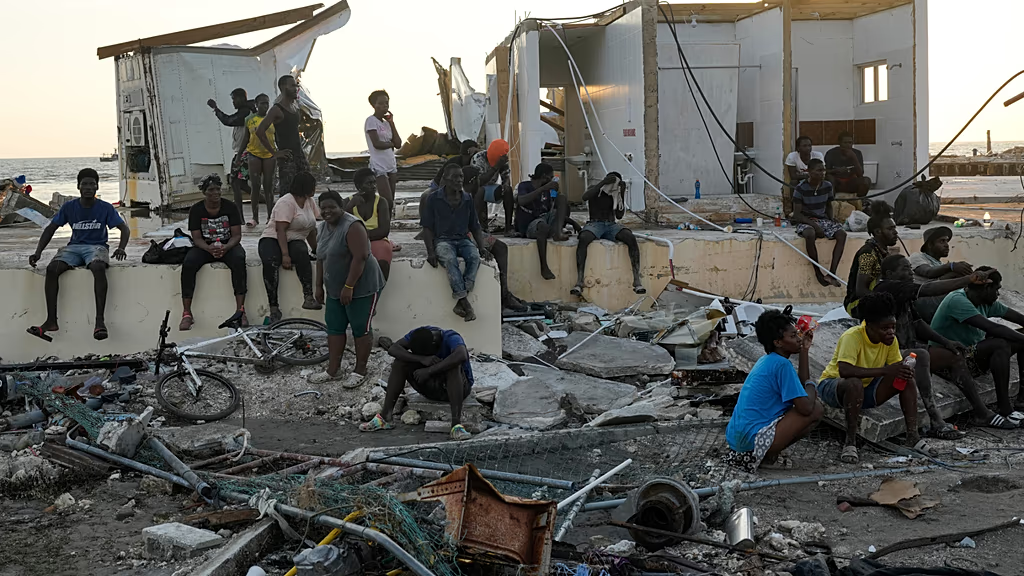
    The United Nations, has reported that Jamaica is struggling to rebuild after Hurricane Melissa’s unprecedented destruction fifty days on.

    As a result, President Mahama decided to send engineering troops following direct discussions with Jamaica’s Prime Minister after initial relief supplies were delivered.

    Addressing the soldie sent on the aid mission, President Mahama said the deployment reflected Ghana’s long-standing commitment to helping countries in need.

    “We’re gathered here today for a solemn and proud national duty to see off officers and men of the Ghana Armed Forces who have been selected to represent Ghana on a humanitarian reconstruction mission to Jamaica following the devastation caused by Hurricane Melissa.”

    “This deployment reflects Ghana’s solidarity with the people of Jamaica and our shared history, values, and bonds within the African-Caribbean family,” the President said.

    Adding his comment to the address, Minister for Foreign Affairs, Honourable Okudzeto Ablakwa noted that the nation is grateful to the gallant men and women for always making Ghana proud in various theatres across the world.

    “President John Dramani Mahama believes that our foreign policy should be defined by not how much we can take from others but by how much we share with others. We all do know that Hurricane Melissa has rigged a lot of havoc. Over 40 Jamaicans have died. Analysts say that the destruction is in excess of 8.8 billion dollars and our friendly nation of Jamaica is on its needs,” Mr Ablakwa indicated.

    Deputy Chief of Mission at the U.S. Embassy in Accra, Rolf Olson shared his remarks.

    “The United State is honoured to support Ghana’s mission and to make this recovery by providing strategic C-17 air lift support for the fourteenth engineering brigade of Ghana’s army,” he stated.

    According to reports by the United Nations, fifty days have passed since Hurricane Melissa ravaged Jamaica, leaving behind an unprecedented trail of destruction. 

    Current estimates place the total damage and loss between $8 billion and $15 billion – nearly a quarter of Jamaica’s gross domestic product (GDP), said Dennis Zulu, UN Resident Coordinator for Jamaica, the Bahamas, Bermuda, the Cayman Islands, and Turks and Caicos.

    The hurricane affected more than 626,000 people and claimed 45,000 lives, underscoring its profound human toll.

    Despite notable progress in recovery efforts, 90 emergency shelters are still up and running, accommodating nearly 950 people who have yet to return home.

    Entire communities are still fully exposed, with at least 120,000 buildings – most of them in southwestern Jamaica – having lost their roofs, reported Mr. Zulu.

    Hurricane Melissa triggered “prolonged” and “cascading” disruptions to essential services, added the resident coordinator.

    “Western parishes were left without electricity for weeks on end.”

    In addition, many children remain out of school due to extensive damage to educational facilities.

    Approximately 450 schools, nearly two-thirds of all institutions nationwide, have reported significant impacts, including roof loss, structural failure, and other damages.

    The tourism industry and agricultural production – once the cornerstones of Jamaica’s economy and major sources of employment – have suffered extensive damage, putting thousands of jobs and livelihoods at risk, adding further strain.

    This scale of destruction has not only been unprecedented, but it has also really reversed hard-won development gains in a country that was firmly on a positive social and economic trajectory,” emphasised M. Zulu.

    Despite these challenges, the United Nations continues to work closely with the Government of Jamaica, national institutions, civil society, and international partners, delivering life-saving aid to the most vulnerable communities.

    Immediate priorities for recovery include restoring health services to safe and fully functional operating levels.

    Efforts will be made to support the education sector, particularly as schools prepare to reopen. Assistance will be provided to restore essential community services in areas still without access. Recovery plans will contribute to the repair and reconstruction of homes, roads, and critical infrastructure.

    Livelihoods will be restored through targeted support to small farmers, fishers, and micro and small enterprises.

    The agriculture sector will be strengthened to enhance food production, food security, and rural employment. Support will be extended to the tourism sector, a key employer and source of foreign exchange, to safeguard jobs and accelerate recovery.

    All recovery efforts will be inclusive, climate-resilient, and risk-informed, enabling Jamaica to rebuild stronger and better than before.
  • Hurricane Melissa disrupts schooling for children across the Caribbean

    Hurricane Melissa disrupts schooling for children across the Caribbean

    Nearly 477,000 children across Cuba, Haiti and Jamaica continue to face major disruptions to their education nearly three weeks after Hurricane Melissa swept through the Caribbean and caused widespread devastation.

    The storm, which moved across the region late last month, destroyed homes, damaged essential infrastructure and forced thousands of families into temporary shelters.

    One of the most significant and lingering impacts of the hurricane is the strain it has placed on already fragile education systems in the affected countries.

    A spokesperson for the United Nations explained that many schools in these countries are still damaged, unsafe or completely unable to hold classes. Some buildings remain flooded while others have lost roofs or have weakened structural elements that make them unsuitable for students. In many communities debris has blocked access routes to schools and some compounds require major repairs before children can return safely.

    As a result, thousands of students are missing classes or are learning in temporary locations that offer little stability or comfort. In some rural areas families are reluctant to send their children back because the facilities available do not meet basic safety standards.

    This situation means that close to half a million children are now learning in improvised spaces such as tents, churches, community centres or open areas that have been hastily arranged for lessons. These spaces generally lack chairs, tables, clean water, electricity or basic learning materials.

    Teachers are trying their best to keep lessons going but many say the absence of proper classrooms, books and equipment is making it extremely difficult. For younger children the lack of routine is also affecting their emotional well-being since the hurricane has already caused significant stress and uncertainty.

    UNICEF has begun working with the affected governments and local partners to assist children and teachers. The organisation is focusing on restoring education services, providing learning materials and identifying the areas that require the most urgent attention. These actions form part of a wider emergency response to ensure that the disruption caused by the hurricane does not evolve into a long-term learning crisis.

    In Cuba, UNICEF teams are preparing to distribute educational kits to about 21,000 students. The kits include writing materials, books and other basic supplies needed to support learning in temporary spaces. Many families lost most of their belongings during the storm, so the assistance is helping children who would otherwise have no materials to continue their education.

    In Haiti, the situation is more complicated. The country was already dealing with instability, economic challenges and previous disasters. UNICEF has managed to distribute nearly 3,000 school kits in the Sud and Nippes regions. These areas were hit hard by Hurricane Melissa and the kits have become an essential resource for families trying to keep their children engaged in learning. UNICEF says that more distributions are planned as assessments continue and more needs are identified.

    In Jamaica, flooding and infrastructure damage have made many schools unusable. UNICEF has worked with local authorities to set up around 100 temporary learning spaces. These spaces are supporting more than 10,000 children who cannot return to their regular classrooms. Education officials in the country describe the temporary structures as an important step toward restoring normal routines for children who are still dealing with the emotional impact of the disaster.

    The United Nations estimates that more than 5 million people across the three countries were affected by the hurricane. Many communities are still struggling with limited access to clean water, healthcare and electricity. Families who lost their homes are living in shelters or staying with relatives. For many children school is not only a place of learning but a place of safety and support. Returning to class provides them with structure, emotional comfort and access to services they cannot receive elsewhere.

    Experts warn that continued school closures could have long-lasting consequences on children’s learning. Previous studies have shown that extended interruptions often lead to poor academic performance, increased dropout rates and emotional stress. If the affected countries do not receive adequate support the consequences may follow children into adulthood and reduce their opportunities later in life.

    UNICEF emphasises that education is an essential part of disaster recovery. Schools represent more than buildings because they play a central role in children’s emotional and intellectual development. In many communities schools provide meals, counselling and supervised care. All of these services become even more important after a major emergency.

    Education officials in Cuba are working with humanitarian groups to restore school buildings, assess structural damage and prioritise repairs. Community members have also joined cleanup efforts to help clear debris from school compounds. Some schools may reopen soon but others will require more time depending on the severity of the damage.

    In Haiti rebuilding is more difficult due to insecurity and limited resources. Humanitarian organisations stress the importance of international support to ensure that learning does not stall. They also emphasise the need for coordinated planning to ensure safety for children and teachers.

    In Jamaica the recovery process has moved faster in some areas. Authorities are working to replace damaged learning materials, repair classrooms and support teachers affected by the storm. Counselling services have been added in several communities to help children who are still coping with trauma.

    As the region focuses on recovery the United Nations is urging global partners not to overlook the urgent needs of children. Although infrastructure rebuilding is essential, restoring education is equally critical because it affects the future of entire communities.

    UNICEF and other humanitarian groups say they will continue assisting affected communities over the coming months. They intend to support both immediate needs and long-term rebuilding efforts.

    For the hundreds of thousands of children who are still waiting for normal classes to resume these efforts may determine how quickly they can return to stable learning environments and how well they recover from the emotional and academic losses caused by Hurricane Melissa.

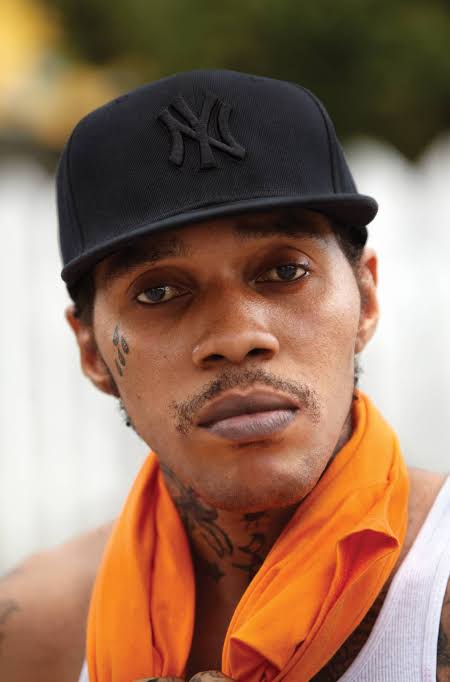
  • Vybz Kartel says he met his girlfriend on IG while in prison

    Vybz Kartel says he met his girlfriend on IG while in prison

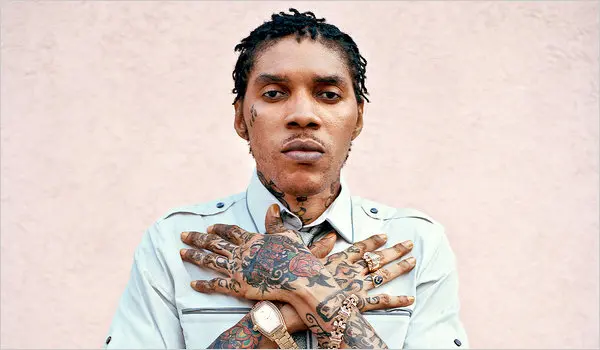
    Jamaican dancehall star Vybz Kartel has opened up about how he met his current girlfriend, Sidem Öztürk, while in prison.

    Speaking during an interview on Hot 97 on April 10, 2025, Kartel said he first noticed Sidem’s Instagram profile while browsing through the comments on one of his posts.

    He added that he was going through relationship problems with his baby mama at the time.

    “Yeah, I met her on July 25, 2015, and I’ll never forget it. In prison, I was very active on Instagram because, you know, you have time. I was going through my comment section and saw this girl who always liked my pictures, so out of curiosity, I went onto her page… At that time, I was also going through a lot with my baby mama,” he shared.

    Vybz Kartel further explained that Sidem told him she had been trying to find him for some time. However, because of the many fake accounts in his name, she ended up discovering his real profile through his baby mama’s page.

    “She confessed that she was actually looking for me, but because there were a lot of fake Vybz Kartel pages, she jumped onto my baby mama’s page, and that was how she found me,” he said.

    The musician also revealed his plans to settle down with Sidem Öztürk this year.

    “She’s at my hotel right now with my mother. We’re getting married this year. I need some Turkish children who will talk to me and I won’t understand,” he added.

  • Video: See Shatta Wale thrill fans at Vybz Kartel’s concert in Jamaica

    Video: See Shatta Wale thrill fans at Vybz Kartel’s concert in Jamaica

    Popular Ghanaian dancehall artist, Shatta Wale, recently performed in Jamaica for the first time, achieving a major career milestone.

    Sharing the stage with his idol, Vybz Kartel, at the Freedom Street concert, Shatta Wale described the experience as fulfilling a lifelong dream. Though his set included just three songs, he saw it as a significant step in expanding his global reach.

    Overwhelmed with gratitude, Shatta Wale knelt on stage, thanking Vybz Kartel for the opportunity to showcase his talent on an international platform.

    “Thank you so much. I’ve never performed in Jamaica before; this is my first time. I’ve always wished to perform with you on stage. God bless you, Jamaica. I love you,” Shatta Wale said.

  • Ghana meets Jamaica! Eno Barony and her lookalike Spice enjoys each others company

    Ghana meets Jamaica! Eno Barony and her lookalike Spice enjoys each others company

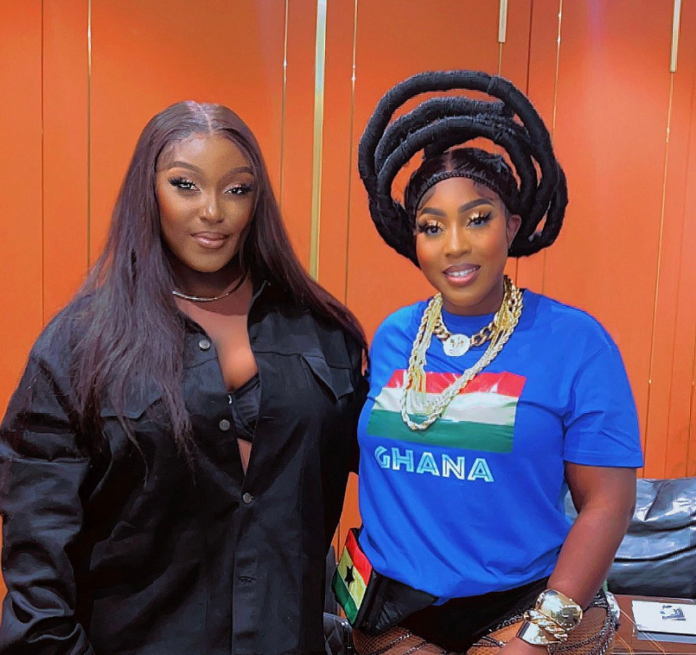
    Ghanaian rap sensation Eno Barony and Jamaican dancehall icon Spice recently had their first in-person encounter, and fans couldn’t help but rave about the striking similarity between the two.


    Eno, who could not contain her excitement, posted on social media,“I finally met the Queen @spiceofficial. She’s so beautiful and so real. Love always, sis.”

    The meeting was no mere coincidence; it was facilitated by Ghanaian dancehall artist Stonebwoy, whom Eno gratefully credited for making the unforgettable moment possible.

    Spice didn’t hold back her excitement either. Replying to Eno’s post, she wrote, “It was so nice to meet you, Twin 😍😍😍. My Ghana sister for life 💙💙💙🇬🇭🇯🇲.”

    After months of online discussions about their striking resemblance, Ghanaian rapper Eno Barony and Jamaican dancehall star Spice finally met in person, much to the excitement of their fans from both nations.

    Their encounter was filled with warm embraces, smiles, and a deep sense of unity, reflecting the strong cultural connection between Ghana and Jamaica.

    Fans are eagerly calling for a collaboration, believing the “twin” artists could make a huge impact on the music scene together.

    Spice’s trip to Ghana was facilitated by Stonebwoy, who invited her to shoot the music video for their joint track, Jiggle & Whine.

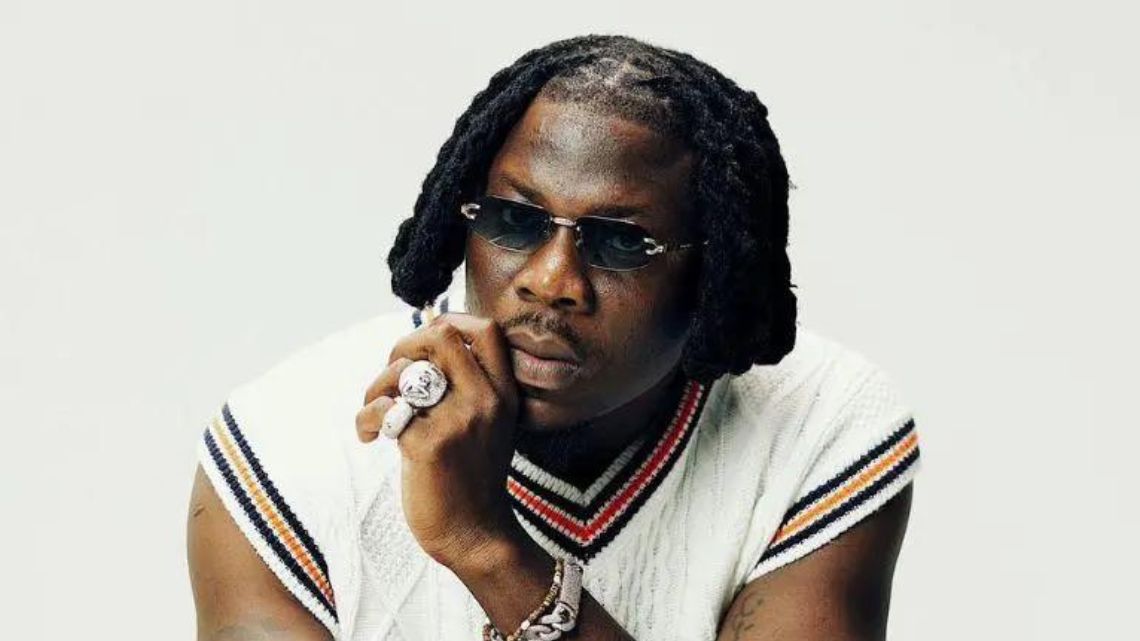
  • Stonebwoy says many Ghanaians see him as a Jamaican

    Stonebwoy says many Ghanaians see him as a Jamaican

    Renowned Ghanaian musician Stonebwoy has revealed that many people in Ghana often mistake him for a foreign artist, particularly from Jamaica, due to his dancehall style and extensive international collaborations.

    In a recent fashion interview circulating on social media, the BHIM Nation president addressed a popular misconception about him, saying, “People in Ghana often think I’m Jamaican. Many believe I’m actually from abroad.”

    Stonebwoy’s Caribbean-influenced sound and collaborations with iconic Jamaican artists, like Morgan Heritage and Sean Paul, have contributed to this perception.

    In a previous interview, he shared that he has worked with over 47 artists globally, with more unreleased projects still on the way.

    This widespread collaboration has strengthened his reputation in Jamaica, where he feels a strong sense of acceptance—a connection Ghanaians are increasingly associating him with.

    During the fashion interview, Stonebwoy was asked to rate his outfit. He confidently responded, “No, we do 100, we don’t do 10.”

    He detailed his attire, saying, “Balenciaga’s, of course. The chrome Balenciaga hoodie. All plain virements from Paris. Flannel Homme, some Gucci.

    Jewellery from Just Frost London. That’s where everybody gets their stuff. Burna Boy, Wizkid, Asake, Patoranking, Adebayor, your footballers.”

  • Daddy Bosco condemns ‘disrespectful’ comments made about dancehall music

    Daddy Bosco condemns ‘disrespectful’ comments made about dancehall music

    Daddy Bosco, a member of the board for the Ghana Reggae Dancehall Awards, has voiced his dissatisfaction with the critical comments directed at dancehall music.

    In a conversation with Graphic Showbiz, he refuted assertions made by highlife artist Michael Adangba, who claimed that dancehall incites hooliganism among Ghana’s youth.

    “Those who claim dancehall music fosters hooliganism are often not well-informed about the genre’s true nature.

    A more nuanced and informed perspective reveals that dancehall music frequently advocates social justice, addressing the struggles and experiences of marginalised communities.

    If we take the time to truly understand the ethos of the genre, we would recognise its cultural and social significance rather than hastily condemning it,” Bosco said.

    Michael Adangba previously shared with Graphic Showbiz his belief that the lyrical themes in dancehall music encourage rebellion and violence. He pointed out that the genre, which originated in Jamaica, contributed to the altercation between Ghanaian dancehall artists Stonebwoy and Shatta Wale during the 2019 Ghana Music Awards.

    While Bosco acknowledged that there may be a few unruly individuals within the dancehall scene, he emphasized that they do not reflect the true values and fundamental message of the genre.

    “It is important to avoid generalising based on the actions of a few individuals within the Dancehall scene. While some may stray from the positive messages that Dancehall often promotes, this is not unique to the genre.

    Every music style has individuals whose behaviours do not reflect the overall values or spirit of the music,” he said.

    The Head of Communication and Projects at the Musicians Union of Ghana (MUSIGA) pointed out that instances of misconduct within the dancehall community are also present in other music genres.

    “Yet, when such incidents occur in other genres, we do not immediately label the entire genre in a negative light. This tendency to label dancehall as inherently problematic is not only misguided but also diminishes the powerful, socially conscious messages that much of the music delivers,” he added.

    Over the years, the dancehall genre in Ghana has flourished, giving rise to numerous artists including Root Eye, Shatta Rako, Sonni Balli, Yoggi Doggi, Samini, Shatta Wale, Stonebwoy, Jupitar, Epixode, Ras Kuuku, Laruso, Iwan, and Kamelyeon.

  • Living a life of crime is not worth it – Vybz Kartel

    Living a life of crime is not worth it – Vybz Kartel

    Jamaican Dancehall icon Vybz Kartel, whose real name is Adidja Palmer, has recently advised young people in Jamaica and around the world to avoid a life of crime.

    In a widely circulated video, Kartel, 48, was seen leaving the Tower Street Adult Correctional Center.

    He took a moment to address the media and fans, urging them to “stay out of crime” and emphasizing that “time spent in prison is a waste of life.”

    Shatta also supported this message by sharing the video with a caption reinforcing Kartel’s advice: “Tell the youth to stay out of crime, it’s not worth it, a waste of life, a waste of time, brother.”

    Kartel, along with three others, was initially convicted on March 14, 2014, for the murder of Clive “Lizard” Williams. The prosecution argued that Williams was killed over a dispute involving missing firearms, and Kartel was accused of orchestrating the murder.

    However, the United Kingdom’s Privy Council later overturned Kartel’s conviction due to juror misconduct.

    The case was then remanded to a three-person court of appeals in Jamaica to determine whether to retry the case or release Kartel and his co-defendants.

  • Watch as dancehall singer Vybz Kartel exits prison after 10 years

    Watch as dancehall singer Vybz Kartel exits prison after 10 years

    After eleven years of imprisonment, Jamaican entertainer Vybz Kartel has been released from the Tower Street Adult Correctional Center, making his return to the streets of Kingston, Jamaica.

    In a viral social media video posted earlier today, Thursday, August 1, 2024, Kartel was greeted by hundreds of cheering fans as he joined his family in a convoy home.

    Vybz Kartel, along with three others, was convicted on March 14, 2014, for the murder of Clive “Lizard” Williams.

    Prosecutors argued that Williams was killed over missing guns and alleged that Kartel had lured Williams to his home, where he was beaten to death.

    However, a recent decision by a United Kingdom-based Privy Council overturned Kartel’s conviction.

    The council found evidence of juror misconduct in the initial trial and left the case to a three-person Court of Appeal in Jamaica.

    On Wednesday, the Court of Appeal decided not to order a new trial, stating, “The interests of justice do not require a new trial to be ordered,” as reported by the Jamaica Observer.

    Watch video below:

  • Dancehall star Vybz Kartel out of prison after murder conviction overturned

    Dancehall star Vybz Kartel out of prison after murder conviction overturned

    Dancehall star Vybz Kartel is now back on the streets of Jamaica after being released from the Tower Street Adult Correctional Centre in downtown Kingston on July 31.

    The 48-year-old artist, who has been dealing with health issues, was greeted by enthusiastic fans upon his release.

    Kartel’s freedom follows a Court of Appeal decision earlier in the day, which dismissed a 13-year-old murder charge against him.

    Alongside Kartel, Shawn ‘Shawn Storm’ Campbell, Andre St John, and Kahira Jones were also exonerated.

    However, Jones will remain in custody to serve an 18-year sentence for a separate wounding with intent conviction related to a 2009 incident in Waterford, Portmore, St Catherine.

    Kartel and the others were originally convicted in 2014 for the 2011 murder of Clive Williams.

    Although their convictions were upheld by the Jamaican Court of Appeal in 2020, the Privy Council, Jamaica’s highest court, overturned them in March 2024 due to juror misconduct.

    Instead of ordering a retrial, the Privy Council sent the case back to the appeal court, which ultimately decided against a retrial, leading to their release.

  • Jamaica’s Olympic champion, Thompson-Herah, to miss Paris Olympics over Achilles injury

    Jamaica’s Olympic champion, Thompson-Herah, to miss Paris Olympics over Achilles injury

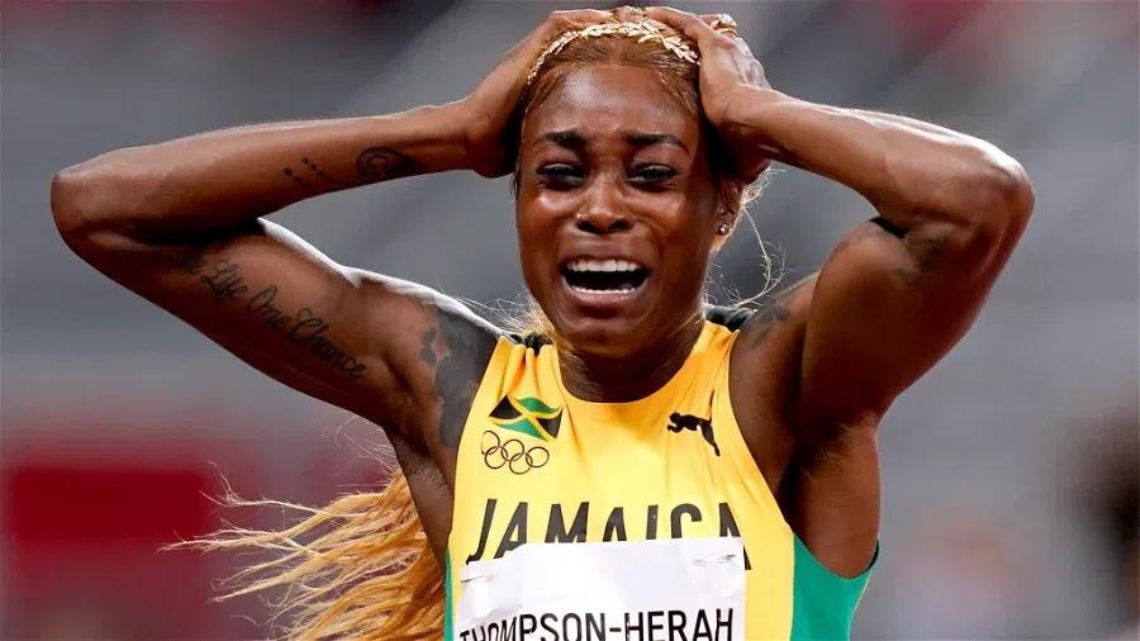
    Elaine Thompson-Herah, the two-time Olympic champion in the 100m and 200m, has announced she will miss the Paris Olympics due to an Achilles injury.

    The 31-year-old Jamaican sprinter, who has five Olympic gold medals to her name, sustained the injury during the New York City Grand Prix on June 9 and had to be carried off the track.

    Thompson-Herah, renowned for her exceptional sprinting prowess, is the only sprinter besides her compatriot Usain Bolt to have won multiple Olympic titles in both the 100m and 200m.

    She was preparing to defend her 100m title, having opted out of the 200m trials in Jamaica.

    In a heartfelt Instagram post, Thompson-Herah revealed that a “small tear on my Achilles tendon” has dashed her hopes of competing in her third Olympics.

    “It’s a long road but I am willing to start over and keep working to make a full recovery and resume my track career,” she wrote.

    “I am hurt and devastated to be missing the Olympics this year but at the end of the day it’s sports and my health comes first.”

    Jamaica has dominated the women’s 100m at the Olympics, securing gold in the event for the past four consecutive Games.

    Thompson-Herah contributed significantly to this legacy, winning gold in both the 100m and 200m at the Rio 2016 Olympics and successfully defending her titles in Tokyo in 2021.

    She also clinched her fifth Olympic gold in Tokyo as part of Jamaica’s 4x100m relay team.

  • Davido marks his beloved wife Chioma’s birthday in grand style

    Davido marks his beloved wife Chioma’s birthday in grand style

    Nigerian music icon Davido spared no expense in marking his wife Chioma’s birthday, treating her to a luxurious celebration in Montego Bay, Jamaica.

    The couple reveled in love and opulence, crafting unforgettable memories against the backdrop of Montego Bay’s beauty.

    In a touching tribute, Davido hailed Chioma as his closest confidant, pledging unwavering support and love through life’s challenges.

    Their lavish celebrations included a romantic dinner on the eve of Chioma’s 29th birthday, with social media buzzing with their enchanting moments captured in stunning photos.

    See post below:

  • Kentucky State in the US was named after Ga King Nii Tackie – Tour Guide says

    In a groundbreaking revelation that’s sending waves across social media, a Ghanaian tour guide has spilled the beans on the hidden origins of some U.S. states and Jamaica, leaving us questioning everything we thought we knew.

    During a recent tour, the guide, Nii-Aquaye, unveiled the sensational claim that Kentucky State was not always known by its current name. No, no, it was apparently once the royal playground of a Ga King called Nii Tackie, from whom slaves were taken from to US soil.

    The ingenious plan, according to Nii-Aquaye was to avoid the slaves getting lost in the American wilderness, so wherever they settled, they had to name the town after King Nii Tackie, as the source of their identity. Hence, Kentucky [King Tackie] – because, well, why not?

    “The actual name of Kentucky State is Nii Tackie. Nii Tackie was the king of Accra who was vibing with the slave masters. So the slaves that they bought from Nii Tackie’s hands to the state, for them not to get lost of their root, they have to make sure wherever the slaves settled they used that King’s name to name the town, Kentucky,” he passionately explained.

    But the plot thickens. He explained what the names Nii and Naa means in Ga.

    “When you come to this community, it is whereby you gonna hear the name Nii and Naa. Nii means King and Naa means Queen.” Move over, Buckingham Palace; Ghana’s got a royal lineage going strong! And as for Virginia State, they’ve got Jamestown, which, you guessed it, was the handiwork of Ga slaves.

    Oh, but we can’t forget the Ashantis, who landed in Jamaica, giving the world the name “Jamaica.” According to Nii-Aquaye, in Ashanti language, it’s ‘Gya ma yaka,’ meaning, “we are stuck on this land, we can no longer go back to Africa.” Well, Jamaica, consider yourself officially decoded.

    This revelation has left many scratching their heads, others reaching for their history books, and some just laughing hysterically at the sheer ‘audacity’ of it all. The guide, Nii-Aquaye has taken the Ghana-U.S. tourism game to a whole new level, leaving us wondering: what other secrets lie beneath the surface of seemingly ordinary places?

    So, next time you’re touring a historical site, remember – there’s always room for a bit of mystery, a dash of humour, and a side of Ghanaian flair. Stay tuned as The Maestro, Nii-Aquaye promises more mind-bending insights into the hidden connections between Ghana and the rest of the world.

  • Brazilian star, ‘Queen Marta’ goes home sad after Brazil-Jamaica game ended in stalemate

    Brazilian star, ‘Queen Marta’ goes home sad after Brazil-Jamaica game ended in stalemate

    Brazil exited the World Cup on Wednesday, with hopes that a new generation of talent will emerge as Marta’s (37) sixth and final Women’s World Cup came to an end in a 0-0 draw against Jamaica, which sent the Caribbean side to the last 16.

    Marta, affectionately known as “Queen Marta” in football-mad Brazil, had her teammates vowing for a more fitting farewell for the iconic forward. However, they were unable to break through the Jamaican defense at Melbourne Rectangular Stadium.

    Despite being the tournament’s all-time leading scorer with 17 goals, Marta may have been the most frustrated player on the field, as she had opportunities in a match where Brazil needed three points.

    Starting on the field for the first time in the tournament, her teammates managed to find her in the area several times, but she couldn’t summon the magical touch she had exhibited in five previous World Cups.

    As Jamaica held their ground in defense, Marta’s energy waned, and she was substituted off in the 80th minute to the cheers of anxious Brazilian fans.

    Having collected nearly every individual accolade in women’s football, Marta missed out on the World Cup victory she had longed for, extending Brazil’s wait for their first title.

    With the team failing to advance from the group stage for the first time in 28 years, concerns will arise regarding their preparations and tactics under the guidance of coach Pia Sundhage (63).

    Although contracted for another year, Sundhage admitted that her future with the team might be uncertain. The Swedish coach was direct about Brazil’s need for rejuvenation, a process that will likely proceed without the player who has dominated women’s football in the country for decades.

    Sundhage acknowledged that she doesn’t know if Marta intends to continue playing for the national team, but she suspects that Marta’s love for the game might influence her decision to do so.

    “Whether she’s good enough to be called up to the national team, let’s see,” said Sundhage.

    “As long as I am coaching the national team, I am going to do a lot of work to find new players.

    “That means it’s going to be harder for Marta to play going forward.

  • Dog owner acknowledges having two American bulldogs under his care when they murdered an elderly

    Dog owner acknowledges having two American bulldogs under his care when they murdered an elderly

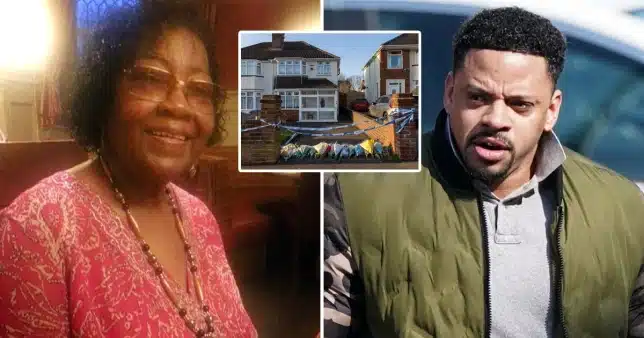
    Two dogs that attacked and killed a pensioner in her own garden were under the control of a guy who has pleaded guilty.

    After being assaulted by the two American bulldogs and receiving a neck wound, Lucille Downer, 85, passed away in April 2021.

    At Wolverhampton Crown Court, Darren Pritchard, 44, entered a guilty plea to having two dogs that were “dangerously out of control.”

    In addition, he admitted to growing marijuana on the same Rowley Regis, West Midlands, street with the purpose to sell it.

    Pritchard, of Merrivale Road in Smethwick, West Midlands, has been granted conditional bail until his sentencing on May 15.

    Judge Michael Chambers KC told him: ‘You have had the courage to plead guilty to these matters and you will get appropriate credit (for pleading guilty) in due course.

    ‘But they are clearly serious matters which cross the custodial threshold so you should be under no illusion as to the likely sentence.’

    The facts of the case were not opened by prosecutor Howard Searle during the hearing, which was told Pritchard had been ‘out of trouble since 2013’ at the time of Ms Downer’s death.

    Ms Downer moved to the UK from Jamaica in her early 20s and was a mother, grandmother and great-grandmother.

    During her working years she worked as a cook at a care home in West Bromwich.

    West Midlands Police said at the time that she suffered multiple injuries during the ‘sustained’ attack after the dogs escaped from a nearby property through a hole in a fence.

    Her family said in a statement that they would ‘miss her dearly’.

    Both dogs were handed over to police voluntarily at the time of the attack, but after receiving specialist advice they were put down as it was decided they could never be rehomed due to the violent act, the Independent reports.

  • Why Jamaica is banning playing gun, scamming and Molly music

    Jamaica’s Broadcasting Commission has ordered broadcasters to take swift action to ensure they don’t transmit any recorded material that encourages and/or glorifies unlawful activity, Loop Jamaica reported.

    The Caribbean nation’s Broadcasting Commission oversees radio, television, and cable services on the island. In a news release, the Commission said broadcasters should immediately stop transmitting “any audio or video recording, live song, or speech which promotes and/or glorifies scamming, illegal use or abuse of drugs (for example ‘Molly’), illegal or harmful use of guns or other offensive weapons, ‘jungle justice’ or any other form of illegal or criminal activity.”

    The Commission also ordered broadcasters to stop airing “any edited song which directly or indirectly promotes scamming, illegal drugs, illegal or harmful use of guns or other offensive weapons, jungle justice, or any form of illegal or criminal activity.”

    Related stories

    The regulatory body said that includes “live editing and original edits (eg edits by producer/label) as well as the use of near-sounding words as substitutes for offensive lyrics, expletives, or profanities.”

    “To be clear, the broadcast of a sampling of any song which promotes or glorifies scamming, illegal drugs, illegal or harmful use of guns, or other offensive weapons, ‘jungle justice’ or any other form of illegal or criminal behaviour is strictly prohibited,” the Commission added.

    The Commission said the directive was issued in an effort to reaffirm its commitment to ensuring such content isn’t transmitted on the Caribbean nation’s airwaves.

    “The use of the public airwaves to broadcast songs that promote/glorify illegal activity could give the wrong impression that criminality is an accepted feature of Jamaican culture and society,” the commission said in the release.

    “It could also unwittingly lend support to moral disengagement and further normalise criminality among vulnerable and impressionable youth, and the young adult demographic.”

    Cordel Green, who is the executive director of the Commission, said the directive was given after the regulatory body scrutinized certain expressions.

    “Part of the difficulty in dealing with music, especially that which emerges from a subculture, is that it takes time to identify, understand and verify the slangs and colloquial language used. Understandably, new street lingua may take some time before they are normalised, or their meanings become well entrenched,” Green said, per Loop Jamaica.

    “The Commission also has to be circumspect in its actions, knowing that regulatory attention can have the unintended consequence of giving exposure to and popularising subcultural phenomenon.”

    Green also said that while there shouldn’t be an issue with regard to the right to freedom of expression in content regulation, any audio or visual material that encourages illegal activities does not go in line with the principles of responsible broadcasting.

    Source: Face2face Africa

  • Kumina dance: Jamaica traditional ritual perceived to help patrons win court cases or woo lovers

    It originated from the Congo tribes in Africa when the enslaved arrived in Jamaica in the 1850s. Kumina is a combination of dance and music rituals performed to appease the ancestors.

    A feature of Kumina is the authenticity of the language and dances of the performers. The traditional dance was perfected when the immigrants from Congo settled in St. Thomas.

    Historians said Kumina is a way the enslaved from Congo expressed themselves religiously and connected with their roots. The traditional dance has stood the test of time and survived influences from modernity as a result of its connection with customs and traditions.

    Related stories

    Another reason Kumina enjoys patronage among many Jamaicans is that it is believed that Kumina dances can help one to win court cases or woo a lover one has been pursuing without success.

    The traditional dance is usually performed at burials, memorial services, or wakes but it isn’t limited to moments of bereavement but happy times as well.

    In some circles, it is considered art among Jamaicans and is performed as entertainment by Kumina groups.

    Despite these positives, Kumina is also perceived as a form of spiritual activity because of the trance some performers claim they find themselves in while performing it. This has been dismissed by die-hard Kumina fanatics who describe it as another attempt to dim its appreciation among Jamaicans.

    Ephraim Bartley, one of the advocates of the traditional dance, said Kumina has been used for the good of society, that notwithstanding, it is sometimes abused by those grateful to learn the art and its power. He observed that some people have been healed as a result of participating in the Kumina dance.

    Kumina has no restrictions on which gender can assume the lead role in performing the dance. The men are referred to as king or captain while the women are known as the queen or mother.

    The role of the leader is to lead the chorus of members who are in trance in the rhythms, songs of a variety of spirits and dances.

    Jamaican writers Stephane and Estime added that the instruments used during Kumina performance are bongo drums and shakers. They said there are types of clothing that are used during the traditional dance. The women wear turbans on their heads while the men wear turbans. The colors of the clothing are usually a mixture of red and other assorted colors but it must be traditional.

    There are various adaptations to how Kumina is performed but it has its own rituals. Sometimes, people would either call up spirits, drink rum or spray it out their mouths for spiritual reasons, according to Stephane and Estime.

    Some Christian denominations have adopted the Kumina dance on the basis that it connects Jamaicans irrespective of their religion to their ancestral roots.


    Source: Face2faceafrica

  • 2022 World Cup: Ghana to face Jamaica in friendly in August

    Ghana’s Black Stars will face the Raggae Boyz of Jamaica in a friendly in August.

    The African giants have lined-up a friendly with Jamaica as part of preparations ahead of the 2022 FIFA World Cup in Qatar later this year.

    The game is expected to come off at the Ernst-Happel-Stadion in Austria.


    It is expected that September’s AFCON qualifiers will be postponed following CAF’S decision to move the tournament in Ivory Coast to 2024.

    The West African giants are returning to the World Cup after edging out Nigeria to qualify for the tournament in Qatar this November.

    The Ghana Football Association recently announced the nationality switches of six players as part of boosting the team with quality before November’s World Cup.

    Inaki Williams of Athletic Club and English Premier League duo Mohammed Salisu and Tariq Lamptey have all confirmed their availability ahead of the next international break.

    The tournament is expected to give coach Otto Addo an insight into the new players joining the team.

    Source: GhanaSoccernet

  • Ghana hails strategic partnership with Jamaica

    Madam Shirley Ayorkor Botchwey, the Minister of Foreign Affairs and Regional Integration, on Tuesday, hailed the of level cooperation between Ghana and Jamaica, particularly in the areas of trade, health and education.

    The Minister said this when she received Letters of Credence from Mr Esmond St Clair Reid, the Jamaican High Commissioner-Designate to Ghana in Accra.

    Madam Ayorkor Botchwey congratulated Mr Reid on his new appointment as High Commissioner-designate of Jamaica to Ghana.

    She recalled the longstanding friendly relations that existed between Ghana and Jamaica, based on shared values and mutual respect and acknowledge that the relations between the two countries had grown from strength to strength.

    She acknowledged with appreciation, the untiring efforts of his predecessor in enhancing the relations between Ghana and Jamaica.

    The Minister expressed the hope that the High Commissioner-designate would build on the remarkable achievements of his predecessor and further enhance the bonds of friendship and cooperation that existed between Ghana and Jamaica.

    She congratulated the Government of Jamaica on its resounding electoral victory in the country’s General Election held on 3rd September 2020, and the Prime Minister’s subsequent inauguration for a second five-year term and emphasized that the retention of the Prime Minister in Office was testimony to the confidence that the people of Jamaica reposed in him.

    Madam Ayorkor Botchwey commended the Government of Jamaica for the warm reception accorded President Nana Addo Dankwa Akufo-Addo during the Presidential visit to Jamaica in June 2019.

    She noted that the Year of Return held in 2019, reinforced the deep-rooted ancestral and historical connections between Ghana and Jamaica as Jamaicans formed one of the majority group of diasporans, who made the life-changing decision to visit their roots.

    The Minister said Ghana was rolling out the “Beyond the Year of Return” initiative, which was a sequel to the “Year of Return” and expressed the hope that Jamaica would support the initiative by encouraging Jamaicans to visit Ghana and thereby, boosting tourism between the two countries.

    Madam Ayorkor Botchwey acknowledged the positive strides being made by Jamaican companies operating in Ghana namely, LASCO company, a producer of dairy products; GraceKenendy Ghana Limited, producer of non-alcoholic beverages among other products and the Jamaican National Bank.

    She referred to the establishment of the African Continental Free Trade Area (AfCFTA) and explained the great potential it presented for increased intra-Africa trade and attracting Foreign Direct Investment from the Caribbean and encouraged Jamaica to take advantage of AfCFTA for enhanced economic engagement with Ghana

    She said the debt burden of middle-income countries, including Ghana and Jamaica, had been worsened by the COVID-19 pandemic, thus, making it imperative for both bilateral and multilateral creditors to consider a moratorium on debt servicing and payments to assist the affected countries to rebuild their economies.

    In that regard, the Minister urged Jamaica to partner with Ghana to advocate for debt forgiveness.

    Mr Reid on his part acknowledged the friendly relationship Ghana and Jamaica had enjoyed over the years, saying, “we in Jamaica, we consider Africa as the fatherland….”

    He said Ghana was like an extension of Jamaica in many ways and that they were very happy that the “Year of Return” was successful, which Jamaicans patronised.

    Source: GNA

  • Queen Nanny, the Ashanti woman from Ghana who ended up as a hero in Jamaica

    Queen Nanny lived during the late 17th centuries, she was born into the Ashanti people in the present-day Ghana and escaped from slavery after being transported.

    She and her relatives were sold as slaves and got transported to Jamaica and ended up being the Maroon leader in the early 18th centuries.

    The Maroons are descendants of West Africans. They were known as Coromantie or Koromantee, and were considered ferocious fighters. A minority of slaves originated from other regions of Africa, including the Congo and Madagascar.

    Blakk Cedi almost beat Stonebwoy in Jamaica during the Shuga Tour Da Don alleges

    After being brought to Jamaica in the course of the Transatlantic slave trade, many slaves revolted against their oppressors and formed their own communities in the hilly interior of Jamaica.

    During a period of 30 years, she contributed towards the escape of more than 1,000 slaves and helped them resettle in the Maroon community called Nanny Town.

    Nanny Town, placed as it was in the mountains away from European settlements and difficult to assault.

    Nanny limited her attacks on plantations and European settlements and preferred instead to farm and trade peacefully with her neighbors.

    She did however make numerous successful raids to free slaves held on plantations and it has been widely accepted that her efforts contributed to the escape of almost 1,000 slaves over her lifetime.

    She was feared and revered as a guerilla warrior who could use powers that ascended into the realm of the supernatural to confuse the enemies of the Maroons. She was said to be an Obeah woman as well.

    Captain William Cuffee, known as Captain Sambo, is credited as having killed Nanny in 1733 during one of the many and bloody engagements of Thjppe war.

    During one of the bloody battles, Nanny was killed. The war still went on until Cudjoe, a maroon leader and brother of Nanny, signed a peace treaty with the British.

    She was declared a national heroine in 1975 by the Jamaican government and awarded the title of “Right Excellent” due to her enormous accomplishments.

    Her portrait is on the 500 Jamaican dollar bill. She is also on the logo for the Gilder Lehrman Center for the Study of Slavery, Resistance, and Abolition.

    Currently, there are only seven such national heroes and Queen Nanny of the Maroons is conspicuous as the only woman

    Source: www.ghanaianmuseum.com