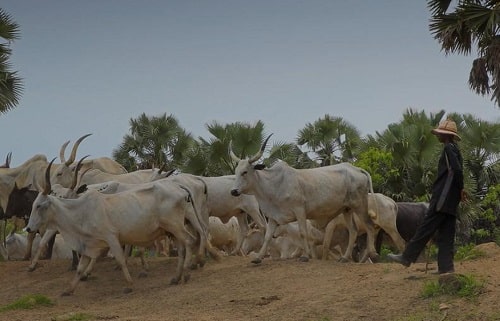
Ghana is reportedly facing a new and alarming challenge as jihadist groups engage in the sale of stolen cattle, according to a report from dw.com.
This illicit trade not only poses a significant threat to the country’s security but also has severe socio-economic repercussions.
According to DW, Jihadist operating in the West African sub-region are now crossing into Ghana with looted animals for sale.
“Some of the cattle here are rustled and brought to the market for sale, but we won’t know,” Kwesi Adumbila, a well-known cattle dealer in the market, told DW.
“Others even cross the borders with the cattle to sell in Ghana. Those who cross the borders have their agents, who they meet in the bush for exchange.”
The number of market destinations for these stolen cattle is rapidly increasing, as revealed by Rev. Fr. Clement Aapengnuo, who works with COGINTA, an EU-supported community peace-building NGO.
“When you look at the cattle markets that are coming up especially near border towns – I hear a market has just come up in Banda Nkwanta,” Aapengnuo told DW, referring to a town in the center of Ghana.
The stolen cattle attract buyers due to their low prices at the markets, according to Aapengnuo.
“So, you go there, there are a lot of cattle that they are selling, and people are enjoying, they think this is cheap cattle we can buy and do ABCD, but they don’t realize that by buying those cattle they are financing terrorism,” he said.
The presence of jihadist groups engaging in cattle rustling and subsequent sales necessitates immediate attention and robust measures to safeguard Ghana’s stability, economy, and the well-being of its citizens.
Cattle rustling and its implications
Cattle rustling is a criminal activity involving the theft and subsequent sale of livestock, particularly cattle. Historically, it has been prevalent in various parts of Africa, and now, the involvement of jihadist groups in this illegal trade has added a new dimension to the issue.
These jihadist groups often operate in remote areas, exploiting weak law enforcement and security measures, taking advantage of porous borders and inadequate surveillance systems.
However, Ghana’s security forces are not passive in addressing the matter. As part of the measures to tackle this issue, Ghana’s security forces have established camps in areas close to its northern borders with Burkina Faso, Togo, and Ivory Coast.
Awal Ahmed Kariama, a security analyst from RISE Ghana, an organization advocating for border security, expressed concerns about the permissive nature of some Ghanaians, which allows crime to thrive.
“We have a culture of highly accommodative nature of our people,” he said.
“So, we have people coming from different jurisdictions, we basically do not question them. Some of these people may be violent extremists; however, they are also locals who engage in cattle rustling.”
The Global Initiative has recommended that cattle rustling assessments should be “used in early-warning stabilization operations, as is the case with other types of organized crime.”