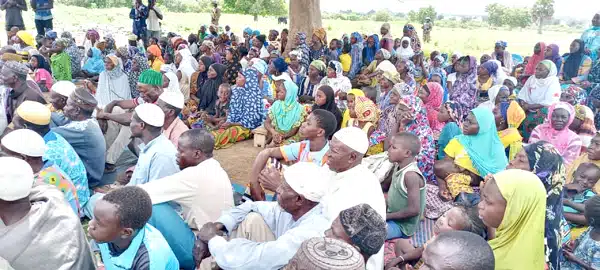
The UN refugee agency (UNHCR) has called upon Ghana to cease the expulsion of refugees from Burkina Faso.
Expressing concern over reports of hundreds of Burkinabè citizens, particularly women and children, being deported from Ghana after seeking refuge from violence in their own country, the UNHCR emphasized the importance of halting such actions.
The UNHCR has also expressed its readiness to offer additional support to Ghana in addressing the needs of the refugees.
The ongoing Islamist insurgency in Burkina Faso, which extends across multiple countries in Africa’s Sahel region, has resulted in over two million people being displaced from their homes.
The military administration of Burkina Faso has declared a recruitment drive to add 5,000 new soldiers to the war against Islamists.
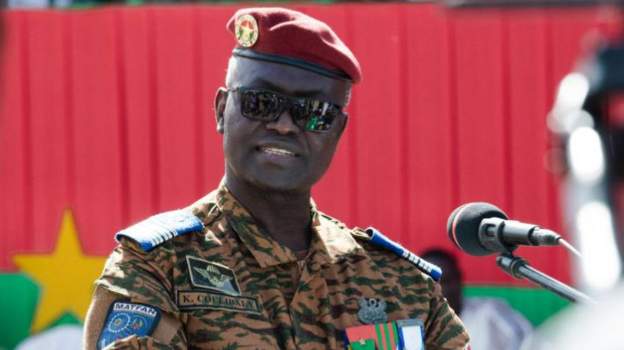
The recruits must be between the ages of 20 and 35 and willing to commit to at least five years of military service, according to Defense Minister Colonel Kassoum Coulibaly.
Almost 50 soldiers were murdered a week ago in the nation’s north.
At least 15 more people are said to have perished on Monday in an ambush carried out by terrorists connected to both the Islamic State and al-Qaeda.
Over two million people have been displaced since the Islamic conflict started in 2015.
The Upper East Regional Security Council has raised concerns that jihadists may have infiltrated the town of Bawku leading to an escalation of the conflict there.
At least six people have been killed in recent days following a military operation in the area.
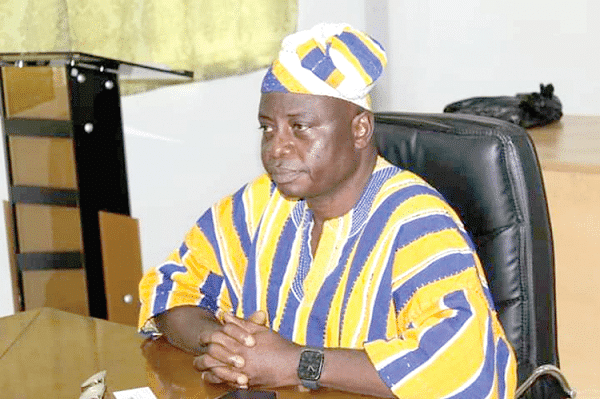
The Regional Minister and Chairman of the Security Council, Stephen Yakubu says jihadists operating across the border next to Bawku are a major concern.
“It is very sad that people have lost their lives, it is something that the Council wants to know what happened. But I also want to say that these troubles in Bawku are taking too long,” he said.
Security analyst and Chief Executive of the Security Warehouse Limited, Adam Bonaa, says the government must thoroughly probe the jihadist threat in Bawku.
“We’ve had some suspected jihadists who attempted something in the country even though this was not something that was announced.
“So it is important to have a thorough investigation conducted to know if we have some terrorists who have infiltrated Bawku to aid their friends and families among others,” Mr Bonaa explained in an interview with JoyNews.
The Nigerian army has repelled an attack on a military base in western Nigeria where nearly 1,700 jihadists are being held, killing eight suspected insurgents affiliated with the Islamic State group, two military sources said Monday.
Dozens of Islamic State in West Africa (Iswap) fighters tried to break into the Wawa military base in Niger state near the border with Beninon Saturday to free hundreds of jihadists, the two officers told AFP on condition of anonymity.
The attack is a reminder of Iswap’s ability to strike hundreds of kilometres from its northeastern stronghold, where the army is fighting a 13-year-old jihadist insurgency.
“The terrorists attacked the base around midnight in large numbers but were pulverised by air support, leading to the death of eight of them,” said one of the officers.
Three attackers, including their commander, were captured in the attack, he added.
There was no official comment from the army.
The soldiers had been alerted by intelligence and were waiting for the insurgents to attack the base, said a second officer who gave the same account.
The heavily armed jihadists tried to blow up the base gates but met “stiff resistance” from the soldiers, he said.
“It was obvious that they wanted to free other terrorists held in the base as they did in Kuje prison,” he added.
Last July, Iswap fighters attacked Kuje prison, located near the capital Abuja, and freed hundreds of detainees, including many jihadi commanders.
Between 2017 and 2018, the Wawa base had been used as a court to try hundreds of Boko Haram and Iswap jihadists.
On Friday, the Nigerian police tightened security especially in the capital after the US and UK warned of an “increased risk of terrorist attack” in Abuja.
Washington did not give further details but ordered the families of its diplomatic staff to leave Abuja.
Iswap has increasingly claimed responsibility for attacks far from the northeast, including in Kogi and Niger states, both of which border the Federal Capital Territory (FCT), where Abuja is located.
The jihadist insurgency in the northeast has killed nearly 40,000 people and displaced two million.
Rwandan troops deployed to help fight insurgents in northern Mozambique say they have discovered a stockpile of weapons and ammunition hidden by jihadists.
The Rwanda Defence Force (RDF) posted a tweet with pictures of weapons and ammunition which it said jihadists had hidden in Mbau in Mocimboa da Praia district.
The stockpile includes hundreds of weapons ranging from small arms and rockets as well as ammunition and shells.
They are said to have been hidden by the Islamist Insurgents as the RDF pursued and dislodged them from their strongholds in the area.
Cabo Delgado province has experienced jihadist attacks since 2017, which have so far displaced about a million people and caused the deaths of around 4,000 others.
In front of the Ouagadougou municipal stadium, in Burkina Faso, food donors come one after the other. They are gathering to prepare supplies for their compatriots trapped in localities controlled by jihadists. A sign calling for donations for residents from the northern city of Djibo who are now facing famine.
The capital of the Soum Province has been losing its population to insecurity and food shortage. It has swollen from 60-thousand to some 300-thousand over the last few years.
Last week an aid convoy supervised by the military and heading to Djibo was attacked by terrorists, leaving dozens dead and missing.
For all, supporting inhabitants in Djibo is a humanitarian gesture and a citizen’s duty.
“It is a patriotic gesture because it is also the way for all Burkinabe to contribute as little as it may be, for the fight against terrorism”, civil engineer Don Bosco Steeve Zongo says.
According to the ECOWAS envoy to Burkina, the authorities control only 60% of the territory.
Thousands fleeing terrorists therefore flock to Ouagadougou and its suburbs. Many like Bouréima Zabré, gather in makeshift camps. On good days, they chat and discuss. What can never leave their minds is also the story of their ordeal.
“It is the terrorists who asked us to leave our village, the old man says. Soldiers who come to defend the people cannot kill them all. They, the jihadists, have come to wage war and there will be no survivors. So we left.”
Leaving often means saving one’s life and starting a life of exile where harsh makeshift conditions, and often no assistance from the government await.
Can military men provide a solution?
Starting in 2015, a jihadist insurgency spread to Burkina from neighboring Mali, claiming thousands of lives and prompting more than two million people to flee their homes.
A new junta led by 34-year-old Captain Ibrahim Traore seized power in Burkina Faso on September 30, in the second such power grab since January blamed on failures to quell jihadist attacks.
If organisers of coups in the Sahel often promise improved security, analysts doubt the pledges.
To Djallil Lounnas at Morocco’s Al-Akhawayn University, a putsch typically “destabilises the army structure and divides members of the military into supporters and opponents of the coup”.
The Mozambican police chief has asked residents in areas recently attacked by jihadists in the northern Cabo Delgado province to resist the attackers.
In talks with the local population, Bernardino Rafael urged people to use all the means at their disposal and called for greater vigilance to protect the community.
“Now is not the time to run away. It’s time to resist. When they [the jihadists] enter our fields what we have to do is chase them and resist with a knife, a machete [or] a spear and then one of you runs to communicate to the security forces to join and chase these jihadists away,” he said.
He assured the population that the militants were being pursued and some had been killed during armed confrontations.
The police chief assured that those who are qualified would be integrated into the local force – a group that works with government soldiers and international allies in the fight against terrorism.
In talks with the local population, Bernardino Rafael urged people to use all the means at their disposal and called for greater vigilance to protect the community.
“Now is not the time to run away. It’s time to resist. When they [the jihadists] enter our fields what we have to do is chase them and resist with a knife, a machete [or] a spear and then one of you runs to communicate to the security forces to join and chase these jihadists away,” he said.
He assured the population that the militants were being pursued and some had been killed during armed confrontations.
In Quissanga district, local residents, particularly the youth, asked for weapons to help defend their land from jihadist invasions.
The police chief assured that those who are qualified would be integrated into the local force – a group that works with government soldiers and international allies in the fight against terrorism.
It is reported that a bomb that hit a convoy of vehicles in northern Burkina Faso has killed at least 35 civilians.
Authorities say the site is where jihadist rebels are active.
The blast left several others wounded on the road between Djibo and Bourzanga.
Convoys escorted by Burkina Faso’s army are used to deliver supplies to towns that are otherwise cut off by the jihadists.
Civilian casualties and jihadist attacks have increased since the military seized power in Burkina Faso in January.
Burkina Faso, which is one of the poorest countries in the world, has been grappling with a jihadist insurgency that swept in from neighbouring Mali in 2015.
More than 2,000 people have died and some 1.9 million forced to leave their homes.