President John Dramani Mahama has reaffirmed his administration’s commitment to attracting foreign investments as a strategic solution to Ghana’s rising unemployment, particularly among the nation’s growing youth population.
During a meeting with the visiting UK Deputy Prime Minister, Angela Rayner, President Mahama emphasized the importance of strengthening international partnerships to tackle the country’s economic challenges and foster job creation.
Addressing the pressing need for employment opportunities, President Mahama stated that his government is actively seeking to enhance economic collaboration with British investors to drive job growth and economic development.
“We have a young, growing population and so one of the major issues that came up strongly in the election was the issue of jobs. And so we are working together to see how we can bring in more investments, especially considering that we are shut out of the international credit markets.
“To bring in more foreign direct investments, to be able to create jobs for young people, is one of the things that we are going to be focusing on, and I believe that with the history of British companies investing in Ghana, we will bring more British companies in to come and partner with us in that objective,” he said.
Ghana, like many developing economies, is grappling with the challenge of creating enough employment opportunities for its expanding youth demographic. This growing pressure has made job creation a top priority for the government, particularly after it emerged as a key issue during the 2024 elections.
Acknowledging the urgency of the situation, President Mahama highlighted the government’s efforts to make Ghana an appealing destination for foreign direct investment (FDI).
Given the country’s economic constraints and restricted access to international credit markets, the President explained that fostering foreign partnerships has become central to Ghana’s strategy for driving economic growth and creating sustainable job opportunities.
Minister for Youth Development and Empowerment, George Opare Addo, has assured young Ghanaians that the Youth Employment Agency (YEA) will be revamped into a reliable hub for job seekers and those in need of professional training.
During a working visit to the YEA, Mr. Opare Addo emphasized the government’s commitment to making employment services more accessible by setting up job centres in every district across the country.
He explained that the initiative is designed to provide career guidance, skills training, and direct employment opportunities for the youth in both the public and private sectors.
In an interview with Citi News, the minister underscored the importance of decentralizing job placement services to ensure that young people receive the support they need at the local level.
“The assurance I am going to give is that President Mahama is going to work hard to reposition the YEA as a place where young people can seek refuge anytime they are seeking job opportunities and training,” he said.
He further highlighted the government’s policy commitment to expanding job centres nationwide, reinforcing their accessibility to young job seekers.
“We have a similar policy in our manifesto, and so our assurance to them is that we are going to scale it up so that we have similar centres in all districts. The job centres should be closer to the person who seeks the job for young people to easily access it and the opportunities made available to them,” he added.
Eight ministerial nominees, including Abdul-Rashid Hassan Pelpuo, the designated Minister for Labour, Jobs, and Employment, are slated to undergo vetting before Parliament’s Appointments Committee on Thursday, January 30, 2025.
Mr. Pelpuo is scheduled to appear first at 8:00 a.m., followed by Ibrahim Murtala Muhammed, the nominee for Environment, Science, and Technology, at 9:00 a.m.
Samuel Nartey George, tapped to lead the Ministry of Communications, Digital Technology, and Innovations, will take his turn at 10:00 a.m., while Kofi Iddie Adams, the nominee for Sports and Recreation, will be vetted at 11:00 a.m.
The committee will adjourn for a recess before resuming at 12:30 p.m. with the vetting of Samuel Okudzeto Ablakwa, the nominee for Foreign Affairs.
At 1:30 p.m., Joseph Bukari Nikpe, the designated Minister for Transport, will appear before the committee, followed by Issifu Seidu, the Minister of State for Climate Change and Sustainability, at 2:30 p.m.
The final session of the day will see Mrs. Charity Gardiner, the nominee for the Ahafo Region, undergo vetting at 3:30 p.m.
On Friday, January 31, 2025, the following ministers-designate will be vetted:
Salisu Be-Awuribe Issifu, Esq – Minister Designate for the Savannah Region at 8:00 a.m.
Wilbert Petty Brentum – Minister Designate for the Western North Region at 9:00 a.m.
Felix Kwakye Ofosu, MP – Minister of State for Government Communications at 10:00 a.m.
Joseph Nelson – Minister Designate for the Western Region at 11:00 a.m.
Kwabena Mintah Akandoh, MP – Minister Designate for the Ministry of Health at 12:00 p.m.
LUNCH BREAK – 1:00 p.m.
Joseph Addae Akwaboa – Minister Designate for the Bono Region at 1:30 p.m.
Francis Owusu Antwi – Minister Designate for the Bono East Region at 2:30 p.m.
Edumoah Ekow Panyin Okyere – Minister Designate for the Central Region at 3:30 p.m.
Puozuing Charles Lwanga – Minister Designate for the Upper West Region at 4:30 p.m.
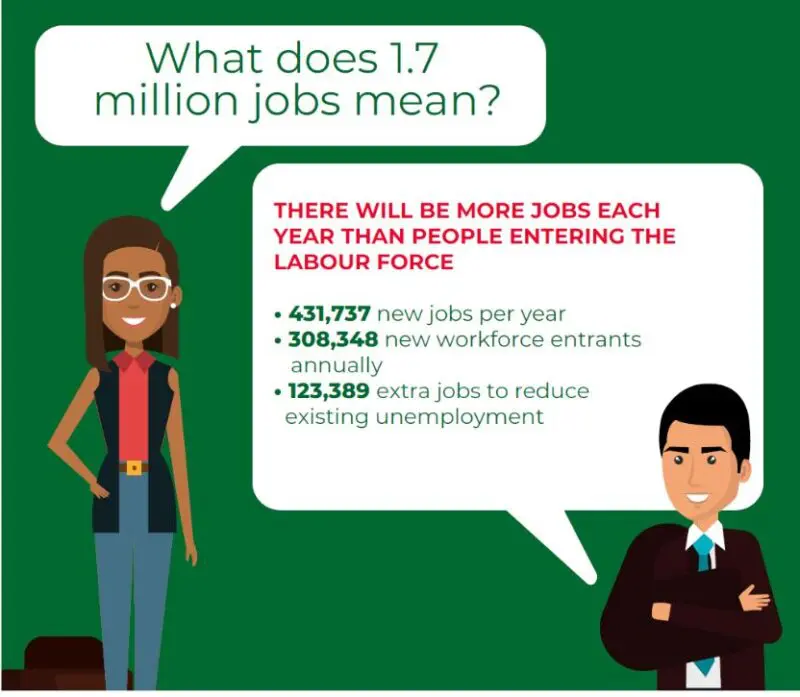
According to the NDC, the party aims to create 1.7 million jobs between 2025 and 2029.
This initiative will absorb the estimated 300,000 individuals entering the workforce annually and reduce unemployment by 120,000 each year.
The NDC’s Employment and Jobs Creation committee presented these plans at a briefing in Accra.
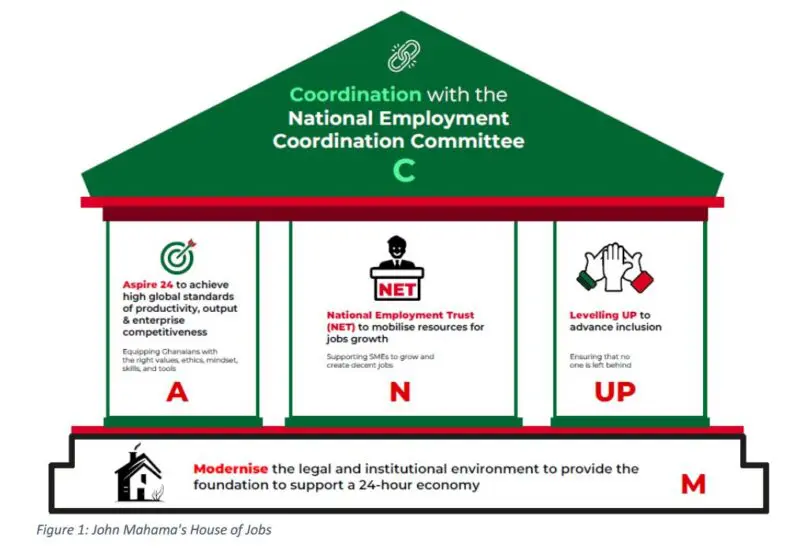
Despite the significant employment gap and economic challenges expected to be inherited from the NPP administration by January 7, 2025, the NDC intends to meet these goals through a strategy based on five key pillars.
We call this strategy MAN-UP-C:
a. M – Modernise and revamp employment institutions and legislation focused on job creation;
b. A – “Aspire 24” programme to reorient employer and employee mindsets’;
c. N – “National Employment Trust” to mobilise resources for a concerted jobs push;
d. UP – “Levelling Up” programme to ensure inclusiveness in employment; and
e. C – Coordination through a high-level “National Employment Coordination Committee”
The Truth About Unemployment
During a media interaction on August 25, 2024, the NPP’s presidential candidate, Dr. Mahamudu Bawumia, reiterated his claim that the party has generated 2.3 million jobs over a seven-year period and that unemployment is on the decline. However, he provided no evidence to substantiate these assertions, likely because they are inaccurate.
In reality, unemployment and its associated challenges—poverty, hopelessness, and despair—are on the rise across the country. Data from the Ghana Statistical Service’s Annual Household Income and Expenditure Survey reveals that 2.1 million Ghanaians, or 14.7% of the workforce, are currently unemployed.
This represents an increase of over one million jobless individuals since 2017. The unemployment rate has jumped from 8.3% in 2017 to 14.7% by 2023, which is the actual situation.
Additionally, many in employment cannot make ends meet. Of the 11.2 million people employed in 2023, an overwhelming 8.2 million (almost 70%) are in vulnerable work with low-paying jobs, no social protection, and poor working conditions.
They are trapped in a perennial cycle of poverty.
This is the category that we call “working poor”. This is also the truth.
The newly commissioned Mankessim Waste Treatment Plant in the Central Region is projected to generate approximately $750,000 in carbon credits, benefiting both the state and the operating company.
These funds are expected to be reinvested into the plant’s expansion and other areas of the economy.
During the inauguration on October 10, 2024, Dr. Joseph Siaw Agyepong, Executive Chairman of the Jospong Group, highlighted the evolving perception of waste, noting, “Waste is no longer disposable; it has become a valuable resource.”
Sanitation and Water Resources Minister, Ms. Seyram Alhassan, hailed the facility as a symbol of the government’s commitment to a cleaner Ghana.
She noted that it is one of 16 such plants nationwide, using advanced technology to convert waste into useful products like compost and plastic pellets while creating over 700 jobs.
Paramount Chief of Mankessim, His Eminence Osagyefo Amanfo Edu VI, expressed optimism that the compost production would help turn Mankessim into an agro-processing hub. He also reflected on his 30-year desire for a facility to address local waste issues.
Ms. Ophelia Mensah Hayford, Minister for Environment, acknowledged the plant’s significant contribution to environmental protection, noting that its completion held special meaning due to her late husband’s advocacy for such projects.
Health Minister, Dr. Bernard Okoe-Boye, welcomed the Medical Waste Treatment facility, which will address regional medical waste challenges, processing 9,600 kg of hazardous waste daily while creating around 300 jobs for local youth.
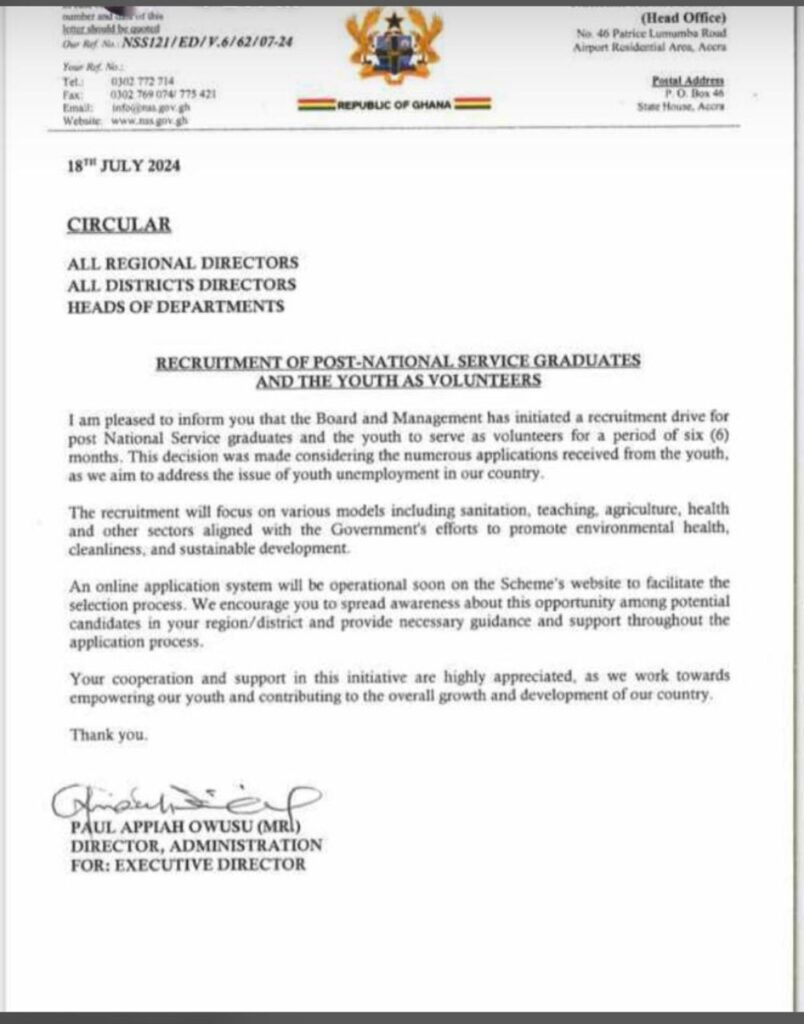
Youth without jobs and recent graduates are being sought after by the National Service Scheme (NSS) to serve as volunteers for six months.
The program states that the decision was made in light of the large number of applications from young people, with the intention of addressing the issue of youth unemployment in the nation.
“The recruitment will focus on various models including sanitation, teaching, agriculture, health and other sectors aligned with the Government’s efforts to promote environmental health, cleanliness, and sustainable development.”
“An online application system will be operational soon on the Scheme’s website to facilitate the selection process. We encourage you to spread awareness about this opportunity among potential candidates in your region/district and provide necessary guidance and support throughout the application process.”
Alan Kyerematen, the leader and founder of the Movement for Change, has announced an ambitious plan to create three million jobs for Ghanaian youth through an initiative dubbed “Operation Own Your Business.”
This proposal, which is part of his campaign for the December 7 presidential elections, focuses on empowering young graduates to become entrepreneurs.
Central to Kyerematen’s strategy is the provision of financial support to graduates, enabling them to start their own businesses.
He emphasized the critical role of entrepreneurship in driving economic growth and job creation, asserting that this initiative will unlock the potential of young Ghanaians.
“Empowering our youth to become business owners is essential for the economic future of our nation,” Kyerematen stated.
In addition to financial support for new businesses, Kyerematen proposed a compulsory apprenticeship and training programme for every Senior High School graduate.
This initiative aims to equip young people with essential skills through at least six months of training before they graduate, preparing them for the job market or entrepreneurial ventures.
“Our youth need the right skills to succeed in today’s competitive job market, and this training will provide them with a solid foundation,” he said.
Addressing national security concerns, Kyerematen pledged to offer free military, police, and security service training to graduates who choose to join Ghana’s security reserves.
This initiative not only aims to strengthen national security capabilities but also provides valuable career opportunities for young people interested in public service.
“By offering this training, we are ensuring that our youth have the opportunity to serve their country while gaining valuable skills,” Kyerematen noted.
Kyerematen also highlighted his plan to tackle unemployment in the health sector by establishing community hospitals owned and operated by the private sector and healthcare workers.
This approach aims to provide quality healthcare for all Ghanaians while creating job opportunities for health professionals. “By establishing community hospitals, we are addressing health sector unemployment and ensuring quality care for every Ghanaian,” he posted.
Government has revealed its intention to invest GH₵800 million in the Ghana Apprenticeship Programme (GAP) as part of efforts to promote skill development and employment creation.
Ghana is tapping into a loan of $40 million from the World Bank and €20 million from the German Development Bank for this initiative.
The Vice President, Dr Mahamudu Bawumia, made this known during the launch of the Ghana Apprenticeship Programme in Accra on Wednesday, March 13, 2024.
Vice President Dr Bawumia explained that the GAP would be of great benefit to unemployed or underemployed individuals seeking skills and jobs.
Others are high school graduates, university graduates and persons who have completed their national service can better their skills by enrolling unto the programme.
“By modernizing the apprenticeship system, GAP strives to make it more adaptable to the evolving needs of industries, enhancing the employability of apprentices and contributing to the overall competitiveness of the Ghanaian workforce,” the Vice President said.
Dr Bawumia further indicated that GAP has established voucher values, which will be reviewed and updated to meet the current economic needs of the private sector and training institutions, thereby strengthening Ghana’s apprenticeship landscape.
The government is implementing the programme through the Ministry of Education and Commission Technical Vocational Education and Training (CTVET).
The Chief Executive Officer of the Ghana Employers Association (GEA), Alex Frimpong, has disclosed that many businesses lack the capacity to absorb fresh graduates from tertiary institutions.
“We are not expanding as a business in recent times because of the current macroeconomic environment, and the best thing to do now is to try and keep the little that we have”, Alex Frimpong added.
“We don’t have the requisite vacancies to employ all these people and this has nothing to do with the quality of graduates coming out of our institutions”, Mr. Frimpong added.
He pointed out that businesses are struggling and the necessary expansion needed to accommodate these graduates is not occurring.
He also revealed that the job market is evolving, as many enterprises are unprepared to onboard and train these young graduates. Instead, they seek specific skills to fill existing positions at their workplaces.
The CEO of the Ghana Employers Association was responding to the recent report from the Ghana Statistical Service on unemployment, which indicates high unemployment rates among graduates and individuals with higher education.
Some argue that many of these graduates are now demanding better working conditions and higher salary levels, exacerbating the unemployment challenge.
Mr. Frimpong clarified that businesses are not refraining from hiring due to high salary demands from graduates, but rather due to a lack of available positions.
“We should realise that the formal sector is not expanding that much to take on all these persons coming from the formal education sector”, Mr. Frimpong added.
Also on the program, Seth Twum Akwaboah, the Chief Executive Officer of the Association of Ghana Industries, stated that the manufacturing sector prioritizes graduates with skills over those with higher levels of education.
“So don’t think that because you have a PhD, automatically you should command this level of salary and working condition”, he explained.
“For us, it’s about the skills and what you are bringing to the business and the manufacturing firms”, he added.
A member of the National Democratic Congress (NDC), Ayisha Alhassan, has challenged the job creation claims of New Patriotic Party (NPP) flagbearer Dr. Mahamudu Bawumia, stating that his assertion of generating approximately 2.1 million jobs since 2017 contradicts official unemployment statistics from the Ghana Statistical Service (GSS).
Alhassan, speaking on TV3, questioned the credibility of Vice President Bawumia’s figures, pointing to the GSS report indicating 1.3 million unemployed youth aged 15–35. She labeled Bawumia’s job creation narrative as inconsistent and fabricated.
“If you lie about creating 1.2 million jobs, the unemployment rates will expose you. The Ghana unemployment rate went up from 1.2 to 1.3 million, yet Alhaji Bawumia says he has created 2.1 million jobs,” she remarked.
“When you lie about creating 1.2 million jobs, the unemployment rates will expose you. The Ghana unemployment rate went up from 1.2 to 1.3 million, yet Alhaji Bawumia says he has created 2.1 million jobs.
“As for the stories about job creation, I don’t even want to go into the inconsistencies because previously, it was 5.3, then it moved to 2.3, and now we have 2.1 million jobs. I don’t know if they concoct those figures to come and announce to us,” she stated.
Ayisha Alhassan argued that genuine job creation would manifest in economic improvements such as enhanced economic growth, reduced interest rates, and increased tax revenues.
Contrary to this, she highlighted the current economic challenges of high inflation, debt, and fiscal deficits.
“If you have created 2.1 million jobs, it should reflect in the economy, as it will mean that a lot of economic activities will be going on. There would be a beef up in economic growth. Your interest rates would positively reflect it. Unfortunately, all economic indicators are pointing down south. They do not support any of these rhetoric,” she added.
Vice President Bawumia had proclaimed the creation of around 2.1 million jobs, covering both formal and informal sectors, during a lecture on February 7.
The former Managing Director and Shareholder of Cal Bank, Frank Adu Jnr., has expressed concern about the potential impact of youth unemployment in the country.
He emphasized his worry about the actions unemployed youth might take if they are not provided with immediate job opportunities.
When questioned about his concerns regarding the governance of the country, Mr Adu stated that his primary fear lies in the consequences of youth unemployment and what could happen if viable opportunities are not created for them.
Adu projected that Ghana might need to seek another bailout from the International Monetary Fund (IMF) after the current $3 billion program, attributing this potential necessity to leaders prioritizing personal political ambitions over national interests.
He criticized the government’s decision-making, citing examples such as the Domestic Debt Exchange Programme (DDEP) and the failure to prioritize the national interest in economic decisions.
Regarding the DDEP, Adu advocated for a more compassionate approach, suggesting that the government should have excluded certain groups, such as prisoners and pensioners, from the program.
He highlighted the adverse impact of the DDEP on established financial theories related to pension planning and expressed concern for pensioners who had invested in bonds.
Adu also criticized the government’s handling of the situation, suggesting that they missed an opportunity to reset interest rates and ease the financial burden caused by the DDEP.
He proposed a more considerate approach that would have isolated and exempted certain vulnerable groups, such as pensioners, from the program.
Vice-President, Dr. Mahamudu Bawumia has inaugurated a project aimed at empowering 250,000 young individuals to secure dignified and fulfilling employment within the next four years.
The Business in Box (BizBox) initiative, backed by an investment of GH¢660 million, is set to equip young entrepreneurs with essential tools, knowledge, and support for starting and expanding their businesses.
Implemented by the Ghana Enterprises Agency (GEA) in collaboration with the Mastercard Foundation, the BizBox project is slated to run until April 2027.
It will encompass training in life skills, technical expertise, entrepreneurship, and business development to foster growth and scalability.
Additionally, the initiative will provide mentorship, market access, regulatory support, and startup kits across diverse sectors, including agriculture, agri-adjacent industries, tourism, the creative industry, building and construction, among others.
Speaking at the project launch following a campaign in Accra, Dr. Bawumia emphasized that BizBox builds on the success of the “Young Africa Works” initiative implemented between 2020 and 2022, which impacted around 94,000 young people by creating employment opportunities.
The Vice-President expressed the goal of BizBox to further scale up and empower 250,000 individuals, supporting 125,000 youth with startup kits, providing market access to 50,000 businesses, and offering regulatory support to 40,000 businesses.
Describing BizBox as more than a project, Dr. Bawumia highlighted its significance as a symbol of hope and opportunities, encompassing tools, knowledge, and support for developing and growing successful businesses.
The project specifically targets youth aged 15 to 35, persons with disabilities (PWDs), vulnerable females, women business owners, and female-led youth businesses.
Vice President Dr. Mahamudu Bawumia has assured Ghanaians of the government’s commitment to generating additional employment opportunities through various initiatives.
Speaking at the launch of the government’s latest business and youth intervention, the Business and Employment Assistance Programme in Sunyani on Monday, December 11, Dr. Bawumia highlighted that the government has successfully created 2.1 million jobs over the past seven years.
The newly introduced initiative, spearheaded by the Youth Employment Agency (YEA), aims to bolster 10,000 businesses owned by young Ghanaians, providing employment for 20,000 youth, with their salaries covered by the Youth Employment Agency (YEA). Dr. Bawumia emphasized that these new jobs would supplement the existing 2.1 million employment opportunities already generated.
He expressed optimism that this initiative would contribute to sustaining and expanding businesses while concurrently offering valuable job prospects.
Dr. Bawumia reiterated the government’s unwavering dedication to job creation, emphasizing the additional opportunities provided to the youth through various interventions under the YEA and other affiliated agencies.
“The Business and Employment Assistance Programme and other youth interventions under the YEA and under agencies, underline our government’s commitment to creating more jobs and opportunities to the youth, in addition to the 2.1m jobs created by the government in the past seven years in the public and private sectors respectively,” the flagbearer of the New Patriotic Party (NPP) said.
The swift advancement of renewable energies demands top-notch technical and engineering expertise. However, a study program tailored for a challenging professional environment requires a strong emphasis on didactic quality in designing and implementing modules and learning units.
The “Professional Education for Renewable Energy in Ghana (ProREG)” project places a significant focus on practical aspects of renewable energy in the country, employing teaching and learning formats adapted to these needs. Funded by the German Academic Exchange Service (DAAD), the project is scheduled to run from July 2022 to December 2025.
ProREG aims to enhance the labor market relevance of education in the field of renewable energy in Ghana. The current challenge is that graduates often require substantial effort and lengthy training periods to be employable by companies, impeding the broader expansion of renewable energies in the country. To address this, three primary project objectives have been collaboratively defined for improvement:
Integration of new practice-relevant modules in the field of renewable energies into the curricula of KNUST and UENR and training of lecturers at KNUST and UENR, equipping them with expertise in agile teaching and learning formats focused on the practical application of renewable energies.
An international network of experts, entrepreneurs, and companies in the field of renewable energies is operative and in active contact with the “Council for Education and Renewable Energies”.
The University for Energy and Natural Resources (UENR), Sunyani; Kwame Nkrumah University of Science and Technology (KNUST), Kumasi; and Technische Universität Berlin (TUB, coordinator) are the project’s partners.
Redavia (DE), Microenergy International (DE), Stella Futura Ghana Ltd. (GH), Association of Ghana Industries (GH), Greentech Biogas Engineering Services (GH), and the Bui Power Authority (GH) are the partner companies.
Finance Minister Ken Ofori-Atta, has stated that under the Akufo-Addo-led government, a total of 2.3 million jobs have been created.
Providing a breakdown, the minister indicated that 1.4 million jobs were created in the public sector, whereas approximately 900,000 jobs were provided in the private sector.
The Finance Minister made this known while presenting the 2024 budget statement in Parliament today, November 15.
According to the minister, the government has made several investments across the various sectors of the economy including energy and education.
He noted that an investment of GH¢32.7 billion has been made by the government to ensure the consistent supply of electricity.
Mr Ofori-Atta also stated that the government has invested GH¢25.3 billion to facilitate the repositioning of the financial sector and enhance its ability to assist business operations.
“To date, the Development Bank Ghana has facilitated GH¢1 billion in competitive financing for the private sector, and GIRSAL continues to mitigate risks in the agriculture sector,” he said.
He added that government has among others; supported 100,000 young graduates to secure workplace experience and employment by investing GH¢2.4 billion in NABCO; invested GH¢7.1 billion to build road and transport infrastructure to improve connectivity and productivity; invested GH¢541.5 million in 169 1D1F enterprises to scale-up value- addition and provided 140,000 additional jobs; and created over 2.3 million jobs in the private and public sectors (approximately 900,000 in the private sector and 1.4 million in the public sector).
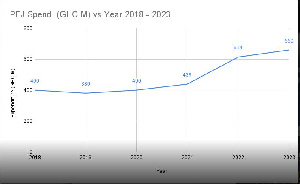
Minority MPs estimate that since Planting for Foodand Jobs (PFJ) was launched in 2017, the government has spent a total of GH2.9 billion on the program.
According to a breakdown of program spending, the government invested GH400 million in 2018, GH380 million in 2019, and GH400 million or so in 2020. In addition, the program received GH 439 million in 2021, GH 614 million in 2022, and GH 660 million in 2023.
The sector’s growth rate has regrettably stayed low at around 0.7 percent, they claimed, despite the enormous sums spent, as the nation struggles with soaring food inflation not seen in decades.
“Having inherited an agricultural sector with a growth rate of 2.7 percent in 2016, and after expending millions of cedis on PFJ for six years, agriculture growth currently stands at a disastrous 0.7 percent,” the deputy Ranking Member, Committee on Food, Agriculture and Cocoa Affairs, Dr. Godfred Seidu Jasaw, said in a press statement.
Launched in 2017, the Planting for Food and Jobs (PFJ) initiative aimed to modernize agriculture, enhance production, and attain food security and profitability for farmers. The initial phase of PFJ, which focused on crops, sought to bolster food security, ensure the immediate availability of select food crops in the market, and generate employment opportunities.
However, it’s worth noting that headline inflation surged to a staggering 54.1 percent in December 2022 and currently stands at 43.1 percent. In light of these economic challenges, the program has been deemed a significant failure with limited tangible outcomes.
The minority has also expressed reservations regarding the allocation of GH¢660 million to PFJ in 2023, despite the government’s announcement that the first phase of PFJ concluded in December 2022. Consequently, they have called for transparency and demanded clarification regarding the purpose of the 2023 allocation.
Meanwhile, President Nana Akufo-Addo introduced the second phase of PFJ last month, which signifies a shift in policy direction from input subsidies in the initial phase to an input credit guarantee system.
“Why has government failed to support food-crop farmers in Ghana since January 2023? Private agro-dealers and aggregators have been implementing various forms of input credit support schemes to farmers for many years now; what exactly will this new PFJ input credit do differently?
“We still cannot account for the so-called increased production figures that were being churned out by the Minister for Agriculture. Where is the maize? Where is the rice? Where are the soybeans? One would have reasonably expected to have a food glut in Ghana by now, which would have driven down prices,” he stated.
The statement outlined several recognized limitations within the initial phase of the program. These included imposing a significant budgetary burden on the government, adopting the value chain approach, restricted access to agricultural credit, a low prioritization of the national strategic stock, and insufficient attention to the requirements of commercial small, medium, and large-scale farmers.
Furthermore, the minority member pointed out that the government rebranded PFJ from its original initiative, which was initially introduced during the tenure of former President Mahama and the NDC administration. The original program, known as the ‘Modernisation of Agricultural Productivity to the Local Economy’ (MAPLE), was intended to receive funding from the Canadian government, with an allocation of C$125 million, equivalent to US$120 million.
Dr. Seidu Jasaw asserted that a thorough examination of the PFJ Phase 2 program document revealed that it lacked substantial novelty and was unlikely to make a significant contribution to enhancing the country’s food security.
“We contend that the objective of this new scheme is to erase the mess from the programme’s failed first phase, and create a face-saving platform to continue the dissipation of our scarce resources through establishments by ‘this family and friends’ government,” the statement captured.
The government was also questioned about how it would safeguard smallholder farmers from the profit-driven practices and market risks that input dealers engage in, as well as how it would achieve import substitution for essential goods like rice, maize, and poultry since there are no policies in place to lower input/production costs.
Dr. Seidu Jasaw pointed out that the economy is unable to finance an input subsidy scheme under the IMF program.
Ghana is currently facing economic challenges, which necessitates Ghanaians to align their incomes with the prevailing inflation rate.
In June 2023, inflation edged up to 42.5% from the previous month’s 42.2%. This surge means that the prices of goods have risen by 42.5% within that month.
Consequently, if incomes remain stagnant while prices of goods and services increase, consumers might find themselves burdened with debt or forced to cut back on spending.
Though the immediate impact may not be readily apparent, over time, these developments can lead to a decline in the overall quality of life.
Ghana’s minimum wage currently stands at GH¢14.88, and traditionally, it was believed that public service jobs offered better salaries compared to those in the private sector.
However, with the rise of the private sector and entrepreneurship, the validity of this notion has become less clear.
For the purpose of this article, the focus will be on identifying the best-paying jobs available in Ghana in 2023.
1. Civil engineering Civil engineers deal with matters related to infrastructural projects. They handle creativity, design, supervision, construction, and maintenance. Since their jobs deal with infrastructure development, they are able to work remotely, for the private sector and public sector as well. Mostly, their jobs are also contract-based.
2. Business Analysis Business analysis deals with everything that concerns businesses. Analysts help to assess every aspect of a business and come up with ways to improve or ensure the business’ growth. Analysts are paid quite decent salaries.
3. University Professor The teaching profession may not be so rewarding at the lower levels but climbing up, University lecturers and professors earn quite decent salaries.
4. Medical Doctor In recent times, Ghana has seen the exodus of medical doctors to other Western countries in search of greener pastures. However, the profession still remains one with quite decent paychecks.
5. Lawyers Lawyers are also part of the high-salaried workers in Ghana. Usually, lawyers are highly sought-after due to the high rates they charge from their clients.
6. IT specialist Players in the IT space have gained their position as part of the highest earners in Ghana due to the evolution of the internet.
7. Network Engineering Network Engineers design, build, and configure networks. do a variety of tasks, including upgrading equipment, setting up nodes, and troubleshooting, among others.
8. Human Resource Personnel HR managers are responsible for the general well being of employees of a company. They serve as recruiters and applicant screeners during each round of the hiring process. They also handle training and orientation of newly hired employees. They also handle scheduling, payroll, incident reports, and other relevant tasks.
9. Product Management A Product Manager’s task is to find out what customers need. They gather this data through thorough market research, customer feedback, and surveys.
10. Customer Service Representative Just like the name of the role, they handle the needs of customers and ensure that they are always satisfied.
Professor William Baah-Boateng, an economist, has urged decision-makers to shift their focus from job creation to employment generation.
He warned that if politicians continued to use “gigs” to address the unemployment crisis in the country, they would unintentionally create even more unemployment. He used the term “job creation” to refer to temporary employment over a very short period of time.
Speaking on JoyNews, he said, “Yes, you’ve created that amount of job that is fine, but if you’ve created that amount of job and it’s not sustainable – it takes just a week for that job [to be done], the person will come back to ask for more.
“And that is why your unemployment rate will continue to rise because you’ve created a job for a person and that job lasted for only one month or only a week. So after that the person joins the unemployed.”
He noted that to get a clearer picture of the employment situation in the country, he advised that policymakers pay critical attention to those exiting the job market.
“When you want to talk about employment generation or you want to equate it as job creation in terms of numbers you need to look at the exit, those who are exiting, to be able to get the net. So you’re here, business desk, let’s say you have five people employed and then three leaves.
“Three of them they leave so you’re left with two and then your employers bring two so you’re four and you say ‘oh we have created jobs for two people’ that it cannot be because three people have left and replaced them by two. So if anything at all there is negative employment creation,” he said.
According to Prof. Baah-Boateng, to achieve sustainable employment policymakers would have to create jobs that can keep a person employed for at least half a year.
“So policymakers should move away from what they call job creation to employment generation. And that employment generation here we’re talking about employing somebody sustainably, and that kind of employment can last for at least six months,” he said.
His comments come on the back of the Ghana Statistical Service’s Quarterly Labour Statistics Report which revealed that about 1.76 million persons were unemployed in the third quarter of 2022.
Within this population, two out of every three unemployed persons were females.
Across the three quarters, about 157,000 persons experienced an unemployment spell that is they were unemployed in all the quarters.
The report further said close to 7.5 million persons remained employed throughout the three quarters out of the about 11 million persons employed in each quarter.
This indicates that across the three quarters about 3.5 million persons were moving in and out of employment depicting vulnerabilities.
Females account for two-thirds of the unemployed in Ghana, according to the 2022 Annual Household Income and Expenditure Survey Third Quarter Labour Statistics Report, which was released on Wednesday, May 3, 2023.
The Government Statistician,Professor Samuel Kobina Annim, emphasized at the report launch that the high rates of female unemployment were not solely due to their gender.
He stated that the unemployment rate for females was almost double that of males. “Unemployment among females was close to twice of males,” he said.
In the first three quarters of last year, about 157,000 individuals, which accounted for roughly 13.2% of the labour force, experienced a spell of unemployment lasting one or more days.
Other findings
According to the report, around 7.5 million individuals held their jobs continuously for three quarters out of approximately 11 million employees in each quarter. This suggests that roughly 3.5 million individuals were experiencing employment fluctuations over the three quarters, indicating vulnerability.
67% of jobless Ghanaians are women
Another important discovery was that the likelihood of shifting from informal employment to unemployment is five times greater on average than transitioning from formal employment to unemployment.
In Q3, two out of every three individuals who were unemployed but had been employed in Q1 were in precarious employment during the first quarter.
Lastly, the group of people who are burdened by the triple threat of being unemployed, food insecure, and multidimensionally impoverished increased by almost 55,000 between Q2 and Q3.
In support of his assertion that the Akufo-Addo administration has produced more than two million jobs in the last six years, Vice President Dr. Mahamudu Bawumia provided statistics.
He stated in a Facebook post that the list is to show “naysayers” who questioned the statistics that the facts are accurate, therefore must “do away with negative thinking.”
The Vice President found it necessary to address the matter as some citizens cast aspersions on the work done by the government when Dr Bawumia delivered a speech at the national Eid-ul-Fitr celebration in Independence Square over the weekend.
Attached comprehensive data which specified the ministry, the agency or department of the ministry in which the jobs were created as well as the number of jobs created under each category from 2017 to 2022.
According to a report by investment bank Goldman Sachs, artificial intelligence (AI) might replace the equivalent of 300 million full-time jobs.
That might result in a quarter of work duties in the US and Europe being replaced, but it might also create new jobs and boost productivity.
Also, it may eventually result in a 7% annual rise in the value of all goods and services produced globally.
The report calls generative AI “a major advancement” since it can produce content that is indistinguishable from human-produced stuff.
The government is keen to promote investment in AI in the UK, which it says will “ultimately drive productivity across the economy”, and has tried to reassure the public about its impact.
“We want to make sure that AI is complementing the way we work in the UK, not disrupting it – making our jobs better, rather than taking them away,” Technology Secretary Michelle Donelan told the Sun.
The report notes AI’s impact will vary across different sectors – 46% of tasks in administrative and 44% in legal professions could be automated but only 6% in construction 4% in maintenance, it says.
According to research cited by the report, 60% of workers are in occupations that did not exist in 1940.
But other research suggests technological change since the 1980s has displaced workers faster than it has created jobs.
And if generative AI is like previous information-technology advances, the report concludes, it could reduce employment in the near term.
The long-term impact of AI, however, was highly uncertain, chief executive of the Resolution Foundation think tank Torsten Bell told BBC News, “so all firm predictions should be taken with a very large pinch of salt”.
“We do not know how the technology will evolve or how firms will integrate it into how they work,” he said.
“That’s not to say that AI won’t disrupt the way we work – but we should focus too on the potential living-standards gains from higher-productivity work and cheaper-to-run services, as well as the risk of falling behind if other firms and economies better adapt to technological change.”
Bank of Ghana (BoG) has announced a drastic decline in the number of advertised jobs in the country.
The total number of advertised jobs in selected print and online media in 2022, which partially gauges labour demand in the economy, fell by 5.3% to 32,651, the Bank of Ghana has revealed.
This is against 34,484 recorded during 2021.
But the number of jobs advertised increased in December 2022 relative to a year ago.
According to the Bank of Ghana, 3,277 job adverts were recorded as compared with 2,588 for the same period in 2021, an increase of 26.6% year-on-year.
On a month-on-month basis, the number of job vacancies in December 2022 went up by 17.9% from the 2,779 jobs advertised in November 2022.
Most job descriptions include the position’s title, the qualifications needed, and the duties involved, but they omit the most crucial detail: the salary.: The salary.
But that’s about to change, according to a new survey that finds a flood of new employers plan to publicly postpay ranges in upcoming job ads, following a series of state and local laws that now mandate the disclosures. A survey of nearly 400 employers by the advisory firm WTW, formerly known as Willis Towers Watson, found that while only 17% say they currently post salary ranges in locations where there is not a legal requirement to do so, an additional 62% say they are either planning to or considering adding pay ranges to job postings even in places where it’s not required by law.
“By the first of next year, job seekers are likely to see a brand new world in terms of job postings—one where they can see what the job pays before they even have to go through an application or interview,” says Christine Hendrickson, vice president of strategic initiatives at Syndio, which conducts pay equity analyses for corporations.
She points to a “trifecta” of populous states and major localities that have bills expected to become law or laws that will go into effect in the coming months. Late last month, the California legislature approved a bill that Gov. Gavin Newsom has until Sept. 30 to sign or veto. It will require employers with 15 or more workers to include a job’s pay scale in job postings, as well as provide similar information to employees and, for companies with more than 100 employees, submit a pay report to the state that includes median and mean pay rates by race, gender and ethnicity.
Starting Nov. 1, employers hiring job candidates in New York City will have to include job postings in ads, and at the start of next year, the state of Washington will have a similar requirement. (Colorado was the first state to pass such a law in 2019; it went into effect in early 2021. Local governments in Ithaca, N.Y., Westchester County, N.Y., and Jersey City, N.J. have passed similar measures.)
Washington’s new law was the likely catalyst for Microsoft’s announcement in June that it would disclose salary ranges in all internal and external U.S. job postings no later than January 2023, no matter where the job is located. After the company said in a blog post that it would add the “best practice” of committing to publicly disclose salary ranges by January, many predicted other companies would follow the tech bellwether’s move.
For national or multi-state employers, having a patchwork of policies between different locations can make things too complex, say human resources experts, setting up different rules for different states and unequal access to information for employees who live in locations that don’t have laws in place.
Mariann Madden, who co-leads WTW’s fair pay practice for North America, compares the growing interest in adopting a national policy to how employers responded after a number of states passed bans against asking job candidates about their salary history. “Companies just decided I’m going to take a national approach,” she says.
The new law in California is expected to have a particularly big impact. “It’s the fifth largest economy in the world,” says Hendrickson. New York State also has legislation in the works, and both Hendrickson and Madden expect more local jurisdictions to work on similar legislation.
Of course, some employers aren’t ready to reveal those numbers to the world, whether due to worries they aren’t paying at the level of competitors, a lack of internal clarity about how jobs are paid or, more likely, concerns about pay equity discrepancies and how they would be received by workers if shared publicly. Nearly half of the organizations cited the reactions of employees as a reason they were holding back on communicating about pay, and a quarter pointed to a lack of clear job titles and pay bands as reasons for not saying more.
But human resources experts predict they won’t be able to hold back for too long, thanks to shifting employee norms and expectations about pay transparency. “Employers need to own that narrative because it causes chaos if you have incorrect information swirling around,” says Hendrickson. “Employers are realizing half-truths and partial information doesn’t serve them well, and creates much more complication than it solves.”
The team leader of technical advisers, Invest for jobs (GIZ) has urged stakeholders to support Small and Medium-sized Enterprises (SMEs) in other to create more jobs in the country.
According to him, investing in SMEs would also strengthen the economy of the country as it involves a higher labour force.
He said, “As part of this program, and a major component of it, I must say is for us to identify growth-oriented SMEs in Ghana, support them grow and to grow further, expand, and by so doing, create decent jobs, together with our partners.”
“We all recognize the fact that SMEs are the backbone of our economy in Ghana. They constitute I’m told and I’m aware, they engage more than 80 percent of the labor force here in Ghana. And we can not underestimate the significance of SMEs in Ghana.”
He was speaking at the official launch of the final edition of the Green SME Networking Festival in Tamale on Tuesday, October 4, 2022.
Mr. John Duti said the aim to introduce these festivals is because of climate change, hence the need for SMEs (the 100 SMEs in the festival)to consider the environment in their production processes.
“We really want to discuss green and greening. We all know, and we’re experiencing the effects of climate change. We are witnessing erratic rainfalls, we are witnessing a lot of changes in our weather, our climate that we never saw in the past 10 years, and therefore the fact that the climate has changed, we are experiencing it, then it’s incumbent on all of us in our ways to support efforts to mitigate the effects of our actions on the climate”, he said.
He urged the selected 100 SMEs to consider themselves lucky and take the three-day workshop seriously as they were selected from 397 applicants.
Meanwhile, this is the final edition of the Green Festival for the year 2022 after the first and second editions happened in Accra and Kumasi respectively.
The District Chief Executive (DCE) of Ada West, Mr Adzoteye Lawer Akrofi believes the ratification of the mining leases to the Ada Songhor Salt Project will alleviate poverty among the youth and women by creating over 600 jobs.
Addressing the press, Mr Adzoteye Lawer Akrofi said poverty which happens to be the biggest problem in the district will be reduced significantly in the area with jobs set to be created for the people.
“The Songhor salt project certainly offers job opportunities to the youth and the women who will sell around and even those who own lands, the value shall be added to the lands and so all sort of jobs will be created,†Mr Akrofi said.
Mr Akrofi added that the Songhor salt project has the capacity of producing 2.3million metric tons of salt annually.
He noted that in the next three years, the project would be able to produce over one million metric tons as compared to the 60 per cent it produces currently.
“This will mean that all the bi-product like petrochemical as well as caustic soda among others and even in the agriculture sector, the raw salt is being used and therefore it is something that is going to lift up Ada West from the poorest district in Greater Accra to the richest in the region,†he explained.
He encouraged members of the district to rally around and support Electrochem Ghana Limited to deliver the kind of development the district is lacking to the benefits of all.
The traditional leaders of Ada had expressed gratitude to President Akufo-Addo and the NPP government for ensuring the ratification of the mining leases to the Ada Songhor Salt Project at the opening ceremony of the project.
They have noted that their people had been deprived of access to the river for both fishing and salt mining for over decades and lauded the government for bringing a lasting solution to the issue.
A resident of Songhor, Mr Dodzie Numekevor also expressed satisfaction that the salt project is finally starting.
“We the youth will get something to do to feed our families, we thank the President for granting our request, as young people, we know this is our time and we will make the best out of it,†he said.
Deputy Minister for Food and Agriculture, George Oduro says the government will continue to work to open more factories in local communities to create jobs for the youth.
He said the government through the planting for food and jobs, planting for exports and rural development as well as the one district one factory programmes, was creating avenues to expand employment opportunities for the youth in the country.
Mr Oduro, who is also the Member of Parliament for Adansi South, stated this when he addressed party supporters after a health walk in some principal streets of New Edubiase.
He said the government was currently expanding infrastructural facilities in senior high schools to help accommodate the high number of students benefiting from the free senior high school initiative.
Additionally, facilities in public universities were being expanded to help admit the increasing number of students who would be enrolled following the introduction of the free SHS policy.
The government was also expanding access to tertiary education by removing bottlenecks that prevented poor and needy students from going to the university through the introduction of the free guarantor system, to enable needy students have easy access to finance to support their education.
Mr Oduro said the NPP government had done well in its first term and needed another term to continue to work to consolidate the gains and transform the country to improve the living conditions of the people.
Mr Francis Ankomah, District Chief Executive for Adansi South, said the party was poised to retain the parliamentary seat to enable the government continue its development agenda in the area.
He stressed the need for the youth to lead the campaign to retain the seat.
The Minister for Employment and Labour Relations, Ignatius Baffour-Awuah has revealed that over 11.2 million jobs were affected in the country by the coronavirus pandemic.
Mr Baffour-Awuah explained that the labour force was largely affected in terms of pay cut and downsizing of workers.
He noted that based on a survey conducted by the ministry on 44,000 people, l7,685 of them lost their jobs with the rest either being asked to work from home or suffering pay cuts.
Speaking at the Meet the Press Series in Accra on September 16, 2020 to address the nation on the effect of COVID-19 on the workforce and progress made by the ministry, Baffour-Awuah said: “Results of the survey indicated that 17,685 out of the 44000, that is 40 per cent of workers suffered pay cuts.
“Pay cuts were highest among medium scale enterprises with 46 per cent of workers affected and lowest among small scale enterprises with 38 per cent being affected.â€
He added that 98.5% of these workers who lost their jobs as a result of the COVID-19 pandemic were mostly in the private sector, adding that no job losses were recorded in the public sector due to the efforts and measures put in place by the government.
Mr Baffour-Awuah stated that the government has learnt lessons from the effect of the COVID-19 pandemic and has, therefore, brought into force the National Unemployment Insurance Scheme that will help support workers in the formal sector when the labour force is hit hard by any crisis of such nature in future.
Former President John Dramani Mahama and flagbearer of the National Democratic Congress (NDC) has promised the people of Akatsi South that youth employment will be cardinal in his second coming.
He therefore urged the people to turn out in many droves to vote massively to make this possible.
The former President said this on Tuesday, when he met the chiefs of Akatsi South, some religious groups and the leadership of the party in the constituency at Akatsi-Torve Kpota Catholic Diocese long hall.
He stated that when Ghanaians gifted him with another mandate after the December 7 polls, he would complete all the projects that were initiated by the NDC, but halted.
Mr Mahama enumerated some abandoned projects such as the Akatsi District hospital, which he said was 90 percent complete, some electrification projects in the area, including; the Avenorpeme to Xavi road, Ave-Dakpa road among others.
He promised residents of Akatsi South of providing the requisite processing machinery that would help farmers in processing their farm produce to avoid post-harvest losses.
Torgbui Dorglo Anumah VI, Paramount Chief and President of Avenor Traditional Council on behalf of the chiefs and people of Akatsi South, appealed to Mr. Mahama to complete all uncompleted projects he mentioned if reelected. He expressed the excitement about the visit and advised the Flag-bearer not to endanger the peace now, during or after the elections.
Other party stalwarts present included; Professor Joshua Alabi, Mr Edward Doe Adjaho, former Speaker of Parliament, Mr Julius Deborah, former Chief of Staff and some Regional Executives and Constituency Executives of the party.
Multitudes of party supporters milled to the venue to catch a glimpse of Mr Mahama with the security having a tough time wading off the people at Torve.
The owner of the Daily Mirror and the Daily Express is to cut 12% of its workforce as it struggles with the impact of the coronavirus pandemic.
Reach, which also owns the Daily Star, OK! Magazine and a stable of regional newspapers, said about 550 people would lose their jobs.
The group, whose sales were falling even before the pandemic, saw revenue slip nearly 30% in the quarter to June.
Boss Jim Mullen blamed a fall in circulation and advertising revenue.
“To meet these challenges and to accelerate our customer value strategy, we have completed plans to transform the business and are ready to begin the process of implementation,†he said.
“Regrettably, these plans involve a reduction in our workforce and we will ensure all impacted colleagues are treated with fairness and respect throughout the forthcoming consultation process.â€
Digital revenue falls
Reach, which was created in March 2018 when Trinity Mirror bought the Daily Express and other titles, saw a 13% drop in revenue last year amid a continued decline in print newspaper sales.
However, it was also becoming more profitable as it cut costs and attracted more online readers.
That process now appears to be at risk as advertisers have reined in their spending during the pandemic.
The firm said adoption of its digital products had increased in the three months to June, with 41 million people visiting its sites during May alone. But digital revenue still fell 14.8%, compounding an almost 30% dive in newspaper sales.
Reach said it would now achieve annualised savings of £35m through the job cuts and other means.
Building on a plan announced in February, it said it would centralise its editorial operations, bringing together national and regional teams across print and digital to remove duplication.
It will also bring in a simpler management structure.
Reach said it would shortly begin a 45-day consultation regarding the job cuts.
It is the latest in a long line of companies to have made cuts during the pandemic. Other lay-offs announced include:
The US economy created jobs at a record pace in June as firms took on more staff after the coronavirus downturn.
Payrolls surged 4.8 million, the most since the Labor Department began keeping records in 1939, helped by the reopening of factories and restaurants.
It follows May’s jobs rebound, when 2.5 million joined the labour market, and comes after consumer spending data saw a jump in activity.
But a recent spike in Covid-19 cases has raised fears for continued growth.
June’s rise is far higher than the three million jobs that many economists forecast would be created last month.
However, separate Labor Department data also showed that in the week ending 27 June, initial claims for unemployment fell only slightly, to 1.43 million, on the previous week.
Oxford Economics called it a “worryingly small decline”.
Companies, including in populous states such as California, Florida and Texas, plan to scale back or delay reopening because of the fresh coronavirus outbreaks, which would hold back hiring.
This week, Federal Reserve chairman Jerome Powell acknowledged the rebound in activity, saying the economy had “entered an important new phase”. But he warned that continuing growth would depend on “our success in containing the virus”.
And despite two months in a row of jobs growth, employment is still about 15 million below its pre-pandemic level, with the jobless rate just above 11%.
Kwabena Okyere Darko-Mensah, the Western Regional Minister, has called on the youth to form stronger patnerships to ensure talents boost in the field of entrepreneurship.
He stated that the most important thing that could help the country was for the young people to take a positive lead, which comes through learning and sharing of ideas in a more innovative manner that can solve societal problems.
Darko-Mensah was addressing a consultative stakeholders meeting in Takoradi on the “Role of Web Technology for Digital Transformation of the Local Economy for Job Creation and Economic Development”.
The programme was initiated by International Conference on Open and Distance Education (ICODE), Tech Firm in the Metropolis with support from Ghana TechLab, Young Africa Works, the World Bank and the Ministry of Communications to empower young people to create jobs and help develop their talents.
Digitization, he said, affected every aspect of human life and urged the youth who were into this kind of entrepreneurship to endeavour to solve societal problems.
“The introduction of digital technologies has triggered the creation of new business models and revenue streams.
Emerging technologies such as artificial intelligence (AI), cloud archives, and the Internet of Things (IoT), accelerate transformation, while fundamental technologies such as data management and analysis are needed to analyze the huge amounts of data that result from digital transformation.
“Although technology and computing have been present in our daily lives for decades, the concept of digital transformation is relatively new though it has popularized the use of the Internet”.
The Project Lead at LogigTech, Nana Baisie, during a panel discussion, said the global COVID-19 pandemic, has exposed deficiencies in Web Technology and digital transformation and equally taught how certain breakthrough would not have been achieved without certain Web Technologies, describing it as a boom season in the Web Development Sector.
“Without the appropriate Web Technologies most of the things we are able to do and we are able to achieve today would not have be possible,” he added.
The Programmes Manager at ICODE, Ms Phoebe Addison, said “one of the most difficult issues in digital transformation visualization was the execution of the process aside obstacles such as budgets, finding talents and cultural changesâ€.
Kwabena Okyere Darko-Mensah, the Western Regional Minister, has called on the youth to form stronger Patnerships to ensure talents boost in the field of entrepreneurship.
He stated that the most important thing that could help the country was for the young people to take a positive lead, which comes through learning and sharing of ideas in a more innovative manner that can solve societal problems.
Mr. Darko-Mensah was addressing a consultative stakeholders meeting in Takoradi on the “Role of Web Technology for Digital Transformation of the Local Economy for Job Creation and Economic Development”.
The programme was initiated by International Conference on Open and Distance Education (ICODE), Tech Firm in the Metropolis with support from Ghana TechLab, Young Africa Works, the World Bank and the Ministry of Communications to empower young people to create jobs and help develop their talents.
Digitization, he said, affected every aspect of human life and urged the youth who were into this kind of entrepreneurship to endeavour to solve societal problems.
“The introduction of digital technologies has triggered the creation of new business models and revenue streams. Emerging technologies such as artificial intelligence (AI), cloud archives, and the Internet of Things (IoT), accelerate transformation, while fundamental technologies such as data management and analysis are needed to analyze the huge amounts of data that result from digital transformation.
“Although technology and computing have been present in our daily lives for decades, the concept of digital transformation is relatively new though it has popularized the use of the Internet”.
The Project Lead at LogigTech, Nana Baisie, during a panel discussion, said the global COVID-19 pandemic, has exposed deficiencies in Web Technology and digital transformation and equally taught how certain breakthrough would not have been achieved without certain Web Technologies, describing it as a boom season in the Web Development Sector.
“Without the appropriate Web Technologies most of the things we are able to do and we are able to achieve today would not have be possible,” he added.
The Programmes Manager at ICODE, Ms Phoebe Addison, said “one of the most difficult issues in digital transformation visualization was the execution of the process aside obstacles such as budgets, finding talents and cultural changesâ€.
The Industrial and Commercial Workers Union (ICU) has commended the public service and some multinational companies for ensuring job security amidst the outbreak of COVID-19 in Ghana.
According to the union, but for its timely intervention, many more employees would have lost their jobs due to the pandemic.
So far, the Ghana Tourism Federation for instance says about 800,000 workers in the hospitality industry have lost their jobs due to the pandemic.
As the Union celebrates its 60th anniversary, the General Secretary of ICU, Solomon Kotei says his outfit will continue to fight for the rights of workers in Ghana.
“Because we are very dominant in the public sector, there is no indication of layoffs to come. But when you look at the private sectors, individuals and the multinationals they have not given any signal of wanting to lay off any worker. In fact, they have not drawn us to the table of whether or not if they are going to do some salary cuts or what have you. This gives us the spirit that we need to go the extra mile to make sure that the businesses are sustained so that after this COVID-19, all of us will be able to find our jobs and keep our homes running.â€
As the economic impact of the COVID-19 pandemic continues to widen globally and in Ghana, some companies in the country have shut down their operations due to low patronage.
Some have already laid-off casual workers and are preparing to cut down on permanent staff.
According to them, it was no longer prudent to continue operations when the numbers have dropped drastically; while they still pay salaries, bills and taxes.
Already, about 94,000 teachers from over 4,300 private schools in the country have not been paid due to the challenges imposed by the coronavirus outbreak, according the Ghana National Council of Private
Prospective job seekers can find below the advertised jobs and bidding contracts in the May 4, 2020 edition of Daily Graphic as published in the paper today.
Prospective job seekers can find below the advertised jobs and bidding contracts in the April 21, 2020 edition of Daily Graphic Graphic business as published in the paper today.
Emeritus Professor Brian H. Roberts, the Director of Urban Frontiers, Australia, an urban systems management consultancy firm, has said 40 percent of the routine labour intensive jobs performed currently will disappear within two decades.
It would be as a result of factors such as the reshoring of industries by developed countries to reduce risks to corruption, supply chains and logistic costs, closeness to consumer markets and knowledge skills.
The world’s economies were increasingly driven by the growth of services and total employment in manufacturing was falling and moving to technology rather than labour-based production, he said.
Prof Roberts said this at the “2020 Ghana Urban Forum” held in Accra by the Ministry of Local Government and Rural Development with stakeholders on the theme: “Unlocking the Systems of Planning, Connecting and Financing for Secondary and Intermediate Cities to Propel Growth Towards the ‘Ghana beyond Aid’ agenda.”
He said the rate of growth in world trade has fallen from 12.5 percent in 2004 to 2.5 percent in 2019 and would likely continue to fall as reshoring or industries and localized technology based manufacturing was rising.
This would, thus, make it challenging for people to acquire jobs in companies, as technology would be employed to instead to do those works.
“Future economic growth will focus on endogenous (jobs focused around more localized value added services and manufacturing) rather than exogenous growth focused on export.”
By this, Prof Roberts explained that, low labour costs would be an advantage; hence the need for the focus to be on personal services, para-technical and personal technology skills and literacy, quality, transparency and accountability.
Speaking on why development of systems of secondary cities was important, he said, 60 percent of the world’s population lived in rural areas and urban settlements of less than 50,000 people and 20 per cent of the world’s population live in cities of 0.05 percent to one million, many of which are secondary cities.
“If the efficiency of systems of secondary cities’ enabling environments, production and logistics systems were to improve, this could more than double the GDP of many poor cities and rural regions,” Prof Roberts said.
However, he said, there are challenges with developing secondary cities such as the widening of per capita gaps in income, GDP, wealth, employment and poverty between metropolitan regions and secondary cities.
Others were the growing population in secondary cities in developing economies as compared to metropolitan regions; little or no benefit of secondary cities in globalization and free trade and the high and rising costs of transaction in secondary cities.
Prof Roberts recommended that Ghana created networks regional clusters or corridors of secondary cities and linked local industry within systems of secondary and large cities to add value to national production systems and regional-global exports.
Mr Mohammed Adjei Sowah, the Chief Executive of the Accra Metropolitan Assembly, said urbanization if not managed properly could pose a threat to the nation, especially in the midst of climate change.
He said it was necessary for the state to ensure equity in the distribution of resources at regional and local levels to foster growth and development.
Mr Sowah said Accra’s population was growing rapidly and needed immediate pragmatic steps by government and the private sector to promote development.