Tag: John Jinapor

  • Gas for power – Energy Minister reveals pending barter deal between Ghana and Nigeria

    Gas for power – Energy Minister reveals pending barter deal between Ghana and Nigeria

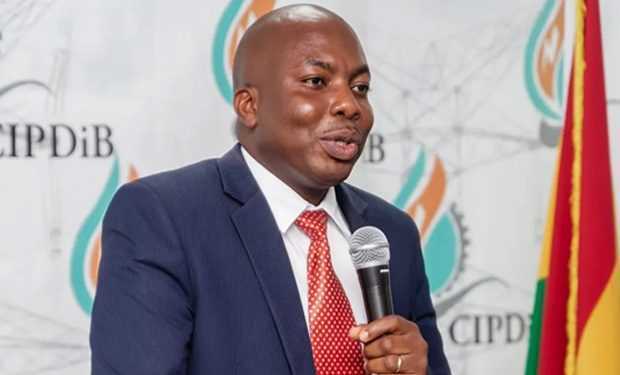
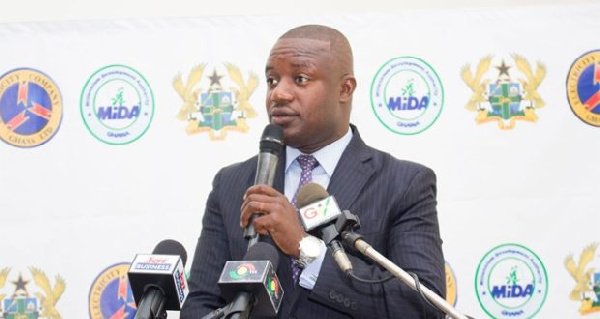
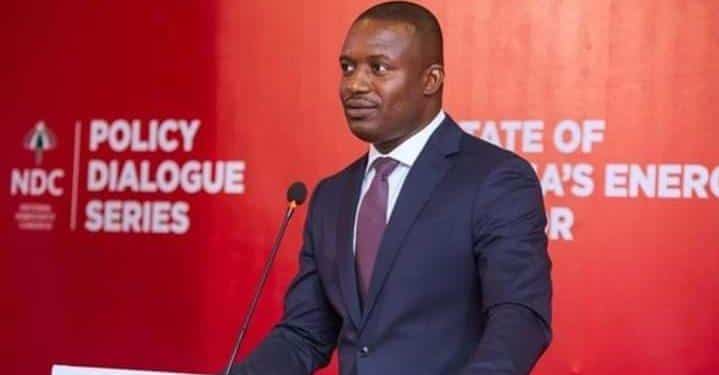
    Minister for Energy and Green Transition, John Jinapor, has revealed that the Ghanaian and Nigerian governments are discussing a barter deal for the exchange of gas and electricity.

    At the Future Energy Conference (FEC) hosted by the Africa Centre for Energy Policy (ACEP), the Energy Minister said, “We believe we can work together. Ghana takes gas from Nigeria, generates power, and re-exports.”

    He added, “We are in discussions to see if we can create a barter arrangement where we take their gas, convert it into power, and supply electricity back to Nigeria in the spirit of West African cooperation.”

    This is to strengthen regional energy security while deepening integration across West Africa. Ghana supplies electricity to Benin, Cote d’Ivoire, Togo, and Burkina Faso.

    Last year, while serving as the Ranking Member for the Committee on Mines and Energy, John Jinapor noted that Ghana ceased the provision of electricity to Cote d’Ivoire and Burkina Faso.

    “The very day the president was delivering the State of the Nation Address and boosting, at that very period, the utility companies were shedding load.

    “The situation appears to be exacerbating. Yesterday alone there was a whopping 580MW of deficit, culminating in the stop of power supply to Cote d’Ivoire, Burkina Faso, and Togo,” Mr. Jinapor said.

    The Future Energy Conference, ACEP’s annual flagship event, convenes governments, multilateral institutions, private sector actors, academics, and civil society to discuss governance, innovation, and policies required to close Africa’s energy access gap.

    This year’s edition, themed “Financing Africa’s Energy Future: Unlocking Investments for Energy Access and Economic Transformation,” focused on mobilising investments to tackle energy poverty and accelerate the continent’s economic transformation.

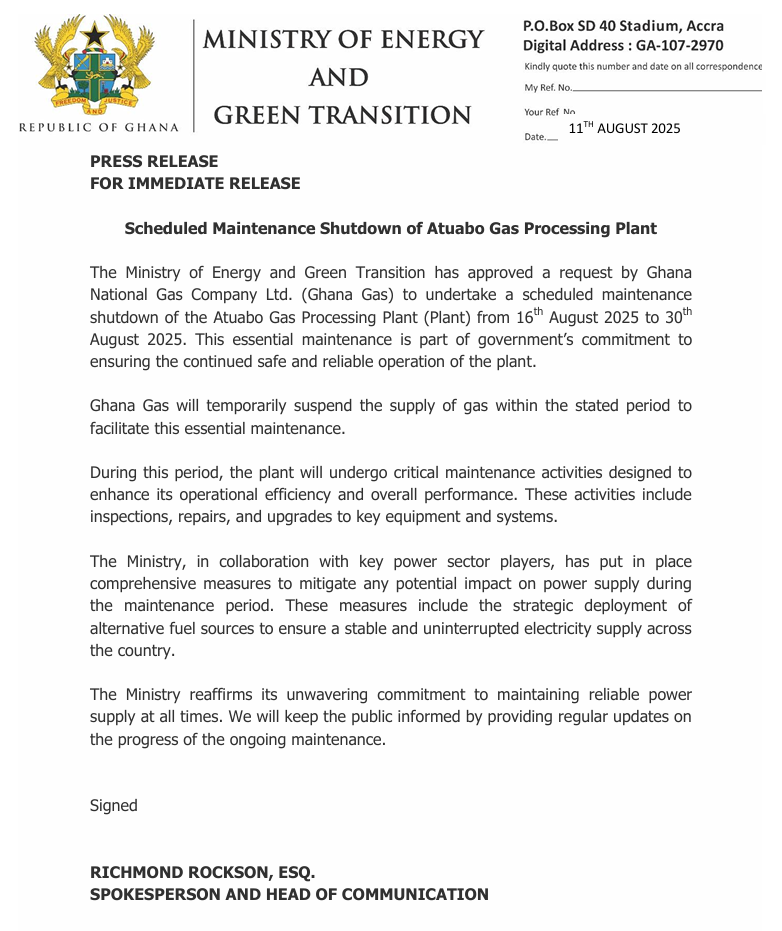
    The Ghana National Gas Company Ltd. (Ghana Gas) on August 16 began a scheduled maintenance shutdown of the Atuabo Gas Processing Plant (Plant) expected to end on 30th August 2025. 

    This follows the approval of a request sent to the Ministry of Energy and Green Transition. According to the Energy Ministry in a statement signed by Richmond Rockson, Esq.

    Spokesperson And Head Of Communication, this “essential maintenance is part of government’s commitment to ensuring the continued safe and reliable operation of the plant.”

    In light of this, Ghana Gas will temporarily suspend the supply of gas within the stated period to facilitate this essential maintenance.

    During this period, the plant will undergo critical maintenance activities designed to enhance its operational efficiency and overall performance. These activities include inspections, repairs, and upgrades to key equipment and systems.

    The ministry in collaboration with key power sector players, has put in place comprehensive measures to mitigate any potential impact on power supply during the maintenance period. 

    These measures include the strategic deployment of alternative fuel sources to ensure a stable and uninterrupted electricity supply across the country.

    The Energy Ministry has reaffirmed its unwavering commitment to maintaining a reliable power supply at all times. “We will keep the public informed by providing regular updates on the progress of the ongoing maintenance,” the statement added.

    The West African Gas Pipeline Company Limited (WAPCo), the operator of the West African Gas Pipeline (WAGP), carried out major maintenance work from February 5 to March 2, 2025.

    The activities involved pigging and conducting in-line inspections along the 569 km offshore pipeline that spans from Ajido, Lagos State, in Nigeria to Takoradi in Ghana’s Western Region. The project also included replacing essential subsea valves in Tema and Cotonou to improve safety measures.

    Due to this maintenance, certain services were temporarily halted, including the reverse flow of natural gas from the Western Region to Tema, as well as gas transport from Nigeria to Cotonou, Lomé, and Tema. Nonetheless, some natural gas transportation from Nigeria to Takoradi remained unaffected to support the pipeline’s cleaning and inspection procedures.

    This detailed cleaning and inspection process is required by regulations and adheres to industry best practices to ensure the ongoing safe and effective operation of the WAGP.

    The maintenance occurred in two phases. The first phase, which wrapped up in December 2024, addressed the onshore section of the pipeline in Nigeria. The second phase, which began on February 5, 2025, focused on the offshore portion of the pipeline.

    The Ministry of Energy and Green Transition disclosed that the gas supplier, ENI, completed a key upgrade on the country’s gas infrastructure.

    In a press statement on Monday, July 14, the ministry noted that the new development raises output from 245 million standard cubic feet per day (MMscfd) to 270 MMscfd.

    As such, the upgrade supports Ghana’s efforts to boost gas supply for power generation and industrial use.

    “This enhancement in gas supply is a significant step towards ensuring a reliable and sustainable energy supply for the nation,” the Ministry stated in an official release issued on Monday, July 14.

    The Ministry has lauded ENI and all stakeholders within the power sector for their collective efforts in bringing the project. Before the upgrade, the ministry announced a possible temporary power disruption on Sunday, July 13, to allow ENI to undergo a rehabilitation session.

    Meanwhile, Finance Minister Dr. Cassiel Ato Forson has cautioned that without immediate reforms, the energy sector risks collapsing under the weight of growing debt.

    According to Dr. Forson, ECG successfully collects only 62% of the electricity it supplies, leaving nearly 40% unaccounted for—either lost due to technical faults or unpaid.

    This shortfall has forced the government to provide continuous financial support, with budgetary transfers reaching $2.1 billion over the past two years.

    Dr. Forson emphasized that these inefficiencies are severely impacting the economy, as government support for the energy sector has reached unsustainable levels while ECG continues to struggle with operational and revenue challenges.

    ECG managed to raise GH¢1.6 billion in revenue in the first half of 2025, against a projected target of GH¢2.5 billion.

    However, the Energy Ministry has disclosed the construction of the 161kV Anwomaso to Kumasi transmission line, co-funded by the European Union and the government of France.

    The €8.7 million project is expected to assist in stabilizing the low voltage in Kumasi, and Dukwaw mining areas will be constructed by the Ghana Grid Company (GRIDCO).

    It is projected to be completed within 12 months. This will facilitate Ghana’s export of power to Burkina Faso.

    The reconstruction of the transmission line will enable the provision of double-circuit, twin-bundled transmission line of rated capacity to improve power transfer between the Ahodwo (K1BSP) and the Anwomaso (K2BSP) substations.

    On his part, EU Ambassador to Ghana, Mr Irchard Razaly, has noted that the project serves as its commitment to providing greener and more efficient energy for Ghanaians.

  • ECG raises GHS1.6bn revenue within 6 months in 2025 – Jinapor

    ECG raises GHS1.6bn revenue within 6 months in 2025 – Jinapor

    Minister for Energy and Green Transition John Abdulai Jinapor has announced what he describes as a remarkable improvement in the Electricity Company of Ghana (ECG)’s revenue collection this year.

    According to the sector minister, the company managed to raise GH¢1.6 billion in the first half of 2025, against a projected target of GH¢2.5 billion.

    “At the end of the month [June 2025], ECG was able to raise about GHC1.6 billion. Which is a remarkable improvement, even though the target ought to be GHC 2.5 billion. If you do a year-on-year comparison, this month [June] of 2025 as compared to the same month in 2024, there’s a remarkable improvement in terms of the revenue collection,” he made this known on the floor of Parliament on Wednesday, July 2.

    Mr John Jinapor also revealed plans to introduce a legislative instrument in Parliament to enforce tougher penalties on those who unlawfully connect electricity for users.

    He noted that while some culprits have been arrested and prosecuted, the current punishments have not been effective enough in discouraging the act. He emphasized the importance of introducing harsher consequences to stop the practice.

    Last month, the Electricity Company of Ghana (ECG) Limited commenced its nationwide revenue mobilization exercise to ensure arrears owed the company by consumers are settled.

    The 12-day exercise commenced on Monday, June 16, and ended on Friday, June 27.

    The revenue mobilization exercise focused on all categories of customers with arrears—residential, commercial, industrial and Ministries, Departments and Agencies.

    The exercise was monitored by special teams who apprehended customers who attempted to interfere with the exercise and/or undertook illegal self-reconnection after disconnection.

    In October last year, the Africa Centre for Energy Policy (ACEP) raised concerns over the Electricity Company of Ghana’s (ECG) monthly revenue losses, revealing that the company is losing approximately $67 million every month due to unpaid bills.

    ACEP attributed these losses to the ECG’s low revenue recovery rate. Kodzo Yaotse, Policy Lead for Petroleum and Conventional Energy at ACEP, emphasized that improving the ECG’s revenue collection must be prioritized by both the government and the company itself.

    He warned that the continued failure to collect these revenues would only worsen Ghana’s growing energy sector debt and strain the Independent Power Producers (IPPs), who are already owed significant sums as part of the country’s legacy energy debt.

    Per reports, the ECG is drowning in debt over GHC67 billion. The ECG has on numerous occasions embarked on revenue mobilization exercises but is yet to retrieve all the money owed the company.

    Executive Secretary of the Public Utilities Regulatory Commission (PURC), Dr Shafic Suleman, has lauded the Electricity Company of Ghana for improved revenue collection in the first quarter of 2025.

    According to him, ECG has collected almost GHC1.4 billion every month since the beginning of the year. For him, “that is a step in the right direction to keep the lights on.”

    As Chairman of the Cash Waterfall Mechanism, he vowed to ensure continuous cash flow to sustain the operations of ECG following recent engagements with the Energy Minister to upgrade the status of ECG on the Cash Waterfall Mechanism.

    Meanwhile, customers have also been urged to use their regular channels, including the ECG Mobile App, to pay their bills. Download the app from the Google Play Store, or call the ECG contact center at 0302611611 or social media handles for assistance.

  • There will be no dumsor by ending of May – Energy Minister

    There will be no dumsor by ending of May – Energy Minister

    Energy Minister, Energy Minister, has noted that his ministry is working effortlessly to put an end to the ongoing inconsistent electricity supply, popularly referred to as dumsor, Ghana is experiencing.

    Speaking to the media, he revealed that the country’s power sector will be stabilized by May ending.

    The Minister indicated that a brief maintenance exercise is scheduled for June this year.

    “What I get is that within the month of May, there will be major maintenance, and in June, there will be minimal maintenance. So, barring any unforeseen circumstances, we should be seeing a stable power supply, but we should be servicing these plants,” he stated.

    The Minister’s remarks come at a time where there’s frequent intermittent power outages.

    He mentioned that the nation’s power plants need urgent servicing as they are worn out, therefore, surpassing its recommended operating hours.

    This according, him rationalizing power has become crucial to check the current situation.

    “These are plants that have gone far beyond their maximum operating hours. So, as a responsible government, we have to undertake the servicing.

    “What I have realised is that if you hold them back for too long, you will compromise the integrity of the plant. So I want to appeal to Ghanaians that as we take this step, we will do everything within our power to reduce the impact, it is a necessary step,” he added.

  • John Jinapor requests legal action as search continues for missing ECG containers

    John Jinapor requests legal action as search continues for missing ECG containers

    Energy Minister John Jinapor has announced that additional steps are being taken to uncover the whereabouts of the more than 1,300 missing containers belonging to the Electricity Company of Ghana (ECG), which vanished from the Tema Port.

    In a statement made during an interview on Wednesday, April 2, 2025, Jinapor revealed that his office has formally written to the Attorney General, urging for further investigations into the disappearance and the potential for legal action against those responsible.

    “We’ve written to the Attorney General to conduct further investigations with the possibility of taking the culprits to court,” Jinapor stated, emphasizing the need for accountability in this matter.

    To aid in the search for the missing containers, the National Intelligence Bureau (NIB) has been tasked with conducting a forensic investigation. Their role will be crucial in tracing the missing containers and identifying those responsible for the disappearance.

    Jinapor also revealed that he has personally reached out to the National Security Secretariat, requesting their assistance in securing the remaining containers. This is to ensure that those that can still be accounted for are safely stored and put to good use while the search for the missing ones continues.

    “Some containers are still scattered. We need to secure them so that we can put them to good use while we pursue those that cannot be accounted for,” he added.

    While the investigation is still underway, some of the missing containers have been located, and several individuals, including both Ghanaians and Chinese nationals, have been arrested in connection with the incident. The search and investigation remain ongoing, with authorities working to ensure that the culprits are brought to justice and the remaining containers are accounted for.

    Jinapor’s statements reflect a concerted effort by the government to address the situation and ensure that any wrongdoing is swiftly dealt with through legal means.

  • Energy minister receives report from committee on ECG, NEDCo privatisation

    Energy minister receives report from committee on ECG, NEDCo privatisation

    The Technical Committee tasked with advising the government on private sector involvement in the power distribution sector, particularly with the Electricity Company of Ghana (ECG) and the Northern Electricity Distribution Company (NEDCo), has submitted its report to the Minister of Energy and Green Transition, John Jinapor.

    The report outlines three crucial recommendations aimed at resolving the current challenges faced by both entities.

    According to Committee Chairman, Jabesh Amissah-Arthur, these recommendations are designed to provide effective solutions to the difficulties in the power distribution system.

    The three proposed strategies are Entity Concession, Multiple Lease, and Service Franchise.

    During a discussion with the Energy and Green Transition Minister, Amissah-Arthur elaborated on the recommendations, emphasizing the importance of the three approaches.

    He explained, “The three options we focused on include Entity Concession, where the entire distribution business is handed over to a private concession. The Multiple Lease model, where the country’s distribution network is divided into several sections and each section is awarded separately, and the Service Franchise, which involves the private sector managing the low-voltage network from the distribution transformer to deliver services to homes and businesses.”

  • Energy Minister slashes ECG’s budget by 50%

    Energy Minister slashes ECG’s budget by 50%

    The Minister of Energy and Green Transition, John Jinapor, has announced a reduction in the Electricity Company of Ghana’s (ECG) budget allocation from GH₵500 million to GH₵250 million amid controversy over missing containers at the Tema Port.

    According to Mr. Jinapor, the decision is intended to help offset debts owed to power producers.

    Addressing Parliament, he revealed that ECG had received GH₵935 million in 2023 for planned procurement.

    “We have reduced their budget from GH₵500 million to GH₵250 million because we must pay the power producers. Today, the bill is over GH₵80 billion in the energy sector. If we don’t do something, this sector will collapse. As a minister, I am determined to do my bit no matter how difficult it is,” he stated.

    However, he revealed that ECG had overspent its allocation by GH₵7.3 billion, largely due to excessive cable procurement, which led to revenue shortfalls.

    These financial difficulties also played a role in the issue of missing containers at the Tema Port, as some remained uncleared due to outstanding fees.

    Mr. Jinapor assured Parliament that strict measures were being put in place to curb financial mismanagement and safeguard the sustainability of ECG.

  • ECG has 3,000 containers held at Port for over 5 years – Energy Minister

    ECG has 3,000 containers held at Port for over 5 years – Energy Minister

    Energy Minister John Jinapor has disclosed that the Electricity Company of Ghana (ECG) has several containers filled with essential materials, including transformers, stuck at the port. This situation is costing the company billions of cedis.

    Speaking about the ongoing power outages, he explained that some of these transformers are needed to replace overloaded ones across the country.

    However, they have been held at the port for so long that nearly half of their 10-year lifespan has already been wasted.

    “When we took over, I visited the Tema Harbour and found about 3,000 containers stuck there, most of which contain transformers. As of today, ECG has a total liability of 13 billion cedis from supplies, with demurrage alone projected to reach GH₵1.5 billion by the end of 2024,” he stated.

    The minister also revealed that in 2024, the Ministry of Energy awarded contracts worth GH₵6 billion without securing commencement certificates, even though its total budget for the year was less than GH₵2 billion. Meanwhile, ECG’s financial commitments for electricity supply in that same year reached GH₵9.7 billion.

    “These are the facts,” he emphasised.
    Mr Jinapor assured that the government would take decisive action to resolve these issues and ensure the efficient use of resources in the energy sector, adding that the Energy Ministry has set up a committee to investigate procurement anomalies and breaches.

  • Your budget presentation made me proud – John Jinapor to Ato Forson

    Your budget presentation made me proud – John Jinapor to Ato Forson

    Minister for Energy and Green Transition, John Abdulai Jinapor, has commended Finance Minister Dr. Cassiel Ato Forson for his presentation on the 2025 budget.

    Dr. Forson delivered the budget statement to Parliament on Tuesday, March 11, outlining the government’s financial strategies and economic priorities for the year.

    Reacting to the presentation, Mr. Jinapor shared his views on social media, applauding the Finance Minister’s effort.

    He described the budget as comprehensive and forward-thinking, praising Dr. Forson for articulating a clear economic plan.

    “You’ve made me proud, Dr Cassiel Ato Forson. Your presentation was not only detailed but also reflected a deep commitment to the economic transformation of our country,” he wrote.

    Focusing on the budget’s priorities, the Energy Minister underscored policies aimed at bolstering Ghana’s energy sector and advancing sustainable development.

    Acknowledging the economic hurdles, he conveyed optimism about the government’s plans to address them effectively.

    He pointed out that the budget offers practical measures, with a strong emphasis on job creation, infrastructure expansion, and energy security.

    “This budget provides a clear pathway for economic recovery and sustainable growth. I am particularly pleased with the emphasis on renewable energy and local content development,” he added.

    By endorsing the budget presentation, Mr. Jinapor reaffirmed the government’s unified approach to its economic plans.

    His remarks reflect strong internal backing for the Finance Minister’s policies as the administration navigates Ghana’s economic future.

    He encouraged all stakeholders to align with the outlined policies to facilitate their successful execution for the benefit of the nation.

  • Govt to construct second gas processing plant – Jinapor

    Govt to construct second gas processing plant – Jinapor

    The government has given the green light for the construction of a second gas processing plant to help mitigate the country’s energy challenges, Energy Minister John Jinapor has announced.

    Addressing the press at the Jubilee House on Friday, March 7, Mr. Jinapor underscored the importance of strengthening Ghana’s energy infrastructure to guarantee a reliable power supply.

    He further disclosed that Cabinet has endorsed a series of strategic initiatives designed to address the nation’s energy concerns in the short, medium, and long term.

    “Cabinet has approved that in partnership with the Finance Ministry we take immediate steps in constructing a second gas processing plant. This gas processing plant will augment the shortfall and increase supply security,” he stated.

    Ghana continues to grapple with power supply constraints driven by rising demand and inadequate gas processing capacity.

    The planned gas processing plant aims to strengthen the country’s energy infrastructure by supporting existing facilities and ensuring a more stable natural gas supply for electricity generation.

  • We are exporting 300megawatts of power – Energy Minister

    We are exporting 300megawatts of power – Energy Minister

    Energy and Green Transition Minister John Jinapor has revealed that Ghana is currently exporting electricity to neighboring countries, dismissing concerns about inadequate power supply.

    “As we speak, we’re exporting about 300 megawatts of power outside Ghana to Benin, Burkina Faso, and other neighboring countries. If you have enough and you are exporting power, obviously, there will be no need to publish a timetable,” he stated.

    His remarks come amid calls from the Minority in Parliament for the government to release a load-shedding timetable due to the recent intermittent power outages, commonly known as ‘dumsor.’

    However, the minister refuted claims of load shedding, insisting that the power cuts are not systematic but rather the result of technical challenges.

    “Let me put it on record that we’re not shedding load. And so, the demand by the Minority and some people that we publish a load-shedding timetable is moot. When you are not shedding load, there will be no need to publish a load-shedding timetable,” he stressed.

    Mr Jinapor assured Ghanaians that efforts are underway to address the technical issues and stabilize power supply across the country.
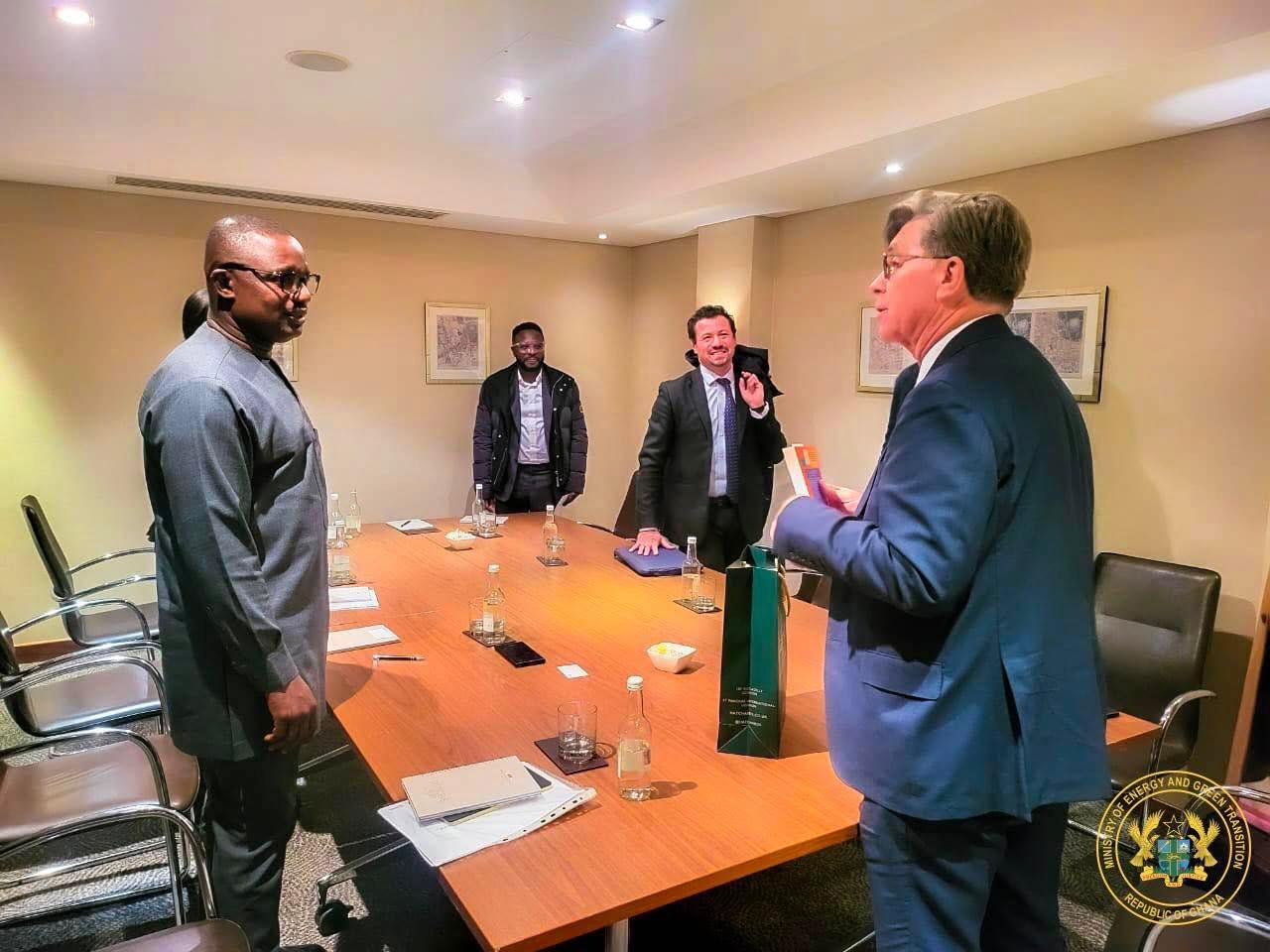
  • Jinapor engages partners of East Cape Three Point Block to  develop oil and gas sector

    Jinapor engages partners of East Cape Three Point Block to develop oil and gas sector

    Minister for Energy and Green Transition, John Abdulai Jinapor, has reaffirmed the government’s commitment to fostering strategic partnerships for the advancement of the country’s offshore oil and gas sector.

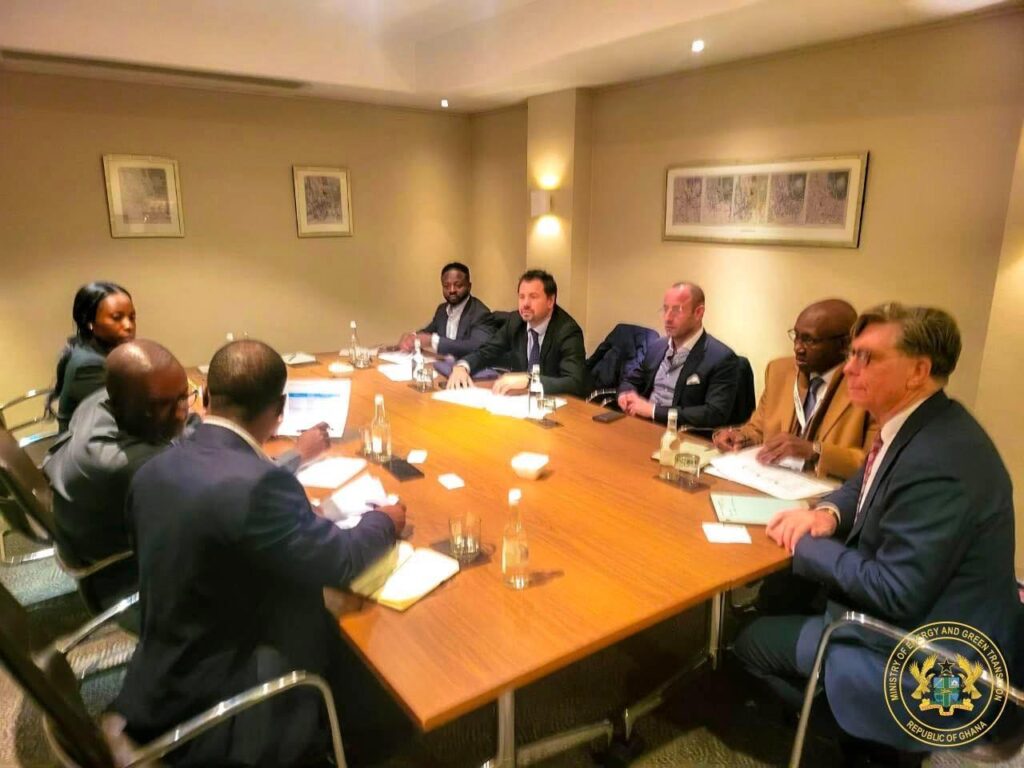
    During a high-level meeting on the sidelines of the International Energy Week in the United Kingdom, Mr. Jinapor engaged key stakeholders involved in the development of the 1,560-square-kilometre East Cape Three Point Block, located in the Offshore Tano Basin.

    The block is currently operated by Medea Development Ltd and Cola Natural Resources, with additional interest from potential partners such as Strategic Fuel Fund, Safri West Energies, and Jade Energy. These companies expressed their commitment to pushing exploration activities forward, aiming for first oil production between 2028 and 2029.

    According to the stakeholders, preparatory work is underway to drill the first exploration well, which is expected to commence either later this year or early next year.

    Mr. Jinapor assured investors that Ghana’s upstream petroleum sector remains open for business, highlighting the country’s strong regulatory framework and favorable investment environment.

    He emphasized the importance of a balanced and sustainable approach to resource development, urging stakeholders to collaborate effectively to drive innovation and efficiency in the industry.

    The engagement served as a platform to reinforce partnerships and strengthen Ghana’s position as a key player in the global energy landscape. With exploration efforts set to advance, the East Cape Three Point Block is poised to become a significant contributor to the nation’s long-term energy strategy.

  • ECG’s loot and share plans spearheaded by Akufo-Addo’s Energy, Finance Ministries – Jinapor alleges

    ECG’s loot and share plans spearheaded by Akufo-Addo’s Energy, Finance Ministries – Jinapor alleges

    Minister of Energy John Jinapor has accused the former Energy Ministry and Finance Ministry of being the masterminds behind the unlawful spending of the Electricity Company of Ghana’s (ECG) under-declared revenue of five billion Ghana Cedis (5bn).

    He made these allegations during an interview aired on Sunday, February 16, 2025, on TV3’s HostIssues. Speaking about the financial mess within power producing companies following the PwC report, which highlighted the financial disarray and looming power crisis, the Minister revealed he was shocked after requesting the first month’s report from ECG.

    He discovered that “ECG collects about 1.5 billion, and about 5 million is not declared as far as the cash waterfall is concerned. What ECG does is, of the 1.5bn they keep five hundred million first before they move in to take more from the 1bn, which is in contravention of the Cash Waterfall Mechanism policy. There is a Cash Waterfall Mechanism committee being reconstituted, with the Ministry of Finance representing the ministry.

    They will determine the formula to apportion the money. So, if ECG decides to apportion the money, it means they keep the money and spend it in-house. This 5bn we are talking about are monies that are collected but ECG fails to declare and then appropriates to spend,” Mr. Jinapor stated.

    In light of this, Independent Power Producers (IPPs) and other power supply companies are threatening power cuts over the ballooning debts owed to them by the government. “When they do that, the IPPs would not be paid, generators would not be paid, transmission grid companies would not be paid, even the statutory levies would not be paid,” Mr. Jinapor said.

    Mr. Jinapor also criticized ECG’s careless procurement deals and contractual obligations, which he believes contributed to the energy sector’s crisis. “And so far, what we are realizing is that they have entered into many contractual obligations. Many banks deduct their money at source. They have just contracted what they call a super vendor that takes 5% at source, and they have contracted a certain payment app that deducts 3% at source. They have a lot of deductions at source that eat away a chunk of the money,” he concluded.

  • Govt’s approach will create a resilient and reliable energy ecosystem – IPGG

    Govt’s approach will create a resilient and reliable energy ecosystem – IPGG

    The Independent Power Generators (IPGG) has expressed confidence that the government’s energy strategy will lead to a resilient and reliable energy ecosystem for Ghana.

    In a statement signed by its Chief Executive Officer, Elikplim Apetorgbor, the IPGG emphasized its readiness to collaborate with the Energy Minister-designate, John Abdulai Jinapor, to advance sustainable energy generation, promote renewable sources, and address financial and policy challenges in the sector.

    “We believe that Mr. Jinapor’s pragmatic approach and expertise will contribute significantly to the creation of a resilient and reliable energy ecosystem for Ghana,” the statement noted.

    During his vetting before Parliament’s Appointments Committee on January 13, Mr. Jinapor outlined his goal to establish a framework for private sector involvement in the operations of the Electricity Company of Ghana (ECG) by the end of 2025. He highlighted transparency and expert participation as key pillars of this initiative.

    “We believe there should be private sector participation. What we intend to do is to form a seven-member committee, comprising technical experts, legal minds, financial analysts, industry players, and even a consumer representative,” he explained.

    The committee will explore global best practices to determine whether a concession model or full privatization would be more appropriate for ECG’s operations. Mr. Jinapor assured the committee that the process would be free from political interference and based on openness and transparency.

    “My target is to push for six months, but I do not want to stampede the committee. However, give or take, within this year, we should complete the framework,” he added.

    The IPGG also acknowledged Mr. Jinapor’s extensive experience in Ghana’s energy sector and his focus on innovation, sustainability, and efficiency, as demonstrated during his vetting process.

    “As a critical stakeholder in the energy industry, we are confident his leadership will bring a renewed focus and drive toward addressing the challenges confronting the power sector,” the statement concluded.

    The IPGG congratulated John Abdulai Jinapor and reaffirmed its commitment to supporting his vision for Ghana’s energy future.

  • Ghana’s energy sector debt stands at $3bn – John Jinapor

    Ghana’s energy sector debt stands at $3bn – John Jinapor

    Energy Minister-designate John Jinapor has revealed that Ghana’s energy sector debt has surged to $3 billion, citing ineffective management and increasing interest on existing liabilities.

    During his vetting before Parliament’s Appointments Committee on Monday, January 13, Mr. Jinapor provided a detailed account of the sector’s financial challenges. He noted that as of August 31, 2017, the total energy sector liability was GH₵9.4 billion, which, based on an exchange rate of 4.4, amounted to $2.1 billion.

    “When we were leaving office, the debt stock consolidated was close to 2 billion. Fortunately, I have a document summary of energy sector debts and lenders through August 31, 2017. The ESLA PLC got a full audit of the entire energy sector debts. I refer to page 17 of the document. The total energy sector liability at the time was GH₵9.4 billion, they themselves use an exchange rate of 4.4. If you use this exchange rate of 4.4, the debt had then moved to $2.1 billion. So let me put on record that as at this time when the debt was validated, the debt was $2.1 billion,” he stated.

    He dismissed claims that the debt had reached $5 billion, emphasizing that official public records validated by Parliament confirmed the debt stood at $2.1 billion at the time.

    Mr. Jinapor, who chaired the energy subcommittee of the transition team, further disclosed that as of September 30, 2024, the debt had risen to $2.5 billion. A subsequent reconciliation meeting involving the Ministry of Energy, the Energy Commission, and the Electricity Company of Ghana (ECG) confirmed a further increase to $3 billion.

    “As we speak today, the reconciled figure from official sources is $3 billion,” he emphasized.

    He also referenced the Energy Sector Levies Act (ESLA), which had generated approximately GH₵45 billion over the years. He noted that while these funds had been used to service parts of both the principal and interest on the debt, they remained insufficient to curb the sector’s rising liabilities.

    https://twitter.com/JoyNewsOnTV/status/1878844628583227513

  • NPP wants NDC to inherit $2bn energy sector debt – Minority

    NPP wants NDC to inherit $2bn energy sector debt – Minority

    The Minority in Parliament is calling for a thorough audit of Ghana’s energy sector to determine the full extent of its rising debt.

    According to the caucus, the sector’s debt has surpassed $2 billion, a figure they attribute to what they describe as the government’s mismanagement of funds under the Energy Sector Levy Act (ESLA).

    Furthermore, the group highlights the Ministry of Finance’s failure to settle GH¢1.8 billion in electricity bills owed by various Ministries, Departments, and Agencies (MDAs) since August 2023. This outstanding debt, they argue, has placed immense strain on the power sector.

    Addressing the media, John Jinapor, Ranking Member of Parliament’s Energy Committee, accused President Nana Addo Dankwa Akufo-Addo’s government of deliberately mismanaging the energy sector, leaving it in a precarious state for a potential future administration under John Dramani Mahama.

    “PURC based on its statement, has indicated that ECG is not abiding with the Cash Waterfall Mechanism and it is the mechanism that allows companies and entities throughout the energy sector value chain to get some revenue or payment, that has been jettisoned. As if that is not enough, the Ministry of Finance, since August 2023 has not paid up even a Cedi for power consumed by ministries, departments and agencies.

    “From our rough estimates, that debt alone amounts to GH¢1.8 billion. Clearly, they are just trying to manage the system and hand over a dilapidated, ageing equipment, collapsed energy sector to President Mahama When he assumes office.”

    “A lot of work awaits President Mahama when he assumes office. The energy sector debt alone, based on our rough estimate, is around $2 billion as we speak. They are misapplying the energy sector levy revenues and they are also misapplying the energy sector recovery levies,” John Jinapor added.

  • The next NDC gov’t will seal cracks in the energy sector – Jinapor

    The next NDC gov’t will seal cracks in the energy sector – Jinapor

    John Jinapor, Member of Parliament for Yapei Kusawgu, has outlined plans for the next National Democratic Congress (NDC) administration to address challenges in the energy sector and enhance its performance.

    In an interview with TV3, Jinapor emphasized that the NDC’s strategy includes ramping up crude oil production to 400,000 barrels daily, which he believes will help mitigate the growing debt in the sector.

    He also highlighted the NDC’s commitment to increasing the use of renewable energy and improving electricity access. If John Dramani Mahama wins the upcoming December elections, these will be key areas of focus.

    Jinapor further mentioned that the NDC’s manifesto aims to address economic and financial mismanagement and provide a fresh direction for Ghana’s development.

    “The energy sector debt keeps ballooning; this manifesto seeks to rescue the energy sector and turn it around.

    “Renewable energy forms a major part of the manifesto. Access to electricity will be a focus of the manifesto,” John Jinapor added.

  • Fuel prices will not drop under Mahama, take note – John Jinapor

    Fuel prices will not drop under Mahama, take note – John Jinapor

    The Member of Parliament for Yapei-Kusawgu, John Abdulai Jinapor, has stated that the National Democratic Congress (NDC) will not lower fuel prices if they come to power.

    Speaking on Adom TV’s Badwam show on July 12, Jinapor discussed Ghana’s energy sector and emphasized that the NDC would aim to keep fuel prices stable rather than drastically reducing them.

    “There are two fundamental issues about petroleum prices. If you cannot reduce it, don’t let it go up too much. That’s the first thing we should look at. If you reduce the price, you have to make provision for it in the budget. I will not tell you that because we want to win power, I should lie to you that if we come we shall reduce fuel prices, no, that will not happen,” the NDC MP said.

    The lawmaker stressed the importance of maintaining a balanced economy, highlighting that sectors such as health, road infrastructure, and education must also be prioritized.

    He noted that the government would allocate resources to develop these areas to ensure growth.

    “We have to be realistic because we need to pay hospitals, we have to build roads and schools. When you are managing an economy, you have to balance it,” he added.

  • John Jinapor denies applying for scholarship from GNPC

    John Jinapor denies applying for scholarship from GNPC

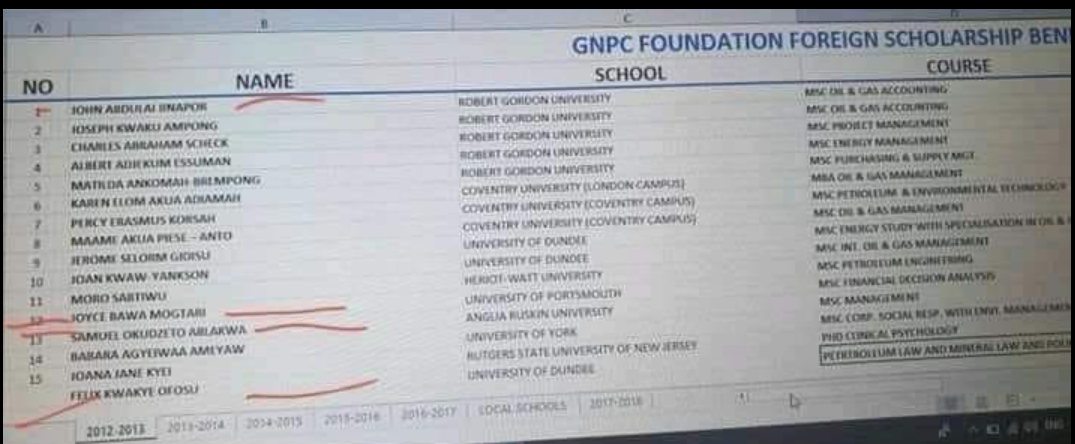
    Member of Parliament for Yapei Kusawgu, John Jinapor, has strongly denied allegations that he applied for a scholarship from the Ghana National Petroleum Corporation (GNPC).

    Social media rumors suggested that Jinapor was among the beneficiaries of the GNPC Foundation Scholarship.

    However, in a Facebook post on Saturday, April 13, the MP categorically stated that he has never applied for or received any scholarship from the GNPC.

    He urged the public to disregard these “baseless” allegations.

    “Let me put on record that I have never applied for nor received any scholarship from the GNPC, Scholarship secretariat or GETFUND for any studies abroad.

    “I will appeal to the general public to disregard such baseless, concocted, and contrived statements,” Jinapor wrote on his Facebook page.

  • Stop lying to us, recent power outages have nothing to do with faulty transformers – John Jinapor to NAPO

    Stop lying to us, recent power outages have nothing to do with faulty transformers – John Jinapor to NAPO

    Member of Parliament, John Jinapor, is pressing the Ministry of Energy and the Electricity Company of Ghana (ECG) for transparency regarding ongoing power outages.

    Over the past few weeks, the nation has experienced widespread power outages, commonly known as “dumsor.”

    In response to these disruptions, the Public Utilities Regulatory Commission (PURC) directed ECG to establish a load-shedding timetable.

    However, ECG maintains there is no power crisis, attributing the unstable supply to faulty transformers.

    Energy Minister, Dr. Matthew Opoku Prempeh has refuted claims of “dumsor,” challenging the public to devise their own timetable if they believe a crisis exists.

    John Jinapor argues that the energy sector faces generation challenges impacting distribution. He suggests PURC focus on improving generation rather than mandating a load-shedding schedule.

    Speaking on Joy FM’s Top Story on March 25, Jinapor expressed dismay at the Minister’s response, accusing him of politicizing sector challenges.

    Executive Director of the Institute of Energy Security, Nana Amoasi VII, supports Jinapor’s stance, asserting that ECG and the Energy Ministry are obligated to provide a timetable amid outages.

    Nana Amoasi VII criticized the Minister’s dismissal of demands for a timetable, suggesting it demonstrates a lack of awareness and disrespect toward consumers’ rights.

    “I am very, very surprised even at the PURC directive because the main problem is generation, it has nothing to do with transformers. I thought that the PURC would have done its investigation to indeed determine that there is a generation shortfall.

    “If there is a generation shortfall, the outage that occurs at the bulk supply point is controlled by GRIDCo. So GRIDCo will then have to inform ECG which bulk supply point will go off, then ECG will inform its consumers. As we speak there is a deficit in terms of generation and until that is resolved we will continue to have the load shedding we are experiencing.”

    “I am very shocked and surprised that the minister would give such contradictory and counter instructions. He should know better that we are shedding load, and even in his interview, he couldn’t refute it. He admitted that yes, they are shedding load, but in his opinion, it is better than during President Mahama’s time. And so what? That is the question. Let’s assume it’s better, so people should not be given a timetable to plan because, in the minister’s opinion, it is better.

    “If you admit there is load-shedding, give the people the timetable to plan. And when the people request that the outages are becoming too frequent, give us the timetable to plan, the minister says ‘that those requesting the timetable should go and prepare the timetable themselves. It is extremely unfortunate, very insulting,” he added.

  • “ECG takes money from Ghanaians but fail to pay IPPs” – John Jinapor

    “ECG takes money from Ghanaians but fail to pay IPPs” – John Jinapor

    The Ranking Member of Parliament’s Energy Committee, John Jinapor, has claimed that the Electricity Company of Ghana (ECG) fails to allocate funds collected from Ghanaian consumers to Independent Power Producers (IPPs).

    According to him, ECG is burdened with a significant debt totaling $1.5 billion.

    Mr Jinapor attributed this substantial debt to ECG’s failure to fulfill financial obligations to Independent Power Producers (IPPs) and its inability to settle bills for purchased electricity in full.

    Furthermore, Mr Jinapor criticized ECG for what he perceives as extravagant spending on items such as cables, malfunctioning meters, and unnecessary contracts.

    Referring to a report from the Public Utilities Regulatory Commission (PURC) that he reviewed, Mr Jinapor highlighted instances where ECG allegedly mishandled funds, diverting substantial amounts away from debt repayment towards other expenses.

    During a media interview, Jinapor urged ECG to provide transparent explanations for recent power outages experienced by Ghanaians.

    “ECG owes $1.5 billion, when they take the money from Ghanaians, they fail to pay the IPPs and use the funds to do whatever they want with it and they fail to pay the full price of the power they purchase and PURC has brought a report that when ECG comes in possession of a substantial amount of money they refuse to pay the debt they owe, they spend the money recklessly, and this is an official report from the PURC.

    “Some of the things they buy, they don’t even need it, and now they want to be buying fuel, which is not even their core duty, all these are a reason the finances aren’t adding up,” he said.

  • ECG’s debt to IPPs surges to $1.5bn – John Jinapor

    ECG’s debt to IPPs surges to $1.5bn – John Jinapor


    The Energy Committee’s Ranking Member in Parliament, John Jinapor, has revealed that the Electricity Company of Ghana (ECG) is burdened with a significant debt totaling $1.5 billion.

    Jinapor attributed this substantial debt to ECG’s failure to fulfill financial obligations to Independent Power Producers (IPPs) and its inability to settle bills for purchased electricity in full.

    Furthermore, Jinapor criticized ECG for what he perceives as extravagant spending on items such as cables, malfunctioning meters, and unnecessary contracts.

    Referring to a report from the Public Utilities Regulatory Commission (PURC) that he reviewed, Jinapor highlighted instances where ECG allegedly mishandled funds, diverting substantial amounts away from debt repayment towards other expenses.

    During a media interview, Jinapor urged ECG to provide transparent explanations for recent power outages experienced by Ghanaians.

    “ECG owes $1.5 billion, when they take the money from Ghanaians, they fail to pay the IPPs and use the funds to do whatever they want with it and they fail to pay the full price of the power they purchase and PURC has brought a report that when ECG comes in possession of a substantial amount of money they refuse to pay the debt they owe, they spend the money recklessly, and this is an official report from the PURC.

    “Some of the things they buy, they don’t even need it, and now they want to be buying fuel, which is not even their core duty, all these are a reason the finances aren’t adding up,” he said.

  • ECG owes IPPs $1.5 billion – John Jinapor claims

    ECG owes IPPs $1.5 billion – John Jinapor claims

    Ranking Member of the Energy Committee of Parliament, John Jinapor, has revealed that the Electricity Company of Ghana (ECG) is facing a substantial debt of $1.5 billion.

    This debt, according to Mr. Jinapor, is largely a result of ECG’s failure to meet its financial obligations to Independent Power Producers (IPPs) and its inability to fully pay for purchased electricity.

    In a media interview, Mr. Jinapor called on ECG to provide transparent explanations for the recent power outages experienced by Ghanaians.

    “ECG owes $1.5 billion, when they take the money from Ghanaians, they fail to pay the IPPs and use the funds to do whatever they want with it and they fail to pay the full price of the power they purchase and PURC has brought a report that when ECG comes in possession of a substantial amount of money they refuse to pay the debt they owe, they spend the money recklessly, and this is an official report from the PURC.

    “Some of the things they buy, they don’t even need it, and now they want to be buying fuel, which is not even their core duty, all these are a reason the finances aren’t adding up,” he said.

    Mr. Jinapor also criticized ECG for what he perceives as wasteful spending, citing examples such as excessive spending on cables, malfunctioning meters, and what he deems unnecessary contracts.

    Referring to a report from the Public Utilities Regulatory Commission (PURC), Mr. Jinapor highlighted instances where he alleges ECG mismanaged funds, diverting significant amounts away from debt repayment to other expenditures.

  • Fuel shortage, faulty thermal plants causing ‘dumsor’ – John Jinapor

    Fuel shortage, faulty thermal plants causing ‘dumsor’ – John Jinapor

    Member of Parliament for Yapei-Kusawgu constituency, John Jinapor, has attributed the current power cuts in the country, popularly known as ‘dumsor’, to fuel shortages and the inefficiency of thermal power plants.

    Accra and some parts of the country have experienced intermittent power outages for a significant period of time. The Electricity Company of Ghana (ECG) has not provided much explanation regarding the recent outages.

    Mr Jinapor has urged the authorities responsible for the power sector to release a schedule for power outages so that Ghanaians can plan accordingly.

    “The minority side has been monitoring the power situation for the past month, and it appears, based on the information available to us, that the power sector is collapsing.

    “Since February 2, there has been persistent and consistent load shedding by the generation companies; indeed, the load shedding is worsening by the day. The day the president was delivering SONA and boasting, there was some load-shedding happening,” Mr Jinapor said in an interview.

    “Today at 12 pm, load shedding will commence again; our investigation indicates that some of our thermal plants are down, and there is a lack of fuel causing the load shedding. The handlers of the power sector should do the honourable thing by informing the people of Ghana so they can plan ahead of time.”

    Deputy Energy Minister-designate Collins Adomako-Mensah has promised that the current power outages will be resolved within the next two weeks.

    “I admit that for the past two or three weeks, there have been some power outages, but it is interesting that the two-week power outages are causing the Minority to have a press conference. I am yet to fully settle into the [Energy] Ministry, but the little interaction I have had with the officers in the Ministry before my vetting is that this should be taken care of in the next two weeks,” Collins Adomako-Mensah said in the interview.

  • We are in deep trouble if GHC 19million debt can push us into ‘dumsor’, says John Jinapor

    We are in deep trouble if GHC 19million debt can push us into ‘dumsor’, says John Jinapor

    John Abdulai Jinapor, who serves as the Ranking Member on Parliament’s Mines and Energy Committee, has expressed concern about the ongoing power issues in the country.

    He emphasised that the debts owed to power suppliers are insufficient to justify the current sporadic power outages.

    In recent times, Ghanaians have experienced disruptions in power supply following the announcement by the Electricity Company of Ghana about the commencement of repair work.

    According to John Jinapor, the outstanding amount owed to the West African Pipeline Company (WAPCo) is not substantial enough to be the cause of load shedding.

    “Indeed, if $19 million is a major problem, then we have a serious problem to deal with. If $19 million can lead to this situation, then we have a huge problem as a country because I thought that a country the size of Ghana and given our GDP, $19 million should not lead to a load shedding of about 600 megawatts,” he said, as quoted by myjoyonline.com.

    “If the Ministry of Finance mismanages the economy and the cedi depreciates to the level we saw, then the government must be willing and ready to make that payment,” he added.

    The government is currently indebted to the West African Pipeline Company (WAPCo) in the amount of $19 million. Deputy Minister of Energy, Andrew Egyapa Mercer, revealed that the government has already cleared $13 million of the owed sum, leaving an outstanding balance of $6 million.

    Egyapa Mercer further stated that discussions are underway between the government and WAPCo to formulate a payment schedule for the remaining $6 million.

  • Abu Jinapor criticizes Bawumia’s focus on IT over economic challenges

    Abu Jinapor criticizes Bawumia’s focus on IT over economic challenges

    Ranking Member on the Mines and Energy Committee in Parliament, John Jinapor, accuses Vice President Bawumia of neglecting his primary duty of managing the economy.

    Jinapor challenges Bawumia’s claims of competence in the IT sector, urging him to address pressing economic challenges as the head of the economic management team.

    During a debate on the 2024 budget on November 21, Jinapor expresses concerns over Bawumia’s apparent shift from economic issues to information technology.

    He asserted, “The head of the economic management team, we are not personalizing him(Bawumia) at all, we are dealing with his competence. He has proven that he cannot handle this economic [situation], that is his core duty. Now he wants to turn himself into an IT man and talk about IT.”

    Parliament initiated deliberations on the 2024 Budget Statement and Economic Policy on Tuesday, November 21, 2023.

    To promote broad participation in the debate, specific time allocations have been suggested: 20 minutes for the seconder and Ranking Members of the Finance Committee, 15 minutes for other committee members, and 10 minutes for all other Members of Parliament (MPs).

    The debate will be structured around various sectors, including governance, security, public safety, finance, economy, energy, infrastructure, social sectors, local governance, youth, sports, tourism, and culture.

    The proposed schedule outlines discussions on finance, agriculture, trade, and industry for Tuesday. Wednesday’s focus will be on communications, energy, roads, works and housing, sanitation, and environment. Thursday’s agenda includes education, health, employment, youth and sports, tourism, culture, and chieftaincy.

    On Friday, the debate will revolve around governance, covering local government, the judiciary, defense, interior, the Electoral Commission, National Commission for Civil Education, and the Commission on Human Rights and Administration of Justice.

  • Govt to introduce new taxes to raise GH 11bn – Jinapor claims ahead of 2024 budget reading

    Govt to introduce new taxes to raise GH 11bn – Jinapor claims ahead of 2024 budget reading


    Member of Parliament for Yapei-Kusawgu,
    John Jinapor, claims the Finance Minister, Ken Ofori-Atta, will impose a new tax in the 2024 Budget to raise an additional GH 11 billion.


    “We just met the Minister of Finance at the Finance Committee and the minister indicated that he intends to raise an additional GH₵11 billion, which is about 1 percent of GDP but we have told him that we think that the people have been taxed so much that it will be inappropriate to come with new taxes; rather, the minister should look at cost cutting,” Jinapor said.


    He added, “I think that it is improper and unacceptable to further come out with new taxes and increase the tax burden on Ghanaians.”


    The Finance Minister, Ken Ofori-Atta, is set to present the government’s 2024 Annual Budget Statement and Economic Policy to Parliament on Wednesday, November 15, 2023.


    Leading up to the presentation, there are widespread calls for the government to significantly curtail its expenditures to alleviate the struggling economy.


    Last week, the Chief Executive Officer (CEO) of Dalex Finance and Leasing Company Limited, Kenneth Thompson, issued a warning about a potential economic downturn in 2024 if the government persists in its current trend of escalating and substantial expenditures.


    In related discussions, Member of Parliament for Dormaa East, Paul Twum Barimah, hinted at the government’s potential introduction of an emission tax to address the impacts of climate change.


    Also, Albert Sandaare, the Member of Parliament for Daffeama Bussie Issa, suggested that the government should consider either eliminating the COVID-19 levy or renaming it.


  • John Jinapor expresses concern over presence of oil tankers in Ghana by Chinese firm

    Deputy Energy Minister, John Jinapor, has engaged in discussions regarding the loading and unloading of petroleum products by the Chinese company Sentuo Oil Refinery.

    He questioned, “Why would a Chinese company bring in 300 tankers to this country?” He emphasized the importance of encouraging foreign participation but noted that it must not negatively impact local interests.

    Jinapor added, “In as much as you want to do business in Ghana don’t kill our local businesses.”

    The Tanker Drivers Union has expressed concerns about the impact of Chinese refinery Sentuo Oil continuing to unload fuel locally.

    A union member stated that if this practice persists, they will cease transporting fuel throughout the country.

    He emphasized that Ghanaian laws dictate that the transportation of petroleum products should exclusively be handled by Ghanaian companies, and foreign firms like the Chinese one should not be allowed to unload petroleum products.

    The member added that boycotting their business is a last resort if no action is taken, as it would inevitably result in fuel shortages in the country.

    He highlighted the historical role of Ghanaian tanker drivers in distribution and questioned why the refinery sought to distribute with its own tankers when other entities like Shell and BP relied on them for transportation, even painting their tankers with the respective companies’ emblems.

    He emphasized the need to protect their business, particularly considering the financial commitments many drivers have in the form of loans.

  • John Jinapor calls for relief items for displaced Buipe residents

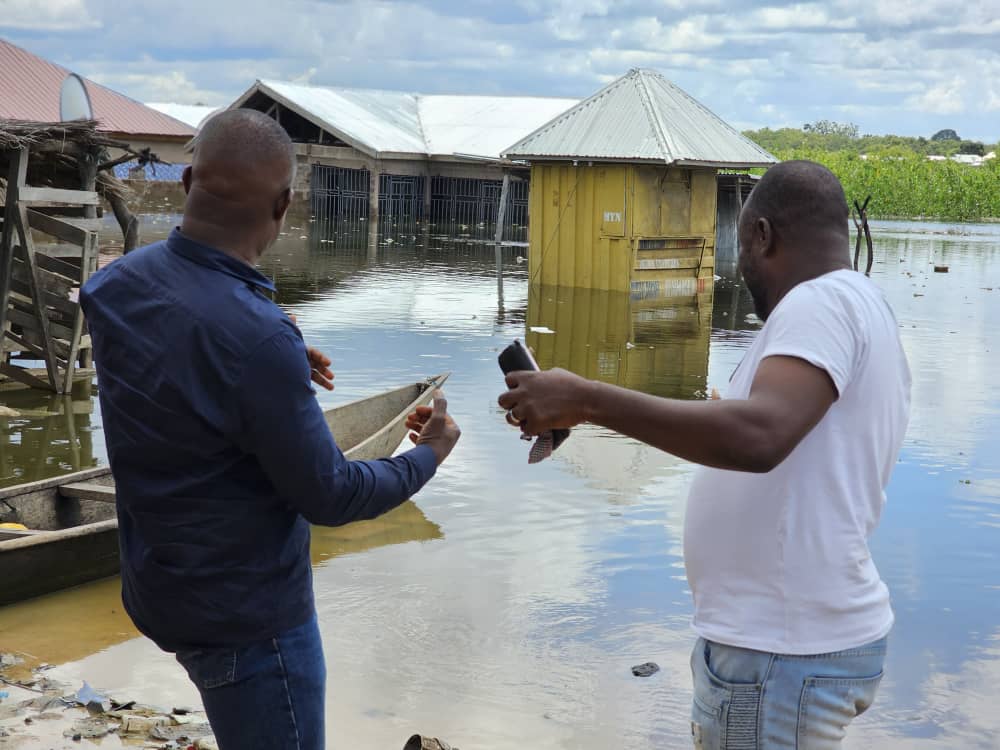
    Member of Parliament representing Yapei-Kusawgu, John Abdulai Jinapor, has made an appeal to both the government and the National Disaster Management Organisation (NADMO) for immediate relief assistance to the victims of the devastating floods in the Buipe township, Central Gonja District.

    “It is very critical that immediate relief is brought to mitigate the human suffering that is getting unbearable,” Mr Jinapor said.

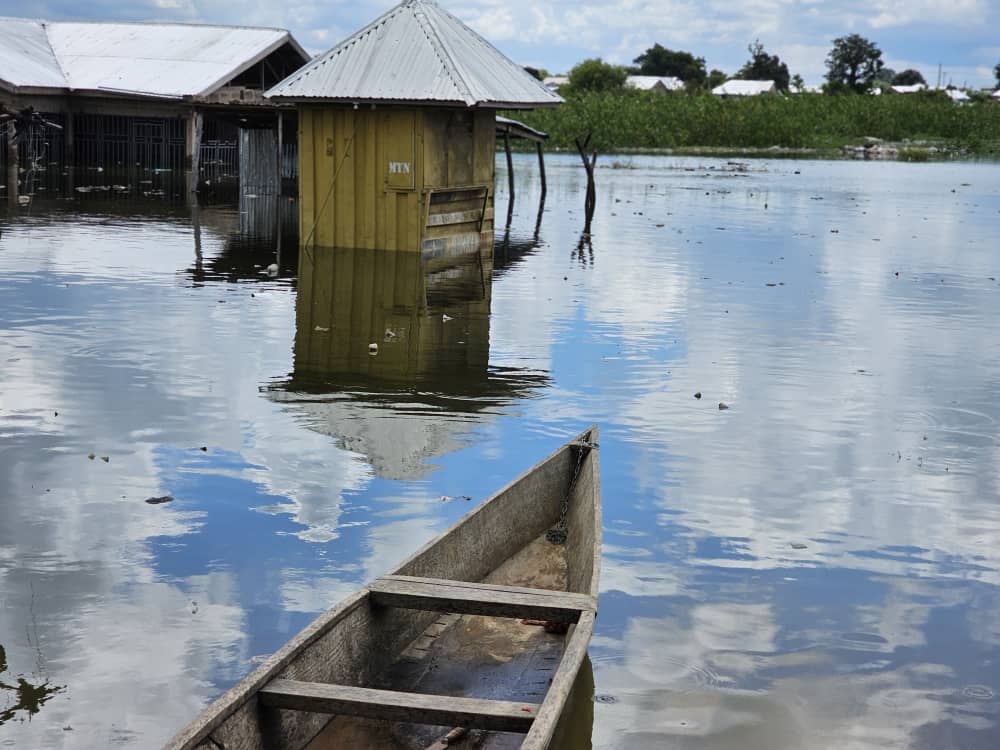
    Last week, the Bui Dam experienced a spillage that resulted in severe flooding in Buipe Town, causing extensive damage. This flood has been one of the most severe in recent memory, submerging roads, homes, farmlands, and causing significant structural damage, including roof damage.

    The resulting impact on the area’s infrastructure is substantial, with estimated damages and the need for assistance totaling millions of Ghana Cedis.

    Mr Jinapor has therefore called on the government, non-governmental organisations, international aid agencies, and philanthropists to urgently support the victims, as those displaced by the catastrophe are in dire need of shelter, food, and clean drinking water.

  • Debt restructuring: Ofori-Atta inhabiting a separate reality – Jinapor

    Debt restructuring: Ofori-Atta inhabiting a separate reality – Jinapor

    Former deputy minister John Jinapor, in charge of energy, claims that the government has not held talks with independent power producers (IPPs) despite their pledge that they will fight any move to restructure the US$ 1.4 billion debt owing to them.

    In spite of the challenges Ghanaians are going through during this economic crisis, he charged that the minister of finance, Ken Ofori-Atta, was out of touch with reality.

    Speaking on CitiFM’s Eyewitness news and monitored by GhanaWeb Business, Mr Jinapor said, “They [IPPs] have said earlier that they will not accept it and the Minister hasn’t even had the courtesy to meet them so he is living in a different world. He is missing all the targets.”

    On Tuesday, June 27, 2023, the Independent Power Producers made it clear that they would not accept any debt restructuring proposal from the government. The Chief Executive Officer of Independent Power Producers, Elikplim Apetorgbor, expressed concern that if the government fails to settle its debt amounting to US$1.4 billion, it could lead the country into a power crisis.

    Mr. Apetorgbor stated that his organization had previously informed the government of the need to pay at least 30 percent of the outstanding debt. The Independent Power Producers, which include Karpowership, Sunon Asogli Power Ghana Ltd, CenPower Generation, AKSA, Twin City Energy, and Cenit Energy, are responsible for about 65 percent of the country’s thermal power generation.

    He further highlighted that the Independent Power Producers have already faced challenges in making their first-quarter payments and expressed concerns about defaulting on their second-quarter payments if the government does not settle its dues.

    However, the Chief Executive Officer of Independent Power Producers clarified that they are open to considering a payment plan for the government to settle their arrears. Nevertheless, he emphasized that debt restructuring is not an acceptable option for resolving the outstanding payments.

  • We will resort to other measures if you fail to halt TOR lease – Minority to govt

    We will resort to other measures if you fail to halt TOR lease – Minority to govt

    The Ranking Member on the Mines and Energy Committee of Parliament, John Jinapor, has emphasized that if the government disregards calls to halt the planned lease of the Tema Oil Refinery (TOR) to Torentco Asset Management Group, the Minority Caucus will resort to alternative measures.

    Under the government’s proposal, TOR would be leased to Torentco Asset Management Group for a period of six years, at a cost of $22 million.

    The group is expected to refine approximately 8 million barrels of fuel annually. As part of the agreement, Torentco Asset Management Group would pay an annual rent of $1 million, in addition to a monthly rent exceeding $1 million.

    However, during an interview with the media John Jinapor stated, “We will initiate various processes, both within the parliamentary and legal frameworks, to ensure that the appropriate actions are taken.”

    Jinapor further emphasized the importance of the government exploring alternative and innovative approaches to revitalize TOR instead of proceeding with the lease to a private firm.

    He stated, “We should rather think about something innovative that will bring the refinery back to speed.”

    Jinapor urges government to pause lease agreement, seek stakeholder input for sustainable TOR solution, citing lack of benefit for Ghanaians.

  • TOR-Torentco deal: Minority demands reopening of procurement process to select new partner 

    TOR-Torentco deal: Minority demands reopening of procurement process to select new partner 

    Amidst growing concerns over the Tema Oil Refinery (TOR)-Torenco deal, the Minority in Parliament in a bold move aimed at revitalising the nation’s energy sector, has asked government to reopen the procurement process to allow for the selection of a strategic partner for the management of the TOR.

    The group insists that granting a fresh chance to select a strategic partner who will spearhead the efficient management and rejuvenation of this vital national asset, is the surest way to make the company relevant.

    Speaking to journalists in Parliament, Minority Spokesperson on Energy, John Jinapor accused the current administration of sitting aloof and supervising the redundancy of the company and also insisted that urgent steps needed to be taken to revive the company.

    “The Tema Oil Refinery is a strategic asset. It is the only state refinery capable of refining about 45 thousand barrels of oil a day. If Tema Oil Refinery is well positioned it will result in millions if not billions of savings when it comes to import substitution.

    “Unfortunately, the Akufo-Addo-led government has been sleeping on the job and has left the refinery to rot having failed to continue the progress made by the Mahama-led administration,” he said.

    Further, he bemoaned the TOR-Torenco deal, stressing that it does not inure to the benefit of the country. 

    “They have decided to lease the Tema Oil Refinery to Torentco Asset Management and if you read the details of the contract they are supposed to refine just about 8 million barrels. That is woefully inadequate.

    “We have become aware of attempts by the Akufo-Addo government to lease the Tema Oil Refinery for a six-year period to a company known as Torentco Asset Management company.

    “Our checks have indicated that the company has no track record when it comes to the oil sector and its balance sheet does suggest that it cannot provide the needed support for the Tema Oil Refinery,” he said.

    His comments follow the alleged leasing of the state refinery to Torentco Asset Management for at least the next six years.

    Under the agreement, the Torentco Asset Management Group will pay $1 million in annual rent and an additional rent of $1.067 million per month. The group will also refine up to 8 million barrels annually.

    Also, the board and management of TOR has justified the contract with Torentco with claims that although they had wished to deal directly with a major multinational company, TOR’s accrued debts made the refinery unattractive to many, hence the decision to settle on Torentco.

    Management released a press statement comprising three pages to provide clarification regarding the partnership. In the document, it was explained that the collaboration would enable TOR to transition from being an entity that incurs annual losses to one that consistently generates a positive net cash flow throughout the duration of the lease, among other claims.

    It also indicated that the transaction is already in its final stages of documentation and the company has an extensive list of ‘conditions precedent’ which Torentco must satisfy to demonstrate their ability to deliver all that is required in the transaction.

    “If at any point they are unable to do so, the transaction will not become effective and TOR will be left to continue with its ongoing efforts to find a solution,” the report said.

    Regardless, the deal is battling strong opposition, especially from the Minority in Parliament.

    Adding his voice to the discourse, the Yapei-Kusawgu MP maintained that another partner ought to be selected through a more rigorous process. 

    “The refinery alone has seen about five different managements under the Akufo-Addo administration. It does appear like they are playing with the refinery.

    “It appears there is no seriousness when it comes to the management and revitalization of the refinery, and so we call on government to immediately halt this lease agreement and ensure that we go through a transparent process that gives everybody a fair playing field and equal opportunity so that eventually we can identify a strategic partner that will not only ensure that the refinery is put to good use but it serves the overall interest of the nation.”

  • Reconsider your decision to shut plants on July 1 – John Jinapor to IPPs

    Reconsider your decision to shut plants on July 1 – John Jinapor to IPPs

    The ranking member for mines and energy, John Jinapor, has urged the independent power producers (IPPs) to revisit their decision to cease operations on July 1 in an effort to prevent an impending energy crisis.

    According to him the manner in which the government is handling the situation, particularly criticizing the Finance Minister’s approach.

    He also raised concerns about the selective and discriminatory nature of the payments being made to certain preferred IPPs, while neglecting others.

    “The Finance Minister instead of dealing with the Chamber of IPPs is engaged in selective and discriminatory payment, selecting some preferred IPPs, paying them and leaving them to their own fate,” he stated.

    Mr Jinapor called on the government to display dedication in resolving the pressing debt problem that has led to this dire situation.

    The IPPs, responsible for 50 percent of Ghana’s power generation, have issued a warning that they will cease operations unless the government makes an interim payment of 30 percent of the outstanding debt, which amounts to $1.7 billion, owed to them.

    Understanding the seriousness of the matter, Jinapor appealed to the IPPs to grant the government and the nation additional time to address their grievances.

    “Please reconsider your decision towards shutting your plants on July 1. Please give the government and the nation some more time,” Jinapor appealed.

    Jinapor stressed the urgency of the situation and urged the government, specifically the President, to intervene promptly and ensure a swift resolution.

    He emphasized that the outstanding debt amounted to around $1.7 billion, causing significant losses for the Electricity Company of Ghana (ECG) and substantial foreign exchange losses.

    “The debt as we speak now is about $1.7 billion, and it keeps compounding. ECG’s losses today are over 30 percent, forex losses alone account for more than $300 million, fuel supplied that has not been paid runs into hundreds of millions of dollars,” he said.


  • Minority asks govt to fix deplorable roads to avert national crisis

    Minority asks govt to fix deplorable roads to avert national crisis

    The Minority in Parliament has sounded an alarm over the deplorable condition of the roads connecting to the Tema Oil Refinery and other petroleum depots, warning that failure to address the issue could lead to a national crisis.

    John Jinapor, the Ranking Member of the Mines and Energy Committee, emphasised the urgent need for the government to take action and prevent further disruptions to petroleum supplies.

    The call comes in response to a decision by the Petroleum Tanker Drivers under the Ghana National Petroleum Tanker Drivers and Petroleum Gas Drivers Union to embark on a sit-down strike.

    The drivers have cited the poor state of the Tema Oil Refinery to Kpone road in the Greater Accra Region as their primary concern.

    In solidarity, tanker vehicles transporting petroleum products from enclaves such as Takoradi, Kumasi, and Buipe have also withdrawn their services, demanding that the deteriorating roads leading to those depots be rehabilitated.

    The impact of the strike action is already being felt, with reports of shortages of liquefied petroleum gas (LPG) and other petroleum products in certain areas of the country.

    The Minority in Parliament is deeply concerned about the potential consequences, as the transportation of highly inflammable petroleum products on these dilapidated roads poses risks to the safety of drivers and pedestrians alike.

    Addressing the situation, John Abdulai Jinapor expressed the urgent need for the government to prioritise the concerns of the Petroleum Tanker Drivers Union and take immediate action.

    He urged the government to refrain from using financial constraints as an excuse, rejecting the notion that the nation’s resources are depleted, whilst citing the rapid deployment of road contractors to complete major projects in the Assin North Constituency during the recent by-elections.

    “The action by the government in Assin North points to one fact: they have priorities, and the minority in Parliament believes that fixing the roads connecting to these major depots should be one of such priorities,” emphasized Jinapor,” he said.

    The Minority’s call for action underscores the gravity of the situation and the need for swift resolution. They called upon the government to demonstrate commitment and refrain from a lacklustre approach in addressing the concerns raised by the Petroleum Tanker Drivers Union.

    Below is the statement

    GOVERNMENT MUST FIX THE ROADS CONNECTING TO TEMA OIL REFINERY AND OTHER PETROLEUM DEPOTS IN ORDER TO AVERT A NATIONAL CRISIS

    The Minority in Parliament has taken note of a genuine decision taken by the Petroleum Tanker Drivers under the Ghana National Petroleum Tanker Drivers and Petroleum Gas Drivers Union to embark on a sit-down strike over the deplorable condition of the Tema Oil Refinery to Kpone road in the Greater Accra Region.

    We have also noted that Tanker vehicles with loads of petroleum products from the country’s petroleum enclaves in Takoradi, Kumasi and Buipe, have withdrawn their services insisting they will not resume work until the deplorable roads leading to those depots are rehabilitated.

    Information reaching us indicates that the strike action is already having a negative impact on petroleum supplies with reported shortages of LPG and other products in some parts of the country.

    It should be noted that the Petroleum products being transported on these deplorable roads are highly inflammable and has the potential of compromising the safety of drivers and pedestrians.

    The Minority wishes to make an urgent and passionate call on the Akuffo-Addo/Bawumia led Government to refrain from the usual lackluster approach and show commitment towards addressing the genuine concerns of the Petroleum Tanker Drivers Union with immediate effect to avert the pending national crisis.

    We wish to state emphatically that we completely reject the excuse by the Government communicators that the nation is broke following the rapid deployment of road contractors to complete some major roads in the Assin North Constituency during the period of the recently held by-elections. The action by the government in Assin North points to one fact, that they have priorities, and the minority in Parliament believes that fixing the roads connecting to these major depots should be one of such priorities.

    By this release, we call on the government to fix the said roads with immediate effect.

    -Signed-

    Hon. John Abdulai Jinapor (Ranking Member, Mines and Energy Committee)

  • Stop blaming Mahama for current energy sector debt – John Jinapor

    Stop blaming Mahama for current energy sector debt – John Jinapor

    Former Deputy Minister of Power, John Jinapor, has denied allegations that the Mahama administration’s power purchase agreements resulted in a $320 million debt to the country.

    The Chairman of the Mines and Energy Committee of Parliament, Samuel Atta Kyea, at a press briefing on Wednesday, June 14, accused the NDC of signing 43 take-or-pay power purchase agreements, resulting in the current government being obligated to pay over $320 million in 2018 for unused power charges.

    Refuting these claims in an interview with the media, John Jinapor said the NPP is partly to blame for the losses accrued in the energy sector.

    “ECG losses alone have increased from 23 percent to 31 percent so when the Minister of Finance pays for those losses, it is not excess capacity. It is power delivered. There is a power reserve margin of 20 percent and it is statutory and this government came and decided that it shouldn’t be part of the tariff structure and it is a political decision.”

    The Yapei-Kusawgu legislator blamed the massive leakages, forex losses, exchange differentials and other factors other than what Mr. Atta Kyea is alleging for the ballooning energy debt.

    “The problem is a result of forex losses, exchange rate differentials, and the unnecessary political interference which is leading to this payment and it cannot be attributed to former president Mahama. Immediately these PPAs expire, they quickly renew them and not from the five years that we did but for fifteen years. We will not allow these double standards to go because the facts speak for themselves.”

    On claims by Mr. Atta Akyea that the Mahama government entered 43 take-or-pay power purchase agreements, resulting in the current government being obliged to pay over $320 million in 2018 for unused power charges, Mr Jinapor said the allegation is untrue.

    “Some of the agreements he has said were not signed by Mahama, so he has to give further information on the 43. This is a simple analogy. You said the man signed 43 agreements, provide the 43,” he added.

  • DDEP and Menzgold saga are no different – John Jinapor alleges

    DDEP and Menzgold saga are no different – John Jinapor alleges

    Government’s Domestic Debt Exchange Programme (DDEP) has been compared to the infamous Menzgold scandal by John Jinapor, member of parliament for Yapei/Kusawgu.

    He maintains that the entire programme spearheaded by the Finance Minister is not only obnoxious but one that does not bode well for holders of government bonds or, more broadly, financial sector confidence.

    Following an economic downturn and difficulties in servicing its debt, the government implemented the domestic debt exchange programme to give itself more time to meet its fiscal obligations.

    Without the debt exchange programme, the government warned that the nation’s economy would collapse severely.

    Speaking after Finance Minister, briefed Members of Parliament on Thursday on the debt swap process, the legislator said that the Minister’s decision to subject bondholders to a debt exchange is similar to the Menzgold Ponzi scheme that hit the country several years ago.

    “If you digest all these, the most important thing the Finance Minister has told the people of Ghana is very simple. If you evaluate what he is doing, and evaluate what NAM 1 of Menzgold did, the two are synonymous and the same. There is no difference”, he emphasized.

    The MP has also advised Leonard Chumo, who has been appointed by the International Monetary Fund (IMF) as a financial adviser to the Bank of Ghana, to exercise extreme caution.

    Mr. Jinapor stated that Mr. Chumo must thoroughly review all documents provided to him by the Central Bank.

    “I welcome Mr Chumo but please open your eyes at the Bank of Ghana…read and scrutinise the documents,” Mr. Jinapor said.

    Ghana is currently requesting a $3 billion bailout from the IMF to bolster the struggling national economy.

    Before the Bretton Woods institution’s board would evaluate Ghana’s request, one of the requirements is the domestic debt restructuring scheme.

    A staff-level agreement between Ghana and the IMF was achieved in December, opening the door for the $3 billion rescue.

  • Be vigilant at BoG – Jinapor cautions IMF Supervisor

    Be vigilant at BoG – Jinapor cautions IMF Supervisor

    The International Monetary Fund (IMF) has elected Leonard Chumo as a financial consultant to the Bank of Ghana.

    The member of parliament representing the Yapei Kusawgu district, John Jinapor, has cautioned Chumo to exercise utmost caution.

    Commenting on the Finance Minister’s address to Parliament on the state of the Domestic Debt Exchange Programme (DDEP) on Thursday, February 16, Mr Jinapor said Mr Chumo must scrutinise all documents provided to him at the Central Bank.

    “I welcome Mr Chumo but please open your eyes at the Bank of Ghana…read and scrutinise the documents,” Mr Jinapor said.

    Funded by Switzerland’s State Secretariat for Economic Affairs (SECO), the resident adviser is expected to provide technical assistance and help build the capacity of the banking supervision function in the country.

    A press release from the Bank of Ghana indicated that “the Adviser’s placement is a continuation of cooperation in this area between the Bank of Ghana, the IMF, and SECO, that started as early as in 2015 and had already seen the assignment of a previous Adviser until 2018.”

    According to the Bank of Ghana, the previous adviser contributed to some achievements which make the current assignment eminent.

    Ghana is currently before the IMF seeking a $3 billion bailout to support the country’s ailing economy.

    The Domestic Debt restructuring programme is part of the conditions before the board of the Bretton Wood institution considers Ghana’s proposal. Ghana in December reached a staff-level agreement with the IMF paving the way for the $3 billion bailout.

    The Finance Minister, Ken Ofori-Atta, on Thursday, confirmed that all pensioners who failed to tender their old bonds for new ones under the Domestic Debt Exchange Programme (DDEP) have been exempted from the programme.

    Addressing Parliament, Mr Ofori-Atta said the pensioners have nothing to worry about adding that all their coupons and principals will be honoured when maturity is due.

    He added that an official letter has been written to the pensioner bondholders who did not sign onto the Programme of their exemption from the exercise.

  • Oil for gold exchange: The government paid cash for the first 40,000 metric tons of oil – Jinapor

    Oil for gold exchange: The government paid cash for the first 40,000 metric tons of oil – Jinapor

    According to John Jinapor, the ranking member of the Parliament’s Energy and Mines Committee, the government paid cash for the first 40,000 metric tons of oil it purchased through the Gold-for-Oil initiative.

    He claims that the Minority has a lot of concerns regarding the procedures the government is using with the gold-for-Oil plan, but there has not yet been a response.

    The ranking member stated that no official message to Parliament regarding the transaction on the Gold for Oil program had been made during an appearance on the Morning Starr with Naa Dedei Tettey on Thursday, February 2, 2023.

    “The Mines and Energy Committee hasn’t been briefed. All we are aware of is a statement in the public by the Vice President that they were going to engage in what he called a barter trade where they will exchange our gold directly for oil. Indeed he was very categorical that forex or currency will not be involved.”

    “Fortunately, 40,000 metric tons of diesel have arrived. Yesterday, I had the opportunity to hear the Deputy Minister for Energy, Andrew Egyapa Mercer and he confirmed to my dismay that the first parcel of oil, that is the diesel, was not procured with gold. Rather it was procured with cash from the Bank of Ghana. This clearly defects from what the Vice President has been telling us,” Mr. Jinapor stated.

    According to him, the deputy minister stated that “contrary to what the Vice President said they (government) rather bought that parcel of oil with a cash amount from the Bank of Ghana. And my checks at the time that the oil was procured PMMC has not even bought an ounce of gold.”

    Mr. Jinapor further added that the deputy minister also confirmed that they have an intermediary.

    “If you are doing a barter trade you don’t need an intermediary. Barter trade simply means that I give you a commodity and you also give me a commodity. So once you hear of an intermediary what it means is that you are selling the gold to that intermediary.”

    “So this whole gold for oil barter trade is nothing but a calculated, cooked thing from the Vice President’s office aimed at taking gold from the license gold exporters and selling it through an intermediary and using that dollars to procure oil.”

  • Oil was purchased at a premium price rather than a bargain – John Jinapor

    Oil was purchased at a premium price rather than a bargain – John Jinapor

    John Jinapor, the ranking member of the Parliament’s Mines and Energy Committee, claimed that the price paid for the gold in exchange for the oil was not a bargain but a premium.

    He asserts that purchasing at a premium will result in fuel prices that are higher than those that the government has upheld.

    Speaking to Citi News, he said “In fact, the information I have is that the oil they bought is at a premium and not at a discount. So, this narrative that they are going to get cheap oil somewhere is not true. Let me state that there is nothing like cheap oil when it comes to the international oil market. On the contrary, this deal is leading to a premium in terms of pricing.”

    John Jinapor however explained that the fuel being bought by the government is not enough for the Ghanaian market and it may not be a cheap source to be able to deal with the increasing fuel prices.

    “The notion that fuel prices will go down is not true. The other side is that the diesel covers only 25% of our requirement and you see that is not even enough to change the price,” he said.

    John Jinapor also called on the government to halt the programme for broader consultations to be held.

    Meanwhile, the Head of financial markets at the Bank of Ghana, Stephen Opata, has confirmed that the first consignment from the gold for oil policy is already being sold to the bulk oil distributing companies.

    He noted that even though the prices are lower than the ex-pump prices, the impact will not be felt since it is just about 20% of the country’s market needs.

    “The product was cleared from the ports today and I know that BOST has started selling. This is just 20% of our market needs from the numbers I have seen the prices are better than what is at the ex-pump prices right now.

    “Because this is just 20 percent of our needs, it will not make that much impact as it would if we were to be doing 100 percent of our diesel needs,” he was quoted by myjoyonline.com.

    The first consignment of the oil from the gold for oil policy arrived in Ghana on Monday, January 16, 2023.

    The 41,000 metric tons of oil from the United Arab Emirates was however discharged to Bulk Oil Storage and Transportation (BOST).

    The move is part of the government’s efforts to curb high fuel prices and the lack of enough dollars to purchase oil from the international market.

  • Rise in utility costs will make Ghanaians’ lives even worse – Jinapor predicts

    Rise in utility costs will make Ghanaians’ lives even worse – Jinapor predicts

    John Jinapor, the committee’s ranking member for mines and energy, lamented the rise in power prices in August of last year.

    He asserts that Ghanaians’ circumstances will get worse as a result of the increase in electricity prices.

    “The country is already struggling with galloping inflation estimated at approximately 32%, so this utility price increase will simply exacerbate the current high cost of living and worsen the situation of the already destitute Ghanaians,” he stated.

    Read the full story originally published on August 20, 2022 by angelfmonline.

    John Jinapor, the ranking member of the Mines and Energy Committee of the House of Representatives, has expressed his displeasure with the most recent increase in energy rates, claiming that it will “worsen the position of the already impoverished Ghanaians.”

    He was of the firm conviction that, “Government can and must do something to cushion Ghanaians who are going through unimaginable hardships with ever-worsening poverty levels.”

    His concern comes after an upward adjustment in utility tariffs by the Public Utilities Regulatory Commission (PURC) on Monday, August 15, 2022.

    Effective September 1, utility consumers will pay 27.15 per cent for electricity and 21.55 per cent for water.

    In response, the Ranking Member on Parliament’s Mines and Energy Committee, John Jinapor, in a press statement dated August 15, noted that the tariff increment will only exacerbate the current high cost of living.

    “The country is already reeling under galloping inflation estimated at about 32% thus, this utility tariff increment will only exacerbate the current high cost of living and will thus worsen the plight of the already impoverished Ghanaians”, a portion of the statement reads.

    John Jinapor also refuted the misleading conclusion that the PURC has increased the Electricity tariffs by 27% for all consumers.

    Read the full statement below:

    The Minority in Parliament has taken note of the significant utility tariff hikes for electricity and water in an announcement by the Public Utilities Regulatory Commission (PURC).

    Firstly, we wish to debunk the misleading conclusion that the PURC has increased the Electricity tariffs by 27% for all consumers.

    A critical look at the tariff structure as announced reveals that all residential consumers who fall between 0-300 kWh bracket have witnessed a price increase from GHp/kWh 65.4161 to GHp/kWh89.0422, representing an increment of almost 34%.

    It should be noted that the bulk of residential consumers fall within the 0-300 kWh bracket and will therefore be adversely affected by the 34% adjustment.

    More importantly, we have taken note that the increment is on account of the worsening Ghana Cedi against other major trading currencies.

    The Cedi has in recent times witnessed a free fall, reaching almost 50%, and is currently rated amongst the worst performing currencies in the world.

    The country is already reeling under galloping inflation estimated at about 32% thus, this utility tariff increment will only exacerbate the current high cost of living and will thus worsen the plight of the already impoverished Ghanaians.

    Prior to these electricity tariff increments, Petroleum products at the pumps have witnessed a colossal increment of about 100%. So far, the Energy Debt Recovery Levy has seen an increase of 20%; the Price Stabilization and Recovery Levy is up by 40%. The Unified Petroleum Pricing Formula has been increased by 164%, whilst the BOST margin has been increased from 3 Pesewas to 9 Pesewas representing a 200% increase. As if this is not enough, the fuel marking margin levy has also been increased by another 233%.

    This is against the background that the volume of petroleum products consumed has increased by 35% from 4 billion litres to 5.5 billion litres.

    We are of the strongest conviction that Government can and must do something to cushion Ghanaians who are going through unimaginable hardships with ever-worsening poverty levels under the Akufo-Addo/Bawumiah-led government.

    It will be recalled that following the major tariff review in 2016, the NDC Government intervened, resulting in a reduction of the rate of increment by close to 50%.

    We have also taken note of the government’s announcement that an unexpected windfall of about USD500,000 from Ghana’s share of petroleum resources was accrued in the 2022 mid-year budget statement.

    This statement clearly means the government is making huge unanticipated revenues from crude exports, hence the need to cushion the suffering masses from these windfalls.

    Finally, we wish to caution the PURC to refrain from capturing the AKSA plant which has had its contract tenure expired in the price build-up since that will be illegal.

    Thank you.

    John Abdulai Jinapor
    Ranking Member: Mines and Energy Committee

  • Government should stop deceiving us – John Jinapor on Gold for Oil deal

    Government should stop deceiving us – John Jinapor on Gold for Oil deal

    Ranking Member on Energy Committee in Parliament, John Jinapor has said government should stop deceiving Ghanaians with its ‘so-called’ procurement of affordable fuel for the Ghanaian market with Ghana’s gold.

    According to him, the deal in its current form is inherent with losses, inefficiencies and will affect the country’s debt.

    “Government should stop deceiving us. If Ghana is so broke, our reserves have been so depleted that we do not have dollars and so we want to do an arrangement in order to use these methods to buy fuel, fair enough, but who will sell fuel cheaper to you?” he told Evans Mensah on Newsnight on Tuesday.

    He said the Parliamentary Select Committee on Mines and Energy has not been fully briefed on this Gold for Oil deal.

    John Jinapor noted that government cannot be successful with its plans of buying cheaper fuel from the international market since there is no cheaper fuel on the market.

    “Nobody in this world will sell his oil to you for a cheaper price than the normal price.”

    He argued that whatever ounces of gold the government intends to use for oil must be converted to meet the price of a barrel of oil since Gold is a commodity and not currency.

    He said the government should rather make a case that the deal is to make room for the inadequate foreign currencies and not for cheaper fuel.

    “This issue of trying to confiscate the issue and deceive us, it will not work because if the oil has a price and gold has a price, all you ought to do is to do a matching order and determine the price of oil and say how much compared to the price of gold in terms of oil of barrels can I get? So where is that barter?” he explained.

    Meanwhile, the Deputy Lands and Natural Resources Minister, Mireku Duker has said the first consignment of affordable fuel under the deal will arrive next week.

    Mr. Duker said this after a meeting with the Chamber of Mines on Tuesday at which the Gold for oil deal was discussed.

    Answering a question by journalists on when the first consignment is expected to arrive in the country, he said “we are thinking of next week if I’m not exaggerating .”

    The volume of the low cost fuel he noted is yet to be determined.

    Source: Myjoyonline

  • ‘Without injection of new funds, GNPC on the brink of bankruptcy’ – Minority

    Concerns have been expressed by the Employment, Social Welfare, and State Enterprises Committee of Parliament regarding the Ghana National Petroleum Corporation’s financial situation (GNPC).

    Dr. Kwabena Donkor reportedly stated that the state corporation’s finances don’t look good and warns of impending insolvency, according to the Ranking Member of the Committee.

    On November 2, 2022, Dr. Donkor remarked in a speech on the floor of Parliament that the government must stop exploiting the GNPC as a source of money, especially for subsidizing activities that are unrelated to the corporation’s mission.

    “Without the injection of new funds, GNPC is on the brink of bankruptcy. The financials don’t speak well of GNPC. The future is bleak for GNPC and, therefore, we must insist that GNPC stays on the straight and narrow path in its operations.”

    The assertion is however corroborated by the Ranking Member on the Mines and Energy Committee of Parliament, John Jinapor who believes GNPC is on the verge of collapse.

    He explained this that is due to a reduction in the corporation’s profitability.

    “The gross profit margin had reduced from “50 percent in 2018, to 26 percent in 2019 to 0.3 percent in 2020,” the lawmaker said in parliament.

    Meanwhile, the annual financial performance report on GNPC issued by the Committee on Employment, Social Welfare and State Enterprises revealed that the gross profit margin of the corporation reduced from 50 percent in 2018 to less than one percent in 2020.

    The report further said GNPC has occasionally depended on gas sales in order to fund its operation in the wake of a decline in crude oil sales.

  • Ghana’s current economic woes due to Akufo-Addo’s reckless borrowings – John Jinapor

    A member of the Finance Committee in Parliament has laid the country’s current economic crisis solely on the doorsteps of President Akufo-Addo.

    John Jinapor said the woes is due the unprecedented and reckless borrowings by his government.

    According to him, despite the global economic situation, there is nothing to show for the huge borrowings.

    President Akufo-Addo
    President Akufo-Addo

    “The [crisis] is a Nana Akufo-Addo problem. There is a problem and what we are witnessing now is unprecedented. Something must be wrong somewhere because of excessive borrowing. We are borrowing as if there is no tomorrow. Going forward, government must move away from reckless borrowing”, John Jinapor said in an interview with Citi TV on Monday.

    The Yapei Kusawgu MP added that the government’s failure to invest in productive sectors is sinking the economy.

    “Managing an economy is not only about today but the short, medium and long term. If you borrow and invest it in productive sectors, it spurs economic growth, creates jobs and generates more revenue and can deal with the headwinds”, the MP added.

    Recent international ratings that saw Ghana’s economy downgraded to reflect the country’s inability to fix its liquidity and debt challenges.

    With limited access to the international financial market and challenges with domestic revenue mobilization to rescue the situation, Ghana has now turned to the International Monetary Fund (IMF) for a US$ 3 billion bailout.

    However, President Akufo-Addo addressed the nation on Sunday, October 30, about measures his government was taking to curtail the current economic crisis.

    In his address, the President hinted at possibly securing a deal with the IMF by the end of the year.

    According to him, the country is likely to arrive at an agreement by December to get the crucial bailout it seeks.

    Amidst the general economic difficulties facing Ghanaians, the President in the address to the nation on Sunday insisted that the government is committed to ensuring that the economy is back on track.

  • ‘We will come after you’ – Jinapor warns ‘big men’ involved in galamsey

    The Lands Minister, Samuel Jinapor has pledged to go after all persons involved in illegal mining activities in the country. 

    Mr Jinapor said the Akufpo-Addo-led government will not prominent individuals found engaging in galamsey.

    According to him, the government does not have the luxury of cherry-picking who is dealt with and who is not.

    Speaking on the JoyFM’s Super Morning Show on Wednesday, October 12, Mr Jinapor insisted the government is prepared to go for the long haul in this fight. 

    He thus asked persons involved in the menace to take a cue from the prosecution of Aisha Huang.

    “This is not a time where we can choose and pick and say this person is a journalist so she cannot be touched or be touched or this person is a politician and therefore, the person is shielded or this person is on government or this person is a businesswoman.

    “Nobody will be shielded. We are going to go about without fear or favour and the prosecution of Aisha Huang should be a clear testimony and should send a clear signal to those who are determined to carry on with this menace.

    I should call that way that we will come after them and come after them ruthlessly,” he warned.

    Mr Jinapor thus asked the Ghanaian people to have full assurance in the government to deal effectively with the canker.

    To him, the government will deploy all the arsenal it has at its disposal in this fight.

    According to him, this will be done ruthlessly.

    “Well, I want to emphasise that the commitment of the government to the fight against this canker [Galamsey] is total and unflinching and all the various tools we have to enable us to come to grips of this illegal mining issue will be rolled out ruthlessly.”

  • ECG payment system not being outsourced to Hubtel – ECG MD denies

    Samuel Dubik Mahama, the managing director of the Electricity Company of Ghana, has denied claims that his organization was outsourcing its payment system to a private third-party business.

    This comes after John Jinapor, the ranking member on the parliament’s mines and energy committee, claimed that Hubtel Company Limited had been offered the chance to take over the ECG’s payment system.

    The ECG app, which was created locally by ECG personnel, is being attempted to be transferred to a business called Hubtel.
    Officials from Hubtel are allegedly attempting to connect their system to the app at ECG right now, according to the legislator.

    “I’m even told that Hubtel is proposing to charge 4 percent commission. So, there is a lot of internal upheaval among some ECG staff,” he indicated.

    But Samuel Mahama speaking with journalists on the matter said, “ECG doesn’t have a contract with anybody called Hubtel. So, ECG has a proof of concept understanding with Hubtel and ECG hasn’t agreed on any percentages with Hubtel,”

    “It is quite sad that in this day when we have the Right to Information [Law], where you can get access to information when you hear gossip, you choose to run with gossip,” the ECG boss added.

    Meanwhile, the ECG has come under intense pressure over the inability of customers across the country to purchase pre-paid power from their various vending points.

    The situation which has been described as a technical glitch affected many businesses, households and institutions that rely on ECG’s power distribution system.

    In the wake of this, the Public Utilities Regulatory Commission (PURC) directed ECG to pay due compensation to customers who were significantly impacted by the recent glitch in its prepaid vending system.

    The compensation is expected to cover the period between October 1 to 7, 2022


  • There is an attempt to hand over ECG’s payment system to a private firm – MP alleges

    John Jinapor, the ranking member of the Parliament’s Mines and Energy Committee, has claimed that the management of the Electricity Company of Ghana intends to transfer control of its payment system to a for-profit organization called Hubtel.

    He claims that the private firm is the same one where Kwame Agyeman-Budu, the former MD of ECG, allegedly intended to take control of its payment system for a commission of 1.5 percent.

    Speaking on the Good Morning Ghana show on October 4, 2022, John Jinapor alleged that current ECG management is now trying to privatize the payment system at a 4 percent commission rate.

    “There is an attempt to hand over the ECG app, which was developed locally by ECG staff to a company called Hubtel. Today as we speak, there are Hubtel officials at ECG trying to hook their system on the app.

    “I’m even told that Hubtel is proposing to charge 4 percent commission. So, there is a lot of internal upheaval among some ECG staff,” he indicated.

    He continued, “Don’t forget that during Budu’s time he wanted to embark on the same thing and charge 1.5 (percent commission). The ECG staff held press conferences publicly and agitated against the 1.5 percent commission.”

    The lawmaker, however, said staff of the ECG believe that its existing mobile application which was developed is rather enough for use rather than bringing on a third party to handle payments.

    “They (the ECG staff) believe that they have already developed the app and that it should not cost that much to bring on board a third party,” the MP said.

    He added that the National Security has since been engaged in the matter and is probing details of the alleged transaction.

  • EC payment system being handed over to a private company – MP alleges

    The Ranking Member of the Mines and Energy Committee of Parliament, John Jinapor, has alleged that the management of the Electricity Company of Ghana(ECG) is handing over its payment system to a private company called Hubtel.

    According to him, Hubtel is the same company that the previous ECG Managing Director, Kwame Agyeman–Budu, wanted to take charge of the company’s payment system at a commission of 1.5 percent which led to some commotion.

    Speaking in a Good Morning Ghana panel discussion monitored by GhanaWeb, on Tuesday, October 4, Jinapor added that now the current management is trying to privatize the payment system at a 4 percent commission rate.

    “There is an attempt to hand over the ECG app, which was developed locally by ECG staff to a company called Hubtel. Today as we speak, there are Hubtel officials at ECG trying to hook their system on the app.

    “I’m even told that Hubtel is proposing to charge 4 percent commission. So, there is a lot of internal upheaval among some ECG staff.

    “Don’t forget that during Budu’s time he wanted to embark on the same thing and charge 1.5 (percent commission). The ECG staff held press conferences publicly and agitated against the 1.5 percent commission.

    “They (the ECG staff) believe that they have already developed the app and that it should not cost that much to bring on board a third party,” he said.

    The ranking member, who is also the Member of Parliament for Yapei Kusawgu, added that the National Security also entered the discussion and it is demanding some information about the transaction and some details on the payment system.

  • Do not bastardise ECG’s IT department for technical hitch – John Jinapor

    The Ranking Member on Parliament’s Mines and Energy Committee, John Jinapor, says he has spoken to the Chairman of the Committee, Samuel Atta Akyea, to invite the Management of the Electricity Company Limited to appear before the Committee for the issues surrounding the technical challenge to be dealt with.

    According to him, doing so would provide both Parliament and the general public with the full facts as to what exactly had happened leading to the technical challenge that had left consumers unable to recharge their electricity credit for days.

    This comes after some ECG prepaid consumers were left in the dark after a technical challenge affected the purchase of credits for their meters.

    Customers in Volta Region, Takoradi, Tema, Cape Coast, Kasoa, Winneba, Swedru, Koforidua, Nkawkaw and Tafo were affected.

    On October 1, ECG said they had fixed the vending challenges, however, some consumers were still reporting challenges on Sunday morning with long queues being seen at vending centres across affected areas.

    Commenting on the situation, the Ranking Member noted that while the IT department of the ECG has been bastardised following the technical hitch, it would be rather unfair to do so when there has been no concrete evidence to prove such claims.

    He has thus called on all and sundry to exercise maximum restraint when commenting on the situation and await the Committee’s findings on the matter.

    “I have spoken to Chairman of the Committee, honourable Atta Akyea, that when all is over ECG must be invited to appear before the committee so that we can deal with this issue and get the full facts. Because at that level, you’re appearing before a committee that has the powers of a high court and sometimes you’re under oath.

    “But I think that it is early days yet to begin to accuse people directly. You may have your suspicions just as we also get a lot of information. And I’ve been very very careful putting out a lot of the information I get.

    “In fact, I am aware that the IT department has worked around the clock to bring all this service back on and so let’s be very very careful not to pigeonhole people and demonise them.

    “It is my hope that this investigation will be very very transparent and that the full details will be made available to the general public in terms of what really transpired and what we can do going forward. So I will plead with all of us to exercise maximum restraint in levelling accusations,” he said.

    Source: Myjoyonline

  • There is evidence to show some NPP top officials are into illegal mining – John Jinapor

    The Deputy Ranking Member on the Mines and Energy Committee of Parliament, John Jinapor, has called on the government to show commitment to the fight against illegal mining by prosecuting bigwigs involved in the activities.

    According to him, there is evidence to prove that some people in the governing NPP are involved in galamsey which is degrading lands and water bodies in the country.

    Speaking on Newsfile, John Jinapor said that “if they go arresting the small fishes while their men are blatantly disregarding the law and moving into forest reserves and degrading the forest, they’re sending the wrong signal.“

    “The only way to deal with it is for the President to show leadership, by going after his people. There is ample evidence to suggest and to confirm that some top hierarchy within the NPP are engaged in this illegal activity,” he added.

    Using Akonta Mining Limited as an example, the ranking member questioned how the company owned by NPP’s Ashanti Regional Chairman, Wontumi obtained a prospecting license that expires in 2035.

    “The law says that you can’t renew a license beyond three years and when you do, it says that the land size ought to be reduced going forward. So, how come Wontumi is able to acquire a prospecting license that expires in 2035? There are a lot of them out there,” Mr Jinapor said.

    In the Akonta Mining Limited case, he stated that the mining firm breached the laws when it moved its activities into the Tano Nimiri Forest Reserve in the Amenfi West Municipality in the Western Region.

    “So clearly there is some blatant disregard for the law by some people who feel untouchable,” he added.

    Mr Jinapor charged the government to demonstrate their commitment to dealing with the menace of illegal mining.

    “The President himself said he is putting his job on the line, nobody compelled him, the result so far has been very appalling for me, the President  hasn’t achieved anything significant.”

    Meanwhile, the Lands Ministry has directed Akonta Mining Limited to stop operations in the Tano Nimiri Forest.

    In a statement issued on September 30, the Ministry said even though Akonta Mining Limited has a mining lease to undertake mining operations in some parts of Samreboi, outside the Forest Reserve, “the company has no mineral right to undertake any mining operations in the Tano Nimiri Forest Reserve”.

    The statement said the sector minister, Samuel Abu Jinapor, has therefore directed the Forestry Ministry to, “forthwith, ensure that the company does not carry out any operation in the Forest and to take the necessary action against any person found culpable in this matter”.

    The directive came after two persons sustained gunshot wounds at the Akonta Mining firm in Samreboi in the Western Region.

    This happened after a section of the youth reportedly prevented personnel of Akonta Mining Limited from sending more mining equipment into the Tano Nimri Forest reserve on Thursday.

    The company is said to have been mining in the reserve despite a declaration by the government that it has not granted any entry permit into the forest reserve.

    But, OccupyGhana is asking the Lands Ministry to go a step beyond merely directing Akonta Mining Limited to halt operations in the Tano Nimiri Forest in the Western Region.

    According to the pressure group, the ministry must invite the security agencies and the Attorney General into the fray by furnishing them with the information needed to ensure that perpetrators are punished.

    “We therefore demand that you forthwith refer the facts and evidence in your possession that show that the said mining company is undertaking mining operations in breach of the Act, to the police and the Attorney-General for further investigations and prosecution of the company and its directors and officers.”

    Source: Myjoyonline


  • Why Ghana makes huge revenue windfall from global crude price hikes – John Jinapor explains

    The Ranking Member of Parliament’s Mines and Energy Committee, John Jinapor, has ‘shot down’ government’s claims that the Russia-Ukraine war is the cause of Ghana’s economic difficulties.

    According to him, “the evidence as contained in the 2022 semi-annual report on Petroleum receipts has revealed that Ghana is making huge windfalls from the sale of crude oil, royalties, tax payments and surface rentals from the three oil producing fields bequeathed to the current NPP Government”.

    John Jinapor who doubles as the Member of Parliament for Yapei-Kusawgu constituency in a statement further indicated that “Ghana is indeed blessed with abundant natural resources generating significant revenues to the national purse, the hard truth is that the current economic hardships can only be the result of bad leadership and poor decision making by the current managers of the economy”.

    Ghana Makes Huge Revenue Windfall From Global Crude Price Hikes!

    Contrary to the narrative by the Akufo-Addo/Bawumia-led government that the Russia/Ukraine war is impacting negatively on revenue mobilisation on all fronts, the evidence as contained in the 2022 semi-annual report on Petroleum receipts has revealed that Ghana is making huge windfalls from the sale of crude oil, royalties, tax payments and surface rentals from the three oil producing fields bequeathed to the current NPP Government.

    Section 4.1 (page 31) of the PIAC report confirms that an amount of $731.94 million was realised from Ghana’s oil resources in the first half of 2022. This amount is equivalent to about GH¢6.7billion (using an exchange rate of $1 to GH¢9.2) which has already surpassed the total annual projected Petroleum revenues estimated at GH¢6,628 million under paragraph 253 of the 2022 Annual Budget statement presented to Parliament in November 2021.

    From this development, it is obvious that Ghana is on course to achieving a quadruple or more of the original projected revenues from the Jubilee, TEN and Sankofa Gye-Nyame fields for the 2022 fiscal year.

    In addition, other revenue handles have witnessed significant positive out-turns over and above their projected targets.

    For instance, the 2022 Fiscal data report from the Ministry of Finance reveals that the Price Stabilisation & Recovery Levy alone has so far accrued GH¢798,021,065 as compared to a projected figure of GH¢269,348,015, which is almost 300% more than the revenue target for the first two quarters of the year, 2022.

    We therefore wish to reiterate our position that some portions from these extraordinary windfalls can be used to cushion the ordinary consumer in terms of soft subsidies at the pumps.

    It is important to remind the Economic Management Team (EMT) under Dr. Bawumia that a litre of diesel currently sells at the pumps at a whopping GH¢65.25 leading to severe hardships and suffering accros the country.
    Ghana is indeed blessed with abundant natural resources generating significant revenues to the national purse, the hard truth is that the current economic hardships can only be the result of bad leadership and poor decision making by the current managers of the economy.

    Signed:
    Hon John Abdulai Jinapor
    (Ranking Member, Mines and Energy Committee)

    Source: Ghanaweb

  • Ghana makes huge revenue windfall from global crude price hikes – John Jinapor

    Ranking Member of Parliament’s Mines and Energy Committee, John Jinapor, has ‘shot down’ government’s claims that the Russia-Ukraine war is the cause of Ghana’s economic difficulties.

    According to him, “the evidence as contained in the 2022 semi-annual report on Petroleum receipts has revealed that Ghana is making huge windfalls from the sale of crude oil, royalties, tax payments and surface rentals from the three oil producing fields bequeathed to the current NPP government.”

    John Jinapor who doubles as the Member of Parliament for Yapei-Kusawgu constituency in a statement further indicated that, “Ghana is indeed blessed with abundant natural resources generating significant revenues to the national purse, the hard truth is that the current economic hardships can only be the result of bad leadership and poor decision making by the current managers of the economy.”

    Read his press statement below;

    Ghana makes huge revenue windfall from global crude price hikes

    Contrary to the narrative by the Akufo-Addo/Bawumia-led government that the Russia/Ukraine war is impacting negatively on revenue mobilisation on all fronts, the evidence as contained in the 2022 semi-annual report on petroleum receipts has revealed that Ghana is making huge windfalls from the sale of crude oil, royalties, tax payments and surface rentals from the three oil producing fields bequeathed to the current NPP government.

    Section 4.1 (page 31) of the PIAC report confirms that an amount of $731.94 million was realised from Ghana’s oil resources in the first half of 2022.

    This amount is equivalent to about GH¢6.7billion (using an exchange rate of $1 to GH¢9.2) which has already surpassed the total annual projected Petroleum revenues estimated at GH¢6,628 million under paragraph 253 of the 2022 Annual Budget statement presented to Parliament in November 2021.

    “From this development, it is obvious that Ghana is on course to achieving a quadruple or more of the original projected revenues from the Jubilee, TEN and Sankofa Gye-Nyame fields for the 2022 fiscal year.

    In addition, other revenue handles have witnessed significant positive out-turns over and above their projected targets.

    For instance, the 2022 Fiscal data report from the Ministry of Finance reveals that the Price Stabilisation & Recovery Levy alone has so far accrued GH¢798,021,065 as compared to a projected figure of GH¢269,348,015, which is almost 300% more than the revenue target for the first two quarters of the year, 2022.

    We therefore wish to reiterate our position that some portions from these extraordinary windfalls can be used to cushion the ordinary consumer in terms of soft subsidies at the pumps.

    It is important to remind the Economic Management Team (EMT) under Dr. Bawumia that a litre of diesel currently sells at the pumps at a whopping GH¢65.25 leading to severe hardships and suffering accros the country.
    Ghana is indeed blessed with abundant natural resources generating significant revenues to the national purse, the hard truth is that the current economic hardships can only be the result of bad leadership and poor decision making by the current managers of the economy.

    Signed:
    Hon John Abdulai Jinapor
    (Ranking Member, Mines and Energy Committee)

    Source: Ghanaweb