South Korea said on Tuesday that information in the leaked confidential Pentagon documents that appeared to be based on private discussions between senior South Korean security officials is “fabricated,” but did not elaborate.
Due to claims that they reveal the extent of American eavesdropping on significant regional allies, the documents have become a major problem in South Korea.
The repercussions occurs as South Korean President Yoon Suk Yeol prepares to travel to the US for an official state visit on April 26. Joseph Biden, the president of the United States, will receive him. The visit will coincide with the two nations’ 70th anniversary of their shared security relationship.
One document released in the leak suggests South Korean officials were concerned ammunition sold to the US could be diverted to Ukraine, potentially violating the country’s policy of not supplying lethal aid to countries engaged in conflict.
Another document cites information relating to South Korea as coming from a “signals intelligence report,” or intelligence gathered through the interception of communication signals.
In a statement, the office of South Korean President Yoon Suk-yeol said allegations the US had penetrated the country’s official communication channels were “an absurd false suspicion.”
The statement said South Korean defense chief Lee Jong-sup held phone talks with his US counterpart Lloyd Austin Tuesday morning, during which they agreed that “a considerable amount of the documents were fabricated.”
The statement did not specify whether the two sides believe that only the parts about South Korea are fabricated, or the documents in general.
South Korea’s Defense Ministry said the call took place at the request of Austin. During the call, the US Secretary of Defense explained recent media coverage of the leak and said the US would closely communicate with South Korea on this issue, according to the statement.
CNN has reached out to the US Department of Defense for comment, and for a readout of the call. A Pentagon spokesman confirmed that the call happened but would not offer any additional details, saying only that a US readout would be released soon.
CNN has reviewed 53 leaked documents, all of which appear to have been produced between mid-February and early March.
Many of the documents, which US officials say are authentic, had markings indicating that they had been produced by the Joint Staff’s intelligence arm, known as J2, and appear to be briefing documents.
Asked about the validity of the documents, National Security Council Coordinator for Strategic Communications John Kirby told reporters at a White House press briefing Monday afternoon, “we know that some of them have been doctored,” but that he didn’t want to “speak to the validity of all the documents.”
“We’re still working through the validity of all the documents that we know are out there,” Kirby said.
Pressed on if the US believes that some of the documents are valid, Kirby said the administration “cannot speak to the veracity and the validity of any of those documents at this point.”
Kirby added later there was, “no excuse for these kinds of documents to be in the public domain. They don’t deserve to be in the public domain. They deserve to be protected. So, we’re going to get to the bottom of this,” but he said, “we need to be careful speculating right now.”
The revelations have led South Korean opposition lawmakers to suggest the US had wiretapped the South Korean presidential office, which had moved from the Blue House to the Yongsan Presidential Office in Seoul last May.
The claims of wiretapping were denied by the South Korean presidential office.
“We clearly state that the suspicion of wiretapping the Yongsan Presidential Office is an absurd false suspicion,” the statement said.
“Unlike the Blue House where the president’s office, secretary’s office and security office were scattered, currently we are maintaining ‘iron security’ through an integrated security system and dedicated personnel,” the statement added.
South Korea is a major arms exporter and President Yoon announced last year plans to become one of the world’s top four weapons suppliers.
In July, the country signed a deal to supply Poland with almost 1,000 K2 tanks, more than 600 pieces of artillery and dozens of fighter jets. And in November, a US defense official told CNN that Washington intends to buy 100,000 rounds of artillery ammunition from South Korean arms manufacturers to provide to Ukraine.
On Monday, the presidential office said South Korea’s policy of not supplying lethal aid to countries at war remains unchanged.
The US president, Joseph Biden, is scheduled to arrive in Ireland and Northern Ireland today to begin his trip.The visit, which commemorates the signing of the Good Friday Agreement 25 years ago, will draw the largest police presence in over a decade.
Speaking hours after a petrol bomb attack on Easter Monday in Londonderry, National Security Council spokesman John Kirby said officials were aware of the “recent violence” and that the president was “grateful” for the work of the security forces in Northern Ireland to keep people safe.
Asked again if there are any concerns about the president’s safety during the trip, Mr Kirby said: “You know we don’t ever talk about security requirements, protecting the president.
“But the president is more than comfortable making this trip and he’s very excited to do it.”
During the attack at an Easter parade on Monday, petrol bombs were thrown at an armoured police Land Rover while officers attended what they described as an “unnotified” march by dissident republicans.
Officers condemned the attack as “senseless and reckless”.
MI5 raised the terror threat in Northern Ireland to “severe” at the end of last month, meaning an attack is highly likely.
What are Biden’s family ties to Ireland?
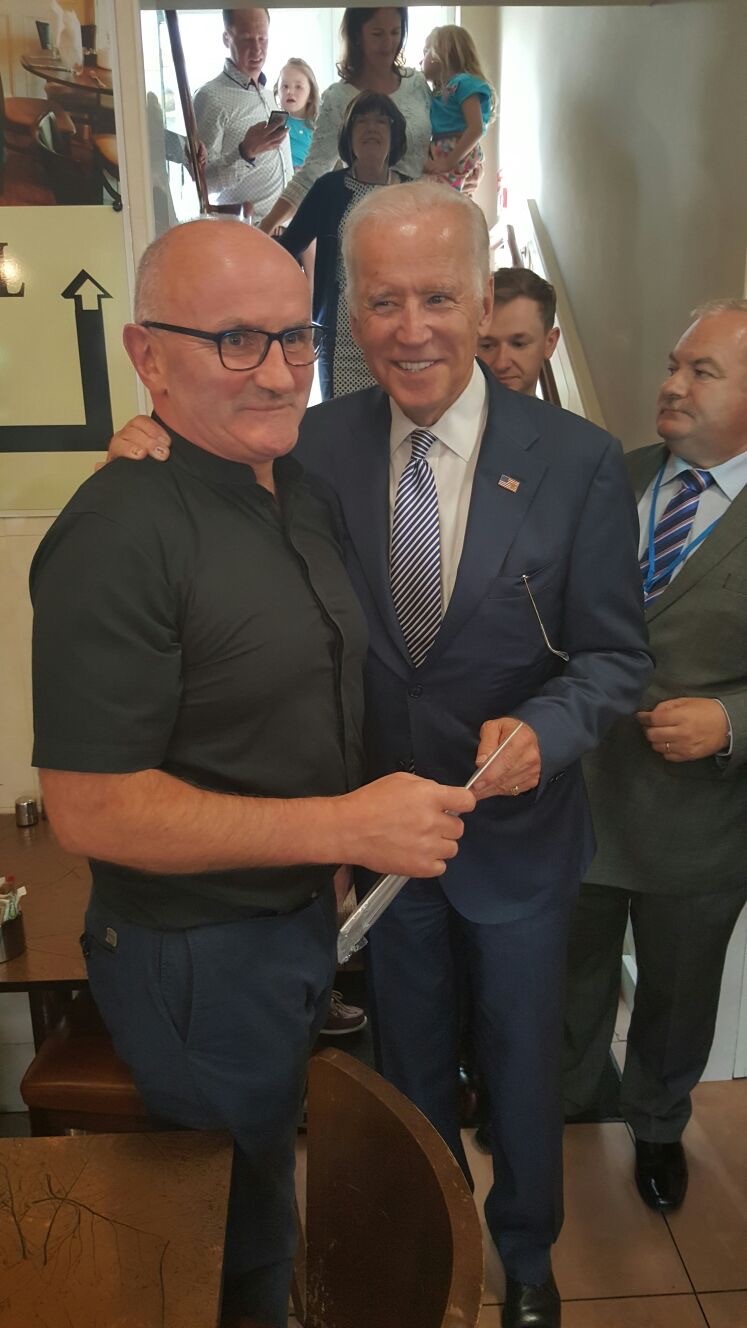
Joe Biden has often spoken proudly of his Irish roots, and the Irish prime minister Leo Varadkar has said his visit this week is about “welcoming a son of Ireland home”.
The US president – who is among 32 million people in the US with Irish heritage – can trace his ancestry to opposite sides of the island.
His great-great-grandfather Owen Finnegan emigrated to the US from the Cooley peninsula of Co Louth in eastern Ireland.
Another great-great-grandfather, Patrick Blewitt, was born in western Ireland – in the town of Ballina, Co Mayo.
He left during the Irish famine of autumn 1850 to settle in the US.
Distant Irish relatives toasted to the US president’s 2020 election win and celebrated his inauguration in January 2021.
Air Force One takes off
The US president’s plane, Air Force One, has begun its flight to Belfast.
The journey should take approximately six to seven hours, with Joe Biden expected to touch down between 9pm and 10pm.
Rishi Sunak is expected to greet the US leader on the runway.
Mr Biden will spend half a day in the Northern Irish capital tomorrow before going to Ulster University to mark the anniversary of the Good Friday Agreement.
Joe Biden boards plane headed for Northern Ireland
Joe Biden has boarded a plane in the United States headed for Belfast.
Asked on the runway what his top priority was for the trip, the president said: “Make sure the Irish accords and the Windsor agreement stay in place; keep the peace. That’s the main thing.”
He said two of his family members will accompany him on the visit.
‘To have someone Irish in power is very cool’: Pride and Irish dancing in Joe Biden’s childhood hometown
Joe Biden spent his childhood in Scranton, a town in Pennsylvania where his Irish ancestors settled.
The town is twinned with Ballina, in Ireland’s Co Mayo, and has a strong Irish-American community.
US correspondent James Matthews speaks to people in the town ahead of Mr Biden’s trip…
An island on high readiness – and high alert
By Stephen Murphy, Ireland correspondent
In rural Co Louth, the clattering of heavy military helicopters breaks the quiet of a sleepy Easter weekend.
Two US Army Chinooks accompany a pair of the famous “white tops”, the Sikorsky Sea Kings in presidential green-and-white livery, as they swoop down to land on a GAA pitch.
One of the Sea Kings will be known as Marine One when it lands here again with a distinguished guest on Wednesday. But not yet.
Across the nearby border, the Police Service of Northern Ireland is drafting in an extra 300 officers from other UK forces to help with a major security operation.
Against the background of an increased terror threat level (put by MI5 at “severe”), there is intelligence that dissident republicans may mount a “spectacular” – an attack against police while the US president is in town.
Motorists gawp on the M2 as armoured American vehicles arrive, including the presidential “roadrunner” communications truck.
In Dublin, a flight of four Chinooks thundering overhead causes a football game to pause. They’ve arrived from US bases in Europe, via Cardiff, and are now en route to the Irish military air base at Baldonnel.
And across the country, in Ballina, Co Mayo, on the Atlantic Coast, the manhole covers are being sealed. There’s a newly renamed Biden’s Coffee Corner to caffeinate the visitors, and the town’s mural of its most famous son will greet him before he makes his homecoming address, at a cathedral built with bricks supplied by his great-great-great-grandfather.
Yes, it’s hard to miss the impending arrival of Joe Biden, with the awesome logistical machinery of a US presidential visit highly visible as early as a week before his arrival. Ireland is ready. Northern Ireland is ready.
All eyes will now be on this most Irish of American presidents to see how he shapes a visit billed here as the ultimate homecoming.
‘Home again’: The many US presidents who have visited Ireland
The island of Ireland – especially the Republic – has a rich history of welcoming US presidents.
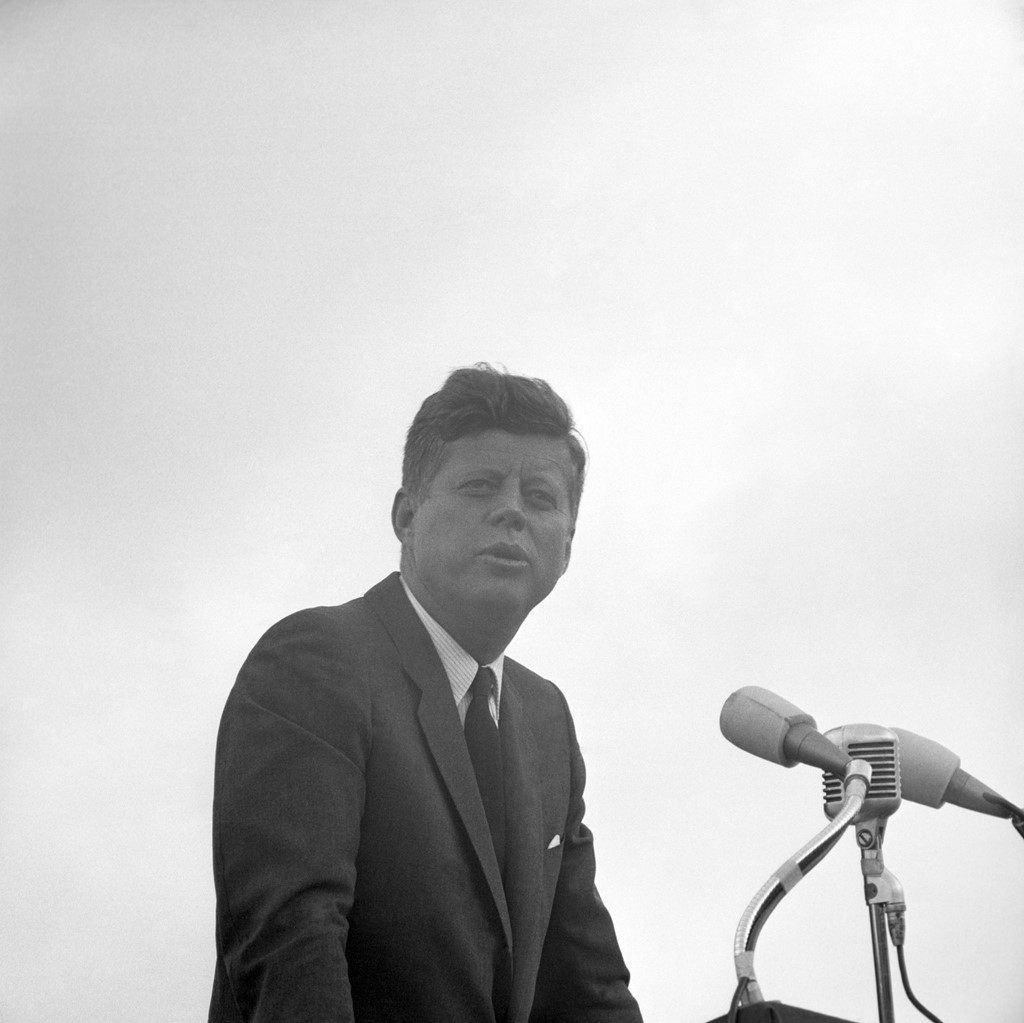
John F Kennedy once referred to his Irish visit in 1963 as “the best four days of his life”. It came just months before his assassination.
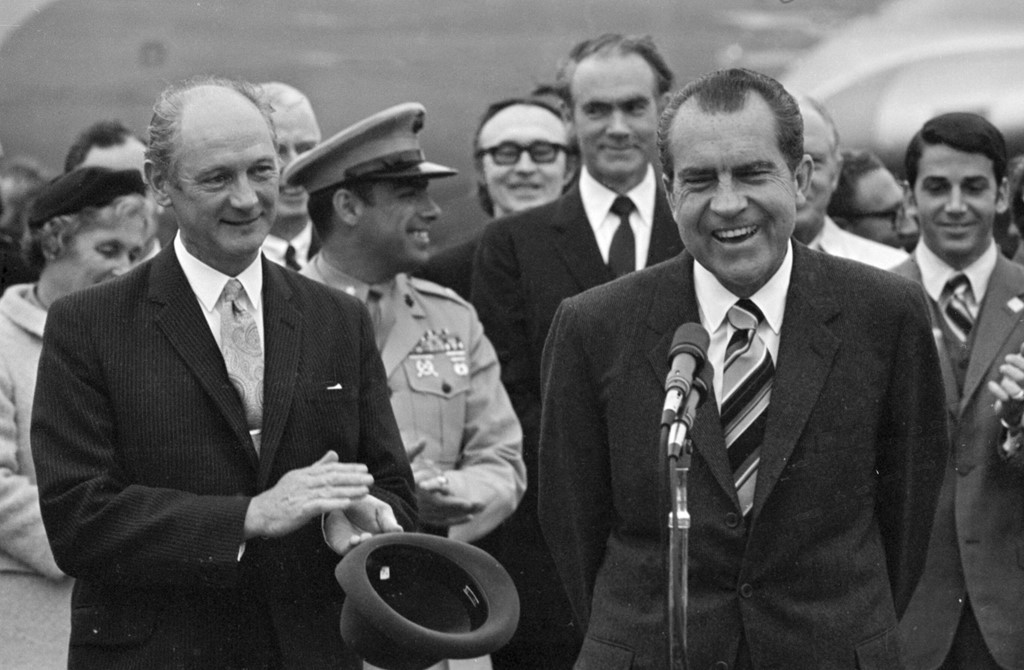
Richard Nixon‘s official state visit to Ireland in 1970 has often been called “the forgotten visit”. It was considered poor timing, as many people in Ireland opposed the war in Vietnam.
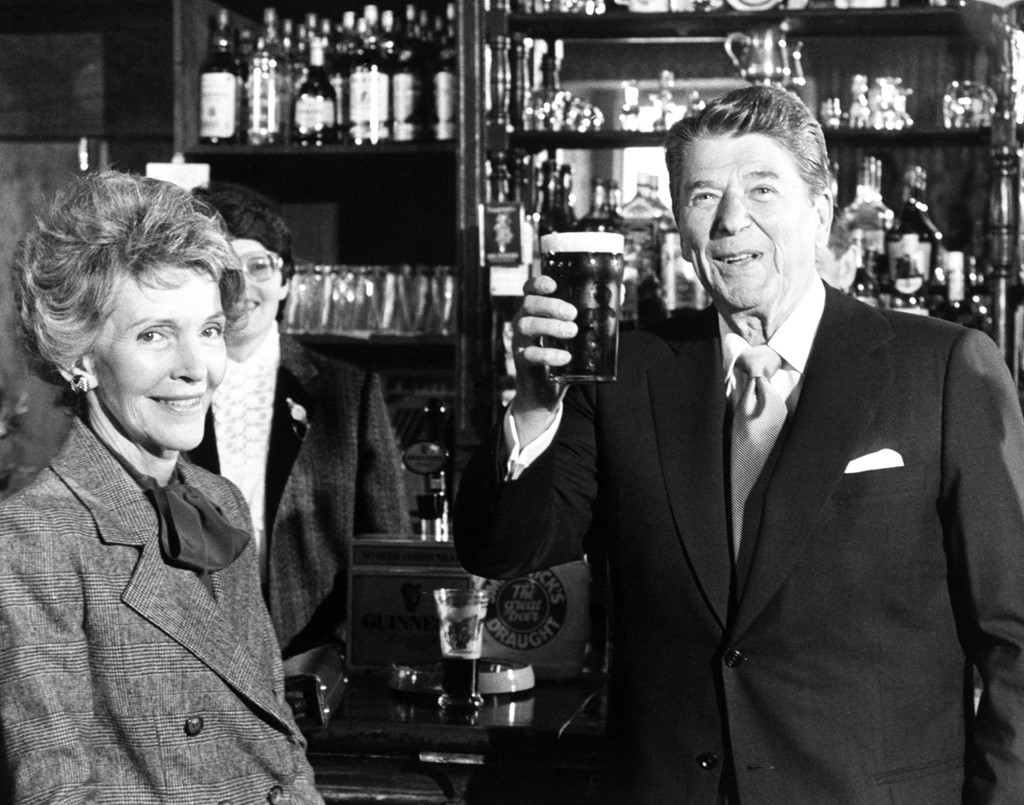
Ronald Reagan, who had Irish ancestry, visited Ireland in 1984. During a speech to the Irish parliament, he said his feelings could be summarised as “home, home again”.
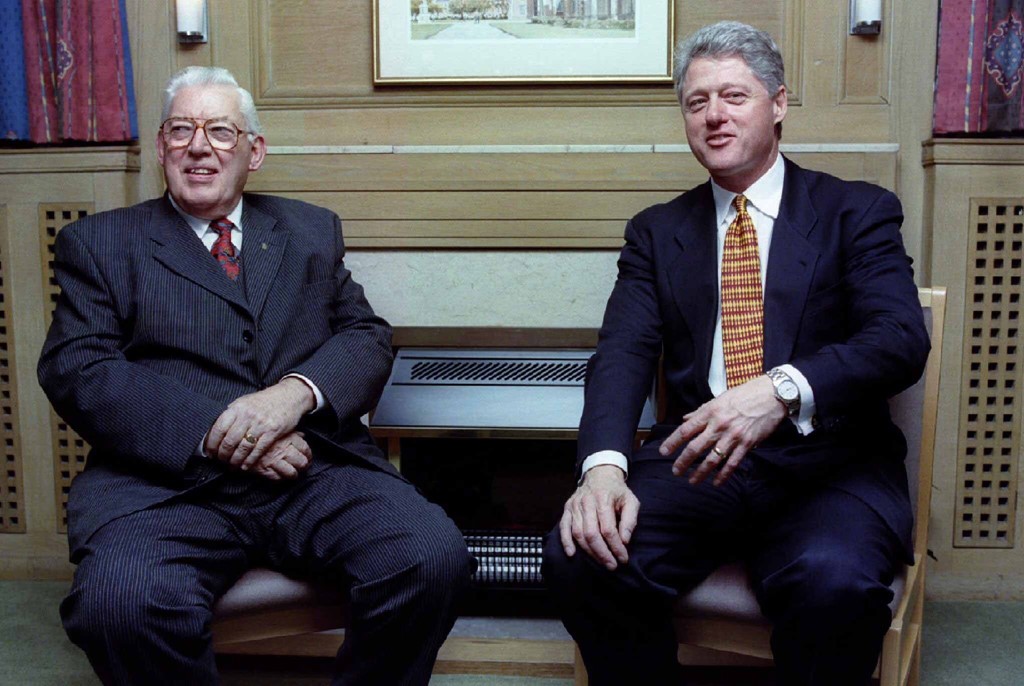
Bill Clinton made history by becoming the first US president to visit Northern Ireland in 1995, with the aim of encouraging the peace process.
He visited again in 2000 on a farewell trip as his presidential term came to an end.
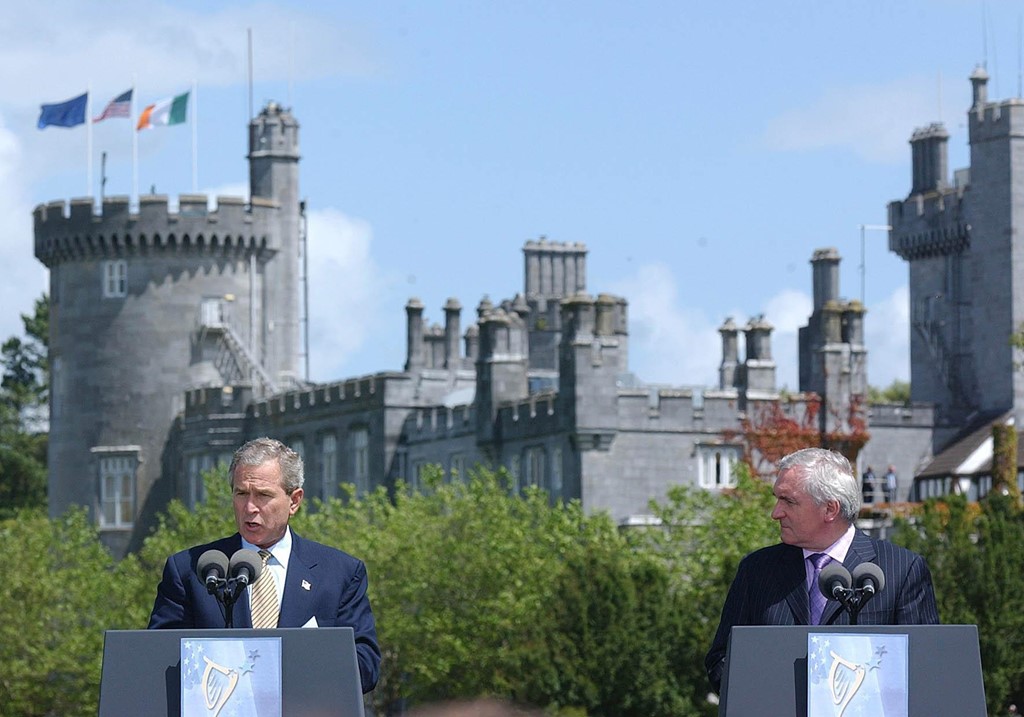
George W Bush visited Northern Ireland in 2003 to hold talks over the political process in the country and the war in Iraq.
He also made a flying visit to Ireland in 2004 for an EU-US summit that was marked by anti-war protests.
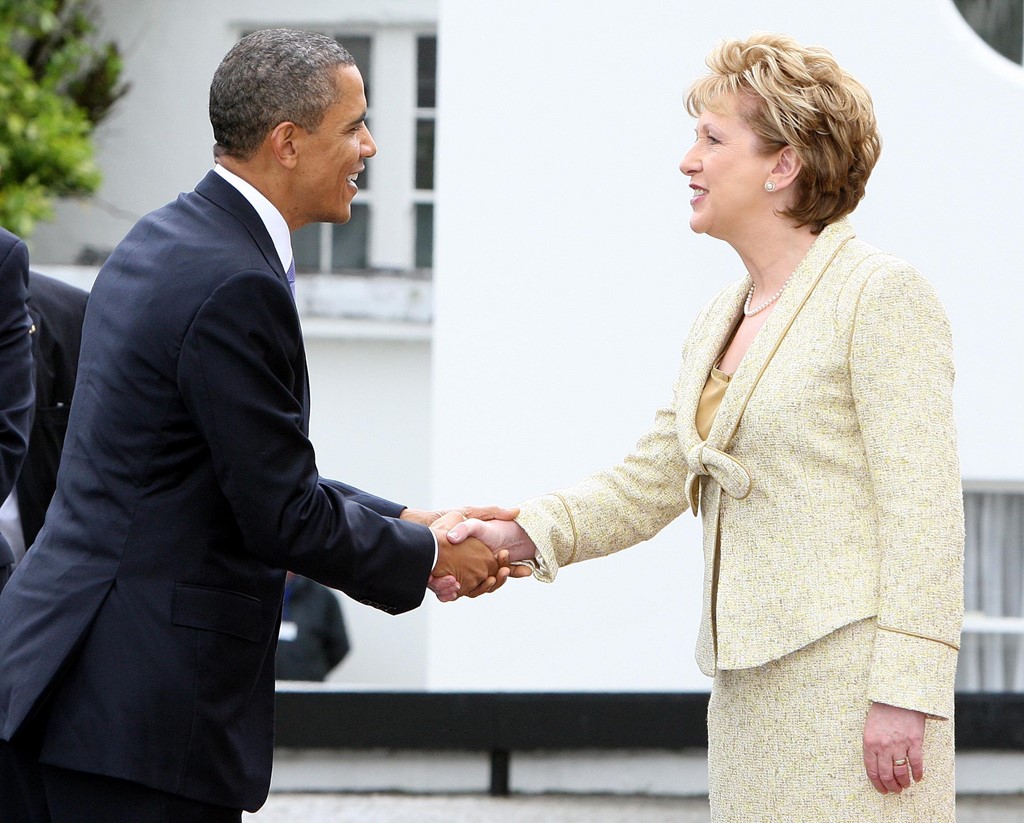
Barack Obama visited his family roots in the tiny village of Moneygall in Ireland in 2011 – and also made a stirring speech in Dublin.
In 2013, he travelled to Northern Ireland with his family to attend the G8 summit.
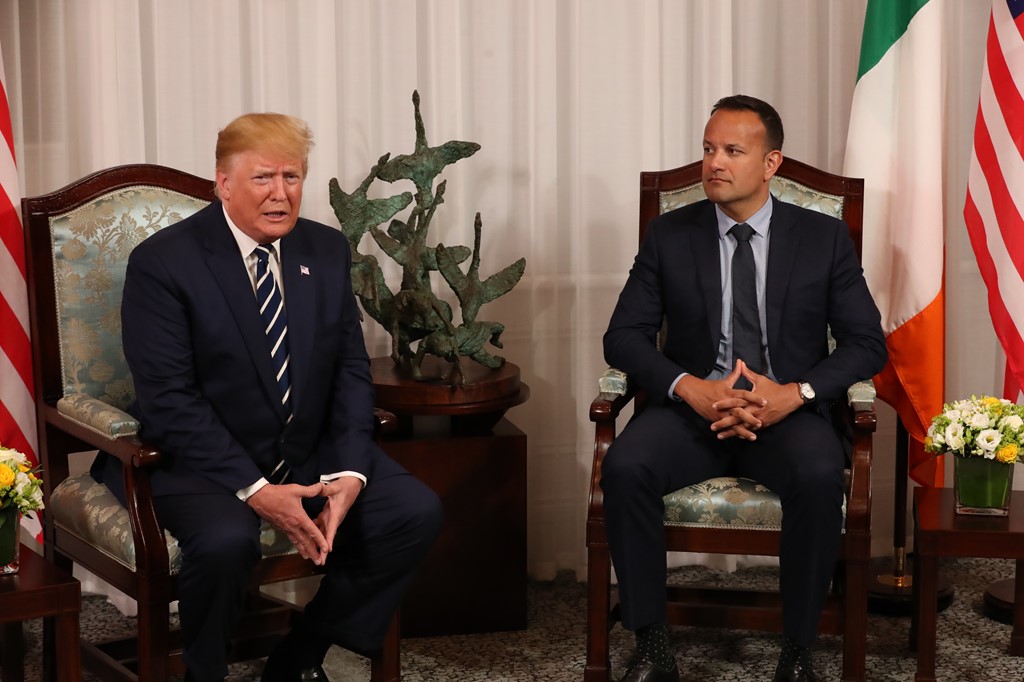
Donald Trump declared that he “loves the Irish” within minutes of touching down at Shannon Airport in Ireland in 2019. But there was an awkward moment as he compared the Irish border situation with a US-Mexico “wall” – with Leo Varadkar, the Irish PM, having to hastily interject.
Biden ‘more than comfortable’ visiting Northern Ireland despite threat of violence
Joe Biden is “very much looking forward” to his visit and is not concerned about threats of violence, the White House has said.
Speaking hours after a petrol bomb attack on Easter Monday in Londonderry, National Security Council spokesman John Kirby said officials were aware of the “recent violence” and that the president was “grateful” for the work of the security forces in Northern Ireland to keep people safe.
Asked again if there are any concerns about the president’s safety during the trip, Mr Kirby said: “You know we don’t ever talk about security requirements, protecting the president.
“But the president is more than comfortable making this trip and he’s very excited to do it.”
During the attack at an Easter parade on Monday, petrol bombs were thrown at an armoured police Land Rover while officers attended what they described as an “unnotified” march by dissident republicans.
Officers condemned the attack as “senseless and reckless”.
MI5 raised the terror threat in Northern Ireland to “severe” at the end of last month, meaning an attack is highly likely.
Read more on what that means below…
Policing operation around Biden’s visit is biggest in a decade – but how much will it cost?
The policing operation around Joe Biden’s visit to Northern Ireland will be the biggest in nearly a decade – and it’s set to cost around £7m.
Around 300 officers from other parts of the UK will travel to the area to help police a series of events to mark the 25th anniversary of the Good Friday Agreement.
The US president and Rishi Sunak, the prime minister, will both fly in this evening, Assistant Chief Constable Chris Todd of the Police Service of Northern Ireland (PSNI) said.
The force is hoping to “maintain business as usual” while delivering “safe and secure events”.
It will be a “significant operation” of a size not surpassed since Northern Ireland hosted the G8 summit in 2013, Mr Todd added.
He said “elements of the operation will actually be more impactful than we saw then”.
“In terms of the number of movements of protected persons and vehicle escorts… it’s a very significant operation.”
Police have been planning for the arrival of the US leader for several weeks and are “prepared for all the various contingencies”, Mr Todd said.
But although it’s a high-profile visit, he said, the “style and tone” of policing will remain “community focused”.
Mr Todd said the PSNI would initially shoulder the £7m cost but would look to “recover costs as best we possibly can” in the future.
What is the Good Friday Agreement?
Joe Biden is marking the 25th anniversary of the Good Friday Agreement in Northern Ireland this week.
The US president is in Belfast over the next couple of days to mark the “tremendous progress” made since the deal was signed.
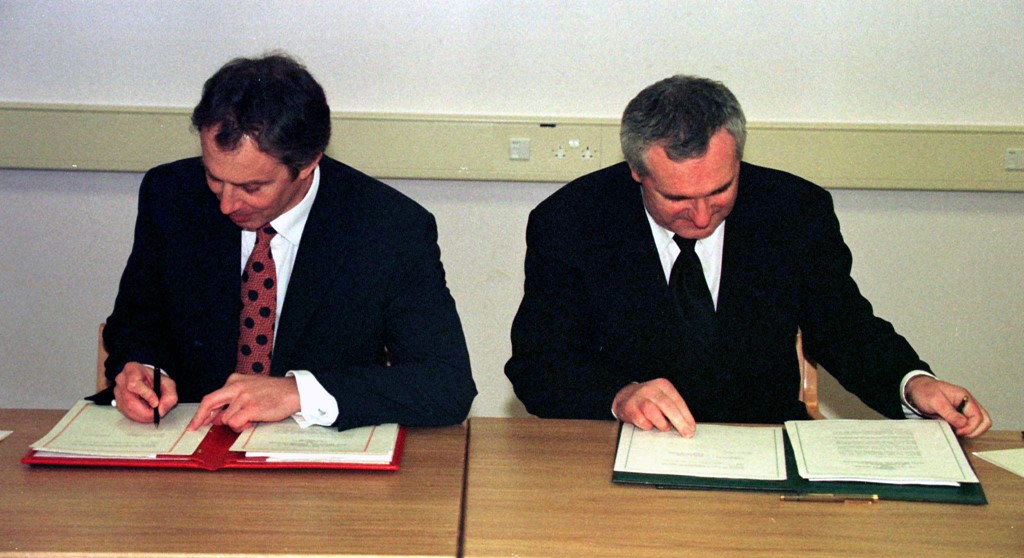
The Good Friday Agreement (GFA) was a deal signed with the aim of ending three decades of violence in Northern Ireland, known as the Troubles, which started in the late 1960s.
What were the Troubles?
After the partition of Ireland in the 1920s – which granted independence to the majority of the island while keeping the northern part in the UK – divisions remained between republicans who wanted a united Ireland and unionists who favoured political union with Britain.
Divisions erupted into conflict in the late 1960s, and more than 3,600 people were killed over the next 30 years.
How did the conflict end?
Multiparty talks began in the late 1990s and though they came close to collapse several times, they resulted in a peace deal being reached on 10 April 1998 – which was Good Friday that year.
The deal was ratified by voters in both Northern Ireland and the republic in May 1998.
What did the agreement say?
Through the deal, Northern Ireland’s multiple identities were officially recognised – meaning it was the birth right of residents to identify as British, Irish or both.
It also formed a new government in Northern Ireland representing both unionists and nationalists in order to foster cooperation between the two communities.
The GFA recognised that Northern Ireland is part of the UK, but that it could unite with Ireland if a majority of people in both the north and the republic vote in favour of it.
Hello and welcome to our live blog
Joe Biden is set to kick off his four-day trip to Northern Ireland and Ireland today.
The visit marks the 25th anniversary of the signing of the Good Friday Agreement.
He will first travel to Belfast in Northern Ireland for two days to mark the “tremendous progress” made since the signing of the historic treaty.
Rishi Sunak, the prime minister, will fly into Northern Ireland this evening, and the pair will be involved in “a number of events” tomorrow.
Mr Biden will then travel to Ireland from 12 April to 14 April, where he is expected to visit Dublin, Co Mayo and Co Louth.
We’ll be bringing you all the latest updates throughout the president’s trip.