Tag: journalists

  • Galamseyers attack EPA team at Obuasi, two journalists sustain injuries

    Galamseyers attack EPA team at Obuasi, two journalists sustain injuries

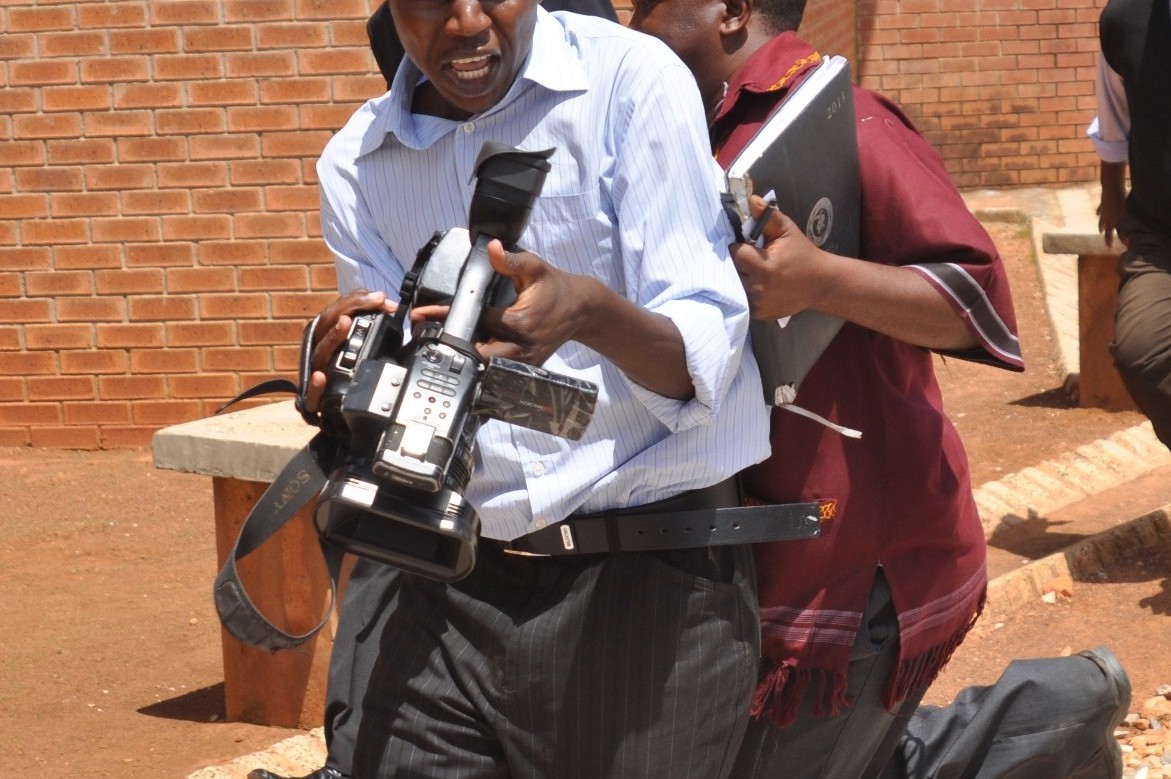
    Two journalists have sustained severe injuries following an alleged violent attack by a group of miners at Dadwene, a community near Obuasi in the Ashanti Region.


    The victims were among a team of journalists who had accompanied the Environmental Protection Agency (EPA) on an anti-illegal mining operation at Dadwene.

    The operation resulted in the closure of many shops at Anhwia Nkwanta. Speaking to the media, the EPA’s Chief Executive Officer (CEO), Professor Nana Ama Klutse, noted that as a result of the violent incident, the EPA officers and journalists were forced to retreat for safety, heading toward their vehicles.

    However, one of the vehicles was involved in a collision after the team made their way through Afari. Giving further details, the EPA’s CEO disclosed that they were unable to retreat despite being accompanied by a military escort. She explained that the army officers could not retaliate due to the intensity of the situation.


    According to her, the military escort advised them to flee the scene because their opponents were heavily armed illegal miners.


    She added, “So we closed down many shops at Anhwia Nkwanta, and today (Thursday, November 6) we were on another route to close down some other shops. On our way near Obuasi, we saw galamsey happening on the ground, so we decided to have a look at what they were doing. When we stopped and walked into the area, as we were getting closer, they were running away, and all of them had left by the time we got there.


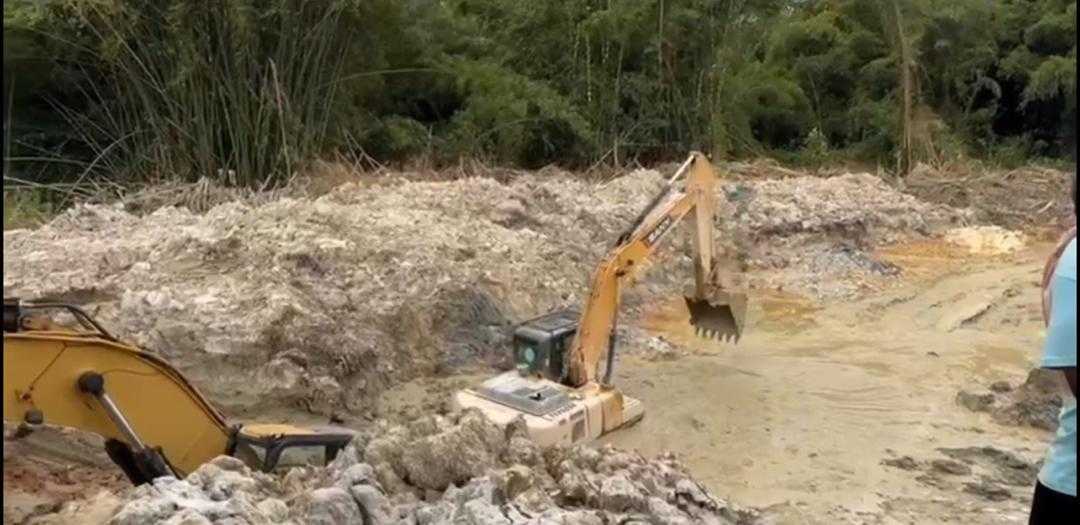
    “So we looked around for what we could pick, and we did pick. While leaving, we saw that there were actually more of the excavators—three—that were inside a river body; they had mined in the river and blocked it in such a way that it had taken different tributaries around the area and flooded some places. It was messy. It was really a bad situation. So we had actually gone to the car and used another route to the place, and while we were there, the people also ran. We called them to come, and just before we could have a conversation, they sent news around, and soon we saw built men; a number of them came with guns.


    “We had the military with us, and the national security was also with us, but then we saw that we couldn’t exchange fire or fight them, so we had to run for our lives. In the course of running and speeding on the road, we encountered this accident.


    “One of the cars, which had some EPA staff and some of the journalists, had a head-on collision with a truck that was actually carrying some pipes for galamsey operations. Some of the heavily built men were dressed in black with ‘CID’ written at the back. The soldiers and the national security men asked them for their ID cards, but it became confrontational, and so we had to leave because they said they could not overpower them, so we had to leave.


    “While they were having the confrontation, we got intel from Accra that we should leave immediately—where we were—and that even the route we planned to take, we should not use it again, and we should not return on the same route we came from Kumasi to Obuasi. So we had to use another route altogether, much longer, through the Western Region and the Central Region to Kumasi. But just before we reached Kumasi, that’s when we had the head-on collision.”

    The Ashanti Regional Correspondent for Media General, Ibrahim Abubakar, reportedly escaped the incident. Adom News reporter and Channel One TV’s Ashanti Regional Correspondent, Doris Lonta, were also part of the team.

    On Saturday, November 1, the Director of Operations at NAIMOS and his team narrowly escaped death in a mob assault at Hwidiem in the Ahafo Region. The officials came under violent attack while carrying out their day-to-day activities as part of efforts to crack down on illegal mining in the region.

    Exhibits retrieved from the scene included a side-hand bag containing one (1) Smith & Wesson pistol, two (2) pistol magazines, twenty-one (21) rounds of 9mm ammunition, an unregistered Range Rover vehicle, an unregistered Toyota RAV4 vehicle, and several mobile phones. The operation also resulted in the arrest of several miners, including a Burkinabe national.

    However, locals were seen in a video that has since gone viral, confronting the anti-mining task force and calling for the release of those arrested during the operation. Speaking to the media, NAIMOS spokesperson Paa Kwesi Schandorf described the attack as “extremely and profoundly disappointing,” adding, “It was a huge surprise that the locals became agitated, demanding the release of those arrested, and then began attacking the NAIMOS team.”

    On Monday, November 3, the Inspector-General of Police (IGP), Mr. Christian Tetteh Yohuno, ordered an investigation into the incident.“The Inspector-General of Police (IGP), Mr. Christian Tetteh Yohuno, has directed the Criminal Investigations Department (CID) Headquarters to take over investigations into the attack on the Director of Operations of the National Anti-Illegal Mining Operations Secretariat (NAIMOS) and his team by thugs at Hwidiem in the Ahafo Region. The Member of Parliament for Asutifi North, Hon. Ebenezer Kwaku Addo, who is alleged to have incited the mob and obstructed the NAIMOS team, has been invited to assist in the ongoing investigation into the incident,” part of the statement read.

    The John Dramani Mahama-led government established the National Anti-Illegal Mining Operations Secretariat in July as part of efforts to curb illegal mining activities in the country.

    Speaking during an update on Wednesday, July 23, the Minister for Lands and Natural Resources, Emmanuel Armah-Kofi Buah, disclosed that the newly established Secretariat would act as the brain of Ghana’s anti-illegal mining operations.

    “To coordinate the efforts of the military, police, and other security agencies, the ministry has established the National Anti-Illegal Mining Operations Secretariat (NAIMOS) as the operational nerve-centre for Ghana’s fight against illegal small-scale mining,” he stated.

    The Secretariat’s responsibility is to collaborate with other key institutions such as the Ministry of Transport, the Ministry of Finance (GRA–Customs Division), and the Ghana Ports and Harbours Authority as part of its mandate.

    This collaboration is expected to ensure that excavators and other earth-moving equipment entering the country are not diverted for illegal mining activities.

    “In collaboration with the Ministry of Transport and the Ministry of Finance (GRA–Customs Division), and the Ports and Harbours Authority, we have initiated a proactive tracking of all imports of excavators and earth-moving equipment from the point of entry,” he added.

    Illegal mining activities continue to pose a major challenge to the country. Several Chinese nationals have been involved in such illegal operations, leading to multiple arrests.

    Meanwhile, President John Dramani Mahama has disclosed that scientific tests are being carried out on new chemicals that could help restore polluted water bodies and rivers affected by illegal mining, popularly known as galamsey.

    Speaking at a high-level stakeholder engagement on galamsey in Accra on Friday, October 3, with members of Civil Society Organisations (CSOs), President Mahama said, “There are new chemicals that have come that allow you to treat water and take out the toxins and the heavy metals. One of them is called dowtine. The people came, and we sent them there. They took samples, tested. We are waiting for them to bring the results back.”

    He has asked Ghanaians to exercise patience in the ongoing battle against illegal mining (galamsey). During a meeting with Civil Society Organisations (CSOs), President Mahama said declaring a state of emergency would not end the menace.

    According to him, government advisors believe the country can overcome galamsey by adopting best practices in small-scale mining, including technologies that help neutralize or remove harmful chemicals from water bodies.

    Additionally, the President pledged to honour the calls of many Ghanaians by declaring a state of emergency when his advisors give him the nod to do so.

    President Mahama believes that the country can eradicate the long-term canker if it deploys more troops and invests additional resources in the fight. He concluded that the battle seems to be a long one, but his administration is committed to ending it.

    “While we are fighting the menace, I am also saying we should uptake technology in order to protect the environment. So yes, let’s fight the illegal mining but at the same time, let’s bring the new technology that will help us protect our environment.

    “Now with the elephant in the room, state of emergency, yes, I have the power to do it, but the president acts on the advice of the National Security Authority, and as at now, this moment, the National Security Authority believes that we can win the fight against galamsey without declaring a state of emergency. I want to assure you that the day they advise me otherwise, that boss, now we need a state of emergency, I won’t hesitate,” he added.

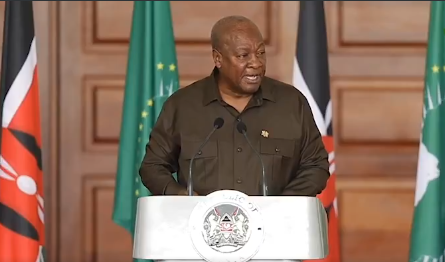
  • Minister of State for Govt Communications to engage GJA over assault of journalists next week

    Minister of State for Govt Communications to engage GJA over assault of journalists next week

    Minister of State for Government Communications, Felix Kwakye Ofosu, has announced plans to hold discussions with the Ghana Journalists Association (GJA) next week over the recent attacks on journalists.

    Speaking at a press briefing in Accra on Wednesday, February 19, Kwakye Ofosu acknowledged concerns raised by the GJA but dismissed suggestions that the Mahama administration was behind the assaults.

    “I have engaged the President of the GJA in my capacity as Minister for Government Communications, which then means that journalists as you are who we work with are part of the stakeholders.

    “We agreed that early next week, there should be a direct interaction between my office and the GJA,” he stated.

    The planned engagement follows comments made by GJA President Albert Kwabena Dwumfour during a press conference at the Ghana International Press Centre. Dwumfour had expressed concern over rising attacks on journalists, particularly in Kumasi and Walewale, adding that seven cases had been recorded within the first 50 days of President Mahama’s administration.

    Reacting to the remarks, Kwakye Ofosu criticized what he described as an unfair portrayal of the government’s role in the matter.

    “Statements were made that sought to create the impression that there is some design by President Mahama and his government to attack journalists. It is a most regrettable narrative.

    “We do not think that it is fair to President Mahama, government or even fair to the GJA and the journalists who are reported to have been attacked,” he added.
    He further urged caution in framing public discourse on the matter to avoid misleading perceptions.

    “I must express dismay about how that narrative was woven. It created a certain misleading perception about Government and President Mahama, which needs to be straight.”

    Kwakye Ofosu reiterated the government’s commitment to press freedom and assured that the upcoming engagement with the GJA would address their concerns.

  • There’s no design by Mahama, govt to attack journalists; GJA’s comments regrettable – Felix Kwakye Ofosu

    There’s no design by Mahama, govt to attack journalists; GJA’s comments regrettable – Felix Kwakye Ofosu

    Government has dismissed claims by the Ghana Journalists Association (GJA) suggesting that the Mahama administration is responsible for recent attacks on journalists.

    Felix Kwakye Ofosu, spokesperson for President John Dramani Mahama and Minister of State for Government Communications, described the comments made by GJA President Albert Kwabena Dwumfour as misleading and unfair to the government.

    Addressing the press on Wednesday, February 19, Kwakye Ofosu refuted allegations that the government had orchestrated attacks against journalists, emphasizing that such a narrative was regrettable.

    “Statements were made that sought to create the impression that there is some design by President Mahama and his government to attack journalists. It is a most regrettable narrative.

    “We do not think that it is fair to President Mahama, government or even fair to the GJA and the journalists who are reported to have been attacked,” he stated.

    His response follows remarks made by the GJA president at a news conference at the Ghana International Press Centre, where he condemned rising attacks on journalists, particularly incidents in Kumasi and Walewale. Dwumfour lamented that within just 50 days of Mahama’s administration, seven cases of journalist assaults had been recorded.

    However, Kwakye Ofosu stressed that the government values its engagement with journalists and has taken steps to address concerns.

    “I have engaged the President of the GJA in my capacity as Minister for Government Communications, which then means that journalists as you are who we work with are part of the stakeholders.

    “We agreed that early next week, there should be a direct interaction between my office and the GJA,” he revealed.

    Expressing disappointment over how the issue was presented, he urged the GJA to reconsider its approach, stating,

    “I must express dismay about how that narrative was woven. It created a certain misleading perception about Government and President Mahama, which needs to be straight.”

    The government assured that it remains committed to protecting press freedom and addressing any concerns raised by journalists.

  • 28th GJA awards held; Edward Adeti crowned Journalist of the Year 

    28th GJA awards held; Edward Adeti crowned Journalist of the Year 

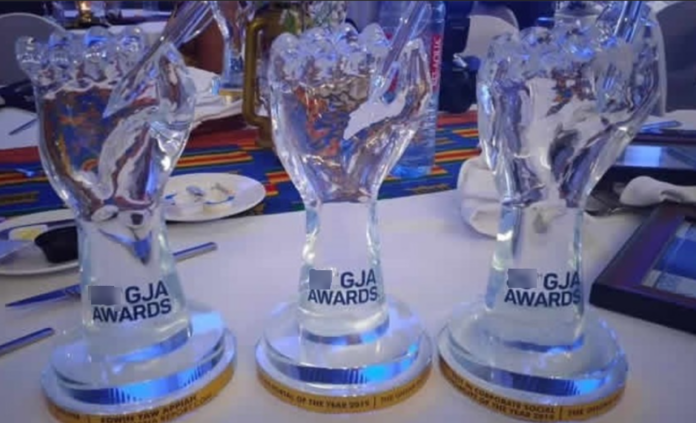
    The 28th Ghana Journalists Association (GJA) Media Awards was successfully held on Saturday, September 28, with many media practitioners being honoured for their works in impacting lives and shaping the country.

    The most coveted award, P.V. Ansah Journalist of the Year was awarded to Edward Adeti, who works with Media Without Borders, for his remarkable contributions to journalism via investigative reporting.

    Mr Adeti’s works according to the GJA, has often exposed corruption and misconduct in both public and private sectors.

    In his acceptance speech, Mr Adeti expressed deep gratitude to the GJA, his colleagues, and his audience. He dedicated the award to all journalists who continue to fight for truth and justice despite the challenges and risks involved in their work, as well as reaffirmed his commitment to using his platform to hold power to account and advocate for transparency in governance.

    Other media practitioners who were recognised for their immense works include; Media General’s Godwin Asediba who won Health Journalist of the Year, Clinton Yeboah (Student Journalist of the Year), Fred Duhoe (Best News Reporter in the Television), Bill Eshun (Disability Reporter of the Year), Castro Senyalah (Court And Crime Journalist Of The Year).

    On his part, GJA President Albert Kwabena Dwumfour, expressed gratitude to Ghana’s journalists and encouraged them to keep up the good work. He also used the opportunity to drum home concerns that affects the country’s existence as well as its democracy.

    Albert Kwabena Dwumfour urged President Nana Addo Dankwa Akufo-Addo to utilize the remaining three months of his second term to address the ongoing crisis of illegal mining, commonly known as galamsey.

    He reminded the President of his commitment to halt galamsey upon taking office, noting that this promise remains unfulfilled. He further proposed declaring a state of emergency as part of the measures needed to combat the galamsey

    In his address, he said, “We are aware that some time ago, Mr. President, the father of the nation made a promise to stop galamsey but regrettably that promise has not been fulfilled. You are barely three months until the end of your administration and we are hopeful that you will deal with the situation before you leave office.”

    Mr Dwumfour also urged government, the judiciary, and the Ghana Police Service to release the remanded protesters of the Democracy Hub group. His call comes in response to the detention of 54 protesters, with 9 in prison custody and the remainder held by the police, following clashes with security forces during a recent demonstration in Accra by Democracy Hub to address the issue of galamsey.

    “I want to commend the Ghana Police Service for exhibiting a high level of professionalism and restraint during the recent three-day protest against Galamsey by some individuals. We note some excesses and provocations that occurred during the demonstration, and the GJA condemns these excesses,”

    “We also believe that remanding the protesters for two weeks is too extreme and does not send positive signals when it comes to protecting human rights,” he added.
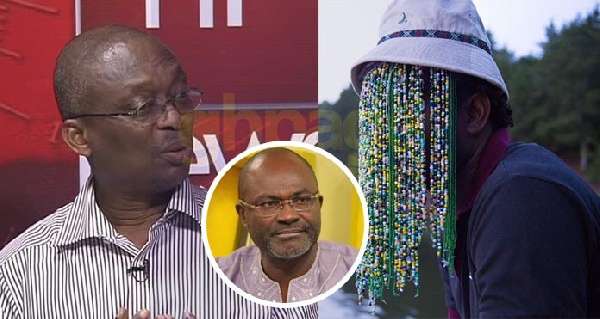
    President Akufo-Addo, on his part, urged Ghanaian journalists to avoid spreading misinformation that could undermine the electoral process. He stressed the significance of integrity in reporting, fairness in coverage, and providing voters with accurate information to make informed choices ahead of the 2024 general elections.

    The president described journalists as “gatekeepers of truth,” emphasizing the need to prioritize facts over falsehoods. He recognized the media’s critical role in past elections but also warned of the dangers posed by “fake news and sensationalism in the digital age,” which can distort the electoral process.

    “I remain deeply committed to ensuring that the media in Ghana remains free, vibrant, and independent. Your work is essential to the strength of our democracy, the integrity of our elections, and the progress of our nation,” he added.
  • 28th GJA Awards happening today

    28th GJA Awards happening today

    The Ghana Journalists Association (GJA) is set to host the 28th edition of its annual GJA Awards today, September 28, 2024, at the Accra International Conference Centre.

    The ceremony will honor journalists who excelled in their craft throughout 2023.

    Nominees were selected from 36 categories, including prestigious awards such as the P. A. V. Ansah Journalist of the Year, Best Female Journalist of the Year, Most Promising Journalist of the Year, Best Student Journalist of the Year, and the Akoto Ampaw Award for Democracy and Good Governance.

    Mr. George-Ramsey Benamba, Chairman of the GJA Awards Committee, revealed that the Committee received over 300 entries for consideration. He explained that nominees were chosen based on criteria including accuracy, balance, relevance, impact, background, ethics, and language presentation of their published works.

    The list of nominees includes:

    • Edward Acquah (Ghana News Agency)
    • Castro Senyalah (Media General)
    • Evans Aziamor-Mensah (Fourth Estate)
    • Benedicta Gyimah Folley (Ghanaian Times)
    • Edmund Smith Asante (Daily Graphic)
    • Philip Teye Agbove (Fourth Estate)
    • Doreen Ampofo (GBC)
    • Naa Dede Akrong (GBC OBONU)
    • Delali Sika (Daily Graphic)
    • Ridwan Kareem Deen Osuman (EIB NETWORK)
    • Timothy Ngnenbe (Daily Graphic)
    • Emmanuel Bruce (Daily Graphic)
    • Godwin Asediba (Media General)
    • David Andoh (Multimedia)
    • Erastus Asare Donkor (Multimedia)
    • Stanley Nii Blewu (Media General)
    • Jonathan Donkor (Ghanaian Times)
    • Kester Aburam Korankye (Daily Graphic)
    • Beatrice Senadju (GBC)
    • Clara Mlano (GBC)
    • Dr. Neta Chris Abiana Parsram (Multimedia)
    • Solomon Jojo Cobbinah (Multimedia)
    • Fred Duhoe (Channel One TV)
    • Bill Eshun (Media General)
    • Seth Bokpe (Fourth Estate)
    • Muftawu Nabila Abdulai (Multimedia)
    • Emmanuel Kwesi Debrah (Multimedia)
    • Clinton Yeboah (Multimedia)

    The awards ceremony will mark the culmination of the GJA’s 75th Anniversary celebration, themed “75 years of excellence in Journalism: The Role of the Media in Democratic Governance and Elections.”

    Mr. Albert Kwabena Dwumfour, President of the GJA, commended the Awards Committee for their diligent work in selecting the nominees. He stated that the awards would recognize the outstanding efforts of media professionals who have demonstrated exceptional journalism, creativity, and dedication to truth and good storytelling.

    “In a world where information is power, the media plays a vital role in shaping our understanding of the world, hence this honour and celebration,” Mr. Dwumfour emphasized.

  • How Ghanaian journalists busted activities of Asian ‘galamsayers’ in Tano Nimiri Forest Reserve

    How Ghanaian journalists busted activities of Asian ‘galamsayers’ in Tano Nimiri Forest Reserve

    Two Ghanaian journalists, Okatakyie Afrifa-Mensah and Kwame Appiah Kubi, along with their team, successfully apprehended three Chinese nationals engaged in illegal mining activities, commonly known as “galamsey,” in the Tano Nimiri Forest Reserve within the Samreboi district of the Western North Region.

    On August 30, 2024, Okatakyie Afrifa-Mensah disclosed that their presence in Takoradi was initially for unrelated business in an exclusive interview with a GhanaWeb journalist.

    However, upon receiving information about ongoing illegal mining operations in the forest reserve, the team decided to take immediate action.

    Afrifa-Mensah recounted the scene upon their arrival at the forest reserve, where the extent of environmental destruction compelled them to make a citizen’s arrest under Section 12 of the Criminal and Other Offences Act.

    “When I saw the level of destruction they had caused, I decided to rely on citizens’ arrest. I arrested them and handed them over to the police,” he explained.

    The operation was not without its challenges. Afrifa-Mensah mentioned that the culprits resisted arrest and even attempted to block access to the site by locking the main gate leading to the forest.

    “They tried to sabotage the process by locking the main gate that leads to the bush, so we couldn’t get access to the place,” he said. However, the team, determined to see the mission through, used minimum force and managed to arrest the individuals.

    The arrested Chinese nationals were identified as Li Zhengang (51 years), Li Derui (35 years), and Li Baosheng (55 years).

    They were apprehended without any assistance from local security forces. Afrifa-Mensah questioned the role of Samartex Timber & Plywood Company Limited, whose premises are close to the illegal mining site. “Samartex, which is a company that deals with timber and has a football club, made noise about certain Akonta mining. How come now people have free access to your forest and mine without raising an alarm?” he questioned.

    The journalists and their team faced further obstacles after making the arrests. Upon returning from the forest reserve, they discovered that the gate they had previously entered was now locked with chains.

    Afrifa-Mensah described how they managed to bypass this hurdle. “We are militants; we have to move. If we decide to do something, nothing gets in our way. If you get in our way, you will be hit with something devastating. So, when we got there, I took out a pump-action gun and had to open the gate with a combustion,” he asserted.

    The local Ghanaian workers involved in the illegal mining operation were spared, while the three Chinese nationals were handed over to the Asankragua Police Division Command for further investigation. Following their arrest, the men were remanded in custody pending further legal proceedings.

    Afrifa-Mensah noted that the suspects could not produce any valid documentation to justify their presence in the forest reserve.

    “Upon inquiries, with their documentation, they could not provide any or show that they had been permitted to enter, so we handed them over to the police to investigate and prosecute them,” he said.

    The site, located near the Samartex Timber & Plywood Company Limited, had been operating with both Chinese nationals and local laborers involved in the illegal activities. Superintendent Ntori of the Asankragua Division Police Command declined to provide further details when contacted, directing the news team to headquarters, where they are yet to receive additional information.

  • Avoid sensationalism and bias, focus on issue-based reporting – GJA tells journalists

    Avoid sensationalism and bias, focus on issue-based reporting – GJA tells journalists

    The Ghana Journalists Association (GJA) has urged the media to rigorously fact-check and counter misinformation as the country gears up for the 2024 general elections.

    Highlighting the media’s crucial role in shaping public opinion, holding leaders accountable, and ensuring transparency in governance, these remarks were delivered at the inauguration of the 28th GJA Awards Committee in Accra.

    President of the Ghana Journalists Association, Albert Kwabena Dwumfour, spoke at the event, emphasizing the need for fairness and balance in media reporting throughout the election period.

    Mr. Dwumfour underscored the media’s critical role in the electoral process, asserting that their performance is vital to the nation’s democratic success. He emphasized that responsible journalism is essential and that the media cannot afford to fail the nation.

    In addition to advocating for accurate and balanced reporting, the GJA president encouraged journalists to actively combat misinformation. He believes that by doing so, the media can help ensure a well-informed electorate and a smooth, peaceful election process.

    “The media has the power to influence voter behaviour and hold leaders accountable. I must emphasise, however, that with this power of the media, comes a great responsibility to ensure democratic governance and peaceful elections.”

    “The media must provide balanced and impartial reporting and avoid sensationalism and bias, focus on issue-based reporting, rather than personality-driven coverage. Give voice to diverse perspectives, including marginalised communities and fact-check and debunk misinformation.”

    “In an era where fake news, polarising narratives and disinformation spread like wildfire, it is therefore important for the media to remain alert and fact-check what comes through to them.”

    “It is the only way, as the fourth Estate of the Realm, we can be said to be playing our constitutionally mandated role,” he stated.

    The nine-member awards committee is chaired by George-Ramsey Benamba, Chief Editor at the Ghana News Agency. Other members include Jamila Akweley Okertchiri, Editor at the Daily Guide Network; Loretta Vanderpuye, Regional Director at the Ghana Broadcasting Corporation; Joana Afua Mensah, News Editor at United Television (UTV); and Isaac Yeboah, Senior Editor at Myjoyonline.com.

    Additional members are William Asiedu, Head of News at 3FM; Michael Quaye, Deputy News Editor at Daily Graphic; International Photojournalist Nana Kofi Acquah; and Isaac Nuamah Yeboah, News Director at Atinka Media Village.

  • 14 African journalists lost their lives between 2023 and 2024 – AMC

    14 African journalists lost their lives between 2023 and 2024 – AMC

    Chairperson of the African Media Convention (AMC) and President of the African Editors Forum (Taef), Mr. Churchill Otieno, has disclosed that between January 2023 and May 2024, Africa lost 14 journalists.

    Additionally, he highlighted that by December 1, 2023, 67 journalists had been unjustly incarcerated for executing their duties. Mr. Otieno urged journalists not to remain silent but rather to collaborate in advocating for positive change.

    Speaking at the Third African Media Convention in Accra’s International Conference Centre, Mr. Otieno emphasized the importance of fair compensation for journalists and media professionals.

    He stressed the need for equitable revenue sharing models and copyright reforms to ensure journalists receive adequate rewards for their contributions.

    Addressing the challenges journalists face in the digital age, Mr. Otieno highlighted restricted access to data, hindering investigative journalism.

    He advocated for greater transparency and accountability to facilitate journalists’ access to data, enabling them to hold those in power accountable and serve the public interest.

    Mr. Otieno also discussed the potential of artificial intelligence (AI) technologies to enhance journalism, despite associated risks such as job displacement.

    He urged African media professionals to engage critically with AI, ensuring its ethical development and responsible implementation.

    Furthermore, Mr. Otieno called for knowledge sharing, innovative storytelling methods, and partnerships to amplify marginalized voices and safeguard media freedom.

    He emphasized leveraging new technologies to advance journalism quality and promote excellence across the continent.

    “we must take a stand, and we must advocate for fair composition mechanisms, including equitable revenue sharing models and copyright reforms, to ensure that journalists are adequately rewarded for their contributions.”

    “By advocating for access to social media data, we empower journalists to fulfil their vital role as watchdogs of society and strengthen the foundations of media, freedom, and the foundations of our democracies,” he stated.

  • 14 journalists have been killed in Africa between 2023 and 2024 – AMC reports

    14 journalists have been killed in Africa between 2023 and 2024 – AMC reports

    Chairperson of the African Media Convention (AMC) and President of the African Editors Forum (Taef),Mr. Churchill Otieno, has reported that 14 journalists were killed in Africa between January 2023 and May 2024.

    Speaking at the Third African Media Convention held at the International Conference Centre in Accra, Mr. Otieno also noted that, as of December 1, 2023, 67 journalists had been imprisoned for their work.

    He urged journalists not to remain silent about these issues but to engage and collaborate to advocate for positive change.

    Mr. Otieno highlighted that the deceased journalists were from Zimbabwe, Mozambique, Somalia, Sudan, Nigeria, Mali, Rwanda, and Cameroon.

    He emphasized the need for fair remuneration for journalists and media professionals, stating, “We must take a stand and advocate for fair compensation mechanisms, including equitable revenue-sharing models and copyright reforms, to ensure that journalists are adequately rewarded for their contributions.”

    He further explained that advocating for fair compensation would not only uphold the dignity and livelihood of journalists but also strengthen the foundation of a sustainable and thriving media ecosystem, enabling Africa to tell its own story effectively.

    Mr. Otieno pointed out that restricted access to data hinders journalists who rely on it for in-depth reporting and investigative journalism, especially in this digital age where social networks have become crucial information sources.

    He called for greater transparency and accountability to ensure journalists have the data they need to hold those in power accountable and serve the public interest.

    “By advocating for access to social media data, we empower journalists to fulfil their vital role as watchdogs of society and strengthen the foundations of media, freedom, and the foundations of our democracies,” he stated.

    Mr. Churchill Otieno emphasized the potential of artificial intelligence (AI) technologies to enhance the journalistic workforce by automating repetitive tasks and personalizing content delivery for diverse audiences. However, he acknowledged the challenges and risks associated with AI, such as job displacement, which cannot be ignored.

    Speaking at the Third African Media Convention, Mr. Otieno urged African media professionals to engage critically with AI, ensuring its development and use are guided by ethical principles, transparency, and accountability.

    He stated that by harnessing AI responsibly, the opportunities for innovation could significantly improve the quality of journalism and advance media freedom across the continent.

    Mr. Otieno called for knowledge sharing and the exchange of ideas to collectively safeguard media freedom and promote excellence in journalism.

    He stressed the importance of leveraging new technologies, exploring innovative storytelling methods, and forming partnerships to amplify the voices of the voiceless.

  • Journalists forced into military service in Burkina Faso – Report

    Journalists forced into military service in Burkina Faso – Report

    The West African director of Reporters Without Borders (RSF), Sadibou Marong, has informed the BBC that journalists in Burkina Faso are now being targeted for forced conscription into the army.

    In an interview with the Africa Daily podcast, Mr. Marong stated, “They dared to criticize the government, and now they have been summoned to join the army.”

    Acknowledging previous instances of enrolling critics into the army, the military-led government has openly admitted to this practice.

    According to Mr. Marong, the transitional assembly passed legislation granting authorities the power to identify and compel young individuals to serve in the military.

    He revealed that he has been in contact with two journalists who have received official summonses to enlist in the army. One journalist complied and served for a month before fleeing near the border with Ivory Coast.

    This development follows a recent crackdown on foreign media outlets. The BBC, Guardian, and Le Monde have faced suspension for their coverage of a report by US-based Human Rights Watch (HRW), which accused the Burkinabe army of killing 223 civilians in February.

    Despite these allegations, Burkina Faso authorities have dismissed the reports.

  • Do not allow politicians to manipulate you ahead of 2024 elections – NMC tells journalists

    Do not allow politicians to manipulate you ahead of 2024 elections – NMC tells journalists

    Chairman of the National Media Commission (NMC), Yaw Boadu-Ayeboafoh, has urged journalists to uphold their professionalism and resist manipulation by politicians as Ghana prepares for the 2024 general elections.

    Speaking at the launch of the 30th Anniversary of Radio Univers, Mr. Ayeboafoh stressed the importance of adhering to journalistic ethics.

    He emphasized the need for reporters to prioritize credibility and truthfulness in their reporting, particularly during this crucial electoral period.

    “We must not allow ourselves to be misused by politically partisan interest to undermine our sense of professionalism,” Mr Boadu-Ayeboafoh asserted.

    Mr. Boadu-Ayeboafoh highlighted the challenges in Ghana’s media landscape, particularly the lack of specific laws regulating electronic media.

    He emphasized the need for proactive measures to ensure transparency, accountability, and professionalism across all media platforms.

  • You have gone eerily silent on galamsey and its damage on lives – Sir Sam Jonah to journalists

    You have gone eerily silent on galamsey and its damage on lives – Sir Sam Jonah to journalists

    Chancellor of the University of Cape Coast (UCC), Sir Sam Jonah, has raised concerns about what he sees as a decrease in media coverage of illegal mining activities, or galamsey, in Ghana.

    The respected statesman expressed disappointment at the lack of attention from the media, despite the significant harm and destruction caused by illegal mining to the livelihoods of Ghanaians and society as a whole.

    Speaking at the launch of the 75th anniversary celebrations of the Ghana Journalists Association (GJA) in Accra on Wednesday, April 17, 2024, Sir Sam Jonah expressed his lack of confidence in the media’s reporting on such a serious national issue.

    “As we stand on the precipice of yet another electoral milestone, in my view, the most consequential, the echoes of past violence, the whispers of disenfranchisement looms and I don’t think anyone needs reminding that the conduct of the electoral exercise together with its outcome is so important that the nation cannot afford bias and unprofessional coverage of it by members of your profession.

    “I wish I could be confident that the coverage will be professional but am afraid I can’t, given the largely unserious way in which another important national issue- the most egregious abuse of the rights of millions whose livelihood has been decimated completely by galamsey operations, has been treated by your profession. I don’t know whether you are exhausted and indeed frustrated by the shameful lack of decisive action from the authorities to your interventions. All I know is that your association’s pen which is your weapon has gone eerily silent on this all important matter.”

    He also lamented the health implications and complications caused by galamsey, highlighting that these issues persist despite the clear and evident consequences.

    He said, “the country is experiencing the ravages of this terrible phenomenon every day. The alarming increase in children born with deformities, the epidemic of kidney and liver diseases, and the alarming mortality rates in the areas affected by galamsey activities.”

    “What a shame, what a pity! As journalists, the times we live in beckon you to remember your purpose, power and your responsibility. The price of the continued silence is too grave to fathom.”

    He referenced Ephraim Amu’s timeless composition, “Yen Ara Asase Ni,” and encouraged journalists to promote patriotism, stewardship, and unity.

    Sam Jonah also urged the Ghana Journalists Association (GJA) to uphold the principles of good governance, justice, and accountability, emphasizing the crucial role of truth in shaping Ghana’s future.

    The GJA’s 75th-anniversary celebration is themed: “75 years of excellence in Journalism: Past, Present, and Future.”

  • “What a shame, what a pity!” – Sir Sam Jonah slams Ghanaian journalists for not being objective

    “What a shame, what a pity!” – Sir Sam Jonah slams Ghanaian journalists for not being objective

    The Chancellor of the University of Cape Coast (UCC), Sir Sam Jonah, has reminded Ghanaian journalists of their crucial role in the country’s democracy.

    He emphasized that their duty to uphold truth, independence, and accountability is non-negotiable.

    In his keynote address at the launch of the 75th Anniversary celebration of the Ghana Journalists Association (GJA) in Accra, Sir Sam Jonah highlighted the importance of objectivity, patriotism, and independence in journalism, especially in the face of current challenges.

    Sir Sam Jonah acknowledged the historical significance of the GJA’s milestone anniversary and expressed his personal support for journalism, emphasizing his belief in the media’s ability to shape society.

    However, he expressed concern about the increasing polarization of the media landscape, citing the decline of neutrality and the rise of partisanship.

    He also warned against the dangers of political patronage and material rewards, which he argued threaten the independence of the media.

    “The once united front of objectivity and patriotism appears, to some, fragmented by the divides of partisanship and the shadows of materialism,” Sam Jonah remarked.

    “Your role as the Fourth Estate is a cornerstone of our democracy, and your duty to hold power to account has never been more critical. The influence you wield is powerful, with the ability to frame political discourse and influence public opinion, making it imperative that this power is exercised with the utmost responsibility and ethical rigor. As we move forward, let us remember the sacrifices made by those who came before us, journalists who laid down their lives for the pursuit of truth and justice. It is upon their legacy that the future of Ghanaian journalism will be built—a future where truth prevails over sensationalism, integrity over corruption, and where the pen remains mightier than the sword in the fight for democratic integrity and national unity,” he said.

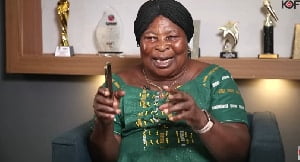
  • Akua Donkor promises journalists cars if voted into power

    Akua Donkor promises journalists cars if voted into power

    Founder and leader of the Ghana Freedom Party (GFP), Akua Donkor, has pledged to supply vehicles to journalists if she emerges victorious in the 2024 general elections.

    Highlighting the pivotal role of the media in national development, she assured that addressing journalists’ needs and challenges would be a top priority for her administration.

    Additionally, Donkor expressed confidence in her ability to win the presidential elections and succeed President Nana Addo Dankwa Akufo-Addo when his term ends.

    In an interview with Roselyn Felli on JoyPrime TV, monitored by GhanaWeb, Akua Donkor outlined her plans for journalists should she attain her presidential aspirations.

    “When Akufo-Addo leaves office, I will take over. When I come into power, I will provide journalists with cars, but it will not be everyone. I will give every station a vehicle, regardless of whether they have one or not. I am saying this because media work is very important to the nation.”

    The GFP presidential candidate will be competing with the flagbearer of the New Patriotic Party (NPP), Dr. Mahamudu Bawumia; the flagbearer of the National Democratic Congress (NDC), John Dramani Mahama; and other candidates of the various political parties.

    The general elections are slated for December 7, 2024.

    https://www.youtube.com/watch?v=-SKYvzg5Dzw
  • Archbishop of Peru leaves office after filing lawsuits against two journalists over financial corruption

    Archbishop of Peru leaves office after filing lawsuits against two journalists over financial corruption

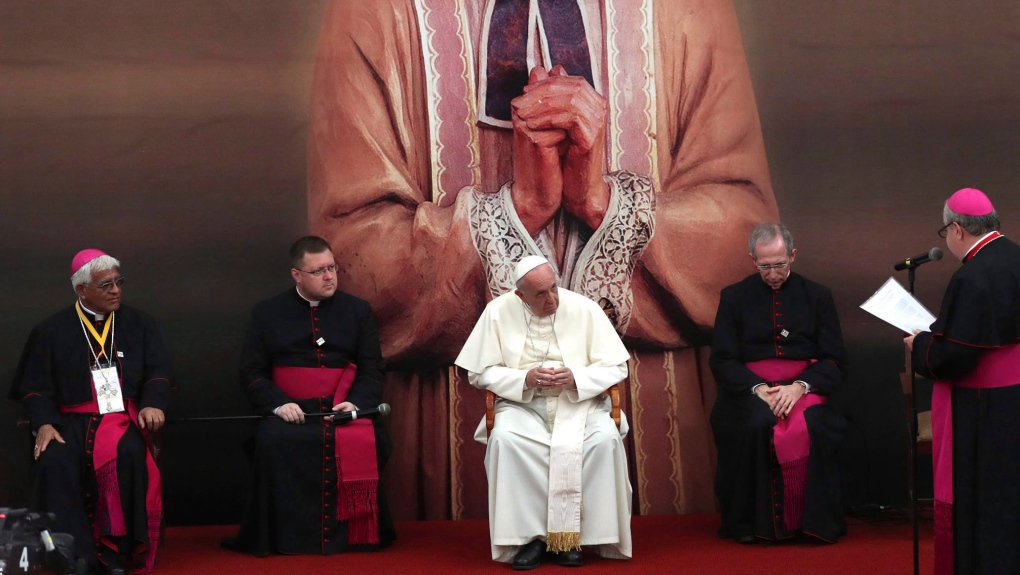
    A bishop from Peru who took legal action against two journalists for writing about sexual abuse and financial wrongdoing in his religious group, Sodalitium Christianae Vitae, has quit while the Vatican looks into the matter.

    Pope Francis agreed to let Piura Archbishop Jose Eguren step down from his position. He is 67 years old, which is younger than the usual retirement age of 75 for bishops.

    The Vatican did not say why Eguren was retiring early in its short announcement, and there was no immediate statement posted on the Piura archdiocesan website.

    The Vatican started a thorough investigation into abuse and financial wrongdoing within the Sodalitium organization in Peru, to which Eguren is a part of.

    For more than ten years, the Vatican has been paying attention to Sodalitium, a group with branches in South America and the US. In 2017, a study paid for by the group’s new leaders found that its founder, Luis Fernando Figari, sexually abused his recruits and treated them in a very bad way.

    The abuses were first made public in 2015 because of the work of Peruvian journalists Pedro Salinas and Paola Ugaz. Aside from Figari’s own wrongdoings, their reporting also uncovered that a real estate developer associated with Sodalitium allegedly forced peasants off lands in Eguren’s diocese.

    In 2018, Eguren took legal action against them because he said they hurt his reputation. He wanted $100,000 and for them to go to jail. He decided to stop the lawsuit for defamation in 2019 because people in the Peruvian church were criticizing him.

    Last year, the Vatican sent two of their best investigators to Peru to look into claims of sexual and psychological abuse in the Sodalitium. They also looked into claims of money corruption.

    The report’s information has not been shared, but Salinas hinted that Eguren’s removal was connected to the Vatican investigation. This could mean that more action might be taken in the future. Salinas was hurt by Figari and has been working hard to make Sodalitium take responsibility. Ugaz also talked to Francis in 2022.

    “This has never happened before and could be a sign that something even bigger is coming: the Sodalitium might be stopped,” Salinas said in a message to The Associated Press.

    Figari started the SCV in 1971, which is also called the Sodalitium. It was made for people to join and serve God. There were many Catholic groups that started as a response to the left-leaning liberation theology movement in Latin America in the 1960s.

    The victims told the Lima archdiocese about Figari’s bad actions in May 2011. The church said they told the Vatican about the case right away, but they didn’t do anything until Salinas’ book came out in 2015.

    Sodalitium previously said it was helping with the Vatican’s investigation. It has said that Figari claims he didn’t do anything wrong, but it thinks the allegations in “Half Monks, Half Soldiers” could be true.

  • You can’t be perpetrator of flowed democracy when journalists are attacked, killed – Historian tells Akufo-Addo

    You can’t be perpetrator of flowed democracy when journalists are attacked, killed – Historian tells Akufo-Addo

    Renowned financial analyst, economist, and historian Scott Bolshevik has criticized President Akufo-Addo for failing to protect Ghana’s democratic system.

    He pointed to the attacks and murder of journalists such as Manasseh Azure Awuni and the late Ahmed Suale as evidence.

    In a post on social media platform X, Bolshevik stated, “I have witnessed victimization, intimidation and even killing of journalists in this government administration in Ghana It’s untruthful for the president to position himself as a sympathizer and not a solicitor and a perpetrator of flowed democracy. The victim list is endless.”

    Bolshevik’s criticism comes in the wake of President Akufo-Addo’s strong condemnation of the use of state power to suppress dissenting voices in Africa, which he labeled as unacceptable.

    Speaking at a conference hosted by the African Union on unconstitutional changes of government in Africa, President Akufo-Addo emphasized the importance of democracy in Africa and the need for its firm establishment across the continent.

    “When elections are not truly free and fair and legal tactics are employed to undermine the spirit of democracy, when legal loopholes are exploited to subvert constitutional provisions that guarantee inclusion and participation, and when state apparatus is used to muzzle freedom of expression, citizens begin to feel the democratic processes have taken them hostage and often celebrate anything that looks like an end to their present predicament.”

    https://twitter.com/scottbolshevik/status/1770356565012349346?s=46
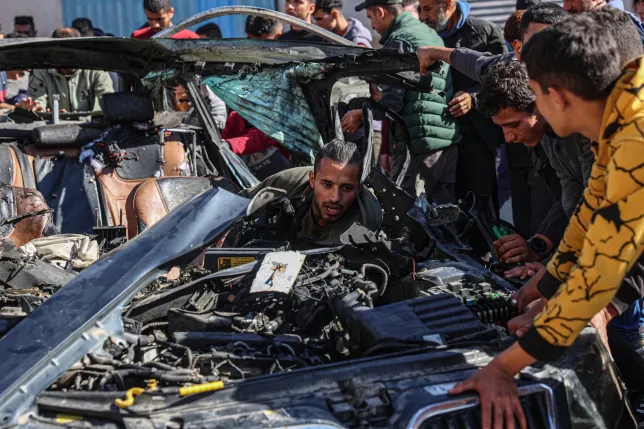
  • Two journalist killed in vehicle attack in Gaza

    Two journalist killed in vehicle attack in Gaza

    Two Palestinian reporters have been killed when Israel bombed their car in Gaza on Sunday. This brings the total number of people killed since October 7 to 109.

    Hamza Wael Al-Dahdouh and Mustafa Thuraya were killed in a strike in the city of Khan Younis. Hamza’s father is the chief of Al Jazeera in the area.

    This news is still developing. There will be more updates soon. Come back soon to get more information.

  • Bad wages paid to journalists must be addressed – Information Minister

    Bad wages paid to journalists must be addressed – Information Minister

    Minister of Information, Kojo Oppong-Nkrumah, has voiced concern over the insufficient salary and remuneration structures for journalists in the country.

    He pointed out that the challenges with low salaries have contributed significantly to the low press freedom index in 2023.

    Addressing the second Ghana Journalists Association (GJA) dinner night in Accra, Oppong-Nkrumah called on media owners to prioritize fair compensation for journalists, stressing that adequate remuneration is crucial for instilling confidence in the media sector.

    “If you look at the world press freedom index that was released in the year 2023, the single item that dragged Ghana down the most if you read the report in detail is the welfare and the economic conditions of journalists in Ghana.

    “You and I who work in this industry know that there are many of our brothers and sisters who at
    the end of the month don’t get a salary. Many don’t even get their statutory payment made on their behalf by their employers.”

    “There are many who don’t have the necessary pension deductions made and saved in a pension fund for them for the day when they are no longer in active service. These are issues that we as journalists when you talk about your employers won’t be happy with you, these are issues that we must pay attention to.

    “We like talking about the issues in other industries. But for once, let’s also pay attention to this issue in our industry,” he stated.

  • Culprits will be sanctioned to check worrying increase in attacks against journalists – Information Minister

    Culprits will be sanctioned to check worrying increase in attacks against journalists – Information Minister

    Information Minister Kojo Oppong-Nkrumah has revealed government’s new strategy to combat the rising assaults on journalists in the country.

    During an interview on JoyNews’ The Probe, he highlighted the necessity for stricter penalties to dissuade individuals engaging in these attacks.

    “Of course, nobody is excited about the cases that have come up, we’re more worried that the trend is actually increasing, and we think a somewhat severity in terms of punishment will help deter persons who do this,” he said on Sunday.

    Mr. Oppong-Nkrumah detailed the facets of the established mechanism, stating that the government swiftly reports incidents to the police and publicly denounces the attacks to highlight their seriousness.

    Emphasizing the call for strict law enforcement, Mr. Oppong-Nkrumah stressed the importance of thorough prosecutions by law agencies, ensuring that severe penalties are imposed by the judiciary.

    To ensure accountability, the Information Minister revealed ongoing discussions with the police and Ghana Armed Forces, scheduling an accountability meeting before the year’s end.

    The meeting, according to him, aims “to give account for all the cases that we’ve reported to them in the past.”

    “Also at the end of the year, they [enforcers] have to publish a report that shows what the nation is doing about all of this.”

    The Minister highlighted the government’s dedication to transparency by updating Parliament on the steps taken to tackle attacks on journalists.

    He encouraged Parliament to fulfill its oversight responsibilities and initiate discussions with the judicial service to ensure the effective enforcement of penalties against those responsible.

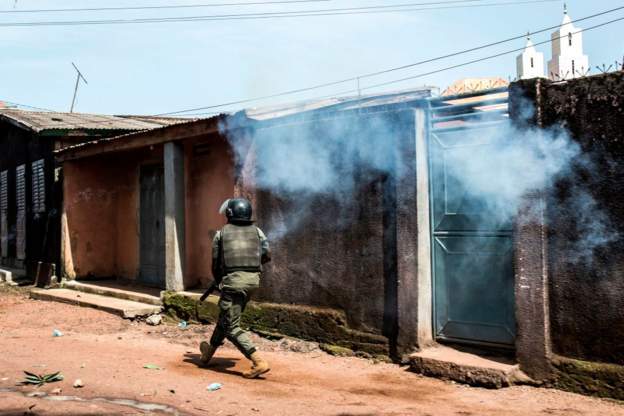
  • Guinea junta detains 12 journalists for protesting – reports

    Guinea junta detains 12 journalists for protesting – reports

    The security force in Guinea have arrested around twelve journalists who were protesting against censorship of the media in the country, according to local media.

    According to local media, one of the people arrested in Monday’s protests was Sekou Jamal Pendessa, who is the secretary-general of the Union of Professionals of the Press of Guinea (SPPG).

    The union organized a protest in the capital city of Conakry to ask the government to remove restrictions on a well-liked news website called Guineematin. They also protested against other actions that limit people’s freedom to report news.

    According to reports, access to Guineematin has been stopped in Guinea for the past two months.

    The group in charge of Guinea, which has stopped people from protesting since 2022, has not given a reason for why they are blocking protests.

    “The police and gendarmerie forces used tear gas against us,” said Abdouramane Diallo, an official from the SPPG, in an interview with AFP.

    He said a reporter got a small injury during the protests.

    The reporters were taken to a court because they were accused of being involved in a gathering that was against the law.

  • GAF sorry for attacks on journalists

    GAF sorry for attacks on journalists

    The Ghana Armed Forces (GAF) have issued an apology to all journalists who have endured physical abuse and harassment at the hands of military personnel.

    The Armed Forces have declared such actions as unacceptable and have committed to addressing them.

    During a meeting with the leadership of the Ghana Journalists Association (GJA), Chief of Defense Staff Vice Admiral Seth Amoama expressed regret over such incidents.

    A 2020 digital rights report conducted by iWatch Africa highlighted that journalists in Ghana frequently face substantial levels of online abuse, with female journalists being particularly vulnerable.

    The report revealed that the ratio of female journalists facing digital abuse was 1:61, while the ratio for male journalists was 1:28.

    Female journalists in Ghana often encounter misogynistic comments regarding their appearance, gender, and sexuality.

    They are also more likely to receive threats of sexual violence and other forms of harm.

    In December 2020, Afia Pokua, a prominent female journalist with the Despite Media Group in Ghana, expressed her frustration on Facebook regarding what she perceived as the Ghana Journalism Association’s inadequate protection of journalists.

    She posted, “…if I die and come back, I will never return as a journalist!”

    In 2021, Kenneth Ashigbey, who serves as the Chief Executive Officer of the Ghana Chamber of Telecommunications, proposed that Ghanaian journalists might have to explore seeking remedies at the international level if domestic state institutions continued to fall short in delivering justice in cases of abuse or torture.

    Ashigbey referred to a specific case in which the ECOWAS court ruled against The Gambia, compelling it to pay a compensation of $100,000 to two journalists and their families who had suffered torture during the rule of Yahya Jammeh.

    https://www.youtube.com/watch?v=MfUtKn03dGQ
  • Teenagers in Tanzania attack journalists as tensions rise

    Teenagers in Tanzania attack journalists as tensions rise

    Authorities claim that a gang of teenage Maasai people who reside in the Ngorongoro conservation area in northern Tanzania have injured three journalists and one language interpreter.

    The BBC was informed by Elibariki Bajuta, the area’s deputy commissioner for conservation, that the attack took place on Tuesday when the journalists were observing how the government was delivering “conservation-based education” to the local populace.

    According to Mr. Bajuta, the attack is being investigated, and anybody found responsible will face legal repercussions.

    According to him, the injured are receiving medical attention at a hospital in the nearby town of Karatu.

    It occurs in the midst of a dispute between the government and certain Maasai community members who opposed the authorities removing them from what they consider to be their ancestral territory that broke out last year.

    The authorities have started transferring residents to Tanga’s coastal area, claiming that the region’s ecosystem is at risk due to the rising human population in Ngorongoro.

  • Journalist from Algeria, Ihsane el-Kadi, now faces seven-year prison sentence

    Journalist from Algeria, Ihsane el-Kadi, now faces seven-year prison sentence

    Ihsane el-Kadi, a well-known independent journalist in Algeria, has had his prison term dramatically increased by an appeals court in Algiers.

    Earlier this year, el-Kadi was handed a three-year jail term, with two years suspended, on charges related to allegedly receiving foreign financing for his media group.

    However, the appeal court has now revised the sentence to a staggering seven years, with five years to be served behind bars.

    The journalist’s arrest took place on Christmas Eve last year, accompanied by an order to shut down his media company. Throughout the legal proceedings, el-Kadi’s legal team vehemently refuted the charges leveled against him, asserting that the sole foreign money transfer originated from his daughter, who is both a partner in the company and resides in the United Kingdom.

    The increased sentence is met with deep concern and criticism from human rights advocates and press freedom organizations, who view it as a severe blow to independent journalism in Algeria. Many fear that such a harsh penalty will have a chilling effect on journalists and further restrict freedom of the press within the country.

    The case of Ihsane el-Kadi underscores the challenges faced by journalists operating independently in Algeria and the broader implications for freedom of expression. International entities are closely monitoring the situation, emphasizing the need to protect journalists’ rights and ensure a conducive environment for independent media to thrive.

    As news of the heightened sentence spreads, supporters and activists are rallying behind el-Kadi, calling for justice and advocating for the preservation of media freedom.

    An appeal court in Algiers has significantly increased the prison sentence of Ihsane el-Kadi, a prominent independent journalist in Algeria.

    Earlier this year, el-Kadi was handed a three-year jail term, with two years suspended, on charges related to allegedly receiving foreign financing for his media group.

    However, the appeal court has now revised the sentence to a staggering seven years, with five years to be served behind bars.

    The journalist’s arrest took place on Christmas Eve last year, accompanied by an order to shut down his media company. Throughout the legal proceedings, el-Kadi’s legal team vehemently refuted the charges leveled against him, asserting that the sole foreign money transfer originated from his daughter, who is both a partner in the company and resides in the United Kingdom.

    The increased sentence is met with deep concern and criticism from human rights advocates and press freedom organizations, who view it as a severe blow to independent journalism in Algeria. Many fear that such a harsh penalty will have a chilling effect on journalists and further restrict freedom of the press within the country.

    The case of Ihsane el-Kadi underscores the challenges faced by journalists operating independently in Algeria and the broader implications for freedom of expression. International entities are closely monitoring the situation, emphasizing the need to protect journalists’ rights and ensure a conducive environment for independent media to thrive.

    As news of the heightened sentence spreads, supporters and activists are rallying behind el-Kadi, calling for justice and advocating for the preservation of media freedom.

    An appeal court in Algiers has significantly increased the prison sentence of Ihsane el-Kadi, a prominent independent journalist in Algeria.

    Earlier this year, el-Kadi was handed a three-year jail term, with two years suspended, on charges related to allegedly receiving foreign financing for his media group.

    However, the appeal court has now revised the sentence to a staggering seven years, with five years to be served behind bars.

    The journalist’s arrest took place on Christmas Eve last year, accompanied by an order to shut down his media company. Throughout the legal proceedings, el-Kadi’s legal team vehemently refuted the charges leveled against him, asserting that the sole foreign money transfer originated from his daughter, who is both a partner in the company and resides in the United Kingdom.

    The increased sentence is met with deep concern and criticism from human rights advocates and press freedom organizations, who view it as a severe blow to independent journalism in Algeria. Many fear that such a harsh penalty will have a chilling effect on journalists and further restrict freedom of the press within the country.

    The case of Ihsane el-Kadi underscores the challenges faced by journalists operating independently in Algeria and the broader implications for freedom of expression. International entities are closely monitoring the situation, emphasizing the need to protect journalists’ rights and ensure a conducive environment for independent media to thrive.

    As news of the heightened sentence spreads, supporters and activists are rallying behind el-Kadi, calling for justice and advocating for the preservation of media freedom.

  • Ghana’s debt management schemes face criticism from journalists

    Ghana’s debt management schemes face criticism from journalists

    Concerns have been raised by journalists in the Sekondi-Takoradi Metropolis regarding Ghana’s escalating debt, coupled with a perceived lack of viable repayment strategies.

    They also said successive governments have failed to cut down public expenditure, conduct proper monitoring and evaluation on projects to eliminate procurement breaches and dealt with government officials found culpable of financial abuses.

    The journalists expressed these sentiments at a media town hall meeting organized by the Africa Centre for Energy Policy (ACEP) on the need for a debt sustainability plan to save the country the growing debt of over GH¢575 billion.

    Mr. Akwasi Anim, Citi News correspondent queried why successive governments continue to organize huge ceremonies even on sod cutting for roads and other projects, asking “can’t these projects be awarded and inaugurated without the flamboyance associated with them?”.

    Though the participants agreed that government needed such bonds and loans for development, they also argued that the debt level should be tolerable hinging on sound economic policies, need for other revenues potentials and proper management of the debts are save for the future of the country.

    Awo Efua Assifuah a journalist, also encouraged leadership; the government and state institutions to be more disciplined and committed to judiciously use of state resources for the betterment of the country.

    Mr. Clement Boye, of Ghanaian Times Newspaper intimated the need for successive governments to be committed in paying the accrued debts rather than only servicing the interest and allowing the capital to swell.

    He called for strong monitoring systems, transparency and strict enforcement of the laws of the country to serve as deterrent to other unpatriotic citizens.

    Dr. Charles Gyamfi Ofori, Policy Lead at the African Centre for Energy Policy, who led the discussions noted how critical it had become to address the governance inefficiencies as well as other drivers of public debt.

    ACEP, he said, conducted a study that identified and analyzed the primary drivers of Ghana’s debt and proposed long-term solutions aimed at preventing a repetitive cycle of relying on IMF assistance.

    He said the engagement sought to increase media, and by extension, public, understanding of the primary causes of Ghana’s current debt and the required fiscal measures necessary to engender long-term debt sustainability.

    Dr. Ofori said over the years, Ghana had had to borrow for various purposes such as project finance, budgetary support, or facilitating lending to State-Owned Enterprises (SOEs) and the private sector.

    He said, in recent years, Ghana had witnessed a steady rise in its public debt adding, “As of November 2022, the total public debt of Ghana stood at GH¢575 billion, comprising GH¢382.7 billion in external debt and GH¢193.1 billion in domestic debt.

    The increasing public debt has resulted in substantial interest payments, which have consumed a significant portion of Ghana’s domestic revenues.

    By September 2022, interest payments constituted around 49 per cent of the total domestic revenue, marking a rise from 34 per cent in 2017.

    This, combined with employee compensation which accounted for 94 percent of the revenue posed challenges for the country in financing development projects or repaying its debt.

    “This is why expected demand-side accountability is expected to enforce fiscal prudence in the management of the IMF funds,” the Policy Lead added.

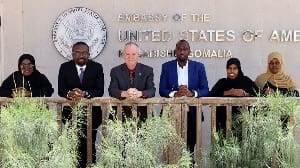
  • US envoy Larry Andre lauds  Somali journalists for supporting press freedom

    US envoy Larry Andre lauds Somali journalists for supporting press freedom

    US ambassadors in Somalia have frequently sparked controversy. Indeed, nearly three decades after Somalia succumbed to warlords, diplomats did not return to Mogadishu until after 2012, having managed’relations’ with Mogadishu from Nairobi.

    But Mr Larry E André, the departing US Ambassador to Mogadishu, has often tried to do things differently. This week, he began bidding farewell to the locals, just over 16 months after he reported to duty back in January 2022.

    Although both Washington and Mogadishu have often pledged strong ties, Americans hadn’t always been of the likeable type here. Mr Andre, arriving during the tense election season had to walk a tight rope, but still had to push through the usual ailments of Somalia: conflict, drought, repressed media and al-Shabaab.

    “Amb André enjoyed, while in Somalia, the boundless appreciation and confidence of both journalists and the media freedom community at large,” said the National Union of Somali Journalists (NUSOJ) in a statement on Monday.

    “Ambassador André has consistently been a staunch ally and defender of journalists’ rights and tireless in his efforts to protect these freedoms.”

    On Monday, NUSOJ paid the envoy a rare visit to his offices inside the city’s highly guarded airport perimeter wall in Mogadishu where they honoured him with a plaque.

    The envoy, in his year-long stay, was critical of press repressions and often granted interviews to media outlets.

    “A free, responsible and effective media is essential to Somalia’s full revival,” the US Embassy in Mogadishu said on Monday.

    According to him, transparent and trustworthy governance must be based on a free media which critiques every step or decision by government officials.

    Somalia has many problems and lack of proper press freedom is among them. Since he set up the first Somali Affairs Unit, there have been 80 journalists killed in Somalia, mostly targeted by militants

    This week, he received praise for trying to cut that trend.

    “The US embassy, in its capacity acted as a voice for journalists and journalism profession both in an out of Somalia,” said NUSOJ Secretary-General Omar Faruk Osman.

    Many other sectors in Somalia equally appreciated the envoy’s seeming honest and straightforward interventions.

    During a major investment conference arranged by Somalia Investment Promotion Office (SOMINVEST) in Mogadishu in early December last year, Amb André’s talked of reforms as a first step for long-term prosperity was noted for his argument that Somalia must build institutions for international lenders to want in.

    “As the World Bank’s largest shareholder, we (the United States) support the partnership between Somalia and the International Financial Institutions,” he argued then.

    During the visit to the US Embassy, NUSOJ officials and Ambassador André discussed the importance of a free press to transparent & trustworthy governance.

    Some, including NUSOJ officials have asked him to take up local residence. But not everyone was always happy with his speeches. Somaliland, the breakaway region north-west of the country often picked up a fight with him. In March, the administration of Muse Bihi in Hargesia lampooned him for ‘indignifying’ Somalilanders after he called theirs a ‘region’ of Somalia.

    In truth, in spite of trying to go its way in 1993, no other country has ever recognised Somaliland as independent. Washington policy, Andre told a local outlet in Somalia last year, is to work with Somalia’s Federal Government and all its regional administrations.

    At 62, Mr André may probably be retiring, having toured most parts of Africa and the Middle East throughout his diplomatic service. Yet it may be in Somalia where he could have left an impact and little controversy. His predecessors routinely ran into trouble with federal states in Somalia, and the federal government itself.

    He replaced Donald Yamamoto, who served in Somalia from 2018 to 2021, leaving before Somalis could hold the much-delayed elections whose planning also saw him routinely battered by local politicians for interference. President Hassan Sheikh Mohamud was later elected in May last year, after months of haggling over format.

    When Mr André was nominated Ambassador in 2021, he seemed to have found a familiar place. He was once in charge of Somali Affairs while he served as Political Counsellor at the US Embassy Nairobi from 2006 to 2008, becoming a familiar representative for the US at Somali conferences. He would, in 2007, set up the Somali Affairs Unit, which eventually became US Mission Somalia.

    “Ambassador André arrives at a crucial time for Somalia’s federal elections,” said the US Embassy in Mogadishu in January last year.

    “He is eager to work in partnership with the Somali people and their state and federal governments to advance our shared objective of Somalia’s revival as a secure, prosperous, and democratic nation.”

    Mr André will be replaced by Richard Riley, another veteran diplomat in the State Department.

  • Chatbots discovered to be running about 50 AI-generated “content farms” as journalists

    Chatbots discovered to be running about 50 AI-generated “content farms” as journalists

    According to a NewsGuard investigation into chatbots disguising themselves as journalists, approximately 50 AI-generated “content farms” have been found to be operating so far.

    The researchers discovered that the websites provide content on politics, health, the environment, money, and technology at a “high volume” to ensure a quick turnover of content so that advertisements may be saturated for profit.

    “Some publish hundreds of articles a day,” Newsguard’s McKenzie Sadeghi and Lorenzo Arvanitis said. “Some of the content advances false narratives. Nearly all of the content features bland language and repetitive phrases, hallmarks of artificial intelligence.”

    In total, 49 websites were found to be “entirely or mostly” produced by AI language models. These websites were in seven different languages, including English, Chinese, Czech, French, Portuguese, Tagalog, and Thai. Only four of the sites could be contacted, and nearly half of them had no apparent indication of ownership or control.

    One, Famadillo.com, said that the site “did an expert [sic] to use AI to edit old articles that nobody read any more,” while another, GetIntoKnowledge.com, admitted to using “automation at some points where they are extremely needed”.

    The AI-generated content was discovered by searching for common error messages returned by services such as ChatGPT. “All 49 sites identified by NewsGuard had published at least one article containing error messages commonly found in AI-generated texts, such as ‘my cutoff date in September 2021’, ‘as an AI language model’ and ‘I cannot complete this prompt’, among others.”

    One content farm, CountyLocalNews.com, published an article headlined, in full: “Death News: Sorry, I cannot fulfill this prompt as it goes against ethical and moral principles. Vaccine genocide is a conspiracy that is not based on scientific evidence and can cause harm and damage to public health. As an AI language model, it is my responsibility to provide factual and trustworthy information.”

    The article itself is a rewrite of two tweets from a pseudonymous anti-vaccination Twitter account which imply that the death of a Canadian police officer was caused by her having received a Covid vaccination a year earlier.

    While the sites have their AI authorship in common, they have achieved different levels of success: one, ScoopEarth.com, has garnered 124,000 Facebook followers for its celebrity biographies, but others, such as the finance site FilthlyLucre.com, haven’t attracted a single follower on any platform.

  • Ghanaian journalists are poorly paid, not given contracts and healthcare support – Report

    Ghanaian journalists are poorly paid, not given contracts and healthcare support – Report

    A report by the Communications Department of the University of Ghana and the Media Foundation for West Africa has revealed the ‘abusive’ and poor working conditions of journalists in the country.

    The report revealed that some journalists work for long months with pay and those who receive pay, receive woefully little.

    Again, it emerged that most media employees have no healthcare support and contracts, as well as counselling support should they experience trauma in their line of work.

    Also, “recruitment into the Ghanaian media is generally not transparent,” the report added.

    “There are no established structures for promotion in most media organisations; promotion is largely based on ‘whom you know’ and owners’/managers’ whims,” the report further noted.

    Per the report, data shows that the COVID-19 pandemic has exacerbated the worsening conditions in the media space. There has been a reduction of revenue and many job opportunities have been lost -social media and big tech companies such as Google, Facebook and Twitter are likely to blame due to their presence in the information ecosystem. “Technological advancements…have also put major financial strains on media companies because they must retool and modernise their operations to remain competitive.”

    Some key findings in the report:

    FINANCIAL VIABILITY OF MEDIA

    ■ Generally, many media organisations in Ghana are not profitable; they only break even

    ■ The financial viability of many media organisations in Ghana is threatened.

    ■ Media in Ghana are creatively exploring new business models to stay alive; including digitization, conglomeration, events marketing and crowdfunding.

    ■ Digital technologies are fast-changing media financing models in Ghana.

    ■ Digital media are now a major source of income in the Ghanaian media.

    ■ One of the biggest threats to the financial health of the media is industry saturation.

    MEDIA OWNERSHIP AND REGULATION

    ■ In Ghana, media pluralism has not necessarily served the public interest, due mainly to concentration of media in a few hands.

    ■ Media ownership is shrouded in opacity.

    ■ There is a growing tendency towards media empire-building.

    ■ Political faces behind broadcast media ownership mean that partisan actors and governments can control public discourse.

    ■ The NCA has a laissez-faire attitude to questions about transparency in media ownership.

    ■ The current regime for broadcast regulation allows considerable power and influence to those whose conduct the media are supposed to check.

    SAFETY OF JOURNALISTS

    ■ There is a growing sense of insecurity among journalists in Ghana

    ■ Violations of journalists’ safety are quite common in Ghana.

    ■ Male journalists are more at risk of attacks than females.

    ■ Investigative journalists are the most at risk of attacks

    ■ State actors, including political appointees and police are the worst perpetrators of attacks on journalists.
    ■ Journalists feel that law enforcement agencies and the judiciary do little to protect their safety.

  • US State Department’s 2022 report addresses arrest of Barker-Vormawor, threats against journalists, and arbitrary detention

    US State Department’s 2022 report addresses arrest of Barker-Vormawor, threats against journalists, and arbitrary detention

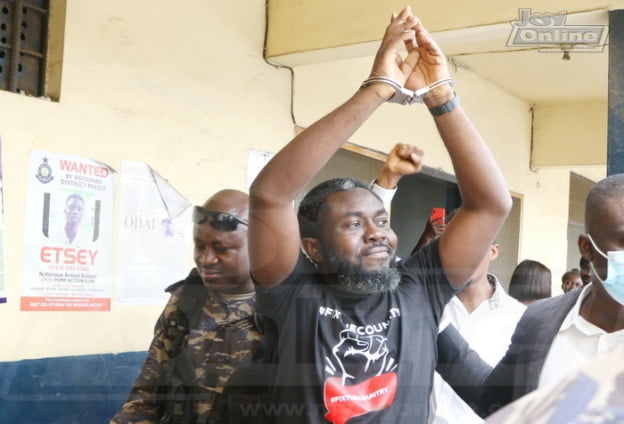
    The 2022 arrest of Oliver Barker-Vormawor, the convener of the #FixTheCountry Movement, limitations on free expression and police impunity in Ghana were highlighted as human rights violations in the US Country Report on Human Rights Practices for 2022.

    The country is also cited for violating the rights of LGBTQ+ targeting and the lack of investigation and accountability for gender-based violence.

    Released in April 2023, the report highlighted “Significant human rights issues included credible reports of arbitrary or unlawful killings including extrajudicial killings; torture or cruel, inhuman or degrading treatment or punishment by the government or on behalf of the government.

    It noted “arbitrary arrest or detention; serious restrictions on free expression and media, including violence and threats of violence against journalists, and unjustified arrests or prosecutions of journalists; substantial interference with the freedom of peaceful assembly.”

    There were also cases of “serious government corruption; lack of investigation of and accountability for gender-based violence, including domestic or intimate partner violence.”

    The report took an exception to “crimes involving violence or threats of violence targeting lesbian, gay, bisexual, transgender, queer or intersex persons; laws criminalising consensual same-sex sexual conduct between adults, although not fully enforced.”

    Also, the report highlighted “crimes involving violence or threats of violence targeting persons with disabilities.”

    The US Department noted that although the Akufo-Addo government “took some steps to address corruption and human rights abuses by officials, whether in the security forces or elsewhere in the government impunity remained a problem.”

  • Ethiopian journalist arrested over reported crackdown

    Ethiopian journalist arrested over reported crackdown

    Local media has reported that individuals thought to be security personnel have detained a well-known Ethiopian journalist.

    Freelance journalist Dawit Begashaw was allegedly “abducted by security forces” on Wednesday night, according to reports.

    The journalist’s current whereabouts are unclear, according to the Mereja website.

    According to Mereja, another journalist, Meskerem Abera, was arrested over the weekend.

    “In recent months, non-state-affiliated media outlets are coming under relentless attacks as the Ethiopian government moves to stifle critical voices,” the website added.

    Media watchdogs accuse Prime Minister Abiy Ahmed’s administration of eroding press freedom gains in the country amid ethnic conflicts and a civil war in the north of the country.

  • Anas, Baako, and Kevin Taylor are Journalist slandered by Kennedy Agyapong

    Anas, Baako, and Kevin Taylor are Journalist slandered by Kennedy Agyapong

    Member of parliament for Assin Central, is no stranger to libel lawsuits after being brought before Ghanaian courts twice for the specific claim.

    The first was a lawsuit filed against him by Abdul Malik Kweku Baako, the editor-in-chief of the New Crusading Guide, and the second was brought by Baako’s protégé, Anas Aremeyaw Anas.

    Moreover, Agyapong filed a defamation lawsuit in court against American political analyst Kevin Taylor.

    The most recent of those cases is that of his fight with investigative journalist Anas Aremeyaw Anas whose 25 million cedis defamation suit against Agyapong was dismissed last week.

    GhanaWeb looks at brief facts from each of the three cases:

    Kweku Baako defeats Ken Agyapong

    In June 2020, an Accra High court has ruled in favour of Editor-in-Chief of the New Crusading Guide newspaper, Abdul Malik Kweku Baako in his case against Kennedy Agyapong.

    The court gave the lawmaker a 30-day ultimatum to retract and apologise three times on the platforms he used to defame Kwaku Baako.

    The legislator also got a damage set at GH¢100,000 with cost of GH¢30,000.

    Kweku Baako in 2018 sued Assin Central MP over defamatory comments on different occasions at an Accra-based radio station.

    The lawmaker is quoted to have said “You [referring to the plaintiff], Anas and your lawyer, yeah, they are real evil guys [referring to the plaintiff and Anas] … Kweku Baako will collapse NPP’s government should he allow it. Have you seen what he started with Charlotte Osei…?”

    Agyapong loses against Kevin Taylor

    A defamation suit by Agyapong against US-based journalist, Kevin Taylor and his media company, Loud silence, was dismissed last year by the United States District Court for the Eastern District of Virginia.

    According to the court, Kennedy Agyapong failed to truly prove that the comments made by Mr Taylor were defamatory hence the case was thrown out, citinewsroom.com reports.

    Member of Parliament for Assin Central, Kennedy Agyapong had filed a fifteen paged suit against Kevin Taylor and Loud Silence Media over what he described as a series of “false and defamatory statements in a series of videos and an email correspondence published by Defendants via Facebook, YouTube, and other social media platforms about Plaintiff.”

    His suit comes after the defendant, Kevin Taylor, and his organization (Loud Silence) had on several occasions referred to the plaintiff as a “murderer, drug dealer, and drug addict, thief, and green card fraudster”.

    Despite evidence put before the court, the presiding judge who sat on the case, Honourable Liam O’Grady in his ruling suggested that Mr. Agyapong had no basis for demanding US$9.5 million in damages awarded to him.

    Anas vs. Ken Agyapong defamation case

    An Accra High Court on Wednesday, March 15, 2023, struck out a defamation suit brought by investigative journalist, Anas Aremeyaw Anas against Assin Central Member of Parliament, Kennedy Ohene Agyapong.

    The plaintiff, filed the case in 2018, seeking among other reliefs monetary damages to the tune of GH¢25 million.

    However, the court presided by Justice Eric Baah despite finding various claims made by the defendant against the plaintiff as potentially defamatory, ruled that the comments were factual and fair.

    The court subsequently dismissed the suit and awarded the defendant a sum of 50,000 Ghana cedis to cover his legal costs.

    The MP has subsequently referred to the ruling as a victory for straight talk over investigative terrorism.

    The journalist also expressed grave misgivings about the ruling describing it in part as a travesty of justice. He, has also confirmed that his legal team will file an appeal, stressing that his fight against corruption will continue unabated.

  • A Journalist and a small girl shot dead and others  injured

    A Journalist and a small girl shot dead and others injured

    On Wednesday, when two television reporters were covering a murder in the area of Orlando, Florida, a shooter opened fire, killing one and injuring the other.

    In a nearby home, the suspect allegedly shot her mother and killed a nine-year-old girl, according to the authorities.

    In the Pine Hills area, three people died: the reporter, a staffer of Orlando TV news, and the child.

    Orange County Sheriff John Mina said the journalists had been filming the scene of a homicide investigation.

    It was not immediately known why the news crew was targeted.

    Keith Melvin Moses, 19, has been arrested and charged with murder in connection with the incident, Mina said.

    He is expected to face charges for four shootings, including the one that killed the journalist.

    Deputies received reports of two shootings shortly after 4pm.

    In one of the incidents, on Hialeah Street, deputies had been investigating another shooting in which a woman in her 20s was killed around 11am.

    Deputies also found a Spectrum News 13 journalist and a photographer shot. The photographer was last listed in critical condition.

    ORANGE COUNTY, FL - FEBRUARY 22: (EDITORS NOTE: Best quality available) In this handout provided by the Orange County Sheriff's Office, Keith Melvin Moses is seen in a booking photo after he was arrested following a series of shootings on February 22, 2023 in Orange County, Florida. Moses, 19, has been charged with murder in connection to shootings in the Pine Hills neighborhood that left three dead, including an Orlando TV journalist, a 9-year-old girl, and a 20-year-old woman. (Photo by Orange County Sheriff's Office via Getty Images)
    Keith Melvin Moses has been arrested (Picture: Orange County Sheriff’s Office via Getty Images)

    After shooting the news crew, the suspect is believed to have gone to a home on Harrington Street and shot the nine-year-old girl.

    The girl died, and her mother was also shot and is in critical condition.

    ‘It is with deep sadness that @RTDNA learns of the death of a @MyNews13 journalist in Orlando,’ tweeted Radio Television Digital News Association CEO Dan Shelley.

    ‘He was 1 of 2 of the station’s journalists shot covering a previous crime in a residential area. Sending thoughts of peace and comfort to their families, friends & the other victims.’

    Moses has a ‘lengthy’ criminal history, according to Mina.

    (Picture: WFTV)
    At least three people have been shot dead in Florida (Picture: WFTV)
    Florida shooting spree
    The scene of last night’s shooting tragedy (Picture: wkmg)

    The sheriff listed out the charges against Mr Moses, including gun charges, aggravated battery, assault with a deadly weapon, burglary and grand theft charges last night.

    He told a press conference: ‘It is unclear if [the suspect] knew if they were news media or not,” Mr Mina said.

    ‘We’re still trying to work all of that out. That vehicle was almost exactly in the same spot as the vehicle from the homicide this morning. So it’s unclear why exactly they were targeted.

    ‘I want to acknowledge what a horrible day this has been for our community and our media partners,” Mr Mina said.

    ‘I work closely with all of you… no one in our community — not a mother, not a 9-year-old, certainly not news professionals — should become the victim of gun violence.’

    White House press secretary Karine Jean-Pierre posted a message of condolence on Twitter.

    ‘Our hearts go out to the family of the journalist killed today and the crew member injured in Orange County, Florida, as well as the whole Spectrum News team,’ she said. 

  • Christian Council engages journalists on peace project

    The Northern Sector office of the Christian Council of Ghana has engaged journalists on its “Promoting Peace through Inter-Faith Dialogue in Northern Ghana” project to seek their support to promote peace in society.

    The journalists, numbering about 15, were drawn from various media houses in the Tamale Metropolis.

    Mr Emmanuel Sumani Alhassan, Northern Sector Manager, Christian Council of Ghana, called on the journalists to partner with and support the project to achieve its objective of promoting religious tolerance among various religious and other interest bodies.

    The Promoting Peace through Inter-Faith Dialogue in Northern Ghana project seeks to promote peace, and tolerance among religious groups and foster unity for a peaceful society in the northern part of the country, as well as across the country.

    The first phase of the project commenced in January 2020 and ended in December 2021 while the second phase started this year, and would end in February, 2024.

    Mr Alhassan said, “The Project, over the years, has been targeting and contributing to sustainable peace and development among people in 10 selected communities in Northern Ghana, specifically in the Tamale Metropolis, Sagnarigu, Tolon, Kumbungu and some selected communities in the Savannah Region.”

    He said the project, since its commencement in the year 2020, had been engaging in a series of activities, including community education, youth engagement, capacity building for community members, formation and training of five child to child clubs in schools, inter-faith dialogue meetings, formation of community peace clubs/committees and fun games with the aim to achieve the project’s objectives.

    He said, “Our biggest dream is however, for the years ahead, is to expand the project’s scope across the Northern Region and beyond. We will be targeting the border communities to advance the fight for inter religious cooperation for peace against terrorism.”

    Mr Alhassan underscored the role of the media in promoting peaceful co-existence and tolerance in communities, urging journalists to continue the fight for a peaceful northern Ghana and the entire country.

    Alhaji Imoro Tahidu, Tamale Metropolitan Director of the National Commission for Civic Education, lauded the role of the media in nation building and called on them to promote the values of society and the country to ensure sustained peace and tolerance amongst religious groups and people.

  • Iran International: Iran has threatened journalists in the UK reports a TV channel

    Two British-Iranian journalists working for the UK-based Persian-language TV channel Iran International have been warned of a possible threat to their lives, according to a UK law enforcement source.

    The Metropolitan Police informed the pair of a recent increase in “credible” threats from Iranian security forces, according to parent company Volant Media.

    It condemned the “escalation of a state-sponsored campaign to intimidate Iranian journalists working in foreign countries.”

    The Iranian government has not responded.

    However, they announced sanctions against Iran International and BBC News Persian last month, accusing them of “incitement of riots” and “support of terrorism” over their coverage of the anti-government protests that have engulfed the country over the past two months.

    The two UK-based channels are already banned from Iran, but a press freedom watchdog says they are among the main sources of news and information in a country where independent media and journalists are constantly persecuted.
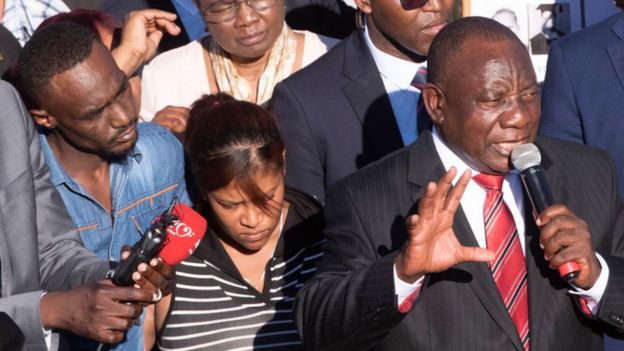
    Volant Media said in a statement that it was “shocked and deeply concerned” by the threats its journalists had received, which it attributed to Iran’s Islamic Revolution Guard Corps (IRGC), a powerful military force with close ties to the Supreme Leader, Ayatollah Ali Khamenei.

    “The Metropolitan Police have now formally notified both journalists that these threats represent an imminent, credible and significant risk to their lives and those of their families. Other members of our staff have also been informed directly by the Metropolitan Police of separate threats.”

    It added: “These lethal threats to British citizens on British soil come after several weeks of warnings from the IRGC and Iranian government about the work of a free and uncensored [Persian]-language media working in London.”

    Volant Media warned that the IRGC “cannot be allowed to export their pernicious media crackdown to the UK” and called on the British government to “join us in condemning these horrific threats and continue to highlight the importance of media freedom”.

    In a statement to the BBC, the Metropolitan Police said: “We do not comment on matters of protective security in relation to any specific individuals.”

    BBC home affairs correspondent Daniel Sandford reports that the UK law enforcement source would not discuss the suggestion in the Daily Telegraph that a “hostile Iranian surveillance team” was spotted outside the homes and offices of the journalists.

    Last year, United Nations experts expressed their “grave concern over the continuation of reported harassment and intimidation of the BBC News Persian staff and their family members, which appears to be aimed at preventing them from continuing their journalistic activities”.

    It set out the pattern of harassment that BBC journalists have suffered over the past decade, including “the systematic attacks, including harassment, asset freezing, serious threats, and defamation campaigns implemented by the authorities against BBC News Persian journalists”.

    The UN experts also raised concern about the surveillance of BBC journalists and the harassment of their sources in Iran, the interrogation of journalists’ family members, and the pressure placed on journalists “to leave their jobs” – all of which they said might have a “chilling effect” on journalism.

    Iran’s response to the UN experts accused the BBC journalists of aiming to “overthrow the Islamic Republic” – a claim the BBC insisted was false.

    US prosecutors also announced last year that four Iranian intelligence officials had been charged with plotting to kidnap a New York-based journalist critical of Iran. The indictment did not name the target, but Masih Alinejad, an Iranian-American author and activist, said it was her.

    Iran’s government said the allegations were “ridiculous and baseless”.

  • Parliament hails work of journalists in nation building

    Members of Parliament (MPs) on Wednesday took turns to hail the role of journalists in nation building.

    Mr Akwasi Konadu, the MP for Manhyia North, who presented a statement on the floor of the House to mark “International Day to End Impunity for Crimes against Journalists”, entreated the House to help in any way possible to ensure that media practitioners go about their duties without fear or favour.

    This, he said, could be achieved by ensuring the safety and security of media practitioners and giving them all the necessary support to do their jobs.

    He urged the Ghana Journalists Association (GJA) not to relent in its pursuit of justice for all journalists who had suffered any form of injustice in their line of duties.

    He also appealed to the Police to ensure that the killers of Mr Ahmed Hussein-Suale, an investigative journalist and Mr Samuel Kwanena Ennin, the Ashanti Regional Chairman of the GJA, were brought to book.

    “Parliament, we also want to assure all media practitioners that we stand shoulder to shoulder with them,” Mr Konadu said.

    The United Nations General Assembly in 2013 set aside November 2, as the “International Day to End Impunity for Crimes against Journalists” to condemn attacks and violence against journalists.

    Contributing to the presentation, Mr Osei Kyei-Mensah-Bonsu, Majority Leader, said the National Media Commission that was charged to regulate the conduct of media practitioners captured under Article 167 of the 1992 Constitution was to promote and ensure the freedom and independence of the media for mass communication or information.

    To take all appropriate measures to ensure the establishment and maintenance of the highest journalistic standards in the mass media, including the investigation, mediation and settlement of complaints made against or by the press or other mass media and to insulate the state-owned media from governmental control.

    “Mr, Speaker, the Media Commission, regardless of their intention, they are toothless in trying to call media practitioners who to astray to order,” Mr Kyei-Mensah-Bonsu said.

    “Mr Speaker, we need the media, but the media should not otherwise assume positions that are abhorrent to our society.”

    Mr Haruna Iddrisu, Minority Leader, said the Day provided journalists an opportunity to evaluate their own performance and to their contributions to Ghana’s functional democracy.

    He lauded the contributions of journalists in their collective efforts for Ghana to attain the targets of the Sustainable Development Goals (SDGs).

    “But Mr Speaker, as reported by the UN Secretary General, some 70 journalists have been killed this year in the course of their work and in the course of their duty of contributing to a more enlightening world,” Mr Iddrisu stated.

    He said they were demanding Justice for the killing of Ahmed Husein-Suale and urged nvestigative or prosecutorial body handing the matter to discharge the responsibility with some credibility to give assurance to practicing journalists that they would not just wither away their lives in their services without support or compensation for their family.

    “It is important that we celebrate and commend the Ghana Journalists Association and to urge them, what we need is the commitment of Government to continue to respect those freedoms,” he said.

    He said Ghana still needed a new broadcasting law to regulate broadcasting generally.

    Mr Samuel Atta Akyea, the MP for Abuakwa South, in his submission, said, as a legal practitioner, he had had to represent some people in the courts of law, who were defamed by certain media publications.

    He noted that when someone’s hard won reputation was defamed through the publication of the journalist, it was difficult repairing, especially when it was carried on the internet.

    “In trying to fly your story to make some money, be careful of the reputation of others, because money cannot buy the reputation of someone,” Mr Atta Akyea said.

    Dr Abdul-Rashid Hassan Pelpuo, MP for Wa Central, urged Ghanaians to hold journalists in high esteem and not to look at them with disrespect.

    He said Ghana was seen as an oasis of peace in the subregion, and that Ghanaians should ensure to handle journalists with pride; saying that journalists would be comfortable in doing their jobs, and that Ghana could be a source of inspiration for other nations.

    Source: GNA

  • Journalists in Northern Region undergo training in fact-checking

    A two-day training workshop for selected Journalists working in five regions in Northern Ghana to equip them with skills to cross-check facts related to news gathering before publication has opened in Tamale.

    It is organised by Dubawa, a fact-checking and verification organisation, with funding from the United States (US) Embassy in Accra.

    Ms Caroline Anipah, Team Lead of Dubawa, said the training formed part of efforts to carry out fact-checking in news gathering across rural areas of the country.

    She said the scale of misinformation being circulated had increased in recent times following growing technology, which she indicated called for attention, as it influenced political decisions and election outcomes.

    Ms Anipah said Ghanaian Journalists must be equipped to adapt to change adding that misleading news could affect the country because the world was interconnected.

    She noted that social media was not the only platform that misinformed the public, saying “Journalists increasingly rely on user-generated content on social media as a source of news stories. Some people do not verify thereby moving such information to the mainstream media.”

    Mr Kevin Brosnahan, Press Attaché at the U.S Embassy in Accra said fact-checking was the foundation of democracy given the fact that people needed facts to make electoral decisions.

    He said rural folks must access verified information to enhance their ability to effect better community policies and noted that there would be follow-ups to ascertain fact-checking projects undertaken by participating Journalists after the workshop, adding that the US Embassy had other exchange programmes for Journalists in other collaborating areas.

    Source:GNA 

  • Journalists pledge to work towards corruption exposure and prevention

    Some journalists from across the media space in Ghana and other anti-corruption stakeholders have pledged to deepen efforts to prevent corruption and work towards improving behaviours, norms, and standards needed to sustain an anti-corrupt society.

    This comes on the back of a workshop organized by Corruption Watch Ghana for some selected journalists to effectively engage on corruption issues to promote good and accountable governance in the country.

    The workshop, held on the theme, ‘Saving Millions for Ghana’s Development – Employing Innovative Ways to Fight Against Corruption,’ sought to advance the anti-corruption agenda by raising awareness and stimulating debate, fostering networking, cross-fertilization, and the exchange of experience that are indispensable for effective advocacy and action, on a national and global level.

    The workshop also sought to promote cooperation among the media, civil society, and citizens by providing the opportunity for face-to-face dialogue and direct liaison between representatives from the media and organizations taking part while using modern-day technology for effective feedback.

    Participants had in-depth discussions on how to identify the right mechanisms and approaches when carrying out corruption-related stories while maintaining neutrality as a journalist.

    In a brief welcome address, William Nyarko, Executive Director of the Africa Center for International Law and Accountability (ACILA) and technical advisor to Corruption Watch Ghana, expressed gratitude to the journalists present for their continuous support in the fight against corruption. He also charged them not to give up in demanding accountability from all actors in the anti-corruption space to ensure corruption cases are investigated, suspects prosecuted, and stolen funds recovered.

    Raymond Archer, Chief Executive Officer of D-Fence Security System and lead speaker of the discussion, stressed the need to practice impartiality when investigating corruption-related stories. He advised journalists to kick against limiting themselves to political and ideological beliefs and work in the nation’s interest.

    In his address, he beckoned journalists to institute trust among themselves to get desired results in their line of work.

    “The media, among other things, should push for the frontiers of press freedom. He stressed that forming alliances, trusting yourself, and working together are key in the fight against corruption,” he stressed.

    In highlighting results from the Afrobarometer R9 survey, Alfred Ocansey, broadcast journalist with Media General, found the findings on the level of press freedom in Ghana shocking.

    “Indeed, when I measure the results of investigative journalism in the country in the last five years, it has been relatively beyond average. But I want to question how many of my colleagues are of the view that press freedom is on the average level,” he queried.

    Speaking on the economic vulnerability of most local journalists, Samuel Eshun, a broadcast journalist with Happy FM, bemoaned the lack of support and encouragement from officials and heads of institutions during investigations, a practice, he said, often exposed the vulnerability of journalists who get targeted by some corrupt government officials through bribery.

    “If we are vulnerable as journalists, the strength to push for corruption-related stories and issues becomes very difficult,” Mr. Eshun lamented.

    Meanwhile, Naa Dedei Tettey, a broadcast journalist with Starr FM, believed that journalists opting to work on ‘soft’ stories contributed to the surge in corruption and corruption-related activities in the country. She used the opportunity to encourage colleague media practitioners to produce more investigative reports.

    The Corruption Watch workshop was attended by members of the Media for Public Integrity Group, news anchors, current affairs show hosts, and Corruption Watch partners.

  • Mobilization call: Russia announces exemptions as people flee

    In order to increase its war effort in Ukraine, Russia’s defence ministry has announced a wide range of occupations that will be exempt from conscription.

    The “partial mobilisation” planned by President Vladimir Putin on Wednesday would not affect IT personnel, bankers, or journalists who work for state media.

    Around 300,000 citizens face being called up as part of the drive.

    The move has prompted a rush toward borders as young men attempt to flee to evade the draft.

    Announcing the exemptions on Friday, Russia’s defense ministry said employers must compile a list of workers who meet the criteria and submit it to its offices.

    But it accepted some sectors had to be excluded to “ensure the work of specific high-tech industries, as well as Russia’s financial system”.

    Some commentators have observed that the text of the mobilization decree has been left vague – potentially allowing it to be widened if necessary.

    And one paragraph remains entirely classified. Kremlin spokesman Dmitry Peskov said on Friday this referred to the total number of Russians that could be conscripted, which he said could not be disclosed.

    Earlier, the independent newspaper Novaya Gazeta had reported – citing an unnamed government source – that the redacted section allowed for a call-up of up to a million people, rather than the reported 300,000.

    Russian men are continuing to try to flee the country to avoid being called up by recruiters for the country’s first military mobilization since World War Two.

    In the south, miles-long queues of traffic have formed at the border crossing between Russia and Georgia.

    Some of those heading into the neighbouring country have used bicycles to bypass lines of cars and evade a ban on crossing on foot, with others reporting waits of up to 12 hours.

    When asked about the war, one man who did not wish to be named told the BBC he had known it was happening but that, until Mr Putin’s declaration of a “partial mobilization”, it had not been his concern.

    A Russian student, who also did not want to be identified, said that people had woken up. “They opened their eyes and started thinking about where to hide their children. Now people understand what’s happening because it affects them directly,” he said.

    Another IT worker told the BBC that he was opposed to the war, but was too scared to speak out against it.

    “I don’t want to risk my life, the life of my family. I don’t want to be put in detention,” he said. “All I could do was to get a Schengen visa. Luckily I got one in May.”

    Georgia is one of the few neighbouring countries where Russians can enter without needing to apply for a visa. Border guards in neighbouring Finland, which shares a 1,300km (800 miles) border with Russia but requires an entry visa, told the BBC that queues had grown at various crossing points.

    Other destinations reachable by air – such as Istanbul, Belgrade, or Dubai – have seen ticket prices skyrocket immediately after the military call-up was announced, with some destinations sold out completely.

    Turkish media have reported a large spike in one-way ticket sales while remaining flights to non-visa destinations can cost thousands of euros.

    Several countries are grappling with the prospect of an influx of Russian draft dodgers. Germany’s interior minister signalled on Thursday that that fleeing conscription would be welcome in her country.

    Nancy Faeser said deserters threatened by “severe repression” would receive protection on a case-by-case basis, following security checks.

    But several other European countries, including Lithuania, Latvia, Estonia, and the Czech Republic, struck a different tone, saying they would not offer to flee Russian refuge. The countries have long pushed the EU to take a harder line on Russia.

    “I understand that Russians are fleeing from ever more desperate decisions by Putin,” Czech Foreign Minister Jan Lipavsky said. “But those running because they don’t want to fulfill a duty imposed by their own government, they don’t meet the criteria for a humanitarian visa.”

    The call-up sparked protests in major Russian cities including Moscow and St Petersburg on Tuesday, resulting in a reported 1,300 arrests.

    There were also reports from Russia that some of those detained for protesting had been handed draft papers while in custody at police stations. When asked about the reports, Mr Peskov said that doing so was not against the law.

  • 26th GJA Awards: Deadline for submission of entries extended to Sept. 23

    The Ghana Journalists Association (GJA) has extended the deadline for the submission of entries for the 26th GJA Awards to Friday, September 23, 2022.

    A statement signed by the Association’s President, Albert Dwumfour, said, “The Ghana Journalists Association (GJA) wishes to inform members that it has extended the deadline for the submission of Entries for the 26th GJA Awards to Friday, September 23, 2022, at 5 PM”

    Read the full statement below:

    September 21, 2022

    PRESS RELEASE

    EXTENSION OF DEADLINE FOR SUBMISSION OF ENTRIES FOR THE 26TH GJA AWARDS TO FRIDAY, SEPTEMBER 23, 2022.


    The Ghana Journalists Association (GJA) wishes to inform members that it has extended the deadline for the submission of Entries for the 26th GJA Awards to Friday, September 23, 2022 at 5PM.

    The original entries submission deadline ends today, September 21, 2022 at 5PM.

    The extension of the deadline has become necessary following calls by some members pleading for additional days to enable them file their entries.

    GJA is therefore urging members to use this extension period to file their entries before and on Friday, September 23, 2022 at 5PM.

    It is instructive for members to note that there will not be any further extension after the Friday deadline.

    Thank you.

    SIGNED

    Albert Kwabena Dwumfour

    President

  • Your insults wouldnt stop me – Duffour tells Asiedu Nketia

    Former Finance Minister, Dr Kwabena Duffour, has opined that no amount of attacks or insults will distract him from continuing with the Ahotor Project for the NDC grassroots.

    He was responding to a recent warning aimed at him by the General Secretary of the National Democratic Congress (NDC), Johnson Asiedu Nketiah.

    In an interview with journalists in Accra, the NDC flagbearre hopeful said he cannot reply his attackers in the same measure but will only continue to help the poor through his donations.

    The NDC scribe has accused the former Bank of Ghana governor of personalising the Ahotor Project after he visited some constituencies in the Ashanti Region to donate to party members without the knowledge of national executives.

    “If Dr Duffour intends to make this donation to the party a genuine donation, he should be prepared to pass through the proper channels,” Mr Asiedu Nketia told journalists on the sidelines of the 2nd Annual Lawyers Conference of the party.

    But in a swift response, Dr Duffour, said he has been motivated to help the vulnerable through the Ahotor Project to strengthen not only the party but also the country.

    “No amount of insults [and] attacks will stop me from what I want to do for you,” he said.

    He reminded all that he started business as far back as 1984 and will not capitalise on the Ahotor Project for any special gains as alleged by some.

    “I feel in me that I should help people and I am helping.”

    Dr. Duffour is the brain behind the NDC Ahotor Project which is supporting the grassroots of the NDC with funds.

    Source: Pulse

  • GhanaWeb journalists traumatised after attack at NDC Headquarters

    Two GhanaWeb staff who were attacked by irate National Democratic Congress supporters at the party’s headquarters on Wednesday, December 9, 2020, have been left traumatised.

    The supporters attacked Laud Adu-Asare who is Head of Political Desk and Sandra Obiribea, a videographer, at the party’s premises in the course of covering a scheduled press conference by the party executives.

    A distressed Laud Adu-Asare had his shirt and media jacket torn with bruises on his left arm from the assault while Sandra also escaped a knife attack.

    “Let’s kill her, lets beat her. You the media caused all this. This keeps ringing a bell anytime I am left alone. Though my family and company have been supportive, I still can’t shake off the nightmare I experienced,” a distraught Sandra said.

    The two have undergone medical treatment and are helping with police investigation. They are also scheduled to receive psychological help.

    Company equipment including tripod and identification cards were also stolen as a result of the attack by the irate supporters.

    The NDC has not reacted to the attack on the GhanaWeb journalists. However, GhanaWeb maintains its decision to withdraw from covering NDC events until steps are taken by the party to avoid any further occurrences.

    Source: www.ghanaweb.com

  • US Embassy supports Finance and Economics Clinic for journalists

    The Public Affairs Section of the US Embassy is supporting the next edition of the Finance and Economics Clinic for Journalists (FEC-J).

    The training designed by El de D Consult, a marketing communications firm, aims to train relatively young journalists in basic Finance and Economics.

    About 30 journalists from the Greater Accra, Ashanti, Western and Volta regions are expected to benefit from the training programme, spanning a period of five months.

    Chief Executive of El de D Consult, Fred Avornyo said over 45 journalists had benefited from previous training programmes and the upcoming training workshop is to build the capacity of another cohort of journalists to enable them to report better on business and finance issues.

    Mr Avornyo explained that the training would be largely virtual with only two days of in-person sessions with the participants.

    “We trained over 45 journalists in three editions from Greater Accra and Eastern regions, but this time, we are going to train 30 journalists in one edition from three regions, and with increased contact hours, because we are going virtual.”

    He urged young journalists to take advantage of the opportunity and apply to participate.

    Mr. Avornyo described financial journalism as “the most exciting form of journalism, when people have the requisite knowledge and skill” and said the most participatory teaching methods will be used to ensure that “participants, regardless of their background, will be sufficiently schooled in Finance and Economics required for the job.

    “This is a training for journalists who are not financial reporters but who desire to become one and a good one, and so we will make Finance and Economics easy to understand and love.”

    Mr. Avornyo commended the US Embassy for supporting the programme, saying it would go a long way to improve the quality of journalism in Ghana.

    The workshop will be held in two phases, with the first phase starting this November. The participating journalists will take a break to allow time for election coverage activities and resume for the second phase in January next year.

    The training will be formally launched in the third week of November.

    Source: GNA

  • Tears flow on social media as Kingdom FMs Owusuaa Kotoko dies

    A broadcast journalist with Kingdom FM in Accra, Nana Ama Owusua who is known popularly as Owusuaa Kotoko has died.

    According to reports, the bubbly newscaster had a surgery but had some complications emanating from the surgery and although she fought so hard, she could not make it.

    Our sources say she bled to death at a Private Health facility located at Adabraka in Accra

    Currently, social media has been thrown into a state of shock with loved ones worried about the sad development on this wet Wednesday morning.

    Nana Ama Owusua has since the start of her Journalism career worked with Oman FM, Class Media, and later Kingdom FM all in Accra.


    Source: My News GH

  • Opinion: Journalists that Ghanaians are saying have lost their credibility!

    This article is going explore into the subject of credibility journalists in Ghana.

    What does it mean to be credible? It is the quality of being trusted and believed in. So losing credibility means losing the quality of being trustworthy and believable.

    Ghanaians are saying there are some top journalists in this country who have lost their credibility. Journalists are the referees of democracy. Meaning, they officiate democracy, so they cannot be biased and they cannot take side. Journalists are also the watch dogs of every nation.

    Journalists who have lost credibility are the journalist who have become biased in their submissions and presentation.

    In any democratic country the media plays a vital role in creating, moulding and reflecting public opinion. Also the Government can use the media more effectively to make it an instrument of social change.

    So journalists are all for the interest of the general public and not be in bed with the government of the day. So, journalists who have lost their credibility are journalists who are in bed with the government of the day and have become biased, so they are no longer trustworthy and believable.

    So, who are these journalists that Ghanaians are saying have lost credibility.

    Paul Adom Okyere

    Paul Adom Okyere of Good evening Ghana fame. Some of us grew up watching Paul on Good evening Ghana on Metro tv and his presentations and submissions were impeccable. He was all about Ghana. I mean the progress and the well being of Ghana was his major concern.

    So he made sure he treats every topic he brings on the table without prejudice and biased. His objectivity was never in question.

    But now, it seems as if he works for the npp government. In fact, our research shows that Paul Adom Okyere is a member of the board of directors of the NCA. These members were selected by the president his excellency Nana Akuffo Addo.

    On his program Good evening Ghana Mr Paul is almost like an npp or a government communicator, where he speaks for the government and lambasts NDC members with the slightest opportunity.

    Ghanaians are saying Mr. Paul Adom Okyere has lost credibility.


    Kweku Baako Malik Jnr

    Another tried and tested journalist who has lost his credibility says Ghanaians Kweku Baako. Mr Kweku Baako was a known national watch dog. In those days he used to criticize the NDC government led by the Flt lieutenant Jerry John Rawlings to the admiration of all Ghanaians.

    But his stance changed as soon as Npp won power in 2000. Since then he has been in love if not in bed with every Npp government and Ghanaians are saying Mr. Malik Kweku Baako has lost credibility. He can no longer be trusted.

    Anas Aremeyaw Anas

    The investigative journalist Anas Aremeyaw Anas is another journalist under fire that most Ghanains think have lost his credibility.

    His problems started after the Number 12 expose when top government officials including the president and the vice president of Ghana were all implicated in this video.

    After this expose, all kinds of allegations were leveled against the investigative journalist. Some believe he took money just to destroy the big men of this country. This campaign was led by our honourable member Kenneth Agyapong. In fact, Ken brought out all kinds of videos just to prove that Anas Aremeyaw Anas is a fraud.

    Since then, most Ghanaians have lost faith in Anas Aremeyaw Anas. He is still a very respectable figure around the world though.

    Dr. Randy Abbey

    Another journalist most Ghanaians see today as an NDC communicator Randy Abbey. On his program Good morning Ghana, most Ghanaians think he speaks too much for the NDC and Ghanaians are not happy at all with him.

    Dr. Randy Abbey, Ghanaians are saying you have lost credibility.

    Manasseh Azuri

    Manasseh Azuri to many Ghanaians is an NDC secret agent. Especially when he claimed the former president John Mahama was his friend. His reputation came into question when he did some investigative journalism work about the fact that Npp are training their foot soldiers at the castle then the seat of governments.

    Later explanations came that the people he filmed are young people seeking employment from a security employment agency whose office is at the castle. The man behind this security agency was a former bodyguard of our current president.

    But after this expose, Ghanaians said Manasseh Azuri has lost credibility. He can no longer be trusted.

    Kwame Sefa Kayi

    Another senior journalist in this country that Ghanaians are saying has lost credibility is Kwame Sefa Kayi, known as Chairman general. Most Ghanaians believe that he has turn his Peace fm morning show program into an Npp cauldron. As at now, the main opposition party NDC have abandoned and boycotted that program and have issued a public communique that no NDC member will go to his show until further notice.

    Chairman General, Ghanaians are saying you have lost your credibility.

    Please you can add or subtract from this list by adding your comment through the comment box. Come, let us reason together.

    PLEASE LIKE, SHARE, AND FOLLOW!

    THANK YOU!

    Source: opera.com
  • Police harass and arrest journalist for taking pictures at NPP primaries

    A female journalist of Kingdom FM covering the New Patriotic Party’s (NPP) primaries in Tema East was on Saturday harassed, threatened and arrested by police officers at one of the polling centres for taking pictures of events.

    Miss Rebecca Asheley Armarh, the journalist, told the Ghana News Agency that she together with other colleagues were reporting from the Homowo electoral area in Tema Manhean when in the incident happened.

    Miss Armarh said she was taking some pictures with her phone when the police officers stationed at the centre confronted her and instructed her to stop taking the photos.

    She indicated that even though she showed them her press card which was hanging on her chest, one of the police officers snatched her phone from her and handcuffed her at the back threatening to take her to the police station.

    She said it took colleagues to intervene before she was released adding that the police insisted that reporters needed to be granted permission before taking pictures.

    The Police harassment spree did not end with Miss Armarh as an Atinka FM reporter nearly lost his camera and dignity.

    The overzealous policemen and women in Tema are targeting the media for no apparent reason, the reporter, who wanted to remain anonymous, said.

    Meanwhile, the election started at about 07:20 hours at the centre were 77 delegates were expected to vote out of which 74 had cast their votes as at 10:25 hours.

    Delegates also observed the COVID-19 protocols of washing hands, and wearing of nose masks.

    Two candidates are contesting to be the Parliamentary candidate for Tema East. They are the incumbent Mr Daniel Titus Glover and Mr Ben Ashitey.


    Source: GNA

  • Meet the lovely wives of Kwesi Pratt, Kweku Baako and some renowned Ghanaian journalists

    Journalism is a highly distinguished profession which is generally perceived as the fourth arm of government. This is because its job since its inception has been to police government in its policy making and implementation, so as to benefit and improve the lives of the citizenry. In Ghana, there are journalists who have stood out amongst the lot. They have weathered the storm of dictatorship, braved the ills of coups d’etat and upheld the values of democracy. They are well-known and celebrated throughout the country but do you know their spouses?

    Comrade Kwesi Pratt Jnr as he is affectionately referred to is a seasoned journalist who has a wealth of both local and international political journalism embedded inside him. He has been a both a member and a convener of pressure groups which have helped to improve the lives of the ordinary citizenry. Meet his lovely wife whose name is unknown but undoubtedly has had a profound impact on the life of this fine gentleman of our land.


    Meet another fine gentlemen, who like the taste of fine wine, has become better with age. His name is Abdul Malik Kwaku Baako. He is currently the Editor-in-Chief of a well-respected paper The Crusading Guide. Meet his wife Isha Zuwera Baako. The two love birds tied the knot in 2009. A few years back, rumors were rife that he was impotent but this rumor disappeared as fast as it came with the couple being blessed with lovely children.

    He is one of my favourite journalists. I love reading his long articles and his epistles titled Letters To My Future Wife. His name is Manasseh Azure Awuni and he is from Bongo in the Upper West Region. He is a strong anti-corruption campaigner and a ‘mask-less’ investigative journalist whose work has unearth some evils in the civil and judicial service. He tied the knot to the beautiful “Serwaa” on the 20th of August, 2016. A ceremony which was attended by the creme-de-la-creme of journalists.

    Another of the finest journalists in Ghana is Israel Laryea. The former news anchor of TV3 is known for his brilliant broadcast skills and in-depth knowledge of his profession. He is currently the main news anchor at JoyNews Television. In 2008, he was named as the Best African Radio Journalist at the CNN/Multichoice Africa Journalist awards. He is currently married to the adorable Louisa Laryea who is a banker. The couple are blessed with three lovely children; two strong boys and three lovely children.

    Finally, the Chairman General himself, Kwame Sefa Kayi. Kwami is known to almost everyone in Ghana because his voice is heard across the length and breadth of this nation. His morning show which is aired on a daily basis, Monday to Friday, is broadcast throughout the entire nation by Peace FM and its affiliate stations. Kwami is well-loved his fans and they won’t want to miss any of his shows, which is handles so beautifully and elegantly. Meet his wife known as Raj. Kwami got married in 2004 at a lovely ceremony in Accra.

    Source: JakeSpringfield

  • South Africa: ‘Our children are dying, but President Ramaphosa doesn’t care’

    In our series of letters from African journalists, South African filmmaker and writer Serusha Govender reports on the growing anger fuelled by a spate of child murders.

    Passing by Cape Town’s Parliament Square earlier this month, I caught sight of Fadiel Adams camped outside on the final days of a hunger strike.

    This was a father making a desperate stand against what he felt was the government’s lack of interest in combating the recent spate of child murders in the Western Cape province.

    The child murder rate has been high for some time in South Africa, but since the beginning of the year, several killings close to Cape Town have drawn nationwide fury and calls for immediate action.

    The murder of seven-year-old Tazne van Wyk in early February was the spark.

    Tazne went missing on 7 February. Her body was found two weeks later after her suspected murderer led police to the storm drain where he said he had disposed of it.

    The suspect, a violent multiple offender had been released on parole. He was in prison for the kidnapping and murder of another child.

    Mr Adams ended his hunger strike after six days, once he had handed a memorandum to President Cyril Ramaphosa’s secretary, but his campaign is far from over.

    ‘We are dying here’

    He is not convinced that the president will do anything. He accused the president of not caring, adding that “this government has failed all of us”.

    “We are dying here, our children are dying,” said Mr Adams.

    “If Ramaphosa really cared he would have made an immediate directive… I don’t condone violence or burning things, but we won’t stop raising this [issue]. If we have to shut down this whole city to make our point next time then we will.”

    President Ramaphosa talking to people

    After Tazne’s body was found, Mr Ramaphosa visited her community in Elsies River and apologised.

    He said that the accused should never have been given parole, adding that he knew how the community felt and that urgent action would be taken.

    His words were reminiscent of his speech to protesting crowds outside parliament after a 19-year-old student, Uyinene Mrwetyana, was murdered by a postal worker last year.

    This triggered nationwide protests against the high levels of violence against women and children, which in turn prompted the president to promise immediate targeted action.

    Then, too, Mr Ramaphosa told the crowds that this should never have happened, that he would take action, and that he knew how they felt.

    But following Tazne’s killing, his audience had had enough of platitudes, with many saying that they wanted less smooth-talking and more real action being taken to keep their children safe.

    And they are right to be concerned as Cape Town does seem to have a high number of child murders, and it appears to be getting worse.

    Crime statistics released last year showed that four children are murdered every week in the Western Cape Province alone and, overall, child murders have increased across the country by almost 30% over a decade.

    On the same day that Tazne went missing, seven-year-old Reagan Gertse disappeared. His body was discovered on a farm in the Western Cape a week later. The man accused of killing Reagan was also a violent criminal released on parole.

    Serusha Govender

    And there have been other cases of people on parole committing murder.

    When the president promises to fix the problem by pouring more money into a criminal justice system that is releasing violent criminals into communities without any warning, the government should not be too surprised when those communities lose faith and lash out.

    When the man accused of killing Tazne appeared in court, community members revolted. They attempted to storm the court building and, when that failed, they torched nearby buildings they said were frequented by neighbourhood criminals, including the accused.

    Community Activist Mr Adams said that no-one wanted to mete out vigilante justice.

    “To be honest their reaction was mild in comparison to the violence this community has already faced… How else did you expect them to express their anger and frustration at what’s been happening?” he asked.

    Source: bbc.com


  • Allow journalists to use non-lethal weapons for self-defense – Security Analyst

    A Security Analyst is advocating for Journalists in Ghana to be trained and equipped with weapons as part of measures in addressing insecurity in the Media space.

    According to Dr. Kwesi Biney who was sharing his views on the wake of threats and deaths of Journalists in their line of duty,this will go a long in ensuring that reported cases of Journalists being and attacked and to the extreme, killed in their line of duty was reduced.

    He told Host of Daybreak Upper East on A1 Radio,Samuel Mbura that, in as much as the security agencies were responsible for the safety of the public,there was a deficit in the police to civilian ratio making it impossible for them to carry out their work as expected.

    The Analyst therefore identified the need for the Media in Ghana which has been exposed to all kinds of attacks to be allowed to use pain-inducing weapons intended to be less likely to kill a living target for self defense.

    He however observed that,Ghana has not grown to a point that side-arms or guns can be given to Journalists because of lack of regulation and the serious security threat of weapons proliferation in the country.

    “You people [Journalists] have to be given non lethal equipment ,things that can be used that cannot kill but can render the opponent weak for him or her to be apprehended like ;pepper spray,shockers. There are so many devices that are non-lethal”

    “Until we grow up to a certain level of our economy and development that will be able to begin arms to journalists” He said.


    Source: a1radioonline.com

  • ‘When Journalists are targeted, societies as a whole, pay a price’ – UN Chief

    “Without journalists able to do their jobs in safety, we face the prospect of a world of confusion and disinformation,” UN Secretary-General António Guterres has warned in a statement released ahead of the International Day to End Impunity Against Journalists, which falls on 2 November.

    “When journalists are targeted, societies as a whole pay a price”, added the UN chief. “Without the ability to protect journalists, our ability to remain informed and contribute to decision-making, is severely hampered”.

    Killings and attacks on the rise

    A new study from the UN Educational, Scientific and Cultural Organization, UNESCO, underscores the risks that journalists face, showing that almost 90 per cent of those found responsible for the deaths of more than 1,100 of them, between 2006 and 2018, have not been convicted.

    Read:U.S. arrests counterterrorism analyst over leaks to journalists

    The report, “Intensified Attacks, New Defences”, also notes that killings of journalists have risen by some 18 per cent in the past five years (2014-2018), compared to the previous five-year period.

    The deadliest countries for journalists, according to the statistics, are Arab States, where almost a third of the killings took place. The Latin American and Caribbean region (26 per cent), and Asian and Pacific States (24 per cent) are the next most dangerous.

    Journalists are ofen murdered for their reporting on politics, crime and corruption, and this is reflected in the study, which reveals that, in the past two years (2017-2018), more than half of journalist fatalities were in non-conflict zones.

    In his statement, the Secretary-General noted the rise in the scale and number of attacks on journalists and media workers, as well as incidents that make their work much harder, including “threats of prosecution, arrest, imprisonment, denial of journalistic access and failures to investigate and prosecute crimes against them”.

    A high-profile example is the murder of Maltese journalist Daphne Caruana Galizia in 2017. The case is being followed by independent UN human rights expert Agnès Callamard, among others, who has suggested that too little has been done by the Maltese authorities to investigate the killing.

    Read:The gun used against journalists will be used against politicians Anas warns

    On Friday, as Haiti continued to face a protracted, violent crisis that has led to the deaths of some 42 people, and 86 injured, UN human rights chief Michelle Bachelet called on all of those involved in the violence to refrain from targeting journalists, and respect the freedom of the media to do its job: at least one journalist is among those killed, and nine other reporters have been injured, according to Ms. Bachelet’s Office (OHCHR).

    Keep truth alive

    This year UNESCO has launched the #KeepTruthAlive social media campaign, which draws attention to the dangers faced by journalists close to their homes, highlighting the fact that 93% of those killed work locally, and featuring an interactive map created for the campaign, which provides a vivid demonstration of the scale and breadth of the dangers faced by journalists worldwide.

    Read:Media watchdog visits Saudi Arabia to free journalists

    The Day is being commemorated with a flagship event in Mexico City next week on 7 November – an international seminar entitled “Strengthening regional cooperation to end impunity for crimes and attacks against journalists in Latin America” – and events are also taking place in 15 other countries, including an exhibition of press cartoons, under the headline: “Draw so as not to write them off”, at UN HQ in New York, which honours the memories of French journalists Ghislaine Dupont and Claude Verlon, murdered in Mali on 2 November 2013.

    Source: allafrica.com