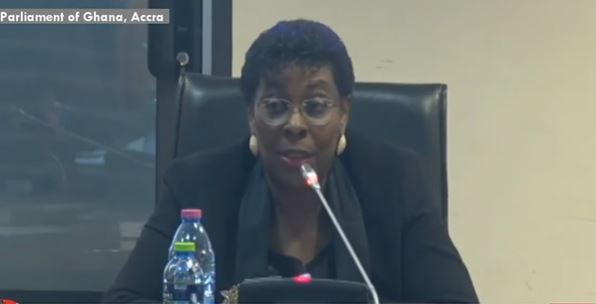
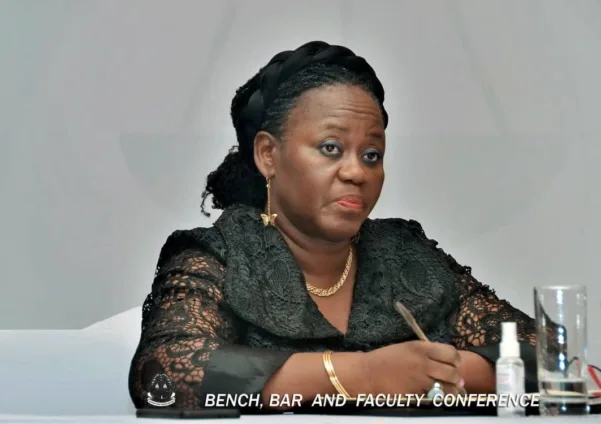
On August 13, 2024, a nominee for the Supreme Court, Justice Sophia Essah, clarified that Ghana’s Constitution prohibits holding both the roles of a lawyer and a judge simultaneously.
Justice Essah explained that these roles are mutually exclusive.
“You cannot be in this country as a lawyer and at the same time, a judge. Because the work of a lawyer is different from a judge. I cannot go and be an advocate, have clients, or represent anyone in court. That is the work of a lawyer.
“And so once I became a judge, I could no longer be a lawyer even though I have legal professional knowledge and background,” she said during her vetting on Tuesday, August 13.
Her remarks addressed concerns raised by Mahama Ayariga, MP for Bawku Central.
Mr Ayariga questioned whether Justice Essah met the Constitutional requirement of 15 years of legal practice to qualify for the Supreme Court, noting that the Constitution demands candidates to have high moral character, proven integrity, and significant legal experience.
Justice Essah responded by acknowledging that there might be different interpretations of the Constitutional provisions.
However, she maintained that she fulfills the criteria for the Supreme Court appointment as outlined in the Constitution, despite varying views on its requirements.
A High Court Judge, Justice Alexander Osei Tutu, has characterized the tradition of married women adopting their husbands’ surnames as antiquated and discriminatory towards women.
In a recent interview with JoyNews, Justice Tutu underscored the necessity of reevaluating this practice, which he argued is rooted in English customs that historically marginalized women but now lacks legal relevance.
He highlighted that historically, women took their husbands’ names due to legal incapacitation, as a form of identity and recognition.
“This practice originated as an English custom intended to demean women, but its significance has diminished over time.”
He highlighted the significant changes in today’s laws, which empower women to own property and manage legal affairs independently.
“The era where women were infringed by law is no more. So why do women continue to adopt the surnames of husbands when they tie the knot?”
He pointed out that religious texts do not explicitly require women to change their names upon marriage.
“If you want to use the Bible to justify it, you may get it wrong because nowhere in the Bible did we have a woman changing her name because she got married. Eve was never called Adam Eve. Jesus’ mother was not called Mary Joseph.”
Justice Tutu urged Ghanaian society to abandon traditions that no longer serve a legal or societal purpose in modern times.
Justice Afia Serwaa Asare Botwe, a Court of Appeal judge sitting as an additional High Court Justice, has expressed unwavering commitment to the law and evidence before the court in the trial against Dr. Ato Forson, Mr. Richard Jakpa, and another individual for financial loss to the state, among other charges.
Her Ladyship, who expressed displeasure at the public commentary following the sitting on May 23, 2024, made it clear to the lawyers of both sides that “this is not a jury trial. You cannot play with the Court’s brain and mind.”
She invited Mrs. Marietta Brew-Oppong, the former Attorney General who was in court, and the current Deputy Attorney-General, Alfred Tuah-Yeboah, to speak to their team about their commentary on the matter to the public.
The Justice of the Court warned all lawyers against prejudicial commentary in the matter. Dr. Bassit Bamba rose to his feet and forcefully indicated to the court that his side has not made any prejudicial or injurious publication regarding the proceedings before the court, but rather the Attorney General.
Her Ladyship reiterated her caution and told lawyers to be careful, noting, “we live in a Country where people do not understand the workings of the law and the court.” She added, now wearing a more relaxed face, “allow me room and peace to make a decision.”
Background
On May 23, 2024, Mr. Sammy Gyamfi, on behalf of the National Democratic Congress, during a press conference, sought to impugn the integrity of the learned Attorney General after the 3rd accused in the Ato Forson trial, Mr. Richard Jakpa, stated that the Attorney General sought his cooperation for the conviction of Dr. Ato Forson.
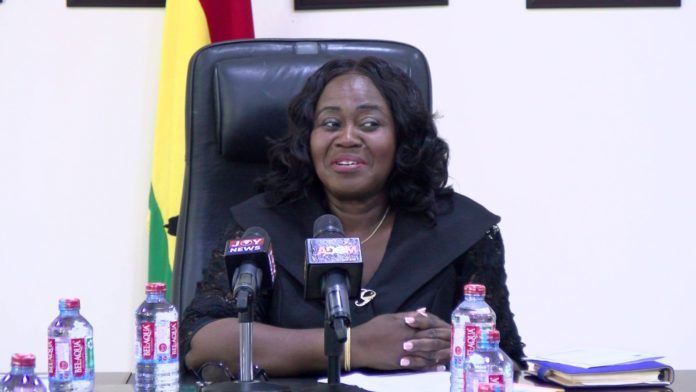
Chief Justice Gertrude Torkornoo has said that she has had to be strict in her roles to effectively manage her office.
She says it comes with the challenging nature of the job, for being a judge requires firmness in decision-making.
In an exclusive interview with JoyNews, Chief Justice Torkornoo explains; “I am strict. I think that you can hardly be a judge without being strict because on a daily basis, a judge is handling something like 20 cases minimum.”
She noted that judges must contend with assertive lawyers on both sides—some prepared, some unprepared, some with questionable motives, and others who are rarely present to do their work. Judges must navigate all these different personalities and attitudes.
“If you don’t come to the bench with rules, you can hardly get your work done. Being a judge on the bench is about being strict. Strict with managing time, process, the different submissions, and managing the courtroom,” she said.
Commenting on her practice directions and administrative guidelines aimed at expediting the wheels of justice during her short tenure as head of the judiciary, Chief Justice Torkornoo emphasized that her entire career has been dedicated to the practice of law.
She noted that she has served as an external lawyer for various institutions and has been actively engaged in legal practice. This extensive experience, she stressed, has provided her with firsthand knowledge of the frustrations that come from attending court without achieving results.
“I have known the pain of inefficient court staff, I have known the pain of processes that leave either a lawyer or party confused.
“……Therefore, in becoming Chief Justice, all that was left was for me to implement those things that were already in the pipeline,” she added.
Chief Justice Gertrude Torkornoo has emphasized the necessity of being strict in her judicial role to effectively manage her responsibilities.
In an upcoming exclusive interview with JoyNews, Chief Justice Torkornoo explains that the demanding nature of the job requires firmness in decision-making.
“I am strict. I think that you can hardly be a judge without being strict because on a daily basis, a judge is handling something like 20 cases minimum.”
She underscored the challenges of dealing with assertive lawyers and various personalities, emphasizing the need for adherence to rules to ensure efficient court proceedings.
“If you don’t come to the bench with rules, you can hardly get your work done. Being a judge on the bench is about being strict. Strict with managing time, process, the different submissions, and managing the courtroom,” she said.
According to Chief Justice Torkornoo, her extensive legal experience has equipped her with firsthand knowledge of the frustrations faced by litigants and practitioners.
Drawing from her background as a legal practitioner, she aims to streamline court processes and address inefficiencies in the justice system during her tenure.
“I have known the pain of inefficient court staff, I have known the pain of processes that leave either a lawyer or party confused.
“……Therefore, in becoming Chief Justice, all that was left was for me to implement those things that were already in the pipeline,” she added.
Judge Juan M. Merchan told Robert Costello, a person who used to work for the government as a lawyer, that his behavior was disrespectful at that moment.
Costello kept making comments and talking even after he was told to stop, which made Merchan really mad during his testimony. At one time, Costello said “jeez” when he was interrupted by an objection. He also said the whole exercise was “silly. ”
“I want to let you know that your behavior is disrespectful,” Merchan said when the press was not in the room, according to the conversation transcript. “If you keep looking at me in a mean way, I will make you leave. ”
Costello did not reply to a message asking for a comment on Monday night.
Merchan told Costello that I had to clear the courtroom because it was difficult for the court officers to do it and there was an argument between the press and their lawyers. “Sir, you’re being disrespectful at the moment. ”
When he started the press conference again, Costello kept talking and will talk more on Tuesday. The defense is trying to make Trump’s former lawyer, Michael Cohen, look less trustworthy.
Trump’s lawyers asked Merchan to end the case and dismiss the charges before the jury makes a decision, after the prosecutors finished presenting their evidence. He didn’t make a decision right away. It was the end of a long and intense day, and the main witness for the prosecution admitted to stealing a lot of money from Trump’s company.
After the jurors went home, lawyer Todd Blanche told the judge that the prosecutors did not show enough evidence for their case and it should be dismissed right away. Blanche begged the judge not to send the case to the jury based on Mr Cohen’s testimony.
The judge didn’t seem to be convinced by the argument and asked the defense lawyer if they thought the person’s testimony was so unbelievable that the jury shouldn’t even consider it as a possibility.
“The judge said that you claimed his lies cannot be proven wrong. ” “Do you really believe he can trick 12 New Yorkers into believing this lie. ”
Cohen was the final witness for now for prosecutors. They are trying to show that Trump tried to hide bad stories about himself and then changed business records to hide it, to illegally affect the 2016 election. The defence says that Cohen is a liar who is obsessed with the media and wants to get revenge on Trump.
Costello said he would help Cohen when the police searched his hotel, office, and house. Cohen had to decide if he would keep fighting the investigation or work with the police to get a lighter punishment.
Costello said that Cohen told him Trump didn’t know anything about the $130,000 payment to Stormy Daniels.
“Michael Cohen said many times that President Trump didn’t know about the payments, that he did it by himself, and he said that many times,” Costello told the jurors.
Trump’s lawyer said they won’t bring in other people to testify after Costello, but they might still ask campaign-finance expert Bradley A Smith to testify a little bit. It’s not certain if Trump will testify, but it seems like he probably won’t.
Again in court for the fourth day, Cohen said on Monday that he took money from the Trump Organization because his holiday bonus was reduced from $150,000 to $50,000 in 2016.
Cohen said he spent $50,000 to a tech company to help make Trump look better in a poll on CNBC’s website about successful businessmen. Cohen gave the firm $20,000 in cash, and then asked Trump to give him back more money than that, keeping some for himself.
“Did you take things from the Trump Organization. “
“Yes, sir,” Cohen said. Cohen said he never gave the Trump Organization their money back. Cohen has never been accused of taking things from Trump’s company.
Cohen is an important witness, but he is also complicated. He said in court that he told a lot of lies in the past, and he said he did it to protect Trump. Cohen went to prison for admitting he did some bad things, like lying to Congress and a bank, and breaking campaign finance rules to pay hush money. He has earned a lot of money from writing harsh books about the ex-president, and he frequently criticizes the ex-president on social media using bad language.
But when Blanche asked him, Cohen stuck to his memory of talking with Trump about the $130,000 payment to keep Stormy Daniels quiet, which is the main focus of the case.
“Are you sure. ” Blanche asked Cohen if he remembered talking to Trump about the Daniels situation. It’s true, Cohen said.
For over a month, people talked in court about sex, money, gossip, and how Trump’s company keeps records. Soon, a group of people will decide if Trump broke the law by lying about business records. This is the first time a former US president has been on trial for a crime.
The charges come from Trump Organization records that show payments to Cohen were labeled as legal expenses. Prosecutors say these were actually payments to reimburse Daniels for keeping quiet.
Trump says he did not do it. His lawyers claim that there was nothing illegal about the Daniels deal or how Cohen was paid.
“There is no crime,” Trump said to the reporters when he got to the courthouse on Monday. “We spent money on a lawyer. ” Do you know what it’s listed as. A cost for the law.
Trump’s friends, including some who were with him at the courthouse on Monday, were quick to use Cohen’s confession on the witness stand to their advantage. Kash Patel, who used to work for Trump, said that on Monday, for the first time in six weeks of the trial, they found a crime – Cohen stole money from the Trump Organization.
“We have someone who was hurt as well. ” Patel said the victim is Donald J Trump.
Blanche asked Cohen on Monday about his first denials that Trump knew about the Daniels payment. After The Wall Street Journal said in January 2018 that Cohen had paid the porn actor over a year ago, Cohen told people that Trump didn’t know about it.
He only changed his account after the federal authorities searched Cohen’s home, office, and other places related to him in April 2018. Four months later, Cohen admitted to breaking campaign finance laws and other crimes. He told the court that Trump had told him to make the payment to Daniels.
Cohen is usually known for getting angry easily, but he has been surprisingly calm when answering questions in court, even when the defense has been tough on him about his mistakes and the accusations in the case.
The lawyer for Manhattan District Attorney, Alvin Bragg, is likely to finish presenting evidence once Cohen is done speaking. But if Trump’s lawyers bring in their own witnesses, then the prosecutors could also call in more witnesses to respond. Judge Juan M Merchan said that because of other planned events, he thinks the closing arguments will happen on May 28, which is the Tuesday after Memorial Day.
Defense lawyers stated that they have not yet decided if Trump will testify or not. Trump did not answer the reporters’ questions about whether his lawyers told him not to testify. Defense lawyers usually don’t want their clients to testify in court because it can make things worse for them.
Trump’s lawyers might ask Bradley A Smith, a Republican law professor appointed by former President Bill Clinton to the Federal Election Commission, to argue against the prosecution’s claim that the hush money payments broke campaign finance laws. However, the judge has restricted what Smith can talk about.
Judge Juan M. Merchan told Robert Costello, who used to be a federal prosecutor, that his behavior was disrespectful.
Costello annoyed Merchan multiple times during his testimony by whispering comments and talking after objections were made, which made it clear to the witnesses to stop speaking. Costello said “jeez” when he was interrupted by an objection. He also said the whole thing was “silly. ”
“I want to let you know that I think your behavior is disrespectful,” Merchan said during a private conversation when the press was not around. “If you keep staring at me, I will make you leave. ”
Costello did not respond to a message asking for a comment on Monday night.
I had to remove everyone from the courtroom, including the press and their lawyers, because it was hard to do and there were arguments. This is why I had to clear the courtroom in the first place. “Sir, you are being disrespectful with your behavior. ”
Trump’s lawyers asked Merchan to end the case before the jury makes a decision and to dismiss the charges after the prosecutors finished presenting their evidence. He didn’t make a decision right away, the request came at the end of a long and intense day. The prosecution’s main witness also admitted to stealing a lot of money from Trump’s company.
After the jury went home, lawyer Todd Blanche told the judge that the prosecutors did not prove their case and it should be stopped right away. Blanche asked the judge to not let the jury decide the case based on Mr. Cohen’s
The judge did not seem to be affected by the argument and asked the defense lawyer if he believed that the person’s testimony should not be considered by the jury at all.
“The judge replied that you said his lies cannot be proven wrong. ” “Do you really believe he can trick 12 New Yorkers into believing this lie. ”
Cohen was the most recent person to testify for the prosecutors. They are trying to show that Trump tried to hide bad news about himself and lied about his business records to cover it up, in order to influence the 2016 election illegally. The defence has said that Cohen is focused on the media and is lying because he wants revenge against Trump.
The defence asked Costello to testify because he has been an enemy and critic of Cohen since their professional relationship ended in a big way.
Costello had said he would help Cohen after his place was searched, and Cohen had to decide if he would stand up to the investigation or work with the authorities to get a lighter punishment.
Costello said that Cohen told him Trump didn’t know about the $130,000 payment to Stormy Daniels.
“Michael Cohen said many times that President Trump did not know about the payments, and that he did it by himself. He said this many times,” Costello told the jury.
Trump’s lawyer, Emil Bove, said to the judge that the defense will not bring in any more witnesses after Costello. However, they might bring in campaign-finance expert Bradley A Smith for some questioning. They have not said for sure if Trump will testify, but it seems very likely that he will decide not to go on the stand to defend himself.
Again in court for the fourth day, Cohen said on Monday that he took money from the Trump Organization because he got a holiday bonus of $50,000 instead of the usual $150,000 in 2016.
Cohen said he gave $50,000 to a tech company to make Trump look more popular in a CNBC poll about famous business people. Cohen said he only gave the company $20,000 in cash in a bag, but then he asked Trump to pay him back for the whole amount, keeping the extra money for himself.
“Did you take things from the Trump Organization. ”
“Yes, Mr” Cohen said he did not give money back to the Trump Organization. Cohen has never been accused of taking things from Trump’s company.
Cohen is an important witness, but he is also difficult to understand. He said in court that he has told a lot of lies in the past, and he says he did it to protect Trump. Cohen went to jail for admitting he lied to Congress and a bank, and broke campaign finance laws by paying hush money. He made a lot of money by writing mean books about the old president and posting rude stuff about him on social media.
However, when Blanche questioned him, Cohen maintained that he remembered talking to Trump about the $130,000 payment to Stormy Daniels, which is the main focus of the case.
“Are you sure you remember. ” Blanche asked if Cohen remembered talking to Trump about the Daniels situation. “Definitely,” Cohen said.
More than four weeks of talking about sex, money, and Trump’s business records have been presented in court. Soon, the jury will decide if Trump is guilty of 34 counts of lying about his business records. This is the first time a former US president has faced a criminal trial.
The charges come from Trump Organization records that show payments to Cohen labeled as legal expenses. But prosecutors say these were actually reimbursements for hush money paid to Daniels.
Trump said he did not do it. His lawyers say that there was nothing illegal about the agreement with Daniels or how Cohen was given money.
“There is no crime,” Trump told the reporters when he got to the courthouse on Monday. “We had to spend money on a lawyer. ” Do you know what it is listed as. It is considered a legal cost.
Trump’s friends, including several who were with him at the courthouse on Monday, quickly took advantage of Cohen’s confession on the witness stand. Kash Patel, who used to work for Trump, told reporters that for the first time in six weeks of trial, they found a crime – Cohen took money from the Trump Organization.
“We have a person who was hurt. ” The person who was hurt is Donald J Trump,” Patel said.
Blanche asked Cohen on Monday about his first denials that Trump knew about the Daniels payment. After The Wall Street Journal said in January 2018 that Cohen had organized the payment to the porn actor over a year before that, Cohen told reporters, friends, and others that Trump didn’t know about the deal.
He didn’t change his story until the police looked through Cohen’s home, office, and other places in April 2018. Four months later, Cohen admitted to breaking campaign-finance laws and other crimes. He told the court that Trump had told him to arrange the payment to Daniels.
Cohen is usually angry, but he was mostly calm when the defence asked him tough questions about his wrongdoings in the case.
After Cohen finishes testifying, the Manhattan District Attorney’s office will probably finish presenting their case. But if Trump’s lawyers call their own witnesses, the prosecutors might get a chance to call more witnesses to respond.
Judge Dontae Bugg from the Fairfax County Circuit Court listened to arguments on Thursday from a divorced couple. They are fighting about whether the ex-wife can use two embryos they made when they were married.
Honeyhline Heidemann says the embryos are her last hope to have a baby that is biologically hers after cancer treatment made her unable to have children. Jason Heidemann does not want to have a child biologically.
Last year, a judge named Richard Gardiner made a decision that got a lot of attention. He said that embryos could be seen as property, like things you can buy or sell. He based his decision partly on a law from the 1800s about how to treat slaves.
Gardiner is not working on the case anymore, but it’s not because he mentioned slavery as an example.
There are not many established court decisions in Virginia about how embryos should be treated.
Honeyhline Heidemann’s lawsuit was filed under a law that decides how property is divided between people who are involved.
Jason Heidemann’s lawyer, Carrie Patterson, said there’s no previous example for this because the law isn’t made for dealing with embryos. She said its main job is to control how real estate is divided.
The law about embryos across the country says they are not just something you own. They have special qualities that courts need to consider when deciding who gets them.
When a judge looks at these cases, they have to think about a person’s right to choose to have children. In this situation, Patterson said her client really doesn’t want to have kids without wanting to.
Honeyhline’s Heidemann’s lawyer, Jason Zellman, said the rule about dividing property applies if the embryos are considered as things that can be bought or sold.
The papers that both Heidemanns signed with the IVF provider say that the embryos are like belongings. This means their worth can be measured based on how much it cost to make them.
Because there are two babies, he said, the judge can easily split the property by giving one baby to each person.
Bugg said he will make a decision later. He has concerns about putting a money value on the embryos.
Zellman agreed that the case has some new problems, but he also told the judge that it doesn’t need to be a big deal or set any new rules. He said that the special details of the Heidemanns’ situation, such as the agreement in their divorce papers that the embryos stay frozen until a judge decides, will make their case different from others in the future.
The judge agreed with the idea and said, “I think my decision only affects the Heidemanns. “
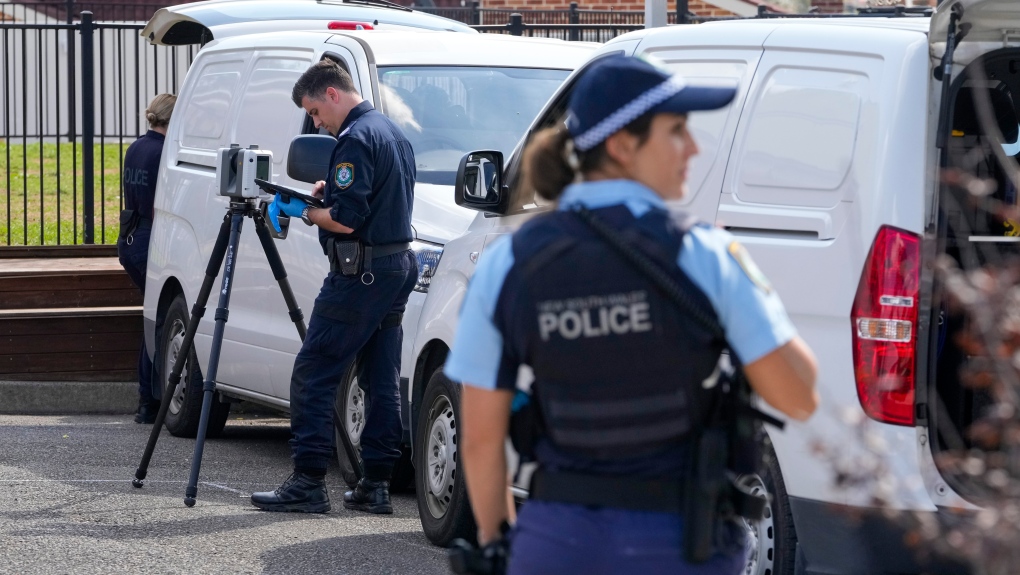
A judge in Australia ordered social media platform X to block access to a video showing a bishop being stabbed in a Sydney church worldwide.This rule applies to all users, not just those in Australia.
X Corp, a big tech company owned by Elon Musk, said they will go to court to battle orders from Australia to remove posts about a knife attack on Bishop Mar Mari Emmanuel at an Assyrian Orthodox church while a service was being shown online on April 15.
The material couldn’t be seen in Australia, but people in other places could still watch it.
Australia’s eSafety Commission asked a court to make a temporary ban on sharing a video of the bishop getting stabbed. They are a government agency trying to keep people safe on the internet.
In a meeting held after regular working hours, Judge Geoffrey Kennett stopped the videos from being seen by anyone until Wednesday. On Wednesday, they will decide if the videos should be banned permanently.
X has one day to keep the footage away from users, the judge decided.
The lawyer for the regulator, Stephen Tran, said that blocking access to the footage in Australia doesn’t count as taking it off the internet according to Australian law.
Tran said the video was really graphic and violent and would cause a lot of damage if it keeps getting shared.
Musk called Julie Inman Grant the “Australian censorship boss. ”
Prime Minister Anthony Albanese was upset because X didn’t take down pictures of the knife attack at the Christ the Good Shepherd Church.
Albanese said that social media posts, false information, and the sharing of violent pictures made the pain from the church attack worse. Two priests survived the attack, and there was also a knife attack at a Sydney mall two days before that killed six people.
“Albanese said that social media has a duty to society. ” “I think it’s strange that X didn’t follow the rules and is now trying to argue their point. ”
The people in charge of the platform’s Global Government Affairs said that Inman Grant told them to take down some posts about the church attack. However, they said the posts didn’t break X’s rules on violent speech.
X said that the Australian government has told their platform to either remove certain posts from everywhere in the world or pay a daily fine of US$785,000.
“X thinks that eSafety’s request didn’t follow Australian law. We followed the request while waiting for a legal challenge. ” – said the Global Government Affairs account.
“X understands that a country can make its own laws, but the eSafety Commissioner can’t tell X’s users what they can see everywhere in the world. ”
“We will strongly oppose this wrong and risky approach in court,” it said.
The attack on the church was shown on social media, and it made a lot of people angry. 2,000 people gathered and started a riot against the police, who kept the suspected attacker inside the church.
The violent protest hurt 51 police officers and broke 104 police cars, officials said.
Three people who were believed to have caused trouble were arrested by Sunday. On Monday, the police showed pictures of 12 more people who they think were the main people responsible for starting the violence in the riot. They got the pictures from a video of the riot.
A 16-year-old boy who is believed to have stabbed people has been charged with terrorism crimes. He got both negative and positive comments online for the attack.
Justice Afia Serwah Asare-Botwe of the Court of Appeal has raised concerns about the behavior of educated elites, suggesting they can be more harmful than armed robbers.
She noted that in her years of practice, she had not heard of an armed robber stealing a million Cedis.
Her comments came before she handed down custodial sentences to Sedina Christine Tamakloe Attionu, former Chief Executive Officer of Microfinance and Small Loans Centre (MASLOC), and Daniel Axim, an interdicted Head of Operations.
“People talk about violent crime and how wicked it is. But if an armed robber comes to your room, he will only take what is available,” Justice Asare-Botwe said.
She added, “In all my years, I’ve never heard about an armed robber who entered someone’s premises and took one million or even GHc500,00.”
“But, when you have an educated thief that thief is capable of causing far more havoc than someone with AK47 is capable of doing,” the Court of Appeal judge posited.
The judge also expressed concerns about how public officers inflate prices when procuring items for the state, thereby shortchanging the public purse.
“When you have to buy something and you overprice it to the extent of doubling or tripling the price. Those of you in power please have mercy on us,” she stated.
Former CEO of MASLOC, Sedina Christine Tamakloe Attionu, who absconded, and interdicted Head of Operations, Daniel Axim, were convicted and sentenced to 10 and five years respectively.
The court found them guilty of, among other charges, willfully causing financial loss to the Republic through their actions.
They were convicted on all 78 counts, including conspiracy to steal, stealing, causing financial loss to the state, causing loss to public property, improper payment of public funds, unauthorized commitment resulting in financial obligation for the government, money laundering, and contravention of the Public Procurement Act.
Judge Lewis A. Kaplan said in a letter to Trump’s lawyer that he won’t change the deadlines for getting a bond to make sure the 80-year-old writer E. Jean Carroll may receive the reward if the decision is not overturned on appeal.
The judge said that the Republican front-runner for president didn’t act quickly enough to respond to the court decision in a defamation case. This caused financial harm to him. The case was about statements Trump made about Carroll while he was president in 2019, after she wrote about her claims against him in a book.
At that time, Trump said she was lying about him raping her in a store in 1996. In May, a jury decided that Trump must pay Carroll $5 million because they found that he sexually abused her, but did not rape her according to New York state law. Trump was not at the trial. It also found that he said mean things about her in October 2022.
Trump went to the trial in January and talked for a short time. But the judge didn’t let him say much. The judge said the jury had to agree with the decision from May. They only had to decide how much money Carroll should get for what Trump said in 2019. In the statements, Trump said he didn’t know Carroll and said she was making up lies to sell books and hurt him politically.
Trump’s lawyers are saying that they don’t agree with the decision that includes a $65 million fine. They think there is a good chance that it will be lowered or canceled in the future.
In his decision on Thursday, Kaplan pointed out that Trump’s lawyers waited 25 days to ask for more time to post a bond. The decision will be official on Monday.
The text is too short to be simplified. Kaplan wrote that Trump’s current situation is caused by his own delaying actions.
The judge said that Trump’s lawyers want to wait before paying the money the jury said Trump owed until after the judge decides if they have to pay it. They think getting ready to pay could cost a lot and cause big problems.
Kaplan said that the cost of lawsuits doesn’t mean it’s something that can’t be fixed.
The judge said that Trump did not provide any information about how much it would cost him to post a bond, or what options he had to secure payment of the judgement.
Trump’s lawyer, Alina Habba, did not respond right away.
Since January, a judge in New York ordered Trump and his companies to pay $355 million in penalties for lying about how much money they had to banks and others. He has to pay the state almost $454 million because of interest.
After 51 years of what he believed was a happy marriage, a judge has been confronted with a devastating truth: his two sons, aged 40 and 42, are not biologically his own.
The revelation has shattered the judge’s world and left him grappling with a mix of emotions.
The judge, who has chosen to remain anonymous, discovered the truth after a test was conducted to help his brother get a kidney.
“I found out something interesting. They ain’t my kids. They are somebody else’s,” he said.
The Judge expressed a desire to identify the biological father of his sons, as it appears they were fathered by different men, indicating his wife’s involvement with multiple partners.
“I do wish I knew who the real father was and they ain’t the same, she was pumping different kind of guys,” he said.
After 51 years of marriage, a Judge came to the painful realization that his two sons who are 40 and 42 years old respectively, do not biologically belong to him. pic.twitter.com/VyHusG4M1O
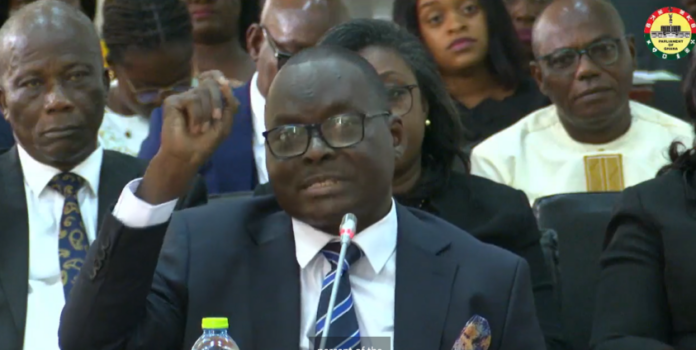
Supreme Court Justice nominee Anthony Henry Kwofie, during his recent vetting by the Appointment Committee of Parliament, underscored the need for the judiciary to establish a robust public relations department.
He emphasized that effective communication is crucial in addressing corruption perceptions and rebuilding public trust in the judiciary.
Mr Kwofie acknowledged the challenges associated with combating the perception of corruption, citing previous seminars conducted by the judiciary on corruption and ethics.
“Communication in this age is extremely important…probably we need to look at our communication department. It is something I have personally been advocating for that we need a very strong communications or public relations department,” he added.
He also mentioned the existence of a complaint unit within the judiciary. However, he noted the limitations judges face in dispelling corruption perceptions through press conferences.
To tackle this issue, Mr Kwofie emphasized the paramount importance of communication in the contemporary age.
He urged a reevaluation of the judiciary’s communication department, personally advocating for the creation of a strong communications or public relations department.
According to him, such a department would play a pivotal role in promoting transparency and effectively managing the judiciary’s public image.
“The perception about corruption is a mind issue and perceptions are difficult to deal with. There have been several seminars not by the association but by the judiciary on corruption, on ethics and as I said we also have a complaint unit…Almost every year we do it.
“The perceptions of corruption, some of them are unfounded. Somebody goes to court, he loses a case, and there is corruption. Somebody goes to court, he misconducts himself, there is an issue, there is corruption. Unfortunately, we as judges cannot sit and make press conferences and say that this is this,” he said.
“Communication in this age is extremely important…probably we need to look at our communication department. It is something I have personally been advocating for that we need a very strong communications or public relations department,” he added.
Investigative journalist, Manasseh Azure Awuni, has discredited tabloid fraud claims involving a businesswoman with a headquarters in France and a Court of Appeal judge.
The Facebook page of Mensah Thompson of ASEPA, which contains images of a police statement, is cited as the author of the fraud report narrative.
According to sources, Bire Marie-Dominique, the complaint, believes Justice Ekow Baiden defrauded her of $190,000.
Mr. Azure Awun claims that after being contacted by specific people over a month ago, he was inspired to look into the situation.
“I was extremely livid when the issue was first narrated to me and I wondered how a judge could do that.
“After carefully perusing the documents, however, I concluded that what I had been told and the documents I had were not enough to do the story. People have worked hard for their reputation and unless I have a good reason to do so, I will not publish their names with the allegations, a reason I’ve still been engaging the complainant’s sources,” the investigative journalist noted in a Facebook post on Saturday, August 5.
Mr. Azure Awuni mentioned that he got in touch with the complainant’s “brother,” and that according to what the “brother” told him, there was no fraud as claimed.
“In a chronology of events sent to me by the supposed brother of the buyer (a France-based Senegalese woman), this is what she wrote:
“April/May 2021: Upon my arrival in Accra to sign the Lease Agreement, the seller changes the terms (purchase price, sub-lease agreement duration), and refuses to sign the contracts. I raise the issue via email with my lawyer, who insists on engaging with various parties to finalize the deal (see emails).’” he stated.
According to the investigative journalist, in the police extract that Mensah Thompson posted, the woman claims the judge increased the price of the building from $190,000 to $250,000 and refused to sign the lease agreement. However, her petition to the Office of the Special Prosecutor “indicates that she opted out of the transaction because there was a disagreement in the number of years of the unexpired lease since she is a foreigner and could not get beyond 50 years of the unexpired lease”.
Further arguing out his point, he noted that in an April 2022 letter, the lawyer of the woman, Roberts Ekor Dassah, stated that her client “resiled the sale agreement” due to some “irreconcilable reasons” and per findings, the word “resile” means abandon a position or a course of action”.
In his research, Mr Azure found out that Bire Marie-Dominique expressed interest in a property that belonged to the judge and his wife; got her lawyer to do due diligence on the property and when she was satisfied with the documents, paid the money in two installments in March 2021 and took possession of the keys to the property, pending the signing of the lease agreement.
He, therefore, concluded that “there is nothing to show that it was the judge who refused to sign the agreement. I have tried to ask questions and get clarity on the contradictions of the woman making the allegations, but I’m yet to be satisfied.”
“There is also no evidence that the judge had increased the price of the property. This does not come up in any of the extensive exchanges between the parties involved or the lawyers acting on either side of the transaction.
“In any case, I found it strange that a seller who handed over the keys of the property to the buyer and allowed the buyer to take possession would not want to sign the agreement after taking his payment.
“It is also strange that the buyer would still want to proceed with the transaction after realising that the price had been increased from 190,000 to 250,000 dollars, and that it was the seller’s refusal to sign that stopped the deal,” he added.
Further findings of Mr Manasseh Azure Awuni are as follows:
DEFAMATION SUIT
Before the property was resold, the woman wrote to a number of institutions such as the police, EOCO, the Office of the President and the Chief Justice, accusing the judge of fraud and theft. She even wrote to the judge’s bank and alleged that the judge had received fraudulent payment into his account, a petition which resulted in a temporary blocking of the judge’s bank account. I have seen evidence of all that.
In the chronology of events written by the buyer/woman, the judge threatened her with a defamation suit in August 2021 but she insisted she would continue to involve state authorities until she got a refund of the money.
She says in December 2021, the judge asked to repossess or take over his property and sell it to someone else since she was no longer interested in buying it. In February 2022, the judge sued her for defamation.
In May 2022, the buyer, through her power of attorney, wrote to the institutions to retract and apologise for the defamatory statements against the judge.
In April 2022, (a year since the woman had taken possession of the property) the judge sold the property to a medical doctor for 190,000 dollars. (Note that it was still the same price at which it was sold to the woman, not the 250,000 dollars she claims the judge had increased it to). In April 2022, lawyers for the buyer wrote to the seller/the judge to refund the money to their clients since the property had now been sold to a different buyer after the woman opted out of the deal a year ago.
Sources close to the judge claim the defamation case was nearing determination and the judge held on with the payment so that should he win–which was likely because by the nature of the apologies and retraction, the woman had admitted defaming the judge–it could be used to offset the damages he was seeking.
The judge won the defamation case to the tune of about 2 million cedis. (This is part of the case concerning the withholding of the payment pending the outcome of the trial, I’m told, is being contested by the woman).
I have recounted my knowledge of the case and my reservations in covering this story due to the numerous allegations of compromise directed at individuals involved in various stages of the case.
The initial attorney of the woman, the police who initiated the investigation, and even the woman’s power of attorney, have all faced accusations of compromise.
If anyone were to assert that I was informed about this case but chose not to pursue it, I want to clarify that until the early hours of today, prior to the report published by Ghanaweb, those providing me with information on behalf of the complainant were still in the process of addressing critical inquiries regarding their own allegations against the judge, as indicated by a WhatsApp screenshot.
Women in Texas with serious pregnancy complications will be temporarily exempted from the southern US state’s abortion ban, a judge has ruled.
Judge Jessica Mangrum said there was a lack of clarity in the legislation, siding with women and doctors who had sued Texas over the ban in March.
Doctors would not be prosecuted when exercising their “good faith judgement” for provision of abortions, she added.
The temporary injunction will be in force until the lawsuit is decided.
Friday’s ruling is expected to be appealed by the state.
The Texas law that bans all abortions except in dire medical circumstances is seen as one of the strictest in the US.
Breaking the ban can carry a $100,000 (£78,000) fine and up to life in prison.
The legislation was introduced in 2022 – shortly after the Supreme Court overturned its 50-year-old Roe v Wade decision, meaning that millions of women across the country lost the constitutional right to abortion.
This case is the first brought on behalf of women who have been denied abortions since then.
The group of women and doctors are suing the state of Texas in the hope of changing the ban, to give doctors more leeway in determining when an abortion is necessary.
Top US court ends constitutional right to abortion
In her ruling in the city of Austin, Judge Mangrum wrote that women were “delayed or denied access to abortion care because of the widespread uncertainty regarding physicians’ level of discretion under the medical exception to Texas’s abortion bans”.
She also said that doctors must be allowed to determine what constituted medical emergencies that would risk a woman’s health or even life.
The temporary injunction is intended to last until the lawsuit is decided. But under Texas law, a ruling is automatically stayed as soon as it is appealed, so it could be blocked once the state appeals.
The Center for Reproductive Rights, which is suing Texas, hailed the ruling.
“Today’s ruling alleviates months of confusion around what conditions qualify as medical emergencies under Texas’ abortion bans, giving doctors permission to use their own medical judgment in determining when abortion care is needed,” the group said.
Lead plaintiff Amanda Zurawski said that “for the first time in a long time, I cried for joy when I heard the news”.
Ms Zurawski says her life was put at risk last year when she was denied an abortion.
She was denied an abortion – then she almost died
A binding interpretation of the current law’s definition of medical emergency is demanded in the case brought against Texas in March of last year.
The Texas attorney general’s office contends that the plaintiffs’ proposed exceptions would essentially make it possible to avoid the ban.
“It would, for example, permit abortions for pregnant females with medical conditions ranging from a headache to feelings of depression,” office lawyers say.
Her Ladyship Gertrude Torkornoo, the Chief Justice, expressed concern that approximately 70% of cases dismissed by the court can be attributed to inadequate legal representation.
According to her, the legal profession is intricate and requires a significant level of diligence, competence, and integrity from its practitioners.
She pointed out that many lawyers fail to adhere to the established rules of procedure and often present insufficient evidence and poorly defined causes of action, leading to the denial of justice for numerous clients.
Her Ladyship Gertrude Torkornoo emphasized the crucial role of diligence and competence in maintaining ethical standards within the legal profession.
During her address at the 7th annual legal ethics training programme organized by the Africa Centre for Law and Ethics in collaboration with the GIMPA Faculty of Law, she highlighted that lawyers’ failure to adhere to ethical conduct has resulted in severe consequences, causing many individuals to lose their properties, businesses, and entire livelihoods. Some nations, too, have suffered significant losses due to the consequences of poor legal representation.
Chief Justice, Her Ladyship Gertrude Torkornoo and colleagues
Her Ladyship urged law students and lawyers to prioritize ethical behavior to enhance the justice delivery system. She stressed that legal ethics is a collective responsibility shared by lawyers, judges, court registrars, bailiffs, Parliament, and the executive arm of government.
In her address, she urged lawyers not to resort to media publicity whenever they lose cases due to their own incompetence and lack of diligence, but instead, they should focus on being diligent and following proper procedures.
Dr. Kwaku Agyemang-Budu, the Dean of the GIMPA Faculty of Law and founder of the Africa Centre for Law and Ethics, further emphasized the importance of ethical behavior in the legal profession. He announced that the GIMPA Faculty of Law plans to introduce a course in Law and Ethics in the upcoming academic year to instill ethical principles in law students.
The purpose of the Legal Ethics Training Program is to introduce law students to the basic tenets and guidelines that govern professional legal and judicial practice.
An Accra Circuit Court has once again threatened to dismiss the alleged GH¢1.2 million theft case involving a former employee of Absa Bank, Emmanuel Sakyi Afriyie.
As reported by the Chronicle newspaper on July 27, 2023, Her Honour Ellen Ofei-Ayeh, the presiding judge, expressed her intent to throw out the case due to the prosecution’s failure to file necessary disclosures required for the trial to proceed.
Since June 26, 2023, the prosecution, led by Chief Inspector Isaac Anquandah, has been unable to provide the required disclosures, citing the need to amend the charge sheet and brief facts, as well as the referral of the docket to the Attorney-General’s (A-G) Department for advice.
Despite two weeks passing, the prosecution claimed they had not received any response from the A-G.
Consequently, the court issued a final ultimatum to the prosecution to file their disclosures by August 3, 2023, or face the possibility of case dismissal.
Judge Ofei-Ayeh emphasized that while some of the accused individuals were out on bail, the first accused (A1), Emmanuel Sakyi Afriyie, remained on remand, which infringes on his rights.
The court directed the prosecution to comply with the disclosure filing deadline and scheduled the case to continue on August 7, 2023.
Emmanuel (A1), 25 and now a businessman, is standing trial alongside Cecil Nyamesem Agyarkwa (A2), Richard Aikins (A3), Michael Tweneboah Oppong (A4), Fouad Mohammed (A5), and Caleb Bandoh (A6).
Others involved are Nicholas Nii Sai (A9), Nana Kwesi Gyimah (A10), Benjamin Adoari (A11), Boadu Nana Yaw Adjei (A13), Joseph D Anim (A14), and Othniel Amankwah Darkwa (A17).
Clinton Asamoah (A7), Kwame Owusu Buadu (A8), Daniel Osei (A12), Ernest Aryee (A15), and Isaac De-Heer (A16) are yet to be arrested.
A1 is facing additional charges, including forgery of other documents and falsification of accounts, totaling 13. The rest are accused of stealing and conspiracy to commit a crime.
All the accused persons pleaded not guilty to the charges, and except for A1, they have been remanded and granted bail in the sum of GH¢200,000 each, with two sureties who are employed and earn not less than GH¢2,500 a month.
Notably, this is the third time the court has issued a warning to the prosecution to rectify issues or risk the dismissal of the case.
On July 10, 2023, the court also threatened to strike out the alleged GH¢1.2 million criminal case involving a former employee of Absa Bank due to the prosecution’s failure to update the charge sheet and brief facts in alignment with six other accused persons connected to the Absa Bank theft case. The delay was attributed to the referral of the dockets to the Attorney-General’s office for advice.
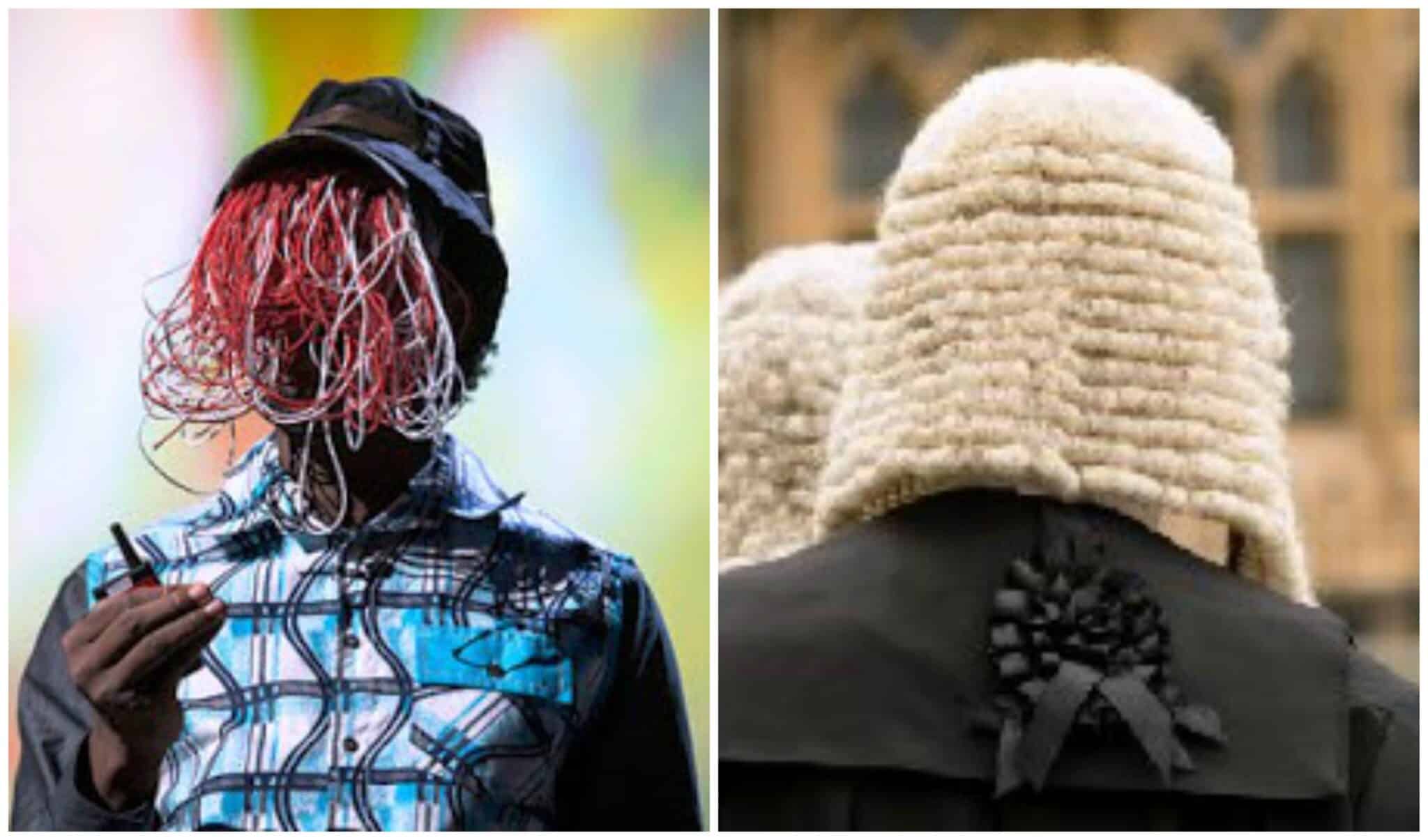
A judge who was among the group dismissed following the Anas Aremeyaw Anas exposé has achieved a favorable judgment at the Court of Appeal, overturning the previous decision.
Benjamin Yaw Osei, who served as a judge at the Juabeng Circuit Court during the time of the investigation into judicial corruption, was one of the 20 judges from lower courts who faced dismissal in 2015.
The allegation was that he freed an accused person after receiving bribes from them.
Chief Justice Georgina Theodora Wood established a “prima facie case of stated misbehaviour against them”, a statement by Ghana’s Judicial Council said.
But his lawyers have been arguing that the allegation is not accurate because the accused person has actually been convicted and imprisoned.
Today, a 3-member panel of the Court of Appeal presided over by Justice Senyo Dzamefe overturned the earlier high court judgment against the appellant.
The recent ruling in his favor signifies a significant development in his case. However, specific details regarding the judgment and its implications were not provided.
The judgment means he may be reinstated as a judge.
Former National Democratic Congress(NDC) Northern regional communications officer, Hardi Pagzaa and Mumuni Osman have been fined GH3,600 by the District Court in Tamale for attacking a Radio Presenter at Dagbon Radio, Tamale.
The two who on Monday 8 May, were arrested and kept in police custody for two days appeared before the court on Wednesday.
The accused persons who were charged on four counts pleaded guilty to all charges.
The charges include; Conspiracy to Commit Crime to wit Assault, Assault, Unlawful entry, and Threat of Death.
The 4th Count of Threat of Death was however later withdrawn by the Prosecution.
The defence counsel told the court that the accused persons have shown remorse and prayed for a non-custodial sentence.
Before his ruling, the Judge cautioned the defendants not to repeat such unlawful acts. He further urged hosts of political shows and their guests to be circumspect in their pronouncements and actions.
The magistrate noted that such acts have the tendency of igniting conflicts, citing the Rwanda genocide and its devastating impact on citizens as an example.
The court then sentenced the accused person to a fine of 300 penalty units, amounting to 3,600 or in default, serve 18 months in prison.
On May 3, a radio presenter with a Tamale-based Dagbon FM, Sadiq Gariba was assaulted verbally and physically by a former NDC Northern Regional Communications Officer, Hardi Pagzaa during a live radio program.
In a video that went viral on social media, Mr. Pagzaa andOsman were seen storming the studio of Dagbon FM. The two men held up the presenter who was at the point hosting a show and threatened to slap him if he makes a comment.
The incident happened on World Press Freedom Day.
The host then stood up and in the process went out of the studio with the attackers.
A Colombian judge known for sharing racy photos on her Instagram page has been suspended for three months after appearing on a virtual Zoom meeting while half-naked and smoking a cigarette in bed.
In a 33-second clip circulating on social media, the 34-year-old judge, Vivian Polanía, can be seen lounging in bed, appearing half-awake while taking a drag from a cigarette. At one point in the hearing, a prosecutor tells Polanía that her camera is on, and she immediately turns it off as the hearing continues, local media reported.
En un video que circula por WhatsApp se ve a la jueza Vivian Polanía (trabaja en el Palacio de Justicia de Cúcuta) atendiendo una diligencia judicial en su cama, semidesnuda y fumando. No sé si esto pueda acarrearle alguna sanción, pero al menos el escándalo ya está servido. pic.twitter.com/9rgNx4C6pV
The virtual court hearing centered around debates over whether a man charged in a 2021 car bombing should be granted bail.
One of the solicitors on the call reported Polanía’s alleged impropriety to Colombia’s National Commission of Judicial Ethics.
The commission said in a written ruling that Polanía’s suspension will remain in effect until February 2023, Spanish-language outlet Infobae reported.
“It is a duty of this commission to avoid repeating the judge’s contempt for the investiture of her position and the contempt she showed with her peers in the public prosecutor’s office, the prosecution and the defense,” the commission wrote.
A Colombian judge has faced disciplinary proceedings in the past over her racy Instagram photos. (Instagram/@vivianpolaniaf3)
“We find no justification for the judge to have presented herself in such deplorable conditions when she had the facilities of her own home and all the amenities necessary to prepare for a public hearing appropriately and with the respect such a hearing deserved.”
Fox News Digital has reached out to Polanía for comment.
Responding to the incident, Polanía told a local radio station she was laying in bed during the hearing because she was suffering from an anxiety attack, according to the Spanish-language outlet El Pais.
She further alleged that she’d been threatened with disciplinary proceedings in the past because of her online conduct.
“You never know when you’re going to have an anxiety attack. I always wear my gown,” she reportedly said, adding that she “had low blood pressure.”
The prosecuted former COCOBOD Chief Executive, Dr. Stephen Kwabena Opuni, has challenged the authority of the trial Judge, Clemence Honyenuga, to hear the charges against him.
His Lordship Honyenuga was expected to have retired last September but had a six-month extension from the Chief Justice.
This extension by the Chief Justice, lawyers for Dr. Opuni argued, is unconstitutional and a usurpation of the powers of the President of the Republic.
They maintained that “the power to extend the tenure of a Supreme Court judge is not exercised by the Chief Justice, who is not the appointing authority.”
“The only person who can grant an extension to the tenure of your lordship as contained in article 145(4) is the President and not the Chief Justice”, Samuel Cudjoe argued.
Notwithstanding that the Chief Justice is the administrative head of the Judiciary, Mr Cudjoe submitted that the Chief Justice “cannot grant an extension to the tenure of a judge who has attained the mandatory constitutional retirement age.”
This position was, however, sharply contested by the Director of Public Prosecutions (DPP), Yvonne Atakora Obuobisa, who described it as baseless in law.
“It is our case that the CJ has power under the 1992 Constitution to grant power to a Justice of the Superior Court to sit for a limited period of time”, she submitted.
Relying on articles 139(c) and 145(2)(a) and (4), the DPP argued that the Chief Justice not only had the authority to appoint Judges to Courts but to also give such limited extension to Judges due for retirement to enable them to complete cases commenced under them before their retirement age.
“In very simple terms, this means that your lordship on attaining the age of 70 years may continue in office for a period not exceeding six (6) months in relation to the case of Republic v Stephen Opuni, Seidu Agongo and Agricult Ghana Ltd. that was commenced before you prior to your attainment of the age of 70.”
The DPP thus submitted that the question of who has the authority to grant the extension had been clearly answered by the Constitutional provisions cited.
Therefore, “no ambiguity or confusion as to whether it is the President or the Chief Justice who grants an extension to a Judge previously determining a case to continue with that matter for a limited period” could be raised.
The High Court presided by His Lordship Clemence Honyenuga dismissed the application and adjourned the case to November 16, 2022, for continuation.
“The Chief Justice as the Administrative Head of the Judiciary has the power under the Constitution to grant an extension to a retiring Judge.”
Judges and magistrates are being urged not to let public criticism affect how they carry out their responsibilities by Chief Justice Kwasi Anin-Yeboah.
“Yours is to dispense justice and to uphold the rule of law irrespective of public clamour,” the Chief Justice said.
The judiciary has come under criticism in recent times, with President Akufo-Addo describing it as unwarranted attacks which must be condemned.
At the 2022 General Meeting of the Association of Magistrates and Judges, Justice Anin-Yeboah also said criticism of the judiciary must be constructive.
“As the saying goes, you will not value what you have unless you lose it. On this line, the consequence of losing what you have, in terms of our justice system, will be unthinkable.”
Deputy Attorney General, Alfred Tuah-Yeboah who attended the event attributed the recent attacks on the Judiciary to what he describes as a distorted coverage of court proceedings by some media firms.
He thus urged the media to collaborate with the judiciary to ensure fair reportage.
“This collaboration will undoubtedly ensure that accurate and fair information is made available to the consuming public.”
“Public perceptions of the judiciary are often coloured by misunderstandings of decisions and judgments of the court,” Mr. Tuah-Yeboah said.
A judge of the Court of Appeal, Justice Paul K. Gyaesayor has died.
According to Joy News sources, he passed on Tuesday morning after complaining of not being well.
Sources at the Judicial Service say the experienced judge reported for work on Tuesday, but went back home after complaining that he was unwell.
Justice Paul K. Gyaesayor died shortly after he got home.
The late Justice was affirmed as Court of Appeal Judges in March 2008 together with eight others by former president John Agyekum Kufuor.
Other judges he was sworn in alongside were Justice Francis G. Korbieh, Justice Emmanuel Kwami Ayebi, Justice Clemence Jackson Honyenugah and Justice Kwasi Nkrumah Aduma Osei.
Others were Justice Irismay Brown, Justice Wisdom Herbert K Addoh, Justice Victor D. Ofoe and Justice Kobena Adoe Acquaye
A member of the opposition National Democratic Congress (NDC) legal team, Chris Ackumey, has called on President Nana Addo Dankwa Akufo-Addo to desist from appointing High Court judges to preside on what he terms as “political vendetta†cases.
According to him, appointing of Court of Appeal Judges to preside over political cases is a deliberate attempt to jail some leading members of the opposition party claiming that some of the judges are members of the governing party.
He, therefore, urged the leadership of the judicial service and the executive members not to compromise the integrity of the judicial service as they “uphold professionalism for the benefit of the generation yet unborn.â€
In a statement, the legal team said: “we pause to ask if in the random allocation of the cases to the courts, these additional high court judges from the appeal court are also factored in or if these are appointments made for a specific target.â€
“Fact is the appointment of these additional high court judges does not do away with the perceived bias against these “politically exposed†accused persons, especially so when we have leading members of the party in government threatening to jail some leading members of the opposition party even before the 2020 elections.â€
It added, “We call for the immediate halt of these additional high court judges being appointed to preside upon these seemingly “political vendetta†cases. we remind the leadership of the judiciary of the admonition of Justice Enp Sowah where he charges the leadership and indeed the whole judge fraternity to keep or help keep the flag of the judiciary flying high and ensure that the profession as a whole provides leadership and the best counsel on these professional matters which we have all held in trust for the benefit of generations yet unborn.â€
Judy Sheindlin, one of US daytime TV’s biggest stars, has revealed her long-running CBS show Judge Judy will end next year after 25 seasons.
In an interview with Ellen DeGeneres, to be aired on Monday, the 77-year-old said she would launch a new show on another, unnamed network in 2022.
“I’ve had a 25-year marriage with CBS and it’s been successful,” Sheindlin said in a clip released online.
CBS has yet to comment on the multiple Emmy winner’s departure.
According to Judy Sheindlin, CBS is seeking to utilise repeats of Judge Judy, instead of commissioning further series.
She explained: “Now, [CBS] have 25 years of reruns, so what they decided to do was to sell a couple of years worth of reruns.”
“But,” she added: “I’m not tired.”
Sheindlin said her desire to continue working led her to the decision to launch a new show, titled Judy Justice. But that will not air on CBS.
She said the new show “would be going elsewhere” while reruns of her old shows go into syndication.
Sheindlin said next year would mark the “silver anniversary” of her Judge Judy show and that its final season would be “the best ever”.
“Judge Judy, you’ll be able to see next year – a full year, all new shows,” she confirmed.
“The following couple of years, you should be able to catch all the reruns that CBS has sold to the stations that are currently carrying Judge Judy, and Judy Justice will be going elsewhere – isn’t that fun?”
According to Variety, Sheindlin sold her show’s library to CBS in 2017 for around $100 million (£78.25 million).
Since 1996, millions of viewers have seen Sheindlin pass judgment on real-life small claims cases.
More than 5,000 episodes of the show have been broadcast since its inception and Sheindlin is now the highest-paid personality on US television.
ITV’s popular daytime show Judge Rinder follows a similar format, with criminal barrister Robert Rinder holding court.
The National Democratic Congress (NDC) Volta Regional Secretariat has condemned the Paramount Chief of the Nyagbo Traditional Area, who doubles as an Appeals Court Judge, Justice Clement Jackson Honyenuga for endorsing the candidature of President Nana Akufo-Addo.
Justice Honyenuga in his welcome address to President Akufo-Addo at a durbar of chiefs and people of the Afajato South District had commended the President for various developmental policies introduced under his leadership.
He said “with the vision of the President and the gains made in his first term, Ghanaians may consider giving him another four years†to the loud cheers of people at the durbar grounds.
The Secretariat in a statement signed by the Volta Regional Chairman, Henry Kwadzo Ametefe said the endorsement violates the Judicial code of conduct.
“While taking due cognizance of the fact that Justice Honyenuga may have made those comments in his capacity as a traditional ruler, it is reprehensible and regrettable, especially for a man who is supposed to know our laws better than any ordinary man and to uphold and respect sameâ€.
“Not only is this conduct by the Appeals Court Judge a blatant violation of the Judicial Code of Conduct but it very well sins against the very sanctity of the institution of Judiciary as we know it.â€
The Secretariat also called on the Judicial Council and the General Legal Council, the Chairman of which is the Chief Justice himself to take judicial notice of his actions and “take appropriate action.â€
Professor Stephen Kwaku Asare (Kwaku Azar) has expressed shock over the decision by a superior court judge who doubles as a chief to endorse the candidature of President Akufo-Addo for the 2020 elections.
Justice Clemence Jackson Honyenuga, who is hearing the ongoing trial of the former Ghana Cocoa Board boss, Dr Stephen Opuni and businessman Seidu Agongo declared support for President Akufo-Addo during his recent tour of the Oti region.
The state-owned Daily Graphic newspaper quoted Justice Honyenuga as saying, “We wish to congratulate you for the excellent manner you are governing this dear country of ours; it is our hope that with your vision and the gains made in your first term, Ghanaians may consider giving you another four yearsâ€.
Commenting on the development, the US-based lawyer and academician said: “I was utterly surprised to read that a Judge of the Superior court has publicly endorsed a candidate for political office in clear violation of the judicial code of conduct. Of course, we do not take our laws and codes seriously but judges should do a little betterâ€.
A High Court judge has handed over two dockets containing the $1 million Kroll payment case involving Auditor General, David Domelovo, and Senior Minister, Yaw Osafo-Maafo and four others to the Chief Justice, Kwasi Anin-Yeboah following his request of having them.
According to the Judge, Doreen Boakye Adjei, the request by Justice Annin-Yeboah follows a petition to the CJ by unknown persons concerning the two cases which are:
The Senior Minister and the four officials from the Ministry of Finance, namely Michael Ayesu, Abraham Kofi Tawiah, Eva Asselba Mends, and Patrick Nomo appealing against the decision of the Auditor General to surcharge them over the Kroll Associate investigation.
Subsequently, they cited Auditor General, David Domelovo for contempt of court for his refusal to file a response to their appeal against his decision to surcharge them.
Although her Lordship did not give further details, she noted that the cases will be on hold until further directives from the Chief Justice.
Background
The Auditor General has claimed that the Mr. Osafo-Maafo and the Finance Ministry have colluded to pay UK firm, Kroll and Associates Limited, $1 million for no evidence of work done.
The UK firm in 2017 was contracted by the Senior Minister to recover assets from identified wrongdoers, among others.
ccording to the Senor Minister, the firm had done the work it was contracted to do and that there was enough evidence of work done.
But the Auditor General later claimed that after audit, there was no evidence of work done by Kroll and Associates Limited and yet huge sums of money were paid to the company.
He subsequently imposed a disallowance and surcharge on the Senior Minister and four others involved in the contract.
Appeal
Not satisfied with the decision of the Auditor General to disallow and surcharge him and four others, the appellants filed an appeal against the decision before an Accra High Court.
They insisted that the determination by the Auditor General that the payment of GH¢4,869,421.87 without approval from Parliament and the Public Procurement Authority (PPA) and thus offended Article 181 of the Constitution violates the appellants rights of hearing as same did not form part of either the audit observations issued to the Ministry of Finance or the final report of the Auditor General laid before Parliament.
A US-based lawyer and professor of accounting Stephen Asare (Kwaku Azar) has expressed shock that a Judge of the Superior court has publicly endorsed a candidate for political office in violation of the judicial code of conduct.
His comment comes after Justice Clemence Jackson Honyenuga, who is sitting on the case involving the former Ghana Cocoa Board boss, Dr Stephen Opuni and businessman Seidu Agongo, sparked social media rage over his declaration of support for President Akufo-Addo, during his tour of the Oti and Volta regions.
The Court of Appeal judge, who is presiding over the case as additional High Court Judge, had declared support for President Akufo-Addo and the New Patriotic Party (NPP), in his capacity as the Paramount Chief of the Nyagbo Traditional Area, Torgbui Ashui Nyagasi V.
Reacting to this development in a Facebook post, Prof Asare noted that: “Of course, we do not take our laws and codes seriously but judges should do a little better.â€
His full post read: “I was utterly surprised to read that a Judge of the Superior court has publicly endorsed a candidate for political office in clear violation of the judicial code of conduct. Of course, we do not take our laws and codes seriously but judges should do a little better. 128/1820 is a bona fide scam and sham. Da Yie!â€
The state-owned Daily Graphic newspaper, quoted Justice Honyenuga as calling on Ghanaians to give President Akufo-Addo, another term to implement his vision for the country.
“We wish to congratulate you for the excellent manner you are governing this dear country of ours, it is our hope that with your vision and the gains made in your first term, Ghanaians may consider giving you another four years,†he stated.
Justice Honyenuga, who made the call at a durbar of chiefs and people of Nyagbo to welcome the President, as part of his three-day tour of the Volta and Oti regions, also implored the President to ensure that the forthcoming elections on December 7, 2020, were peaceful.