Tag: Judges

  • Pay us our delayed allowances, other benefits – Magistrates, judges to govt

    Pay us our delayed allowances, other benefits – Magistrates, judges to govt

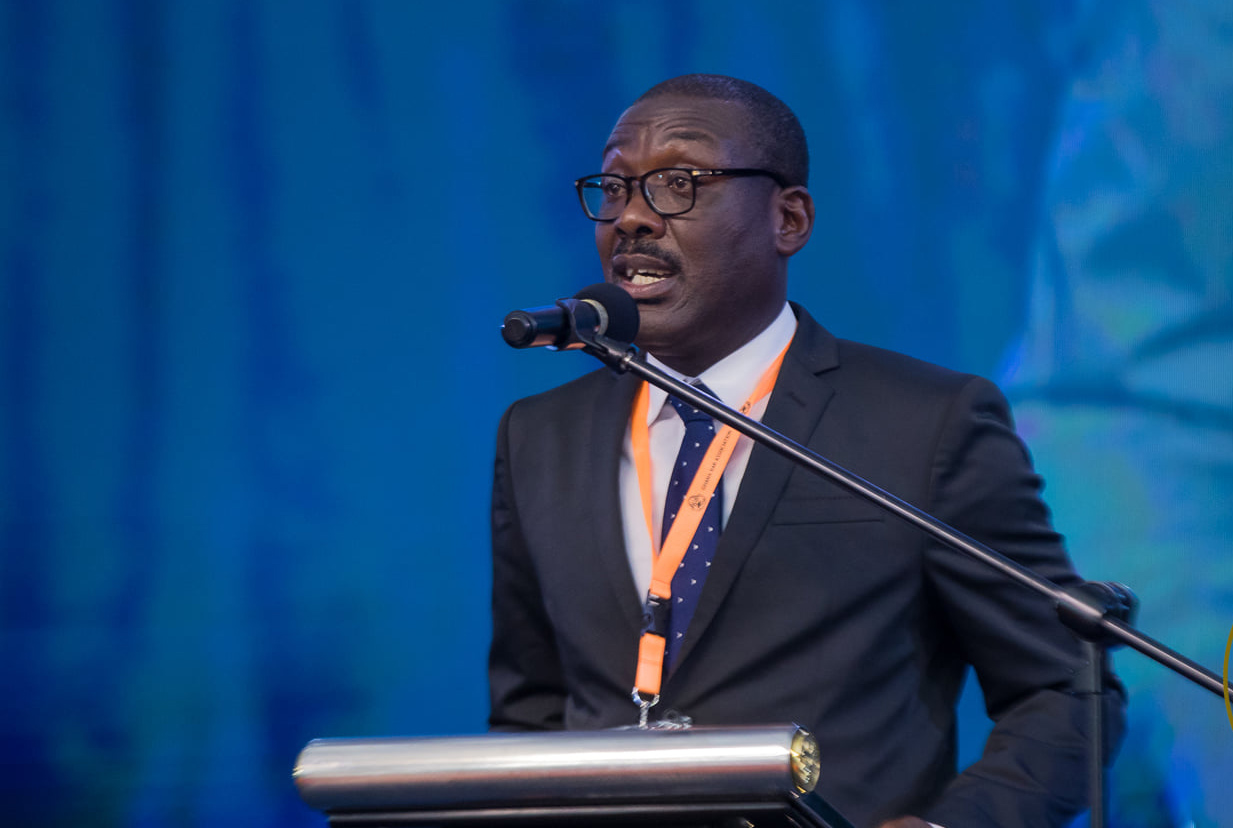
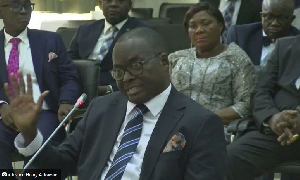
    President of the Association of Magistrates and Judges (AMJ), Justice Henry A. Kwofie, has expressed concern over the persistent delays in the payment of medical, fuel, and transfer grants to magistrates and judges, describing it as a barrier to efficient justice delivery.

    He noted that the situation regarding delayed allowances and benefits for judges and magistrates has deteriorated significantly, going from bad to worse.

    Mr Justice Kwofie, a Court of Appeal judge, said these at the ongoing AMJ annual conference held in Accra yesterday on the theme “A Financially Independent and Accountable Judiciary; The Key to Effective Justice Delivery.”

    He said although the issue of delayed payment of allowances to magistrates and judges was discussed at the conference in 2023, the concern had not been addressed.

    “The question we need to ask is whether having regard to the concerns and dissatisfaction expressed last year, there has been no improvement in the situation.

    Needless to say, and I say this with some sadness, the situation has not only improved but has gone from bad to worse. Almost all allowances with the exception of quinquennial leave allowance are way behind schedule.”

    He noted that although the year is now in its final quarter, fuel allowances for the second quarter remain unpaid, making it impossible to discuss the third and fourth quarter’s allowances.

    The AMJ president expressed concern over judges having to cover the costs of servicing and maintaining their official vehicles out of pocket, only to face lengthy delays—sometimes up to a year—before being reimbursed.

    Addressing the issue of security, Justice Kwofie highlighted the risks judges and magistrates face due to inadequate security measures at the courts.

    “As for the security of judges and magistrates, especially in our courts, it is virtually non-existent. Ghana is probably the only country in Africa where anybody can enter any courtroom, including even the Supreme Court without going through a security check. “

    He said in countries like Uganda, Tanzania and Rwanda, there was no way anybody can enter the court premises without having gone through appropriate security.

    But in Ghana, the president of AMJ said the security of the courts had been taken for granted.

    Unlike other public servants who could demonstrate, sometimes in the most uncompromising ways, to press home their demands, judges and magistrates could only com­plain about it.

    “These issues relating to the wel­fare and security of judges cannot be taken for granted, unfortunately, unlike other public servants, who go on the street and shout from the rooftops and worse still withdraw their services. We can only complain and talk about it but we ask that these complaints need to be taken seriously,” he said.

  • PHOTOS: Akufo-Addo swears in 16 new Justices of the Court of Appeal

    PHOTOS: Akufo-Addo swears in 16 new Justices of the Court of Appeal

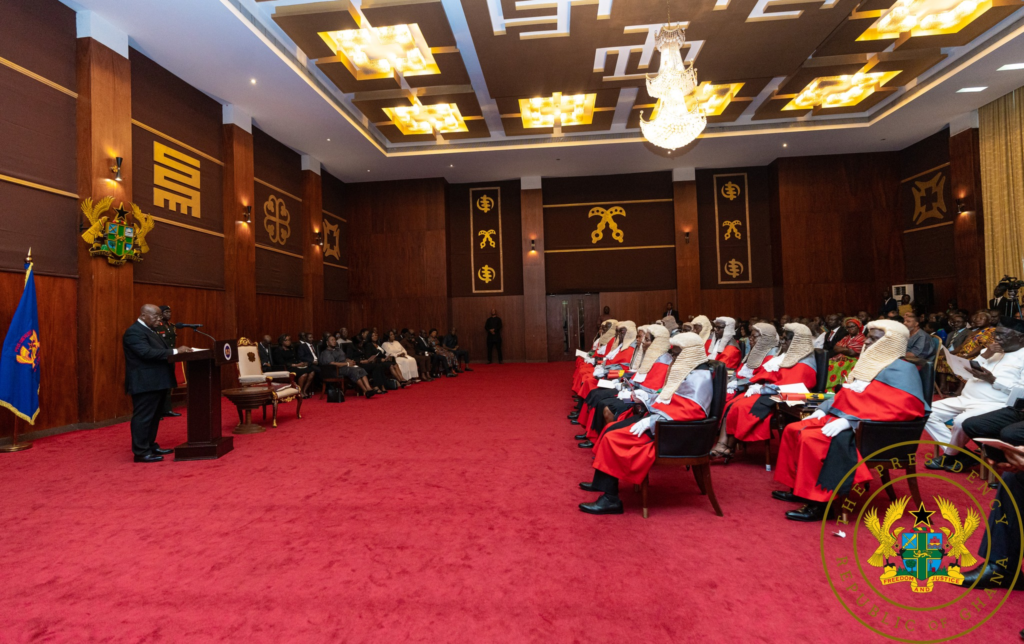
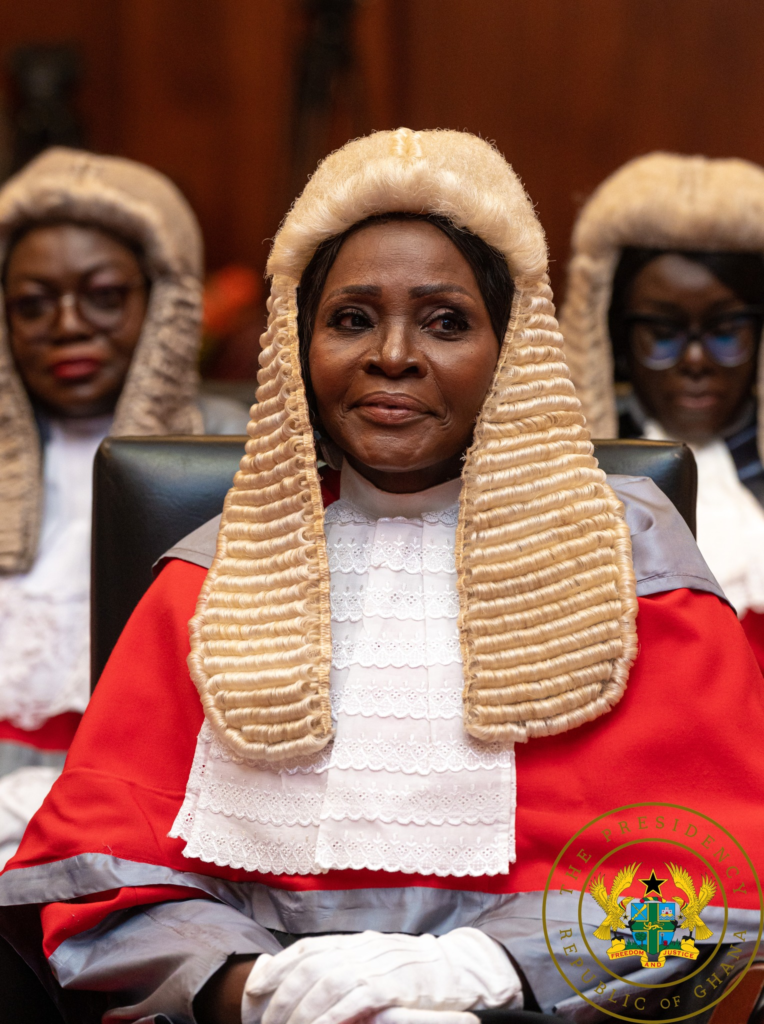
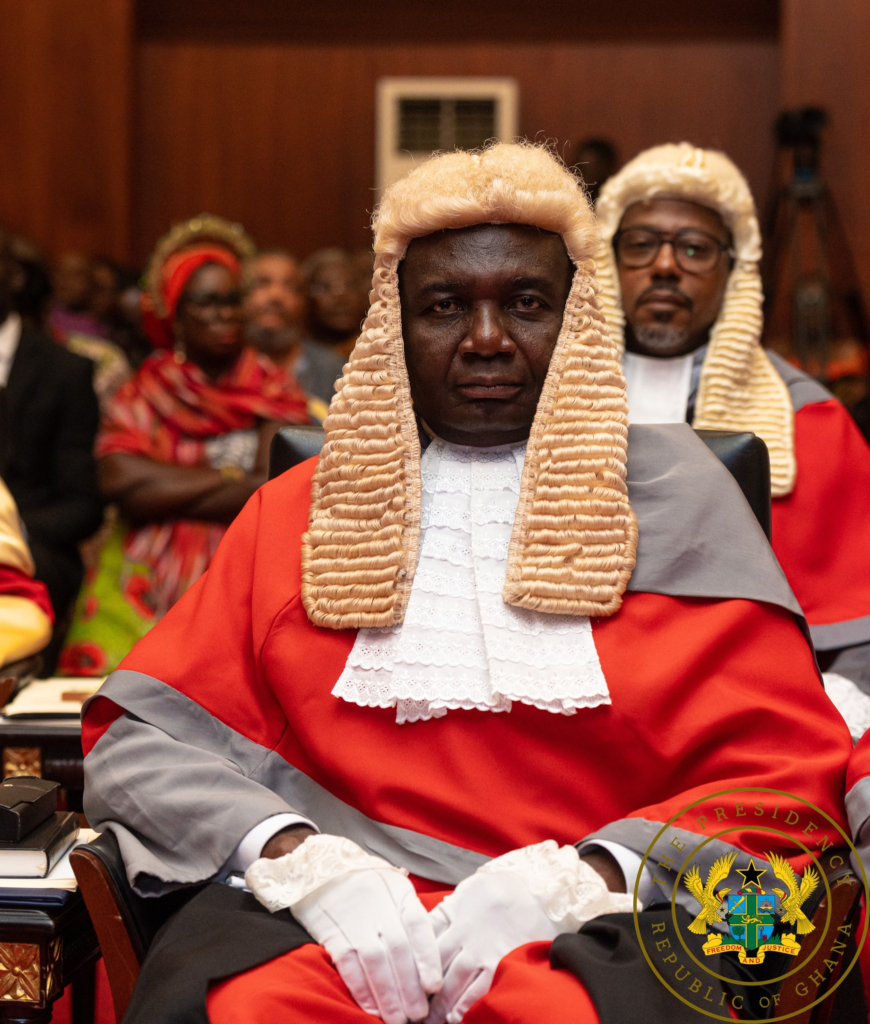
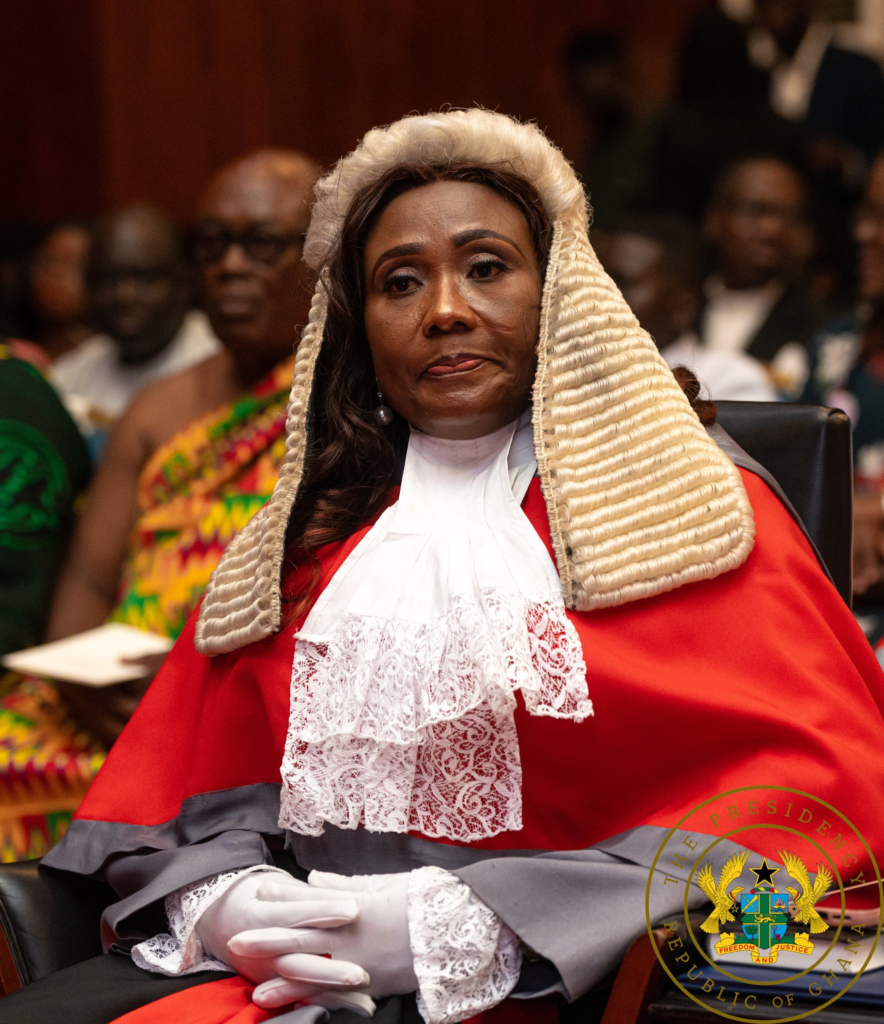
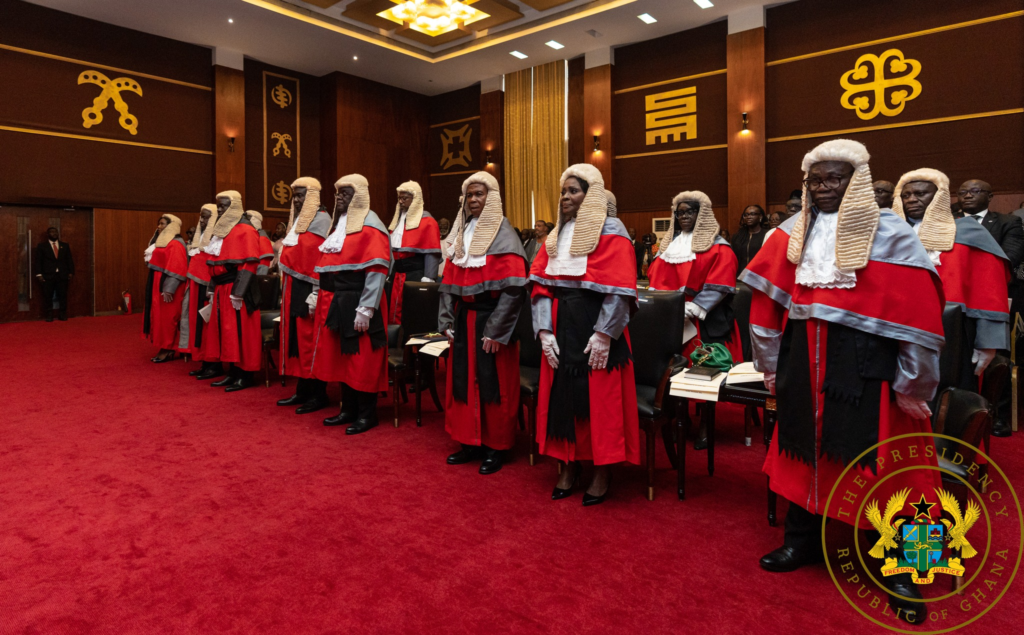
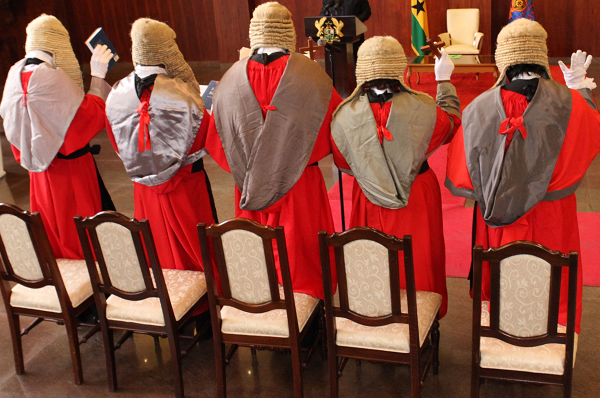
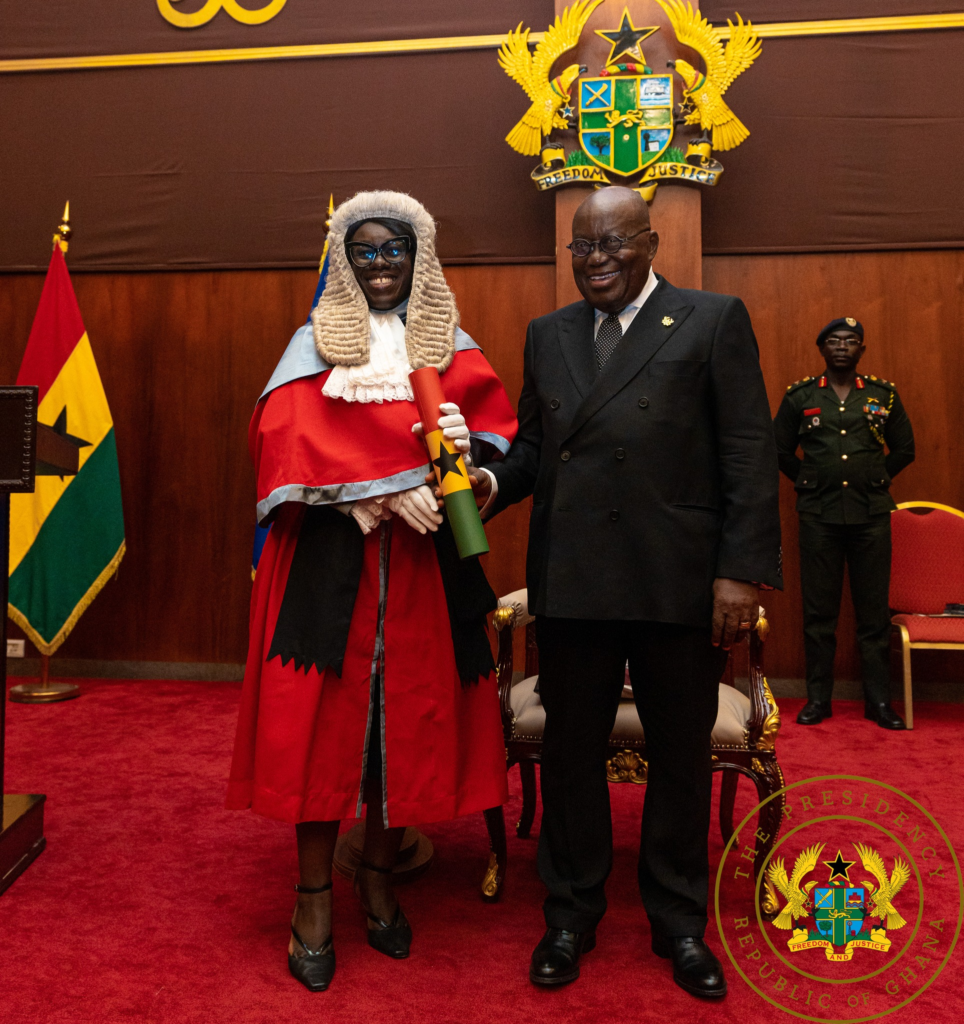
    In a solemn ceremony at the Jubilee House, President Akufo-Addo on Tuesday, 23rd July 2024, administered the Oath of Allegiance, the Judicial Oath, and the Oath of Secrecy to 16 newly appointed justices of the Court of Appeal.

    During the swearing-in, the President charged the justices to uphold the highest standards of conduct and to dispense justice impartially—without fear, favor, affection, or ill-will.

    “The judiciary should be free from any form of external influence or interference,” President Akufo-Addo declared.

    “It is only through preserving this independence that we can be certain that justice is administered impartially.”

    Below are photos of the ceremony.

  • Ghanaian judges run to court as private developers demolish their homes

    Ghanaian judges run to court as private developers demolish their homes

    Member of Parliament (MP) for North Tongu, Samuel Okudzeto Ablakwa, has made further revelations after indicating that Ghanaian courts are currently embroiled in legal disputes over land that they possess.

    In an interview on TV3’s The KeyPoints show, he made new information available, which reveals that 13 bungalows belonging to judges located opposite the American Embassy are no longer in sight.

    “When the private developers told them that they are the new owners started demolishing, judges run to their fellow judges for an injunction. Hey, we have nowhere else to stay, save us. I have the court documents here,” he said.

    The case is Judicial Service of Ghana (plaintiff) against Lands Commission, Frames Oil Company Limited and Attorney General.

    “Unprecedented. Judges running to judges to save them,” he exclaimed in a sentiment expressing disbelief.

    In an interview on Metro TV, the indicated that the Minister of Local Government and Decentralisation, Martin Kwaku Adjei-Mensah Korsah has become helpless due to government’s actions.

    “So when we talk about the state capture, judges have to run to their colleague judges to save them. You wonder what is happening is there no adult in the room. Look at the Local Minister, he is helpless, he wants to protect the land. Look at this Cantoments land, government took one out of two containers. The local has to run to goverment. Now the court is in court with the government. What is going on in this country?,” he added.

    In recent weeks, the MP has leveled accusations against government officials, alleging state capture.

    Ablakwa specifically cited additional instances of government selling state properties, purportedly including assets belonging to the Ghana Prisons Service and the Department of Parks and Gardens.

    Meanwhile, the MP has affirmed his unwavering commitment to combating state capture and government corruption, asserting that no amount of intimidation would deter him.

  • CJ has no power to recommend judges – NDC

    CJ has no power to recommend judges – NDC

    The National Democratic Congress (NDC) has criticized the Chief Justice’s recommendation of judges for the Supreme Court, calling it unconstitutional.

    Chief Justice Gertrude Araba Torkornoo has proposed five judges to President Nana Addo Dankwa Akufo-Addo to help manage the Supreme Court’s current caseload.

    At a press conference in Accra, NDC General Secretary Fifi Fiavi Kwetey asserted that the constitution does not authorize the Chief Justice to recommend candidates for the Supreme Court to the President.

    He declared the Chief Justice’s proposal to President Akufo-Addo to be without constitutional merit and therefore invalid.

    “Nowhere in the constitution is the Chief Justice named as the one to recommend persons to the president for appointment to the Supreme Court. We wish to state, without any equivocation, that the Chief Justice’s letter is illegal and of no effect.

    “Her actions have completely turned over due process on its head and compromised her independence as the head of the judicial system. We are concerned about a worrying pattern that irresistibly suggests that the president is only appointing loyal members of his party to this court to have control over the judiciary to escape post-regime accountability,” he stated.

    The judges recommended for nomination include Justice Afia Serwaa Asare Botchwey, who presided over the ambulance case involving Minority Leader Dr. Cassiel Ato Forson, along with Justice Cyra Pamela Koranteng, Justice Edward Amoako Asante, Justice Eric Kyei Baffuour, and Justice Angelina Mensah Homiah.

  • Female judges bring valuable strengths to Judiciary – Akufo-Addo

    Female judges bring valuable strengths to Judiciary – Akufo-Addo

    President Akufo-Addo underscored the vital role played by female judges in combating detrimental cultural practices, particularly those hindering the development of women and girls.

    He emphasized that the diverse experiences of female judges uniquely position them to contribute distinct perspectives and strengths to the pursuit of justice and equity.

    Speaking at the inauguration of the 18th International Association of Women Judges (IAWJ) Conference in Accra, President Akufo-Addo highlighted the theme “Combating Negative Cultural Practices in Contemporary Times – The Role of Women Judges.”

    He emphasized that having women represented at all levels of the judicial system not only enhances respect for the judiciary but also instills confidence in the justice delivery system.

    “Women judges across Africa and the globe bring unique viewpoints and strengths to the judiciary.

    Their experiences, often mirroring the societal challenges we seek to overcome, equip them uniquely to advocate for justice and fairness.”

    The President stressed that addressing negative cultural practices requires a collaborative effort beyond the courtroom, involving education, awareness, and governance.

    He urged female judges to uphold fairness, equality, and justice in their decisions, emphasizing the profound impact their rulings can have on societal transformation.

    President Akufo-Addo envisioned a future where the law serves not only to punish but also to educate and reform, ensuring a society where individuals are judged based on their potential rather than conformity to outdated customs.

    He concluded by highlighting the essential role of the IAWJ in empowering women judges worldwide to promote gender equality, end discriminatory laws, and uphold human rights.

    “As judges and upholders of the law, you have the power to redefine norms and set precedents that protect the vulnerable and marginalised,” he said.

    “In dealing with issues like gender-based violence, child marriage, widowhood rites and female genital mutilation – practices steeped in deep-rooted cultural norms – your voices and rulings can resonate deeply, driving societal transformation.”

    “It is imperative to acknowledge that the fight against these practices is not confined to the courtrooms. Education, awareness, and collaborative governance are critical.

    “We must engage traditional leaders, educators, and communities to recalibrate mindsets and attitudes. It is in our schools, homes, and community gatherings where the foundational beliefs of our next generation are formed,” he said.

  • Ministers to appoint 150 judges to handle appeals in Rwanda

    Ministers to appoint 150 judges to handle appeals in Rwanda

    Plans have been made to select 150 judges to handle a new system for quickly deciding on appeals for people being deported from Rwanda.

    The justice secretary said that over 100 staff have been hired to help with a new system for reviewing deportation orders.

    Last year, a law was proposed to create new courts to prevent migrant appeals from causing delays in the justice system.

    MPs are starting to talk about a bill that wants to bring back the Prime Minister’s idea to send some asylum seekers to Rwanda.

    Additional resources have been created to address criticism from some Conservatives MPs that allowing individual appeals against deportation to Rwanda will cause too much work for the courts and should be completely stopped.

    Alex Chalk, the person in charge of justice, said the changes will make 5,000 more days available to hear asylum cases.

    Members of Parliament are talking about the Safety of Rwanda Bill in the House of Commons.

    The government wants to send some people seeking asylum to Rwanda to stop them from trying to come to the UK in small boats. Labour has said they don’t like the policy because they think it costs too much and is just a trick. They would rather focus on stopping the gangs that smuggle things.

    The Supreme Court stopped the government‘s plan for Rwanda because they were worried about the safety of the country.

    After the court made a decision, the government made a new law called the Safety of Rwanda Bill. This law says that in the UK, Rwanda is considered a safe country.

    Prime Minister Rishi Sunak is having trouble with his power because two Conservative vice chairmen said they would support a series of rebel changes to his main Rwanda bill.

    Make the process simpler and more efficient.

    The government wants to calm worries about legal issues by adding more judges to the tribunal system. They will move some judges from the lower tribunal to the higher tribunal to handle appeals from Rwanda.

    Judges will get extra learning and more money to work on nights and weekends. The government made 25 more rooms for hearings to handle more cases.

    The change is meant to bring all complicated migration cases and appeals to one place, making the process more efficient.

    The Home Office studied and found that almost all legal challenges under the Illegal Migration Act will not succeed. However, there is still a chance that many people appealing could overwhelm the system and cause delays in their removal.

    The Ministry of Justice has been working with the courts since last summer to make more room in the system before starting the Rwanda policy.

    The person in charge of justice said the judges will decide if they need extra judges for a little while.

  • Procedure for appointing judges is autonomous and thorough – Tuah-Yeboah to Atuguba

    Procedure for appointing judges is autonomous and thorough – Tuah-Yeboah to Atuguba

    The Deputy Attorney-General and Minister of Justice, Alfred Tuah-Yeboah, has strongly opposed recent remarks made by former Supreme Court Justice, William Atuguba concerning the selection of judges in the country.

    Mr Tuah-Yeboah contends that the appointment of judges follows one of the most stringent and thorough processes in the nation.

    He rejected the notion that judges can be appointed based on arbitrary factors.

    He emphasized the independence of the judiciary within the constitutional framework, highlighting the rigorous nature of the selection process.

    He explained that even if a candidate has political affiliations, they must undergo this process, which ultimately determines their fitness for the role.

    “When it comes to the independence of the judiciary, according to our constitutional architecture, the judiciary is an independent body, albeit manned by people just like you and I. But when it comes to the appointment of judges, we all know that it goes through a rigorous process. So even if you are politically aligned, and you get appointed, the fact that you are going through that process means that at the end of the day, you will either be declared or not declared fit to serve.”

    During a public lecture on “Protecting Our Democracy: The Role of the Judiciary,” Justice Atuguba stressed the importance of entrusting the appointment of judges and other government officials to independent bodies.

    He maintained that judges should be chosen based on merit rather than considerations like protocol, cronyism, ethnicity, or improper influences.

    However, Mr Tuah-Yeboah, speaking to the media asserted that the Judicial Council, responsible for appointing judges, comprises individuals and members of organizations that are not easily swayed to favor a particular nominee.

    He differentiates between the financial independence of the judiciary, which may have some issues, and the appointment of judges, which he believes follows a robust and impartial procedure.

    He underscored that the Judicial Council, especially concerning appointments to the Court of Appeal and the Supreme Court, includes distinguished men and women, some representing institutions, and their selection is not influenced by their political leanings.

    He defends the current framework, stating his endorsement for the tripartite engagement involving the Bar, the Executive, and the Judiciary in the appointment of judges.

    While he doesn’t completely rule out the possibility of further examination, he believes that the existing constitutional framework is suitable and should be maintained.

  • GBA refutes appointment of judges by political affiliations claim

    GBA refutes appointment of judges by political affiliations claim

    The President of the Ghana Bar Association (GBA), Yaw Acheampong Boafo, has strongly emphasized that the selection of judges for the judiciary is primarily driven by meritocracy.

    He highlights that appointments to the lower courts are openly advertised in newspapers.

    During his address at the 2023 Ghana Bar Conference held in Cape Coast on Monday, Mr. Acheampong Boafo clarified that applicants for these judicial positions are not required to disclose their political beliefs or affiliations as part of the appointment process.

    “It is instructive to state that same as the Court of Appeal and the Supreme Court where nominations are made by three parties namely the government represented by the Attorney General, the judiciary, and the Bar, appointments to lower courts bench and high court are pursuant to advertisements in the dailies inviting persons qualified to apply,” he said.

    “There is never a requirement that an applicant has to show his political affiliation,” he added.

    This matter has gained significant attention in recent times, sparked by former President John Mahama’s claim that President Akufo-Addo has intentionally populated the courts with judges leaning towards the NPP.

    During his speech at the NDC Lawyers Conference held in Akosombo on September 2, Mr. Mahama accused President Akufo-Addo of appointing individuals affiliated with his party to the judiciary with the aim of swaying judicial decisions in their favor. He went further to encourage NDC lawyers to be prepared to assume positions within the judiciary in order to restore a balanced composition on the bench.

    “Our lawyers, some of you must be prepared to go onto the bench, I know that some of you have very lucrative legal practices you will not want to leave and go onto the bench. But you can see what the current President has done; he appointed the largest number of judges onto the bench. More than 80 towards hundred and counting.”

    “He’s packed the court and we know that they’ve packed the court because they want to avoid accountability after they have left office.

    “So, all manner of people who have been known to be partisan, to have been executives of their party who are in the legal profession have been leapfrogged onto the Superior courts and other places,” he said.

    The President underscored the perilous nature of Mr. Mahama’s statement, asserting that such remarks should not emanate from a figure of his stature, as they pose a significant threat to the nation’s advancement.

    Speaking at the Ghana Bar Conference held at the University of Cape Coast on Monday, September 11, President Akufo-Addo characterized this incident as the most audacious assault ever witnessed by the Ghanaian Judiciary throughout its history.

    He thus urged the public to call out the former president for such “reckless” comments that he says sought to jeopardise the Judiciary.

    “I have gone into this matter in detail because of a new issue which has been introduced into our public discourse by no less a public figure than the fourth president of the fourth republic perennial NDC Presidential Candidate John Mahama who has told the world that I have packed the courts with so-called NPP judges and that one of the key purposes a putative NDC victory in 2024 will be to enable him to balance the courts with so-called NDC judges.”

    “Not only are these concepts new in our public discourse but they are also extremely dangerous and represent the brazen attack on the independence of the judiciary by allegedly responsible politicians,” he said.

  • Mahama’s statement on the judiciary is a threat to Democracy -CDD

    Mahama’s statement on the judiciary is a threat to Democracy -CDD

    The Center for Democratic Development (CDD) has expressed concern over former President John Mahama’s statement about appointing National Democratic Congress (NDC) lawyers to the judiciary, considering it a threat to Ghana’s democracy.

    Paul Aborampah Mensah, the Senior Programs Officer at CDD-Ghana, conveyed these concerns during an interview on Morning Starr with Francis Abban on September 4, 2023. He emphasized that such comments from former leaders would not contribute positively to the constitutional system.

    Mensah further suggested that when politicians, especially those who have held the highest office in the country, make such statements, they might be trying to share their past experiences and the structural arrangements during their tenure.” 

    Background

    Former President John Mahama has asserted that President Akufo-Addo’s government has strategically appointed judges within the Ghanaian courts to evade accountability once their term in office concludes. He made these remarks during the concluding session of the 3rd Lawyers Conference, organized by the NDC Lawyers Association, held in Akosombo, Eastern region.

    Mahama disclosed that some of these lawyers President Akufo-Addo has leapfrogged on the bench are known political persons.“Our lawyers, some of you must be prepared to go unto the bench, I know that some of you have very lucrative legal practices you will not want to leave and go onto the bench.

    Over 80, nearly a hundred, and still counting. “He’s populated the judiciary, and it’s clear they’ve done so to evade accountability once they exit office. Various individuals with a well-known partisan background, including former party executives in the legal field, have been fast-tracked into the Superior courts and other significant positions.”

  • Akufo-Addo urges judges to be sensitive to delays in trials

    Akufo-Addo urges judges to be sensitive to delays in trials

    President Akufo-Addo, has advised judges in the nation to be cautious about excessive delays in managing cases, as it undermines the advancement and credibility of the judicial system.

    He emphasised that judges should give precedence to the timing of cases and ensure their swift resolution, as delays could have serious consequences for individuals and damage the reputation of the judicial system.

    Speaking at a swearing-in ceremony for some new judges at the Jubilee House, Accra, on August 29, 2023, President Akufo-Addo entreated the judicial council to be wary of delays to make the country attractive to investors.

    “I [Akufo-Addo] thus urge you [judges] to be sensitive to undue delays that project the image of Ghana as a destination where litigation takes too long. This affects the attractiveness of the country as an investment destination,” he said.

    He further advised the judges not to allow their religion, ethnicity, or political affiliations to influence their decisions to ensure fairness prevails in their rulings.

    “Let me use this occasion to repeat that the dispensation of justice requires that application of the laws of the land must occur in the hallowed words of the judicial oath you have just taken without fear or favor, affection or ill will, that is, without recourse to the political, religious or ethnic affiliations of any persons before you,” President Akufo-Addo reiterated.

    The new High Court judges sworn into office are Justices Dorothy Ayodele Kingsly-Nyinah and Ama Sefanya Ayittey.

  • Record Judges soliciting bribes, convey your disappointment- CJ advises Ghanaians

    Record Judges soliciting bribes, convey your disappointment- CJ advises Ghanaians

    Chief Justice Gertrude Torkornoo has encouraged Ghanaians to disregard individuals who request money intended to influence judges when they have legal matters before the court.

    She noted that judges are often unaware of these alleged bribes due to the prevalence of corruption within their surroundings.

    Addressing the audience in a video posted by UTV from a gathering on Monday, August 7, 2023, the chief justice advised Ghanaians to capture individuals who request bribes within the justice delivery system on record and refer to them as thieves.

    “If a court recorder asks for money to be given to a judge ignore him, tell the person that he or she is a thief.

    “Even if a lawyer tells you to give them money to take to a judge, tell the lawyer that ‘I’m ashamed of you, you should not be doing this’.

    “And even worst is if a judge is asking for money, after giving the money, take a picture and tell the person you are ashamed of him or her,” she said in Twi.

    Justice Torkornoo added that Ghanaians hurt themselves when they give money to be sent to judges because their victory in court cases can be turned into losses when the cases are appealed.

    “Because if the other side appeals, it is easy for what you thought you have won to become a loss,” she added.

  • CJ Torkornoo advocates punishment for judges who comment on cases in court

    CJ Torkornoo advocates punishment for judges who comment on cases in court

    Chief Justice Gertrude Torkornoo has emphasized the importance of holding judges accountable for contempt when they make comments on cases in court.

    During her speech at the 7th Annual Legal Ethics Training Programme organized by GIMPA Law Faculty, she highlighted that judges should exercise discretion and refrain from discussing ongoing cases publicly.

    The Chief Justice made a comparison between the treatment of ordinary people and judges in such situations, asserting that if the court can penalize ordinary people for contempt when discussing a case publicly, then judges should be subjected to the same treatment, with the process expedited further.

    She cited the Code of Conduct on Propriety, which dictates that judges must refrain from making any public statement that could potentially influence the outcome or compromise the fairness of a case pending in any court.

    Additionally, she advised judges should avoid making public statements that might significantly disrupt the fairness of a trial. By adhering to these guidelines, judges can uphold the integrity of the judicial process and ensure that the administration of justice remains impartial and free from external influences.

    Her comment comes after Dormaahene who doubles as High Court Judge called on President Nana Akufo-Addo to ask the Attorney General and Minister of Justice, Godfred Dame Yeboah, to enter a Nolle Prosique on the matter of Assin North MP, James Gyakye Quayson.

    His comment raised public sentiments amidst backlash and calls for his sack that though the Constitution frowns on chiefs engaging in partisan politics, the Dormaahene does engage in active politics. 

    As a High Court judge, Osagyefo Oseadeeyo Agyemang Badu II has breached the entire Constitution by being a member of the National Democratic Congress.

  • Gender Ministry reaches out to stakeholders to curb human trafficking

    Gender Ministry reaches out to stakeholders to curb human trafficking

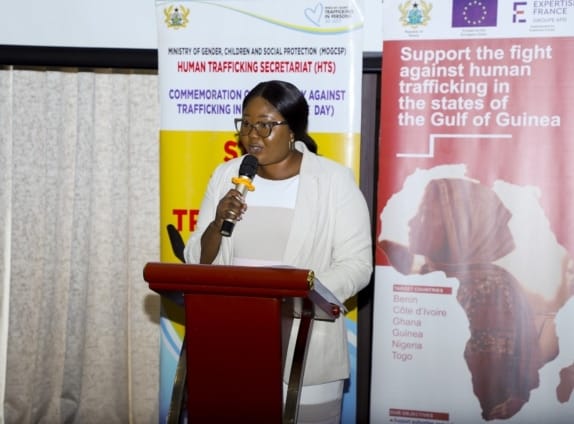
    The Ministry of Gender, Children, and Social Protection’s Human Trafficking Secretariat, in partnership with various organizations, has taken steps to involve judges in the battle against human trafficking.

    In collaboration with the Judicial Training Institute and with the assistance of Expertise France, a two-day workshop was organized to provide selected judges with sensitization and orientation on the issue.

    The aim of this initiative is to enhance their understanding of human trafficking and equip them with the necessary knowledge and tools to effectively address cases related to this heinous crime.

    During the workshop, Mrs. Francisca Oteng-Mensah, the Deputy Gender Minister, emphasized that Ghana serves as a source, transit point, and destination for human trafficking. Therefore, it is crucial for all stakeholders to work together to put an end to all forms of exploitation associated with this grave issue.

    ‘‘Let me reinterpret this adage; if you spare the rod, you spoil a child,’ to reflect the fact that, if we identify the offenders without punishing them at the end of the day,” she stated.

    Mrs Oteng-Mensah said so far with collaboration with stakeholders, over 375 law enforcement officers had been trained from 2022 to 2023 through the Expertise France Project on Human Trafficking and Irregular Migration.

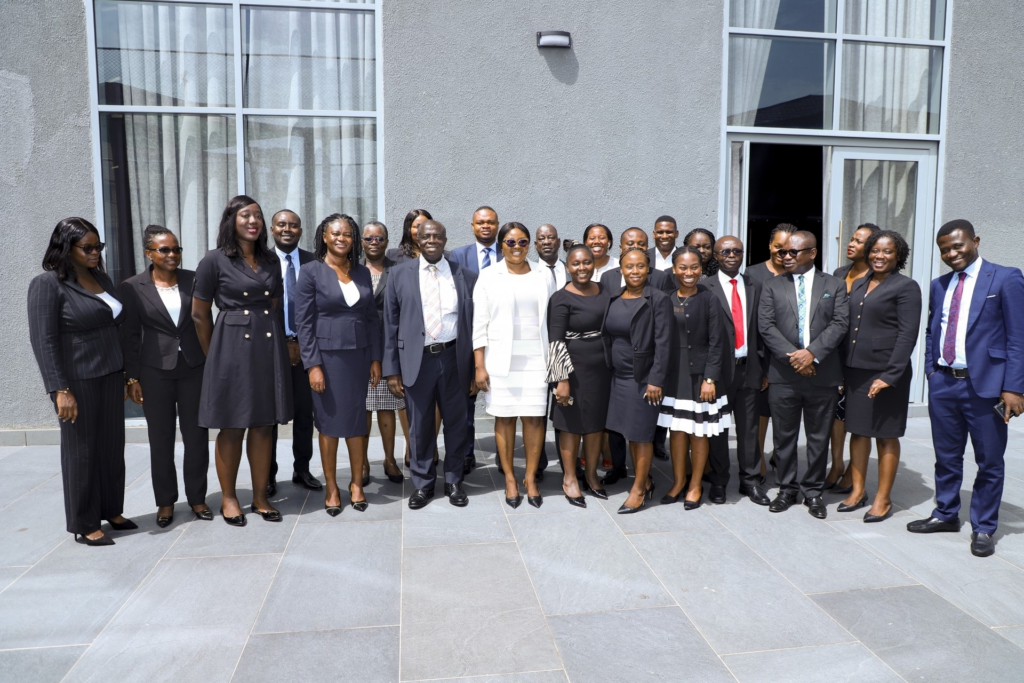
    Gender Ministry and partners engage judges against human trafficking

    The officers are from the Ghana Police, Immigration Service, Customs officers and the Economic and Organised Crime Office (EOCO).

    She said there had also been the training of trainers for 80 law enforcement officers to enhance their capacities to train their colleagues as well as capacity building for 140 Civil Aviation Officers on victim identification and counter-trafficking activities.

    The Deputy Minister said 70 judges had been sensitised in human trafficking and irregular migration in the Northern and Southern sectors of the country.

    She stated that 100 cocoa cooperatives officers’ capacities were built on understanding human trafficking trends, child labour and forced labour indicators.

    ‘‘We have to look at the financial and other material gains traffickers make from the exploitation of their victims. We can disrupt their activity through restraining and freezing their assets under the EOCO laws at an early stage of the investigation,’’ Mrs Oteng-Mensah said.

    For human trafficking, the Deputy Minister said, it included the power to seize and forfeit land, vehicles, and buildings, which may had been used to traffic victims.

    She expressed worry about the current trend of Information and Communication Technology (ICT), and crime involving the Q Net and the level of exploitation being done in the area and appealed for it to be investigated.

    Dr Afisah Zacharia, Chief Director, Gender Ministry, in a speech read on her behalf by Ms Abena Annobea Asare, Head of Human Trafficking Secretariat, said the workshop was to provide judges a basic understanding on the issues of human trafficking and irregular migration.

    She said it was also to enable them to manage traumatised trafficking victims or witnesses in the courtroom, and to discuss issues related to sentencing which was sometimes not in accordance with the statutory provisions and guidance in the Human Trafficking Act.

    Dr Zakaria said the training was necessitated by the global sales of ammunition, currently, the largest criminal trade followed by human trafficking which called for stakeholders, including judges help eradicate human trafficking.

    The Project Manager of Expertise France, Mr Serge Akpalou said human trafficking was a global phenomenon that took various forms, such as sexual exploitation, forced labour or services and servitude or the removal of organs in its extreme cases.

    He said it had recently become more pronounced due to the health and current economic crisis that had heightened the vulnerabilities of people who were already fragile.

    Every year, Mr Akpalou said, according to the Global Financial Integrity Transnational Crime rating, human trafficking generated approximately $150.2 billion and was the second most widespread form of trafficking in the world, after drug trafficking.

    The Project Manager said 2.5 million people, mainly women and children, annually fell under the influence of traffickers, and Ghana was no exception.

    He underscored the need for concerted, united and coordinated actions between agencies and especially between neighbouring countries for an effective fight against the canker.

    Mabel Ahele, Deputy Director of the Judicial Training Institute (JTI), said according to reports received, the previous sensitisation sessions in Kumasi and Tema were successful.

    She said the judges received and shared their experiences, limitations and challenges in applying the law, especially regarding dealing with victims of trafficking.

    ‘‘I pray that this sensitization will follow in the same vein. Let’s bring to light the issues bothering on victims of trafficking in our courtrooms, share best practices and discuss very effective ways of tackling the issues so that victims are not re-traumatised and stakeholders develop confidence in our judicial decisions and judgments,” Madam Ahele stated.

    Source: MyJoyOnline

  • Justice Gertrude Torkornoo rejects notion of judges as puppets of appointing authorities

    Justice Gertrude Torkornoo rejects notion of judges as puppets of appointing authorities

    Justice Gertrude Torkornoo, who has been nominated by President Akufo-Addo to be the next Chief Justice of Ghana, has rejected the notion that judges are influenced by those who appoint them.

    Addressing the issue during her vetting on May 26, 2023, she asserted that such a perception is incorrect and does not align with the reality of their work.

    “I think if there’s such a perception, it is a wrong perception, because the load of our work with respect to the ordinary Ghanaian hardly has anything to do with appointing authorities, on a daily basis we are adjudicating tens and hundreds of cases involving the “ordinary joe”,” she said.

    Justice Torkornoo expressed that most of the cases that judges handle on a daily basis have nothing to do with the appointing authority, but rather with the ordinary Ghanaian.

    Highlighting the importance of independence in the judiciary, Justice Torkornoo underlined that their decisions are based on the law and by any external pressure or interference.

    “Independence is always linked with law and as long as our decisions are premised on law, they must be presumed to have been arrived at independently,” she mentioned.

    As the prospective leader of the judicial branch, Justice Torkornoo pledged to ensure that the public understands and respects the judicial process and the independence of judges through engagements with judges and judicial staff and the media.

    “Consistent engagement with the community of Ghana, through the media regarding how the adjudication process functions and consistent engagement with judges themselves and with judicial service staff,” she explained.

    Justice Torkornoo was nominated by President Akufo-Addo in April to succeed Chief Justice Kwasi Anin Yeboah, who retired in May.

    Parliament today, Friday, May 26, vetted. Justice Gertrude Torkornoo for the post of Chief Justice. 

    If approved, she will be the third woman to hold the position of Chief Justice in Ghana, after Justices Georgina Theodora Wood and Sophia Akuffo.

    The appointment of Justice Torkornoo represents a significant milestone in Ghana’s judicial system, underscoring the country’s commitment to upholding an independent and impartial judiciary for all.

  • Prez Akufo-Addo to swear in 15 Court of Appeal judges

    The appointment of 15 more justices to the Court of Appeal has been accepted by President Akufo-Addo.

    The President received the recommendation from the Judicial Council.

    In the Jubilee House‘s Banquet Hall on Wednesday, December 21, in the late afternoon, they will be sworn into office.

    They are Justice Ackah Boafo, Justice Asare-Botwe, Justice Alex Owusu-Ofori, Justice Emmanuel Ankamah, Justice Jerome Noble-Nkrumah, Justice Mrs. Gifty Agyei Addo, Justice Samuel Obeng-Diawuo and Justice Mrs. Hafisata Amaleboba.

    The rest are Justice Jennifer Abena Dadzie, Justice Charles Ekow Baiden, Justice Stephen Oppong, Mr Patrick Kwamina Baiden, Mr Christopher Archer, Prof. Mrs. Olivia Anku-Trede and Dr. Ernest Owusu-Depaah.

  • Don’t let power corrupt you – Dr Robert Allotey Okine to Judges

    Judges in the country have been admonished to guard against being corrupted by the power they wield.

    According to the Most Reverend Dr Robert Allotey Okine, Archbishop Emeritus of the Church of Province of West Africa, judges must be guided by the aphorism “power tends to corrupt and absolute power corrupts absolutely“ in their dispensation of justice.

    He was speaking at the special church service held last Saturday at the Cathedral Church of the Most Holy Trinity in Accra to open the new legal year which commenced yesterday.

    “As representatives of the third arm of government, you wield tremendous power, power that can determine an individual or a family’s fate in life. Power that can build or destroy,” he said.

    Quoting the late professor William Chadwick, a former professor of history at the Cambridge University, Rev Dr Okine added: “the possession of unlimited power corrupts the conscience, hardens the heart and confounds the understanding” contending that such a position ended in tyranny.

    In contrast. he entreated them to be the salt and light of their practice to stay on the right path.

    The annual service ushering in the 65th legal year was attended by judges, lawyers, traditional leaders, the clergy and other stakeholders in the justice system who gathered to seek God’s strength and guidance for the new legal year.

    Chief Justice, Justice Anin Yeboah, Attorney-General Godfred Yeboah Dame, President of the Ghana Bar Association, Yaw Acheampong Boafo and Director at the Ghana School of law, Yaw Oppong were also accounted for.

    Speaking on the theme “Improving Legal Access to Justice in a pandemic through the use of technology” the retired Bishop of the Koforidua Diocese of the Anglican Church, indicated that technology was one of the ways God wanted mankind to solve problems and this had been made manifest by the coronavirus pandemic.

    He exhorted the judges on ten tenets to guide their practice which included admonition on not sacrificing integrity to expediency, being careful about people they associated with and being consistent in their utterances and actions.

    In a message, the Chief Justice, Justice Anin Yeboah, revealed that training in ICT and other related programmes have been planned to make the justice system more robust, dependable and acceptable.

    Prayers were also offered for departed judges and lawyers who passed on during the last legal year.


  • ‘What have fishes got to do with bail application?’ – Lawyer criticises judge for not granting Aisha Huang bail

    The Lawyer for Chinese illegal small-scale mining (galamsey) kingpin, Aisha Huang, Nkrabea Effah Dartey, has berated the Accra Circuit Court 9 judge, Samuel Bright Acquah, for his decision not to grant his client bail.

    Speaking in a TV3 interview monitored by GhanaWeb, on Tuesday, the lawyer said that he was disappointed by the decision made by the judge because the judge is someone, he knows to be fair-minded.

    According to Effah Dartey, the Acquah was prejudicial with some of the comments he made about the effects of illegal mining before denying Aisha Huang and the three other Chinese nationals bail.

    “I was in large measure disappointed today. I was disappointed because I know the judge, he is very fair all the time. In all cases that I have appeared before him, I have not had cause to complain about his decision.

    “But today, I was not happy. I was not happy because a case has been called and the issue before you was bail application… With the greatest respect, all that My Lord needed to do was to write his ruling and deliver it.

    “But My Lord went extempore, talking about river bodies, about Ghana Water being under pressure to supply water. My Lord was talking about fishes in the rivers. And with the greatest respect what has this got to do with the issue of whether or not the accused persons are entitled to bail,” he said.

    “My view was that my lord was betraying his view on the whole case and he is in danger of opening himself up for criticism that he has prejudged the issue,” he added.

    Lawyer Effah Dartey reiterated that until the accused persons are found guilty, they remain innocent.

    The Accra Circuit Court 9 judge, Samuel Bright Acquah on Tuesday, September 27, 2022, while refusing bail application for Aisha Huang and three other Chinese nationals who have been accused of engaging in illegal mining and the sale of minerals without a license, called on all Ghanaians to get on board in fighting illegal mining.

    He specifically made a fervent appeal to his fellow judges to take a strong position against illegal mining which he noted poses a threat to the nation.

  • Honyenuga, Kulendi, Mensah-Bonsu and Amadu get Parliamentary nod for Supreme Court bench

    Parliament has recommended the approval of Mr Justice Clemence Honyenuga, a Court of Appeal Judge and three other nominees for appointment to the Supreme Court bench.

    The three other nominees are Mr Justice Issifu Imoro Tanko Amadu, also a judge of the Court of Appeal, Professor Henrietta Mensa-Bonsu,  a law lecturer at the Faculty of Law of the University of Ghana, Legon and President of the Ghana Academy of Arts and Sciences and Mr Emmanuel Yonny Kulendi, a private legal practitioner.

    The recommendation for approval was contained in a report the chairman of the committee, Mr Joseph Osei-Owusu, presented to the House Wednesday morning [May 20, 2020], reports Graphic Online’s Nana Konadu Agyemang from Parliament.

    After a deliberation on the report in the House, the House unanimously approved the recommendations of the committee for the four to be appointed to the Supreme Court bench.

    President Nana Addo Dankwa Akufo-Addo in accordance with Article 144(2) of the 1992 Constitution and on the advice of the Judicial Council and the Council of State, in March 2020 nominated the four for Parliament to vet and recommend their approval for appointment.

    They are to replace four justices of the Supreme Court who are proceeding on retirement.

    Their approval by Parliament followed a vetting by the Appointments Committee of Parliament.

    Source: Graphic.com.gh 

  • Adjourn court cases to May CJ directs judges as coronavirus cases surge in Ghana

    Chief Justice Kwasi Anin Yeboah has issued new directives to all judges and magistrates in the country to grant long adjournments in court cases not requiring immediate resolution as coronavirus cases in Ghana surge in the last 24 hours.

    Consequent to that, lawyers with cases in court have been asked to go to court on their due dates without their clients, and request for the case to be adjourned to specific dates in May, June and July.

    “Alternatively, lawyers on both sides of a case may agree together to adjourn the matter to a specific date to be communicated to the Registrar in writing, thus avoiding the need to travel to the Court for that purpose,” a statement issued by the chief justice advised.

    Judges and magistrates have further been directed to ensure that in cases currently being heard, “only lawyers, parties and their witnesses are allowed in Court”.

    The new directives according to the CJ, has become necessary “to ensure that the Courts are sufficiently decongested” in accordance with the social distancing directives issued by President Nana Akufo-Addo on March 15 as part of measures to stem the spread of the covid-19 in Ghana.

    “We are operating in very unusual times with no precedents to guide us,” he said, but said it is key ensure that the needs of the citizenry for justice are adequately satisfied.

    From the first two confirmed cases on March 12, and a daily steady rise, Ghana has within eight days recorded a total of 16 cases of the global pandemic but no fatalities so far.

    Figures from the World Health Organisation (WHO) show more than 209,000 people have now been infected by the coronavirus worldwide and killed at least 8,000 people globally. The pandemic has caused health crisis in some nations.

    At least 86,000 have recovered from COVID-19, data from Johns Hopkins University in the US has also revealed.

    The five new cases confirmed in Ghana involved three localized infections as authorities say they have no travel history.

    Ghana Health Service officials at the forefront of the disease are unable to tell how two of the localized cases were contracted because they have neither travelled outside Ghana nor had known contact with an infected person.

    In the case of the 53-year-old Ghanaian male in Tema, officials say “no history of travel, no evidence of close contact with confirmed case”.

    For the 29-year-old Ghanaian lady of Accra, officials did not say how she got the disease except to say her “sample confirmed positive in the laboratory”.

    However, for a 34-year-old Ghanaian lady resident of Accra, she was said to have contacted an infected person her place of work.

    A statement issued moments ago by the Ghana Health Service said all the five new cases were reported from Greater Accra Region and involved Ghanaians.

    The fourth case is a 41-year-old Ghanaian male who arrived in Ghana by KLM on the 15 March 2020.

    “[He] indicated exposure with family members in Amsterdam exhibiting respiratory symptoms and also on the flight with some passengers sneezing and coughing; sample confirmed positive in the laboratory,” the Ghana Health Service stated.

    A 36-year-old Ghanaian male resident in Paris, France although arrived in Ghana with an unconfirmed case, he later tested positive.

    Officials said there is “no evidence of contact with infected person”.

    Though no death has been recorded in the country since the first two confirmed cases were recorded on March 12, there are fears the situation could get worse as Ghana appears to be moving from steady rise to a surge with localized cases being recorded.

    Ghana has since March 15 taken a series of measures including a ban on social gatherings for the next four weeks, closure of schools and a ban on non-citizens from countries worst hit by the global pandemic from entering Ghana.

    Source: 3news.com

  • 54 judges study new Company Act

    Some 54 judges have been trained on the new Company Act 29 (Act 992).

    The two-day training was held in Accra.

    The new Act replaced the repealed Companies Act, 1963 (Act 179).

    The training programme was organized by the Judicial Training Institute in collaboration with the Bank of Ghana.

    It was attended by High Court Judges drawn from various Divisions of the High Court in the 16 Regions of Ghana, 31 Court of Appeal Judges and 14 Supreme Court Judges.

    They were taken through topics such as Introduction to and Background of Ghanaian Company Law, Provisions of the new Company Act 2019, (Act 992), Creation of the Office of the Registrar of Companies, Rotation of Auditors, and Qualification and duties of a Company Secretary.

    The purpose of the training was to keep the judges abreast of the provisions of the new Act so that they can appreciate the reforms it has introduced.

    It was also to enable them have the requisite knowledge in corporate governance.

    In his address, the Chief Justice, His Lordship, Justice Anin Yeboah, identified continuous judicial education as one of the key strategic interventions of the Judicial Service to improve the quality of justice in the country and for the Service to deliver on its constitutional mandate.

    He noted that the judiciary for the past decade has sought to improve the quality of justice delivery, and continuous judicial education should be seen as the way to help the Judiciary and the Judicial Service to succeed in executing their mandate under the Constitution.

    The Chief Justice remarked, “Efforts at reforming the Judiciary will not achieve much without a well-coordinated training to build the capacity of Judges and Magistrates as well as the support staff.”

    He was of the view that the new Companies Act, having drawn on the experiences of more developed jurisdictions and international best practices, would make it easier for one to do business in Ghana. That makes it necessary for Judges to acquire the requisite knowledge to ensure speedy and effective adjudication of business and commercial disputes.

    Our contribution as Judges is to be conversant with the provisions of the new Act, so that it will be enforced rightly and justly”, he said.

    The resource persons were; Retired Justice of the Supreme Court, Justice Date-Bah and a Legal Practitioner, Mr. Felix Ntrakwah.

    Source: dailyguidenetwork.com

  • Judge Judy to end in 2021 after 25 years

    Judy Sheindlin, one of US daytime TV’s biggest stars, has revealed her long-running CBS show Judge Judy will end next year after 25 seasons.

    In an interview with Ellen DeGeneres, to be aired on Monday, the 77-year-old said she would launch a new show on another, unnamed network in 2022.

    “I’ve had a 25-year marriage with CBS and it’s been successful,” Sheindlin said in a clip released online.

    CBS has yet to comment on the multiple Emmy winner’s departure.

    According to Judy Sheindlin, CBS is seeking to utilise repeats of Judge Judy, instead of commissioning further series.

    She explained: “Now, [CBS] have 25 years of reruns, so what they decided to do was to sell a couple of years worth of reruns.”

    “But,” she added: “I’m not tired.”

    Sheindlin said her desire to continue working led her to the decision to launch a new show, titled Judy Justice. But that will not air on CBS.

    She said the new show “would be going elsewhere” while reruns of her old shows go into syndication.

    Sheindlin said next year would mark the “silver anniversary” of her Judge Judy show and that its final season would be “the best ever”.

    “Judge Judy, you’ll be able to see next year – a full year, all new shows,” she confirmed.

    “The following couple of years, you should be able to catch all the reruns that CBS has sold to the stations that are currently carrying Judge Judy, and Judy Justice will be going elsewhere – isn’t that fun?”

    According to Variety, Sheindlin sold her show’s library to CBS in 2017 for around $100 million (£78.25 million).

    Since 1996, millions of viewers have seen Sheindlin pass judgment on real-life small claims cases.

    More than 5,000 episodes of the show have been broadcast since its inception and Sheindlin is now the highest-paid personality on US television.

    ITV’s popular daytime show Judge Rinder follows a similar format, with criminal barrister Robert Rinder holding court.

    Source: bbc.com

  • Akufo-Addo to swear in 40 judges today

    President Akufo-Addo will this morning swear in a total of thirty-three (33) High Court Judges and ten (10) Court of Appeal Judges in a ceremony at the Banquet Hall of the Jubilee House.

    Most of the forty-three (43) judges are being elevated to their new roles in the Justice delivery system of the country.

    Later in the day, the President will also swear in three (3) new female Justices of the Supreme Court.

    Below is the list of judges to be sworn in

    Read: I wish judges wear African print, not black suit Justice Torkornoo

    Court of Appeal Judges

    1.Justice Anthony Oppong
    2.Justice Samuel Kwame Adibu Asiedu
    3. Justice Philip Bright Mensah
    4. Justice Angelina Mensah-Homiah
    5. Justice Jennifer Amanda Dodoo
    6. Justice Sophia Rosetta Oduokua Bernasko Essah
    7.Justice Georgina Mensah-Datsa
    8. Justice Eric Kyei Baffour
    9. Mr. Yaw Darko Asare
    10. Mr. Obeng-Manu Jnr, Esq

    High Court Judges

    1. Gabriel Nene Kwao Mate-Teye
    2. Lydia Osei Marfo
    3. Ali Baba Abature
    4. Abena Oppong Adjin-Doku
    5. Mariama Sammo
    6. Patricia Quansah
    7. Aboagye Tandoh
    8. Ruby Aryeetey
    9. Kwame Amoako
    10. Mariam Saleh Sinare
    11. Cynthia Wiredu
    12. Frank Aboadwe Rockson
    13. Emmanuel Ayesu Essampong
    14. Frederick Arnold Wekem Kwesi Nawurah
    15. Rita Abena Abrokwah Doko
    16. Comfort Kwasiwor Tasiame
    17. Ruby Naa Adjeley Quaison
    18. Priscilla Dikro Ofori
    19. Mary Maame Ekue Nsenkyire
    20. Jane Harriet Akweley Quaye
    21. Ayitey Armah-Tetteh
    22. Charity Akosua Asem
    23. Malike Awo Woanyah Dey
    24. Doris Dabanka-Bekoe
    25. Stephen Oppong
    26. Emmanuel Kofi Diaba Esq.
    27. Sarah Aryee
    28. Mavis Akua Andoh
    29. Eudora Christina Dadson
    30. George Appah Kwabena
    31. Naana Bedu-Addo
    32. Amos Wuntah Wuni
    33. Enyonam Adinyira

    Supreme Court Judges

    1. Justice Mariama Owusu
    2. Justice Gertrude Torkonoo
    3. Justice Avril Lovelace Johnson


    Source: Starrfmonline.com