Tag: Junior High School

  • Only final-year JHS students to sit for BECE under new plan – Haruna Iddrisu announces

    Only final-year JHS students to sit for BECE under new plan – Haruna Iddrisu announces

    The Minister for Education, Haruna Iddrisu, has announced that, in the coming days, the Basic Education Certificate Examination (BECE) will be restricted only to learners who have not progressed to Junior High School (JHS) Form 3.

    Addressing the media on Thursday, April 2, the government’s intention is aimed at overhauling the country’s basic education system and improving learning outcomes.

    The Minister explained that some non–JHS 3 students are insufficiently prepared for the demands of the examination, resulting in poor performance.

    He added, “We have also made a determination that, there students who leap early, not yet in JHS 3 but ought to write BECE, that is unacceptable per the GES guideline and the WAEC guidelines”.

    According to him, the West African Examinations Council (WAEC) and the Ghana Education Service (GES) frown on allowing non-JHS 3 leavers to sit for the final year examination.

    “That is why we are seeing a reflection of poor quality because the student is not up to the task but forces himself to write BECE even when he is in primary six or JHS 1 or 2,” he noted.

    Meanwhile, 483,800 have been placed into various Senior High Schools across the country out of the 590,000 candidates.

    On Monday September 1, 2025, the school placement portal was opened for new entrants students to verify their school choices, biodata, and other relevant information ahead of the final placement. The deadline for the fact-checking exercise was brought to a close on Monday, September 8.

    Of this figure,248,038 are females (51.4%), and 234,783 are males (48.6%). However, 107,509 candidates (18.2%) could not be matched with their initial school choices due to high demand for certain Category A schools.

    Meanwhile,Private Senior High Schools categorized under the Free Senior High School programme have so far admitted 25,000 first year students, as disclosed by the Ghana National Council of Private Schools (GNACOPS).

    Speaking to the media on Thursday, October 16, the Executive Director of GNACOPS, Obenfo Nana Kwasi Gyetuah, indicated that “We have integrated 70 private schools across the 16 regions in Ghana, and in totality, the vacancy that has been declared is 44,000.

    “But as we speak now, the government has been able to place 25,000 students in these schools. We are yet to complete the other schools for them to have the vacancies that they have declared”.

    As part of this initiative, the government has allocated GH₵994 annually for each student enrolled in these private schools. This allocation covers tuition for day students, while parents of boarders will be required to pay the additional costs associated with boarding.

    Over seventy (70) private schools have been featured under the Free Senior High School policy. Junior High School (JHS) graduates will be admitted into these private schools that fall in category E in the school selection process.

    These schools will be accepting applications starting from the 2025/2026 academic year. The new development aligns with the government’s efforts in easing congestion in public SHSs as well as promoting quality education across the country.

    In a press release issued on Sunday, July 20, by the Ghana National Council of Private Schools (GNACOPS) and signed by its National Executive Director, Oberto Nana Kwasi Gyetuah, the council has described the initiative as a historic and progressive move.

    “This progressive move marks a significant milestone in Ghana’s educational transformation journey. It underscores the Government’s commitment to inclusive, collaborative education delivery and reaffirms the important role of private schools in advancing national development goals,” part of the release read.

    The council further called on other private schools that are yet to be listed to remain patient, prepared, and compliant with regulatory standards. In May, Deputy Minister of Education Dr. Clement Apaak announced that the inclusion forms part of a broader plan to scale up capacity and gradually end the double-track system.

    “As part of our campaign promise, we have been working diligently to bring on board private senior high schools in the delivery of the Free SHS programme. Meetings have been held, engagements have been done, and we are very certain that with the diligence we expect from our side…” he noted.

    The double-track system was introduced in 2018 by the erstwhile government to accommodate the surge in student enrollment due to the Free SHS policy, addressing overcrowding in public schools.

    Under this system, students were divided into two groups Green Track and Gold Track attending school in shifts, with one track in session while the other was on break.

    The anticipated extension of the Free SHS policy, according to the Education Minister, Haruna Iddrisu, is a fulfillment of the government’s manifesto promise, adding that it is a step to ensure eligible students gain admission without delays.

    “We believe strongly that in fulfilling this manifesto campaign promise, this is going to serve as an artery in helping us bring an end to the double-track system,” the deputy minister said.

    According to him, the Education Ministry has received encouraging feedback from private schools, many of which have expressed readiness to meet the standards and requirements of the Free SHS framework.

    “… and the eagerness of the private schools to participate, the private schools will deliver in their participation,” he assured.

    He added that this collaboration would not only help expand capacity but also ensure a more equitable distribution of educational opportunities across the country.

    The Free Senior High School policy was introduced in 2017 by the Akufo-Addo-led government to make secondary education accessible to all eligible students without financial barriers.

    The policy was aimed at helping students who struggled to pay tuition, boarding, and other school-related expenses. However, the policy came with its challenges, such as overcrowding and congestion in schools, pressure on infrastructure and facilities, and increased pressure on teachers.

    This increased the number of enrollments in the senior high schools that were listed under the Free SHS policy. About 3.5 million students have benefited from the Free Senior High School (Free SHS) program since its launch.

    The immediate-past government revealed that it had spent over GH¢12 billion on the implementation of the Free SHS policy since its inception.

    Meanwhile, Asantehene Otumfuo Osei Tutu II has urged a reassessment of Ghana’s Free SHS initiative, recommending that households with sufficient means contribute financially so that government support can be directed toward students in real need.

    During a meeting with Education Minister Haruna Iddrisu, the Asantehene suggested a shared funding model, akin to previous arrangements where financial aid was granted to bright but disadvantaged students, while those with the ability to pay covered their own expenses.

    “Those who can afford to pay, let’s have a second look at the policy. If someone can afford it, let’s allow them to pay. In the old times, when you passed, the bursary would look for good but needy students and award them scholarships, and those who could afford to pay did so.”

    Otumfuo Osei Tutu II has recognized the positive impact of the Free SHS policy but stressed the importance of a national discussion to tackle its shortcomings and secure its future.

    “This Free SHS we are talking about, although we have implemented it, if we have a dialogue and find out that it will result in students coming home every now and then because there is no food, then it is not fit for purpose.”

    He also pointed out several pressing concerns affecting secondary schools, including overcrowded dormitories, a lack of well-equipped science and ICT laboratories, irregular food supplies, and insufficient school buses.

    “Our dormitories are overcrowded and lack science and ICT labs. Sometimes PTA makes contributions to support. The lack of school buses and the shortage of food should all be looked at. Let us implement it well so that students will stay in school and have enough to eat.”
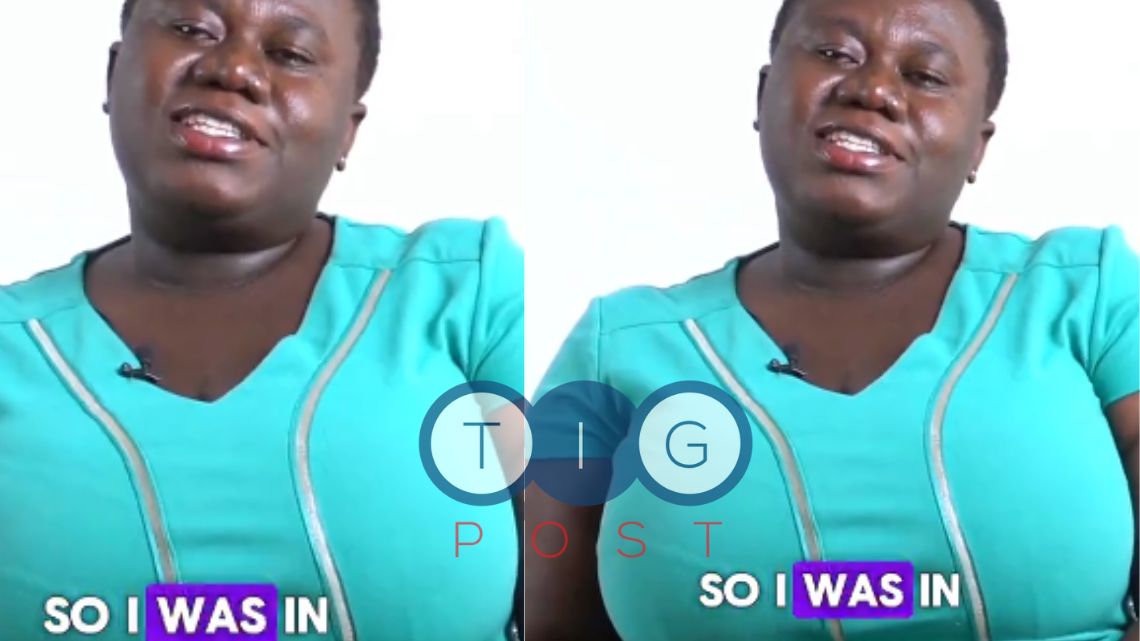

  • My six-year-old relationship ended because my boyfriend said I was too educated – Woman

    My six-year-old relationship ended because my boyfriend said I was too educated – Woman

    A young woman has opened up about the demise of her six-year relationship, attributing it to her dedication to pursuing higher education.

    Reflecting on the beginnings of their romance during Junior High School (JHS), she fondly recounted dreams of marriage that they nurtured as teenage sweethearts, envisioning a future together post-studies.

    However, as their paths diverged, with her commitment to academic growth leading her to university after completing a certificate course and securing employment, tensions arose within their relationship.

    The turning point arrived when she expressed her intention to pursue a master’s degree, to which her partner responded with disapproval, citing a dislike for highly educated women.
    “So, I was in a relationship for six years, that was my first love and we both had our dream of getting married because we were young then.

    “I had completed JHS by then, so we decided to wait until marriage. But along the line, due to peer pressure and all that, we had sex, and we thought that the relationship would lead to marriage.

    “So, after SHS, I had to do a normal certificate course before going to the university. After the course, I started to work, so he thought that all was done with my education, while he also went into trade.

    “I went to the university, and during level 200, he asked, what is the plan now? So, I was saying that I would work for a while and pursue my masters and all that,” she said in the video shared on X (formerly Twitter.)

    This disagreement escalated when he abruptly announced plans to marry someone else, leaving her heartbroken and questioning the compatibility of their aspirations.

    “He just said, as for me, I don’t like a lady who is so educated. I just thought that it was a normal mere saying, but not knowing that it was not.

    “One Sunday, I was just there, and he sent me a message: I want to get married. So, I said, then let me finish my school, then we get married. He said, no, I am getting married next week, so yes, that is how I got my heart broken.

    “I just cried it off and pretended everything was okay. And then I continued with my studies,” she added.
    Through tears and resilience, she continued her educational journey, sharing her story as a testament to the complexities of balancing personal ambitions with romantic relationships.

    Watch video below:

  • Aggrieved parents storm Odumase local Roman Catholic JHS

    Aggrieved parents on Tuesday rushed to the local Roman Catholic Primary and Junior High School at Odumase in the Sunyani West Municipality after a teacher allegedly caned one of the students.

    The Ghana News Agency (GNA) gathered that the aggrieved parents went to the school in connection with the caning of their son, a form two student by a teacher.

    The teacher, only known as Amoah, allegedly beat the boy, leading to multiple scars on his back.

    The Ghana Education Service has banned any form of corporal punishment in primary and secondary schools in the country and teachers are expected to use alternative but appropriate punishments as measures for correcting pupils and students in schools.

    Some teachers, however, intervened, restrained and calmed down the parents, who were determined to vent their anger at the teacher.

    Mr Issah Baffoe, the Sunyani West Municipal Director of Education, who confirmed the story, told the GNA he had since directed the school authorities to investigate the matter.

    Describing the incident as unfortunate, Mr Baffoe assured the teacher would be sanctioned accordingly if found culpable to serve as a deterrent to others and urged the parents to remain calm.

    Source:GNA

  • Headmistress of Alajo “1” Basic School calls for infrastructure support 

    Madam Genevieve Adjei, the Headmistress, Alajo “1” Primary and Junior High School, has called for logistics support to help increase effective teaching and learning outcomes.

    She said though the school continued to provide training and development to the community, it was in dire need of some teaching and learning materials, chairs and tables for teachers and school cupboards.

    The Headmistress said this when Alhaji Ahmed Yakubu, Council Chairman, Alajo Traditional Council led a delegation of educationists and investors from San Francisco, California, USA, to visit Alajo “1”, “3” and “4” basic schools.

    The delegation, made of African Americans from the diaspora, had teamed up with Nii Armah Ajoor II, the Chief of Alajo to help provide some infrastructure and logistics for basic schools in his community.

    The visit was also in line with Ghana Tourism Authority’s “Give Back to Ghana,” one of the seven pillars of promoting tourism and diaspora contributions.

    Speaking in an interview with the Ghana News Agency, Madam Adjei said one of the challenging issues the school had faced over the years was modern toilet facilities, which in a way had affected teaching and learning.

    She said some miscreants sometimes took advantage of the lack of security at the school and ransacked their offices.

    Speaking on behalf of Nii Armah Ajoor II, Alhaji Yakubu said, the collaboration was part of strategies to develop the community, particularly children’s education.

    “The state of educational facilities within Alajo is appalling bearing in mind how technology is changing the trend. This trend must change because the kids deserve better than this,” he said.

    Mr Jonathan M. Butler, Community Activist and Faith-Based Leader, San Francisco, told the GNA, they had come to observe the needs of the community and schools so they could invest in those areas.

    “We have noticed that they need books, desks, computers….and so we going to plan with our colleagues to help these children, we need to invest in them,” he said.

    He said: “We want to help the school because they are our future, and they would help us prepare our world to the next level. We would speed up this process where we will help build their computer labs, libraries and cafeteria.”

    The Ministry of Tourism, Arts and Culture, this year anticipates about one million visitors to the country by the end of the year with a projected revenue contribution of $2.3 billion.

    Source:ghanaiantimes.com

  • ZIT’s Ayawaso Basic Schools Quiz competition reaches semi-final stage

    The Zongo Inspirational Team, ZIT, last week started their annual Basic Schools Quiz Competition with the event entering its semi-final round starting September 26,2022.

    The competition aims at pooling public and private schools in the Ayawaso cluster of schools with the view to promoting out-of-class academic engagement with healthy competition.

    The contest is specifically for Junior High School students.

    Half of the original 16 schools that competed at the group stages, between September 19 to 22, are into the semis whiles the others will have to try their luck next year.

    The first semi-final clash will pit winners of Groups C and A. It is scheduled for Monday, September 26 at the Nima-Mamobi Kathy Knowles Library, near the National Mosque, Kanda.

    The schools involved are Al Waleed Comprehensive Basic School, Apostolic Hope School, first and second placed schools in Group C and Ring Road East ‘1’ Basic and Kotobabi ‘7’ Basic School – also first and second in Group A respectively.

    The event has other strands including entertainment and importantly the issue of role modeling, which entails sharing inspiring stories of professional Muslims with the young ones.

    ZIT describes itself as, “a career guidance and mentoring organization aimed at counseling, inspiring and building the capacities of young students in Zongo communities across the country.”

    The other semi-final will be between the following schools:

    Kotobabi ‘7’ Junior High School
    Accra New Town ‘3’ Basic School
    Dr. Kwame Nkrumah Memorial School and
    St. Kizito Roman Catholic JHS

    The first two were winner and runner-up from Group A and the other two being winner and runner-up from group D.


  • Lilwin supports over 1,500 students ahead of BECE

    Ghanaian actor Kwadwo Nkansah Lilwin has sponsored the final mock exams of Junior High School (JHS) three students in the Afigya Kwabre North District of the Ashanti Region.

    The famous actor also gave away some writing materials as part of his “One Student, One Pen” initiative, which was launched in May in partnership with DPS Ball Point Pens.

    Information gathered by the Ghana News Agency reveals that the actor spent over GHC 50, 000 on this sponsorship project with over 1500 students as beneficiaries.

    In a social media post, Lilwin said that the gesture was to prepare the students ahead of the Basic Education Certificate Examination (BECE), which comes off in October.

    “Education is an important aspect of our lives. While others take it for granted, there are others who crave it and struggle to get it.

    “As part of my social responsibility, I sponsored a mock for all JHS final students in the Afigya Kwabre North District, both public and private candidates,” he said.

    “This mock is to eliminate fear and bring hope for their upcoming BECE,” he wrote on Facebook.

    Lilwin, who is the owner of the Great Minds International School in the Afigya Kwabre District, has thousands of students enrolled, with the less-privileged enjoying full scholarships.

    Source:ghanaweb.com

  • MACCCU contributes to construction of police check point