Tag: Kenyans

  • ECOWAS team departs Guinea-Bissau after President Umaro’s threats

    ECOWAS team departs Guinea-Bissau after President Umaro’s threats

    A delegation from the West African regional bloc, ECOWAS, has departed Guinea-Bissau, citing threats from President Umaro Sissoco Embalo to expel the mission.

    The team was deployed last month to facilitate a political agreement on organizing elections this year. It had drafted an electoral roadmap and begun consultations with key stakeholders.

    However, the delegation cut its stay short early Saturday after Embalo’s warning.

    The mission will now report to the ECOWAS leadership, including recommendations for a framework to ensure “Since (Donald) Trump became (US) president, now Kenyans have shifted all the blame on him. Workers are not getting paid and it is blamed on Trump. No medication in hospital – it’s Trump, now we have to pay for school fees and it’s Trump, everything is Trump. We are tired of Trump.”

    Embalo has yet to respond to the accusations.

    Tensions have escalated over the official end of his five-year mandate. While the opposition insists his term expired last week, the Supreme Court of Justice has ruled it will conclude on September 4.

    General elections, initially scheduled for last November, were postponed by Embalo, who has since announced a new date of November 30. The opposition has strongly opposed the delay.

    Guinea-Bissau has a long history of political instability, including multiple military coups since gaining independence in 1974.

    Embalo himself has faced two coup attempts, the most recent in December 2023, which led to his decision to dissolve the opposition-led parliament.

    Last Thursday, opposition groups called for a nationwide strike to mark what they claim was the official end of his presidency, prompting a heavy security presence across the capital.

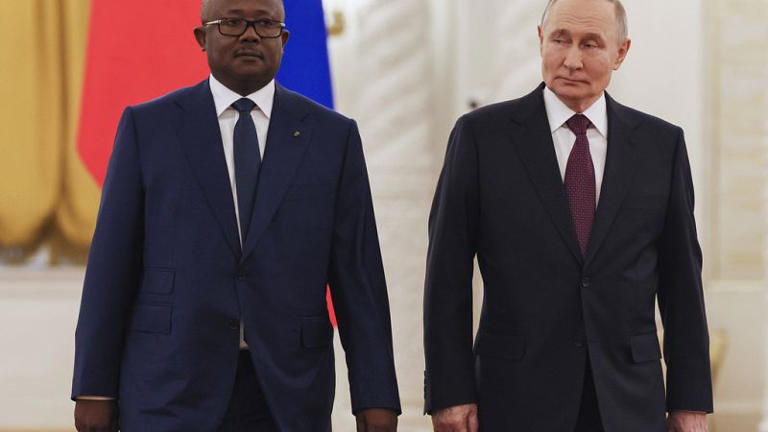
    Meanwhile, Embalo traveled to Moscow a day earlier, where he met Russian President Vladimir Putin to discuss strengthening bilateral cooperation.


  • Report ranks Kenyans as second most generous people globally

    Report ranks Kenyans as second most generous people globally

    Kenya scored 63 points in the World Giving Index 2024, placing it just behind Indonesia, which earned 74 points.

    The survey, which posed three questions about recent charitable actions, revealed that 82% of Kenyans reported helping a stranger or someone they didn’t know.

    This makes Kenyans particularly generous, with a high likelihood of receiving assistance from them in times of need, even if you’re abroad.

    In the World Giving Index 2024, Kenya is ranked second globally for the generosity of its citizens. This ranking is based on a 2023 survey of 145,702 people across 142 countries, covering over 95% of the world’s population.

    The 14th edition of the index highlights not only the consistency in volunteering time but also an increase in financial donations and aid to strangers.

    Indonesia retained the top spot with 74 points for the seventh consecutive year, having surpassed Myanmar in 2017.

    “As many as nine in 10 Indonesians donated money to charity, and more than six in 10 volunteered their time,” the survey said.

    Kenya took the second place with 63 points against the global average index score of 40 points.

    An average of the positive responses was calculated for each country, giving an index score and a global ranking.

    Singapore came third but tied on 61 points with fourth placed The Gambia, followed by Nigeria (60 points); United States (59); Ukraine (57) while Australia, United Arab Emirates and Malta came in 8th, 9th and 10th respectively with 54 points each.

    “A higher index score indicates that more of that country’s population is engaged with giving. The lowest possible score is zero points, and the highest possible score is 100 points,” the report notes.

    The survey posed three key questions about recent charitable activities:

    • Have you contributed money to charity?
    • Have you assisted a stranger or someone you didn’t know who was in need?
    • Have you volunteered your time with an organization?

    Regarding assistance to strangers, Kenyans led with 82% of respondents affirming they had done so. They were followed by Bangladeshis and Nigerians (81%), Liberians (80%), and people from Senegal, Sierra Leone, and The Gambia (78%). Ukraine, Malawi, and Niger each had 71% of respondents providing help.

    While Kenyans did not make the top 10 for monetary donations, they ranked fourth for time volunteered, with 52% of respondents indicating they had given their time.

    Indonesia topped the charts in both financial contributions and time volunteered, with approval ratings of 90% and 65%, respectively.

    Poland was at the bottom of the list with only 23% of citizens reporting they had helped a stranger, 15% having donated money, and 7% having volunteered their time.

    Regionally, Oceania, North America, and Southeast Asia emerged as the most generous regions, each scoring well above the global average of 40 points. Oceania in the Asia Pacific led with 52 points. In Europe, Western Europe topped with 43 points, North America led the Americas with 48 points, and Western Africa led Africa with 42 points. East Africa, including Kenya, was second in generosity with 41 points, followed by Middle Africa, Southern Africa, and Northern Africa with 39, 35, and 33 points, respectively.

    Overall, the likelihood of people helping strangers increased from 49% in 2014 to 61% in 2023. Monetary donations grew slightly from 31% to 35%, while the rate of time volunteered rose from 21% to 24%.

    “The global index score is at its joint-highest level,only previously matched during the pandemic,” the report said.

    “We continue to call upon governments, policymakers and international funders to ensure the building blocks are in place to enable cross-border giving, and to create sustainable, resilient local giving structures.”
  • Tributes pour out from Kenyans to singer Roger Whittaker

    Tributes pour out from Kenyans to singer Roger Whittaker

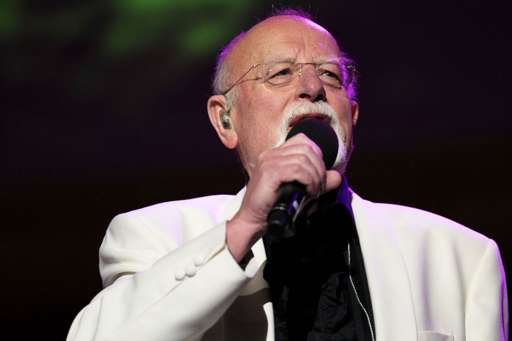
    Kenya is in mourning following the passing of the renowned British folk singer and accomplished whistler, Roger Whittaker, who was originally born in Kenya. He is particularly celebrated locally for his 1982 hit song, “My Land is Kenya.”

    Whittaker, who passed away at the age of 87, was born in Nairobi, Kenya, to English parents. He dedicated two years to national service, where he was involved in fighting against the rebel Kenya Land and Freedom Army, also known as Mau Mau. Later, he pursued a career in teaching.

    Upon relocating to the United Kingdom, Whittaker ventured into music by playing the guitar and singing in folk clubs. Over the course of his extensive music career spanning decades, he reportedly sold nearly 50 million records worldwide, as stated on his website.

    However, in Kenya, he is most famously associated with his song about his place of birth and upbringing. “My Land is Kenya” holds a special place and is often played on television during national holidays, alongside other patriotic tunes.

    In the song, Whittaker passionately praises “the land I love… the land I was born,” delivering heartfelt lines that resonate with Kenyan audiences.

    My land is Kenya, so warm and wild and free

    You’ll always stay with me here in my heart

    My land is Kenya, right from your highlands to the sea

    You’ll always stay with me here in my heart, here in my heart

    “[Roger Whittaker] has left behind a remarkable piece of art that is truly worth emulating. As Kenya celebrates 60 years of independence this year, Roger Whittaker will forever be a part of our musical history,” Edward Mwasi said on social media platform X (formerly Twitter).

    “May he Rest in Peace, he wrote beautiful music with heartfelt lyrics, including The Last Farewell and My Land is Kenya,” former foreign affairs permanent secretary Macharia Kamau said.

  • Tanzanian and Kenyan presidents joke about their language skills

    Tanzanian and Kenyan presidents joke about their language skills

    Kenyans and Tanzanians on social media are arguing playfully about their presidents’ comments on who is better at speaking Swahili.

    Swahili is the main language spoken in two countries in East Africa. Kenyans are often made fun of for not speaking Swahili properly, while Tanzanians are made fun of for not speaking English well.

    At a recent meeting about farming and food in Tanzania, President Samia Hassan scolded the Kenyan President William Ruto for not using the right greetings in Swahili language.

    The other day, Mr. Ruto visited us and taught us to say ‘jambo’, but the correct way to greet is ‘habari ya mchana’. “They are Kenyan people. we should make them take Swahili lessons,” she said in Swahili.

    But CNN reporter Larry Madowo, who is also from Kenya and was leading the discussion, defended their president.

    I have to support and protect my president. Because Kenyans and Tanzanians are like siblings, we speak to Tanzanians using poor Swahili and they respond to us using poor English. We continue doing this, just like it’s the truth,” he said in Swahili, and the audience laughed loudly.

    The exchange showed that the neighboring countries have a friendly relationship and similar culture.

  • DR Congo waives its visa requirement for Kenyans

    DR Congo waives its visa requirement for Kenyans

    The Democratic Republic of Congo has decided that Kenyans no longer need a visa to travel there.

    The Director General of Migration in DR Congo, Roland Kashwantale Chihoza, made an announcement on Wednesday.

    Kenya has waived requirements for people from Congo visiting their country. And in return, Congo has done the same for people from Kenya visiting their country.

    Kenya said it was getting rid of obstacles to let people move freely and promote trade within the East African Community (EAC).

    DR Congo joined the EAC as its seventh member last year.

  • Museveni advises Ugandans to ignore Kenyans

    Museveni advises Ugandans to ignore Kenyans

    Social media rumors that President Yoweri Museveni was in an Intensive Care Unit (ICU) because of Covid-19 have been debunked by the president.

    The President said on Tuesday evening that he is responding well to treatment and would have come out of isolation had he not tested positive for the disease on Sunday.

    “I also noticed some few individuals from, I think Kenya, saying that I was in ICU etc. If I were in ICU, the government would inform the country. What is there to hide? However, I have not been to bed as a sick man in the house here except for sleeping, let alone being in a hospital bed, whether ICU or otherwise. Continue praying, we shall overcome,” he tweeted.

    He thanked Ugandans for their support.

    “My social media team brought me messages that are overwhelmingly supportive. Thanks so much fellow Ugandans. I appreciate those who took the trouble to sign the boards at the Gate of Nakasero,” he added.

    Ugandans have taken to Twitter and other social media platforms to wish the veteran ruler a quick recovery after he declared that he had caught the coronavirus disease at his last public appearance on Thursday.

    Museveni, 78, while delivering his State of the Nation address, said he started experiencing mild flu-like symptoms three days earlier but ignored it and continued with his schedule.

    “I noticed some mild flu-like symptoms in one of the nostrils (the right one). That is when I called my doctors to take samples and rule out corona. They took three samples- one rapid and two PCRs. The rapid one was negative, and so was one of the PCRs. However, one of the PCRs was positive,” he said.

    The President reportedly took another test after his address which confirmed he had contracted the virus, forcing him to take a “forced leave” for the first time in 53 years.

    Giant board

    A group of his supporters led by Rubaga Deputy City Resident Commission Anderson Burora and Kampala Central mayor Salim Uhuru among others, have since launched a get well soon campaign for the public to express their sympathy to the President.

    Well-wishers have been allowed to place flowers at the entrance of State House in Nakasero, in Kampala city centre, and to write get-well messages on a giant board with his photo erected there.

    For many Ugandans, it is the first time they’ve heard that the President, in power for 37 years, has fallen sick.

    Some well-wishers are leaving their telephone contacts, hoping the President will call them when he recovers.

    “We are here in solidarity to wish the president a quick recovery and also appreciate him for signing the anti-gay law that will preserve the African values and culture,” Ashraf Barigye, the chairman of Team Muhoozi Boba Boda initiative Uganda said on Tuesday.

    The President, who is now in isolation at State House, said he was experiencing mild headaches but was taking vitamin C and other vitamins to manage the symptoms of Covid-19.

    Museveni tested positive for Covid-19 after a ten-day retreat with Members of Parliament from the ruling National Resistance Movement (NRM) at the National Leadership Institute Kyankwanzi in central Uganda.

    He delegated his work to Prime Minister Robinah Nabbanja.

  • Over 200 kenyans in police grips over high cost of living protests

    Over 200 kenyans in police grips over high cost of living protests

      The Kenyan police has reported that 238 individuals had been detained during the violent anti-cost-of-living rallies on Monday that also left 31 police officers hurt.

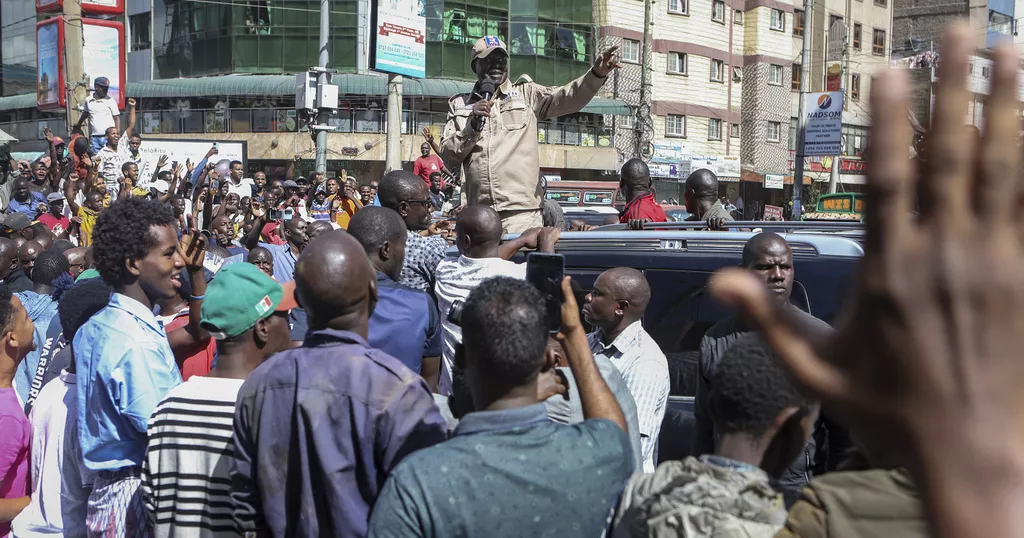
      Following a call from longtime opposition leader Raila Odinga, protesters joined rallies in Nairobi and other parts of Kenya on Monday.

      It was the first major unrest since President William Ruto took office in September last year, narrowly beating Odinga in an election his rival claims was “stolen”.

      Odinga had called for the day of action, blaming the government for the economic woes faced by Kenyans.

      They are battling high prices for food and fuel, a plunging currency, and a record drought that has left millions hungry.

      Police fired tear gas and water cannon against demonstrators, some of whom were hurling rocks and burning tyres, as well as against Odinga’s motorcade.

      On Monday, Deputy President Rigathi Gachagua urged the organisers to call off the “mayhem and the chaos,” saying the protests had cost Kenya about $15 million in lost business.

      But Odinga has vowed no let-up the action, calling for protests and strikes to be held every Monday until the cost of living comes down.

      On Tuesday, the situation had returned to calm in Nairobi.

    • Kenyans recieve $2 per hour to make ChatGPT less harmful – Report

      Kenyans recieve $2 per hour to make ChatGPT less harmful – Report

      A recent investigation by Time Magazine has revealed that a company that does artificial intelligence research, OpenAI, paid Kenyan workers less than $2 (£1.60) to make its ChatGPT chatbot less poisonous.

      The workers were tasked to help build a filter system that would make ChatGPT suitable for everyday use, Time reported.

      They were forced to read graphic detail like child sexual abuse, bestiality, murder, suicide, torture, self harm, and incest.

      Their working conditions and pay are considered exploitative even as their work contributes to billion-dollar industries.

      OpenAI outsourcing partner in Kenya was Sama, a San Francisco-based company that counts Google, Microsoft, Salesforce and Yahoo among its clients.

      The Kenyan workers employed by Sama on behalf of OpenAI were paid a take-home wage of between around $1.32 and $2 per hour depending on seniority and performance, Time reported.

      A spokesperson for Sama is quoted by Times as saying that employees were entitled to both individual and group sessions with professionally-trained and licensed mental health therapists.

      Sama cancelled all its work for OpenAI in February 2022.

      Source: BBC

    • Kenyans warned against purchase of DNA test kits online

      Kenyans warned against purchase of DNA test kits online

      Authorities have issued a warning against unauthorized home DNA test kits that are being advertised for retail sale on digital websites.

      This comes on the back of debates on social media about the home DNA test collection kits going on sale at a cost of 800 shillings ($6; £5), with an extra charge levied to get laboratory results.

      Meanwhile, Officials in Kenya have released a statement indicating that it had not authorized any retailer to sell such kits.

      Consumers are however encouraged to report to the Pharmacy and Poisons Board in case they come across any retailer selling related products.

      Source: BBC

    • Fury over Nairobi plan to import Malaysian palm trees

      Kenyans online have been ridiculing the governor of the capital city, Nairobi, over a plan to import full-grown palm trees from Malaysia.

      “And [Nairobi governor Johnson] Sakaja looked at everything he had done in Nairobi, and he was very pleased…For all drainage had been unclogged, sewage fixed, waste managed, roads repaired and more… With nothing left to do, he went to look for Malaysian trees,” one Twitter user said.
      Another user posed

      : “Why would you consider shipping in palm trees from Malaysia while we have thousands of them at the coast in Kenya? I personally can offer 100 1ft plants of palm trees from my plot free of charge. Use that money to feed the hungry for now.”

      But the governor has dismissed those criticising him, saying the trees are donations and the city county government will not be paying for them.

      Mr Sakaja, who says he is on a mission to make the city look more beautiful and greener, says said the trees will be planted along a street in the city where many government buildings are located.

      Following the online criticism, the governor asked Kenyans not to be “swayed by the sensationalisation about trees” and said he was also seeking help from Kenya Forest Service (KFS) for the project.


      Source: BBC

    • Kenyans ‘clash’ over plans for monthly prayers at the presidency

      Kenya’s social media space has been the center of debate around the role of religion in politics.

      This follows an announcement over the weekend by First Lady Rachel Ruto that monthly prayer sessions will be held at the State House, the presidential complex located in Nairobi.

      “The doors of State House are open and know that you have Mama Rachel here that will always open the doors for you when the president is busy,” she told a congregation.

      The first such prayer session was held on Sunday, September 25, as thousands joined the First Couple for prayers and thanksgiving.

      The first couple are evangelical Christians and President William Ruto has attributed his faith as having played a key role in his election victory, the BBC Africa page reports.

      Supporters of the monthly meetings and their opponents alike have been sharing their views and why it is an issue or not.

      Source: Ghanaweb

    • Kenyan school closed after pupils’ death in stampede

      Kenya’s education minister has temporarily closed a primary school where 14 pupils were killed in a stampede on Monday evening.

      The crush happened at Kakamega Primary School, north-west of the capital Nairobi, as the children were leaving classes for home at about 17:00 local time (14:00 GMT).

      Five boys and nine girls died in the incident. The cause of the stampede is not yet clear.

      Education Minister George Magoha has ordered the school closed until Monday next week.

      He said the cause of the stampede will be established soon.

      Mr Magoha arrived at the school on Tuesday morning to assess the situation, the Daily Nation website reports.

      Source: bbc.com