Engaging in habits that can harm your kidneys should be avoided to maintain optimal kidney health. Here are some habits to steer clear of:
Excessive Salt Intake: Consuming too much salt can raise blood pressure, increasing the risk of kidney damage. Aim for a low-sodium diet.
Insufficient Hydration: Not drinking enough water can lead to kidney stones and hinder the kidneys’ ability to filter waste. Stay adequately hydrated.
Excessive Alcohol Consumption: Heavy drinking can strain the kidneys and impair their function. Moderation is key.
Ignoring High Blood Pressure: Uncontrolled hypertension can damage blood vessels in the kidneys over time. Monitor your blood pressure regularly.
Overuse of Painkillers: Over-the-counter pain relievers, when used excessively, can harm the kidneys. Follow dosage instructions and consult a healthcare provider if needed.
Smoking: Smoking reduces blood flow to the kidneys, making it harder for them to function properly. Quitting smoking is crucial.
Ignoring Diabetes: Unmanaged diabetes can lead to kidney damage. Keep blood sugar levels in check with proper management.
Excessive Protein Consumption: Consuming too much protein can strain the kidneys. Maintain a balanced diet.
Skipping Meals: Irregular eating patterns can cause blood sugar fluctuations, potentially harming the kidneys. Eat regular, balanced meals.
Ignoring Urinary Tract Infections (UTIs): Untreated UTIs can lead to kidney infections. Promptly address any urinary issues.
By avoiding these harmful habits and adopting a healthy lifestyle, you can help safeguard your kidney health.
The police in eastern Pakistan have caught and stopped an illegal group that was taking organs from people. They arrested eight people who were cutting out kidneys from many patients. These kidneys were then given to rich people who needed a transplant. The authorities gave this information on Monday.
The accused gang leader, called “Dr Fawad,” is believed to have performed 328 surgeries on individuals to take out their kidneys and sold them for up to 10 million Pakistani rupees ($34,000) per kidney, according to Mohsin Naqvi, the head leader of Pakistan’s Punjab province.
Fawad supposedly got help from a car mechanic who gave him the anesthesia, according to Naqvi.
The leader of the government said that a group tricked sick people into coming to different locations and secretly did surgeries on them. These places were in Taxila, Lahore, and Pakistan-controlled Kashmir.
Naqvi said that they were able to do this in Kashmir because there is no law about kidney transplant. This made it easier for them to perform the operations there.
The chief minister has confirmed that three people have died, but the authorities are still making sure of the information.
“He said there are other actions that have been done, but we have only confirmed this number. ”
Fawad was arrested five times before, but he was let go each time and could continue doing what he was doing, Naqvi explained.
Some patients didn’t know that their kidney was taken out.
The police took about two months to investigate the case after a man said that one of the suspected gang members convinced him to get medical treatment done privately.
Afterwards, when he saw another doctor for more help, the chief minister said that he didn’t have a kidney.
Naqvi is helping the Inspector General of Police of Punjab to make the country’s cyber laws stronger. Their goal is to stop illegal kidney transplant advertisements from being shown on the internet.
“He said we are fully dedicated to monitoring other gangs who are operating in a similar way. ”
In 2007, Pakistan made it illegal to buy and sell organs for money. Then, in 2010, they made a stronger law that says anyone who takes organs from people or sells them can go to jail for up to 10 years and have to pay 1 million rupees ($3,400).
Before the law was passed, the country was a hub for foreigners and rich people from Pakistan who were looking to buy organs. Kidneys were bought and sold regularly, and some poor Pakistanis even sold their kidneys to make money for their basic needs.
However, the illegal act of performing kidney transplants without authorization is still happening. Local news outlets have said that this trend of illegal kidney transplants has reemerged in recent times.
In recent times, there has been a public outcryfor kidney support. In some studies, Tannor et al.(2019) explained that limiting the use of herbal preparations may mitigate chronic kidney in developing countries.
However, I am yet to read one empirical study that revealed that the recent incidence of kidney diseases is triggered by herbal medicines. There is a need to research our local diets and their possible impacts on our health.
This is because, in recent times, emerging studies are proving that a diet rich in resistant starch could help improve our kidneys and neglect them affecting our kidneys.
Recently, Rhonda Witwer, the founder of resistantstarch.com educated me more on resistant starch diets and their impact on our health due to one of the articles she read on resistant starch diets in our local foods.
Hence, in this article, I explore more studies on kidney health and resistant starch diets.
The Kidneys
The truth is that most people are not focused on their kidneys. From a consumer wellness perspective, kidney health isn’t a “thing” at all. It probably should be, given the rapid growth of kidney disease in developing countries.
The CDC 2017 Fact Sheet contains many helpful American statistics.
The kidneys serve as a filter for the bloodstream. If the kidneys are not working well, harmful metabolites begin to accumulate in circulation in the blood.
Dialysis can be used to filter and remove many of these compounds. Some compounds are particularly problematic because they cannot be removed by dialysis as they are bound to albumin and are very large.
Gut Health and its Impact on the Kidneys
Two protein metabolites in particular are of particular concern in kidney health: indoxyl sulfate (IS) and p-cresyl sulfate.
Both of these compounds are produced in the gut and are broken down from amino acids in proteins (indoxyl sulfate is a tryptophan derivative and p-cresyl sulfate is a derivate of tyrosine and phenylalanine).
One study by Lau & Vaziri (2017) established that the intestinal microbiota is the nucleus of this systemic inflammation and oxidative stress characteristic of chronic kidney disease.
However, the gut microbiome differs in those with CKD compared to healthy adults. It is not clear, however, whether the kidneys or the intestinal tract causes or contributes to the inflammation and oxidative stress.
However, what we do know according to a study by Lau(2018), urea infiltrates the gut, increasing the production of ammonia and ammonium hydroxide, which causes damage to the intestinal gut barrier and promotes intestinal wall inflammation.
Others explained that the protein fermentation in the gut could start the process instead. In any case, this ‘gut-kidney axis’ is an area of active research.
Resistant starch and the kidneys
Resistant starch could impact the kidneys in three major ways thus helping to maintain their health:
(1) Resistant starch reduces toxic nitrogen-containing compounds in the blood plasma produced in the gut, notably indoxyl sulfate.
(2) Resistant starch reduces inflammation and oxidative stress.
(3) Resistant starch impacts Vitamin D metabolism.
Explanation
Resistant starch reduces plasma toxins by increasing fecal bulk.
An old study by Cummings BJN (1996) found that every 1 gram of resistant starch consumed, provides about 1.6-2.6 grams of extra fecal mass created, depending on the source and structure of the specific resistant starch.
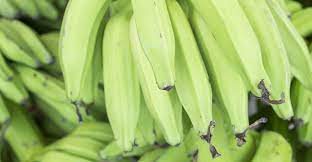
However, we know from studies, a diet rich in green bananas and plantain can deliver as high as over 80% of resistant starch diet. This means that such diets are good to maintain our kidney health.
Because resistant starch diets resist digestion and go straight to the colon and ferment to generate more good bacteria;
Another study by Birkett et al.(1996) explained this bacterial growth consumes nitrogen and is a “healthy” way to dispose of protein. The study further established that resistant starch reduced intestinal ammonia, phenol, cresol, and total phenols.
Another animal study by Le Leu (2007) found that resistant starch reduces the protein fermentation by-products in the gut.
This means the fecal bulk removes protein breakdown and nitrogen-based compounds from the body. Thus, the nitrogen-containing compounds are not absorbed into the body and do not have to be disposed of through the kidneys.
One of these nitrogen-containing compounds, Indoxyl sulfate, is a uremic toxin that induces inflammation and leukocyte activation.
It is associated with increased mortality in CKD patients. Two clinical trials confirmed that resistant starch reduces indoxyl sulfate and other compounds in the blood plasma of people with chronic kidney disease.
The first study was conducted by Dr. Timothy Meyer and his colleagues at Stanford University showed that 18 grams of resistant starch/day reduced indoxyl sulfate by 27% in 40 patients on hemodialysis in California, USA.
This study also showed a trend of a 24% reduction of p-cresol sulfate, reduced plasma urea, nitrogen, and plasma album, but these were not statistically significant(Sirich 2014).
The second study was conducted by Dr. Denise Mafra and her colleagues at the Universidade Federal Fluminense in Rio de Janeiro, Brazil found that 16 grams of resistant starch/day reduced indoxyl sulfate levels in 31 chronic kidney disease patients undergoing hemodialysis in Brazil (Esgalhado 2018).
This study also found reduced plasma levels of thiobarbituric acid reactive substances (TBARS) and IL-6 and a trend to reduced protein carbonyl levels.
There was no difference in plasma levels of p-cresyl sulfate. Animal studies have also shown similar benefits (Chen BBB 2016, Kieffer AJPRP 2016).
Resistant starch reduces inflammation.
Dr. Denise Mafra’s clinical trial in Brazil established that reduced inflammation biomarkers, interleukin-6 (IL-6) and high-sensitive C-reactive protein (hs-CRP), and oxidative stress markers thiobarbituric acid reactive substances (TBARS). In addition, there was a trend to reduced protein carbonyl (p-0.06)(Esgalhado 2018)
Another clinical study also found reduced inflammation and oxidative stress biomarkers in hemodialysis patients.
Dr. Vaziri of UC Medical School in Irvine, California, and his collaborators at the Tabriz University of Medical Sciences in Iran fed 46 hemodialysis patients 25 grams of resistant starch/day for 8 weeks and showed reduced TNF-a, IL-6, and malondialdehyde.
Serum urea and creatinine concentrations also significantly declined (Tayebi Khosroshahi 2018). There was no significant difference in hs-CRP, serum interleukin-1b, and total antioxidant activity.
These participants also reported improvements in constipation.
A new animal study by Martin Kriegel and his colleagues at Yale University demonstrated that resistant starch improved the gut barrier and reduced the translocation of bacteria in mouse models of lupus. (Zegarra-Ruiz CHM 2018).
While the focus of this study is not kidney-related, it demonstrated that resistant starch restored the gut barrier. Loss of integrity of the gut barrier is a major contributor to systemic inflammation.
This mechanism could also be contributing to reducing inflammation and oxidative stress seen in clinical trials.
Dr. John Arthur and Dr. Boris Zybailov at the University of Arkansas are also working on the impact of resistant starch on kidney health.
They also found that resistant starch produces massive changes in proteins as well as the entire gut microbiome in animal models.
They concluded that resistant starch shifted the microbiome from mucin degraders to butyrate producers (Zybaylov 2018). They found that the increased butyrate led to enhancements of oxidative stress and inflammation as well as other biological processes.
This team has also initiated an NIH-funded clinical trial with resistant starch in children and adults with stage 3 chronic kidney disease (Clinical Trials.gov Identifier NCT03356990).
Dr. Vaziri has published additional animal studies investigating various mechanisms related to resistant starch and kidney function(Kieffer 2016, Vaziri 2014)
Resistant starch attenuated the urinary loss of Vitamin D metabolites in animal models (Koh 2016, Smazal 2013, Koh 2014).
The kidneys activate 25-hydroxycholecalciferol to 1,25-dihydroxycholecalciferol. Though this research is still early, it adds to the body of evidence demonstrating positive kidney health benefits following the dietary consumption of resistant starch.
There is now sufficient clinical evidence to conclude that dietary consumption of resistant starch helps maintain healthy kidneys and healthy kidney function.
Additional information is available in some excellent review articles: Lau & Vaziri Clinical Science 2018, Moraes & Mafra European Journal of Nutrition 2016
Take Home
Before processed foods, our forefathers daily ate 30-50 grams of resistant starch every day – in intact whole grains, beans, under-ripe bananas and plantain, leftover fufu, and raw starchy foods such as cassava related, cocoyam, maize diets, yams et al. This means they were eating good starchy diets then.
In the modern era, we turn away from these good resistant starch diets thinking they were bad for our health rather.
In the modern era, people eating a “modern” diet get only 2 to 5 grams of resistant starch a day. Loss of this critical nutrient is contributing to the chronic health problems suffered by billions of people around the world according to studies on resistant starch.
What you have to know is that any food that contains resistant starch simply means: starch that resists digestion in the small intestine.
It reaches the large intestine and feeds the good bacteria that live in our guts. It turns out that this gut fermentation is really important to our metabolism.
Scientific studies are showing that we need to return to the historically consumed slow-to-digest resistant starch and eat far less easy-to-digest, soft, highly refined carbohydrates.
Studies have demonstrated positive kidney health benefits following the dietary consumption of resistant starch.
Though unripe bananas and plantain are rich sources of resistant starch diets, people with kidney disease should limit them due to their high potassium content. Doctors recommend less than 2,000 gm of potassium per day.
NB: Prof. Nyarkotey has strict sourcing guidelines and relies on peer-reviewed studies, academic research institutions, and medical associations to justify his write-ups.
My articles are for educational purposes and do not serve as Medical advice for Treatment. I aim to educate the public about evidence-based scientific Naturopathic Therapies.
The author is a Professor of Naturopathic Healthcare and President of Nyarkotey College of Holistic Medicine & Technology (NUCHMT)/African Naturopathic Foundation.
DISCLAIMER: Independentghana.com will not be liable for any inaccuracies contained in this article. The views expressed in the article are solely those of the author’s, and do not reflect those of The Independent Ghana
Maintaining an active lifestyle and nutritious diet may help prevent kidney problems. But certain factors can increase your risk of developing kidney damage or disease.
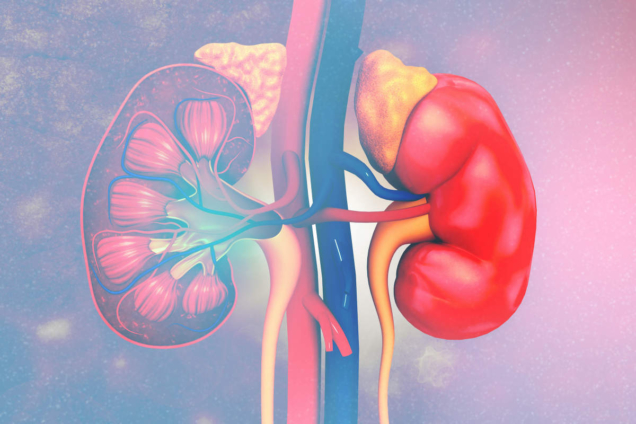
Your kidneys are fist-sized organs located at the bottom of your rib cage, on both sides of your spine. They perform several functions.
Most importantly, they filter waste products, excess water, and other impurities from your blood. These waste products are stored in your bladder and later expelled through urine.
In addition, your kidneys regulate pH, salt, and potassium levels in your body. They also produce hormones that regulate blood pressure and control the production of red blood cells.
Your kidneys are also responsible for activating a form of vitamin D that helps your body absorb calcium for building bones and regulating muscle function.
Maintaining kidney health is important to your overall health and general well-being. By keeping your kidneys healthy, your body will filter and expel waste properly and produce hormones to help your body function properly.
Here are some tips to help keep your kidneys healthy.
1. Keep active and fit
Regular exercise is good for more than just your waistline. It can lower the risk of chronic kidney disease. It can also reduce your blood pressure and boost your heart health, which are both important for preventing kidney damage.
You don’t have to run marathons to reap the reward of exercise. Walking, running, cycling, and even dancing are great for your health. Find an activity that keeps you busy and have fun. It’ll be easier to stick to it and have great results.
2. Manage your blood sugar
People with diabetes, or a condition that causes high blood sugar, may develop kidney damage. When your body’s cells can’t use the glucose (sugar) in your blood, your kidneys are forced to work extra hard to filter your blood. Over years of exertion, this can lead to life threatening damage.
However, if you can manage your blood sugar, you reduce the risk of damage. Also, if the damage is caught early, a doctor can take steps to reduce or prevent additional damage.
3. Monitor blood pressure
High blood pressure can cause kidney damage. If high blood pressure occurs with other health issues like diabetes, heart disease, or high cholesterol, the impact on your body can be significant.
A healthy blood pressure reading is 120/80. Prehypertension is between that point and 139/89. Lifestyle and dietary changes may help lower your blood pressure at this point.
If your blood pressure readings are consistently above 140/90, you may have high blood pressure. You should talk with a doctor about monitoring your blood pressure regularly, making changes to your lifestyle, and possibly taking medication.
4. Monitor weight and eat a balanced diet
People who are overweight or have obesity are at risk for a number of health conditions that can damage the kidneys. These include diabetes, heart disease, and kidney disease.
A balanced diet that’s low in sodium, processed meats, and other kidney-damaging foods may help reduce the risk of kidney damage. Focus on eating fresh ingredients that are naturally low in sodium, such as cauliflower, blueberries, fish, whole grains, and more.
5. Drink plenty of fluids
There’s no magic behind the cliché advice to drink eight glasses of water a day, but it’s a good goal precisely because it encourages you to stay hydrated. Regular, consistent water intake is healthy for your kidneys.
Water helps clear sodium and toxins from your kidneys. It also lowers your risk of chronic kidney disease.
Aim for at least 1.5 to 2 liters in a day. Exactly how much water you need depends largely on your health and lifestyle. Factors like climate, exercise, gender, overall health, and whether you’re pregnant or breastfeeding are important to consider when planning your daily water intake.
People who have previously had kidney stones should drink a bit more water to help prevent stone deposits in the future.
6. Don’t smoke
Smoking damages your body’s blood vessels. This leads to slower blood flow throughout your body and to your kidneys.
Smoking also puts your kidneys at an increased risk for cancer. If you smoke and stop smoking, your risk will drop. However, it’ll take many yearsTrusted Source to return to the risk level of a person who’s never smoked.
7. Be aware of the amount of OTC pills you take
If you regularly take over-the-counter (OTC) pain medication, you may be causing kidney damage. Nonsteroidal anti-inflammatory drugs (NSAIDs), including ibuprofen and naproxen, can damage your kidneys if you take them regularly for chronic pain, headaches, or arthritis.
According to the National Kidney Foundation, these medications should not be taken for more than 10 days for pain, or more than three days for fever. Regularly taking more than eight aspirin tablets each day may reduce your kidney function temporarily or permanently.
People with no kidney issues who take the medicine occasionally are likely in the clear. However, if you use these medicines daily, you could be risking your kidneys’ health. Talk with a doctor about kidney-safe treatments if you’re coping with pain.
8. Have your kidney function tested if you’re at high risk
If you’re at high risk of kidney damage or kidney disease, it’s a good idea to have regular kidney function tests. The following people may benefit from regular screening:
people who are over 60 years old
people who were born at a low birth weight
people who have cardiovascular disease or have family members with it
people who have or have a family history of high blood pressure
people who have obesity
people who believe they may have kidney damage
A regular kidney function test is a great way to know your kidney’s health and to check for possible changes. Getting ahead of any damage can help slow or prevent future damage.
When things go wrong
More than 1 in 7 adultsTrusted Source in the United States show evidence of chronic kidney disease. Some forms of kidney disease are progressive, meaning the disease gets worse over time. When your kidneys can no longer remove waste from blood, they fail.
Waste buildup in your body can cause serious problems and lead to death. To remedy this, your blood would have to be filtered artificially through dialysis, or you would need a kidney transplant.
Types of kidney disease
Chronic kidney disease
The most common form of kidney disease is chronic kidney disease. A major cause of chronic kidney disease is high blood pressure.
Your kidneys are constantly processing your body’s blood. They remove toxins, wastes, and extra water from about half a cup of bloodTrusted Source each minute.
High blood pressure is dangerous for your kidneys because it can lead to increased pressure on the glomeruli, the functional units of your kidney. In time, this high pressure compromises the filtering apparatus of your kidneys and their functioning declines.
Eventually, kidney function will deteriorate to the point where they can no longer properly perform their job, and you’ll have to go on dialysis.
Dialysis filters fluid and wastes out of your blood. Depending on the situation, dialysis, especially peritoneal dialysis, may be effective long term. Although the average life expectancy for people on dialysis is 5 to 10 years, many people have lived for 20 to 30 years.
Eventually, you may need a kidney transplant, but it depends on your particular circumstance.
Diabetes is another major cause of chronic kidney disease. Over time, uncontrolled blood sugar levels will damage the functional units of your kidney, also leading to kidney failure.
Kidney stones
Another common kidney problem is kidney stones. Minerals and other substances in your blood may crystallize in the kidneys, forming solid particles, or stones, that usually pass out of your body in urine.
Passing kidney stones can be extremely painful, but rarely causes significant problems.
While kidney stones as a risk factor for chronic kidney disease is minimal, they may frequently lead to acute kidney injury (AKI)Trusted Source, also known as acute kidney failure, especially if kidney stones are accompanied by dehydration or infection.
Glomerulonephritis
Glomerulonephritis is an inflammation of the glomeruli, microscopic structures inside your kidneys that perform the filtration of blood. Glomerulonephritis can be caused by infections, drugs, congenital abnormalities, and autoimmune diseases.
This condition may get better on its own or require immunosuppressive medications.
Polycystic kidney disease
Individual kidney cysts are fairly common and usually harmless, but polycystic kidney disease is a separate, more serious condition.
Polycystic kidney disease is a genetic disorder that causes many cysts, round sacs of fluid, to grow inside and on the surfaces of your kidneys, interfering with kidney function.
Urinary tract infections
Urinary tract infections are bacterial infections of any of the parts of your urinary system. Infections in the bladder and urethra are most common. They’re generally easily treatable and have few, if any, long-term consequences.
However, if left untreated, these infections can spread to the kidneys and lead to kidney failure.
What you can do to improve kidney health
Your kidneys are vital to your overall health. These organs are responsible for many functions, from processing body waste to making hormones. That’s why taking care of your kidneys should be a top health priority.
Maintaining an active, health-conscious lifestyle is the best thing you can do to make sure your kidneys stay healthy.
If you have a chronic health condition that increases your risk for kidney damage or kidney disease, you should also work closely with a doctor to watch for signs of loss of kidney function.
Source: healthline.com
DISCLAIMER: Independentghana.com will not be liable for any inaccuracies contained in this article. The views expressed in the article are solely those of the author’s, and do not reflect those of The Independent Ghana