The soldier who left the army was shot many times and then hit by a car in Spain and the leader of a group was hit many times with a hammer in Lithuania. The journalist got sick from possible poisoning in Germany.
Ever since President Vladimir Putin started the war in Ukraine, Russians in Europe and other places have been targeted with attacks and harassment, and Moscow’s intelligence agents are being blamed for it.
Even though Western governments try to stop Russian spies, experts say that the Russian government can still go after people they see as traitors in other countries to stop them from speaking out. People who are against Putin are more and more worried about the power of Moscow’s security forces, even in places they used to feel were safe.
“We got out of Russia and felt like we had escaped from jail,” said Irina Dolinina, a journalist at the Important Stories news outlet in Prague.
Dolinina and her coworker Alesya Marokhovskaya were bothered in 2023, making them worried that someone was watching them. They got scary messages in the comments on a website and were told not to go to a conference in Sweden. To emphasize, the threat had their airplane ticket details, where they would sit, and their hotel reservation.
“We were wrong to think we were safe here,” Dolinina said to The Associated Press.
The Kremlin is often blamed for attacking its enemies outside of Russia, even though it denies it.
Some well-known cases are the death of Leon Trotsky, a former Soviet revolutionary who was killed in Mexico in 1940 by a Soviet agent, and the death of Georgi Markov, a dissenting worker for the BBC’s Bulgarian service, who died in London in 1978 after being attacked with a poisoned umbrella.
Britain was where other poisonings were caused by Russian security services under Putin’s rule. Alexander Litvinenko, a defector and former spy, died in 2006 after drinking tea that had been poisoned with a radioactive substance. In 2018, former spy Sergei Skripal and his daughter got very sick after being attacked with an old Soviet-era nerve agent, but they eventually got better. The Kremlin kept saying they weren’t involved in the British cases.
Currently, many of the people who oppose the government in Russia, along with journalists and activists, have left the country because of the government’s strong actions against them. Many people think that Moscow is focusing more on them, and officials are saying it too.
Russian authorities are looking for many people, even if they seem unimportant, because they think these people could come back to Russia and cause a lot of harm. This was explained by security expert Andrei Soldatov.
Many people who have been forced to leave their home countries are being treated badly in many places, including former Soviet countries with a lot of Russian people and also in Europe and other places.
People who speak out and reporters who work on their own have said they are feeling sick and believe they may have been poisoned.
Journalist Elena Kostyuchenko got sick on a train from Munich to Berlin in 2022. German authorities are looking into it as a possible murder attempt.
Natalia Arno, the leader of the Free Russia Foundation in the U. S, told AP that she is still dealing with nerve damage after a suspected poisoning in Prague in May. She thinks Russian security tried to “quiet” her because she supports democracy.
In a really violent attack, pilot Maksim Kuzminov’s body with lots of bullet holes was found in La Cala, Spain, near the eastern port of Alicante. He was shot and then run over by a car. Threats came in after he stole a Russian helicopter and flew it to Ukraine.
Kuzminov, who is 33 years old, was called a “moral corpse” by Sergei Naryshkin, the leader of Russia’s foreign intelligence service, as soon as he started planning his “bad and awful crime. ”
In March, Leonid Volkov, who works for a politician named Alexei Navalny, got his arm broken in a hammer attack in Vilnius, Lithuania.
Lithuania’s security service thinks the attack was likely planned and carried out by Russians. On April 19, Polish police arrested two people for allegedly attacking Volkov under orders from a foreign spy agency.
For many years, Putin has been in charge, and the Kremlin has repeatedly said that it is not trying to harm its enemies within Russia and in other countries. It has not said anything about the suspected poisonings. Putin’s spokesperson, Dmitry Peskov, refused to talk about Volkov’s situation, saying it is Lithuania’s Interior Ministry’s problem.
Even new anti-war groups are being targeted by Moscow.
Russians in Stockholm, Sweden, made a group to support Ukraine and political prisoners. They burned a fake person that looked like Putin outside the Russian Embassy, calling him a “war criminal”.
Six months later, the Russian government said the group was bad and could punish its members with fines and jail. Police visited their family in Russia and their private information was shared without their permission, according to their family members who spoke with AP. They spoke anonymously because they were worried about their safety.
The Russian Orthodox Tsargrad media said that some people in the group could be working for other countries’ spy agencies. It called them “terrorists. ” The pro-Kremlin outlet said they should expect bad things if they keep fighting against the war.
A few days later, during a visit to family in St Petersburg, Marina said that a police car stopped in front of her as she was leaving a store. Three men got out and asked for her papers. They made her get into the car and drove her to a police station with the siren on.
It was very frightening. Marina was surprised and worried that they knew exactly where she was. She did not want to share her last name because she is afraid for her safety.
She was shown the leaked data and video of the embassy protest, and investigators asked her to tell them who else was involved.
Tag: Kremlin
-

Kremlin detractors claim Russia is murdering its enemies abroad
-
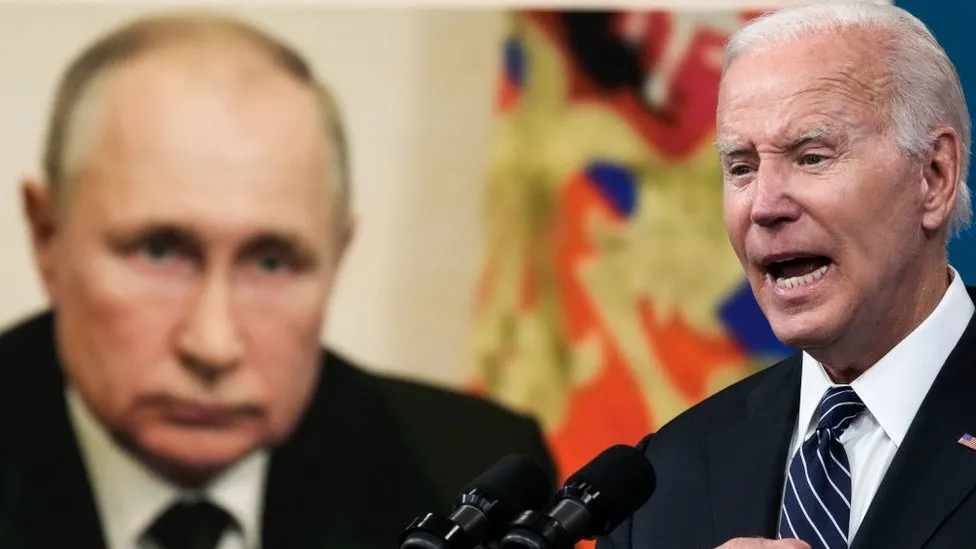
Kremlin hits out in response to Biden’s derogatory jab at Putin
The Kremlin said that Joe Biden is trying to act like a tough action movie character, like a cowboy from Hollywood, after he called Vladimir Putin a “crazy SOB”.
MrBiden talked about the danger of nuclear war at a public fundraising event in California on Wednesday.
In reply, Kremlin spokesperson Dmitry Peskov said it was a bad attempt to look like a “Hollywood cowboy. ”
He said that using that kind of language makes America look bad.
In a short talk in San Francisco, Mr Biden said: “We have to worry about people like Putin and others causing trouble, and we always have to worry about nuclear war, but the biggest danger to humanity is climate change. ”
The US president has used the offensive term before, not for the first time. In 2022, Mr. Biden accidentally used some bad language when he called a Fox News journalist a “son of a bitch” with a hot mic.
He has also said in the past that Mr Putin is a “butcher” and a “war criminal”.
The Kremlin spokesperson said it was “unlikely to go against our President, President Putin. ” “But it makes people look bad when they use those words. ”
Mr Peskov said that the comment was likely an attempt to seem like a cowboy from Hollywood. Honestly, I don’t think it can happen.
Has Mr Putin ever said anything rude to you. No, he has never done that. So, I believe that using this kind of language makes America look bad,” he said.
In California, Mr. Biden criticized Donald Trump, who he may compete against in the presidential election in November.
Mr Trump seems to be comparing himself to Alexei Navalny, the Russian political opponent who died in prison last week.
The Republican did not blame Mr. Putin for Navalny’s death, but Mr. Biden said there is no doubt that the Russian president was responsible.
MrBiden said that if he had talked about all this 10 to 15 years ago, you would have thought he was crazy.
Last week, Mr Putin surprised people when he said he would prefer Mr Biden to become president in November instead of Mr Trump.
“He knows a lot, he acts in a way that can be expected, he follows traditional political methods,” said Mr. Putin on Russian television. -
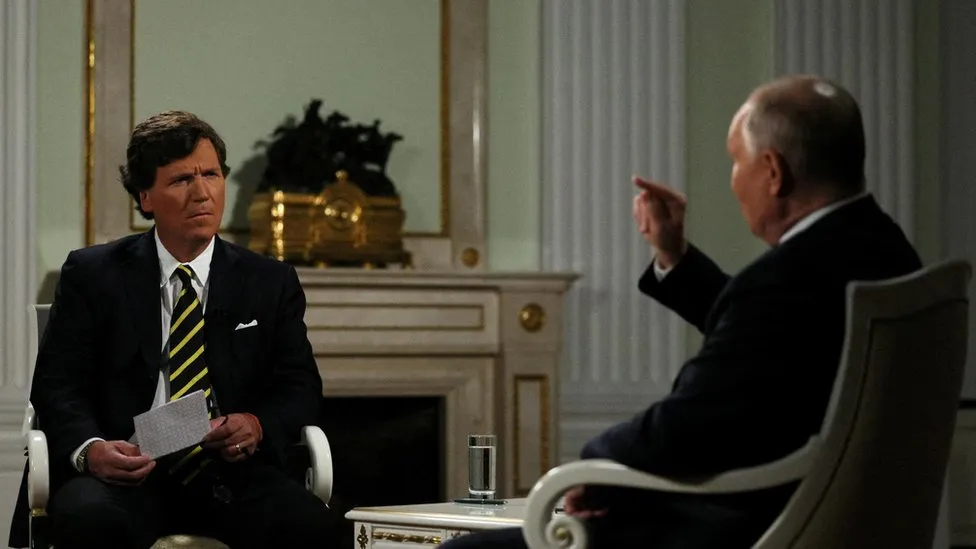
Putin takes command as Carlson allows Kremlin unrestricted access
Vladimir Putin talked, told jokes and got a little angry sometimes, but not at the person who invited him.
Tucker Carlson laughed and listened a lot.
During the meeting with the Russian president, the American looked interested but his expression changed a few times.
Especially when Putin’s promise of a quick history lesson turned into a long, angry speech that lasted more than 30 minutes.
However, Carlson mostly seemed to enjoy and believe what Russia’s president was saying.
Putin was in control of the meeting, and the person interviewing him hardly had a chance to speak for a long time.
Instead of confronting the Russian leader, who is accused of committing war crimes, about his invasion of Ukraine and false claims, Carlson changed the subject to talk about God and the Russian people’s spirituality.
A journalist held against their will.
The American said his meeting with Putin was a success for free speech because he was going where no other Western news outlets would go.
That’s not true. The Kremlin is very careful about who Putin talks to. It usually picks someone who doesn’t know the country or the language, so they struggle to challenge him.
Carlson’s statement also didn’t acknowledge that Russia’s president has been making sure people can’t speak freely in his country for the last 20 years.
He recently made it illegal to tell the truth about Russia attacking Ukraine.
Many critics, including Vladimir Kara-Murza and Ilya Yashin, are currently in jail for speaking out.
He took two hours in the interview before asking about Evan Gershkovich, a US journalist. He got taken by the police in Russia while he was working and they said he was spying.
Carlson said that Putin might let the reporter go with him, giving him something to bring back from his trip.
What Putin gave was a strong clue about what he wants back.
He mentioned a Russian who killed a criminal in a European city, which suggests that Russia wants to exchange prisoners for Vadim Krasikov.
A person who might be working for the Russian government shot and killed a Chechen rebel in a park in Berlin in 2019.
Putin said that talks were happening and a deal might be made.
We know that those difficult conversations involve three countries and probably at least two American prisoners, and this is not new.
Classes
The meeting at the Kremlin started with a lesson about history.
Putin wrote a long essay before the war that said Ukraine is not a country. He seems to have memorized it now.
He presented his thesis with a lot of passion, while Carlson seemed bored and disbelieving.
For people who continued watching, they got to see Putin repeating his best, confusing points.
He complained that Nato was moving into an area that Russia thinks should be its own. Putin said that we never agreed to let Ukraine join Nato.
However, Ukraine wants more security because it has a powerful and unpredictable neighbor like Russia.
Putin has always said that the big protests in Kyiv ten years ago were supported by the West and were like a “coup”, but they were not.
He also said that the fighting in eastern Donbas, which was started by Moscow, is like a war between people in the same country.This is all part of how Putin explained why he invaded Ukraine almost 2 years ago. He said he was trying to remove any Nazi influences from Ukraine, but this is still ongoing.
Kyiv strongly disagrees with every part of it.
At one time, Putin said that the two countries will be friends again. They will get better.
However, I have met a lot of people from Ukraine who used to speak Russian before the attack, and they would often go there.
After two years of fighting with no reason and being attacked with missiles, many people have started using a different language and they say they only feel hate.
This is just one example of how Vladimir Putin is far from the truth and the real world. In February 2022, he sent Russian soldiers to Kyiv, hoping they would be welcomed as heroes.Opportunities for peace.
It looks like Putin agreed to this chat because he is in a strong position.
The fighting in Ukraine has stopped. Kyiv’s friends in the Western countries have been unsure about giving more military help, especially the US.
President Zelensky just fired his top military leader, saying that there needs to be a fresh start and new energy in the fight.
The situation is unstable and uncertain.
Putin was very confident when he said that Russia is prepared to talk and make deals.
He wants to take advantage of any uncertainty among Ukraine’s supporters and any hesitations among Ukrainians themselves about continuing to fight.
Putin said that eventually there will be an agreement because Nato is realizing that they can’t beat Russia in a war.
It’s just Putin being his usual self and Tucker Carlson allowed him to do as he pleased.
Not all interviews have to be hostile. It is good to let people speak and show who they are. But this one really went all out with that idea.
No one questioned the main points of Putin’s statements.
He didn’t have to explain the missiles that hit homes in Ukraine and killed civilians.
The American did not pressure Putin to stop locking up people who speak out against the war.
Excitement is a feeling of being really happy or full of energy.
Carlson received an amazing celebration in Moscow. The TV hosts who usually criticizes the West as an enemy were closely following and reporting on his every move with excitement.
Russia felt happy and excited when it suddenly received attention, like a person who had been ignored and then suddenly noticed.
And it looks like Carlson was also affected by what happened to him.
His interview finished with Putin talking about souls after being asked about the supernatural.
Both men stopped talking for a few seconds, and then the leader of Russia spoke again.
“Should we stop now. ”
Carlson closed and opened his eyes quickly. “Thanks, President”
He didn’t know about the true facts of his full-scale attack, like the accusations of war crimes in Bucha, Irpin, and other places.Tucker Carlson interviews President Vladimir Putin. (2 hours) pic.twitter.com/cfEcVFmlHW
— Every Movie Plug 🎬 🔌 (@everymovieplug) February 8, 2024 -
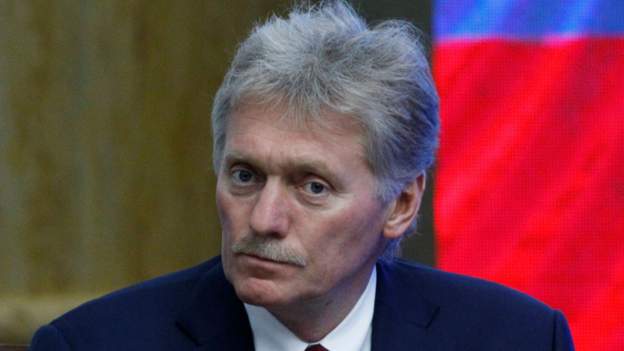
Biden’s remarks towards Putin deemed inappropriate – Kremlin
The Kremlin is upset about comments made by US President Joe Biden comparing Russia to Hamas and calling Vladimir Putin a “tyrant”. They think these remarks are not okay.
Biden spoke from the Oval Office and stated that the United States needs to support Israel and Ukraine against Russia and Hamas. He emphasized that we must not allow terrorists like Hamas and tyrants like Putin to succeed.
The spokesperson for the Kremlin, Dmitry Peskov, said that we do not like the way people talk about Russia and our president.
He said that using that kind of language is not appropriate for leaders of countries, and we cannot accept it. -
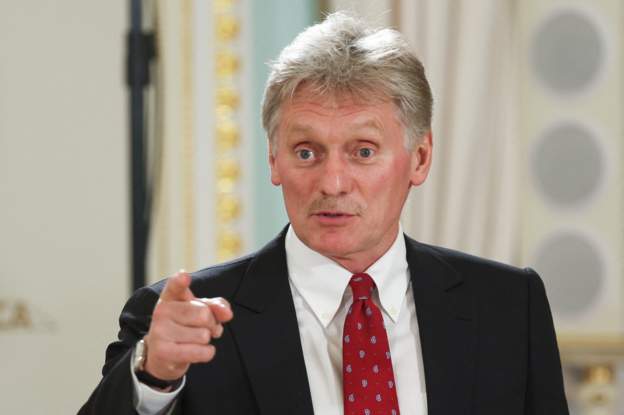
Kim planning ‘full-scale visit’ – Kremlin
A person from the Russian government called Dmitry Peskov has said that the meeting between Kim Jong Un from North Korea and Vladimir Putin from Russia will make their friendship stronger.
Kim is going to meet Putin. She is taking a train that is protected. She is starting her journey from the capital of North Korea, Pyongyang. She will be going to Russia for a meeting with a group of people.
Press Secretary Peskov said that if the situation requires it, the two leaders will keep talking privately. -

US accuses South Africa of supplying arms to Russia
The United States has accused South Africa of sending armaments to Russia in a secret naval operation, creating a foreign policy dilemma for President Cyril Ramaphosa over the country’s links to the Kremlin and its stance on the Ukraine conflict.
Reuben Brigety, US ambassador to South Africa, told local media on Thursday that the US believed weapons and ammunition were loaded on to the Lady R, a Russian vessel under sanctions that docked at Simon’s Town naval dockyard near Cape Town in December.
“Among the things we noted was the docking of the cargo ship . . . which we are confident uploaded weapons and ammunition on to that vessel in Simon’s Town as it made its way back to Russia,” he said, in comments reported by South Africa’s News24.
“The arming of the Russians is extremely serious, and we do not consider this issue to be resolved,” he added.
“The US embassy and South Africa’s foreign ministry did not immediately respond to requests for comment. Ramaphosa’s office said it would respond “in due course”.
The rand dropped 2 per cent to 19.2 to the US dollar on the reports, its weakest level since April 2020.
South Africa has said it is non-aligned in the war, but Ramaphosa’s government is under pressure over signs it is favouring Russia, for example by holding joint naval exercises this year.
Ramaphosa has also extended an invitation for Russian president Vladimir Putin to attend a Brics leaders’ summit in Johannesburg in August — a move that has backfired on Pretoria after the International Criminal Court indicted Putin for war crimes. South Africa, a member of the ICC, would be legally obliged to arrest Putin if he travels there.
Sydney Mufamadi, Ramaphosa’s national security adviser, recently visited the US to explain South Africa’s stance and to try to preserve trade links.
The scandal over the Lady R is likely to overshadow these efforts.
Owned by Transmorflot, a company placed under sanctions by the US last year, the Lady R appeared to switch off its transponder as it made the stop in Cape Town after a voyage down the west coast of Africa.
After the ship left port, South Africa’s defence minister said it had delivered a consignment for the country’s defence forces, but provided no details on what the vessel may have picked up in Cape Town.
The South African government in January officially denied that it had approved any arms sales from South Africa to Russia since Moscow began its full-scale invasion of Ukraine in February last year.
-

Ukrainian prosecutors go after Wagner chief in file criminal charges against the
A mercenary force of thousands, including ex-convicts, is led by Putin ally Prigozhin in the conflict in Ukraine.
Yevgeny Prigozhin, the leader and originator of the Wagner mercenary group from Russia, is the target of a criminal investigation by the general prosecutor of Ukraine.
According to a statement on Telegram, Prigozhin, an ally of Russian President Vladimir Putin, is accused of the “encroachment on the territorial integrity and inviolability of Ukraine” and “waging an aggressive war”.
The statement said fighters who fled the group “will not avoid responsibility”.
“Prosecutors have already interrogated two such fighters who are in the EU. An investigation into the involvement in war crimes of another PMK member, who is in Norway under way,” the statement said.
Norwegian police are currently interrogating former Wagner group commander Andrey Medvedev, who fled from Russia to Norway last month after fighting in Ukraine.
Earlier this week, Medvedev told the Reuters news agency that he was speaking out against the Wagner group to ensure perpetrators were brought to justice.
“Medvedev gives the impression that he wants to continue to say more” about his time with Wagner, the police have said.
Security arrangements have also been made for Medvedev’s safety, “both visible and non-visible” measures, they added, without giving specifics.
Another former Wagner fighter, Marat Gabidullin, is understood to be seeking asylum in France.
![Medvedev crossed into Norway from neighbouring Russia on January 13, looking for shelter in the Nordic nation [Gulagu.Net/Handout via Reuters] Published On 23 Jan 2023](https://www.aljazeera.com/wp-content/uploads/2023/01/wrgrebrgtbrtgbtgb.jpg?w=770&resize=770%2C514&quality=80)
Medvedev crossed into Norway from neighbouring Russia on January 13, looking for shelter in the Nordic nation [Gulagu.Net/Handout via Reuters] The previously shadowy group has taken centre stage during the invasion of Ukraine and is associated with the bloody battle for Bakhmut in the east of the country.
Late in January, the United States designated Russia’s Wagner mercenary group as a “transnational criminal organisation”, piling pressure on the private army that has recruited tens of thousands of Russian prisoners to fight in Ukraine.
-
Putin promises to keep attacking Ukraine’s power grid
Despite the fact that millions of people in Ukraine are still without water or electricity, Vladimir Putin has vowed to keep attacking its energy infrastructure.
“Yes we do that.B who started it? “At a Kremlin awards ceremony, the Russian president said.
Criticizing Russian strikes, he declared, “would not interfere with our combat missions.”
Since 10 October, after a string of significant military setbacks, Moscow has been hammering Ukraine’s electrical infrastructure.
Some Western leaders have called the strategy a war crime, because of the huge amount of damage caused to civilian infrastructure.
But President Putin said that growing global criticism would not stop the strikes.
“There’s a lot of noise about our strikes on the energy infrastructure of a neighbouring country. Yes, we do that. But who started it?” he said to recipients of state awards, including the “Hero of Russia” medal.
He said the strikes were in response to a blast on the Russian bridge to annexed Crimea on 8 October. He also accused Ukraine blowing up power lines from the Kursk nuclear power plant and of cutting water supply to Donetsk in eastern Ukraine.
“Not supplying water to a city of more than a million people is an act of genocide,” Mr Putin said, accusing the West of “complete silence” on these claims and of bias against Russia.
Ukrainian Prosecutor-General Andriy Kostin said last month that Russia’s attacks on Ukrainian energy infrastructure amount to genocide.
The Russian president said that when Moscow responds to Ukrainian aggression “there is uproar and clamour spreading through the whole universe”.
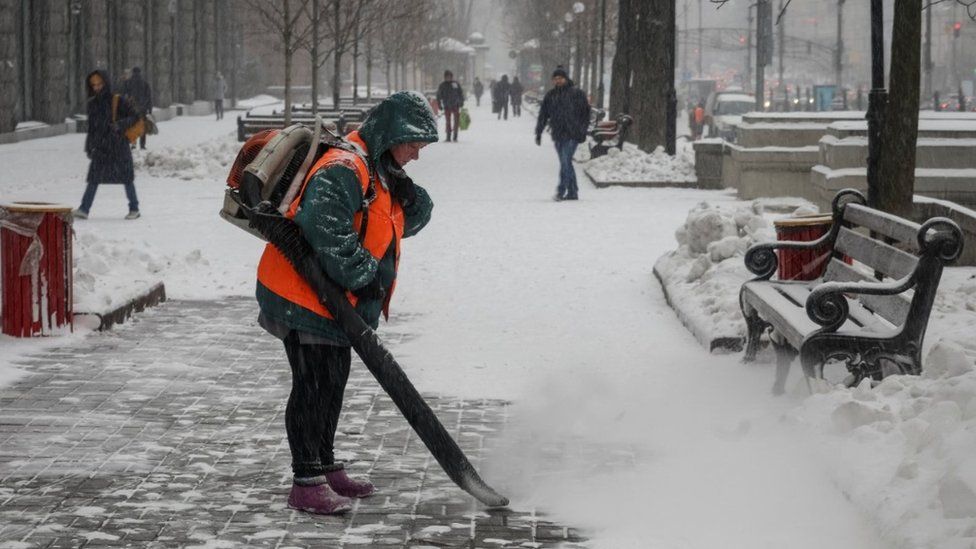
IMAGE SOURCE,REUTERS Image caption, Ukraine is now seeing snow and sub-zero temperatures in many regions, including Kyiv Ukraine is now seeing snow and sub-zero temperatures in many regions, and millions are without electricity and running water, raising fears people may die of hypothermia.
The country switched to emergency shutdowns to stabilise its power grid after a fresh wave of Russian missile attacks on Monday.
Experts have told the BBC that Russia’s tactic of hitting energy infrastructure is most likely designed to demoralise and terrorise the population, rather than gain any concrete military advantage – a move that would violate international law.
Moscow has repeatedly denied the allegations.
-
The EU bases its work on emotions, lacks professionalism: Kremlin
The European Parliament bases its work on emotions, the Kremlin spokesperson Dmitry Peskov told Russian media as reported by TASS news agency, adding that Moscow takes its resolve into little consideration.
His remarks came after the EU institution labelled Russia a state sponsor of terrorism, a move that is not legally binding but rather symbolic.
“It’s no secret to us that in the recent years the European Parliament has had little love for us. In return, we have had little desire to take into account what’s going on there,” Peskov was quoted as saying.
“And emotions is such a changeable thing. Today they are Russophobic, tomorrow there will be something else. And then, maybe a moment of clarity will come,” he said, adding that Russia belived the European parliament lacked a professional approach.
Source: Aljazeera.com
-
Russia to wait for full Nord Stream damage assessment before repairs
Russia will wait until a full damage assessment to the Nord Stream gas pipelines is done before deciding on any repairs, Kremlin spokesman Dmitry Peskov said.
“The very fact that data has already begun to come in, in favour of confirming a subversive act or a terrorist act … once again confirms the information that the Russian side has,” Peskov told reporters.
“It is very important not to stop, it is very important to find the one behind this explosion.”
Swedish investigators have found traces of explosives at the site of the damaged Nord Stream pipelines, confirming that gross sabotage had occurred.
The Swedish Prosecution Authority said in a statement “Analysis that has now been carried out shows traces of explosives on several of the objects that were recovered.”
Adding that, the findings establish the incident as “gross sabotage”.
Source: Aljazeera.com
-
Russia must ‘get out of Ukraine and end barbaric war’ – Rishi Sunak confronts Putin’s officials at G20
The prime minister intends to use the summit to press the world’s most powerful economies to do more to reduce their reliance on Russian exports, while also encouraging others to do the same.
As he confronted Vladimir Putin’s officials at the G20 summit, Rishi Sunak said Russia must “get out of Ukraine and end this barbaric war.”
The prime minister made the remarks during the first session on Tuesday, criticising the absence of Russian President Vladimir Putin from the talks on the Indonesian island of Bali.
“It is notable that Putin didn’t feel able to join us here,” he said. “Maybe if he had, we could get on with sorting things out.
“Because the single biggest difference that anyone could make is for Russia to get out of Ukraine and end this barbaric war.
“The UK rejects this aggression. We will back Ukraine for as long as it takes.”
Mr Sunak also rebuked Russia by saying “countries should not invade their neighbours”.
“It is very simple – countries should not invade their neighbours, they should not attack civilian infrastructure and civilian populations and they should not threaten nuclear escalation,” he said.
“Surely these are things on which we can all agree.”
The prime minister sat down with leaders of the world’s 19 biggest economies in Bali – the first meeting in the group’s 15-year history to be held in the shadow of a major European war instigated by one of its members.
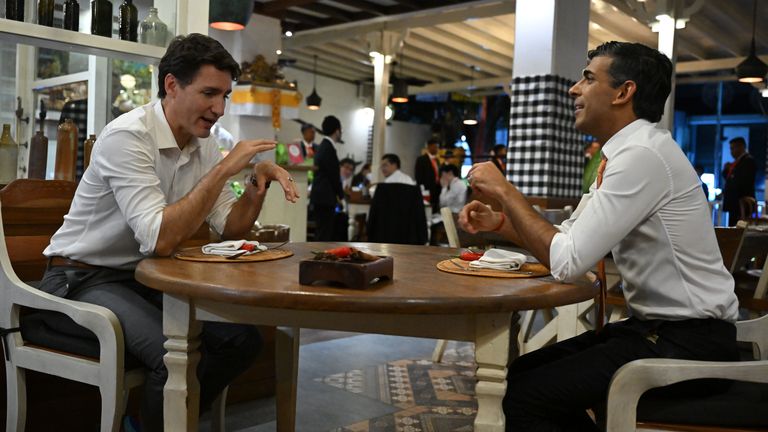
Image:Justin Trudeau, the Canadian leader, and Mr Sunak met at a Bali cafe on Monday ‘Chorus of opposition to Putin’
Mr Sunak will use the summit to push the world’s most powerful economies to do more to reduce their dependence on Russian exports, while supporting others to do the same.
He will also reiterate the UK’s financial support for Ukraine, saying he committed £4.1bn in aid when he was chancellor.
This included £2.3bn in military aid, while Mr Sunak will promise to match this level of spending next year.
Before the meeting, he said: “Putin and his proxies will never have a legitimate seat at the table until they end their illegal war in Ukraine.”
He continued: “At the G20, the Putin regime – which has stifled domestic dissent and fabricated a veneer of validity only through violence – will hear the chorus of global opposition to its actions.”
Russia invaded Ukraine almost nine months ago, leaving the rest of the world struggling to deal with the fallout, which has included rising food and energy prices.
Many countries have stood firm, supporting Ukraine with weapons and aid, while imposing various sanctions on Russia.
Mr Putin sent Sergei Lavrov, the foreign minister, to the talks in his place.
He was taken to hospital on his arrival at the talks with a heart condition, the Indonesian authorities said – though the Russian foreign ministry dismissed the claims as “fake news”.
Last week, the UK introduced legislation to stop countries using its maritime services to transport Russian oil unless it is purchased below a price cap – which Number 10 described as a “hugely influential measure, given the UK provides around 60% of global maritime insurance”.
-
Peace talks: Kremlin authenticates US-Russia talks in Ankara
The Kremlin confirmed on Monday that talks between US and Russian officials took place in Ankara.
“Such negotiations really took place. It was the American side’s initiative,” Kremlin spokesman Dmitry Peskov was quoted as saying by Russia’s TASS news agency.
According to reports, US Central Intelligence Agency Director William Burns travelled to Turkey to meet with his Russian counterpart Sergey Naryshkin, the head of Russia’s Foreign Intelligence Service.
Burns reportedly warned Naryshkin of the consequences Russia would face in the event it used nuclear weapons in Ukraine.
-
Kremlin: Putin, Raisi hold talks, discuss bilateral agenda
The Kremlin says Russian President Vladimir Putin held talks with his Iranian counterpart Ebrahim Raisi.
“The leaders discussed a number of current issues on the bilateral agenda with an emphasis on the continued building up of interaction in politics, trade, and the economy, including transport and logistics,” the Kremlin said in a statement.
The leaders agreed that the contacts between Russian and Iranian institutions will be increased, it added.
Kyiv and its Western allies have accused Moscow of using Iranian-made drones in recent weeks to carry out attacks in Ukraine, where it launched a “special military operation” in February.
-
Ukraine war: US affirms ‘communications’ with Kremlin
US National Security Adviser Jake Sullivan says, communication channels between Washington and Moscow remain open.
The announcement comes as the White House refuses to deny reports that Mr. Sullivan has been leading talks with Russia to avoid a nuclear escalation in Ukraine.
Mr Sullivan stated in New York that maintaining contact with the Kremlin was “in the interests” of the US.
He insisted, however, that officials were “clear-eyed about who we are dealing with.”
The Wall Street Journal reports that Mr Sullivan has held confidential discussions with his Russian counterpart, Security Council secretary Nikolai Patrushev, and senior Kremlin foreign policy aide Yuri Ushakov, over the past several months.
Senior officials told the paper the men had discussed ways to guard against the risk of nuclear escalation in the war in Ukraine, but had not engaged in any negotiations around ways to end the conflict.
Last month, Mr Sullivan said any use of nuclear weapons would have “catastrophic consequences for Russia”. He told the US broadcaster NBC that senior officials had “spelled out” the scope of the potential US response in private discussions with Russian officials.
US National Security Council spokeswoman Adrienne Watson refused to confirm the story, telling the paper that “people claim a lot of things”, while Kremlin spokesperson Dmitry Peskov accused Western newspapers of “publishing numerous hoaxes”.
But White House press secretary Karin Jean-Pierre said on Monday that the United States reserved the right to hold talks with Russia.
And Mr Sullivan – who is said to be one of the most senior advisers to US President Joe Biden still pushing for discussions with Russia – said maintaining contact with Moscow was in the “interests of every country who is affected by this conflict”.
Last week, the Washington Post reported that senior US officials were urging Kyiv to signal an openness to hold negotiations with Russia and drop their public refusal to discuss an end to the war while President Vladimir Putin remained in power.
But Mr Sullivan told a public event in New York that the Biden administration had “an obligation to pursue accountability” and pledged to work with international partners to “hold the perpetrators of grave and grotesque war crimes in Ukraine responsible for what they have done”.
“I was just in Kyiv on Friday. and I had the opportunity to meet with President [Volodymyr] Zelensky and my counterpart Andriy Yermak, with the military leadership and also to get a briefing on just what level of death and devastation has been erupted by Putin’s war on that country,” Mr Sullivan said.
Concerns have been heightened in recent months that Russia could resort to using nuclear weapons in a desperate attempt to defend four regions of eastern and southern Ukraine that it illegally annexed.
Meanwhile, Ukraine has invoked its war-time martial laws to take control of the assets of five strategically important companies.
Some of the companies – which include two energy companies and firms that make engines, vehicles and transformers – are linked to oligarch Vyacheslav Bohuslayev, who was arrested on suspicion of collaborating with Russia.
President Zelensky said the move would help Ukraine’s defence sector meet the needs of the military, which is currently engaged in counteroffensives in southern and eastern Ukraine.
-
Russia has “nothing to say” about reported US de-escalation discussions
The Kremlin has refused to comment on media reports that high-level US-Russia talks have occurred. The Kremlin has refused to comment on a Wall Street Journal report that the US held secret talks with top Russian officials about avoiding further escalation in the Ukraine war.
According to the report, US National Security Adviser Jake Sullivan met with President Vladimir Putin’s aides in an attempt to reduce the risk of a larger war or nuclear conflict.
“We have nothing to say about this publication,” Kremlin spokesman Dmitry Peskov told reporters on Monday.
The newspaper reported that US officials said Sullivan has been in contact with Yuri Ushakov, a foreign policy adviser to Putin, and Security Council Secretary Nikolai Patrushev.
Peskov also declined to comment on a Washington Post report over the weekend that said the US had privately encouraged Ukraine to negotiate with Russia.
“We have nothing to say about this publication,” Peskov said.
“Once again, I repeat that there are some truthful reports, but for the most part, there are reports that are pure speculation,” he said, directing journalists to contact the White House or the newspaper itself.
Meanwhile, Ukrainian President Volodymyr Zelenskyy said he sees no room for negotiations with Russia, an option he officially ruled out after Russia held illegal referendums that resulted in the “annexation” of four Ukrainian regions in September.
Zelenskyy has said he may negotiate with a new Russian president, whenever one emerges.
The Ukrainian public, having suffered enormously over the past eight months of war, are often outraged whenever foreign figures suggest they accept the conflict’s current state and give in to Russia’s demands.
Recently, tech billionaire Elon Musk tweeted a plan to end the war that would give Crimea to Russia and hold United Nations-organised referendums in the four regions Moscow has annexed about whether Russia stays or goes.
Musk was blasted for it, but a lack of negotiations is causing concern among international powers.
“Ukraine fatigue is a real thing for some of our partners,” an anonymous US official reportedly told the Washington Post.
As Tuesday’s US midterm elections get closer, polls show that support for Ukraine among Republican voters is dwindling, meaning that the continuation of aid could be in jeopardy.
According to a Wall Street Journal poll, 48 percent of Republicans said the US was doing “too much” to support Ukraine.
With global inflation rates rising, new questions have been raised about the future of the US assistance, which has already reached $18.2bn.
Other nations that were already reluctant to outwardly support Ukraine could also push for more peace talks if the war continues.
Zelenskyy has refused to speak to Russia unless Ukraine regains all its captured territory, but according to the Washington Post, US officials believe the Ukrainian leader will probably be open to negotiations in the winter.
-
Putin observes exercises by Russia’s strategic nuclear forces
RIA news agency reports that Putin observed exercises by Russia’s strategic nuclear forces.
“Under the leadership of the Supreme Commander-in-Chief of the Armed Forces Vladimir Putin, a training session was held with the ground, sea, and air strategic deterrence forces, during which practical launches of ballistic and cruise missiles took place,” the Kremlin said in a statement.
State television showed Putin overseeing the drills from a control room.
Source: Aljazeera.com
-
Kremlin: Prisoner swap talks must be confidential
The Kremlin says it keeps the door open for talks on a possible prisoner swap with US basketball star Brittney Griner but reiterated that discussions must be kept strictly confidential.
Kremlin spokesman Dmitry Peskov was asked if Griner could be freed as part of a prisoners swap with Washington and said, “We always say that any contacts about possible exchanges can only be conducted in silence under a tight lid on any information.”
On Tuesday, Russian courts rejected Griner’s appeal against her nine-year sentence for drug possession.
-
Kremlin: ‘We do not expect insight’ from the UK in picking a new Prime Minister
Following Liz Truss’s announcement that she was going to step down as prime minister, the Kremlin said it did not expect Britain to choose its new leader with “political wisdom.”
Asked about the possible return of Boris Johnson to the top post, Kremlin spokesman Dmitry Peskov said: “We do not expect insight and political wisdom from anyone in the countries of the collective West, let alone Britain. Especially in Britain, where people do not choose the person at the head of the executive branch, who appears as a result of internal party shake-ups.”
Former prime minister Boris Johnson, an outspoken supporter of Ukraine, was ousted in July after a wave of scandals.
At the time, Russian media and officials celebrated the news of his departure.
Russia has likewise warmly welcomed news of Truss’s imminent departure.
Bye, bye @trussliz, congrats to lettuce
— Dmitry Medvedev (@MedvedevRussiaE) October 20, 2022
-
Kremlin: Turkey will offer ‘mediation’ during talks on Thursday
Moscow expects Turkish President Recep Tayyip Erdogan will “officially” offer to mediate negotiations with Ukraine, a Kremlin aide said.
“The Turks are offering their mediation. If any talks take place, then most likely they will be on their territory: in Istanbul or Ankara,” Kremlin foreign policy adviser Yuri Ushakov told reporters in Moscow.
“Erdogan will probably propose something officially” during Thursday’s talks with President Vladimir Putin in the Kazakh capital, Astana.
Turkey has good relations with Russia and Ukraine and has refrained from joining Western sanctions on Moscow.
“Turkey on principle does not join the illegal sanctions of the West. And this position of Turkey gives an additional impetus for the expansion of trade and economic cooperation,” Ushakov said.
-
NATO official: Russia running low on precision-guided ammunition
Russian forces have depleted a significant proportion of their precision-guided ammunition and the Kremlin cannot produce all kinds of ammunition and weapon systems due to Western sanctions, a NATO official has said.
The official also suggested it could take months for Russia to mobilise the number of fighters it was aiming for.
Russia’s defence minister Sergei Shoigu has previously suggested 300,000 men with military experience would be called up to bolster Russia’s war efforts in Ukraine, although Mr Putin’s decree did not disclose a number.
Officials from two separate regions also said this week they had received new orders to mobilise troops, raising fears a second wave of men could be called up to serve in the army.
The governor of Russia’s Rostov region said he had received a “new mobilisation assignment”, while the deputy head of the Kursk region was quoted as saying they had been given a “second” mobilization target.
-
What is Vladimir Putin thinking and planning?
It’s the question we’ve been asking for months now, even before Russia invaded Ukraine.
What is Vladimir Putin thinking and planning?
Let me get the disclaimer in early. I have no Kremlin crystal ball. Neither do I have Putin on direct dial.
Former US President George W Bush once said he’d looked Vladimir Putin in the eye and “got a sense of his soul”. Look how well that ended for relations between Russia and the West.
So, getting inside the mind of the Kremlin leader is a pretty thankless task. But it’s important to try. Perhaps more than ever now, in light of recent nuclear sabre-rattling by Moscow.
There’s little doubt that the Russian president is under pressure. His so-called “special military operation” in Ukraine has gone badly wrong for him.
It was supposed to last a few days. But we’re nearly eight months in and there’s no end in sight.
The Kremlin admits “significant” troop losses; in recent weeks the Russian military has been losing territory in Ukraine which it had previously occupied.
To boost troop numbers, last month President Putin declared partial mobilisation, something he’d insisted he wouldn’t do. Meanwhile, sanctions continue to degrade the Russian economy.
So, back to Putin’s state of mind. Will he be thinking he got it all wrong, that his decision to invade was a fundamental error?
Don’t assume so.
“Putin’s perceptions drive the entire situation in this conflict,” believes Konstantin Remchukov, owner and editor-in-chief of the Russian newspaper Nezavisimaya Gazeta.
“He is the authoritarian leader of nuclear power. He’s the unchallenged leader in this country. He has some strong beliefs and perceptions which drive him crazy. He’s started to believe that this is existential from the point of view of importance. Not only for him. But for the future of Russia.”
If this conflict is existential, how far is President Putin prepared to go to win it?
In recent months senior Russian officials (including Putin himself) have been dropping unsubtle hints that the Kremlin leader would be prepared to use nuclear weapons in this conflict.
“I don’t think he will,” US President Joe Biden told CNN. “But I think that it’s irresponsible for him to talk about it.”
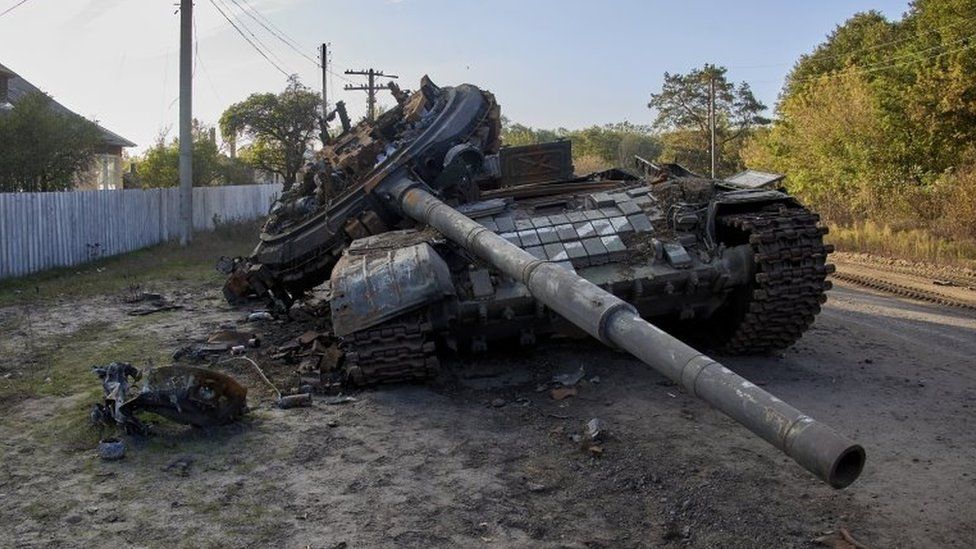
IMAGE SOURCE,EPA Image caption, Russian troops were forced to make a humiliating retreat from nearly all of Ukraine’s north-eastern Kharkiv region in September This week’s intense Russian bombardment of Ukraine suggests the Kremlin is, at the very least, determined to escalate things with Kyiv.
With the West, too?
“He’s trying to avoid direct confrontation with the West, but at the same time he’s prepared for it,” believes veteran liberal politician Grigory Yavlinsky. “I fear most the possibility of nuclear conflict. And, on the second place, I fear endless war”.
But “endless war” requires endless resources. That’s something Russia doesn’t seem to have. The wave of missile strikes on Ukrainian cities is a dramatic demonstration of force, but how long can Moscow sustain that?
“Could you continue this missile flow for days, weeks, months? Many experts doubt that we have enough missiles,” says Mr Remchukov.
“Also, from the military point of view, no one has ever said what would be the sign of ultimate [Russian] victory? What is the symbol of victory? In 1945 it was the banner over Berlin. What is the criteria for success now? [A banner] over Kyiv? Over Kherson? Over Kharkiv? I don’t know. Nobody knows.”
It’s not even clear that Vladimir Putin knows.
Back in February, the Kremlin’s objective appears to have been the rapid defeat of Ukraine, forcing Russia’s neighbour back into Moscow’s orbit without a prolonged war. He miscalculated. He underestimated not only the determination of the Ukrainian army and people to defend their land but the capabilities of his own military.
What’s he thinking now? Is Vladimir Putin’s current plan to cement control over Ukrainian territory he claims to have annexed and then freeze the conflict? Or is he determined to push on until the whole of Ukraine is back in the Kremlin’s sphere of influence?
This week former Russian president Dmitry Medvedev wrote: “The Ukrainian state in its current configuration… will be a constant, direct, and clear threat to Russia. I believe the aim of our future actions should be the complete dismantling of Ukraine’s political regime.”
If Mr Medvedev’s words reflect President Putin’s thinking, expect a protracted and bloody conflict.
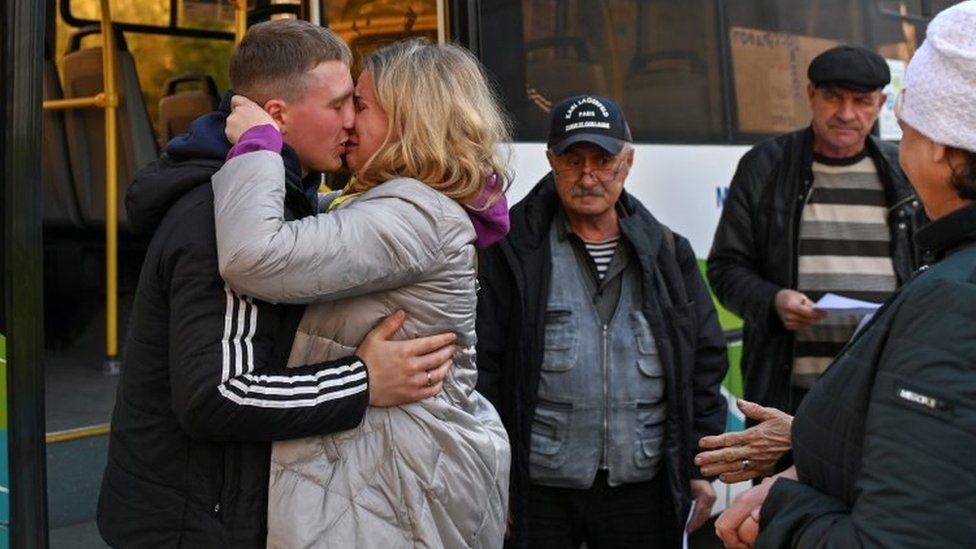
IMAGE SOURCE,REUTERS Image caption, Russia’s military says it wants to mobilise 300,000 reservists – but there appears to be growing opposition to the move across the country But, inevitably, Mr Putin’s actions abroad are having consequences at home. Over years the Kremlin painstakingly cultivated Putin’s image of “Mr Stability”, encouraging the Russian public to believe that as long as he was in charge they would be safe.
That’s a hard sell now.
“The previous contract between Putin and society was that ‘I protect you,” says Mr Remchukov.
“For many years the main slogan was ‘predictability’. What kind of predictability is there today? The concept is over. Nothing is predictable. My journalists don’t know whether they will receive call-up papers when they get home today.”
Vladimir Putin‘s decision to invade Ukraine surprised many. But not Mr Yavlinsky.
“I think that [Putin] had been moving in that direction – year by year he was constructing the way to what we have now,” Mr Yavlinsky says.
“For example, destroying independent media. He stated that in 2001. Destroying independent business. He stated that in 2003. Then 2014 and what happened with Crimea and Donbas? You’d have to be blind not to see it.
“Russia’s problem is our system. A system was created here that created such a person [as Putin]. The question of the West’s role in creating this system is a very serious one.
“The problem is that this system didn’t create a society. There are a lot of very nice people in Russia. But there is no civil society. That’s why Russia can’t resist.”
DISCLAIMER: Independentghana.com will not be liable for any inaccuracies contained in this article. The views expressed in the article are solely those of the author’s and do not reflect those of The Independent Ghana
Source: bbc.com
-
Another Russian commander sacked
Another senior Russian commander has been sacked as the Kremlin‘s war effort continues to falter.
Colonel-General Alexander Chaiko, commander of Moscow’s Eastern Military District, has been removed in the latest top brass reshuffle, Russian news site RBC reported.
The Eastern Military District covers troops based in Russia’s the Far East, though much of its strength is currently deployed in Ukraine.
He is believed to have been replaced by Lieutenant-General Rustam Muradov, a senior officer who has already been sanctioned by the EU.
-
Russian soldiers instructed to treat combat wounds with female sanitary products
UK intelligence has gathered that newly recruited Russian reserve troops have been instructed to procure their own combat first aid supplies.
Female sanitary pads have been recommended to soldiers arriving at the front lines as a cost-effective alternative, which is just another indication of the problems hindering Kremlin forces.
The UK Ministry of Defence said on Twitter: “Medical training and first-aid awareness is likely poor.
“Some Russian troops have obtained their own modern, Western-style combat tourniquets but have stowed them on their equipment using cable-ties, rather than with the Velcro provided – probably because such equipment is scarce and liable to be pilfered.
“This is almost certain to hamper or render impossible the timely application of tourniquet care in the case of catastrophic bleeding on the battlefield.”
The MoD said this shortage of medical equipment is almost certainly contributing to a “declining state of morale and a lack of willingness to undertake offensive operations” in many units in Ukraine.
Latest Defence Intelligence update on the situation in Ukraine – 30 September 2022
Find out more about the UK government’s response: https://t.co/Y8S1k3So8J
🇺🇦 #StandWithUkraine 🇺🇦 pic.twitter.com/BHmCsXHR8G
— Ministry of Defence 🇬🇧 (@DefenceHQ) September 30, 2022
-
Russia’s planned annexation of Ukrainian territories follows predictable script
In a move that follows a plodding and predictable script Russia will recognise the four territories it has occupied and captured in conquest.
Under the country’s 1993 constitution there needed to be a popular vote for this to happen – hence the hurried fake referenda.
Like other autocratic police states, pseudo- legalism is of the utmost importance in Russia – we’ll hear a lot more turgid legal language today as a way of giving this international outrage a veneer of legitimacy.
Moving to annex Russia has overturned centuries of convention – that you don’t steal land with force.
Putin is also returning Europe to a period pre-WW2.
For the Kremlin though there’s logic and need.
Domestically the annexation allows Putin more room to argue that Russia’s ‘Special Military Operation’ is not an offensive but a defensive manoeuvre.
There was no invasion.
Luhansk, Donetsk, Zaporizhia, and Kherson are now, according to Putin, part of the motherland.
Mobilisation is therefore not only justified but necessary to fight off a wider attack by the west.
The Kremlin is signalling it is now battling not a limited war but an unlimited existential war.
That’s the sale to the public.
What he’s hawking to the west is a bit more nuclear blackmail.
As part of Russia these four occupied regions will fall under Moscow’s nuclear umbrella – is it worth WW3 by continuing to support Ukraine?
And in the upside-down world of Putin’s Russia reality doesn’t matter.
The fact that Russian forces don’t even control all of the areas he’s about to annex – which is about the size of Portugal – can be glossed over.
The war of liberation continues and even if it means bombing his own new subjects.
This morning in what appears to be another egregious Russian war crime a convoy of civilians were killed in a missile attack.
At the time of writing 28 are wounded and 25 dead according to officials in Ukraine.
The bigger picture of all of this is that this crisis just got a bit worse.
Putin is signposting that – despite manpower shortages and major setbacks on the battlefield – he’s not giving up.
Any chance of a negotiated settlement is now non-existent.
Source: Alex Rossi, Sky News international correspondent
-
Amid military call-up: Russians pour into EU
66,000 Russians entered the EU in the previous week, a 30% rise, according to the border control organization for the Bloc. In the meanwhile, despite Moscow’s warnings, the US will not change its nuclear stance.
The European Union’s Frontex border control agency said 66,000 the EU in the past week.
This represents a 30% increase compared with the previous week, according to the agency. It said that most of the crossings were occurring at the Finnish and Estonian sections of the border.
According to Frontex, most arrivals had visas, residence permits, or dual citizenship.
Frontex predicted that illegal border crossings could increase if the Kremlin decides to close Russia’s borders for potential conscripts.
Thousands of military-age men have been leaving Russia since President Vladimir Putin announced a “partial” mobilization last week.
-
EU will not be recognize outcome of planned referenda – foreign affairs chief
The European Union has condemned Russia’s plans to hold referenda in parts of Ukraine and has said the outcomes will not be recognized.
In a statement, EU foreign affairs chief Josep Borrell said: “The European Union strongly condemns these planned illegal “referenda” which go against the legal and democratically elected Ukrainian authorities, are in violation of Ukraine’s independence, sovereignty, and territorial integrity, and in blatant breach of international law.”
Mr Borrell said those involved with these “referenda” will be held accountable and additional restrictive measures against Russia would be considered.
He added that the EU and its member states would not recognize the outcome of the referendums.
Moscow-controlled regions in eastern and southern Ukraine are set to hold referenda on becoming parts of Russia, which could give the Kremlin the pretext for a wider war because Vladimir Putin would be able to claim parts of his state were being attacked.
Source: Sky News