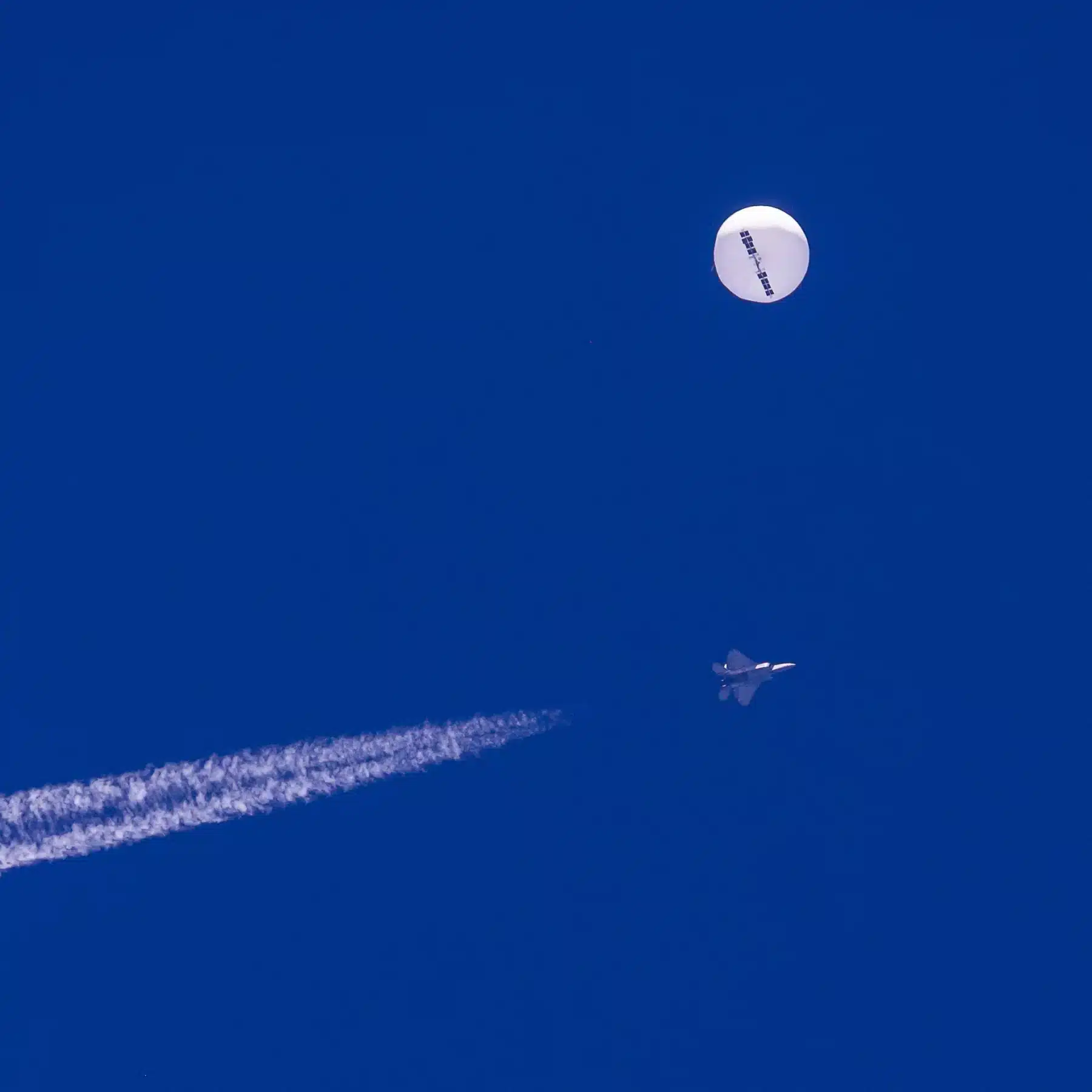
China has announced that the object “accidentally veered over Latin America and the Caribbean” after deviating from its course. The US is currently looking for the remains of a surveillance balloon that it shot down.
On Monday, China acknowledged ownership of a balloon over Latin America and declared it to be flying for civilian purposes. This happened not long after the US destroyed a similar device on Saturday.
“It has come to be understood that the relevant unmanned airship is from China,” foreign ministry spokesperson Mao Ning said.
Mao also said the device, with limited self-steering capability, “seriously deviated from its scheduled route, and accidentally strayed over Latin America and the Caribbean.”
Earlier, Colombia’s air force had released a statement that it had detected possible balloon in its air defense system on Friday.
US searches for debris
After shooting down a suspected Chinese surveillance balloon, the US military said it is searching for the debris on Sunday off the South Carolina coast.
The Navy is working to recover the balloon and its payload,General Glen Van Herck, commander of the North American Aerospace Defense Command and US Northern Command, said on Sunday. He added that the Coast Guard was providing security for the operation.
“Members of the US Military are coordinating to collect debris; however, fragments may make it to the coastline,” the Horry County Police Department statement said.
Law enforcement officials have warned people against touching any debris and instead call dispatchers.
CNN quoted a senior US military official as saying that multiple US Navy and Coast Guard vessels are in the area and are securing a perimeter.
According to Transportation Secretary Pete Buttigieg, the debris field created by the downed balloon was 7-miles (11-kilometers) long.
How did the incident unfold?
Pentagon officials on Thursday revealed that they were tracking a suspected spy balloon belonging to China flying over the US skies for a few days.
US Defense Secretary Lloyd Austin said the balloon attempted “to surveil strategic sites in the continental United States.”
The balloon was shot down a missile from an F-22 fighter after US President Joe Biden authorized the downing of the balloon.
How has China responded?
China expressed “strong dissatisfaction” with the US use of force to strike its “unmanned civilian” airship, calling it a “serious violation of international practice.”
He was referring to a summit between Biden and his Chinese counterpart Xi Jinping in November.
China “is paying close attention to the development of the situation” and “reserves the right to make further necessary reactions,” a Foreign Ministry statement said.
Beijing on Monday summoned the US charge d’affaires over the incident.
Republicans criticize Biden
Republican lawmakers on Sunday criticized President Biden’s handling of the situation saying he waited days to shoot down the balloon. They claimed the delay conveyed weakness toward China.
Meanwhile, Former President Donald Trump refuted claims that similar balloons were seen during his presidency.
“China had too much respect for ‘TRUMP’ for this to have happened, and it NEVER did,” Trump wrote on his social media site Truth Social.
Republican Representative Michael Waltz contradicted Trump’s claims, telling the Washington Post that during Trump’s tenure Chinese balloons were spotted near the US several times.
When Bolivia struck an agreement with Canadian manufacturer Biolyse Pharma to provide it with COVID-19 vaccines for its people, the Canadian government did not take the necessary measures needed to greenlight the export.
When Uganda was trying to purchase doses of the AstraZeneca vaccine, it was charged triple per dose that richer European countries paid.
When India and South Africa led an alliance of most countries on Earth at the World Trade Organization to change its rules and allow COVID-19 vaccines to be produced wherever they could be, a small band of rich countries, led by the United States, the European Union and the United Kingdom, blocked them.
When the COVAX initiative was set up by rich countries and international organisations, it promised to purchase and distribute COVID-19 vaccines equitably across the globe, but it didn’t. Some wealthy countries, like the UK, received significant vaccine supplies from COVAX, while poorer countries were left waiting or had to rely on vaccine donations, which, too often, were of doses nearing expiry.
Today, the coronavirus pandemic may have subsided, but the real enemy of health has survived: a patent system that keeps medicine recipes secret, a trade system that allows corporations to price medicines out of reach, and a global governance system that keeps the power to change any of this from poor countries.
If we want a better international health system, we are going to have to build it ourselves. With Luiz Inácio Lula da Silva’s victory in Brazil and the rise of new progressive governments across the region, Latin America is well-poised to begin this urgent work.
In my previous roles as Ecuador’s health minister and director of the Health Institute at the Union of South American Nations (UNASUR), I have seen possibilities take shape when countries work together under the principles of equity and social justice, bound by a common vision, and with the power to bring that vision to life.
To break the current system’s power and forge a new one, we need to challenge it at four levels: transparency, knowledge, industry and governance.
First, we need collective pricing and purchasing. The primary reason companies get away with arbitrary pricing of drugs is secrecy in trade deals.
We can turn the tables by creating a Medicine Price Bank and begin to collectively purchase medicines. We launched such a bank in 2016 when I was director of health for UNASUR. It was a simple database of drug prices, made up of an initial list of 34 medicines. The 12 participating countries shared the prices they were offered by pharmaceutical companies – to, in turn, see the prices offered to others.
Armed with comparative stats, governments successfully drove down prices at the negotiating table, enhancing access to medicines for everyone in the region while challenging the secrecy built into big pharma contracts. At the time, UNASUR estimated that if all 12 countries bought necessary quantities of the 34 medicines listed at the lowest price in the region, total savings would amount to about $1bn per year.
We could relaunch this price bank and take it further. Once we have the price information in place, we could negotiate for collective purchasing, further driving down prices with our bulk ordering. Through collective purchasing, we can squeeze the inflated profit margins of big pharma and instead turn that into healthier lives for our peoples.
Second, we need shared capacities. Regulating new drugs and vaccines is not easy. Regulatory infrastructure takes years to establish, from training skilled technicians to building laboratories and setting up information sharing with regulatory agencies around the world. Where one country has a greater capacity to regulate vaccines and treatments, they can lend these capacities to countries that do not – a simple system of solidarity that speeds up access.
This is already happening in the region. During the pandemic, Mexico’s drug regulatory authority (COFEPRIS) supported the Paraguayan health agency to evaluate India’s Covaxin for emergency use approval, even though Mexico had no plans to use it. We can build on this and set up a region-wide mechanism.
Third, we need to establish and expand national production. Within months of scientists developing vaccines for COVID-19, rich countries bought up almost all available and future doses, leaving little for the rest of us.
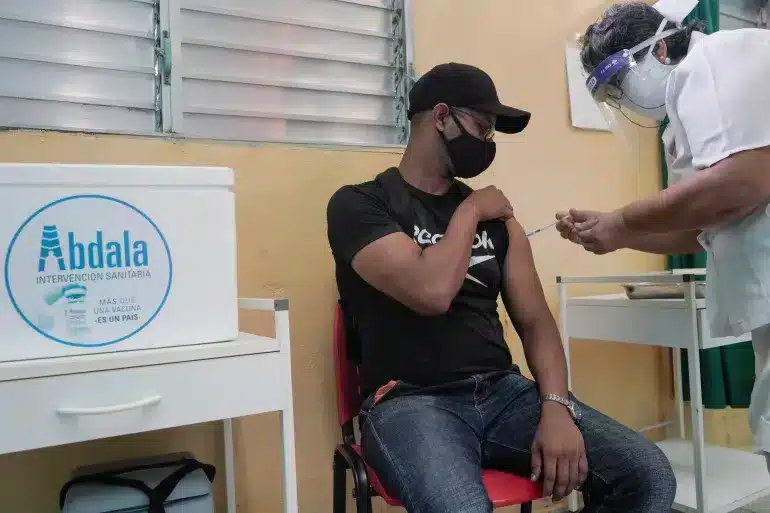
Cuba was insulated from this failed system. It benefitted from decades of investment in public healthcare and domestic pharmaceutical production, which meant that it was able to develop two homegrown vaccines — with efficacy rates of over 90 percent – and swiftly start immunising its population. It sent its vaccines to other embargoed nations like Iran, Venezuela and Nicaragua, and signed agreements to collaborate on vaccine production with countries like Vietnam and Argentina.
Domestic pharmaceutical production in Latin America is expanding. Argentina has a significant manufacturing capacity with 190 factories and 40 public laboratories. Mexico plans to produce the country’s own COVID-19 vaccine candidate, Patria in its national pharmaceutical company Birmex. Brazil has a notable production capacity and Colombia, too, is looking to expand.
By nationalising production and developing our own industries, countries of the Global South can coordinate production and distribution, making sure health emergencies are tackled with the interests of our people in mind, not Global North corporations.
Finally, we also need coordinated action on the international stage. From pushing for international trade reform to co-sponsoring resolutions, and filing complaints together – we can be more effective by coordinating our actions.
When I was leading the Health Institute at UNASUR, we carved out a space for new forms of collective action within the region, renegotiating the terms of existing health policies at the World Health Assembly of the WHO. Between 2010 and 2016, 35 joint interventions were carried out at the WHA on behalf of UNASUR countries, on issues such as access to medicines, health as a fundamental human right, WHO reform, sustainable development goals, and others.
Similarly, when tobacco company Philip Morris attempted to sue Uruguay for initiating anti-smoking legislation, the Southern Common Market (MERCOSUR) managed to act as a bloc before the International Centre for Settlement of Investment Disputes (ICSID) to show their regional support. ICSID eventually ruled in Uruguay’s favour.
Acting as a bloc could support other efforts to secure compulsory licences to produce COVID-19 vaccines and medicines in Chile, Colombia, Bolivia and the Dominican Republic. Such licences, permitted within WTO rules, allow governments to start alternative production or importation of a generic version of a patented medical product without the prior consent of the permit holder. This is what Bolivia needs from the Canadian government so it can import 15 million doses of vaccine produced by Biolyse.
A progressive health bloc with collective purchasing, regulatory capacities, drug production and distribution capacities, could exert pressure to jointly achieve the right to produce life-saving medicines.
These ideas for building a new global health system from below could be put in place quickly and start improving the lives of our people.
Now is the time to bring together progressive governments, in Latin America and further afield, to end big pharma monopolies, democratise pharmaceutical production, reduce drug prices, build robust health systems that expand the public provision of health services, strengthen regulatory capacity and uphold the right to health for all.
We know what needs to be done, now we need to bring together the collective power to make it happen.
DISCLAIMER: Independentghana.com will not be liable for any inaccuracies contained in this article. The views expressed in the article are solely those of the author’s, and do not reflect those of The Independent Ghana
According to a report released on Wednesday by the advocacy group Global Witness, Latin America saw the highest number of environmentalist deaths worldwide in 2017.
Up to 200 environmentalists were killed worldwide in 2021, with 75 percent of the deaths taking place in Latin America. The entire number was 227 in 2020.
Mexico had the most deaths at 54 and jumped from its number of 30 reported in 2020. Colombia and Brazil came next, with 33 and 26 cases respectively.
Mexico, Brazil, Nicaragua, and Peru together accounted for over half the total deaths. Indigenous people were the recipients of more than 40% of the attacks, said the report.
In Mexico, officials believe local authorities are implicated in about 40% of the killings based on preliminary investigations.
Land conflicts biggest cause
“These lethal attacks continue to take place in the context of a wider range of threats against defenders who are being targeted by the government, business and other non-state actors with violence, intimidation, smear campaigns, and criminalization,” the organization said in its report.
“This figure is likely to be higher as the reasons behind attacks on land and environmental defenders are often not properly investigated nor reported,” it added.
Global Witness said land conflicts such as resource exploitation, logging, mining, and large-scale agriculture were behind many attacks.
Killings related to mining and extraction activities were highest with 27 cases. Mexico, the Philippines, and Venezuela had 14, 6, and 4 cases respectively.