Tag: law

  • Mob justice is illegal, let the law speak – Justice Ackaah-Boafo to Ghanaians

    Mob justice is illegal, let the law speak – Justice Ackaah-Boafo to Ghanaians

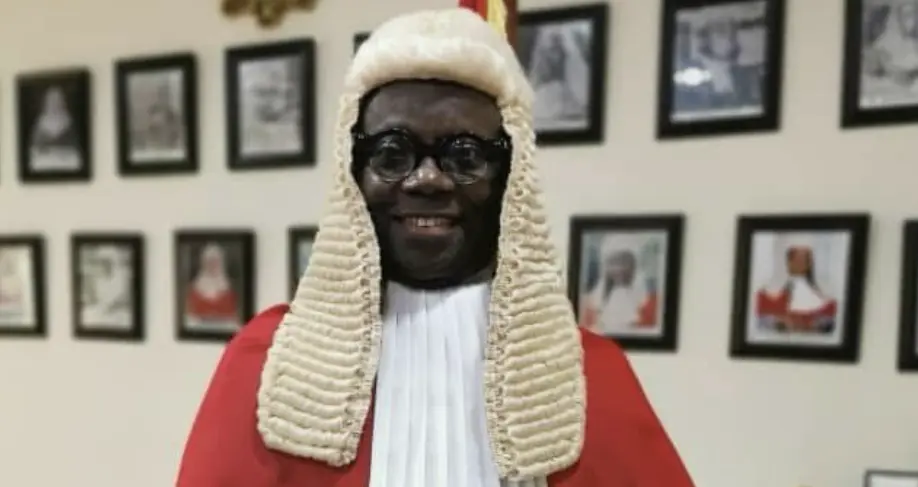
    Supreme Court nominee, Justice Kweku T. Ackaah-Boafo, has admonished Ghanaians to desist from taking the laws into their hands, instead turn to legal authorities for assistance.

    Appearing before Parliament’s Appointments Committee on Friday, June 21, he indicated that lynching and other vigilante acts undermine the rule of law and must not be used as a means of seeking justice.

    Justice Ackaah-Boafo insisted that all these acts are illegal and individuals caught in the practice must face the law.

    “If somebody has done something wrong, the judicial process should be allowed to take its place. Using mob justice clearly is illegal, and people who engage in it must be dealt with by the law.

    “I believe that nobody can use mob justice or demonstrations to resolve a legal matter,” he stated.

    Moving away, Justice Kweku T. Ackaah-Boafo also opposed the practice of some parents giving their underage daughters in marriage.

    He indicated that every Ghanaian girl child deserves the opportunity to access education.

    He advocated for changes in the law to better safeguard the rights of vulnerable girls.

    “The girl child should have the opportunity to be educated and develop her talent, so that when you place a child into a marriage against their wishes, it is certainly a no-no.

    “So I do not believe that children should be put in marriage at a tender age. Every child should have the opportunity to develop their talents, and if there is a need for us to regulate that through law, I am all for it. But I think many of these things come with education rather than just law,” he concluded.

    Justice Kweku T. Ackaah-Boafo was the final nominee of President John Dramani Mahama’s Supreme Court judge nominees, who had undergone vetting.

    So far, Justice Sir Dennis Dominic Adjei, Justice Gbiel Simon Suurbaareh, Justice Senyo Dzamefe, Justice Philip Bright Mensah, Justice Janpere Bartels-Kodwo and Justice Hafisata Ameleboba have been vetted.

    Their vetting comes after the Speaker of Parliament Alban Kingsford Sumana Bagbin on May 27 referred the nominees to the Appointments Committee for vetting and subsequent approval.

    This is in accordance with Article 144(2) of Ghana’s 1992 Constitution, which mandates that Supreme Court nominees undergo parliamentary scrutiny before their appointments are confirmed.

    The Appointments Committee, is chaired by Bernard Ahiafor, and assisted by Emmanuel Armah-Kofi Buah.Other members of the committee also include, Alexander Afenyo-Markin (Ranking Member), Patricia Appiagyei (Deputy Ranking Member), Mahama Ayariga (Majority Leader), Agnes Naa Momo Lartey, Frank Annoh-Dompreh, Patrick Yaw Boamah, Shaibu Mahama, Alhassan Umar, Kwame Governs Agbodza.

    About the nominees

    Justice Sir Dennis Dominic Adjei – A Court of Appeal judge since 2010, he was elected to the African Court on Human and Peoples’ Rights in 2022 for a six-year term. He has served as Director of the Judicial Training Institute and Dean of the Faculty of Law at GIMPA. He is an Adjunct Professor of Law at multiple universities.

    Justice Gbiel Simon Suurbaareh – Appointed to the Court of Appeal in 2010, he previously served as the Supervising High Court Judge in the Eastern Region and is known for his expertise in constitutional and administrative law and represents Court of Appeal judges on Ghana’s Judicial Council.

    Justice Senyo Dzamefe – A Court of Appeal judge since 2010, he chaired the Dzamefe Commission, which investigated Ghana’s performance at the 2014 FIFA World Cup. He was elected President of the Association of Magistrates and Judges of Ghana (AMJG) in 2018.

    Justice Kweku Tawiah Ackah-Boafo – A Court of Appeal judge, has emphasised the need for legal education reforms and has advocated for the integration of artificial intelligence into Ghana’s legal system to enhance efficiency and transparency.

    Justice Philip Bright Mensah – Known for his contributions to appellate jurisprudence, he recently presided over a Court of Appeal panel that directed the Accra High Court to adopt proceedings from a previous trial in the Republic vs. Stephen Kwabena Opuni case.

    Justice Janpere Bartels-Kodwo – A Court of Appeal judge, he has been nominated to strengthen the Supreme Court’s capacity amid increasing demands on Ghana’s judiciary.

    Justice Hafisata Ameleboba – A Court of Appeal judge, she has been involved in key judicial decisions and reforms. Her nomination is expected to bring diversity and expertise to the Supreme Court.

  • Ukraine parliament passes controversial law to raise needed conscripts as war rages on

    Ukraine parliament passes controversial law to raise needed conscripts as war rages on

    Ukraine’s government has approved a new law on Thursday that will decide how they bring in new soldiers. This comes at a time when they need more soldiers to help protect the country from Russia’s attacks.

    The law was passed because Russia has been attacking Ukraine’s energy infrastructure. Officials said that the Trypilska thermal power plant, the biggest power plant in the capital area, was completely destroyed by missile and drone attacks overnight.

    Two years after Russia attacked and took over almost a quarter of the country, Kyiv is facing very high stakes. After winning many battles in the first year, the Ukrainian military is now in a tough position. They are outnumbered and outgunned, but they are staying and defending their position.


    The country really needs more soldiers and they also need more weapons and bullets. There are also worries about whether they will get enough help from Western countries.

    The mobilization law was planned after Ukraine‘s summer attack didn’t work and they saw that the country would be in a long battle.

    In December, President Zelenskyy said Ukraine is planning to increase its military by up to 500,000 more troops. Army leader Oleksandr Syrskyi changed the number because soldiers can be moved from the back. But the authorities have not mentioned the exact number that is required.

    The changed law will help to find all men who are old enough for the military draft. Some people try to avoid being drafted, even in war.

    According to the law, men between 18 and 60 years old must have documents proving they joined the military and show them when necessary. Additionally, any man who applies for a government job at an embassy in another country will be signed up for the military.

    However, we don’t know how the measure will make sure that all men who are old enough to be drafted are signed up, according to Oksana Zabolotna, who analyzes things for the group Centre for United Actions. She said it does not achieve the main goal.

    The law gives soldiers rewards like extra money or help to buy a house or car, but Ukraine doesn’t have the money for that, according to Zabolotna.

    It’s not known how many new soldiers the law might create, and it’s also not clear if Ukraine can give weapons to the new soldiers without help from the West because they don’t have enough ammunition.

    Overall, one million people from Ukraine are in the military, with about 300,000 of them serving on the front lines.

    Politicians took a long time to decide on the mobilization law and people probably won’t like it. About a week ago, Ukraine made it so that men as young as 25 can now be drafted into the military.

    The law will start in a month after Zelenskyy signs it, but we don’t know when he will sign it. It took him a long time to approve the law that makes people join the army at a younger age.

    Earlier this month, Volodymyr Fesenko, an expert at the Center for Applied Political Studies Penta, said the law is very important for Ukraine to continue fighting against Russia, even though it may be difficult for Ukrainian people.

    “He said that many people don’t want their family and friends to go to war, but they still want Ukraine to win. ”

    Thursday’s vote happened after the parliamentary defence committee took out an important part of the bill. This part would have made troops who served 36 months in combat leave, which was a promise made by the Ukrainian leaders. Legislator Oleksii Honcharenko said in a message on Telegram that he was surprised by the decision to take out the rule.

    The committee told the Defence Ministry to make a new law about sending soldiers home. They want it done in a few months, according to ministry spokesperson Dmytro Lazutkin.

    Tired soldiers, who have been on the front lines since Russia invaded in February 2022, cannot take turns to rest. However, it will be hard to create a system for taking breaks due to the large and intense war with Russia.

    A soldier who got hurt on the battle field told The Associated Press that his friends really need a break.

    “I want the boys to be let go, at least after 3 years. ” The soldier, named Kostyantyn, said he wants the boys to rest because he has no more thoughts.

    Ukraine doesn’t have enough well-trained soldiers, and if they send the ones they have home from the front lines, it will make their army weaker.

    At the same time, DTEK, a private energy company, said there was a strong attack on power plants and other infrastructure with missiles and drones in several areas during the night.

    The Trypilska plant, which provided electricity to Kyiv, Cherkasy, and Zhytomyr regions, was completely shut down and could not supply power.

    At least 10 energy facilities in Kharkiv, which is Ukraine’s second-largest city, have been damaged. Ukrainian Foreign Minister Dmytro Kuleba said that over 200,000 people in the area have no electricity, and Russia is trying to ruin Kharkiv’s infrastructure and make the city have no lights.

    Electricity plants were damaged in the Zaporizhzhia and Lviv areas too.

    Russian President Vladimir Putin said the attacks were to punish Ukraine for attacking Russia’s energy facilities. Ukraine has been using drones to attack oil refineries in Russia.

    During a meeting with the President of Belarus, Alexander Lukashenko, in Moscow, Putin said that Russia didn’t attack Ukrainian energy plants during the winter for humanitarian reasons, but had to defend itself after Ukraine attacked their energy facilities.

    Four people died and five were hurt in an attack in the city of Mykolaiv on Thursday, according to Vitalii Kim, who is the governor of the region. In Odesa region, four people died and 14 were hurt in missile attacks by Russia on Wednesday evening, according to the governor.

  • 66-year-old farmer who shot pilot to death pleads guilty

    66-year-old farmer who shot pilot to death pleads guilty

    In the Eastern Region’s Akim Asuboa near Akim Oda, Joseph Kwesi Effah, a 66-year-old farmer, has pleaded for forgiveness from the family of Prince Kwabena Kumi, a 36-year-old Aeronautic Engineer he mistakenly shot and killed in 2018.

    Initially claiming he mistook the victim for an animal, Effah changed his plea to guilty for manslaughter upon his 2021 arrest.

    At the High Court in Accra, Justice Lydia Osei Marfo sentenced Effah to five years in hard labor.

    The remorseful farmer, a father of 13 and a tailor, knelt and begged for forgiveness from the deceased’s family, expressing deep regret: “I have regretted my actions. It was not my intention for the victim to lose his life.”

    Mr Effah, a member of a neighborhood watch committee for community safety, explained the circumstances surrounding the incident.

    “I have regretted my actions. It was not my intention for the victim to lose his life. I agreed to serve the society and community out of love. I have never had any encounter or fought with anybody”.

    “Sometimes, when it is time for me to go and serve the community, I lock two of my little children in the room to enable me to go and return home safely,” he said to the family while sobbing”.

    “At the time the incident happened, it never occurred to me that a Human being could be at the bush at that time. I am deeply sorry and I plead with the family of the victim who are present in court to forgive me and that it was not intentional.

    “If I had been able to fulfill the bail conditions, I would have gone to see some elders to accompany me to the family of the deceased and render my apology to them,” the Convict pleaded.

    “I am pleading with the family of the deceased present to forgive me and for the court to forgive me as well and that it was not intentional. I am also pleading with the court to help me apologize to the family of the deceased and that it was not intentional”.

    However, the family found his apology difficult to accept, citing the delay in coming forward, as the incident occurred in 2018, and Effah was only arrested in 2021. They shared the profound impact of the tragedy on their lives.

    While the prosecution acknowledged the unintentional nature of the act, they emphasized that it led to the death of a cherished family member.

    The court, considering Effah’s guilty plea and the three years he spent in custody, handed down a five-year prison sentence with hard labor.

    The tragic incident unfolded during a patrol when Effah and a fellow committee member heard a snoring sound in the bush. Believing it was an animal, Effah fired his gun, later realizing he had shot a human being. Despite the recognition of the mistake, they left the scene without reporting it to the police.

    The pathologist determined the cause of death as hemorrhagic shock, severe jaw and chest injuries, and a gunshot at intermediate range. The ballistic report confirmed that the pellets retrieved from the deceased’s body matched those from the guns of the neighborhood watch committee members, including Effah.

    This case serves as a somber reminder of the unintended consequences that can result from negligent actions, even within the context of community safety efforts. Effah’s guilty plea and subsequent sentencing aim to provide some measure of justice for the family of the deceased. The court has adjourned the case to November 16 for a pre-trial hearing.

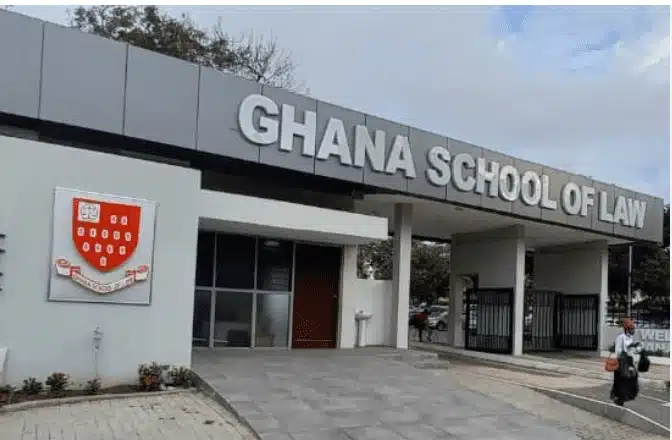
  • The 4 females who bagged first class in 2023 UG Law School

    The 4 females who bagged first class in 2023 UG Law School

    Four young women are currently receiving celebratory messages across social media platforms for their exceptional performance in their School of Law program at the University of Ghana.

    This quartet has achieved First Class Honours, a distinction clearly indicated in the Class of 2023 list, which has recently been made available.

    The accomplished individuals are as follows: Jasmine Kukua Tekyi Acheampong, Ohenewaa Asantewaa Armoh, Abigail Nakuor Wowolo, and Elenor Wesom Mogeri.

    The University of Ghana Law Students’ Union has taken to posting concise profiles of these four exceptional ladies, sharing details that encompass their educational background, aspirations, inspirations, and hobbies.

    Among them, Abigail and Jasmine are both alumni of Achimota School, while Kukua and Elenor are proud graduates of Accra Girls Senior High School and Holy Child Senior High School respectively.

    The University of Ghana’s School of Law occupies a preeminent position as the foremost institution for legal education in Ghana. Its commitment to equipping students for the legal profession remains unwavering, thus setting a benchmark in this domain.

    This institution’s journey commenced as a department within the Faculty of Social Studies during the academic year 1958/59. Subsequently, it advanced to the status of a Faculty in the academic year 1960/61, culminating in its elevation to a fully-fledged school during the academic year 2014/15.

  • Working and studying law is not easy – Gertrude Torkornoo

    Working and studying law is not easy – Gertrude Torkornoo

    The nominee for Chief Justice, Gertrude Torkornoo, has stated that individuals who work and study law at the same time have a difficult time learning.

    She said they are having a struggle with the ability to engage the law and pass the examinations due to interference with work.

    Speaking during her vetting by the Appointments Committee of Parliament on Friday, May 26, she said “now, many people in law school are working and I think that affects their ability to really engage with the law and pass the exams.

    “If you recall, in the last six months at least a thousand people have been called to the bar, the last major call had 860 or so people being called to the bar.

    “We had a mini call a few weeks ago, almost 200 people. A mini call having 200 people, that is unpreceded so they are coming out and they are going in but I think the journey is a struggle for working people.”

  • Samira Bawumia obtains another feat; acquires Bachelor of Laws degree from University of London

    Samira Bawumia obtains another feat; acquires Bachelor of Laws degree from University of London

    Ghana’s Second Lady, Samira Bawumia, has obtained another feat in life. She has acquired a Bachelor of Laws degree from University of London

    Taking to Facebook, to announce the achievement Mrs Bawumia noted that: “ A few years ago, with support and encouragement from family and friends, I took advantage of the Distance (Online) Law Degree Program offered by the University of London. 

    “Thankfully, I had the honour of graduating with a Bachelor of Laws degree, last week, in spite of the numerous challenges Covid-19 presented,” she added.

    According to the University of London, the Bachelor of Laws degree is an internationally recognised award that one can study flexibly, anywhere in the world. 

    It allows an individual to develop a critical awareness of the common law legal tradition and apply problem-solving skills to a range of legal and non-legal settings.

    The Bachelor of Laws degree from the University of London adds to the number of degrees she has so far. Following her admission to Kwame Nkrumah University of Science and Technology (KNUST), she studied BA. Social Science in Law and Sociology and Technology.

    Also, she was awarded the Best Student in Master of Business Administration (MBA) at the Ghana Institute of Management and Public Administration (GIMPA), where she had her postgraduate studies.

    Mrs Bawumia in the Facebook post further thanked her family and friends who motivated her to pursue the Law programme.

    “It has been an incredible journey of learning while juggling work, family, and official duties.

    “Let’s be inspired to pursue our dreams irrespective of the challenges we are faced with,” Samira Bawumia added.

    Source: The Independent Ghana

  • Madina MP files bill to cause radical changes in General Legal Council

    The Member of Parliament for Madina Constituency, Francis Xavier-Sosu is seeking radical changes to the General Legal Council through a Private Members Bill.

    The MP who is seeking a reconstitution of the GLC has filed a Bill in parliament with the support of the Member of Parliament for South Dayi, Rockson Nelson Dafeamekpor.

    “In my view, it is obvious that change is imminent and it is the only way we can resolve the matters. “In fact, it is part of the reasons why myself and my colleague, Hon Dafeamekpor, [are] championing a Private Member’s Bill in Parliament, requesting for a complete overhaul of the General Legal Council; its membership, its composition, its function and everything has to be overhauled. “The same thing has to be applied to the approach we see legal education,” the MP said in an interview on TV3.

    The move by the MP and his colleague comes on the back of the rescheduling of an entrance examination by the Ghana School of Law as a result of question leakage.

    A four-page examination question scheduled to be administered on Friday, September 23, 2022, was cancelled as the questions were shared on social media hours before it was to be taken. The General Legal Council has over the years been criticised for deliberately limiting access to legal education in Ghana.


  • Parliament approves fees for “access” to information

    Parliament has passed the law spelling out the various fees to be paid by persons seeking Information under the Right to Information (RTI)law.

    This is the Fees and Charges (Miscellaneous provisions Act 2022 (ACT 1080). Persons seeking Information are to pay 0.27 pesewas for every photocopy of A4 size of information.

    ection 75 of the Right to Information Act, 2019, (ACT 989) requires applicants to pay the fee approved by Parliament.

    “An applicant seeking access to information under this Act shall pay the fee or charge approved by Parliament in accordance with the Fees and Charges (Miscellaneous Provisions) Act,2009 (Act 793).”

    The Right to Information Commission in accordance with this law submitted a proposal to Parliament spelling out how much should be charged.

    Even before this could be passed, applicants seeking information were in some instances asked to pay amounts considered to be problematic.

    The Fourth Estate’s Evans Aziamor Mensah was asked by the Minerals Commission to pay $1,000 to access Information.

    This amount was later set aside by the Right to Information Commission as being unreasonable. The matter is currently pending at the Court of Appeal.

    Speaking on The Law on the Joynews Channel, Executive Secretary of the RTI Commission, Yaw Sarpong Boateng, said the new fees approved by Parliament will provide clarity on the matter.

    “It sits with our argument that the fees ought to be reasonable in respect of the reproduction not for the cost of generating the Information.”


  • Survivors of suicide attempts call for decriminalisation of act

    Some survivors of attempted suicide have called on the government to decriminalize the law on suicide attempts and instead channel resources towards its prevention.

    Their calls come as the world marks World Suicide Prevention Day observed on 10th September every year, to provide worldwide commitment and action to prevent suicides.

    In Ghana, suicide rates in the country have decreased from 7.80 in 2010 to 6.60 in 2019, with 1500 reported cases of suicide nationwide yearly and over 700,000 global suicide deaths annually. Also, in Ghana, in each reported case of suicide are four unreported cases, summing the number of unreported cases to almost 6000 yearly.

    The 1960 Criminal Code Act 29, Section 57 states: “Whoever attempts to commit suicide shall be guilty of a misdemeanour.”

    But describing the law as senseless and meaningless, Mr. Edmond Tetteh Padi, a 48-year-old survivor of three suicide attempts and a resident of Somanya in the Eastern Region, argued that victims of suicide attempts need to be counselled and not prosecuted.

    “I don’t think that law is meaningful and sensible enough… it’s like something is urging you, something is pushing you to do it, either psychological or whatever, so at the end of the day, the person rather needs to be counselled than rather you prosecuting the person and putting the person in jail,” he reasoned.

    Proposing how such survivors should rather be used in sensitizing members of the public against the act, he said, “I think that they have to give us counselling and then maybe gather people that have made an attempt and survived to come out and talk to people that are thinking or want to do a similar thing that all hope is not lost yet.”

    Mr. Edmond Tetteh Padi is one of several thousands of Ghanaians who have survived attempts to take their life, his case on three occasions – and all three had a common underlining cause – frustrations due to what he described as life’s failures.

    Speaking about his experiences for the very first time to GhanaWeb’s Eastern Regional Correspondent, Michael Oberteye in Somanya, the divorcee and father of one attributing his actions to dejection following failures in his life and hardships especially considering his age, Mr. Padi intimated, “It is like out of perplex and frustration simply because what I was expecting in life, I was not getting it and I thought that if such situations should continue then the best way is to end my life.”

    Adding that he carefully thought over his intended actions before proceeding, the businessman and commercial farmer recalling the last incident in 2019 disclosed, “I sat down, and I thought of it for three days, and I took action. I bought chemicals that I thought that if I take it, I’ll surely die, so I mixed the DDT with water, and then I took it.”

    The suicide survivor who said the chemical didn’t take his life attempted the act again three days later, this time with rat poison but added that just before he could drink the toxic substance, he received a call from someone he described as God-sent who counselled him.

    Describing his survival as miraculous, he said, “I’ll say all the occasions of attempting, I took the drugs, but they didn’t work…after taking the medicines, I went to bed expecting to die, but I didn’t, so I’ll say survival is a miracle and the work of God.”

    GhanaWeb Special: Suicide survivors share how they escaped death

    0 seconds of 15 minutes, 39 secondsVolume 90%

    Asked if he had finally gotten over his troubles and was not likely to attempt the act again, Mr. Padi answered in the affirmative, adding that he was ever ready to serve as an advocate against the act.

    Madam Tettey Kenie, a 51-year-old food seller at Asitey in the Lower Manya Krobo Municipality, attempted suicide on two occasions, the second only three weeks ago.

    Also attributing her actions to financial challenges and abandonment by her estranged husband, the mother of seven (one deceased) sharing her story, narrated that being abandoned by her former husband more than ten years ago after realizing their daughter whom she had delivered couldn’t speak and being pursued by her debtors whom she had credited food items from convinced her that death was the only way out.

    “I had a daughter with my husband, but he abandoned us due to the child’s inability to speak. My debtors and the police were also coming after me, and I ran away. When I returned home, I realized I had no money, so I decided to end it all.

    “I mixed DDT with salt and drank the contents. I realized the walls of my stomach had shed,” she narrated, adding that it took her landlord to rush her to the hospital after she disclosed her actions to him.

    Three weeks ago, Madam Kenie repeated her suicide attempt by mixing powerzone bleach with alcohol and akesha (a local chemical used to scrub floors and other surfaces), once more attributing her actions to financial difficulties. Again, she survived after being rushed to the hospital.

    Asked if she could be tempted to attempt taking her life if her predicaments persisted, she answered: “While my debtors come after me and I have the money? For that, I can’t stand it.”

    She called for the repeal of the act criminalizing attempted suicide in Ghana, arguing that such persons need support and not be prosecuted and possibly jailed.

    Madam Kenie’s brother, 40-year-old Mr. Stephen Odei Kwabla confirmed his elder sister’s actions, adding that he personally counsels his sister against her suicidal habits.

    He also condemned the law criminalizing attempted suicide and called for its immediate repeal.

    Mr. Eric Narh, a medical statistician, however, maintained that the law must be maintained to serve as a deterrent to persons who may want to take their lives.

    “The law should be maintained because once there’s a law, it means that once you want to commit any crime, you should look at the magnitude of the crime because once it involves a penalty for you to be sentenced or jailed or to be fined, you know that once what you’re going to do [can land you in prison, you avoid it],” said the statistician.

    He further called on the government to resource and empower the state agencies and service providers, particularly the Mental Health Authority of Ghana, Ghana Health Service, and the Department of Social Welfare, among others, to sensitize and make comprehensive psychological support available at all levels of the health system and in educational institutions for people who might have the tendency to attempt suicide.

  • Surcharge and disallowance: It’s clear Auditor General is committing a high crime Samson Ayenini

    A leading member of the civil society group Citizens Coalition, Samson Lardy Ayenini, has stated that the Auditor General‘s refusal to use his powers of surcharge and disallowance is in clear breach of the law.

    Speaking to GhanaWeb on the sidelines of the Coalition’s protest against the Auditor-General on Monday, Lawyer Ayenini said the A-G’s refusal to issue surcharge and disallowance since 2019 is in clear disobedience of the Supreme Court’s orders in OccupyGhana vs Attorney General.

    “It is very clear on the face of Article 2 of the 1992 Constitution. If the Supreme Court gives an order, and Occupy Ghana got this judgement with consequential orders, the orders were mandatory that the Auditor General should issue disallowances and surcharges, right? Now, what does Article 2 of the Constitution say? It says that if the Supreme Court gives an order and you disobey that order, you have committed what is known as high crime,” he told George Ayisi, host of #SayItLoud on GhanaWeb TV.

    Outlining the gravity of the Auditor General’s actions, Samson Ayenini, who is a private legal practitioner, said a refusal to obey an order of the Supreme Court attracts serious consequences.

    “What are the consequences of a high crime if you are found guilty? If you are the president, it is a basis for you to be removed from office. If you are vice president, it is a basis for you to be removed from office. But if you are none of those, the constitution, which is the supreme law, says if you are found guilty, you will suffer a penalty not exceeding ten years of jail. And then you will not have the opportunity to be able to stand for elections or be appointed to an office in this country for ten years. So it’s that serious. It’s not just the question of contempt,” he said.

    The protest on Monday, September 5, 2022, was against the Auditor General’s failure to surcharge and disallow various financial irregularities captured in his annual reports since 2019.

    “This Auditor General, at the time he was acting, had issued a number of reports, and the president said he has done something that was unprecedented that even Domelevo didn’t do. Why? Has he been appointed to issue just reports? You keep regurgitation to us that this has been missing, this is misused, this is stolen, and that is the end of it?” Lawyer Ayenini speaking about the cause of the protest stated.

    The private legal practitioner emphasised that the financial irregularities reported by the A-G’s office for 2021 alone amounted to about GHC17 billion, above what Ghana currently seeks from an IMF programme.

    “I just gave the example to you; we are going to the IMF for GHC16 billion. This is GHC17 billion; we should just collect the money. Look at the conditionalities that come with going to the IMF,” he told GhanaWeb’s George Ayisi during the protest.

    Source: ghanaweb

  • Legal Aid Scheme needs to be resourced – Supreme Court nominee

    A Supreme Court nominee, Justice Honyenuga has called for more resources for the Ghana Legal Aid Scheme to enable the scheme to deliver its mandate effectively and efficiently.

    According to him, the scheme plays a significant role in the justice delivery system of the country, and therefore denying them the needed resources  would affect the operations of the scheme.

    Justice Honyenuga who was answering a question on the role of the Justice for All Programme during his vetting today [Monday, May 11, 2020] as a Supreme Court nominee, said the Ghana Legal Aid Scheme lacked many resources including lawyers.

    He explained that the scheme had to sometimes rely on the benevolence of the Ghana Bar Association for lawyers to represent their clients in courts.

    He said many of the lawyers who come to do their national service at the scheme leave after the expiration of their service because they do not find the scheme attractive to work there.

    Justice Honyenuga was of the view that since not everyone who could afford the services of a lawyer, resourcing the scheme would help it to provide legal services to the less privileged ones in the society.

    He said through the Justice for All Progamme, the country had been praised by many international bodies, including the General Assembly of the United Nations.

    Legal Aid

    Ghana Legal Aid Scheme is a public service organisation within the Justice delivery system of Ghana.

    It provides legal assistance for all who seek to defend or enforce the constitution in accordance with Article 294 of the Constitution.

    The Scheme is tasked under the Legal Aid Scheme Act 1997 (Act 542) to provide legal assistance to the poor and indigent, as well as other persons in the prosecution and defence of their rights under the Constitution of Ghana.

    The Legal Aid Scheme is Ghana’s effort at ensuring that constitutional democracy, rule of law and access to justice extends to the poor and vulnerable who would otherwise be excluded from the formal justice delivery system.


    Source: Graphic.com.gh 

  • Kenyan lawmaker found dead in India

    A Kenyan lawmaker was found dead in his hotel room in India, officials have confirmed.

    Mr Rono Kosigi the Liaison Officer at the Kenyan High Commission in India confirmed on Wednesday that Kahawa Wendani member of county assembly (MCA) Cyrus Omondi was found dead in Mumbai.

    News of his death threw Kiambu County Assembly into mourning.

    Mr Omondi was in India for a workshop alongside his colleagues in the Education committee.

    Mr Omondi was a first-time ward representative at the Kiambu County Assembly in central Kenya. He was elected on President Uhuru Kenyatta’s Jubilee Party ticket.

    Mr Omondi rose from humble beginnings, working as a mechanic in Kahawa before his rise in politics. He clinched the Kahawa Wendani seat in 2017 after failing in his first attempt in 2013.

    Source: Theeastafrican.co.ke

  • Ethiopia passes law on hate speech and fake news

    Ethiopia’s parliament has passed a controversial law aimed at curbing hate speech and disinformation on mainstream and social media.

    Critics said the law could be used to suppress dissent ahead of a general election later this year.

    It will be the first poll in Ethiopia since Nobel Peace Prize winner and Prime Minister Abiy Ahmed took office in 2018.

    He introduced sweeping reforms and promised free and fair elections.

    But the authorities said the law was necessary to deal with a surge in violence recently witnessed across the country.

    Source: bbc.com