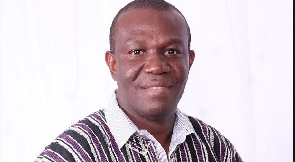
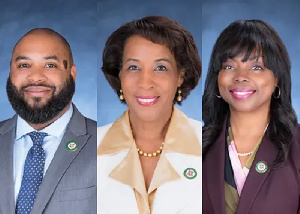
Chair of the Ad-Hoc Committee investigating the disruptive chaos that marred the ministerial vetting process in Parliament on January 30, 2025, Emmanuel Kwasi Bedzrah, has assured that the committee is ready to announce its findings and take appropriate action against those responsible for the unrest.
Speaking in an interview on 3FM, monitored by GhanaWeb on Thursday, April 3, 2025, Bedzrah confirmed that the committee’s report is complete and will soon be presented to Parliament. He emphasized that the findings would not be concealed from the public.
“Our report is ready, and as soon as we return from recess, we will lay it before the House. We won’t hide it from the good people of Ghana, so they should wait patiently for it. Various degrees of sanctions will be meted out to anyone found guilty, including being expelled from the chamber,” Bedzrah stated.
The chaos in Parliament, which included physical altercations and heckling among lawmakers, left many shocked. Bedzrah expressed his disappointment, stressing that such behavior tarnishes the reputation of Parliament and erodes public trust in its ability to conduct itself with dignity and professionalism.
“Parliament is degenerating into a dishonorable House because such actions not only bring the chamber into disrepute but also wear down public confidence in the institution’s ability to conduct its affairs with integrity and professionalism,” he remarked.
Bedzrah also addressed allegations from the Minority Caucus, particularly claims made by Minority Leader Alexander Kwamina Afenyo-Markin that the investigation was biased. He firmly denied these accusations, clarifying that the committee’s role was not to target or witch-hunt any MPs.
“Let me put on record that it was not part of our job to target or witch-hunt anyone. Our work was to hear from all parties involved and look for evidence of any Member of Parliament who may have flouted the rules of engagement. This is not a witch-hunt against our colleagues; that is democracy,” he explained.
The unrest, which erupted during the ministerial vetting for President Mahama’s appointees, prompted Speaker Alban Bagbin to set up a seven-member committee to investigate the cause of the chaos. Four Members of Parliament were suspended for two weeks following the incident.
Bedzrah’s comments highlight the committee’s commitment to bringing accountability to the situation and ensuring that such disruptions do not undermine the integrity of parliamentary processes in the future.
Two members of the Republican party and members of the Democratic party in the Senate voted 16-14 to get rid of a ban on abortions that has been in place since the Civil War. This ban was recently allowed to be enforced by the state’s highest court. The ban on all abortions is still in place. It doesn’t have any exceptions for survivors of rape or incest, and only allows for procedures done to save the patient’s life. This will continue until the fall.
Hobbs said she’s excited to sign the repeal soon, with a ceremony planned for Thursday.
Hobbs said that women in Arizona shouldn’t have to live in a state where politicians are making decisions that should be made between a woman and her doctor. “The repeal is needed to save women’s lives, but we still have a lot more to do to protect healthcare for women. ”
Reviving a law from the 1800s has made Republicans in Arizona feel like they are in a difficult position. Arizona is one of a few states where the outcome of the election will be very important.
If the repeal bill is signed, a new law will make it illegal to have an abortion after 15 weeks of pregnancy in Arizona. However, for a period of time, almost all abortions may become illegal, because the repeal will not take place until 90 days after the end of the legislative session, which will probably be in June or July.
Efforts started immediately to stop the old abortion ban from happening before the repeal happens.
Arizona’s Attorney General Kris Mayes said that without a special rule, the people of Arizona might have to follow the almost complete ban on abortion for some time this year. “Don’t worry, my office is looking at every choice we have to stop this old law from happening. ”
Planned Parenthood Arizona asked the state’s highest court to stop a temporary halt in abortion services until the law changing the rules is in place.
The law that mostly stops abortions has been around since before Arizona became a state. Last month, the Arizona Supreme Court said that doctors could be charged with a crime for helping with an abortion. The law from 1864 says that anyone who helps with an abortion can go to jail for two to five years. Last week, the repeal bill barely passed in the Arizona House.
Voting on the bill took over an hour on Wednesday, with emotional speeches.
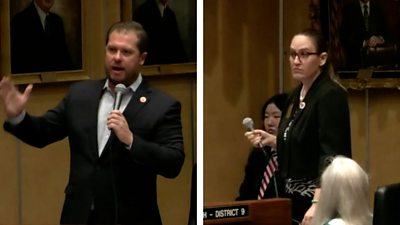
Democratic state Sen Eva Burch said, “This is about a law from the Civil War time that makes it a crime for doctors to perform almost all abortions. ” “We’re here to get rid of a law that is not good. ” I don’t think we should follow laws about women that were made when women were not allowed to vote because people thought their opinions were not as important as men’s.
Burch said on the Senate floor in March that she had a pregnancy that wasn’t going to survive, so she was going to have an abortion. On Wednesday, she told supporters of women’s ability to choose to have children that they still need to be careful, even after the law is changed.
“They will use all available resources to try to stop the ban from being lifted,” she said.
Many people in the Senate gallery caused disturbances while Republican state Sen Shawnna Bolick explained her vote to repeal a law and sided with the Democrats.
Bolick said that getting rid of the law would protect against very strong abortion rights proposals. She is married to Clint Bolick, who is a judge, and he voted to allow a law from a long time ago about abortion to be enforced again.
The senator said he wants to make sure that our state constitution limits the number of abortions. “I am here to keep more babies safe. ” I say yes when voting.
Supporters and opponents of abortion came to the Arizona Senate to speak out about their opinions.
A young girl prayed in front of a statue of Mary at school while a man yelled at people to ask for forgiveness.
Ex-president Donald Trump didn’t support a national abortion ban, but he’s happy he chose Supreme Court judges who allowed states to make it illegal. He’s worried it could make Republicans lose elections.
The Arizona law was stopped after the US Supreme Court’s decision in the Roe v. Wade case in 1973. Wade’s decision made sure that women all over the country have the right to get an abortion.
When the decision of Roe v Wade was canceled in June 2022, the former Arizona Attorney General, Mark Brnovich, who is a Republican, convinced a state judge that the ban from 1864 could be enforced again. However, the law has not been put into action while the case was going through the courts. Mayes, who took over for Brnovich, asked the state’s highest court not to bring back the law.
Planned Parenthood will make sure that patients can go to New Mexico and California for an abortion if they need to.
Supporters are gathering signatures for a vote to make it legal to have an abortion up to around 24 weeks into a pregnancy, with exceptions for when the parent’s life is in danger or to protect her physical or mental health.
Republican politicians are thinking about having different plans about abortion on the November voting list.
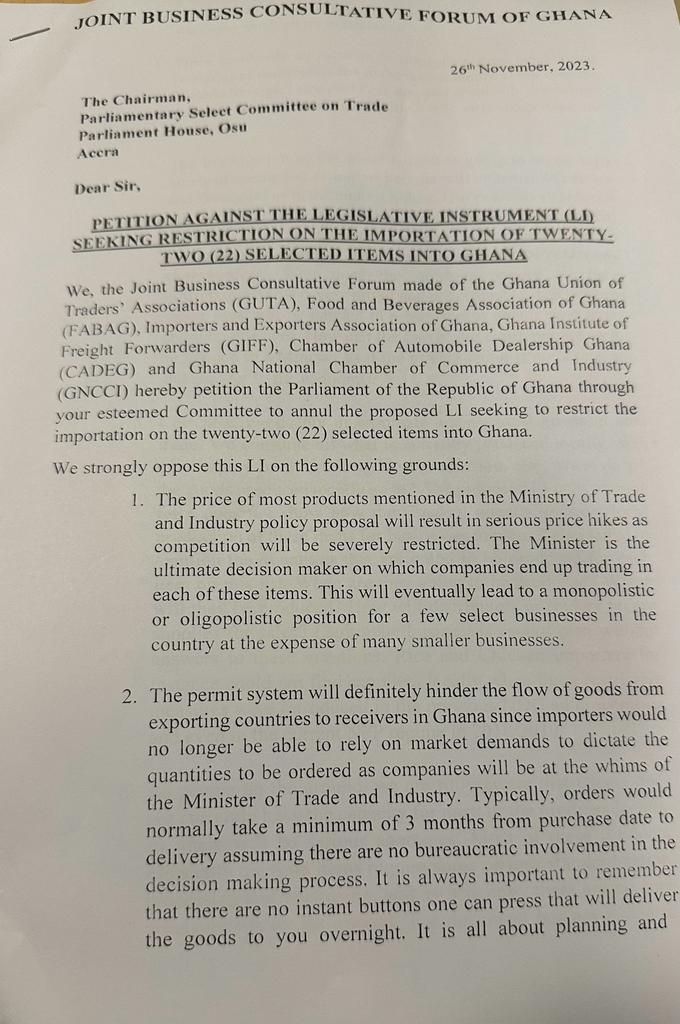
Six prominent business associations, collectively known as the Joint Business Consultative Forum, have submitted a petition to Parliament, urging lawmakers to reject the import restrictions bill proposed by the Ministry of Trade and Industry.
The forum includes key organizations such as the Ghana Union of Traders Associations (GUTA), Food and Beverages Association of Ghana (FABAG), Importers and Exporters Association of Ghana, Ghana Institute of Freight Forwarders (GIFF), Chamber of Automobile Dealership Ghana (CADEG), and Ghana National Chamber of Commerce and Industry (GNCCI).
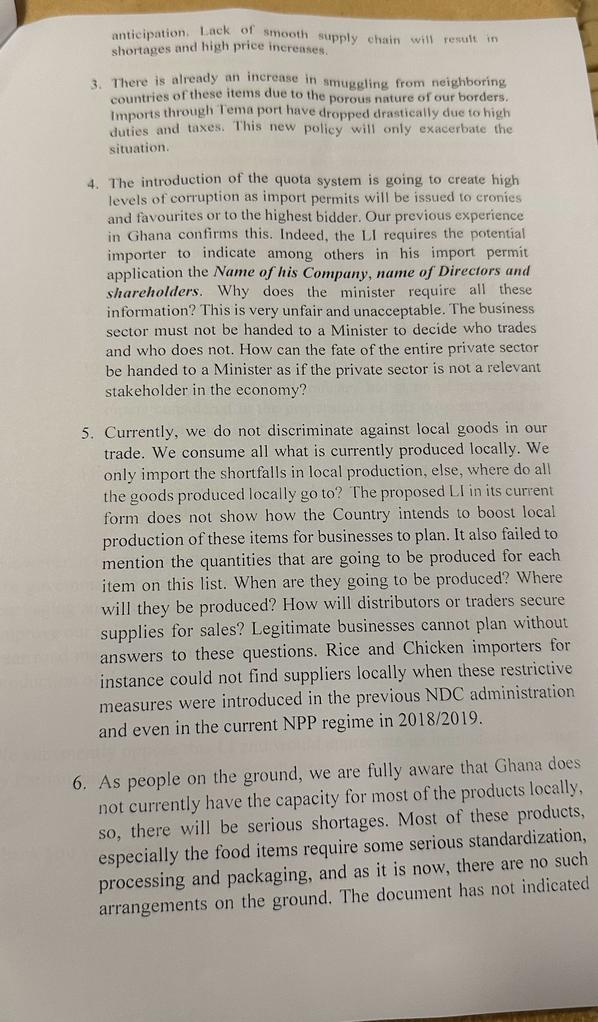
Expressing their concerns in the petition dated Sunday, November 26, the forum outlined potential detrimental effects of the bill on their businesses. They argue that if enacted, the legislation could adversely impact the prices of goods, disrupt the free flow of goods, and pose potential harm to businesses. The business associations collectively advocate for a reconsideration of the proposed import restrictions to safeguard the interests of the business community.
“We vehemently oppose this LI and would appreciate its immediate rejection by Parliament to allow for proper consultations and dialogue to take place.”
“We strongly oppose this LI on the following grounds: The price of most products mentioned in the Ministry of Trade and Industry policy proposal will result in serious price hikes, as competition will be severely restricted.”
They added that “The Minister is the ultimate decision maker on which companies end up trading in each of these items. This will eventually lead to a monopolistic or oligopolistic position for a few select businesses in the country at the expense of many smaller businesses.”
Meanwhile, when the Minister tried to introduce the Legislative Instrument (LI) before the House, the Minority objected for the second time. The LI aims to limit the importation of a few specific strategic products, including rice, chicken, and sugar.
Local politicians from Loudoun County in the American state of Virginia have faced severe criticism for embarking on a trip to Ghana in the middle of June this year.
According to Fox News, concerned residents in the area attended a Board of Supervisors meeting on Tuesday, September 5, to express their dissatisfaction with the use of taxpayer dollars by local leaders to finance an extravagant journey to Ghana. The expenses reportedly covered first-class flights, luxurious accommodations at a five-star hotel, fine dining, and other lavish expenditures.
The three officials in question, Phyllis Randall, Koran Saines, and Sylvia Glass, are reported to have expended over $60,000 in public funds during their visit to Ghana, primarily for the purpose of formalizing a sister city agreement with the Tema Metropolitan Assembly (TMA).
Phyllis Randall serves as the Chair of the Loudoun County Board of Supervisors, with Koran Saines as her vice-chair, and Sylvia Glass as a Supervisor on the Board.
Randall responds to allegations:
Randall denied utilizing tax payer money to pay for the vacations in a statement to Fox 5.
“I don’t travel on county taxpayer revenue and never have,” she said, according to the outlet. “It’s a policy I put in place when I came to office in 2016.”
But according to the source, Randall did not pay for the money himself. They originated from the transitory occupancy tax collected by the economic development authority, which is typically borne by outsiders visiting Loudoun County rather than locals.
“There are people who are rebelling in their ignorance while ignoring the truth because they don’t want the answer, they want the issue,” Randall said during Tuesday’s meeting.
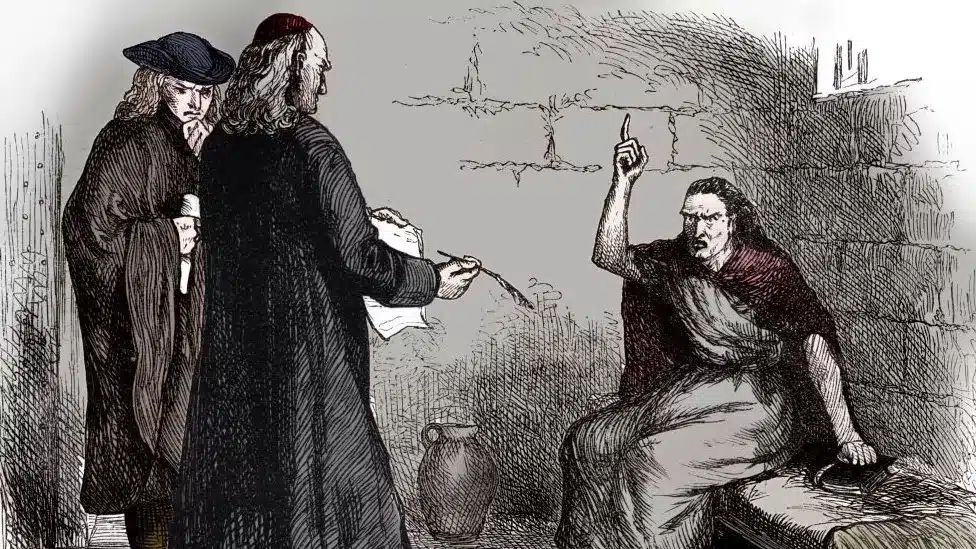
Lawmakers in Connecticut have agreed to exonerate 12 persons who were convicted of witchcraft in colonial America more than 370 years ago.
Eleven of the 12 were hanged after trials that the state Senate now acknowledges were a “miscarriage of justice”.
It follows a long-running campaign by descendants to clear the names of those wrongfully accused of being witches.
Dozens were executed for witchcraft in the US in the 17th Century.
On Thursday, Connecticut’s Senate voted 33-1 to exonerate those convicted in trials that took place in the state in the mid-to-late 1600s.
The senator who voted against the move, Rob Sampson, said that he believed it was wrong to “dictate what was right or wrong about periods in the past that we have no knowledge of”.
“I don’t want to see bills that rightfully or wrongfully attempt to paint America as a bad place with a bad history,” he was quoted as saying by the Associated Press.
“I want us to focus on where we’re going, which is a brighter and better future.”
The resolution had already passed in Connecticut’s House of Representatives, with 121 votes in favour and 30 against.
The resolution follows nearly two decades of lobbying by the CT Witch Trial Exoneration Project, a group set up in 2005 by descendants of the accused.
The group said they are “ecstatic, pleased, and appreciative” especially as the decision comes on the eve of the 376th anniversary of the first witch-hanging in New England – that of Alice Young.
“We are grateful to descendants, advocates, historians, legislators of both parties and many others who made this official resolution possible.”
They added that they “will continue to advocate for historical education and memorialisation of the witch trial victims“.
Some members of the organisation discovered their family links using genealogy tests.
The family members and their supporters argue that the exonerations are an important step to learning from the mistakes of the past.
Saud Anwar, a state senator who took an interest after a constituent discovered their ancestor was a witch accuser, told the AP that witchcraft trials still take place around the world.
“It’s relevant, even to this time as well,” he said.
The Witch Trial Exoneration Project hopes that in addition to correcting past wrongs, that this will bring awareness to “deadly witch hunts still happening in many parts of the world due to fear, misogyny and superstition”.
At least 45 people were accused of witchcraft in colonial Connecticut, although the Witch Trial Exoneration Project believes the record is likely incomplete.
In the more widely-known Salem Witch Trials in nearby Massachusetts, about 200 people were accused, leading to the deaths of 25 people.
Last August, Massachusetts formally exonerated Elizabeth Johnson, the last person to be convicted during the Salem Witch Trials.
While initially sentenced to death, she was granted a reprieve and lived to be 77. Historians now believe she suffered from a mental disability.
Other countries have also sought to recognise people that were unfairly persecuted for witchcraft in the past.
Last year, then-First Minister of Scotland Nicola Sturgeon offered a formal apology to 4,000 Scots, mostly women, who were accused of witchcraft between 1563 and 1736.
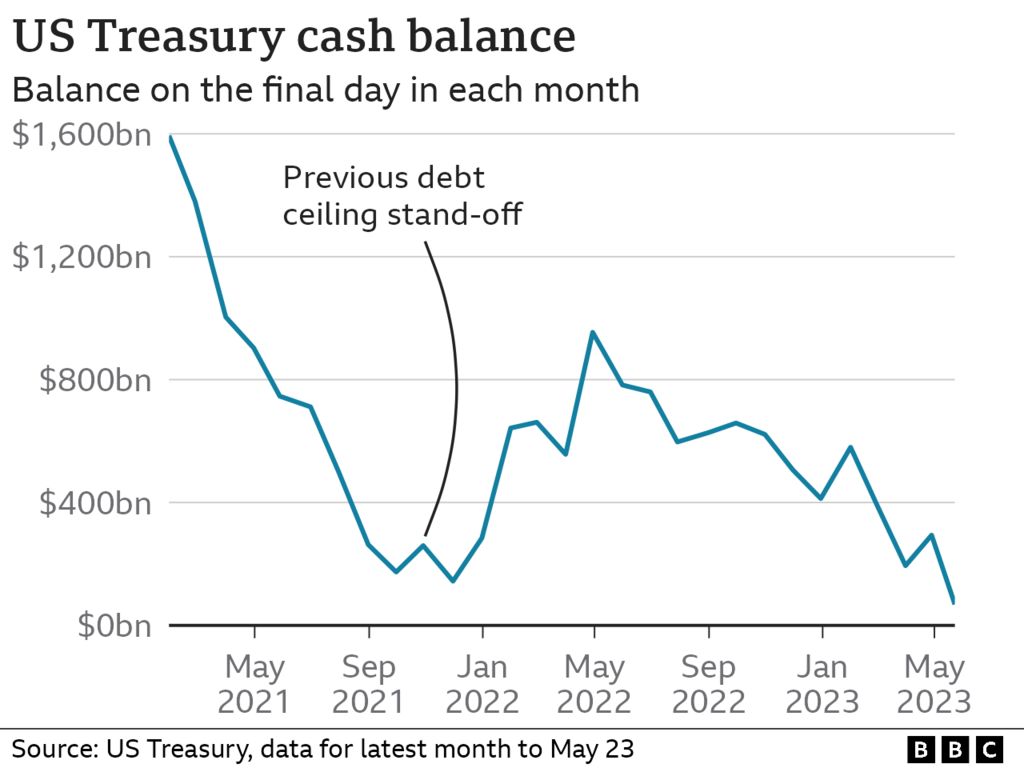
The US Treasury Secretary has stated that if lawmakers do not extend the debt ceiling by June 5, the US will run out of money to pay its debts.
The new deadline allows Republicans and the White House a little more time even as President Joe Biden expressed hope for reaching a deal quickly.
An emerging agreement would limit most spending for two years, exempting military and veterans programmes.
Issues such as tougher eligibility for government aid are a sticking point.
Mr Biden told reporters on Friday: “I’m hopeful we’ll know by tonight whether we are going to be able to have a deal.” Midnight passed without any word of an agreement.
US Treasury Secretary Janet Yellen said without a deal the projected resources of the US would be inadequate to meet the country’s spending commitments during the week of 5 June, 10 days away.
Such a default would upend the economy and have global impact.
Republicans have been seeking spending cuts in exchange for raising the $31.4tn (£25tn) debt limit, a law which caps how much debt the US government can accrue.
The US Treasury had previously warned the US could run out of money to pay all of its bills as soon as 1 June, unless Congress lifted the limit to allow the government to borrow more.
‘Crunch time’
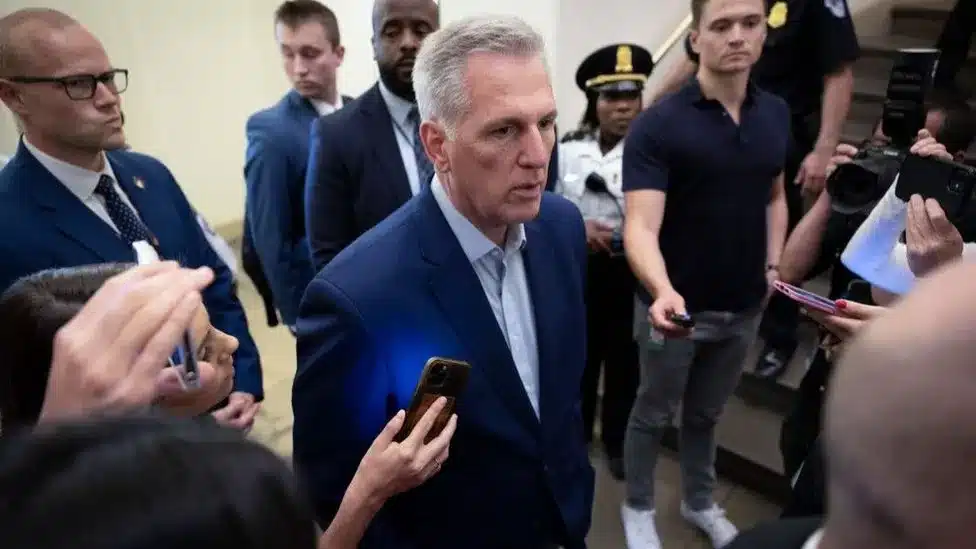
Kevin McCarthy, who leads Republicans in the House as Speaker, said on Friday that he thought the two sides had “made progress” after working into the night on Thursday.
“We know it’s crunch time,” he said. “I thought we made progress yesterday. I want to make progress again today and I want to be able to solve this problem.”
A day earlier, President Joe Biden also said the negotiations were moving forward, though the White House on Friday afternoon said talks could spill into the weekend.
US media have reported that the emerging deal would raise the debt limit for two years – removing it as a political issue until after the 2024 presidential election.
It could also strip $10bn from the Internal Revenue Service, scaling back the $80bn boost approved last year – despite Republican objections – for the tax collection agency to hire more auditors.
Republican efforts to impose tougher work requirements for recipients of certain government benefits remained a sticking point, however.
Congressional lawmakers have largely returned to their constituencies ahead of the Memorial Day weekend in the US – but have been told to be ready to return in the event of a deal.
The brinksmanship has rattled many observers, who say it erodes confidence in US governance and injects uncertainty into the global financial system.
Earlier this week one of the big credit ratings firms, Fitch Ratings, warned it was considering stripping the US of its top-notch rating, pointing to the fight – a version of which has recurred numerous times over the last decade.
In an assessment of the US economy on Friday, the International Monetary Fund said the US needed to do more to reduce its public debt load, which has increased rapidly in recent decades.
But it urged the country to change its laws to avoid debt-ceiling stand-offs, which it said create an “entirely avoidable systemic risk to both the US and the global economy”.
It said the debt cap should be automatically increased when Congress approves spending.
“To avoid exacerbating downside risks, the debt ceiling should be immediately raised or suspended by Congress, allowing negotiations over the FY2024 budget to begin in earnest,” it added.
The US must borrow money to fund the government because it spends more than it raises in taxes.
Republicans have said they will not raise the debt ceiling unless the government reduces its spending in the years ahead. They are seeking cuts in areas such as education and other social programmes.
Democrats have countered with proposals to raise certain taxes.
The three major US stock indexes jumped on Friday on hopes a deal would be presented soon.
But worries about the impact of a possible default helped drive up US mortgage rates this week and investors are also demanding higher payments in return for some kinds of government bonds.
Any agreement formed between the two sides will need to be turned into a legislative text to be approved by Congress.
Mr McCarthy has promised to give lawmakers 72 hours to review the bill, and at least 24 hours’ notice if they have to return to Washington early. If a deal is reached, a vote could happen early next week.
Some Republicans have already said the potential spending limits appear too modest, while some Democrats have raised opposing concerns.
With Congress already broken up for Memorial Day, there is little wiggle room for objections.
The Senate would also have to vote on the bill, which would then go to the White House for signing.
Lawmakers could also temporarily lift the debt cap to give the talks more time.
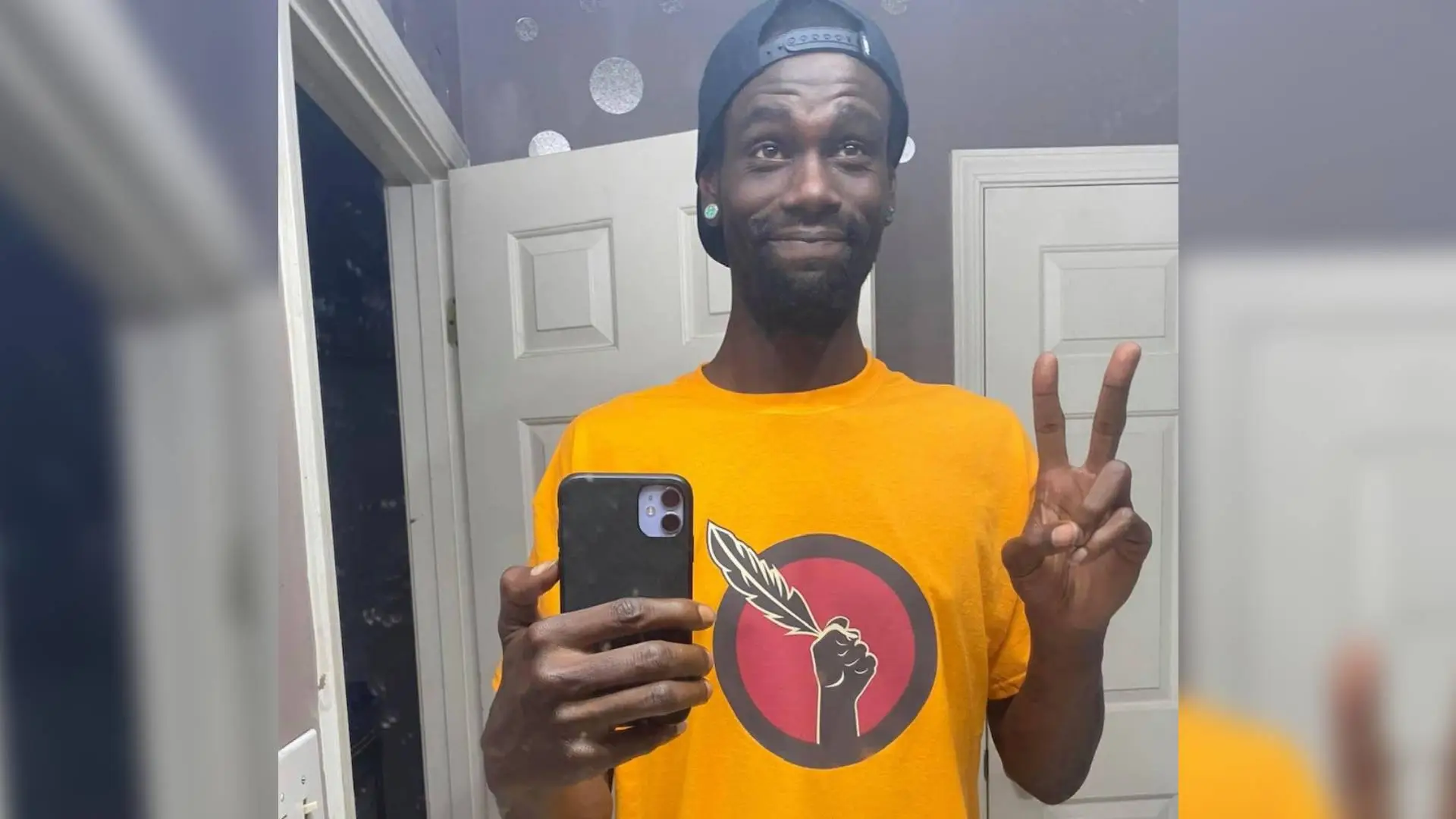
The heartbreaking details of Tyre Nichols’ death are revealed in the video of him being beaten by Memphis police. Nevertheless, some issues remain unclear.
Lawyers for his family said the officers acted like a “pack of wolves” and beat him “like a human pinata”.
Police Chief Cerelyn Davis, who is the first black woman to serve in the role, told the BBC she was shocked. “Something happened that we can’t explain,” she said.
The videos prompted the authorities to act swiftly in firing the five officers last week and then charging them with second-degree murder.
On Friday evening, the videos were released to the public. Here is what we still don’t know.
Could medics have done more?
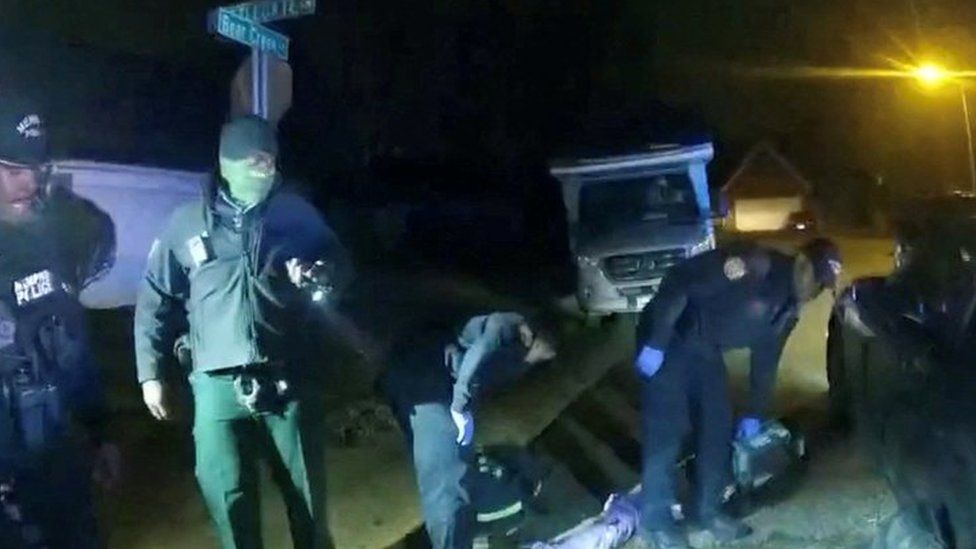
It is evident from the footage that Mr Nichols is in distress after the beating. He writhes on the ground before being slumped up against a car, unable to properly sit up himself.
Two medics had arrived at 20:41 but the videos appear to show a lack of urgency on their part to treat him. Their employer, the fire department, has suspended them and launched an investigation.
Mr Nichols’ stepfather Rodney Wells has called for criminal charges against them. “They’re just as guilty,” he said.
It took more than 20 minutes for an ambulance to arrive. We don’t know how long it is before Mr Nichols is taken to hospital.
Image caption,Tyre Nichols died three days later
“The worst part of it was the lack of humanity after the incident,” Greg Donaldson, a professor at the John Jay College of Criminal Justice in New York, told the BBC.
The officers “stood around like its as just an afternoon on the street,” he says, while leaving Mr Nichols “laying there on the ground like a piece of garbage”.
We do not know if there is additional footage that could shed more light on what those attending – 10 officers in total plus the medics – did at the time.
Why did police pull him over?
While the four videos contain over an hour of footage total, capturing multiple angles taken from police body cameras and a pole-mounted surveillance camera, one crucial element is missing: how did all this begin?
His family has said that Mr Nichols, an avid photographer, was out driving so he could take pictures of the sunset.
Officers initially said Mr Nichols was pulled over for alleged reckless driving, but police on Friday said there is no evidence to substantiate that claim.
The footage released only begins after police confront him at an intersection at 8:24pm local time – police say the initial traffic stop was not filmed but we don’t know why.
Image caption,Footage of Mr Nichols’ fatal encounter with Memphis police
He is immediately dragged out of the car and thrown to the ground by officers with guns drawn.
“I didn’t do anything!” Mr Nichols says early on, and he complies with the officers’ instructions.
An officer shouts: “Put your hands behind your back before I break your [expletive].”
“You guys are really doing a lot right now,” Mr Nichols says to the officers. “I’m just trying to go home.”
Later in the video, we hear an officer telling other officers who have arrived at the scene that Mr Nichols swerved and almost hit his police vehicle, but we see no evidence of this.
Another officer claims he thinks Mr Nichols may be “on something,” which implies they believed he may have been using drugs. There is no known evidence that this was the case, and later in the video, officers say they did not find anything in his car.
Why were the officers so aggressive?
From the get-go, the officers are very hostile, cursing at Mr Nichols and telling him to lie on the ground or they will strike him with a stun gun.
In the videos, Mr Nichols is initially compliant, if confused, by the officers’ hostility. He lies down on the ground as instructed, as they attempt to handcuff him.
But when one of them tries to tase him, he breaks free and tries to run, at which point police pepper spray him.
How he broke free, and why police were so aggressive in the first place, is not clear.
“It was incomprehensible, from beginning to end,” says Mr Donaldson.
“From the car stop, the state of agitation of the police when they pulled the car over, to the pursuit, to the lack of training and lack of strategy in containing and subduing the person they had stopped.”
Why did they continue to assault him?
Mr Donaldson says the video seems to show that police anger grows “as their incompetence seems to be more revealed”.
Spraying his eyes with water after feeling the effects of the pepper spray himself, one of the officers says they should “stomp” him when they catch him.
That is exactly what they do in the videos that captured the second encounter which began at 8:32pm. For several minutes, police punched and kicked him, in the body and the head, while Mr Nichols cried for his mother. One officer is seen wandering away, breathing heavily. Almost a minute later, he returns to the scene, pulls out his extendable baton and strikes Mr Nichols repeatedly.
None of the officers try to stop him, or another who is seen punching Mr Nichols in the head at least five times.
“This incident just ran out of control,” Mr Donaldson says.
What is the cause of his death?
Although it is clear Mr Nichols was severely beaten, we still do not know what actually caused his death in hospital three days later.
In the video, we do see police kick him in the head twice, and there is blood visible around his face.
Attorneys for his family have said that an independent autopsy found that he suffered “extensive bleeding caused by a severe beating,” but the full report has not been made public.