Tag: lesotho

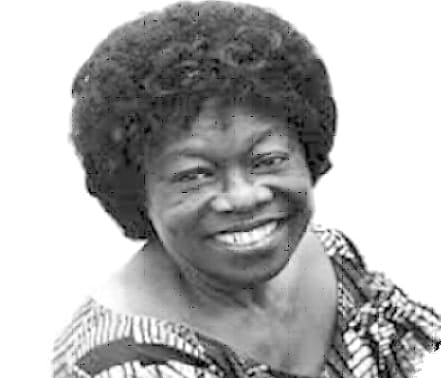
  • The first female PhD scientist, Elizabeth Ohene

    The first female PhD scientist, Elizabeth Ohene

    She achieved everything that there was to achieve and more. It is her work with the Volta Lake that is my abiding memory.

    In paying my last respects to Dr Letitia Obeng, Ghana’s first female PhD holder in Science, I have gone back to her seminal autobiography, A Silent Heritage, and selected some passages from the book on different subjects to show what a thoroughly dynamic and forward-looking woman she has been.

    Here she is, describing the home she lived in as a child in Afidwase:

    The roof was of corrugated iron sheets.

    All “respectable” houses were roofed with corrugated iron sheets.

    The iron sheets had been introduced, (no doubt as part of a foreign export drive during colonial days) as an alternative to the African grass-thatch roof which was considered “primitive”.

    The promotion had been vigorous, in spite of the fact that, in the climate of the country, the grass thatch roofs made rooms cool.

    Granted, the corrugated iron sheets made rainwater harvesting feasible but they also heated rooms up and, with the rains, they soon became rusty, leaving roofs disgustingly ugly.

    As I have travelled around the world, I have seen cottages and houses in several places including Europe, roofed with grass and they are highly rated.

    I have seen attractive homes and hotels in Kenya, Lesotho, Burundi, as well as in Britain, France and other places, with safe, protective grass thatched roofs.

    They were neither rusty nor disgustingly ugly.

    Who knows what effective and pleasing roofing may have evolved from our kind of roofing if we had not been brainwashed into accepting that the grass-thatch roof was primitive?

    And could the colonial masters not have organized the making of roofing tiles? We had the raw material and abundant labour.

    But then, that might have caused the business of the foreign exporters and importers of the corrugated iron sheets to collapse!

    Here she describes her Ntama Campaign.

    I might add for the sake of the young people that back in those days, if you were an “educated” woman, you were not to be seen in cloth, “ntama”, you had to wear European dress:

    I was still fired with nationalism and I continued to use ntama as my standard attire.

    I remember we went in a group one evening to a popular night club in Kumasi.

    At the entrance, although I had bought a ticket, the doorman would not let me in because I was wearing ntama.

    The others in the group had European attire and they were let in.

    George and I were left standing outside.

    Just as my fury began to build up, the Proprietor happened to be visiting the club and when he saw what was happening, he apologized and invited us in.

    I was the only one inside wearing ntama.

    Thereafter, others wearing the traditional attire were also allowed in the club.

    That strengthened my resolve to make the ntama acceptable and I started designing and sewing my kabas to look so attractive and different that at social functions, I stood out in my ntama.

    The more conservative among the campus wives did not approve of me being in ntama at serious functions.

    In fact one of them said to George, “Why does your fiancé continue to disgrace herself by wearing cloth all the time as if she does not know how to wear a dress.”

    I decided to organize an Ntama Fashion Show to demonstrate how to be proud of wearing ntama for various occasions.

    I had no problem with finding willing models from the Women’s Hall where I was Warden and had friends among the students.

    I designed the ntama styles and sewed a variety of nicely fitted kaba for many occasions: sleeveless kaba with a little collar as a secretary’s outfit, a smart one with little straps, for early evening social events, an off-the-shoulder, strapless “will-power” for formal evenings, and others with overlapping peplum, short and long flared out sleeves.

    All of them were designed to fit and show the curves of my lovely models.

    The show took place in the College Assembly Hall and it was well applauded.

    I followed the show-up with articles in a daily newspaper about how to sew and wear zip-fitted kabas and feel good in them.

    Of course, I was only addressing a minority of literate women.

    It was not the done thing to be a “cloth lady” at formal functions and there certainly were those ladies who, at that time, wouldn’t be caught dead in ntama in public!

    Here she is on the subject of food:

    Mama was an excellent cook.

    Her local traditional dishes were really great.

    Using vegetables, she would make a variety of soups and stews.

    Then, there were all the dishes from ripe plantain and sweet potato and maize and yams that I hardly hear spoken about these days.

    Obrodokono was a popular dish made from ripe plantain and ground, roasted maize.

    The mixture, suitably seasoned with peppers and ginger and blended with a little palm oil was wrapped in green plantain leaves and steamed in a pot.

    Then there were the rich and tasty soups, there was always a variety of them: palm soup, groundnut soup, garden egg soup and even plain soup – and they were all delicious.

    There would be in the soups, a variety of meats including venison and smoked freshwater fish.

    Papa was a hunter and quite often he would return from night hunting with large game.

    Palm oil-based dishes were made with finely chopped spinach, garden eggs or different kinds of beans.

    They were eaten with yam, plantain, cocoyam, cassava, cooked powdered maize and sometimes but rarely, rice.

    l am glad that as a people, we in Ghana, even now, have a large stock of recipes and different ways of making delicious dishes from the same ingredients.

    It is no exaggeration to say that there are enough varieties of local dishes for one to eat for many days without repeating a recipe.

    Meal times when I was young were always great.

    As I grew up, I used to hear quite a lot about how Africans do not eat “balanced diets”.

    Thinking back, in my home, at any rate, I think the meals were reasonably balanced.

    And here she is, reporting on her first trip to China in 1975 on a favourite subject, always the scientist, ever the pragmatist:

    The safe management of human waste was strictly observed.

    Traditionally, human waste had been used as manure on the farms.

    The Chinese had devised a special three-chamber latrine which rendered parasite eggs infertile by the time the waste was scooped out to be used as manure.

    They could also produce biogas from the latrine.

    When we visited a house to inspect one of the latrines, there was a plastic hose through which biogas was being evacuated.

    We followed the hose and it led us to a kitchen where the biogas was fed into a stove and used to boil water to make tea for us!

    I was so impressed by this direct, no-nonsense utilization of human waste that I passionately rendered an account of it to my sister when I returned home.

    Imagine my surprise when, instead of catching my excitement and showing the enthusiastic interest that I expected, her face went funny, as she asked, “And you drank the tea?” I got a similar reaction from other people, not only in Ghana, but also elsewhere, whenever I told my story.

    Fare thee well, Dr Letitia Obeng, you were special, we haven’t got anyone like you.

    Sleep well, Auntie Letitia
  • Diamond magnate to be sworn in as Lesotho PM

    Diamond magnate Sam Matekane is due to be sworn in as Lesotho’s new prime minister at Setsoto Stadium in Maseru, following the 7 October parliamentary elections.

    His Revolution for Prosperity party, formed earlier this year, won the polls but failed to garner an outright majority in the 120-seat parliament, leading to the formation of a coalition government with the Alliance for Democrats and Movement for Economic Change parties.

    According to the government website, over 30 heads of state and government have been invited to the swearing-in ceremony.

    For a decade, none of Lesotho’s political parties has garnered enough votes to form a government on its own.

    The country has, as a result, been run by coalition governments that have proved fractious, and no prime minister has served a full five-year term.

    The small Southern African kingdom has experienced political instability since 2012, including a coup in 2014 and three national elections in five years.

    He spoke to Bola Mosuro from the BBC’s Focus on Africa programme shortly after his election victory:

    Source: BBC

  • Political rookie’s new party wins Lesotho vote but no majority

    A new party led by a political rookie has won the most votes in Friday’s legislative elections in Lesotho but fell short of securing a parliamentary majority that could have ended a long-running political gridlock.

    According to final results published by its electoral commission on Monday, the Revolution for Prosperity, a party set up only six months ago by millionaire businessman Sam Matekane, won 56 out of 120 seats in parliament.

    For the past decade, the small Southern African state has been governed by a string of coalition governments that have proved fractious and frail, and no premier has served out a full five-year term.

    Matekane, 64, who styles himself as a champion of the country’s business community and was considered an outsider in the vote, came close to an outright win but will now have to secure the support of smaller parties to form a government.

    The Democratic Congress party led by Mathibeli Mokhothu came in second securing 29 lawmakers, according to the Independent Electoral Commission.

    The All Basotho Convention party, which led the outgoing government, suffered a sharp drop in support, securing only eight seats.

    Believed to be Lesotho’s richest man, Matekane started off raising donkeys before making a fortune in diamond mining and other business ventures.

    Lesotho, completely surrounded by South Africa, ranks among the world’s poorest countries, with about a third of its 2.1 million people living on less than $1.90 a day.

    A constitutional monarchy where the king has no formal power, Lesotho has long been beset by political turmoil that has hampered development.

    Source: Aljazeera
  • Lesotho millionaire to lead coalition government

    A millionaire businessman is to be the next prime minister of Lesotho, leading a coalition government following an agreement between his party and two smaller rivals.

    Sam Matekane’s Revolution for Prosperity (RFP) party, founded earlier this year, was five seats shy of an absolute majority in Friday’s general election – so it is forming a coalition with runners-up Alliance of Democrats (AD) and Movement for Economic Change (MEC).

    Mr Matekane announced the new coalition government on Tuesday accompanied by AD and MEC leaders – telling reporters they promise to deliver economic growth, more jobs, better infrastructure, a reduction in government ministries and new rules making public servants declare their assets.

    The tycoon is a political novice but is well regarded in business circles, and made his money in the diamond, construction and transport industries.

    Lesotho has had a succession of fragile coalition governments in the last decade, so this newest administration hopes its political reforms can usher in change.

    A recent scandal saw ex-Prime Minister Thomas Thabane and his wife Maesaiah Thabane accused of murdering his estranged wife, but the case was dropped in July.

    Source: BBC

  • Phenomenal poll performance by Lesotho’s new party

    Lesotho’s political scene has been shaken up by the businessman Sam Matekane.

    For a party that was only formed six months ago this was a phenomenal performance by his Revolution for Prosperity (RFP).

    It won seven times as many seats as the party that led the outgoing coalition.

    Many people it seems are ready to trust a man who started out selling donkeys and went on to become the richest person in Lesotho.

    There will be high expectations after promises of an economic turn around and jobs.

    Some will keep a close eye for potential conflicts of interest between Mr Matekane’s business affairs and the government.

    Source: BBC

  • Astounding poll performance by Lesotho’s new party

    Lesotho’s Revolution For Prosperity (RFP) party put on an outstanding performance for a party that had only been established six months prior, which was also a damning indictment of the nation’s recent political leadership.

    But officials in the RFP will be disappointed that an overall majority was not secured.

    Many Basotho will also be wondering if a line would have been drawn under the years of infighting and chaos of coalition governments had Sam Matekane’s party gotten over 50% of the seats.

    The diamond magnate will still dominate the political scene.

    There will be high expectations that the RFP fulfills a promise to cut unemployment.

    Some eyes will be checking for potential conflicts of interest between Mr Matekane’s business affairs and the government.


  • New party of Lesotho mining tycoon wins most seats

    Results from Friday’s parliamentary elections in Lesotho showed a newly established party headed by a billionaire diamond magnate won the most seats.

    However, Sam Matekane’s Revolution for Prosperity party only managed to win 56 seats, falling barely short of the necessary majority to break the protracted political gridlock.

    The All Basotho Convention party, which led the outgoing government, lost a lot of support and only won eight of the country’s 120 seats.

    Over the last decade, numerous coalition governments have been undermined by infighting and no prime minister has served out a full five-year term.

    Mr Matekane, who only formed the party six months ago, will now have to secure the support of smaller parties to form a government.


  • In the midst of a persistent political turmoil, Lesotho elects a new parliament

    Despite the deadlock in parliament, the election has been held, and observers believe this will harm the incumbent party.

    Lesotho citizens have voted in a parliamentary election that political analysts said could see the ruling party lose power after years of political instability that the Southern African mountain kingdom’s legislators have failed to resolve.

    Friday’s election has gone ahead despite a deadlock in parliament on a gamut of constitutional reforms that were meant to be enacted ahead of the vote to bring order to Lesotho’s fractious politics.

    The All Basotho Convention (ABC) has run the country of 2.14 million people since 2017, but divisions within the party have seen two prime ministers installed over five years.

    Defections, meanwhile, have left the party vulnerable to its opposition rivals, the Democratic Congress (DC) and the new Revolution for Prosperity (RFP), which is led by businessman Sam Matekane.

    “These elections will be highly contested and by the look of things, the DC and RFP will be neck and neck,” said Lesotho political analyst Lefu Thaela, who saw the ABC trailing in third place.

    Speaking to Reuters before polls opened, Thaela said the DC was likely to get the most votes but if it did not win an outright majority, the outgoing ABC could emerge as the kingmaker.

    Some voters who turned up early at the polling stations said they hoped to bring a change of government.

    “Truth be told, no government has ever fulfilled my aspirations and I am very disappointed,” said Semoko Monare, who has been voting since 1993.

    Surrounded on all sides by South Africa’s mountains, Lesotho’s high-altitude springs provide vital freshwater to its parched neighbour, supplying its commercial hub, Johannesburg.

    In 2020, ABC leader Thomas Thabane stepped down as prime minister after being charged with the murder of his ex-wife. He denied any wrongdoing, and the charges were later dropped.

    His successor, Moeketsi Majoro, declared a state of emergency in August after politicians failed to pass constitutional reforms to amend everything from the role of political parties and rules on floor-crossing in parliament to the appointment of senior officials and the prime minister’s role.

    The reforms were supposed to make Lesotho less prone to political logjams but got stuck in one themselves.

    Last month, Lesotho’s highest court ruled the state of emergency unconstitutional. The ABC has selected another leader, former health minister Nkaku Kabi, to contest its ticket.


  • Lesotho to hold parliamentary vote amid political instability

    The ruling All Basotho Convention, in power since 2017, has been unable to pass important constitutional changes in parliament.

    Lesotho will hold a parliamentary election on Friday, amid failures by its politicians to pass constitutional reforms meant to end years of political instability in the southern African mountain kingdom.

    The All Basotho Convention (ABC) has run the country since 2017, but divisions within the party have led to two prime ministers over five years. One of them, Thomas Thabane, stepped down in 2020 after being charged with the murder of his ex-wife.

    He denied any wrongdoing and the charges were later dropped.

    His successor, Prime Minister Moeketsi Majoro, declared a state of emergency in August after legislators failed to pass two bills meant to end political volatility in parliament.

    Last month, Lesotho’s highest court ruled the declaration unconstitutional.

    The ABC has selected another leader, former health minister Nkaku Kabi, to contest the ticket, after he defeated Majoro in a party vote in February.

    The proposed constitutional reforms would have amended everything from the role of political parties, to rules over floor-crossing in parliament, the appointment of senior officials and the role of the prime minister.

    The aim was to make Lesotho less prone to political logjams when disagreements occur. But lawmakers failed to agree on them in August.

    Lesotho has seen four military coups since independence from Britain in 1966.

    In 2014, gunshots were heard in Maseru and then-Prime Minister Thabane temporarily fled the country, accusing the military of overthrowing him, which forced South Africa to mediate to restore order and allow his return.

    Opposition riots in the capital Maseru in 1998 prompted South Africa to deploy troops to restore order.

    Surrounded on all sides by a South African mountain range, Lesotho’s cool lakes and springs are a vital source of freshwater for its bigger neighbour, supplying the taps of its commercial capital, Johannesburg.


    Source: Aljazeera


  • Lesotho has a dangerous trend of abuse, says Amnesty

    A rights organization has revealed that the Lesotho security forces have a “dangerous pattern” of mistreatment that includes torturing and illegal killings.

    Police allegedly killed and injured students at a protest in June, according to Amnesty International.

    A man died in suspicious circumstances while in detention last year.

    The security forces have been accused of torturing suspects by beating them with spades and repeatedly pouring cold water on their faces while their limbs are bound.

    The police have blamed “rogue elements” for the abuse. One legal firm in the capital Maseru is pursuing 58 cases of alleged police brutality recorded in the past four years.

    Amnesty has tweeted its report:


  • Dangerous pattern of abuse in Lesotho – Amnesty

    A rights group says the security forces in Lesotho are engaging in a “dangerous pattern” of abuse, including unlawful killings and torture.

    Amnesty International said police had killed and injured students during a protest in June.

    A man died in suspicious circumstances while in detention last year.

    The security forces have been accused of torturing suspects by beating them with spades and repeatedly pouring cold water on their faces while their limbs are bound.

    The police have blamed “rogue elements” for the abuse. One legal firm in the capital Maseru is pursuing 58 cases of alleged police brutality recorded in the past four years.

    Amnesty has tweeted its report:

    Source: BBC

  • COVID-19: Comoros records first case, Lesotho has no case

    One of the few African countries without any reports of coronavirus has now confirmed its first case.

    Comoros’ President Azali Assoumani said the patient is a man who came in contact with a French-Comorian national who’d recently travelled to France before being hospitalised on April 23.

    His condition is improving and the authorities are tracing those who came into contact with him, President Assoumani said.

    Lesotho is the only remaining African country that hasn’t reported any cases.

    There have been reports of people dying from “respiratory distress” in Comoros, but the president last week said no case had been registered in the country’s three islands.


    Source: BBC

  • ‘Dignified exit’ agreed for Lesotho PM

    Following the intervention of South African mediators, politicians in Lesotho have pledged “a dignified retirement” for the country’s prime minister.

    Thomas Thabane has been under pressure to step down over allegations he had a hand in the murder of his estranged wife in 2017.

    Exactly what has been proposed in order to end the political crisis in Lesotho has not been made public.

    But following talks between members of the coalition government and South African mediators, a statement was released which mentions a deal involving “a dignified and secure exit” for the prime minister.

    That could mean Mr Thabane would have to step down immediately but would no longer be under investigation over suspicions he played a role in the murder of his estranged wife three years ago.

    His current wife has already been charged with the murder. Both deny any involvement.

    Source: bbc.com

  • Lesotho PM leaves country as murder charges loom

    Lesotho’s Prime Minister Thomas Thabane has failed to appear in court to face charges of murdering his estranged wife in 2017.

    An aide and Mr Thabane’s son say the 80-year-old leader is receiving treatment in neighbouring South Africa.

    His current wife Maesaiah Thabane has already been charged with the murder.

    Mr Thabane would be the first African leader to be charged with a domestic murder while in office, in a case that has shocked the tiny mountain kingdom.

    He has not commented on the allegations.

    Police on Thursday said he would be charged with murder in court on Friday. He was expected in court at 09:00 local time (07:00 GMT), reports the Reuters news agency.

    “He is not attending court, he has gone for a medical check up in South Africa,” his personal secretary Thabo Thakalekoala told news agency AFP, adding that it was a “routine” medical check.

    Mr Thabane’s previous wife Lipolelo Thabane, 58, was shot dead in the capital, Maseru, two days before Mr Thabane became prime minister in 2017.

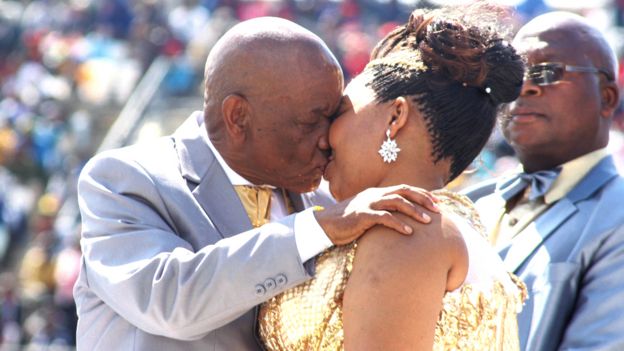
    The wedding of the prime minister and Maesaiah
    Mr Thabane married Maesaiah at a public ceremony in 2017

    Mr Thabane said on state radio on Thursday that he had served the nation “diligently” and he would retire at the end of July.

    “I’ve worked for a peaceful and stable Lesotho. Today… at my age, I have lost most of my energy,” he was quoted as saying.

    He did not mention the allegations against him.

    The ruling All Basotho Convention had given him a deadline of Thursday to resign.

    How did the murder take place?

    Lipolelo Thabane
    Lipolelo had opposed a divorce suit filed by the prime minister

    Lipolelo was gunned down at close range on the side of a dirt road while returning to her home in a small village on the outskirts of the capital, Maseru.


    She was involved in bitter divorce proceedings with Mr Thabane when she was killed.

    At the time, the prime minister was living with Maesaiah, 42, as if she were his wife.

    But Lipolelo had already won a separate legal battle to be recognised as First Lady, rather than Maesaiah.

    Maesaiah accompanied Mr Thabane to his inauguration, following his estranged wife’s death.

    Two months later she and Mr Thabane got married in a Catholic ceremony held at a packed stadium in Maseru.

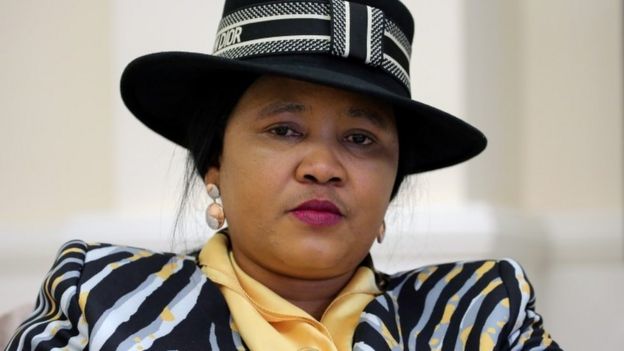
    Maesaiah Thabane, wife of Lesotho's Prime Minister Thomas Thabane poses for a photograph at the State House in Maseru, Lesotho, 18 February 2020.
    Maesaiah posed for photographers at the prime minister’s residence earlier this week

    Maesaiah was charged with her rival’s murder on 5 February, and is out on bail of about $67 (£52).

    She has also been charged with the attempted murder of a family friend Thato Sibolla, who was with Lipolelo at the time of the shooting and is expected to be a key witness in the murder case.

    Maesaiah has not yet been asked to enter a plea.

    Source: BBC

  • Lesotho’s Thomas Thabane to be charged with murdering his wife

    Lesotho’s Prime Minister Thomas Thabane, 80, is to be charged with the murder of his estranged wife Lipolelo Thabane, police have said.

    Mr Thabane announced he would be stepping down in July because of old age, without commenting about the case.

    His current wife Maesaiah Thabane has already been charged with the murder.

    He would be the first leader in southern Africa to be charged with murder while in office, in a case that has shocked the tiny mountain kingdom.

    Lipolelo, 58, was shot dead two days before Mr Thabane became prime minister in 2017.

    At the time, he described her killing as “senseless” but police now accuse him of being involved in her killing.

    The wedding of the prime minister and Maesaiah
    Mr Thabane married Maesaiah at a public ceremony in 2017

    “The prime minister is going to be charged with the murder,” Deputy Commissioner of Police Paseka Mokete was quoted by Reuters news agency as saying.

    “The police are preparing directives and he will probably be charged tomorrow [Friday],” he added.

    What does the prime minister say?

    Mr Thabane said on state radio that he had served the nation “diligently” and he would retire at the end of July, Reuters reports.

    “I’ve worked for a peaceful and stable Lesotho. Today… at my age, I have lost most of my energy,” he was quoted as saying.

    The ruling All Basotho Convention had given him a deadline of Thursday to resign.

    How did the murder take place?

    Lipolelo Thabane
    Lipolelo had opposed a divorce suit filed by the prime minister

    Lipolelo was gunned down at close range on the side of a dirt road while returning to her home in a small village on the outskirts of the capital, Maseru.

    She was involved in bitter divorce proceedings with Mr Thabane when she was killed.

    At the time, the prime minister was living with Maesaiah, 42, as if she were his wife.

    But Lipolelo had already won a separate legal battle to be recognised as first lady, as opposed to Maesaiah.

    Maesaiah accompanied Mr Thabane to his inauguration, following his estranged wife’s death.

    Two months later she and Mr Thabane got married in a Catholic ceremony held at a packed stadium in Maseru.

    Maesaiah Thabane, wife of Lesotho's Prime Minister Thomas Thabane poses for a photograph at the State House in Maseru, Lesotho, 18 February 2020.
    Maesaiah posed for photographers at the prime minister’s residence two days ago

    Maesaiah was charged with her rival’s murder on 5 February, and is out on bail of about $67.

    She has also been charged with the attempted murder of a family friend Thato Sibolla, who was with Lipolelo at the time of the shooting and is expected to be a key witness in the murder case.

    Maesaiah has not yet been asked to enter a plea.

    Source: BBC

  • Lesotho First Lady’s murder trial set for next month

    The murder trial of the wife of Lesotho’s prime minister, accused of murdering his previous wife, is set to start next month, a court official is quoted by Reuters news agency as saying.

    The magistrate court set 17 March as the date for the start of the trial, a spokeswoman for the court Mampota Phakoe told Reuters.

    Prime Minister Thomas Thabane’s estranged wife, Lipolelo Thabane, was shot dead outside her home in the capital Maseru two days before his inauguration in 2017.

    The couple were involved in bitter divorce proceedings at the time.

    An arrest warrant was issued for First Lady Maesaiah Thabane on 10 January after she disappeared. She later handed herself in to be questioned by police.

    She made a brief appearance in court on Tuesday.

    Source: bbc.com

  • Lesotho first lady charged with murdering rival

    The wife of the prime minister of Lesotho has been formally charged in court with murdering his previous wife.

    First Lady Maesaiah Thabane has not yet been asked to plead. She surrendered to police on Tuesday for questioning.

    Prime Minister Thomas Thabane has also been questioned. His estranged wife, Lipolelo Thabane, was shot dead outside her home in the capital Maseru two days before his inauguration in 2017.

    The couple were involved in bitter divorce proceedings at the time.

    Maesaiah Thabane has also been charged with the attempted murder of Thato Sibolla – a family friend who had been travelling with the deceased at the time.

    The case was postponed to 28 February and Mrs Thabane was remanded in police custody. She is expected to apply for bail.

    What is the background of the case? The attack was originally blamed on unknown armed men, but recent court papers filed by the country’s police commissioner, Holomo Molibeli, raised further questions.

    An arrest warrant was issued for 42-year-old Maesaiah Thabane on 10 January after she disappeared.

    She was “picked from the border” with South Africa on Tuesday after an arrangement between her lawyers and police, police spokesman Mpiti Mopeli told AFP news agency.

    Lipolelo Thabane, 58, had been living apart from her husband since 2012. One evening in June 2017 while returning home, she was ambushed, shot several times at close range and died on the side of a road.

    The murder shocked the nation. Mr Thabane described it as a “senseless killing” in his inauguration speech.

    Source: bbc.com