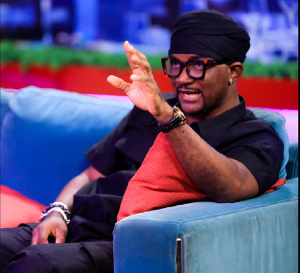
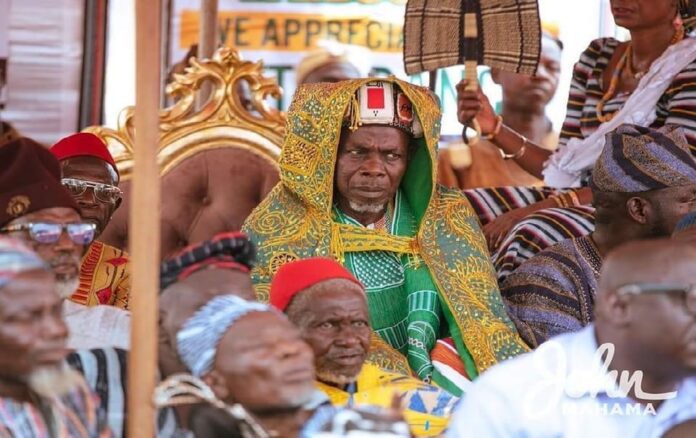
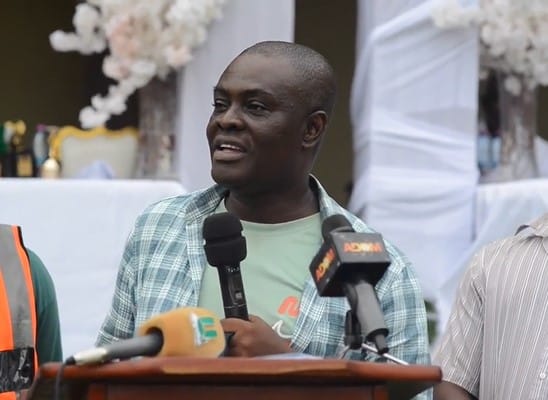
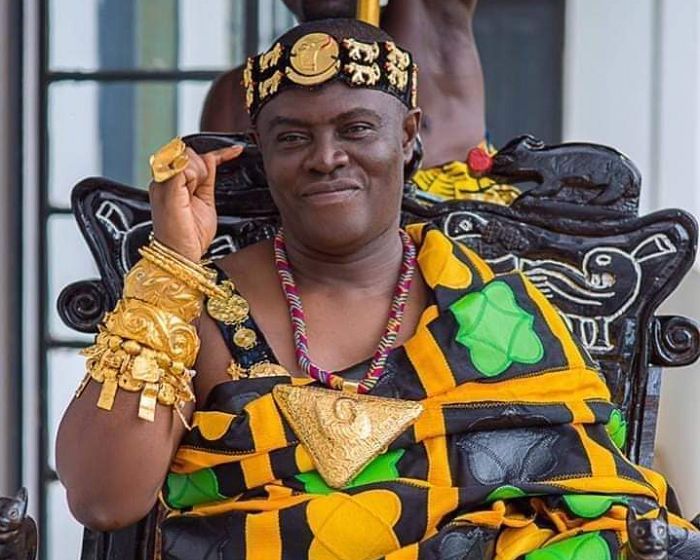
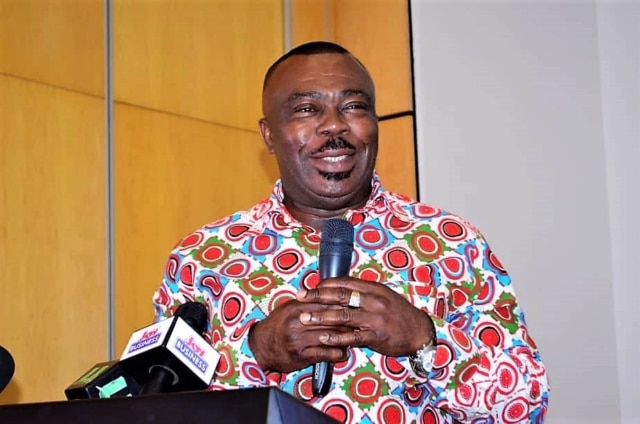
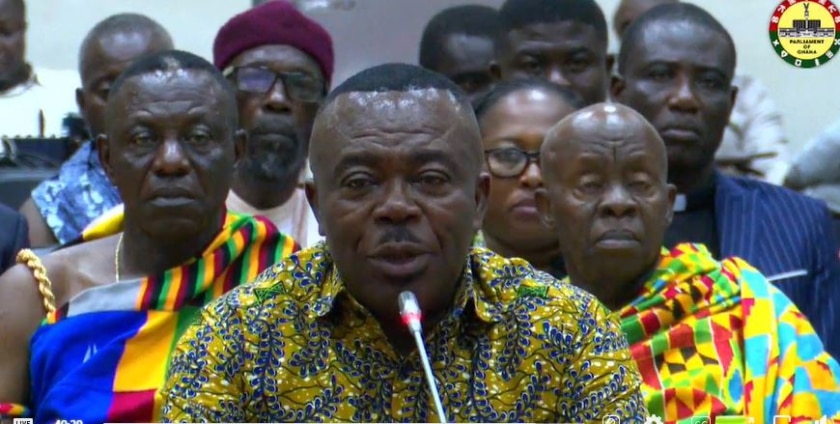
Dormaahene, Osagyefo Oseadeeyo Dr. Nana Agyemang Badu II, has firmly declared that should the Ghanaian government advocate for the recognition of LGBTQ rights within the nation’s judicial system, he will promptly tender his resignation.
This forthright traditional leader and esteemed High Court judge has articulated his unwavering stance against acknowledging LGBTQ rights in Ghana.
He emphatically expressed that when confronted with the choice between upholding this principle and continuing his legal career, he would willingly opt for the former.
During an interview with the media Dormaahene shared his unequivocal perspective.
“LGBTQ is contrary to our customs, LGBTQ is not biblical, LGBTQ is bad to the core. If you believe in God that he created us, he created us in his own image. He created a man and a woman and asked them to procreate. So, why do we want to change it now? LGBTQ, that a man and a man should marry, a woman and a woman… to me, it is a no go area…
“As a judge, I’m on record to have said that if they decide that as judges we should recognise the human rights of LGBTQ, oh that’s the very day I will stop the job because I won’t recognise that. Not quite long, somebody was brought before me, I told the lawyer, this matter I can’t handle it because my views are known… I am so strong on this view. Nobody can tinker our custom,” he explained.
Emmanuel Barnes, widely recognized as Mr Logic and the Chairman of the Ghana Association of Songwriters, has weighed in on the ongoing LGBTQ discourse.
Expressing his viewpoint, he questions the LGBTQ community’s pursuit of public validation for their sexual orientation.
In an interview on August 5, Mr Logic expressed his perplexity, suggesting that individuals within the LGBTQ community could have engaged in their activities privately, without the need for external validation.
Mr Logic remarked, “I hold them accountable because why do they seek validation? This is their dilemma. If a person prefers same-sex pleasure, why should someone else grant them a permission? You have the inherent right to decide what you do with your body. They shouldn’t require validation from others to engage in their sexual preferences. It’s not as if gay individuals even comprehend the full extent of their rights.”
He further elaborated by pointing out that many heterosexual couples partake in anal intercourse within their relationships but maintain their privacy. Hence, he argued that the LGBTQ community’s demand for validation is unnecessary.
“Engage in these activities discreetly. There are numerous men who engage in anal intercourse with their wives. Such practices transpire behind closed doors. Some women even find pleasure in it,” he added.
The New Patriotic Party (NPP), currently in governance, has publicly condemned the practice of LGBTQ+ in Ghana.
The National Chairman of the NPP,Stephen Ayensu Ntim, emphasized that the party adheres to religious and cultural values that strongly disapprove of such practices, and they will not deviate from these beliefs.
Mr. Ntim communicated the party’s stance on this contentious matter during the one-year thanksgiving service for the National Executives, held at the Pentecost International Worship Centre (PIWC) – Atomic in Accra on Sunday, July 16, 2023.
The NPP has faced mounting pressure to clarify its position on issues related to same-sex marriage, particularly after some members of the opposition National Democratic Congress (NDC) accused them of plotting to hinder the anti-LGBTQ+ bill in parliament.
During the service, the National Chairman of the NPP took a firm stance against those advocating for the legalization of LGBTQ+ in Ghana, leaving no room for doubt or ambiguity.
“The New Patriotic Party which I represent as national chairman, wishes to articulate explicitly in no uncertain terms that we have a position on the topic of LGBTQ+ that is making rounds not just in Ghana but across the globe and out position is simple, we as a unit frown on the practice of LGBTQ+”
“Most of you here agree with me that, Ghana as a country collectively abhor LGBTQ practice, why would I, my general secretary and all the Men here stoop so low and opt for LGBTQ+? “He asked.
“I want to state emphatically without any fear, that the Npp that I Chari will never support the atcs of LGBTQ”He told the congregation.
Mr Stephen Ntim emphasized that accepting LGBTQ+in Ghana was not only abominable but a threat to human race, adding that humanity will cease to exist if same sec marriage is legalized.
The Thanksgiving service was held at the Pentecost International Worship Center at Atomic in Accra on Sunday July 16, 2023 and it was to thank God for seeing them through in the past year after assuming office as national executives.
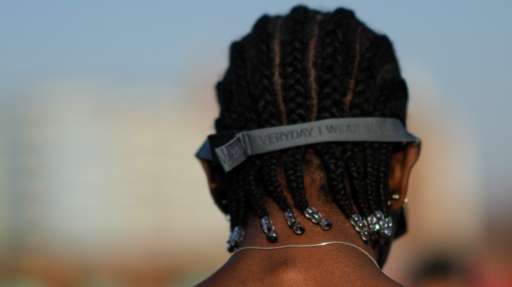
Zanzibar authorities have implemented a prohibition on men wearing braided hairstyles, stating that it violates both local customs and the law while posing a potential threat to societal morals.
This move aims to enforce adherence to traditional norms and uphold the cultural values of the region.
We find it dangerous to our future generations”, says Zanzibar’s Culture Executive Secretary Omar Adam. “This is one form of immorality in Zanzibar, it is a culture which is adopted from outside Zanzibar.”
Authorities have dismissed concerns that the recent enforcement of the ban on men wearing braided hairstyles in Zanzibar is specifically targeting the LGBTQ community. In Zanzibar, where same-sex relationships are illegal, the law against men braiding their hair has been in existence since 2015 but has only been actively enforced now.
Individuals, regardless of whether they are residents or visitors to Zanzibar, who are found with braided hair can face penalties such as fines exceeding $400 or up to six months of imprisonment, or both.
Despite being a popular tourist destination, the authorities emphasize that the enforcement of this ban will be applied uniformly.
It is worth noting that the Zanzibar government had recently banned 16 book titles and the use of rainbow colors in schools, citing that they promoted LGBTQ rights.
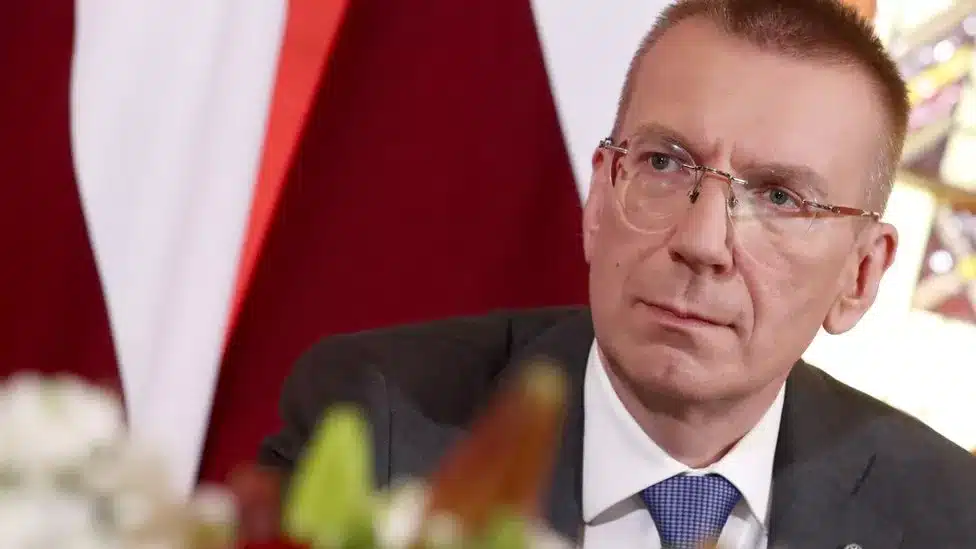
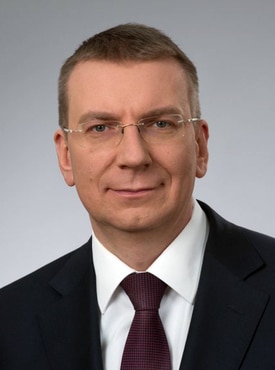
A seasoned diplomat, Edgars Rinkevics, who had served as Latvia’s foreign minister since 2011, has made history as the first openly gay head of state of a European Union nation.
On Saturday, Mr Rinkevics was sworn in as Latvia’s president in Riga, assuming a role that, while largely ceremonial, grants him powers such as vetoing legislation and calling referendums.
While the European Union has seen openly gay heads of government in the past, it had not yet witnessed a gay head of state.
It’s important to note that in some countries, the roles of head of state and head of government are distinct, with separate positions such as president and prime minister.
The distinction of being the EU’s first openly gay head of government goes to former Belgian Prime Minister Elio di Rupo.
Coming out in 2014, Mr Rinkevics, 49, has been a vocal advocate for LGBT rights ever since. Despite same-sex marriage being illegal in Latvia, the country’s constitutional court recognized same-sex unions in the previous year.
In May, Latvia’s parliament elected Mr Rinkevics as the nation’s president after the third round of voting. During his inaugural speech on Saturday, he affirmed his commitment to supporting Ukraine’s ongoing conflict against Russia.
Assuming the role of Latvia’s president, Edgars Rinkevics emphasized the importance of a diligent foreign policy, stating that there is no room for mistakes. He pledged to act swiftly, decisively, and wisely in his new position.
In his inaugural speech, Mr Rinkevics also addressed the issue of inequality, encouraging young Latvians to shatter the glass ceiling.
He acknowledged the significant problem of social division within society and vowed to advocate for the creation of a modern and robust Latvia, characterized by legality, justice, well-being, inclusivity, and respect.
He emphasized the importance of collaborative efforts in achieving these goals. Mr Rinkevics succeeds Egils Levits, who served as president for four years.
The new president will represent Latvia at the upcoming NATO summit in Vilnius, Lithuania.
Latvia, along with Lithuania and Estonia, joined the European Union in 2004 after gaining independence from the crumbling Soviet Union in the early 1990s.
These Baltic states have since played an active role within the EU.
A lecturer at the University of Georgia, Dr. Fatima Mohammed, has voiced dissatisfaction over the Members of Parliaments’ (MPs) stance on the LGBTQ law, which has been discussed and given a second reading in the House.
This comes after Alban Bagbin, the Speaker of Parliament, urged House opponents of the anti-gay measure to stand up and be counted.
He asked the question following the presentation of the committee report on the bill to the house for discussion by Mr. Anyimadu Antwi, chairman of the Committee on Constitutional, Legal, and Parliamentary Affairs.
As the bill was being heard for the second time in the House, religious leaders from the Christian and Muslim communities stormed the Parliament.
Mr. Bagbin however added that considering the numbers in the house on Wednesday July 5, 2023 he will still open the floor for the debate.
Speaking to the media the news the College of Journalism and Mass Communication lecturer said human rights are not something you can pick and choose what you want.
“It is really heartbreaking because looking at our Parliament we know a lot of Parliamentarians are lawyers and they know what human rights are and they understand what it means to go after the rights of individuals are. So it is sad to hear that this bill is going forward and that the rights of LGBTQ rights are going to be infringed upon. They cannot live in dignity in their own country.
“We are talking about the rights of individuals here, we are talking about protecting the right to live in freedom and in dignity and the right to live and regard as human beings in their own country. These are people from all parts of the country and who are members of the society,” Dr. Fatima stated.
She continued: “So to criminalize their very existence is just disappointing and I am actually very sad that Parliamentarians who initially opposed the bill are currently in support of it. Of-course when the first version of the bill came out in 2021 it was actually described by media organizations across the world as the most homophobic bill that will ever see the light of day in the entire world.”
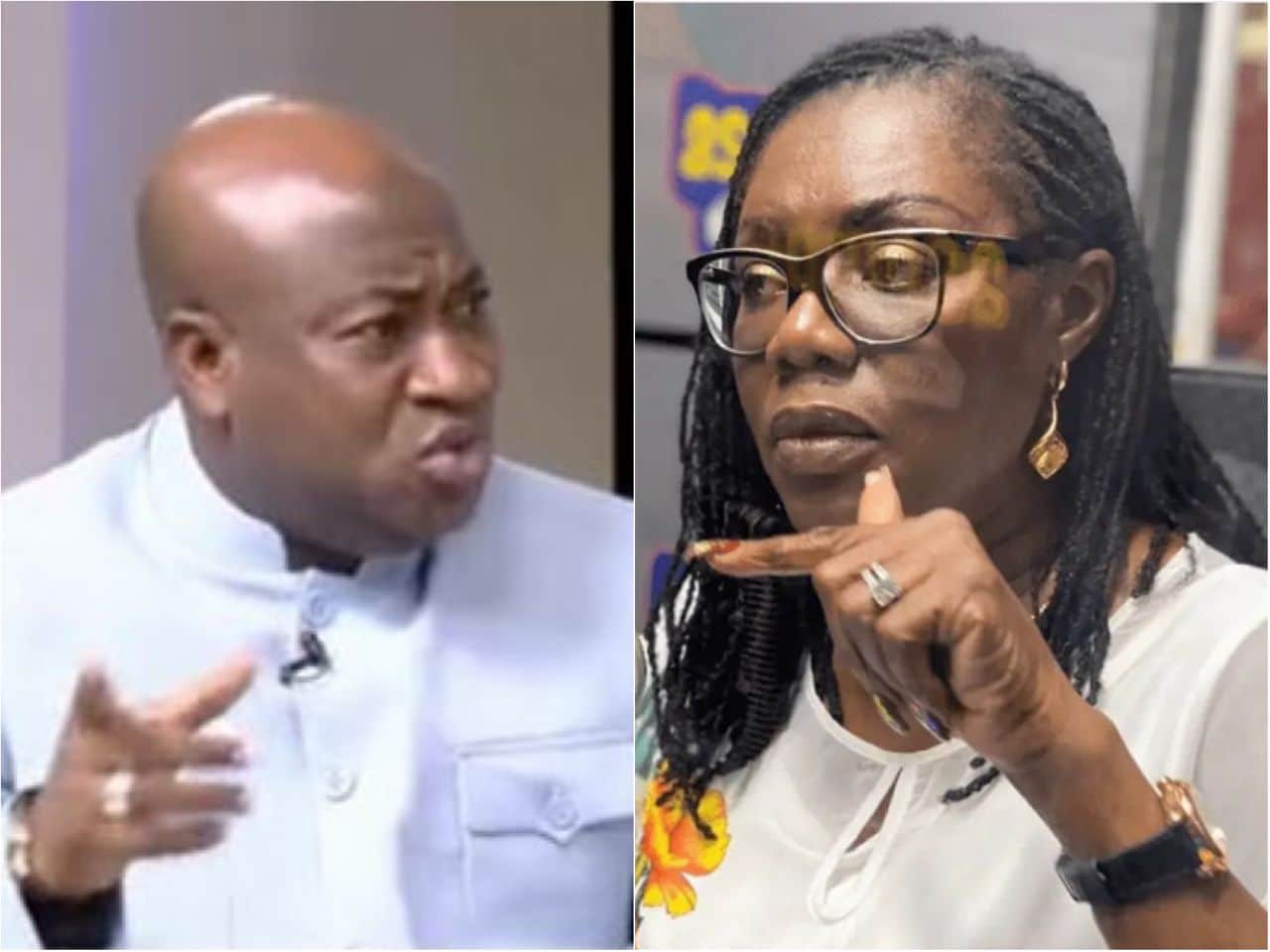
Ablekuma West MP, Ursula Owusu-Ekuful and Tamale Central MP, Murtala Mohammed on Wednesday engaged in a heated exchange of words when Parliament sat to resume discussions on the Promotion of Proper Sexual Human Rights and Ghanaian Family Values Bill 2021, popularly referred to as the anti-LGBTQ bill.
While Rockson-Nelson Dafeamekpor of the South Dayi constituency in his speech was entreating the House to swiftly approve the bill, there was a brief interruption as the microphones picked up a whisper.
“LGBTQ practitioner”, an MP voiced out.
The Second Deputy Speaker, Andrew Asiamah, who was in the chair, called out Tamale Central MP, Murtala Mohammed to withdraw an unparliamentary comment passed.
The MP denied making such comment, asking the Speaker to clarify the specific statement passed.
Amidst the denial, Ursula Owusu-Ekuful accused Mr Murtala Mohammed of making such pronouncement against her.
She burst out and called out all other legislators who she believes heard the comment but turned deaf ears to it.
Mr Owusu-Ekuful then flared up at Mr Murtala describing him as a “mad man”.
“I sat here and repeatedly heard Hon Murtala refer to me as a practitioner of LGBT to the hearing of everyone in this house… and in response to that if I say he is mad, it is only a mad man who will refer to his colleague in this house as a practitioner of LGBTQ,” she said.
She also asked the Tamale Central MP whether he had “seen me having sexual intercourse with your wife or your daughter or your mother.”
At the request of the Second Deputy Speaker, both individuals retracted their comments, and the proceedings continued without further disruption.
Ultimately, all Members of Parliament (MPs) unanimously agreed to support the recommendation of the report, leading to the passage of the bill.
This significant outcome follows several months of intense public debate and thorough scrutiny by legislators and other stakeholders since its introduction in 2021.
Despite facing numerous legal challenges, including the most recent lawsuit announced on Tuesday, July 4, 2023, the controversial bill has successfully progressed through the required stages.
At a parliamentary debate on July 5, 2023, member of parliament for Akatsi South, Bernard Ahiafor, expressed his belief that countries practicing LGBTQ+ will cease to exist within the next five decades.
Ahiafor justified his prediction by referring to the concept that when humans were created, they were instructed to procreate and populate the Earth. Therefore, in his view, countries that deviate from this natural order will eventually perish.
It’s important to note that these statements were made in the context of a debate in support of the passage of the anti-LGBTQ+ legislation.
“Countries practicing LGBTQ+ activity, I give them 50 years by prophesy they will be extinct on earth. Most of those countries will no longer exist on earth, very soon they may even have to be taking labour force from countries not practicing LGBTQ+ activity and that is not the way we are to go,” he said.
Emphasizing Ghana’s divergence from the global trend, Bernard Ahiafor underscored his endorsement of the bill, stating that Ghana aimed to follow a different path.
He expressed his enthusiasm for the legislation, highlighting that the Promotion of Proper Human Rights and Family Values Act did not contravene any provision of Ghana’s 1992 constitution.
“Mr Speaker look at the constitution, from article 12 is dedicated to fundamental human rights and you go through it, the bill if passed to law will never violate any provisions in our constitution,” he said.
Background
The controversial LGBT bill is a private member’s bill that was presented to Speaker Alban Bagbin on Tuesday, June 29, 2021. It is being spearheaded by eight MPs.
The proponents want the promotion, advocacy, funding, and acts of homosexuality to be criminalised in the country.
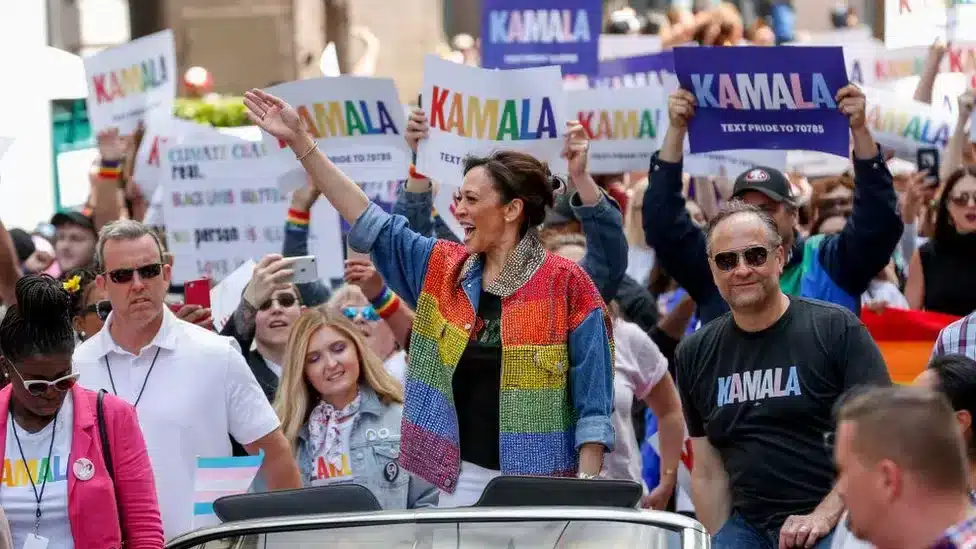
Although the Bill is in Parliament, the LGBTQ+ conversation was reignited during US Vice President, Kamala Harris’ visit to Ghana.
The Member of Parliament for Tamale Central, Murtala Mohammed, has refuted claims that he referred to the Communications Minister, Ursula Owusu-Ekuful, as an LGBTQ practitioner.
In a media appearance on Wednesday, Mohammed clarified that he never used the term “practitioner” and did not specifically mention the name of the Communications Minister.
Addressing his previous statement that sparked the altercation, he explained, “The only remark I made, which the Speaker has requested me to withdraw, was that every parliamentarian should have the opportunity to debate the bill and that no one should remain neutral.”
“And that you are either for the bill or against the bill, those who refuse to support the bill, then everybody will know their position.”
According to Murtala Mohammed, based on the aforementioned statement, he was not aware of Ursula’s stance on the matter, which led to the confrontation.
“… I never used the word practitioner. In fact, I don’t know the last time I used the word practitioner…perhaps, it is a case of who the cap fits. I never mentioned Ursula’s name, I never said Ursula you are a practitioner,” he insisted.
His remarks come after a momentary disruption during a parliamentary session when microphones in the chamber captured a whispered comment while the South Dayi MP, Rockson-Nelson Dafeamekpor, was addressing the legislation of the Anti-LGBTQ bill.
The Second Deputy Speaker, presiding over the session, called upon Murtala Mohammed, the Member of Parliament for Tamale Central, to retract a remark that was deemed to be inappropriate for parliamentary conduct.
On the other hand, Ursula Owusu-Ekuful was incensed by the development and accused the legislator of calling her a practitioner of LGBTQ.
“I sat here and repeatedly heard Hon Murtala refer to me as a practitioner of LGBT to the hearing of everyone in this house… and in response to that if I say he is mad, it is only a mad man who will refer to his colleague in this house as a practitioner of LGBTQ when you haven’t seen me having sexual intercourse with your wife or your daughter or your mother,” she flared up.
She burst out and called out all other legislators who she believes heard the comment but turned deaf ears to it.
“And you all [parliamentarians] heard it and pretend that suddenly you’ve lost your sense of hearing,” she added.
Following the intervention of the Second Deputy Speaker, both individuals retracted their statements as requested, allowing the proceedings to resume.
Murtala Mohammed defended himself by explaining that remarks made in Parliament when the microphone is off are not considered official statements recorded in the Hansard. He emphasized that only statements made using the microphone are documented.
Furthermore, Mohammed highlighted that even Ursula had gestured “you are mad” during the debate conducted by Rockson-Nelson Dafeamekpor in the House. However, since it was not spoken into the microphone, it was not officially noted.
Although Mohammed complied with withdrawing his comments in the House, he does not view this act as an admission of guilt.
“I just withdrew to allow sanity to prevail and that is why I didn’t withdraw a specific statement. It is not an admission of guilt,” he said.
Chairman of Parliament’s Constitutional, Legal and Parliamentary Affair Committee, Kwame Anyimadu-Antwi, has provided staggering statistics with regards to the activities of the LGBTQ+ community in the country.
On Wednesday, July 5, Mr Anyimadu-Antwi informed the house of a report by the Ghana AIDS Commission which captured the sexual activities of gay men over a lustrum ago.
Per the said report, 54,759 men living in Ghana engaged in same-sex sexual intercourse in 2017.
“Out of this number, 9,857 representing 18.1 per cent were found to live with HIV. According to the Commission, although the number represents only 2% of the HIV population in the country, the 18% prevalence rate is enough for disease to grow exponentially,” he said while citing the report.
Mr Anyimadu-Antwi capitalised on the report to highlight the health dangers the activities of the LGBTQ+ community he said pose to the society at large.
Proponents of the anti-LGBTQ+ bill, officially known as the Promotion of Proper Human Sexual Rights and Ghanaian Family Values Bill 2021 have argued that the legislation is necessary to protect public health and promote Ghanaian family values.
However, opponents of the bill highlight the importance of human rights, equality, and non-discrimination in addressing these concerns.
Meanwhile, the Constitutional, Legal, and Parliamentary Affair committee has presented a report on the Promotion of Proper Human Sexual Rights and Ghanaian Family Values Bill 2021, commonly known as the anti-LGBTQ+ bill to the plenary.
The First Deputy Speaker of Parliament Joseph Osei-Owusu has directed the Business Committee of the House to draft the anti-gay bill into next week’s agenda for deliberation.
The deliberation on the Promotion of Proper Human Sexual Rights and Ghanaian Family Values Bill was supposed to have been held this week.
However, upon enquiry from a sponsor of the Bill, Sam Nartey George, there have been two lawsuits filed against it.
One is said to have been filed at the Supreme Court while the other at the High Court.
After presenting the explanatory memorandum on the business statement schedule for next week the First Deputy Speaker and the Member of Parliament for Bekwai constituency declared that there is going to be a debate on the bill on either Tuesday or Thursday.
The Deputy Speaker directed the business committee to ensure that the bill will appear in the order paper.
However, the Speaker of Parliament, Alban Sumana Kingsford Bagbin has been an ardent opponent to the activities of homosexuals in the country.
In his recent tour of the northern region of Ghana to mark 30 years of parliamentary democracy, the former lawmaker told journalists that he will prefer to die than to see activities of gays and lesbians legalized.
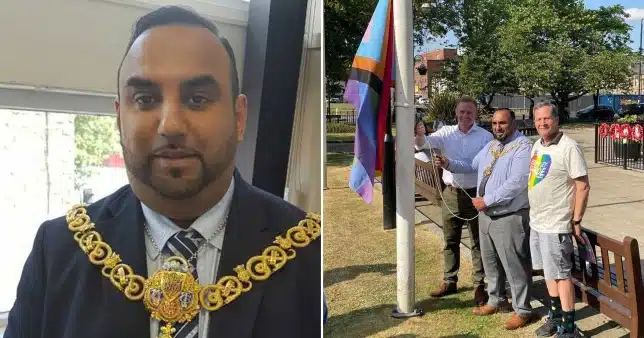
A Tory mayor who expressed regret for participating in an LGBTQ+ Pride celebration because it “contradicts” his convictions has quit.
In Bradford Town Square on June 16, Mohammed Nazam, the mayor of Keighley in West Yorkshire, assisted locals in raising an LGBTQ+ Progress banner.
Since 2019, the town has carried out this every year.
But less than a day later, the Bradford City Council member apologised on a personal Facebook page for his participation in the ceremony.
He told members of Keighley Pakistanis that this ‘lapse of judgement’ caused ‘disappointment and hurt’.
‘I wholeheartedly apologise for my participation in the flag-raising ceremony, as it contradicts my personal religious beliefs, as many of you are aware,’ he wrote.
‘I want to emphasise that I have also personally repented for this error and reflected deeply on the consequences of my actions. Looking back, I realise that I should have respectfully declined the request at the time.’
‘It is my hope that the people who have placed their trust in me within our community can find it in their hearts to forgive me for this lapse in judgment,’ he added.
Nazam, who was elected mayor only last month, immediately faced a chorus of calls for his resignation from locals, politicians and LGBTQ+ campaigners.
One local, Jane Hudson, said: ‘Sorry Nazam you need to resign immediately.’
Another, Jooles Webster-Wright, added: ‘How can a mayor represent the whole town after making a statement like this?
‘Our community clearly doesn’t include everyone.’
Yesterday, the council announced that Nazam had resigned ‘with immediate effect’, adding that council officials will soon meet to elect a new mayor.
‘The Town Council has a long record of supporting and celebrating all sections of the amazingly diverse Keighley community,’ it said in a Facebook statement.
‘The Pride flag will continue to fly proudly in the Town Hall Square for the remainder of Pride Month as planned.’
Earlier that same day, the Bradford branch of the Conservative Party said Nazam has been suspended following a number of complaints.
In a statement following his resignation, Nazam refused to back down while stressing he meant ‘no harm’ to LGBTQ+ people.
Any ‘elected Muslim representative’ attending an LGBTQ+ event, he said, would need to apologise to the Muslim community.
‘I attended the flag-raising for LGBTQ community [sic].
‘This did not conform to my religious beliefs and hence I offered an apology to the Muslim community. All elected Muslim representatives would be in the same position, and if questioned would not be able to offer an alternative narrative.
‘By my apology, I did not mean any harm to any member of my constituency. My religion teaches respect and tolerance for all and the law of the land.
‘Here in the UK, we are proud to have our freedom of expression. People should have the freedom to express their beliefs and live their lives as they wish to.
‘This should apply to all communities and religious beliefs.’
Nazam added that he will now be on the council as an independent.
‘This has been a truly humbling experience from which I have learnt a great deal, I would also like to thank everyone for their love and continued support,’ he added.
The Overlord of the Gonja Kingdom, Yabognwura BII Kunto Jewu Soale, has fervently appealed to the members of parliament to resist any attempt to accept the LGBTQcommunity in Ghana.
According to the king, the issue of LGBTQ pending before the Parliament of Ghana is an abomination and alien to the cultural practices and norms of Ghana.
“Our ancestors will never forgive us should we sit aloof and allow such a decision to be taken by the law makers to affirm LGBTQ,” he stressed.
“I am certain that, Ghana’s 8th Parliament of the Fourth Republic will unanimously disapprove the LGBTQ+ bill.”
The king made these remarks when the Speaker of Parliament paid a courtesy call on him at his private residence in Damongo as part of Parliament’s 30th anniversary celebrations.
Responding to the Yagbonwura’s call, Speaker Alban Sumana Bagbin stated emphatically his stand on the LGBTQ bill.
“I have said it and will say it again that I will rather perish than to see the LGBTQ+ bill approved under my watch though I don’t have a voting right.
“I administer the affairs of the House and I can assure you and the good people ofGhana that the LGBTQ+ bill will never be sanctioned to be in Ghana.”
The Promotion of Proper Human Sexual Rights and Ghanaian Family Values Bill, 2021, popularly referred to as the anti-LGBTQI+ bill is currently under review by the Parliamentary Select Committee on Constitutional, Legal, and Parliamentary Affairs.
The bill seeks to provide for human sexual rights and Ghanaian family values while seeking to prohibit the activities of gays, lesbians, bisexuals, transgender, and queers in Ghana.
According to the bill, a person found guilty could face up to 10 years imprisonment if the bill is passed into law.
A court in Japan has delivered a ruling stating that the country’s prohibition on same-sex marriage is currently “in a state of unconstitutionality,” though it stopped short of declaring it outright unconstitutional.
This decision has added complexity to the ongoing debate surrounding LGBTQ+ rights in Japan.
The recent ruling from the Fukuoka district court aligns with a similar judgment made by a Tokyo court in 2022. It represents the final of five anticipated rulings within Japan’s district court system.
Interestingly, the five district courts have individually reached three different conclusions in response to lawsuits brought forward by members of the LGBTQ+ community.
Two courts have declared the ban on same-sex marriage to be unconstitutional, while one has deemed it constitutional. The remaining two courts have stated that it is “in a state of unconstitutionality.”
In 2022, an Osaka court upheld the ban, citing conformity with the postwar constitution’s definition of marriage as being based on “the mutual consent of both sexes.” Conversely, courts in Sapporo and Nagoya determined that the policy violated the constitution.
Plaintiffs in the Sapporo, Osaka and Tokyo court cases have all appealed against the rulings after their damages claims were dismissed.
On Thursday, the Fukuoka court said current marriage laws were “in a state that violates” a section of article 24 of the constitution that refers to “individual dignity and equality of the sexes”, according to the Kyodo news agency.
But the court ruled that the current legal framework did not violate other parts of the constitution, including a clause that ensures equality before the law.
Japan, the only G7 country that does not legally recognise same-sex unions, has come under mounting pressure to promote marriage equality.
The court in Fukuoka rejected a demand by three LGBTQ+ couples that the state pay them damages for denying them the right to marry, according to Kyodo. The four other courts also dismissed compensation claims.
A lawyer for the plaintiffs said details of the ruling were still being verified, adding that he thought it was likely to be similar to that of the Tokyo court.
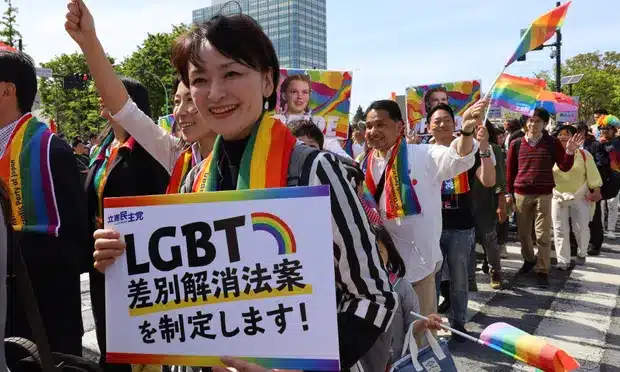
The five rulings have reignited the debate over same-sex unions, days before Japan’s parliament is expected to pass a bill that will promote “understanding” of members of the LGBT+ community but does not address the lack of legal status for same-sex couples.
The bill was due to be debated before the recent G7 summit in Hiroshima, but opposition from conservatives inside the ruling Liberal Democratic party (LDP) forced the government to submit a watered-down version.
The bill originally said “discrimination is unacceptable” but now states that “unfair discrimination” should not be tolerated – wording that critics say has rendered the legislation meaningless.
While campaigners have welcomed court rulings describing the ban as a violation of constitutional rights, the lack of unanimity could be viewed as a minor setback in the campaign for marriage equality.
The prime minister, Fumio Kishida, has argued that the ban on same-sex marriage is “not discriminatory” and that legalising it would “fundamentally change society”.
Critics have accused Kishida of pandering to conservatives in his party while ignoring opinion polls showing that up to 70% of people support legalising same-sex unions.
Several members of his party have been criticised for making homophobic remarks, and Kishida sacked a senior aide earlier this year after he said that he would not want to live next door to an LGBTQ+ couple.
Business lobbies have called for change, arguing that Japan will struggle to remain globally competitive unless it does more to promote diversity, including marriage equality.
More than 300 municipalities in Japan allow same-sex couples to enter partnership agreements, but their rights are limited. Partners are not permitted to inherit each other’s assets or have parental rights to each other’s children, and there is no legal guarantee that they can visit each other in hospital.
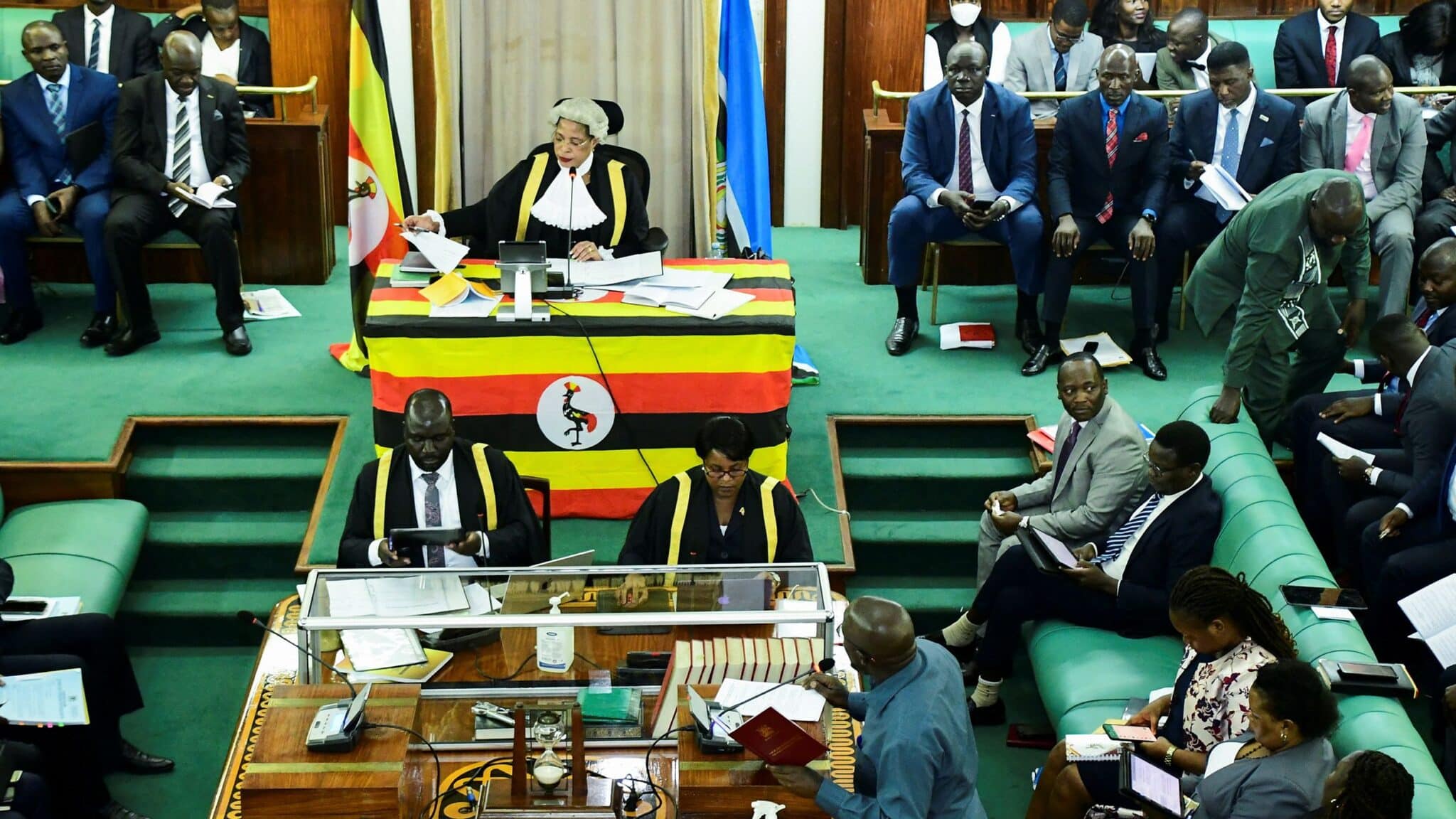
A revised anti-gay law in Uganda has been approved by parliament on Tuesday, eliminating a provision that appeared to penalize identifying as LGBTQ.
The initial version of the bill was widely criticized by the international community.
“We thank you very much. Once the bill is passed into law, it is the duty of the executive to execute it – and we shall do our part as the executive”, said the Attorney General of Uganda, Kiryowa Kiwanuka.
Last month, Ugandan President Yoweri Museveni returned the bill back to parliament, asking for changes.
The bill, in its original version, had prescribed life imprisonment for “homosexuality” and the death penalty for aggravated homosexuality.
“I know all of us have faced intimidations out there, people being promised to be denied visas, travel restrictions and bans – but we have been able to withstand that”, said Asuman Basalirwa, Ugandan Legislator and Mover of the Anti-Homosexuality Bill 2023
Previously, the US has warned of economic consequences if the legislation is enacted.
“While I was in the U.S, I challenged the people I met, especially Africans, that we can see their struggle to defend the right to sexual orientation, but I don’t see them defend the right of Africa in say the transfer of technology like the Chinese are doing. The black race is struggling to transfer homosexuality, not technology, to Africa – and nobody could answer me”, added Mathias Mpuuga, Ugandan Legislator and Leader of Opposition.
Homosexuality is already illegal in the East African country under a colonial-era law criminalizing sex acts between people of the same gender.
Dormaahene Osagyefo Oseadeeyo Agyemang Badu II has entreated government to retract its request to the International Monetary Fund (IMF) should the credit facility’s approval be linked to acceptance of the LGBTQ community.
According to him, the beliefs, practices and traditions of Ghana are priceless to be exchanged for a tabooed activity worth $3 billion.
Speaking to a gathering at Dormaa, he stated that no amount of influence from the United States would cause Ghanaians to embrace homosexuality.
“How much are we going for from the IMF? Three billion dollars? It is little. Just because of this money, we prayed for the Vice President of the United States of America. When she came recently, did you listen to what she said. We should allow homosexuality. Take your money. Take your America,” he said.
“We don’t want any LGBTQ money. We will eat our kontomire,” the Dormaahene stressed.
During her stay in Ghana as part of her 9-day tour of Africa, Vice President of the United States, Kamala Harris entreated that the rights of LGBTQ members to recognised as human rights. Her comments has however been opposed by many including Speaker Alban Bagbin, Ningo-Prampram MP, Sam Nartey George among others.
Ghana in July 2022 reached out to the IMF for economic assistance but its been eight months and the Fund is yet to approve the West African country’s request.
It has been alleged that the Proper Human Sexual Rights and Ghanaian Family Values Bill 2021 also known as anti-LGBTQ bill currently in Parliament is among the reasons for the delay.
The claim is yet to be confirmed or refuted by the government.
Meanwhile, Ghana is working on obtaining assurances from its creditors including China to guarantee an approval from the IMF Board Chair.
Dormaahene, Osagyefo Oseadeeyo Agyemang Badu II, has stated that prior to the 2024 general elections, Members of Parliament who seek to contest will have to first inform the public on their stance on the LGBTQ conversation.
According to him, it is only after this that electorates will consider voting for them or not.
“The President, Vice President, Ministers, party leaders, ahead of the 2024 General elections, all those who want to contest will first of all tell us their stance on the anti- LGBTQ bill. It is after this that we will decide whether to vote for you or not,” he said while addressing a social gathering in Dormaa.
Osagyefo Oseadeeyo Agyemang Badu II is a strong advocate for heterosexual relationship and against same-sex activities. He has entreated government to pass the Proper Human Sexual Rights and Ghanaian Family Values Bill 2021 also known as the LGBTQ bill.
The Dormaahene has in recent times called on government to explicitly condemn the activities of the LGBTQ community in Ghana and assure of its criminalisation.
He cautioned President Akufo-Addo and other government officials against their indifferent statements on the subject due to influence from the western world.
“We want the West to know that there is no way we are going to accept LGBTQIA+. We support all African countries including Uganda who are enacting laws against these activities.
”We want to send a clear message to our foreign partners that we will not tolerate this heinous act. I’ve said it before and will say it again: we should accept it and give them a year to give birth. If they don’t succeed, I’ll kill them. We are not going to accept it. It is contrary to our culture, values, and norms. It will never be accepted by us. It’s bad.”
He also took a swipe at the United States Vice President, Kamala Harris, who entreated that the rights of the LGBTQ community be treated as human rights, during her 3-day trip in Ghana.
“She, herself, when she was coming to Ghana, did she not bring her husband? Why didn’t she bring a woman she is married to but rather a husband? Isn’t it because she knows what is right? he quizzed.
LGBTQ rights is human rights
Responding to a question at Jubilee House, in Accra, on Monday, March 27, Kamala Harris said that for her, the LGBTQ+ issue was one that bordered on human rights.
She added that every person has the right to live as s/he wants.
“Let me be clear about where we stand. First of all, for the American press who are here, you know that a great deal of work in my career has been to address human rights issues, equality issues across the board including those related to the LGBT community.
“And I feel very strongly about the importance of supporting the freedom and supporting and fighting for equality among all people and that all people be treated equally.
“I will also say that this is an issue that we consider and I consider to be a human rights issue and that will not change,” she stressed.
A gay, whose identity has been withheld, has disclosed the main reason for his lack of preference for women.
Speaking exclusively to Etsey Atisu on ‘Say it Loud’, he averred that he finds women physically attractive yet emotionally retarded.
He said although he has been with a few women in the past, his taste still tilts toward men.
“I have been with a few women. I once told my father that I find women physically attractive but emotionally retarded. That is the reason why I am gay. I prefer and love the company of men to women. That is a reason to tell you that being with a woman is too much for me.
“To me, it just doesn’t make sense. It’s like forcing me to do something against my will. It’s like you not hating men but you just can’t have sex with them,” he established.
The young man stated that if ever he is forced to settle down with a woman, it will be as a result of societal pressures, owing to the part of the world he hails from.
He said should that happen; he will definitely cheat on the ‘unlucky wife’ with a male partner.
“If I am ever to marry a woman, it will be due to the pressure of society. If I am to marry in Africa, It will mean marrying a woman but that wouldn’t stop me from sleeping with other men which I don’t think is fair to anyone’s daughter.
“To be honest, I have been with a lot of married men, whose wives think they are in a happy marriage but their husbands come to me before even going home to them,” he added.
When asked if his father has accepted his new LGBTQ status, he answered:
“When it comes to being gay, my dad has been very loving, caring, and supportive. He is the one that gave birth to me and blood is thicker than water.”
Meanwhile, Parliament is expected to debate and pass the anti-gay bill.
This comes after the Legal and Parliamentary Affairs Committee of Parliament presented the final draft of the bill, which was sponsored by a group of bi-partisan Members of Parliament, to the plenary.
Dormaahene, Osagyefo Oseadeeyo Agyemang Badu II, has cautioned President Akufo-Addo against his recent indifferent statements on the subject of LGBTQ criminalisation in Ghana.
According to the Dormaahene, Ghana’s current leaders have failed to explicitly make known the stance of majority of Ghana with regards to same-sex relations.
He noted that Ghanaian tradition abhors homosexuality and would not accept such acts. He insisted that the leaders must be “bold” and inform the Western world of the country’s decision.
“We want the West to know that there is no way we are going to accept LGBTQIA+. We support all African countries including Uganda who are enacting laws against these activities.
“Our custom is that if a man sees a woman he likes, he goes with his family to engage the family of the woman and they marry and this is what the Bible also supports. We will never accept marriage between a man and a man or a woman and a woman.
“I plead with our current leaders, anytime they speak about this issue of LGBT, they fail to go straight to the point. They are warm and cold on it. If you’re speaking on this issue, be bold and speak directly that the customs of the people of Ghana do not support them,” he said in Twi.
He made the statement at a gathering in Dormaa, in a video shared by Abranpredease TV on Wednesday.
The Dormaahene, who is also a High Court judge in his private life, also said that if the International Monetary Fund (IMF) bailout and other assistance pledged by the Western countries are preconditioned with Ghana accepting LGBT activities, then the government should reject these offers.
He also criticised the Vice President of the United States of America, Kamala Harris, for saying that LGBTQ is a human rights issue during her three-day visit to Ghana, saying “when she was coming to Ghana did she come with a female as her husband or a man”.
What Akufo-Addo said:
At the joint press conference, both President Akufo-Addo and Vice President Kamala Harris were confronted with the issue of the criminalization of LGBTQ+ activities in Ghana.
Responding to the question at Jubilee House, in Accra, on Monday, March 27, President Akufo-Addo refuted the suggestion that Ghana already had an anti-LGBT law.
He said that the Proper Human Sexual Rights and Ghanaian Family Values Bill, 2021 (Anti-LGBTQI bill), which was championed by “only a hand full of MPs”, is currently being considered by Parliament.
Akufo-Addo added that even if the bill is passed, it will still have to be ratified by him. He also said that the anti-LGBT bill has been modified.
“The legislation was a private members bill; it is not an official legislation of the government but it is one that is being muted by a hand full of private members.
“My understanding from the recent discussion I had with the chairman of the committee is that the substantial elements of the bill have already been modified as a result of the intervention of the Attorney General,” he said.
An anonymous homosexual man has revealed that many Ghanaian men swindle their wives under the guise of marriage to hide their actual sexual orientation.
According to Stephen (not his real name), his numerous sexual escapades have been with married men who are yet to come out of the closet or come to terms with their sexuality.
Speaking with GhanaWeb, he noted that these men pretend to be happy at home in order not to appear suspicious, but engage in same-sex activities in the shadow.
“Because, I’ve had instances where I’ve been with married men – a lot of married men, to be honest, a whole lot: who have their wives thinking they are in a happy home but then at the end of the day, when they pick their bags to go to work, they come to me before they go home,” he narrated.
Stephen’s revelation comes at a time when talks of criminalizing same-sex activities (LGBTQ activities) have heightened.
Parliament is considering Promotion of Proper Human Sexual Rights and Ghanaian Family Values Bill also known as the anti-LGBT bill which would ban one from identifying as a member of the LGBTQ+ community and its related activities when it becomes law. Culprits would risk jail term.
Due to the high possibility of the passage of the bill which has been recommended for approval by the Legal and Parliamentary Affairs Committee of Parliament, Stephen says he would get involved in a heterosexual relationship to stay off the radar – an action he considers unfair on the part of the woman.
He however noted that he would secretly continue having same-sex relations.
“A typical example, if I’m to marry in Africa, I will definitely marry a woman… I’ll still do men even in the absence of my wife; in secrecy, I’ll still do men, which I don’t think is fair to anyone’s daughter,” he said.
Nonetheless, Stephen insisted that in order not to “put your sister or anyone through such; I’d rather live my truth.”
Ghanaian gospel minister,Ohemaa Mercy, has vehemently kicked against the practice of LGBTQ in the country.
Sharing her view on the subject in a discussion on United Showbiz on Saturday, April 8, the popular gospel singer stressed that the act is being backed by a strong evil spirit that completely destroys and strips people of their honour.
Illustrating her point, Ohemaa Mercy said even dogs do not mate with their peers who are of the same sex.
“I was telling everybody that it is a strong spirit, it turns a graceful human being into an animal. Even a dog won’t practice same-sex; how much more you, a human being? This issue is no joke. For Ghana to accept this? It won’t be a joke,” she stated.
Buttressing her points further, the ‘Ote me mu’ hitmaker listed some dire consequences the country would face, should the practice be embraced.
“If we are a Christian country and we fear God, we shouldn’t incur God’s wrath. If we think other countries have accepted it, then let’s not forget that Ghana is a small country. God’s wrath will destroy us all. We are against it and we are standing against it for the next generation. If we accept this, the country will be destroyed. It is not a good thing, it is God’s taboo. LGBTQ can destroy a nation and permit Satan to rule over it,” she stressed.
Meanwhile, the president has been subjected to huge backlashes following his comments on the LGBTQ during a press conference with the US Vice President, Kamala Harris, at the Jubilee House in Accra.
After listening to the US Vice President re-affirm her stance on LGBTQ as well as state her grievances over the current anti-gay bill placed before parliament, Akufo-Addo refuted the suggestion that Ghana already had an anti-LGBT law.
He said the bill, which was championed by “only a hand full of MPs”, is currently being considered by Parliament.
US Vice-President Kamala Harris who is on a tour of three African countries – Ghana, Tanzania and Zambia – has drawn criticism over her support for LGBTQ rights.
In Ghana, in a speech calling for “all people be treated equally” she appeared to criticise a bill before the country’s parliament which criminalises advocacy for gay rights and proposes jail terms for those that identify as lesbian, gay, bisexual, or transgender.
The country’s Speaker Alban Bagbin later called her remarks “undemocratic” and urged lawmakers not to be “intimidated by any person”.
In Tanzania, a former minister spoke against US support for LGBTQ rights ahead of the visit and in Zambia some opposition politicians have threatened to hold protests.
Where is homosexuality still outlawed?
Some countries, including several in Africa, have recently moved to decriminalise same-sex unions and improve rights for LGBTQ people.
In December 2022, Singapore’s parliament repealed a controversial law which banned sex between men.
In the same month, the high court in Barbados struck out laws that criminalised gay sex.
In July last year, the courts in Antigua and Barbuda declared a law criminalising same-sex acts between consenting adults unconstitutional.
In February 2021, Angola’s President Joao Lourenco signed into law a revised penal code to allow same-sex relationships and ban discrimination on the basis of sexual orientation.
In 2020, Gabon reversed a law that had criminalised homosexuality and made gay sex punishable with six months in prison and a large fine.
Botswana’s High Court also ruled in favour of decriminalising homosexuality in 2019. Mozambique and the Seychelles have also scrapped anti-homosexuality laws in recent years.
But there are countries where existing laws outlawing homosexuality have been tightened, including Nigeria and Uganda.
Uganda’s parliament recently passed a law to crack down on homosexual activities, prompting widespread condemnation.
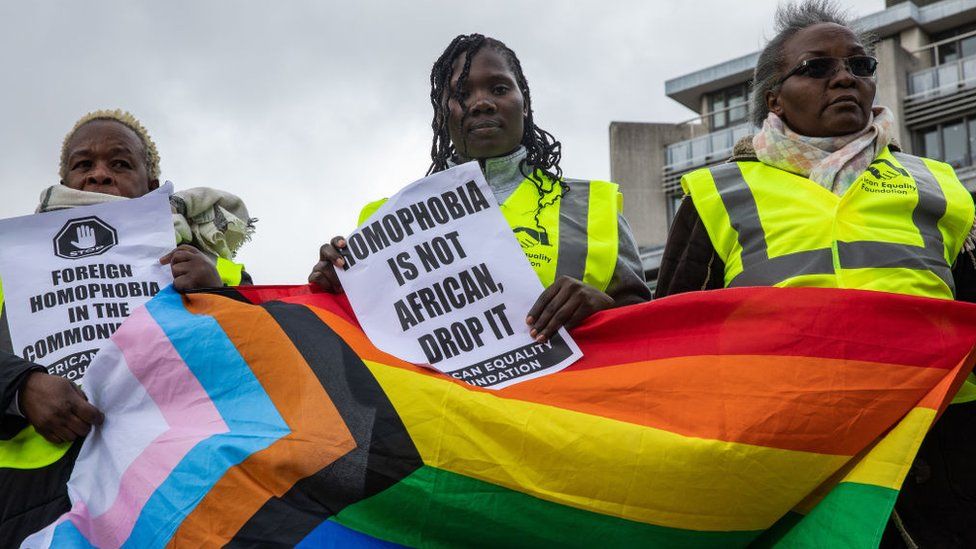
Image caption, Campaign against LGBTQ rights in some African countries has intensified in recent weeks
And in some countries, efforts to get the laws removed have failed.
In May 2019, the high court in Kenya upheld laws criminalising homosexual acts. In February his year Kenya’s highest court ruled that it was wrong for authorities to ban the gay community from registering a rights organisation. but it stressed that gay sex remains illegal.
Colonial legacy
Many of the laws criminalising homosexual relations originate from colonial times.
And in many places, breaking these laws could be punishable by long prison sentences.
Out of the 53 countries in the Commonwealth – a loose association of countries most of them former British colonies – 29 have laws that criminalise homosexuality.
Although the original British laws applied only to men, countries that criminalise homosexuality today also have penalties for women who have sex with women.
The International Lesbian, Gay, Bisexual, Trans and Intersex Association (Ilga) monitors the progress of laws relating to homosexuality around the world.
It says the death penalty is the legally prescribed punishment for same-sex sexual acts in Brunei, Iran, Mauritania, Saudi Arabia, Yemen and in some northern states of Nigeria.
In five countries – Afghanistan, Pakistan, Qatar, Somalia, and the United Arab Emirates – there is no legal clarity and the death penalty could be applied.
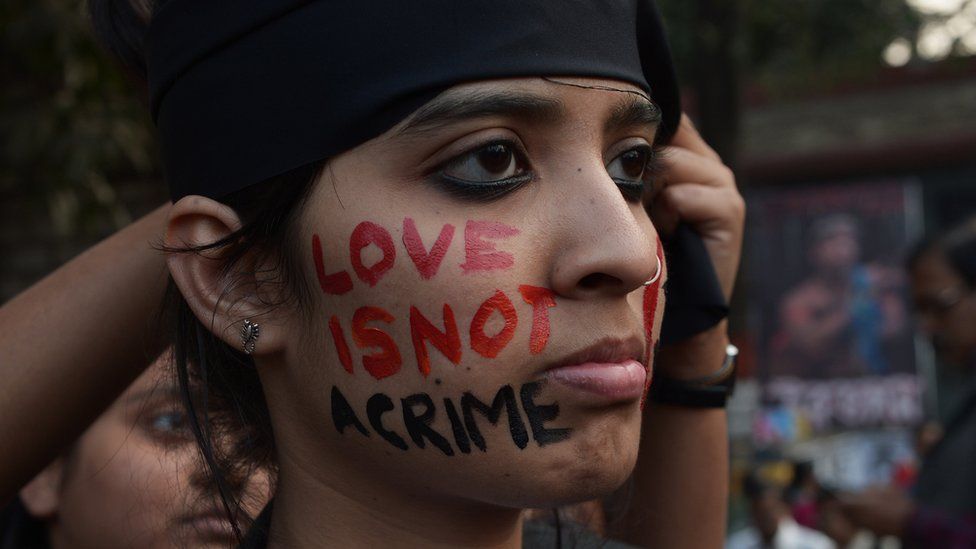
Image caption, An Indian gay rights activist protests against a court ruling in 2013 upholding a law which criminalises gay sex.
Sudan repealed the death penalty for consensual same-sex sexual acts in 2020.
Some observers note that the risk of prosecution in some places is minimal.
For example, a 2017 report on Jamaica by the UK Home Office said that Jamaica was regarded as a homophobic society, but that the “authorities do not actively seek to prosecute LGBT persons”.
Activist groups say the ability of lesbian, gay, bisexual and trans (LGBT) organisations to carry out advocacy work is being restricted.
Changing trend
There is a global trend toward decriminalising same-sex acts.
So far, 33 countries in the world recognise same-sex marriages, and 34 others provide for some partnership recognition for same-sex couples, Ilga says.
In Africa, same-sex marriages and civil unions are only legal in South Africa, and the French Islands of Mayotte and Reunion.
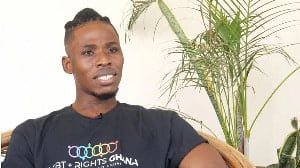
Director of LGBTQ+ Rights Ghana, Alex Kofi Donkor, has rubbished claims that the activities of the LGBTQ community are an abomination since animals do not engage in same-sex activities.
According to him, the comparison which has been made times without number does not hold water as animals are not human beings.
He noted that although members of the LGBTQ community have a different preference when it comes to their sex life, they remain human and ones with rights.
“It’s funny people make comparisons, that animals are not gays as they claim they don’t see male animals having sex, how can someone do that comparison? Are they in the animal world? How many animals have they studied to come to such baseless conclusions? People should allow people to be,” he is quoted to have said by MyNewsGH while speaking on Kumasi’s Ultimate FM.
“We are not animals and it is wrong to compare us to animals. We have rights just like any human being and we must be treated right,” he stressed.
He questioned the force at which some Ghanaians, particularly, MP for Ningo-Prampram Sam Nartey George, are opposing the LGBTQI community and its activities.
“I hear Sam George speak against us all the time. If he had a son or daughter who wanted to express his sexuality differently would he be doing what he is doing? If he feels he is a lion, he cannot be a lion on us. He has been called Gyata Gyata Gyata and he wants to act his name, not on us then he should go to the forest and do that,” he said.
Meanwhile, the Constitutional and Legal Affairs Committee of Parliament has recommended that the House pass the controversial Proper Human Sexual Rights and Ghanaian Family Values Bill 2021.
According to the Committee, a majority of Ghanaians are in favour of the legislation.
While admitting that the bill had “significant human rights concerns”, the Committee informed the House that it petitioned the Attorney-General for its opinion.
Martin Kpebu, a private attorney, has asserted that he has given up advocating for gays in society since he cannot speak on behalf of the faceless.
According to him, they should come out and speak or fight for themselves for themselves
Mr Kpebu explained that he is aware of big lawyers in thiscountry who are homosexual but are not prepared to come out publicly to defend their actions.
Speaking on the Key Points on TV3 Saturday, April 1, he said “To be very frank with you I do not intend to go into the merits of the debate on LGBTQ. I have made comments on it in the past, briefly stating that if some people want to fight for it it is within their right to fight for it but the reason I am no longer interested in joining this debate aggressively is that the people who practice LGBTQ, they don’t want to show their faces. So I ask, how am I going to advocate for a faceless person?
“So that is the disconnect. It is a very sensitive matter, I have been crying here Saturday to Saturday that the Ghanaian doesn’t want to fight, this is another of that. Privately, I have seen big lawyers involved, big lawyers who are gays and they can’t fight for themselves and you are saying Kpebu should come and fight, no, you can’t fight everything. There are big lawyers, I am telling you on authority, in this country involved and they don’t want to show their faces. At least they should come out, let’s see them explain their situation.
“I have been telling some of them privately that if we even get fifty of them to snap a picture, and come out to address a press conference when they speak, they will evoke compassion.”
The discussion on the Key Points centered on President Akufo-Addo’s decision to dissociate from the Proper Human Sexual Rights & Ghanaian Family Values Bill also known as the Ant-Gay Bill.
Proposed under a Private Members’ Bill, the anti-gay bill is expected to criminalise some of the activities of homosexuals in Ghana.
Answering a question put to him at the Jubilee House on Monday, March 27 when US Vice President Kamala Harris called on him, President Akufo-Addo confirmed that the bill is currently before Parliament, which will decide on it, but most of its provisions are being fine-tuned.
“It hasn’t been passed, so the statement that there is legislation in Ghana to that effect is not accurate,” he said.
“Parliament is dealing with it and at the end of the process, I will come in,” he added.
President Akufo-Addo welcomed US Vice President Harris to the seat of government as part the latter’s three-day visit to the country.
She stressed how strongly she feels about the importance of supporting and fighting for the cause of human rights including rights of LGBTQs.
“For the American press who are here, you know that a great deal of work in my career has been to address human rights issues, equality issues across the globe including as well as the LGBTQ community and I feel very strongly about the importance of supporting freedom and supporting and fighting for quality among all people.”
The New Patriotic Party’s (NPP) deputy communications director George Krobea Asante, has indicated that President Nana Akufo-Addo, fiercely defends Ghanaian cultural values and will not do anything within his power to destroy such rich values as the nation proceeds to approve the anti-LGBTQ Bill.
According to him, Ghanaians must rally support behind the President and parliamentarians as they lead the passage of this bill.
President Akufo-Addo has come under some public flak after what people say was his attempt to distance his government from the anti-LGBTQ Bill during a media engagement after hosting the United States of America Vice President, Kamala Harris at the Jubilee House in Accra on Monday.
But speaking on Original TV, the outspoken NPP Communicator, George Krobea Asante reiterated the earlier position of the President that under his watch as President, Ghana is never going to approve or allow such devilish act of LBTQI+.
“This has been the clear and emphatic position of the President and same has been expressed by him on many occasions and on different platforms. So what again do the NDC communicators seek to hear from the President before they will be convinced that Nana Addo detests such acts of LGBTQI+? This is a clear case of mischief and dishonesty on the part of the NDC.
“Again, let me ask this simple question, which of the things the President said in his reaction to a question by the New York Times journalist regarding the pending bill in parliament can be said to be untrue? Or the NDC expected the President to subvert or subdue the legislative powers of parliament? Fellow Ghanaians, let’s not fall for the mischief and the propaganda of the NDC.”
George Krobea Asante noted that the President mentioned the sensitivity of the human rights issues as well as the mood and the sentiments of the Ghanaian people as key considerations of parliament before the passage of the bill.
“And I vehemently believe that parliament after analyzing the bill will pass it and the President will also assent to its execution. LGBTQI+ is a threat to our existence and cultural values as people and cannot have any space in our society,” he added.
Mr Krobea Asante called on Ghanaians to continue to have confidence in the President and also rally support behind him to turn around Ghana’s economic fortunes by overcoming the devastating impact of the Covid 19 and the Russia – Ukraine war.
The Catholic Bishops Conference has urged the government to forgo any business with the United States that is premised on the acceptance of the LGBTQ community in Ghana.
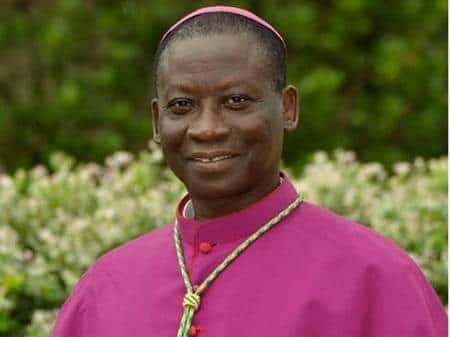
Speaking in an interview with Catholic Trends, the President of the Catholic Bishop Conference, Most Rev. Matthew Gyamfi, said that accepting aid from the US government with any LGBTQ conditions would amount to the government selling the country’s birth right.
He added that the government must tell the people of Ghana what the conditions for the $139 million are before accepting it.
“This is a very serious issue. It is at the gate of who we are as Ghanaians and nobody should toy with it with money. And if that should be the case (the aid is tied to Ghana accepting LGBT), let the government reject the money and tell the people, this is what they are saying. Should I take it? So that you do this or not and let the people decide.
“This is not the first time. We have seen the European Union, the United States and these rich countries sometimes push down our throats with certain reforms and certain things and they say if only you do these things, we would give you the money.
“I know the government has done that over and over and over, and many Ghanaians know it. It is not only I who is saying it. So when it comes to something that makes a people, a people. That is their culture and tradition, then if you sell your birth right, culture and tradition, if you sell who you are for money when you get the money who are you again?” Most Rev. Gyamfi said.
The office of the United States Vice President indicated that the US government will support Ghana with $139 million for the 2024 fiscal year.
According to Aljazeera, the $139 million is an addition to the $100 million security support, Vice President Kamala Harris announced for five West African countries including Ghana.
Spokesperson for the National Chief Imam, Sheikh Armiyawo Shiabu, has expressed concerns over President’s inability to unequivocally condemn LGBTQ activities in Ghana during a joint presser with US Vice President Kamala Harris.
On Monday, President Akufo-Addo stated that there is no LGBTQ legislation in Ghana yet, as the bill is currently before Parliament.
“The legislation is a legislation that is being proposed as a Private Members Bill. This is not an official legislation of the government but it is one that is being mooted by a handful of private members,” the President said.
According to Sheikh Armiyawo Shiabu, “the President was over cautions in trying to talk about it as if not wanting to offend a certain force that is coming from somewhere.”
He noted that this so “because I have heard the president speak fought rightly with strong tone about certain things like some of his encounter with Macron.”
For him, the president missed the opportunity to tell the world the stance of the majority of Ghana over the issue of LGBTQ.
“He has not been that spot right in indicating his personal position and a certain feeling about how in our national mindset as somebody who is also a man of faith coming up clearly on the note of even Christian revulsion action to say no this thing is not something that I will ever support and I think we should have heard something like this from him.”
He continued that “I was expecting that even on this particular case with is at the very core of the survival of the family system in both Christianity and Islam and Traditional I would have expected him to come up stronger and more definite on the issue.”
On the other hand, he lauded the Speaker of Parliament for maintaining his promise to the Chief Imam by asserting that he will see to the passing of the bill.
“I am very comfortable with the tone of the speaker and I support and commend him for that.
“I go strongly with the speaker since he has remained consistent with the tone with which he has spoken against this LGBTQ and also speaking in support of the passing of this anti-LGBTQ bill,” he said on JoyNews.
The spokesperson added that the push for the passage of the bill was not from that of human rights activists but that of a religious leader who had the mandate to ensure the continuity of the legacy of the family system.
“The issue we are dealing with is from the faith community level and as a nation, we are not doing it from a human rights angle but viewing it as something that undermines the very survival of the family.
“It is not so much of a human rights issue. The damage it does to the family and once you want to destroy a community you begin destroying the family and you succeed. That’s how God made it,” he added.
According to Speaker Alban Bagbin, it is undemocratic for the US to intervene in Ghana’s national issues.
The opposition Patriotic Front (PF) has warned Zambabians against organizing anti-gay rights demonstrations while US Vice-President Kamala Harris is visiting the nation.
According to the international media, the party intends to demonstrate before the democracy summit, which will be held in the capital city of Lusaka.
Kamala Harris is set to speak at the summit, which is being co-hosted by Zambia, the US, Costa Rica, the Netherlands, and South Korea, and is anticipated to arrive in the southern African nation on Friday.
The gathering is allegedly a part of a plan to force gay rights on Zambians, according to approximately 50 members of parliament.
Amnesty International Zambia has urged the administration to defend LGBTQ rights vehemently and to prevent demonstrations from delaying the summit.
According to Security Minister Jack Mwiimbu, the government would not tolerate lawlessness at the conference.
Ghanaian politician and member of parliament for Ningo-Prampram constituency, Sam George, has criticized US Vice President Kamala Harris for her comments on LGBTQ rights in Ghana.
Speaking at a joint press conference with President Akufo-Addo on Monday, Harris expressed her support for the freedom and equality of all, including the LGBTQ community.
However, Sam George, a key proponent of Ghana’s anti-LGBTQ bill or the Promotion of Proper Human Sexual Rights and Ghanaian Family Values Bill, criticized Harris’s comments and suggested that she focus on school shootings in the United States rather than LGBTQ issues in Ghana.
“Mrs Kamala Harris should be the last person to come and talk about human rights in Ghana. In the country where she is a vice president, in the United States, a gun woman, a lady in her 20s walked into a school with (inaudible), shot and killed three school children and three adults. Those are the human rights of her country’s citizens that Kamala Harris should be worried about. ….on a daily basis, more people die from gun violence in the US than malaria kills in Africa or in Ghana. That should be of concern to her. Kamala Harris is a woman of colour, if she wasn’t a senator first or wasn’t the vice president of America, she most likely could have possibly been a victim like other Black Americans like George Floyd of white police brutality … Those are the human rights issues Kamala Harris should be worried about because those are what the people who voted for her in America are expecting her to focus on,” he said.
The Bill, which was introduced as a private bill by eight MPs in July 2021, aims to prohibit advocacy of same-sex or homosexual practices in the country and is under review in parliament.
Several local and international human rights advocacy groups have expressed concern about Bill’s existence and its supposed infringement on the rights of LGBTQ+ persons.
President Akufo-Addo, however, has disassociated himself from the bill. Speaking at the same press conference with Harris, he clarified that his administration has no hand in the proposition of the bill.
“The legislation was a legislation that is being proposed as a Private Members Bill. This is not an official legislation of the government, but it is one that is being mooted by a handful of private members” he said.
He added that “the bill is going through the Parliament [and] the Attorney has found it necessary to speak to the committee about it regarding the constitutionality or otherwise, of several of its provisions and the Parliament is dealing with it. “At the end of the process, I will come in, but in the meantime, the Parliament is dealing with it. And then I have no doubt that the Parliament of Ghana will show as it’s done in the past, first of all, its sensitivity to human rights issues as well as to the feelings of our population, and we’ll come out with the responsible response,” he added.
However, several legislators have expressed disappointment in both Harris’s and Akufo-Addo’s responses on the subject, with Speaker of Parliament Alban Bagbin declaring his support for the bill and suggesting that it will be passed.
“This thing should not be tolerated. That is undemocratic. That someone else would have to dictate as to what is good and what’s bad? It’s unheard of. Because we have decided to devalue ourselves and go begging? Come on. The Bill will be passed. This is a word to the President of the Republic, there is no way you can intervene,” he noted.
The divergent views of Harris and George on the issue of LGBTQ rights in Ghana highlight the complexity of the issue in the country. While international organizations advocate for the protection of LGBTQ+ rights as a fundamental human right obligation, proponents of the anti-LGBTQ bill argue that the promotion of LGBTQ rights is incompatible with Ghanaian culture and family values.
The debate also raises questions about the relationship between Ghana and the United States, particularly with regard to future US aid initiatives in the country. While President Akufo-Addo’s disassociation from the bill may alleviate concerns in this regard, the tension between the two countries on this issue is likely to continue.
As the situation unfolds, it remains to be seen whether Ghana’s anti-LGBTQ bill will be successfully passed and how the country’s relationship with the United States will be affected.
LGBTQ+ and Africa
The legislation enjoys broad public support in Uganda
This stance is rooted in cultural and religious beliefs that view homosexuality as a deviation from societal norms.
However, over the years, there has been a growing movement to promote LGBTQ rights, but it has faced fierce opposition from conservative groups.
Uganda’s recent passing of a bill that criminalizes homosexuality is a clear indication of the country’s stance on the issue. The bill imposes life imprisonment for same-sex relations and criminalizes the promotion of LGBTQ rights. This move has been criticized by human rights organizations and Western countries who view it as a violation of fundamental human rights.
On the other hand, Ghana has taken a different approach to the LGBTQ issue. Although homosexuality is illegal in Ghana, the country has not been as aggressive in enforcing the law.
The country’s leaders have also shown some level of tolerance towards the LGBTQ community, with some leaders calling for a dialogue on the issue. However, conservative groups in Ghana have also been vocal in their opposition to the LGBTQ agenda.
The East African LGBTQ community has been under siege, with many facing discrimination and violence.
There have been reports of attacks on LGBTQ individuals and organizations, with some facing imprisonment and harassment.
This situation has forced many LGBTQ people to flee their countries and seek asylum in other countries.
Africa’s stance on the LGBTQ agenda is a complex issue, with cultural and religious beliefs playing a significant role. While some countries have taken a more tolerant approach, others have criminalized homosexuality, leading to a hostile environment for the LGBTQ community.
It is essential to promote dialogue on the issue and work towards promoting tolerance and acceptance for all individuals regardless of their sexual orientation.
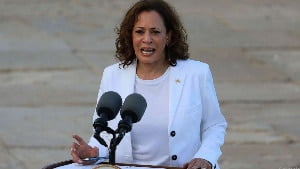
Vice President of the United States of America, Kamala Harris, has indirectly condemned the anti-LGBTQ bill formally known as Promotion of Proper Human Sexual Rights and Ghanaian Family Values Bill currently before Parliament.
In a joint presser with President Akufo-Addo on Monday, the US Vice President noted that she supports freedom and the equality of all including the LGBTQ community, a position the anti-LGBTQ does not support.
According to Kamala Harris, LGBTQ rights is human rights per her understanding and belief.
In response to a question posed by a New York Times journalist on the current bill, she said: “A great deal of my work has been on human right issues and equality across board including the LGBTQ community. I believe strongly in the supporting the freedom and providing equality on all people and that all people be treated equally. I will also say that this is an issue I consider to be a human rights issue and that will not change.”
The Promotion of Proper Human Sexual Rights and Ghanaian Family Values Bill was introduced in July 2021 in Parliament by eight MPs as a private bill.
The eight are Sam Nartey George (MP, Ningo-Prampram), Emmanuel Bedzrah (MP, Ho West) Della Adjoa Sowah (MP, Kpando), John Ntim Fordjour (MP, Assin South), Alhassan Sayibu Suhuyini (MP, Tamale North), Helen Adjoa Ntoso (MP, Krachi West), Rita Naa Odoley Sowah (MP, La Dadekotopon) and Rockson Nelson Dafeamekpor (MP, South Dayi).
It has been close to two years and Parliament is still considering the Promotion of Proper Human Sexual Rights and Ghanaian Family Values 2021 which will amongst other things, prohibit advocacy of same-sex or homosexual practices in the Country.
International organizations have raised concerns that the Bill could infringe on the rights of LGBTQ+ persons who are a minority group in the country.
United States Ambassador to Ghana, Virginia Palmer has advised Ghanaians and their representatives in Parliament to respect international obligations and Domestic laws which centre on the need to protect the rights of all persons, irrespective of their sexual orientation.
MP for Ningo-Prampram, Sam Nartey George, believes otherwise. He says LGBTQ rights does not qualify as human rights.
Speaker Alban Bagbin, on the matter, has indicated that “the sexual rights and human values Bill that is being handled by the committee will definitely be passed before the next elections.”
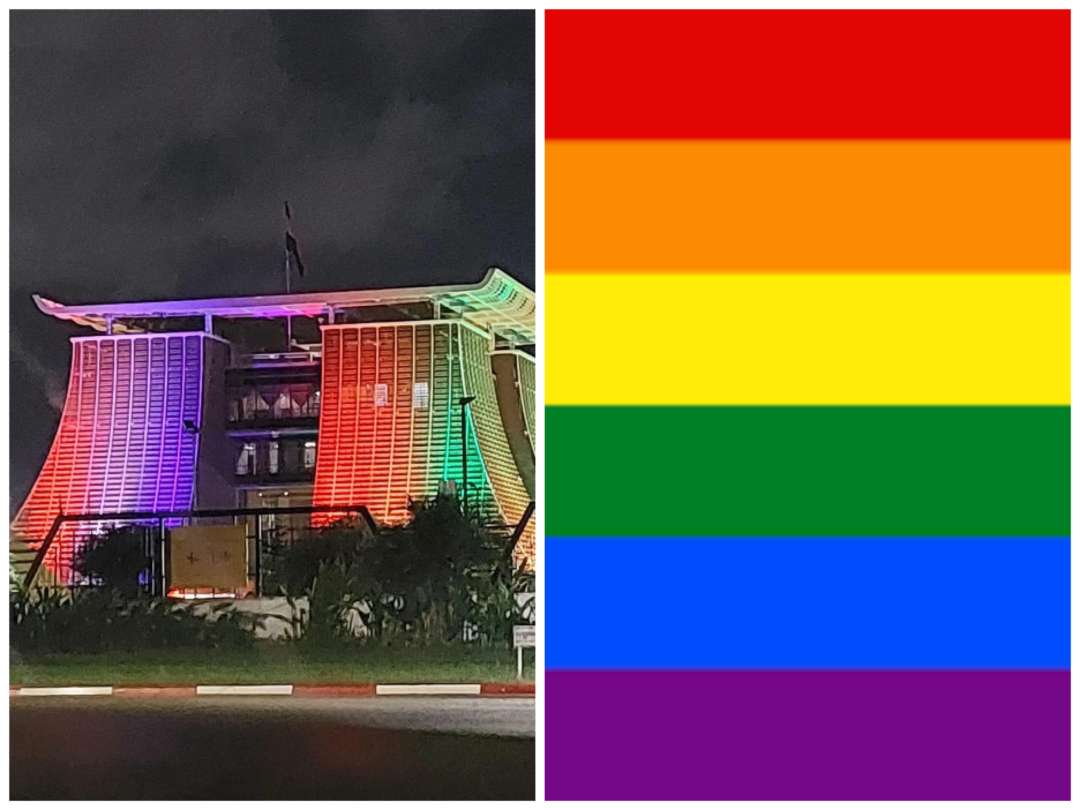
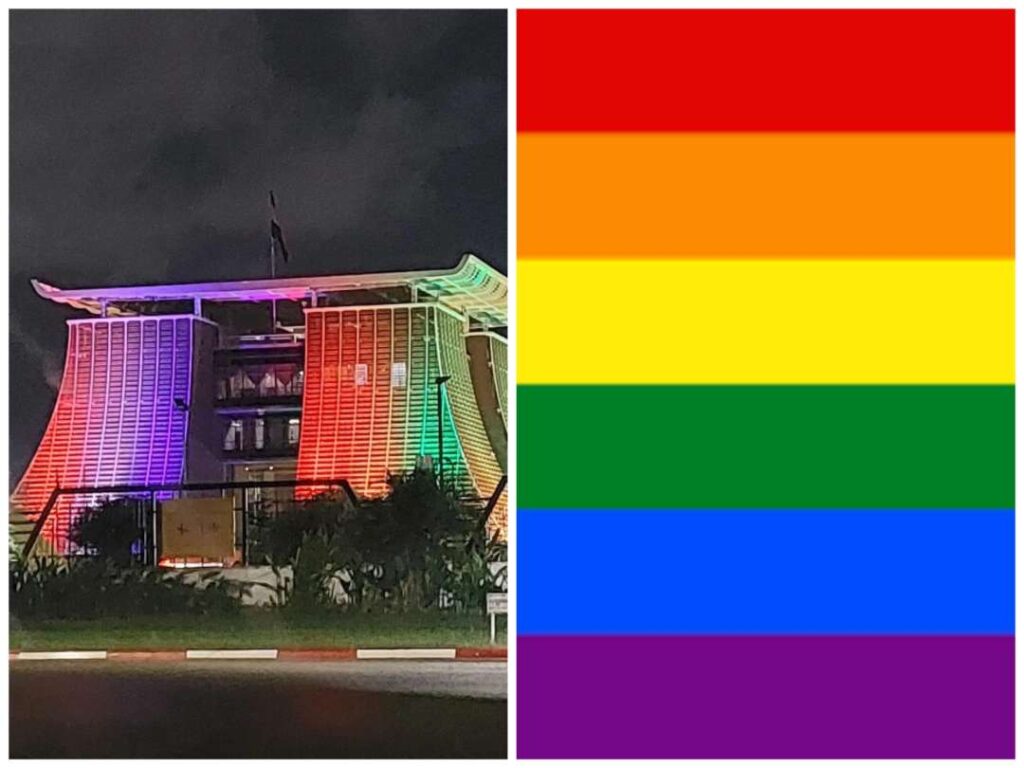
The seat of government, Jubilee House, has been accused of using LGBTQ colours as part of ways to welcome US Vice President Kamala Harris.
The US Vice President touched down at the Kotoka International Airport in Accra on Sunday afternoon, March 26, 2023.
The seat of Ghana government, the Jubilee house was lit in gay colours yesterday. 🌈 Aww )man Ghana.😢 I prefer not to speak again. If I speak again, I’m in big trouble.. say no to LGBTQ. pic.twitter.com/91FM937bcB
— #papaAdamaBa #VARChecker- YABRASO #TainMp (@Vincent10508395) March 27, 2023
Viral images show the Jubilee House in a variety of colours including; red, yellow, green, white and violet. This has been read by some Ghanaians on social media as government publicly accepting LGBTQ.
According to one Eric Adjei during an interview on UTV, the president has embraced homosexuality with this action.
Per reports, the images are colours of the United States of America and Ghana. Colours of the LGBTQ community are red, orange, yellow, green, turquoise, indigo and violet.
Ghana’s colours are red, gold, green and black, while the US use red, white and blue.
Jubilee House and the LGBTQ colours
In response to the matter, Rightify Ghana noted that the colours on the Jubilee House are not those of the LGBTQ community.
🚨 Misinformation: Political and anti-LGBTQ individuals target community with misleading info
Following the USA VP, Kamala Harris, visit to Ghana, social media images show the Jubilee House illuminated with Ghana 🇬🇭 and USA 🇺🇸 colours, but anti-LGBTQI persons say it’s 🏳️🌈 colours pic.twitter.com/owBuwooVdt
It is believed that the fusion of some colours may have caused this confusion. The violet colour is formed by mixing red and blue, which are primary colours.
The government of Uganda has responded to the government of the United States after a threat of economic repercussion over a recently passed law that discriminates against same-sex relationships and the LGBTQ+ community.
President Yoweri Museveni was quoted in the statement that was shared on the social media site Twitter as strongly opposing same-sex relationships in Uganda.
The response posted on social media platform, Twitter, comprised quotes by president Yoweri Museveni stating the country’s strict opposition to same-sex relations.
The government’s official Twitter handle posted a quote from Museveni’s recent response on the issue when he appeared before Parliament to deliver an address.
“The western countries should stop wasting the time of humanity by trying to impose their practices on other peoples. Europeans and other groups marry cousins and near relatives.
“Here, to marry within the clan, is taboo (Omuziro). Should we impose sanctions on them for marrying relatives?” a follow-up tweet read.
In another response, the handle specifically quoted a tweet by Anthony Blinken, the US Secretary of State with a quotation by Museveni in a 2014 interview with CNN.
The quote read: “If the West doesn’t want to work with us because of homosexuals, then we have enough space here to live by ourselves and do business with other people.” (CNN, 2014).
QUOTE
“If the West doesn’t want to work with us because of homosexuals, then we have enough space here to live by ourselves and do business with other people” (CNN, 2014).-@KagutaMusevenihttps://t.co/VOxRE5UPg3
White House warns of potential ‘repercussions’ if LGBTQ law takes effect
The United States on Wednesday, March 22, warned of sanctions if Uganda’s anti-Lesbians, Gay, Bisexual, Transgender, Queer legislation is signed into law.
“We would have a look at whether or not there might be repercussions that we would have to take, perhaps in an economic way, should this law actually get passed,” John Kirby, spokesperson for the National Security Council said in a media briefing at the White House.
Lawmakers in the East African country had by a majority voted to pass the legislation a day earlier to much uproar by activists and rights groups.
Elements of the bill include:
– A person who is convicted of grooming or trafficking children to engage them in homosexual activities faces life in prison.
– Individuals and institutions which support or fund LGBT rights activities also face prosecution.
Local news channels also reported a proposed 20-year jail term for ‘any entity that funds or promotes any form of homosexuality’.
Uganda is a deeply traditional and religiously conservative country. The president is known to have harsh words for homosexuals and LGBTQ persons have routinely been raided.
The final leg of making the bill into law is the signature of president Yoweri Museveni.
The anti-LGBTQ law enacted by Ugandan parliament has been considered deplorable by the UN and the NGO Amnesty International.
President Yoweri Museveni of Uganda was urged by the UN High Commissioner for Human Rights to veto the anti-homosexuality law.
The anti-gay legislation that Uganda’s parliament passed imposes severe penalties on same-sex partnerships there.
Despite a hectic session, the House of Representatives conducted its last vote on the bill on Tuesday, and the Speaker of the House determined that the “Ayes have it,” according to AFP news.
Even though homosexuality is already illegal in the country, the anti-gay legislation proposes that anyone in the conservative East African nation who engages in same-sex activity or who identifies publicly as LGBTQ could face up to 10 years in prison.
In a report by Africanews.com, the UN High Commissioner for Human Rights, Volker Türk, called on Museveni on Wednesday not to enact the law.
“The passage of this discriminatory text -probably the worst of its kind in the world– is a deeply troubling development,” he said in a statement.
“If signed into law by the president, (this law) will make lesbians, gays and bisexuals criminals in Uganda simply by existing (…). It could give carte blanche to the systematic violation of almost all their human rights,” he added.
Amnesty’s director for East and Southern Africa, Tigere Chagutah, in a statement said “this ambiguous, vaguely worded law criminalizes even those who promote “homosexuality”.
The Ugandan parliament just passed comprehensive anti-gay legislation that would outlaw anyone who identifies as LGBTQ and would impose severe new punishments on same-sex partnerships.
The new law approved on Tuesday appears to be the first to outlaw merely identifying as lesbian, gay, bisexual, transgender, and queer (LGBTQ), according to Human Rights Watch, even though same-sex relationships are already prohibited in more than 30 African nations, including Uganda.
Parliamentary Speaker Anita Annet Among declared after the last vote that “the ayes have it” and noted that the “law passed in record time.”
Legislators amended significant portions of the original draft law, with all but one speaking against the bill. Supporters of the tough legislation say it is needed to punish a broader array of LGBTQ activities, which they say threaten traditional values in the conservative and religious East African nation.
The legislation will now be sent to President Yoweri Museveni to be signed into law.
Museveni has not commented on the current legislation but has long opposed LGBTQ rights and signed an anti-LGBTQ law in 2013 that Western countries condemned before a domestic court struck it down on procedural grounds. Nevertheless, the 78-year-old leader has consistently signalled he does not view the issue as a priority and would prefer to maintain good relations with Western donors and investors.
Discussion about the bill in parliament was laced with homophobic rhetoric, with politicians conflating child sexual abuse with consensual same-sex activity between adults.
“Our creator God is happy [about] what is happening … I support the bill to protect the future of our children,” legislator David Bahati said during the debate on the bill.
“This is about the sovereignty of our nation, nobody should blackmail us, nobody should intimidate us.”
Christian theologian Mr. Aaron Edwards was allegedly fired by a Methodist Bible institution in the United Kingdom due to his anti-homosexuality tweets.
It was discovered that the college also implied that it will label Dr. Aaron, a theology professor at Cliff College in Derbyshire, England, as a terrorist.
Fox News reports that he was dismissed from the school after being accused of “bringing the college into disrepute” on social media last month, when he tweeted, “Homosexuality is invading the church,” on February 19.
“Evangelicals no longer see the severity of this [because] they’re busy apologizing for their apparently barbaric homophobia, whether or not it’s true.
“This *is* a ‘Gospel issue,’ by the way. If sin is no longer sin, we no longer need a Savior,” Edwards added.
According to the report, Edwards’ tweet went viral and prompted blowback, to which Edwards responded: “That *is* the conservative view. The acceptance of homosexuality as ‘not sinful’ *is* an invasion upon the Church, doctrinally.
“This is not controversial. The acceptance is controversial. Most of the global Church would agree. It is not homophobic to declare homosexuality sinful.
“I expressed the conservative view as a doctrinal issue, re. the implications for sin/the Gospel. It was not an attack on individuals, it was addressed to evangelicals. It seems that holding the view that homosexuality is sinful is only welcome if it remains ‘unexpressed,’” he added.
Edwards’ tweets reportedly caused “distress” among members of the Methodist Church in Britain, with one senior staff member saying they “could be extremely damaging” and “impact the college’s core work” and “business plan,” according to Edwards’ legal counsel at the London-based Christian Legal Centre.
During a disciplinary hearing on March 8, the college disclosed that it was considering submitting Edwards to Prevent, which oversees claims of terrorism in the United Kingdom. Edwards was suspended from the school pending an investigation.
Edwards claims that he was tricked into endorsing “conversion therapy” at the hearing when he was asked what he would do if a student requested him to pray with them about their same-sex attraction. The U.K. Parliament has discussed making conversion therapy a crime.
“The reaction to my tweet and the unjust treatment I have experienced by Cliff College and the Methodist Church in Britain completely illustrates the problem my tweet addressed,” Edwards said in a statement provided to Fox News Digital.
“The tweet was not defamatory; it was not an attack on any colleague or individual; it was not abusive; and it was not an extremist religious view. It was addressed to evangelicals as a point of doctrine, and it has been misunderstood by many who wish to cause personal and institutional trouble for those who express that view,” he continued.
Edwards added that traditional Christian beliefs about sexuality are being “silenced and stamped out” in the Methodist Church.
At the FIFA Congress on Thursday, Gianni Infantino was unanimously elected to serve as the organization’s president again through the year 2027. As they did four years prior, delegates from the 211 member federations ushered in the 52-year-old Swiss lawyer, who succeeded the disgraced Sepp Blatter in 2016, for a third term by acclamation.
“I love you all,” Infantino told delegates in the Rwandan capital, where the voting system did not register the number of dissident voices. While FIFA statutes currently limit a president to a maximum of three four-year terms, Infantino has already prepared the ground to stay until 2031, declaring in December that his first three years at the helm did not count as a full term.
Infantino, who staunchly defended Qatar’s hosting of last year’s World Cup as the Gulf state’s treatment of migrant workers, women and the LGBTQ community came under the spotlight, has overseen the expansion of the men’s and women’s World Cup and huge increases in FIFA revenues.
The men’s World Cup will increase from 32 teams to 48 for the next edition in North America in 2026, while the women’s World Cup will feature 32 teams for the first time in Australia and New Zealand later this year.
Hold onto your hats folks, because the Ghanaian entertainment scene is heating up with some spicy drama!
Actor and movie producer, Kobi Rana, has just issued a stern warning to celebrity blogger Eugene Osafo Nkansah, aka Nkonkonsa GH, to keep his nose out of Kobi’s business or face the consequences.
It all started when Kobi made a post about Ghanaian leaders “praying against LGBTQI” while the country’s problems remained unresolved.
Unfortunately, Nkonkonsa decided to highlight the LGBTQI aspect of the post with the caption “Filmmaker and Entertainer Kobi Rana blasts Ghanaian Leaders for praying against LGBTQI community in Ghana.”
Kobi felt this angle was overshadowing the main issue he raised regarding Ghana leaders and misplaced priorities.
This was enough to get Kobi fired up and ready to defend his reputation.
In a strongly-worded response, Kobi threatened the blogger by saying, “The next time you post about me, I will give you enough reason to go for a DNA test. Your stinking marriage is what needs blogging.” Ouch, that’s gotta hurt!
He also accused the blogger of not promoting his works, although he admitted that his international recognition didn’t need the support of local bloggers.
It’s clear that Kobi is not one to mess with, and he’s willing to go to extreme lengths to protect his reputation. But what is the source of the drama between these two? We may never know for sure, but one thing’s for certain: the Ghanaian entertainment scene just got a whole lot more interesting.
So, if you’re a fan of entertainment gossip and drama, be sure to keep an eye on these two for more explosive updates. We can’t wait to see how this saga unfolds!
The present ban on same-sex relationships, according to legislators, does not go far enough, thus a bill that would make identifying as LGBTQ a crime was taken up by Uganda’s parliament on Thursday.
Same-sex relationships are punished by up to a life sentence in jail in this socially conservative and religious country in east Africa.
More than 30 African nations forbid same-sex relationships, but if Uganda’s bill is approved, it would appear to be the first to make it a crime to identify as lesbian, gay, bisexual, transgender, or queer (LGBTQ).
The proposed Ugandan law was introduced as a private lawmaker’s bill and aims to allow the country to fight “threats to the traditional, heterosexual family”, according to a copy seen by Reuters.
It punishes with up to 10 years in prison any person who “holds out as a lesbian, gay, transgender, a queer or any other sexual or gender identity that is contrary to the binary categories of male and female”.
It also criminalizes the “promotion” of homosexuality and “abetting” and “conspiring” to engage in same-sex relations.
The law is similar in some ways to a law passed in 2013 that stiffened some penalties and criminalized lesbianism. It drew widespread international condemnation before it was struck down by a domestic court on procedural grounds.
After the new bill was read in parliament, Speaker Anita Among sent it to a committee for scrutiny and public hearings before it is brought back to the House for debate and a vote.
Among urged members of parliament to reject intimidation, referencing reported threats by some Western countries to impose travel bans against those involved in passing the law.
“This business of intimidating that ‘you will not go to America’, what is America?” she said.
An investigation by a parliamentary committee ordered in January into reports of alleged promotion of homosexuality in schools has already sparked a wave of discrimination and violence against members of the LGBTQ community, activists say.
The governor of Tennessee has passed regulations restricting medical care for young transgender people and outlawing drag shows in front of minors.
LGBT and civil rights organizations pledged to file a lawsuit to prevent the medical care policy from going into force on July 1.
Meanwhile, those who break the new drag legislation risk spending close to a year in jail as well as a fine of up to $2,500 (£2,100).
The regulations were passed by Governor Bill Lee when inquiries arose regarding an old photograph that purportedly showed him dressed as a woman.
When it comes into force next month, the drag law will ban performances “harmful to minors” by “go-go dancers, exotic dancers, strippers, male or female impersonators” in public places or venues where they could be viewed by children.
After a recent spate of like measures being suggested in Republican-run states, the statute is the first of its kind to be adopted in the US.
Republican Governor Lee has refuted claims that by signing the measure, he is acting hypocritically.
He has been questioned on a picture that was allegedly taken from a 1977 yearbook and was titled “Tennessee Governor Bill Lee in drag” and shared over the weekend on Reddit. A curly wig, a pearl necklace, and what appears to be a cheerleader’s uniform are all visible on the figure in the photo.
Image caption,Governor Bill Lee is accused of wearing women’s clothing in this 1977 yearbook photo
Mr Lee was asked about the photo earlier this week during a press conference.
“What a ridiculous, ridiculous question that is,” he responded, without confirming or denying the authenticity of the image.
“Conflating something like that to sexualised entertainment in front of children, which is a very serious subject.”
His office later issued a statement: “The bill specifically protects children from obscene, sexualised entertainment, and any attempt to conflate this serious issue with light-hearted school traditions is dishonest and disrespectful to Tennessee families.”
What exactly the law will prohibit is still unclear.
One of its sponsors, state legislator Chris Todd, previously called drag shows “child abuse” no matter what they contain, according to the Tennessean newspaper.
But other Republicans say the law would not broadly affect drag shows that are legal under Tennessee’s existing laws on obscenity.
Opponents of the law, including the state legislature’s Democrats, argue that this new legislation is redundant because they say sexualised performances in front of children are already illegal under Tennessee law.
Image caption,A drag performance at Nashville Pride last year
Bills to restrict drag events have been introduced in recent months in at least 14 different states, according to Pen America, a free-speech organisation.
Drag performances at libraries, which usually involve reading storybooks to children, have been the target of protests by religious organisations, parents’ groups, right-wing activists, and extremists including the Proud Boys.
Opponents say such shows aim to groom or sexualise young children. Performers and LGBT groups say the events are age-appropriate and educate children about being different.
LGBT groups say they are worried about the potential chilling effect of the law. Chris Sanders, of the Tennessee Equality Project, says drag show organisers in the state are considering cancelling or delaying performances until there is clarity around the legislation.
The law restricting medical treatment for transgender youth prohibits doctors from providing hormones or surgical treatment for minors, with a few limited exceptions. Children and teenagers under 18 who are already receiving such treatment can continue to receive it until April 2024.
Doctors who violate the law could be fined up to $25,000 (£21,000) per procedure.
House Majority Leader William Lamberth, a Republican, said children are not mature enough to make “life-altering” decisions about such operations or medication.
“These treatments and procedures have a lifetime of negative consequences that are irreversible,” he said, reports the Tennessean.
But the American Civil Liberties Union and Lambda Legal, an LGBT civil rights organisation, said they would sue to stop the legislation from being enforced.
“We are dedicated to overturning this unconstitutional law and are confident the state will find itself completely incapable of defending it in court,” the organisations said in a statement.
Enforcement of similar laws in other states, including Alabama and Arkansas, has been paused by lawsuits.
The designate minister for chieftaincy and religious affairs, Mr. Stephen Asamoah Boateng (Asabee), has appealed for inter-faith harmony.
The Minister-Designate made the appeal when he appeared before the Appointment Committee ofParliamentfor vetting on Monday.
“We are supposed to also harmonise our religions to bring peace to ourselves and to also help in national development,” he said.
“Yes, unfortunately, there are religious groups that spring up, sometimes nobody knows who they are and what they do. So, there is the need for the Ministry to embark on research and also to get data collected and make sure we have database and ensure sanity,” he added.
Mr Asamoah Boateng noted that the 1992 Constitution of Ghana also provides for freedom of religious practice.
He said once Ghanaians were conscious of the provision in Article 21 of the 1992 Constitution, they must ensure to live in peace.
He said Moslems, Christians, Traditionalists and other religious bodies in the country, must endeavour to live in peace and harmony with each other.
The Minister-Designate said the Ministry of Chieftaincy and Religious Affairs existed to develop an effective interface between Government, Religious Bodies and Civil Society on matters relating to Chieftaincy and Religious Affairs for the promotion of peace and good governance.
He said when given the nod by the House, he would make sure that traditional authorities were lifted higher to the dignified and noble status.
Touching on the issue of lesbian, gay, bisexual, transgender, queer or questioning (LGBTQ), Mr Asamoah Boateng, said he was opposed to same-sex marriage in the country.
Minister-designate for Chieftaincy and Religious Affairs has declared his stance on the longstanding LGBTQ debate. According to Mr Stephen Asamoah Boateng, he is opposed to same-sex marriage in the country.
“Same-sex legalising in Ghana, I am opposed to it,” he said.
He made this comment when he appeared before Parliament’s Appointment Committee on Monday for vetting.
Mr Asamoah Boateng’s comment was in response to Awutu Senya West MP, Gizella Tetteh’s question about his view on the legalisation of same-sex marriage in Ghana,
Over the last few years, the issue has been a hot topic in Ghana with a bill – anti-LGBTQI currently before Parliament to criminalise the activities of the LGBTQ+ community in the country.
Touching on what his legacy would be when given the nod as the sector minister since he has two years to be in office, Mr Asamoah Boateng noted that he would fight for the Ministry to assume its rightful position as custodians of tradition.
He further stated that he would ensure that “our traditional authorities are lifted higher to the dignified and noble status.”
“Our Christian and Moslem leadership must be given the necessary support so they can get congregation to understand that we are one nation which is a sovereign state … so my role is to make sure that we all work together on this aspect and not bring trouble. In the case of conflict, we will manage it and jaw jaw,” he added.
The authorities in Uganda are calling for the criminalisation of LGBTQ organisations and their activities in the country.
A January report from the NGO Bureau, an official body which oversees the work of NGOs, calls for the amendment of the country’s laws to criminalise LGBTQ activities.
In the alternative it urges the enactment of a new law “that prohibits the promotion of LGBTQ activities in the country”.
It further says the government needs to provide more resources to the NGO Bureau so that it can “identify and weed out those that are involved in activities that are prejudicial to the interests of the people of Uganda”.
Gay relationships are illegal in Uganda, where they can be punished by up to life in prison for committing “unnatural offences”.
The report is a result of a year-long investigation into activities of NGOs involved in sexual minorities’ rights work in Uganda.
The bureau says it received concerns regarding various organisations, but did not state the source of the concerns.
In total 26 NGOs were investigated but the probe is yet to conclude its work on many of them.
It says that Sexual Minorities Uganda, one of the most prominent LGBTQ organisations in the country, was neither officially registered as an NGO nor as a business.
The NGO Bureau ordered the closure of the organisation in August 2022, but the organisation has since filed a case at the East African Court of Justice contesting its closure.
Registration applications of at least three other organisations to the bureau were rejected due to their involvement in LGBTQ human rights work.
In recent weeks, several government officials and leaders in the country have been speaking out against the “promotion of gay activities” in the country.
Last week, Archbishop Stephen Kaziimba, the head of the Anglican Church of Uganda, spoke against the recent Church of England’s decision to bless same-sex marriages.
Archbishop Kaziimba said that homosexuality was a sin and that the Anglican church in Uganda would not endorse it.
There have also been renewed calls in parliament for a new anti-gay bill to be drafted and tabled for debate.
Uganda received global attention when it passed an anti-homosexuality law in 2013. It later annulled it in 2014 when a court ruled that it had been passed without the required quorum in parliament.
The Ugandan government is pushing for the criminalization ofLGBTQorganizations and their operations there.
The country’s laws should be changed to make homosexual and bisexual behavior illegal, according to a report released in January by the NGO Bureau, an official agency that regulates the activities of NGOs.
In the alternative it urges the enactment of a new law “that prohibits the promotion of LGBTQ activities in the country”.
It further says the government needs to provide more resources to the NGO Bureau so that it can “identify and weed out those that are involved in activities that are prejudicial to the interests of the people of Uganda”.
Gay relationships are illegal inUganda, where they can be punished by up to life in prison for committing “unnatural offences”.
The report is a result of a year-long investigation into activities of NGOs involved in sexual minorities’ rights work in Uganda.
The bureau says it received concerns regarding various organisations, but did not state the source of the concerns.
In total 26 NGOs were investigated but the probe is yet to conclude its work on many of them.
It says that Sexual Minorities Uganda, one of the most prominent LGBTQ organisations in the country, was neither officially registered as an NGO nor as a business.
The NGO Bureau ordered the closure of the organisation in August 2022, but the organisation has since filed a case at the East African Court of Justice contesting its closure.
Registration applications of at least three other organisations to the bureau were rejected due to their involvement in LGBTQ human rights work.
In recent weeks, several government officials and leaders in the country have been speaking out against the “promotion of gay activities” in the country.
Last week, Archbishop Stephen Kaziimba, the head of the Anglican Church of Uganda, spoke against the recent Church of England’s decision to bless same-sex marriages.
Archbishop Kaziimba said that homosexuality was a sin and that the Anglican church in Uganda would not endorse it.
There have also been renewed calls in parliament for a new anti-gay bill to be drafted and tabled for debate.
Uganda received global attention when it passed an anti-homosexuality law in 2013. It later annulled it in 2014 when a court ruled that it had been passed without the required quorum in parliament.
After visiting South Sudan, the Pope told reporters that such laws were “an injustice” and a sin.
People who exhibit “homosexual tendencies,” he continued, are God’s children and ought to be accepted by their churches.
The Moderator of the Church of Scotland and the Archbishop of Canterbury both supported his remarks.
Along with the Pope, Archbishop Justin Welby and Iain Greenshields, Moderator of the General Assembly of the Church of Scotland, visited the war-torn nation of South Sudan to call for peace there.
It is the first time the leaders of the three traditions have come together for such a journey in 500 years
Archbishop Welby and Dr Greenshields praised the Pope’s comments during a news conference with reporters on board the papal plane as they travelled from Juba to Rome.
“I entirely agree with every word he said there,” said Archbishop Welby, noting that the Anglican church had its own internal divisions over gay rights.
Last month the Church of England said it would refuse to allow same-sex couples to be married in its churches.
Expressing his own support, Dr Greenshields referred to the Bible, saying: “There is nowhere in the four Gospels that I see anything other than Jesus expressing love to whoever he meets, and as Christians that is the only expression that we can give to any human being in any circumstance”.
Image caption,Archbishop Justin Welby (right) and the Rt Rev Iain Greenshields (left) expressed their support for the Pope’s comments in a press conference
But he said he supported so-called civil union legislation, and stressed that laws banning homosexuality were “a problem that cannot be ignored”.
He suggested that 50 countries criminalise LGBT people “in one way or another”, and about 10 have laws carrying the death penalty.
Currently 66 UN member states criminalise consensual same-sex relations, according to ILGA World – the International Lesbian, Gay, Bisexual, Trans and Intersex Association.
“This is not right. Persons with homosexual tendencies are children of God,” said the Pope.
“God loves them. God accompanies them… condemning a person like this is a sin.”
Under current Catholic doctrine, gay relationships are referred to as “deviant behaviour” and Pope Francis has previously said he was “worried” about the “serious matter” of homosexuality in the clergy.
But some conservative Catholics have criticised him for making comments they say are ambiguous about sexual morality.
In 2013, soon after becoming Pope, he reaffirmed the Catholic Church’s position that homosexual acts were sinful, but added that homosexual orientation was not.
Five years later, during a visit to Ireland, Pope Francis stressed that parents could not disown their LGBT children and had to keep them in a loving family.
Campbell Johnstone believes that coming out as gay will benefit other athletes in New Zealand.
On a current affairs television program on Monday, Johnstone, who played three times for the All Blacks, including in a Test series against the British and Irish Lions in 2005, revealed that he was gay.
He is the first out gay athlete to have played for the All Blacks organization.
“If I open up that door and magically make that closet disappear, then we’re going to help a lot of people,” said Johnstone.
“I pushed that side of me down deeper and deeper. I went to some interesting places.”
Johnstone highlighted his desire in an interview with TVNZ that his status as the first All Black to come out could encourage others to feel more at ease in their own skin.
“If I can be the first All Black that comes out as gay and take away the pressure and the stigma that comes with that issue then it can actually help other people.
“Yes, it is [a big thing], to be able to do that could possibly be one of the final pieces of the puzzle for New Zealand sports.”
The ex-Crusaders player also said he had been “living a lie”.
Arohanui Campbell Johnstone All Black #1056 – your strength and visibility will pave the way for others in sport here in Aotearoa and around the world 🖤🏉🌈 pic.twitter.com/LcEQsp2e1y
Mark Robinson, the chief executive of New Zealand Rugby, praised Johnstone’s bravery and strength. Robinson and Johnstone were teammates at Canterbury.
“On behalf of the New Zealand rugby community and as a former team-mate, I want to acknowledge and support Campbell for sharing his authentic story. Your strength and visibility will pave the way for the others in our game,” said Robinson.
“Rugby is a sport that is welcoming to everyone and a place where people should feel safe to be who they are.
“We know that there are people who have not always been comfortable to be who they are in rugby. We want to be clear, no matter who you love, rugby has your back.”
A pathologist has revealed the most recent details of a murder that has angered the public: Kenyan LGBT activist Edwin Chiloba was smothered to death.
Johansen Oduor claimed that the man had socks shoved into his mouth and that a piece of denim from a pair of jeans was tied around his face.
The pathologist continued “He died from asphyxia, which is caused by smothering”.
Chiloba’s body was discovered last week in a metal box dumped by the side of the road not far from Eldoret, a town in western Kenya where he attended university.
The murder drew global condemnation, with human rights groups linking it to his sexuality.
But police have not done so, and have not yet given a motive for the murder.
Five people have been arrested in connection with the murder, including Chiloba’s long-time friend Jackton Odhiambo, who police have identified as the primary suspect.
A magistrate gave police permission on Monday to detain the five for a further 21 days, as they continue with their investigations.
The five have not yet been charged with any crime.
Dr Oduor, the chief government pathologist, said the postmortem also revealed that Chiloba’s nails were discolored, indicating that he died from a lack of oxygen.
Chiloba had not sustained any other injuries, Dr Odouor said, dismissing media reports that his eyes had been gouged out.
Tributes on social media described the activist, who was in his mid-20s, as “an amazing human” and an “iconic fashion designer”.
He had moved to Eldoret from the capital, Nairobi, in 2019 to study fashion and was beginning to make a name for himself in design, a friend said.
Last month Chiloba wrote on Instagram that he was “going to fight for all marginalised people”, saying that he himself had been marginalised.
Human rights groups have called on police to swiftly resolve his killing.
Motorbike taxi riders alerted police after they saw the box dumped by the roadside from a vehicle with a concealed number plate, The Standard and The Daily Nation newspapers reported, quoting police sources.
Activist Edwin Chiloba’s remains were found on Tuesday near Eldoret town in Uasin Gishu county, where he ran his fashion business, independent rights group the Kenya Human Rights Commission (KHRC) said.
Research suggests acceptance of homosexuality is gradually increasing in Kenya, but it remains a taboo subject for many. The country’s film board has banned two films for their portrayals of gay lives in recent years.
The death drew condemnation from several human rights groups, including the International Commission of Jurists Kenya section, which called for the speedy investigation and apprehension of those behind his killing.
“Chiloba’s death is a tragedy and an affront to human dignity and violation of the right to life #JusticeForChiloba,” it said on Twitter.
Resila Onyango, Kenya National Police Service’s spokesperson, said officers had arrested one person in connection with Chiloba’s death.
“Words cannot even explain how we as a community are feeling right now. Edwin Chiloba was a fighter, fighting relentlessly to change the hearts and minds of society when it came to LGBTQ+ lives,” GALCK, a Kenyan gay rights group, said on Twitter.
Under a British colonial-era law, gay sex in Kenya is punishable by 14 years in prison. It is rarely enforced but discrimination is common.
Edwin Chiloba, a young fashion designer and LGBTQ activist, was found dead in a metal box by the side of the road not far from the town of Eldoret, and police in Kenya are now looking into his death.
According to a police spokesperson quoted in the Star newspaper, there is no indication as to why the victim was killed.
However, rights organisations are connecting it to his sexuality in Kenya, where gay sex is illegal.
According to one organisation, more than half of LGBTQ Kenyans have experienced assault.
“Words cannot even explain how we as a community are feeling right now. Another soul lost due to hate. You will be missed,” rights organisation galck+ posted on Twitter.
“Edwin’s death reminds us that queer bodies continue to be under attack all over the country,” the National Gay and Lesbian Human Rights Commission wrote on Instagram.
Tributes on social media describe Chiloba as “an amazing human” and an “iconic fashion designer”.
Last month Chiloba wrote on Instagram that he was “going to fight for all marginalised people”, saying that he himself had been marginalised.
He “spread love wherever he went, was bold about his existence as a queer man and encouraged many others to do the same,” Chris Makena, an activist and friend of Chiloba, told the BBC.
The 24-year-old had moved to Eldoret from the capital, Nairobi, in 2019 to study fashion and was beginning to make a name for himself in design, another friend said.
His body was discovered on Wednesday.
A witness is quoted as saying that someone in a vehicle without a number plate was seen leaving a metal box at the side of the road.
It was reported to the police, who went to open the box to find the corpse.
“We don’t know for now why he was killed that way. Experts are handling the matter,” police spokesperson Resila Onyango is quoted as saying.
Gay sex in Kenya is punishable by up to 14 years in prison. Though it is rarely enforced, members of the country’s LGBTQ community routinely face discrimination and stigma, and efforts to decriminalise gay sex have been thwarted.
Last year, the killing of non-binary lesbian Sheila Lumumba led to a social media campaign to get #JusticeForSheila.
There were similar campaigns in 2021 following the murders of trans-woman activist Erica Chandra and LGBTQ activist Joash Mosoti.
Edwin Chiloba was an amazing human. He was bold, passionate, his energy was immaculate. He embodied fashion. Someone murdered him cruelly, put his body in a box & dumped his body.
Edwin we speak your name. May yr blood not spill for nothing. Stop killing queer people. pic.twitter.com/aSgwyTSqnM
An exclusive investigation conducted by CNN has cited some Ghanaian churches as having received foreign aid and funding from United States, United Kingdom and European donors who support Lesbian, Gay, Bisexual, Transgender, Queer and Intersex (LGBTQ+) activities.
These churches, according to the report, despite their strong support for the anti-LGBTQ+ Bill in parliament, have benefitted from funding from intergovernmental organisations that support LGBTQ rights and activities for developmental purposes.
CNN’s findings cited Churches and Christian institutions, including the Christian Council of Ghana (CCG), Evangelical Presbyterian Church (CCG member), Methodist Church (CCG member), Presbyterian Church (CCG member), and the Catholic Church, as having received not less than $5.1 million of monies from donors for development projects by or for the church.
On Tuesday, President Joe Bidensigned historic new federal protections for same-sex and interracial couples into law, closing a personal and societal evolution on a topic that has seen increasing acceptance over the past ten years.
Before tens of thousands of invited guests on the South Lawn, Biden signed the Respect for Marriage Act in a ceremony the White House claimed captured the significance of the time.
“Marriage is a simple proposition. Who do you love? And will you be loyal to that person you love?” the president asked from the South Lawn. “It’s not more complicated than that.”
Biden said the law he was about to sign recognizes that “everyone should have the right to answer those questions for themselves without the government interference,” and secures the federal “protections that come with marriage.”
“For most of our nation’s history, we denied interracial couples and same sex couples from these protections,” Biden said. “It failed to treat them with equal dignity and respect. And now, this law requires an interracial marriage and same-sex marriage must be recognized as legal in every state in the nation.”
The new law officially voids the Defense of Marriage Act, which defined marriage as between a man and a woman. It mandates that states honor the validity of out-of-state marriage licenses, including same-sex and interracial unions.
As a senator, Biden voted for the Defense of Marriage Act in 1996. The bill signing Tuesday amounted to the culmination of his transformation on the issue. The bill passed in the House with 39 Republicans joining Democrats in support, after getting through the Senate with 12 Republican senators.
Such a bill had seemed improbable for many in Washington not that long ago,even as public opinion on same-sex marriage has continued to shift over the years: 68% of Americans supported same-sex marriage in 2021, up 14 percentage points from 2014, according to surveys from the nonprofit, nonpartisan Public Religious Research Institute.
But the public rallying and push to pass federal protections for same-sex and interracial marriage intensified this year after the Supreme Court overturned Roe v. Wade, sparking fresh fears that the nation’s highest court would also reconsider other existing rights around marriage equality.
The day the Supreme Court’s landmark ruling was issued in June, Biden warned that Justice Clarence Thomas “explicitly called to reconsider the right of marriage equality, the right of couples to make their choices on contraception. This is an extreme and dangerous path the Court is now taking us on.”
He would go on to give similar warnings on the campaign trail leading up to the midterms: “We want to make it clear: It’s not just about Roe and choice. It’s about – it’s about marriage – same-sex marriage. It’s about contraception. It’s about a whole range of things that are on the docket,” he said at a Democratic National Committee reception in August.
For Biden, Tuesday’s event bookended a moment a decade ago that helped spark a national political transformation on the issue. When he was serving a vice president, Biden shocked the country with an unexpected declaration delivered in an interview on NBC’s “Meet the Press”: He came out in public support of same-sex marriage for the first time.
“I am absolutely comfortable with the fact that men marrying men, women marrying women, and heterosexual men and women marrying another are entitled to the same exact rights, all the civil rights, all the civil liberties,” Biden said when asked whether he was comfortable with same-sex marriage.
Those words – which Biden insisted in subsequent years were unplanned – marked a stunning personal evolution for the longtime creature of Washington, who as senator had voted to block federal recognition of same-sex marriages and previously insisted that marriage should only take place between a man and a woman.
The interview would also turn out to be a watershed moment in modern American politics, prompting then-President Barack Obama to stake out the same position several days later and giving permission to other national leaders to also follow suit.
“That single interview was a transformative moment in Biden’s development as a politician. In the Senate, as a presidential candidate and as vice president, he always had been very cautious around LGBT issues, afraid of taking any position that opponents could use to portray him as a left-winger,” Sasha Issenberg, author of “The Engagement: America’s Quarter-Century Struggle Over Same-Sex Marriage,” told CNN. “But the reception to what he said on ‘Meet the Press’ was universal praise within his party, especially from LGBT advocates and donors who had previously been skeptical of him.”
Basking in the hero-treatment from liberal activists, Biden would go on to aggressively associate himself with LGBT causes in the years to come, and has in particularly been “unusually bold” when it comes to transgender rights, Issenberg said.
Among the guests invited to the bill signing at the White House Tuesday were prominent members of the LGBTQ community and activists.
They included Judy Kasen-Windsor, widow of gay rights activist Edie Windsor; Matthew Haynes, co-owner of Club Q, the LGBTQ club in Colorado Springs where a gunman last month killed five people in a mass shooting; Club Q shooting survivors James Slaugh and Michael Anderson; and a number of plaintiffs from cases that culminated in the landmark civil rights case Obergefell vs. Hodges, in which the Supreme Court ruled in 2015 that same-sex couples can marry nationwide.
Philanthropist and Democratic donor David Bohnett, who has been an outspoken gay- and transgender-rights activist and longtime supporter of Biden, told CNN that Tuesday’s bill signing could not come at a more crucial moment.
“[Biden] has demonstrated his support for decades for lesbian and gay civil rights, and Tuesday’s signing into law is a reaffirmation of that during this time when rights are under assault,” Bohnett said. “I think we’re here in response to the hateful and discriminatory actions and tactics by so many in the right-wing and so many that want to dismantle the rights that we fought so hard for for a long time.”