Tag: licence

  • NPP left over 440k Driver’s Licence backlog of applications – DVLA

    NPP left over 440k Driver’s Licence backlog of applications – DVLA

    The Director of Corporate Affairs at the Driver and Vehicle Licensing Authority (DVLA), Stephen Attuh, has disclosed that the Authority inherited a backlog of more than 440,000 driver’s licence applications.


    Speaking to the media on Friday, February 13, the Director of Corporate Affairs indicated that the Authority is gradually resolving the situation rolling out a 24-hour operational centre to centralise licence processing.


    “Upon assumption of office by the current CEO, we noticed that there were over 440,000 backlog licence applications. So what he did was to commission a 24-hour centre because we wanted to centralise the system due to its security nature, so that we do not have people gaining access to it and issuing fake licences.


    “What we are looking at currently is to operate our regional offices on a 24-hour basis. However, not all offices can function the same way.
    “For those areas that cannot run a 24-hour service, we operate an extended service running two shifts until we see high demand, then we roll it out fully,” he added.


    Meanwhile, the Driver and Vehicle Licensing Authority’s new Radio Frequency Identification (RFID) embedded licence plates, which were scheduled to take effect from January 2, 2026, has been postponed until further notice.


    A statement issued by the Driver and Vehicle Licensing Authority (DVLA) explained that a new date would be announced after Parliament completes the amendments to the Road Traffic Regulations, 2012 (L.I. 2180), which provide the legal framework for the introduction of the new licence plates.


    The new vehicle number plate system aimed at tackling smuggling and preventing the registration of vehicles that evade import duties.


    This move comes in response to the rising cases of car smuggling into West Africa, including Ghana. On August 26, the Economic and Organised Crime Office (EOCO) Head of Legal and Prosecutions, Leo Antony Siamah, revealed during a media engagement that 100 stolen luxury vehicles had been recovered in Ghana after being shipped in through dubious means.


    Mr. Siamah cautioned the public to exercise extreme vigilance when purchasing vehicles, particularly high-end ones, to avoid becoming unwitting accomplices in criminal activities.


    He further disclosed that the anti-graft agency is currently investigating about 300 additional cases of suspected stolen vehicles in collaboration with Interpol, the Federal Bureau of Investigation (FBI), and the Royal Canadian Mounted Police (RCMP).


    Earlier in May 2025, an INTERPOL-led operation codenamed “Safe Wheels” dismantled a major vehicle trafficking network in West Africa. The exercise detected about 150 stolen vehicles and seized over 75 across 12 countries, including Ghana and Nigeria.


    DVLA Chief Executive Officer Julius Neequaye Kotey, in a statement shared on Facebook on Monday, August 25, 2025, announced that the new plates will be fitted with Radio Frequency Identification (RFID) technology and linked directly to a central database.

    This innovation, he explained, will make it impossible to register “Togo cars” or vehicles smuggled into the country without proper documentation.


    “The new system will ensure that every vehicle can be authenticated against our database. This way, smuggled cars or those that have avoided the payment of duties cannot slip through the cracks,” he explained.


    He emphasized that the new number plate system is designed not only to ensure compliance but also to enhance road safety.“The introduction of a new number plate system is a significant step forward for vehicle regulation and security. The new plates will be equipped with RFID technology and other features to modernise vehicle management and improve road safety,” he said.


    According to the DVLA, the new plates will also facilitate toll payment in the future, as the embedded chip will allow vehicles to make automatic, cashless payments at toll points.


    Instead of showing the year of registration, the plates will display a regional code to simplify the identification of a vehicle’s origin. Other security features include a reflective surface to improve visibility at night and in bad weather conditions.


    Mr. Kotey added that although the nationwide rollout is expected in 2026, work is still ongoing to finalise the design and ensure the plates meet both local and international security standards.“This is about more than just plates — it is about creating a secure, transparent, and modern vehicle management system that benefits both motorists and the general public,” he added.


    Beyond the new plates, the DVLA has also revealed that it will soon roll out an e-licence as part of its broader digital transformation agenda to modernise service delivery and improve convenience for Ghanaian drivers.


    This was disclosed by Mr. Kotey on Tuesday, August 5, 2025, during the launch of the DVLA Lorry Terminal Project at Circle. He said: “The launch of the Lorry Terminal Project aims to bring DVLA services closer to drivers. The services provided are acquisition of a driver’s licence, renewal of a licence, replacement of missing and expired licences, and conversion of a foreign driver’s licence.”


    According to him, the DVLA has significantly improved its operations by adopting digital solutions in line with global technological trends.

    He noted that the introduction of the e-licence will enable drivers to prove their eligibility to drive without necessarily carrying their hardcopy licence.


    “Most of us don’t carry our licenses with us, and it shouldn’t be the case that the police or any other party takes advantage of that. If I don’t have my license with me and I am a driver, I’m still a driver. I should have an app that allows me to identify myself as a legitimate driver on the street, and that’s what the e-licence is about.”


    He clarified that the e-licence will not replace the traditional one but will serve as a complement.“It is not here to replace the physical licence but rather to provide an additional option to access your licence on your Android or iPhone.”


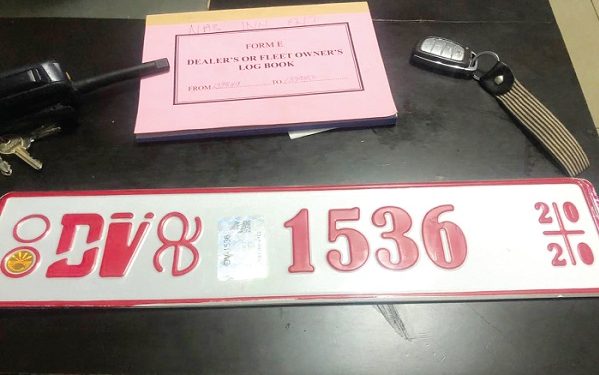
    Meanwhile, the DVLA has cautioned the public against the misuse of Defective Vehicle (DV) plates. Shedding light on their proper usage, Mr. Kotey explained that DV plates are exclusively designated for car dealers and are only valid when a car has not yet been certified as roadworthy.


    “Only car dealers are supposed to use DV plates. It stands for ‘Defective Vehicle’ because the vehicle hasn’t yet been inspected by us for roadworthiness. That’s why we call it a DV plate. It’s not meant for any other person, only for dealers when they’re working on the vehicle,” the DVLA CEO stated.


    He further explained that, in partnership with the State Insurance Company (SIC), a two-week insurance cover is provided for cars at the ports.


    These vehicles are then given a DP sticker, after which they must be registered.“SIC is providing two weeks of insurance cover. After that, you must register your car because DV plates are not supposed to be used by ordinary citizens,” he clarified.


    The use of DV and DP plates is governed by the Road Traffic Act 683/04, as amended by Act 761/08, and the Road Traffic Regulations 2012, L.I. 2180.


    Speaking on the persistent presence of “goro boys” — unofficial middlemen who often pose as helpers at DVLA offices — Mr. Kotey acknowledged that they have long been part of the Authority’s environment.

    These individuals typically offer assistance with vehicle registration, licensing, and other administrative processes for a fee, despite not being officially employed by the DVLA.


    He noted that the operations of “goro boys” have spanned decades, from the era of the late Jerry John Rawlings to the present Mahama-led administration, forming an informal but persistent part of the Authority’s ecosystem.

  • DVLA’s new licence plates rollout postponed until further notice

    DVLA’s new licence plates rollout postponed until further notice

    The planned rollout of the new Radio Frequency Identification (RFID) embedded licence plates, which were scheduled to take effect from January 2, 2026, has been postponed until further notice.


    A statement issued by the Driver and Vehicle Licensing Authority (DVLA) explained that a new date would be announced after Parliament completes the amendments to the Road Traffic Regulations, 2012 (L.I. 2180), which provide the legal framework for the introduction of the new licence plates.

    The new vehicle number plate system aimed at tackling smuggling and preventing the registration of vehicles that evade import duties.


    This move comes in response to the rising cases of car smuggling into West Africa, including Ghana. On August 26, the Economic and Organised Crime Office (EOCO) Head of Legal and Prosecutions, Leo Antony Siamah, revealed during a media engagement that 100 stolen luxury vehicles shipped into Ghana through dubious means had been recovered.


    Mr. Siamah cautioned the public to exercise extreme vigilance when purchasing vehicles, particularly high-end ones, to avoid becoming unwitting accomplices in criminal activities.

    He further disclosed that the anti-graft agency is currently investigating about 300 additional cases of suspected stolen vehicles in collaboration with Interpol, the Federal Bureau of Investigation (FBI), and the Royal Canadian Mounted Police (RCMP).


    Earlier in May 2025, an INTERPOL-led operation codenamed “Safe Wheels” dismantled a major vehicle trafficking network in West Africa. The exercise detected about 150 stolen vehicles and seized over 75 across 12 countries, including Ghana and Nigeria.

    The two-week operation also launched 18 new investigations and exposed two organised crime syndicates. Most of the stolen vehicles were trafficked from Canada, with others originating from France, Germany, and the Netherlands.


    In response, DVLA Chief Executive Officer Julius Neequaye Kotey, in a statement shared on Facebook on Monday, August 25, 2025, announced that the new plates will be fitted with Radio Frequency Identification (RFID) technology and linked directly to a central database. This innovation, he explained, will make it impossible to register “Togo cars” or vehicles smuggled into the country without proper documentation.


    “The new system will ensure that every vehicle can be authenticated against our database. This way, smuggled cars or those that have avoided the payment of duties cannot slip through the cracks,” he explained.


    He emphasized that the new number plate system is designed not only to ensure compliance but also to enhance road safety.“The introduction of a new number plate system is a significant step forward for vehicle regulation and security. The new plates will be equipped with RFID technology and other features to modernise vehicle management and improve road safety,” he said.


    According to the DVLA, the new plates will also facilitate toll payment in the future, as the embedded chip will allow vehicles to make automatic, cashless payments at toll points.

    Instead of showing the year of registration, the plates will display a regional code to simplify the identification of a vehicle’s origin. Other security features include a reflective surface to improve visibility at night and in bad weather conditions.


    Mr. Kotey added that although the nationwide rollout is expected in 2026, work is still ongoing to finalise the design and ensure the plates meet both local and international security standards.“This is about more than just plates — it is about creating a secure, transparent, and modern vehicle management system that benefits both motorists and the general public,” he added.


    Beyond the new plates, the DVLA has also revealed that it will soon roll out an e-licence as part of its broader digital transformation agenda to modernise service delivery and improve convenience for Ghanaian drivers.


    This was disclosed by Mr. Kotey on Tuesday, August 5, 2025, during the launch of the DVLA Lorry Terminal Project at Circle.He said: “The launch of the Lorry Terminal Project aims to bring DVLA services closer to drivers. The services provided are acquisition of a driver’s licence, renewal of licence, replacement of missing and expired licences, and conversion of a foreign driver’s licence.”


    According to him, the DVLA has significantly improved its operations by adopting digital solutions in line with global technological trends. He noted that the introduction of the e-licence will enable drivers to prove their eligibility to drive without necessarily carrying their hardcopy licence.

    “Most of us don’t carry our licenses with us, and it shouldn’t be the case that the police or any other party takes advantage of that. If I don’t have my license with me and I am a driver, I’m still a driver. I should have an app that allows me to identify myself as a legitimate driver on the street, and that’s what the e-licence is about.”


    He clarified that the e-licence will not replace the traditional one but will serve as a complement.“It is not here to replace the physical licence but rather to provide an additional option to access your licence on your Android or iPhone.”


    Meanwhile, the DVLA has cautioned the public against the misuse of Defective Vehicle (DV) plates. Shedding light on their proper usage, Mr. Kotey explained that DV plates are exclusively designated for car dealers and are only valid when a car has not yet been certified as roadworthy.

    “Only car dealers are supposed to use DV plates. It stands for ‘Defective Vehicle’ because the vehicle hasn’t yet been inspected by us for roadworthiness. That’s why we call it a DV plate. It’s not meant for any other person, only for dealers when they’re working on the vehicle,” the DVLA CEO stated.


    He further explained that, in partnership with the State Insurance Company (SIC), a two-week insurance cover is provided for cars at the ports.

    These vehicles are then given a DP sticker, after which they must be registered.“SIC is providing two weeks of insurance cover. After that, you must register your car because DV plates are not supposed to be used by ordinary citizens,” he clarified.


    The use of DV and DP plates is governed by the Road Traffic Act 683/04, as amended by Act 761/08, and the Road Traffic Regulations 2012, L.I. 2180.


    Speaking on the persistent presence of “goro boys” — unofficial middlemen who often pose as helpers at DVLA offices — Mr. Kotey acknowledged that they have long been part of the Authority’s environment. These individuals typically offer assistance with vehicle registration, licensing, and other administrative processes for a fee, despite not being officially employed by the DVLA.


    He noted that the operations of “goro boys” have spanned decades, from the era of the late Jerry John Rawlings to the present Mahama-led administration, forming an informal but persistent part of the Authority’s ecosystem.

  • Lawyers will not write exams before renewal of license – GLC

    Lawyers will not write exams before renewal of license – GLC

    The General Legal Council (GLC) has dismissed suggestions that lawyers will be obliged to take examinations before their licenses may be renewed.

    The Chief Justice, Justice Kwasi Anin-Yeboah is purported to have said lawyers will write exams before their licenses are renewed.

    But the General Legal Council in a statement on May 8, clarified that, “The attention of the General Legal Council has been drawn to the erroneous reportage on some media platforms of His Lordship the Chief Justice’s speech given at the enrolment ceremony of 196 Lawyers called to the Bar on Friday, 5th May 2023. There was no mention of lawyers being required to write examinations at all before a renewal of licence and indeed no such amendment to the Law is about to be made”.

    According to GLC, the requirement for lawyers to complete “Continuing Professional Development before the renewal of a practising licence, is a standard requirement in some jurisdictions around the world. This practice is aimed at sharpening the skills of lawyers and keeping them abreast with recent developments in the Law for the benefit of the clients they serve”.

    GLC further called on lawyers and the general public to disregard the said reports.

    “The General Public and Lawyers are hereby informed of the misrepresented reportage and the correction thereof accordingly,” General Legal Council in its statement said.

  • Nduom marks 3 years after revocation of GN Bank’s licence

    The founder and president of Groupe Nduom, Dr. Papa Kwesi Nduom,  has marked three years after the revocation of the licence of GN Bank.

    According to him in a Facebook post, three years ago, he had a dream to create a reliable, well-regulated financial institution that would be present throughout Ghana, but that ambition was deferred.

    He said since the revocation of the licence, thousands of young men and women [who worked for him] remain at home. Hundreds of millions of his assets have been either lost, abandoned, destroyed or rotting away.

    Dr. Nduom further noted that 300 branches of GN Bank remain locked up, “yet, our faith remains strong.”

    In his consolation, the former flagbearer of the Progressive People’s Party, PPP, quoted Jeremiah 29: 11 to end his post. On the occasion of the third anniversary of the revocation, the renowned entrepreneur said, ”the unbanked remain unbanked, yet our faith remains strong”.

    “TODAY is three years since our dream to develop a safe and sound regulated financial institution present everywhere in Ghana was deferred. Thousands of young men and women remain at home. Hundreds of millions of assets have been lost, abandoned, destroyed or rotting away. 300 branches remain locked up. The unbanked remain unbanked. Yet, our faith remains strong.

    “I know the plans I have for you says the Lord, plans to prosper you and not to harm you, plans to give you hope and a future. Jeremiah 29: 11,” Dr. Papa Kwesi Nduom concluded.

    Source: Ghanaweb

  • Botswana to auction elephant hunting licences

    Botswana will hold its first auction, since a ban was lifted, for trophy hunters with the aim of selling licences to kill 70 elephants.

    The government is selling seven hunting packages, with each one containing licences to kill 10 elephants.

    Bidders will have to deposit $18,000 (£13,900) in order to take part.

    The 2020 hunting season will begin in April with licences to kill another 200 hundred elephants to be issued later.

    Botswana had in 2014 issued a blanket ban on the hunting of elephants to protect the animals.

    The ban was seen as a conservation success story.

    But last year the ban was lifted by President Mokgweetsi Masisi in a move critics say is as an attempt to appeal to rural voters who are more likely to come into conflict with elephants.

    Government officials argued that the animals were eating crops and at times trampling on people.

    Botswana has the world’s largest number of elephants with an estimated 130,000 within its borders.

    Source: bbc.com