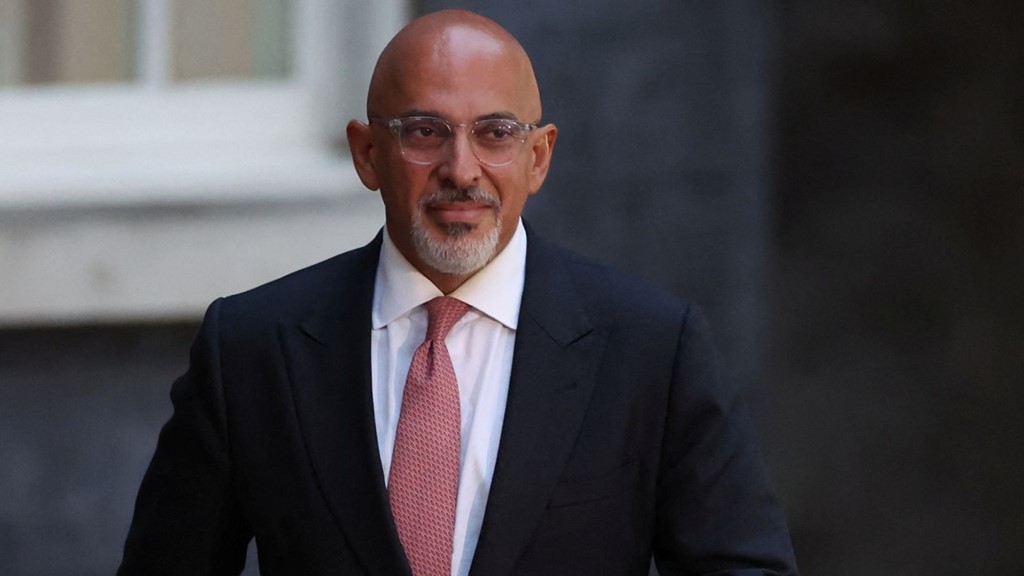
The UK’s prime minister apologised as she admitted her government had made mistakes over the mini-budget last month that spooked the financial markets.
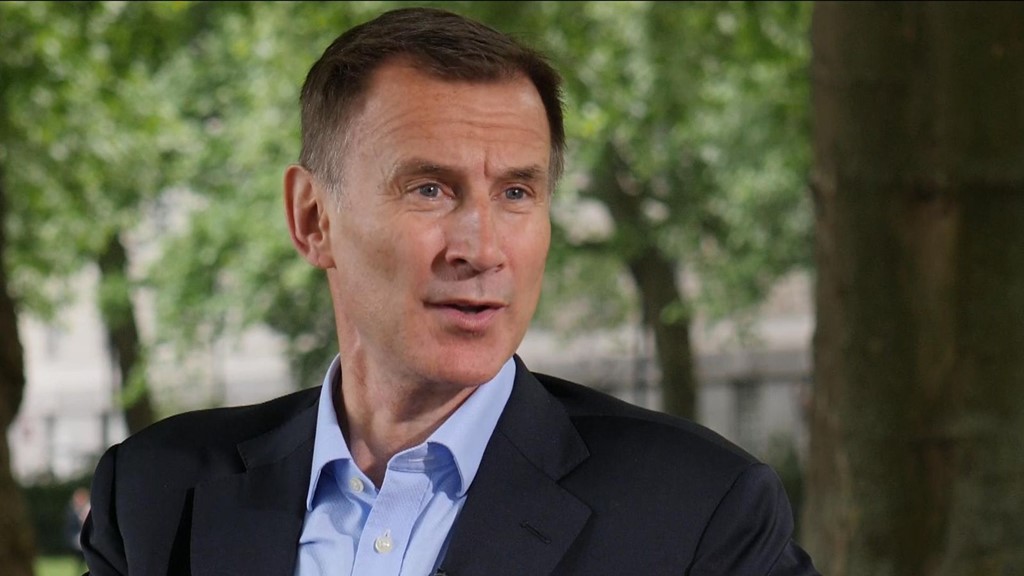
Liz Truss was speaking after new finance minister Jeremy Hunt ripped up her economic plans.
He dramatically reversed most of the tax cuts and spending proposals that his predecessor Kwasi Kwarteng announced less than a month ago.
“Now I recognise we have made mistakes,” Truss, who has only been in office a little more than a month, told the BBC. “I’m sorry for those mistakes, but I fixed the mistakes. I’ve appointed a new chancellor. We have restored economic stability and fiscal discipline.”
Hunt’s swift U-turn on Truss’ mini-budget has undermined the PM’s authority and some have questioned how much longer she can remain in office.
Responding to questions about her future, Truss said she wanted to focus on “delivering for the British public”.
“We are in difficult economic times, we are in difficult international times with the war being perpetrated in Ukraine,” she added. “And now is the time to focus on delivering.”
Hunt said almost all the previous tax measures are to be reversed in a move aimed at raising £32 billion (€37 billion) a year.
A planned 1% cut in the basic rate of income tax for next April is being cancelled.
He also said the massive energy support package will not be continued beyond next April. Instead, a Treasury-led review into how best to support homes and businesses with energy bills will be launched.
The former health and foreign affairs minister has been racing to overhaul the government’s financial plans since he replaced Kwarteng, who was sacked on Friday.
Kwarteng’s unfunded tax cuts announced on 23 September sent the pound tumbling, borrowing costs soaring, and sparked a collapse in support for the ruling party.
On Sunday, Hunt and Truss held a crisis meeting at her country residence to prepare a new budget plan. Defending the government’s new direction, he acknowledged his predecessor’s mistakes and warned of “difficult decisions” to come.
Opinion polling shows Truss’ Conservatives trailing the UK’s main opposition party, Labour.
Its leader, Sir Keir Starmer, said Truss was “clinging onto power” and that her government “no longer have a mandate from the British people”.
A news blackout in southern Ukraine means “something big is going on”, military expert Professor Michael Clarke has told Sky News.
Professor Clarke, former director-general of the Royal United Services Institute (RUSI), said: “The Ukrainians have conducted a complete news blackout on what is happening in the Kherson oblast because the Russians are holding a line between Snihurivka and My love, and that line they have been holding onto for over a week now as Ukraine moves south.
“When the Ukrainians have a news blackout it means something is going on. They have always done this before when there is a big offensive push on.
“Now for sure, something big is happening. It might fail, and it may not work, but in the past, it has worked.
“Standby for some more interesting information – I am guessing on this frontline between Mylove and Snihurivka.”
Meanwhile, around 100 women – all from the Azovstal steelworks – have also been released in a prisoner exchange.
Showing footage of their release, Professor Clarke said: “These women are all coming out, some of them are in combats, they might have been given those combats, but they are walking in line – they are coming out they are almost marching.
“They are coming out in order, they are making a point. We are the women from Azovstal steelworks.
“Civilians got mixed in with the troops towards the end, it was all pretty awful.
“But here they are, they are holding their head up, they are coming out with pride and that is making a point to the Russians and the rest of the world. ”
DISCLAIMER: Independentghana.com will not be liable for any inaccuracies contained in this article. The views expressed in the article are solely those of the author and do not reflect those of The Independent Ghana
A few smiles at cabinet this morning, as the chancellor was set to deliver a tough message-spending cut are on the way, and every department will have to make them.
It’s the prime minister’s first formal meeting with her cabinet – although she held a reception with them last night – since firing her former chancellor and allowing her new one to tear up her economic strategy as she sat silently beside him.
Jeremy Hunt yesterday reversed almost all of the tax cuts which have not yet been enacted and went further on income tax by saying even Rishi Sunak’s plan to cut it in two years was no longer affordable.
Today he was poised to tell cabinet ministers that all spending is under review, from the health service – where seven million people are waiting for treatment – to defence spending, pensions, and schools, as he finalises his fiscal plan.
The prime minister, who cabinet ministers concede, was forced into a U-turn by the government’s creditors, is being described in normally friendly newspapers as a “lame duck” and a mourner at the funeral of her own policies, only just falling short of calling for her resignation.
As she enters a critical week in which Conservative MPs must decide whether she has the authority to continue even in the short-term, Ms Truss will meet groups of her MPs today.
She met the One Nation group of centrist Conservatives last night where I’m told she was relatively upbeat.
Tonight, she meets the European Research Group, most of whom backed her tax-cutting agenda and will be disappointed it’s no longer viable.
Her allies take heart from the fact that if MPs moved to oust her, the Tory factions would struggle to agree on a candidate who they could unite around.
With the polls looking increasingly dire, and unpopular decisions imminent, that can very soon change.
DISCLAIMER: Independentghana.com will not be liable for any inaccuracies contained in this article. The views expressed in the article are solely those of the author and do not reflect those of The Independent Ghana
More than 80% of Conservative Party members think Liz Truss is doing a bad job – with 55% saying she should stand down as leader.
Boris Johnson is the members’ favourite to take over – beating out Rishi Sunak and Ben Wallace.
New polling from YouGov surveyed 530 Tory members today and yesterday for their opinion, a comparatively smaller sample size than opinion polls of the public at large.
Some 83% of paid-up Conservative backers think Ms Truss is doing badly – with just 15% saying she is doing well. Only 2% don’t know.
When asked if Ms Truss should resign, 55% of all those asked said yes, 38% said no, and 7% did not know.
Almost 40% of members who voted for Ms Truss in the leadership race now want her to go, the poll found.
It follows similar bad numbers from JL Partners overnight (see 6.29 am post), which found that most Truss supporters in the Tory party regret their choice.
When asked by YouGov who they want to take over as PM should Ms Truss stand aside, 32% said Boris Johnson, 23% said Rishi Sunak, 10% Ben Wallace and 9% say Penny Mordaunt.
Going forward, most Tory members – around 31% – think they alone should choose Conservative Party leaders, with no input from MPs.
Only 25% think the current system should remain,with another 25% thinking MPs alone should choose the leader.
However, if Ms Truss does stand down, six in 10 members want MPs to agree on a unity candidate and there not to be another election at the current time.
Prime Minister Liz Truss went into “waxworks mode” in the Commons Wednesday and her performance lacked “emotional intelligence”, according to body language expert Judi James.
Speaking to Sky News today, Ms James said the body language of the prime minister was “hard to fathom” and “bizarre”.
Analysing the scenes, she said: “I would imagine the best way to describe it would be a lack of intelligence.”
Ms James went on to say Commons leader Penny Mordauntlooked like “somebody on a sinking ship for over an hour armed with a teacup” before Ms Truss “bounced in” and “started laughing and chatting behind her”, which was “strange”.
“There was no bonding going on between the two women,” she said.
The body language expert said the Tory leader then fell into “waxworks mode” and did not join in, before adding that her facial expression became “frozen” and her eyes “looked like somebody who was fighting sleep”.
“You know if you go to see a bad play or go to the cinema and you can feel your eyes beginning to droop. It was that kind of blinking going on,” Ms James continued.
“And then the only other sign we got from her body language is what I call her ‘poker tell’.
“When she doesn’t like something her chin moves from side to side.
“But apart from that, very little endorsement signals going on. Normally we’d expect to see her looking at Hunt and nodding, but she just sat there looking glazed and looking at the opposition but without any real focus .”
Asked if Ms Truss’s body language gave a hint as to whether she was determined or defeated, Ms James added: “She is determined in the brain cells, but I think generally her body is telling her she is defeated.”
Ghana’s Finance Minister, Ken Ofori-Atta has shared his sentiments on the firing of British-born Ghanaian UK chancellor Kwasi Kwarteng.
The Minister stated that it was painful to realize tha t a Ghanaian has strived to achieve such a feat but has had to lose the job just a few days after the appointment.
Kwasi Kwarteng was sacked as UK’s chancellor after 6 weeks in office.
According to a Reuters report attributing the development to the UK Times newspaper, Liz Truss is preparing to reverse a decision announced in the country’s mini-budget which was delivered by Kwasi Kwarteng.
The mini-budget has since sparked financial turmoil in the markets and caused a revolt among Conservative MPs in the UK.
Ofori-Atta added that he has reached out to Kwesi Kwarteng with a message that says God knows best.
“The pain or sadness is that he is a Ghanaian reaching almost the highest level, Chancellor of the Exchequer. Yes, we sat together three days ago.
“I am always very optimistic, if one is really doing things in truth there might be some waves but the Lord will see him through. I was surprised at what happened. I have sent an email to him, I told him the Lord knows best,” Ofori-Atta is quoted by 3news.com.
Liz Truss has departed the chamber after only being there for about a half hour.
Before leaving, the Prime Minister, who was nowhere to be found in the Commons duringan urgent question from Labour on the economy earlier this afternoon, heard her new chancellor, Jeremy Hunt, defend the government’s new economic plan.
Earlier today, the government scrapped almost all of its tax-cutting measures in the mini-budget from just over three weeks ago.
The Truss programme for government is dead. This is a hand-to-mouth government, living hour by hour.
If you pick up the hint of panic in the air, you’re not the only one. Make that a stench. Anything apparently solid quickly becomes air.
Now, nearly every element of her prospectus has just been shredded by her new chancellor.
The statement that has just been delivered is the second yanking forward of an important economic moment for the country. Originally it was in the diary for November. Then Halloween. Now we’ve had it today.
“We will reverse almost all the tax measures” from the mini-budget, Jeremy Hunt said. What an extraordinary thing to hear.
Diaries are going out of fashion at Westminster but to be clear, there still will be a statement in a fortnight’s time, alongside those numbers about the state of the economy from the Office for Budget Responsibility.
But so nervous are those in charge of the market reaction, that they dared not leave an announcement until mid-afternoon when he’ll stand up in the Commons.
That’s right – a government so petrified by the pace of events, dragging forward a statement by a fortnight isn’t soon enough.
Not only has the planned cut in the basic rate of income tax been binned, so has the plan originally from Rishi Sunak to cut it in 2024.
The prime minister who promised to cut taxes by more than her rival over the summer, is now keeping them higher than he planned.
And even the flagship energy support package, the crutch upon which the prime minister has leant whenever asked a tricky question in the last few weeks, has shrivelled vastly.
It is now a six month package, not a two year one.
So if this feels a bit confusing this is where it is at: There had to be an interim statement before the interim statement, to try to steady the ship.
This is a ship where bits have already broken off and sunk, and where the navigation equipment – the very direction and purpose of this government – was ripped out and thrown into the sea with first the U-turns, then the ejection of a chancellor.
A ship where plenty of the crew are eyeing up the lifeboats, near certain the whole thing is going down soon enough.
“If polling suggests an alternative leader will lose fewer seats than she will, then she’s had it,” one MP not prone to exaggeration or shouting their mouth off tells me.
“Not many of us buy the idea that another leadership change is the worst case scenario. Nothing can be worse than where we are already,” they said, adding “you can’t sack your closest ally for carrying out your orders and call it pragmatism.”
Yesterday Liz Truss invited Jeremy Hunt and his family to lunch at Chequers. He has gone from backbencher life on Friday morning to the prime minister’s country retreat in Buckinghamshire 48 hours later for a three-hour meeting where I am told they were in “violent agreement”.
Some in the Tory party see him as the real prime minister now, so enfeebled is the actual prime minister’s authority. One source suggested they are working “in lockstep.”
That’s the very phrase they used to use about the bloke she blew out of the building on Friday lunchtime, the now former Chancellor Kwasi Kwarteng.
What we seem to be getting now is shock and awe in reverse – the Big Bang of radical policy ideas blitzed in one go, promised by Liz Truss when she took office – going backwards. Fast.
One source described today as a “down payment” on what the government is now promising.
Say whatever we can, as quickly as we can, to reassure the markets.
My sentence not theirs, but that’s the thrust of it.
So in details terms, the focus today is tax. And the focus in a fortnight will be spending.
Even a chancellor moving as fast as this one can’t negotiate detailed cuts across Whitehall over a single Sunday roast or whatever.
That discussion will start tomorrow in a cabinet meeting.
Remember: this is about two things: Restoring the government’s financial credibility and propping Liz Truss up in office.
IMAGE SOURCE,EPA
With things moving at such a breath-taking pace, here’s how the rest of this afternoon shakes up:
Labour tried to haul the prime minister to the Commons to answer for what is going on. But she didn’t turn up and instead sent Leader of the Commons Penny Mordaunt, putting back the chancellor’s appearance by about an hour.
Liz Truss is meeting her backbenchers, offering to see them all this week. This evening, she is hosting what is being called a “reception” for her cabinet.
What on earth is a “reception” you might ask? Well, we have.
The gist of it seems to be trying to reassure her ministers and include them in forthcoming decisions – not least the government spending cuts to come, after they were frozen out of plans before the disastrous mini-budget.
I can bring you a little nugget about one of the things that set tongues wagging last week – that throwaway remark from the King when he met Liz Truss for their weekly audience at Buckingham Palace. You might recall that King Charles said “dear oh dear” as he exchanged small talk with the prime minister as she arrived.
Inevitably some couldn’t help jump to the conclusion that he was somehow offering a commentary on the pickle she is in. I’m now told it was actually a nod of sympathy because of logistics – it was the prime minister’s second visit to the Palace in a matter of hours.
The pace of her premiership, for all the wrong reasons from her point of view, shows no sign of slowing.
Labour had tried to drag Liz Truss into the Commons to answer this urgent question.
However, the government can decide who to send, and – perhaps unsurprisingly – the prime minister will not be responding.
In her place is Commons Leader Penny Mordaunt.
It’s an interesting choice given she is being pushed by some as a potential successor to the beleaguered PM.
Ms Mordaunt is one of the better Commons operators though and may earn a few brownie points with backbenchers by heading out to bat at this tricky moment.
Liz Truss’s lack of appearance will fuel discontent among some MPs though.
“She needs to own it, and is now back in hiding again,” said one.
The vanishing act won’t last forever either.
The prime minister will likely be in the Commons for Jeremy Hunt’s statement today and is set to face Sir Keir Starmer at PMQs on Wednesday.
Liz Truss is to meet the One Nation group of Conservative MPs tonight.
The prime minister’s official spokesman confirmed the gathering would be taking place around 6 pm.
The One Nation group has not typically been enthusiastic in its support of Ms Truss.
One member, Victoria Atkins, told the BBC this morning that Ms Truss was PM “for the moment” and she needed to return to their values of “compassionate Conservatism”.
Damian Green was more conciliatory, saying the appointment of Jeremy Hunt offered an opportunity for a fresh start.
After the meeting with the large group of backbenchers, Ms Truss will then host a cabinet reception just before 8 pm.
The prime minister’s official spokesman said she wants to “engage” with cabinet colleagues.
The Finance Minister has extended well wishes to the former Chancellor of the Exchequer in the United Kingdom, Kwasi Kwarteng, after his removal.
Ken Ofori-Addo said he did not see this coming and shares in the pain of the Ghanaian-born UK politician.
“The pain or sadness is that he is a Ghanaian reaching almost the highest level, Chancellor of the Exchequer,” he said in an interview with Accra-based TV3.
Mr Kwarteng was sacked by the UK Prime Minister after less than six weeks on the job as the government’s huge tax cuts triggered a financial market crisis.
Finance Minister Ken Ofori Atta says he fèels sad about the sacking of Kwasi Kwarteng as Chancellor of the Exchequer. pic.twitter.com/Sv3gI4jVyP
His removal made him Britain’s shortest-serving chancellor since 1970. He was succeeded by Jeremy Hunt as the European nation grapples with a cost-of-living crisis.
Ken Ofori-Atta who was in Mr Kwarteng’s company just last week intimated that even though they have not spoken since his removal, he has sent an email.
“I am always very optimistic, if one is really doing things in truth there might be some waves but the Lord will see him through. I was surprised at what happened. I have sent an email to him, I told him the Lord knows best,” he said in Washington DC.’
Amid a free-falling cedi, a rising cost of living, and skyrocketing fuel prices, Finance Minister Ken Ofori-Atta is at the doors of the International Monetary Fund (IMF) to prevent a full-blown economic turmoil.
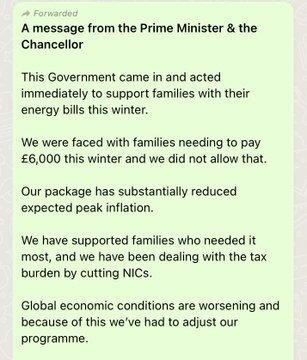
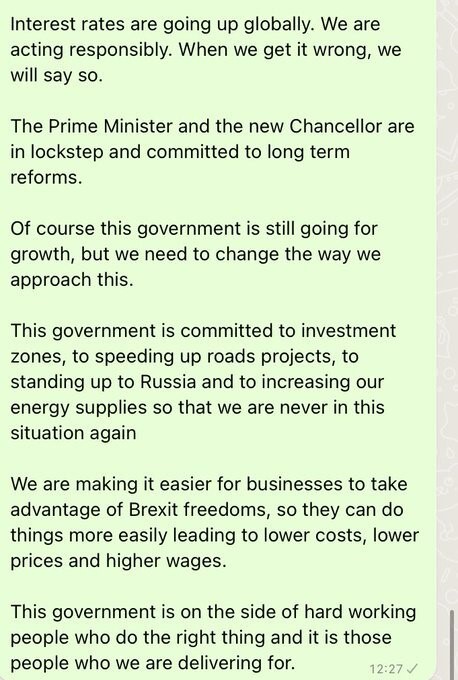
Following this morning’s announcement from new Chancellor Jeremy Hunt that “almost all” tax cuts announced in the mini-budget have been scrapped, he and the PM have sent a message to all Conservative MPs.
“The prime minister and the new chancellor are in lockstep and committed to long-term reforms,” the message says.
It adds that the government is “still going for growth” – despite the mass of mini-budget U-turns – and suggests that global factors are to blame for the economic turmoil.
“When we get it wrong, we will say no,” it continues.
It comes as Prime Minister Liz Truss seeks to hold onto her premiership following a tumultuous first few weeks in office.
A total of four Conservative MPs are now publicly calling for Ms Truss to go.
Shadow chancellor Rachel Reeves says “the damage has been done” by the mini-budget.
Responding to Jeremy Hunt’s statement today, Ms Reeves said the “Conservatives have lost all credibility”, and that they cannot provide the “confidence and stability” the chancellor said was needed.
Ms Reeves said: “There will continue to be a huge cost to families because of the actions of this Tory government.
“We are still flying blind with no OBR forecastsand no clarity of the impact of their mistakes.
“The humiliating climb-down on their energy plan begs the question yet again – why won’t they bring in a windfall tax on energy producers to help foot the bill?
“Only Labour offers the leadership and ideas Britain needs to fix the economy and get out of this mess.”
The decision by Jeremy Hunt not to amend the energy price guarantee between now and April next year is incredibly welcome” according to Carl Emmerson, deputy director of the Institute of Fiscal Studies (IFS).
Speaking to Sky News, Mr Emmerson said when the government first announced the energy price guarantee he was “sympathetic” to the idea that the policy might be needed for this winter, but “it always looked rather odd” that the country was committing to it for two years.
Mr Emmerson said: “I’m very pleased to see that the government is now taking an approach saying, well, yes, this big scheme will be in place this winter. We can’t do better than that in the short run.
“But it’s now reopening the idea that we can design something that will be cheaper for the taxpayer, hopefully, targeted towards those who really need it, but also preserves incentives that people have to cut back on their energy use for the following winter.”
Mr Emmerson went on to say the chancellor’s medium-term fiscal plan was a “very big tax rising announcement”.
“A week ago it looked very difficult. We were talking about how would you do this without any tax rises because that was clearly a steer from Liz Truss and the then chancellor,” he said.
“And it looked like you’d have to make some incredibly difficult decisions around working age, welfare, capital spending, and around day-to-day spending on public services.
“Now, there may well still be a need to squeeze spending, given the chancellor’s tax announcement today.
“We’re not necessarily going to be not paying for public services going forward, but it might be the kind of more credible, more deliverable end of the scale rather than what we were looking at just a few days earlier.”
Liz Truss has only been in Number 10 for a few weeks, but the possibility of her leaving in the coming months is being seriously considered.
The chancellor has been fired, which is the last resort for any Prime Minister.
Tory MPs including ministers tell me, Liz Truss, herself – prime minister for just five weeks – cannot survive and there is a discussion about how to remove her.
But removing a sitting prime minister who doesn’t want to leave office isn’t always easy. Here are some of the options.
She could resign
No prime minister wants to be hounded out of Downing Street but it could be that Ms Truss, fuelled by cabinet resignations, sees the writing on the wall and announces a Conservative leadership contest.
This is what the last two prime ministers, Boris Johnson and Theresa May, ended up doing after both won no-confidence votes of their MPs but their positions became untenable.
Both of them were in office for three years, though, not just a matter of weeks.
Vote of no confidence
Not so easy. The last Conservative leader to be ousted by their peers in parliament was Iain Duncan Smith in 2003.
Like Ms Truss, he was the choice of the party members, but not his MP colleagues (who favoured Ken Clarke); like Ms Truss, he was also accused of making things worse by not reaching out across the party when appointing his shadow cabinet, and he struggled to maintain authority.
But – thanks to a little-known rule of the backbench 1922 Committee – this is not currently an option.
When Mr Johnson became prime minister in the summer of 2019, the powerful committee decided that a new leader would get a “grace period” of a year before they could be challenged.
Some letters have gone in already, I’m told by MPs.
As one source on the 1922 Committee put it to me, committee chairman Sir Graham Brady “would have to act if we found ourselves in that situation”.
Image: Former chancellor Kwasi Kwarteng was sacked on Friday
A coronation
The problem is that many Conservative MPs feel it was the membership who chose Ms Truss – based on an unachievable prospectus – and they would rather not allow them to choose her successor.
This is much trickier, as the principle that the leader is “elected by the membership” is enshrined in Schedule 2 of the Conservative Party‘s written constitution, and overturning that would require a two-thirds majority in a vote of the National Conservative Convention, which has 800 members comprising the party’s senior officials including grassroots association chairs.
There is no guarantee of how that might go, and there would be accusations that it was shutting down party democracy.
One option would be for MPs to shortlist two candidates in a leadership contest, and for one of them to drop out – as Andrea Leadsom did in her contest with Mrs May in 2016.
The last candidate standing would become a leader “by acclamation” and that could happen quite quickly.
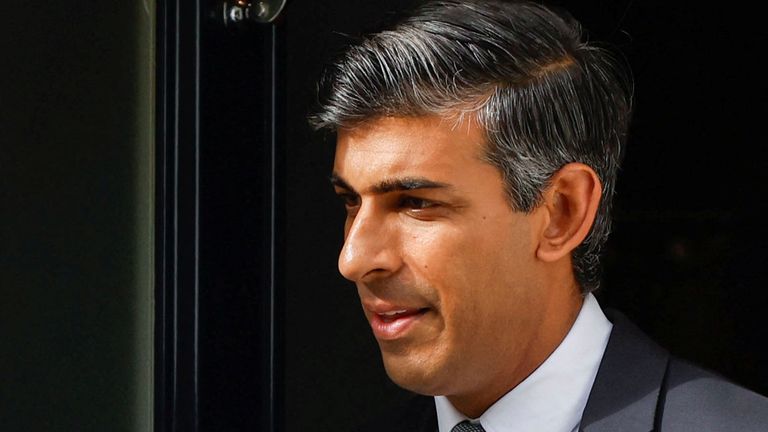
Image: Former chancellor Rishi Sunak
Or, as ConservativeHome’s Paul Goodman has suggested, MPs could set a higher bar of say 100 MPs supporting each candidate so there is only one possible winner.
But it’s not clear there is a unifying figure to undertake that role.
Rishi Sunak supporters believe he has been vindicated for predicting market turmoil, but it’s far from clear he would be accepted more widely.
An election
Ms Truss could make the extremely bold decision, given her party is now 30 points behind in the polls, to go for an election.
The Fixed Term Parliaments Act has been repealed so she would not need a vote in parliament to do this – to which you would imagine only Conservatives would be opposed.
Defence spending had been set to rise to 3% of GDP by 2030-but Chancellor Jeremy Hunt refuses to make that commitment.
The UK’s new chancellor has raised the possibility of ditching a key pledge by Liz Truss to boost defence spending – a move that would likely be a resigning matter for her defence secretary, Ben Wallace.
Jeremy Hunt on Saturday refused to commit to lifting the amount of money spent on the armed forces to 3% of national income by 2030, as promised by the prime minister.
He also said the Ministry of Defence, like all other departments, would have to make additional savings.
Mr Wallace, one of the most experienced and well-regarded members of the embattled prime minister’s cabinet, has fought hard over the past three years to secure much-needed increases in defence spending at a time of growing security threats.
Asked whether any backtracking on defence spending goals would be a resigning issue, a defence source said Mr Wallace would hold the prime minister to the pledges made.
This includes a commitment to increase defence spending to 2.5% of gross domestic product (GDP) by 2026 from around 2% at present and then to 3% of GDP by 2030 in what would equate to around an extra £157billion over eight years.
But speaking about tough times ahead, Mr Hunt told Sky News: “I’m going to ask all departments to find more efficiencies than they were planning to find.”
He repeated this on Radio 4’s Today programme and was asked specifically if a “difficult tough decision” would be taken over the defence budget.
Mr Hunt replied: “We do need to increase defence spending, but I can’t make a promise to you here and now about the timings of that.”
He continued: “The long-term ability to fund an increase in defence spending will depend on stability in the economic situation and a healthily growing economy.”
Pressed on how he was leaving open the possibility of the 3% defence spending pledge not being delivered by 2030, Mr Hunt said: “I am leaving open all possibilities this morning. I wish I could give you more detail, but I will be presenting to parliament in a fortnight on Monday exactly what is going to happen and the answer to all those questions.”
He was referring to 31 October when the chancellor is due to issue a fiscal statement.
As well as a failure to commit to defence spending, Mr Hunt also made a flawed assessment that long-term defence spending can only be secured if there is economic stability.
In reality, there can be no economic stability without security.
The energy price rise – as the prime minister keeps saying – is caused by Vladimir Putin using energy as a weapon, reducing the flow of Russian oil and gas to pressure Western nations to stop their crucial support to Ukraine, which has helped thwart his invasion so far.
Had the Conservatives – and Labour before them – genuinely demonstrated the mantra that national security is their first priority the UK would not have seen successive governments slash defence spending and military capability over the past three decades.
NATO allies are less likely to invest in defense if the UK doesn’t
Hollowed-out defences – and this is a simplification of a time that also included the disastrous Iraq and Afghanistanwars – have left the UK and fellow European NATO allies less able to deter the existential threats posed by authoritarian regimes like Russia’s.
So, it makes no sense to use the economic crisis, triggered in part by Russia’s war in Ukraine, as a reason to backtrack on a vital need to rebuild the UK’s armed forces.
Russia’s Vladimir Putin, Xi Jinping of China, North Korea’s Kim Jong-un, and all other leaders who prefer authoritarian rule over the values of democratic governments – human rights, rule of law, and other freedoms – will be laughing.
Britain is one of the strongest voices in NATO, urging increased defence spending among all 30 allies – it is a live debate right now, with hopes to lift a minimal expenditure target to 2.5% of GDP from 2%.
If the UK were to lead by example and reduce ambitions to grow defence spending, it would make it far less likely other European allies will feel under pressure to boost their budgets.
The MoD has a largely poor track record of procurement, with programmes to build warships, aircraft, and tanks too often running billions of pounds over budget and delivered late or not at all. That is inexcusable and also needs to change.
But ordering more efficiencies is going to make a bad situation even worse.
Many people have tried and failed to make the MoD and the armed forces more efficient.
The thing is, the UK’s military, security and intelligence services are too vital to fail and too important not to fund adequately, especially at a time of war in Europe, and the very real threat of escalation with Russia and China.
Conservative MP Alicia Kearns called the decision to keep Liz Truss as Prime Minister “incredibly difficult.”
When asked on Times Radio if Ms Truss could or should stay at Number 10, Ms Kearns, the new chairperson of the Commons Foreign Affairs Committee, said: “Ultimately, it is a very difficult one because, as you know, we’ve had questions around our moral competency.”
“We’ve now got questions around our fiscal competency.”
She added: “I don’t want further questions around even our ability to continue to govern as a party and our ability to stay united. It’s an incredibly difficult one, and ultimately I need to listen to colleagues and speak to colleagues over the coming days.
“But do we need a fundamental reset? Without question.”
Ms Kearns said the government’s problems are linked to policy and not just communication, warning that “dogmatism scares people”.
Asked whether the government’s main problem is how it has communicated, the senior Tory said: “Do I think the government has a fundamental communications problem? Yes, I do.
“But I think it comes ultimately from the policy decisions they make. In a time of crisis, the public wants to see pragmatism.
“They want to see fiscal responsibility, and they want to see compassion.”
Earlier, Andrew Griffith told Sky News that Liz Trussstill has the support of her government despite troubling economic turmoil.
The Financial Secretary to the Treasury said: “Liz Truss has got the support of the government – it’s really important at this time that we have stability.”
Now, in an interview with Times Radio, he was pressed on whether Ms Truss will still be in Number 10 Downing Street at Christmas.
He dodged the question, instead reiterating his previous point.
“I think Liz enjoys the confidence of the government,” he said.
“She’s the prime minister and the last thing that I think anybody wants is to see more instability.
“I personally found the leadership election damaging. It was us talking about ourselves rather than the country.
“The quicker we can get back, and that work starts now, to good confidence in the markets, controlling what we can control, which is putting together sensible plans and bringing forward measures as we have with the energy price guarantee.”
Meanwhile, new Chancellor Jeremy Hunthas been speaking to the BBC on his second day on the job.
He said “actions speak louder than words” as he promised to reassure the markets with effectively a new budget in two weeks’ time.
Mr Hunt added he wants to keep as many of Liz Truss’s tax cuts as he can – while insisting: “The prime minister is in charge.”
He said: “I’m not taking anything off the table. I want to keep as many of those tax cuts as I possibly can because our long-term health depends on being a low-tax economy. And I very strongly believe that.”
He also said no government department would be immune from “efficiency savings”, as he signalled spending cuts to come.
“I’m going to be asking every government department to find further efficiency savings,” he said.
He said he hopes his fiscal statement can stabilise the markets.
“The prime minister has changed her chancellor. We are going to have a very big fiscal statement a bit like a budget in which we set out the tax and spending plans for several years ahead, and that’s going to be independently verified by the Office for Budget Responsibility.”
He appeared to rule out any future tilt at the Tory leadership.
Mr Hunt said a desire to lead the party had been “clinically excised” thanks to his previous failed attempts.
“I think having run two leadership campaigns, and by the way failed in both of them, the desire to be a leader has been clinically excised from me.
“I want to be a good chancellor. It’s going to be very, very difficult. But that’s what I’m focusing on.”
The actions Kwarteng made during the presentation of the UK mini-budget, which caused some financial turmoil and outrage from Tory MPs, were a major factor in his removal.
At a news conference, British Prime Minister Liz Truss announced a reversal of some important initiatives and the cancellation of the proposed increase in corporation tax from 19 to 25 percent.
Kwasi Kwarteng, 47, took over as head of the British Treasury in September 2022, after Prime Minister, Liz Truss, took over. He had the responsibility of trying to pull the UK out of a serious cost-of-living crisis without plunging the public finances into the abyss.
He took over from Nadhim Zahawi, an Iraqi-born Kurd, who himself succeeded Rishi Sunak, of Indian origin, and Sajid Javid, with Pakistani roots, embodying a more inclusive face of the Conservative party.
Iain Macleod was a British Conservative politician and government minister. He entered Parliament as an MP in 1950.
MacLeod as health minister and minister for Labour, before overseeing the independence of African countries from British rule as secretary of state for the colonies under Harold Macmillan in the early 60s.
He refused to serve in the government of Harold Macmillan’s successor, Sir Alec Douglas-Home, instead joining The Spectator as editor.
Mr Macleod returned to government after being appointed chancellor by Edward Heath on 20 June 1970 following an unexpected Conservative election victory. He served for a total of 30 days as Chancellor.
Despite being in pain, he made his sole major speech on the economy as chancellor five days later, lamenting high levels of inflation and unemployment.
Mr Macleod was rushed to the hospital later the same day with a pelvic diverticulum, a condition affecting the digestive system.
He was discharged 11 days later, on 20 July, only to suffer a heart attack inside 11 Downing Street, where he died at 11.35 pm.
Prime Minister Liz Truss and Chancellor Jeremy Hunt will meet at Chequers today in an effort to restore the government’s economic confidence.
Mr Hunt, who took over for Kwasi Kwarteng, stated in a statement that his priority was growth “underpinned by stability.”
He warned of possible tax rises and savings in public spending, saying the mini-budget went “too far, too fast”.
Pressure is growing on Ms Truss, with reports that a group of Conservative MPs is seeking to remove her as PM.
According to former Home Office special adviser Mo Hussein, there are “definitely moves afoot behind the scenes”.
“People have been organised, some of the bigger names are getting their supporters in line,” he told BBC Breakfast, adding that the next few days would be tumultuous.
Talks of plans to oust Ms Truss come amid a series of interviews with her new right-hand man on Saturday.
Mr Hunt signalled a shift away from Ms Truss’s tax-cutting agenda and indicated he would reverse some of the key pledges made by his predecessor Mr Kwarteng, who was sacked on Friday.
He said this was necessary to ensure stability in the financial markets.
“Taxes are not going to come down by as much as people hoped, and some taxes will have to go up,” the chancellor told BBC Radio 4’s Today programme. “I’m asking all government departments to find additional efficiency savings.”
It comes as the Times reported that Mr Hunt planned to delay by a year a 1p cut to the basic income tax rate – a flagship part of the 23 September mini-budget.
However, the Treasury has so far refused to confirm the report, with a spokesman saying: “We cannot speculate on any tax changes outside of a fiscal event.”
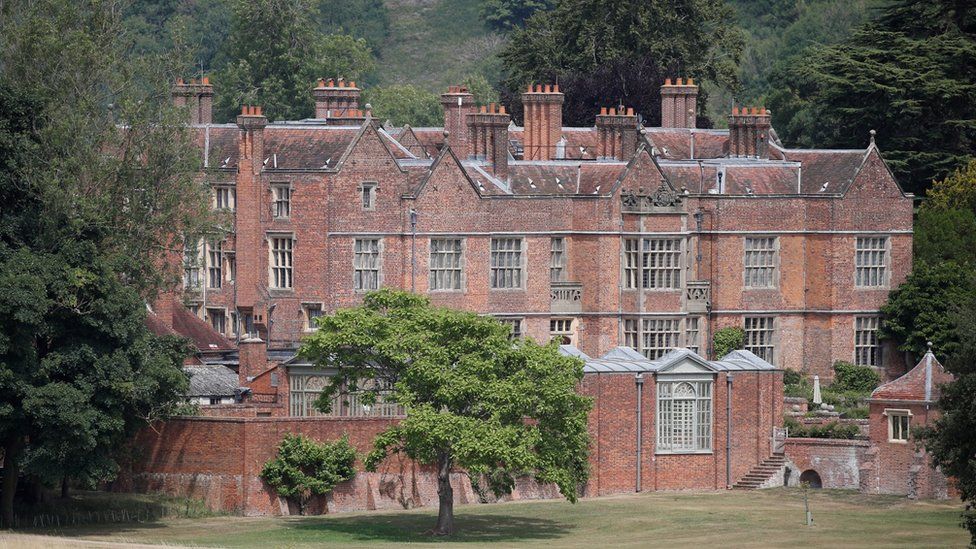
IMAGE SOURCE, REUTERS Image caption, Truss and Hunt are meeting at Chequers, the official country residence of the prime minister
Mr Hunt is due to outline the government’s refreshed economic plan in a statement on 31 October, a task his predecessor was building up to following the aftermath of his mini-budget.
In his latest statement, released on Saturday night, Mr Hunt said: “My focus is on growth underpinned by stability. The drive on growing the economy is right – it means more people can get good jobs, new businesses can thrive and we can secure world-class public services. But we went too far, too fast.
He also said he intended to be “honest with people” about the “very difficult decisions” that had to be made “both on spending and on tax to get debt falling”.
“I will set out clear and robust plans to make sure government spending is as efficient as possible, ensure taxpayer money is well spent and that we have rigorous control over our public finances,” Mr Hunt added.
Meanwhile, the PM’s authority has come under increasing pressure – with some Tory MPs telling the BBC’s Laura Kuenssberg Mr Hunt’s appointment means Ms Truss is “in office, but not really in power”.
The prime minister’s hopes of survival could hinge on what she and her chancellor decide over the next two weeks.
There will be a budget at the end of the month that needs to convince financial markets and prove politically palatable to a fuming, mutinous Tory party.
Today’s meeting at the prime minister’s country residence is their first chance to have detailed discussions about the government’s new fiscal plan – which is expected to junk the tax-cutting agenda Liz Truss promised during the Tory leadership contest.
Jeremy Hunt has been clear that nothing is off the table and that tax rises and spending cuts will be needed. But many Conservative MPs are furious Liz Truss has led the government into this chaos and are talking privately about trying to turf her out.
One former minister predicted Ms Truss would be gone within weeks – but for now, she limps on, hoping the current turmoil subsides.
The imminent talks come as Andrew Bailey, the governor of the Bank of England, warned that interest rates may need to be raised higher than previously expected in order to keep UK inflation under control.
“As things stand today, my best guess is that inflationary pressures will require a stronger response than we perhaps thought in August,” Mr Bailey said in Washington, less than three weeks before the Bank’s monetary policy committee is due to meet.
Turning to his initial conversations with the new chancellor, Mr Bailey described an “immediate meeting of minds on the importance of stability and sustainability”.
Elsewhere in the US, President Joe Biden weighed in on the political situation in the UK, saying he “wasn’t the only one that thought it was a mistake” when asked about Ms Truss’s original economic plan.
He called the outcome “predictable” but said, while he disagreed with the prime minister’s policies, it was up to the British people.
Mr Biden also dismissed concerns about the strength of the dollar. “The problem is the lack of economic growth and sound policy in other countries,” he told a White House pool reporter.
Following the mini-budget, the pound plummeted to a record low against the dollar and the cost of government borrowing climbed as markets reacted to the package – which was not accompanied by an official assessment of how the UK economy would perform.
Today marks the first anniversaryof Sir David Amess’s murder, which occurred during a constituency surgery at Belfairs Methodist Church in Leigh-on-Sea, Essex.
Liz Truss and Sir Keir Starmer led the tributes to Sir David, who served as an MP in Basildon and later Southend West for nearly 40 years.
On the anniversary of Sir David Amess’ death, we cherish his memory and remember his enormous contribution to politics, to the people of Southend and to the country.
My thoughts today are with his wife Julia, the Amess family and to all those who knew and loved him. pic.twitter.com/Tt44GQeHjG
The PM shared a statement along with Sir David’s parliamentary portraiton Saturday morning.
She said: “On the anniversary of Sir David Amess’ death, we cherish his memory and remember his enormous contribution to politics, to the people of Southend, and to the country.
“My thoughts today are with his wife Julia, the Amess family, and all those who knew and loved him.”
Remembering our friend & colleague David Amess, on the 1st anniversary of his senseless death.
David’s commitment to public service, carried out with inherent, consistent kindness, will forever be admired.
Thinking of his wife & children, hoping memories of him bring comfort.
Last night, after news emerged that Kwasi Kwarteng had been sacked as chancellor, several cabinet members spoke up in support of the prime minister.
Business Secretary Jacob Rees-Mogg
The prime minister has acted decisively to provide the economic stability our country needs.
As a government, we must now get on and deliver the pro-growth reforms that will lay the foundations for our future prosperity.
Chancellor of the Duchy of Lancaster Nadhim Zahawi
It’s time to get Britain moving. We are determined to grow the economy, eliminate the COVID backlog and protect people from Putin’s energy warfare. With Liz Truss, Jeremy Hunt and the rest of the team, we will do all of that and more.
Health Secretary Therese Coffey
The PM is right to act now to ensure our country’s economic stability – key for families and businesses – and reassure the markets of our fiscal discipline, especially in light of the worsening global economic conditions with Putin’s illegal invasion of Ukraine.
International Trade Secretary Kemi Badenoch
To say it’s been a difficult day would be an understatement. We knew the scale of the challenge this autumn given multiple global headwinds would be unprecedented. Our prime minister is working flat out to get the country through these turbulent times. She has my full support.
After being in office for 38 days, Kwasi Kwarteng, the British-born politician of Ghanaian parentage was sacked by Prime Minister Liz Truss as the Chancellor of the Exchequer.
The dismissal was after Kwarteng presented a mini-budget which resulted in financial turbulence and revolt from Conservative Party lawmakers.
While presenting the mini-budget on 23 September, an eye-watering £45 billion in tax cuts alongside an energy relief plan projected to cost £60 billion over the next six months was announced by Kwasi Kwarteng.
This, according to various media reportage was a huge departure from the fiscal policy of the Johnson government, which had planned tax rises to pay for health and social care and to manage the post-Covid deficit.
Kwarteng claimed his ambitious plans would drive growth and reduce inflation.
The financial markets disagreed: in the days after his announcement, lenders pulled mortgage packages, the pound hit a record low against the dollar, and the Bank of England started buying bonds at ‘an urgent pace’ to calm the markets and stop pension funds going bust.
In a high-risk strategy designed to revive Britain’s stagnant economy, the British of Ghanaian descent announced more than £400bn of extra borrowing over the coming years to fund the biggest giveaway since Tony Barber’s ill-fated 1972 budget.
The Guardian reported that the Conservative MP said tax cuts worth more than £55,000 annually to someone earning £1m a year were part of a new direction for the economy and were designed to help boost growth to 2.5% a year. Some Labour MPs described them as a “class war”.
The Treasury admitted there were no forecasts for the impact of the measures on growth and the gamble received a hostile reception not just from the markets and opposition politicians, but from economic think tanks and many Tory MPs, some of whom were aghast.
Whitehall officials are negotiating with companies including Cheniere and Venture Global amid intense pressure on Liz Truss’s administration to bolster Britain’s energy security, Sky News learns.
Ministers are in talks with major US-based producers of liquefied natural gas (LNG) in a bid to bolster Britain’s energy security.
Sky News has learned that the government is discussing substantial purchase agreements with companies including Cheniere and Venture Global.
Sources said the talks were at a detailed stage although it was possible that they would not result in an agreement.
Any deal with Cheniere and Venture Global would be worth, at a minimum, hundreds of millions of pounds, and would be likely to last for two years or more, according to one insider.
Liz Truss, whose grip on power looked precarious on Friday after sacking her chancellor and reversing further key tenets of the government’s recent mini-Budget, has made energy security a central plank of her leadership.
Unveiling her vast energy bills subsidy package last month, the prime minister said the government had established the Energy Supply Taskforce under the leadership of Maddy McTernan, who also led the COVID Vaccine Taskforce.
The new unit, Ms Truss said, was “already negotiating new long-term energy contracts with domestic and international gas suppliers to immediately bring down the cost of this intervention [to reduce household energy bills]”.
British imports of LNG accounted for 17% of the gas supplied to the UK through production and imports last year, according to data published by the Department for Business, Energy and Industrial Strategy.
The government has also acknowledged that it is seeking long-term deals with foreign states understood to include Norway and Qatar – sparking concerns that Britain will pay a ‘security premium’ in exchange for guaranteed supplies.
Responding to an inquiry from Sky News, a government spokesman said: “As the Prime Minister has previously said, the new Energy Supply Taskforce has begun negotiations with domestic and international suppliers regarding long-term contracts to increase the UK’s energy resilience.”
Kwasi Kwarteng has written to the Prime Minister of the UK, Liz Truss, indicating that he has accepted her decision to sack him.
The outgoing Chancellor of the Exchequer of the United Kingdom was at post for only six (6) weeks, making him only second in the history of the country to have served this briefly in the office.
In an earlier report by the BBC, it said that Kwasi Kwarteng’s sacking was influenced from a mini-budget he presented that has since sparked financial turmoil and revolt from Conservative Members of Parliament.
In a response to the news, the British-born Ghanaian politician said that even before taking up the job, he knew he could not tow the lines of those before him, thereby the need to adopt more drastic approaches.
Accepting the decision, he added that he knew the country’s fight against its current difficult economic challenges would be a tough one.
“You have asked me to stand aside as your Chancellor. I have accepted.
“When you asked me to serve as your Chancellor, I did so in full knowledge that the situation we faced was incredibly difficult, with rising global interest rates and energy prices. However, your vision of optimism, growth and change was right.
“As I have said many times in the past weeks, following the status quo was simply not an option,” he wrote in a statement.
Kwasi Kwarteng also explained that while the challenges exist, he is optimistic in the vision of the Prime Minister, knowing too from many years of friendship with her that she is making the right decision.
“For too long this country has been dogged by low growth rates and high taxation – that must still change if this country is to succeed.
“The economic environment has changed rapidly since we set out the Growth Plan on September 23. In response, together with the Bank of England and excellent officials at the Treasury we have responded to those events, and I commend my officials for their dedication.
“It is important now as we move forward to emphasise your government’s commitment to fiscal discipline. The Medium-Term Fiscal Plan is crucial to this end, and I look forward to supporting you and my successor to achieve that from the backbenches.
“We have been colleagues and friends for many years. In that time, I have seen your dedication and determination. I believe your vision is the right one. It has been an honour to serve as your first Chancellor,” he wrote.
Kwasi Kwarteng’s six-week tenure as the Chancellor of the Exchequer of the UK has been dogged with a few major incidences, including the British press calling him out for smiling during the funeral of Queen Elizabeth II.
Kwasi Kwarteng became the first black person to become UK’s Chancellor of the Exchequer (Finance Minister) following his appointment by UK Prime Minister, Liz Truss, on September 6, 2022.
Kwarteng was born Akwasi Addo Alfred Kwarteng in Waltham Forest, East London, in May 1975 to Ghanaian parents, Alfred and Charlotte, who had both immigrated to the United Kingdom a decade earlier as students.
His parents, who went on to become an international economist and a barrister respectively, sent him to an expensive private prep school that produced numerous Cabinet-level politicians. He then attended the famous Eton college – a production line for British leaders including Boris Johnson and David Cameron.
The Bank of England‘s help with the markets has finished today (see 4.04 pm post).
But what have today’s events done to the markets?
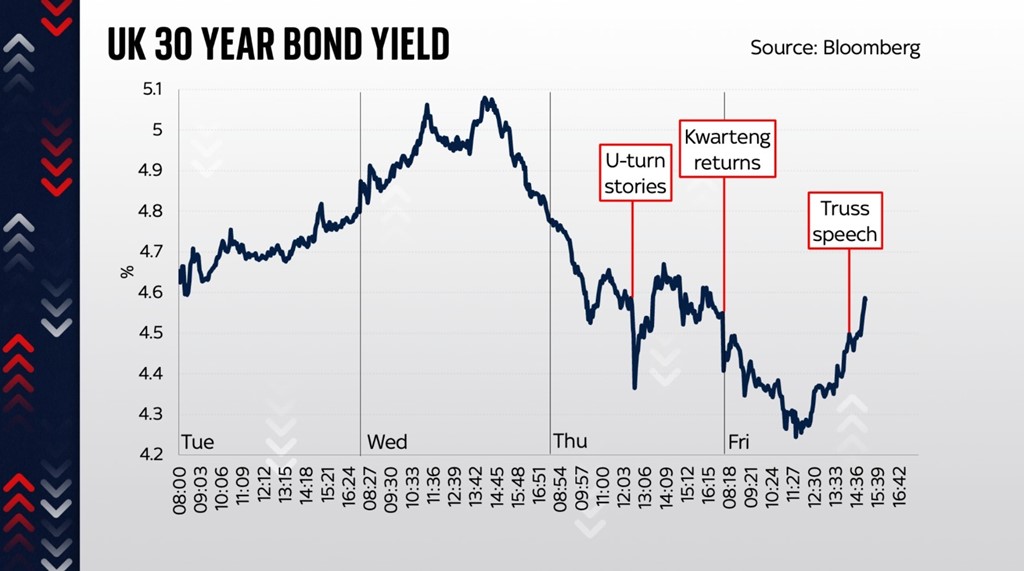
As Sky News business presenter Ian King explained: “30-year-gilts spiked earlier this week – hitting 5.1%, the highest level since 2002.
“That was on the back of comments made by Andrew Bailey, the governor of the Bank of England overnight on Tuesday that said pension funds only had three days in which to sort this issue out with today being the final deadline.
“The Bank started buying gilts more heavily on Wednesday and Thursday.
“You can see there on the chart the rumours in the middle of yesterday that the government was going to have to U-turn further on its mini-budget.
“And then we had rumours Kwasi Kwarteng was going to go – so you saw yields fall very, very sharply.
“They fell to as low as 4.1% this morning – a colossal move in terms of the scope of these things from 5.1% on Wednesday.
“Then we had confirmation that Mr Kwarteng had resigned – or been sacked – and you saw Liz Truss speak.
The higher the bond yield is, the more the government is going to have to pay for borrowing money.
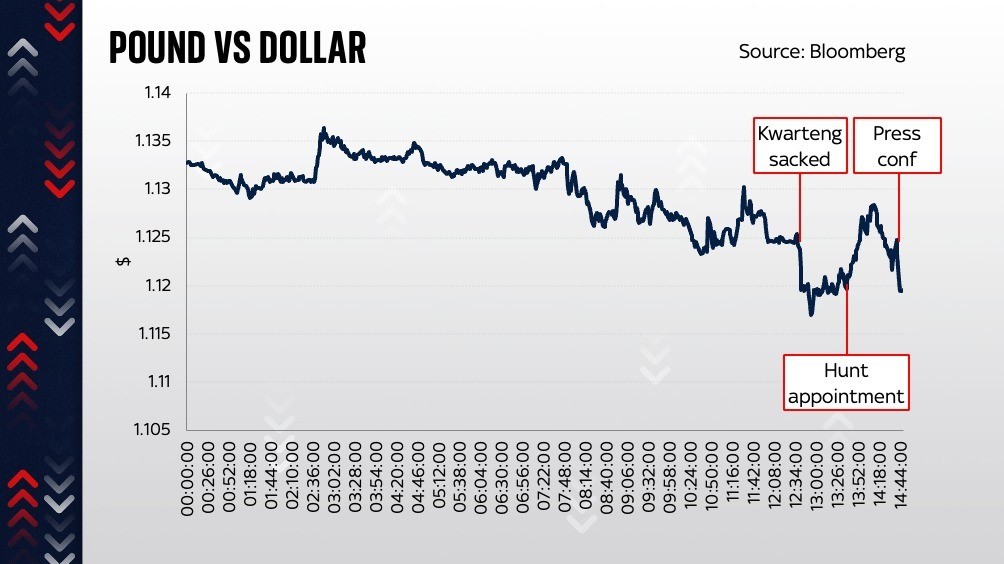
The pound has also been tumultuous today – falling with Mr Kwarteng’s sacking, rising on Mr Hunt’s appointment, and falling on Ms Truss’s press conference.
According to a Reuters report attributing the development to the UK Times newspaper, Liz Truss is preparing to reverse a decision announced in the country’s mini-budget which was delivered by Kwasi Kwarteng.
The mini-budget has since sparked financial turmoil in the markets and caused a revolt among Conservative MPs in the UK.
“I’m told that Kwasi Kwarteng is being sacked as Chancellor as Liz Truss prepares to reverse the mini-Budget,” Steven Swinford, Political Editor of The Times said on Twitter.
“Not clear who will be replacing him,” Swinford added.
His appointment came at a crucial time when the country is facing a high cost of living, public sector layoffs, and among others.
Kwasi Kwarteng after his appointment became the first black person to hold the position.
British Prime Minister to announce tax cuts:
Meanwhile, it is expected that Prime Minister, Truss will hold a news conference in due course, as speculation builds that the government could reverse more of the tax cuts announced in its mini-budget.
Earlier, a No 10 Downing source told the BBC that Truss thought the chancellor was “doing an excellent job”
The PM faces growing calls from within her party to rethink her economic plans, with one Tory MP telling the BBC: “It’s checkmate, we’re screwed”, the BBC further reported.
Background:
Kwasi Kwarteng, 47, took over as head of the British Treasury in September 2022, after new UK Prime Minister, Liz Truss, took over; with the responsibility of trying to pull the UK out of a serious cost-of-living crisis without plunging the public finances into the abyss.
He took over from Nadhim Zahawi, an Iraqi-born Kurd, who himself succeeded Rishi Sunak, of Indian origin, and Sajid Javid, with Pakistani roots, embodying a more inclusive face of the Conservative party.
His sack makes him the second shortest-serving UK chancellor on record.
The shortest serving chancellor, Iain Macleod, according to the BBC, died of a heart attack 30 days after taking the job in 1970.
Since 2019, the UK has had four chancellors, including Nadhim Zahawi who served the third shortest tenure with 63 days during a short-lived reshuffle under Boris Johnson, and Sajid Javid who served 204 days – the fourth shortest tenure on record.
The British diplomatic service copes well with fast-changing plans… and for the staff of the British Embassy in Washington, from the ambassador to the chefs, Thursday evening was one to remember.
The (now ex) chancellor was in town for the IMF annual gathering. He’d already missed key meetings throughout the day.
I’d watched an aide, red government folder in hand, dash across the IMF atrium to tell organisers that Kwasi Kwarteng’s deputy would take his seat. Something was afoot.
By early evening the intrigue shifted to the British Embassy.
I joined a couple of hundred guests for a drinks reception hosted by theambassador and the Institute of International Finance. The chancellor was the guest speaker.
He came, he spoke, he was confident, he was relaxed. But the dinner organised for later at the ambassador’s residence was off. The staff had been told to prepare drinks and canapés instead.
We journalists were encouraged to leave the reception and head to the residence. The chancellor had something to tell us.
And so, after a scuttle through the Washington rain from embassy to residence, I found myself listening to a chancellor – white wine in hand – reveal that he would be leaving the IMF on the red-eye flight to London.
Important talks on the fiscal plan, we were told.
Within 10 hours he’d been fired.
DISCLAIMER: Independentghana.com will not be liable for any inaccuracies contained in this article. The views expressed in the article are solely those of the author’s, and do not reflect those of The Independent Ghana
Source: SkynewsBy Mark Stone, US correspondent in Washington DC
Liz Trusssays she “acted decisively” as her first consideration is what is in the national interest.
Asked why she should stay as prime minister now her economic plan has been dismantled, the PM says: “I am determined to see through what I’ve promised – deliver higher growth, a more prosperous the United Kingdom.”
Ms Truss says her priority is “delivering the economic stability this country needs”.
She repeats: “I have to act in the national interest as prime minister.”
PM Liz Trusssays she met the “former chancellor” Kwasi Kwateng today.
“I was incredibly sorry to lose him,” she says.
“He is a great friend and he shares my vision to set this country on the path to growth. Today, I have asked Jeremy Hunt to become the new chancellor. He’s one of the most experienced and widely respected government ministers and parliamentarians, and he shares my convictions and ambitions for our country.
“He will deliver the medium-term fiscal plan at the end of this month. He will see through the support we are providing to help families and businesses, including our energy price guarantee.
“That’s protecting people from higher energy bills this winter. And he will drive our mission to go for growth, including taking forward the supply-side reforms that our country needs. We owe it to the next generation to improve our economic performance, to deliver higher wages, new jobs, and better public services, and to ease the burden of debt.
“I have acted decisively today because my priority is ensuring our country’s economic stability as prime minister.”
Liz Trussis now giving a press conference in Downing Street.
She has confirmed that the corporation will rise to 25% from 19% in a major policy U-turn.
It is the second reversal of a mini-budget policy after the government decided not to scrap the 45p highest income tax threshold.
“It is clear that parts of our mini-budget went further and faster than markets were expecting, so the way we are delivering our mission now has to change,” she said
Justice Secretary Brandon Lewis is the first cabinet minister out of the blocks to congratulate Jeremy Hunton his appointment as chancellor this afternoon.
“Congratulations Jeremy Hunt and look forward to working together to drive growth for everyone in the UK,” he posted on social media.
“Legal services are a huge part of the UK economy delivering jobs in all parts of the country.”
Congratulations @Jeremy_Hunt and look forward to working together to drive growth for everyone in the UK, legal services are a huge part of the UK economy delivering jobs in all parts of the country. https://t.co/ZzZcxZQuFq
Labour and Lib Dem MPs are weighing in with their opinions on the recent sacking of Kwasi Kwartengas chancellor.
Jeremy Hunt was announced as his replacement shortly after.
MPfor Wolverhampton South East Pat McFadden says changing the chancellor “will not get the PM off the hook” and that she is a 100% co-owner of the mini-budget”, while others call for a general election.
Liz Truss is due to give a press conference in the Downing Street briefing room in just under half an hour’s time.
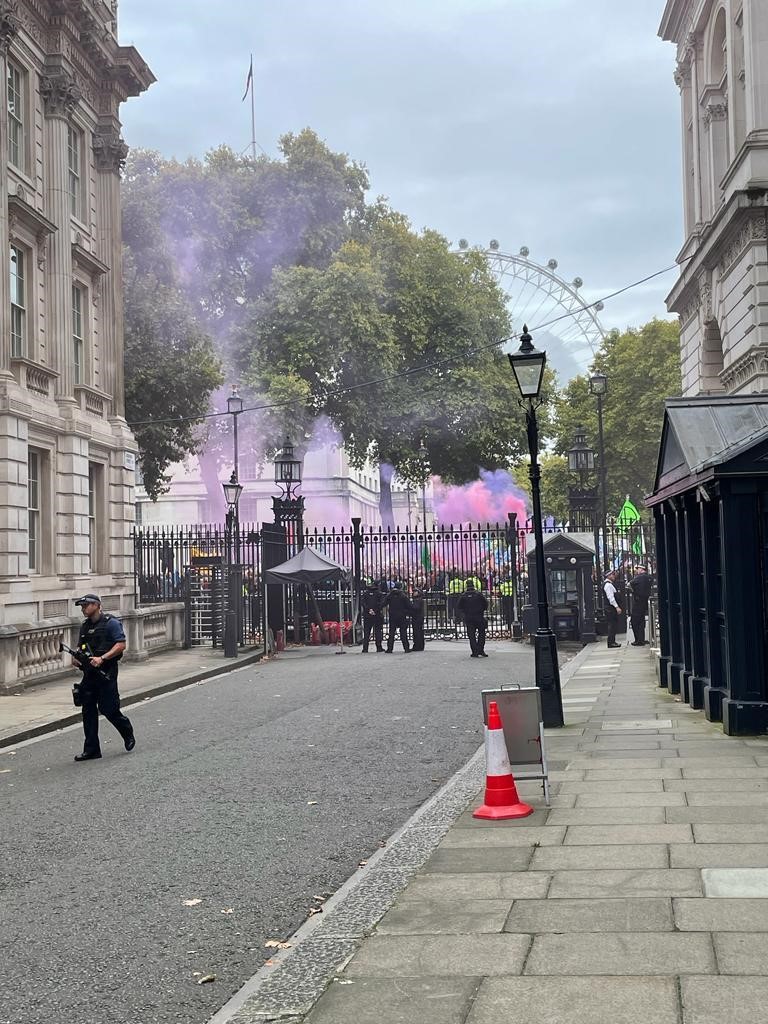
Our political correspondent Tamara Cohen is outside Number 10 and has captured this picture of quite lively scenes outside of the gates.
It looks like some colourful flares have been set off near the entrance to Downing Street where security and members of the Metropolitan Police are gathered.
Mr Philp is understood to have been the pioneer behind the government’s mini-budget plan to scrap the 45p tax rate for highest earners, which was reversed in a spectacular U-turn a few weeks ago.
He has been moved to a different department, the Cabinet Office, as paymaster general.
Mr Philp is the second member of Liz Truss‘s Treasury team to be removed from the department today, with her chancellor Kwasi Kwarteng having been sacked earlier this afternoon.
Ed Argar has been promoted into Mr Philp’s former role as chief secretary to the Treasury.
After sacking Kwasi Kwarteng as chancellor after just 38 days in the job, Liz Truss now has to appoint his successor.
But who could she choose?
No announcement has been made yet, but here are a few names emerging as possible front-runners:
Jeremy Hunt
The former health secretary could make a return to the front benches for the first time since July 2019.
Mr Hunt was foreign secretary for a year under Theresa May’s leadership and before this, also held the health secretary and culture secretary briefs under David Cameron.
Mr Hunt was also one of Rishi Sunak‘s most prominent backers in the leadership contest against Ms Truss.
If appointed as chancellor, this could be seen as an attempt by Ms Truss to try and win over the critics within her own party and steady the Conservative ship.
Sajid Javid
The former chancellor has been publicly criticising the government this week – adding his voice to growing calls that benefits must be raised in line with inflation.
Could this be an advantage? Maybe the markets will trust someone who went toe-to-toe with Ms Truss in recent days.
Therese Coffey
She is currently the deputy prime minister and the health secretary – another close ally of Ms Truss.
Ms Coffey last month defended the PM from criticism that she has appointed a “cabinet of chums”.
Simon Clarke
The new levelling up secretary is a close ally of Ms Truss, and was present at the meetings to put together the much-maligned mini-budget.
He has reportedly written to the PM with a set of proposals intended to boost house-building and economic growth.
Nadhim Zahawi
The current Chancellor of the Duchy of Lancaster has sought to quell disquiet in Tory ranks, warning: “Delay is our biggest enemy.”
He has said colleagues must “focus” on delivering for the country, as any “dither” will “end in defeat” for the party.
Mr Zahawi was promoted to chancellor by Boris Johnson on 5 July 2022 following the resignation of Rishi Sunak earlier that day in the dying days of Ms Truss’s predecessor’s government.
The following day, he and other members of Mr Johnson’s cabinet gathered in Number 10 calling on the PM to resign.
Mr Kwarteng replaced him as chancellor in Ms Truss’s cabinet.
PM press conference to be held at 2.30pm
The prime minister’s press conference will be held at 2.30pm in the Downing Street briefing room, Number 10 has said.
‘Changing the chancellor doesn’t undo the damage that’s been done’ – Reeves
Labour MP Rachel Reeves has spoken out since the news that Kwasi Kwarteng has been sacked by Liz Truss as chancellor.
Ms Reeves says that the country doesn’t just need a change in chancellor, “we need a change in government”.
Twitter Due to your consent preferences, you’re not able to view this. Open Privacy Options
Javid and Zahawi among names mentioned inside Number 10 as PM looks to replace chancellor
Sky’s political editor Beth Rigby has said she expects the PM to announce her new chancellor at this afternoon’s press conference.
Rigby says the names Sajid Javid and Nadhim Zahawi have both been discussed inside Number 10 today.
“There are other names that could come up. Simon Clarke, the Level Up Secretary, though he is also very much signed up to the growth of gender equality.
“There are other names that are swimming around such as Jeremy Hunt.”
Rigby adds that some Tory MPs would certainly be ready to accept a more broadly based cabinet, bringing in people from different wings of the party rather than the tight coterie around Liz Truss.
“They would like to see this,” she says. “Just talking to more and consulting with them more. And it’s possible that she would she would gain the support enough of her of her party to survive for a while if she changes completely and takes that sort of line.”
Kwarteng ousted from Number 11 less than 24 hours after saying he was ‘not going anywhere’
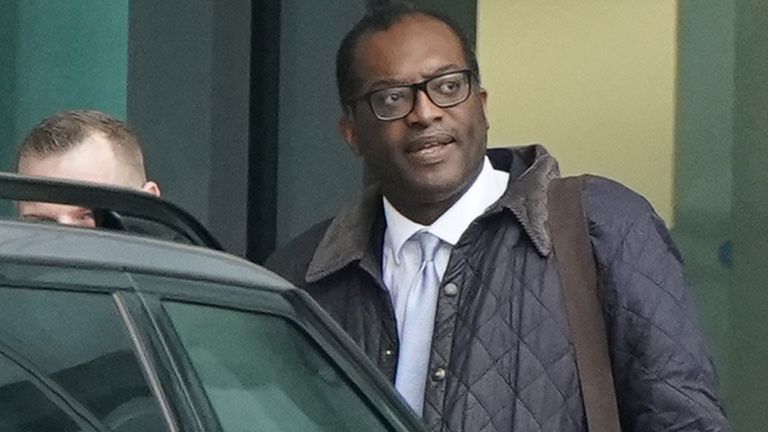
Kwasi Kwarteng has left Number 11 Downing Street after being sacked by Liz Truss.
The former chancellor left the building via the front door and smiled at the cameras as he entered a government vehicle.
Just yesterday afternoon Mr Kwarteng told reporters in Washington DC he was “not going anywhere.”
Here’s the clip:
Kwarteng confirms sacking in letter to prime minister
Kwasi Kwarteng has confirmed he has today been sacked as chancellor after just 38 days in the role.
Publishing a letter he has written to Prime Minister Liz Truss on Twitter, Mr Kwarteng said it had been “an honour” to serve as her first chancellor.
Describing the “incredibly difficult” situation Ms Truss’s government inherited, Mr Kwarteng’s letter adds: “However, your vision of optimism, growth and change was right.
“As I have said many times in the past weeks, following the status quo was simply not an option.
“For too long this country has been dogged by low growth rates and high taxation – that must still change if this country is to succeed.”
Despite growing calls for further U-turns over the government’s controversial mini-budget, Mr Kwarteng describes his Medium-Term Fiscal Plan – due to be unveiled on 31 October – as “crucial”.
He says he believes the PM’s “vision is the right one”, adding that he looks forward “to supporting you and my successor” from the back benches.
Mr Kwarteng’s letter concludes: “Your success is this country’s success and I wish you well.”
Kwasi Kwarteng’s rise and fall, from Eton scholar to chancellor
Kwasi Kwarteng’s stint as chancellor was perhaps as short as his rise to the top of politics was swift.
Mr Kwarteng was promoted to chancellor by Liz Truss on 6 September from his previous post as business secretary under Boris Johnson.
Within 38 days he had been sacked, his downfall set in motion by the economic turmoil unleashed by his mini-budget.
He insisted his tax-cutting mini-budget was the best way to encourage growth, saying the turmoil in the UK economy was part of global pressures caused by the Ukraine war and the pandemic recovery.
But after open revolt among Tory MPs and a surge in the polls for Labour forced U-turns on two of his major policies, the prime minister decided it was time for him to go.
Mr Kwarteng is not used to failure, rising up the political ranks fairly quickly after becoming an MP in 2010 – although that did take a few attempts.
In the eyes of many MPs, Truss is as much to blame as Kwarteng
Although there’s still no official confirmation, it now appears that Kwasi Kwarteng has been sacked as chancellor.
We await to hear Liz Truss’s reasoning for this, but it looks like part of an economic reset in government and a signal to MP and markets that a new approach is being adopted.
So will it work?
Remember, Liz Truss promised most of these tax cuts during her leadership campaign.
In the eyes of many MPs, she is as much to blame as the chancellor.
One former cabinet minister told Sky News the prime minister would eventually have to leave office as well.
“She is as guilty as Kwasi Kwarteng and I don’t think it is good enough that she throws him under the bus and can then expect to proceed as if the problem is sorted”, said the senior Tory.
Lib Dems call for general election after chancellor sacked
Liberal Democrat leader Sir Ed Davey has called for a general election in response to Kwasi Kwarteng being sacked as chancellor.
Sir Ed has accused Liz Truss of having “broken our economy” and said it is “time for the people to have their say”.
“This mustn’t just be the end of Kwarteng’s disastrous chancellorship, it should be the death knell of the Conservatives’ reckless mismanagement of our economy,” he said in a statement.
“It didn’t suddenly start with Kwarteng, but it must end now.
“People are angry, fed up and worried about the future.
“Most of all they are furious that Conservative MPs seem to think this is an acceptable way to conduct the government of our country in these difficult times.
“Enough is enough.
“It started with Boris Johnson failing our country, and now Liz Truss has broken our economy, it is time for the people to have their say in a general election.”
Kwasi Kwarteng sacked as chancellor by Liz Truss, Sky News understands
Kwasi Kwarteng has been sacked as chancellor after just over a month in the role, Sky News understands.
Two sources informed our deputy political editor Sam Coates of the update – though it has not been officially confirmed.
Mr Kwarteng was appointed on 6 September after Liz Truss took office as prime minister and has served just 38 days in the role.
Yesterday, Mr Kwarteng had told reporters in Washington DC that he was “not going anywhere” despite growing calls for him to resign over his controversial tax-cutting mini-budget which saw the pound slump to a record low.
It means he is the second shortest-serving UK chancellor on record.
Conservative Iain Macleod is the shortest-serving chancellor after dying of a heart attack 30 days after taking the job in 1970.
The country has had four chancellors in the last three years since 2019 – Mr Kwarteng, Nadhim Zahawi, Rishi Sunak and Sajid Javid.
The next chancellor will be the seventh Conservative chancellor in 12 years.
‘It’s a matter of survival for her now’ – would ousting her chancellor be enough to save Truss?
Discussion is happening at all levels in the Conservative party about whether the prime minister can survive – even if she replaces her chancellor.
As one senior minister in her government put it to me this morning before reports that Kwarteng would be sacked: “I honestly don’t think either of them, Liz or Kwasi have a clue, I don’t think they know what they’re doing.”
“They’ve got one shot to satisfy the markets,” the minister said – with a full U-turn on the corporation tax freeze and perhaps more: “The worst possible thing, now the markets have priced in a U-turn on corporation tax would be mealy mouthed partial U-turn.”
“But my instinct is she won’t survive. She’s introduced herself to the country in the worst way imaginable, and people’s views of her are quite settled now.
“Even if she stays, you can’t have a chancellor who has lost the confidence of the markets, that’s never happened before that I can remember”. The minister said the prime minister might need a complete reboot of the Treasury team to restore confidence, but having jettisoned key parts of her economic programme, “she is a husk.”
This minister and others point out that her controversial supply-side reforms are likely to be opposed in parliament – as are spending cuts on the scale that may be needed to pay for her measures.
Other MPs also say she will need a humiliating change of direction to survive. One long-serving MP said: “It’s unfair for Kwasi to go in the sense that it was all her idea, but politics isn’t fair. It’s a matter of survival for her now, there are discussions going on but it’s not organised yet.”
Former cabinet minister says Truss ‘has to go’
A former Conservative cabinet minister has told Sky News that Prime Minister Liz Truss “has to go” as there is “nothing she can do to retrieve her position”.
Discussing the potential corporation tax U-turn, they said: “It was the centrepiece of her campaign, the bit that distinguished her from Rishi.
“She is as guilty as Kwasi Kwarteng and I don’t think it is good enough that she throws him under the bus and can then expect to proceed as if the problem is sorted.
“Crucially, she has damaged the Tory brand when we could say the economy was safe in our hands. We can’t now.
“She has to go. There is nothing she can do to retrieve her position.”
PM doing news conference alone doesn’t bode well for Kwasi Kwarteng
Back from Washington and now inside Downing Street, it may not be long before we learn what Kwasi Kwarteng’s fate will be.
One possible indication of where we’re going may be lurking in who is due to attend the press conference this afternoon.
Given we expect a major announcement on the government’s plan for the economy, you would expect the chancellor to be involved – not least to reassure the markets that Liz Truss still had faith in her man in the Treasury.
But asked directly if the chancellor would be at this afternoon’s press conference, a Downing Street source replied simply saying “PM presser”.
That suggests the prime minister will be doing this alone, and it doesn’t bode well for Kwasi Kwarteng.
Cabinet ministers have ‘no idea what’s going on’
Our political editor Beth Rigby has been speaking to cabinet ministers this morning amid reports that Liz Truss could be set to dismantle parts of her controversial mini-budget later today.
The senior ministers she has spoken to have said they “have no idea what’s going on – either about the chancellor’s position or the possible decision to raise corporation tax from 19% to 25% in April after all”.
Chancellor arrives back in Downing Street ahead of expected U-turn
Chancellor Kwasi Kwarteng has arrived in Downing Street after returning from the US amid expectations he will scrap parts of his mini-budget to reassure markets.
If Truss is to reset her administration and junk tax cuts – should she do it with someone like Sajid Javid?
As they often do at times like this, rumours are swirling about who could replace Kwasi Kwarteng if he is to leave his post as chancellor.
One name frequently linked to vacant cabinet posts is Sajid Javid, and today is no different.
But if the former chancellor is to re-enter the Treasury, it’s worth remembering his recent history of pledging his own unfunded tax cuts.
During his relatively brief campaign to become prime minister in the summer, Mr Javid pledged tax cuts broader in scope than the ones Liz Truss was promising at the time.
In his pitch for the top job, there were plans to shelve the corporation tax rise that is about to be U-turned on; as well as to scrap the national insurance rise; and bring forward the cut to the basic rate of income tax.
If Liz Truss is to reset her administration and junk tax cuts in a bid to reassure the markets, can she do it with someone like Sajid Javid who is so closely linked to a similar prospectus for government?
A humiliating U-turn is necessary, but the real damage is done – Reeves
Labour’s shadow chancellor Rachel Reeves is the latest MP to comment on speculation of a major U-turn on Chancellor Kwasi Kwarteng’s mini-budget.
She said: “A humiliating U-turn is necessary – but the real damage has already been done to millions of ordinary people now paying much higher mortgages and struggling to make ends meet.
“This is a Tory crisis made in Downing Street. They have plunged our economy into chaos and crisis with Truss’s discredited trickle down approach. It won’t be forgiven or forgotten.
“Only a Labour government has the credibility, authority and plan to fix things.”
Twitter Due to your consent preferences, you’re not able to view this. Open Privacy Options
Who could be the next chancellor if Kwarteng is sacked?
Sky’s deputy political editor Sam Coates is weighing in on this question.
He says it is uncertain whether Kwasi Kwarteng will retain his job as chancellor.
“Could it be Simon Clarke?” Coates asks.
Mr Clarke is currently serving as Secretary of State for Levelling Up. He served as Chief Secretary to the Treasury from 2021 to 2022.
“Well, he’s an ideological bedfellow of Liz Truss. He was in the meetings to put together the mini-budget.
“But will the markets trust him if they think that he also shares the trust of economic values that have taken this to this point?”
He adds: “Could it be Theresa Coffey? She’s currently the deputy prime minister and the health secretary’s very close ally.
“She’s been in some, but not all of the economic meetings.”
Government is set to U-turn on keeping corporation tax low, Sky News understands
The government is set to raise corporation tax despite promising not to do so in the mini-budget, Sky News understands.
The prime minister had vowed to scrap the planned tax rise from 19% to 25% next April, a key policy of her pro-business growth plan, during the Conservative leadership campaign.
The change in direction is the second major tax cut U-turn after the government confirmed it would not go ahead with a plan to scrap the 45p top rate of tax.
Kwarteng being sacked is ‘inevitable’, Sky News told
Sky’s political and business correspondent Mhari Aurora reports that a former cabinet minister has told her that Kwasi Kwarteng being sacked is “inevitable”.
According to the Reuters news agency, a government spokesperson has refused to comment on speculation that Mr Kwarteng has been sacked.
It follows a report by the Times newspaper in the last half an hour which has suggested the chancellor has already been dismissed.
We will of course bring you more on this as we get it.
Users on social media are reacting to the dismissal of Kwasi Kwartengas the UK Chancellor.
He was relieved of his duties today, Friday, October 14, 2022, by Prime Minister Liz Truss.
Mr Kwarteng served for 39 days after being appointed on Tuesday, September 6, 2022.
There are diverse opinions from social media users on the matter. Some section of the public believe his sacking was inevitable as the Pound as plummeted by over one percent against the US dollars.
I wonder who the media, the markets and the IMF are going to pick to replace Kwasi Kwarteng? Hopefully it’ll be Gary Lineker so we can have two black chancellors in a row.
Kwasi Kwarteng has been removed from his position as Chancellor. The markets have rallied. The pound fallen and the future looks uncertain. Who is next to be fired. Bigger question is who is up to the job of turning around the UK’s economy and cancelling the mini budget?
So Kwasi Kwarteng has been sacked for being shit at his https://t.co/CAB4FOnMLU comes as no surprise,he shouldn’t have been in it in the first place.Worst about it , he’ll go into another job and still get a six figure sum that he dosent deserve.
The news that Prime Minister Liz Truss will hold a press conference on the economy later today sent UK government bonds climbing.
The bonds are issued by the government to raise money and in return, it pays interest on them. The higher the price of the bonds, the lower the interest rate it pays, known as the yield.
The bond price fell after September’s mini-budget, causing yields to climb to their higher level since the financial crash in 2008, as investors demanded higher returns to lend to the UK.
Yields on 30-year UK bonds hit 5.17% on 28 September in the aftermath of the mini-budget. Today’s news sent them tumbling to as low as 4.22%.
However, that’s still some way above the level they were at the day before the mini-budget on 23 September – then they stood at 3.59%.
DISCLAIMER: Independentghana.com will not be liable for any inaccuracies contained in this article. The views expressed in the article are solely those of the author’s and do not reflect those of The Independent Ghana
Nothing is inevitable in politics, but if the markets are expecting a U-turnand there isn’t one, then the situation could get worse both politically and economically for the prime minister.
I don’t think we’re going to see a complete unpicking of the mini-budget from last month but, as we’ve been hearing, one of the possible U-turns would be over corporation tax.
Rishi Sunak wanted to put corporation tax up from 19% to 25% from next year, and it was a central plank of Liz Truss’s campaign during the summer to become Conservative leader to ditch that tax rise.
There is speculation she will put it up a little bit – perhaps not the full amount that Sunak was suggesting. If there is a U-turn at all, certainly that may help steady nerves in the market but politically it could be very damaging.
There are now questions about who will be in charge of economic policy. Is it Chancellor Kwasi Kwarteng, who is returning early from the IMF meeting in Washington, or is it No 10?
The decisions to be taken on the economy – and the reaction to them – could determine whether Truss’s policies and her premiership, can survive until the next election.
DISCLAIMER: Independentghana.com will not be liable for any inaccuracies contained in this article. The views expressed in the article are solely those of the author and do not reflect those of The Independent Ghana
More from Trade Minister Greg Hands, who says the rally in UK financialmarkets yesterday and this morning could be due to “a variety of different factors.”
The pound has climbed against the dollar, and yields on government bonds, known as gilts, have fallen, lowering the cost of borrowing for the government.
When asked if former Bank of England governor Mark Carney is wrong to imply they are reacting to the idea that the government will reverse its decision on the mini-budget soon, the minister refused to answer.
Hands cite the Japanese Yen hitting a 30-year low against the US dollar and the euro performing as poorly as the pound as other reasons that could have caused the rally.
He cites his own experience working in financial services and argues they “behave the way they do based on information that comes into them from a multitude of different sources”.
“It’s not a UK-only thing,” Hands tells the Today programme.
Pushed on whether the country would be better off if his preferred candidate Rishi Sunak had become prime minister, Hands says “no” and calls on the Conservative Party to “unite behind” Liz Truss.
At a time when the UK’s international financial credibility is on the line, the chancellor concluded it was a better option to bail out early of a gathering of finance ministers, at the world’s financial institutions in Washington, than stay put.
Why? Because 3,600 miles away, the prime minister was in discussions with Conservative MPs and others – their entire joint programme for government hovering above the shredder.
I’m told Liz Truss and Kwasi Kwarteng were in touch yesterday and it was his decision to make a dash for it to come home early.
He does so knowing that the centerpiece of his few short days as chancellor sits on the rim of the bin, as does his reputation and his career.
Tory MPs at every level of the party are suggesting he could be out of his job soon too.
But earlier, a Downing Street source told me that “the chancellor is doing an excellent job and they [the PM and chancellor] are in lockstep”.
So does Truss want him to continue in the job in the coming months? “Yes”, is the answer.
It is going to be a very interesting day in Westminster. It would not be a surprise if an almighty U-turn happens and happens today.
Liz Truss will face her second Prime Minister’s Questions later before going on a charm offensive to get her own MPs back on side.
After facing Labour leader Sir Keir Starmer at the despatch box at 12pm, the PM is expected to hold lunches with backbenchers and tour the tea rooms in parliament, before appearing in front of the Conservative 1922 Committee on Wednesday evening.
The government will also introduce its Energy Prices Bill to put into law its plan to help households and businesses with soaring energy costs over the winter and beyond.
It comes after a chaotic start to Ms Truss’s premiership following the death of the Queen and a mini-budget that divided Tories, as well as sending the markets into turmoil.
The PM and her Chancellor Kwasi Kwarteng have already been forced into a U-turn on one of the many tax cutting policies within their plan – namely scrapping the 45p tax rate for the highest earners.
And they have also been pressured into bringing forward Mr Kwarteng’s medium-term economic announcement to Halloween after complaints the original 23 November date was too far away.
But with warnings from the Institute for Fiscal Studies (IFS) that the chancellor would have to cut spending or raise taxes by £62bn if he was to stabilise or reduce the national debt as promised, the rows in the party are far from over.
Many MPs, including some cabinet ministers, are publicly calling for the PM to commit to raising benefits in line with inflation to help the poorest during the cost of living crisis – though Number 10 says she has yet to make a decision.
And one Tory former minister, Stephen Hammond, said she should delay the planned cut to corporation tax to ensure there aren’t savage slashes to public services, like the NHS and education.
But Health Secretary and Deputy Prime Minister Therese Coffey tried to calm fears, saying she was “confident” of “increasing investment in public sector services – but making sure that we do that carefully with taxpayers money whilst we also stimulate the economy to grow”.
There is also upset from some MPs in rural areas over Ms Truss’ plan to ban solar projects from farms, with the Conservative Environment Network saying it is “disproportionate” and risks being “damaging to investor confidence in an energy crisis”.
Scrapping EU laws protecting the environment, creating the government’s proposed investment zones in national parks and lifting the ban on fracking are also bitterly opposed by the green lobby.
A government spokesperson insisted to Sky News that they were “empowering local places to deliver plans that are right for their area”.
Labour is also attacking the government over reports it could scrap its plan to end no-fault evictions – a pledge made in the 2019 Conservative manifesto to stop landlords kicking tenants out without giving a reason.
The prime minister’s official spokesman said “no decisions have been taken on any further policies” but the Department for Levelling Up, Housing and Communities was looking at the issue.
He added: “Clearly, ensuring a fair deal for renters will always remain a priority for this government.”
But shadow levelling up secretary Lisa Nandy said: “Millions of people are only a few weeks from losing their home through no fault of their own.
“The Tories promised to stop this in their election manifesto and the Queen’s Speech. It would be shameful to break this promise.”
Jacob Rees-Mogg has declared his confidence in the governor of the Bank of England, but disputed that pension funds are at “systemic” risk.
Speaking to Sky News, the business secretary said “of course” he has confidence in Andrew Bailey, describing him as “respected”.
He questioned, however, whether there was a “systemic problem” with pensions after the Bank of England expanded its market intervention to help pension funds for the second time in two days on Tuesday by buying up index-linked gilts.
The Bank had warned of a “material risk to UK financial stability” with “fire sales” of assets if did not act.
The business secretary said that on the whole, pension funds “aren’t at risk”, but added: “Some pension funds have taken some high risk investments.”
He told Sky News that the “rightly independent” Bank of England intervened to protect these “risky investments.”
Yesterday, the Bank confirmed that its emergency support operation to protect pension funds would end this week.
Mr Rees-Mogg repeatedly refused to be drawn on whether the Bank was right to signal an end to its market intervention.
“I’m not going to criticise the Bank of England or the governor. It is not for me to speculate on what the Bank of England is doing,” he said.
The business secretary also insisted to Kay Burley that parts of the economy were in a “good state” as he admitted that after the economic turmoil of recent weeks his own mortgage payments have gone up.
“Mortgage rates have gone up for everyone who has a mortgage, and I have a mortgage,” he said.
“Any floating rate mortgages have gone up.”
Prior to his interview, new Office for National Statistics figures revealed that Britain’s economy fell by 0.3% between July and August, down from downwardly revised growth of 0.1% the previous month.
But Mr Rees-Mogg urged caution in interpreting them.
“The previous quarters figure showed a contraction, was then revised to show economic growth. So, be very careful about how you interpret figures immediately after they’re released,” he told Sky News.
“It’s a small amount of a very large economy, but these figures are notorious for being revised afterwards.”
The business secretary also refused to indicate his own view on whether benefits should rise in line with inflation amid an internal Conservative Party row over the issue.
“We haven’t yet had the inflation figure on which benefits will be set. So, that is something that will be decided once the figure is available,” he said.
“Most predictions, most economic forecasts, turn out to be inaccurate rather than spot on. So, one has got to be careful about forecasts.”
Mr Rees-Mogg continued: “There is a process for making this decision. This decision will be made once the figures come out.
“The statutory instrument has to be laid in November to put through the increase. That will be done in the normal way. This is completely routine governmental decision-making.”
In the commons on Tuesday former cabinet minister Julian Smith warned Mr Kwarteng that the government must not balance tax cuts “on the back of the poorest people in our country”.
The government has already been forced to abandon plans to scrap the top 45p rate of tax in the face of a threatened revolt.
Prime Minister Liz Truss will face MPs in the commons on Wednesday for the first time since Chancellor Kwasi Kwarteng’s £43 billion tax-cutting mini-budget caused economic turmoil.
On Tuesday, the International Monetary Fund (IMF) warned Mr Kwarteng’s package of unfunded tax cuts was making it harder for the Bank to get soaring inflation rates under control.
While the Institute for Fiscal Studies has warned the chancellor he will have to find £60 billion in public spending cuts if he persists with his tax plans.
UK Prime Minister Liz Truss is set to urge her counterparts to “stay the course” by keeping up their support for Ukraine.
This will happen during when Leaders of the G7 group of advanced economies meet virtually later .
She’s expected to say: “The overwhelming international support for Ukraine’s struggle stands in stark opposition to the isolation of Russia on the international stage.”
Truss will say Ukraine wants peace – and that the West “must not waver one iota” in helping Kyiv to win it.
The British PM spoke to Ukrainian President Volodymyr Zelensky in the wake of widespread Russian missile strikes on Monday – and Zelensky himself is also expected to be involved in the G7 meeting at 13:00 BST.
During a meetingin Prague, Liz Truss had a conversation with Petr Fiala, her Czech counterpart.
The pair met ahead of the European Political Community’s inaugural summit.
A Downing Street spokesperson said: “The Prime Minister met the Czech Prime Minister Petr Fiala in Prague this morning.
“The prime minister thanked Prime Minister Fiala for hosting today’s gathering of European leaders, welcoming the important opportunity to discuss regional issues like energy security and migration.
“The leaders were in strong agreement on the importance of like-minded European democracies presenting a united front against Putin’s brutality.
“They discussed the UK and Czech Republic’s early supportfor Ukraine’s defence and the need to continue military aid, help on reconstruction, and sanctions on Putin’s regime.
“The prime minister and Prime Minister Fiala also noted opportunities for our countries to work together to secure long-term energy supplies, including cooperation on nuclear and renewables.
“Both leaders welcomed the prospect of the United Kingdom resuming participation in the North Seas Energy Cooperation group. The prime minister looked forward to work progressing at pace on developing next-generation energy interconnectors in the region.”