Tag: Liz Truss

  • Liz Truss is clearly ready to fight for her vision – the problem is, her party isn’t

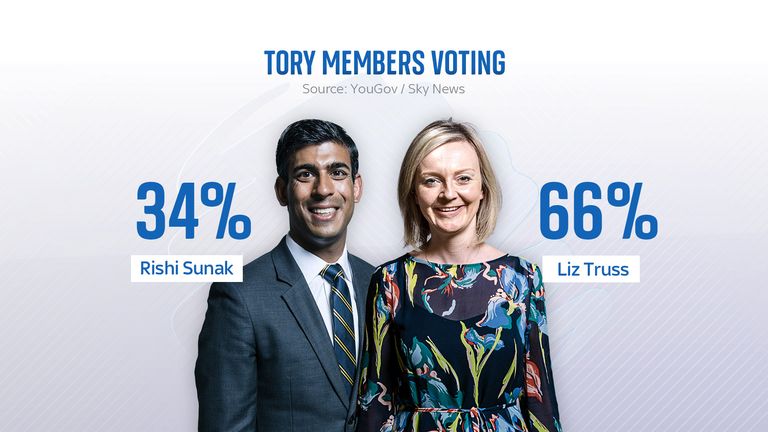
    During what may yet turn out to have been only the first Conservative leadership contest of 2022, Liz Truss was extremely careful to position herself as the continuity candidate to Boris Johnson. That display of apparent loyalty was to prove pivotal with many party members when they selected her over the Johnson assassin, Rishi Sunak. Yet as Truss’s first month as prime minister has now shown, she is not the continuity Johnson candidate at all. Instead, she glories in being a radical disrupter.

    This was evident from day one when Truss appointed a cabinet overwhelmingly from the Tory right while banishing prominent ministers of the Johnson era. It became explosively obvious two weeks later, when Kwasi Kwarteng slashed taxes on the rich, setting off the chain of events that has transformed British party politics and left the Tory party’s ratings in tatters. On Wednesday, it was starkly confirmed in Truss’s party conference speech in Birmingham – a defiant address that contained no mention of Johnson whatever, let alone any endorsement of his policies.

    On the day of her leadership victory a month ago, Truss said she had campaigned as a Conservative and would now govern as a Conservative. It’s the kind of platitude that new leaders often spout. But the Tory party that heard those words must have thought it implied some degree of continuity with the recent past.

    It did not. In Truss’s mouth, the words implied what she had always intended them to mean: a decisive shift to the Thatcher/Reagan economic right of the kind that has long been the dream of the party’s free-market thinktanks but is fundamentally at odds with Johnson’s messy, big-government pragmatism.

    Truss’s speech was an unapologetic confirmation that this is what we are now witnessing. She sees hers as a different and very particular form of Conservatism. She is not interested – as Johnson was, albeit in his own, slapdash way – in making compromises with any other forms. Hers is a Year Zero approach.

    At three separate points in the speech, she used the phrase “new approach”. All three usages felt very deliberate and significant. They signalled that this is a prime minister who, now that she has got hold of the steering wheel, will not look in the rear-view mirror, and will drive until she is stopped.

    In one of these references, directed explicitly at trying to reassure the financial markets, Truss spoke of “taking a new approach based on what has worked before”. It is important to deconstruct that remark. What had “worked before”, in this reading, was not anything that Johnson had been doing. The reference was to Margaret Thatcher’s taming of the trade unions, her privatisations of nationalised industries, and her deregulation of the City in the 1980s.

    In other words, this was a not-so-coded warning that, whatever the financial turmoil of the past two weeks, Truss is unbowed. She still sees market deregulation and low taxes as the absolute core of the strategy, whatever happened after the mini-budget.

    All Conservative leaders talk about deregulation and low taxes. The words have been guaranteed applause lines in any Tory politician’s conference speech over the past four decades. They may seem little more than pieties. But Truss’s use of them is different. She is more ideological and visceral, not just compared with Johnson but also with Theresa May, David Cameron, or John Major. Truss’s real commitment is to a Thatcher of her imagining (in reality, Thatcher was more subtle). It has an almost theological quality, and it was reflected in a speech that made no concessions to her critics.

    She is also, at least in her own self-image, up for the fight. In spite of the U-turns in the past days, on the top rate income tax band and the Office for Budget Responsibility, Truss had no word of apology or empathy this time. It is clear she will cut benefits in real terms if she can. When she mentioned leveling up, which she also did on three separate occasions, it was to promise to level up Britain “in a Conservative way”. By this, she did not mean the government investment that Johnson was always implying (though not delivering). When Truss says “in a Conservative way”, she means her way – cutting taxes and regulations – and that she at least is prepared to weather the disruption and opposition.

    Yet if Truss is prepared to fight for this approach, the same can hardly be said for many in her party. The Tory party feels exhausted and feels as if it is increasingly going through the motions of being a governing party. No one attending the Birmingham conference could have missed the unease.

    It manifested itself in myriad different ways, from the criticisms made by a newly energized Michael Gove, through the readiness of ministers such as Penny Mordaunt to stand up for inflation-proof benefits, to the gallows humour in fringe meetings. When the Ipsos pollster Gideon Skinner told one fringe gathering that current polls would show a general election loss of 181 Tory MPs, the man sitting next to me whispered: “Actually, that feels quite reassuring right now.”

    Birmingham settled nothing. The conference was the Tory party’s “What on earth have we done?” moment. As a result, Truss found herself fighting for her political life. There genuinely was talk about whether to act quickly and find a new leader (or bring back Johnson). Truss’s speech will get her through the coming weekend. But it was a dishonest speech, more important for its omissions and its concealments than for anything that spoke, let alone with empathy, to a party that is beginning to feel its luck has run out.

    The U-turns this week have in fact disabled the prime minister’s attempt to drive her agenda forward. They will hardly be the last. The return to Westminster will move the spotlight on to the parliamentary party once again. The Gove-Sunak wing of the party now possesses an effective veto over what the Truss-Kwarteng wing gets to do. This will shape the dark machinations (which have already begun) of the coming days and weeks.

    The truth is that the post-Brexit electoral coalition assembled by Johnson in 2019 was always so volatile and idiosyncratic that anyone else would have struggled to be the continuity leader once he stepped down. Yet Truss is proving something else besides. The fracturing and narrowing of the Tory party over the past decade are now so great that it has resulted in the party being simultaneously ungovernable and unable to govern. It is possible that Truss herself may soon be toppled. Yet no one else would do much better. It is time for the Conservatives to go into opposition. Only then can they try to decide what governing as a Conservative now means.

    DISCLAIMER: Independentghana.com will not be liable for any inaccuracies contained in this article. The views expressed in the article are solely those of the author’s and do not reflect those of The Independent Ghana


    Source: The Guardian, Martin Kettle


  • Liz Truss conjured enemy alliance to distract from the Tory rebels within

    Her withering attack on an ‘anti-growth alliance’ went down best in the hall, but for all the external – perhaps imagined – enemies, it is the enemy within that will continue to cause Liz Truss difficulties in the weeks and months ahead.

    “Moving On Up” was a bullish choice of entrance music.

    The 90s pop classic blaring from the speakers as Liz Truss stepped out onto the conference stage for her first speech as leader.

    But while the M People track echoed her conference slogan “Getting Britain Moving”, the rest of the song’s lyrics may have raised some eyebrows.

    “You’re movin’ on out”, “there’s no way back”, the song goes, “move right out of here, baby, go on pack your bags” – surprisingly apt for a fractious conference where the dominant conversation has been about whether the Truss premiership is over before it has even really begun.

    This speech than a chance to speak to both her party members and to voters, who have taken a look at the Conservatives under Liz Truss and don’t appear to much like what they see.

    With Labour now commanding huge leads in the polls – one suggesting the opposition now has a 33-point lead – this prime minister has to get voters to give her a hearing if she has any hope of staving off the mutinous mood brewing in her party.

    Not surprising then that her message to voters was not a million miles from what Sir Keir Starmer said in Liverpool last week – that she understands what they’re going through, that she’s been through struggles herself and that she’s on their side.

    “I have fought to get where I am today”, she said. “I have fought to get jobs, to get pay rises, and to get on the housing ladder. I have juggled my career with raising two wonderful daughters.

    “I know how it feels to have your potential dismissed by those who think they know better.”

    So a message that she is not part of a privileged elite but on the side of working people. Her sole focus, she said, was “growth, growth, growth” to “build our country for a new era”. Lower taxation, getting a grip on public finances, and bringing forward economic reforms to “grow the pie so everyone gets a bigger slice”.

    But there are many things that could blunt that message in the coming months: decisions to give big tax cuts to big business; the knock-on effects of her economic plan on inflation and interest rate rises; the pressure of public sector spending and rows over public sector pay, to name a few. And while the prime minister U-turned on her plan to abolish the 45p rate of tax for the top 1% of earners, the surrounding controversy may have already stained her reputation with working voters.

    Prime Minister Liz Truss has promised ‘an iron grip on the nation’s finances’

    For her parliamentary party, there was a mixed message. For while she acknowledged there had been difficulties and she had “listened”, she also signalled she was in “complete lockstep” with her chancellor and was pressing ahead with her plan. “Whenever there is change, there is disruption,” she said.

    “Not everyone will be in favour, but everyone will benefit from the result – a growing economy and a better future. That is what we have a clear plan to deliver.” The showdown then between Ms Truss and the rebel alliance led by Michael Gove looks guaranteed to grind on.

    It was in her message for party members, however, that Ms Truss really hit her stride. Rather than attacking MP rebels, as her home secretary did on Tuesday, or previous governments, as her chancellor did on Monday, Ms Truss defined the enemy as the opposition, which she bundled into something akin to an ‘axis of evil’ coalition to the delight of the hall.

    “I will not allow the anti-growth coalition to hold us back. Labour, Lib Dems, and the SNP. The militant unions and the vested interests dressed up as think tanks. The talking heads, the Brexit deniers, and Extinction Rebellion. They prefer protesting to doing. They prefer talking on Twitter to taking tough decisions. The taxi from North London townhouses to the BBC studio to dismiss anyone challenging the status quo.”

    This was perhaps her best received moment of the speech as she gave party activists an external enemy to distract from the infighting of her own party.

    But for all the external – perhaps imagined – enemies, it is the enemy within that will continue to cause the prime minister difficulties, and the lack of detail or new announcements in her speech was unusual.

    Leaders typically launch a new eye-catching policy in conference set pieces. That Ms Truss didn’t announce anything new reflects perhaps that she knows she is constrained by the markets and by her party. For all her promises of growth, growth, growth, she is a PM who wants to try to reduce spending as she looks for government savings in the face of her ballooning debt pile.

    This is also a prime minister who is facing a very organised band of rebels in parliament who are determined to pick off parts of her plan they don’t much like. They have already forced a U-turn on the 45p rate cut and are now looking to bounce a reluctant-looking prime minister into lifting benefit payments by inflation rather than earnings in order that the four million claimants don’t face a real term cut in their incomes.

    When Ms Truss kicked off her premiership, an ally told me it would be a “shock and awe” start. On that, she didn’t disappoint. But what her speech showed on Wednesday is how constrained this leader has already become.

    Today’s speech will not answer the question posed by her entrance music – it won’t determine whether she moves on up from this low point, or is moved out by her party. It is fair to say she did not leave the hall weaker than she went in, which her team will see as a victory of sorts.

    But there is no doubt she ends her first party conference as leader diminished by a torrid four days of division and infighting. It was not the start she hoped for. How it all ends is still so unclear.


  • ‘Ready to make difficult decisions’ – Liz Truss ends speech

    Liz Truss announced to the audience at the end of her address that she is “ready to make difficult decisions.”

    She tells her supporters that “you can trust me to do what it takes”, adding that “the status quo is not an option”.

    Ms Truss continues: “That is why we cannot give into the voices of decline. We cannot give in to those who say Britain can’t grow faster.

    “We cannot give in to those who say we can’t do better. We must stay the course.

    “We are the only party with a clear plan to get Britain moving. We are the only party with the determination to deliver.

    “Together, we can unleash the full potential of our great country. That is how we will build a new Britain for a new era.”

  • British public: Truss is ‘incompetent’ and Starmer is ‘boring’

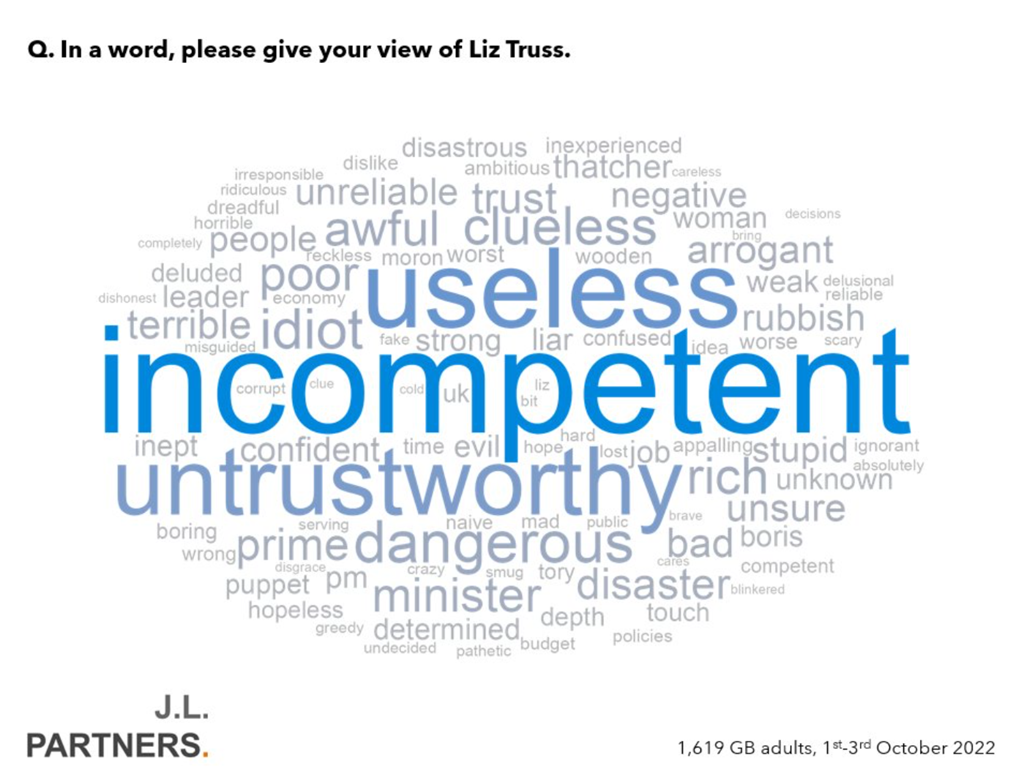
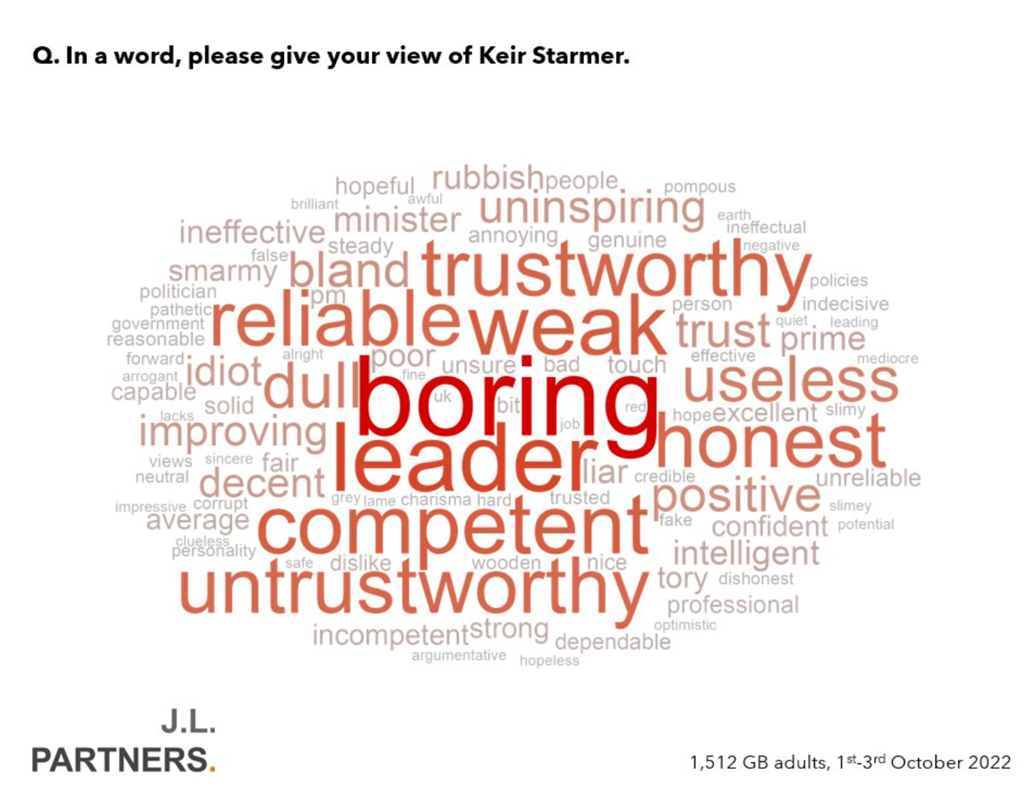
    As Liz Truss prepares for her first conference speech as prime minister today, a word cloud created by the research group JL Partners has revealed the most commonly used words used to describe the current leader and her rival Keir Starmer.

    When asked to give a view this week on the Tory leader after the mini-budget, the public most commonly used the words “incompetent”, “useless” and “untrustworthy”.

    Word cloud for Liz Truss after the mini-budget

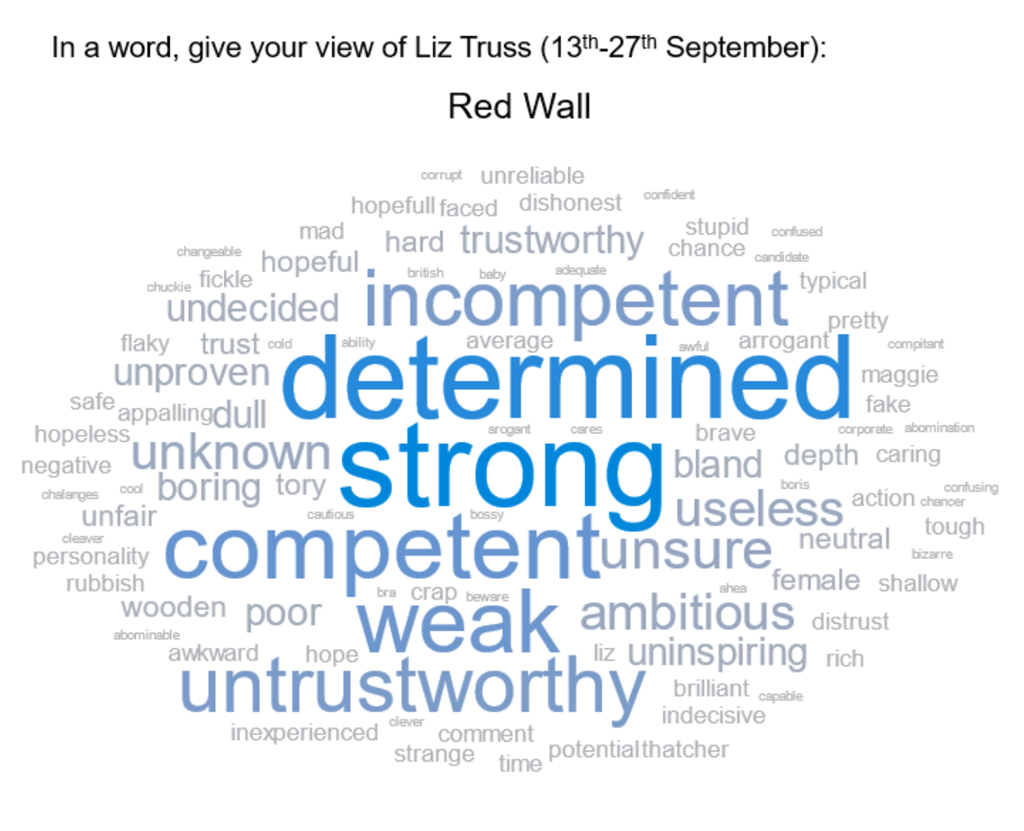
    In comparison, the words used to describe the prime minister before the mini-budget were “determined”, “strong” and “competent”.

    Word cloud for Liz Truss before the mini-budget

    The prime minister is currently facing the tough task of restoring Tory morale after a conference that has seen a U-turn over a totemic tax policy, cabinet dissent, and the threat of another major split over the level of benefits.

    Meanwhile, the most commonly used words to describe Mr Starmer were “boring”, “leader” and both “competent” and “untrustworthy”.

    Keir Starmer

  • Tory conference: Labour favourites to win power at next election, says John Curtice

    The Labour Party are “very clearly the favourites” to form the next government, pollster Sir John Curtice has told Tory activists in Birmingham.

    New PM Liz Truss was now as unpopular with voters as Boris Johnson was when he was ousted, said Sir John.

    And even if Labour’s current double digit poll lead reduced before the next election in 2024, Labour were still likely to gain power, he suggested.

    His analysis was greeted with dismay and cries of “wow” from activists.

    The veteran pollster, who masterminds general election exit polls, said Labour already had a nine point lead in the polls when Ms Truss won last month’s Tory leadership election and she had not enjoyed a honeymoon period.

    Chancellor Kwasi Kwarteng’s tax-cutting mini-budget just over a week ago – and the market reaction to it – had produced a 7% swing to Labour, he said.

    “The truth is, whatever the merits of Liz Truss’s package, it has resulted in very serious electoral damage to the Conservatives as an institution and to this new leader,” he told the Demos fringe meeting.

    The swing to Labour was similar in size to that seen on Black Wednesday in 1992, the first time the policies of a Conservative government had produced turmoil on the money markets.

    If voters remembered the events of the past week when they go to the polls in two years’ time, Labour could be on course for a three figure majority, said Sir John, even if Ms Truss’s policies work as intended and produce economic growth.

    In the event of a hung Parliament, opposition parties would be unlikely to prop up a minority Tory administration, he suggested, which made Labour clear favourites to gain power.

    Tory activists received a similarly sobering message at an earlier fringe meeting, from pollster with links to the party.

    Veteran US pollster Frank Luntz told them: “If you want to win, stop bitching, stop griping, stop complaining and get [it] together.”

    He said the party’s MPs had to start communicating with voters in a language they understood, and talking about things which mattered to them.

    He also took aim at defeated Tory leadership contender and former chancellor Rishi Sunak, who has opted to stay away from this week’s conference.

    “Where is Rishi Sunak? Why is he not here?” he asked the audience of Tory members.

    If Mr Sunak was here he could “start to unify the party, you guys can go forward together,” added Mr Luntz.

    “When people don’t even show up, what are the voters supposed to think?”

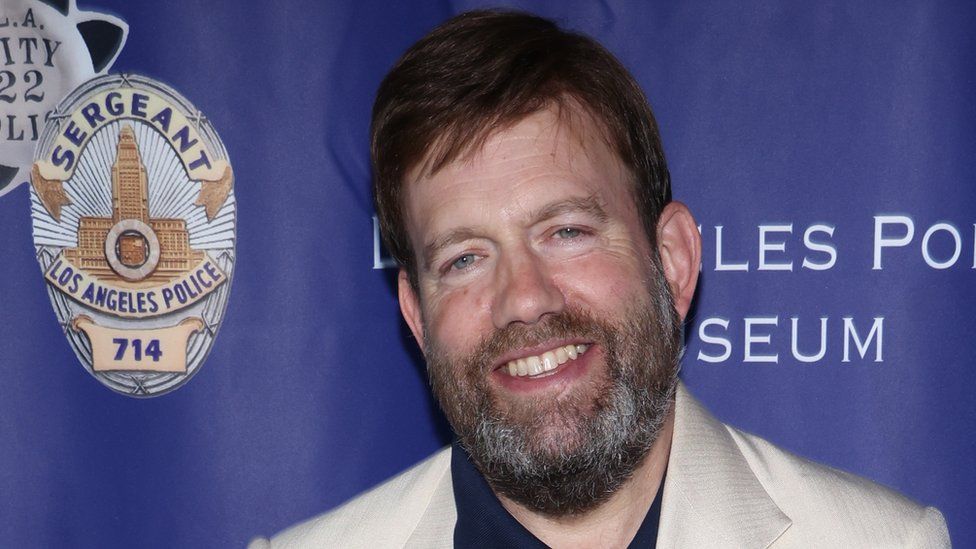
    Frank LuntzImage source, Getty Images
    Image caption, Frank Luntz is a friend of ex PM Boris Johnson and a longstanding Tory observer

    In a scathing assessment of Liz Truss’s first weeks in power, Rachel Wolf, who co-wrote the Conservatives’ 2019 election manifesto, said the new prime minister had no mandate from voters or her own MPs for the “ambitious” Thatcherite agenda she was pursuing.

    She accused Ms Truss of “appearing not to care” about the impact her policies will have on voters worried about the cost of living,

    “People are feeling poorer,” she added, and they don’t think the solutions Liz Truss has come up with “make any sense”.

    Ms Wolf, co-founder of polling company Public First, and a former adviser to Michael Gove, picked apart Ms Truss’s claim to be a strong leader in the mould of Margaret Thatcher, and not afraid of unpopular policies.

    The crucial difference between the two, she argued, was that Lady Thatcher had an electoral and Parliamentary mandate for her policies and was capable of articulating them in way that resonated with ordinary voters.

    “Thatcher was always a strong leader,” she told the meeting, “but she was of the people, she spoke in their language”.

    Pursuing an “ambitious Thatcherite agenda” without a mandate was a recipe for disaster at the polls, she suggested, and she hoped Conservative MPs could at least start to demonstrate some unity and competence.

    She also had a message for Sir Keir Starmer.

    “People are voting against the government but they are not voting for Labour, That might quite possibly be enough but it is the thing I would be most worried about if I were him.

    “The thing that always comes up with Starmer, and still does, is that he has no views, no ideas of his own.”

    Asked about the qualities needed in a modern leader, she said: “It’s very hard to support a leader who is uninterested in, or despises, you.

    “It’s not whether they are strong, whether they have a view of their own, if they fundamentally don’t seem to like their electorate very much, or don’t think they are worth considering it’s very hard to vote for them.”

  • Tory conference: Liz Truss will lose 45p tax rate vote, says Shapps

    Liz Truss would lose a Commons vote on cutting the top rate of income tax, former cabinet minister Grant Shapps has told the BBC.

    Scrapping the 45% top rate was a key part of last Friday’s mini-budget aimed at boosting growth.

    But it has faced a growing backlash from Conservative MPs after market turmoil and a big slide in the polls.

    Michael Gove earlier hinted that he would vote against it – but Mr Shapps has now gone further.

    The former transport secretary warned Ms Truss not to have a “tin ear” to voters’ concerns about rising living costs and to do a U-turn as soon as possible.

    “Let’s not muddy the water with… tax cuts for wealthy people right now, when the priority needs to be on everyday households,” he said.

    MPs are not likely to get a chance to vote on the tax changes until next spring, but Mr Shapps suggested enough Tory MPs would join forces with Labour and other opposition parties to defeat it.

    “I don’t think the House is in a place where it’s likely to support that,” he told the BBC on the first day of the Conservative conference in Birmingham.

    Like others who supported Rishi Sunak in the Tory leadership contest, Mr Shapps was fired from the cabinet by Ms Truss when she became prime minister.

    But Mr Shapps insisted he was not being unhelpful to the new PM. “Sometimes budgets go wrong when they’re announced,” he said.

    He cited former Chancellor George Osborne’s 2012 Budget – dubbed the “omnishambles” – as an example of when economic policies have been “quickly reversed”.

    “And you know what? We went on to win the next election. So I mean this to be entirely helpful. There is a way through this. But the way through isn’t to put fingers in the ear.”

    Instead of just “pushing on” with the 45p top rate cut, he said the government “needed to actually recognise that we’re trying to do something here, which really isn’t possible at this moment”.

    Later on Monday, Chancellor Kwasi Kwarteng will use his Conservative conference speech to insist the government will “stay the course” on his tax-cutting growth plan, arguing that without tax reform the country is heading for “slow decline”.

    On Sunday, Conservative Party chairman Jake Berry warned that Tory MPs who voted against the prime minister’s tax measures would be kicked out of the parliamentary party – known as losing the whip.

    Talking to Sky News, Mr Berry urged Conservatives to back the prime minister, adding: “I’m sure that if we do that it will lead ultimately to long-term electoral success.”

    ‘Course correction’


    But on Sunday, Maria Caulfield became the latest Conservative MP to publicly oppose the policy, saying she could not support it at a time “when nurses are struggling to pay their bills”.

    Addressing Mr Berry directly in a tweet, Ms Caulfield, who used to work as a nurse, said: “If Tory Party don’t want this working class MP, fair enough.”

    Former Levelling-Up Secretary Mr Gove – who also backed Mr Sunak in the leadership contest – said there were “two major” problems with the prime minister’s plans.

    “The first is the sheer risk of using borrowed money to fund tax cuts – that’s not Conservative,” he said.

    The second, he argued, was to cut the top rate of income tax and scrap the cap on bankers’ bonuses “at a time when people are suffering”.

    Asked if Ms Truss would be prime minister this time next year, he said she would but added: “There needs to be a course correction.”

    And asked on the Telegraph’s Chopper’s Politics Live podcast if the prime minister had a mandate for her tax changes, Mr Gove argued she did for changes to National Insurance and corporation tax – because she had campaigned for them during the leadership contest.

    But he added: “What was not discussed was the prospect of income tax cuts, particularly income tax cuts for the very wealthiest.”

    Source: BBC

  • Ground should have been laid for tax cuts, admits Liz Truss

    Liz Truss has admitted she should have “laid the ground better” for her mini-budget, after it sparked days of market turmoil.

    The prime minister told the BBC’s Laura Kuenssberg she had “learned from that”, but she was confident her tax cutting package would boost economic growth.

    She added a decision to cut the top earner tax rate was a “decision that the chancellor made”.

    And she revealed it was not discussed with the whole cabinet beforehand.

    The cut to the 45p rate has provoked outrage from opposition parties, and concern from some Conservative MPs.

    Former minister Michael Gove said the cut displayed the “wrong values,” and signalled he wouldn’t vote for it.

    He also said he was “profoundly concerned” about the decision to borrow to fund the tax cuts, calling it “not Conservative”.

    The government’s mini-budget included £45bn in cuts funded by government borrowing, and revealed the government expects its two-year scheme to fix energy prices will cost £60bn in the first six months.

    The announcements sparked days of turbulence in financial markets, with the pound falling to a record low against the US dollar on Monday, although it has since recovered.

    The rocky economic backdrop is set to dominate this week’s Conservative party conference, Ms Truss’s first as Tory leader, where she faces the task of reassuring her MPs over her approach to boosting the flagging UK economy.

    Speaking from the gathering in Birmingham, Ms Truss promised to win over “the hearts and minds” of Tory MPs to persuade them of her plan.

    In an interview for the BBC’s Sunday With Laura Kuenssberg, she said she remained committed to her approach and she was “confident” better growth would result.

    Media caption, Michael Gove: Cutting tax for the wealthiest “a display of the wrong values”

    “I do stand by the package we announced and I stand by the fact we announced it quickly, because we had to act,” the prime minister added.

    “But I do accept we should have laid the ground better. I have learned from that, and I will make sure that in future we do a better job of laying the ground.”

    She also defended the decision to cut the 45p income tax rate for top earners, saying it “raises very little” and made the tax system more complicated.

    She added that the cut was a decision made by Chancellor Kwasi Kwarteng – prompting former cabinet minister and Boris Johnson loyalist Nadine Dorries to accuse her of throwing him “under a bus”.

    And Mr Gove, who has served in several cabinet roles in previous governments, expressed concerns about scrapping the top rate at a time when “people are suffering”.

    Former deputy prime minister Damian Green warned a reception at conference that the Tories would lose the next general election if “we end up painting ourselves as the party of the rich”.

    Labour’s shadow chancellor Rachel Reeves accused the government of conducting a “mad experiment” with the economy, calling the market turmoil a “crisis made in Downing Street”.

    Also speaking to Laura Kuenssberg, she said investors had been spooked by the “sheer scale of the borrowing” to fund the tax cuts, alongside the decision not to publish an official economic forecast alongside the plans.

    She added that the public would “pay the price” for the turbulence, and said Ms Truss had failed to understand the “anxiety and fear” about the state of the economy.

    2px presentational grey line
    Analysis box by Chris Mason, political editor

    Just a few weeks ago, this was a conference where many would have anticipated a mood of loyal celebration.

    Yes, a government and a country confronting difficult times – but a party welcoming a new prime minister; relieved to have left the arguments of the collapsing premiership of Boris Johnson behind.

    Instead, with nosediving opinion poll numbers and self-inflicted economic volatility, the mood here is bleak, the outbreaks of public anger illustrative of a deeper well of private anguish.

    There are few things more dangerous for a government than a perception that senior figures don’t know what they are doing and are not fully in control of events.

    Some Tory MPs are already privately questioning how long Liz Truss might last in office; even more say they will not support elements of her budget, not least the tax cut for the highest paid.

    Senior Conservatives recognise this is a moment of considerable jeopardy for a prime minister not yet a month in the job – and the next few days will be crucial in providing reassurance for the party and the country.

    2px presentational grey line
    Media caption, Rachel Reeves says the government is conducting a “mad experiment” with the UK economy

    In a bid to reassure markets, the government has said it will set out how it plans to lower public debt in the medium term on 23 November.

    Pushed repeatedly on whether she planned to cut public spending, Ms Truss did not say, but added she wanted to get “value for money for the taxpayer”.

    She did not commit to raising benefits in line with inflation, saying that a decision would be made later this autumn.

    She also rejected calls to bring forward an assessment of the government’s plans from the UK’s budget watchdog, currently due to be published alongside the debt plan.

    She added that an assessment of the spending plans was “not yet ready”.

    “There’s no point in publishing something that’s not ready. That would just cause confusion,” she added.

    Source: BBC

  • Kwasi Kwarteng changes his mind about a 45-cent tax rate

    The chancellor stated that the government has changed its mind about wanting to eliminate the 45p income tax rate.

    Kwasi Kwarteng told the BBC the proposals, announced just 10 days ago, had become “a massive distraction on what was a strong package”.

    “We just talked to people, we listened to people, I get it,” he added.

    The decsion, which marks a humiliating climbdown for Prime Minister Liz Truss, comes after several Tory MPs voiced their opposition to the plan.

    Ex-cabinet minister Grant Shapps had warned the prime minister would lose a Commons vote on the proposal.

    The plan to scrap the 45p rate, paid by people earning over £150,000 a year, had been criticized as unfair at time of rising living costs.

    On Sunday, the prime minister had told the BBC she was absolutely committed to it as part of a package to make the tax system “simpler” and boost growth.

    But the measure has seen remarkable opposition from the markets, opposition parties and a growing number of Tory MPs.

    Increasingly, it seemed Ms Truss did not have the numbers to get it through.

    On Sunday, senior Tory Michael Gove hinted he would not vote for the plan when it came to Parliament, saying “I don’t believe it’s right”.

    The former cabinet minister said the PM’s decision was “a display of the wrong values”.

    Mr Shapps also urged Ms Truss to U-turn, warning her not to have a “tin ear” to voters’ concerns about rising living costs.

    “I don’t think the House is in a place where it’s likely to support that,” he told the BBC on Sunday.

    The U-turn, suggestions of which were first reported by the Sun, comes on the second day of the Conservative conference in Birmingham, with Mr Kwarteng due to speak later on Monday.

    The pound jumped on the news, rising by more than a cent against the dollar to $1.1263.

    The currency touched a record low last week after Mr Kwarteng’s mini-budget – which contained around £45bn of unfunded tax cuts – created turmoil on the markets.

  • Labour: Truss refusing to understand people’s ‘anxiety and fear’

    Labour’s shadow chancellor, Rachel Reeves says, the government’s economic plan won’t result in annual growth of 2.5%.

    Liz Truss, according to Ms. Reeves, does not understand how her policies are affecting the public.

    “The prime minister just doesn’t seem to understand the anxiety and fear,” Ms Reeves told the BBC.

    “This is a crisis made in Downing Street but it is ordinary working people who are paying the price.”

    It has been suggested that the Truss administration is trying to use “tickle down economics” – the idea that tax cuts for the rich will create greater wealth in general, some of which will “trickle down” to those who are less well off.

    It was announced in the mini-budget nine days ago that the top rate of tax – 45% – was being abolished.

    But Ms Reeves commented: “The idea that trickle-down economics is somehow going to deliver the 2.5% growth we all want to see is for the birds.

    “The prime minister and the chancellor are doing some sort of mad experiment with the UK economy and trickle-down economics.

    “It has failed before and it will fail again.”

    The prime minister has said that removing the top rate of tax was the chancellor’s idea.

    But the chancellor’s spokesperson has said the pair are “in lockstep” on the issue (12.18 post).

  • Dorries alleges that Truss threw Kwarteng ‘under a bus’

    Former culture secretary Nadine Dorries has said that Liz Truss has “thrown under a bus” her chancellor, Kwasi Kwarteng.

    It comes after a morning interview in which the prime minister said that Mr Kwarteng made the decision to lower the top, 45%, rate of taxation.

    Ms Dorries tweeted: “One of Boris Johnson‘s faults was that he could sometimes be too loyal and he got that.

    “However, there is a balance, and throwing your chancellor under a bus on the first day of the conference really isn’t it.”

    Using a finger crossed emoji, Ms Dorries said she hoped “things improve and settle down from now”.

    Ms Dorries, who left the government when Liz Truss became prime minister, has also given an interview to The Sunday Times, in which she describes Boris Johnson as “one of the world’s best leaders”.

    Since the mini-budget, nine days ago, the Conservatives have plummeted in the polls.

    A YouGov/Times survey placed Labour 33 points ahead of the Tories.

    Ms Dorries reflected: “The day they ousted Boris we were five points behind in the polls, which was actually fantastic.

    “To be only five points behind in the polls when you have been in power for 12 years was an incredible place to be.

    “Those of us who had been around in politics for more than five minutes knew in the full heat of the general election campaign that would burn away like the June mist on a morning lawn.

    “At the time it seemed utterly incomprehensible the position MPs were about to put the government in by removing our most electorally successful prime minister.”

  • On Truss advice,King Charles will not attend climate summit

    Buckingham Palace says, King Charles will not go to the COP27 climate change meeting, which will take place in Egypt next month.

    It was in response to a Sunday Times article that claimed Liz Truss, the prime minister, had “directed” the King not to attend.

    The Palace said advice had been sought by the King and given by Ms Truss.

    “With mutual friendship and respect there was agreement that the King would not attend,” the Palace stated.

    Before his ascension to the throne last month, the King – then the Prince of Wales – had indicated he would attend the annual conference.

    Royal correspondent Jonny Dymond said the BBC had put it to the Palace that the King must be personally disappointed given his long decades of passionate environmental campaigning.

    But the Palace responded that the idea the King was uncomfortable was not the case, and he was ever mindful of the sovereign’s role to act on the government’s advice.

    Last November – Prince Charles – the King travelled to Egypt with the then-government’s blessing to urge the Egyptian administration on its efforts, meeting President Abdel Fattah Al-Sisi during a planned visit.

    In the past, the King has demonstrated his deep commitment to environmental issues and, as Prince of Wales, had a long history of campaigning to reduce the effects of climate change.

    Only last year he made a speech at the COP26 opening ceremony in Glasgow, when the summit was hosted by the UK. The late Queen also gave a speech at the event, via video link.

    Senior Conservative MP Tobias Ellwood said he hoped “common sense would prevail” and the King would be allowed to go to Egypt.

    He said in a tweet that King Charles was a “globally-respected voice” on the environment whose attendance would add “serious authority” to the British delegation.

    At last year’s COP26 conference, King Charles – or Prince Charles as he was then – was one of the star turns, delivering a passionate call for world leaders to adopt a “war-like footing” over climate change.

    This year he’ll have to keep his powder dry, after what’s presented, on the surface at least, as a dispute-free agreement that he shouldn’t go.

    Although it’s worth noting this is about not attending “in person”, which might leave the door ajar for other virtual contributions.

    There will inevitably be speculation that, below all the constitutional smoothing, this will have really disappointed the King. He has campaigned devotedly for decades, heart on sleeve, on such environmental issues.

    And it could also raise the prospect of early tensions between a new King and a new PM.

    But it’s a case of different roles, and different rules and the King has always known that as sovereign he would have to act within a different set of politically-neutral constraints.

    The Egyptian authorities say they hope to use their presidency of COP27 to urge the international community to act on pledges of support for developing countries to cope with the devastating impacts of climate change.

    However, there has been criticism ahead of the summit. Human Rights Watch has said Egypt has severely curtailed the work of environmental groups. Officials in Cairo said the report was “misleading”.

    COP27, a United Nations event, is being held in the coastal city of Sharm el-Sheikh from 8 to16 November.

    Next week, King Charles will attend his first public engagements since the royal period of mourning came to an end, including a reception in Edinburgh for South Asian communities from across the UK and a visit to Dunfermline Abbey in Fife.

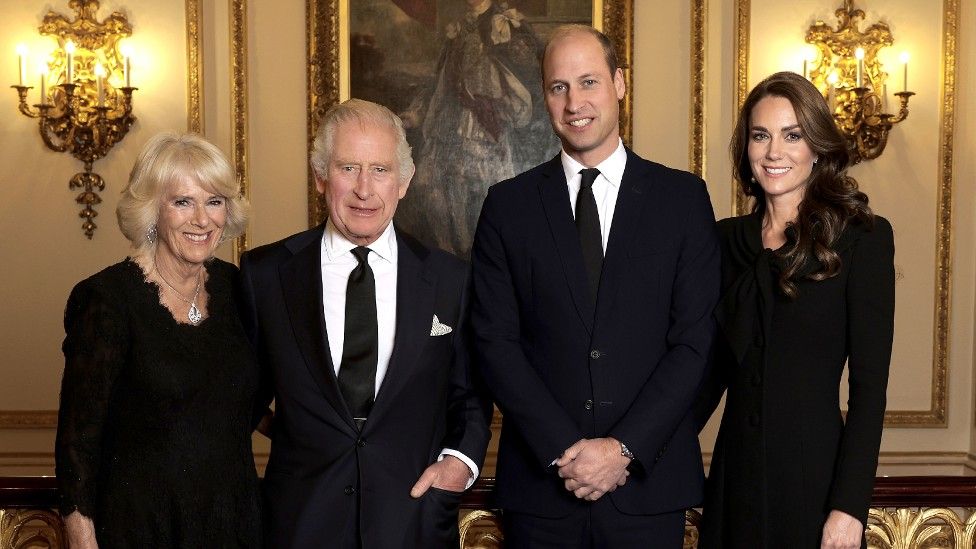
    The Queen Consort, the King, the Prince of Wales, the Princess of Wales
    IMAGE SOURCE, BUCKINGHAM PALACE/GETTY IMAGES/PA Image caption, A new picture of the King with the Queen Consort, Prince, and Princess of Wales was released on Saturday
  • Liz Truss: Sabotage responsible for Nord Stream leaks during meeting with Danish PM

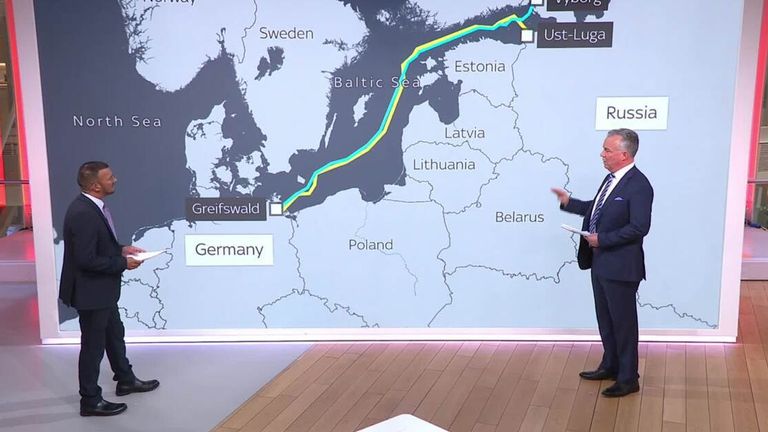
    Downing Street says that during her meeting with Danish Prime Minister Mette Fredriksen, the leaders agreed that the ruptures of the Nord Stream 1 and 2 pipelines on Monday were clearly sabotaged and more work needs to be done to increase energy independence.

    Liz Truss has agreed the cause of the leaks in the Nord Stream pipelines was “sabotage”, her spokesperson has said.

    The British prime minister was discussing the ruptures in the Russia-Germany gas supply lines with the Danish PM during the latter’s visit to Downing Street on Saturday.

    It is believed to be the first time Ms Truss has described what happened in the Baltic Sea on Monday as a deliberate act.

    While Western governments are yet to do so, many commentators have said that Russia is most likely to be responsible for damage to the pipelines. Moscow, meanwhile, has sought to blame the West.

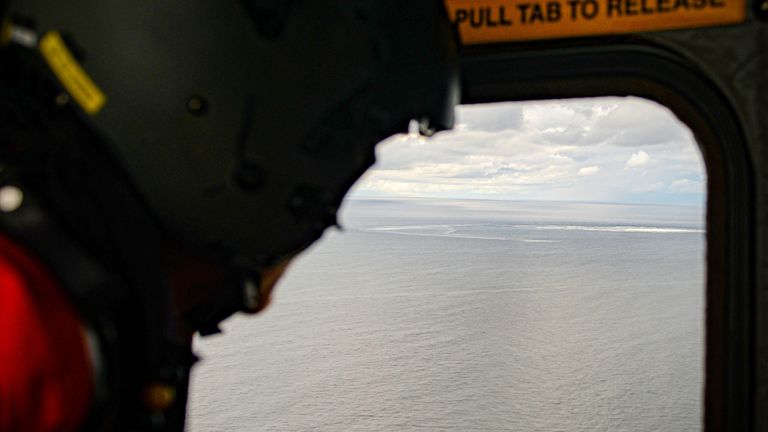
    Air crew on board a Danish defence aircraft monitor Nord Stream gas leak over the Baltic Sea
    Image: Aircrew on board a Danish defense aircraft monitor Nord Stream gas leak over the Baltic Sea

    The leaks have caused huge alarm in Europe as, if deliberate attacks are found to have caused them, it reveals how vulnerable the vast network of undersea pipelines and infrastructure is to interference, as the Ukraine war rages on the continent.

    The prime ministers also said their nations looked forward to working with each other more closely through the Joint Expeditionary Force, which involves sending UK troops to the Baltic, to work alongside Danish and other forces.

    A Downing Street spokesperson said after the visit of Danish Prime Minister Mette Fredriksen to Number 10: “The leaders stressed the need to stay united in the face of Russia’s despicable action in Ukraine.

    “Prime Minister Fredriksen updated the prime minister on the damage caused to the Nord Stream pipelines last week. They agreed the incidents were clearly an act of sabotage. The prime minister offered the UK’s support for the ongoing investigation.

    “The leaders agreed that the safety and security of the Baltic Sea are in everyone’s interest, and welcomed increased cooperation through the Joint Expeditionary Force.

    “On energy security more widely, the prime minister and Prime Minister Fredriksen agreed on the need for like-minded democracies to work together to increase our energy independence.”

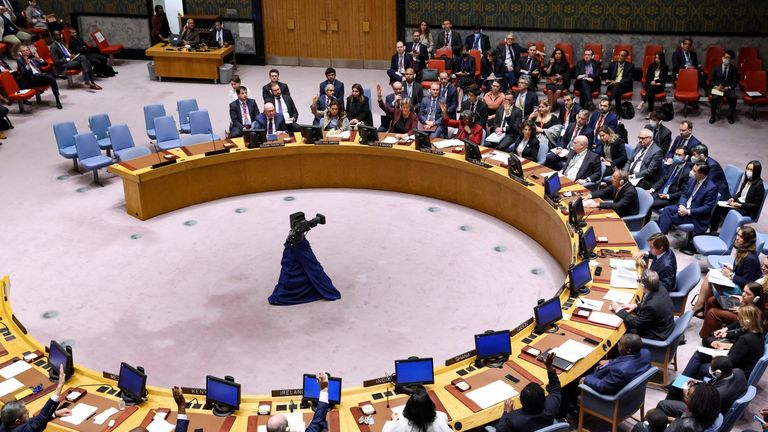
    Members of the United Nations Security Council convene at the request of Russia to discuss damage to two Russian gas pipelines to Europe in New York
    Image:Members of the United Nations Security Council convene at the request of Russia to discuss damage to two Russian gas pipelines to Europe in New York

    A network of pipelines runs under the North Sea from gas fields in Britain’s economic zones and there are also electricity and data cables going to and from the UK, including those involving the huge wind farms off the coast.

    Overnight, Washington said the US and its allies would send divers to find out what happened before a series of leaks erupted in the Nord Stream 1 and 2 pipes on Monday night, close to the Danish island of Bornholm.

    At the time, they were not carrying gas from Russia to Germany but remained pressurized.

    Nord Stream ‘sabotage sends powerful message’

    Analysts have said that explosions were the most likely cause for the ruptures.

    On Friday, Vladimir Putin, without providing evidence, blamed the United States and its allies for blowing up the pipelines.

    At the United Nations, Russia’s ambassador told the UN Security Council that the US had much to gain in gas trade from damage to the Nord Stream pipeline system but stopped short of blaming Washington.

    Russians ‘pumping out lies and disinformation’

    US President Joe Biden said the leaks were a result of “a deliberate act of sabotage” and added, “now the Russians are pumping out disinformation and lies”.

    Gazprom – Russia’s state-owned gas supplier which is the majority shareholder of Nord Stream’s holding company – said 800 million cubic metres of gas had escaped after the blasts.

    The United Nations Environment Programme said the release of gas from the pipelines adds up to what is likely the biggest single release of climate-damaging methane ever recorded.

    The growing insecurity comes as gas started flowing on Saturday morning to Poland through the new Baltic Pipe pipeline from Norway via Denmark and the Baltic Sea, a move that was supposed to help boost the amount of gas reaching northern Europe after Russia cut supplies in the wake of Ukraine war sanctions

  • Chinese owner of British Steel requests a significant government aid package

    Sky News learns that Jingye Group has stated that without hundreds of millions of pounds in taxpayer subsidies, British Steel’s two blast furnaces will not be commercially viable.

    Amidst fresh worries over the future of thousands of industrial jobs in the north of England, the owners of Britain’s second-largest steel manufacturer are pleading with taxpayers for an immediate package of financial assistance.

    Sky News has learnt that Jingye Group, which bought British Steel out of insolvency in 2020, has told ministers that the company’s two blast furnaces are unlikely to be viable without government aid.

    British Steel, which is headquartered in Scunthorpe, north Lincolnshire, employs about 4,000 people, with thousands more jobs in its supply chain depends upon the company.

    The request from Jingye poses a major headache for Jacob Rees-Mogg, the new business secretary, on the eve of the Conservative Party’s annual conference in Birmingham.

    While the precise scale of the support being sought by the Chinese industrial group was unclear this weekend, insiders suggested that it would need “hundreds of millions of pounds” to keep the Scunthorpe blast furnaces operational.

    It was also unclear whether any financial subsidy would be in the form of a loan or grant.

    One insider said that Jingye was prepared to make thousands of people redundant if ministers rejected its request.

    It would then plan to import steel from China to roll at British Steel’s UK sites, according to the insider.

    This weekend, the government confirmed that it was “working at pace with the company to understand the best way forward as it seeks to secure a more sustainable future”.

    “We recognise that businesses are feeling the impact of high global energy prices, particularly steel producers, which is why we have announced the Energy Bill Relief Scheme to bring down costs,” a spokesman for the Department for Business, Energy and Industrial Strategy said.

    “This is in addition to extensive support we have provided to the steel sector as a whole to help with energy costs, worth more than £780m since 2013.”

    Industrial consumers of energy have complained for months that soaring prices are imperilling their ability to continue investing, with continuing uncertainty about the duration and cost of a recently announced government subsidy scheme.

    For Mr Rees-Mogg, who took over as business secretary less than a month ago, a decision over government support presents a politically undesirable menu of choices.

    If no state funding is made available and significant numbers of jobs are axed, it would undermine a key tenet of the ‘levelling-up’ strategy that became a doctrine of Boris Johnson’s administration.

    An agreement to provide substantial taxpayer funding to a Chinese-owned business, however, would almost certainly provoke outrage among Tory critics of Beijing.

    China’s role in global steel production, after years of international trade rows about dumping, would make any subsidies even more contentious.

    A British Steel spokesman said: “We are investing hundreds of millions of pounds in our long-term future but like most other companies we are facing a significant challenge because of the economic slowdown, surging inflation, and exceptionally high energy and carbon prices.

    “We welcome the recent announcement by the UK government to reduce energy costs for businesses and remain in dialogue with officials to ensure we compete on a level playing field with our global competitors.”

    It is the second time in little more than three years that serious doubt has been cast over British Steel’s future.

    In May 2019, the Official Receiver was appointed to take control of the company after negotiations over an emergency £30m government loan fell apart.

    British Steel had been formed in 2016 when India’s Tata Steel sold the business for £1 to Greybull Capital, an investment firm.

    As part of the deal that secured ownership of British Steel for Jingye, the Chinese group said it would invest £1.2bn in modernising the business during the following decade.

    Jingye’s purchase of the company, which was completed in the spring of 2020, was hailed by Mr Johnson as assuring the long-term future of steel production in Britain’s industrial heartlands.

    “The sounds of these steelworks have long echoed throughout Yorkshire and Humber and the North East,” he said.

    “Today, as British Steel takes its next steps under Jingye’s leadership, we can be sure these will ring out for decades to come.

    “I’d like to thank every British Steel employee in Scunthorpe, Skinningrove, and on Teesside for their dedication and resilience which has kept the business thriving over the past year.

    “Jingye’s pledge to invest £1.2 billion into the business is a welcome boost that will not just secure thousands of jobs, but ensure British Steel continues to prosper.”

    Tata, which owns the vast Port Talbot steelworks in Wales, remains Britain’s biggest steel producer.

    It, too, has sought government support in recent months, with the Financial Times reporting in July that the Indian-owned group was seeking £1.5bn of taxpayer funding to help it decarbonize its operations.

    Liberty Steel, the third-biggest player in the industry, saw a bid for £170m in state aid rejected last year by Kwasi Kwarteng, the then business secretary.

    As chancellor, Mr Kwarteng will play a key role in determining the fate of Jingye’s request for support.

    This weekend, it was unclear how quickly a decision would be reached by ministers or whether advisers had been drafted in to help negotiate on either side.

    A government insider pointed out that a range of support schemes aimed at heavy industry remained operational.

  • UK’s biggest tax cuts since 1972 trigger crash in pound, bonds

    Liz Truss’s new UK government delivered the most sweeping tax cuts since 1972, slashing levies on rich households and companies in a bid to boost economic growth in a move that triggered a massive market selloff of the currency and bonds.

    Chancellor of the Exchequer Kwasi Kwarteng announced a series of tax cuts and regulatory reforms that will cost £161 billion (more than R3 trillion) over the next five years. That fanned concerns about inflation, already near a 40-year high, and about a spiraling government debt burden.

    The pound crashed below $1.11 for the first time since 1985, sliding 2% in addition to declines earlier in the week. Borrowing costs on five-year government bonds jumped the most for a single day on record as traders dumped UK assets.

    The pound fell to R19.71 on Thursday afternoon, from R19.94 earlier today.

    “It is extremely unusual for a developed market currency to weaken at the same time as yields are rising sharply,” said George Saravelos, global head of foreign exchange research at Deutsche Bank AG. He warned the UK currency is “in danger” and suggested markets were treating it like a developing economy.

    The package was more ambitious than expected, with a big giveaway for the UK’s wealthiest households and plans to tear up planning rules and reform financial regulations.

    Kwarteng scrapped the 45% additional rate of income tax, paid by only the richest earners, leaving the top rate at 40%, and cut the basic rate from 20% to 19%. He paid only lip service to concerns about rising public debt, reiterating a pledge to “reduce debt as a percentage of GDP over the medium term.”

    The Conservative administration hopes its program of lower taxes and deregulation will turbo-charge the economy, staving off a recession that the Bank of England says has already begun and shaking the UK out of a decade of weak growth.

    Casino economics

    Business groups embraced the decision, while economists said the measures may quickly become unaffordable. Unions and the Labour opposition said the measures will benefit the rich and do little to help those on moderate incomes with a tightening cost-of-living squeeze.

    The opposition Labour party branded it “casino economics” and others warned that the government’s fiscal credibility now depended on whether it can hit its growth target. Kwarteng rejected that criticism.

    “For too long in this country, we have indulged in a fight over redistribution,” the chancellor said. “We won’t apologize for managing the economy in a way that increases prosperity and living standards. Our entire focus is on making Britain more globally competitive.”

    He set a target of 2.5% trend growth, a level not seen since before the 2008 financial crisis.

    “We promised to prioritize growth,” he told Parliament in London on Friday. “We promised a new approach for a new era.”

    The Treasury responded to concerns about high levels of borrowing needed to pay for his giveaway by promising new fiscal rules later this year that will ensure the debt falls as a share of national income “in the medium term.”

    Kwarteng’s department also released figures suggesting stronger growth could lower borrowing by £40 billion. He said the numbers would be properly costed by the Office for Budget Responsibility.

    “The policies announced in Chancellor of the Exchequer Kwasi Kwarteng’s mini-budget will provide the economy with a sugar rush over the next year, but we highly doubt it’ll deliver the gear shift in growth that the government is banking on,” Dan Hanson, Bloomberg Economics. That means it will lift inflation at a time when the Bank of England is trying to cool price pressure and, because the policy package is unfunded, put debt on an unsustainable path.”

    The measures will deliver a massive fiscal stimulus at a time when the Bank of England is struggling to rein in inflation, which at 9.9% is almost five times its target.

    The plunge in gilt markets means that investors are now betting the central bank boosts its benchmark lending rate a full percentage point to 3.25% in November, which would be the sharpest increase since 1989. It’s a sign that traders believe that the extra borrowing will do little for growth but drive up prices even more quickly.

    Paul Johnson, director of the Institute of Fiscal Studies, said the plan amounts to the biggest single giveaway by the Treasury since 1972, when Ted Heath was prime minister and Anthony Barber chancellor. Barber’s budget resulted in spiraling inflation and a recession.

    “That budget is now known as the worst of modern times,” Johnson said on Twitter. “Genuinely, I hope this one works very much better.”

    Tim Sarson, head of tax policy at KPMG, said the mini-budget signaled “a clear change of direction” and a “return to the economics of the 1980s.”

    Martin Weale, who served at the BOE from 2010, said the government plans will “end in tears” and a run on the pound.

    The chancellor’s plan included a pledge to liberalize regulations on planning and in the City of London’s financial district, ending a cap on bonus pay for bankers.

    Additional eye-catching measures include a cut on stamp duty, which is charged on property purchases, removing 200,000 buyers out of the tax altogether. A planned 1.25% increase in payroll taxes this year was reversed. Businesses were given help, with the planned increase in corporation tax from 19% to 25% next year abandoned and investment allowances increased.

    That came on top of support for households and businesses with spiraling energy costs. The Treasury said the emergency energy package, under which household bills will be frozen for two years, will cost £60 billion over the next six months.

    Steps to reduce planning restrictions for land use, “getting out of the way to get Britain building”

    Creating 40 new “investment zones” with lower regulations for those who build businesses Cancelling a planned increase in duties on alcohol Truss and her allies say the program won’t spur inflation and that cutting taxes and bureaucracy will allow businesses to expand and draw more people into work, lifting tax revenue in the process.

    “What we’ve seen today is a significant shift in economic policy in the UK, and I think it’s the right one,” Gerard Lyons, chief economic strategist at Netwealth Investments Ltd. and an adviser to Truss, said on Bloomberg Radio. “If the policy is right for economy, then also it should be right for the markets as well.”

    Economists and former Bank of England officials attacked the plans even before Kwarteng appeared in the House of Commons on Friday. Danny Blanchflower, a policy maker during the global financial crisis more than a decade ago, said investors should short the pound.

    Other critics include the Resolution Foundation, which points out the measure will widen inequality, handing more benefits to the richest people in society and costing those on lower incomes more.

    Source: news24

  • Liz Truss likely to move UK embassy to Jerusalem

    Liz Truss, who is following Donald Trump’s lead, says she is thinking of moving the British embassy in Israel from Tel Aviv to Jerusalem. This would be a radical change from decades of UK foreign policy.

    In a meeting on the sidelines of the UN general assembly in New York, the prime minister told Israel’s caretaker leader, Yair Lapid, about a “review of the current location” of the building, Downing Street said in a statement.

    The status of Jerusalem, which Israelis and Palestinians claim as their capital, is one of the most sensitive issues in the long-running conflict.

    East Jerusalem, along with the West Bank and Gaza Strip, has been considered occupied Palestinian territory under international law since the six-day war in 1967.

    Like the vast majority of the international community, the UK’s position until this point has been that the divided city should host consulates, rather than embassies until a final peace agreement is reached.

    Trump’s 2018 fulfillment of an election campaign promise to recognise Jerusalem as Israel’s capital prompted international condemnation and led to protests and clashes in which Israeli forces killed dozens of Palestinians. The then UK prime minister Theresa May criticised the move at the time.

    On Thursday, the Israeli prime minister tweeted his thanks to Truss for what he described as “positively considering” the move. “We will continue to strengthen the partnership between the countries,” he said.

    The Guardian understands that the embassy move was one of a range of options put forward to Truss by Foreign Office staff in late 2021 during her stint as foreign secretary. However, she did not make any substantial policy changes during her two years at the foreign office.

    The prime minister appears to have first publicly floated the idea of relocating the embassy in a letter to the Conservative Friends of Israel (CFI) parliamentary group during the Tory leadership campaign over the summer.

    She wrote: “I understand the importance and sensitivity of the location of the British embassy in Israel. I’ve had many conversations with my good friend … Lapid on this topic. Acknowledging that, I will review a move to ensure we are operating on the strongest footing within Israel.”

    At a hustings with CFI, she vowed that “under my leadership, Israel will have no stauncher friend in the world. That’s what I’ve done as foreign secretary and trade secretary. I don’t just talk the talk – I walk the walk.”

    Pressed in the House of Commons on 6 September by the backbench Tory MP Michael Fabricant to follow the US and move the embassy from Tel Aviv to Jerusalem, the Foreign Office minister Amanda Milling said: “The British embassy to Israel is in Tel Aviv. I am aware of the possibility of a review, but will not speculate further on this point.”

    Her remarks suggest the review is only just under way, but advocates of the move inside the Conservative party claim the proposal will prove less controversial than even a few years ago due to the Trump administration setting a precedent, and the thaw in relations between Israel and some Arab countries following the Abraham accords.

    Downing Street has been contacted to explain how long the review will take.

    Other than the US, only three states have embassies to Israel in Jerusalem – Kosovo, Honduras and Guatemala – which all moved from Tel Aviv after the US relocation.


  • UN speech: Liz Truss condemns ‘desperate’ Vladimir Putin’s ‘catastrophic failure’

    In her first public address as prime minister on a world platform, Ms. Truss called the Russian president’s threat to use “all means at our disposal” to defend his nation “sabre rattling.”

    Vladimir Putin’s nuclear threats are part of a desperate attempt to justify his “catastrophic” failure in Ukraine, Liz Truss has said.

    In her first speech on the world stage as prime minister, Ms Truss accused the Russian president of “sabre rattling” after he said that his country would use “all the means at our disposal” to protect itself.

    The comments appeared to suggest the conflict in Ukraine could spiral into a nuclear crisis.

    Ms Truss said Mr Putin was “desperately trying to justify his catastrophic failures” in her address to the United Nations General Assembly (Unga) in New York.

    “He is desperately trying to claim the mantle of democracy for a regime without human rights or freedoms.

    “And he is making yet more bogus claims and saber-rattling threats.”

    Ms Truss praised the “strength of collective purpose” in response to Mr Putin’s invasion so far, but said that aid for Ukraine must not wane.

    And she told other world leaders that the UK will spend 3% of GDP on defence by 2030, repeating a promise she made when she campaigned to become Tory leader.

    She added: “In the face of rising aggression we have shown we have the power to act and the resolve to see it through. But this must not be a one-off.

    “This must be a new era in which we commit to ourselves, our citizens, and this institution that we will do whatever it takes – whatever it takes to deliver for our people and defend our values.”

  • Negotiations over Northern Ireland: Joe Biden to explain to Truss the need for UK and EU’s negotiations

    The contentious Northern Ireland protocol will be covered at a postponed meeting between the US president and the prime minister on Wednesday in New York.

    The Northern Ireland Protocol must be resolved by negotiation, Joe Biden will say to Liz Truss when they meet later today, according to the White House.

    In a meeting on Tuesday, Ms. Truss declined to discuss the protocol with French President Emmanuel Macron, and No. 10 did not indicate whether she will bring it up with European Commission President Ursula von der Leyen.

    But US national security adviser Jake Sullivan made it clear President Biden will discuss it “in some detail” with Ms Truss.

    Mr Sullivan told reporters the president “will encourage the UK and the European Union to work out an effective outcome that ensures there is no threat to the fundamental principles of the Good Friday Agreement”.

    “And he will speak in some detail to her about that,” he added.

    The adviser said Mr Biden will “communicate his strong view that the Good Friday Agreement – which is the touchstone of peace and stability in Northern Ireland – must be protected.

    “And we must collectively take steps – the US, the UK, the parties in Northern Ireland, the Republic of Ireland – to ensure that it is protected,” he added.

    Unilateral action

    The UK and EU remain in dispute over the trading arrangements between Great Britain and Northern Ireland, with the UK insisting physical checks on farm produce and other goods are removed.

    The UK has insisted it will act unilaterally if a solution cannot be found and has drawn up legislation to enable the UK to tear up part of the protocol – the Northern Ireland Protocol Bill.

    The EU and other critics say it will breach international law by effectively ditching key parts of the Brexit deal signed by Boris Johnson and the EU in 2019.

    The bill was tabled by Ms Truss this summer and is expected to reach the Lords in mid-October, and threatens to further escalate tensions between the EU and potentially the US as well.

    Mr Biden, who has Irish heritage, has previously raised concerns about Brexit’s threat to the peace process.

    Lord Darroch, who served as the UK ambassador to the US under Ms Truss’ three predecessors, told Sky News it is “stone cold certain” that the lack of progress in striking a free trade deal with the US is related to that.

    He said: “The Democrat administration has made this clear in briefings, there is going to be no trade deal unless we can sort out the protocol in a way that the EU and particularly the Irish government is happy with, and no unilateral rewriting of it.”

    Speaking ahead of Wednesday’s meeting, he said there are “clearly tensions under the surface” – pointing to both the protocol bill and President Biden’s recent comments about “trickle-down economics”.

  • To honor the Queen, the Cabinet convenes in Downing Street

    Senior ministers will gather before a special session of Parliament where peers and MPs will share their memories of the Queen.

    To honor the Queen, Liz Truss’ cabinet gathered in Downing Street.

    A number of senior ministers, many of whom were only appointed this week, including Business Secretary Jacob Rees-Mogg and Education Secretary Kit Malthouse, were seen arriving for the gathering.

    “Cabinet was united in their support for His Majesty the King, as he and the United Kingdom continue to mourn the passing of his mother. There was a moment of silence at the conclusion of the meeting.”

    The gathering comes before a special session of Parliament, starting at midday, in which MPs and peers will share their memories and praise for the monarch, who died at Balmoral on Thursday aged 96.

    Ms Truss became the Queen’s 15th prime minister when she was appointed at Balmoral on Tuesday.

    The meeting became the last public appearance of the monarch.

    Later on Friday, Ms Truss will meet the King when he returns to London from Scotland, where he had been since the Queen’s health deteriorated.

  • Queen Elizabeth II: King Charles readies to address nation for first time as monarch

    Following the passing of his mother, Queen Elizabeth II, King Charles III is expected to address the nation for the first time in his capacity as monarch later.

    At Balmoral in Scotland, the longest-reigning monarch of Britain passed away quietly on Thursday. She was surrounded by her family.

    Gun salutes will be fired and church bells will be tolled on Friday as the UK pays tribute to her reign.

    There have been spontaneous gatherings and outpourings of emotion at Balmoral, Buckingham Palace, and Windsor.

    Members of the public have traveled to leave flowers, messages of thanks, and condolence for the Queen and Royal Family, with many visibly tearful or overcome with emotion.

    Union jacks are being flown at half-mast and Parliament will gather later to pay tribute to her momentous reign.

    The bells of St Paul’s Cathedral, Westminster Abbey and Windsor Castle are expected to toll at noon in tribute to her life and service.

    A gun salute in London’s Hyde Park has been arranged for the following hour, with 96 rounds to mark each year of her life to fire around 13:00 BST.

    There will be a remembrance service at St Paul’s at 18:00 BST, attended by Prime Minister Liz Truss and other senior ministers.

    It will be open to the public, with 2,000 tickets to be released on a first-come-first-served basis.

    Those wishing to attend must visit in person the City of London tourism office on Carter Lane in London to collect a wristband from 11:00.

    A police officer appears to cry as he stands guard in front of Buckingham Palace
    People gathered to pay tributes to the Queen in London

    The King and his wife, Camilla, now Queen Consort, will later on Friday return to London, where the monarch is expected to address the nation after holding an audience with the new Prime Minister Liz Truss.

    All of the Queen’s children and grandchildren, the Duke of Cambridge and Duke of Sussex, traveled to Balmoral, near Aberdeen, on Thursday after the Queen’s doctors became concerned about her health.

    Prince Harry left Balmoral on Friday morning to travel to Aberdeen airport, where he was seen placing an arm around a member of staff.

    Prince Harry places his arm around a member of staff before boarding a plane at Aberdeen International Airport

    On Friday, the palace released some details of plans for the coming days, with King Charles declaring a period of Royal mourning is observed for seven days after the funeral of his mother.

    There will be no physical book of condolences for members of the public to sign, but the palace has opened an online book of condolences for those who wish to leave messages.

    The government has said it expects large crowds to gather in central London and other Royal Residences as a mark of respect, warning there could be some travel disruption, traffic delays, and significant crowding,

    A man wipes away tears next to floral tributes laid by an entrance to Balmoral Castle

    Tributes to the Queen will also be paid by MPs and peers in the Houses of Commons and Lords from midday, with normal politics to be put on hold for a period of mourning which is due to last until late into Friday evening.

    The Cabinet met on Friday morning, with the only item on the agenda to pay tribute to the Queen.

    There will also be a rare Saturday sitting of the House of Commons, where senior MPs will gather to take an oath of allegiance to the new King from 14:00, with condolences continuing again until the evening.

  • Political leaders send best wishes to Queen following health concerns

    As a result of worries over the monarch’s health, Prime Minister Liz Truss stated that the UK’s citizens’ thoughts are with the Queen and her family.

    The Queen was being watched upon by doctors, according to a statement from Buckingham Palace.

    The news interrupted a Commons debate, where the PM’s plan to limit energy bills was being discussed.

    Speaker Sir Lindsay Hoyle intervened to say that the “thoughts and prayers” of MPs were with the Queen’s family.

    Minutes before both Ms Truss and Labour leader Sir Keir Starmer had been informed of the news and had left the chamber.

    Ms Truss later tweeted: “The whole country will be deeply concerned by the news from Buckingham Palace this lunchtime.

    “My thoughts – and the thoughts of people across our United Kingdom – are with Her Majesty The Queen and her family at this time.”

    Her words were echoed by other politicians.

    Labour leader Sir Keir said he was “deeply worried” by the news and that he joined “everyone across the United Kingdom in hoping for her recovery”.

    Scottish First Minister Nicola Sturgeon said: “All of us are feeling profoundly concerned at reports of Her Majesty’s health.

    “My thoughts and wishes are with the Queen and all of the Royal Family at this time.”

    Mark Drakeford – the first minister of Wales – said he was concerned to hear the news and that he sent his “best wishes to Her Majesty and her family on behalf of the people of Wales”.

    Liberal Democrat leader Sir Ed Davey tweeted: “The whole nation’s thoughts and prayers are with Her Majesty The Queen and her family as we all hope and pray for her full recovery.”

    Former Conservative Prime Minister David Cameron said he was “deeply concerned by the news this afternoon from Buckingham Palace.

    “I send my heartfelt thoughts and prayers to Her Majesty The Queen and the Royal Family at this worrying time.”

    Tony Blair – Labour prime minister from 1997 to 2007 – also said he was “deeply concerned” by the news and that his “thoughts and prayers” were with the Queen and her family.

    On Wednesday, an online meeting between senior politicians and the Queen was postponed.

    Buckingham Palace said the Queen had been advised to rest after “a full day” on Tuesday during which she met the outgoing prime minister Boris Johnson and his successor Ms Truss.

    BBC political editor Chris Mason says: “It’s been a busy week for the monarch with that handover of power, her playing that crucial constitutional role in the resignation of one prime minister and the assumption of office of another.

    “And we’ve also known in terms of her interactions with political leaders that they have dialled down a little bit, certainly in terms of the physical exertions required of her to perform them have dialled down in recent months.

    “The overriding impression here at Westminster is the same it will be around the country – one of deep concern from our political leaders and politicians more broadly.”


  • After being told to rest by doctors, the Queen postpones the Privy Council meeting

    The 96-year-old queen, who has chronic mobility challenges, will not need to stay in the hospital according to the most recent recommendation.

    According to Buckingham Palace, the Queen’s appointment with the Privy Council has been postponed because doctors have recommended her rest.

    A palace spokesman said: “After a full day yesterday, Her Majesty has this afternoon accepted doctors’ advice to rest.

    “This means that the Privy Council meeting that had been due to take place this evening will be rearranged.”

    The Queen remains at Balmoral Castle, where she appointed Liz Truss as the new prime minister on Tuesday.

    The Queen appointed new prime minister Liz Truss on Tuesday

    The latest advice does not involve a hospital stay for the 96-year-old monarch, who has ongoing mobility issues.

    During the proceedings, Ms Truss would have taken her oath as First Lord of the Treasury and new cabinet ministers would have been sworn into their roles, and also made privy counselors if not already appointed as one in past.

    The Queen appointed the new prime minister at Balmoral for the first time in her reign, in a break from tradition.

    She would normally appoint prime ministers from Buckingham Palace or Windsor Castle

    However, the monarch was advised to remain at her Balmoral residence in Aberdeenshire, where she was enjoying her summer holiday.

    It was thought to be best for the Queen not to travel back to London due to her intermittent mobility issues.

    Since last autumn, Her Majesty has suffered from mobility issues and now regularly uses a walking stick.

    This year, she has been forced to cut several official engagements short, and notably missed much of her Platinum Jubilee celebrations, only appearing briefly on the palace balcony.

    In June, she missed Royal Ascot for the first time since her coronation, with the Duke of Kent taking her place in leading the royal carriage procession.

    Earlier in May, the Queen missed the State Opening of Parliament for the first time in 59 years on doctors’ orders after experiencing “episodic mobility issues”.

    And she withdrew from the traditional Easter Sunday service at St George’s Chapel in Windsor this year.

    The Queen also contracted COVID-19 back in February, and later spoke about how it left her feeling “very tired and exhausted”.


  • Liz Truss cabinet: Key ministers raise climate targets doubts

    During the leadership campaign, new PM Liz Truss promised to “double down” on the UK’s commitment to reach net zero greenhouse gas emissions by 2050.

    But as summer temperatures soared, there was little talk of greater ambition from the Tory contenders, and plenty about how environmental policies might be watered down or changed.

    In its latest progress report on net zero the government’s advisers, the Climate Change Committee (CCC), said that “tangible progress is lagging the policy ambition”.

    So is the new Truss government going to close the “policy gaps” identified by the CCC, or widen them?

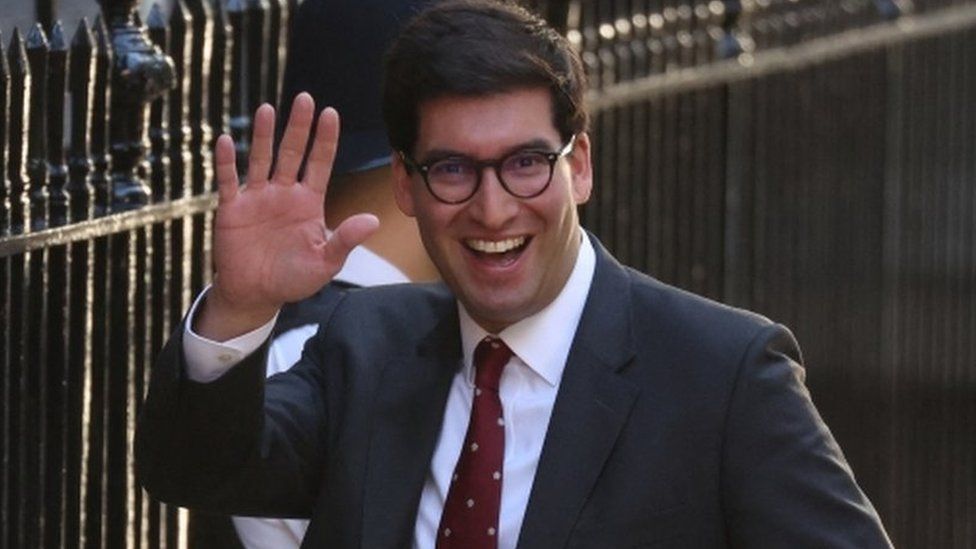
    The two key cabinet positions for net zero are now held by Jacob Rees-Mogg, the business secretary, who will oversee the all-important energy sector, and Ranil Jayawardena, the environment secretary.

    Don’t expect the new business secretary to be making many friends within the environmental lobby, or the “green blob” as he has called them.

    Mr Rees-Mogg has spoken in the past of extracting “every last drop” of North Sea oil, and licenses could be approved rapidly for new oil and gas exploration. That’s a complete no-no for almost all climate scientists, who say there can be no more fossil fuel projects if we are going to retain any hope of keeping global temperature rises under 1.5 degrees. Climate scientists say missing that target would accelerate the risks of climate change like extreme weather.

    “It doesn’t have a knock on effect on net zero.” Mr Rees Mogg said when talking about new North Sea oil and gas on his podcast earlier this year.

    “It’s more environmentally friendly to use gas that you’ve got at hand than to import liquefied gas from the rest of the world.”

    A small group of Conservatives have also been demanding that the new PM take a fresh look at fracking and Ms Truss has given them some encouragement.

    On the campaign trail she said that what she called the “effective ban” on fracking would be lifted but it would only take place where local communities supported it (which may well stop it happening).

    Mr Rees-Mogg has called shale gas “very clean” and said that the threat of drilling causing earthquakes was overstated with “some the equivalent of a bus passing by your house.”

    Renewables


    The cold, hard capitalist truth is that new renewables are currently a much cheaper source of new power generation than any of the fossil fuel or nuclear alternatives. So shifting towards wind and solar makes not just environmental, but economic sense, while at the same time giving us more energy security.

    Environment secretary Ranil JayawardenaImage source, Reuters

    Image caption, New environment secretary Ranil Jayawardena has talked about “protecting our countryside from solar farms”

    Britain is a world leader in offshore wind and in the next few years the building of ever larger wind-farms – mainly in the North Sea – looks set to continue. Huge projects are already under way and will come on stream in the next couple of years.

    There’s unlikely to be shift in policy towards two Tory renewable bugbears with comparable price tags – onshore wind and solar.

    Ms Truss has already said she wants new solar panels to be limited to the roofs of buildings and not put on agricultural land, and her environment minister appears to have even stronger views.

    “I don’t think there’s any need for solar power given the huge potential for wind,” Ranil Jayawardena said in a social media video posted in November 2021.

    “If you feel strongly about protecting our countryside from solar farms write to your local councillor and give them the support they need to take action quickly to protect our countryside from them.”

    Wind farms on land have a much shorter development timeline, but new projects have effectively been halted since 2014 when local communities were given greater powers to object. Despite the attraction of quicker cheap energy, neither Ms Truss, Mr Rees-Mogg or Mr Jayawardena have shown any enthusiasm for making onshore any easier.

    On one of his podcasts, Mr Rees-Mogg talks about “hairshirt greenery”, the idea that environmental problems can be addressed by limiting our consumption of resources.

    “If you are too aggressive, too “hairshirty” people won’t vote for it.” he says.

    “So you’ve got to go with the grain of public opinion with what people are willing to accept. And that means raising living standards through efficient use of technology”.

    In that light, latest polling on renewables conducted by Mr Rees-Mogg’s new department makes interesting reading. It shows that 7% of people would be unhappy (compared to 54% who would be happy) about a solar farm being built in their local area and 12% unhappy (with 43% happy) about an on-shore wind-farm.


    Source: BBC


  • UK PM Truss places allies in key cabinet roles

    Newly sworn-in UK Prime Minister, Liz Truss, has made a major reshuffle hours after succeeding Boris Johnson.

    Now at the helm of affairs are key allies of hers.

    Kwasi Kwarteng has been made chancellor, James Cleverly becomes foreign secretary and Suella Braverman replaces Priti Patel as home secretary.

    One of Ms Truss’s closest friends, Therese Coffey, is now the health secretary and deputy PM.

    Her new cabinet will meet ahead of her first Prime Minister’s Questions later.

    None of those who backed her defeated rival, Rishi Sunak, will remain in her full cabinet, with Dominic Raab, Grant Shapps, George Eustice and Steve Barclay all returning to the backbenches.

    But Ms Truss’s press secretary said the changes would “unify” the Tory Party and pointed to senior roles for five of her leadership rivals: Suella Braverman, Tom Tugendhat as security minister, Kemi Badenoch as trade secretary, Penny Mordaunt as leader of the Commons, and Nadhim Zahawi as chancellor of the Duchy of Lancaster.

    For the first time, none of the top four “great offices of state” – prime minister, chancellor, home secretary and foreign secretary – is held by a white man.

    Meanwhile, the new PM made her first call to a fellow foreign leader, pledging the UK’s ongoing support to Ukraine in a call with President Volodymyr Zelensky.

    No 10 said Ms Truss was also “delighted” to accept an invitation to visit Ukraine.

    She later spoke to US President Joe Biden, where the pair discussed the importance of the UK reaching an agreement with the EU over post-Brexit trading rules in Northern Ireland.


  • Truss addressing nation from Downing Street after rain delay

    Liz Truss is delivering her address to the nation after being appointed the country’s new prime minister by the Queen.

    The Tory leader, who became the UK’s third female prime minister today, begins by paying tribute to Boris Johnson who she says was a “hugely consequential prime minister”.

    She says the UK now finds itself facing “global headwinds” caused by Russia’s war in Ukraine and now is the time to “tackle the issues that are holding Britain back”.

    Ms Truss says she has a “bold plan” to “grow the economy through tax cuts and reform” and says she has three priorities.

    “I will cut taxes to reward hard work and boost business-led growth and investment,” she says.

    The new prime minister says she will deal “hands-on” with the energy crisis caused by Vladimir Putin‘s war and will “secure our future energy supply”.

    “I will make sure that people can get doctors appointments and the NHS services they need. We will put our health service on a firm footing by delivering on the economy, on energy and on the NHS,” she says.

    She adds: “As strong as the storm maybe I know that the British people are stronger.

    “Our country was built by people who get things done. We have huge reserves of talent, energy, and determination. I am confident that together we can ride out the storm, we can rebuild our economy and we can become the modern, brilliant Britain that I know we can be.”

    Source: skynews.com

  • Biden quick to congratulate Truss

    US President Joe Biden has wasted no time in congratulating Liz Truss after her first speech as prime minister. 

    He said he looked forward to “deepening the special relationship” between the US and the UK.

    Ms Truss and Mr Biden will be close allies in supporting Ukraine over the coming months as it continues to fight back against Russia’s war.

    Source: skynews.com

  • Truss departs for Balmoral to be sworn-in as PM

    The plane carrying soon-to-be prime minister Liz Truss has departed RAF Northolt in London, heading for Aberdeen.

    She will be then conveyed to Balmoral, where she will meet the Queen after Boris Johnson, who is currently en route to the highlands himself

    The new prime minister is expected to make her first speech outside Downing Street and explain what she wants to do in government.

    Will she be speaking outside the building, as is customary, or inside if the weather proves too inclement? The forecast in London this afternoon is for more rain in the capital.

    Later on, Truss is set to start naming her Cabinet. Business Secretary Kwasi Kwarteng is expected to become chancellor, while Suella Braverman, the current attorney general, is expected to be named home secretary. Education Secretary James Cleverly is slated to become foreign secretary.

    Jacob Rees-Mogg, currently minister for Brexit opportunities and government efficiency, has been tipped to replace Kwarteng as business secretary.

    Current Home Secretary Priti Patel and Culture Secretary Nadine Dorries have already said they will step down from their current roles.

    The day’s proceedings

    Boris Johnson meets the Queen at Balmoral Castle where he will offer his resignation as prime minister. At this point, there is a short period – normally a matter of minutes – with no prime minister.

    It is then Liz Truss’s turn to meet the monarch, having also made the 500-mile trip to Balmoral. The Queen will ask her to form a government. Truss will be appointed through a ceremony called “kissing hands” – though there’s no actual kissing involved.

    Having been formally appointed, Truss returns to London.

    Source: BBC

  • Liz Truss will become UK’s next prime minister after beating Rishi Sunak in race to succeed Boris Johnson

    The foreign secretary has won the contest to become the next Tory party leader – and therefore prime minister – in a ballot of Conservative members.

    Liz Truss will become the next prime minister after defeating Rishi Sunak in the Conservative Party leadership contest.

    Ms Truss, who was the favourite to win, will succeed Boris Johnson on Tuesday and become the nation’s third female leader.

    The foreign secretary used her victory speech to indicate she would not trigger an early general election, instead pledging to secure “a great victory for the Conservative Party in 2024”.

    She won by a comfortable margin, but her victory was slimmer than in other recent leadership contests.

    Ms Truss said it is an “honour to be elected” as she thanked her party for organizing “one of the longest job interviews in history”.

    “You got Brexit done. You crushed Jeremy Corbyn. You rolled out the vaccine and you stood up to Vladimir Putin,” she said.

    Mr Johnson, who was forced to resign after a wave of ministers left his government over a series of controversies, will visit the Queen at Balmoral to formally tender his resignation tomorrow.

    Shortly after this, Ms Truss will meet the Queen, who will invite her to form a government.

    Ms Truss is expected to make a speech outside Number 10 once she takes office and will then get to work on appointing her cabinet.

    She faces the immediate challenge of coming up with a package of support to help households weather a worsening cost of living crisis driven by soaring energy bills.

    Ms Truss reiterated her promise to “deliver a bold plan” to cut taxes and grow the economy in her victory speech.

    “I will deliver on the energy crisis dealing with people’s energy bills, but also dealing with the long-term issues we have on energy supply,” she said.

    Ms Truss has remained tight-lipped about what kind of support package she might introduce – though speculation is mounting it could be a freeze in the energy price cap.

    Reacting to her victory, Labour leader Sir Keir Starmer said she “needs to show that she actually understands and can meet the challenges that are there after 12 years of failure of this Tory government”.

    Nicola Sturgeon, the Scottish first minister, also called on her to “freeze energy bills for people and businesses, deliver more cash support, and increase funding for public services”.

    Conservatives have also been reacting to her victory.

    Theresa May said: “I look forward to supporting the government in that task.”

    And former leadership hopeful Penny Mordaunt told Sky’s political editor Beth Rigby that Ms Truss is the strong character the UK needs to “take our country forward”.

    Mr Sunak and Ms Truss were whittled down to the final two candidates after five rounds of voting by Tory MPs.

    The pair went head-to-head over a summer of hustings and live television debates, during which they clashed repeatedly over their plans for the economy.

    Party members had from 1 August to 2 September to cast their votes, which were counted over the weekend.

    Source: skynews.com

  • Race to decide next British PM: Voting closes

    The Conservative leadership election to choose Boris Johnson’s successor as prime minister is now over.

    At 12.30 BST on Monday, the two candidates, Rishi Sunak and Liz Truss will learn who has won the vote of Tory members.

    The winner will be formally appointed prime minister on Tuesday by the Queen.

    They will then begin appointing ministers to their new cabinet.

    Mr Johnson, who led the Tories to a landslide victory at the 2019 election, will remain in office until the transfer of power is complete.

    The fractious campaign to replace him has seen the candidates regularly attack each other’s policies as well as the Tories’ record in government.

    Ms Truss, the foreign secretary, is the clear favourite to win, according to polls of Tory members. She has promised to deliver billions of pounds in tax cuts in an emergency Budget if she wins power.

    Former Chancellor Rishi Sunak has said he would cut VAT on energy bills for a year, but permanent tax cuts should wait until inflation goes down.

    With the cap on domestic energy prices set to soar in the autumn, what to do about rising living costs has dominated the contest in recent weeks.

    Both candidates have come under pressure to spell out how they would protect households from the rises, as well as give help to businesses, which are not covered by the price cap.

    Mr Johnson left big spending decisions to his successor after his resignation in July, leading opposition parties to accuse the government of paralysis.

    Ms Truss has said she would reverse April’s rise to National Insurance and cut green levies on energy bills to help households with costs. She has signalled she would provide more support on top of this but has offered no details.

    Mr Sunak has said he would make further payments to pensioners and the low-paid over winter, on top of the payments they are already due to receive.
    Michael Gove and Rishi Sunak's family at the London hustingsIMAGE SOURCE,PA MEDIA
    Image caption,

    Rishi Sunak’s wife Akshata Murthy (c) cheered him on at campaign hustings in London

    The contest began in mid-July when Mr Johnson was forced out by a ministerial revolt over a string of scandals.

    The original field of 11 contenders was whittled down to two in a series of Tory MP ballots, with the final two going into a run-off to be decided by the membership, which stands at around 160,000.

    Although Mr Sunak had the most support among Tory MPs, opinion polls have suggested Ms Truss enjoys more support among party members.

    As the campaign drew to a close, Mr Sunak thanked his supporters and said he had “loved every second” of his “six weeks on the road”.

    Ms Truss also thanked volunteers on her campaign, and said if she is elected she would “do everything in my power to make sure our great nation succeeds”.

    In a break with tradition, the winner will travel to Balmoral Castle in Scotland to be appointed by the Queen, rather than at Buckingham Palace.

    She has been suffering from mobility issues and it is understood the change was made to prevent the need for any last-minute rearrangements.

  • Liz Truss set to win Tory leadership race by decisive margin

    The gap between the two candidates to replace Boris Johnson has narrowed, but Liz Truss is set to win by a long way – however Conservative members still prefer Boris Johnson and think ousting him was a mistake


    Liz Truss is set to win the Tory leadership contest by a decisive margin next month, according to an exclusive Sky News poll that gives the foreign secretary a 32-point lead over rival Rishi Sunak.


    The poll also shows that the legacy and personality of Boris Johnson is likely to loom large over the next prime minister as there is huge regret among Tory members over the decision to oust him in July.

    The YouGov survey suggests 66% of members are voting for Ms Truss and 34% are backing Mr Sunak, once those who do not know or will not vote are excluded.

    The race has tightened very slightly since a YouGov poll of members just over two weeks ago, when Ms Truss had a 38 percentage point lead.

    Source: Skynews
  • Tory leadership: Liz Truss backs down on the proposed public employee compensation plan

    Liz Truss has scrapped a plan to link public sector pay to local living costs.

    The Conservative leadership candidate had said she wanted to introduce regional pay boards, in a bid to save a potential £8.8bn.

    However, there was a fierce backlash to the policy from several senior Tories, who argued it would mean lower pay for millions of workers outside London.

    The Truss team has now said the proposal will not be taken forward.

    A spokesperson for the leadership hopeful said there had been “a wilful misrepresentation of our campaign”.

    They said: “Current levels of public sector pay will absolutely be maintained. Anything to suggest otherwise is simply wrong.”

    Former Chancellor Rishi Sunak and Foreign Secretary Ms. Truss are vying for support from Conservative members to replace Boris Johnson as Tory leader and prime minister.

    Announcing the policy on Monday night, Ms. Truss had said she wanted “a leaner, more efficient, more focused Whitehall” and set out plans which suggested savings of £11bn a year.

    This included £8.8bn which would come from introducing regional pay boards, meaning that civil servant pay – and potentially later other public sector workers’ salaries – could be adjusted to reflect the area where civil servants work.

    It could have seen workers in, for example, the south-west or north of England paid less than those in the south-east.

    In addition to saving money, the Truss camp also argued it would help boost growth in areas, where the private sector had been crowded out by public sector salaries.

    However, the proposal was dropped after just over 12 hours when it was met with strong resistance from some Conservatives.

    A spokesperson from Mr. Sunak’s campaign described the U-turn as dramatic.

    “It demonstrates a lack of serious judgment by setting out plans that would see pay dramatically cut for police, nurses, and our armed forces in Cardiff and Canterbury, Teeside and Taunton during a cost of living crisis,” they said.

    “It also shows a worrying lack of grip of detail in what is already a woolly economic plan.

    “If this was in a general election, it would have been a potentially fatal own goal for the Conservatives.”

    And Tees Valley mayor Ben Houchen – who is supporting Mr. Sunak – described the policy as “horrifically bad”, telling the BBC’s World at One it could lead to more scrutiny of policy from the foreign secretary.

    “There are lots of tasty soundbites from Liz – what we’re now seeing is that as people start to scrutinize that detail it can unravel quite quickly,” he said.

    Liz Truss is widely thought to have been ahead in the Tory leadership race.

    She had momentum in the campaign – and had avoided any significant errors.

    Until now.

    This policy has attracted huge criticism from opposition parties – and many Conservative politicians supporting Rishi Sunak.

    They argued regional pay boards would have been “leveling down”.

    Speaking to Mr. Sunak’s allies this afternoon, they argue Ms. Truss’s plans are unraveling and that it was a “catastrophic error of judgment”.

    Team Sunak will hope this starts to change the dynamic of the campaign – and potentially put him back on the front foot just as Tory members start voting.

    Team Truss will hope that junking the policy quickly will limit the damage.

    2px presentational grey line
    Liz Truss
    Image caption,

    Ms. Truss met supporters in the south-west on Tuesday as she continued her campaign for the No 10 job

    A number of Conservative MPs in the southwest of England also attacked the policy, including Sunak ally Steve Double who said it would be “hugely damaging to public services in Cornwall, where we already struggle to recruit NHS staff”.

    Another Sunak supporter – and former chief whip – Mark Harper said the Truss campaign should “stop blaming journalists” adding “reporting what a press release says isn’t ‘wilful misrepresentation”.

    Labour’s shadow chancellor Rachel Reeves said the proposal “reveals her [Liz Truss’s] priority would be to slash the pay packets of working people”.

    Liberal Democrat leader Sir Ed Davey said: “U-turning on a multi-billion-pound policy five weeks before even taking office must be a new record.”

    Ms. Truss has been seen as the frontrunner in the race for No 10, with several polls showing her to be more popular among the Conservative party members.

    Source: bbc.com