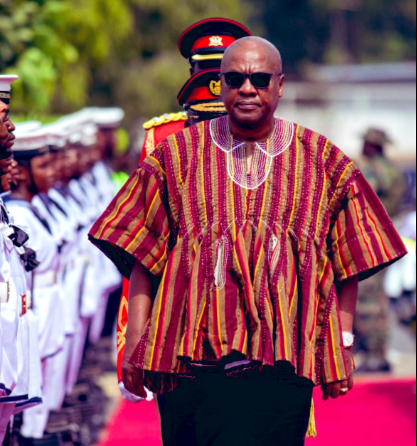
President John Dramani Mahama has stressed that Ghana’s economic independence cannot be achieved through slogans and repeated rhetoric but must be driven by concrete actions.
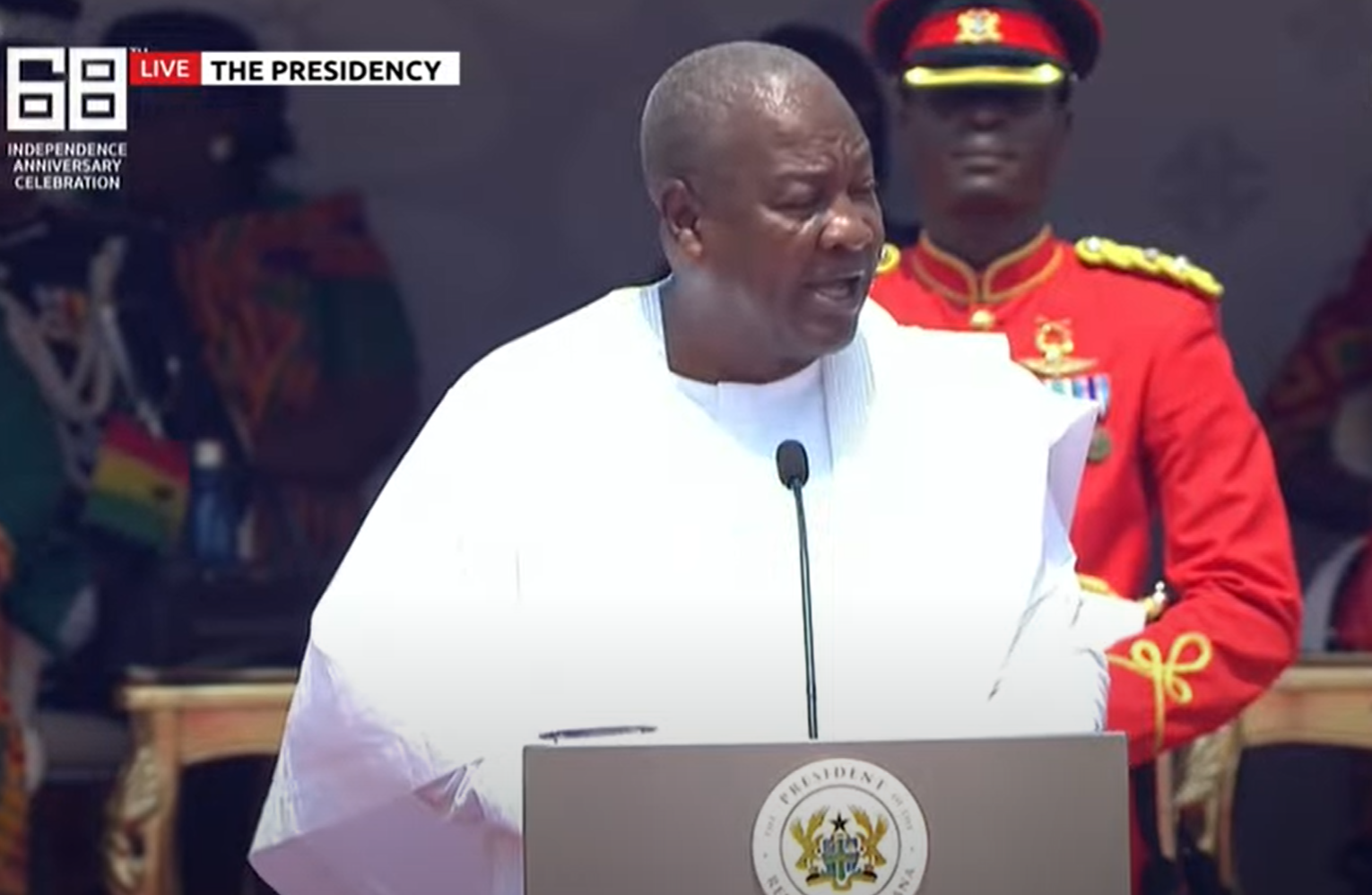
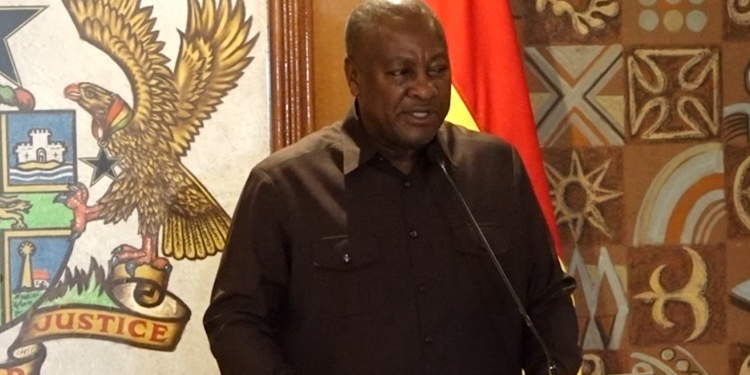
Addressing the nation at the 68th Independence Day celebration at the Jubilee House on March 6, 2025, Mahama pointed out the ongoing debate over Ghana’s reliance on imports, donor aid, and IMF bailouts.
He cautioned that while these concerns are valid, continuously voicing them without real solutions risks reducing them to mere clichés. He criticized the contradiction of calling for self-sufficiency while still depending on external financial assistance.
“Discussions about our independence often highlight our reliance on imports, donor aid, and IMF bailout as signs of continued dependency. This reminder is repeated so often that, while undeniably real, it risks becoming a cliché.
“Yet the entire efficacy of this reminder lies not in just repeating it but in our willingness to take decisive action. Actions that will break the chain of dependency, not just the empty rhetoric of Africa that is beyond aid.
“Proclaiming self-reliance while matching straight but into the hands of the donor agencies, begging bowl in hand, is meaningless,” he stated.
To address these challenges, Mahama reaffirmed his administration’s commitment to restoring economic stability by enforcing fiscal discipline and fostering self-sufficiency.
“To break this cycle of spenders and restore our economy, my administration is formulating policies based on fiscal discipline and living within our means,” he stated.
President John Dramani Mahama has called on Ghanaians to remain steadfast and committed to national progress despite the economic hardships facing the country.
Delivering an address from the Jubilee House to mark the 68th Independence Day celebration, the president emphasized the need for resilience, drawing inspiration from the struggles and triumphs of Ghana’s founding leaders.
“In recent years, poor choices have stunted our prospects and left us reeling from serious challenges. This stark reality, far from dampening our spirit, must spur us on to strive for rapid development,” he stated.
“For if our forebears with far less did not permit their backs to be broken by repressive and exploitative colonial administration, representing an imperial power, how can we, their progenies armed with far more, despair in the face of these challenges?” he added.
He stressed the importance of unity, perseverance, and a collective commitment to rebuilding Ghana, reaffirming his administration’s vision for the country’s future.
“As I said before Parliament, we shall live the dreams of our forebears in our lifetime. This is not just a promise; it is a call to action,” he declared.
Mahama’s remarks echoed the theme of this year’s Independence Day celebration, “Reflect, Review, and Reset,” which underscores the need for national introspection and a renewed sense of purpose.
“Let this be our mission—to rise above fear, silence the voices of doubt, harness the strength within us, and create a future that is fair, prosperous, and inclusive,” he urged.
His message comes at a time when Ghana continues to grapple with economic difficulties. The country’s macroeconomic crisis in 2022 has significantly impacted poverty levels, with an estimated 30.3% of Ghanaians living in poverty as of 2023.
Ghana’s public debt has soared to GHS721 billion due to excessive borrowing, contributing to rising inflation and cedi depreciation. The government spent GHS6.1 billion on debt servicing in February 2025 alone and is projected to pay GHS180 billion next year, according to Felix Kwakye Ofosu, Minister-designate for Government Communications and spokesperson for the president.
Economic analysts and stakeholders have urged the government to implement bold tax policy measures and reforms to improve fiscal stability and restore investor confidence.
Government is set to provide the 2025 budget and economic statement to inform the citizens on the path ahead in ensuring economic recovery.
President John Dramani Mahama has appealed to the people of Bawku and its neighboring areas to put an end to the prolonged conflict that has afflicted the region for years.
Addressing the nation during the 68th Independence Day parade at Jubilee House on March 6, 2025, he highlighted the deep scars the violence has inflicted on the younger generation.
He stressed that these children deserve a future defined by stability rather than turmoil.
He urged residents to focus on fostering harmony in their communities, emphasizing the importance of creating peaceful experiences in schools, markets, and neighborhoods.
According to him, ensuring a safe and united environment will enable young people to grow without the burden of conflict.
“To the people of Bawku and other affected areas, it is time for lasting peace to prevail. Our children deserve to inherit a peaceful land where their minds are nurtured, not where their nightmares are relived.
“They deserve to inherit a land where our markets flourish with trade, not tension and conflict. They deserve to inherit schools that echo with learning, not sorrow.
“Let us not be swayed by division, distrust, and the burdens of the past. Let us give renewal of friendship a chance; let us give peace a chance. This is not an invitation to simply forget the past—far from it. It is an invitation to rise above it,” he stated.
President John Dramani Mahama has revealed that Ghana’s 68th Independence Day celebration cost the government GHS 1 million, a significant reduction from previous years.
Speaking at the event held at Jubilee House on Thursday, March 6, President Mahama explained that the decision to relocate the celebration from Independence Square to the presidential palace was aimed at cutting costs amidst the country’s economic difficulties.
According to the President, initial estimates suggested that hosting the event at Independence Square at the usual scale would have cost GHS 20 million.
“This year, we received an estimate of at least 20 million Ghana cedis for holding the event at the Independence Square on the same scale as the previous year,” he stated.
Given the current financial constraints, he said, it was necessary to adopt a more cost-effective approach.
He noted that spending such an amount on a few hours of celebration would have been unjustifiable under the current economic conditions.
“This decision will save us 95% of the estimated cost of the event,” the President emphasized.
President Mahama further disclosed that in previous years, the celebrations were much costlier, citing the GHS 15 million spent on the 2024 event in Koforidua and the GHS 13.7 million used for the 2023 celebration in Ho.
Despite the scaled-down celebration, the President reassured Ghanaians that the significance of Independence Day remained intact.
He emphasized that the occasion continues to serve as a reminder of Ghana’s leadership in Africa’s independence struggle and its role in inspiring other nations to seek self-determination.
President John Dramani Mahama has disclosed that his administration significantly reduced the budget for Ghana’s 68th Independence Day celebration, spending just GHC1 million out of the estimated GHC20 million initially allocated for the event.
Addressing the nation from the Jubilee House, the President explained the rationale behind the cost-cutting measure, emphasizing the need for financial prudence during the current economic climate.
“The state spent GHC15 million on last year’s celebration in Koforidua and spent GHC13.7 million on the previous year’s celebration in Ho in the Volta Region. This year, we receive estimates of at least GHC20 million for holding the event at the Independence Square on the same scale as the previous years,” he said.
“In a year when we are calling on all to sacrifice, including workers who have graciously accepted the base pay adjustment far below the rate of inflation, it is unconscionable to spend that kind of money on a few hours of celebration. Today’s event will save us 95% of the estimated cost of the event,” the president added.
He stressed that reducing the budget did not diminish the significance of Ghana’s independence but was a necessary adjustment in line with the country’s economic realities.
This year’s celebration, themed “Reflect, Review, Reset,” called for a moment of national introspection as Ghana charts its socio-economic future. A new official logo was also unveiled, symbolizing the country’s resilience and aspirations.
Despite the scaled-down nature of the event, key traditions were upheld, including a Military Guard of Honour inspection, cultural performances, and a poetry recital from a senior high school student.
Ten schools—six basic schools and four senior high schools, including Accra Wesley Girls and St. Mary’s SHS Cadet—participated in the march past.
The event was graced by dignitaries, including traditional rulers, religious leaders, students, political party representatives, and members of the business community.
The Minority Leader, Alexander Afenyo-Markin, has cautioned Bank of Ghana (BoG) Governor, Dr. Johnson Asiama, to avoid political entanglements and uphold the independence of his office.
Addressing Parliament on Wednesday, March 5, during Dr. Asiama’s appearance to discuss concerns over the cost of the BoG’s new headquarters, Afenyo-Markin warned against selective scrutiny of the central bank’s actions, stressing the need for balanced oversight.
“I recall that in the 2015 State of the Nation Address, Mr. President [John Dramani Mahama] raised concerns about poor supervision of the banking sector by the Bank of Ghana. The governor today was the deputy governor then. Are we now picking and choosing which matters we want the governor to brief us on?” he questioned.
“Mr. Governor, don’t make yourself a tool for political football. The role of the governor of the central bank is critical to the economy of this country. I do not want to politicise the office of the governor, and I urge others to do the same,” he added.
Afenyo-Markin further advised the Majority in Parliament to handle economic discussions carefully, stressing that their approach could have far-reaching effects on Ghana’s financial stability.
His statement came amid heated debates over the BoG’s new headquarters, with the Minority disputing the session’s legitimacy over procedural concerns, while the Majority insisted that due process had been observed.
President John Dramani Mahama has ordered the cancellation of all land allocations and sales related to the Ministry of Foreign Affairs that were approved by the previous administration.
This move is intended to safeguard the Ministry’s property near Airport Residential, which had been taken over by seven different entities and individuals claiming ownership.
Foreign Affairs Minister Samuel Okudzeto Ablakwa shared the directive on his Facebook page, thanking President Mahama for his firm and patriotic stance on the matter.
He further assured that, under his leadership, no property belonging to the Ministry—whether in Ghana or abroad—would be sold.
“President Mahama has directed that all allocations and sale of land belonging to the Ministry of Foreign Affairs by the previous government be immediately reversed. Yesterday’s presidential directive will ensure that the Ministry’s adjoining land at Airport Residential which some 7 organisations and individuals claim to be the new owners would now be cancelled and preserved for the people of Ghana.
He further added, “I am enormously grateful to President Mahama for his unwavering patriotic and decisive presidential backing. Under my watch as Foreign Minister, no land or property of the Ministry, located either home or abroad would be sold. No more State Capture! For God and Country. Ghana First.”
Executive Director of the Institute for Democratic Governance (IDEG), Dr. Emmanuel Akwetey, has called for stricter measures to authenticate asset declarations by public officials, arguing that transparency and accountability in governance depend on proper verification.
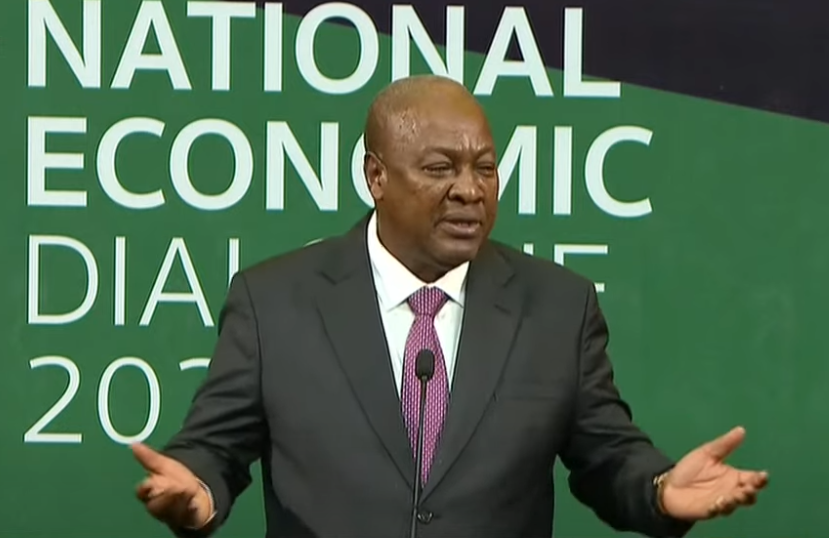
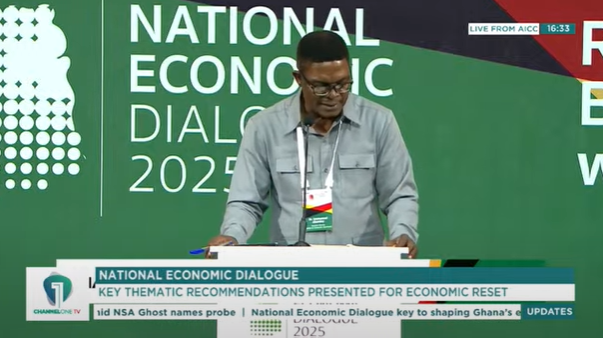
Speaking at the National Economic Dialogue, Dr. Akwetey acknowledged former President John Dramani Mahama for leading by example in making his assets public.
However, he insisted that disclosure alone is insufficient and recommended that the Auditor-General be responsible for verifying such declarations.
“There is also the need for verification of declared assets by the Auditor General. The president has set the standard, he is the first person to announce that he declared his assets, and we all saw it on TV,” he noted.
He further encouraged all public officials to follow Mahama’s example but questioned whether these disclosures would be made accessible to the public for scrutiny.
“But we think that all public officers should do the same. However, it is not clear whether this will be made public. So that the assessment can be done also by the citizens they are representing in the high offices of state,” he added.
In addition to asset verification, Dr. Akwetey advocated for structural changes to limit executive influence over the legislature, stressing that such a move is necessary to maintain checks and balances.
He expressed concerns over the ruling party’s control of parliament, warning that an overwhelming majority could push through reforms without broader consensus, deepening political divides.
“It is essential to decouple parliamentary functions from the executive branch to promote checks and balances in governance. But we have a situation where this time, the governing party has the greatest majority,” he stated.
He cautioned against one-sided constitutional amendments, emphasizing that broad agreement is essential.
“With the governing party having almost absolute majority to push the agenda to push reforms, it could do it its way. That could end up intensifying division. Constitutional reforms require consensus even if it will not be entrenched,” he cautioned.
President John Dramani Mahama has ordered the immediate cancellation of all allocations and sales of land belonging to the Ministry of Foreign Affairs, Minister Samuel Okudzeto Ablakwa has revealed. The directive aims to protect state assets and curb further encroachment on public lands.
In a Facebook post on Wednesday, March 5, Ablakwa stated that the order specifically affects land adjacent to the Foreign Affairs Ministry at Airport Residential, which had been allocated to seven organisations and individuals under the previous administration.
“Yesterday’s presidential directive will ensure that the Ministry’s adjoining land at Airport Residential, which some seven organisations and individuals claim to be the new owners, would now be cancelled and preserved for the people of Ghana,” he stated.
The minister lauded President Mahama for his swift and firm intervention, describing it as a demonstration of patriotic leadership. He emphasized that the move reinforces the government’s commitment to safeguarding national resources.
“I am enormously grateful to President Mahama for his unwavering patriotic and decisive presidential backing,” Ablakwa added.
Reaffirming his commitment to protecting Foreign Ministry properties, Ablakwa assured the public that no assets belonging to the ministry—whether in Ghana or abroad—would be sold under his leadership.
“Under my watch as Foreign Minister, no land or property of the Ministry, located either home or abroad, would be sold,” he affirmed.
President John Dramani Mahama has reiterated the need for a comprehensive review of Ghana’s extractive sector agreements, aligning with recent concerns raised by former Chief Justice and Council of State member, Sophia Akuffo.
Speaking at the National Economic Dialogue in Accra, Mahama emphasized that Ghana’s mineral agreements remain outdated and must be restructured to ensure that the country benefits more from its natural resources.
“Just recently, I think yesterday, the former Chief Justice of this country asked for a review of agreements governing our extractive industry. She described the current agreements as coming from the Guggisberg era, I agree with her,” Mahama stated.
Sophia Akuffo, in an earlier media interview, criticized the existing mineral concession frameworks, arguing that they disproportionately favor foreign investors at Ghana’s expense.
“We are still doing it like we are in the days of Guggisberg,” she remarked, referencing the colonial-era policies that still seem to shape Ghana’s resource management.
Mahama stressed the urgency of increasing local participation in resource exploitation, stating that “Ghana must earn more from its natural resource endowment if we are to create wealth and prosperity for our people.”
Beyond the extractive sector, he highlighted the need to modernize agriculture, advocating for mechanization, improved irrigation, and technology-driven innovations to enhance productivity and food security.
He also underscored the significance of digital transformation, arguing that high-speed internet and robust digital infrastructure were no longer luxuries but essential drivers of economic growth and global competitiveness.
According to Mahama, governance reforms must also take center stage to promote transparency and ensure accountability. He urged a departure from short-term economic policies, advocating instead for strategic, long-term planning to break the cycle of economic instability.
“The policies required to bring the national economy back on track and sustain the gains made will require multi-stakeholder buy-in,” he said, stressing that the National Economic Dialogue was a step toward shaping policies that reflect the collective aspirations of Ghanaians.
The Dialogue, themed “Resetting Ghana: Building the Economy We Want Together,” aims to provide a clear picture of Ghana’s economic realities, develop a homegrown fiscal consolidation program, and highlight key structural reforms necessary to reset the economy.
A similar forum was held a decade ago under Mahama’s first administration, and he expressed confidence that this renewed engagement would lead to actionable solutions rather than mere diagnosis of economic challenges.
President John Dramani Mahama has called on all Ghanaians to join forces in supporting the reset agenda, stressing that only through collective action can the nation navigate its economic challenges and pave the way for sustainable growth.
Speaking at the National Economic Dialogue on March 3, 2025, Mahama outlined the event’s purpose not merely as a discussion of the country’s economic troubles but as a step toward developing tangible solutions and setting a progressive course for Ghana’s financial future.
He emphasized that the reset agenda is not just a government initiative but a nationwide call for action, aimed at rebuilding the economy to ensure prosperity for all Ghanaians.
“We are not here to recount our struggles nor are we here to resign ourselves to economic stagnation. We are here to seek solutions that will put us on a path of growth trajectory and to ensure that we build an economy that works for every Ghanaian,” he stated.
President Mahama emphasized the importance of swift action, urging all parties involved to collaborate in overcoming the country’s economic struggles.
“For me, this is not just another policy discussion, it is an urgent call to action. A crucial moment for us, as stakeholders, to purpose and resolve the challenges that face us,” he added.
President John Dramani Mahama has reaffirmed his administration’s commitment to economic transformation, urging Ghanaians to shift their focus from past challenges to finding solutions that will drive sustainable growth.
Speaking at the opening of the National Economic Dialogue on Monday, March 3, 2025, President Mahama emphasized that the forum was not merely a reflection on the country’s economic struggles but a platform to chart a new course toward prosperity.
“We are not here to recount our struggles nor are we here to resign ourselves to economic stagnation. We are here to seek solutions that will put us on a path of growth trajectory and to ensure that we build an economy that works for every Ghanaian,” he stated.
He described the reset agenda as a shared national responsibility, calling on all stakeholders to work together in rebuilding the economy for the collective benefit of citizens.
“For me, this is not just another policy discussion, it is an urgent call to action. A crucial moment for us, as stakeholders, to purpose and resolve the challenges that face us,” he added.
The National Economic Dialogue brings together policymakers, business leaders, economists, and development experts to formulate strategies for economic recovery and long-term resilience. The discussions are expected to yield actionable measures that will drive structural reforms and enhance economic stability.
President John Dramani Mahama has reaffirmed his confidence in Ghana’s economic recovery, assuring citizens that the country will regain its strength and emerge as a leader in prosperity on the African continent.
Speaking at the National Economic Dialogue on March 3 at the Accra International Conference Centre, Mahama emphasized the importance of collective effort in restoring Ghana’s economic stability.
“We are gathered here today because we believe in Ghana’s ability to rise again. We’re gathered here to reclaim our country’s economic strength and emerge as a beacon of progress on the African continent. Not only a beacon of democracy but a beacon of economic prosperity,” he stated.
The National Economic Dialogue, convened by economic experts, policymakers, and business leaders, serves as a platform for discussing strategies to address Ghana’s economic challenges. Mahama underscored the need for innovative policies and collaboration to navigate the nation’s current economic difficulties.
He urged stakeholders to prioritize sustainable solutions that would drive long-term growth and ensure a stable economic future for all Ghanaians.
President John Mahama has pledged to run a government rooted in humility and accountability, ensuring that power is exercised without arrogance or abuse.
Speaking during his first State of the Nation Address on February 27, 2025, he assured Ghanaians that his administration would uphold the highest standards, holding his appointees accountable for their performance.
John Mahama said, “The arrogance of power you so much abhor will be a thing of the past. I will enforce and demand the highest standards of performance from those I have chosen to work with me to improve the circumstances of our country.”
Acknowledging the dire state of the economy, Mahama reaffirmed his commitment to stabilizing it and easing the burden on ordinary citizens.
He said: “Mr Speaker, I would be remiss if I didn’t admit that the entire economic value chain is indeed in the ICU, as I recall mentioning a few years ago when we were still in opposition. The economy is even worse than we envisaged, but this gives us ample opportunity to be innovative in our efforts to reset and rebuild it.”
The Bono Regional Chairman of the New Patriotic Party (NPP), Kwame Baffoe, has retracted his earlier corruption allegation against President John Dramani Mahama.
Popularly known as Abronye, he had previously accused the former president of withholding substantial sums of money meant for dismissed appointees at the Jubilee House.
“The Akufo-Addo government budgeted GH¢550 million for these individuals to be employed. This money comes from taxpayers, yet another government cancels the appointments and allegedly transfers the funds to the Jubilee House. So, what are you doing with the GH¢550 million that was put in bullion vans and sent to the Jubilee House?
“You have revoked people’s appointments, taken their GH¢550 million, and put it in a bullion van,” he alleged on Accra-based Movement TV in February 2025.
Abronye has clarified that his earlier remarks, stating that his reference to a bullion van transporting money to the presidency was figurative and had been misinterpreted.
During an appearance on Movement TV on February 28, 2025, following an invitation from the National Intelligence Bureau (NIB) to provide evidence for his corruption allegation against the president, he explained that his mention of the bullion van was not to suggest that the money was physically at the president’s residence or in his custody.
He stressed that his primary objective was to demand accountability for funds allocated to compensate public sector workers whose appointments had been terminated.
He further noted that these funds had been budgeted under the former Akufo-Addo administration and were captured in the 2024 budget for such purposes.
“… In the 2024 budget, we allocated GH¢58 billion for all Ghanaian workers, including those employed during the 2024 fiscal year. I posed a question seeking to understand the whereabouts of the funds if the workers’ appointments had been terminated. I wanted to get clarity by asking this question. That was when I made the statement that the money was being transported to the Jubilee House in a bullion van. The reference to the money being in a bullion van was simply a semantic expression I used. It does not mean that the money is physically at the president’s residence or that he is personally spending it,” Abronye explained in the interview.
The vocal NPP executive has expressed regret for making public an invitation letter from the National Intelligence Bureau (NIB), which sought his cooperation regarding allegations he made against President John Dramani Mahama.
He admitted that the letter was intended to be confidential but acknowledged that his decision to publish it was an error.
“One of the things they didn’t like, which I agree with, was my public disclosure of the invitation letter to the media. It was unethical for me to have done that. The letter clearly stated that the meeting was confidential, but when I was reading it, I failed to notice that detail. I apologise to them for that, as I shouldn’t have acted in that manner,” he added.
A petition has been sent to President John Dramani Mahama, appealing for a presidential pardon for William Ato Essien, the founder of First Capital Plus, which later became Capital Bank.
Essien was convicted by an Accra High Court and sentenced to 15 years in prison for misappropriating more than GH¢90 million in liquidity support from the Bank of Ghana.
Initially, he was given an opportunity to avoid jail by repaying the full amount as restitution, but he failed to meet the agreed payment terms.
Although he managed to pay GH¢30 million upfront in December 2022, he was unable to clear the remaining GH¢60 million in installments, leading to the enforcement of his prison sentence.
The petition, filed by lawyer Andrew Appiah-Danquah on Thursday, February 27, challenges the fairness of Essien’s conviction and calls for a review of the circumstances surrounding his case.
It highlights his contributions to Ghana’s financial sector, arguing that as the founder of Capital Bank, his leadership created jobs, supported local businesses, and fostered entrepreneurship.
The petition suggests that his imprisonment undermines the achievements of a visionary businessman who proved that Ghanaian enterprises could thrive in the banking industry.
Additional concerns regarding his sentencing are also outlined in the petition.
The petition also presented further arguments, stating,“Capital Bank’s collapse in 2017 was not due to fraud but a politically orchestrated move to consolidate financial power. Mr. Essien refused to bow to political pressure to cede control of his bank to powerful interests, which ultimately led to its targeted demise. The GH₵ 620 Million Liquidity Support Was a Commercial Loan, Not a Fraud…Capital Bank was repaying this loan and had already paid GH₵ 336 million in interest over two years—clear evidence that it was a legitimate banking transaction.
“The GH₵ 480 million described as a “shareholder loan” was not stolen but rather a strategic restructuring of non-performing loans accumulated over 14 years. Such restructuring is a common financial practice aimed at strengthening a bank’s financial position and was not an act of fraud. The Court’s Acquittal of Others Contradicts Ato Essien’s Conviction
“Three other accused persons—Dr. Tetteh Nettey, Rev. Fitzgerald Odonkor,and Kate Quartey-Papafio—were acquitted on the same charges for which Mr. Essien was convicted. The court held that: The GH₵ 70 million transaction involving Kate Quartey-Papafio was fully accounted for. The GH₵ 130 million transaction involving Dr. Tetteh Nettey was fully accounted for. The GH₵ 27.5 million transaction involving Rev. Fitzgerald Odonkor was legal and authorised.
The petition contends that Mr. Essien was compelled into a plea bargain to prevent a lengthy trial, committing to repay GH₵ 90 million—an amount exceeding the alleged loss—of which he has already paid GH₵ 43.75 million.
“To avoid a prolonged trial, Mr. Essien was pressured into a plea bargain, agreeing to pay GH₵ 90 million—an amount significantly higher than the alleged loss which he has already paid GH₵ 43.75 million.
The petition therefore appealed to the president to consider granting a Presidential Pardon to Mr. William Ato Essien.
“Granting a Presidential Pardon to Ato Essien will not only restore justice but will also affirm your commitment to a truly new Ghana—one where freedom and justice are not just words, but lived realities,” the petition added.
Former President John Dramani Mahama has defended the role of the Church in Ghanaian society, arguing that without its presence, crime and immorality levels would be significantly worse.
Addressing the clergy in Kumasi on Sunday, Mahama pushed back against claims that religion has failed to instill moral values in the country, despite over 90% of the population identifying as religious.
“There is an often-heard argument that while more than 90% of Ghanaians profess to be persons of faith, immorality and crime are on the rise. My answer to those who make this argument is that the situation would probably have been far worse if there were no Church,” he remarked.
He explained that the Church acts as a moral guide, shaping individuals and communities, and without it, society could descend into lawlessness.
“Imagine a scenario where there was no Church, and people could act without any moral restraint. The situation would undoubtedly be worse. The churches are doing their best, and their efforts must be acknowledged,” he added.
Mahama also stressed the need for unity among Christian denominations, cautioning that divisions within the Church weaken its collective influence on national matters.
“It is essential to emphasise the importance of fostering unity among Christian denominations. A divided Church weakens its impact,” he stated.
He urged churches to work together in promoting national development and moral discipline.
“But a united Church can transform society. Let us work together to build a vibrant and influential Christian community that speaks with one voice on issues of national development,” he concluded.
Former President John Dramani Mahama has announced plans to commence construction of the Kumasi Western Bypass as part of his ‘Big Push’ initiative.
The project is aimed at easing traffic congestion in Kumasi, particularly for heavy cargo trucks.
Speaking during a meeting with the clergy on Sunday, Mahama explained how the bypass would improve traffic flow and enhance connectivity in the region.
“Under the Big Push Programme, we’ll commence construction of the Kumasi Western Bypass. This will remove unnecessary traffic, especially the heavy articulated cargo trucks that come through the city. Because they would have an opportunity to connect with the Mampong and Techiman roads through Ejisu,” he stated.
Beyond the bypass, Mahama reassured the public of his commitment to completing stalled infrastructure projects in Kumasi. He acknowledged that several major roadworks, including the Suame Interchange, had been initiated without secured funding, leading to delays.
“Other projects such as the Suame Interchange and other road works were commenced without dedicated funding. But we have to look for sources of funding. We are looking for sources of funding to speed up the work on this project so that we can ease the condition and inconvenience that the residents of Kumasi face,” he added.
Mahama also addressed the stalled Kejetia Market Phase 2 project, attributing the delay to the government’s debt exchange programme. However, he expressed optimism that negotiations with lenders could soon pave the way for work to resume.
“Kumasi Market, Kejetia Market phase 2 has come to a standstill because it was affected by the debt exchange. Now that we have finished the official negotiations with the official creditor committee, it opens the way for us to have bilateral discussions with the lenders in order that they can resume work on Kumasi Market phase 2,” he said.
Mahama’s ‘Big Push’ initiative is expected to drive infrastructural development across the country, with a strong focus on roads, markets, and other critical projects.
President John Dramani Mahama has reaffirmed his commitment to completing the Sewua Hospital before the year ends, emphasizing the need to revive stalled infrastructure projects in the Ashanti Region.
Addressing the clergy in Kumasi on Sunday, Mahama expressed concern over delays in projects initiated under his previous administration. He assured that efforts were underway to ensure their completion.
“I’ve assured Otumfuo that we’ll complete the Sewua hospital this year. The completion would allow us to decongest Komfo Anokye Teaching Hospital so that important rehabilitation works can continue there,” he stated.
Mahama further disclosed that he had engaged Euroget De-Invest S.A, the contractors of the Afari Military Hospital, who have pledged to resume work soon to accelerate its completion.
He also highlighted key infrastructure projects such as the Suame Interchange and several road networks, which he said were initiated without secured funding. He acknowledged the urgent need to secure financing to expedite construction and ease the burden on Kumasi residents.
“We are looking for sources of funding to speed up the work on this project so that we can ease the condition and inconvenience that the residents of Kumasi face,” Mahama added.
Regarding the Kejetia Market Phase II project, Mahama attributed its delay to the debt exchange programme. However, he expressed optimism about resuming discussions with lenders following the completion of negotiations with the official creditor committee.
“Now that we have finished the official negotiations with the official creditor committee, it opens the way for us to have bilateral discussions with the lenders in order that they can resume work on Kumasi Market phase 2,” he noted.
The much-anticipated National Economic Dialogue (NED) takes place today, March 3, 2025, at the Accra International Conference Centre.
Organized by the government and led by President John Dramani Mahama, the two-day event will focus on addressing Ghana’s economic difficulties and setting a course for recovery and sustainable growth.
With a strong emphasis on rebuilding the economy, President Mahama is expected to deliver a keynote speech outlining his administration’s strategy for revitalization.
The initiative reflects the government’s dedication to fostering inclusive discussions on economic policies, encouraging key stakeholders to contribute to shaping Ghana’s financial future.
A broad spectrum of participants, including representatives from the private sector, academia, public policy institutions, and civil society, will take part in the discussions.
The dialogue will explore solutions to stabilize the economy, accelerate development, strengthen infrastructure, reform economic policies, and promote private sector investment while reinforcing good governance.
At a time when the country faces financial challenges, authorities believe this engagement will help generate solutions that restore confidence in the business environment, enhance infrastructure, and improve livelihoods.
The insights gathered from the discussions will play a crucial role in shaping policy implementation and setting a path toward economic resilience and long-term prosperity.
As deliberations unfold, expectations remain high that this forum will produce actionable recommendations to drive meaningful economic change and position Ghana for a more stable and prosperous future.
President John Dramani Mahama has disclosed that he was fast asleep when his main opponent, then Vice President Dr. Mahamudu Bawumia, called to concede defeat in the 2024 presidential election.
Addressing clergy members at a fellowship meeting in Kumasi on Sunday, March 2, 2025, Mahama expressed surprise at how quickly the election outcome was determined, noting that he had not expected the results to be settled just a day after the December 7 polls.
“The night after we voted, by 9 am the next morning, everything was done; all the votes were counted. Who would have imagined? Because I thought we would have had to wait for the Electoral Commission for three days. But by the next morning, I was woken from my sleep that my brother wants to talk to me.
“I asked which brother, and I was told it was my brother, the Vice President, Bawumia. I asked for a minute, went to the bathroom to wash my face and brush my teeth quickly, and came to pick up my phone. When I checked, it was my brother on the phone. He said my ‘big brother, we fought a good fight and when I look at how things are going, you have won, so I am calling to congratulate you, after which I will go out to meet with the press and concede defeat to you,’” he stated.
Ghana’s 2024 presidential election, held on December 7, saw John Dramani Mahama of the National Democratic Congress (NDC) emerge victorious. According to official results announced by the Electoral Commission on December 9, Mahama, who previously served as president from 2012 to 2017, secured 56.55% of the vote, amounting to 6,328,397 votes. His closest contender, Vice President Dr. Mahamudu Bawumia of the governing New Patriotic Party (NPP), garnered 41.61%, translating to 4,657,304 votes.
A day after the election, on December 8, Dr. Bawumia conceded defeat in a televised address from his residence. Relying on internal NPP figures that confirmed Mahama’s lead, he announced that he had personally called to congratulate his opponent. Bawumia emphasized that his decision was driven by a commitment to peace and Ghana’s democratic principles.
“The people of Ghana have spoken. The people have voted for change at this time, and we respect that decision with all humility,” he stated.
Mahama was officially sworn in as president on January 7, 2025, with Prof. Naana Jane Opoku-Agyemang making history as Ghana’s first female vice president.
The Government of Ghana, led by President John Dramani Mahama, is set to open the National Economic Dialogue today, March 3, at the Accra International Conference Centre.
The two-day event is designed to tackle the country’s economic challenges and identify solutions for sustainable growth and development.
President Mahama will deliver the keynote address under the theme “Resetting Ghana: Building the Economy We Want Together.” The dialogue is part of the government’s effort to ensure citizen participation in shaping economic policies and fostering collaboration among key stakeholders.
The forum will bring together representatives from the private sector, academia, civil society organizations, and public policy institutions.
Discussions will focus on achieving macroeconomic stability, promoting economic transformation, advancing infrastructure development, implementing structural reforms, ensuring private sector-led growth, and restoring good governance while combating corruption.
Participants are expected to work towards clear commitments and actionable steps that will drive economic recovery and long-term resilience.
The government sees this initiative as a crucial step in revitalizing the economy, strengthening business opportunities, and improving the livelihoods of Ghanaians.
As the discussions unfold over the next two days, the government remains committed to fostering consensus and engaging all sectors in shaping a prosperous future for the nation.
The Ghanaian economy is facing many challenges including the depreciation of the Ghana cedi against international currency, surging public debt stock and high interest rates and inflation.
President John Dramani Mahama has extended his condolences to the family of the late Alhaji Asoma Banda, a distinguished figure in Ghana’s shipping and aviation industries.
Mahama visited the bereaved family to pay his respects and offer support during this difficult time.
Alhaji Banda, known for his remarkable contributions to maritime and air transport, played a pioneering role in Ghana’s domestic aviation sector. As the founder of Antrak Shipping Line, he helped streamline trade and travel across West Africa, leaving an enduring mark on the industry.
His passing has been confirmed by notable personalities such as Sam Jonah and Delle Mahmoud, who have acknowledged his impact on Ghana’s business landscape.
Beyond his entrepreneurial success, Alhaji Banda was respected for his resilience, strategic mindset, and commitment to national development. His work not only transformed industries but also inspired a new wave of business leaders eager to build on his legacy.
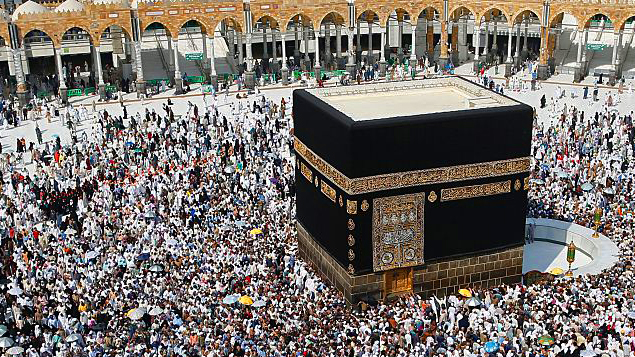
President John Dramani Mahama has confirmed plans to transport 5,000 Ghanaian Muslims to Mecca for this year’s Hajj pilgrimage.
Speaking at the sod-cutting ceremony for the Hajj village on Friday, February 28, President Mahama stressed the need for timely payments and efficient coordination to ensure a smooth travel process.
“This year, we intend to airlift exactly 5,000 pilgrims to the holy land, and the task force has announced 13th March as the deadline for payment,” he stated.
He further revealed that a pre-financing arrangement had been secured with a local bank, guaranteeing that all essential payments for accommodation, transport, and other services had been settled in advance.
To avoid logistical challenges, President Mahama directed the Hajj task force to strictly adhere to the 5,000-pilgrim limit.
“I’ve instructed the hard task force that they should cut off at exactly 5,000 and not go beyond 5,000. We don’t want the previous situation where people rush with late payments, and we are unable to airlift them and become complaining,” he added.
President John Dramani Mahama has cautioned against the commercialization of the Hajj pilgrimage, stressing that it should remain a sacred religious experience for Muslims rather than an opportunity for financial gain.
During the sod-cutting ceremony for the new Hajj Village on Friday, February 28, he underscored the need for any surplus funds from Hajj operations to be reinvested into projects that benefit Zongo communities.
“This year, we set up a task force to manage the Hajj because, after assuming office, we realized that the time before the pilgrimage was too short. So, we brought competent people together, led by Alhaji Collins Dauda, to organize this year’s Hajj. After this, we will constitute the Hajj Board and appoint its chairman,” President Mahama stated.
He made it clear that the pilgrimage should not be treated as a business venture and warned that efforts to generate profit from it must be avoided.
“I have instructed the task force that the Hajj is not a business and should not be structured for profit. The Hajj Board and Task Force must not aim to make a profit. If even one cedi remains after the Hajj, it should be donated to the poor or used for a project within the Hajj community,” he added.
With preparations for the 2025 pilgrimage underway, the Task Force has urged prospective pilgrims and accredited Hajj agents to complete their payments and necessary procedures before the March 13 deadline.
To streamline the process, a system has been introduced to assist fully paid pilgrims in obtaining their passports without difficulty. Hajj agents have also been encouraged to take advantage of this initiative to enhance efficiency for their clients.
In a bid to make the pilgrimage more accessible, the Task Force has reduced the 2025 Hajj package fee from GHS 75,000 to GHS 62,000. This adjustment aims to ease financial burdens and enable more Ghanaian Muslims to undertake the sacred journey.
Assin South MP, John Ntim Fordjour, has urged President John Dramani Mahama to prove his dedication to upholding traditional family principles by supporting the private member’s bill that seeks to outlaw LGBTQ+ activities, rather than drafting a separate government-led proposal.
His remarks come in response to Mahama’s recent statement that discussions are ongoing with the Speaker of Parliament to reintroduce the Proper Family Values Bill, aimed at restricting LGBTQ+ activities in Ghana.
Speaking with the media on Friday, February 28, Ntim Fordjour highlighted that he and other legislators have already resubmitted the bill, which is currently pending review in Parliament.
He suggested that instead of pushing for a different version, the president should endorse the existing proposal and consider adding any necessary amendments later.
“If thereafter, the president thinks that there are other areas he finds extra legislation to address in addition to what has been provided for in the bill, then it is well in place,” he stated.
The Assin South lawmaker further argued that introducing a separate government-backed bill diminishes the relevance of private member-sponsored legislation, which is formally recognized in parliamentary procedures.
“For him to discount a private member’s bill, he must be reminded that Parliament is an independent institution and that the executive cannot dictate to Parliament what it must do. Rather, Parliament will cooperate with you as a state if you sponsor your bill,” he asserted.
“If thereafter, the president thinks that there are other areas he finds extra legislation to address in addition to what has been provided for in the bill, then it is well in place,” he stated.
The controversial Human Sexual Rights and Family Values Bill, commonly referred to as the anti-LGBTQ bill, has been reintroduced in Parliament, according to Assin South MP, Reverend John Ntim Fordjour.
In an interview with The Independent Ghana on Thursday, February 27, Ntim Fordjour urged President John Dramani Mahama to sign the bill into law if Parliament approves it again.
He emphasized that the legislation reflects Ghanaian cultural values and called for swift action to ensure its implementation.
The bill, which aims to outlaw LGBTQ+ activities and criminalize their promotion, advocacy, and funding, was previously passed by the 8th Parliament. However, it did not receive Presidential assent under former President Nana Akufo-Addo’s tenure.
Below is his engagement with The Independent Ghana.
President John Dramani Mahama has declared that the Anti-LGBTQ+ Bill, formally known as the Human Sexual Rights and Family Values Bill, is no longer active, as it expired with the previous Parliament’s session.
Speaking during a meeting with clergy, Mahama clarified the bill’s current status, explaining, “As far as I know, the bill did not get to the President for assent. And so the convention is that all bills that are not assented to before the expiration of the life of Parliament expired, and so that Bill is effectively dead, it has expired.”
He underscored the importance of reinitiating discussions on the bill, suggesting a collaborative review process. “I do think that we should have a conversation on it again, so that all of us, if we decide to move that bill forward, moving forward with a consensus,” Mahama stated.
Proposing a shift in the bill’s sponsorship, the former president argued that it should no longer be introduced as a private member’s bill but rather receive formal government backing. “I don’t know what the promoters of the bill want to do, but we should have a conversation about it again… probably it shouldn’t be a private members bill. It should be a government bill with government behind it after consultation with all the stakeholders to see how to move this forward,” he noted.
Before his return to office, Mahama had already expressed a cautious approach toward the bill, emphasizing the need for a constitutional review. Speaking with BBC Africa on December 4, he elaborated: “It is not an anti-LGBTQI Bill; it is a Family Values Bill. It was approved unanimously by our Parliament. [LGBTQI] is against our African culture, it is against our religious faith, but I think we must look at the Bill, and the president must indicate what he finds wrong with that bill and send it back to Parliament or alternatively he must send it to the Council of State and get the Council of State’s advice.”
When asked if he would sign the bill into law if elected, Mahama responded cautiously, stating, “It depends on what is in the Bill.” He emphasized that any decision would be based on a thorough examination of the bill’s content and legal compliance. “That is what I would have done,” he affirmed.
The non-existent Human Sexual Rights and Family Values Bill sought to criminalize LGBTQ+ activities, including the promotion and funding of related advocacy efforts. If reintroduced and passed, the bill would impose sanctions on individuals and organizations supporting LGBTQ+ causes.
While proponents argue the bill is necessary to safeguard Ghanaian cultural and moral values from external influences, human rights advocates have raised concerns, stating it infringes on freedoms of expression, association, and equality under the law.
The bill previously faced legal opposition from journalist Richard Dela Sky and academic Dr. Amanda Odoi, who contested its passage, citing a lack of parliamentary quorum. The Supreme Court, however, dismissed their challenge, with Justice Lovelace Johnson clarifying that a bill can only be subject to constitutional scrutiny after receiving presidential assent.
The Western Nzema Youth League (WNYL), a youth organization, has commended President John Mahama for his initiative to incorporate a brief military training course into the National Service Scheme (NSS).
During his maiden State of the Nation Address (SONA), President Mahama disclosed that the government planned to implement a short military training program for national service personnel to promote discipline and physical fitness among young people.
Responding to this announcement in an interview with the Ghana News Agency in Takoradi, Dr. Patrick Ekye Kwesie, leader of the WNYL, stated that military training for national service personnel would equip the youth with essential skills, enabling them to maximize their potential and actively participate in national development.
He remarked: “By emphasising the importance of discipline, resilience, and teamwork, he has laid the groundwork for a generation that is not only prepared to face the challenges of the future but also equipped to contribute meaningfully to society.”
Dr. Kwesie emphasized that introducing military training for national service personnel was a crucial move toward instilling a sense of duty and national identity in young people.
“For me, this initiative will instil values such as patriotism, respect for authority, and a commitment to service.
“… And for many young people in the Western Nzema area where unemployment rates are high and opportunities are scarce, this training could serve as a transformative experience,” he observed.
Dr. Kwesie described the government’s decision as a positive development, adding that “having military training on one’s resume could set them apart, showcasing their ability to work under pressure, lead teams, and adapt to challenging situations.”
On Thursday, February 27, President John Dramani Mahama presented the State of the Nation Address (SONA), marking his first since assuming office on January 7, 2025.
The presentation of the SONA message aligns with Article 67 of Ghana’s 1992 Constitution.
President John Dramani Mahama has underscored the financial impact of unfinished projects across Ghana, stressing the importance of taking swift action.
During his first State of the Nation Address in Parliament on Thursday, February 27, Mahama disclosed that 55 projects have been left incomplete due to debt defaults and restructuring processes.
He noted, “Currently, there are 55 stalled projects due to the default of debts and subsequent restructuring, with a total value of $2.95 billion not disbursed” Mahama.
The president warned that failing to address these delays could result in an additional cost of approximately GHS15 billion.
Mahama called for urgent steps to address the debt defaults and restructuring issues to ensure that these vital projects are completed and contribute to the nation’s progress.
Minority Leader, Alexander Afenyo-Markin, has slammed President John Dramani Mahama’s approach to tackling unemployment, accusing him of prioritizing layoffs instead of creating new jobs.
Afenyo-Markin’s remarks came in the wake of Chief of Staff Julius Debrah’s directive to annul all public sector appointments and recruitments made after December 7, 2024, due to concerns about proper governance practices.
During his speech in Parliament, following the President’s State of the Nation Address, Afenyo-Markin pointed out that although President Mahama acknowledged that 2.2 million Ghanaians are unemployed, his administration has primarily focused on dismissals rather than addressing the root cause of joblessness.
“Mahama has today told us that we have 2.2 million Ghanaians unemployed. But what he has forgotten is that in his administration, in less than 100 days, all we know is ‘sack them.
He added that the public’s reaction shows disappointment with the President’s actions, highlighting that “Mr Speaker, on the streets of Accra today, the youth of this country are saying that under Mahama, there have been a lot of terminations”.
The Effutu MP urged President Mahama to confront governance challenges directly, rather than just voicing complaints. He emphasized that the President should act to resolve any issues surrounding the economy.
According to Mr. Afenyo-Markin, the President repeatedly presented Parliament with familiar complaints, disguised as if the nation was entering a new phase.
“The President again came to this house with a familiar story—the usual lamentations. He packaged it in a language as though we have a new beginning. Mr Speaker, if the President has any concerns, his duty is to fix them,” he emphasised.
He also expressed disapproval of the President’s handling of governance, particularly regarding his statement on cutting the number of ministers.
“The President says that he has delivered fewer ministers, but it is clear that his strategy is ‘less is more’—yet, while appointing fewer ministers, he has increased the number of presidential staffers and committees,” he said.
Dr. Gideon Boako, Member of Parliament for the Tano Constituency, has challenged President John Dramani Mahama to provide concrete proof that only $64,000 was left in Ghana’s Sinking Fund.
President Mahama, during his first State of the Nation Address (SONA) on Thursday, February 27, 2025, claimed that the fund had just $64,000 and GHS143,000, contradicting the previous New Patriotic Party (NPP) government’s assertion that substantial reserves were available for debt repayment.
Reacting in a Facebook post, Dr. Boako dismissed the president’s claims as misleading, arguing that the figures presented did not reflect the actual balances as of January 6, 2025, when the NPP left office.
According to him, the Mahama administration had selectively referenced the Sinking Fund’s balance from August 2024—the last time the NPP government made payments to domestic bondholders—rather than acknowledging the amounts accumulated between then and January 2025.
“Nothing stops the government from publishing evidence of the balances in the Sinking Fund accounts,” he stated, accusing the Mahama administration of “peddling falsehoods.”
Dr. Boako reiterated his earlier challenge, initially issued on February 19, for the government to release accurate financial records. He asserted that by January 3, 2025, there was an auction surplus of over GHS700 million in the fund, along with an additional GHS3 billion in year-end revenue left as a financial buffer.
He maintained that these figures provided enough financial backing, and the president’s claims of an empty Sinking Fund were deliberately misleading.
Dr. Boako urged the Mahama government to uphold transparency and back its claims with verifiable data rather than engaging in what he termed “petty lies.”
The Minority in Parliament has dismissed the government’s recent payment of bond coupons as routine, arguing that it is not an extraordinary achievement deserving of praise.
Speaking to the media after President John Dramani Mahama’s first State of the Nation Address, Nhyiaeso MP Stephen Amoah insisted that the New Patriotic Party (NPP) administration had consistently honored its financial obligations without defaulting, making similar payments before leaving office.
“The NDC government recently fulfilled the obligations of the Government of Ghana towards domestic bondholders through the fourth payment of coupons to them. Whilst this is commendable, we in the Minority want to assure the people of Ghana that we will ensure investor confidence continues to be sustained in our economy as we promise to hold this government to its obligations in the same way the previous NPP government did after the debt restructuring exercise,” he stated.
Mr. Amoah pointed out that the February 18, 2025, coupon payments were merely a continuation of commitments made by the previous government, stressing that such obligations had been met consistently since August 2023.
“On the Domestic Bondholders, we wish to remind the people of Ghana that the payment of coupons to them on the 18th of February 2025 was not a novelty. The previous NPP government did not default in coupon payments as it made all payments due to domestic bondholders since August 2023,” he emphasized.
Backing his claims with figures, Mr. Amoah revealed that between August 2023 and December 2024, the NPP government had already disbursed GHS17.25 billion in cash payments and GHS9.77 billion in kind to bondholders as per the agreed terms. Additionally, individual bondholders who did not tender their bonds were paid GHS515.17 million under the Memorandum of Understanding signed with the Coalition of Individual Bondholders.
The Minority, therefore, called on the Mahama administration to maintain transparency and consistency in financial management instead of touting routine payments as a major accomplishment.
The Minority in Parliament has urged President John Dramani Mahama to take swift action in addressing the ongoing power outages, commonly referred to as “dumsor,” which they say is crippling businesses and livelihoods.
Nhyiaeso MP, Stephen Amoah, made this call during a press briefing following President Mahama’s first State of the Nation Address since assuming office on January 7, 2025. According to him, the government has failed to maintain the stable power supply inherited from the previous administration.
Citing former President Nana Addo Dankwa Akufo-Addo’s final address before leaving office, Mr. Amoah argued that the former administration had resolved Ghana’s power crisis.
“In his last Statement of the Nation Address, the former President, Nana Addo Dankwa Akufo-Addo stated and rightly so, ‘it is worth emphasizing that I inherited a nation plagued by dumsor, but I am very happy to say that I leave office in 2025 with the lights on.’ Sadly, after 7th January 2025, the Government of President Mahama has failed to keep the lights on,” he stated.
He also questioned the government’s explanation that the outages are due to maintenance work on the West African Gas Pipeline, insisting that similar situations did not cause disruptions under the previous government.
“Several excuses have been given for the current excruciating dumsor – the latest being the current maintenance programme of the West Africa Gas Pipeline. We do not know whether, under the NPP government, the Gas Pipeline was going through similar maintenance. If so, why were the lights on, but cannot be on today because of the maintenance of the Pipeline?” he queried.
Expressing concern over the economic impact, Mr. Amoah stressed that small businesses, including dressmakers, ice water sellers, and hair salons, are bearing the brunt of the crisis.
He, therefore, called on the President to provide a clear and honest explanation while taking immediate steps to restore a stable power supply.
“President Mahama needs to come clear on the real reasons for the current dumsor, which has created uncomfortable situations for businesses,” he asserted.
President John Dramani Mahama has vowed to take decisive action against those linked to the National Service ‘ghost names’ scandal, which has drained millions from state coffers.
During his State of the Nation Address on Thursday, February 27, he announced that authorities have been directed to identify and seize the assets of individuals involved in the fraudulent scheme.
He further stressed that anyone who has fled the country will be pursued and held accountable to recover the misappropriated funds.
“As part of Operation Recover All Loot (ORAL), I have already tasked our investigative bodies to bring the culprits of the National Service ghost names to justice. Such brazen theft of public funds must not go unpunished. It is estimated that more than 80,000 ghost names could have yielded the suspects over GH¢50 million every month.
“Unfortunately some of these suspects have absconded the country already and I have directed that they be declared wanted and their assets traced and frozen until investigations are completed.”
A nationwide audit of the National Service Authority (NSA) exposed a widespread fraud scheme in which thousands of fictitious names were added to the payroll, diverting funds intended for legitimate National Service personnel.
Findings from the investigation pointed to the involvement of senior officials within the NSS, district heads, and payroll managers, who collaborated to fabricate personnel records and unlawfully collect salaries for individuals who did not exist.
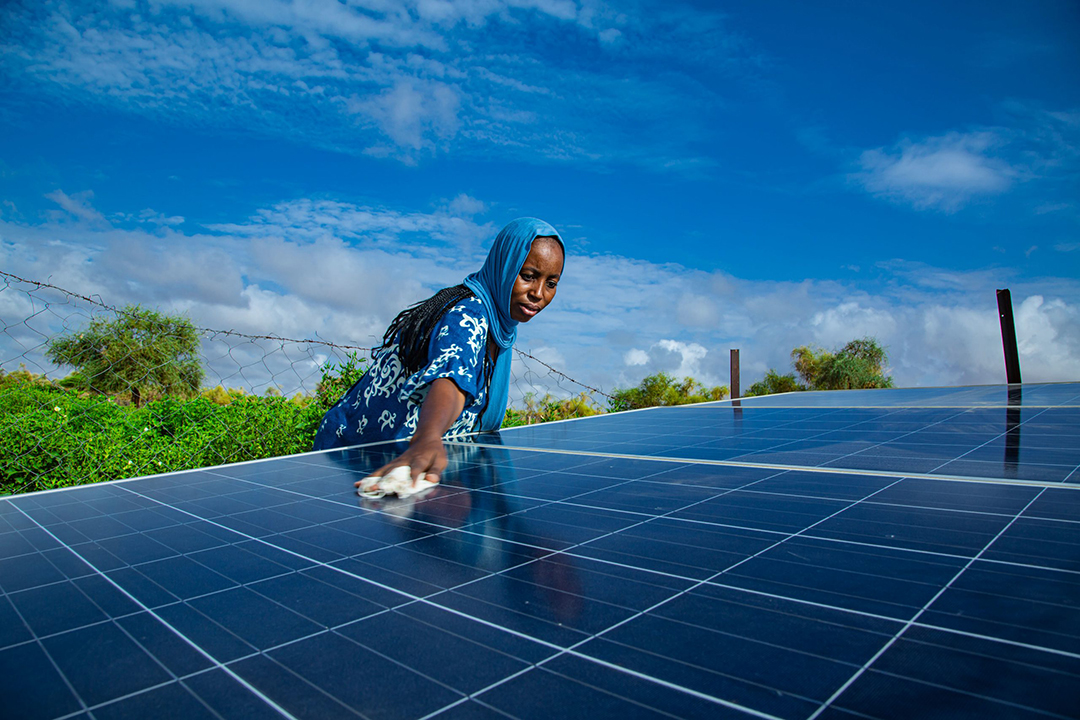
The government is set to launch a Renewable Energy and Green Transition Fund as part of efforts to accelerate Ghana’s shift towards sustainable energy solutions.
Delivering the 2025 State of the Nation Address in Parliament today, President John Dramani Mahama announced that the initiative will play a crucial role in enhancing energy efficiency and expanding renewable energy infrastructure across the country.
“With regards to renewable energy, this administration will soon operationalise a Renewable Energy and Green Transition Fund to enhance efficiency and accelerate Ghana’s transition to renewable energy,” he stated.
According to President Mahama, the fund will drive investment in solar streetlights, rooftop solar installations, off-grid solar systems, electric vehicle charging stations, and rechargeable outboard motors. These measures, he noted, will help reduce reliance on the national grid while positioning Ghana as a leader in Africa’s green energy transition.
The President also reaffirmed his government’s commitment to achieving 100% gas utilisation for power generation to eliminate the use of crude oil and fossil fuels. He stressed that this shift would bring relief to electricity consumers and save Ghana hundreds of millions of dollars spent annually on fuel imports.
“We will bring relief to all users of electric power. We also aim in the medium to achieve hundred per cent gas utilisation for power production and to eliminate the use of crude oil and fossil fuel. This will save Ghana hundreds of millions of dollars spent on the importation of fuel oils for power production annually,” he said.
Ghana has taken significant steps towards energy transition in recent years. In September 2023, former President Nana Akufo-Addo launched the Ghana Energy Transition and Investment Plan during the UN General Assembly. The plan outlines a pathway for Ghana to achieve net-zero energy-related carbon emissions by 2060, integrating low-carbon solutions in key sectors such as oil and gas, industry, transport, and power.
The government’s new Renewable Energy and Green Transition Fund is expected to build on these efforts by attracting investments in clean energy and reinforcing Ghana’s commitment to sustainable economic development and climate action.
President John Dramani Mahama has raised concerns over how the previous government handled the Agenda 111 hospital project, stating that nearly $400 million was spent without delivering a single functional facility.
During his first State of the Nation Address (SONA) in his second term on Tuesday, he criticized the substantial expenditure, noting that none of the hospitals were completed and put to use.
The Agenda 111 initiative was designed to expand healthcare infrastructure by constructing hospitals nationwide.
However, Mahama pointed out that despite the large financial commitment, not one of the facilities is fully operational.
“It is worth disclosing that USD400m has already been disbursed under agenda 111 project,” President Mahama said, indicating that yet not a single hospital under this gargantuan initiative is serving the people of Ghana.
President Mahama pointed out that if resources had been managed effectively, the money already used would have been sufficient to build and open at least 22 of the intended hospitals.
President John Dramani Mahama has highlighted his administration’s progress in gender equity, revealing that women currently hold 23.21% of all government appointments.
Delivering his first State of the Nation Address in his second term on Thursday, February 27, 2025, Mahama reaffirmed his commitment to increasing women’s participation in leadership and fully implementing the Affirmative Action Act of 2024 (Act 1121).
“I am pleased to report that women currently make up 23.21% of all appointments, and we are diligently working towards reaching the targets set forth in Act 1121,” he stated.
Mahama assured Parliament that his government, through the Ministry of Gender, Children, and Social Protection, is working with stakeholders to ensure the law’s full execution. A key goal is to achieve the 30% quota for women in political appointments.
“Mister Speaker, I would like to take a moment to commend you and this house for your unwavering support and guidance, which were instrumental in passing the Affirmative Action Act of 2024. My government is dedicated to successfully implementing this Act to ensure gender equity,” he added.
Despite progress at the national level, Mahama acknowledged that female representation at the local government level remains low, as few women apply for Metropolitan, Municipal, and District Chief Executive (MMDCE) positions.
He attributed this to structural barriers and called for constitutional reforms to allow for the election of DCEs, a move he believes will enable the Gender Ministry to actively support more women in contesting for these roles.
In a move to strengthen economic empowerment for women, Mahama announced the establishment of the Women’s Development Bank, a specialized financial institution that will cater to businesses owned and led by women.
“This bank will provide low-interest loans and tailored financial services under very flexible terms. Consultative processes are underway to ensure its successful launch. Additionally, as part of our 120-day social contract, the Minister for Finance will allocate initial funding for the Women’s Development Bank in the upcoming budget,” he disclosed.
With these initiatives, Mahama reaffirmed his government’s commitment to fostering gender equity across political, economic, and social spheres, ensuring a more inclusive governance structure.
President John Dramani Mahama has declared his decision to cut down the number of staff working at the presidency.
Addressing Parliament on Thursday, February 27, during his first State of the Nation Address (SONA) in his second term, he stressed the importance of maintaining a more compact administration to promote fiscal discipline.
He noted that the presidency had seen a steady rise in staff numbers under previous governments, leading to avoidable costs that must be addressed.
“We cannot continue to run a government where the cost of administration outweighs the benefits to the people. My government will take decisive steps to reduce the number of presidential staffers to promote efficiency and accountability,” he stated.
He clarified that scaling down the workforce would strengthen governance while boosting overall efficiency.
“A smaller, more competent team is what we need to drive our development agenda. We must cut down on bureaucracy and focus on delivering results that positively impact the lives of Ghanaians,” President Mahama assured.
President John Dramani Mahama has disclosed that Ghana’s energy sector is grappling with an overwhelming debt burden of GH¢70 billion, despite the collection of billions in energy sector levies over the past eight years.
Delivering his first State of the Nation Address (SONA) on Thursday, February 27, 2025, Mahama expressed concern over the dire financial state of state-owned enterprises in the energy sector, warning that many could collapse without urgent intervention.
*”Despite collecting over GHC45 million in energy sector levies (ESLA) over the last 8 years, the outgoing administration has left the Ghanaian people with an energy sector burdened with a staggering debt of GHC70 billion as of December 2024.
“It is of deep concern that several State-Owned Enterprises in the energy sector are struggling to stay afloat, and unless urgent interventions are made, many of them would go under,”* he stated.
Mahama further highlighted that maintenance of the West African Gas Pipeline—originally scheduled for 2024—had been deferred to 2025, increasing the risk of power shortages. To prevent widespread blackouts, his administration had secured emergency fuel supplies to sustain electricity generation until the maintenance is completed in March.
“We expect a marked improvement in the power situation once the pipeline is back in operation, allowing additional gas flow from Nigeria,” he assured.
To prevent future crises, Mahama directed the Minister for Energy and Green Transitions to roll out key reforms, including:
Creating a single revenue collection account to eliminate financial leakages.
Strictly enforcing the cash waterfall mechanism to ensure a structured approach to debt repayment.
Reducing wasteful spending across state-owned utilities.
He also announced plans to deepen private sector participation in metering and billing, citing the success of a partnership between the Electricity Company of Ghana (ECG) and Enclave Power Limited.
“This model, which has achieved 99% revenue collection and near-uninterrupted power supply, provides a practical solution for improving efficiency,” Mahama noted.
President Mahama expressed confidence that these measures would not only stabilize the energy sector but also guarantee a reliable and affordable power supply for Ghanaians.
“This is not just about resolving today’s challenges—it is about creating a resilient and sustainable energy sector that drives national development,” he emphasized.
Ghana’s economic program under the International Monetary Fund (IMF) is set for another critical evaluation, with the fourth review of the Extended Credit Facility (ECF) scheduled to take place from April 2 to April 15.
President John Dramani Mahama, delivering the 2025 State of the Nation Address in Parliament, indicated that the IMF Executive Board is expected to approve the review in June.
“The (fourth) review is scheduled from April 2 to April 15, and the IMF Executive Board is expected to approve it in June of this year,” Mahama stated.
The upcoming assessment will be pivotal in determining Ghana’s progress under the $3 billion IMF-backed program and could influence further financial support.
A previous IMF mission, led by Stéphane Roudet, visited Ghana from February 10-14 to engage government officials and assess macroeconomic developments. Following the visit, Roudet noted that discussions had begun on key policies that would shape the 2025 budget while also reviewing the government’s adherence to the IMF-supported economic framework.
“The mission team engaged the Ghanaian authorities on recent macroeconomic developments. It also started discussions on the policies that will underpin the 2025 budget. This dialogue is set to continue over the coming weeks.
“We also took stock of the authorities’ progress in meeting key commitments under the Fund-supported program. These will be formally assessed in the context of the fourth review of the Extended Credit Facility arrangement, which is expected to be undertaken in April 2025,” Roudet stated.
The IMF acknowledged the cooperation of Ghanaian authorities and stakeholders, expressing appreciation for the engagement during their mission.
“IMF staff held meetings with H.E. President Mahama, Finance Minister Forson, and Bank of Ghana Acting Governor Asiama, and their teams, as well as representatives from various government agencies, and other key stakeholders. Staff would like to express their gratitude to the Ghanaian authorities and other stakeholders for their constructive engagement and support during this mission.”
The Extended Credit Facility agreement, approved by the IMF Executive Board for Ghana, spans 36 months with a total allocation of $3 billion. The initiative aligns with the government’s Post COVID-19 Program for Economic Growth (PC-PEG), which aims to stabilize the economy, manage debt, and implement structural reforms to foster long-term resilience.
So far, Ghana has received approximately $1.9 billion from the IMF, with the most recent disbursement of about $360 million following the completion of the third review in December 2024. The outcome of the fourth review will determine the country’s eligibility for additional financial support under the program.
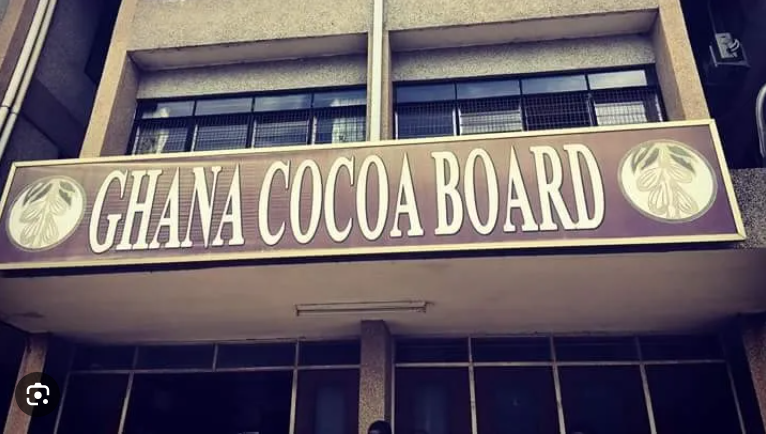
The government is set to pay GH¢9.7 billion by the end of September 2025 to settle part of COCOBOD’s growing debt, President John Dramani Mahama has revealed.
Addressing Parliament during the 2025 State of the Nation Address, he detailed the financial distress facing the cocoa sector, warning that mismanagement and poor decisions in recent years have plunged COCOBOD into severe debt.
“The hope of cocoa farms is also highly indebted. Its balance sheet indicates a total debt of GH¢32.5 billion, of which GH¢9.7 billion is due to be paid at the end of September 2025,” Mahama stated.
He explained that COCOBOD’s financial struggles worsened after it failed to deliver 333,767 metric tonnes of cocoa sold in the 2023/24 crop season at $2,600 per tonne. The contracts were instead rolled over into the 2024/25 season, creating massive revenue losses for both the cocoa regulator and farmers.
“This implies that for every tonne of cocoa delivered this year, in fulfillment of the rolled-over contract, COCOBOD and cocoa farmers are going to lose $4,000 in revenue,” he added.
So far, COCOBOD has supplied 210,000 tonnes under the rolled-over contract, leading to an estimated revenue loss of $840 million. By the time all outstanding contracts are fulfilled, Mahama warned, COCOBOD and farmers would have lost a total of $495 million.
Beyond the immediate revenue shortfalls, the president highlighted the additional financial burden caused by cocoa road commitments, which amount to GH¢21.7 billion. However, only GH¢4.4 billion of this figure is included in COCOBOD’s overall debt.
“This debt has arisen mainly because of the decision in 2019 and 2020 to award road contracts worth over a billion dollars because of the election,” Mahama noted.
COCOBOD’s financial decline has intensified concerns about Ghana’s economic outlook, particularly its ability to meet debt obligations. A 2021 Auditor-General’s report had placed COCOBOD’s debt at GH¢12.3 billion ($1 billion) as of September 2020, but the situation has significantly worsened in the years since.
Earlier this year, COCOBOD defaulted on payments for its 182-day treasury bill, rolling over GH¢940 million ($79 million) in outstanding securities, and later restructuring debts totaling GH¢7.93 billion ($661 million).
Ghana had initially planned to secure $1.2 billion in syndicated loans for the 2023/24 cocoa season, but this was later reduced to $800 million due to IMF-imposed debt management restrictions, marking the lowest financing secured in 18 years.
Former President John Dramani Mahama has disclosed that the Akufo-Addo administration has nearly emptied the Sinking Fund, leaving behind only a fraction of the $290 million he handed over in 2017.
While delivering the 2025 State of the Nation Address in Parliament today, he revealed that the Fund now holds only $64,000 in the dollar account and GHS143 million in the Cedi account.
“Scarce reserves were also left for debt servicing, despite implementing what may be considered as the most severe and distressing economic policy in the annuls of the 4th republic if not in the entirety of our nation’s history and I am referring to the Domestic Debt Programme (DDEP), this is in stark contrast to our actions in 2017 before we left office when we allocated $250m to the sinking fund handed over to the incoming government to service Ghana’s debt.
“There have been claims that buffers were left for incoming debt repayment this year. Mr. Speaker honorable members let me give you statement of account for the debt service account which is also referred to as the sinking fund. This fund shows a balance of only $64,000 in the dollar account and GHS143m in the Cedi account,” he added.
The Sinking Fund, a key debt management tool, was designed to ensure timely repayment of Ghana’s debt. Economists have consistently emphasized its importance in mitigating financial pressures, especially amid the country’s mounting debt stock.
Before assuming office, President Mahama had pledged to reintroduce and strengthen the fund, leveraging provisions under the Petroleum Revenue Management Act, 2011 (Act 815). The fund previously demonstrated its effectiveness when it was used to successfully redeem Ghana’s 2007 Eurobond.
However, Mahama criticized the Akufo-Addo administration for discontinuing contributions to the fund after 2017.
The Former Finance Minister Seth Terkper had also condemned the move, arguing that it left Ghana exposed and overly dependent on the Stabilization Fund and Bank of Ghana interventions.
COCOBOD is grappling with a staggering debt of GH¢32.5 billion, with GH¢9.7 billion due by the end of September 2025, President John Dramani Mahama has revealed.
Delivering the 2025 State of the Nation Address in Parliament today, he painted a bleak picture of the cocoa sector’s finances, warning of massive revenue losses for both COCOBOD and Ghanaian farmers.
According to Mahama, COCOBOD’s financial woes deepened in the 2023/24 crop season when it failed to supply 333,767 metric tonnes of cocoa that had been pre-sold at $2,600 per tonne. Instead, the contracts were carried over to the 2024/25 season, leading to significant revenue shortfalls.
“This implies that for every tonne of cocoa delivered this year in fulfillment of the rolled-over contract, COCOBOD and cocoa farmers are going to lose $4,000 in revenue,” Mahama stated.
He disclosed that out of the rolled-over contract, 210,000 tonnes had already been supplied, resulting in an $840 million loss. By the time the remaining contracts are fulfilled, COCOBOD and cocoa farmers will have lost a total of $495 million.
Beyond the supply challenges, the president also highlighted the financial strain caused by cocoa road commitments, which stand at GH¢21.7 billion. Of this amount, only GH¢4.4 billion is accounted for in COCOBOD’s total debt.
“This debt has arisen mainly because of the decision in 2019 and 2020 to award road contracts worth over a billion dollars because of the election,” Mahama noted.
COCOBOD’s deteriorating financial position, coupled with Ghana’s broader economic challenges, has raised concerns about its ability to meet debt obligations. The 2021 Auditor-General’s report had pegged COCOBOD’s debt at GH¢12.3 billion ($1 billion) as of September 2020, but the situation has since worsened.
Earlier this year, COCOBOD defaulted on payments for its 182-day bill, rolling over outstanding securities worth GH¢940 million ($79 million) and later restructuring debts amounting to GH¢7.93 billion ($661 million).
The cocoa sector’s struggles have been further compounded by Ghana’s efforts to secure international financing. While the country initially planned to raise $1.2 billion for the 2023/24 cocoa season, the amount was later revised down to $800 million due to IMF-imposed debt management restrictions, marking an 18-year low in syndicated loans for COCOBOD.
President John Mahama arrived in Parliament today, Thursday, February 27, to deliver his first State of the Nation Address (SONA) since beginning his second term.
However, the atmosphere in the chamber was marked by a stark contrast in attire, with the Minority Caucus dressed in black and the Majority in white, symbolizing their opposing stances on the president’s address.
As Mahama began his speech, outlining his vision under the “Resetting Ghana” agenda, the Minority responded with boos and chants, signaling their disapproval. Their reaction reflected broader concerns about the state of the economy, governance, and the effectiveness of Mahama’s policies.
With inflation soaring, unemployment rising, and economic hardships affecting citizens, the president’s address is seen as a pivotal moment to provide clarity and reassurance. A major highlight of his speech is expected to be the 24-hour economy policy, aimed at stimulating industrial growth, boosting productivity, and creating sustainable jobs.
Labour unions, business leaders, and civil society organizations are closely following the address, hoping for concrete measures to tackle the high cost of living, wage concerns, and infrastructure challenges.
President John Mahama is in Parliament set to deliver his first State of the Nation Address (SONA) today, Thursday, February 27, since starting his second term in office.
His speech is expected to outline his plans for reviving Ghana’s struggling economy, creating jobs, and restoring stability under his “Resetting Ghana” agenda.
Some New Patriotic Party (NPP) Members of Parliament ihave urged him to be forthright about Ghana’s current state and the challenges ahead of his first State of the Nation Address (SONA) on Thursday, February 27.
Members of Parliament (MPs) from the New Patriotic Party (NPP) have called on the president to acknowledge the realities of the country’s economy, job situation, and power crisis as he begins his second term in office.
Speaking to journalists in Parliament, NPP lawmakers, including Akwasi Konadu (Manhyia North), Kofi Amankwah Manu (Atwima Kwanwoma), and Collins Adomako Mensah (Afigya Kwabre North), stressed the need for an honest and transparent address.
“The president must be truthful about the situation on the ground. Ghanaians deserve clarity on the economy, employment, and energy challenges,” said Collins Adomako Mensah.
Meanwhile, the National Democratic Congress (NDC) remains optimistic that President Mahama’s address will offer hope and direction for national progress.
MPs such as Sebastian Deh (Kpando) and Lawrencia Dziwornu (Akuapem South) believe the speech will highlight key policies aimed at stabilizing and growing the economy.
“We expect the president to outline a clear path forward—one that resets Ghana on the right track,” Sebastian Deh stated.
As anticipation builds for the address, Ghanaians will be looking for a speech that balances honesty with a compelling vision for the nation’s future.
The Trades Union Congress (TUC) has urged President John Dramani Mahama to put an immediate stop to the dismissal of public sector workers, warning of its potential consequences on livelihoods and national stability.
In a strongly worded statement, the TUC condemned the ongoing revocation of appointments, particularly affecting teachers, nurses, and other professionals who have dedicated years to their education and struggled to secure employment.
“The mass termination of employment of teachers, nurses, and others, who have been educated at great cost to their families and the nation and who may have stayed at home for years struggling to obtain employment can be devastating for these young men and women,” the union cautioned.
The dismissals follow a directive issued by the Chief of Staff, Julius Debrah, on February 10, 2025, instructing all government institutions to cancel appointments made after December 7, 2024. The directive cited concerns over governance principles, suggesting that such appointments were not in line with best practices.
However, reports indicate that the enforcement of this order has led to widespread job losses, including cases where appointments had been finalized before the stated date.
The TUC further urged the President to prevent Ghana from sliding into what it described as a “partisan slippery hill,” stressing the need for fairness in handling public service employment.
It recalled that President Mahama had previously granted amnesty to security recruits from the former administration and insisted that a similar approach should be extended to all public sector workers affected by the dismissals.
“This will be the greatest political settlement of the 4th Republic. It will ripple in eternity and reset the politics of Ghana,” the statement added.
The union emphasized that such a move would not only protect livelihoods but also strengthen trust in governance and reinforce Ghana’s democratic credentials.
Deputy Minister nominee for the Interior, Ebenezer Okletey Terlabi, has called for restraint regarding speculation over the future of Inspector General of Police (IGP), Dr. George Akuffo Dampare, under the current administration.
The IGP’s position has been the subject of public debate since the new government assumed office, with some unidentified individuals and groups reportedly pushing for his removal.
Speaking during his vetting in Parliament on Monday, February 24, Terlabi stressed that decisions concerning Dr. Dampare’s future should be left entirely to President Mahama. “I wish I had the authority to make that decision myself,” he remarked, underscoring that the responsibility lies solely with the president.
Dr. Dampare was officially sworn in as Ghana’s 23rd IGP in October 2021 by then-President Nana Addo Dankwa Akufo-Addo. His appointment followed the retirement of James Oppong-Boanuh. At age 51, he became the youngest IGP in the Fourth Republic and the eighth youngest since Ghana’s independence.
During his swearing-in ceremony at the Jubilee House, Akufo-Addo pledged his government’s full support to ensure that the Police Service remained effective and capable of fulfilling its mandate. He also urged the new police leadership to maintain professionalism and resist any political interference.
As discussions continue about Dr. Dampare’s role, Terlabi’s remarks emphasize the importance of allowing the President to exercise his authority without external pressure.
President John Mahama has urged the newly appointed Governor of the Bank of Ghana (BoG), Dr. Johnson Asiama, to prioritize fiscal discipline and responsible economic management to prevent inflation and income erosion.
Speaking during the swearing-in ceremony at the Jubilee House, where Dr. Asiama and his First Deputy, Dr. Zakari Mumuni, officially assumed their roles, Mahama underscored the importance of prudent financial governance in safeguarding the country’s economic stability.
“The lessons of the past remind us of the dangers of fiscal recklessness and the lasting harm it can inflict on an economy,” Mahama stated. “When government resorts to unsustainable consumption, expenditure financed by excessive and unregulated printing of money, the consequences can be severe—from spiralling inflation, erosion of incomes, to driving millions into poverty.”
The President emphasized the need for strict adherence to legal and regulatory frameworks while reinforcing the central bank’s independence. “To safeguard our economy from these risks, we must uphold responsible fiscal management, strict adherence to legal and regulatory frameworks, and protect the independence of the Bank of Ghana,” he said.
Mahama pledged his commitment to ensuring that the BoG would function without political interference, adding that decisions should be driven by sound economic judgment and not political convenience.
“As President, I am committed to ensuring that the Central Bank operates free from political interference, guided solely by its mandate. This is the path to building a resilient economy, one where policies are driven by discipline, foresight, and the best interest of the Ghanaian people,” he assured.
In a pointed remark that appeared to reference past controversies, Mahama stated, “One thing for sure… I am not going to ask you to print more money.”
His comment follows previous concerns over the Bank’s financing of government expenditure during the Akufo-Addo administration. The BoG’s 2022 annual report revealed that GH¢35 billion was printed in 2021 and GH¢42 billion in 2022 to support government spending, a move criticized by the then-Minority Caucus in Parliament as a violation of Section 30 of the BoG (Amendment) Act, 2016 (ACT 918).
Newly sworn-in BoG Governor Dr. Johnson Asiama pledged to restore confidence in Ghana’s financial system through stability, transparency, and innovation.
“We will create an economic and financial system that is transparent, predictable, and stable. Businesses will have the confidence to plan, and individuals will have access to a secure financial system that fosters growth and opportunity,” Dr. Asiama said.
He stressed that the Bank’s new direction was more than just a promise—it was a commitment to concrete action aimed at strengthening public trust. “This ‘reset path’ goes beyond words—it represents real actions aimed at strengthening public trust,” he noted.
Dr. Asiama also assured Ghanaians of his commitment to fairness and integrity in fulfilling his mandate. “As I take this oath of office, I do so with a solemn promise to the people of Ghana—to serve with diligence, impartiality, and unwavering commitment to the mandate of the Bank of Ghana,” he affirmed.
His appointment follows the decision by outgoing Governor Dr. Ernest Addison to proceed on leave ahead of his retirement, scheduled for March 31, 2025.
Dr. Asiama brings a wealth of experience to the position, having previously served as the Second Deputy Governor of the Bank of Ghana from 2016 to 2017.
President John Mahama has reaffirmed his commitment to safeguarding the independence of the Bank of Ghana (BoG), assuring that his administration will not interfere with the central bank’s operations.
Speaking at the swearing-in ceremony of Dr. Johnson Asiama as Governor of the BoG and Dr. Zakari Mumuni as First Deputy Governor at the Jubilee House, Mahama stressed the importance of maintaining fiscal discipline and protecting the financial sector from political influence.
He assured Ghanaians that his government would steer clear of political interference in monetary policy.
“As President, I am committed to ensuring that the Central Bank operates free from political interference, guided solely by its mandate. This is the path to building a resilient economy, one where policies are driven by discipline, foresight, and the best interest of the Ghanaian people,” Mahama said.
He warned of the dangers of reckless monetary practices, highlighting how unregulated money printing could destabilize the economy.
“The lessons of the past remind us of the dangers of fiscal recklessness and the lasting harm it can inflict on an economy,” Mahama stated.
“When government resorts to unsustainable consumption, expenditure financed by excessive and unregulated printing of money, the consequences can be severe—from spiralling inflation and erosion of incomes to driving millions into poverty.”
Mahama emphasized his administration’s dedication to upholding responsible fiscal management and ensuring that the BoG functions within its legal framework. “To safeguard our economy from these risks, we must uphold responsible fiscal management, strict adherence to legal and regulatory frameworks, and protect the independence of the Bank of Ghana,” he said.
In what appeared to be a swipe at the previous administration led by former President Nana Akufo-Addo, Mahama remarked, “One thing for sure… I am not going to ask you to print more money.”
This follows concerns raised over the BoG’s decision to print GH¢35 billion in 2021 and GH¢42 billion in 2022 to support government spending, as revealed in its 2022 annual report and financial statements. The then-Minority Caucus in Parliament criticized the move, arguing that it violated Section 30 of the BoG (Amendment) Act, 2016 (ACT 918).
At the same event, newly appointed Governor Dr. Johnson Asiama pledged to rebuild trust in the financial system by fostering transparency, stability, and innovation.
“We will create an economic and financial system that is transparent, predictable, and stable. Businesses will have the confidence to plan, and individuals will have access to a secure financial system that fosters growth and opportunity,” Dr. Asiama said.
He further emphasized the Bank’s renewed commitment to restoring confidence in Ghana’s financial landscape. “This ‘reset path’ goes beyond words—it represents real actions aimed at strengthening public trust,” he added.
Promising to serve with fairness and integrity, Dr. Asiama declared, “As I take this oath of office, I do so with a solemn promise to the people of Ghana—to serve with diligence, impartiality, and unwavering commitment to the mandate of the Bank of Ghana.”
Dr. Asiama’s appointment follows the decision of outgoing Governor Dr. Ernest Addison to proceed on leave ahead of his retirement on March 31, 2025.
With prior experience as the Second Deputy Governor of the Bank of Ghana from 2016 to 2017, Dr. Asiama brings a wealth of expertise to lead the institution into this new chapter.