Nana Abena Anima, the former spouse of the founder of the Glorious Word and Power Ministries International, Prophet Isaac Owusu Bempah, has been spotted in Makola, Accra.
In a video shared by Ghanaian blogger Zionfelix, Nana Abena Anima was seen attending the grand opening of Mona Hair Empire Gh on April 26.
Nana Abena Anima, who was Prophet Bempah’s second wife, made an appearance at the event to show her support for the CEO of Mona Hair Empire Gh.
According to reports, Prophet Owusu-Bempah and his wife divorced just five months into their marriage.
Prophet Owusu-Bempah has attributed their breakup to interference from another man of God who holds ill feelings towards him.
On Tuesday, March 26, 2024 a violent altercation erupted between two street pastors at the busy streets of Makola in Accra.
The dispute reportedly originated from a misunderstanding regarding offerings.
Eyewitnesses recounted how what initially appeared to be a harmless exchange quickly escalated into a physical confrontation, with both pastors engaging in a heated argument that soon turned physical.
Watch video below:
A misunderstanding over offerings between two street pastors at Makola today ended in a bl00dy f!ght. pic.twitter.com/pKKOGgWobK
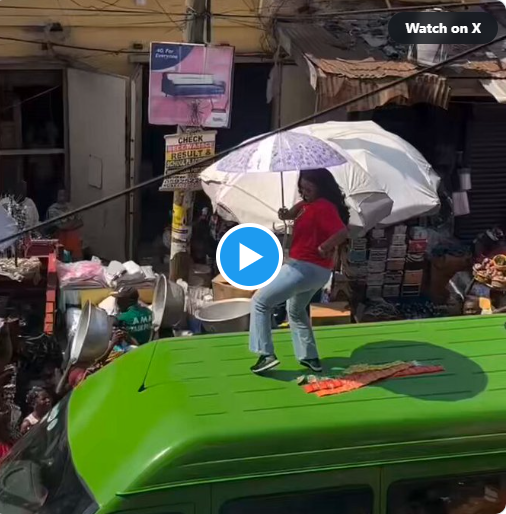
Renowned TV host and actress Nana Ama McBrown brought joy to fans as she stood on a green commercial bus, commonly known as ‘trotro,’ in Ghana’s bustling Makola market.
The beloved star, dressed in a red top and denim jeans, playfully danced and entertained her admirers while shielding herself from the sun with an umbrella.
The purpose of her market visit remains undisclosed, sparking wild anticipation among fans for her upcoming project.
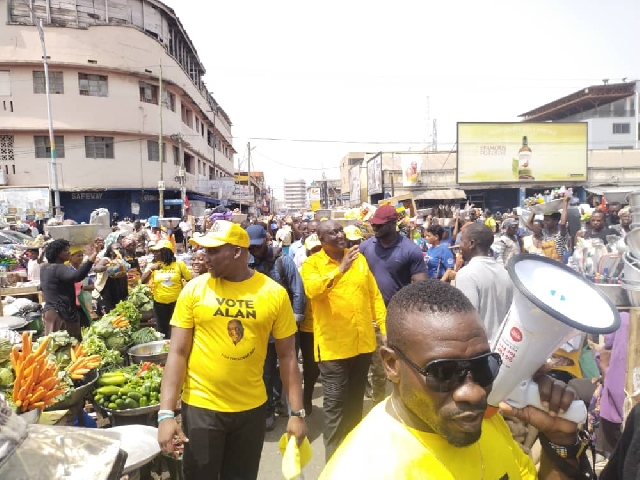
On Friday, February 23, 2024, the Greater Accra Region witnessed a surge of enthusiastic support as scores of market women rallied behind Mr. Alan Kyerematen, the founder and leader of the Movement for Change, during his tour of various markets in the region.
The visit aimed to connect with the electorate in anticipation of the 2024 general elections.
At the Makola 31 December Women’s Market and Okaishie, women danced joyfully to the music blaring from Kyerematen’s entourage, chanting expressions of support such as ‘God bless you,’ ‘You are a nice man,’ ‘No Alan, no vote,’ ‘Alan is unmatched,’ and ‘Ye papa,’ among others.
The grassroots campaign in Greater Accra markets is the initial phase of the outreach, focusing on gaining the support of the electorate for the envisioned Great Transformation Programme.
Addressing the vibrant market women, Mr. Alan Kwadwo Kyerematen, the 2024 independent presidential aspirant, emphasized the integral role of women in the Great Transformation Programme.
He acknowledged that the success of production depended on robust buying and selling activities, making the engagement with the women crucial.
The outreach took Mr. Kyerematen to Makola, Okaishie, Abossey Okai, and Kokompe.
At Kokompe and Abossey Okai, Mr. Kyerematen highlighted the importance of reducing taxes on spare parts during a meeting with the leadership of the Kokompe Spare Parts Dealers Association at Kokompe, Ghana’s hub for spare parts dealership.
Mr. Kyerematen promised to alleviate the tax burden on spare parts importation, anticipating that this move would lead to a reduction in transport costs and overall expenses.
He pointed out that high import duties on spare parts contribute to increased transport fares and the elevated cost of food in the country.
He urged voters to consider a change in their voting pattern this year, emphasizing that under his administration, import duties on spare parts would be eliminated within two years.
He concluded by saying that the overwhelming support demonstrated during the market tour suggests a positive reception to his proposed policies, especially those geared towards economic transformation and reducing the financial burden on essential goods.
The Ghana School of Law (GSL) has acquired land at Makola to initiate the expansion of its campus, in line with the vision of former Chief Justice Kwasi Anin-Yeboah, aiming to bring the law school closer to court complexes.
Barima Yaw Kodie Oppong, the Director of GSL, confirmed this development and assured that the expansion in Accra would not result in the closure of the Kumasi campus.
He acknowledged the support of Asantehene Otumfuo Osei Tutu II, who facilitated the establishment of the Kumasi campus as the first regional campus.
“The Asantehene, Otumfuo Osei Tutu II has been gracious in getting us a location to formerly establish and make the Kumasi campus as our first regional campus. So, the expansion at Makola is not going to lead to the shutting down of the Kumasi campus. ”
“We try to obey laws just to avoid punishment. But you cannot be successful at the bar if all you think about is that you’re doing what pleases others as right because if you don’t, you would be punished.
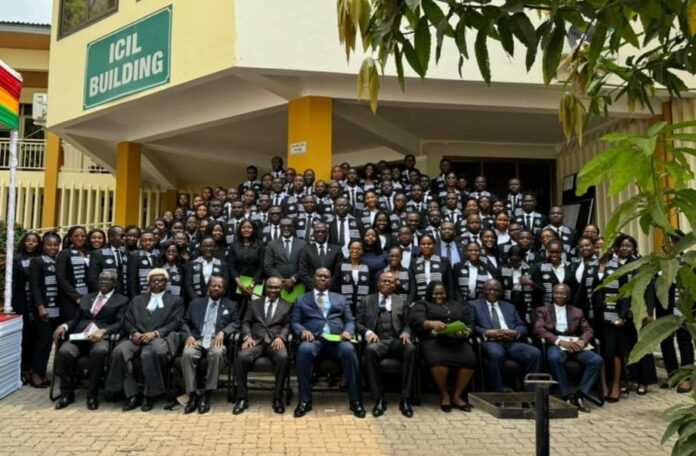
Speaking at the induction ceremony for professional law course students at the Kumasi campus, KNUST, Director Barima Yaw Oppong emphasized the importance of ethics in the legal profession.
He urged students to make ethical principles an integral part of their professional lives.
Former Chief Justice Kwasi Anin-Yeboah echoed the call for adherence to the code of ethics, emphasizing its significance for successful legal practice.
Justice of the Court of Appeal, Samuel Obeng Diawuo, highlighted the seriousness of legal ethics, cautioning against lawyers making public statements on pending cases in which they are involved. He stressed that upholding ethical principles is crucial for bolstering public confidence in the rule of law and the legal profession.
The induction ceremony welcomed 140 law students into the Ghana School of Law – Kumasi Campus, as they embark on their academic journey toward becoming legal practitioners.
“Ethics must be our way of life. It must be imbibed in us even at the formative level. Otherwise, you may become a lawyer, but don’t forget that if you refuse to comply with the rules of ethics, there can be serious consequences for you,” stressed.
“A lawyer who is participating or has participated in the investigation or litigation of a matter that is still pending before a court, shall not make an out-of-court statement or grant an interview to the media on the merits of the case. But now, lawyers are heard commenting on merits of cases that are pending and which they are participants.
Adherence to and observing legality is one of the pillars on which the rule of law is anchored. When ethical principles are upheld by both lawyers and judges, it bolsters public confidence, belief, and faith in the rule of law and, by extension, legal practice”
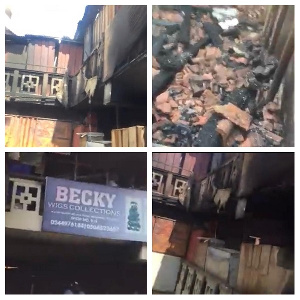
In a recent reports, a recent fire that broke out at the Makola market resulted in the destruction of multiple shops. Over 100 stores, worth millions of cedis, were reportedly damaged by the fire.
Serwaa Amihere, a TV journalist, broke the news on X on October 21, 2023.
But the Accra Metropolitan Assembly (AMA), in honour of its 125th anniversary, had ordered all stores, markets, truck terminals, and other businesses in the city to close and take part in a massive clean-up operation aimed at improving the cleanliness and environment of the city.
The clean-up operation, which is set to start at 6 am on Saturday, July 21, and go until 10 am, is also being done in order to get ready for the late Ga Manye, Naa Dedei Omaedru III’s final rites.
The focal areas for the exercise according to the AMA in a statement signed by Head of Public Affairs, Gilbert Nii Ankrah, are the Ga Traditional Council (GTC) stretch of Palace Street and Rev. Thomas Clegg Memorial Methodist Church to Department of Social Welfare stretch of the Nii Asere Ayite Road in the Okaikoi South Sub-Metro, Chorkor (Old Winneba Road), Korle Bu Traffic Light to Mamprobi Post Office (Guggisberg Avenue) in the Ablekuma South Sub-Metro.
Other locations include the Accra General Post Office and its surroundings, the Fire Academy and Training School, Bodey (Cleland Road) through to Kwame Nkrumah Memorial Park (John Evans Atta Mills High Street), Odorkor Station on the Asafoatse Nettey Road to Bukom, and Princess Marie Louise Children’s Hospital on Derby Avenue in the Ashiedu Keteke Sub-Metro.
In addition, the statement ordered all commercial and other economic activity to cease throughout the time period and urged all locals to organise similar exercises in their neighbourhoods in accordance with the AMA Sanitation, Cleaning, and Communal Labour Bye-laws 2017, which the Environmental Health Officers (Saman Saman) will strictly enforce.
The AMA also announced that public health officers would conduct a deratting exercise at the 31st Makola, Makola Nos. 2, Agbogbloshie, and London Markets in accordance with the Ga Traditional Council’s amended directive on the closure of all shops and markets on Saturday, October 28, 2023, in honour of the late Queen Mother of the Ga State, Naa Dedei Omaedru III.
Mr Ankrah said that it is important to close shops, markets, and lorry terminals in order to make sure that businesses and people in the city are fully involved in the initiative.
Enhanced air quality monitoring in Accra has unveiled a concerning trend, pinpointing Nima, Makola, Agbogbloshie, Chorkor, and Madina Zongo Junction as the city’s five most severely polluted areas.
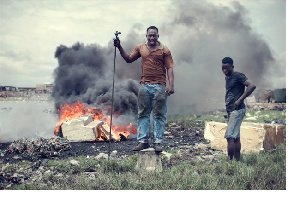
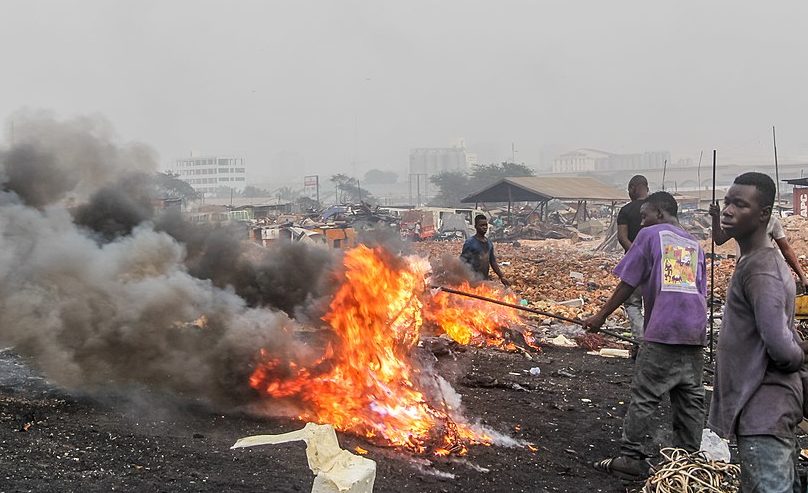
These locations have consistently registered subpar air quality standards over an extended period, primarily due to soot generated by open waste burning and vehicular emissions.
Professor Kofi Amegah, the leader of the Breathe Accra Project, emphasized that these pollutants and particulates pose significant health risks to the local population.
Data compiled from over four months of monitoring has revealed that pollution levels in these areas remain elevated throughout the day, surpassing the recommended standards set by the World Health Organization.
According to the Air Quality Index (AQI), optimal or good air quality typically falls within the range of 0 to 50 on the index. AQI levels ranging from 51 to 100 are considered moderate, with potential health concerns for a small subset of individuals, particularly young children under the age of five.
“For instance, AQI for Agbogbloshie on Wednesday 6th September 2023 was between 150 and 200, which is unhealthy for all groups of people,” Prof Amegah said.
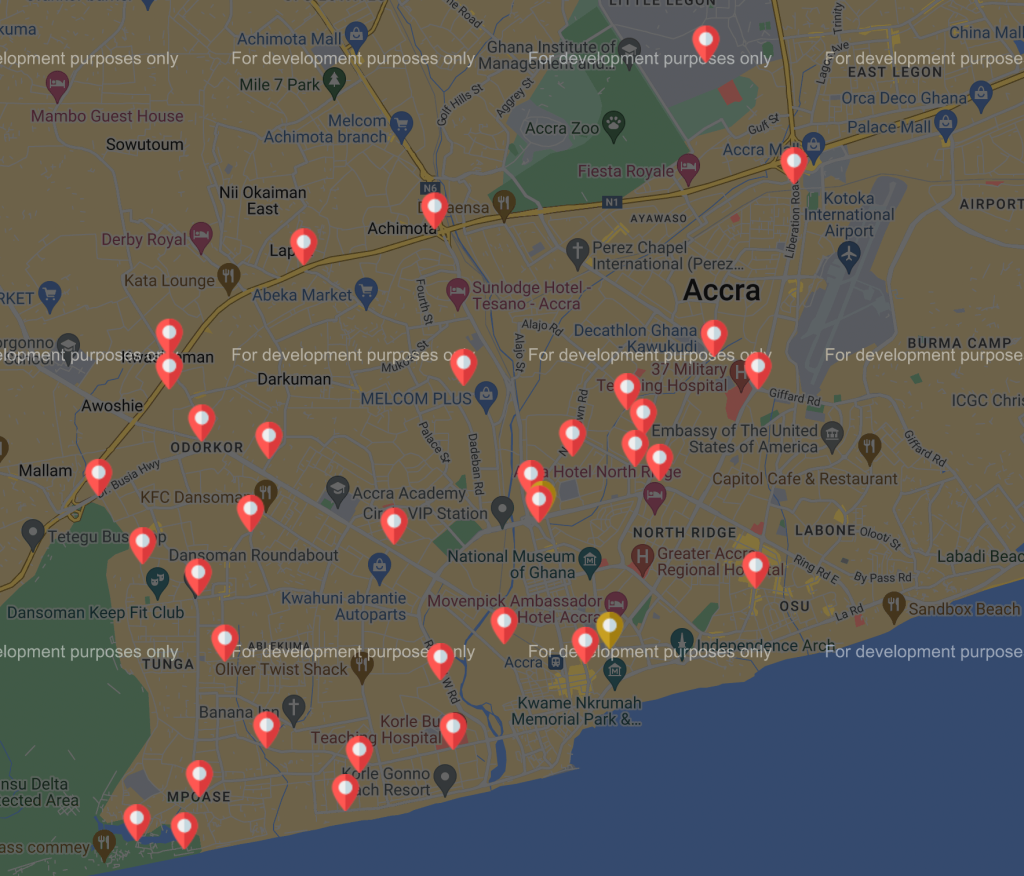
He noted that the deployment of over 30 sensors is enhancing the capabilities of the Environmental Protection Agency’s existing monitoring stations. This expansion in monitoring coverage encompasses a larger portion of the city, ensuring continuous surveillance of air quality.
While the monitoring network has yet to reach the international benchmark of having sensors within every five-mile radius, the improved monitoring system provides real-time data on air quality. This data is instrumental in conducting investigations to identify the sources and underlying causes of pollution, enabling prompt remedial actions.
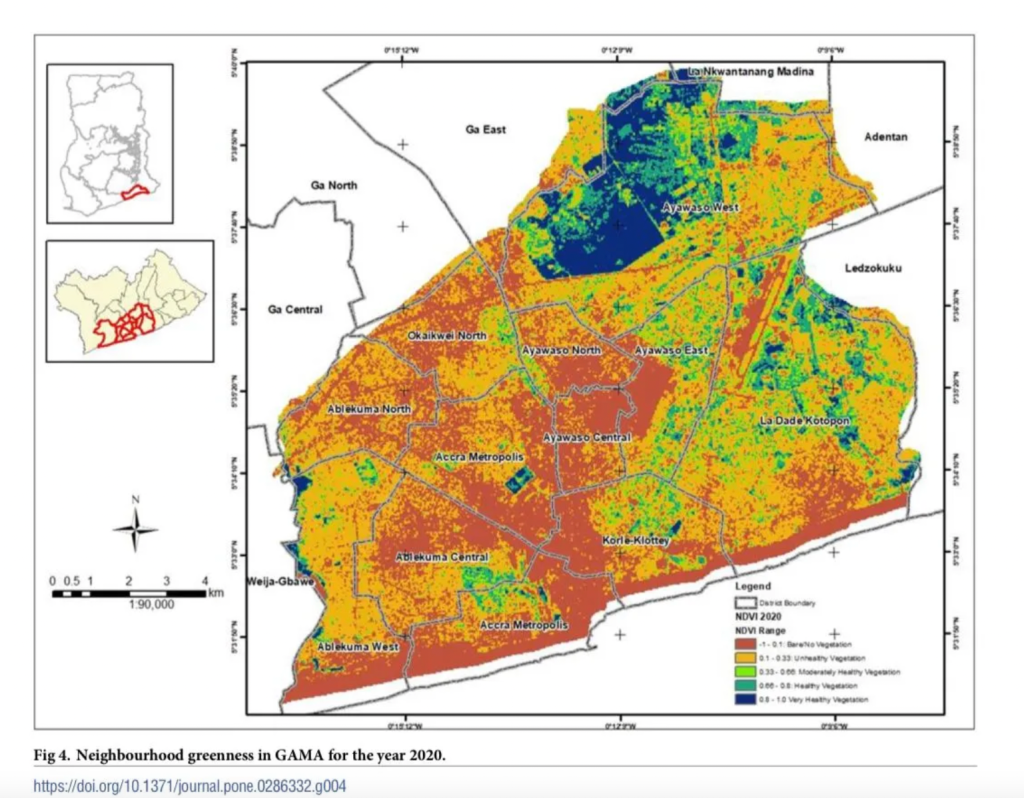
Regarding green spaces, Professor Amegah shared findings from a recent study he conducted, revealing a significant decline in green spaces over the past two decades. These green spaces, including tree cover, grassy areas, and parks, serve as the ‘lungs of the city,’ but their presence has substantially diminished.
“These greens purified the air, but we have removed almost all. We need to act fast by planting trees before it is too late,” he cautioned.
Mr Alex Johnson, the Head of Transport, Accra Metropolitan Assembly, said: “There is a high concentration of pollutants wherever there is high population and high volume of vehicular traffic at the same time.”
“As vehicles move slowly, fuel burning becomes inefficient resulting in high emissions of air pollutants. Also, open burning of waste in these areas is quite common, so I’m not surprised at the results of the monitored data.”
He emphasized that various groups, including market women/traders, “truck pushers,” head porters (kayayei), patrons, drivers, pedestrians, and local residents living in these exposed environments, face a heightened risk of developing heart-related diseases and lung cancer in the medium to long term.
Statistics derived from the Ghana Health Service (GHS) for the first half of 2023 reveal that asthma, primarily caused by poor air quality, ranks as the second most commonly recorded non-communicable disease (NCD). Dr. Efua Commeh, the Acting Programme Manager for Non-Communicable Diseases at GHS, clarified that this data implies a growing number of individuals suffering from chronic obstructive pulmonary diseases such as asthma. Pollutants in the air also increase children’s susceptibility to upper respiratory infections like the flu, which can trigger asthma symptoms.
The inhalation of dust and soot particles poses significant health risks, potentially resulting in lung dysfunction, heart diseases, cancer, nerve damage, and harm to vital organs like the brain, kidneys, and liver, ultimately leading to premature deaths.
In terms of the healthcare burden, information obtained by the Ghana News Agency (GNA) indicates that the National Health Insurance expends an annual sum of US$14,976,000 on the treatment of NCD-related conditions among 500 hospitalized patients.
Mr. Desmond Appiah, the Country Lead of Clean Air Fund, reiterated the imperative need for collaboration among leadership, law enforcement agencies, and the public to preserve clean skies. He emphasized that working collectively and making informed decisions based on evidence, along with targeted actions, would help reduce and eventually eliminate waste burning and enhance transportation methods.
A shared objective of ensuring clean air for all can serve as a catalyst for securing financing and investments in sectors that improve air quality measures and yield numerous co-benefits.
Improved air quality monitoring in Accra has identified Nima, Makola, Agbogbloshie, Chorkor, and Madina Zongo Junction as the top five most polluted areas in the city.
These locations consistently have poor air quality due to soot from open waste burning and vehicle emissions.
Professor Kofi Amegah, the Breathe Accra Project Lead, emphasized that these pollutants and particulates are harmful to human health.
Data collected over four months of monitoring indicated that pollution in these areas exceeded the recommended World Health Organization standards throughout the day.
The Air Quality Index (AQI) categorizes air quality as ideal or good when it falls within the range of 0 to 50. AQI from 51 to 100 is considered moderate, with some health concerns for sensitive individuals, such as children under five.
“For instance, AQI for Agbogbloshie on Wednesday 6th September 2023 was between 150 and 200, which is unhealthy for all groups of people,” Prof Amegah said.
He explained that the deployment of more than 30 sensors was enhancing the capabilities of the Environmental Protection Agency’s monitoring stations. This expansion enabled a broader area of the city to undergo continuous monitoring for air quality.
While the monitoring system has not yet reached the international best practice of having sensors within every five-mile radius, the upgraded monitoring infrastructure provides real-time data on air quality. This real-time data aids in investigations to identify the sources and causes of pollution, facilitating remedial actions.
Regarding green spaces, Professor Amegah shared findings from a recent study he conducted. The study revealed a significant decline in green spaces, which include tree cover, grassy areas, and parks. These green spaces act as the “lungs of the city” and have considerably diminished over the past two decades.
“These greens purified the air, but we have removed almost all. We need to act fast by planting trees before it is too late,” he cautioned.
Mr Alex Johnson, the Head of Transport, Accra Metropolitan Assembly, said: “There is a high concentration of pollutants wherever there is high population and high volume of vehicular traffic at the same time.”
“As vehicles move slowly, fuel burning becomes inefficient resulting in high emissions of air pollutants. Also, open burning of waste in these areas is quite common, so I’m not surprised at the results of the monitored data.”
He emphasized that various groups, including market women, traders, “truck pushers,” head porters (kayayei), patrons, drivers, pedestrians, and residents residing in these exposed environments, face an increased risk of developing heart-related diseases and lung cancer over the medium to long term.
Data from the Ghana Health Service (GHS) for the first half of 2023 revealed that asthma, a condition primarily attributed to poor air quality, ranked as the second most recorded non-communicable disease (NCD). Dr. Efua Commeh, the Acting Programme Manager for Non-Communicable Diseases at GHS, clarified that this data indicated a rising number of people suffering from chronic obstructive pulmonary diseases like asthma. Pollutants also increased the likelihood of children contracting upper respiratory infections like the flu, which could trigger asthma symptoms.
Inhaling dust and soot particles could result in various health issues, including lung dysfunction, heart diseases, cancer, damage to nerves, brain, kidneys, liver, and other organs, potentially leading to premature deaths.
Regarding the health burden, information obtained by the Ghana News Agency (GNA) revealed that the National Health Insurance spent approximately US$14,976,000 annually on treating conditions related to NCDs among 500 hospitalized patients.
Desmond Appiah, the Country Lead of Clean Air Fund, reiterated the importance of collaboration among leadership, law enforcement agencies, and the public to maintain clean air. He emphasized that working together and making evidence-based decisions, coupled with targeted actions, would reduce and eventually eliminate waste burning while improving transportation methods.
A shared objective of ensuring clean air for everyone could serve as a catalyst to secure funding and investments in sectors that promote air quality improvements while delivering multiple co-benefits.
Richmond Xavier Amoakoh, famously known as Lawyer Nti, has stated that he discovered his passion for acting during his senior high school (SHS) years.
He gained popularity through his portrayal of the character in the well-known TV series Kejetia vs Makola, which humorously depicts Ghana’s legal and judicial system.
“The first time I saw my colleagues act on stage was when I was in senior secondary school,” he said, adding: “The feeling I got, I just knew this is for me.”
He noted that he was “a very good Business student,” at the time, but he went to see his assistant headmaster and informed him that he believed acting “was what I think I should be doing”.
“I should be acting, I should be focusing on acting and directing so that’s what I want to pursue,” he remembered telling the school official.
According to Richmond Xavier Amoakoh, the assistant headmaster at his senior high school (SHS) informed him about his options if he wanted to pursue acting as a career. He was told that he could choose between the University of Media, Arts and Communication’s (UniMAC) National Film and Television Institute (NAFTI) and the University of Ghana’s (UG) School of Performing Arts.
Amoakoh expressed a preference for UG, Legon, over NAFTI because he was unfamiliar with the latter. Additionally, he believed that UG was prestigious and a school that his mother would approve of, despite knowing that changing his course of study would lead to controversial conversations at home.
Before taking his official “form-three examinations” in SHS, Amoakoh decided to write the popular November-December (Nov-Dec) remedial examination. Although he achieved excellent results, he chose not to immediately pursue university education.
“My first [real] acting was in the School of Performing Arts,” he mentioned, noting he was “raw” unlike his mates who had prior experience in acting.
According to Richmond Xavier Amoakoh, he approached his acting journey with the mindset of being open to learning and being molded. He expressed the attitude of “I’ve come, train me, shape me,” and he acknowledged that the school he attended fulfilled that role.
When Nana Kwesi Asare asked Lawyer Nti about which of his parents he believes he inherited his acting talent from, Amoakoh’s response is not mentioned in the given context.
“I think it’s God,” he answered.
“Well, my mother too has some talent,” he added, explaining: “She can mimic people so well.”
According to Richmond Xavier Amoakoh, he believes that his mother has a talent for doing impressions of others, particularly imitating their voices.
Despite successfully passing her bar exams and the interview session as well, Ghanaian socialite, Ama Governor’sappears to have ‘shaky’ chances of becoming a lawyer.
Known in real life as Elorm Ababio, she is due to be called to the bar on Friday, November 12, 2022, upon completion of the Ghana School of Law, Makola, but received a letter from the Secretary to the General Legal Council informing her that the decision has been challenged.
A “concerned citizen” is said to have filed a complaint alleging that Ama Governor lacks good character and not befitting enough to venture into the law profession.
A YouTube video said to show her allegedly engaged in “conduct unbecoming of an application to be called to the Bar” has also been attached to the complaint.
Following the incident, there has been an uproar on social media, particularly on Twitter where scores of individuals have condemned the decision of the General Legal Council to withhold ‘calling her to the bar’ while investigations take place.
Let’s take a look at some sultry pictures shared by Ama Governor on Instagram.
Some of these pictures seem to have partly informed the motion against her dreams of becoming a lawyer.
Major marketplaces in the nation, including Kejetia, Makola, and Kaneshie, account for a larger portion of this total.
On Wednesday, October 19, 2022, however, due to the nation’s current economic difficulties, markets and stores in Accra’s Central Business District were closed.
They assert that Ghana’s cost of living has soared as a result of the cedi’s rapid devaluation versus the US dollar and high inflation rates.
As a result of this, buyers have had to turn away as they could not get access to their respective items to purchase.
The traders told in interaction with GhanaWeb Business said the closure will continue until Monday, October 24 to demonstrate to the government the extent to which the economic meltdown is affecting businesses and livelihoods.
The closure will however mean that no sales will be made in the next three to four days, which is significant to the growth of the economy which is now seeking support from the International Monetary Fund.
Makola market, for example, comprises of several merchandises including clothing and textiles, footwear, food, drugs, groceries, raw material, and kitchenware among others.
Four to five days of little to no sales is estimated to cause huge revenue losses to the country as VAT payment and payment of other taxes will be impacted.
At a time when the government is finding it difficult to generate revenue, it is a bad omen for economic activity to somewhat shut down.
Some traders speaking with GhanaWeb’s Stella Dziedzorm Sogli said the activities of the black market have been the main reason for the increase in the exchange rates.
One of the traders, Abigail said: We are pleading with the government to arrest those in the black market. They are the main reason the dollar and CFA keep increasing. The dollar rates are changing too rapidly. In a day, the dollar can rise about three times within three hours.”
She continued, “It is unbearable,” she added.
Shaima, who retails socks and other clothing items recounted that “the black-market folks have hoarded the dollars. They are the reason the rates have gone up. What we know is that exchange is done in either bureaus or the bank, but now these black-market people have taken over.”
Last week, traders in Adum embarked on a similar protest to drive home concerns about the high cost of living in Ghana.
The persistent depreciation of the cedi has now reached alarming levels as the currency is now selling at GH¢13.65 at some forex bureaus in the country while the CFA is selling at GH¢17.50, as of October 20.
Fire has gutted some cosmetic shops closer to the White Chapel at Makola.
The incident happened on Wednesday, October 5, 2022.
Items destroyed in the fire included highly combustible cosmetic products.
The Ghana National Fire Service(GNFS) sent six fire engines including a TL and water tanker to contain the fire and prevent it from spreading further to other shops.
The service indicated that “accessibility to the affected shops was a challenge due to hardcore burglar proofing”
Also, “electricity power supply in the area has been isolated to enhance rigorous firefighting and prevent possible risk of electrocution of firefighters”
There were no casualties.
The GNFS says they are investigating the cause of fire.
Human and vehicular congestion on Monday impeded the efforts of fire fighters to control the fire outbreak, which destroyed about 50 shops at the Hongkong Market, near the GCB Bank, at Makola.
Fabrics, cosmetics, jewellery, toys and other wares valued at thousands of Ghana Cedis have been lost in the inferno.
Dozens of firemen had a hard time extinguishing the fire and only managed to control it after five hours of fire fighting, with the main challenge being congested access, according to a Fire Officer who sought anonymity.
The GNA team gathered that 10 fire tenders from both Fire Service and Ghana Armed Forces were used in controlling the inferno, which affected a four storey building filled with general merchandise.
Divisional Officer II, Ellis Robinson Okoe, the Head of Public Relations, GNFS, told the media that they were able to save two floors out of the four storey building.
He said the GNFS had a distress call at 0900 hours and arrived at the scene within 10 minutes but had difficulty accessing the place.
The PRO also noted that all fire hydrants at the Makola Market did not have the needed pressure, for which reason they had to go to Alajo, Nkrumah Circle, and the Ministries to refill their water tanks.
He observed that though many shops at the Market had fire extinguishers, the shop owners could not use them when the fire started because they did not know how to operate the extinguishers.
“…But at the moment, we have been able to bring the fire under control and we are going to break the containers to ensure pockets of fire are completely doused,†he stated and asked traders and shop owners to be patient.
The incident affected trading activities at the Central Business District with many shops closed.
Some traders blamed the Fire Service for allowing the fire “to get out of hand before acting.â€
Madam Cecilia, a trader, said the fire started around 0730 and claimed they called Fire Service but they allegedly underestimated it.
The police were called in early to cordoned off the area for safety and effective fire fighting.
The cause of the fire is unknown.
Madam Taiye Saddik, a wig seller also a victim told the GNA team that she has lost about GH¢500,000.00 worth of hair products to the fire outbreak.
She told the GNA team in an interview that they were oblivious of what triggered the fire outburst but predicted it could be an electrical fault and their efforts to put it off yielded no result.
Some shop owners affected by the fire pleaded with the government to come to their aid since most of them were operating on loans and this was their only means of livelihood.
In 2013, after a series of fire outbreaks in major markets across the country, the then government led by John Dramani Mahama engaged the services of experts from the United States of America to investigate the outbreaks.
It was expected that the work of these forensic investigators was going to serve as the blueprint for dealing with fire-related issues at markets to curtail recurrence.
More than eight years on from when the investigators touched down in Ghana, the report of their investigations remains unknown to the general public.
As the wait continues for ‘the report’ and further wait for when its recommendations will be implemented, Ghana now experiences an annual ritual of infernos ravaging major markets.
We are just halfway through the year 2021 and already some major markets have been hit with millions of cash and items being consumed by these fires.
Below are five of major fire outbreaks that have hit some markets in the country
Makola Fire outbreak
The Makola outbreak is the latest one that triggered this write up. On Monday July 5, 2021 fire engulfed a three-story building at the trading hub of Makola with items worth millions of cedis going up in flames.
The fire which as per reports commenced around 8:30 was quenched in the afternoon as firefighting personnel did not have the needed resources to expeditiously deal with it.
Over fifty shops were burnt in the process.
Some of the witnesses who spoke to GhanaWeb alleged that it could be due to electrical fault.
In April this year, over 40 shops in Kumasi were burnt to ashes by a rampaging fire.
The shops that were gutted by the fire were mostly sandals manufacturing shops at the Kumasi Central Market.
Eye witness account has it that the Central Market Fire started around 8:48 pm on Sunday while the shoemakers were still working.
But instead of calling for help to extinguish the fire, the attendants decided to salvage their wares as the situation worsened. Timber Market in Accra
As the name suggests, the timber market is the hub of wood trade in the capital. In the wee hours of Monday, May 10, 2021 an inferno broke out and consumed some shops in that market.
Due to the nature of the market, the fire travelled easily and destroyed loads of properties.
The Ghana National Fire Service who were once again accused of being late to the scene promised to investigate and unravel the cause but so far no update has been given yet.
Also in April 2021, a two-story building located at the Techiman market was gutted by fire.
The fire which commenced around 12:30pm was fought by fire service personnel with five tenders.
The cause of the fire which affected several shops in the market still remains unknown.
Fire ravaged the Mankessim Market in the Central Region, destroying several properties – twice in the space of a month.
The first and more destructive one was on April 20 whiles the second hit on May 31. The former is said to have consumed over 20 containers and five cold stores in the process.
Eyewitness account mentioned electrical fault as the cause of the fire.
Several traders and customers at one of the country’s busiest commercial business centre are up in flames on Monday morning.
A thick cloud of smoke can be seen emanating from one of the buildings in the market area of Makola.
Saxophonist Steve Bedi reported in a Facebook post showing the market in ablaze as he called for efforts by the Fire Service to come to the aid to douse the inferno.
Citinewsroom.com quotes an eyewitness to have said the fire begun at around 9 am.
“I went to buy some things at Makola this morning. In the process, I saw smoke coming from the second floor of the three-storey building. So the people around started calling the Fire Service,” a quote attributed to an eyewitness read.
It continued: “After about five minutes, the Fire Service personnel were still not around, but the fire was spreading, so people in the complex tried to gather their things from the shops before the fire could get to their shops. I eventually moved away because the fire was intensifying, and you could feel the heat from the fire, which was becoming dangerous for people around.”
An earlier report suggested that the Fire Service station located near the burning shops had no water in their tanks at the time the incident started. It has however been reported that the emergency services, including the Fire Service, are currently at the scene to bring the situation under control.
Makola Mall on fire in Accra. Fire Service came first telling the people there is no water and have to go and come back. Eeei🇬🇭Ghana pic.twitter.com/g55wW7Z9uT
The Metropolitan Chief Executive (MCE) of Accra, Mohammed Adjei Sowah, has announced that the second phase of the Makola redevelopment project would commence in July 2020.
He disclosed this on Monday at a stakeholder engagement held at the 31st December Makola Market to interact with leadership and occupants of the sheds to be affected, adding that the second phase would see the reconstruction of shed nine to accommodate some 270 stalls.
According to him, the commencement of the project follows the successful completion of shed eight under the first phase of the project, adding that work is expected to be completed in less than a year.
He expressed his appreciation to the traders for their cooperation during the first phase, and was hopeful they would continue to cooperate to ensure the successful completion of the second phase of the project, which is intended to accommodate more stalls.
“We thank you all for your cooperation and understanding; as you are aware, we are working in phases, one at a time. This is to ensure that we do not bring the entire market down before reconstructing… The delay was due to unavailability of funds, but now that we have secured the funds, work must begin,” he said.
He urged the traders to relocate to the temporary shed provided by the assembly within two weeks to enable work to begin.
The mayor also used the opportunity to educate the traders on the need to strictly adhere to all the COVID-19 preventive protocols in order to curb the spread of the virus in the city.
Some market women who spoke at the engagement expressed their gratitude to the assembly, citing conducive trading environment and improved security in the market, among others, as some benefits they were currently enjoying after the completion of the first phase.
Located in the heart of the city, the Makola Market, a legendary shopping place constructed in 1924 and which is the main wholesale and retail market place in the city, also serves as the centre of trade in the country and one of the nation’s most essential social and cultural institution. It has been redeveloped with the shed, which was initially built to be occupied by 180 traders but expanded to accommodate over 200 traders.
Products sold in the market range from manufactured and imported foods, fresh produce, clothes, shoes, tools, medicines, pots and pans to jewellery made from locally handcrafted beads.