Tag: Marine

  • Lamar Marine Services and Regional Maritime University partner to build boats

    Lamar Marine Services and Regional Maritime University partner to build boats

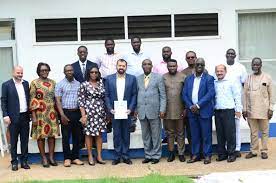
    The Regional Maritime University (RMU) has entered into a significant partnership with Lamar Marine, a Dubai-based firm specializing in boat construction, firefighting, and oil rig services.

    The collaboration was officially announced during a meeting at RMU, marking the beginning of a new era of innovation and environmental conservation in Ghana’s maritime sector.

    Mr. Mohammed Sahel, the Managing Director of Lamar Marine, disclosed the company’s plan to lease a portion of beachfront land from RMU. This land will be utilized to construct a warehouse and a workshop for the production of boats from scratch.

    The boats, made from lightweight and durable fiberglass, will serve the Ghanaian and West African markets, primarily for purposes such as surveillance, security, and fishing. These boats are equipped with improved safety features and enhanced fuel efficiency.

    Mr. Sahel added that Lamar Marine’s commitment to cleaning up debris from the lagoon, stretching from the entry point to the university, is part of the company’s corporate social responsibility efforts.

    “This initiative will involve the construction of two to three custom-made boats designed to remove plastics and other waste from the lagoon,” he said.

    The waste will be repurposed to transform the area into a tourist attraction with water sports facilities.

    Mr. Sahel emphasized Lamar Marine’s commitment to environmentally friendly and non-toxic operational practices.

    Dr. Baboucarr Njie, the Registrar at RMU, welcomed the partnership, stating that it would bring mutual benefits to both RMU and Lamar Marine.

    The University has agreed to provide eight plots of land, each measuring 70 x 100 feet, for the construction of Lamar Marine’s facilities. Additionally, RMU will facilitate the training of Lamar Marine staff and students in boat building and maintenance.

    Mr. Prashant Kamath, a member of the Board of Directors at Lamar Marine Services Limited, highlighted the advantages of incorporating speedboats into Ghana’s transportation system.

    He mentioned that this mode of transport could reduce costs, travel time, and contribute to saving lives, especially in areas with limited road access.

    He expressed optimism about the collaboration, emphasizing its potential benefits for RMU students, as it would provide them with valuable training opportunities in boat construction and fabrication.

    He assured the University’s management of strict adherence to the regulations and standards set by the Ghana Maritime Authority.

    He stated that Lamar Marine was committed to conducting its activities in a manner that would not harm the water and fishing sector, drawing on their extensive experience as a boat company since 1973.

    Dr. Jethro W. Brooks Jnr, the Acting Vice-Chancellor of RMU, praised the initiative and pledged the University’s full support. He mentioned that the partnership would provide students with practical exposure to deepen their knowledge and understanding of marine engineering.

    The Acting Vice-Chancellor was accompanied by RMU’s management staff, who toured the sea areas surrounding the University to familiarize themselves with the potential impact of the collaboration.

    He stated that the partnership between Lamar Marine Services Limited and the University held great promise for advancing Ghana’s maritime capabilities while enriching the education and skills of future marine engineers and professionals.
  • Akufo-Addo commissions vessel ‘MV Esther Afua Ocloo’ to beef up Ghana’s marine protection

    Akufo-Addo commissions vessel ‘MV Esther Afua Ocloo’ to beef up Ghana’s marine protection

    The Ghana Maritime Authority (GMA) has heightened its efforts to safeguard the marine environment, particularly against oil spills, through the acquisition of a new versatile vessel.

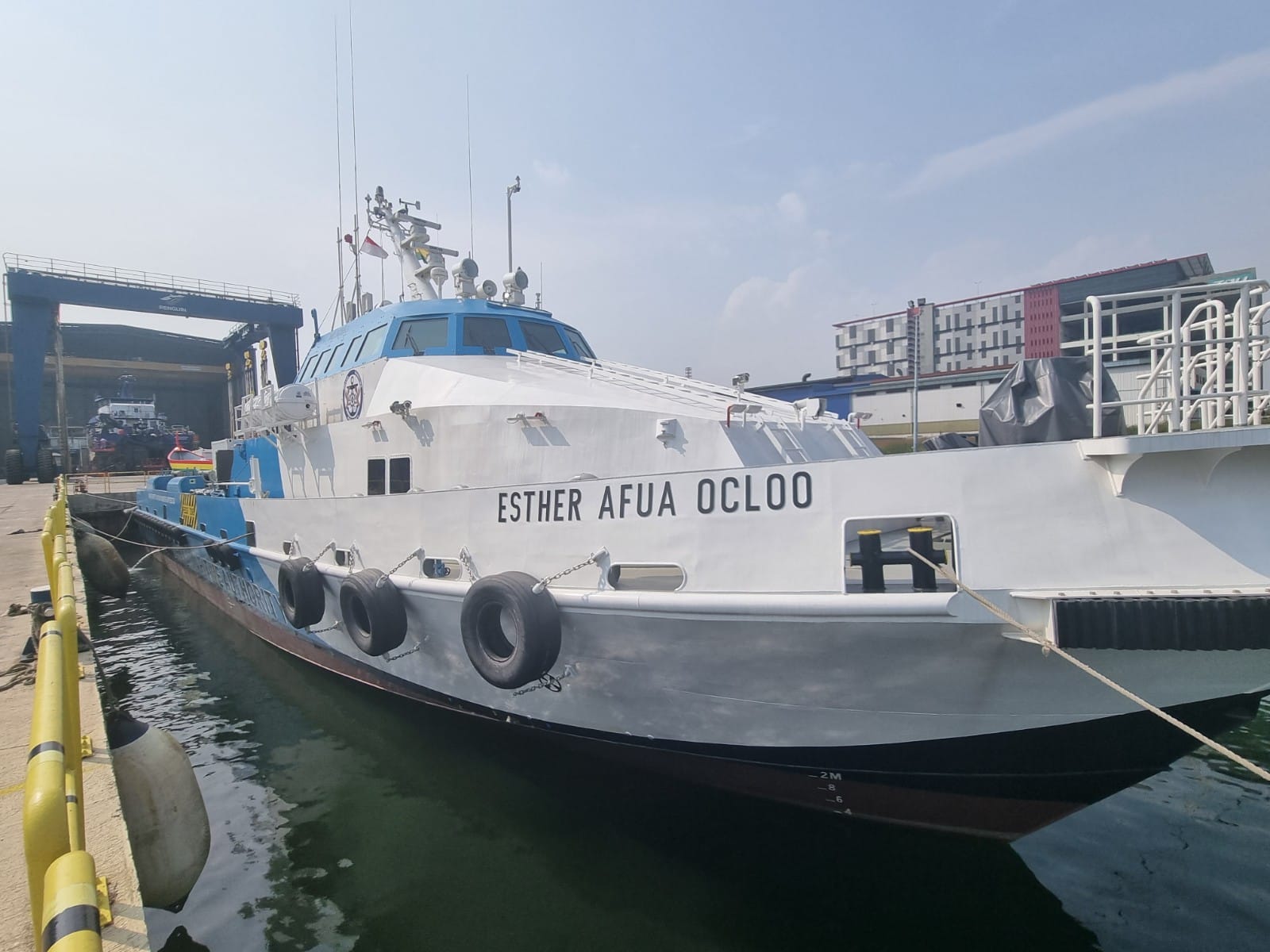
    MV Esther Ocloo, the new vessel, was officially commissioned at the Sekondi Naval Base by President Akufo-Addo over the weekend. During the same ceremony, the President also commissioned two boundary-class vessels, the Ghana Navy Ship (GNS) Aflao and GNS Half Assini, which were donated by the United States to the Ghana Navy.

    Named “Esther Afua Ocloo” in honor of the pioneering industrialist behind the Nkulenu canned foods brand, the vessel is equipped with a modern oil spill recovery system, featuring a Desmi DBD 16 combination skimmer, HARBO oil spill Boom, and an oil spray Dispersant System capable of addressing TIER 1 and 2 spills both in harbors and offshore areas.

    Furthermore, the vessel is equipped with two Aerial Drones designed for wide-area surveillance to detect activities and potential spills within the country’s waters.

    President Akufo-Addo, in his speech, emphasized the nation’s commitment to safeguarding its territorial integrity by equipping the Navy for its responsibilities. He expressed concern about criminal activities in Ghana’s waters, citing previous ship attacks and crew kidnappings in 2021.

    Transport Minister Kwaku Ofori Asiamah commended the Authority for its efforts in protecting Ghana’s marine environment from oil spills, which can have severe repercussions on marine life. He noted that the acquisition of the Oil Spill Response Vessel, MV Esther Ocloo, represented a significant milestone in the country’s maritime sector, as it provided a crucial platform for the Authority to fulfill its mandate of fostering a vibrant, safe, and secure maritime ecosystem for economic growth and development.

    Built in Singapore by renowned shipbuilders Penguin Shipyard Asia Pte Ltd., MV Esther Ocloo boasts an overall length of 40.00 meters, a molded breadth of 7.60 meters, a molded depth of 3.65 meters, and a draught of 1.89 meters. It is powered by three Cummins KTA36-m2 engines and features three Caterpillar SR4 Alternator 86eKW generators.

    Considering the rapid expansion of ports and offshore activities in Ghana, the Ghana Maritime Authority has recognized the need to enhance its Oil Spill Response Recovery capabilities to meet the increasing demand.

    The Authority has outlined a long-term plan that includes expanding its fleet of vessels and equipment, training and equipping personnel to respond to Tier 1 and 2 oil spills, implementing measures for detecting spills within Ghana’s maritime jurisdiction, and engaging stakeholders to raise awareness and preparedness.

  • New York jury indicts man who strangled NYC subway rider

    New York jury indicts man who strangled NYC subway rider

    A former US Marine who was caught on video putting a homeless man in a fatal chokehold on a subway train has been indicted by a New York grand jury.

    The decision to indict Daniel Penny on second-degree manslaughter charges comes after prosecutors had already charged him last month.

    The grand jury’s decision was necessary to formally proceed with the charges, and Penny is currently out on bail. Penny claims that he acted in self-defense during the incident that took place on May 1st.

    Details of the formal charging document are expected to be disclosed at a later date. If convicted of second-degree manslaughter, Penny could face a maximum sentence of 15 years in prison.

    The 24-year-old former Marine was initially allowed to leave the scene of Jordan Neely’s death but was later arrested on May 12th. He was taken into custody, handcuffed, and brought to a police station before being released on a $100,000 in-cash bail.

    In a video posted on social media on Sunday, Penny stated that he did not have the intention to kill Neely, a 30-year-old homeless man who had reportedly been shouting at subway riders prior to the altercation.

    “There’s a common misconception that Marines don’t get scared,” he said in the video.

    “We’re actually taught one of our core values is courage, and courage is not the absence of fear but how you handle fear,” he added, saying he felt compelled to confront Mr Neely as he acted erratically towards passengers.

    “I was scared for myself but I looked around there were women and children, he was yelling in their faces saying these threats. I just couldn’t sit still.”

    Video of the incident captured by a freelance journalist on the train shows the former Marine holding Mr Neely around the neck for two minutes and 55 seconds.

    In the video released on Sunday, Mr Penny said the whole interaction was less than five minutes.

    “I was listening to music at the time, and he was yelling, so I took my headphones out to hear what he was yelling,” he said.

    “And the three main threats that he repeated over and over was ‘I’m going to kill you,’ ‘I’m prepared to go to jail for life,’ and ‘I’m willing to die.’”

    Family of Mr Neely say that the second-degree manslaughter charge should be upgraded to murder.

    The killing shocked the city and led to questions about the safety of public transit and treatment for mentally ill homeless New Yorkers.

  • How a marine protected area off coast of Kenya  inspired underwater movie

    How a marine protected area off coast of Kenya inspired underwater movie

    Kenya’s 882 miles of coastline along the Indian Ocean are frequently disregarded in favor of the country’s vast natural reserves, which are famous for being home to all “Big Five” mammals. It’s a place where people go to “chill out,” but not to observe and connect with the wild and unique ecosystem, says Kenyan filmmaker, photographer and conservationist Jahawi Bertolli.

    Bertolli is determined to change this outlook and believes that visual storytelling is one way to do it. “No one was telling stories about the ocean here (in Kenya),” he says.

    So far, his work has focused mainly on the Lamu Archipelago along Kenya’s northern coast, where his wife Elke Bertolli, also a photographer and filmmaker, grew up. Lamu is a hidden gem, he says, and filming has led to new discoveries. “There’s not much scientific work that’s happened up here so a lot of what we’re finding is new,” he adds. “We’re finding these incredible reefs. We’re finding incredible biodiversity.”

    But this rich biodiversity is increasingly under threat. Bertolli says that harmful fishing practices, such as drag netting, coupled with habitat degradation due, in part, to coastal development, pollution and an increasing human population have caused a reduction in fish populations.

    Not only is this bad for the ecosystem, but for local fishers too. Lamu is home to one of the oldest Swahili settlements in East Africa, a community who have depended on the ocean since the 12th century. Traditionally these fishers respected the balance with nature, says Bertolli. They stopped fishing when they had enough for what was needed, they only fished in certain seasons, and they left the coral reef alone, understanding it to be a home for fish, where they needed space and time to reproduce and grow. “There’s a lot of cultural knowledge, which is actually conservation knowledge. It’s just packaged differently,” Bertolli explains.

    In 2020, Bertolli made a short film about Lamu’s sea life and the conservation traditions of the local fishers. He called it “Bahari Yetu” – “Our Ocean” in Swahili – and began showing it the local community. The screenings were a gamechanger, he says: “When you bring back that imagery, all of a sudden people are like, ‘Oh my God. Wow, this is ours … this is our heritage, these are our reefs, this is what’s happening underwater in our ocean.’”

    A viewing of “Bahari Yetu” was also put on for local beach management units and members from the county government and fisheries department. Bertolli also screened another film he had made a few years earlier on locally managed marine areas in Africa. The next time the group met, all members voted unanimously to begin setting up a marine protected area around Lamu’s Kinyika island, a craggy rock that acts as a nursing ground for seafaring birds and hosts a bustling coral reef system.

    For Bertolli and the people of the Lamu Archipelago, this has been a significant first step to ensuring the preservation of an essential ecosystem. While it’s only the beginning and a management plan still needs to be established, Bertolli believes it has also been a testament to the power of visual storytelling. “Because it was their film, told in their language, filmed here – it became an incredibly powerful tool to inspire the community to come together to try and start actually conserving these areas,” he says.