Ghana has recorded the first death of a pilgrim in the 2026 Hajj. This was confirmed by the Pilgrims Affairs Office of Ghana (PAOG) in an official statement dated May 22, 2026, signed by its Director of Communications, Mohammed Amin Lamptey.
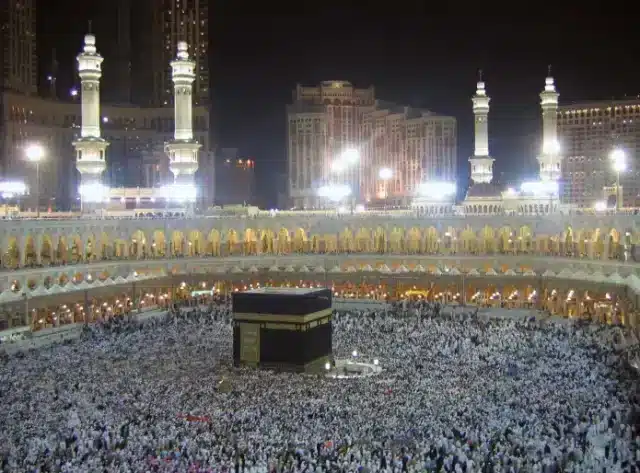
According to the statement, Musah Sidi, aged 53, collapsed during Tawaf at the Haram in Mecca and passed away shortly after.
“The Pilgrims Affairs Office of Ghana (PAOG) regrets to officially announce the passing of Mr. Musah Sidi (53), a Ghanaian prospective pilgrim, who collapsed at the Haram during Tawaf… and passed away shortly afterwards”, parts of the statement noted.
The office confirmed that the bereaved family has been formally informed of his demise, while arrangements are underway for his body to be prepared for Janaza prayers after Jumu’ah prayers before burial citing that according to the Islamic religion’s tradition, it’s an honour to die during worship to their maker.
“In Islamic tradition, a pilgrim who dies in a state of worship and in Ihram is promised immense spiritual honour in the hereafter,” the statement added.
The Pilgrims Affairs Office extended its condolences to the family, sympathisers and loved ones of the deceased.
“We extend our deepest condolences to his immediate family, sympathizers and loved ones. May Allah forgive his shortcomings and grant him Jannatul Firdaus”, the office noted.
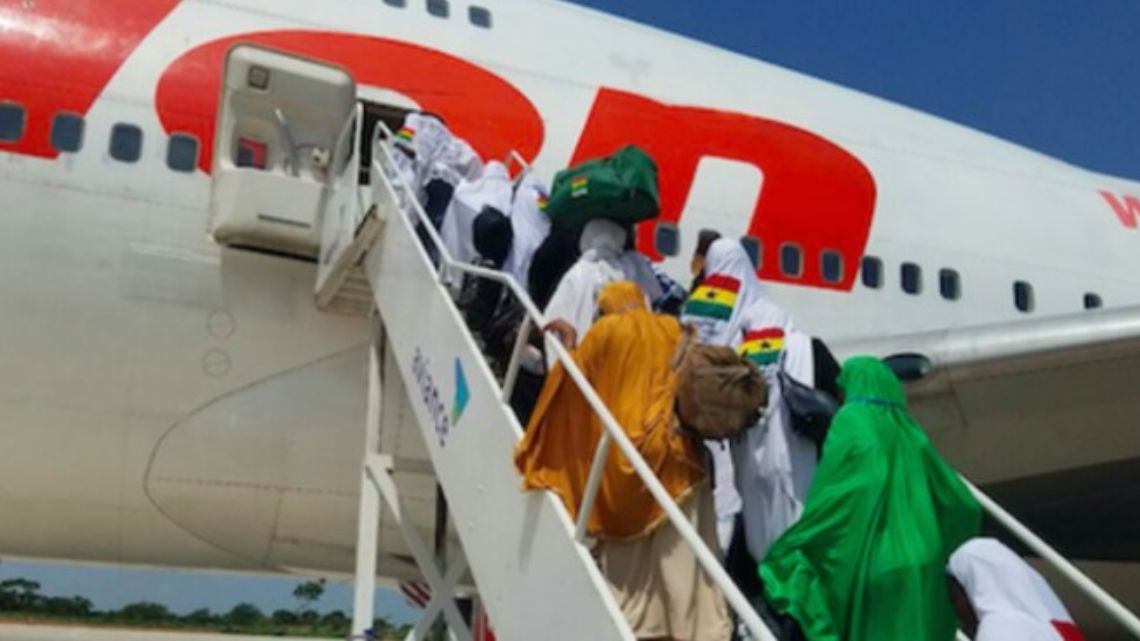
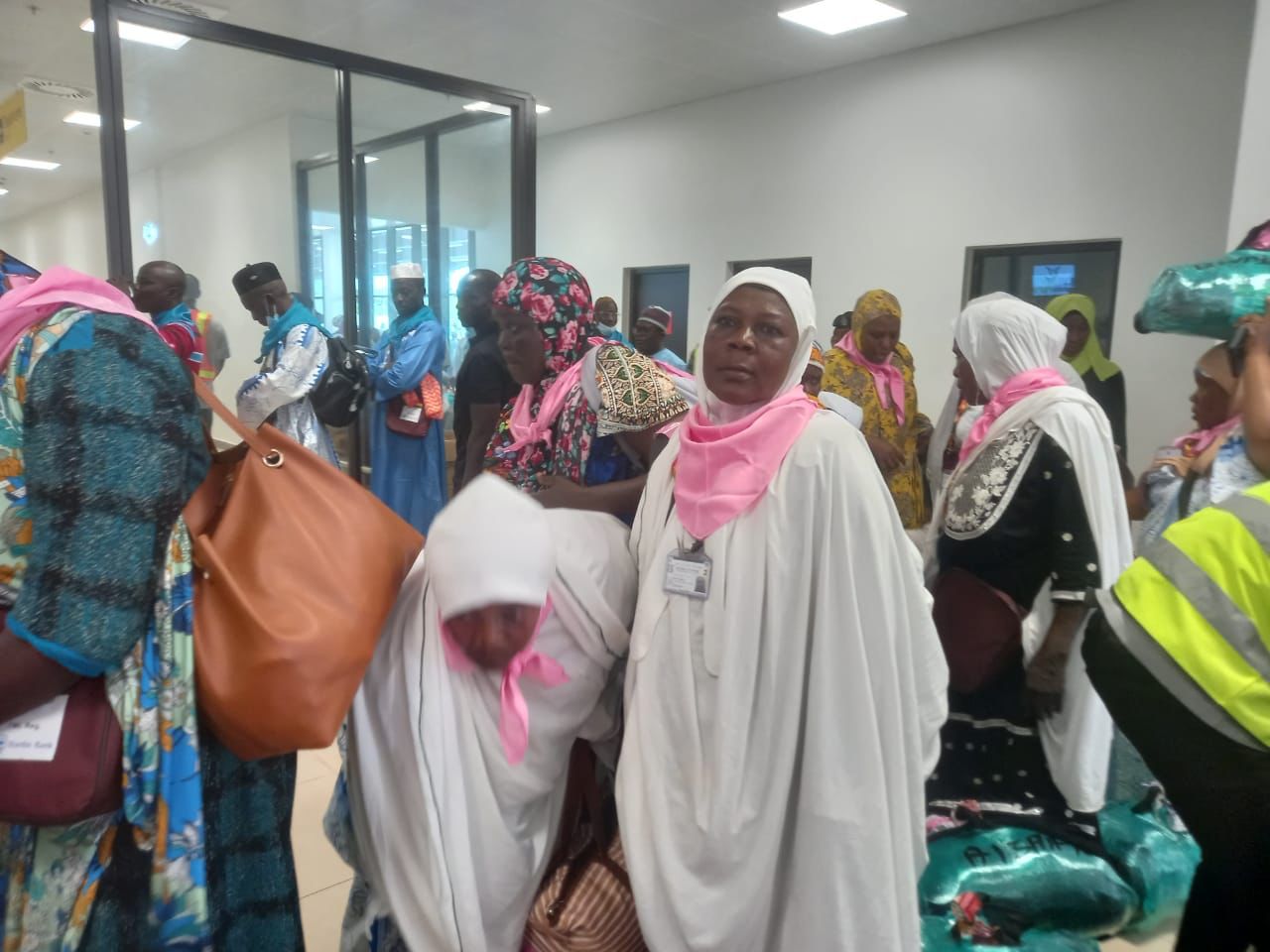
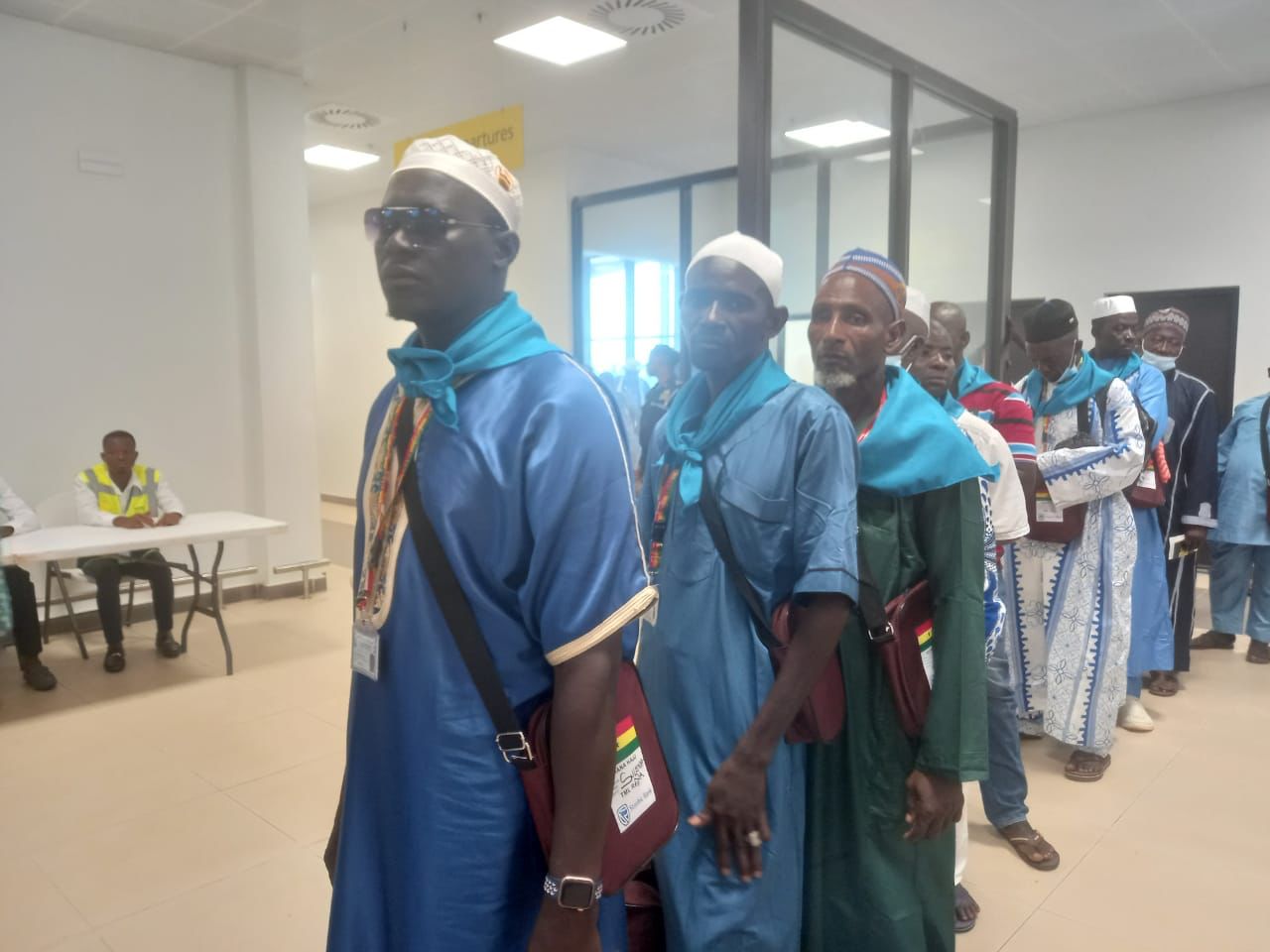
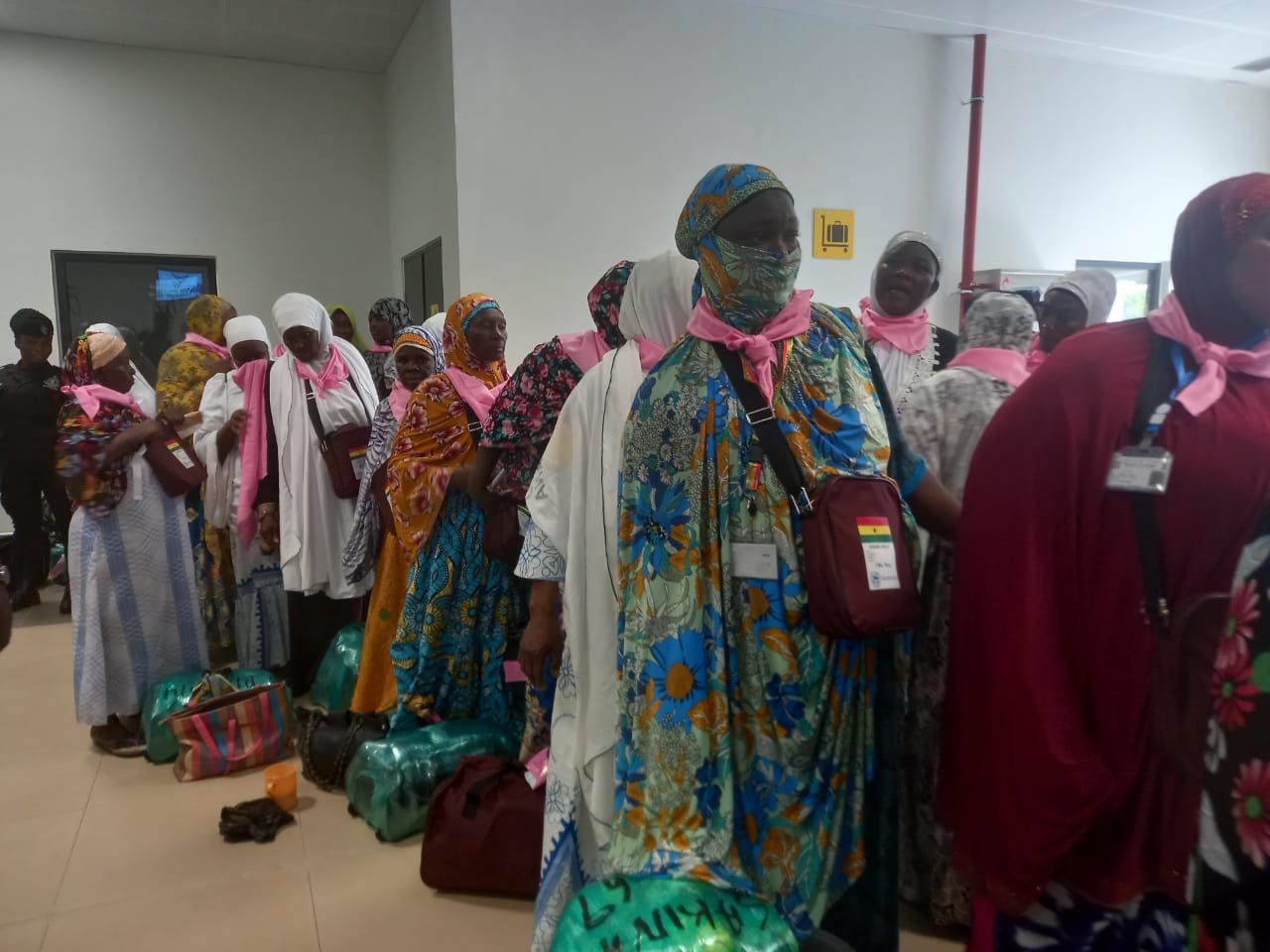
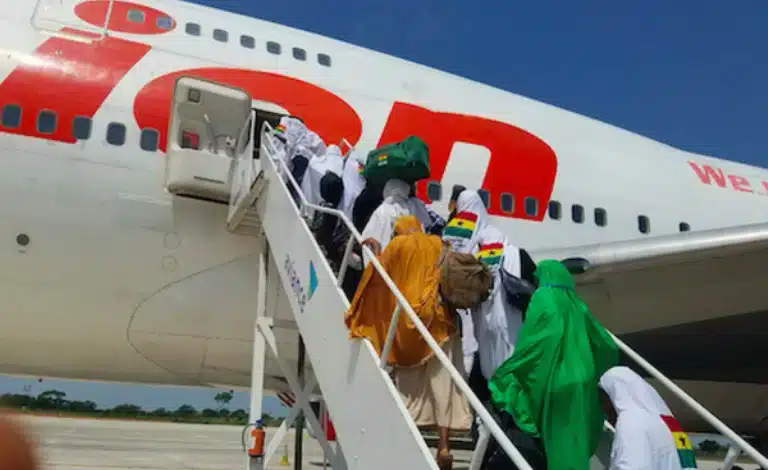
Meanwhile, the first batch of Ghanaian pilgrims departed for the Kingdom of Saudi Arabia in early May. Their departure was announced by the Communications Director of the Hajj Board, Mohammed Amin Lamptey, during a media briefing on Friday, May 1.
The pilgrims left from Tamale Airport at about 11:30 GMT on Friday, May 1, for the annual pilgrimage to Mecca and were expected to arrive at 4:00 p.m. GMT.
According to the Hajj Board, of the 6,000 Ghanaians expected to undertake the pilgrimage that year, 430 had been airlifted, leaving 5,570 pilgrims yet to depart for Saudi Arabia on 18 scheduled flights between May 1 and May 18, 2026.
Mr Amin Lamptey stated that all the necessary arrangements had been put in place to ensure a successful pilgrimage.
To facilitate a smooth stay in Saudi Arabia, the Board had deployed a team ahead of the pilgrims to receive them. The pilgrims were scheduled to spend three days in Medina before proceeding to Mecca.
He said, “This year, we have enhanced our communication systems to ensure that sensitive information is handled accurately and shared appropriately”.
For his part, Mr John advised the prospective pilgrims to respect the laws of Saudi Arabia and conduct themselves in a manner that upheld Ghana’s image.
“You are not only carrying your personal faith, but also the image of our nation. Let your conduct reflect the values of peace, tolerance and unity that Ghana is known for,” he said.
Ghanaian pilgrims who left Ghana on May 1 have arrived safely in Mecca, the Pilgrims Affairs Office of Ghana (PAOG) has confirmed.
The Authority confirmed this through its Communications Directorate. The announcement was made in Mecca after the pilgrims completed a three‑day stay in Madina.
Before they arrived in Madina ( one of the holiest cities in Islam, after Mecca), the Board had already deployed a team to receive the pilgrims as they were expected to rest there before proceeding to Mecca.
They were received and commuted to their respective hotels to rest and prepare for the Hajj rites in the coming days.
The pilgrims left for Mecca from Tamale at about 11:30 a.m. on Friday and touched down at 4 p.m. GMT.
So far, five batches of pilgrims have departed Tamale for the Kingdom of Saudi Arabia to participate in the annual Islamic ritual.
In all, a total of 6000 pilgrims are expected to depart from Ghana in 18 different flights from May 1 to May 18, 2026.
No issues or challenges so far
The Director of Communications for PAOG, Mohammed Amin Lamptey, confirmed that all pilgrims are in good health and without any complications, attributing the smooth transition to deliberate measures implemented by authorities to ensure their well-being.
He further assured families of the pilgrims back hom eof the safety of their relatives throughout their stay in Saudi Arabia.
Mr Lamptey added that an advance team had been dispatched to Saudi Arabia to receive the pilgrims both in Madina and Mecca.
He said, “this year, we have enhanced our communication systems to ensure that sensitive information is handled accurately and shared appropriately”.
Meanwhile, in February, the Board announced that it had closed all operational activities needed to prepare pilgrims for this year’s pilgrimage. The operational activities include completing key administrative processes, such as payments, documentation, and passport submissions.
The pilgrimage coordinators, in a formal press release on Wednesday, February 18, with the title “Pilgrims Affairs Office of Ghana officially closes 2026 Hajj arrangements with immediate effect,” noted that the closure of the arrangements is to relieve organisers of pressure from the high volume of applications and operational demands, ensuring that all processes leading up to this year’s Hajj could be completed efficiently.
Parts of the statement read, “The Administration of the Pilgrims Affairs Office of Ghana (PAOG) wishes to officially announce the closure of its activities regarding the 2026 Hajj arrangements to ease the immeasurable pressure on administrators.
All operational processes leading to this year’s Hajj, including payments, documentation, and submissions, have been duly concluded, barring any unforeseen circumstances.”
On visa arrangements and issuance, PAOG noted that only prospective pilgrims who submitted all required documents and passports on time will be considered, emphasising that early payment and medical screening are key to ensuring a smooth and efficient 2026 Hajj exercise.
“We wish to emphasise that only prospective pilgrims who submitted their passports and all required documents within the stipulated time frame were considered for the visa process. Visa processing could not commence without full compliance with the documentation requirements. It is important to note that early payment, effective medical screening, and timely passport submission significantly contribute to a smoother, more efficient process for the 2026 Hajj exercise”, the statement added.
PAOG also reminded pilgrims to complete all medical screening in the selected regions nationwide, noting that remaining screening for both Greater Accra and Kumasi is slated for the next three days. It also highlighted the lessons it has learned from this year’s travel arrangements and logistics handling, among other things, which they believe will help reshape and create a smooth run for the subsequent year’s processes.
“Medical screening has been completed in the selected regions and centres. The remaining screenings for the Ashanti and Greater Accra Regions are scheduled for February 22 and 28, respectively. We further wish to state that lessons learned from this year’s operations will strengthen future Hajj arrangements to ensure greater efficiency, transparency, and improved service delivery”, the Hajj organisers said.
Also, “…prospective pilgrims under special arrangements (Protocol) are reminded to submit their passports as soon as possible to complete the process. They are also required to participate in the medical screening in Kumasi or at the Hajj Village in Accra.
President John Dramani Mahama has confirmed plans to transport 5,000 Ghanaian Muslims to Mecca for this year’s Hajj pilgrimage.
Speaking at the sod-cutting ceremony for the Hajj village on Friday, February 28, President Mahama stressed the need for timely payments and efficient coordination to ensure a smooth travel process.
“This year, we intend to airlift exactly 5,000 pilgrims to the holy land, and the task force has announced 13th March as the deadline for payment,” he stated.
He further revealed that a pre-financing arrangement had been secured with a local bank, guaranteeing that all essential payments for accommodation, transport, and other services had been settled in advance.
To avoid logistical challenges, President Mahama directed the Hajj task force to strictly adhere to the 5,000-pilgrim limit.
“I’ve instructed the hard task force that they should cut off at exactly 5,000 and not go beyond 5,000. We don’t want the previous situation where people rush with late payments, and we are unable to airlift them and become complaining,” he added.
President John Dramani Mahama has announced plans to arrange the airlifting of 5,000 Ghanaian pilgrims to Mecca for the 2025 Hajj.
Speaking at the foundation-laying ceremony for the Hajj Village on Friday, February 28, 2025, he reaffirmed the government’s commitment to facilitating a smooth and well-coordinated pilgrimage.
“After we pay off the millions of dollars of debts that have accumulated in Saudi Arabia from earlier Hajj operations, this year, we intend to airlift exactly 5,000 pilgrims to the Holy Land. And the taskforce has announced March 13, 2025, as the deadline for payment,” he stated.
President Mahama also revealed that the government has secured a pre-financing agreement with a local bank to guarantee full coverage of all deposits for accommodation, transportation, and other essential services for the pilgrims.
“We have facilitated a pre-finance arrangement with one of the local banks. And so, I’m pleased as I speak to you to announce that all deposits for accommodation, transport, and other facilities have been paid,” he said.
He also directed the Hajj Task Force to strictly adhere to the set limit of 5,000 pilgrims.
“I’ve instructed the Hajj Task Force that they should cut off at exactly 5,000 and not go beyond 5,000. We don’t want the previous situation where people rush with late payments and we are unable to airlift them and become complaining,” he stated.
President John Dramani Mahama has announced the establishment of a five-member task force aimed at reducing the high costs associated with the annual Hajj pilgrimage for Ghanaian Muslims.
The task force, led by Asutifi South Member of Parliament Collins Dauda, has been mandated to secure affordable arrangements for the pilgrimage, ensuring more Muslims can fulfill this significant religious obligation.
Speaking during a National Muslim Prayer and Thanksgiving event at the National Mosque in Kanda, Accra, on Friday, January 10, President Mahama disclosed that the task force would depart for Saudi Arabia on Monday, January 13, to participate in the annual Hajj conference.
“One of their primary responsibilities is to negotiate arrangements that will drastically reduce Hajj fares. This will enable more Muslims who wish to perform the pilgrimage to fulfill this religious obligation,” he stated.
In addition to the task force announcement, President Mahama revealed plans to introduce a second public holiday for the Eid al-Fitr celebrations, honoring a campaign promise to better recognize Islamic festivities in Ghana.
“As part of our promises, we assured the Muslim community of adding one more holiday to the Eid al-Fitr celebrations. Once Parliament resumes, we will amend the Holidays Act to officially recognise an additional day for the Sallah festivities,” he affirmed.
This initiative will ensure that after the Ramadan fast, Ghanaians will enjoy two public holidays to celebrate Eid al-Fitr.
President Mahama further assured that the necessary legislative steps would be expedited to ensure the additional holiday is implemented this year.
Six Ghanaian nationals have tragically died in Mecca due to a severe heat wave sweeping through Saudi Arabia, raising the death toll among Ghanaian pilgrims to eight.
Spokesperson for the Hajj Board, Abdul Rahman Alhassan Gomba, confirmed the fatalities during an interview on Citi FM. The pilgrims, staying in Madina as part of their religious journey, faced extreme temperatures exceeding 41 degrees Celsius.
In response to the intense heat, Saudi authorities mandated that all pilgrims stay within their tents during peak heat hours, between noon and 4 p.m. local time.
Initially, reports of fatalities emerged involving Georgian pilgrims. However, it was later revealed that Ghanaians were also among the heat wave victims.
According to Sky News, over 1,000 people have now died during the Hajj pilgrimage to Mecca.
“The temperature was so high—above 41 degrees Celsius,” Gomba stated.
“They asked the authorities to confine us to our camps between noon and 4 p.m. Saudi time. Later, we heard that some Georgians lost their lives in town.
“At the time, we didn’t even know that some Ghanaians were also going to lose their lives under the conditions said to be related to the heat waves that swept across Saudi Arabia on the day.”
Gomba mentioned that initial reports suggested 13 Ghanaian nationals had died, although this number was later clarified to six after fingerprint verification at the morgue.
These fatalities involved individuals suspected of traveling with non-Hajj visas, complicating identification efforts.
“The forensic centre at the morgue, where the corpses are kept before being buried, had only managed to get six nationals from Ghana.
“When I asked him how they were doing it, they told me they were using fingerprints, and it was a laborious task,” Gomba explained.
He concluded, “So, it will take days before the number of Ghanaians who died as a result of the heat wave will be established.
“Currently, we can say six people died during the heat wave, even though an autopsy report is not yet out regarding the subject.”
Two Ghanaian participants in this year’s Hajj pilgrimage have sadly passed away due to health complications in Saudi Arabia.
The pilgrims, who were from Damongo in the Savannah region, died on separate occasions: one on Sunday, June 9, and the other on Wednesday, June 12.
According to Channel One News, these events occurred while over 4,000 Ghanaian pilgrims were taking part in the annual Hajj pilgrimage.
The Chairman of the Hajj Board, Ben Abdallah Banda, confirmed the unfortunate incidents, noting that the deceased were buried in accordance with Islamic rites.
In a contrasting turn of events, the pilgrimage also witnessed the miracle of life as a Ghanaian woman among the pilgrims gave birth to a healthy baby in the sacred city of Mecca on Wednesday.
“So far, so good, except for the unfortunate loss of two pilgrims. One of our pilgrims has also given birth to a healthy baby,” the chairman noted.
The first group of pilgrims for the 2024 Hajj is scheduled to depart from Tamale International Airport to the holy city of Mecca in Saudi Arabia today, Tuesday, May 28.
More than 4,000 pilgrims are expected to take part in this year’s Hajj.
In an interview with Citi News, Abdul-Rahman Gomda, the Communications Director for the Hajj Board, encouraged pilgrims to cooperate with the organizers to ensure a smooth experience.
“They [Pilgrims] should learn to be with us. They should take instructions from us. There have been instances where people don’t take instructions from us. You tell them what to do and they want to do what they want to do.”
“That is especially being a religious exercise, there is a need for them to be very religious so that they get the spiritual dividends which made them go there.”
“That is why we have established the Dawah committee made up of Islamic clergymen, many of who even studied in Saudi Arabia and who guide them, especially at the various stations of the pilgrimage; the recitals, the glorification of the creator, what to do and what not to do and the like.”
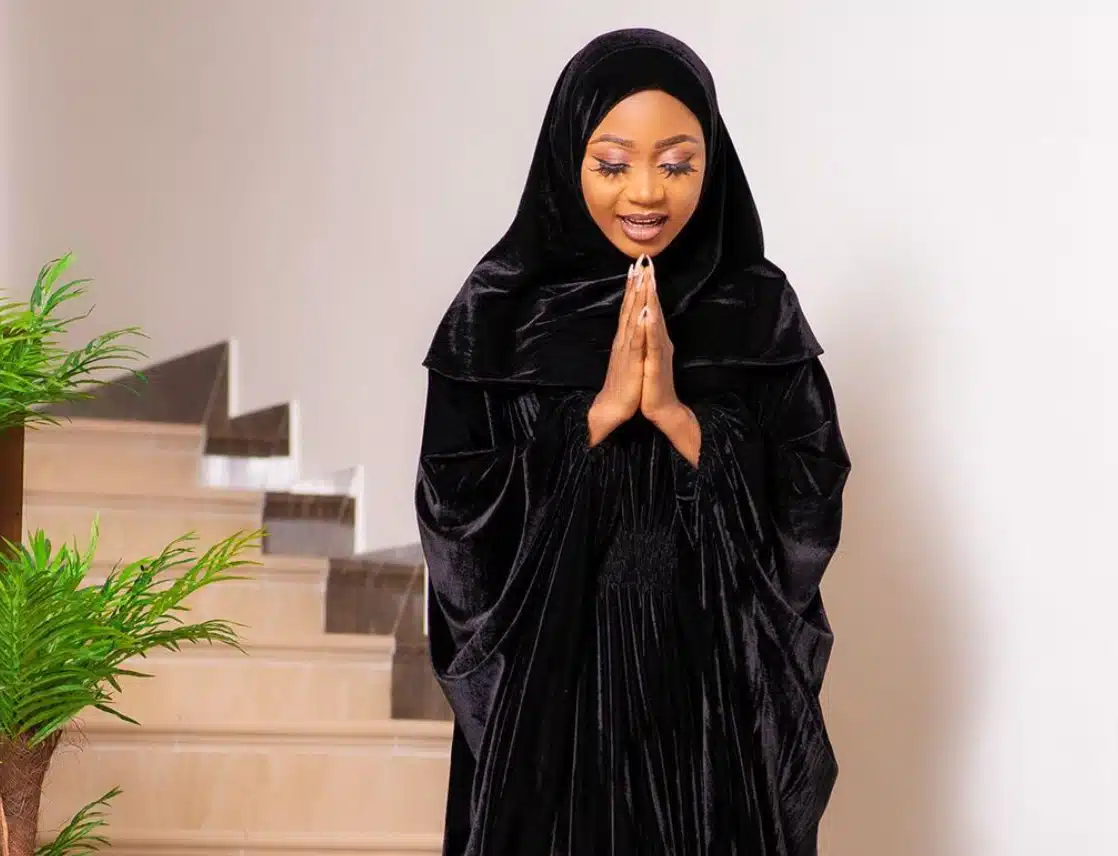
Prominent actress and social media figure, Akuapem Poloo is still captivated by her recent pilgrimage to Mecca to perform Umrah, a lesser Hajj.
In an interview with Graphic Showbiz on April 6th, Akuapem Poloo, now known as Haniya in Islam, expressed profound joy and gratitude for the experience.
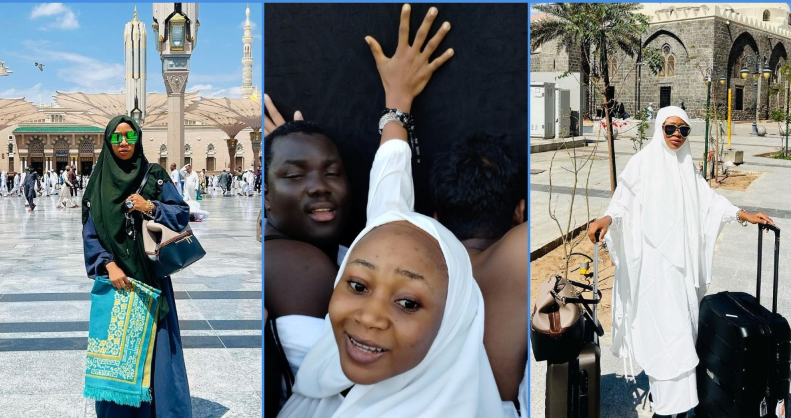
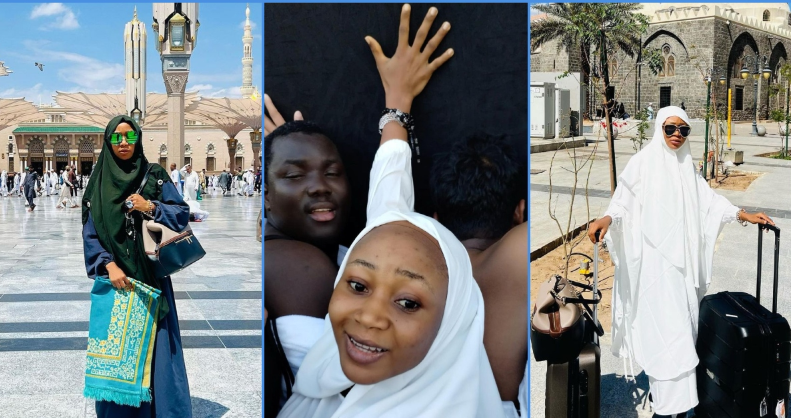
She recounted the overwhelming yet fulfilling moments of performing Safah and Marwa and touching the revered Kaaba in Mecca.
Akuapem Poloo shared that the sheer magnitude of the crowd required her to exert effort to fulfil the rituals, but the spiritual rewards were priceless.
“Islam has really changed my way of life. I don’t take in alcohol anymore and I have become a better woman and mother to my son. I don’t do stuff that will make him feel bad and I get much respect from my social media fans and I’m always at peace,” she added.
Describing her journey into Islam as life-changing, Akuapem Poloo highlighted how her newfound faith has led her to adopt a more virtuous lifestyle.
She mentioned abstaining from alcohol, becoming a better mother, and earning respect from her online followers.
Despite initial challenges adjusting to Islamic practices, she now embraces them wholeheartedly, crediting Islamic leaders and her Muslim community for their support.
“It was not easy from the onset with some of the Islamic teachings and practices. For instance, it was difficult for me to get up to pray at 5 am, shifting from my skimpy dress style to long abaya, recitation of some Islamic verses among others.
“However, with determination, perseverance and encouragement from some Islamic leaders who helped me in converting to the Islamic faith and my Muslim friends, I am now enjoying the practices with ease despite my imperfections.”
Expressing admiration for Islam’s beauty, Akuapem Poloo emphasised the unity in worshipping one God and the peace she has found in her faith.
“We all serve one God, but being a Muslim has been a blessing to me. I’m always at peace; it has opened a lot of doors for me and I’m so grateful to Allah. I am received warmly whenever I go to any Muslim community in Ghana. I have received abaya outfits as gifts and when I wear them, I look very decent and beautiful in them.
“I want to use this opportunity to first of all thank Allah for making this possible and my appreciation also goes to Chief Imam, Sheikh Usman Sharubutu, who converted me to the Islamic faith by teaching me the practices.
“I’m also grateful to Alhaji Abdul Salam, CEO of Afro-Arab Company and Montage Travel and Tours for making my Umbrah possible,” she added.
She extended gratitude to Allah, Chief Imam Sheikh Usman Sharubutu for guidance, and Alhaji Abdul Salam for facilitating her pilgrimage.
Akuapem Poloo’s journey reflects not only her personal transformation but also the profound impact of spirituality on one’s life.
Ghanaian actress and socialite Akuapem Poloo recently shared a significant milestone in her journey to Mecca, the holiest city in Islam.
Taking to Instagram, she announced her successful touch of the Kaaba, officially becoming a Hajia.
Poloo, who recently embraced Islam and adopted the name Hajia Haniya, showcased her journey through photos, including moments of struggle as she navigated through crowds to reach the sacred stone building.
Her achievement resonated strongly with her Muslim followers, who flooded her Instagram post’s comments section with congratulatory messages and warm wishes.
The actress’s dedication to her Islamic faith was evident in the joyous reactions from her supporters, highlighting the significance of her pilgrimage and the spiritual importance of touching the Kaaba in Islam.
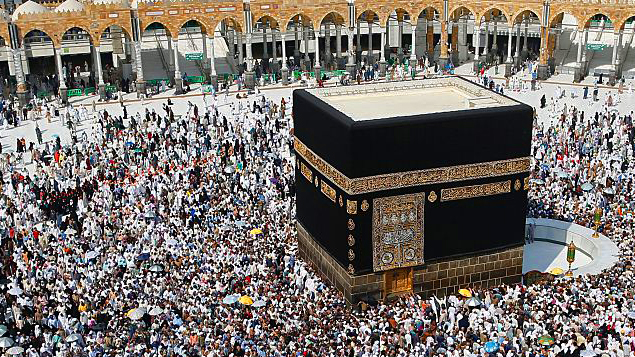
The Kaaba, meaning cube in Arabic, is a square building, elegantly draped in a silk and cotton veil. Located in Mecca, Saudi Arabia, it is the holiest shrine in Islam.
A 68-year-old Ghanaian, Zulfawu Ishaku, has lost her life while on pilgrimage to Mecca in Saudi Arabia.
It is unclear what caused the death of the pilgrim but 3news.com‘s sources are attributing it to hardship.
The deceased was believed to have hailed fromKumasi in the Ashanti Region.
The deceased was said to be on visiting visa, which is not allowed by Saudi authorities for pilgrimage.
Such persons are said to infiltrate the Ghanaian camp annually to observe the Hajj at the expense of government-registered pilgrims.
This year, the Ghana Hajj Board warned would-be pilgrims not to attempt to travel to Saudi Arabia with such visas as they would be arrested and handed over to the authorities.
Over the weekend, three of such persons were arrested. Zulfawu Ishaku was said to have travelled toMeccaduring Umrah season with the intention to stay over and perform Hajj with those officially permitted to.
Unfortunately, on her part, she went through difficult times during her stay which led to a worsening medical situation, resulting in her demise.
Officials of the Ghana Consulate has been informed about the situation and processes are underway to have her buried.
The first batch of pilgrims for the 2023 hajj are said to have flown from the Tamale Airport to the Holy City of Mecca in the Kingdom of Saudi Arabia yesternight.
Nearly 430 pilgrims are said to have been taken to board the first flight.
An agent for the Hajj pilgrims, Ahmadu Inusah in an interview with Citi News expressed satisfaction with the process so far.
“Today is the first flight and my people are moving. They are going to have medical checks starting at 12pm and everything is moving on smoothly. Some of the people will join the next flight because their visas are not yet in.
“This year’s Hajj is unique, we have a secretariat here in Tamale where pilgrims’ passports are printed in Accra and distributed here, and our visas come for pick up,” he said on Friday.
Mr. Amadu also assured that “nobody will pay this year and will not go because we have enough visas, and we have enough time and flights, and I am advising people to be patient because no one will be left out.”
About 90% of Muslims who were unable to travel to Mecca for a pilgrimage in 2022 have been reimbursed by the Ghana Hajj Board.
Alhaji Farouk Hamza, the Executive Secretary of the Hajj Board, who made this announcement, also noted that finances for the remaining pilgrims are still intact and that they can get in touch with the board to get their money.
He advised the impacted pilgrims who have not yet received their refunds to either get in touch with the Hajj Board Secretariat for their money or top up if they want to pay for the pilgrimage in 2023.
In July 2022, about 3,000 Ghanaians departed for the Kingdom of Saudi Arabia to conduct the Hajj, one of the five pillars of Islam.
Due to the numbers requested by the organizers of the annual event, some Ghanaians couldn’t embark on the journey and subsequently demanded a refund of their monies, which the board promised will be paid as soon as the paper works were done.
Alhaji Farouk Hamza who spoke during an interview on Kumasi-based Zuria FM said, “some people paid and could not make it to Mecca in 2022. We have invited all those people to come for their monies. Even those who paid GH¢26,500 were invited to take GHC39,000. Over 90 percent have contacted the Board and they have been refunded. Just a few of the affected people have not yet taken their monies, although we have asked them to come for a refund. The amount which is GHC39,000 is intact. The Board has also opened an option for them for a top-up if they want to be part of this year’s pilgrimage.”
The Hajj Board has announced that prospective pilgrims to Mecca will pay $6,500, which translates to GH₵75,000 each this year.
The Board states that the GH75,000 in cedi equivalent will be on effect until March 31, 2023, after which it may be revised in accordance with the then-current US dollar exchange rate.
The Hajj Board’s executive secretary stated that the convenience of Ghanaian pilgrims traveling to Mecca in 2023 will be given top priority.
He stated that the Board was putting forth great effort to build upon the accomplishments it had recorded during the 2022 trip.
In order to provide flexibility and comfort for potential pilgrims, he continued, the Hajj Board has tapped into Dr. Mahamudu Bawumia’s initiatives and digitalized its payment processes.
Alhaji Farouk also explained that a payment portal has been introduced which gives the opportunity of prospective pilgrims to pay monies in instalments from a minimum of GHC5,000.
He assured that the Hajj Board will do all it can to make the 2023 Hajj a successful one.
The member of parliament for Tamale North, Alhassan Suhuyini, is urging government to examine the price of transporting Ghanaian Hajj pilgrimages to Mecca.
He explains that the charge as announced by the Ghana Hajj Board is the highest in the sub-region and will prevent some members of the Muslim community from honouring their religious obligations.
Mr. Suhuyini says the new charges are astronomical, considering the economic plight that has bedeviled the country.
“I am terribly disappointed at the fair that has been announced, it is simply unacceptable. Not only is it the highest in the sub-region so far, but how can we at this time, and in this economy peg the fair at GH¢ 75,000 in this economy.”
“Some people think this is luxury, it is not, it is one of the 5 pillars of Islam which Muslims are mandated to observe.”
The Ghana Hajj Board has announced that prospective pilgrims to Mecca this year will pay $6,500, which translates to GH₵7,500 each.
The package costs for this year’s holy journey to Mecca have been released by the Ghana Hajj Board.
The Board reported that this year’s package, which includes travel and lodging, is estimated to cost $6,500, or GH$75,000, in a press statement dated Wednesday, March 1.
“Deadline for payment of this year’s fee is 30th April 2023,” the press release jointly signed by Executive Secretary Alhaji Farouk Hamza and Board Chairman Ben Abdallah Banda said.
Prospective pilgrims have, however, been warned that the Cedi equivalent remains in force until Friday, March 31 by which time the exchange rate may change.
“Prospective pilgrims are therefore encouraged to pay early through any of the 42 Accredited Hajj Agents nationwide in order to secure their slots.”
For centuries, the city of Timbuktu, located in the center of present-day Mali in Western Africa, thrived as one of the bustling centers of culture and learning during the Golden Age of Islam.
The region’s legacy as an intellectual destination begins with the Epic of Sundiata. According to the 13th-century epic poem, the Mandinka prince of the Kangaba state, organized a successful resistance against the harsh Sosso king Sumaoro Kanté—and a new empire was born.
The Mali Empire on the upper Niger River then grew in power and prestige. When the powerful Malian king, Mansa Musa I, peacefully annexed the city of Timbuktu in 1324 after returning from his pilgrimage to Mecca, the empire became a hub of exceptional learning, culture and architecture.
Timbuktu’s Origins as Ancient Trading Post
Mansa Musa I was the ruler of the Mali Empire in West Africa from 1312 to 1337.
Google Arts & Culture
Timbuktu had been a seasonal trading post established in 1100 A.C., where the Saharan Desert and the Niger Delta meet, creating a lush and lucrative agricultural zone. Powerful West African kingdoms and the pastoralist Tuaregs of the Southern Sahara traded here. And when Islam came to Tuareg societies as early as the 8th century, the Tuaregs passed along the religion through trading posts like Timbuktu, facilitating connections between Arab-Islamic and West African peoples.
Under Mansa Musa I and his successors, Timbuktu transformed from a small but successful trading post into a center of commerce and scholarship, making the Mali empire one of the most influential of the Golden Age of Islam. Powerful West African kings and Islamic leaders traveled from far and wide to Timbuktu to trade, learn and foster strong political allies.
By the 16th century, Timbuktu hosted 150 to 180 Qur’anic schools, or Maktabs. Malian rulers also built great mosques, not only for spiritual practice, but also as centers of learning of mathematics, law, grammar, history, geography, astronomy and astrology.
Madrasas Built for Worship and Scholarship
Sane Chirfi, who represents the family which looks after the mausoleum of Alpha Moya in Timbuktu, in front of the mausoleum. The mausoleum was among several restored following damage by al Qaeda-linked insurgents in 2012.
Google Arts & Culture
While the Tuaregs built the first mosque, the Sankoré Mosque, in Timbuktu in the 1100s A.C., Mansa Musa I made significant improvements to it, inviting important Islamic scholars, or Ulama, to enhance its prestige. Mansa Musa I then built the Djinguereber Mosque, paying the renowned Islamic scholar Abu Ishaq Al Saheli 200 kilograms of gold to oversee its construction. Later in the 15th century, when the Tuareg ruler Akil Akamalwa came to power in the Mali empire, he built the great Sidi Yahya mosque. Together, these three centers of learning, or Madrasas, still function today as Koranic Sankore University, making it the oldest higher-education facility in Sub-Saharan Africa.
Mosques and schools proliferated in Timbuktu, mirroring what was found in the other flourishing Islamic cities of Cairo and Mecca. In his article African Bibliophiles: Books and Libraries in Medieval Timbuktu, California State University, San Bernardino librarian Brent D. Singleton writes that “in Timbuktu, literacy and books transcended scholarly value and symbolized wealth, power, and baraka (blessings),” and that the acquisition of books specifically “is mentioned more often than any other display of wealth.”
The knowledge contained within the books reflected the fabric of Malian society. Dr. Abdel Kader Haidara, a Malian scholar who oversees the preservation of over 350,000 manuscripts from this era, says that “in addition to the academic and scholarly literature, there are many parts that contain poetry and dedications to women.” Haidara adds that women have prominent roles in maintaining Malian heritage and contribute to the meticulous work of preserving ancient manuscripts.
Timbuktu was also unique from other major Islamic cities during the Golden Age of Islam. For example, while Cairo and Mecca maintained an open access policy to its mosque libraries, the libraries of Timbuktu all seem to have been private collections of individual scholars or families, according to Singleton.
Knowledge Passed Down Through Books—And Oral Histories
A view of an ancient manuscript from Timbuktu.
Google Arts & Culture
It is not surprising that books in Timbuktu were prized possessions that were passed down from generation to generation. The practice mirrors the West African tradition of oral histories passed down by griots, esteemed West African musicians and storytellers who were the keepers of the history of the empires and royal families.
Griots originated from the same Mandinka ethnic group that Sundiata hailed from and were responsible for composing his epic. Much like Islamic scholarship and bookmaking in Timbuktu, the role of a griot was only passed down through lineage and was acquired through extensive apprenticeship. Griots continue to practice today and include Malian musicians such as kora player Toumani Diabaté, who can trace his griot lineage to the Golden Age of Islam.
The Mali Empire declined in the 15th century, and was replaced by the Songhai Empire. Askia Muhammad, a military leader from the Malian city of Gao, reigned from 1492 and 1528 and fortified the Islamic learning tradition in Timbuktu that his predecessors had set forth. But soon, Timbuktu found itself under threat when the Moroccan Saadian dynasty invaded the Songhai Empire in the late 16th century. Much of Timbuktu’s centers of learning were destroyed and many people’s possessions, including important manuscripts, were lost.
The cities of Timbuktu and Gao were nonetheless able to maintain a high degree of autonomy from the Saadians, and in 1632, they declared independence from the Saadian dynasty. However, the Golden Age of Islamic scholarship, architecture and culture in the Songhai empire and across West Africa had seriously diminished.
Attacks on Timbuktu’s Manuscripts
Destruction of the manuscripts by the jihadists at the Institute of Ahmed Baba in Timbuktu in 2012.
Google Arts & Culture
The city’s manuscripts were still widely used to educate in the Qur’anic schools and great mosques during the Saadian occupation of the Songhai empire. But when the French arrived in West Africa in the 17th century, many of the cultural products of Timbuktu were looted and taken to Europe, ending the widespread practice of learning through the manuscripts.
These were not the only attacks on the legacy of Timbuktu. In 2012, militants tied to al Qaeda in the Islamic Maghreb (AQIM) took over Northern Mali and began destroying anything perceived as haram or forbidden to their religious practice, including generations-old manuscripts that characterized the ancient city of Timbuktu.
With a small team, Haidara rescued over 350,000 manuscripts from 45 different libraries in and around Timbuktu and hid them in Bamako—the capital of Mali. On many occasions Haidara and his allies were threatened by al Qaeda militants and accused of stealing—a crime punishable by death or mutilation. But Haidara eventually built the Mamma Haidara Library in Bamako, naming it after his father, who was also a scholar and keeper of manuscripts. In 2022 Google Arts & Culture launched an online archive of manuscripts guarded by Haidara and his team.
“While griots recall history from memory and ingenuity, the manuscripts are the discernible history of Mali,” says Haidara. The manuscripts serve as tangible evidence that the Mali Empire and its great city of Timbuktu were foundational to the legacy of West African and Islamic scholarship. Through the work of Haidara, mirroring the oral tradition of groups like the griots, the preservation of Malian history remains a continuous mission.
“Even I don’t know everything that is in the manuscripts,” says Haidara. “Everyday I learn something new from and about them.”