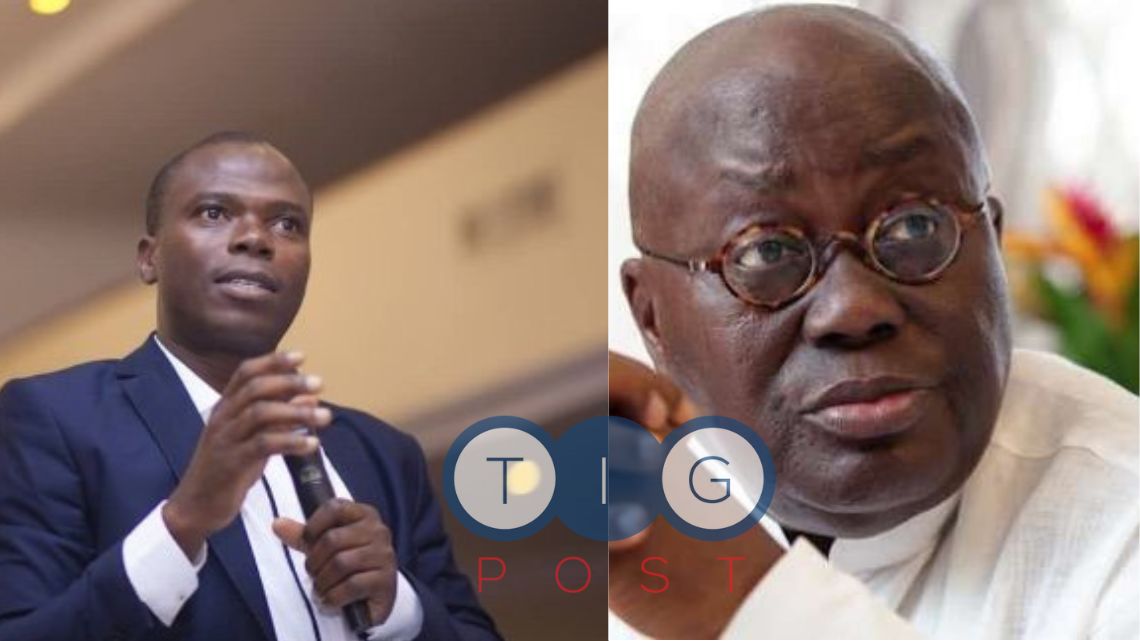
Executive Director of the Media Foundation for West Africa (MFWA), Sulemana Braimah has critiqued President Akufo-Addo‘s pledge to put his presidency at risk to combat ‘galamsey’ (illegal mining) as a tactic to garner public support.
Braimah, speaking on JoyNews’ Newsfile, explained that at the time of the president’s statement, the nation was heavily affected by illegal mining, presenting a prime opportunity for the president to start his term on a positive note. He substantiated his claim with a report by Professor Frimpong Boateng, the former chairman of the Inter-Ministerial Committee on Illegal Mining (IMCIM).
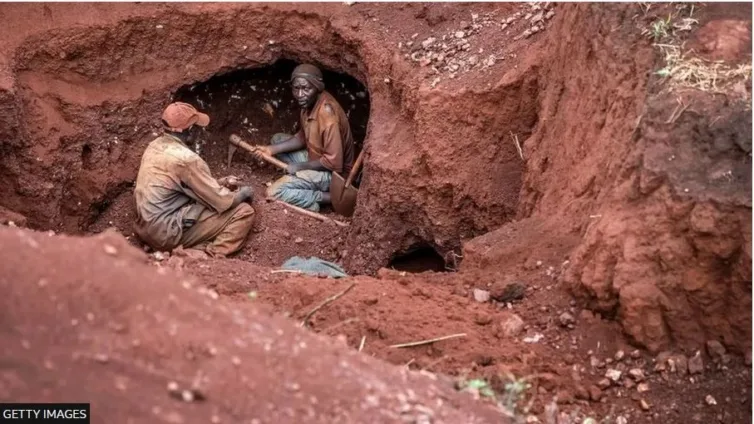
On April 20, 2023, Professor Boateng, who also served as the Minister of Environment, Science, Technology, and Innovation, revealed that several high-ranking government officials were involved in illegal mining, implicating individuals up to the Jubilee House, the presidential seat.
Braimah argued, “In my view, we lost the battle against ‘galamsey’ long ago.” He suggested that the president’s declaration was more about public posturing than genuine commitment. “You only need to read Professor Boateng’s report to conclude that it was either public deception or politics as usual,” he added during the June 15 interview with host Samson Lardy Anyenini.
Braimah also highlighted the resistance the IMCIM encountered from some legislators and government officials, noting that military protection was provided to some illegal miners during committee visits.
Moreover, Braimah pointed out that visits to forest reserves revealed extensive environmental damage, casting doubt on the president’s commitment. He emphasized that most mining in forest reserves requires presidential approval, questioning how the president could genuinely be committed to combating illegal mining while such activities continue under his administration.
He concluded by questioning the president’s sincerity in addressing the complex issue of illegal mining.
Executive Director of the Media Foundation for West Africa (MFWA), Sulemana Braimah, stated that President Nana Addo Dankwa Akufo-Addo ultimately acknowledged his error in withholding the full KPMG report on the Ghana Revenue Authority (GRA) and Strategic Mobilisation Limited (SML) agreement from the public, leading to its eventual release.
Braimah urged the President to better understand the exemption provisions in the Right to Information (RTI) Act, which he initially relied upon to deny the release.
“KPMG Report: The U-turn by the President isn’t surprising. It’s good they realized they were wrong in hiding behind exemptions to refuse our request. I urge the Presidency to try and have a better understanding of the exemptions provisions to avoid future U-turns,” he wrote on his X platform.
The full report was released on Wednesday, May 22, after the presidency initially withheld it, citing RTI Act exemptions. The presidency explained that despite no obligation to release the report, it was published in the spirit of transparency and openness in governance.
The request for the KPMG report was made on April 24, 2024, by the MFWA under section 18 of the RTI Act.
The President had commissioned KPMG on December 29, 2023, to investigate the GRA-SML transactions. Initially, the request was denied based on sections 5 (1) (a) and (b) (i) of the RTI Act, which exempts information prepared for or submitted to the President or Vice President.
The presidency highlighted a judicial precedent supporting the lawful denial of requests for exempt information under the RTI Act. Despite this, President Akufo-Addo opted to release the report to ensure transparency and public trust.
In a detailed press statement, the presidency reiterated the importance of understanding RTI Act provisions and emphasized that access to information laws include safeguards to protect high-level decision-making processes.
The President decided to waive the exemption privilege and publish the KPMG report fully.
The Media Foundation for West Africa (MFWA) has entreated Ghanaians to take a keen interest in the fight against corruption.
Executive Director of Media Foundation for West Africa (MFWA), Mr Sulemana Braimah, called on Ghanaians to speak up on all matters of critical national interest to bring the expected change.
He said it would require the contribution of all to effect the desired change adding that it was time people chose right over wrong to help fight against corruption.
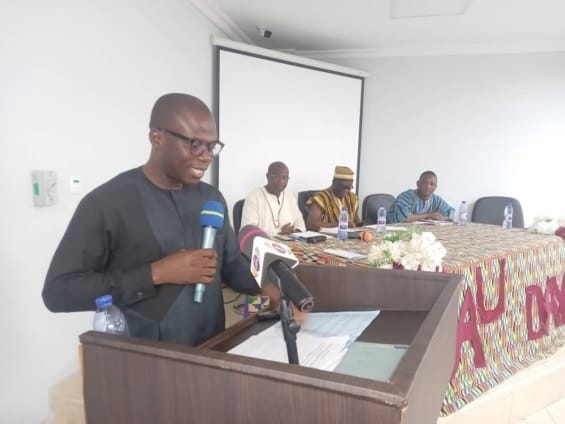
Mr Braimah made the call at a public lecture by the Centre for African Studies, University of Education, Winneba.
The event, on the theme: “Power, Corruption and Cognitive Capture; The Tragedy of a Rich But Poor Nation,” was to commemorate the African Union (AU) Day.
Mr Braimah said over the years, the quest for public sector accountability and the fight against corruption had been reduced to a competition of political sloganeering, sweet words and moral crusades by leaders, who often knew very well that they would not practice what they preached.
He said the late former President Flt. Lt Jerry John Rawlings came in with a house cleaning exercise and people were even executed for corruption but in the end, “the house got dirtier.”
Former President John Kufour also came with “zero tolerance for corruption” but in the end, he reminded the citizenry that “corruption started from Adam,” Mr Braimah cited among other examples.
“We have several anti-corruption laws in our statute books and such numerous laws have not been the panacea to the problem, because laws are made and enforced by men and women,” he stated.
Mr Braimah said chapter 12 of the 1992 Constitution referred to the freedom and independence of the media with the aim of having a strong media to protect the country’s democracy.
The growth of the media landscape, which should have translated into a strong watchdog to fight corruption and abuse of power, had unfortunately left much to be desired.
“The situation appears gloomy and depressing, but I am confident that the long dark years of deprivation for the masses, will be triumphed by brighter days of progress and prosperity. So, there is hope because there are still committed, bold and patriotic men and women in the country,” Mr Braimah noted.
He indicated that coming together as one people would help make a difference in addition to revisiting the core and enduring values of truth, honesty and love for God and country.
“To bring change to the status quo, it will require that we all become bold to speak the truth at all times and to recognize that our worth will not only be defined by our wealth but also by the power of voices and values,” he stated.
Mr Braimah urged all and sundry not to be left out or constrained in the public debate but must let their lonely voice become the voice of justice because in a silent world, the lonely voice was louder.
“The independence and freedom of Ghana did not come easily, people worked for it at the peril of their lives and we must not let down our gallant heroes who fought for our freedom. We must do our part to make the future of our nation brighter….It is our time to shape the future of the country.”
“We can help overturn Ghana’s situation of being a rich but poor nation, to a rich, equitable and prosperous nation in which there is enough for everyone’s need, but not enough for everyone’s greed”.
Mrs Samira Bawumia, Second Lady, has reiterated the call on the media to make issues affecting women top billing in the media space.
She said women empowerment should not be about tokenism to balance the gender equation, or about hearing women’s voices, but a deliberate effort to make women part of the space.
“The media is vital to shaping the woman narrative. Women empowerment in the media should start with not only giving women a voice but also ensuring that they are protected from unnecessary attacks and unfair scrutiny that make participation in the media space unattractive.”
Mrs Bawumia said this at the opening of a two-day West Africa Media Excellence Conference and Awards (WAMECA), 2022, organised by the Media Foundation for West Africa (MFWA), on the theme: “Media and women empowerment in Africa”, on Thursday, in Accra.
She said women empowerment had come a long way and should continue to move from the notion that it was a cause only to be championed by women, saying ‘”an empowered woman is a critical component of an empowered society, and there is no institution better placed to champion this than the media.”
She said the media, in educating and informing, must prioritise the unheard, marginalised, and under-represented, out of which women formed the majority even though they represented more than half of the population.
“There appears to be little progress in Africa and according to the Global Media Monitoring Project (GMMP) report in 2020, it is estimated that it will take 67 years to close the average gender equality gap in traditional news media,” she said.
She said it meant that for the African continent, where there was relative stagnation, deliberate, sustainable action must be taken to achieve parity in the shortest possible time.
The Second Lady noted that sometimes content producers in the media faced difficulties when trying to have women’s voices or women’s representation on shows and programming for various reasons.
She said irrespective of that, the solution was not to ignore them but to keep trying, provide encouragement and foster a safe space for them to freely express themselves.
She said there were several factors, including socio-cultural issues that inhibited women’s participation in the media and said, “we should collectively seek solutions to them.”
Mrs Bawumia encouraged women to take up positions of influence in their communities and countries, including serving in public offices to help shape policy and influence decisions that affected them.
“We are stronger when we achieve critical mass in media, politics, industry, and every worthy sphere of human endeavour,” she said.
Madam Zoe Titus, Chairperson, Global Forum for Media Development and Director Namibia Media Trust, said the theme reflected on ways in which women were portrayed in the media, and the role and empowerment of women journalists themselves.
She said according to global research conducted by the GMMP in 2020, on average, women were only 25 percent of those seen, heard, and read about in news, saying new and emerging challenges related to how information was produced, disseminated, and consumed, which continued to prevent the achievement of gender equality and women’s empowerment globally.
She noted that a recent report by the World Association of Newspapers highlights culture, patriarchy and socialisation as key barriers in the way of women’s rise to leadership and management positions in newsrooms.
“Even though we have come far as a continent in women and media empowerment, we still have a long way to go in terms of the way in, which the media reports on women, the progress of women in Journalism and the extent to, which they have been able not only crack, but really break through the glass ceiling.”
Mr Suleimana Brimah, Executive Director, MFWA, said the conference since its inception remained the region’s biggest platform for honouring and inspiring journalism excellence across West Africa.
He said the conference and subsequent ones, would highlight the barriers against women empowerment; discuss ways in, which the media in Africa could help break those barriers; and how the media could amplify women’s voices, women’s ideas, women’s innovation, and women’s power for inclusive development.
“We cannot build a better Africa by continuing to discriminate against women and leaving women behind. The building of better societies begins with the empowerment of women, and we are doing it because it is the right thing to do and the right time to do it is now,” he stated
This was revealed at a public forum on “Declaration of Assets by Public Office Holders and the Fight Against Corruption in Ghana,” organized by the Media Foundation for West Africa (MFWA) on Tuesday in Accra.
Giving a breakdown of the figure, Director, Anti-Corruption at CHRAJ, Mr Stephen Azantilow, noted that 284 of the cases were brought to the attention of the Commission in August this year.
Director, Anti-Corruption at CHRAJ, Mr Stephen Azantilow, noted that officials who failed to disclose their assets in 2020 were also under scrutiny.
The laws of the state frown on public office holders not declaring their assets before assuming office.
Article 286 (1) of the 1992 Constitution categorically states that: “a person who holds a public office mentioned in clause (5) of this Article shall submit to the Auditor- General a written declaration of all property or assets owned by or liabilities owed by him, whether directly or indirectly, (a) within three months after the coming into force of this Constitution or before taking office, as the case may be, (b) at the end of every four years; and (b) at the end of his term of office.”
This law applies to the President, Vice-President, the Speaker of Parliament, Deputy Speakers of Parliament, members of Parliament, ministers and deputy ministers of state, ambassadors, the Chief Justice, Judges of the Superior Court, Judges of the Inferior Court, and managers of public institutions in which the state has an interest and submits to the Auditor-General written declarations of all property or assets owned by or liabilities owed by them, whether directly or indirectly.
The Constitution also requires the declaration to be done before the public officer takes office.
However, Section 1(4)(c) of the Public Office Holders (Declaration of Assets and Disqualification) Act directs public office holders to meet this requirement “not later than six months after taking office, at the end of every four years, and not later than six months at the end of his or her term.”
In spite of these regulations, most public officers have not declared their assets before assuming office or within the stipulated period for asset declaration.
CHRAJhas indicated its readiness to combat this by bringing culprits to book.
Explaining why CHRAJ has been unable to keep this under check, he said “we sometimes also feel helpless because when you have a law that does not critically tell you that look if somebody doesn’t declare before he assumes office, or he leaves office or every four years, you should give or mete out sanctions A, B, C and D, it becomes problematic.”
The Commission is therefore pushing for the passing of the Code of Conduct Officers Bill.
“And that is why when the new bill, that is the Code of Conduct Officers Bill came before us we made a lot of input and even the current bill as it is, pending before Cabinet, our proposals for the type of sanctions that should be meted out to public officers depending on the stage in which the person failed to declare their asset has been captured.
“We are hoping that the law will come into force so that we know exactly what to do,” he said.
The Commission on Human Rights and Administrative Justice (CHRAJ) says it is investigating some 428 public office holders for failing to declare their assets.
Mr Stephen Azantilow, Director, Anti-Corruption at CHRAJ, revealed this at a public forum on “Declaration of Assets by Public Office Holders and the Fight Against Corruption in Ghana,” in Accra on Tuesday.
Mr Azantilow, however, did not give further details on the cases as that could prejudice the outcome of the investigations
He, however, revealed in a telephone interview with the Ghana News Agency, that the investigations extended to officials who failed to declare their assets in 2020.
He added that 284 of them were also cases that were brought to the attention of the Commission in August this year.
The forum, organised by the Media Foundation for West Africa (MFWA), brought together several anti-corruption campaigners and associations as well as some political parties.
Article 286 (1) of the 1992 Constitution states that “a person who holds a public office mentioned in clause (5) of this Article shall submit to the Auditor-General a written declaration of all property or assets owned by or liabilities owed by, him whether directly or indirectly (a) within three months after the coming into force of this Constitution or before taking office, as the case may be, (b) at the end of every four years; and (b) at the end of his term of office.”
The law requires that the President, Vice-President, the Speaker of Parliament, Deputy Speakers of Parliament, members of Parliament, ministers and deputy ministers of state, ambassadors, the Chief Justice, Judges of Superior Court, Judges of Inferior court and managers of public institutions in which the state has interest submit to the Auditor-General written declarations of all property or assets owned by, or liabilities owed by them, whether directly or indirectly.
The Constitution also requires the declaration to be done before the public officer takes office.
However, Section 1(4)(c) of the Public Office Holders (Declaration of Assets and Disqualification) Act directs public office holders to meet this requirement “not later than six months after taking office, at the end of every four years and not later than six months at the end of his or her term.”
Reacting to criticisms that the Commission had failed to hold public officials who did not comply with the Act, Mr Azantilow said the absence of explicit punishment in the law had rendered it helpless.
“We sometimes also feel helpless because when you have the law that does not critically tell you that look if somebody doesn’t declare before he assumes office, or he leaves office or every four years, you should give or mete out sanctions A, B, C and D, it becomes problematic.
“And that is why when the new bill, that is the Code of Conduct Officers Bill came before us we made a lot of input and even the current bill as it is, pending before Cabinet, our proposals for the type of sanctions that should be meted out to public officers depending on the stage in which the person failed to declare their asset has been captured.
“We are hoping that the law will come into force so that we know exactly what to do,” he said.
He also added that as a Commission, its decisions were not always final.
“You people are aware that some of our decisions have been challenged in court. So, if you make a decision that does not stand the test of time, it will be challenged in court and we have faced those embarrassments so we are also careful the way we do our things,” Mr Azantilow said.
Mrs Linda Ofori-Kwafo, Executive Director, Ghana Integrity Initiative, emphasised the need for strong leadership to ensure the enforcement of the asset declaration regime.