Tag: Mediterranean Sea

  • Six people including mother and baby killed as migrant boats off coast of Italy sank

    Six people including mother and baby killed as migrant boats off coast of Italy sank

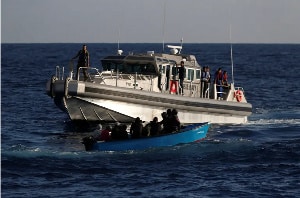
    Six people perished after three migrant ships capsized in the Mediterranean Sea, including a mother and baby.

    A ship capsized on Sunday off the Kerkennah Islands in Tunisia, resulting in at least four fatalities and 51 being reported as missing.

    A woman and child perished along with more than 30 people who are believed to be missing after two ships sank off the coast of Lampedusa, Italy, in a separate incident.

    Italian coast guards found the bodies of the Ivory Coast woman and her infant child, who was one year old.

    All those on board were from sub-Saharan Africa during the incident off the Kerkennah Islands, a judicial official told Reuters.

    Officials from Tunisia reportedly reported discovering the bodies of 10 migrants on a beach close to Sfax.

    The official told the AFP news agency that the 10 persons were discovered between Friday and Saturday amid a windstorm that might have capsized their boat.

    According to Tunisian authorities, the port city is a well-liked entry point for immigrants looking for a better life in Europe.

    The migrants were largely from sub-Saharan African nations, according to Sfax officials, who said they were trying to determine their nationalities. Sfax is only about 80 miles (130 kilometres) from Lampedusa.

    The occurrences were under investigation, according to Italian authorities.

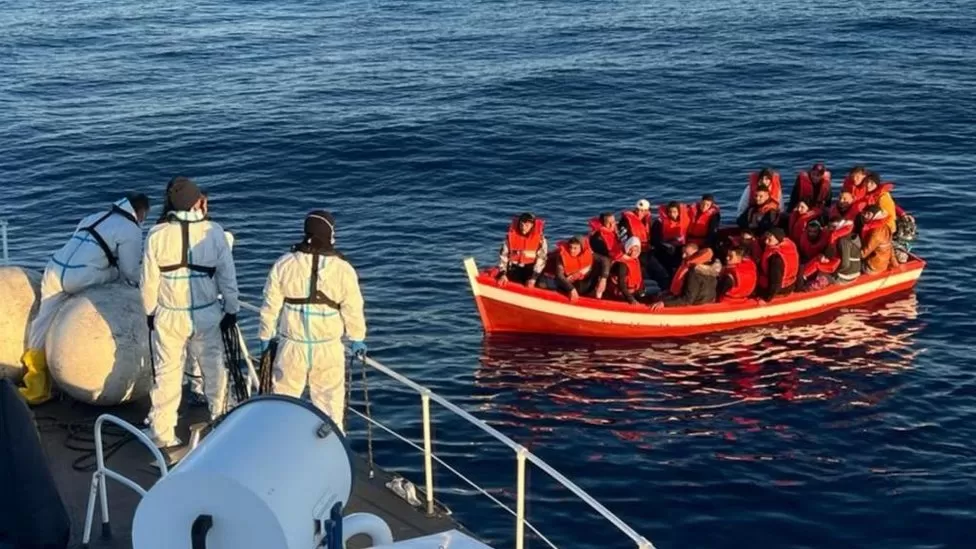
    When the boats sank on Saturday, some 23 nautical miles (46 km) south-west of Lampedusa, the Italian coastguard reported that it had saved 57 people.

    More than 30 people had been reported missing earlier, according to the International Organisation for Migration, the UN’s migration agency.

    Firefighters and mountain rescue teams were getting ready to save 20 migrants who were stranded on a rocky section of Lampedusa’s coastline on Sunday.

    After the boats were forced against the rocks by heavy winds late on Friday, the migrants have been there ever since.

    The NGO Open Arms reported that it has begun disembarking 195 rescued migrants in the port of Brindisi in southern Italy after more than two days of sailing in rough weather.

    The investigation’s police chief, Emanuele Ricifari, told local media that the traffickers would have been aware of the impending severe seas.

    “Whoever allowed them, or forced them, to leave with this sea is an unscrupulous criminal lunatic,” Mr. Ricifari remarked.

    Another 2,000 people who have arrived on the island in recent days have been rescued by Italian patrol vessels and humanitarian organisations.

    Some of the migrants have received food, water, clothing, and emergency thermal blankets from the Red Cross.

  • Three ancient shipwrecks discovered in the Mediterranean

    Three ancient shipwrecks discovered in the Mediterranean

    In the Mediterranean Sea last year, an international team of scientists conducting an underwater archaeological mission found three historical shipwrecks.

    The mission also obtained high-resolution photos of three Roman wrecks that were first found by archaeologist Anna Marguerite McCann and oceanographer Robert Ballard between the 1980s and 2000s. During a UNESCO press conference on Thursday in Paris, researchers’ findings were revealed.

    Twenty researchers from Algeria, Croatia, Egypt, France, Italy, Morocco, Spain, and Tunisia embarked on a 14-day cruise on the French research vessel Alfred Merlin in August and September.

    Using remotely operated underwater vehicles, called ROVs, the researchers explored the Skerki Bank of Tunisia and Italy’s Sicilian Channel.

    The team used the research vessel’s underwater mapping and imaging equipment to catalog shipwrecks, dating from ancient times to the 20th century, with sonar.

    The ROVs dived to depths inaccessible to humans to collect images and video of the wrecks and their artifacts. One ROV, named Arthur, was able to reach depths of 2,296 to 2,952 feet (700 to 900 meters).

    Located along a heavily traveled route in the Mediterranean, the Skerki Bank in the Strait of Sicily is one of the most treacherous maritime areas. Its shallow waters feature an intensely rocky seabed, some of which is less than 3.2 feet (1 meter) beneath the water’s surface.

    The Skerki Bank’s perilous features have caused shipwrecks for more than 3,000 years, sinking ancient trading vessels as well as ships during World War II. The area is of interest to researchers because the route has served as a point of contact between multiple cultures traversing the Mediterranean.

    An ROV named Hilarion descended through the most dangerous zone of the Skerki Bank called Keith Reef to conduct the first detailed study of the ocean floor. Resting along the bottom of the Tunisian continental shelf were three ships, all previously unknown to researchers.

    Two of the shipwrecks were likely from the end of the 19th century or beginning of the 20th century, including a “large motorized metal wreck” with no traces of cargo. In that wreck, researchers noted that the davits, which would have been used to lower lifeboats, were facing outward, which means any crew may have been able to leave the ship. The second ship was likely a wooden fishing boat.

    A third shipwreck was likely a merchant vessel that sailed between the first century BC and the second century. The ROV spotted artifacts that appeared to be amphoras, or tall, two-handled jars with narrow necks used by Greeks and Romans, possibly to store wine.

    The team hopes that looking through archives could reveal the individual names of the ships that sank since none of them was easily identifiable.

    Meanwhile, exploration along the Italian continental shelf revisited three Roman shipwrecks dating between the first century BC and the first century, including two merchant vessels and one cargo ship. All three littered artifacts across the seafloor, including amphoras, ceramics, building materials, jugs, pots and lamps.

    The items were likely part of trade between cultures that crisscrossed the Mediterranean thousands of years ago.

    “We are going to write a new page in the history of trade,” said Barbara Davidde, underwater archaeologist and director for the national superintendency for underwater cultural heritage in Italy. “Thanks to the analysis of the cargo, we can study the relationships between the countries in the Mediterranean and the sea trade that connected different parts of the Mediterranean.”

    The shipwrecks and their artifacts surprisingly remained largely undisturbed since being discovered between 1988 and 2000.

    The wrecks were initially outside territorial waters, meaning that their artifacts were easy targets for looting. Now, the areas around the wrecks will be protected under UNESCO’s 2001 Convention on the Protection of the Underwater Cultural Heritage.

    The designation will allow for more precise mapping of shipwrecks and defining protection zones.

    “We recognize the huge potential and the importance of underwater cultural heritage,” said Lazare Eloundou Assomo, director of the UNESCO World Heritage Centre.

    “UNESCO has actively committed itself to supporting underwater archaeological missions of this type right across the globe. As you know, the Mediterranean with its very rich history, and its countless shipwrecks and archaeological sites offer a unique and fascinating stage for such expeditions. And I hope that there will be many more in the future that will bring us together.”

  • 1,200 migrants escorted by Italian Coast Guard boats in the Mediterranean Sea

    1,200 migrants escorted by Italian Coast Guard boats in the Mediterranean Sea

    In the course of a significant operation in a location where migrant numbers have increased over the past year, the Italian Coast Guard was on duty on Tuesday escorting two boats in the Mediterranean Sea carrying 1,200 migrants.

    Alarm Phone, a volunteer-operated hotline, said that emergency personnel were rushing to save 400 migrants from a barge that had run out of gasoline.
    Later on Monday, the Coast Guard informed CNN that it was escorting a different vessel with 800 migrants.

    “Due to the prohibitive sea conditions, the Peluso ship, the Diciotti ship and the Coast Guard patrol boats are escorting the two units, in difficulty since yesterday, with migrants on board,” the Coast Guard said on Twitter. “The ships, carrying 400 and 800 migrants, got into trouble in rough seas on Monday.”

    Alarm Phone said in a tweet earlier that it had spoken to passengers at 10.56 a.m. local time (4.56 a.m. ET), describing the situation on board as “dramatic,” with the boat starting to leak. “They report several medical emergencies, water filling the vessel and no fuel left. We have informed the authorities,” Alarm phone said.

    The coast guard is traveling next to the boat en route to Italy because an escort is “safer” than attempting to rescue those on board in poor weather, said Felix Weiss, a spokesman for Sea-Watch International, a German organization that runs search and rescue operations in the central Mediterranean.

    The migrants had been stranded along an immigration route between Italy and Malta that NGOs have warned is perilously dangerous.

    The boat with 400 migrants departed from Tobruk, Libya, and had been at risk of capsizing with water in the hull, according to Alarm Phone. The service also said many on board required medical attention, including a child, a pregnant woman and a disabled person.

    The Italian Coast Guard also said Monday that more than 1,700 migrants had arrived on the Sicilian island of Lampedusa in the last 48 hours. Lampedusa, the closest Italian island to Africa, is a major destination for migrants seeking to enter European Union countries.

    Every year, tens of thousands of migrants fleeing war, persecution and poverty risk the treacherous route in search of safety and better economic prospects. In many cases, their vessels are overcrowded and unfit for the journey, and the need to rescue migrants on board often leads to disputes between countries about who should take them in.

    More than 28,000 migrants have arrived in Italy so far this year, according to the country’s Interior Ministry – a significant surge compared to recent years. The number of migrants arriving in Italy this year are the highest seen in the country since 2017, according to figures by the United Nations High Commissioner for Refugees.

    Most arrivals have journeyed from the Ivory Coast, Guinea, Bangladesh, Tunisia and Pakistan.

  • 14 people perish as an Italian-bound yacht capsizes in Tunisian waters

    14 people perish as an Italian-bound yacht capsizes in Tunisian waters

    In the most recent tragedy on the Mediterranean Sea, at least 14 individuals from sub-Saharan African nations have drowned in Tunisia while attempting to travel by boat to Europe.

    In a statement released on Thursday, Tunisia’s coastguard reported that police had caught “a group whose boat had sunk, saving 54 persons of various sub-Saharan African nationalities and recovering 14 bodies” the previous night.

    Later on Thursday, AFP news agency was informed by Faouzi Masmoudi, a spokeswoman for the court overseeing the probe, that the deceased were from two sunken boats.

    Masmoudi said three people died and 34 were rescued in one sinking on Tuesday, followed on Wednesday by 11 deaths in a separate incident with 20 rescued.

    Hundreds of people have drowned in Tunisia in recent months as attempted crossings from Tunisia and Libya to Italy have increased.

    The coastline at Sfax in east-central Tunisia has become a major departure point for people fleeing poverty and conflict in Africa and the Middle East for a shot at a better life in Europe.

    Life in Tunisia has progressively worsened since President Kais Saied said on February 21 that migration from sub-Saharan Africa aimed to change Tunisia’s national identity.

    The remarks, which drew international condemnation, have led to what has been described by advocacy groups as a racist backlash against people from sub-Saharan African countries as well as Black Tunisians.

    The far-right Tunisian National Party has led a campaign calling for the expulsion of sub-Saharan African immigrants, framing immigration to Tunisia from other parts of Africa as being part of an effort to initiate demographic change in the country.

    The deaths announced on Wednesday add to the grim toll of refugees drowning as they attempt the perilous crossing of the Mediterranean, the world’s deadliest migration route.

    More than 25,000 people have died or have gone missing since 2014, according to data collected by the International Organization for Migration’s Missing Migrants Project.

    Italy said in February that more than 32,000 people, including 18,000 Tunisians, reached its shores from Tunisia last year, while thousands more have departed from neighbouring Libya.

    European governments, particularly Italy, have pressured Tunisia to stem the flow, and the Tunisian coastguard regularly intercepts boats carrying refugees in its territorial waters.

  • Israel signs an agreement to share a gas field with Lebanon

    Exploration in the Qana field is set to begin following the signing of a framework agreement with the contractor by Tel Aviv.Following a United States-mediated agreement that ended a decades-long maritime border dispute between Lebanon and Israel last month, French oil giant TotalEnergies has announced that it will soon begin gas exploration activities in the Mediterranean Sea off Lebanon’s coast.

    TotalEnergies and its partner, Italy’s Eni, signed a framework agreement with Israel on Tuesday, paving the way for exploration in the so-called Qana field.

    Israeli authorities provided no immediate confirmation.

    Under the terms of the deal signed by Lebanese and Israeli representatives on October 27, Israel retains full rights to develop the Karish field while Lebanon retains full rights in Qana – but with a caveat.

    As Qana extends southward of the agreed demarcation line – Line 23 – Israel is entitled to receive royalties under the terms of a separate deal negotiated with the operator of the so-called Block 9.

    Analysts have expressed their concern that the failure to reach a profit-sharing arrangement could potentially stall production on Lebanon’s side.

    Diana Kaissy, advisory board member at the Lebanese Oil and Gas Initiative (LOGI), told Al Jazeera the signature of the framework agreement was “a step forward”.

    “But we don’t want it to be a faulty step,” Kaissy added. “Lebanon should be privy to the agreement.”

    Cash-strapped Lebanon, which has been technically at war with Israel since its creation in 1948, is hoping that future gas discoveries will help pull itself out of the worst economic and financial crisis in the country’s modern history.

    Lebanese officials have said the maritime border agreement does not represent any form of normalisation of relations between the two countries and have avoided direct negotiations with Israeli officials.

    Kaissy argued that while Lebanon had contracted TotalEnergies, the state maintained a sovereign right to its resources and should therefore have a say in how Israel’s royalties over its gas field are calculated.

    It was not immediately clear whether Lebanese authorities had been informed of the terms of the framework agreement, which has not been made public.

    Further complicating the debate around Israel’s royalties is uncertainty around which companies have a stake in Block 9.

    TotalEnergies said in the statement that it would have 60 percent stake and Eni the rest.

    But Lebanon in 2017 had approved licences for an international consortium including TotalEnergies, Eni and Russia’s Novatek. Novatek recently withdrew, and Lebanese officials, including Energy Minister Walid Fayad, have said that Qatar is interested in filling that gap.

    “Qatar does not have any formal relation with Israel, which might explain why it was not part of the framework agreement,” Kaissy said.

    TotalEnergies CEO Patrick Pouyanné said the company was “proud to be associated with the peaceful definition of a maritime border between Israel and Lebanon”.

    “By bringing our expertise in offshore exploration, we will respond to the request of both countries to assess the materiality of hydrocarbon resources and production potential in this area,” Pouyanné said.

    The maritime border deal has been hailed as “historic” and mutually beneficial. It represents the first significant diplomatic breakthrough between the two countries in years.

    In September, Hezbollah leader Hassan Nasrallah called the extraction of gas from Karish by Israel a “red line”. In turn, Israel’s Defence Minister Benny Gantz said that if Hezbollah harmed its offshore rig, “the price will be Lebanon”.

    Alongside easing regional tensions, the deal could also be a boon for Europe as it attempts to disengage from Russian gas over Moscow’s invasion of Ukraine.


  • Crossing the Mediterranean Sea: To survive or to die | Close Up

    An MSF ship heads out to rescue asylum seekers from Libya who risk their lives by crossing one of the deadliest migrations routes in the world.

    “This sea has become a graveyard, so every second, every minute is important,” says Fulvia Conte, a team leader on board the Geo Barents, a search-and-rescue ship operated by Doctors Without Borders (Medecins Sans Frontieres, or MSF) that sets out at sea searching for asylum seekers desperate to reach Europe.

    The Mediterranean crossing remains the deadliest known migration route worldwide. Every day, six people die trying to reach Europe in vessels that are not seaworthy. “Imagine you put all your life in one bag, you put yourself and your family on a boat hoping not to lose your life at sea,” says Conte when describing the dire situation migrants face before making the treacherous crossing. “Many say that they would rather die at sea than go back to Libya.”

    For years, Libya has been a transit country for refugees and economic migrants fleeing poverty, persecution and conflict in sub-Saharan Africa and the Middle East. Many arrive in Libya hoping for a better life in the sanctuary of Europe. But the lawlessness of the country means corruption, abuse, and torture by armed groups are prevalent, with human trafficking from Libya across the Mediterranean being a multimillion-dollar business.

    As governments around Europe take a harsh stance on immigration, it is people like Conte and her team at MSF who take on the search-and-rescue responsibilities.

    In this episode of Close Up, we follow Conte and her team on board Geo Barents as they work tirelessly to save lives at sea and navigate the crackdown on immigration by European governments.


    Source: Aljazeera