Ghana is witnessing a worrying increase in suicide cases, with theMental Health Authority (MHA)reporting a sharp spike in the number of attempts and deaths across the country.
In the first half of 2024, 543 suicide attempts were recorded, with 81 of these tragically resulting in death. These figures surpass the total for 2023, when there were 594 attempts and 48 completed suicides for the entire year.
The GMHA revealed these troubling statistics during the commemoration of World Suicide Prevention Day, held annually on September 10.
The report emphasises a pressing need for immediate intervention.
The regions most affected by this growing crisis include Greater Accra, Eastern, and Central Regions, with Greater Accra reporting the highest number of deaths.
The Authority is especially alarmed by the rising rate of suicide among young people, particularly those aged 15-29. “Many of those affected by suicide worldwide are young, and this calls for urgent intervention,” the report stated.
To address the crisis, the GMHA is calling for nationwide education and awareness campaigns. It urges media outlets, health organisations, and communities to actively engage in suicide prevention efforts.
“It is crucial to start the conversation early to prevent the loss of our future generation to suicide,” the report noted, emphasising the need for open discussions in homes, schools, and public spaces to destigmatise suicidal behaviour.
Key preventive measures recommended bythe GMHA include buildinginterpersonal skills, restricting access to common methods of suicide, and ensuring timely intervention for individuals showing signs of suicidal behaviour.
“Despite suicide being one of the leading causes of death among young people, it can be prevented,” the report concluded.
With the surge in numbers, the GMHA’s call for action is clear – more needs to be done to curb this growing public health crisis.
Pinaman Appau has been appointed to head the Mental Health Authority, as the new Chief Executive Officer (CEO).
Appau replaces Prof Akwasi Osei.
Prior to her appointment, Appau was the hospital director for the Accra Psychiatric hospital.
She is a consultant psychiatrist and a mental health rights advocate.
The Mental Health Authority (MHA) is an agency established by an Act of Parliament, Mental Health Act 846 of 2012, to propose, promote and implement mental health policies and provide culturally appropriate, humane and integrated mental health care throughout Ghana.
Profile
Pinaman Appau is Ghana’s first female Psychiatrist trained by the Ghana College of Physicians and Surgeons and has over the past fifteen years, worked to improve mental health in Ghana in several regions of the country.
Having worked within the mental health space with some of the nation’s most vulnerable persons, it has become her career and life ambition to see to improved service delivery in her field by ensuring that proper administrative structures in mental health care system are well instituted and functioning.
The quest to fulfil this ambition drove her to undertake a master’s degree program in Public Administration at the Ghana Institute of Management and Public Administration (GIMPA) where she came out as the Overall Best Student and Valedictorian, Graduate Programme, for the year 2020.
Apart from her administrative role as Director of the nation’s biggest mental health facility, she is also actively involved in the training of Doctors and Psychiatrists from both the Ghana and West African Colleges of Physicians, medical students from the University of Ghana Medical School and other medical schools.
Outside her official duties, Appau has for many years championed the rights and welfare of persons living with mental illness, especially children and the youth.
The Mental Health Authority (MHA) has asked educational institutions to include mental health education in their curriculum.
That, it said would help provide support systems to prevent discrimination against individuals who may experience any form of mental health disorders.
Dr Caroline Amissah, Acting Chief Executive Officer, MHA, said this in a speech read for her at the commissioning of a Neurodiagnostic Centre at the Wisconsin University in Accra on Tuesday.
The Centre, which was set up with support from Purple Point Neurodiagnostic, USA, is expected to provide more scientific means, diagnosis and help monitor people with neurological conditions.
It is equipped with modern machines for testing the brain, to diagnose and treat neurodiagnostic conditions such as epilepsy, movement disorders, dementias, cognitive disorders, strokes and cerebrovascular diseases, headaches, sleep apnea, attention deficit hyperactive disorder, autism, and behavioral disorders among others.
Neurodiagnostic is the study and recording of electrical activity in the brain, the central nervous system, and the peripheral nervous system.
Dr Amissah said proper diagnosis of neurological conditions gave way to ensure targeted treatment, holistic management and provide adequate and committed care for persons with mental illness.
The new Centre consists of a changing room, test rooms, waste disposal area and seeks to train more neurological technologists and provide facilities for conducting other tests.
Citing epilepsy as a typical neurological condition, Dr Amissah said Ghana in 2022 recorded a total of 18,506 cases with the Ashanti Region recording the highest of 2,670 (14.43per cent) out of the national figure.
Dr Amissah said the figures may be under reported because, many cases went unreported.
Dr Charles Acheampong, Director, Centre for Professional Studies, Wisconsin International University College, Ghana, said the Centre was set up because the neurodiagnostic field was starved in terms of personnel and equipment.
Dr. Acheampong said there were less than 10 neuro diagnostic testing laboratories in Ghana and that sometimes patients who had to do the test ought to wait for two weeks or more to get access to a testing laboratory.
He said gradually the University was moving out of the traditional university setting into a modern institution that would be responding to the different needs of a modern society.
Mr Lucien Kilonda, Chief Executive Officer of Purple Point Neurodiagnostic, USA, said his team assisted Ghana because “Ghana holds the blueprint for healthcare development in sub Saharan Africa”.
Mr Kilonda pledged to continue to collaborate with the University in the provision of good health care services to the public.
Professor Obeng Mireku, Vice Chancellor of the University, urged the public to take advantage of the Centre and patronise the services.
Chief Executive Officer, of the Mental Health Authority, Dr. Akwasi Osei says the man in a viral video seen abusing a toddler might have done so under the influence of smoking weed (marijuana) and losing his ability to think rationally.
He believes the man could also be suffering from schizophrenia or that he’s a psychopath.
In the widely circulated video, the man is seen whipping the innocent child in the presence of other men while the victim cries in pain. However, none of them made any attempt to rescue the toddler.
The Police in a statement said they “have sighted a horrifying video on social media in which a male adult is seen subjecting an infant to severe beating under a tree. Efforts are underway to track down the individual involved, have him arrested, and rescue the child.”
The Police are entreating anyone with information that will lead to the arrest of the suspect to contact the police on 0243809991 and have offered a GHC2, 000 reward for anyone who will provide information leading to the arrest of the suspect.
Commenting further on the incident in an interview on Nkawkaw-based Agoo FM Morning Show Ene No Bio, Dr. Akwasi Osei roundly condemned the act saying nobody with a sound mind could be this wicked to an innocent toddler.
“There is every indication that all is not well with this man, he needs a psychiatric evaluation. It may be the case that he’s smoked wee(marijuana) and is unable to think right hence doesn’t know that his action could hurt the toddler. He could also be suffering from a mental illness (schizophrenia) or it could also be the case that he has a personality disorder – a Psychpath, who has no conscience and sense of remorse. I don’t think that the man is just being wicked, there’s more to it. He definitely has to be evaluated psychologically.”
Dr. Akwasi Osei added that going forward, the child despite his age should be monitored and given the needed help as this abuse on him could leave him with trauma and affect him in the future.
He further urged the police to arrest whoever recorded the assault for questioning for looking on for the assault to be perpetrated.
The cost of mental healthcare in the country has gone up with fears among stakeholders that the situation can undermine accessibility and worsen the conditions of needy persons with mental health disorders.
Investigations by the Ghana News Agency (GNA) have revealed that some mental health facilities have reviewed their service charges upwards to sustain operations amid limited funds and dwindling donor support.
The National Health Insurance Scheme, intended to facilitate free treatment of persons with mental health conditions as mandated by the Mental Health Act, 2012, is not accepted by many facilities.
Such facilities, the GNA gathered, are compelled to pass on some cost of operation to patients or risk shutting down.
According to the Mental Health Authority (MHA), public mental facilities had received limited funds- “peanuts” – from the Government to operate since the year started, making it difficult for them to provide free treatment.
The Authority said some of the facilities had been saddled with debts and had been taken to court by their suppliers.
The MHA said the situation may get worse until the country establishes a Mental Health Levy to ensure sustainable funding for mental healthcare.
The Basic Needs Ghana, a non-governmental organisation dedicated to mental health advocacy, has also called for the mainstreaming of mental healthcare into the general primary healthcare system to ensure that persons with mental health conditions could visit public hospitals for treatment.
Cost of treatment up
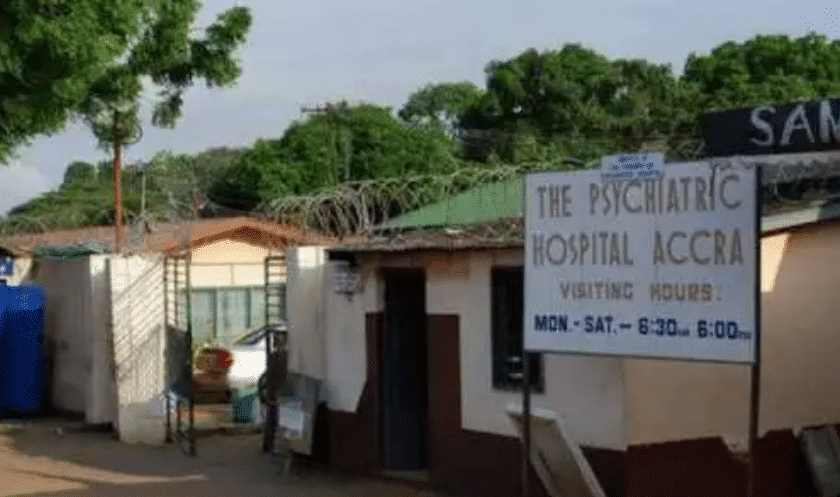
At the Accra Psychiatric Hospital for instance, the cost of consultation and hospital card, has increased from GHS60 to GHS100. A one-month admission fee has also increased from GHS1,500 to GHS2,500.
When GNA News Team visited the Facility on Friday, September 30, 2022, it (Team) was told that the Hospital was not accepting the NHIS card.
The Team was told that aside consultancy and admission fee that had gone up, the cost of all other tests, including blood and sugar level, were to be taken care of by patients.
A source at the Hospital said they (patients) were also to pay for medications because the Facility was not accepting national health insurance.
“Things have changed, and we are suffering. My brother is not well but I can’t bring him here regularly because now, the services are very expensive. We can’t afford it…,” Nana Ama, a middle-aged trader, told the Ghana News Agency.
A staff of the Hospital said, “some people leave without accessing care when informed about the increase in cost of service delivery.”
What the law says
In 2012, Ghana passed a new Mental Health Act intended to create a new system of mental healthcare in the country.
“Things have changed, and we are suffering. My brother is not well but I can’t bring him here regularly because now, the services are very expensive. We can’t afford it…,” Nana Ama, a middle-aged trader, told the Ghana News Agency.
A staff of the Hospital said, “some people leave without accessing care when informed about the increase in cost of service delivery.”
What the law says
In 2012, Ghana passed a new Mental Health Act intended to create a new system of mental healthcare in the country.
In an interview, Professor Akwasi Osei, Chief Executive Officer, MHA, said mental health facilities were compelled to pass on the cost of treatment to patients because they lacked funding.
He said the establishment of the Mental Health Levy was the surest way to address the funding gap.
“Until the Mental Health Levy is established, and we don’t have money to support them (mental health facilities), this is what is going to happen,” Prof. Osei said.
Mr Peter Yaro Badimak, Executive Director, Basic Needs Ghana, said the Mental Health Fund, established under the Mental Health Act, “only exists by name.”
He said the cost of mental healthcare has gone up because “virtually nothing goes to the mental health sector despite government policy that treatment is free of charge.”
“Those who cannot afford and have mental challenge, will live with it unfortunately, and their conditions could go worse,” Mr Badimak said.
The World Health Organisation (WHO) estimates that 10 per cent of the population of Ghana (30.8 million) has one form of mental disorder or the other.
Access to quality healthcare (physical and mental health) is a fundamental human right as enshrined in WHO’s Constitution, adopted by member countries.
“The enjoyment of the highest attainable standard of health is one of the fundamental rights of every human being without distinction of race, religion, political belief, economic or social condition,” says the preamble of the Constitution.
Mental health was included in the UN Sustainable Development Goals (SDGs) in September 2015.
The WHO recognises mental health as key to achieving social inclusion and equity, universal health coverage, access to justice and human rights, and sustainable economic development.
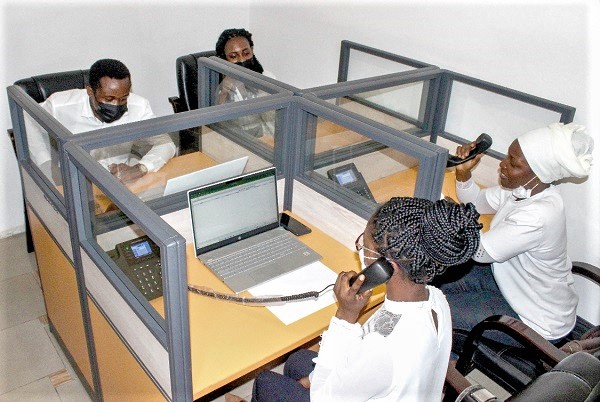
The MHA chose to develop the idea to assist those who required guidance and counseling on mental health as a result of the increase in suicides in 2017, according to Professor Akwasi Osei, Chief Executive of the MHA.
Additionally, it will aid in lowering the number of suicides.
“We have been consulting with the telecoms providers for five good years, and they finally agreed to the idea with a lower cost,” he added.
The Board Chairperson of the MHA, Estelle Matilda Appiah, who launched the centre, said the initiative was a relief as lives would now be saved through psychosocial support.
“The vulnerable will not have to battle alone with mental issues, but will be able to conveniently off-load stress to the people who have the expertise to help them through their challenges on the other end of the phone,” she said.
She added that it was the authority’s expectation that the initiative would be considered as a national resource and that people would seek to contribute to the long term sustenance of the call centre.
“Once in a while, each of us may experience some form of mental disorder and it is on these occasions that this resource will be available to everyone to help deal with whatever condition the vulnerable may face,” she said.
Important activity
The Head of Communications of MHA, Kwaku Brobbey, said the call centre was one of the MHA’s most important initiatives as it would require the support of all and sundry to ensure its growth and sustenance.
“With this, we can be assured that thousands of lives will be saved every year,” he said.
The Head of the Psychology Department of the University of Ghana Medical School, Prof. Angela Ofori-Atta, said the support system in charge of the call centre, Psych corps, consisted of individuals who had been well-trained and were well-versed in psychology and willing to assist individuals who needed help.
The Mental Health Authority says it has initiated steps to have suicide decriminalised, saying it is a medical condition that needs health support rather than imprisonment.
This follows the “unprecedented wave” of suicide and attempted suicide cases, especially among the youth in 2017.
Speaking at the launch of the Mental Health Authority call centre in Accra, the Chief Executive Officer (CEO), Prof Akwesi Osei, noted that even the choice of words used to describe suicide-related cases is worrying.
He stated that an attempted suicide should not be criminalised.
“I am trying harder not to say ‘people who wanted to commit suicide’ – it’s a language we want to move away from. So, don’t say ‘somebody who committed suicide’ because that criminalises the offence.
“We are trying to get us to understand that attempted suicide is not a crime, even though we don’t encourage it. It is [rather] a condition that requires support, largely mental illness.
“So, in all our discourses, let’s move away from ‘committed suicide’ to say ‘take his/her life by suicide’ or ‘die by suicide’,” he said.
At the same event, the Board Chair of the Authority, Estelle Matilda Appiah, explained that the establishment of the call centre was necessary due to the number of calls they receive weekly from people.
She mentioned, among other reasons, that the centre will provide an urgent support system which could be easily accessed by the vulnerable.
“There was an unprecedented wave of people who wanted to take their lives. The phenomenon led to speculations as to what was the cause of this with different people ascribing different reasons.
“The wave of people attempting suicide began with the unfortunate suicide death by hanging of a first-year female Chemical Engineering student of the Kwame Nkrumah University of Science and Technology on the 24th of February, 2017.
“This was followed by the death of another female, level 400 student at the University of Ghana on the 8th of March, that year. She is alleged to have jumped from the fourth floor of the Akuafo Hall Annex to her death,” she recounted.
These incidents, according to her, were followed by several reports of purported suicide deaths across the country.
“This led to questions as to why there had been a surge in acts of suicide and what might be the cause. The Mental Health Authority decided on several actions take in the short, medium and long term.
“These included the issue of a press statement stating what in its view might have culminated in the plethora of suicide cases and the issue of temporary helplines to provide access for people who have suicidal thoughts and other psychosocial issues.
“Since 75 calls were being received weekly on the temporary helplines, management of the Authority obliged to consider a call centre,” she explained.
The call line – 0800678678 – is free for only Vodafone and Airtel-Tigo users.
Individuals are advised to refrain from prank calls as they could lead to serious issues.
The Chief Executive Officer of the Mental Health Authority (MHA), Dr Akwasi Osei, has said that the number of mentally challenged individuals roaming the streets of the country is estimated at 10,000 people.
According to Dr Akwasi Osei, who revealed the staggering figure in an interview with The Independent Ghana, the Mental Health Authority despite being in the known, is unable to admit these individuals due to lack of funds.
He bemoaned the inadequate amount provided to the Authority by the state since the passing of the Mental Health Act (846 of 2012).
“The reason we have not gotten to where we want is because 10 years after the Mental Health Act 2012, Act 846, is the fact that we don’t have the money to support it. I mentioned people being on the streets naked, half-dressed, dirty and unkempt. If we had the funding, by now we would have taken them all from the street and brought them to the hospital for treatment, given them some training and taken them back to their community,†he said.
He added that “now, I’m sure that if you count, you will be hitting about 10,000.â€
Dr Akwasi Osei noted that some 8 years ago, the Mental Health Authority established in accordance with the Mental Health Act 2012, Act 846, managed to admit 606 mentally challenged people on the streets across the country without financial assistance from the government.
“About 7 or 8 years ago, we decided to do that. On our own, without extra funding from the government, we were able to take 606 patients from all over the country. Around that time, we did a rapid assessment and we saw that there were over 6000 patients on the streets and cities,†he said.
For Dr Akwasi Osei, it is important that the government sees to the admission of such persons by providing funds since “one of them might have the solution to our economic problems.â€
People suffering from severe mental illnesses are admitted to the Accra Psychiatric Hospital, Ankaful Hospital and Pantang Hospital.
Per the Mental Health Act, the Mental Health Authority mandated to propose, promote and implement mental health policies, as well as provide culturally appropriate, humane and integrated mental health care throughout Ghana operates with the Mental Health Fund.
The Fund generates revenue through voluntary contributions from individuals, organisations and the private sector; monies approved by Parliament, grants from bilateral and multilateral sources; donations and gifts; and any other sources approved by the Minister responsible for Finance.
According to Dr Akwasi, since the approval of the Mental Health Act, the government (Ministry of Finance) has been unable to pass the Mental Health Levyto enable the Mental Health Authority generate enough revenue.
He proposed that 50 pesewas should be taken from the salaries of workers during the implementation of the Mental Health Levy, as such amount would not have a huge impact on the net salary workers receive.
Bemoaning the amount received so far, the Chief Executive Officer said “the money that the Ministry gives to us now is about half or one-third of the whole money the Ministry requires. The levy has to be established by the Ministry of Finance and not Parliament. We approached Parliamentarians and they said we had done our part, that is to pass the law which says the levy should be established. The rest is for the Ministry of Finance.â€
“This is a levy with the difference.It could be such that you would not feel it much. Everybody as you go about your normal duty, supposing we said 50 pesewas out of everybody’s salary, no matter how low your salary is, 50 pesewas won’t make much difference,†he continued.
Assessing other alternatives, Dr Akwasi Osei stated that the government could also establish a levy where it could take 0.5% from the revenue generated from existing levies such as the Value Added Tax (VAT), Electronic Transaction Levy, also known as E-levy, among others.
“The reality is that we  need that tax. The point is that it does not look like a time will come when the government will have enough money to give to mental healthcare,†he emphasised.
The Chief Executive Officer of the Mental Health Authority (MHA), Dr Akwasi Osei, has revealed that there are 55 psychiatrists currently providing mental health service to citizens in the country.
Speaking to The Independent Ghana, he said the psychiatrist to patient ratio in Ghana stands at about 1:800,000, per the current population of over 31million people.
According to Dr Akwasi Osei, the recent figure, although unimpressive, is an improvement from what used to be a decade ago.
He said “at the time the Mental Health Act was passed in 2012, there were just about 10 psychiatrists. At that time, the population was about 24 million. As we speak right now, there are 55 psychiatrists attending to about 31 million people. That is about 1 to 800,000 people. Much better than 2.4 million. It is still worrying.â€
However, Dr Akwasi Osei disclosed that 10 out of about 20 psychiatrist trainees would pass out and increase the current figure to 65 psychiatrists in September.
For him, it is imperative that the Mental Health Authority is able to reduce the psychiatrist to patient ratio to at least 1: 300,000 for the current 1:800,000.
The Mental Health Authority per the Mental Health Act 2012 (Act 846) is mandated to promote mental health and provide humane care including treatment and rehabilitation in the least restrictive environment; and promote a culturally appropriate, affordable, accessible and equitably distributed, integrated and specialized mental health care that will involve both the public and the private sectors.
While interacting with the media, Dr Akwasi Osei also recounted how the number of psychologists and occupational therapists have increased.
Currently, Ghana has about 50 psychologists and seven occupational therapists.
“We are improving. The number of psychologists is also increasing. There was a time we didn’t have a single psychologist in any public health centre, but now, there are about 50. There was a time we didn’t have a single occupational therapist in the country. Now we have about seven,†he said.
It is reported that the government will see to the construction of two psychiatric hospitals to be situated in the middle and northern belt of the country as part of efforts to fight mental health illnesses.
The two facilities would ease the pressure faced by Accra Psychiatric Hospital, Kintampo Hospital, Ankaful Hospital and Pantang Hospital by admitting mental health patients, who ordinarily would have been left unattended.
According to Dr Akwasi Osei, the continent is seeing a growth in mental healthcare delivery.
He, however, said African countries cannot rest on their oars but strife to reach the very top.
“I must say, our mental health care delivery in Africa is among the best. But why should you remain there if you can compete favourably at the top,†he said.
The National Health Insurance Authority (NHIA) has indicated that efforts are underway to include mental health conditions in an insurance package, under the National Health Insurance Scheme (NHIS).
The Chief Executive of the National Health Insurance Authority, Dr Okoe Boye said this at the inauguration of a new board for the Mental Health Authority (MHA) last week.
The Minister of Health, Kwaku Agyeman Manu inaugurated the board chaired by Mrs Estelle Appiah, who was also the chair of the previous board last week.
It is the third board of the authority since the Act was passed in 2012.
There were five members of the 11 member board present for the inauguration.
They are Emmanuel Owusu-Ansah, who also served on the previous boards; Prof. Angela Ofori Atta, also on the previous board; Mrs Keelson from the Attorney-General’s Department and Prof Akwasi Osei, Chief Executive of the Mental Health Authority.
The Minister charged the board to join hands with him to ensure the challenges of the Authority are solved and mental health care in the country receives the desired attention.
The chairman of the board, Mrs Estelle Appiah, promised on behalf of her colleague board members, to ensure that all outstanding policies are developed.
In attendance to witness the inauguration was Dr Okoe Boye, the Chief Executive of the National Health Insurance Authority who indicated that efforts were underway to include mental health conditions in the insurance package.