Nigeria fined Meta Platforms $220 million,as announced by its competition watchdog on Friday, after investigations revealed that data-sharing on social platforms violated local consumer, data protection, and privacy laws.
The Federal Competition and Consumer Protection Commission (FCCPC) of Nigeria stated that Meta used Nigerian users’ data on its platforms without their consent, abused its market dominance by enforcing exploitative privacy policies, and subjected Nigerians to discriminatory treatment compared to other regions with similar regulations.
While Meta has not yet commented, the FCCPC mentioned in a statement that the company had submitted some documents and retained legal counsel, who have met and engaged with the agency.
FCCPC Chief Adamu Abdullahi explained that the investigations, conducted jointly with Nigeria’s Data Protection Commission, spanned over 38 months.
The findings indicated that Meta’s policies do not allow users the option or opportunity to self-determine or withhold consent for the collection, use, and sharing of personal data, according to Abdullahi.
Continuing infringements
“The totality of the investigation has concluded that Meta over the protracted period of time has engaged in conduct that constituted multiple and repeated, as well as continuing infringements… particularly, but not limited to abusive, and invasive practices against data subjects in Nigeria,” Abdullahi said.
“Being satisfied with the significant evidence on the record, and that Meta has been provided every opportunity to articulate any position, representations, refutations, explanations or defenses of their conduct, the Commission has now entered a final order and issued a penalty against Meta,” Abdullahi said.
The final order outlines the steps and actions Meta must take to comply with local laws, according to Abdullahi.
In May, Turkey’s competition board fined Meta 1.2 billion lira following investigations into data-sharing practices on its Facebook, Instagram, Threads, and WhatsApp platforms.
Meta has faced opposition in Europe and other regions due to alleged breaches of data protection laws.
In Europe, Meta’s plan to use personal data to train its artificial intelligence models without obtaining consent has been heavily criticized.
Additionally, South Africa’s competition watchdog has announced plans to investigate whether digital platforms, including Meta, are unfairly competing with news publishers by using their content to generate ad revenue.
TikTok and Meta have been asked by the EU to give them information about any false information that might have been shared on their platforms about the Israel-Gaza conflict.
Before, they were told to give answers to the group’s worries within 24 hours.
However, unlike this most recent demand, that request did not have the power of the law behind it.
Both companies have one week to reply. According to the new rules, the European Union (EU) has the authority to start an official investigation if it is not happy with the answers it receives.
The EU is worried that there might be more terrorist and violent content, and hate speech being shared, because of the recent attack by Hamas on Israel.
This happened a week after the EU reached out to X, which was previously called Twitter, about the same worries.
X said that they had taken down many accounts that were connected to Hamas from their platform.
Social media companies are experiencing an increase in false information about the Israel and Hamas conflict. This includes edited pictures and videos with incorrect labels.
In October, EU commissioner Thierry Breton sent letters to the top leaders of Meta, TikTok, X, and Google. He asked them to reply within 24 hours.
But these letters were not official requests that follow the new EU laws that decide what can be published on the internet.
Now, with the Digital Services Act (DSA), the companies have to reply within the given time limits.
If you don’t follow the DSA, you could get fined up to 6% of your company’s total income, or your platform might be suspended.
Two deadlines instead of one.
Under the DSA, the Commission has given Meta and TikTok two specific times when they must complete certain actions.
The companies have been asked to give the information about “the crisis response” by 25 October, and they need to answer the questions about keeping the election fair by 8 November.
TikTok has been given the job of showing the European Commission how it is keeping children safe online by the deadline in November.
When asked for more information before, Mr. Breton said that Meta needs to show that they have taken action quickly, carefully, and impartially.
He explained that TikTok has a special responsibility to keep kids and teens safe by preventing violent content and terrorist messages.
Tiktok agreed that they received the EU’s request.
A spokesperson from TikTok said that they will release their first report about transparency next week. The report will provide more details about their efforts to ensure safety for their European users.
The BBC has asked Meta to share their thoughts or opinions on something.
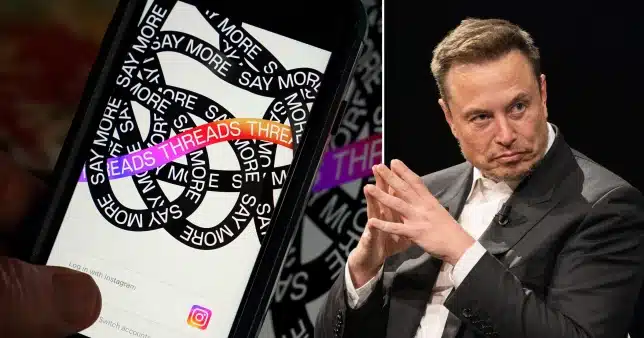
Just one day after releasing a new rival app, Twitter vowed to sue Meta.
Within 24 hours of going live, Threads had 30 million new users sign up.
But now, Twitter’s CEO Elon Musk has warned Meta CEO Mark Zuckerberg via his attorney Alex Spiro that he may face legal repercussions in a letter.
‘Twitter has strong concerns that Meta Platforms (Meta) has engaged in systematic, deliberate, and unlawful misappropriation of Twitter’s trade secrets and other intellectual property,’ the letter said.
It claims that Meta has hired ‘dozens’ of former Twitter employees and that they have access to the company’s ‘trade secrets’.
Mr Spiro also says that many of these employees have ‘improperly retained Twitter documents and electronic devices’, reports Semafor.
He wrote: ‘Twitter intends to strictly enforce its intellectual property rights, and demands that Meta take immediate steps to stop using any Twitter trade secrets or other highly confidential information.’
However, a source at Meta reportedly told Semafor that Twitter’s accusations are baseless.
They said: ‘No one on the Threads engineering team is a former Twitter employee – that’s just not a thing.’
Mr Spiro warned: ‘Twitter reserves all rights, including, but not limited to, the right to seek both civil remedies or injunctive relief without further notice.’
Threads is trying to compete with Twitter by taking advantage of Instagram’s billions of users.
Since Mr Musk’s takeover of the social media platform, Twitter has seen competition from Mastodon and Bluesky among others.
The Threads user interface, however, has a striking resemblance to the microblogging platform.
Mr Zuckerberg only announced the new app on Tuesday, calling it an app built for ‘sharing with text’.
At first glance, the app features an unmistakable Twitter-like feed in Instagram’s signature design.
‘Threads offers a new, separate space for real-time updates and public conversations,’ said Mr Zuckerberg in an announcement.
With Threads, Meta is also trying its hand at a ‘decentralised’ approach like many Twitter alternatives.
Mr Zuckerberg added: ‘We are working toward making Threads compatible with the open, interoperable social networks that we believe can shape the future of the internet.’
Here’s what happened when we tried out Threads for the first time today.
Meta, the company that owns Facebook, has been penalized with €1.2 billion (£1 billion) for improper treatment of user data during transfer between Europe and the United States.
It is the largest sanction imposed under the EU’s General Data Protection Regulation and was issued by Ireland’s Data Protection Commission (DPC).
GDPR regulations mandate that businesses obtain individuals’ consent before utilizing their personal data.
The “unjustified and unnecessary” decision will be challenged in court, according to Meta.
At the crux of this decision is the use of standard contractual clauses (SCCs) to move European Union data to the US.
These legal contracts, prepared by the European Commission, contain safeguards to ensure personal data continues to be protected when transferred outside Europe.
But there are concerns these data flows still expose Europeans to the US’s weaker privacy laws – and US intelligence could access the data.
‘Dangerous precedent’
Most large companies have complex webs of data transfers – which can include email addresses, phone numbers and financial information -to overseas recipients, many of which depend on SCCs.
And Meta says their broad use makes the fine unfair.
Facebook president Nick Clegg said: “We are therefore disappointed to have been singled out when using the same legal mechanism as thousands of other companies looking to provide services in Europe.
“This decision is flawed, unjustified and sets a dangerous precedent for the countless other companies transferring data between the EU and US.”
Decade-long battle
In 2013, former US National Security Agency contractor Edward Snowden disclosed American authorities had repeatedly accessed people’s information via technology companies such as Facebook and Google.
And Austrian privacy campaigner Max Schrems filed a legal challenge against Facebook for failing to protect his privacy rights, setting off a decade-long battle over the legality of moving EU data to the US.
Europe’s highest court, the European Court of Justice (ECJ), has repeatedly said Washington has insufficient checks in place to protect Europeans’ information.
And in 2020, the ECJ, ruled an EU-to-US data transfer agreement invalid.
But the ECJ left the door open for companies to use SCCs, saying the transfer of data to any other third country was valid as long as it ensured an “adequate level of data protection”.
It is that test Meta has been found to have failed.
‘Fundamentally restructure’
Asked about the €1.2bn fine, Mr Schrems said he was “happy to see this decision after 10 years of litigation” but it could have been much higher.
“Unless US surveillance laws get fixed, Meta will have to fundamentally restructure its systems,” he added.
The US recently updated its internal legal protections to give the EU greater assurances American intelligence agencies would follow new rules governing such data access.
In 2021, Amazon was fined for similarly flouting the EU’s privacy standard.
Ireland’s DPC has also fined WhatsApp, another Meta-owned business, for breaching stringent regulations relating to the transparency of data shared with its other subsidiaries.
A group of 43 Facebook moderators sacked in January have said they are pursuing a lawsuit in Kenya against the social network’s parent company Meta for, among other things, “unlawful dismissal,” according to a statement posted Monday.
Meta, which also encompasses Instagram and WhatsApp, has undertaken to reduce its workforce by nearly 25% in less than six months, a symbol of the difficulties faced by the tech sector.
“In January, 260 content moderators working at Facebook’s moderation center in Nairobi, Kenya, were informed that they would be let go by Sama, the outsourcing company that has run the office since 2019. Overnight, these moderators doing critical work for East and Southern Africa have lost their jobs,” the statement said.
“43 moderators at Facebook‘s moderation center in Nairobi are filing a lawsuit against the social media company and its contractors for firing the entire workforce – and for blacklisting all the fired workers,” the statement continued.
In December 2022, a Kenyan NGO and two Ethiopian citizens filed a complaint in Kenya against Meta, accusing the platform of not fighting enough online hate and demanding the creation of a fund of 1.6 billion dollars to compensate victims.
After posting insolent growth since its creation, Facebook, which became Meta at the end of 2021, has been suffering from a slowdown in online advertising since last year.
Meta, the parent company of Facebook and Instagram, announced Tuesday that it will lay off 10,000 workers in its second major round of layoffs in less than four months.
This makes it the social media giant the latest U.S. company to reduce its workforce this year, following cuts at Disney, eBay, General Motors, Twitter, and Yahoo.
Meta CEO Mark Zuckerberg announced the social media company is cutting 10,000 of its its nearly 87,000 employees (roughly 12% of its workforce) over the next two months and closing another 5,000 open positions that had not been filled, bringing Meta’s total number of job cuts since November to 21,000 and sending its shares up 4% Tuesday morning.
“Here’s the timeline you should expect: over the next couple of months, org leaders will announce restructuring plans focused on flattening our orgs, canceling lower priority projects, and reducing our hiring rates,” Zuckerberg said in a message to employees, which was also posted to the technology company’s blog.
He also stated that Facebook’s parent company intends to fill 5,000 additional open positions. In an apparent reference to the company’s continued economic uncertainty, Zuckerberg stated that it should be prepared for “the possibility that this new economic reality will continue for many years.”
Meta said in an SEC filing announcing the cuts that it expected lower total expenses in 2023, ranging from $86 billion to $92 billion.
The new round of layoffs follows a previous round of layoffs announced in November, which affected over 11,000 workers, or roughly 13% of Meta’s total workforce.
According to a post Mark Zuckerberg made on Instagram on Sunday, Meta is developing a subscription service that would let users of Instagram and Facebook pay to become verified.
“Meta Verified” will start at $11.99 a month on the web or $14.99 a month on iOS, and the company will begin releasing it in Australia and New Zealand this week and “more countries soon.”
Further benefits of the service include increased defense against impersonator accounts and easy access to customer service.
Customers who desire the blue badge must present a government ID that matches their profile name and photo in order to prevent false accounts. Moreover, users must be older than 18 to qualify.
“This new feature is about increasing authenticity and security across our services,” Zuckerberg wrote in an Instagram broadcast channel.
In a statement, Meta clarified there will be no changes to accounts that are already verified. Verification was previously for users who are “authentic and notable.”
“We are evolving the meaning of the blue badge to focus on authenticity so we can expand verification access to more people,” a Meta spokesperson said. “We will display follower count in more places so people can distinguish which accounts are notable public figures among accounts that share the same name.”
Meta joins other platforms, like Discord, Reddit and YouTube, who have their own subscription-based models.
Twitter relaunched its own verification subscription service, Twitter Blue, in December, after an onset of fake “verified” accounts forced it to pull the feature. The check mark options now have different colors to differentiate between accounts: gold checks for companies, gray checks for government entities and other organizations, and blue checks for individuals, whether or not they are celebrities.
Twitter Blue costs $11 a month for iOS and Android subscribers, part of owner Elon Musk’s attempt to raise its subscriptions business after buying the platform for $44 billion.
The video-sharing app plans to add two more data centres in Europe, according to a senior executive.
According to a senior executive, Chinese social media companyTikTok plans to open two more data centres in Europe, which could allay worries about the security of user data and lessen regulatory pressure on the business.
TikTok has been attempting to reassure governments and regulators that users’ personal information cannot be accessed and that its content cannot be altered by the Chinese Communist Party or anyone else working for Beijing.
According to Rich Waterworth, general manager of operations for TikTok in Europe, the short video-sharing app wants to increase the amount of data it stores in the continent. TikTok is owned by the Chinese company ByteDance.
“We are at an advanced stage of finalising a plan for a second data centre in Ireland with a third-party service provider, in addition to the site announced last year,” he said.
“We’re also in talks to establish a third data centre in Europe to further complement our planned operations in Ireland. European TikTok user data will begin migrating this year, continuing into 2024,” Waterworth said.
The company on Friday also reported on average 125 million monthly active users in the European Union between August 2022 to January 2023, subjecting it to stricter EU online content rules known as the Digital Services Act (DSA).
The DSA labels companies with more than 45 million users as very large online platforms and requires them to do risk management, external and independent auditing, share data with authorities and researchers and adopt a code of conduct.
The European Commission had given online platforms and search engines until February 17 to publish their monthly active users. Very large online platforms have four months to comply with the rules or risk fines.
Alphabet provided one set of numbers based on users’ accounts and another set based on signed-out recipients, saying that users can access its services whether they sign into an account or when they are signed out.
It said the average monthly number of signed-in users totalled 278.6 million at Google Maps, 274.6 million at Google Play, 332 million at Google Search, 74.9 million at Shopping and 401.7 million at YouTube.
Earlier this week, Meta Platforms said it had 255 million average monthly active users on Facebook in the EU and about 250 million average monthly active users on Instagram in the last six months of 2022.
After asserting that the East African nation lacked jurisdiction over its operations, parent company Meta tried to stop a court case accusing it of having exploitative working conditions but was unsuccessful.
After a former worker sued the social media giant, citing subpar working conditions, a Kenyan labour court on Monday decided that Facebook’s parent company, Meta, can be sued.
By saying that the East African nation’s courts lack jurisdiction over Facebook’s operations, Meta argued for the dismissal of the case.
However, Judge Jacob Gakeri said, “Since the petition has raised certain actual issues that are yet to be determined, it would be inopportune for the country to strike out the two respondents from the matter.”
Why did an employee take action against Facebook?
A former Facebook moderator in Kenya accused the company of exploiting poor working conditions.
Daniel Motaung said that while working as a moderator, he was exposed to content such as rape, torture, and beheadings. He said this put his and his colleagues’ mental health at risk.
He said Meta did not offer any support to employees regarding such issues. In addition, staff were allegedly required to work unreasonably long shifts, and offered minimal pay. Motaung was employed in Facebook’s African hub in Nairobi, which is operated by Samasource Ltd.
Following Monday’s ruling from Judge Gakeri, the next step in the process will be considered by the court on March 8.
Meta also faces Ethiopia lawsuit
Meta is also facing legal action in which two Ethiopians say hate speech was promoted on Facebook in the midst of the country’s Tigray conflict.
The suit was filed in Kenya in December by two Ethiopian researchers and a Kenyan rights group, the Katiba Institute. According to court documents, the plaintiffs accuse Meta of not only failing to moderate violent posts about the conflict, but also blame the social media giant for amplifying the most virulent ones.
One of these posts preceded the murder of a plaintiff’s father, their filing said.
A company spokesperson told CNN on Monday that Facebook’s parent company, Meta, is considering whether to allow former President Donald Trump back onto its platforms and will make a decision in the coming weeks.
The decision, which is expected to be one of the most significant in the company’s history, is being considered by a specially formed internal company working group comprised of leaders from various parts of the organisation, according to a person familiar with the deliberations.
According to the person, the group includes representatives from the company’s public policy, communications, content policy, and safety and integrity teams. The Financial Times broke the news about the working group.
Trump was banned from Meta’s platforms Facebook and Instagram after the attack on the US Capitol in January 2021. Initially, the ban was indefinite, but that was later revised, and the company said it would consider allowing Trump back on the platforms after two years. Those two years elapse on Saturday, January 7, 2023.
The company is not expected to announce its decision on Saturday. Instead, Meta spokesperson Andy Stone told CNN on Monday that the announcement would occur “in the coming weeks.”
The decision to re-platform a former US president is being led by a former deputy prime minister of the United Kingdom.
Ad Feedback
Nick Clegg, Meta’s president of global affairs, said he is overseeing the decision. Clegg has risen through Meta’s ranks since joining the company in 2018, a year after he lost his seat in British Parliament.
Over the past year, Clegg has taken public responsibility for more of the company’s thorny political decisions, shielding the company’s founder, Mark Zuckerberg, who is said to be focusing more on developing the so-called metaverse.
Meta initially said Trump was suspended from its platforms due to his praise for people engaged in violence at the US Capitol. In a blog post in June 2021, Clegg explained how the company would consider allowing Trump back on its platforms.
“If we determine that there is still a serious risk to public safety, we will extend the restriction for a set period of time and continue to re-evaluate until that risk has receded,” Clegg wrote.
If Trump’s accounts are restored, he could once again have them revoked if he breaks the platforms’ rules, Clegg warned. “When the suspension is eventually lifted, there will be a strict set of rapidly escalating sanctions that will be triggered if Mr. Trump commits further violations in future, up to and including permanent removal of his pages and accounts,” he wrote.
A return to Meta could be a potential boon for Trump’s 2024 election campaign. Trump has 34 million followers on Facebook and 23 million followers on Instagram. Previous Trump campaigns have lauded the effectiveness of Facebook’s targeted advertising tools and have spent millions running Facebook ads.
A return would also signal a shift in Silicon Valley’s relationship with the former president. Trump had also been banned from Twitter but his account was reinstated in November by that company’s new owner, Elon Musk.
Trump has yet to post on Twitter after the reinstatement, instead continuing to post on his own social media platform, Truth Social. It remains unclear whether Trump simultaneously posting on mainstream platforms would violate his agreements with Truth Social’s parent company.
Last month, two Democratic lawmakers urged Meta to maintain Trump’s suspension from its platforms, arguing that the former president’s recent posts on Truth Social suggest he is likely to violate the social media giant’s policies if given a chance.
“For Meta to credibly maintain a legitimate election integrity policy, it is essential that your company maintain its platform ban on former president Trump,” California Rep. Adam Schiff and Rhode Island Sen. Sheldon Whitehouse wrote in a letter. “Based on Meta’s own statement on standards for allowing Trump back on the platform, his account should continue to be restricted.”
Meta has threatened to take down news content from Facebook in the United States.
It opposes a new law that would give news organisations more negotiating power over fees for content shared on Facebook.
Last year, a similar law in Australia caused news on Facebook to be temporarily suspended.
Meta claims that their platform does, in fact, increase traffic to struggling news outlets.
It says publishers put their content on Facebook because “it benefits their bottom line.”
The legislation, known as the Journalism Competition and Preservation Act (JCPA) was introduced in Congress by Minnesota Senator Amy Klobuchar and has bipartisan support.
Media companies argue that Meta generates huge sums of money from news articles shared on the platform.
Local news in particular struggled during the pandemic, as Meta made huge profits.
However Meta argues that this narrative is wrong. Instead, it says, Meta drives traffic to news sources.
Meta spokesperson Andy Stone said: “If Congress passes an ill-considered journalism bill as part of national security legislation, we will be forced to consider removing news from our platform altogether”.
Meta also argues that sharing news on Facebook accounts for only a fraction of its revenue.
A similar Australian law, which took effect in March 2021, led to a brief shutdown of Facebook news feeds in the country.
The company quickly reversed the decision after wide-ranging criticism – brokering a deal with the Australian government.
In a statement about Australia’s proposed law last year, a spokesperson for Meta said, “for Facebook, the business gain from news is minimal. News makes up less than 4% of the content people see in their News Feed.”
The US legislation is part of a larger set of laws aimed at tackling the dominance of Big Tech.
Supporters of the JCPA say social media will become America’s “de facto local newspapers” if the act doesn’t pass.
Matt Stoller, Director of Research at the American Economic Liberties Project, said media outlets were being “eaten alive” by Meta.
Recent mass layoffs at big US tech firms have plunged into uncertainty several Indians working on non-immigrant visas such as the H1-B. Surbhi Gupta, a product manager at Meta who was among those affected, spoke to California-based journalist Savita Patel about how it took her time to accept it, the uncertainties that H1-B visa holders deal with, and what she plans to do next.
It was my mum’s birthday. I was staying up late to wish her and that’s when I started getting messages from my friends about layoff announcements. They were all anxious.
At around 6am here, I received an email that I’d been let go. I had joined Meta earlier this year as a product manager. My team was shocked because I’d been performing really well.
It went against my motto, work is worship, instilled early by my favourite teacher at school. Initially, it felt like the Titanic sinking because I was losing access to things one by one – workplace, then email, then laptop. But I was pleasantly overwhelmed and surprised in a positive way by my network on LinkedIn. Many colleagues, ex-colleagues and friends reached out in a very supportive way, making introductions and referrals. It made me feel like I have so many people in this country who care for me, made me feel like I belong to this country.
IMAGE SOURCE,PHOTO COURTESY: SURBHI GUPTA Image caption, Ms Gupta says she’s in touch with many companies and is exploring all options
My last day at Meta is in January and my H1-B visa [a non-immigrant visa that allows firms in the US to hire foreigners for up to six years] allows me to stay in the US for another 60 days, so early March is the deadline for me to find another job.
The job search is going to be difficult now as hiring will be slow in December because of the holidays. But I’m very focused. I am in touch with multiple companies and exploring options.
What I’ll miss most about Meta is the workplace and my colleagues. Being at Meta meant not only being able to build an amazing product for millions of people, but also being able to participate in fireside chats and growth and learning opportunities. As a product manager, it would have been rewarding to see the project I was working on go further.
My parents taught me to never give up in life. They tell me to stay strong because I’m a person who can convert problems into opportunities. They tell me ‘aur kuch accha mil jayega’ [you’ll find something better].
But my ability to work and stay in the US depends on my H1-B visa. I moved to the US in 2009 and I have worked very hard to build my career on my own strength and intellect. I have worked in prominent companies like Tesla, Intuit, etc., built great products, got top ratings, paid taxes, and contributed to the US economy for more than 15 years, but I feel that I am in the same place as far as permanent residency goes because of the limitations of the H1-B. I was crowned Miss Bharat California [a beauty pageant] by my idol, Bollywood actress Sushmita Sen. I have walked the ramp at New York Fashion Week. I have my own podcast.
We face unnecessary stress because the US has a country cap which takes forever for Indian H1-B holders to get a green card (permanent residency). Even though I am in the green card queue, when I track my status, I sometimes get a wait-time of two decades, and at other times, 60 years.
Our personal life suffers because of the uncertainty. Buying a home has been a question mark in my mind – do I invest in a home and then what if I have to leave. In spite of having gone ahead with the YC [Y Combinator is an American technology start-up accelerator], I can’t start a company even though I have a great idea because I don’t have a green card.
IMAGE SOURCE,PHOTO COURTESY: SURBHI GUPTA Image caption, Ms Gupta was crowned Miss Bharat California by her idol Sushmita Sen
I travelled to 30 countries before turning 30 years old, but now I’m unable to travel much, even though it’s my dream to travel the world, because I’m nervous about facing problems while trying to get my H1-B visa re-stamped. I have heard from my friends who work at great companies like Google and PayPal about getting stuck abroad.
I have even curtailed my travels home to India. A few years back, I got stuck in India. I had gone to attend a wedding and I had to get my H1-B visa stamped. But that took several months as it went into random administrative processing and I wasn’t even sure when it would come through. The uncertainty and the wait caused problems in my marriage. The visa issues had a very big role in my marriage. It was not the only reason, but it became one of the major reasons for the break-up of my marriage. I also had to drop out of a semester at New York University, where I was studying at the time, because I didn’t know when I would be able to return to the US. Why do people on H1-Bs have to deal with this?
I have not met my parents since the Covid-19 pandemic because they haven’t been able to come to visit me for three-and-a-half years. They are elderly, and don’t keep too well. I constantly think – if my parents need support, will I be able to go to help them? Nobody realises how it impacts our life.
But despite whatever has happened, I believe this experience too has a silver lining. Spirituality is a significant part of my life. I am a believer and follower of Sadhguru ji [as followers refer to Indian yoga guru Jaggi Vasudev]. He says that we should not be identified only by or limit our identity to our professional role. In Silicon Valley, the most frequently asked question is – Which company do you work for? But I am still me, not just a product manager. Everyone should realise that they are more than just the company they work for.
DISCLAIMER: Independentghana.com will not be liable for any inaccuracies contained in this article. The views expressed in the article are solely those of the author’s, and do not reflect those of The Independent Ghana
Facebook’s parent company, whose stock has lost more than two-thirds of its value, also announced plans to cut discretionary spending and extend its hiring freeze into the first quarter.On Wednesday, Meta Platforms Inc announced the layoff of 13% of its workforce, or more than 11,000 employees, in one of the largest technology layoffs this year as the Facebook parent company battles rising costs and a weak advertising market.
The massive layoffs, the first in Meta’s 18-year history, come on the heels of thousands of layoffs at other leading technology companies such as Elon Musk’s Twitter and Microsoft Corp.
The pandemic boom that boosted tech companies and their valuations has turned into a bust this year in the face of decades-high inflation and rapidly rising interest rates.
Meta, whose shares have lost more than two-thirds of their value, said it also plans to cut discretionary spending and extend its hiring freeze through the first quarter.
“Today I’m sharing some of the most difficult changes we’ve made in Meta’s history,” the company’s founder Mark Zuckerberg said in a message to employees announcing the layoffs.
“I want to take accountability for these decisions and for how we got here. I know this is tough for everyone, and I’m especially sorry to those impacted.”
Potential recession
An economic slowdown and a grim outlook for online advertising – by far Meta’s biggest revenue source – have contributed to the company’s woes. This summer, Meta posted its first quarterly revenue decline in history, followed by another, bigger decline in the fall.
Some of the pain is company-specific, while some is tied to broader economic and technological forces.
Last week, Twitter laid off about half of its 7,500 employees, part of a chaotic overhaul as Musk took the helm. He tweeted there was no choice but to cut the jobs “when the company is losing more than $4M/day”, though did not provide details about the losses.
Meta has worried investors by pouring more than $10bn a year into the “metaverse” as it shifts its focus away from social media.
Zuckerberg predicts the metaverse, an immersive digital universe, will eventually replace smartphones as the primary way people use technology.
Meta and its advertisers are bracing for a potential recession. There is also the challenge of Apple’s privacy tools, which make it more difficult for social media platforms such as Facebook, Instagram and Snap to track people without their consent and show them specially tailored advertisements.
Competition from TikTok is also an a growing threat as younger people flock to the video sharing app over Instagram, which Meta also owns.
Meta’s profits fell to $4.4bn in the last quarter, a 52 percent decrease year-on-year.
“Fundamentally, we’re making all these changes for two reasons: our revenue outlook is lower than we expected at the beginning of this year, and we want to make sure we’re operating efficiently,” wrote Zuckerberg.
Instagram’s issues come less than a week after another Meta platform, WhatsApp, experienced a significant outage.
Instagram has stated that it is investigating why thousands of users’ accounts were suddenly suspended.
Users from all over the world have taken to other social media platforms to inquire as to why they have been locked out of their accounts, after receiving a message stating, “We suspended your account on October 31, 2022.”
“We’re aware that some of you are having issues accessing your Instagram account,” Instagram said.
“We’re looking into it and apologize for the inconvenience.”
Tens of thousands of people have logged problems, according to the website Down Detector.
The Verge reports that millions of people seem to have been affected, with follower counts dropping on some of the platform’s biggest accounts.
Those affected are told they have 30 days to disagree with their suspension.
Why are accounts being suspended?
Users are being presented with three reasons why their account has been suspended.
• The account does not meet Instagram’s community guidelines
• The account cannot be confirmed
• It is not visible right now and cannot be used
People first began reporting issues at around lunchtime on Monday.
“Did anyone else’s Instagram just get suspended for no reason?” tweeted one affected user.
“And now Instagram won’t even bother to let you appeal it just gives you an error?”
Another said: “Anyone else facing this issue on Instagram? Or is my account really suspended?”
Instagram’s troubles come less than a week after another Meta platform, WhatsApp, suffered a major outage.
Tens of thousandsof people reported being unable to send and receive messages last Tuesday morning.
Facebook parent Meta Platformsreported earnings Wednesday that fell short of expectations, pummeling the company’s stock in after-hours trading as the social media giant with metaverse ambitions scrambles to cut costs amid advertising headwinds spurred by concerns about the global economy.
KEY FACTS
Meta reported a net income of $4.4 billion, or $1.64 per share, cratering 49% year over year and falling short of expectations for $1.89 per share; revenue of $27.7 billion fared slightly better than the $27.4 billion analysts were forecasting, but down 4% from one year ago.
The company also said its revenue this quarter would fall between $30 billion and $32.5 billion—toward the lower end of average analyst expectations.
Meta shares sank 11% to $115 immediately after the report, pushing losses to more than 61% this year alone—far worse than the tech-heavy Nasdaq’s 30% decline.
In a pre-earnings note, Bank of America analyst Justin Post downgraded shares of Meta to a neutral rating, saying the firm’s investment in the immersive virtual reality world known as the metaverse “will remain [an] overhang” on the stock, costing an estimated $10.7 billion next year even as economic concerns potentially intensify.
The report comes less than a month after Meta announced plans to cut costs by restructuring some teams and instituting a hiring freeze as advertising revenue growth slows amid economic pressures, which are quickly mounting: On Monday, an investor with more than $300 million worth of shares urged the company to further slash expenses by laying off employees.
In the earnings release, Meta CFO David Wehner said the company has “increased scrutiny on all areas of operatingexpenses” but it also said its employee headcount would remain roughly flat next year from current levels; in the third quarter, the company’s free cash flow, which measures cash left over after operating expenses, cratered to $173 million from $9.5 billion a year ago.
FORBES VALUATION
$47.2 billion. That’s how much Meta founder Mark Zuckerberg,38, was worth when the market closed on Wednesday. At one point worth more than $130 billion, Zuckerberg’s fortune has plunged by more than 60% since Meta stock peaked in September 2021.
KEY BACKGROUND
Global economies have started to slow down as central banks including the Federal Reserve work to combat inflation by tempering consumer demand with higher interest rates. Recent earnings reports have started to reflect the pressures. On Tuesday, Alphabet stock plunged after the Google parent missed third-quarter sales and profit expectations. The company’s YouTube advertising unit posted a much weaker-than-forecast $7.1 billion, versus average expectations of about $7.5 billion. In a note, analyst Adam Crisafulli of Vital Knowledge pointed out that YouTube and social media advertising is typically much less resilient during economic downturns than other types of ads.
CRUCIAL QUOTE
“I had hoped the economy would have more clearly stabilized by now,” Zuckerberg reportedly told employees at a meeting outlining the company’s cost-cutting plan last month. “But from what we’re seeing it doesn’t yet seem like it has, so we want to plan somewhat conservatively.”
When asked why his company is focused on experimental bets, Zuckerberg said: “It would be a mistake for us to not focus on any of these areas that will be fundamentally important to our future.”
Facebook’s parent company is metaverse under pressure to focus less on the metaverse – as investors say it is an experimental bet causing “supersized and terrifying losses”.
The tech giant changed its name to Meta last year under plans to build a virtual world that would be used by millions of people.
But Mark Zuckerberg’s metaverse has been beset by technical problems, with user numbers far below the targets set by executives.
The latest figures show Reality Labs, the division building the metaverse, lost £3.16bn between July and September, compared with £2.27bn in the same period a year earlier.
Investors rushed to dump Meta’s stock after the company warned that losses linked to the metaverse “will grow significantly” next year.
When asked why his company is focused on experimental bets, Zuckerberg said: “It would be a mistake for us to not focus on any of these areas that will be fundamentally important to our future.”
But analysts have said that the metaverse “feels like one big gamble” – especially given the current economic crisis – and fear the road ahead will be “long and painful”.
The virtual reality headsets required to get the best experience in Meta’s virtual world are pricy. One costs £1,300 – putting it out of the reach of many consumers.
Paolo Pescatore from PP Foresight said: “People are not rushing out of their seats to buy a VR headset or even watch 360-degree videos … The new device still feels like an expensive toy.”
Earlier this week, a fund that invests in Meta called on the company to cut its yearly investment in the metaverse from $10 billion to $5 billion.
Altimeter Capital’s CEO, Brad Gerstner, warned: “Meta has drifted into the land of excess – too many people, too many ideas, too little urgency.
“This lack of focus and fitness is obscured when growth is easy but deadly when growth slows and technology changes.”
Meanwhile, Insider Intelligence analyst Debra Aho Williamson has warned that Meta needs to turn its business around – focusing less on the metaverse and more on fixing its core business.
“As Facebook Inc, was a revolutionary company that changed the way people communicate and the way marketers interact with consumers. Today it’s no longer that innovative groundbreaker.”
Meta – which owns Facebook, Instagram, and WhatsApp – has other clouds on the horizon as it battles falling advertising sales and stiff competition from TikTok.
Revenue in the third quarter fell for a second consecutive time to £23.83bn.
Meta’s share price is in danger of falling to its lowest level in six years – and the stock has plunged by 61.6% since the year began.
Some of the ads include descriptions of sexual violence, paired with images of battered women and photos of male fitness influencers, which were used without permission.
Apps backed by ByteDance and Tencent have been running hundreds of ads on Facebook and Instagram containing sexually explicit content, descriptions of graphic violence, and content promoting acts of self-harm.
The ads, which violate Meta’s policies, contain excerpts from erotic web novels featuring young adult fantasy themes like werewolves and vampires, often paired with short videos and images that appear to be taken from influencers, movies, and TV shows. With descriptions of sexual assault and images of distressed women and girls next to muscular men, these ads push users to download apps where they can pay to read stories by the chapter.
One ad, teasing a story about a “night of terror” where a teen girl will be “mated” to a “creature,” featured a shirtless photo of Brazilian football star Neymar mashed up with a stock image of a beaten woman. A representative for Neymar told Forbes the image was used without permission.
The ad was for iReader, an app into which TikTok’s parent company ByteDance invested $170 million in 2020. As of Saturday morning, 83 other live ads for iReader featured a story chapter titled “His Personal Cum Bucket” and a graphic description of sexual violence. Multiple requests for comment sent to numerous iReader representatives went unanswered.
Ads for the Mytopia app, which is owned by ByteDance, contained similarly troubling content. Three ads for the app included a text description of a teen girl being molested by her step-brother, and three other ads contained a romanticized account of a teen girl cutting herself. After being contacted by Forbes, ByteDance paused Mytopia’s ad campaign, and ByteDance spokesperson Billy Kenny said that the ads “do not match our values.”
Ads paired excerpts of violent erotica with images of distressed women and girls and muscular men, which were sometimes used without permission. Note: some images may be disturbing.
On Wednesday, an app called Webnovel, which is owned by Tencent subsidiary China Literature, began running ads featuring sexually explicit comics that implied incest between a mother and her son. China Literature stopped the ad campaign when contacted for comment by Forbes. In a statement, spokesperson Maggie Zhou said: “We can confirm these ads were posted by third-party agencies without informing China Literature and in violation of our content policies.”
ByteDance (which owns TikTok) and Tencent (which owns WeChat and some of the most popular videogames in the world) have long struggled to show that their products do not expose people to content promoting sex, abuse, or self-harm. But while the Chinese tech giants have invested heavily in removing this kind of content from TikTok and WeChat, they have at the same time paid for erotic web novel businesses to create it and promote it to Meta users through ads.
Meta, for its part, has appeared largely incapable of halting this flood of violent fantasy erotica ads that violate its rules. The company’s Ad Library reveals that while Meta has detected and removed dozens of these ads, advertisers have just put more up. Moreover, Meta’s detection appears weak and haphazard, with weeks-old ads still live featuring text that obviously violates its rules. Before Forbes contacted Meta about the ads, searches of the Ad Library for phrases like “his cock” and “rape me” returned hundreds of results, nearly all of them ads for web novel apps. (Disclosure: in a past life, I held policy positions at Facebook and Spotify.)
Ads paired excerpts of violent erotica with images of distressed women and girls and muscular men, which were sometimes used without permission. Note: some images may be disturbing.
Meta spokesperson Andy Stone said the company had removed dozens of ads from web novel companies before it was approached by Forbes, and that it has removed nearly 200 ads and pages since being presented with our findings. Still, five new renditions of the “cum bucket” ad began running last night from a page that Forbes had flagged to Meta, and a quick search of the Ad Library returns hundreds of similar results.
Apps like Webnovel, Mytopia, and iReader have boomed during the pandemic. The apps first became popular in China, where ByteDance’s Tomato Novel app has been downloaded more than 60 million times. But they have recently become popular in the U.S., too. iReader was downloaded 1.5 million times in 2021, and Webnovel was downloaded more than 2 million times in 2022, according to Sensor Tower. Although Chinese apps dominate the sector, domestic apps offer similar wares: Amazon’s Kindle Vella features identical themes and even some of the same stories featured on other apps. It does not appear to advertise on Facebook or Instagram.
Earlier this year, the Rest of the World reported that the profit margin for China-based web novels is often very high, with companies making as much as 10 times as much as they pay authors for each story. But that profit margin may depend in significant part on ads: In 2021, Protocol reported that 42.7% of China-based web novels were introduced to overseas readers through advertising.
This market also extends beyond just apps backed by Tencent and ByteDance. Last week, Forbes identified more than 1,000 ads running from more than 100 Facebook pages representing China-based web novel apps. Some of the ads stayed within bounds, offering largely standard romance novel fare, but others violated Meta’s policies barring explicit sexual content.
One ad running on Thursday morning promoted an app called MoboReader and described a scene in which a woman’s husband tries to kill her by hitting her with a car, and then another man subsequently rapes her. Moboreader did not respond to a request for comment.
A text excerpt used in at least 32 other ads on Thursday included a graphic, romanticized description of a teen girl engaging in self-mutilation after being abused. The ads were for Supernovel, an app whose Terms of Service claim it is owned by Cloudary Holdings, a subsidiary of Tencent. When asked about the app, Tencent and Cloudary denied any relationship to it.
In 2019, the China-based blog TechNode reported that a ByteDance web novel app popular with domestic Chinese audiences was shut down for three months by the Chinese government for distributing “lowbrow and sexually suggestive content.” But as the web novel industry has grown, ByteDance and Tencent have deepened their investments in it.
In December 2019, ByteDance acquired a majority stake in MyMind Culture, the parent company behind several Chinese-language novel apps. In July 2020, it bought a 10% stake in Beijing Dingtian Culture Entertainment, which runs similar apps, including SweetRead and DmRead. Later that year, ByteDance paid $170 million for 11% of the China-based e-book company Zhangyue, which makes the iReader app, as well as ForNovel, Novelink, Favoread and Noveltells. In 2021, it launched Mytopia, which, like iReader, is targeted to foreign audiences.
Billy Kenny, the ByteDance spokesperson, said that ByteDance (which invested in Zhangyue through its acquisition arm, Quantum Jump) “doesn’t have any involvement in the product and business strategy of Zhangyue’s global businesses.” Zhangyue, however, told shareholders in April: “Mr. Zhang Chao, head of ByteDance’s novel business department, is a director of the company. The company and Byte have cooperated in various aspects such as content copyright and advertising cooperation.” Kenny did not answer follow-up questions about the nature of this cooperation.
Tencent owns the conglomerate China Literature, which controls the flagship English-language Webnovel app through a company called Cloudary Holdings. Terms of service for a cluster of other apps running ads on Facebook, including iNovel, eReader, SuperNovel, PopNovel, Mobooks and MyNovel, list Cloudary Holdings as their operator; however, Maggie Zhou, a spokesperson for China Literature, told Forbes that the entities are not owned or operated by China Literature or Cloudary.
Ads for various apps also used clips from major movies, including Star Wars, Marvel Comics, and DC Comics.
Many of these ads also appear to rip content from influencers, television shows, and movies. In addition to its Neymar ad, Zhangyue has also featured images of other celebrities, including Kylie Jenner and fitness influencer Chadoy Leon. Leon, whose image was stitched together with photos of frightened women, told Forbes he had never heard of iReader. “Whoever is using my pictures is using them without my permission,” he said. Jenner’s rep declined to comment on the record.
Ads for Zhangyue apps, as well as iNovel, Supernovel, and others, also used content from major movies, including those from the Twilight movies, Star Wars, DC Comics, and Marvel Studios. A representative from Warner Brothers (which owns DC Comics) said its content had been used without permission; Disney (which owns Marvel and Star Wars) and Summit Entertainment (which owns Twilight) did not respond to a request for comment.
Many of the Facebook pages running these ads also bore signs of ban evasion, suggesting the companies are intentionally avoiding takedowns by Meta. Some apps used intentional misspellings for words that might lead to flags. One ad for iReader described a character by the “visible V running down to his gen.ita1s.” Other iReader-owned pages, including those promoting Noveltells and Novelink, added a letter to profane terms, including bitcch and whoree.
Novel apps have also spread their ads out across numerous pages — a tactic often used by networks trying to ensure that one or two takedowns will not cripple an entire campaign. Ads promoting an app called Noveland have been placed from pages labeled Noveland1 through Noveland8, as well as pages with title variations like Noveland App and Noveland Romance Story. Pages called Noveland11, Noveland12, and Noveland13 were created earlier this month, but are not running ads at this time. Requests for comment sent to Noveland were not answered.
Other ads have come from pages with more colorful names: Some ads promoting iReader were placed from werewolf-themed pages with names like Alpha King, Gamma Fire, and Ugly Mate, as well as pages with nonsense names like Genius Babies and Llj-Hhh. A Philippines-based app called Pinky Novel has been running ads from a page called Kz Car Tint & Accesories [sic], and an app called AhaNovel, has been running ads from a page titled “Raped by Mr. CEO.” (Pinky Novel and Aha Novel did not respond to requests for comment.)
Despite Forbes reporting the page to Meta on Wednesday morning, at the time of this writing, “Raped by Mr. CEO” is still live on the platform today.
No longer live, though, is a page Facebook published in 2021, highlighting Webnovel as a “success story” in advertiser partnerships. Stone did not respond to a question about whether Meta still considers Webnovel a model for other advertisers today.
DISCLAIMER: Independentghana.com will not be liable for any inaccuracies contained in this article. The views expressed in the article are solely those of the author and do not reflect those of The Independent Ghana
Following the completion of the inquest involving the death of the schoolgirl, the attorney for Molly Russell‘s family advised Meta to “have some humility.”
Merry Varney, a partner at Leigh Day solicitors, said there had been some acknowledgment from social media companies, with Pinterest perhaps “more fuller than Meta”, but that it remained to be seen how firms ultimately responded to the coroner’s findings.
She said she hoped “Meta in particular” followed through after offering to meet with the Molly Rose Foundation and that “they listen very carefully and have some humility”.
Molly’s father Ian Russell said the measures currently taken to ensure safeguarding online have been “tiny”.
“I think that those steps are tiny and I think that globally dominant platforms can move a lot faster,” he said.
“I think we should all be looking at them and judging them on their actions.”
A former Facebook contentmoderator is suing the parent company of the American social networking giant, Meta, for alleged unfavourable working conditions, and a Kenyan court is scheduled to hear arguments in the case.
Samasource Kenya EPZ, also known as Sama, is a local outsourcing company that has been the target of a petition alleging that its employees who moderate Facebook content are subjected to unfavorable working conditions, including low pay, insufficient mental health support, and invasions of privacy and dignity.
The court will determine if Meta can be tried in Kenya since the 12 petitioners were working for a third-party firm that it had outsourced for moderation services.
Meta made an application in June seeking to have the case thrown out arguing that the court had no jurisdiction to determine it – since the company is not based in Kenya.
Daniel Motaung’ is seeking financial compensation on behalf of current and former employees.
He also wants Meta and Sama to provide mental health support for moderators who spend hours reviewing graphic content.
The suit also seeks to compel third-party contractors to have the same benefits as Meta employees.
Meta has denied wrongdoing saying it takes seriously its responsibility to people who review content for the firm.
According to court papers, Sama hosts the largest content moderation location in Africa with more than 200 staff.
In 2020, Facebook agreed to pay $52m (£46m) to content moderators based in the US after they filed a class-action lawsuit for being exposed repeatedly to graphic content such as beheadings, child and sexual abuse, terrorism, and animal cruelty.
Update: This case has been adjourned until 25 October
Snapchat will cancel a number of new projects and lay off 20% of its workforce.
As a result of the restructuring, which was anticipated following a year of subpar financial outcomes, around 1,200 staff would lose their employment.
A year ago, the corporation had a $130 billion (112 billion) value. It is now only worth around $20 billion (£17 billion).
Snapchat said the cuts would help the company save an estimated $500m (430m) in annual costs. The company’s CEO said the changes would be “difficult”.
Despite reducing spending in some areas, Snapchat must now “face the consequences of our lower revenue growth and adapt to the market environment,” its CEO Evan Spiegel said.
Mr Spiegel said he wanted to focus the company’s attention on its traditional lifeblood – making money from advertising.
It means the jettisoning of projects like mobile games and Pixy, the small drone designed to take selfies.
However, high inflation and nervousness around the state of the global economy have left many advertisers reluctant to spend.
Snapchat has also been affected by privacy updates by Apple – introduced last year.
The changes have made it more difficult for advertisers to track people on their phones – which makes targeted adverts less focused.
The reason why social media companies can charge so much to advertisers is that they hold so much information about their users. Without that information, advertisers are less willing to spend.
Several advocacy organizations that believe Mr. Tate “poses a genuine threat” to young people applaud the decision.
Mr. Tate’s official accounts have been removed from the social media platforms, and he will not be allowed to create new ones, Meta added.
The kick-boxer rose to fame in 2016 after appearing on the reality TV show Big Brother and being removed from the programme after a video surfaced online which appeared to show him attacking a woman with a belt. However, he claimed the clip had been edited.
Since then, he has gained further notoriety online for his outrageous and offensive comments, including some in which he suggested women “bear some responsibility” for being assaulted.
Before his Instagram account was removed, he had racked up more than four million followers.
The multi-millionaire also runs an online pyramid scheme called Hustlers University, which claims to teach people how to make money.
Clips of and about Mr Tate have also become popular on both YouTube and TikTok – videos using a hashtag of his name have been viewed more than 13 billion times on TikTok alone.
However, he does not have an official TikTok account, with a spokesperson for the platform saying: “Misogyny is a hateful ideology that is not tolerated on TikTok.
“We’ve been removing violative videos and accounts for weeks, and we welcome the news that other platforms are also taking action against this individual.”
‘Tate poses a genuine threat’
A number of campaign groups have criticized Mr Tate for his views and warned he was a danger to young men and boys who see his content online.
Responding to news of his ban, women’s safety charity Refuge said Meta had made the “right decision”.
“This is the kind of decisive action needed to tackle the online radicalization of young men towards a violently misogynistic world view,” the organization’s chief executive, Ruth Davison, said.
Campaign group Hope Not Hate described Mr Tate as a “threat to young men” and welcomed Meta’s “swift” action.