Tag: Mexico

  • Jose Ramirez defeats Richard Commey in a technical knockout

    Jose Ramirez defeats Richard Commey in a technical knockout

    On Saturday night at the Save Mart Arena in Fresno, California, in a WBC Junior Welterweight eliminator, Mexico’s Jose Ramirez defeated Ghanaian boxer Richard Commey via 11th-round TKO.

    Ramirez dominated in the fight’s latter rounds, focusing on Commey’s body. In the fight’s decisive round, the Mexican scored two knockdowns, the second of which resulted in a full ten count after the Ghanaian took a knee.

    Commey lost, dropping to 30-5-1 and going winless in his last three starts (27KOs).

    In February 2021, he defeated Jackson Marinez in the sixth round for his final triumph.

    Ramirez had plenty to prove as the main event came after he twice turned down a shot to fight for his old WBC junior welterweight title including a rightly criticized withdrawal from an ordered fight with defending champ Regis Prograis.

    The Fight

    Commey made it easy for Ramirez, as he walked right in and was willing to trade. Ramirez repeatedly made him pay with right hands upstairs. A left hook snapped back the head of Commey which set up a rally along the ropes.

    Commey managed a straight right hand that caught Ramirez on the chin in an otherwise lopsided round.

    Ramirez continued with his persistent attack throughout round two. Commey was still able to sneak in a right hand but every punch he threw—even the ones that landed—left him open for a relentless body attack dished out by Ramirez who was determined to deliver a knockout finish.

    Commey was determined to crash home a game-changing right hand.

    The former IBF lightweight titlist used his shoulder to partially deflect Ramirez’s incoming shots before letting go with overhand rights. Ramirez was unbothered by the approach and charged forward to pin the visiting boxer along the ropes.

    A subtle adjustment by Commey briefly slowed the pace in round four.

    Commey managed to smother Ramirez’s punches which allowed him to fire off right hands on the inside. This time, Ramirez took the bait as he walked into a right hand and left hook.

    Commey ripped a left hook downstairs, only for Ramirez to drive him to the ropes and connect with a trio of hooks downstairs.

    Ramirez fed off the cheers from the crowd as he rediscovered a consistent home for his right hand in round five.

    Commey refused to relent, riding out a Ramirez right before he responded with a brief flurry of body punches.

    Both boxers exchanged jabs in round six.

    Commey threw his while he fought in reverse, cognizant of getting pinned against the ropes. Ramirez missed with a power shot along the ropes, as Commey took the action to the center of the ring.

    Ramirez adjusted his attack and was able to connect with right uppercuts.  

    Action slowed in round seven, understandably slow after a fiercely fought first half of the fight. Ramirez saved his best moments for the end of the round.

    The pace slightly picked up in round eight, which saw Commey fight behind his long jab and Ramirez throw in spurts. Neither landed anything of consequence until the end of the round when Ramirez scored with a combination.  

    Ramirez dramatically and permanently changed the course of the fight in round eleven. A right hand by Ramirez left Commey unsteady before tumbling to the canvas.

    Referee Jack Reiss issued the standard eight count and assessed the fallen boxer before he allowed the action to continue.

    Commey was still unable to fully gather his faculties, as he clinched Ramirez before the two fell to the canvas.

    Reiss allowed additional time to tick away as he ensured that both boxers were okay before he allowed for the fight to move forward.

    Ramirez dodged a right hand by Commey and ripped a left hook to the body. Commey was forced to a knee, where he took the full ten count.

  • Mexico thumps Great Britain in World Baseball Classic final by 2-1

    Mexico thumps Great Britain in World Baseball Classic final by 2-1

    The World Baseball Classic game between Great Britain and Mexico ended in a close 2-1 loss for Great Britain.

    Despite the fact that the United States is a member of the Organization of American States, it is not a member of the Organization of American States.

    With one victory and three losses from four games, they are at the bottom of Pool C.

    However, if the USA defeats Colombia on Thursday, Great Britain will move up to fourth and qualify automatically for the 2026 World Baseball Classic (02:00 GMT).

    Great Britain, making their tournament debut in the fifth iteration, stood out in a tense match against Mexico, who shocked Pool C favourites USA in their previous game.

    After conceding a run in the bottom of the second inning, Britain levelled the score in the top of the sixth when a single from BJ Murray Jr allowed Chavez Young to scamper home from third base.

    But Mexico, who will reach the quarter-finals with victory over Canada in their final group game, regained the lead in the next inning and held on to claim a second win from their three matches.

  • Americans abducted in Mexico, two dead, two survives

    Americans abducted in Mexico, two dead, two survives

    Mexican and US officials, have indicated that two of the four Americans who were abducted in Mexico last week at gunpoint are dead, while the other two are still alive and have returned home.

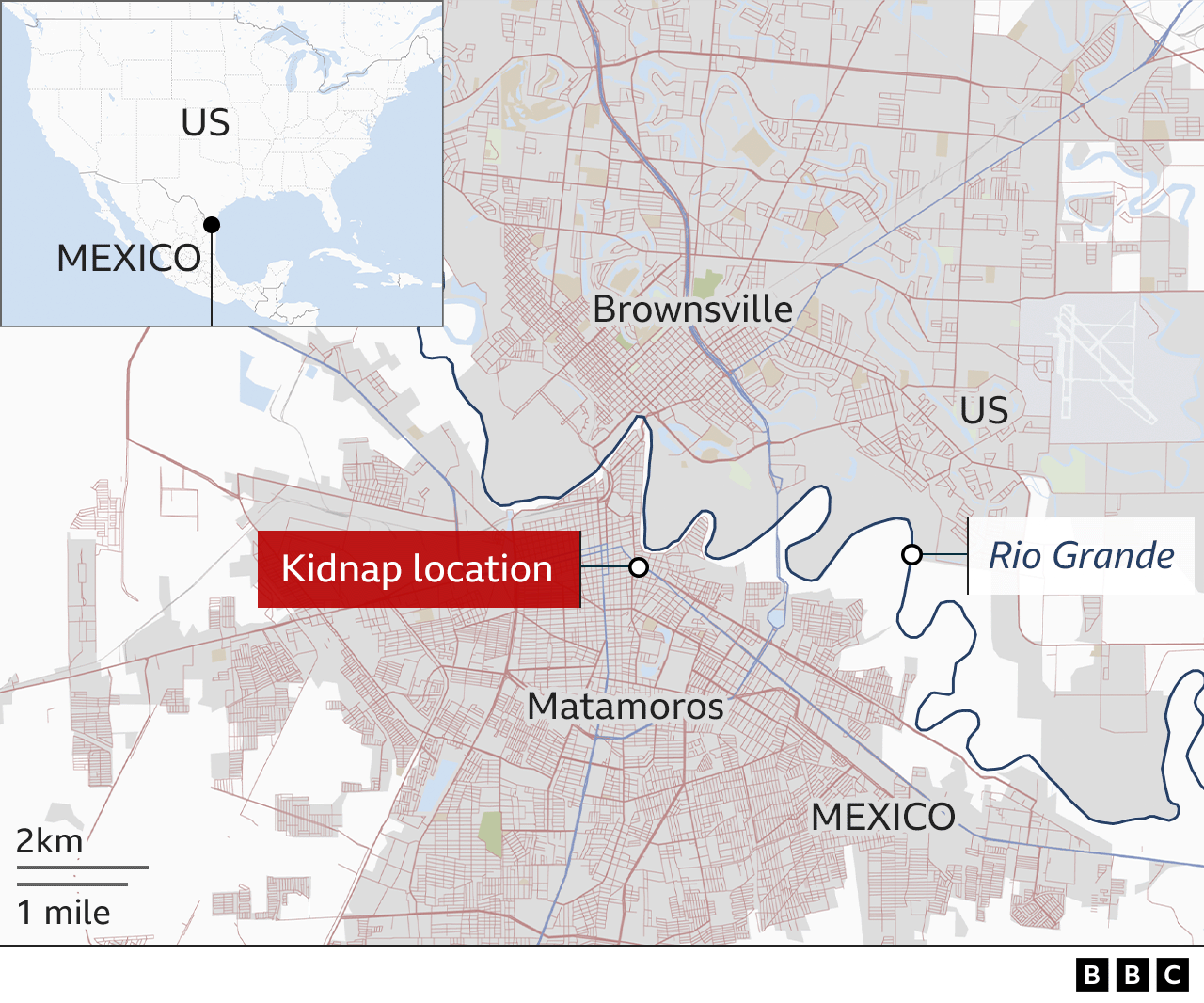
    Four US citizens were kidnapped by armed men on 3 March while driving into the city of Matamoros in the north-eastern state of Tamaulipas, Mexico, across the border from Texas.

    They had travelled there for cosmetic surgery, relatives told US media.

    One man, named only as José “N”, 24, from Tamaulipas, has been arrested.

    White House National Security Council spokesman John Kirby said: “We offer our deepest condolences to the friends and families of those who were killed in these attacks.”

    The two surviving victims were delivered to the US on Tuesday in co-operation with the US consulate in Matamoros, Tamaulipas Attorney General Irving Barrios Mojica said in a tweet.

    They were brought back under armed escort by a heavily armed convoy.

    The FBI later confirmed that two Americans were found dead and that the other two have been brought to American hospitals for treatment.

    “One of the surviving victims sustained serious injuries during the attack,” the FBI said.

    The statement added that the agency will work with international partners and other law enforcement agencies to “hold those responsible for this horrific and violent attack accountable for their crimes”. 

    The bodies of Zindell Brown and Shaeed Woodard have been recovered and are being repatriated, US officials said.

    Mexican President Andrés Manuel López Obrador said: “We are very sorry that this happened in our country and we send our condolences to the families of the victims, friends, and the United States government, and we will continue doing our work to guarantee peace and tranquillity.”

    The injured Americans were named by family members as Latavia “Tay” McGee, a mother of six from South Carolina, and Eric James Williams.

    The four were driving through Matamoros – a city of 500,000 located directly across the border from the Texas town of Brownsville – in a white minivan with North Carolina licence plates when unidentified gunmen opened fire, the FBI said this week.

    Video shows them being loaded into a pickup truck by heavily armed men. One is manhandled on to the vehicle while others appear to be unconscious and are dragged to the truck.

    A Mexican woman, believed to be a 33-year-old bystander more than one block away, was killed in last Friday’s incident.

    At a news conference later on Tuesday, Mexican officials confirmed a 24-year-old man had been arrested and that the four Americans were discovered at a wooden shack outside Matamoros.

    The victims had been transferred to various locations between the kidnapping on Friday and their discovery on Tuesday “to create confusion”, officials say.

    Map of the key locations in Matamoros, Mexico

    Investigators think the Gulf Cartel, one of the oldest organised crime groups in Mexico, is responsible for the attack, a US law enforcement source told CBS.

    It is still unclear whether the Americans were ambushed, mistaken for competing drug traffickers, or were caught in cross-fire between warring factions.

    US state department officials said on Tuesday that the investigation was still in the early stages.

    Ms McGee was said to be travelling to the Mexican border town to have a tummy tuck, a cosmetic surgery procedure to remove abdominal fat.

    Her mother Barbara Burgess told ABC News that she had asked her daughter not to go, but her daughter had reassured her she would be safe.

    The FBI offered a $50,000 (£42,000) reward for the return of the Americans.

    Matamoros is in Tamaulipas state, one of six Mexican states that the US state department advises travellers not to visit because of “crime and kidnapping”.

    Medical tourism is common, particularly among people living in US border states.

    But Matamoros is one of the most dangerous cities in the country, as drug cartels control large swathes of the state of Tamaulipas and can hold more power than local law enforcement.   

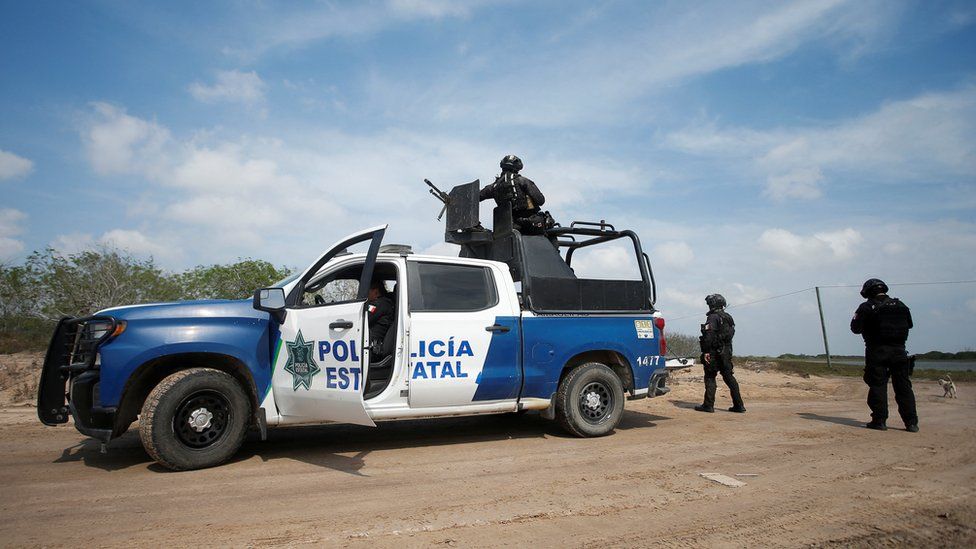
    State police officers keep watch at the scene where authorities found the bodies of two of four Americans kidnapped by gunmen, in Matamoros, Mexico, March 7, 202
    Image caption,State police kept watch at the scene where the bodies of two Americans were found

    Source: BBC

  • FIFA confirms USA, Mexico, Canada automatically in 2026 World Cup

    FIFA confirms USA, Mexico, Canada automatically in 2026 World Cup

    Automatic participation spots have been given to the three host countries.

    Along with Mexico and Canada, the men’s national team of the United States will automatically qualify for the 2026 World Cup.

    In a joint North American bid, the three nations were successful in winning the right to host the World Cup. Although this is the first time FIFA has had to reserve three host bids, FIFA has historically granted host nations the right to compete in the World Cup without first participating in the customary qualification competitions.

    The tournament is set to expand from 32 teams to 48 in 2026. Another three berths will be awarded to CONCACAF nations via qualifying.

    FIFA released a statement Tuesday saying, “In addition, the FIFA Council confirmed that, in line with the long-standing tradition of having all hosts competing at the FIFA World Cup, as well as sporting and operational considerations, the hosts of the FIFA World Cup 2026, namely Canada, Mexico and the USA, will qualify automatically for the final round of the competition, with their slots, therefore, being deducted from the overall allocation of six assigned to CONCACAF.”

    While the U.S. and Mexico tend to qualify for most World Cups, it was good news for Canada, whose men’s national team broke a 36-year drought between World Cup appearances when it qualified for Qatar in 2022. Canada lost all three of its group-stage matches.

    The FIFA Council also determined its timetable for bidding for the right to host the 2030 World Cup, saying it will make its decision next year.

    That meeting will be separate from FIFA’s meeting to select a host for the 2027 Women’s World Cup, which will be held first, earlier in 2024.

    There are three confirmed bids for 2030 hosting duties: a South American joint bid featuring Uruguay, Argentina, Paraguay and Chile; a Spain-Portugal joint bid that added war-torn Ukraine last year; and Morocco.

  • Wildfires in Chile could worsen due to a heatwave, authorities warn

    Wildfires in Chile could worsen due to a heatwave, authorities warn

    A country in South America is battling to put out dozens of burning fires that have already claimed the lives of at least 26 people.

    Authorities have warned that a heatwave is endangering more wildfires in Chile’s south-central region, where more than two dozen people have already perished as a result of the destructive blazes.

    The deputy interior minister, Manuel Monsalve, stated on Tuesday that high temperatures are predicted to last until Friday and may exceed 35 degrees Celsius (95 degrees Fahrenheit) in the central Maule and Nuble regions.

    “A very complex climate situation can arise,” said Monsalve, urging teams to be “prepared for any eventuality”.

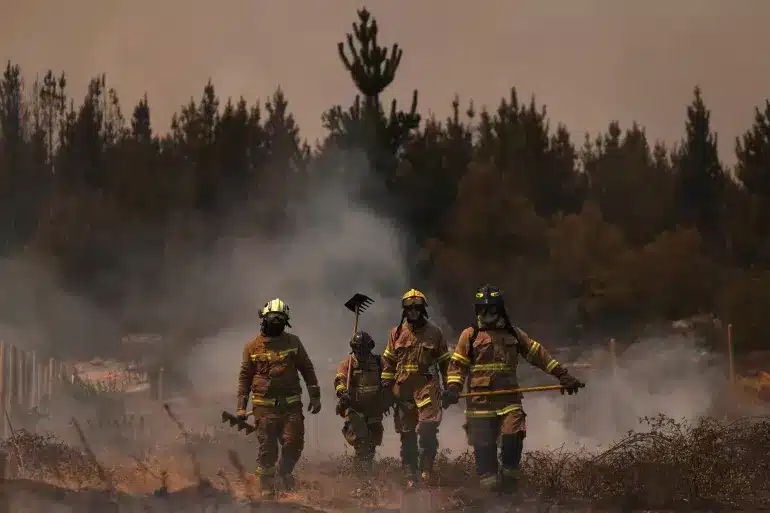
    Fires have ravaged more than 290,000 hectares (716,606 acres) across the South American nation so far, killing at least 26 people and destroying more than 1,000 houses, leaving thousands homeless.

    Approximately 5,600 firefighters, mostly volunteers, are actively battling 81 priority blazes countrywide out of 301 still burning, the AFP news agency reported, citing Chilean authorities.

    Air quality in the affected areas also has deteriorated significantly because of the smoke from the fires, said health minister Ximena Aguilera.

    Nearly 2,000 people have been injured in a week of blazes in the regions of Biobio, La Araucania and Nuble, where a state of emergency has been in place.

    Monsalve, the deputy interior minister, said on Tuesday that fire brigades from Colombia and Mexico were arriving to help.
    He added that 15 people had been arrested for possible links to starting the fires over activities including welding and burning animal wool.

    Meanwhile, Colombian President Gustavo Petro said on Twitter that his country was sending a firefighting brigade and cargo plane with two Bambi Buckets – used to help extinguish blazes from the air – to Chile.

    Spain, Mexico and other countries in Latin America also have said they would send firefighters and experts to help combat the fires.

    One of the local volunteers, Macarena Fernandez, a 31-year-old physical education teacher, described the situation in Chile’s Santa Juana region late last week as “intense”.

    “We did what we humanly could, what was within our means,” she told AFP.

    “The most difficult is to see the situation of people left without homes, without their family, without their animals and completely destitute.”

    But a week into the emergency, the government said some employers were calling on volunteers to return to their normal jobs.

    “The more days [of fire], the more we need the volunteers, the more tired they are and the more in need of help,” said interior minister Carolina Toha.

    Earlier this week, Chile’s President Gabriel Boric called for unity and resolve in response to the destruction left by the fires.

    “Unity to face the tragedy, unity to rebuild ourselves. That has been and will always be the path in the face of adversity in our Chile,” he wrote on Twitter on Monday.

    Officials in Chile have previously suggested that climate change was to blame for the rising temperatures and subsequent fires.

    Scientists have been warning that the climate crisis – fuelled by human activity, namely the emission of greenhouse gases – will lead to increased risks of natural disasters, including wildfires, droughts and hurricanes.

    “The evolution of climate change shows us again and again that this has a centrality and a capacity to cause an impact that we have to internalise much more,” Toha, the interior minister, said earlier this month.

    “Chile is one of the countries with the highest vulnerability to climate change and this isn’t theory but rather practical experience.”

  • Mexico’s seasoned dogs join Turkey’s rescue mission

    Mexico’s seasoned dogs join Turkey’s rescue mission

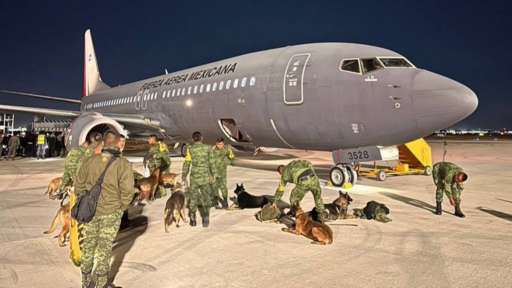
    A group of 16 search and rescue dogs from Mexico, an earthquake-prone nation, is set to travel to Turkey.

    When the dogs combed through the wreckage of the earthquake that devastated Mexico City and the surrounding areas in 2017, killing hundreds of people, the dogs won the hearts of the Mexican people.

    The most well-known of them, Frida, a golden lab wearing safety goggles and booties who saved 12 people throughout her career, passed away three months ago due to old age.

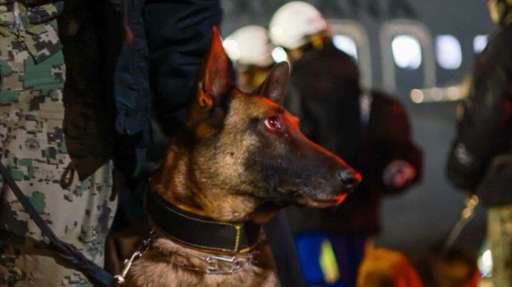
    However, some of the more seasoned dogs who worked with Frida in 2017 are now a part of the group, including Ecko.

    Ecko is part of the team flying to Turkey

    Mexico’s Foreign Minister Marcelo Ebrard tweeted photos of the canines lying on the tarmac just before take-off.

    Mexico’s deadliest earthquake happened in 1985, when at least 5,000 people were killed in the capital and its surroundings.

  • Mexico tightens its laws against smoking in public areas

    Mexico tightens its laws against smoking in public areas

    Mexico has implemented one of the strictest anti-tobacco laws in the world by outlawing smoking entirely in public areas.


    The action, which was initially authorized in 2021, also forbids tobacco advertising.

    Legislation banning smoking in public places has also been adopted in a number of other Latin American nations.

    But in the Americas, Mexico is thought to have the most comprehensive and robust legal system.

    It amounts to one of the most stringent anti-smoking laws in the world. Mexico’s existing 2008 law – which created smoke-free spaces in bars, restaurants and workplaces – is now extended to an outright ban in all public spaces. That includes parks, beaches, hotels, offices and restaurants.

    There will also be a total ban on the advertising, promotion and sponsorship of tobacco products, meaning that cigarettes cannot even be on show inside shops.

    Vapes and e-cigarettes are also subject to tighter new restrictions, particularly indoors.

    The Pan American Health Organisation has welcomed the step and applauded the Mexican government for implementing the ban.

    The organisation says that tobacco use is the single most preventable cause of death in the world, responsible for nearly a million deaths in the Americas each year, either through direct consumption or exposure to second-hand smoke.

    However, some smokers are dismayed at the draconian nature of the new law.

    In essence, it means that many will only be allowed to smoke in their homes or other private residences.

    Others have raised questions about the practicalities of enforcing the law.

    With police corruption so rampant in Mexico, many fear that rather than issuing real fines or punishments for smoking in public, some officers will use it as a pretext for taking bribes.

    Source: BBC.com
  • North American leaders to cooperate on semiconductors

    North American leaders to cooperate on semiconductors

    Going into ‘Three Amigos’ summit, the US, Canada, and Mexico will also pledge new cooperation on migration, climate change, and drugs, the White House says.

    The White House has announced a series of pledges made with Mexico and Canada ahead of the “Three Amigos” summit, and cooperation on bolstering the supply of semiconductors, a market currently dominated by Asia, topped the list.

    The announcement on Tuesday came hours before US President Joe Biden, Mexican President Andres Manuel Lopez Obrador and Canadian Prime Minister Justin Trudeau were to meet for the 10th North American Leaders Summit in Mexico City. It also included a new agreement on addressing climate change, an updated strategy for dealing with drug smuggling and modest new measures aimed at stemming the region’s worsening migrant crisis.

    Hours before Tuesday’s summit, Biden met one-on-one with Trudeau. On Monday, Biden and Lopez Obrador held talks, in which they discussed strengthening economic ties, fighting the illegal drug trade and reducing migration, the White House said.

    “This is a relationship which is a fraternal relationship of friendship between our two peoples,” Lopez Obrador said ahead of the meeting on Monday, striking a warm tone despite the left-wing leader’s generally cool approach to Mexico’s northern neighbours since taking office in 2018.

    After hailing Biden as a “humanistic president, a visionary president”, Lopez Obrador called on him to “turn away from this abandonment, this disdain and this forgetfulness for Latin America and the Caribbean”. He added that Biden holds the key to greater “economic, social integration” and a wider pivot away from a regional reliance on Asian manufacturing.

    Biden, meanwhile, said the duo would address “strengthening our supply chains” while stressing the need to combat fentanyl smuggling, which has fuelled an addiction crisis in the US, and an increase in migrants and asylum seekers crossing the US-Mexico boder. Both are politically fraught issues in the US.

    In turn, the US leader also pointed to the billions of dollars that Washington spends in foreign aid around the world, saying that “unfortunately, our responsibility just doesn’t end in the Western Hemisphere.”

    In joint statements before their bilateral meeting, Trudeau and Biden also said the North American leaders will also focus on efforts to stabilise crisis-hit Haiti during the meeting.

    “As we talk about issues, whether it’s Haiti, whether it’s some of the challenges in South America, whether we talk about critical minerals and energy, and how we’re going to move forward to create those efficient and resilient supply chains that we need, there’s a lot that we’re going to be able to do together,” Trudeau said.

    Pledges on semiconductors, drug smuggling, migration

    Among the early joint pledges announced by the White House on Tuesday was an agreement to hold a “first-ever trilateral semiconductor forum”, aimed at strengthening investment in the semiconductor supply chain.

    Semiconductors are used in nearly all forms of modern technology and computing. The strategically significant industry has emerged as a top economic and security priority for all three countries due to supply-chain shortages in recent years that have stoked concerns of an over-reliance on Asia.

    The three countries also pledged to adopt an “updated strategic framework” to address threats posed by illegal drug trafficking, including, among other measures, “increased information sharing” on the chemicals used to make fentanyl and other synthetic drugs.

    On migration, the trio announced only modest pledges aimed at building on previous development agreements and increasing the availability of information for migrants and asylum seekers.

    Those agreements were made after Lopez Obrador signalled on Monday that he was open to considering accepting more migrants and asylum seekers from Cuba, Nicaragua, Haiti and Venezuela who are expelled by the US. It now takes in 30,000 a month under a previous agreement with the Biden administration. US officials later said no increase had been agreed to.

    Human rights groups have criticised the US policy for expelling asylum seekers who attempt to cross the border without offering them the opportunity to seek protection and instead sending them to an unfamiliar country. In return, under the Biden administration policy, 30,000 people per month from those four nations are eligible to work legally in the US for two years, granted they have sponsorship, pass background checks and take an airline flight to the country.

    On climate change, the trio committed to reducing methane emissions from solid waste and wastewater by at least 15 percent from 2020 levels by 2030, the White House said.

    The North American Leaders Summit is the second to be held since Biden took office in 2021 and resumed the gatherings, which were discontinued for four years under former President Donald Trump.

    After the 2021 meeting in Washington, DC, the leaders hailed their reinvigorated partnership.

    Still, relations have continued to chafe in some areas, notably over Mexico’s decision to give control of the country’s energy market to cash-strapped state energy companies, which Ottawa and Washington say undermines the United States-Mexico-Canada Agreement trade deal. Mexico and Canada have also voiced concerns over Biden administration policies that encourage the use of domestic manufacturers for public infrastructure projects.

    Biden is the first US president to travel to Mexico since former President Barack Obama made the trip in 2014.

    Source: Aljazeera.com

  • The Three Amigos and the US war on asylum seekers in Mexico

    The Three Amigos and the US war on asylum seekers in Mexico

    For decades, Mexican leaders have promised more humane migration policies, only to wage a brutal war on migrants on behalf of the US.

    For his first international foray of 2023, United States President Joe Biden has swung down to Mexico City to attend the latest iteration of the North American Leaders’ Summit, charmingly dubbed the “Three Amigos Summit”.

    The meeting is kicking off on January 9 with a bilateral encounter between Biden and Mexican President Andrés Manuel López Obrador, also known as AMLO. The third “amigo” is Canadian Prime Minister Justin Trudeau.

    One major topic for friendly discussion between Biden and AMLO will inevitably be migration, as the US continues to battle a “migrant crisis” of unprecedented proportions – a crisis that would hardly be so critical if the US simply refrained from messing up other people’s countries in the first place.

    As of the end of the fiscal year on September 30, 2022, there had been no fewer than 2.38 million apprehensions of undocumented people on the US-Mexico border, an increase of 37 percent from the previous year. Between September 2021 and June 2022, meanwhile, Mexico detained a record 345,584 people transiting its territory, most of them en route to the US.

    As the long-dead Mexican dictator Porfirio Díaz is said to have once observed: “Poor Mexico, so far from God, so close to the United States” – a proximity that in recent decades has meant that Mexico gets to perform the anti-migrant dirty work of its northern neighbour, self-appointed proprietor of the world’s number-one Very Important Border.

    In 2021, I had the opportunity to witness just how dirty this work can be in Tapachula, the notorious “jail-city” in the Mexican state of Chiapas near the border with Guatemala which effectively serves as a trap for countless northbound asylum seekers from Central and South America as well as Asia and Africa. I was detained for one night in Tapachula’s Siglo XXI, Mexico’s largest immigration detention centre whose name means “21st century” in Spanish.

    At the inauguration of the prison in 2006, then-Mexican President (and former Coca-Cola Mexico CEO) Vicente Fox had assured everyone that detainees would enjoy “all the comforts” – including human rights – in keeping with Mexico’s “humanist policy” vis-à-vis undocumented people on the move.

    Fifteen years later, I got to experience firsthand the “comforts” of Siglo XXI for visa-related transgressions – the subject of my new book, Inside Siglo XXI. Needless to say, this is not something that normally happens to US citizens; a friend in Tapachula would later refer to me as the “gringa collateral damage” of imperial anti-migrant policy. My bags were confiscated at the door and affixed with premade printed tags, on which the word “CONGO” was crossed out in purple marker and replaced with “ESTADOS UNIDOS” (United States).

    Inside the prison, the only real comforts were the compassion and solidarity exhibited by my fellow detainees, who unlike me had undergone arduous and often traumatising journeys to reach Mexico and were now only being further traumatised. There is a good reason that journalists are not allowed inside the overcrowded, abuse-ridden complex – except when, as in my case, they accidentally are.

    AMLO, who before assuming office in 2018 had promised a more humane approach to migration, has been only too eager to go back on his word in order to kiss the gringos’ derriere, even while pretending that what he is really doing is upholding Mexican national sovereignty. In spite of his ostensibly left-wing orientation, AMLO managed to be pretty good amigos with Biden’s predecessor Donald Trump – a right-wing tyrant and source of the idea that Mexicans are drug dealers, criminals, and rapists.

    In his book A la mitad del camino (Halfway There), the self-declaredly “post-neoliberal” AMLO jubilantly recalls his July 2020 summoning to Washington by the “gentleman” Trump for the signing of the US-Mexico-Canada Agreement (USMCA), otherwise known as NAFTA 2.0 and the updated version of neoliberal punishment of Mexico under the guise of free trade.

    As journalist Garry Leech has pointed out in the book Asylum for Sale: Profit and Protest in the Migration Industry, the USMCA might “be more accurately called the United States Migrant Control Agreement”, thwarting as it does the free movement of Mexican and other labourers across borders while rolling out the red carpet for corporate capital.

    Recounting his excursion to Washington, AMLO proposes a preposterous revision of that old phrase from Porfirio Díaz: “Blessed Mexico, so close to God and not so far from the United States”. He also pats himself on the back for reducing the movement of people trying to cross into the US by 75 percent over three months in 2019 after Trump had threatened to impose tariffs on Mexican imports (how is that for free trade?).

    And Biden has only made it more fun to be “not so far from the United States”. In April 2021, White House press secretary Jen Psaki reported that, thanks to bilateral discussions, the Mexican government had “made the decision to maintain 10,000 troops at its southern border, resulting in twice as many daily migrant interdictions”.

    Indeed, under AMLO, migration policy in Mexico has undergone unprecedented militarisation. Mexico’s National Migration Institute (INM) has been increasingly populated with current and former members of the armed forces, notwithstanding the military’s track record of torture and extrajudicial killings.

    Behind all the dehumanised talk of “border security” and “interdictions”, of course, is the fact that this is an all-out war on extremely vulnerable people criminalised for their vulnerability.

    The casualties of this war on migrants include a young Honduran woman named Kimberly, whom I met in Siglo XXI and who had fled Honduras after her two sisters were killed. They include the countless asylum seekers who have disappeared while transiting Mexico towards perceived safety. They include those subjected to a novel experiment in 2021, which entailed being flown from northern to southern Mexico and then expelled into the Guatemalan jungle.

    In the end, this is not Mexico’s war. But by taking migration enforcement orders from the US and replicating the brutality of a US border security regime, Mexico is reinforcing a militarised US border that discriminates against Mexicans themselves – who regularly risk their own lives to cross it.

    Whatever else happens at the Three Amigos Summit, Porfirio Díaz was right about one thing: the US is a terrible amigo.

    DISCLAIMER: Independentghana.com will not be liable for any inaccuracies contained in this article. The views expressed in the article are solely those of the author’s, and do not reflect those of The Independent Ghana

  • Biden visits US-Mexico border for the first time since assuming office

    Biden visits US-Mexico border for the first time since assuming office

    The trip came after the announcement of a new immigration policy that rights groups say could endanger the lives of asylum seekers.

    US President Joe Biden visited the US-Mexico border for the first time since taking office in January 2022.

    The hours-long visit on Sunday followed the Biden administration’s recently announced policy initiative to address an increase in undocumented border crossings.

    The politically charged issue has dogged the Democratic president since he took office, with Republican critics accusing the administration of being too lenient and rights groups alleging that the newly announced measures will endanger the lives of asylum seekers.

    The stop in the city of El Paso, Texas, took place as Biden travelled to Mexico, where he is set to meet President Andres Manuel Lopez Obrador on Monday before attending a three-way summit with Canadian Prime Minister Justin Trudeau the following day in Mexico City.

    “They need a lot of resources. We’re going to get it for them,” Biden told reporters in Texas, where he met border agents at the Bridge of the Americas, which connects El Paso to the Mexican city of Ciudad Juarez, and is one of the busiest ports of entry between the two countries.

    During the visit, Biden watched as border officers in El Paso demonstrated how they search vehicles for drugs, money and other contraband. He later inspected a section of the tall fencing along the border between El Paso and Ciudad Juarez.

    Meanwhile, in a sign of the deep political tensions over immigration, Republican Governor Greg Abbott handed Biden a letter on his arrival that said the alleged “chaos” at the border was the “direct result” of the president’s failure to enforce federal laws.

    Controversial asylum policies

    Last week, the Biden administration unveiled new immigration rules it anticipates will “substantially reduce” the number of people seeking to cross the southern border, Biden told reporters at the time.

    The rules create a new programme that allows a legal pathway for as many as 30,000 Cuban, Haitian, Nicaraguan and Venezuelan nationals to enter the US a month and receive two-year work permits, provided they have sponsors in the US and pass background checks.

    In turn, the policy allows US authorities to expel to Mexico residents of those four countries who irregularly cross the border and bar them from accessing the programme. Mexico has agreed to accept 30,000 expelled residents of the four countries in a month, according to the administration.

    Rights groups say the policy is harmful to individuals who have no other choice but to irregularly cross the border to seek asylum. They charge the new policy is an extension of the former President Donald Trump-era Title 42, which allows authorities to rapidly expel adult asylum seekers crossing the border, citing COVID-19 health concerns.

    After a lengthy court battle, a US federal judge in November ordered Title 42 be lifted, but the US Supreme Court late last month agreed to consider whether Republican-led states can challenge the end of the policy, leaving it in place for the time being.

    In the wake of last week’s announcement, Heidi Altman, policy director at the National Immigrant Justice Center, accused the Biden administration of “openly rejecting” US law, which “clearly says it is legal to arrive at the border & seek asylum”.

    On board Air Force One on Sunday, Homeland Security Secretary Alejandro Mayorkas told reporters that the administration was trying to “incentivise a safe and orderly way and cut out the smuggling organisations”.

    He said the policy was “not a ban at all”, but an attempt to protect migrants and refugees from the trauma smuggling can create.

    Drugs, economy top Mexico visit

    Following the border visit, Biden was set to continue on to Mexico, where the increase in crossings, as well as efforts to fight the trafficking of fentanyl and other drugs that have fuelled a deadly addiction crisis in the US, were set to top the agenda of the bilateral meeting with Lopez Obrador.

    On Saturday, National Security Council spokesperson John Kirby said Washington was “making strides” with its partners to seize illicit opioids and other drugs, calling it an “ongoing effort”.

    Mexico has long been plagued by cartel-related bloodshed that has seen more than 340,000 people murdered since the government deployed the military in its war on drugs in 2006. On the campaign trail, Lopez Obrador promised to move away from the militarised approach, but critics say he has made only superficial changes. Still, he has said that Mexico City is seeking investment in regional economic development from Washington.

    Days before Biden’s visit, Mexican security forces captured a son of notorious drug kingpin Joaquin “El Chapo” Guzman, who is serving a life sentence in the US.

    On Tuesday, efforts to strengthen economic ties are set to dominate a trilateral summit of the leaders of the US, Mexico, and Canada.

    The meeting comes amid an ongoing Mexican energy dispute with the US and Canada, with Washington and Ottawa arguing that Lopez Obrador’s efforts to give control of the market to his cash-strapped state energy companies breach the United States-Mexico-Canada (USMCA) trade deal.

    The US and Canada have launched dispute resolution proceedings against Mexico, casting a pall over hopes of supporting cooperation in jobs and investment.

    Source: Aljazeera.com
  • Extradition of ‘El Chapo’ son to the US halted after 29 killed in arrest operation

    Extradition of ‘El Chapo’ son to the US halted after 29 killed in arrest operation

    A Mexico City federal judge halted the extradition of Joaquin “El Chapo” Guzmán’s son, alleged drug cartel leader Ovidio Guzmán, to the United States on Friday, a day after he was arrested in an intense operation in northern Mexico that led to the deaths of 29 people.

    The US is seeking Guzmán’s extradition for drug trafficking and has offered up to $5 million for information leading to the capture of the man they say is “a senior member of the Sinaloa Cartel.”

    On Thursday, Mexico’s Foreign Minister Marcelo Ebrard confirmed that there is an arrest warrant in the US dated September 19, 2019, but said the possible extradition of Guzmán would not be immediate due to the formalities of the law. He also stated that Guzmán has ongoing legal proceedings in Mexico.

    According to the Televisa network and other Mexican media, another federal judge later ordered Guzmán to stay in 60 days of preventive detention for the purpose of extradition after a hearing at the Altiplano maximum security federal prison where he is being held.

    CNN has requested a response from Guzmán’s defense but has not yet heard back.

    Guzmán’s father, “El Chapo,” had escaped from Altiplano prison on July 11, 2015 through a mile-long tunnel that featured a motorcycle on tracks. He was later captured and convicted in the US four years later of 10 counts, including engaging in a continuing criminal enterprise, drug trafficking and firearms charges. He was sentenced to life in prison plus 30 years and ordered to pay $12.6 billion in forfeiture.

    Ad Feedback

    Ovidio Guzmán was previously arrested by federal authorities in October 2019, but was released on the orders of President Andrés Manuel López Obrador to avoid further bloodshed.

    His latest arrest comes days before US President Joe Biden and Canadian Prime Minister Justin Trudeau visit Mexico City to attend the North American Leaders Summit.

    Capturing Guzmán could be a way for López Obrador to show the US that he is “in control of the armed forces and Mexico’s security situation,” Gladys McCormick, a associate professor at Syracuse University who focuses on Mexico-US relations, told CNN in an email.

    “It also defuses the power behind any ask from the Biden administration to stem the tide of fentanyl and other narcotics across the border,” she added.

    At a news conference Friday, López Obrador denied that Guzmán’s arrest was linked to Biden’s arrival, saying Mexican authorities had acted autonomously.

    “About interpretations, there are a lot of them, we do not share them, we acted with autonomy,” the Mexican President said.

    Violent aftermath

    After Guzmán’s arrest in Culiacán on Thursday, chaos erupted in the city. The authorities asked citizens to seek refuge due to clashes in several areas.

    His arrest was the result of a lengthy operation which involved 200 special forces, Defense Minister Luis Cresencio Sandoval said Friday. Local officials urged citizens to shelter at home amid clashes with cartel members in various parts of the city.

    Guzmán was previously arrested in October 2019 but was freed on the orders of President Andrés Manuel López Obrador to avoid further bloodshed.

    Guzmán was previously arrested in October 2019 but was freed on the orders of President Andrés Manuel López Obrador to avoid further bloodshed.Cepropie/AP

    At least 19 suspected gang members and 10 military personnel died during violent clashes in the northern Mexican state of Sinaloa, after authorities arrested Guzmán, along with 21 others. No civilian deaths or injuries were reported.

    Security at Altiplano prison has been increased since Guzmán was detained, the minister added.

    The President said later on Friday that the city was calmer and officials were working to clear the roads.

    “In Culiacán, we opened all the blocked roads and we are working on removing the vehicles that are alongside the streets,”López Obrador said.

    The state of Sinaloa, where Culiacán is located, is home to one of the world’s most powerful narcotics trafficking organizations, the Sinaloa Cartel, of which “El Chapo” was the leader.

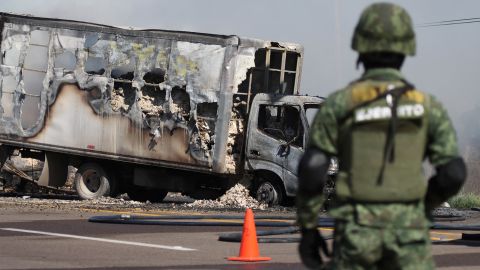
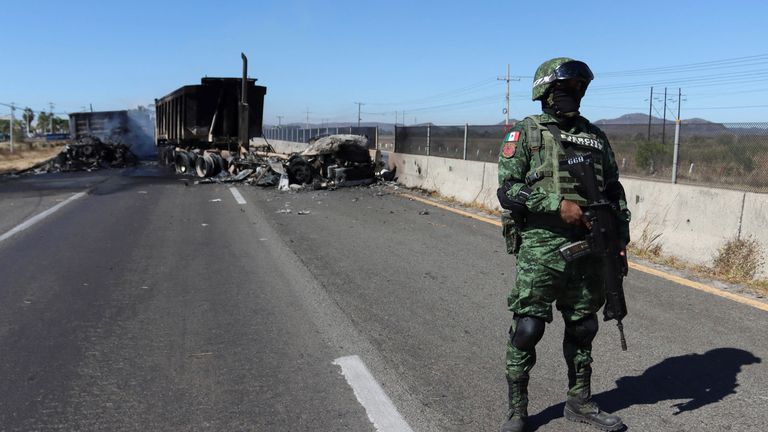
    A soldier keeps watch near the wreckage of a truck set on fire by drug gang members in Sinaloa, following Guzmán's detention by Mexican authorities.

    A soldier keeps watch near the wreckage of a truck set on fire by drug gang members in Sinaloa, following Guzmán’s detention by Mexican authorities.Reuters

    The US State Department wrote that law enforcement investigations indicated that Guzmán and his brother, Joaquín Guzmán-López, “inherited a great deal of the narcotics proceeds” following the death of another brother, Edgar Guzmán-López.

    They “began investing large amounts of the cash into the purchasing of marijuana in Mexico and cocaine in Colombia. They also began purchasing large amounts of ephedrine from Argentina and arranged for the smuggling of the product into Mexico as they began to experiment with methamphetamine production,” the State Department said.

    The brothers are also alleged to oversee an estimated 11 “methamphetamine labs in the state of Sinaloa,” the State Department says.

    Source: Ghanaweb

  • Drug Lord ‘El Chapo’s’ son arrested in Mexico as city of Culiacan descends into heavy fighting

    Drug Lord ‘El Chapo’s’ son arrested in Mexico as city of Culiacan descends into heavy fighting

    After security forces apprehended Ovidio Guzman, one of Joaquin “El Chapo” Guzman’s sons, social media footage appeared to show heavy fighting across the city of Culiacan. An attempt to arrest him three years ago resulted in humiliation for Mexico’s president.

    Gunfights erupted in Mexico’s Sinaloa state capital after security forces apprehended one of Joaquin “El Chapo” Guzman’s sons, who is wanted by the US on drug trafficking charges.

    Army and National Guard personnel captured 32-year-old Ovidio Guzman in a pre-dawn operation in Culiacan, according to Defense Secretary Luis Cresencio Sandoval.

    Three years ago, an attempt to arrest Ovidio ended in humiliation for the government when President Andrew Manuel Lopez Obrador ordered the military to let him go after gunmen shot up the city with high-powered weapons.

    Ovidio Guzman pictured during his failed arrest in 2019. Pic: AP
    Image:Ovidio Guzman during his failed arrest in 2019. Pic: AP

    This time local and state officials in Sinaloa warned residents to stay inside, suspended local government activities and closed schools, while the Mexican military closed Culiacan’s airport amid gunfire.

    Mexican airline Aeromexico said one of its planes had been hit by gunfire ahead of a scheduled flight to Mexico City, though no one was hurt.

    Passenger videos posted online showed people cowering on the floor of the plane as shooting could be heard in the background.

    David Tellez, a passenger who captured video of people crouching on the plane after hearing gunshots, was travelling with his wife and three children after visiting his in-laws.

    Mr Tellez, whose daughter can be heard crying in the video he captured, told Sky News: “While on the plane ready to take off I saw planes from the army land and then five seconds before take-off I heard gunshots and everybody got to the ground and the pilot returned the plane to the terminal.

    “Then I found out the plane had been shot. We are scared to leave the airport because the city is on fire and many roads are blocked so we plan to sleep here.”

    Mr Tellez said when he was checking in he was told by airport staff to take shelter in a toilet but then they were told it was okay to fly.

    Other clips appear to show heavy fighting across the city as the sky was lit up by helicopter gunfire.

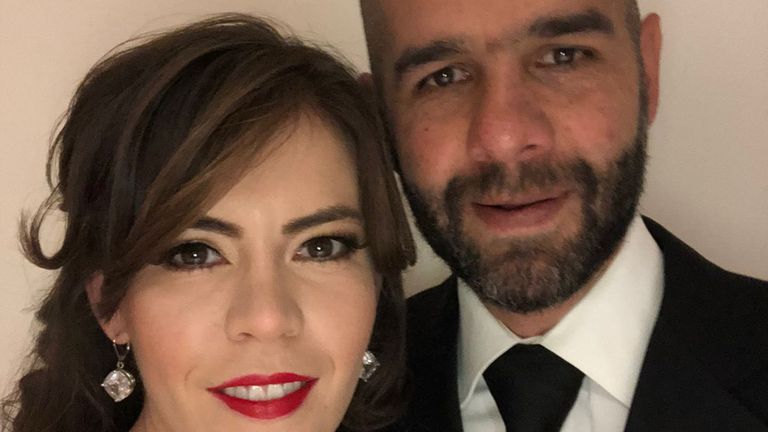
    David Tellez and his wife Tricia
    Image:David Tellez and his wife Tricia

    Ovidio’s capture comes ahead of Mr Lopez Obrador hosting a North American leaders’ summit in Mexico City next week, in which US President Joe Biden is expected to want to discuss drug trafficking.

    “This is a significant blow to the Sinaloa cartel and major victory for the rule of law,” said Mike Vigil, the DEA’s former chief of international operations.

    “It will not, however, impede the flow of drugs into the US. Hopefully, Mexico will extradite him to the US.”

    Six months of surveillance in cartel territory

    Ovidio’s capture was the result of six months of reconnaissance and surveillance in cartel territory, Mr Sandoval said.

    National Guard troops spotted SUVs, some with homemade armour, and immediately coordinated with the army as they established a perimeter around the suspicious vehicles and forced the occupants out in order to search them.

    The security forces then came under fire but were able to gain control of the situation and identify Ovidio among those present and in possession of firearms, Mr Sandoval said.

    Cartel members set up 19 roadblocks covering all point of access to the city of Culiacan, including Culiacan’s airport and outside the local army base.

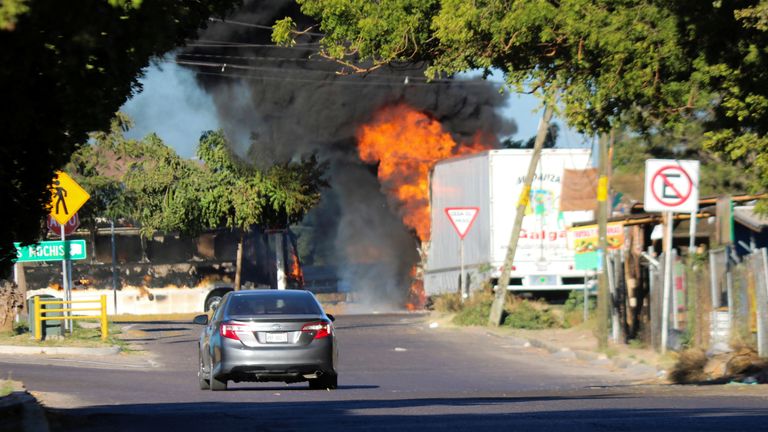
    Vehicles and buses were set on fire by members of a drug gang
    Image:Vehicles and buses were set on fire by members of a drugs gang

    A leader of ‘the juniors’ faction

    Mr Sandoval said Ovidio was a leader of a Sinaloa faction he called “los menores” or “the juniors”, who are also known as “los Chapitos” or “the little Chapos”.

    The other “little Chapos” are two of his brothers, Ivan Archivaldo Guzman and Jesus Alfredo Guzman, who are believed to have been running cartel operations with Ismael “El Mayo” Zambada.

    Mr Vigil said the Chapitos have been taking greater control of the cartel because Zambada was in poor health and isolated in the mountains.

    “The Chapitos know that if El Mayo dies, (the cartel) is going to break apart if they don’t have control,” he said.

    “It’s going to be very important that the US requests Ovidio’s extradition quickly and that Mexico does it.”

    A soldier keeps watch near the wreckage of a burnt vehicle set on fire by members of a drug gang as a barricade
    Image:A soldier keeps watch near the wreckage of a burnt vehicle set on fire by members of a drugs gang as a barricade

    US offered $5m reward

    A 2018 federal indictment in Washington DC accused Ovidio of conspiring to distribute cocaine, methamphetamine and cannabis in the US.

    The US has offered a $5m (£4m) reward for information leading to the arrest or conviction of Ovidio, who has become a key figure in the cartel since his father’s arrest.

    It is unclear whether Ovidio will be extradited to the US like his father, who is serving a life sentence at Colorado’s Supermax prison.

    Source: Skynews.com

  • Mexico prison break: Pursuit of fugitives turns deadly

    Mexico prison break: Pursuit of fugitives turns deadly

    In Mexico, a shootout has claimed at least seven lives as authorities look for 30 prisoners who staged a bloody prison break on Sunday.

    At least two state investigators were killed when gunmen opened fire on them as they searched for the fugitives.

    Although it is still unclear if any of the escapees were among those killed, five gunmen also perished in the shoot-out.

    The Sinaloa cartel is suspected of being behind the violence, along with the Los Mexicles gang.

    Sunday’s prison break in Ciudad Juárez was one of the deadliest in recent times, leaving 10 guards and seven inmates dead.

    Suspected members of Los Mexicles took advantage of the busy visiting hours on Sunday morning as relatives flocked to the jail to wish their loved ones a happy new year.

    They arrived in several armoured cars and opened fire on the guards at the entrance, according to local media.

    At the same time, inmates set mattresses alight inside their cells to create confusion and distract the guards.

    At first, officials said two dozen inmates had escaped, but the head of the state prison system has since announced that the number was “at least 30.”

    Among those who escaped is the leader of Los Mexicles, Ernesto Piñón de la Cruz, also known as El Neto.

    El Neto, 33, has been in prison for 14 years serving a sentence for kidnapping and murder. An attempt by his gang to free him during a prison transfer in 2010 failed and he was injured.

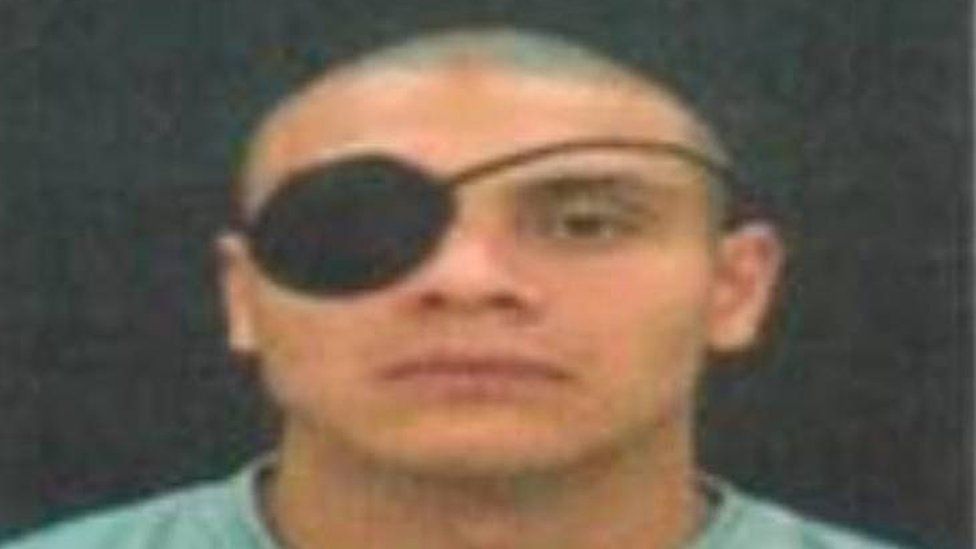
    Mugshot of Ernesto Piñon de la Cruz
    Image caption,El Neto began his criminal career as a teenager, kidnapping locals for ransom

    He appears to have wielded enormous power from behind bars, where he enjoyed a more luxurious life than less well-connected prisoners.

    Mexico’s defence minister said 10 “VIP cells” had been “discovered” during a search of the jail.

    El Neto’s cell boasted a jacuzzi, a plasma TV and a safe containing 1.7m pesos ($87,000; £73,000).

    Police also found 16kg of marijuana, 4kg of crystal meth and 1.5kg of heroin, as well as several weapons.

    Guns and bullets are seen in front of the Cereso state prison number 3 secured by the security Forces after unknown assailants entered the prison and freed several inmates, resulting in injuries and deaths, according to local media, in Ciudad Juarez, Mexico January 1, 2023.
    Image caption,Police managed to secure some of the weapons used in the prison break

    Federal officials say the state of Chihuahua, in which the prison is located, is to blame for the lack of oversight, while Chihuahua officials say their requests to have El Neto moved to a federal institution with higher levels of security have been turned down.

    Residents of Ciudad Juárez told local media they were terrified after the breakout, as El Neto is believed to have been behind a wave of killings in August 2022 known as “Black Thursday,” in which 10 people without any links to criminal gangs were killed across the city.

    Police are carrying out checks at nearby airports and on main highways to try and prevent him and his fellow escapees from leaving the state.

    Source: BBC.com
  • You have 72 hours to leave: Mexican ambassador to Peruvian President Pedro Castillo as spat deepens

    Peru has ordered the Mexican ambassador to leave within 72 hours after Mexico granted asylum to the family of ousted Peruvian President Pedro Castillo.

    Castillo attempted to dissolve Congress, which led to his removal from office earlier this month.

    On suspicion of rebellion and conspiracy, he is being looked into in Peru.

    However, Mexico has backed the deposed president and initially indicated that it was thinking about giving him asylum.

    President of Mexico Andrés Manuel López Obrador referred to Mr. Castillo’s removal as being undemocratic.

    The government of Mexico, according to Foreign Minister Marcelo Ebrard, is negotiating a safe exit for Mr. Castillo’s family, who are currently lodged in the Mexican embassy in Lima, the capital of Peru.

    Mexican Foreign Minister Marcelo Ebrard said on Tuesday the government was negotiating safe passage for the family of Mr Castillo, who were inside Mexico’s embassy in the Peruvian capital Lima.

    His Peruvian counterpart, Ana Cecilia Gervasi, said safe passage had been granted.

    But Mexico’s decision to grant asylum caused further anger in Peru, and Mexican Ambassador Pablo Monroy has now been declared “persona non grata” by the government.

    Peru’s foreign ministry said in its social media accounts that it was expelling Mr Monroy because “of the repeated statements by that country’s highest authorities about the political situation in Peru”.

    Peruvian opposition legislator Maria del Carmen Alva accused Mexico of “sheltering the corrupt”.

    Mr Castillo, who is in custody in Peru, was removed from office after he tried to dissolve Congress.

    Facing an impeachment vote, Mr Castillo had announced he was dissolving the opposition-controlled legislative body.

    But Congress defied him, voted overwhelmingly to remove him from office, and his bodyguards stopped him from seeking refuge at the Mexican embassy in Lima.

    Just hours later, Congress swore in his vice-president, 60-year-old Dina Boluarte, as the new president.

    She has been pushing for early elections, and they edged closer on Tuesday as lawmakers voted in favour of the proposals.

    This would bring elections forward to April 2024, two years ahead of elections currently scheduled for 2026.

    There have been violent protests in which demonstrators have called for fresh general elections. Supporters of Mr Castillo have also taken to the streets to demand his release.


  • Mexico and the unbearable whiteness of advertising

    From beers to cars to supermarkets, Mexico and other postcolonial societies are grappling with a whiteness epidemic.

    Scrolling through Facebook recently on my phone in Mexico, I came upon an advertisement informing me in Spanish: “The moment has arrived to renew yourself.” A company based in the northern Mexican state of Nuevo León offered to loan me up to 250,000 pesos — more than $12,000 — to pursue the plastic surgery of my choice. An image of a bikini-clad white woman with blond hair provided additional encouragement.

    A perusal of the company’s Facebook page revealed that she was not the only white person selected to promote these surgically focused financial services. In fact, not a single non-white person had been chosen to embody “renewal”. This in a country where the vast majority of people are not white, and where a soaring national poverty rate — nearly 44 percent at the end of 2020 — means most folks could never afford a $12,000 loan.

    And yet the Nuevo León firm is scarcely alone in its extra-white marketing approach. Generally speaking, the chromatic composition of Mexican advertising exists in glaring defiance of the physical diversity of Mexico’s primarily mestizo (mixed heritage) and Indigenous population. As is the case elsewhere in Latin America and in other countries subjected to European colonial depredations, the Spanish colonial legacy in Mexico has meant that lighter skin is associated with societal superiority and economic advantage. And what is the point of advertising if not to make people want to be something “better” than they are?

    Nowadays in Mexico, the citizen-consumer is bombarded with advertising images that blatantly illustrate the overlap of racism and classism in the social hierarchy. From beer and car companies to department stores and supermarket chains, the whiteness of ads has become a sort of sinister elephant in the room, urging poor Mexicans to spend their way out of socioeconomic misery into an impossibly whiter future.

    As social anthropologist Juris Tipa notes in a 2020 peer-reviewed paper on “colourism” in Mexican advertising, the overwhelmingly dominant casting profile requested by firms for commercial advertisements is “international Latino” — which basically translates into someone with light skin, dark hair, and dark eyes, “reinforcing the imagery of a ‘Europeanised Latin Americanity’” at the expense of the average Mexican.

    Meanwhile, the Afro-Mexican population — which is more than 2.5 million strong — is effectively rendered invisible by the commercial advertising landscape, as Juris observes. In contributing to the perpetuation of a vicious cycle of colourist discrimination, advertising firms and their clients have helped maintain a colonial “pigmentocracy” in Mexico.

    Sometimes, the Mexican advertising industry gets publicly called out for its racist shenanigans — like in 2018 when an ad campaign for Indio beer featured a bunch of fair-skinned Mexicans sporting t-shirts on which the phrase “pinche indio” (“f****** Indian”, a prevalent insult in Mexico) was partially crossed out and replaced with “orgullosamente indio” or “proudly Indian”. According to the minds behind the campaign, its objective was to raise awareness of discrimination in the country — something that is clearly best achieved by having white people appropriate Indigenous identity.

    When I asked a middle-aged Mexican man — a descendant of Totonac people from the state of Veracruz — what he made of the faux wokeness of the whole Indio campaign, he shrugged and reckoned it was no worse than the ads from decades past for Mexico’s Superior beer brand, which had involved frolicking blond women, the US actress Farrah Fawcett, and the slogan “la rubia que todos quieren,” or “the blond that everyone wants”.

    Of course, the unbearable whiteness of advertising is hardly confined to Mexico. Travelling by bus years ago through Peru, I recall questioning the logic behind populating highway billboards with Scandinavian-type models in a country where the majority of humans are brown.

    From soda advertisements in El Salvador to laundry detergent ads in Colombia to the “Elite” toilet paper brand found throughout Latin America, the consensus appears to be that whiteness sells — a result, in part, of the superior societal value placed on white skin.

    On the other side of the world, too, colonial legacies of racist colourism die hard. In West Africa in 2017, the German company Nivea came under fire for promoting a cream that promised “visibly fairer skin”. That same year, Nivea was forced to pull a deodorant ad proclaiming “White Is Purity”. Naturally, the company is still making bank five years later. Welcome to capitalism.

    Speaking of capitalism, University of Hawaii professor L Ayu Saraswati, whose essay on “shaming the colour of beauty” in Indonesia was published in 2012 in the scholarly journal Feminist Studies, documents how transnational corporations like Unilever and L’Oreal have “aggressively marketed their skin-whitening creams throughout Asia, Africa, Europe, and the United States”. And while this may be business as usual in the globalised era, it also constitutes corporate complicity in the normalisation of racism.

    Unilever is the parent company of Dove, the US soap brand that had its own “oops” marketing moment in 2017 with an ad that showed a Black woman turning into a white woman. It bears mentioning, though, that the US is usually exempt from the unbearable whiteness of advertising, as the industry often instead prefers a multicoloured, multiethnic approach that projects an image of harmonious egalitarianism — and that stands in stark contrast to the domestic US reality of dog-eat-dog neoliberalism, institutionalised racism, and general non-democracy.

    Call it false advertising — and a handy justification for the US’s self-declared right to impose its will on the rest of humanity.

    But back to that Mexican financial services firm and the loan that can turn you into a blond white woman in a bikini. As the current US brand of racist capitalism wreaks havoc in Mexico and across the Global South — and poor people are taught to aspire to socioeconomic advancement in a system designed to keep them poor — all this whiteness looks pretty dark, indeed.

    DISCLAIMER: Independentghana.com will not be liable for any inaccuracies contained in this article. The views expressed in the article are solely those of the author’s, and do not reflect those of The Independent Ghana

    Source: Aljazeera.com 


  • Martino confirms Mexico departure after ‘huge failure’ at World Cup

    Tata Martino acknowledged that Mexico’s World Cup performance was a “major failure” and that his contract had expired, with little chance of him taking over again.

    Martino has not been a very well-liked El Tri coach, and his reputation took a hit on Wednesday when his team was eliminated from Qatar 2022’s group stage.

    Mexico came agonizingly close to advancing through the round of 16 for the eighth consecutive World Cup before being eliminated on goal differential behind Poland in Group C.

    Mexico and Poland are level on points, goal differential, and goals scored after Mexico and Saudi Arabia drew their head-to-head match at Lusail Stadium. Henry Martin and Luis Chavez scored goals in the second half against Saudi Arabia.

    Salem Al Dawsari of Saudi Arabia scored a goal in stoppage time to prevent Mexico from being eliminated when Poland’s game versus Argentina was over due to a poor fair play record.

    Ultimately, Martino’s team was too late to mount a comeback, and much of the criticism was leveled at the coach, whose name had been booed before to the game.

    Told of his status as a “villain” in Mexico, Martino replied: “I can’t tell you anything abut people’s opinions.

    “I am the main [person] responsible for the frustrations we have. I’m responsible and it’s a source of great sadness.

    “I assume all the responsibility of this huge failure. It’s been eight World Cups this hasn’t happened.”

    Martino’s contract was to expire after the World Cup, and he continued: “I have no reasons at the moment to think the future should be different. The contract expired with the final whistle and there is nothing else to do.”

    Chavez was asked for his opinion later in the news conference and added: “We are the players, we assume full responsibility.

    “I would say in the second match [against Argentina] we didn’t fully understand what he [Martino] wanted to see on the pitch.

    “We defended well for some time but didn’t create enough chances.”

    Meanwhile, Saudi Arabia coach Herve Renard accepted his side did not deserve to advance with their performance against Mexico.

    However, he sought instead to focus on their campaign as a whole – including the shock opening win over Argentina.

    “Congratulations to the players. We did our best,” he said. “Today it was more difficult for us, but we don’t have to forget what we did together. I will always protect them. I’m proud of their World Cup.”

  • Crowd crushed by falling aircraft at hot air balloon festival

    12 people were rushed to hospital after hot air balloon baskets crashed into a terrified crowd of 60,000 following high winds.

    The incident took place at the International Hot Air Balloon Festival in Leon, Guanajuato State, Mexico, on November 19 while the crowd was waiting for DJs Martin Garrix and Tiesto to perform.

    As the hot air balloon baskets crushed the crowd, there was a stampede, causing several people injuries.

    Crowd crushed by falling aircraft at hot air balloon festival

    People were battered and bruised after the baskets hit them, with some festival-goers reportedly suffering from nervous breakdowns too.

    Crowd crushed by falling aircraft at hot air balloon festival

    Six of the injured were taken to the private Hospital La Luz for check-ups to rule out any serious injuries.

    The other six arrived at the hospital later due to bad traffic.

    All have since been discharged.

    Crowd crushed by falling aircraft at hot air balloon festival

    Some of the hot air balloons did not take off as planned the following day due to adverse weather conditions.

    Source: Lindaikejisblog

  • Szczesny aiming to help old mate Lewandowski hit the goal trail

    Poland goalkeeper Wojciech Szczesny is hoping he can help star striker Robert Lewandowski achieve his ambitions on the international stage.

    Lewandowski will spearhead the Polish challenge at the World Cup in Qatar, starting with Tuesday’s Group C encounter with Mexico.

    The Barcelona striker has enjoyed a glittering club career, most notably at Bayern Munich with whom he won the Champions League in 2020, but has found success harder to come by with the national team. Lewandowski is Poland’s record goalscorer with 76 in 134 appearances – including nine in their qualifying campaign – but has never scored at a World Cup.

    Juventus goalkeeper Szczesny said: “I think it’s important for him, he is very motivated.

    “No-one doubts that Robert is one of the best players in the world and he would definitely like to see his ambitions come true – not only at his club but also with the national team. We all have the same ambition, not just him.”

    Szczesny, 32, and Lewandowski, 34, are most likely playing their final World Cup and the former Arsenal man is hoping to enjoy his “last dance”.

    He added: “I do hope we catch a good rhythm and the music will lead us on. This is definitely my last World Cup, and for some of the other players probably, so it would be great to have something to remember as a success.”

    He is expecting a tight opener against Tata Martino’s men, however.

    “They are at a similar level to us and also have some wonderful players,” he said.

    “We are well prepped, we have analysed them well, but we will need to bring the theory to the pitch. We could win or also lose so it will be an interesting game.”

    Mexico endured an unconvincing qualifying phase and their form has not improved in recent months with just four wins from their last 11 games.

    Expectations are low back home, but Martino insisted that was in contrast to strong belief within the squad.

    The former Barcelona coach said: “We always try – regardless of what happens – to be aligned with our whole country.

    “We reached the World Cup and we will try to be strong, from what we can control of course. This national team is very strong internally. I don’t know if what happens outside makes us stronger, but what happens internally certainly does.”

    Source: Livescore

  • Raw sugar imports into Ghana skyrocket to US$151 million

    Current data from the United Nations COMTRADE database have indicated that Ghana imported US$151million worth of raw sugar in 2020 alone – with the country being ranked 45th largest importer of the commodity globally.

    The commodity is also ranked among the first ten most-imported products into the country, as Ghana’s essential food imports bill continuously rise year by year – currently valued at US$2billion according to the finance ministry.

    The data also added that the imports of sugar and sugar confectionery was US$158.3million in 2019, with Mexico, Brazil, USA, Guatemala, France and India being the lead importers.

    Data from the Ghana Export Promotion Authority (GEPA) show that the country consumes about 370,000 tonnes of sugar annually, with domestic production currently at an all-time low.

    Industrial and domestic supply prospects

    Huge supply opportunities exist for large industrial sugar importers, such as FNJ Investments, Fan Milk, Multi-Pac, Kasapreko, Stallion Industries, Nutrifoods and Blow Chem, among others

    The Ministry of Trade and Industry has further projected that domestic consumption of sugar in Ghana could rise to 872,000 metric tonnes in 2030.

    Similarly, the West Africa sub-region – which is also forecast to experience rapid growth in sugar consumption – also presents a potential sugar export market for Ghana. Amid these market potentials and existing congenial climatic and lithospheric conditions, production of sugar remains at zero.

    The Sugar Industry in Ghana

    Ghana’s sugar industry is virtually fully dependent on imports. Local production remains negligible at a mere 150 tonnes in 2013 according to the UN data, and there’s a mere 6,000 hectares of sugar plantation in existence.

    With two sugar mills in Asutsuare and Komenda, these facilities have been lying idle since 1983 largely due to inefficient management. However, the Komenda Sugar Factory was revived in 2015 and 2016 – but was shut down shortly after due to lack of raw materials.

    Attempts to revive Komenda sugar factory

    In 2016, government secured a US$35million loan from the Export-Import (EXIM) Bank of India and invested it in the factory. An additional US$24million was set aside to support out-grower farmers.

    The factory, which was inaugurated on May 31, 2016 to produce sugar, became stillborn due to a multiplicity of factors that were touted as technical and operational challenges.

    On June 3, 2020, however, Trade and Industry Minister Alan Kyerematen announced in parliament that Cabinet had officially approved Park Agrotech Limited as a new strategic investor to operate the factory.

    That notwithstanding, the current status of the investment by Park Agrotech is unknown.

    Nevertheless, a number of plans, according to the trade ministry, are also underway to develop sugar-cane plantations for a second revival of the Komenda sugar factory.

    Also, plans by multinational trading house Cargill to build a sugar refinery in Tema are a possibility.

    GEPA’s NEDS projections

    Meanwhile, GEPA through the National Export Development Strategy (NEDS) has designed a blueprint for harnessing the full potential of sugar production to curb the rising imports.

    In the NEDS, the Authority has projected revenues from the export of sugar by 2029 to be US$1.2billion.


  • Mexico violence: At least nine people killed in an attack on a bar

    Gunmen stormed a bar in Central Mexico and killed at least nine people, according to local media.

    The attack took place on Wednesday night at the Lexuz bar in Apaseo del Alto, Guanajuato.

    At least seven gunmen stormed into the venue at 21:20 local time, according to witnesses (03:20GMT).

    The motive for the attack is unknown, but bar shootouts have become more common in Guanajuato, which has Mexico’s highest murder rate.

    In Wednesday’s attack, the victims included five men and four women. One of the dead is reportedly the owner of the bar.

    Two of the bodies were found in a car. It is not clear whether the two men were fleeing from the attack or whether they were hit by stray bullets.

    Much of the violence is blamed on a turf war between the Jalisco New Generation cartel (CJNG) and its rivals from the Santa Rosa de Lima criminal gang.

    The CJNG, which has its power base in the neighbouring state of Jalisco, has been making inroads into Guanajuato, where the Santa Rosa de Lima group controls much of the fuel theft and smuggling.

    Last month, 12 people were killed while at a beer hall in the town of Irapuato and in September a shootout in a pool hall in Tarimoro left 10 people dead.


  • Mexico 4-0 Iraq: El Tri a class above in World Cup warm-up

    Mexico were posed very few problems by Iraq in their first World Cup warm-up game, winning 4-0 in Girona on Wednesday.

    Although many countries have been unable line up pre-tournament friendlies due to the awkward timing of Qatar 2022, El Tri will travel to the Middle East with two games under their belts.

    Their first may not have been particularly competitive, but it did the job in providing an opportunity to build sharpness and confidence ahead of the tournament, with Mexico dominant throughout.

    The first half was especially one-sided, but Tata Martino’s men could only find the Iraq net once via Alexis Vega’s simple finish following fine work by Jesus Gallardo at the end of a rapid counter.

    Mexico’s fortunes improved after the break, with Rogelio Funes Mori smashing into the roof of the net early in the second half, and it was 3-0 just past the hour – Gallardo unleashing an emphatic half-volley that gave the goalkeeper no chance.

    The scoring was completed late on when a handball offence in the box led to a penalty, and Uriel Antuna coolly converted.

    Mexico’s second and final pre-World Cup game is against Sweden on Wednesday, with El Tri then set to face Poland, Argentina and Saudi Arabia in Group C.


    Source: Livescore

  • Ecuador gang violence: Repression in two states following police killings

    Following a series of attacks that killed five police officers, two Ecuadorian provinces have declared a state of emergency and curfews.

    President Guillermo Lasso declared war on the attacks by increasingly powerful drug gangs.

    They had threatened retaliation after the government enacted tougher measures to limit their power inside prisons.

    More than 400 people have died in gang violence in prisons since 2020.

    Officials said nine separate attacks were launched in the coastal provinces of Guayas and Esmeraldas on Tuesday, apparently in response to transfers of prisoners from overcrowded and violent jails.

    Six explosions were reported in the western city of Guayaquil, police said, while two police officers were killed in an attack on a patrol car in the suburbs.

    Three others were shot dead in the city and nearby later in the day, they added.

    Three blasts were reported in Esmeraldas province, where seven prison officers were taken hostage by inmates. They were later released after negotiations, officials said.

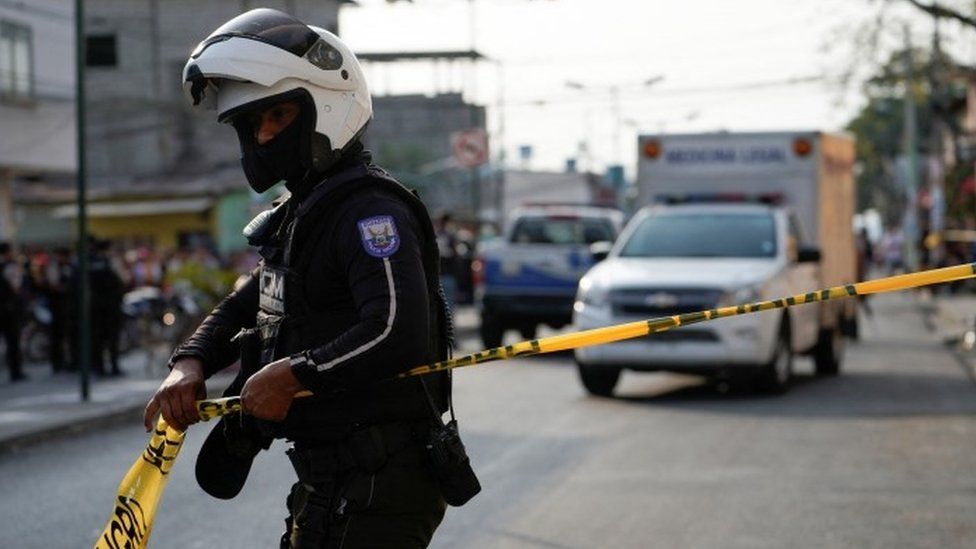
    Police cordon off crime scene in Guayaquil - 1 November
    IMAGE SOURCE, REUTERS Image caption, The attacks came in response to prisoner transfers

    President Lasso introduced emergency measures in the two states for 45 days, restricting freedom of assembly and movement. Similar measures were taken in several provinces last year and in April this year.

    Violence in Ecuador has grown sharply in recent years, including decapitations and prison riots, similar to scenes previously associated with Mexico.

    It is thought this is because Mexican cartels have been recruiting local gangs to smuggle cocaine.

    The latest violence comes nearly a month after clashes between prisoners in one of Ecuador’s largest jails – in Latacunga – left at least 15 inmates dead.

    The national prisons agency Snai said prisoners had fought with guns and knives before guards managed to regain control of the facility just south of the capital Quito.

    The turf wars between gangs fighting for control of lucrative cocaine networks have put a huge strain on the under-resourced and overcrowded prison system.

    The worst prison clash was in the port city of Guayaquil in September last year, when more than 120 inmates died.

    Last year Ecuador’s police seized a record 190 tonnes of drugs, mostly cocaine.

  • PM listed Coca-Cola history as one of his interests at Stanford University

    Among the interests listed by new Prime Minister Rishi Sunak during his time at Stanford University were the history of Coca-Cola and Star Wars.

    A screenshot of the Tory leader’s alumni profile, shared by a political science student at the university, Tianyu M. Fang, shows details of Mr Sunak’s course at the prestigious US university.

    And among his skills and hobbies is the history of  Coca-Cola.

    It comes after a clip of the Tory leader emerged in 2021 in which he spoke of his love for the fizzy beverage and admitted he was addicted to coke.

    During the clip, Mr Sunak, who was chancellor at the time, told two school students: “I’m a coke addict. A total coke addict.”

    He then realised how the statement might be perceived and added: “Coca-Cola addict for the record. I have seven fillings to show for it.”

    He went on to say he now only allowed himself one coke a week and expressed his affection for a drink called “Mexican coke” which he claimed was made with “cane sugar rather than high fructose corn syrup“.


  • Netflix set to launch an ad-supported service in November

    Netflix will introduce a new streaming alternative with advertisements in November, introducing a less expensive service as it battles to retain subscribers.

    The plan will be offered in 12 countries, including the United Kingdom, the United States, Canada, Mexico, and Australia.

    The service will cost £4.99 per month in the UK and $6.99 in the US, according to the company.

    Netflix has been losing customers as competition and cost of living pressures mount.

    The company lost more than 1 million subscribers in the first half of this year. It is due to provide an update of that figure to investors next week.

    ‘Price for every fan’

    Netflix’s move into advertising is a big change for the company, which pioneered the idea of subscription-based streaming.

    But as more entertainment companies roll out online streaming platforms, it has had a harder time retaining subscribers, especially as households concerned about the rising cost-of-living look for ways to cut back.

    In the UK, the least expensive plan without commercials starts at £6.99 a month.

    “We’re confident that … we now have a price and plan for every fan,” the company said in a press release.

    “While it’s still very early days, we’re pleased with the interest from both consumers and the advertising community and couldn’t be more excited about what’s ahead.”

    Subscribers to the new offering should expect to see an average of four to five minutes of adverts per hour, the company said.

    Some films and TV series also will not be available due to licensing restrictions.

    The company said it planned to expand the offering to more countries over time.

    Many of Netflix’s competitors already combine streaming with adverts or have plans to.

    Disney, for example, is due to roll out an advert-supported service in December in the US. That plan will start at $7.99 a month.

    Jeremi Gorman, Netflix’s president of worldwide advertising, said it had nearly sold out all the available ad time for the launch, a sign of the interest from advertisers in reaching younger audiences that are increasingly turning away from traditional television.

    Netflix is asking people who sign up for the ad service for gender and birth date information as part of efforts to target ads.

  • US and Mexico makes pact to lessen migration from Venezuela

    A deal between the US and Mexico permits some Venezuelan migrants to enter the US; but, those who do so illegally will be deported to Mexico.

    The agreement is expected to reduce strain at the US-Mexico border, as Venezuelans continue to depart the crisis-hit country in large numbers.

    Starting immediately, flights will be arranged for 24,000 migrants to arrive in the United States.

    Some six million people have left Venezuela in the past five years.

    The exodus is one of the largest migrations in the world, fuelled by violence, food, fuel, and medicine shortages, and repression by the government of President Nicolás Maduro.

    It has seen people desperate to improve their lives walking thousands of miles along dangerous routes to try to reach the US-Mexico border, where they then try to enter illegally or claim asylum.

    Under the new deal, which is effective immediately, the 24,000 eligible Venezuelan migrants – a tiny fraction of those who have fled – will be allowed to access the US by air, and stay for up to two years.

    They must still be in Venezuela, and not have made the trek to the US-Mexico border, the US Department of Homeland Security said in a statement.

    They will also need to have a person or organization based in the US to provide financial support and back up their claim to be part of the programme.

    It will come as a huge relief to those who are set to benefit from it. In theory, they will be spared the exhausting and dangerous journey to the US border and instead will be able to fly into the country, where support measures are in place.


    However, one major policy shift is that any undocumented Venezuelans who cross the southern border now face expulsion to Mexico – where previously, authorities usually did not accept expulsions of Venezuelans.

    This is a part of a controversial Trump-era policy called Title 42, which allows the US to swiftly expel undocumented migrants, thus taking away their chance to claim asylum. It was brought in during the pandemic to help prevent the spread of Covid-19 in holding facilities, officials said.

    Until now most Venezuelans who crossed into the US were not turned back – instead, they were temporarily allowed in and had the chance to apply for asylum.

    Now, Venezuelans found to have entered the US illegally – of which there are many thousands – could be sent to Mexico.

    The US and Mexican governments have said the policy is designed to discourage people from making the perilous trek across South America and Mexico – which they have been doing in record numbers over the past year as Venezuela’s economic and political situation worsens.


    The programme is based on a similar US model called Uniting for Ukraine, which offered safe haven to more than 100,000 Ukrainians who fled their country after Russia invaded earlier this year.

    The so-called “humanitarian parole programme” has been launched with the US midterm elections looming in November.

    The Biden administration is undoubtedly hoping the idea of helping Venezuelans who are fleeing poverty, political turmoil, and violence will play well politically, especially if it is combined with also expelling thousands who crossed the southern border illegally.

    However, with the vote so close, it may have a limited impact, and in the meantime, many thousands of desperate and tired Venezuelan migrants are caught in the middle.

    Map showing emigration routes

    The BBC uses the term migrant to refer to all people on the move who have yet to complete the legal process of claiming asylum. This group includes people fleeing war-torn countries, who are likely to be granted refugee status, as well as people who are seeking jobs and better lives, who governments are likely to rule are economic migrants.


  • Lev Tahor Jewish sect members held in Mexico escape

    About 20 members of a Jewish sect held at a facility in Mexico after a police raid on their jungle base have fled.

    Footage showed men, women, and children streaming out of the site in Huixtla, in the west, on Wednesday night.

    They had been there since the raid last Friday when two members were arrested on suspicion of human trafficking and serious sexual offences.

    The sect, Lev Tahor, is known for extremist practices and imposing a strict regime on its followers.

    It advocates child marriage, inflicts harsh punishments even for minor transgressions and requires women and girls as young as three years old to completely cover up with robes.

    Local media said members of the group had been protesting against their detention since their arrival, including rioting and assaulting personnel.

    Video from Reuters news agency shows the detainees, dressed in gold, grey and white robes, forcing their way past two guards at a gate as one of their members holds it open.

    One of the guards trying to hold them back falls down and the group climb over him as they make their escape. A youth is seen turning and kicking the guard as he lies on the ground.

    It is unclear where the group has gone. Associated Press said they were collected by a lorry and headed towards the border with Guatemala, while news site El Heraldo de México said they went by foot for several miles before disappearing into the night.

    Their compound, 11 miles (17.5km) north of Tapachula in Chiapas state, was raided by an elite police unit after a months-long investigation and surveillance operation involving Mexican and Guatemalan authorities and a private four-man team from Israel including former Mossad and domestic intelligence agents.

    Twenty-six members were found at the site, among them Israelis with dual citizenships including Canada, the US and Guatemala, Israel’s foreign ministry said.

    Surveillance picture of children in Lev Tahor compound in MexicoIMAGE SOURCE,RAFFI BERG
    Image caption, The group had been under surveillance by an Israeli team and Mexican police for months

    It said a Canadian and an Israeli citizen were arrested, while two other wanted members reportedly left the compound two days before the raid and are being sought. Five more were detained for allegedly breaking immigration rules.

    The operation stemmed from an appeal to a former member of Israel’s domestic intelligence agency, Shin Bet, by a former member of the sect, Yisrael Amir.

    Mr Amir fled the group’s base in Guatemala in 2020, having to leave his then one-year-old son there.

    His son was released in the raid last week and flown back to Israel with his father.

    The group had lived in Guatemala since 2014, but in January members illegally crossed into Mexico, settling in the jungle.

    The leadership in Guatemala has been at the centre of a kidnapping case since 2018. Nine of the sect’s members have been charged, four of whom have so far been convicted.

    Lev Tahor – Hebrew for Pure of Heart – was formed in Israel in 1988 and is thought to number up to 350 members, according to an ex-members group.

    It has been forced to move from country to country in recent years after coming under scrutiny from local authorities. It is currently spread between Israel, the US, North Macedonia, Morocco, Mexico and Guatemala. Between 70 and 80 members are still in Guatemala.

    While the group is often described as ultra-Orthodox, it follows its own sets of rules and has been declared a “dangerous cult” by an Israeli court.

    Its leaders have denied breaking local laws and say the group is being targeted because of its beliefs.

    Source: BBC

  • Mexico: The most dangerous country in the world for environmental advocates

    According to a report released on Wednesday by the advocacy group Global Witness, Latin America saw the highest number of environmentalist deaths worldwide in 2017.

    Up to 200 environmentalists were killed worldwide in 2021, with 75 percent of the deaths taking place in Latin America. The entire number was 227 in 2020.

    Mexico had the most deaths at 54 and jumped from its number of 30 reported in 2020. Colombia and Brazil came next, with 33 and 26 cases respectively.

    Mexico, Brazil, Nicaragua, and Peru together accounted for over half the total deaths. Indigenous people were the recipients of more than 40% of the attacks, said the report.

    In Mexico, officials believe local authorities are implicated in about 40% of the killings based on preliminary investigations.

    Land conflicts biggest cause

    “These lethal attacks continue to take place in the context of a wider range of threats against defenders who are being targeted by the government, business and other non-state actors with violence, intimidation, smear campaigns, and criminalization,” the organization said in its report.

    “This figure is likely to be higher as the reasons behind attacks on land and environmental defenders are often not properly investigated nor reported,” it added.

    Global Witness said land conflicts such as resource exploitation, logging, mining, and large-scale agriculture were behind many attacks.

    Killings related to mining and extraction activities were highest with 27 cases. Mexico, the Philippines, and Venezuela had 14, 6, and 4 cases respectively.

  • Children removed from Jewish sect’s jungle compound in Mexico

    Children and older teenagers have been removed from the jungle compound of a Jewish sect in Mexico following a raid by police, the BBC has learned.

    It took place against the Lev Tahor group, which was investigated on suspicion of trafficking minors.

    The children and teenagers are being flown to Israel where they have extended families.

    Lev Tahor (Hebrew for Pure Heart) is known for extremist practices and imposing a strict regime on members.

    It advocates child marriage, inflicts harsh punishments for even minor transgressions and requires women and girls as young as three years old to completely cover up with robes. The stricture has earned the group the nickname the Jewish Taliban because of seeming similarities with the dress code enforced by the Sunni Muslim extremist group which controls Afghanistan.

    On Friday morning, police made their way into the compound 11 miles (17.5km) north of Tapachula in Chiapas state.

    A source connected to the operation said the boys and girls were quickly separated from the rest of the group due to fears their lives could be at risk from members trying to prevent them from being removed.

    A Jewish child protesting against their detention by Mexican authorities puts their arm underneath the wall of a National Institute of Migration (INM) facility in Huixtla, Chiapas state, Mexico (25 September 2022)
    IMAGE SOURCE,REUTERS Image caption, A number of children from the sect were photographed protesting inside a migration facility in Chiapas on Sunday

    The Mexican police worked alongside a four-man volunteer team from Israel, including former Mossad agents, in planning and carrying out the operation. It was set in motion about two years ago when a relative in Israel of some of those in the group asked one of the former agents for help.

    The team travelled between Israel and Guatemala, where the branch had lived since 2014, carrying out surveillance operations and working with local authorities, law enforcement and a Guatemalan private investigator. In January about 40-50 members illegally crossed into Mexico, where they continued to be tracked, settling in the jungle north of Tapachula.

    The leadership in Guatemala has been at the centre of a kidnapping case since 2018, when two children who had been taken to New York by their mother who had fled the community were snatched back. They were recovered three weeks later in Mexico.

    Nine of the sect’s members were charged in connection with the case. Four – including the founder’s son and current leader Nachman Helbrans – have been jailed, while one was convicted but freed due to time already served and another is due to be sentenced in November. Two are awaiting trial and one is in custody in Guatemala.

    Lev Tahor was formed in Israel in 1988 by Rabbi Shlomo Helbrans, who later moved to the US. He served two years in prison after being convicted of kidnapping in 1994 and drowned in Mexico in 2017.

    Numbering up to about 350 members, Lev Tahor has been forced to move from country to country in recent years after coming under scrutiny from local authorities. It is currently spread between Israel, the US, Macedonia, Morocco, Mexico and Guatemala. Between 70-80 members are still in Guatemala.

    While the group is often described as ultra-Orthodox, it follows its own sets of rules and has been declared a “dangerous cult” by an Israeli court.

    Its leaders have denied breaking local laws and say the group is being targeted because of its beliefs.

    Source: BBC

  • Mexico’s Lozano nets late winner in World Cup warm-up

    Hirving Lozano netted a late goal to earn Mexico an uninspiring 1-0 victory over Peru in their friendly in Pasadena on Saturday.

    El Tri, who will play three more games prior to the 2022 World Cup, were made to work hard for the win in an evenly contested match with few shots on target.

    Lozano’s 85th-minute strike was the difference, firing home on the volley after Cesar Montes had nodded on a corner.

    Mexico forward Henry Martin pushed a 19th-minute header wide, while Ajax midfielder Edson Alvarez fired a long-range effort over the crossbar early in the second half.

    Peru, who missed out on World Cup qualification to Australia in the playoffs, had 9-7 shots and marginally edged possession but failed to generate much in attack.

    Mexico, who are grouped with Poland, Argentina and Argentina at the World Cup, will take on Colombia in Santa Clara on Tuesday.


    Source: Livescore

  • Russian Foreign Minister meets with Mexican officials to discuss Ukraine peace proposal

    Russian Foreign Minister Sergei Lavrov and Mexican Foreign Minister Marcelo Ebrard reportedly met to discuss a peace proposal for the Ukraine crisis.

    The plan was presented to the UN General Assembly this week but Ukraine opposes it, saying it would be advantageous to Russia.

    Mr Ebrard wrote on Twitter that he and Lavrov had a “cordial conversation”, and posted a picture of them together.

    Yesterday, the Mexican met his Ukrainian counterpart.

    The plan involves creating a “mediation committee” to settle conflicts worldwide, spearheaded by Indian Prime Minister Narendra Modi, UN Secretary-General Antonio Guterres and Pope Francis.

    Mexican President Andres Manuel Lopez Obrador said the committee would immediately start talks with Vladimir Putin and Volodymyr Zelenskyy to achieve “a truce of at least five years”.

    Mr Lopez Obrador said earlier this week: “I don’t want to play a leading role, as a government we’re making a proposal to see if it’s accepted.”

  • US detentions at Mexico border pass two million a year for first time

    Over the previous year, more than two million migrants were held at the US-Mexico border, a record number that gives the Biden administration political headaches.

    The amount of 2.15 million is a 24% increase over the previous year, according to recent data from US Customs and Border Protection (CBP).

    Statistics indicate that while migration from Mexico and the Northern Triangle of El Salvador, Guatemala, and Honduras decreased, migration from Venezuela, Nicaragua, and Cuba increased sharply.

    In a statement, CBP Commissioner Chris Magnus said that “failing Communist regimes” were “driving a new wave of migration” at the border.

    Experts point to several other reasons for the spike, including large numbers of repeat crossings and lingering pandemic-related economic issues across Latin America.

    The rising number of migrants at the border is a politically contentious issue ahead of the US midterm elections in November.

    President Joe Biden and other Democrats have been criticized by political opponents over the rise, while there has also been growing tension between the White House and some state governments – most visibly in the form of migrants being bussed or flown to Democratic-run areas such as New York and Washington DC.

    Why the recent spike?

    The number of migrants arriving at the border rose dramatically after Mr Biden took office in late January 2020.

    Experts point to a number of reasons for the increase, including environmental disasters and economic woes in El Salvador, Honduras, and Guatemala. In other cases – such as Cuba, Nicaragua, and Venezuela – economic problems have been compounded by political repression.

    “There’s a level of desperation we hadn’t quite seen before,” said Adam Isacson, a migration and border expert from the Washington Office on Latin America. “And you’ve got people coming from countries that had not sent migrants in significant numbers before now becoming top senders of migrants, due largely to a lack of economic opportunities. Smugglers take advantage of that.”

    Many of the migrants are now seeking asylum, a process that was severely restricted by the previous US administration of Donald Trump. 

    Where are the migrants from?

    Migrants from Mexico and the countries of Central America’s Northern Triangle – Guatemala, El Salvador, and Honduras – continue to account for the bulk of the total, with Mexicans alone accounting for about 744,000 of the detentions over the past year.

    CBP’s August figures, however, highlight shifting migration patterns. The number of Mexicans, Salvadorans, Guatemalans, and Hondurans fell 43% compared to August 2021. The numbers of Cubans, Nicaraguans, and Venezuelans, on the other hand, have risen 175% over the same time period.

    Collectively, these three nationalities account for about 494,000 migrant detentions this year.

    Ariel Ruiz, a policy expert with the Washington DC-based Migration Policy Institute, noted that the links between these countries also contribute to increases in each.

    Cuba, for example, has lost much of the aid it received from Venezuela pre-pandemic – creating more economic difficulties there – while Nicaragua’s decision last year to eliminate visa requirements for Cubans means they now have a starting point to begin their journey from Central America to the US. A lack of diplomatic relations between the US and these countries also means that the US cannot repatriate them home.

    “We have a system of enforcement at the border that’s really meant to respond to Mexican migration,” Mr Ruiz said. “All these policy schemes have combined in some ways to provide an opportunity for migrants to head northward, at the same time as economic conditions and political repression worsen in these countries.”

    Detained migrants at the border
    IMAGE SOURCE, GETTY IMAGES Image caption, Environmental disasters, and economic woes are some of the reasons behind the increase

    A Trump policy remains

    Since coming into office, Mr Biden has kept in place a controversial Trump-era policy that allows officials to automatically expel undocumented migrants seeking entry, bypassing normal immigration laws and protections.

    The policy – known as Title 42 – was originally aimed at preventing the spread of Covid-19 in holding facilities.

    Some experts, however, believe that Title 42 has caused migrant figures to rise as the policy does not prevent migrants from multiple crossing attempts.

    On Monday, CBP said, “a large number of expulsions during the pandemic has contributed to a higher-than-usual number of migrants making multiple border crossing attempts”.

    Mr Isacson said that the policy leads to statistical “distortions”.

    “We’re not actually hitting two million individuals, But Title 42 has made it easy for people to try over and over and over,” he said. “If they keep getting caught, there’s no real sanction.”

    Statistically, Mexican citizens are likely to be repatriated back to Mexico, which also accepts migrants from Guatemala, Honduras, and El Salvador. Collectively, more than 962,000 citizens of these countries have been sent back across the border using Title 42 over the past year compared to less than 10,000 from Nicaragua, Cuba, and Venezuela.

    Migrants in Washington DC
    IMAGE SOURCE, REUTERS Image caption, Migrants in Washington DC on 30 July after arriving by bus from Texas

    A political headache for Biden

    The rising migrant figures represent a growing political problem for the Biden administration, particularly with the midterm elections rapidly approaching.

    Three Republican-run states – Texas, Arizona, and Florida – have announced initiatives to move migrants to Democratic-led ones, sometimes leaving them at high-profile locations such as wealthy Martha’s Vineyard in Massachusetts or near Vice-President Kamala Harris’ residence in Washington DC.

    Officials in these states have argued that the tactic is aimed at mitigating the impact of migration flows in local communities. Florida Governor Ron DeSantis, for example – who earlier in September began to fly migrants to Massachusetts – said that “the minute even a small fraction of what those border towns deal with every day is brought to their front door, they [Democrats] all of a sudden go berserk”.

    The issue of migrants at the border is one that is likely to have an impact on the polls. A recent poll from NPR and Marist, for example, found that immigration was a primary electoral issue – behind only inflation – for 20% of Republican voters, compared to 1% of Democrats.

    Juscelino Colares, a professor of political science at Case Western Reserve University, said the issue is one that has the potential to cause a “swing” among many voters, particularly those who live near the border – even among those who are naturalized immigrants or the children of immigrants.

    “[People there] have seen the demands that uncontrolled immigration has brought to their localities. And they, and those migrants who have become legal, tend to hold the view that immigration should be taken seriously,” he said.

    “I think inflation will play a bigger role in the midterms and the economy is causing greater concern, but immigration is a significant concern to the US electorate,” he added.

  • More Americans who want abortions are turning to Mexico for help

    Verónica Cruz says she’s been getting frantic calls from women in the United States.

    Abortion clinics have canceled their appointments, and they’re scared, she says.
    “As soon as the Supreme Court decision came out, they were left without service. There are many people who call us crying, very desperate,” Cruz told CNN in a recent interview. “And the majority don’t even speak Spanish.”
    Cruz is the founder of Las Libres — Spanish for “The Free Ones” — and she’s spent years fighting for abortion rights in the Mexican state of Guanajuato and throughout the country.
    Now her organization is helping lead the charge in a new battle, fielding calls from a growing number of women in the United States who are turning to Mexico for help.
    For decades abortion rights advocates in Mexico looked to the United States as an example of what was possible. The recent US Supreme Court decision left many of them stunned — and determined to show solidarity and take action.
    The last year has brought about a dramatic role reversal. In September 2021, Mexico’s Supreme Court decriminalized abortion. And in June 2022, the US Supreme Court overturned Roe v. Wade, the landmark 1973 ruling that guaranteed legal access to abortion across the country.
    “It surprised me that Mexico is going forward, and the United States is going backward,” Cruz says. “I never imagined that.”
    Cruz says she and other advocates in Mexico have been watching closely as an increasing number of US states passed abortion restrictions. And by the time the US Supreme Court decision came down, she says, they were ready to help.
    “A beautiful web is being woven so that women can have different options,” says Sandra Cardona, who helps run “Red Necesito Abortar” — Spanish for “I Need to Abort Network” — from her home in Monterrey, Mexico.
    The Mexican groups’ efforts for years have largely focused on helping Mexican women obtain pills for medication abortions and walking them through that process. And now they say they’re seeing a notable increase in requests for that help from the United States.
    The rise in calls from people who are reaching out in English, Cruz says, is a sign of how great the need is.
    “The numbers are going to keep growing,” says Crystal P. Lira, founder of Bloodys Red Tijuana, another group that facilitates medication abortion. “It’s a snowball effect.”

    She traveled to the US for an abortion 10 years ago. Now she’s helping Americans get the same medicine.

    Crystal P. Lira says her organization is helping send medication abortion pills to women in the United States who need them.

    Lira remembers how alone she felt when she crossed the US-Mexico border to visit a Planned Parenthood clinic a decade ago.
    Back then, when she traveled from her home in Tijuana to San Diego to get medication for an abortion, the pills were harder to come by in Mexico, and the stigma around abortion was overwhelming.
    “I went feeling very solitary, feeling like I couldn’t tell anyone else, not knowing who was going to support me,” she says. “I went with many, many questions in my head. It was a very confusing and solitary moment.”
    Lira never imagined someday she’d be helping women in the US get that same medication while doing everything she can to promote abortion access on both sides of the border and fight the very stigma she faced herself.
    Now the two pills needed for medication abortion — mifepristone and misoprostol — are cheaper and easier to obtain in Mexico. And networks of activists in Mexico have intensified their efforts to send the pills to the United States since the US Supreme Court ruling.
    The groups are also providing virtual support — known as accompaniment — to help walk women through the process from afar.
    It’s important to remember, Lira says, that many women in the US aren’t able to travel to Mexico due to limited financial resources or a lack of immigration documents.
    “We are working to make sure the medication gets to them,” she says.
    Groups that spoke with CNN declined to provide specifics about how they’re getting medicine to the United States, saying they didn’t want to jeopardize the security of those they’re working with in the US.
    The National Right to Life Committee, the largest anti-abortion group in the US, has suggested states should extend criminal penalties to people who help a woman receive an illegal abortion, including “trafficking” abortion-inducing drugs and even giving instructions about self-managed abortions.
    In Texas, a 2021 law already bars mailing abortion medication and threatens jail time for anyone providing the pills who’s not a physician.
    And legal experts say it’s possible lawmakers in some states will try to pass legislation to prevent women from traveling out of state to get abortions, like proposed legislation that was introduced in Missouri earlier this year.

    The day Roe v. Wade was overturned, they heard from 70 women in the US

    For people in the US who can cross the border and would prefer to travel to Mexico, Sandra Cardona says she and others will help them get the medication and, if needed, provide a safe place for them to take it.
    Cardona and her partner have converted the second floor of their Monterrey home into a space they dub the “Abortería” — Spanish for “the abortion shop.”
    Inside there are cozy rooms with couches and signs trumpeting the importance of “free and dignified abortion.”
    Women often arrive frightened, she says, but soon appear to be surprised by how simple the medication abortion process is.
    “It generally takes a half day. They take the first pill, mifepristone, 24 hours before they come to us, and then they take the misoprostol. The process is very fast, between 3-4 hours, and that’s it, they leave for their homes,” Cardona says.
    “When they come and see how fast it was and everything, they say, ‘I should have done it in my house.’ Of course, there is pain, but we give them something for the pain. We are with them and we talk them through it.”
    Recently, a woman who was working from home showed up with her laptop and kept working as the medication worked its way through her system.
    Cardona says “Red Necesito Abortar” started getting more messages asking for help in September, after Texas enacted a sweeping law barring abortions at six weeks and allowing private citizens to bring civil suits against anyone who helps a pregnant person seeking an abortion in violation of the ban.
    “Many women are afraid of doing it there, because they’re afraid they’ll be reported,” she says.
    That’s one of many reasons Cardona says she and her partner have opened their home.
    “Before September we would receive 5-7 American women per month. After September, we received 7-10 per week. On the day of the Supreme Court decision, we received 70 messages. And things have continued like that, without slowing down,” she says.
    Sandra Cardona and her partner Vanessa Jiménez of the Red Necesito Abortar say they've received an increasing number of messages from women in the United States asking for help since the US Supreme Court overturned Roe v. Wade.
    Since the US Supreme Court decision, Cardona’s efforts have gotten more publicity, and she says her group has gotten an increasing number of threatening messages — from the US, too.
    But she says that won’t deter her.
    “Let them do whatever they want. We are going to keep accompanying [these women]. … I’m not going to be afraid of something that isn’t here,” she says.

    Abortion clinics are also preparing for more patients

    Mexican advocacy groups that facilitate access to medication abortions aren’t the only ones seeing a shift.
    Even before Roe vs. Wade was overturned, Profem, which operates abortion clinics in several Mexico’s cities, was seeing some American patients.
    In May, about 25% of patients seeking abortions at Profem’s Tijuana clinic were from the US, Director Luisa Garcia says.
    “It’s only been a little bit of time, but yes, we’re seeing an increase,” Garcia says, and she says she’s expecting the numbers to grow.
    “It’s something that I never would have believed, that from the United States they’d come to Mexico,” she said. “Before, it was the other way around. (The US was) a country with so many freedoms. It’s something I still am struggling to process.”
    It’s already common for some Americans to travel to Mexico for other medical procedures. Traveling south of the border to visit abortion clinics could also become a more common occurrence, Garcia says.
    MSI Reproductive Choices, an NGO that provides contraception and abortion services, opened a clinic in the Mexican border city of Tijuana just a week after the US Supreme Court decision.
    MSI Reproductive Choices opened a new clinic in Tijuana, Mexico, this month. A sign at the reception desk displays the organization's motto, "Children by choice, not by chance."
    “That was a coincidence,” says Araceli Lopez Nava Vázquez, the Latin America regional director and Mexico country director for the organization, noting that it takes months of planning to open a new clinic.
    Nava Vázquez says MSI Mexico’s clinics are expecting an increase in demand from patients in the United States, but so far haven’t seen an uptick.
    She says the organization recently has been in talks with several groups in Arizona who are working to secure abortion access and funding for travel. She’s also spoken with organizations in Texas.
    “What I sense is a lot of hopelessness, and it is really sad,” she says. “It’s like we’re in the Middle Ages again.”
    Groups in Texas have seemed hesitant to make plans, she says, with so much uncertainty about what will happen next in their state. But she says MSI Mexico is trying to do whatever it can to help.
    Officials in Mexico’s capital have also said they’re prepared to accommodate any visitors from the US who need abortion help.
    “We are a government of inclusion and we attend to all people,” Mexico City Health Secretary Dr. Oliva López Arellano told reporters in May.
    “They have the right to make decisions about their bodies. We have the obligation to protect their health.”

    Mexican groups are sharing lessons they’ve learned with American counterparts

    At a recent protest in Tucson, Arizona, advocates from the Mexican group Marea Verde Nogales wrote a message in chalk on the ground: “If you need to abort, write to @mareaverdenogales.” Next to it, they drew a heart that said “USA Mexico Women United” inside.
    And recently, the number of calls to the group from Arizona have increased, member Bianca Valverde says. In addition to helping provide accompaniment for medication abortions, the group hopes to help train advocates in the United States to provide accompaniment for medication abortions using the same methods.
    Despite Mexico’s Supreme Court ruling last year, the legal landscape for abortion in the country remains complex.
    Mexico City and eight of the country’s 31 states have decriminalized abortion; other states still have laws criminalizing abortion on the books.
    About 80% of Mexicans identify as Catholic, and the Roman Catholic Church has organized anti-abortion protests there.
    A woman holds a cross as she takes part in an anti-abortion march in Mexico City in May.
    Even in states where abortion is legal, providers have encountered obstacles, Garcia says. Her organization struggled to find a location for a new clinic in Tijuana earlier this year.
    “We rented in a very famous medical office building that’s dedicated to medical tourism,” she said. “The moment that they learned it was for abortion, they wouldn’t rent to us.”
    But Mexican abortion rights advocates say there’s an important lesson they’ve learned in years of fighting obstacles — a lesson they’re working now to share with their counterparts north of the border.
    Even in the toughest times, they say, women can succeed by turning to each other for help.
    Source: CNN
  • Bananas donated to a Texas prison turn out to be $18 million of cocaine

    The department received 45 boxes of donated bananas from Ports of America in Freeport near the Gulf of Mexico. But it turns out the donation was a greater gift than either organization could have imagined, containing an additional 540 packages of cocaine, valued at nearly $18 million.

    “Sometimes, life gives you lemons. Sometimes, it gives you bananas,” the TDCJ post joked.

    According to the post, the discovery was made by two of its sergeants after they noticed “something not quite right” with the boxes after they were unloaded. Once they started pulling apart these suspicious boxes, they discovered a white powdery substance and notified port authorities.

    Sure enough, when life handed them bananas, it was actually a shit ton of cocaine.

    Not many other details are known about this bizarre turn of events. But the TDCJ assured its followers that the Drug Enforcement Administration, U.S. Customs, and Border Protection were now investigating into the matter.

    I guess we’ll have to wait for the Season 6 of Breaking Bad that’s never happening to fully understand the plot twist of sending a massive cache of illegal drugs to a literal prison.

    Source:yahoo.com

  • Over 100,000 people officially missing or disappeared in Mexico

    Mexico has officially registered more than 100,000 people as missing or disappeared, according to data from the Interior Ministry’s National Registry of Missing People.

    From 1964 to the present day, the country has registered more than 100,023 people missing, of which more than 24,700 are women, and more than 74,700 are men. The gender of 516 people is unknown.
    The figure has risen by more than 20,000 people in the past two years alone, according to the data, which was met with outrage and urgent calls for better systems for search and rescue.
    Families with disappeared loved ones protest in Mexico City on May 10.

    Families with disappeared loved ones protest in Mexico City on May 10.
    Only 35 of the disappearances recorded have led to the conviction of the perpetrators, UN High Commissioner for Human Rights Michelle Bachelet said in a statement Tuesday.
    “No effort should be spared to put an end to these human rights violations and abuses of extraordinary breadth, and to vindicate victims’ rights to truth, justice, reparation and guarantees of non-repetition,” said Bachelet.
    Marlene Harbig of the International Committee of the Red Cross (ICRC) discussed the trauma suffered by families with missing persons.
    “The first few hours are the most important, when someone disappears, their relatives have the right to know what has happened,” said Harbig in a news release. “Knowing the fate of disappeared persons is primarily a humanitarian act.”
    Despite the numbers, Bachelet highlighted progress made by the Mexican government, recognizing Mexico as the first country to allow a visit by the UN Committee on Enforced Disappearances to work with authorities in 13 Mexican states.
    Both the ICRC and the UN have called for family members to be allowed to work with government authorities in working to find their loved ones.
    According to a statement to the media, Michele Bachelet requested the government “to place the families of those who have disappeared at the center of their efforts, and to make the necessary resources available for investigations and searches to be effective.”
    Source: CNN
  • 13 killed in explosion in Mexico after car collided with transporter

    Thirteen people were killed in Mexico on Monday when a car collided with a liquid gas tanker truck.

    The collision, on a motorway in the western state of Nayarit, caused a huge explosion in which both vehicles and two others were totally destroyed, state prosecutors said.

    The bodies would be identified using DNA analysis, the prosecutors said. A 31-year-old woman with severe burns was saved.

    Rescuers were initially hindered by the extreme heat of the ground following the explosion, which burnt an area of two hectares.

    Source: GNA

  • Mexico’s coronavirus deaths surpass 50,000

    Mexico’s coronavirus death toll surged past 50,000 on Thursday, the government said, just days after becoming the third-highest in the world. The health ministry announced 819 more deaths in its daily update, taking the total to 50,517 since the Latin American country’s first case was detected in February.

    The overall number of infections registered now stands at 462,690 in the nation of more than 128 million.

    “Unfortunately, because it is always unfortunate even if it was only one, we have 50,517 deaths from COVID-19 in Mexico,” deputy health minister Hugo Lopez Gatell told a news conference.

    Mexico recently overtook Britain to become the third hardest-hit country in terms of virus deaths, after Brazil and the United States.

    Its fatality toll far exceeds the range of between 6,000 and 30,000 that the government of leftist President Andres Manuel Lopez Obrador projected at the end of February.

    His government, which began easing lockdown measures at the start of June, has faced scrutiny over its handling of the crisis.

    The pandemic has dealt a heavy blow to Mexico’s economy, the second biggest in Latin America.

    Gross domestic product (GDP) plunged 17.3 percent in the second quarter of the year from the previous quarter.

    Source: Pulse Ghana

  • Mexico earthquake death toll rises to 10

    The death toll from a powerful earthquake that struck southern Mexico has risen to ten, the federal government said Wednesday.

    The 7.4-magnitude quake, which was followed by more than 1,500 aftershocks, was felt in Mexico City, some 700 kilometers (430 miles) away from the epicenter in Oaxaca.

    It sent people fleeing their homes and workplaces and forced the closure of an oil refinery.

    Oaxaca Governor Alejandro Murat said in an interview with Milenio TV earlier in the day that 2,000 homes had been damaged.

    First responders were still working to remove debris from a highway, he added.

    Earlier, the national civil protection coordinator, David Leon, said 23 people had been injured in the quake.

    The death toll from a powerful earthquake that struck southern Mexico has risen to ten, the federal government said Wednesday.

    The 7.4-magnitude quake, which was followed by more than 1,500 aftershocks, was felt in Mexico City, some 700 kilometers (430 miles) away from the epicenter in Oaxaca.

    It sent people fleeing their homes and workplaces, and forced the closure of an oil refinery.

    Oaxaca Governor Alejandro Murat said in an interview with Milenio TV earlier in the day that 2,000 homes had been damaged.

    First responders were still working to remove debris from a highway, he added.

    Earlier, the national civil protection coordinator, David Leon, said 23 people had been injured in the quake.

    Mexican Oil said its refinery in Salina Cruz in Oaxaca had been shut down as a precaution after a fire broke out at the plant “that was immediately stifled.”

    One of the dead from the earthquake was a worker at the refinery, who was killed after falling off a high structure.

    Source: AFP

  • Mexico at ‘peak moment’ of coronavirus crisis after biggest daily rise in cases

    Mexico has reached “the peak moment” of its coronavirus outbreak, officials said, as the country recorded its largest one-day rise in cases so far.

    More than 2,409 new cases of the virus were confirmed on Thursday – the first time this figure has exceeded 2,000.

    The total number of confirmed cases in the country is now more than 40,000.

    The grim milestone comes amid preparations to ease lockdown measures and reopen the economy, particularly factories near the border with the US.

    Assistant Health Secretary Hugo López-Gatell – an epidemiologist and Mexico’s coronavirus tsar – described this as “the most difficult moment of the first wave of the epidemic”.

    He said that the country “could not relax measures” in place to stem the spread of the virus, and instead needs to embrace a “new normal” to avoid another wave of infections.

    On Monday, some key industries – including mining, construction and automobile assembly – are scheduled to partially reopen.

    Mr López-Gatell stressed that the re-opening of these industries will be largely preparatory, with a broader restart of businesses not scheduled until 1 June.

    Government data released on Thursday also showed more than half of hospitals in the capital, Mexico City, were at capacity with coronavirus patients.

    At the end of April, hospitals in the city admitted they were having to turn patients away because of a lack of equipment.

    Earlier this month, Mexico received a shipment of more than 200 ventilators purchased from a US firm.

    This followed an informal agreement between the neighbouring nations’ leaders in mid-April.

    Source: bbc.com

  • Mexico raises health emergency level as virus cases mount

    Mexico raised its health emergency level following a rapid increase in novel coronavirus cases and fears the health system could collapse, the government said on Tuesday.

    Health Undersecretary Hugo Lopez-Gatell said the country was moving to “phase three” of its response to the deadly pandemic after noting that “we’re in a phase of rapid increase, where we’re accumulating a large number of infections (and) hospital admissions.”

    The government has suspended all non-essential economic activity until May 30 and asked people to stay at home and observe social distancing, although it has not enforced a mandatory quarantine.

    By Monday, Mexico had recorded close to 8,800 cases and 712 deaths from COVID-19. The government expects the peak of infections to hit between May 8 and 10.

    Mexico President Andres Manuel Lopez Obrador has been widely criticized for his response to the pandemic, taking much longer than other countries in the region to impose containment measures.

    Last month, Human Rights Watch accused Lopez Obrador of setting a “profoundly dangerous example that threatens Mexicans’ health” by flouting social distancing guidelines and continuing to hold rallies and greet supporters with handshakes and hugs.

    “This epidemic is accelerating, which means there is an increasing number of cases every day and that also applies to geographical spread,” said Lopez-Gatell, who accompanied Lopez Obrador at the president’s daily press briefing.

    Areas that keep down the spread of the coronavirus will be allowed to lift social distancing measures on May 17, the health ministry said.

    Source: AFP

  • Corona beer stops production in Mexico

    Production of Corona beer has been temporarily suspended in Mexico because of the coronavirus pandemic, said Grupo Modelo, the company that makes the popular beverage.

    In a statement on Twitter, the company said it was halting the production and marketing of its beer because the Mexican government has shuttered non-essential businesses.

    The Anheuser-Busch Inbev-owned company also makes Modelo and Pacifico beers.

    This week, the Mexican government announced the suspension of non-essential activities in the public and private sectors until April 30 in an effort to curb the spread of the virus.

    The country has more than 1,500 cases and 50 deaths, according to Johns Hopkins University.

    Grupo Modelo is ready to enact a plan to “guarantee the supply of beer” if the Mexican government decides to include breweries as essential, according to a statement.

    Source: cnn.com

  • Plácido Domingo hospitalised

    Veteran opera star Plácido Domingo has been hospitalised with complications linked to Covid-19, US media are reporting.

    The 79-year-old is receiving hospital treatment in Mexico, with his spokesman cited as saying he’d “remain in the hospital as long as the doctors find it necessary” for a full recovery.

    On 22 March, he announced he’d tested positive and said he was “grateful and moved by the wave of messages I have received from so many people”

    The singer had recently resigned from the Los Angeles Opera after he was accused of sexual harassment.

    Source: bbc.com

  • Pregnant teen dies after falling from US-Mexico border wall

    A pregnant 19-year-old migrant from Guatemala died after trying to climb over a border fence in Texas, authorities said on Thursday. Doctors were not able to save her child.

    United States media, quoting a statement from Guatemala’s Ministry of Foreign Affairs, reported that the woman, Miriam Estefany Giron Luna, fell on her back from the top of an 18-foot-high (5.5-metre) span of steel mesh fencing while trying to cross with the child’s father. Giron Luna, who was 30 weeks pregnant, died from her injuries on Tuesday.

    Tekandi Paniagua, a Guatemalan consular official based in the state of Texas, told the Washington Post that new restrictions imposed by US President Donald Trump have been causing asylum seekers to take more risks and that since October, at least five other Guatemalans have suffered broken bones and other serious injuries after falling from the border wall.

    “This is a very worrisome trend,” he told the Washington Post. “People are taking more and more risks, and they’re losing their lives.”

    Trump, who has made a crackdown on immigration a central focus of his presidency and his re-election campaign, has put in place measures that have made it increasingly more difficult for migrants to apply for asylum in the US. At least 60,000 asylum seekers have been sent back to Mexico to wait while their cases are processed in the US under the Trump administration’s “Remain in Mexico” programme.

    Meanwhile, during the 2019 fiscal year, US authorities took into custody more than 470,000 migrants who arrived amid a record influx of Central Americans who are fleeing violence, poverty and political persecution in their countries.

    Those measures have led to a 75 percent drop in border detentions since May, US authorities say, even as the latest figures show a slight uptick in the number of single Mexican adults and unaccompanied minors attempting to cross.

    With the addition of taller and more formidable barriers along the border, including more than 135 miles (217km) of new 30-foot-tall (nine-metre) border fencing the Trump administration has installed, smuggling organisations have been using improvised ladders to take migrants over the top.

    The tactic requires migrants to cling to the top of the structure, then climb a ladder down the other side or slide down by wrapping their arms and legs around the steel.

    According to the Washington Post report, Giron Luna was a social worker and a beauty pageant winner in her hometown in her country’s Quetzaltenango department. She reportedly slipped while trying to descend from the top of the barrier, landing on her back. The woman’s partner, Dilver Israel Diaz Garcia, 26, carried her away from the scene to seek help and encountered US Border Patrol agents, who radioed for an ambulance.

    According to the newspaper, doctors in El Paso tried to deliver the child via Caesarean section, and Giron Luna underwent multiple surgeries before dying. Her partner, Diaz Garcia, remains in US Border Patrol custody, where he faces deportation.

    Source: aljazeera.com

  • Christian Coleman comes close to breaking 60m world record

    American sprinter Christian Coleman came close to breaking his own world record after winning the 60m at the USATF Indoor Championships in New Mexico.

    Despite stumbling out of the blocks, Coleman, 23, clocked 6.37 seconds to beat Marvin Bracy and Brandon Carnes.

    Coleman equalled the second-fastest time in history behind his own record of 6.34 seconds, set in 2018.

    “I felt pretty good,” the 100m world champion said.

    “I thought I had a shot at the record.”

    Coleman, who is favourite to win 100m gold at this summer’s Olympics in Tokyo, added: “I think I could have executed my start a lot better.

    “But we haven’t done a lot of speed work, so this gives me a lot of confidence going into the outdoor season.”

  • Boy kills teacher, self in Mexico school shooting

    An 11-year-old boy shot and killed his teacher Friday at a school in northern Mexico and wounded six other people, then killed himself, authorities said.

    The wounded — five pupils and a physical education teacher — were taken to a local hospital, where they were in stable condition, said Governor Miguel Angel Riquelme of the state of Coahuila, which borders the United States.

    Panicked parents rushed to the private elementary school, the Colegio Cervantes, as officials evacuated the trim brick building and police and soldiers put it on lockdown.

    Riquelme said the student had asked for permission to go to the bathroom shortly after the school day began. When he did not return after about 15 minutes, his teacher, a 50-year-old woman, went to see if anything was wrong.

    Read:Nigerian woman kills husband by squeezing his scrotum

    He emerged from the bathroom with two guns and opened fire, killing his teacher and wounding the group of six, who were passing through the hallway, before shooting himself, Riquelme said.

    “We deeply regret this incident… which is shocking for us all,” the governor told a news conference.

    “I want to reiterate that this sort of thing is not the norm in our schools.”

    Mexico is more used to seeing school shootings in the neighboring United States than up close.

    However, the incident was not without precedent. In 2014, a 15-year-old shot and killed a schoolmate in central Mexico State, and in 2017 a 15-year-old shot and wounded four classmates at a high school in the northern city of Monterrey.

    Read:Man kills father over cooked yam

    Video game? Columbine?

    Riquelme said the boy had not shown behavioral problems, but had told classmates that “today was the today,” and talked to them about the first-person shooter video game “Natural Selection.”

    In the bathroom, he changed into a T-shirt with “Natural Selection” written on it before carrying out the shooting, said state prosecutor Gerardo Marquez.

    “Natural Selection” was also written on a T-shirt worn by one of the shooters at Columbine High School in 1999, when two students killed 13 schoolmates and then themselves.

    The video game, whose first edition was released in 2002, has no direct link with the Columbine shooting.

    Read:Church usher kills wife; stabs her 92 times

    As for a possible link with Columbine, he said: “We have to follow every possible line of investigation, and that is one of them.”

    The student, who was in his final year of elementary school, lived with his grandparents and made good grades, officials said.

    Source: France24

  • Mexico rollercoaster crash leaves two dead

    At least two people have been killed after a rollercoaster carriage derailed in Mexico City on Saturday.

    Another two people were injured in the accident at La Feria Chapultepec amusement park, local officials said.

    Eyewitnesses said the victims fell from the last carriage of the Chimera rollercoaster in the park.

    The popular park was closed soon after the incident, and the authorities are now investigating the cause of the derailment.

    Read:Mexico Jalisco: Forensics identify 44 bodies in well

    “This is now in the hands of prosecutors, and prosecutors have already taken the necessary steps for an investigation,” Miriam Urzua, an official from the civil protection organisation, told Reuters news agency.

    She said the investigation would be exploring both what happened and who was responsible.

    Eyewitness Rosalba Rodriguez told reporters there was nothing out of the ordinary about the ride, which had completed a few loops, until she saw the last carriage fall.

    Read:Former New Mexico priest gets 30 years for child sexual abuse

    The fair said it “deeply regrets the terrible accident” and that it was investigating alongside the relevant authorities.

    It also promised to share details of the investigation as they emerged.

    Video from the scene showed paramedics tending to the wounded, while police kept spectators away from the shuttered park.

    Source: bbc.com

  • Mexico Jalisco: Forensics identify 44 bodies in well

    Forensic scientists in Mexico have managed to identify 44 bodies buried in a well in the state of Jalisco.

    Discovered just outside the city of Guadalajara, the human remains were hidden in 119 black bags.

    The remains were discovered earlier in September when local residents started complaining about the smell.

    Read:Former New Mexico priest gets 30 years for child sexual abuse

    Jalisco is the heartland of one of Mexico’s most violent drug gangs and this is the second major find of bodies in the state this year.

    The vast majority of the bodies were cut up, so authorities had to piece together different parts in order to identify them.

    Many body parts still remain unidentified.

    Read:Mexico robbery: Armed gang seizes gold coins from mint

    A local organisation which searches for missing people has appealed to the government to send more specialists to assist with identification.

    They say the local forensic department is overwhelmed and does not have the necessary skills to complete the operation.

    Source: BBC.com