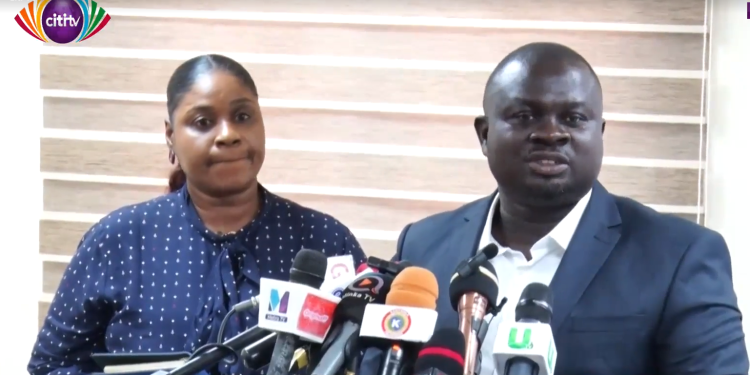
The Executive Director of the Media Foundation for West Africa (MFWA), Sulemana Braimah, has called on Attorney General and Minister of Justice, Dr. Dominic Ayine, to publicly disclose the identity of the Member of Parliament who was allegedly paid to suppress media reports on the National Service Authority (NSA) ghost names scandal.
Braimah’s demand follows revelations by Dr. Ayine during an update on the ongoing investigations into the fraudulent payroll scheme.
The Attorney General revealed that former NSA Director General, Osei Assibey Antwi, had paid a sitting MP to prevent media coverage of the scandal, which involved the illegal inclusion of ghost names on the payroll.
He further confirmed that significant progress had been made in exposing corruption within the scheme.
Reacting to the disclosure in a Facebook post, Braimah underscored the need for transparency in the matter, stating:
“We call on the Attorney General (AG) to name the said MP to whom money was given to kill the story. Doing so will be in the interest of transparency and also to protect the reputation of Parliament.”
The NSA ghost names scandal is a significant corruption case involving the National Service Authority (NSA) in Ghana.
Investigations revealed that 81,885 ghost names—nonexistent individuals—were fraudulently added to the payroll. This allowed corrupt officials to siphon millions of Ghanaian cedis meant for legitimate service personnel. The scheme involved fake index numbers and even included individuals over 80 years old.
The scandal came to light after an exposé by The Fourth Estate in November 2024, which uncovered systemic abuse dating back to 2017.
The Media Foundation for West Africa (MFWA) has criticized the Minister responsible for Communication, Digital Technology, and Innovations, Samuel Nartey George, following the shutdown of seven radio stations.
In a statement, the minister directed the National Communications Authority (NCA) to shut down the stations, citing offenses related to operating without valid frequency authorizations and security concerns.
Six of these stations—Fire Group of Companies, I-Zar Consult Limited, Abochannel Media Group, Okyeame Radio Limited, Mumen Bono Foundation, and Osikani Community FM—were operating without valid frequency authorizations, while one, Gumah FM in Bawku, was closed on security grounds.
In response, MFWA, in a statement on February 19, highlighted the unconstitutionality of shutting down the radio stations without consulting major stakeholders such as the independent National Media Commission (NMC).
According to MFWA, while the security concerns regarding Gumah FM’s broadcasts may be valid, it is illegitimate for a “tribunal” of partisan political players—including the sector minister, the regional minister, the director-general of the NCA, and the national security coordinator—to act as both complainants and enforcers.
Although the decision to shut down the affected stations may have been based on expert advice, MFWA has urged that such intelligence be presented to the NMC for scrutiny and a final verdict.
“Even if the decision was based on intelligence advice, the facts and evidence must be put before the NMC for it to recommend the shutdown if convinced,” MFWA added.
As a reminder to the government, MFWA cited Section 2(9) of the NCA Act 775, which states that the National Communications Authority (NCA) must “pay particular attention to the provisions of Chapter 12 of the Constitution.”
Chapter 12 of the 1992 Constitution of Ghana focuses on the freedom and independence of the media, emphasizing the need for a free and responsible press while protecting against government interference.
Consequently, MFWA has advised the government to “pause, reflect, and consult the NMC when taking a decision to sanction a broadcast station, particularly over alarming content. Ultimately, we call for dialogue leading to a decision to amend relevant laws to give the independent National Media Commission the mandate to approve broadcast license applications and recommend sanctions for infractions regarding licensing conditions.”
Media Foundation for West Africa (MFWA) has criticized Communications Minister, Sam George, over the recent shutdown of seven radio stations, describing the move as unconstitutional.
This comes after the minister, in a statement, directed the National Communications Authority (NCA) to close down the stations, citing their operation without valid frequency authorizations and security concerns.
According to the directive, six of the affected stations were operating without valid licenses, while one—Gumah FM in Bawku—was shut down due to security reasons.
Reacting to this development in a statement issued on February 19, 2025, the MFWA accused the Communications Ministry of acting unconstitutionally by shutting down the stations without consulting major stakeholders, particularly the independent National Media Commission (NMC).
The MFWA acknowledged that, while security concerns regarding Gumah FM may be valid due to its broadcast content, it is illegitimate for a tribunal made up of partisan political figures—such as the sector minister, the regional minister, the director general of the NCA, and the national security coordinator—to act as both complainants and decision-makers in the matter.
While recognizing that expert advice may have informed the decision to close the affected stations, the MFWA insists that such intelligence should be submitted to the NMC for review and a final verdict.
“Even if the decision was based on intelligence reports, the facts and evidence must be presented before the NMC, which should be the body to recommend a shutdown if necessary,” the statement emphasized.
As a reminder to the government, the MFWA referenced Section 2(9) of the NCA Act 775, which mandates the NCA to “pay particular attention to the provisions of Chapter 12 of the Constitution.
Chapter 12 of the 1992 Constitution of Ghana focuses on the freedom and independence of the media, underscoring the need for a free and responsible press while protecting it from government interference.
In light of these concerns, the MFWA has advised the government to pause, reflect, and consult the NMC before taking any action to sanction a broadcast station, particularly over content-related concerns.
Furthermore, the organization advocates for a broader dialogue leading to legal reforms that would grant the independent National Media Commission the authority to approve broadcast license applications and recommend appropriate sanctions for licensing violations.
The Media Foundation for West Africa (MFWA) has strongly criticized the government’s recent shutdown of seven private radio stations, arguing that such decisions should be left to the independent National Media Commission (NMC) rather than government-appointed officials.
The shutdown, led by Minister for Communication, Digital Technology, and Innovations, Sam Nartey George, affected Bawku-based Gumah FM, which was closed on national security grounds, along with six other stations accused of operating without valid frequency authorizations.
The affected stations include Fire Group of Companies in Sunyani, broadcasting on 90.1MHz, and I-Zar Consult Limited in Tamale on 89.7MHz. Also affected are Abochannel Media Group in Adidome on 105.7MHz, Okyeame Radio Limited in Bibiani on 99.7MHz, Mumen Bono Foundation in Techiman on 99.7MHz, and Osikani Community FM in Nkrankwanta, also on 99.7MHz.
The Ministry stressed that broadcasting without a valid frequency authorisation is a violation of the law, warning that swift enforcement actions will be taken against any station that disregards regulatory requirements.
“In accordance with Act 775, it is unlawful to operate a broadcasting service without a valid frequency authorisation. The NCA will take the necessary steps to halt all unauthorized transmissions and ensure compliance with the law,” the statement added.
While the government insists the move was legal and necessary to enforce broadcasting standards, the MFWA warns that political involvement in media regulation threatens press freedom.
“While the accusations may be tenable, we cannot allow a ‘tribunal’ of partisan political players such as the sector minister, the Regional Minister, the Director-General of the NCA, the National Security Coordinator, among partisan persons, to prosecute, while being themselves the complainants,” the MFWA stated.
The foundation emphasized that regulatory matters regarding media operations should be handled by the NMC, which is constitutionally mandated to oversee press freedom and media independence. “Even if the decision was based on intelligence advice, the facts and evidence must be put before the NMC for it to recommend the shutdown if convinced,” the statement added.
A major concern raised by the MFWA is the impact of such actions on Ghana’s democratic landscape, particularly the risk of politically motivated closures. The group argues that radio stations serve as platforms for diverse opinions and public discourse.
“Radio plays a crucial role in promoting inclusion and reflecting divergent opinions in the political terrain. Any intervention in the broadcasting regulation domain by politicians raises suspicions of possible political targeting and favoritism,” it noted.
As a solution, the MFWA is calling for urgent reforms to transfer the authority of broadcast licensing and regulation from the National Communications Authority (NCA) to the NMC. The foundation believes this will prevent government interference and protect media pluralism in Ghana.
“The MFWA fears that if this trend is entrenched, critical broadcast stations can be shut down… for political reasons,” it warned.
The closure of media houses has been a recurring issue under the Nana Akufo-Addo administration, with multiple stations taken off air since 2017. The latest crackdown has further fueled concerns about the erosion of press freedom in the country.
Executive Director of the Media Foundation for West Africa (MFWA), Sulemana Braimah, has commended the Ghana Police Service for their professionalism in managing potentially volatile situations during the 2024 general elections.
Speaking on JoyNews’ Newsfile programme on Saturday, December 14, Mr. Braimah reflected on the challenges posed by the actions of some youth during the election period and emphasized that the police’s decisions were instrumental in preventing the escalation of chaos.
“It got to a point I was scared about the actions of the youth,” he revealed. Mr. Braimah explained that if the police had resorted to forceful measures such as tear gas or pepper spray, the situation could have spiraled into chaos and even caused a stampede.
“All that would have happened would have been unpleasant,” he added, underscoring the gravity of the potential consequences.
He applauded the police for their professionalism in handling the situation, particularly considering the scale of the national elections, which he described as far more complex compared to a by-election involving fewer constituencies.
“The police did a fantastic and professional job and must be commended,” Mr. Braimah stated.
He noted that the sheer number of polling stations and constituencies posed significant challenges, yet the police’s approach ensured peace and order throughout the process.
The Media Foundation for West Africa (MFWA) has called on the Electoral Commission (EC) to reconsider its decision to limit media access to collation centres during the 2024 elections.
According to the MFWA, this restriction could compromise transparency and accountability, as the media plays a critical role in ensuring oversight during the electoral process.
In a memo addressed to its regional directors, the EC announced that only eight media outlets would receive accreditation to report on collation activities at constituency centres.
This arrangement includes three television stations with two representatives each and five radio stations with one representative apiece.
For regional collation centres, the EC plans to allow 12 media organisations, comprising five television stations with two representatives each and seven radio stations with one representative each.
Defending the directive, Dr. Bossman Asare, the EC’s Deputy Chairperson, stated that the measure aims to foster a conducive environment for efficient collation.
“In the wisdom of the Commission, having eight media houses at the constituency level and twelve at the regional level is appropriate,” he stated.
The MFWA, however, remains skeptical, arguing that the restrictions could limit thorough media coverage and weaken public confidence in the electoral process.
Speaking in an interview with Channel One TV on November 26, Sulemana Braimah, the Executive Director of MFWA, expressed surprise at the EC’s decision. He also criticized the omission of other media formats, including newspapers and online platforms, from the accreditation arrangement.
“Since when did media coverage become just radio and television? This action is misguided and should be reversed,” he said.
CEO of the Media Foundation for West Africa (MFWA), Sulemana Braimah, has recognized the Free Senior High School (SHS) programme as a valuable initiative.
However, he also expressed concern over its flawed implementation and politicization.
“I think it’s a great programme and I have always said that, except that it’s been politicised and implemented in a very terrible way,” he said.
Braimah suggested that greater transparency was needed, especially regarding the process and the roles of teachers and parents.
“It would have been great if the government had been more transparent and open about the process so that teachers would have a role to play, and parents would have a greater role to play, rather than saying it’s Free SHS and I’m doing everything, I’ll provide uniforms, and then two years down the line, uniforms haven’t been provided, textbooks aren’t provided, but parents have to buy textbooks, exercise books aren’t provided, but parents have to buy exercise books, and so on.”
He emphasized that while the programme promised free uniforms, textbooks, and exercise books, parents ended up having to cover these costs themselves.
During his appearance on Joy News’ AM Show News Review with Benjamin Akakpo on November 11, 2024, Mr Braimah urged a more analytical approach when discussing the programme, urging people not to merely echo political talking points.
“So that we don’t just repeat the kind of things that politicians would want to repeat,” he added.
The Free SHS programme, launched by the Nana Addo-led government in 2017 as a key campaign promise, has faced backlash over its implementation.
Critics argue it was rolled out at the wrong time and has negatively impacted the quality of education.
Despite this, the programme has seen a significant increase in student enrolment, with current secondary school attendance reaching 1.4 million compared to 308,799 before 2016.
An Accra High Court has granted Strategic Mobilisation Limited‘s (SML) application to include the Media Foundation for West Africa (MFWA) in the lawsuit instead of The Fourth Estate.
This is after the court dismissed the case filed by SML against The Fourth Estate, a news portal, regarding what SML claimed were “defamatory and reckless” reports about its contracts with the Ghana Revenue Authority.
Presided over by Justice John Eugene Nyante Nyadu, the court not only threw out the case but also awarded a cost of GHS1,000 against SML.
This decision was based on SML’s failure to conduct due diligence on the legal status of The Fourth Estate before initiating legal action and citing the investigative journalism project as a First Defendant in the case.
The legal action by SML against The Fourth Estate and its former Editor-In-Chief, Manasseh Azure Awuni, was initiated in February 2024 following the publication of an investigative report.
The report exposed how SML, an offshoot of a timber company, had allegedly made false claims about potential revenue losses it had helped the state to avoid.
It also raised questions about the circumstances surrounding the signing of the contract and its rationale, as the services SML was contracted to provide were allegedly already being performed by other state agencies.
In response to the case, lawyers for the Media Foundation for West Africa (MFWA), led by Samson Lardy Anyenini, filed a motion on March 12, 2024, asking the court to dismiss the SML case against The Fourth Estate as First Defendant. They argued that The Fourth Estate is simply an investigative journalism project of the MFWA and not a legal entity.
“That the applicant [The Fourth Estate] is neither a natural nor artificial legal person [company] capable of suing and being sued, being a project under the MFWA’s Media and Good Governance Programme,” lawyers for the MFWA argued.
The Fourth Estate is a non-profit, public-interest journalism project of the MFWA and not a company.
However, lawyers representing SML contested this. On March 26, 2024, during a court appearance by MFWA’s lawyers to challenge the application, SML’s legal team claimed they had conducted a search at the Office of Registrar of Companies to prove that The Fourth Estate was a legal entity capable of being sued.
As a result, SML requested more time to produce the search results and file an affidavit in opposition, which would outline reasons why The Fourth Estate’s motion should not be granted.
Despite filing the affidavit, SML failed to serve the defendants with the document. Eventually, SML withdrew their affidavit in opposition on Tuesday.
MFWA’s lawyers argued their motion, and the court upheld it, setting aside the suit and ruling that SML could not sue The Fourth Estate.
The Media Foundation for West Africa (MFWA) has submitted a Right to Information (RTI) application to the Presidency, requesting the full KPMG audit report on the revenue mobilisation agreement between the Ghana Revenue Authority (GRA) and Strategic Mobilisation Ghana Ltd (SML).
KPMG, the auditing firm, has completed and presented its report on the GRA-SML contract to President Akufo-Addo.
The President commissioned KPMG to audit the contract between the two organizations on January 2, 2024. The audit deadline was extended from the original date of January 16, 2024, to February 23, 2024.
The audit revealed that SML had received a total of GH¢1,061,054,778.00 from 2018 to date while partially fulfilling its obligations. However, the report indicated that SML’s work had increased revenue in the downstream petroleum sector.
SML has disputed the claim that it received GH¢1,061,054,778.00 for its revenue mobilisation contract with the GRA, arguing that KPMG cited the figure “without reference to the investments made and the taxes paid” during the review period.
Sulemana Braimah, Executive Director of MFWA, stated that the foundation had filed an RTI request with the presidency for the complete KPMG Audit Report. He expressed hope that the president would comply with the law and release the report.
“Yesterday, we submitted a formal RTI Request to the Office of the President for a copy of the full KPMG Audit Report. We hope that the President will respect the law and release the report to us,” he stated.
Bright Simons, Vice President of IMANI Africa, has questioned President Akufo-Addo’s remarks regarding the KPMG audit report on the revenue mobilisation deal between the GRA and SML.
In an opinion piece, Simons suggested that it would be beneficial for the President to acknowledge the irregularities in the awarding of the SML contracts, particularly in light of the observations made in the Presidency’s press statement about the audit.
Martin Kpebu, a private legal practitioner, has also dismissed the KPMG report on the GRA-SML contract as a ‘whitewash’.
He argued that the auditing firm’s close relationship with the GRA compromises its ability to conduct an unbiased and objective evaluation.
In an interview on Eyewitness News with Umaru Sanda, on Wednesday, April 24, 2024, Kpebu indicated that KPMG’s ties with the GRA suggest a conflict of interest.
“This KPMG report is not up to scratch, it’s just a whitewash. they haven’t done any good job at all…from day one, the writing was on the wall that KPMG was not up to the task because they couldn’t be independent enough. They have relations with GRA” he stated.
Public interest journalism plays a crucial role in informing society and holding institutions accountable.
However, producing and sharing impactful stories often come with significant expenses.
In an effort to continue their mission, the Media Foundation for West Africa (MFWA) is seeking support from the public.
The MFWA, dedicated to promoting media freedom, independence, and professionalism across West Africa, relies on donations to sustain its operations.
By contributing to their cause, individuals can help facilitate the creation and dissemination of vital stories that serve the public interest.
Taking to the X platform MFWA stated that donations can be made through mobile money to the following number: (+233) 555 095 594.
Alternatively, supporters can contribute directly to the MFWA’s bank account with the account name: Media Foundation for West Africa.
It added that supporting the organization’s mission will enable the MFWA to continue its essential work of fostering a vibrant and responsible media landscape in West Africa.
“Producing and sharing public interest and impactful stories is expensive. Support us to do more by donating any amount. Momo number: (+233) 555 095 594 Account name: Media Foundation for West Africa,” it wrote.
Producing and sharing public interest and impactful stories is expensive. Support us to do more by donating any amount.
The Ghana Journalists Association (GJA) has affirmed its commitment to protecting the rights and freedoms of journalists across the nation.
In the pursuit of safeguarding journalists, the Association is resolute in confronting any acts of aggression directed towards them.
During an interview on Eyewitness News on Citi FM, Albert Dwumfuor, the President of the GJA, asserted on Tuesday that the association will persist in advising its members to boycott individuals who pose threats to journalists in the country.
This stance follows a joint directive issued by the GJA, Ghana Independent Broadcasters Association (GIBA), Private Newspaper Publishers Association of Ghana (PRINPAG), and the Media Foundation for West Africa (MFWA).
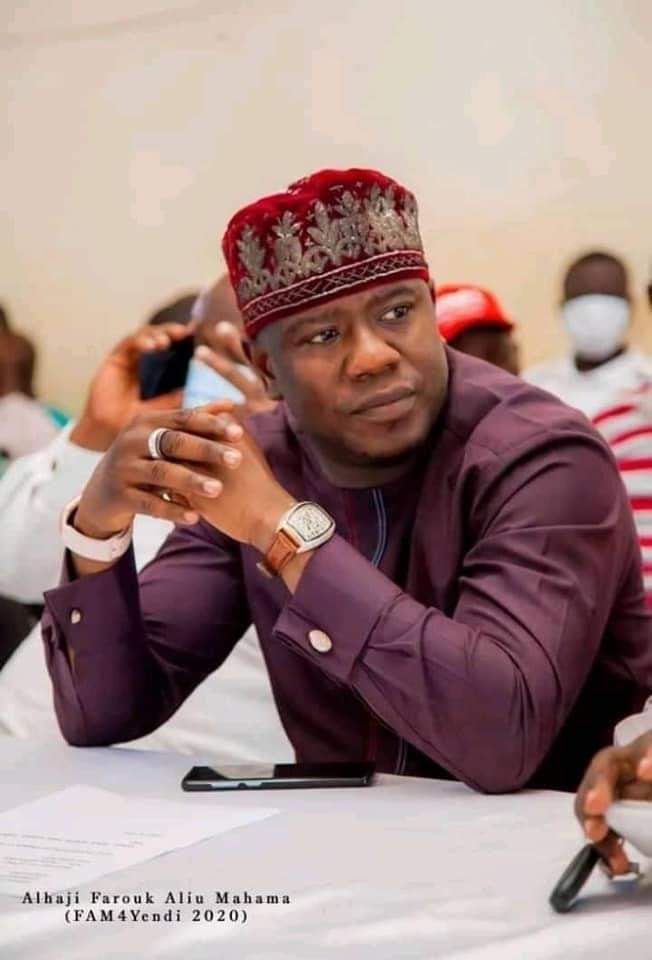
The directive urges media organizations nationwide to blacklist Farouk Mahama, the Member of Parliament for Yendi, due to his reported assault on Mohammed Aminu M. Alabira, a Northern Regional Reporter for Citi News.
The incident occurred while Alabira was covering the disruption of the New Patriotic Party’s parliamentary primary in the Yendi constituency on January 27, 2024.
Mr. Dwumfuor emphasized in the interview, “In fact, this is the way to go. We want to send a signal, a caution that we are not going to relax on our call for our members to blacklist politicians, individuals, or groups who rise against journalists or who impede press freedom and media independence… We will not entertain such acts.”
President of the Ghana Journalists Association (GJA), Albert Kwabena Dwumfuor, has raised alarm over an alleged personal threat he received from the Member of Parliament for Yendi Constituency, Farouk Aliu Mahama.
The purported threat comes in the midst of accusations against Farouk Aliu Mahama for assaulting a journalist during a tumultuous incident at the New Patriotic Party’s parliamentary primary in Yendi.
Dwumfuor revealed during a press conference on Tuesday, February 6, 2024, that he received a text message from Mahama early in the morning, which he interpreted as a personal threat. The message reportedly stated, “good morning, my lawyers are working on suing the journalist and all involved also for defamation. Rest my case. The name of the game is evidence not just allegations.”
This revelation adds another layer of tension to the ongoing controversy surrounding Mahama’s alleged assault on a journalist during the NPP primary. Dwumfuor expressed his concern over the nature of the message and declared that he perceives it as a personal threat. He asserted that as journalists, they operate based on facts and evidence, not assumptions or suspicions.
“We want to let him know that as journalists we don’t dwell on assumptions and suspicions. We only base on facts and evidence and I see this as a personal threat,” Dwumfuor stated firmly, indicating his readiness to address the matter legally.
Farouk Aliu Mahama has vehemently denied the allegations of assault and has threatened legal action against the journalist who made the accusation. However, Dwumfuor’s assertion of a personal threat from the MP further complicates the situation.
During the same press conference, Dwumfuor issued a ten-day ultimatum to both the Ghana Police Service and the New Patriotic Party, demanding swift action against the perpetrators of the alleged assault. He stressed that if the authorities fail to take action within the stipulated timeframe, the GJA and its allied bodies, including the Ghana Independent Broadcasters Association (GIBA), Private Newspaper Publishers Association of Ghana (PRINPAG), and the Media Foundation for West Africa (MFWA), will consider alternative measures.
“We are giving the NPP, Regional and National, and the Ghana Police Service ten (10) days ultimatum each to hear from them. They should arrest the perpetrators. If they fail, we shall advise ourselves,” the GJA president emphasized.
As the ultimatum looms, all eyes are on the NPP leadership and the Ghana Police Service to ensure that justice is served impartially and expeditiously.
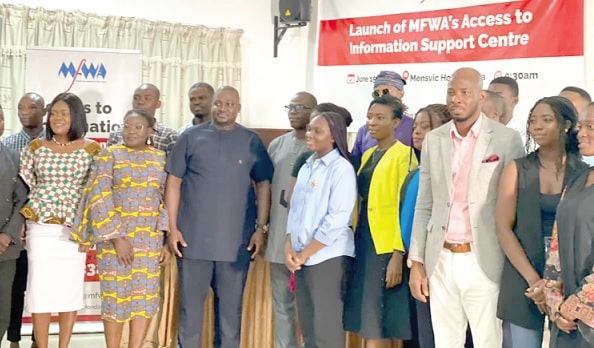
In accordance with the Right to Information (RTI) law, a resource center has been launched by the Media Foundation for West Africa(MFWA) in Accra to assist individuals who request information from governmental organizations.
The Access to Information Support Centre, which is accessible through dedicated call lines ((0531323225), WhatsApp messages (0531323225) and electronic mails (rtisupport@mfwa.org), was established by the MFWA as part of efforts by the RTI Commission to reach out to everyone.
The centre will also provide guidance on how the public can request information or appeal decisions using the law and general information about the RTI Law.
Launch
The Executive Secretary of the RTI Commission, Yaw Sarpong Boateng, who launched the centre in Accra yesterday, explained that the platform would help his outfit to educate the public, particularly the vulnerable.
He said access to information should not be downplayed in any democracy, stressing that it empowered people to hold governments accountable.
The commission, he said, placed premium on a successful implementation of the law, hence the commission’s decision to open its doors to everyone seeking to make the law work better.
He commended the MFWA for helping to enhance public knowledge on the law through various interventions.
Awareness
The Programme Manager in charge of Media and Good Governance at MFWA, Abigail Larbi-Odei, said since the passage of the RTI Law, the MFWA had implemented a series of activities to sensitise and promote public awareness of the law.
Tho activities, she said, included the publication of a Media Guide on the RTI Law and training for journalists, programme hosts and presenters on how to utilise the law for in-depth reporting and programming; training of over 150 local governmentofficials made up of metropolitan, municipal and district chief executives, coordinating directors and Information officers from various assemblies across the country on their obligations under the law, among others.
She said despite these efforts, limited awareness and uptake of the law by the public remained serious challenges.
“We believe that this Access to Information Support Centre will provide support to the general public who need guidance on how to use the RTI Law to request information from public institutions.
“Let us remember that an informed citizen is an empowered citizen, and so we encourage the government and other civil society actors, including the media, to intensify public education on the merits of the RTI Law.
“It is when the public are aware of the law and its usefulness to their lives, democracy and governance that they will be better empowered to utilise it,” she added.
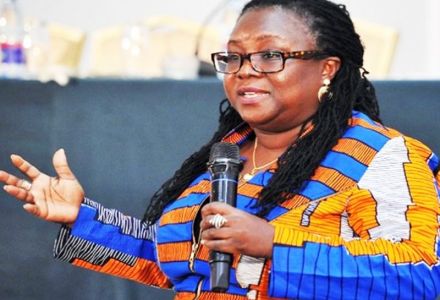
Former dean of the School of Information and Communications Studies at the University of Ghana,Professor Audrey Gadzekpo, has urged media owners to address the miserable working conditions for journalists.
She challenged media owners to improve the appalling working conditions of journalists.
A recent report by the University of Ghana’s Department of Communications Studies in collaboration with the Media Foundation for West Africa (MFWA) dubbed, ‘the State of the Ghanaian media report,’ exposed the poor working conditions of many journalists in Ghana.
The average Ghanaian journalist according to the report earns GH¢500 and GH¢1,000 monthly with many owed arrears over the years.
Speaking to Citi News, Professor Audrey Gadzekpo said the poor working conditions of journalists make them vulnerable.
“Working conditions of journalists are very poor and it makes the practice of journalism even more precarious than you will think it should be. And I really do think that media owners and media managers must be engaged on this very critical issue. Of concern is the politicisation in media ownership, and the fact that it’s opaque, it’s not transparent,” Professor Audrey Gadzekpo suggested.
Some key findings in the report
FINANCIAL VIABILITY OF MEDIA
■ Generally, many media organisations in Ghana are not profitable; they only break even
■ The financial viability of many media organisations in Ghana is threatened.
■ Media in Ghana are creatively exploring new business models to stay alive; including digitization, conglomeration, events marketing and crowdfunding.
■ Digital technologies are fast-changing media financing models in Ghana.
■ Digital media are now a major source of income in the Ghanaian media.
■ One of the biggest threats to the financial health of the media is industry saturation.
WORKING CONDITIONS IN THE GHANAIAN MEDIA
■ Recruitment into the Ghanaian media is generally untransparent.
■ Many people working in the media do not have contracts.
■ There are no established structures for promotion in most media organisations; promotion is largely based on ‘whom you know’ and owners’/managers’ whims.
■ Salaries in the media are woefully low. Some employees work long months without pay.
■ Most media employees have no healthcare support
■ Most media organisations do not provide counselling support for employees who experience trauma in the line of work.
MEDIA OWNERSHIP AND REGULATION
■ In Ghana, media pluralism has not necessarily served the public interest, due mainly to concentration of media in a few hands.
■ Media ownership is shrouded in opacity.
■ There is a growing tendency towards media empire-building.
■ Political faces behind broadcast media ownership mean that partisan actors and governments can control public discourse.
■ The NCA has a laissez-faire attitude to questions about transparency in media ownership.
■ The current regime for broadcast regulation allows considerable power and influence to those whose conduct the media are supposed to check.
SAFETY OF JOURNALISTS
■ There is a growing sense of insecurity among journalists in Ghana
■ Violations of journalists’ safety are quite common in Ghana.
■ Male journalists are more at risk of attacks than females.
■ Investigative journalists are the most at risk of attacks
■ State actors, including political appointees and police are the worst perpetrators of attacks on journalists.
■ Journalists feel that law enforcement agencies and the judiciary do little to protect their safety.
A 34-year-old unemployed man, Kofi Amenyenu, has been remanded into Police custody for stealing by the Hohoe Circuit Court.
Amenyenu pleaded guilty to the Cou rt with an explanation that he had no knowledge that the items found in his possession were stolen so the Court changed his plea to not guilty and adjourned the case to October 26 for disclosures to be exchanged between the prosecution and the accused.
Prosecuting, Inspector Rachel Osei Agyapomaa, told the Court presided over by Mr Michael Johnson Abbey, that the complainant is a trader whilst the accused person is an unemployed person who lives at the Hohoe lorry station.
She said on October 10, at about 0700 hours the complainant kept her sack of plantain and a basket of banana valued GH₵400 under a shed, where she normally kept her products and left for home.
Inspector Agyapomaa said the complainant returned to the shed the same day and could not trace the items and began to look for them but one Wutsi, a witness in the case came to inform the complainant that her missing goods were stolen by the accused.
She said the complainant and the witness went to the Police station and made a report where they together with the police they proceeded to the place of abode of the accused, but he was not there.
Inspector Agyapomaa said however they found a sack of plantain and a basket of banana were found in his abode.
She said the following day, the Police, with the assistance of the complainant, arrested the convict for investigations.
Inspector Agyapomaa said the convict in his cautioned statement said that the goods were brought to him by the witness, Wutsi but investigations proved that this claim by the convict was false.
The National Media Commission (NMC), Media Foundation for West Africa (MFWA) and the Ghana Peace Council have held deliberations over minimizing hate speech and violence before, during and after the 2020 general elections.
According to a member of the Commission, Addoquaye Moffat all entities have met to fine-tune a document intended to guide citizens and the media in maintaining peace and tranquillity in the upcoming general elections.
“The highlights of the documents were centered on hate speech, abusive language, and election-related violence which averts to peace especially in an election year. We encourage the media in Ghana to maintain a middle line to ensure that through them a balance will be maintained to avert any unnecessary conflicts ahead, during and after the upcoming elections.â€
Addoquaye Moffat said this at a National Forum on Media and Peaceful Elections in Ghana on Thursday, October 22, 2020. The event which was held in Accra was organised by the Media Foundation For West Africa (MFWA).
Meanwhile, the Media Foundation for West Africa at the Forum provided an Elections Communication Guide to be used by the media ahead of the elections to assist their operations.
Executive Director of Media Foundation for West Africa, Suleimana Braimah urged the media to be circumspect in their reportage and called on all media houses to desist from allowing hateful and inciteful messaging on their platforms as Ghana soon heads to the polls.
Some guests that graced the forum were, Addoquaye Moffat of the National Media Commission, Director of Public Affairs for the Ghana Police Service, Supt. Sheila Kessie Abayie-Buckman, Micheal Boadu of the Electoral Commission, Chairperson of the NCCE, Ms. Josephine Nkrumah, Rev. Prof. Emmanuel Asante, Chairperson of the National Peace Council, Netherlands Ambassador to Ghana, H.E Ron Strikker.
The National Communications Authority (NCA) has asked the Media Foundation for West Africa (MFWA) to pay a sum of GHS2000 in order to have access to information the Foundation requested.
In a letter written back to the MFWA dated, 20 August 2020, the NCA explained that the payment satisfies a requirement per Section 82 (1) (b) of the Electronic Communication Act 2008, Act 775 to facilitate the generation of the search report.
Responding to the NCA’s letter, the Executive Director of MFWA, Mr Sulemana Braimah, took to Facebook on Wednesday, 26 August 2020 to say: “NCA paaa! You shut down radio stations. We write to ask you under RTI for the full list of the stations you shut down and you say we should pay GHS2,000 for you to do a search to get us the list? A search for what? The list? OK, we hear.”
The MFWA wrote to the NCA requesting information under Article 12 (1) (f) of the 1992 Constitution of Ghana and section 18 of the Right to Information Act 2019 (Act 989).
The letter, signed by Mr Braimah and dated Wednesday, 22 July 2020, requested “the full list of all authorised FM stations as of the second quarter of 2020, indicating the dates of first authorisation, dates of last authorisation renewals, locations, and operational status (on-air or off-air).â€
The MFWA also requested “the full list of all authorised television stations as of the second quarter of 2020, indicating dates of first authorisation, dates of last authorisation renewals, locations and operational status.â€
Additionally, the MFWA demanded “an explanation for the recent replacement of your published 2020 second-quarter report titled: “List of authorised VHF-FM Radio Stations in Ghana as at Second-Quarter 2020†which contained columns of date of first authorisation and date for last authorisation renewal, with one that excludes the dates of first authorisation and dates of first authorisation renewals.â€
The letter also requested “the full list (name of the company, name of the radio station, location and frequency number) of all FM radio stations that were shut down following the 2017 FM spectrum audit and in line with the 2018 decision of the Electronic Communication Tribunal.â€