Tag: migrant

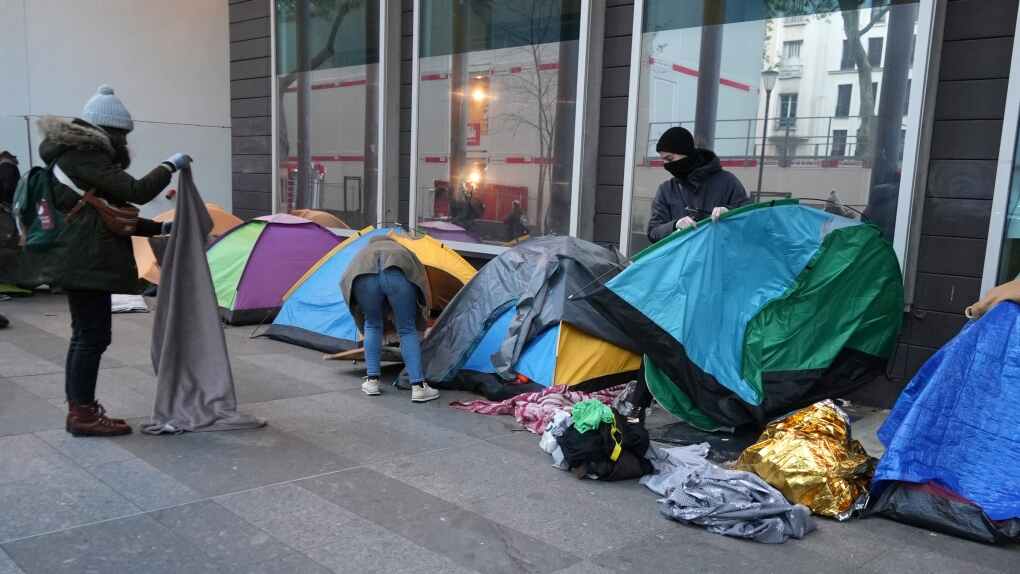
  • Migrant camp in central Paris being cleared by police

    Migrant camp in central Paris being cleared by police

    The police in France removed migrants from a temporary camp in Paris near the Seine River on Tuesday. Aid groups say this is part of a plan to clear out poor people before the Summer Olympics.

    Early in the morning on a very cold April day, police woke up about 30 young boys and men from West Africa. They were told to pack up their tents and things. Most of them were young and trying to get papers to live in the country.

    “I was already afraid, but now I’m even more scared because I don’t know where to go,” said 16-year-old Boubacar Traore. He ran away from fighting in Burkina Faso and came to France two months ago.

    The police evicted a big squatter camp near Paris a few days ago. Now they are carrying out an operation.

    Every spring, migrant tent camps are cleared out after a break in the winter. During the break, the authorities do not remove anyone from the camps.

    “But organizations helping migrants and other vulnerable people in Paris are saying that they are working harder before the Olympics. ” They mention that instead of getting a place to stay near Paris, where many asylum-seekers have court dates, they are being sent far away from the capital.

    The officials want to make sure the Olympics Games are held in a tidy place. “They want to hide the fact that many migrants and asylum seekers live in Paris from the tourists,” said Elias Hufganel, a volunteer helping refugees and immigrants at the Paris tent camp on Tuesday.

    The police in Paris did an operation for safety reasons because the tent camp was close to schools.

    Two big buses were on a street nearby going to Besançon, which is about 400 kilometers (240 miles) southeast of Paris. Officials suggested moving the young men to a new place and giving them a place to stay for three weeks. But many people didn’t want to accept the offer because they were afraid of becoming even more alone and not having a plan after the three weeks ended.

    Traore didn’t want to go on the trip because he has a court date in Paris in two days. We didn’t know where he would sleep on Tuesday night.

  • Mass grave in Libya has at least 65 migrant corpses – UN

    Mass grave in Libya has at least 65 migrant corpses – UN

    A lot of dead bodies, at least 65, have been found in a big hole in Libya, according to the International Organization for Migration (IOM).

    The IOM said they don’t know how they died or where they were from, but they think they died while being taken through the desert to the Mediterranean.

    The United Nations organization said it was very surprised by the discovery.

    Libya is looking into it, the IOM said.

    The tomb was discovered in the southwest part of Libya.

    A person from IOM said that every time a migrant goes missing or dies, it makes their family very sad and they want to know what happened to them. It is a very sad and tragic situation.

    Not doing enough has led to more people dying and migrants suffering in terrible situations.

    The group said the sad event showed that we need to work together to stop people from being smuggled and to find legal ways for them to come to our country.

    Libya is one of the main places where people leave from to try to cross the Mediterranean Sea and get to Europe.

    The IOM in Geneva wants Libyan authorities and other UN agencies to make sure that the bodies are treated with respect and transferred in a dignified way.

    A lot of people died when the boat they were on had problems in the sea. Now, a lot of their bodies have been found in a big hole in the ground. This happened after about 60 people, who were trying to get to Europe from Libya, died.

    The IOM recently announced that 2023 was the worst year for migrants in the past ten years, with more than 8,565 people dying while trying to migrate to different places around the world.

    The United Nations agency helps people in Libya who are in need. They said the number of people they helped increased by 20% from the previous year.

  • 2021 migrant killings: Mexican police officers convicted

    2021 migrant killings: Mexican police officers convicted

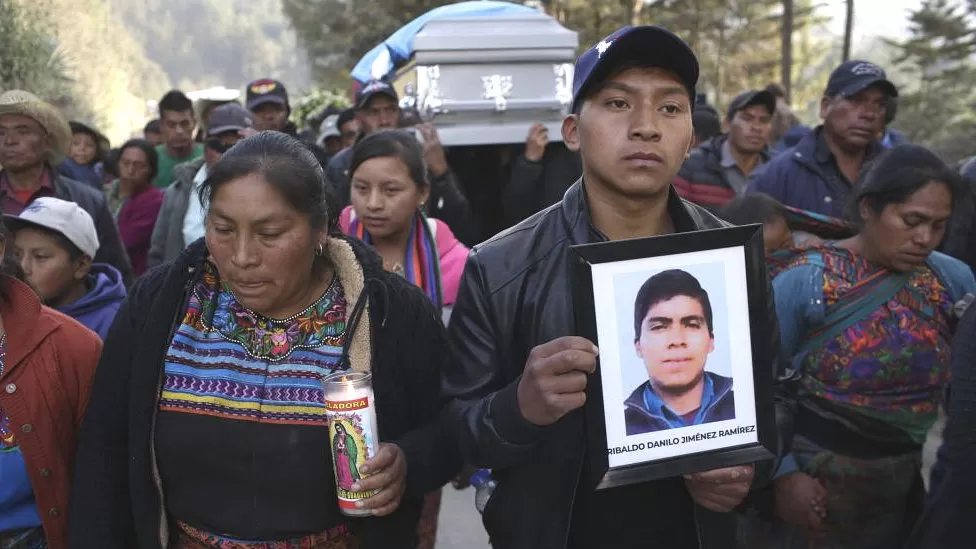
    A Mexican court has convicted 11 former police officers for the murder of a group of migrants near the US border in 2021. The victims’ bodies, totaling 17, were discovered in a burned-out vehicle in Camargo, Tamaulipas state.

    Investigations revealed that they fell victim to a turf war among criminal groups vying for control of migrant smuggling routes in the region.

    Annually, thousands of individuals from Central America undertake the arduous journey through Mexico with the goal of reaching the United States. In January 2021, authorities found a total of 19 charred bodies inside the vehicle in Camargo.

    Sixteen of the victims hailed from Guatemala, one from Honduras, and two were Mexican traffickers transporting them to the border. Forensic analysis confirmed that they were shot before the vehicle was set on fire.

    Initially, a total of 12 officers were facing murder charges, but one of them chose to cooperate with investigators, resulting in a conviction for abuse of power instead.

    Among the victims was Marvin Tomás, a 22-year-old football player hailing from Comitancillo, Guatemala.

    Tragically, the killing of migrants is a distressingly common occurrence in Mexico. In 2010, a horrific incident saw the murder of 72 migrants in San Fernando, also situated in Tamaulipas state. In 2012, the discovery of 49 dismembered bodies in Cadereyta, Nuevo León, further underscored this grim reality.

    The Zetas cartel exercises significant control over this region and is known to target migrants attempting to pass through without paying fees to the gang.

    Cartels routinely enlist municipal and state police officers, often through a combination of lucrative incentives and threats, to either turn a blind eye to their activities or actively facilitate safe passage.

  • Rapper from France postpones performance in Tunisia due to migrant treatment

    Rapper from France postpones performance in Tunisia due to migrant treatment

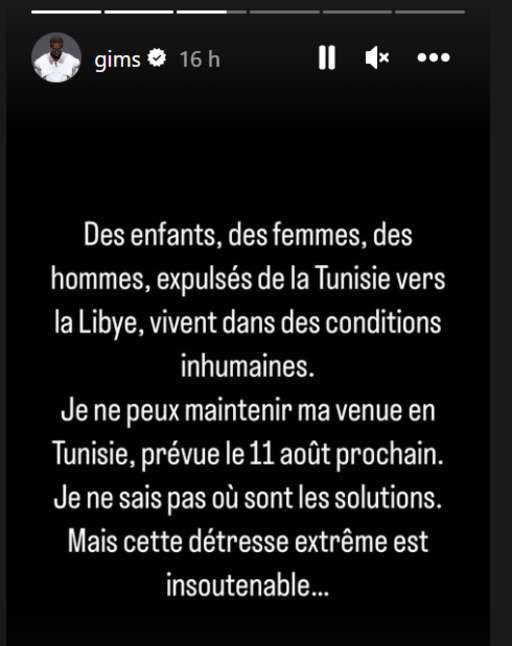
    Congolese-born French rapper Maitre Gims has cancelled a concert in Tunisia that was scheduled for 11 August.

    In an Instagram story, the rapper cited the mistreatment of migrants for the cancellation saying: “Children, women, men expelled from Tunisia to Libya, live in inhumane conditions. I cannot maintain my visit to Tunisia.”

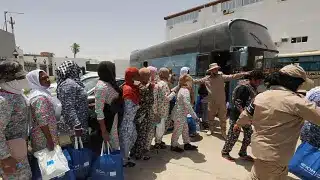
    Dozens of sub-Saharan migrants were recently rescued by Libyan guards in a desert area along the border between Libya and Tunisia. The migrants reported that they had been abandoned there without any provisions of water, food, or shelter after arriving from Tunisia.

    Tunisia has become a major departure point for migrants attempting to make the perilous journey across the Mediterranean to Europe.

    In recent months, black migrants in Tunisia have faced violent attacks as the environment has grown increasingly hostile towards them.

    Tunisia’s President, Kais Saied, has previously made accusations against migrants, suggesting they were involved in a “plot” to alter the country’s demographic profile and accused some of being “traitors” working for foreign countries. However, he later denied any racist intent behind his remarks.

  • Beaches in Senegal where migrants are buried

    Beaches in Senegal where migrants are buried

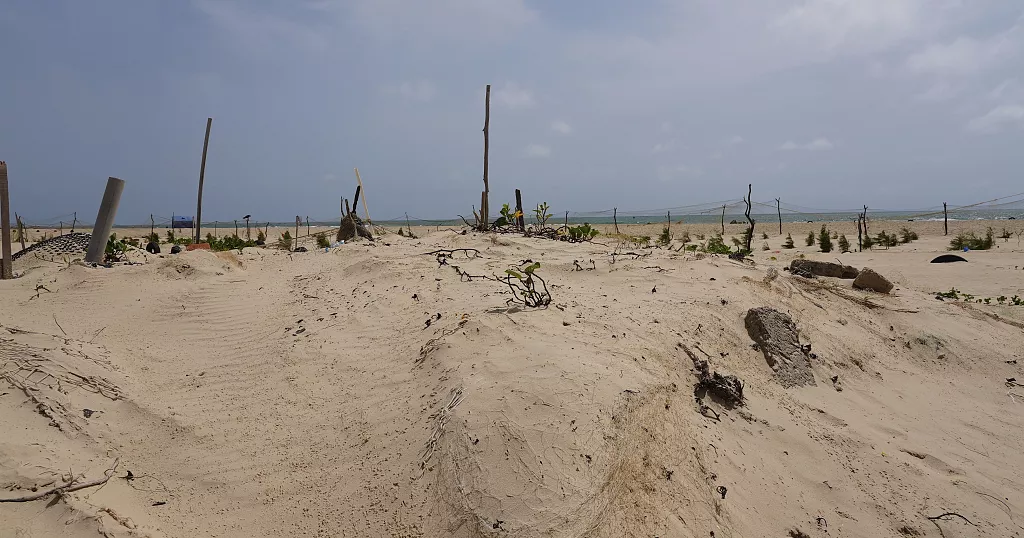
      A beach in northern Senegal has a few small sand mounds that mark the resting sites of countless migrants who attempted the perilous voyage from West Africa to Spain.

      The 19- and 24-year-old nephews of Mouhamed Niang vanished in late June.

      “I’ve been looking for my nephews for three weeks now without any news from them,” he says. 

      “I heard the government say there are some bodies collected onshore and buried in graves near the beach. That is really awful.”

      According to the U.N. International Organization for Migration, at least 2,300 migrants left Senegal in the first half of the year in an attempt to reach Spain’s Canary Islands, but only around 1,100 made it.

      The fate of the more than 1,000 individuals who did not travel to Spain is unknown. They might have perished at sea, been saved from sinking boats, or be in custody of the law.

      Ibnou Diagne, one of the survivors from a boat that capsized in early July while traveling to Europe, spoke of his ordeal.

      “I lost many people when the boat capsized. I lost my friend Abdourahmane. I lost everything. I paid money, the first time 420 dollars and 680 dollars the second time.

      “The sea is not good. I lost everything. I lost my clothes. If I were to give advice here it is. If someone wants to travel to Spain, don’t take a pirogue [canoe], you have to take a plane.”

      Beach burials, a tradition that has been observed for many years, experienced a significant surge in 2023. In the initial seven months alone, approximately 300 bodies were laid to rest on the shores, surpassing the previous year’s total of just over 100 burials in 2022.

    • Human Rights Watch urges Tunisia to stop expelling migrants to desert

      Human Rights Watch urges Tunisia to stop expelling migrants to desert

      Human Rights Watch called on Tunisia on Friday to halt what it described as “collective expulsions” of Black African migrants, who are being relocated to a desert area near the Libyan border.

      Over the past week, hundreds of migrants from Sub-Saharan Africa have been forced out of the port city of Sfax and left stranded in extremely poor conditions in southern Tunisia.

      These expulsions have occurred amidst a backdrop of violence following the funeral of a 41-year-old Tunisian man who was fatally stabbed in Sfax during a clash between Tunisians and migrants.

      Sfax, the second-largest city in the North African country, serves as a departure point for many migrants aiming to reach Europe via sea, often with the Italian island of Lampedusa located approximately 130 kilometers (80 miles) away.

      “Tunisian security forces have collectively expelled several hundred Black African migrants and asylum seekers, including children and pregnant women, since July 2, to a remote, militarised buffer zone at the Tunisia-Libya border,” HRW said.

      “Many reported violence by authorities during arrest or expulsion,” the New York-based watchdog said in a statement.

      HRW’s Lauren Seibert urged Tunisia’s government to “halt collective expulsions and urgently enable humanitarian access to the African migrants and asylum seekers already expelled to a dangerous area”.

      The group said migrants it interviewed alleged “several people died or were killed at the border area” between Sunday and Wednesday, “some shot, and others beaten” by Tunisian security forces.

      “They also said that Libyan men carrying machetes or other weapons had robbed some people and raped several women,” HRW reported, adding it was unable to independently confirm the accounts.

      HRW called on the government in Tunis to “investigate and hold to account security forces implicated in abuses”.”African migrants and asylum seekers, including children, are desperate to get out of the dangerous border zone and find food, medical care, and safety,” Seibert said. “There is no time to waste.”

      Tunisia has seen a rise in racially motivated attacks after President Kais Saied in February accused “hordes” of undocumented migrants of bringing violence and alleging a “criminal plot” to change the country’s demographic make-up.

    • More than 100 migrants from Nigeria deported from Libya

      More than 100 migrants from Nigeria deported from Libya

      On Tuesday (20 June), the Libyan government sent over a hundred Nigerians back home. The female migrants who voluntarily decided to go back to Nigeria departed the Tripoli deportation office.

      A spokesman for the Libya Anti-Illegal Immigration department details the conditions under which the women who did not have a legal right to reside in the north African nation were arrested.

      “Today, Tuesday, June 20, 2023, illegal immigrants of Nigerian nationality are being deported. Some of them were arrested on public roads while practicing begging.”

      The deportation was supervised by the International Organization for Migration (IOM), as part of an ongoing joint program with the Libyan government to deport illegal migrants.

      Libya is a major starting point for migrants who wish to cross the Mediterranean to Europe in search of a better life.

      “About 165 illegal immigrants were deported today, in coordination with their embassy. There will be another flight next week to deport other Nigerian immigrants. Work will continue on the deportation operations.”

      IOM Libya’s Displacement Tracking Matrix programme identified a total of 706,062 migrants from over 44 nationalities in the 100 Libyan municipalities during its (January – February 2023) round of data collection.

      Nigerian nationals were among the top five nationalities which included Nigeriens, Egyptians, Sudanese and Chadians.

    • Migrants heading to Europe perish in boat disaster

      Migrants heading to Europe perish in boat disaster

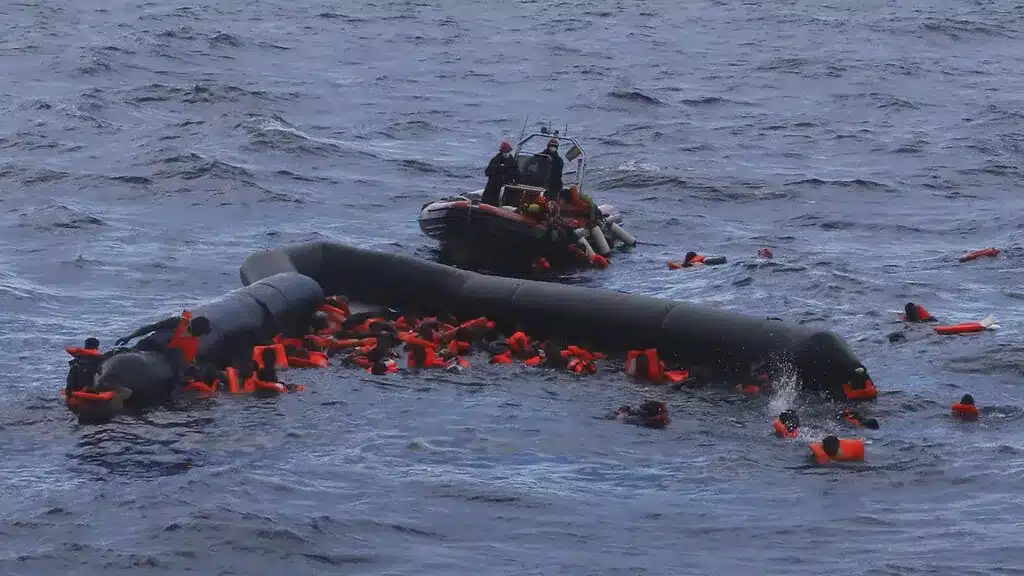
      Off the coast of Tunisia, ten individuals who were sailing to Europe perished in the sea after their boat capsized.

      According to the coast guard, 72 of the passengers, all of them were from sub-Saharan Africa, were saved close to the coastal city of Sfax.

      As the primary departure point for individuals escaping poverty and conflict in Africa and the Middle East, Tunisia has replaced Libya.

      The Tunisian National Guard says 14,000 migrants have been rescued in the first three months of this year – five times more than in the same period last year.

    • Tunisia: 10 migrants from Africa perish as boat capsizes

      Tunisia: 10 migrants from Africa perish as boat capsizes

      Ten migrants from sub-Saharan Africa who were trying to enter Europe illegally perished after their boat capsized in the Mediterranean Sea off the coast of Tunisia, according to the Tunisian coast guard on Wednesday.

      “Seventy-two migrants were rescued and ten bodies were recovered after the sinking of the boat on Tuesday” off Sfax in east-central Tunisia, National Guard spokesman Houssem Jebabli told AFP, saying the dead were nationals of sub-Saharan African countries.

      In a statement, the National Guard said Tuesday to have foiled “two operations of illegal crossing of maritime borders”, that off Sfax and a second in the north of the country.

      In total, 76 migrants including only four Tunisians were rescued

      In addition to the ten dead, “between 20 and 30” other African migrants are missing after the shipwreck off the coast of Sfax, told AFP the spokesman for the local court investigating this drama, Faouzi Masmoudi,

      Twenty-seven migrants from sub-Saharan Africa had died or are missing after two other shipwrecks Friday and Saturday off Tunisia.

      At the end of March, the bodies of 29 other migrants from sub-Saharan Africa were recovered after three separate shipwrecks off the coast of Tunisia.

      Tunisia, whose coastline is less than 150 km from the Italian island of Lampedusa, regularly records attempts by migrants, mostly from sub-Saharan African countries, to leave for Italy.

      The departures intensified after a violent speech on February 21 by Tunisian President Kais Saied, who denounced illegal immigration.

      Saied said the presence in Tunisia of “hordes” of illegal immigrants from sub-Saharan Africa was a source of “violence and crime” and a “criminal enterprise” aimed at “changing the demographic composition” of the country.

      After this speech, a significant portion of the 21,000 sub-Saharan Africans officially registered in Tunisia, most of whom were in an irregular situation, lost their jobs, usually informal, and their housing overnight as a result of the campaign against illegal immigrants. Most African migrants arrive in Tunisia and then attempt to immigrate illegally by sea to Europe.

      On Friday, the National Guard announced that it had rescued or intercepted “14,406 people, 13,138 of whom were from sub-Saharan Africa, the rest being Tunisians,” in the first three months of the year, more than five times the number recorded for the same period in 2022.

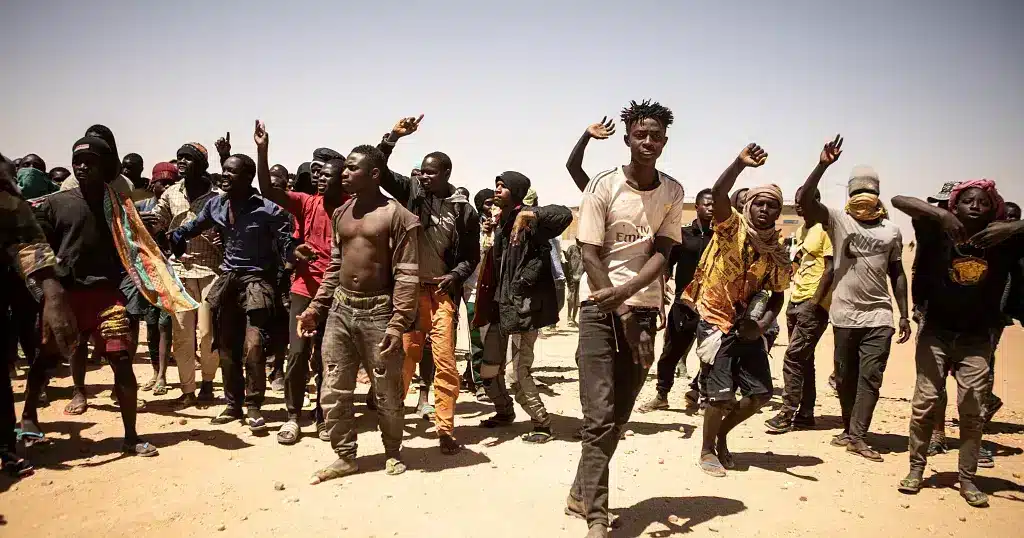
    • Many people are still stranded in the migrant camps in Niger

      Many people are still stranded in the migrant camps in Niger

      Hundreds of migrants who were turned away by Algeria arrive at Assamaka, the first settlement on the Niger border, every week. More than 4,500 of them are currently stumbling around this little, windswept island.

      They can suddenly appear on the horizon in a straight line. The strongest in front, the weakest behind, long lines of silhouettes move through the desert.

      Malians, Guineans, Ivorians, Syrians, Bangladeshis… After a 15 km walk in the desert, the expellees discover a new purgatory.

      The transit center managed by the International Organization for Migration (IOM), the main intergovernmental organization in this field, is overwhelmed by the influx and only takes in about a third of the deportees.

      “When we arrived here, we were told that we are not recognized as IOM migrants and therefore we only have to pay for our transportation back home,” said Abdoul Karim Bambara, an Ivorian.

      In Assamaka, the water tanks are empty, the rations insufficient and the shelters too rare, while the temperature sometimes approaches 48 degrees during the day. Thousands of people are crammed against walls or under makeshift tarpaulins to find a spot of shade.

      Stripped of all their belongings in Algeria, according to their testimonies, the refouled can neither call their relatives nor pay for the return trip. They are then condemned to survive in this sand prison for an indefinite period of time, often several months.

      Cattle

      Some are doctors, students, traders. But around the barbed wire walls of the center, there are no more individuals. Just a crowd rumbling and jostling to scream out their despair, their scabies-infested skins, their infected wounds, their empty bellies and their ingrained traumas. And the end of all humanity. “We have become cattle!” rants Herman, an Ivorian migrant.

      “Did you see that!” a man interrupts him, pointing to a handful of sticky rice infested with flies. “Can you eat that? You get sick from that!”.

      Away, two groups of hungry people throw stones at each other in a cloud of dust. The brawls are incessant. A few days earlier, the death of a Cameroonian migrant provoked a riot that was dispersed by tear gas. The IOM transit center was attacked and looted by the protesters.

      “We are all traumatized. People can’t control themselves, there’s something wrong with their heads, nothing is right here! People are dying!” raged Aboubacar Cherif Cisse, a native of Sierra Leone.

      If there was enough to eat people would not fight, but there is no food, so what can they do? If they have nothing, they will fight, just to survive,” assures Mohamed Mambu, delegate of the Sierra Leoneans at the transit center of Arlit.

      The 1,500 inhabitants of Assamaka are overwhelmed by this uncontrollable neighborhood. “They are everywhere in the village, near the health center, under the walls,” said François Ibrahim, representative of the local NGO Alarme phone Sahara, which provides first aid to migrants in the desert.

      The migrants “steal the animals of the population to slaughter them. It is not because they are the thieves, but when the belly is hungry …” he laments.

      – “Unprecedented” –

      The number of migrants rejected at the gates of Niger has not stopped increasing since the beginning of the year. A situation “without precedent” according to Doctors Without Borders.

      From the Algerian border to Agadez, the regional capital located 350 km away, the transit centers are all clogged. The roads leading further south are under threat from jihadist groups, forcing expensive charter flights to repatriate migrants to their countries of origin.

      “The flights are often cancelled (…) But every week there are expulsions,” explains Ousmane Atair, manager of the Arlit transit center for IOM.

      Located in northern Niger, the Agadez region pays the price of relative stability. “The Assamaka-Arlit axis is the most secure, which is why all the migratory flows are directed to this side,” emphasizes the mayor of Arlit, Abdourahamane Maouli.

      But international aid is mobilized elsewhere by other security and humanitarian crises. IOM’s main donor in the region is the European Union, which funds most of the flights bringing migrants back to their countries of origin.

      For Alarme phone Sahara, “the IOM plays a key role in the policy of outsourcing borders on African soil by the European Union states”, anxious to keep the migratory pressure away from the Old Continent.

      Since the outbreak of the Libyan crisis in 2011, “Agadez is the last door, and it was necessary to secure the journey of all these asylum seekers. But in reality, it was an airlift to discourage them,” says Tari Dogo, secretary general of the regional council of Agadez, who sums up a feeling widely shared in the region: “The European Union has its share of responsibility in this situation.

    • 21 Illegal migrants busted

      Vigilante Immigration officers at the Babile Inland post in the Upper West Region have intercepted 21 persons onboard a Benz sprinter bus with registration number AS 8400 13 from Lawra to Techiman.

      They are made up of 14 Ghanaians and 7 Burkina Faso nationals.

      The Ghanaians comprises of five male adults and seven female adults as well as two children. On the other hand, the Burkinabes comprises of two males and 2 females as well as three children. The ages range of all the 21 persons are between 3 and 46.

      Initial investigations indicated that their migration was for farming activities around Techiman and its environs.

      The Ghanaians were handed over to the health personnel for screening and further action while the other ECOWAS nationals were examined/screened by the health personnel and detained under monitoring pending repatriation back to Burkina Faso.

      Source: Kasapa FM

    • The Chronicle Editorial: So the welfare of economic migrants is important than that of Ghanaians?

      The Daily Graphic last week Saturday carried a story at its front page about children who have besieged the streets of Accra begging for alms. This is not the first time the paper has carried such a story. A year ago, the state-owned paper published a similar story that drew the attention of the authorities to the looming danger.

      Though the paper quoted the numerous steps the Department of Social Welfare has taken to address the issue, The Chronicle is still not convinced that the problem is properly being addressed.It is undeniable fact that the majority of these street begging children are not Ghanaians . They are mostly Nigerians, Nigerians, Malians and other West African nationals.

      Information we are picking, which we believe may be available to the National Security Secretariat, is that because our economy is performing better than the countries we have just mentioned, it has become a lucrative business for businessmen to transport these children and their parents to Ghana to beg for alms.

      We have always used to this column to argue that though the protocol of Economic Community of West Africa States (ECOWAS) allows the free movement of persons among member states, it does mean that people should be abused from one country to the other for economic reasons.

      Unfortunately, because Ghana considers herself more catholic than the Pope, we are allowing these businessmen and women transport these beggars and dump them on us. Regrettably, it is only few foreigners visiting our country who would recognise these children and mothers as non-Ghanaians. The rest would automatically assume that they are all Ghanaians who have flooded our streets harassing people for money.

      We seem to be joking with fire because should these non-Ghanaian children and their mothers be carrying any contagious diseases, it will be easy for them to spread it in Ghana. Again, since some of these children and their mothers are coming from war ravaged countries, it would be easy for them to to be radicalised and cause mayhem in future.

      We are entertaining this fear because these children are not being given any formal education – meaning they would grow up to become vagabonds and cause all manner of societal problems for the country.

      Our information is that these beggars were on the streets of Abidjan doing similar business – begging for alms – but the Ivorian authorities rounded them up and sent them back to the countries they came from. The Ivorian authorities were forward looking and saw the dangers ahead of them, hence, the action they took.

      The Chronicle is aware that somewhere last year, the Ministry of Gender and Social Protection rounded up these children and their mothers and sent them to the Nigerian Embassy in Accra for onward repatriation. But because we as a country were interested in the arrest and not the repatriation, the Nigerian Embassy released their compatriots who have come back to the streets. Interestingly, none of the officials the Graphic reporter spoke to admitted that the beggars are mostly non-Ghanaian.

      What these officials from the Accra Metropolitan Assembly (AMA) and Korley Klottey Municipal Assembly are interested in are the services they intend to render to these children.

      They are not concerned about the busing of foreigners into our country to beg for money. If we have the resources to take care of children from other countries, then we call on these authorities to extend similar services to Ghanaian children in all parts of the country.

      Go to our various communities and you realise that because of abject poverty, most of our children are not in school. Should these children also be transported to Accra before we see the need in attending to their plights? We are not prophets of doom, but the nation can be assured that should these benevolence from the AMA and Korley Klottey assembly continue, more of these children from foreign countries are going to flood our streets begging for money.

      Ghana should not be bearing the brunt of policy failures our sister countries and also serving as refugee camps for citizens fleeing the harsh economic conditions. We have our problems that we are grappling with, and this should be utmost concern, and not the other way round.

      Source: The Chronicle

    • Channel migrants: Ninety rescued from small boats

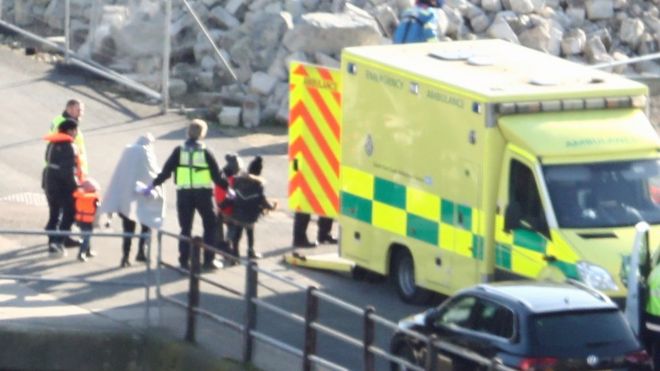
      Migrants lead away in DoverImage copyrightPA MEDIA
      Image captionChildren appeared to be among migrants lead to an ambulance in Dover

      Ninety migrants including children have been rescued from the English Channel, a record figure for a single day.

      Eight small boats were earlier reported off the coast of Dover, one of which was carrying a group of 21 men.

      Fifteen of the 90 “claimed to be minors”, the Home Office said as it confirmed those rescued included nationals of Syria, Yemen and Mali.

      The migrants will be “dealt with according to immigration rules”, it added.

      The rescued children, subject to age assessment, will be transferred into the care of social services.
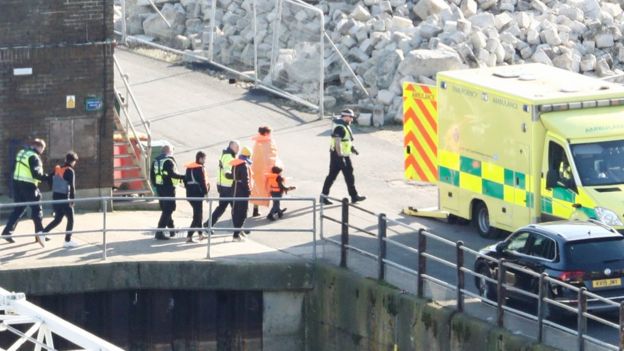
      Migrants in DoverImage copyrightPA MEDIA
      Image captionAn ambulance was on hand to assess the health of those who crossed the Channel

      Six boats were intercepted in the Channel by Border Force, with a group of five migrants found by police in Dover town centre and another five people found in Samphire Hoe.

      RNLI lifeboats from Dover and Littlestone and a fixed wing aircraft and HM Coastguard Search and Rescue helicopter from Lydd were scrambled this morning.

      Home Office vessels Searcher, Speedwell and Alert were sent to intercept the boats.

      Tony Eastaugh, Home Office director for crime and enforcement, said the government was “tackling illegal migrant crossings on all fronts with every agency”.

      Patrols of French beaches have been increased, with the use of drones, specialist vehicles and detection equipment, he said.

      Last year at least 1,892 arrived in Britain after crossing the Channel in boats.

      French authorities have said 371 migrants attempted the crossing last month, with 95 of them succeeding.
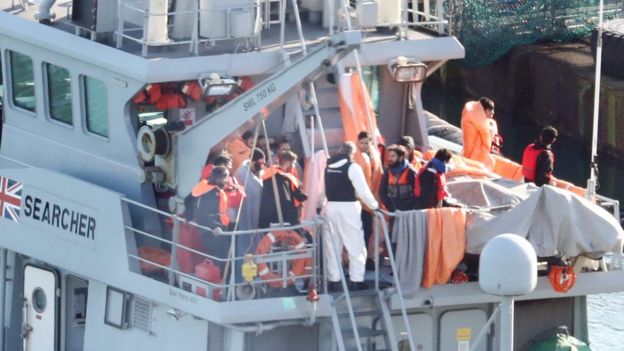
      SearcherImage copyrightPA MEDIA
      Image captionTwo boats carrying 26 men were met by Border Force in the ChannelSource: bbc.com