Tag: Militia

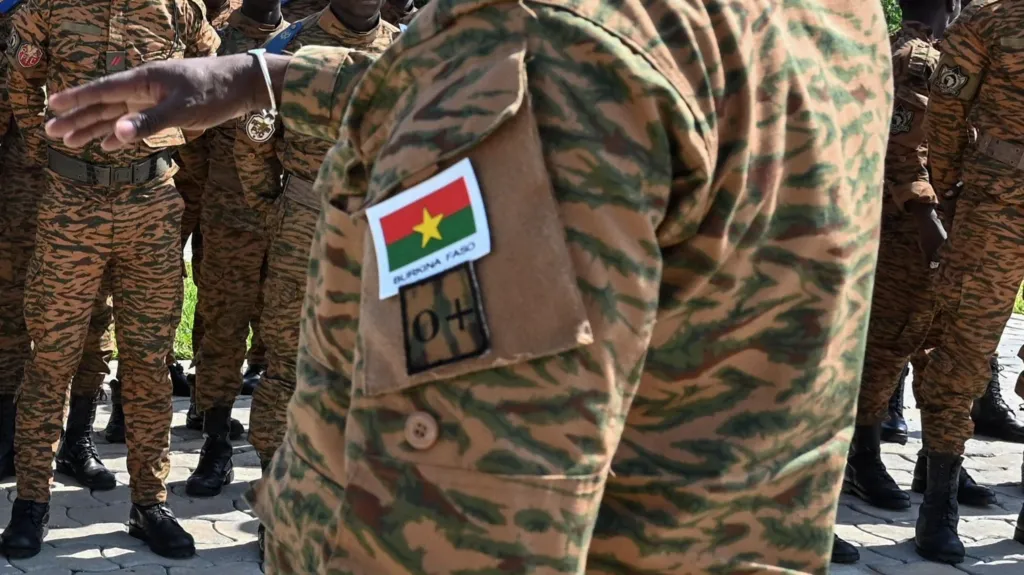
  • Over 100 civilians were  reportedly killed by Burkina Faso military

    Over 100 civilians were reportedly killed by Burkina Faso military

    Burkina Faso government forces and allied militias, reportedly killed at least 130 civilians in March this year in the western town of Solenzo.

    According to Human Rights Watch (HRW), the deceased were victims of a “massacre” operation which was led by Burkinabè special forces.

    The incident reportedly resulted in the displacement of ethnic Fulanis.

    Fulanis are largely made up of Muslims and pastoralist, who have faced frequent accusations by the government Burkinabè of supporting Islamist militants.

    In West Africa’s Sahel region ‘s groups linked to al-Qaeda and Islamic State are controlling about 40% of Burkina Faso.

    Meanwhile, much has not been done despite promises made by military leaders of the country to put a halt on killings within the area.

    The Burkinabè government in 2024, refuted a report by HWR that indicated that 223 civilians were killed by another “massacre” exercise.


    However, the HWR supported its claim with videos that had gone viral during the incident after an interaction with militia members, journalists and the civil society.

    The Human Rights Watch has urged the government to hold perpetrators a culprits accountable after its investigations.
  • Israel moves Jews from conflict zone in Ethiopia

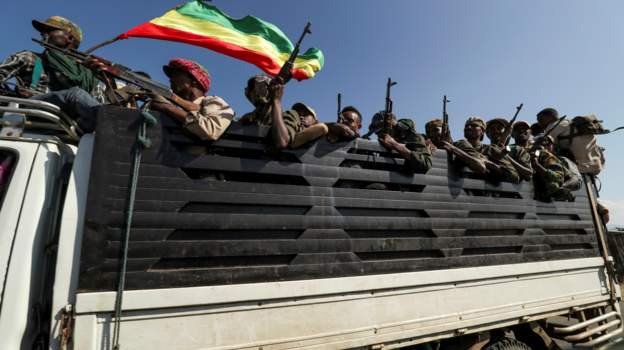
    Israel moves Jews from conflict zone in Ethiopia

    Israel has initiated an evacuation effort, using a dedicated flight, to bring more than 200 of its citizens and Ethiopian Jews from two cities within the Amhara region, which has been affected by recent violent incidents. These evacuees have been relocated to the country’s capital, Addis Ababa.

    It’s important to note that Amhara is home to a significant population of the Jewish community.

    Prime Minister Benjamin Netanyahu has released a statement outlining his decision to move the evacuees away from areas of conflict, with their ultimate destination being Israel.

    Presently, major cities in the Amhara region have reported a relative state of calm following recent intense clashes between the army and local militias. While the military claims to have regained control in key regions, residents in smaller towns and rural areas have reported that local militias still maintain authority.

    In another development, the United States and the United Kingdom have collaborated with three other nations – Japan, Australia, and New Zealand – to express collective concerns over the deteriorating security situation in Ethiopia.

    A joint statement released on Friday says recent violence in the country’s Amhara and Oromia regions “have resulted in civilian deaths and instability”.

    The UN’s Commission of Human Rights Experts on Ethiopia earlier said it was “deeply concerned” by the recent insecurity and called on the government to adhere to “the principles of necessity, proportionality, and non-discrimination” in implementing a state of emergency declared in connection with the violence.

  • Iraqi activist imprisoned for ‘insulting’ an Iran-backed militia force in a tweet

    In Iraq, an activist has been sentenced to three years in prison for allegedly insulting an Iran-backed paramilitary force in a tweet.

    Haidar al-Zaidi, 20, was found guilty of “insulting state institutions” after making a post about Abu Mahdi al-Muhandis, the late deputy commander of the Popular Mobilisation Forces (PMF)

    Zaidi denied writing the tweet and claimed that his account had been hacked.

    Human Rights Watch termed Zaidi’s trial “”patently unfair.”

    “Regardless of who posted the Twitter message, the Iraqi justice system should not be used to as a tool to suppress peaceful criticism of the authorities or armed actors,” said Adam Coogle, the campaign group’s deputy Middle East director.

    “It is a sad reflection on the rule of law in Iraq that an activist like Zaidi gets three years in prison for a Twitter post he says he didn’t write while dozens of officials and armed groups enjoy impunity for killing activists and protesters.”

    Zaidi was arrested in June in connection with a tweet that included a photograph of Abu Mahdi al-Muhandis and lamented how only in Iraq would a “spy” be given the label of “martyr”.

    Muhandis was the leader of Kataib Hezbollah, a powerful Iran-backed Iraqi Shia Muslim militia designated by the US as a terrorist group.

    He was also deputy commander of the PMF, an umbrella group of dozens of mainly Shia militias that is formally part of the Iraqi Security Forces but in practice operates independently and wields significant power.

    In January 2020, Muhandis was killed in a US drone strike in Baghdad alongside top Iranian general Qasem Soleimani.

    Many Iraqis mourned the two men as martyrs, but some celebrated their deaths.

    Both Iran and its militia allies have been accused of being behind the killings of hundreds of protesters who took to Iraq’s streets in late 2019 to protest against deteriorating public services, high unemployment, and rampant corruption.

    They have also been blamed for an assassination campaign against prominent activists critical of their influence.

    Activists in Baghdad told Human Rights Watch that the PMF were responsible for Zaidi’s arrest and that a committee within the PMF filed the legal complaint against him.

    Human rights activist Salman Khairallah said the sentence was a “clear message to activists that any criticism of authorities and the PMF will be punished”.