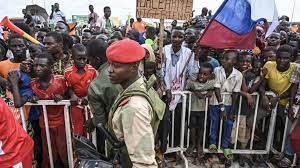
The top trend on Twitter also known as X was Gabon, and it received overwhelmingly positive feedback.
This is in contrast to other recent coups in Africa, which have received far more conflicted or unfavorable reactions.
TikTok has also seen people expressing their hope that the coup will “save” the oil-rich nation from the nearly six decades of the Bongo family in power.
TikTok has also seen people expressing their hope that the coup will “save” the oil-rich nation from the nearly six decades of the Bongo family in power.
“It’s senseless to say one family ruled a particular country for 54 years, and still call it ‘a democracy’,” one tweet said.
Despite widespread support for the coup, several social media users caution that Gabon’s true test has only just begun and that genuine change will only occur if the military cedes control through new democratic elections.
Liberia’s 147th Independence Day celebrations had President Nana Addo Dankwa Akufo-Addo in attendance and he delivered a message urging West Africans to stand against any form of military coups within the jurisdiction of the Economic Community of West African States (ECOWAS).
President Akufo-Addo expressed his belief that Africans should not endorse what he refers to as the unconstitutional means of altering administrations within the sub-region. He emphasized that the eradication of insecurity in West Africa is crucial for fostering development and progress in the region.
“It is incumbent that we all stand together in our generation to defeat the menace of coups and guarantee the peace and stability which are essential to the rapid economic development of our areas which is the surest way to banish poverty in our time and the same vain, we must reiterate our commitment to democratic governance in the ECOWAS space and reject all unconstitutional changes of government.”
The President’s call comes just 24 hours aftercoup attempt in which presidential guards in Niger kidnapped President Mohamed Bazoum and blockaded his home as well as important ministries.
The African Union (AU) has denounced the incident in the meantime.
The soldiers’ behavior was labeled “unacceptable” by the AU.
Ukraine is preparing to begin a long-anticipated counter-offensive against Russian forces, according to one of the country’s top security leaders.
Oleksiy Danilov would not name a date but said an assault to retake territory from President Vladimir Putin’s occupying forces could begin “tomorrow, the day after tomorrow or in a week”.
He warned that Ukraine’s government had “no right to make a mistake” on the decision because this was an “historic opportunity” that “we cannot lose”.
As secretary of the National Security and Defence Council of Ukraine, Mr Danilov is at the heart of President Volodymyr Zelensky’s de facto war cabinet.
His rare interview with the BBC was interrupted by a phone message from President Zelensky summoning him to a meeting to discuss the counter-offensive.
During the interview, he also confirmed that some Wagner mercenary forces were withdrawing from the city of Bakhmut, the site of the bloodiest battle of the war so far – but he added they were “regrouping to another three locations” and “it doesn’t mean that they will stop fighting with us”.
Mr Danilov also said he was “absolutely calm” about Russia beginning to deploy nuclear weapons to Belarus, saying: “To us, it’s not some kind of news.”
Ukraine has been planning a counter-offensive for months. But it has wanted as much time as possible to train troops and to receive military equipment from Western allies.
In the meantime, Russian forces have been preparing their defences.
Much is at stake because the government in Kyiv needs to show the people of Ukraine – and Western allies – that it can break through Russian lines, end the effective military deadlock and recapture some of its sovereign territory.
UK sending long-range missiles to Ukraine
Mr Danilov said the armed forces would begin the assault when commanders calculated “we can have the best result at that point of the war”.
Asked if Ukrainian armed forces were ready for the offensive, he replied: “We are always ready. The same as we were ready to defend our country at any time. And it is not a question of time.
“We have to understand that that historic opportunity that is given to us – by God – to our country we cannot lose, so we can truly become an independent, big European country.”
He added: “It could happen tomorrow, the day after tomorrow or in a week.
“It would be weird if I were to name dates of the start of that or those events. That cannot be done…. We have a very responsible task before our country. And we understand that we have no right to make a mistake.”
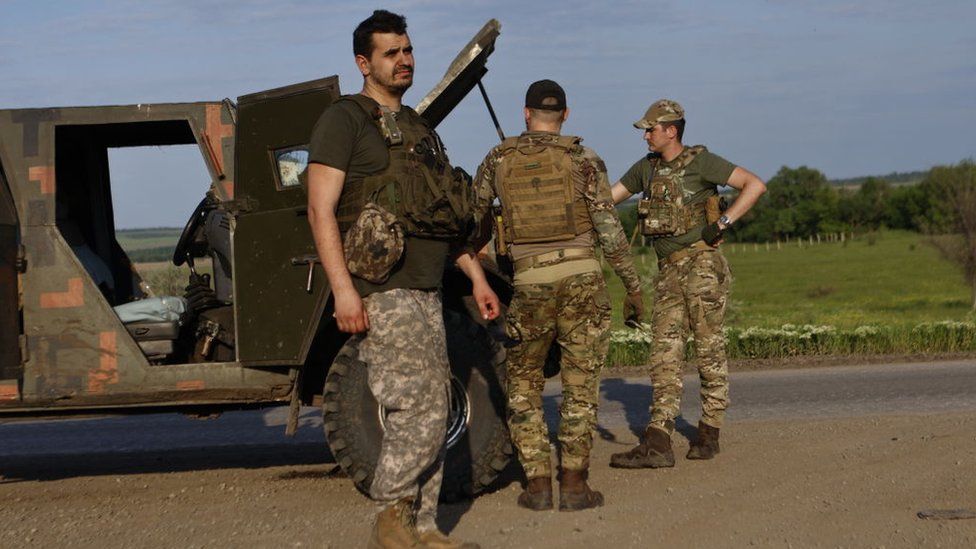
Image caption,Ukrainian troops have spent months training on Western equipment ahead of the expected attack
Mr Danilov dismissed suggestions the counter-offensive had already begun, saying that “demolishing Russian control centres and Russian military equipment” had been the task of Ukrainian armed forces since 24 February last year – the date Russia launched the invasion.
“We have no days off during this war,” he said.
He defended the decision by Ukraine’s army to fight in Bakhmut for so many months, a battle that has cost the lives of many of its soldiers.
Bakhmut not occupied by Russia, says defiant Zelensky
“Bakhmut is our land, our territory, and we must defend it,” he said. “If we start leaving every settlement, that could get us to our western border as Putin wanted from the first days of the war.”
He said that “we control only a small part of the city, and we admit to that. But you have to keep in mind that Bakhmut has played a big role in this war.”
Asked if Wagner mercenaries were leaving, he replied: “Yes, that is happening. But it doesn’t mean that they will stop fighting with us. They are going to concentrate more on other fronts… they are regrouping to other three locations.”
Conakry resident Mariame Diallo pointed to blood splatters on a wall where she said her adolescent brother was shot at close range during a rally against Guinea’s military administration on May 11.
“I will never forgive those who killed him,” she said between bouts of quiet crying.
Clutching a bag of blood-soaked clothes that she hopes will be used for a police investigation that has yet to begin, she recalled how her apprentice brother, Boubacar, fearing the anti-government demonstrations, stayed at home, only to be shot dead by police in front of the family house.
A spokesman for the Guinean government did not respond to Al Jazeera’s request for comments on Thursday.
Boubacar was one of the seven people killed that day in the West African nation as anti-government protests and violent clashes with security forces gain momentum over frustrations with military leaders overseeing a promised return to democratic rule.
Smoke billowing from burning tyres and other debris has become a common sight in Conakry since fuel price hikes triggered the first major protest against the military government last June.
Many more protests have followed. At least 32 were injured in unrest this month, and the army was deployed to quell planned demonstrations in the capital last week.
It was the latest clampdown as anger mounts against military governments that seized power in a series of coups in the West and Central Africa region since 2020, with frustrations growing over the slow pace of a planned return to constitutional rule.
Transitional authorities in Burkina Faso and Mali have also grown increasingly hostile towards critics who have highlighted their failures to protect citizens from armed groups – a factor that helped spur the military takeovers.
In Guinea, opposition political parties had at first cautiously welcomed the September 2021 coup that removed long-serving President Alpha Conde, who sparked anger for changing the constitution to allow him to run for a third term.
But relations with interim government leader Colonel Mamady Doumbouya soured after main opposition parties rejected a 36-month transition to elections approved by the interim parliament last May.
Doumbouya’s government banned all public demonstrations in response and has since cracked down on the string of street protests that followed, drawing rebuke from rights groups and the United Nations.
At least 24 people have been killed since June and dozens arrested, including high-profile activists, opposition parties and civil society groups say.
Authorities have acknowledged “victims” but not given a figure.
“The military junta can’t give us hope and then act even worse than the regime it replaced,” said Conakry resident Souleymane Bah, 34, adding that people wanted the military to organise elections.
Last October, the government cut its transition timeline to two years after the Economic Commission for West African States (ECOWAS) rejected its three-year transitional plan and imposed sanctions.
“We plan to respect all the deadlines,” said Guinea spokesman Ousmane Gaoual Diallo.
This has failed to appease opposition parties.
“Three feelings dominate Guineans: weariness, disappointment and disgust at the perjury of Mamadi Doumbouya,” Nadia Nahman, spokesperson to Cellou Diallo, leader of the main opposition party, UFDG, told Al Jazeera.
“[Doumbouya] was sworn in as president of the transition and pledged to “consolidate democratic gains” while committing Guinea to its “national and international commitments” but he has betrayed all of his commitments with the bloody repression of peaceful demonstrations,” she added.
Diallo fled the country to Senegal last year after Guinean authorities accused him of corruption.
Last week, angry crowds gathered around the grieving relatives and friends of people killed in the latest unrest. Many were crying and holding up pictures of their loved ones on their phones.
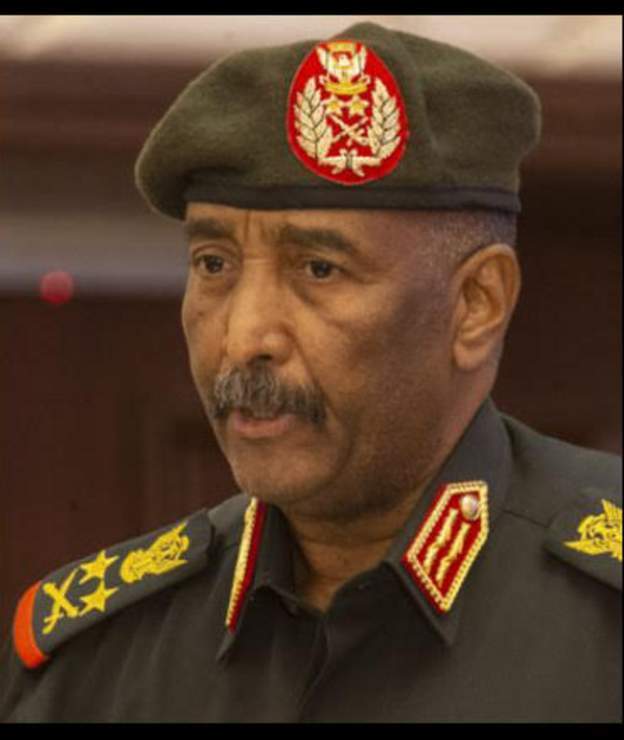
The acting interior minister and police chief, Anan Hamed Mohammed Omar, has been fired by Sudan’s military leader, Lt Gen Abdel Fattah al-Burhan.
In a statement, Gen Burhan named Khalid Hassan Muhyi al-Din as the new general director of police.
No reason was given for the sacking but Gen Burhan had earlier dismissed, in similar decrees, the governor of the central bank and two foreign ministry diplomats.
The police have been inactive in conflict-hit areas, including the capital, Khartoum, since the fighting erupted on 15 April. As a result, acts of lawlessness, including looting and robbery, have been widely reported in these areas.
A month of fighting between Sudan’s rival military factions appears to have no end in sight despite much-touted truce talks brokered by the US and Saudi Arabia.
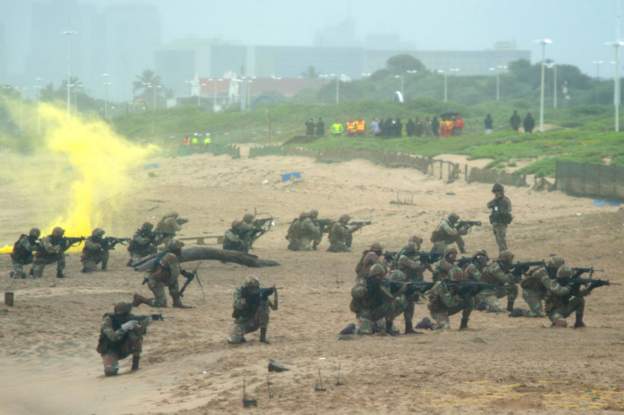
The South African military has announced that it will conduct joint military exercises with China and Russia off its coast the following month.
The drills will run for 10 days from 17 February to 27 February in the port city of Durban and Richards Bay.
The aim is sharing operational skills and knowledge, the South African National Defence Force (SANDF) said.
South Africa was among African countries that abstained from taking sides in Russia’s invasion of Ukraine. The country assumed the chairmanship of the Brics group of nations – which brings together Brazil, Russia, India and China – last month.
This will be the second time such a military drill is taking place. The first was held in November 2019 in Cape Town.
“This year’s exercise will see over 350 SANDF personnel from various arms of services and divisions participating,” said SANDF.