Tag: Ministry of Communications and Digitalisation

  • FULL LIST: Institutions verifiably connected under GOVNET

    FULL LIST: Institutions verifiably connected under GOVNET


    The Ministry of Communications and Digitalisation (MoCD) has released a comprehensive list of institutions that have been officially verified as connected entities within the GOVNET infrastructure.

     This disclosure was conveyed through a document shared by the ministry.

    Government successfully completed its eGovernment Network Infrastructure (GovNET) project in 2012, enhancing data collection and dissemination capabilities across Ministries, Departments, and Agencies.

    In response to the evolving technological landscape, the government launched an open data policy in 2012, aiming to foster transparency, accountability, and innovation in the public sector.

    This policy delineated principles and guidelines for publishing and accessing government data, outlining the roles and responsibilities of data providers and users.

    A significant outcome of this policy was the establishment of a national open data portal, providing a platform for the public to access various datasets from different ministries, departments, and agencies.

    However, as of 2023, it appears that the support for the open data portal has diminished. So, what happened?

    The genesis of Ghana’s open data discussions dates back to 2010 when the government engaged with the Web Foundation project. This collaboration resulted in an initial partnership between the Web Foundation and the National Information and Technology Agency (NITA), the agency responsible for the project.

    From this collaboration, the Ghana Open Data Initiative project was formed.

    In 2012, an online web platform was created, accompanied by a framework to encourage the release of government data for public re-use.

    The Web Foundation played a pivotal role by providing technical support for the open data portal. The beta version was launched in 2012, featuring 100 datasets, and a mobile version followed suit in 2013.

    Check the list below:

  • Young girls urged to take STEM as a lifetime career

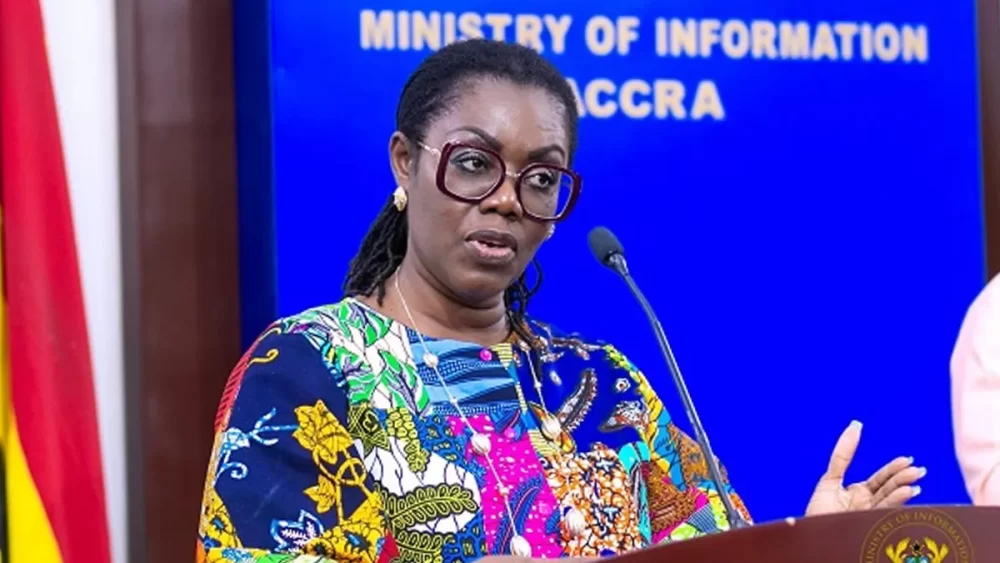
    The Minister of Communications and Digitalisation, Ursula Owusu-Ekuful has advised young girls not to shy away from Science, Technology, Engineering and Mathematics (STEM) education.

    Delivering a speech at the closing ceremony of the 2022 Seeds for the Future Program, the Minister explained that STEM education was necessary in enhancing digital skills to shape and better the lives of females.

    She reiterated her calls for more girls to participate in STEM-related courses and be able to stand out among their peers as they view the world from a different perspective.

    Young girls urged to take STEM as a lifetime career

    “Careers are gender-neutral, don’t shy away from choosing STEM as your lifetime career, nor should you be afraid to demonstrate your leadership skills.”

    The eight-day Seeds for the Future Program offered about 50 outstanding Ghanaian tertiary ladies the opportunity to learn about the latest trends in digitalisation and enable them to explore how digital technologies can be used to address common societal problems.

    The project is an initiative started in 2021 under the Huawei Seeds for the Future digital skills training programme.

    The Minister commended Huawei for its commitment to such an initiative, adding that it would go a long way to harness the potential of young women and enable them to compete equitably in the ICT space.

    According to her, Huawei in partnership with the Ministry of Communications and Digitalisation has successfully trained over 25,000 Senior High School girls in Cyber Security and Privacy Protection this year, with over 40 schools benefiting from the initiative.

    Young girls urged to take STEM as a lifetime career

    She encouraged beneficiaries of the programme to take the intensive online training seriously and place Ghana on top of the Global Seeds ladder.

    “I must add that digital adoption and use can also offer women, and girls, in particular, opportunities to overcome hurdles they may face in the physical world. Digital access can empower women and girls, help expand their sense of self in the world, increase civic engagement, and raise awareness of their rights.

    “It will also facilitate flexible working hours, enabling women to combine their caregiving roles and careers effectively, working from home with digital platforms,” Mrs Owusu-Ekuful said.

    Source: Myjoyonline

  • SIM registration exercise: Crowds gathering at MNOs offices again

    Crowds are starting to assemble at the various MNO offices just five days after the National Communications Authority (NCA) ordered the Mobile Network Operators (MNOs) to block the SIM cards of users who have not finished the process to link their Ghana Cards to their SIM cards.

    As of 6:00 AM on December 5, 2022, subscribers could be spotted congregating at the Dansoman MTN location in the Ablekuma West community of the Greater Accra Region.

    The situation was the same at the MTN branch in Darkuman, where a large number of subscribers thought to be a part of the “stubborn academy” were seen forming a line in front of the office

    At the AirtelTigo office on Oxford Street Osu R.E in the Klottey Korley municipality of the Greater Accra Region, it was same.

    The Ghana Chamber of Telecommunications issued a statement to inform the public that starting from the close of 30 November 2022, its members, “AirtelTigo, MTN and Vodafone” will “begin deactivating some category of SIM cards in compliance with the Ministry of Communications and Digitalisation‘s directive issued on November 11, 2022.”

    The statement, which was released on Wednesday, 30 November 2022, stressed that “only subscribers that have completed stage 1 (linkage to Ghana card) but are yet to complete stage 2 (biometric capture) of the SIM registration, will have their SIM cards blocked.”

    The Chamber also encouraged “all subscribers who have acquired Ghana cards but are yet to complete stage 2 (biometric capture) to do so without delay.”

    “Our members are obliged by the directive to completely deactivate all subscriber SIMs which have not completed the biometric capture registration by close of business today, November 30, 2022,” the Chamber’s statement continued.

    It said: “Subscribers with Ghana cards can avoid this inconvenience by completing the registration process,” and pledged that: “Our members remain committed to supporting the efforts of all stakeholders to ensure that every customer in every part of the country is able to register their SIM card(s) with the Ghana card.”

    Since November 20, the telecommunications companies in Ghana have been blocking data services for subscribers who have only linked their Ghana Card and SIMs (Stage 1) but have not captured their biometric data (Stage 2) as part of the SIM registration process as directed by the Ursula Owusu-Ekuful-led Ministry of Communications and Digitalisation

  • SIM card block: Mobile Network Operators will lose revenue – Ken Ashigbey

    The chief executive officer of the Ghana Chamber of Telecommunications, Dr. Ken Ashigbey, has said the blocking of some 9 million unregistered SIM cards will have a telling toll on the revenue of Mobile Network Operators in the country.

    Dr. Ashigbey explained that if each of the nine million subscribers spends, at least, GHS20 every month on all the various networks; that’s a huge revenue loss.

    That notwithstanding, the blocking of SIMs has to be done even though it is worrying, he said.

    Dr Ashigbey raised these concerns while speaking in an interview on Thursday, 1 December 2022.

    The Chamber issued a statement to inform the public that starting from the close of 30 November 2022, its members, “AirtelTigo, MTN and Vodafone” will “begin deactivating some category of SIM cards in compliance with the Ministry of Communications and Digitalisation’s directive issued on November 11, 2022.”

    The statement, which was released on Wednesday, 30 November 2022, stressed that “only subscribers that have completed stage 1 (linkage to Ghana card) but are yet to complete stage 2 (biometric capture) of the SIM registration, will have their SIM cards blocked.”

    The Chamber also encouraged “all subscribers who have acquired Ghana cards but are yet to complete stage 2 (biometric capture) to do so without delay.”

    “Our members are obliged by the directive to completely deactivate all subscriber SIMs which have not completed the biometric capture registration by close of business today, November 30, 2022,” the Chamber’s statement continued.

    It said: “Subscribers with Ghana cards can avoid this inconvenience by completing the registration process,” and pledged that: “Our members remain committed to supporting the efforts of all stakeholders to ensure that every customer in every part of the country is able to register their SIM card(s) with the Ghana card.”

    Since November 20, the telecommunications companies in Ghana have been blocking data services for subscribers who have only linked their Ghana Card and SIMs (Stage 1) but have not captured their biometric data (Stage 2) as part of the SIM registration process as directed by the Ursula Owusu-Ekuful-led Ministry of Communications and Digitalisation.

    Source: Ghanaweb

  • 125,000 Senior High School students trained on CyberSecurity

    Some 125,000 Senior High School students since 2018 have been trained on cybersecurity in Ghana.

    The training is part of the awareness creation programmes of the Ministry of Communications and Digitalisation through the Cyber Security Authority (CSA) and other partners.

    Madam Ama Pomaa Boateng, Deputy Minister of Communications and Digitalisation said this at the maiden edition of the National Cyber Security Challenge in Accra as part of activities to celebrate CyberSecurity Month.

    CyberSecurity Month is instituted to raise awareness for the citizenry to develop a cybersecurity culture and stay safe whilst using digital technologies to develop and enhance their way of life.

    Madam Boateng noted that awareness creation was identified as the most effective medium to address cybercrime issues worldwide.

    Hence, she said Government through the CSA institutionalised the National Cybersecurity Awareness Month for Ghanaians.

    “We have achieved some successes, especially in raising awareness of the online risks associated with contact with our children on the internet, the conduct of children and young people on the internet, which could harm other children as well as the contents which children access on the internet,” the Deputy Minister said.

    Madam Boateng stated that Ghana’s internet penetration rate currently stood at 53 per cent of the total population, including children, who were susceptible to threats such as cyberbullying, exposure to indecent images and videos cyberstalking, phishing attacks and sextortion.

    The protection of children, vulnerable among society, she said, was at the forefront of the Government’s national cybersecurity efforts.

    The Deputy Minister said as part of the Government’s commitment to protecting children and the entire cyberspace from criminal activities, the Safer Digital Ghana Awareness Programme was launched in 2018, with a focus on Children, the Public, Businesses and Government.

    In partnership with UNICEF-Ghana, Ghana currently has an agreement with the Internet Watch Foundation (IWF) concerning reporting of child online cases and the IWF portal, linked to CSA’s Cybercrime/Cybersecurity Incident Reporting Points of Contact (PoC).

    It was launched on October 1, 2019, to allow the public, including children to report abuse and cybercrime cases and to receive advisories.

    Dr Abert Antwi- Boasiako, Acting Director General, CSA, said it was the collective responsibility of law enforcers, parents, guardians and teachers to protect and secure children from all forms of abuse, including those online.

    He noted that the increasing access to the internet presented unparalleled opportunities for children and young people to communicate, connect, learn and access information from various parts of the world, however, it came with new security challenges.

    Dr Antwi- Boasiako assured CSA’s commitment to protecting the interests of children online in line with its mandate to regulate and promote the development of cybersecurity in the country.

    “The Cyber Security Authority is putting in place the required structures to create a safe digital ecosystem for the children of Ghana, but the greater responsibility lies on parents, teachers and the children themselves,” the Acting Director General stated.

    Source:GNA