A ship from Malta with a Greek owner was hit by a missile in the Red Sea near Yemen, according to Ambrey, a company that provides security for ships.
It is believed to be the third time the big ship named Zografia has been involved in something bad in the last day.
On Tuesday, the US military said they stopped weapons from Iran that were meant for the Houthis.
At the same time, the US has attacked more places in areas of Yemen controlled by the Houthi group.
An American official told CBS, which works with the BBC, that the US did more attacks on Houthi positions last night.
The US and UK bombed many Houthi targets on 11 January after the Houthi group attacked ships in the Red Sea.
We still don’t know what was targeted in the recent US operation.
The Houthis promised to fight back, and the US said it stopped a missile from hitting one of its ships that was launched from a Houthi- controlled area in Yemen.
The fighters of the movement have attacked several ships in protest against Israel’s war with Hamas since November.
However, many people do not have any ties to Israel.
The Red Sea connects the Indian Ocean to the Mediterranean through the Suez Canal, but some shipping companies are now taking a longer route around the Cape of Good Hope to reach Europe instead.
On Tuesday, the US announced that the weapons they found on a ship near Yemen were similar to the ones the Houthis used in their attacks in the Red Sea.
The robbery happened on January 11th near the coast of Somalia, which was the same day as the first US-UK airstrikes.
Missile parts and defense equipment were found on a ship.
US Central Command said they have captured the first shipment of dangerous, Iranian-made weapons to the Houthis since the attacks on ships began in November 2023.
The search is still going on for two Navy Seals who fell overboard during the mission.
Media said that an officer fell off the ship because of big waves, and another officer jumped in to help, as they are supposed to do.
Tag: missile
-
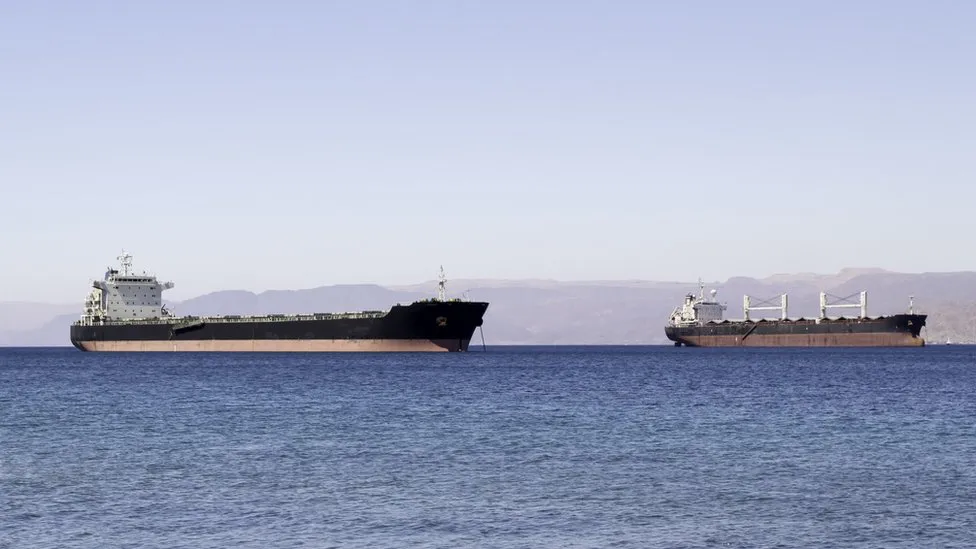
Greek ship struck by missile in the Red Sea – Report
-
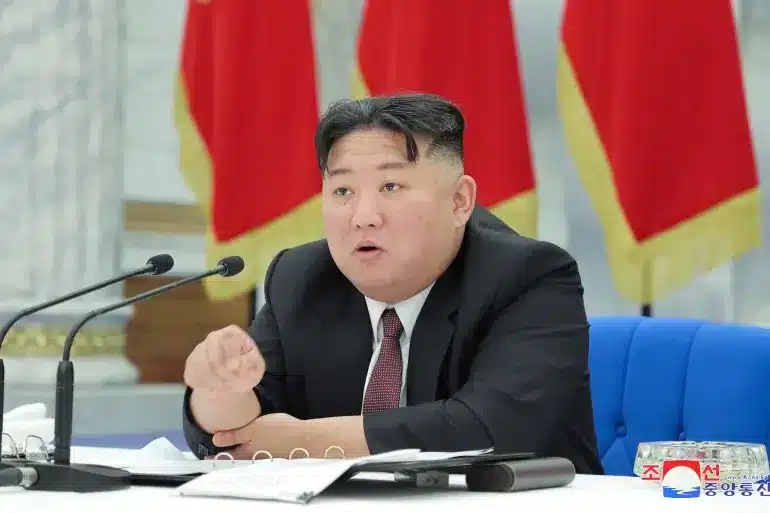
Kim directs North Korea to “exponentially increase” its nuclear arsenal
Kim made his remarks as North Korea conducted an unusual late-night New Year’s Day weapons test with a short-range ballistic missile.
In order to deter the United States and South Korea, Kim Jong Un, the leader of North Korea, has ordered the creation of a new intercontinental ballistic missile (ICBM) and asked for a “exponential” rise in the manufacturing of nuclear warheads.
After North Korea launched a short-range ballistic missile off its east coast on New Year’s Eve, Kim’s declaration was made public on state media on Sunday.
During his comments at a key meeting of the ruling Worker’s Party, Kim accused Washington and Seoul of carrying out a “plot to isolate and stifle” North Korea, calling it “unparalleled in human history”, according to the official Korean Central News Agency (KCNA). He said the situation called for Pyongyang to “double down our efforts to strengthen our military power overwhelmingly” and “to safeguard our sovereignty, safety and basic national interest to cope with the dangerous military moves by the US and other hostile forces that target us”, KCNA reported.
“It highlights the importance and necessity of mass producing tactical nuclear weapons and calls for an exponential increase of the country’s nuclear arsenal,” Kim said.
He also ordered the manufacturing of a new type of ICBM “with a rapid nuclear counterattack capability as its basic mission,” KCNA said.
Kim also reportedly said North Korea plans to launch its first military spy satellite soon.
The KCNA report came as South Korea’s military said it detected a missile launched from North Korea’s capital region around 2:50am local time on Sunday (17:50 GMT on Saturday). The South Korean Joint Chiefs of Staff said the missile travelled about 400km (250 miles) before falling into the water between the Korean Peninsula and Japan.
The Joint Chiefs of Staff called the launch “a grave provocation” that hurts peace and security on the Korean Peninsula and around the world. It said South Korea closely monitors North Korean moves in coordination with the US and maintains readiness to deal with any provocations.
The US Indo-Pacific Command said in a statement that the launch highlights “the destabilising impact” of North Korea’s unlawful weapons programmes. It said US commitments to defend South Korea and Japan “remain ironclad”.
North Korea test-fired more than 70 missiles last year. Some experts say the country eventually aims to boost its weapons arsenals and increase pressure on its rivals to win concessions such as sanctions relief.
On Saturday, North Korea fired three short-range ballistic missiles towards its eastern waters.
KCNA said the country had conducted test-firings of its “super-large” multiple rocket launcher to test the weapon’s capability. It said three shells fired from the launcher accurately hit an island target off the country’s eastern coast, and that North Korea fired another shell from the launcher towards its eastern waters on Sunday.
Outside experts categorise weapons fired from the launcher as ballistic missiles because of their trajectories, ranges and other characteristics.
North Korea’s missile launch for a second straight day could be a response to rival South Korea’s recent rocket test related to its plan to establish space-based surveillance to better monitor North Korea. On Friday, South Korea’s military said it test launched a solid-fueled rocket, a type of space launch vehicle that it plans to use to put its first spy satellite into orbit in coming years.
Animosities between the rival Koreas have deepened since early last week, when South Korea accused North Korea of flying drones across the countries’ heavily fortified border for the first time in five years and sent its own drones towards its northern neighbour.
South Korea acknowledge it failed to shoot down any of the five North Korean drones it said were found south of the border. But South Korea has promised to bolster its air defence network and get tough on future provocations by North Korea.
Source: Aljazeera.com -
Russia hits Ukraine with renewed strikes
On Friday, Russian forces launched missile and drone attacks against Ukraine’s major cities, including the capital Kyiv, Kharkiv in the north, Odesa in the south, and Kryvih Rih in the centre.
This week, the number of attacks on Ukrainian cities increased as Russia targeted the nation’s infrastructure for civilian use.
While Kharkiv’s electricity was out, explosions were reported in Kiev’s northeast.
After a residential building in Kryvih Rih was struck, authorities issued a warning about potential casualties.
Several other cities were also hit as alerts were put out across Ukraine. Vitaliy Kim, the mayor of the southern city Mykolaiv, said as many as 60 missiles were thought to have been fired.
The governor of Sumy, a region close to Ukraine’s northern border with Russia, said power there was also out.
Kyiv Mayor Vitaliy Klitschko appealed to people not to leave shelters.
Millions of Ukrainians have gone without power as winter bites in Ukraine. UN human rights commissioner Volker Turk warned on Thursday that further attacks on power facilities could “lead to a further serious deterioration in the humanitarian situation and spark more displacement”.
Civilians have already been killed this week in Russian strikes. Two people died in shelling in the southern city of Kherson on Thursday.
US President Joe Biden is reportedly finalising plans to send Patriot air defence missiles to Ukraine, after months of requests from Kyiv.
Source: BBC.com
-
Ukraine war: Kyiv is not to blame for the Poland missile, according to Zelensky
President Volodymyr Zelensky has stated that he has “no doubts” that Ukraine was not to blame for the Tuesday missile strike in Poland that killed two people.
Mr Zelensky stated that he had been assured by his top commanders that “it wasn’t our missile.”
He also demanded that Ukrainian officials be allowed to visit the blast site and participate in the investigation.
His remarks came as Nato Secretary-General Jens Stoltenberg stated that Kyiv’s air defence missiles were “most likely” to blame.
US Vice President Joe Biden questioned Mr Zelensky’s claim that the missile was not of Ukrainian origin, telling reporters that “that’s not the evidence.”
The missile blast occurred on a farm in Przewodow, just 6km (4 miles) from Poland’s border with Ukraine.
Ukrainian air defence systems were activated on Tuesday when Russia launched what is believed to be its biggest wave of missile strikes since its February invasion.
The attack, which occurred during the G20 summit in Indonesia, caused an international outcry, while news of a missile blast inside Nato member Poland’s territory raised fears of a dangerous escalation in the war.
But Polish President Andrzej Duda said it was “highly probable” that the missile was launched by Ukrainian anti-aircraft defence.
“From the information that we and our allies have, it was an S-300 rocket made in the Soviet Union, an old rocket and there is no evidence that it was launched by the Russian side,” he said.
Mr Stoltenberg told the BBC that he agreed with Poland’s assessment that the incident was probably caused by a Ukrainian air defence missile.
“But the main message is that Russia bears the ultimate responsibility, because this would not have happened hadn’t Russia waged a brutal war of aggression against Ukraine,” he said.
He added that Nato had pledged to supply a “more advanced air defence system” to Ukraine, which is not a member of the alliance but receives extensive military aid.
And Linda Thomas-Greenfield, the US ambassador to the UN, said Russia bore ultimate responsibility for the incident.
“While we still don’t know all the facts, we do know one thing – this tragedy would never have happened but for Russia’s needless invasion of Ukraine and its recent missile assaults against Ukraine’s civilian infrastructure. The UN Charter is clear. Ukraine has every right to defend itself against this barrage,” she said at a meeting of the UN Security Council.
Meanwhile, the top US general has warned that an early military victory for Ukraine remains unlikely, despite a series of successful Ukrainian counter-offensives in the east and south.
Last week, Ukraine recaptured Kherson, the only major city to fall to Russia since it started its invasion in February. And in the east, a Ukrainian offensive launched in September has seen Kyiv’s forces advance into Donestsk and Luhansk.
“The probability of a Ukrainian military victory – defined as kicking the Russians out of all of Ukraine to include what they claim as Crimea – the probability of that happening any time soon is not high, militarily,” Gen Mark Milley – the Chairman of the Joint Chiefs of Staff – told reporters at the Pentagon.
But he said recent Russian losses meant a “political solution” was possible.
Gen Milley, who serves as President Biden’s top military adviser, said the Ukrainian gains had left Russia “on its back” and observed that its losses could see Moscow agree to some sort of a political withdrawal.
But the top US general did not elaborate as to what that agreement would look like.
Speaking to attendees of the G20 summit in Bali earlier this week, President Zelensky laid out a 10-point peace plan that includes nuclear safety guarantees, the withdrawal of Russian troops from Ukraine’s territory, and reparations and justice for “Russia’s aggression against Ukraine”.
But Moscow’s Foreign Minister Sergei Lavrov said Kyiv’s demands were “unrealistic and inadequate”. He added that Ukraine “categorically refuses” negotiations with Russia.
Elsewhere, the eastern Donetsk region has seen heavy fighting in recent days, according to Ukrainian presidential adviser Oleksiy Arestovych.
He said Russian troops from Kherson region had now been “redirected” towards Donetsk and Luhansk.
-
Russia-Ukraine war: Russia denies responsibility for the blast in Poland
US President, Joe Biden has stated that it is “unlikely” that the missile that killed two people in Poland on Tuesday was fired from Russia.
According to Polish officials, the “Russian-made missile” landed in Przewodow, near the Ukrainian border.
Early reports suggested Russia was to blame for the explosion. Moscow has denied the allegations.
Speaking from the G20 summit in Bali, Mr. Biden disputed the reports based on “preliminary information.”
The US president was speaking early on Wednesday morning, after several world leaders gathered on the sidelines of the summit at an “emergency round table” to discuss the blast.
Among the attendees were President Biden, UK Prime Minister Rishi Sunak, French President Emmanuel Macron and EU Commission President Ursula von der Leyen.
Reports of the missiles falling in Poland – which is a Nato member – came after Russia launched a fresh wave of attacks across Ukraine on Tuesday, days after its troops were forced to leave Kherson.
Russia dismissed claims it was responsible, with the defence ministry in Moscow attacking what it called “a deliberate provocation aimed at escalating the situation”.
Kremlin spokesperson Dmitry Peskov also said he had no information on the blast.
Russian state news agency Ria Novosti said it was instead Ukrainian missiles that had hit Polish territory.
But Ukraine’s Foreign Minister Dmytro Kuleba said any claim that Ukraine was responsible was a Russian “conspiracy theory”, and that anyone amplifying the message was spreading “Russian propaganda”.
Polish President Andrzej Duda told reporters that it remained unclear how the blast had occurred and said investigators were evaluating all possibilities.
“We do not have any conclusive evidence at the moment as to who launched this missile… it was most likely a Russian-made missile, but this is all still under investigation at the moment,” he said.
Images shared online showed what appeared to be a large crater on what local media reported was Polish farmland, suggesting missile damage. Another image appeared to show a fragment of a missile.
The encroachment on to Polish territory raised questions as to whether Warsaw would trigger Article Four of the Nato treaty – meaning member states consult on whether the territorial integrity, political independence or security of any member state is threatened.
Warsaw said it was considering whether to invoke the provision.
Despite lending support to Ukraine since Russia’s invasion, Nato has been careful not to become too heavily involved in the conflict in order to prevent an escalation.
The G7 group of nations also released a statement condemning the “barbaric missile attacks” launched by Russia on Tuesday and addressing the “explosion” in Ukraine.
“We offer our full support for and assistance with Poland’s ongoing investigation. We agree to remain in close touch to determine appropriate next steps as the investigation proceeds,” it said.
Meanwhile, United Nations Secretary General Antonio Guterres also said he was “very concerned” by the Poland explosion and called for a thorough investigation.
“It is absolutely essential to avoid escalating the war in Ukraine,” said his spokesman, Farhan Haq.
The BBC’s Paul Adams said there were a number of possible explanations for the incident.
Russia has no interest in targeting Polish farms, so some kind of malfunction seems possible, he said. And on a day when Ukraine’s air defences were working hard to bring down Russian missiles, it is also possible that one of those missiles was knocked off course, our correspondent adds.
Nato Secretary General Jens Stoltenberg said he had spoken to Polish President Andrzej Duda and the military alliance was “monitoring the situation”.
“Allies are closely consulting,” he said on Twitter. “Important that all facts are established.”
The attacks came after one of the heaviest bombardments of Ukraine by Russian forces since the war began.
Ukraine was hit by more than 90 missiles on Tuesday, according to Ukraine’s Air Force spokesperson Yuri Ihnatw, who said more than 70 were successfully shot down.
Ukrainian President Volodymyr Zelensky said most of the rockets fired had been aimed at the country’s energy infrastructure.
-
United States, South Korea extend air drills following North Korea missile launch
Washington and Seoul will extend the Vigilant Storm air drills that prompted North Korea to issue a warning.
In response to North Korea‘s latest missile launch, including a suspected intercontinental ballistic missile, South Korea and the United States have agreed to extend their largest-ever military air drills (ICBM).
Hundreds of South Korean and US warplanes, including F-35 stealth fighters, have been staging round-the-clock simulated missions as part of one of the largest air exercises in history.
In a statement on Thursday, the South Korean military said the US had agreed to extend the Vigilant Storm air exercises – which were due to end on Friday – owing to North Korea’s “recent provocations”.
Chairman of South Korea’s Joint Chiefs of Staff Kim Seung-kyum and the head of US Forces Korea Paul LaCamera held a virtual meeting and reaffirmed their commitment to “a stronger combined defence posture”, according to the statement.
The Vigilant Storm drills – which began on Monday – involved some 240 fighter jets and other aircraft conducting about 1,600 joint missions. The air drills followed just days after the South Korean military wrapped up their 12-day Hoguk 22 field exercises, and in which an undisclosed number of US troops had participated.
North Korean has condemned joint military drills between the US and South Korea as a rehearsal for invasion and had warned of “powerful follow-up measures” should air warfare exercises go ahead.
On Thursday, North Korea launched three ballistic missiles, including a suspected ICBM. The launch followed after Wednesday’s firing of 20 missiles, the most in a single day by North Korea, including one that landed off South Korea’s coast for the first time.
Seoul responded by sending fighter jets to fire air-to-ground missiles into water north of its border.
Alongside its missile launches, Pyongyang has adopted an escalatory nuclear doctrine that authorises preemptive nuclear attacks over a variety of loosely defined crisis situations.
South Korea and the US condemned Thursday’s launches, with Washington urging all nations to enforce sanctions on North Korea for violating United Nations Security Council resolutions that bar missiles and nuclear tests.
Ned Price, a spokesman for the US State Department, said North Korea had demonstrated that it was a threat to “its neighbours, the region, international peace and security, and the global non-proliferation regime”.
South Korean Vice Foreign Minister Cho Hyun-dong and US Deputy Secretary of State Wendy Sherman strongly condemned North Korea’s series of missile launches as “deplorable, immoral” during a phone call on Thursday, Seoul’s foreign ministry said.
US President Joe Biden and his national security team was “assessing the situation,” National Security Council spokeswoman Adrienne Watson said in a statement, which added that the United States would take “all necessary measures” to ensure security.
In brief comments to reporters a few minutes later, Prime Minister Fumio Kishida said, “North Korea’s repeated missile launches are an outrage and absolutely cannot be forgiven”.
Kishida called for greater trilateral security cooperation between the US, Japan and South Korea.
Nuclear talks between the US and North Korea broke down in early 2019 over disagreements over denuclearisation steps and have remained stalled since.
North Korea has so far ignored Biden’s calls for open-ended discussions, insisting that Washington should first discard its “hostile” policy, a term it mainly uses to describe sanctions and the joint US-South Korea military exercises.
-
North Korea: Pyongyang fires suspected ICBM
North Korea fired an intercontinental ballistic missile (ICBM) on Thursday but it failed mid-flight, say the South Korean military.
The ICBM launch is Pyongyang’s seventh this year, and comes amid concerns that it will soon test a nuclear weapon.
It comes a day after both Koreas fired missiles in an escalation of tensions.
That exchange saw the most number of missiles launched by the North in a single day.
North Korea’s multiple launches comes as the US and South Korea are staging their largest-ever joint air drills, which Pyongyang has strongly criticised as “aggressive and provocative”.
On Thursday North Korea fired a long-range missile at around 07:40 local time (23:40 GMT), according to a statement from South Korea’s Joint Chiefs of Staff. A source confirmed with the BBC that it was an ICBM.
It flew for about 760km (472 miles) and reached a height of around 1,920 km.
But the launch was “presumed to have ended in failure”, South Korea’s military said.
Pyongyang also fired two short-range ballistic missiles.
The launches led the Japanese government to issue a rare emergency alert on Thursday morning to residents in some of its northern regions, telling them to stay indoors.
Tokyo initially said the missile had flown over Japan, but Defence Minister Yasukazu Hamada later said it did “not cross the Japanese archipelago, but disappeared over the Sea of Japan”.
Prime Minister Fumio Kishida later condemned North Korea’s “repeated missile launches”, calling them an “outrage”.
The US said the launch demonstrated the threat North Korea’s missile programme poses to neighbours and international peace and security.
“Our commitments to the defence of the Republic of Korea and Japan remain ironclad,” a State Department spokesman said.
Meanwhile South Korea’s Vice Foreign Minister Cho Hyun-dong and US Deputy Secretary of State Wendy Sherman said the launches were “deplorable, immoral” during a phone call on Thursday, according to South Korea.
It comes just a month after North Korea launched a ballistic missile over Japan – the first time it had done so in five years.
The North has tested a record number of missiles this year as tensions have risen.
Despite crippling sanctions, Pyongyang conducted six nuclear tests between 2006 and 2017 and is believed to be planning a seventh.
It has continued to advance its military capability – in breach of United Nations Security Council resolutions – to threaten its neighbours and potentially even bring the US mainland within striking range.
Wednesday’s launch saw one of Pyongyang’s ballistic missiles cross the Northern Limit Line (NLL), a disputed maritime border between the Koreas.
It landed outside South Korea’s territorial waters but was the closest a North Korean missile got to the border.
Seoul responded with warplanes firing three air-to-ground missiles that also crossed the disputed maritime demarcation line. It fired a total of 23 missiles on Wednesday.
And they were launched from various points across the country, according to Kim Jong-dae, a visiting scholar of Yonsei Institute for North Korean Studies.
“South Korea and the US believe that if they find the starting point of the provocation, they can precisely strike it. But there are starting points all over North Korea, and North Korea is posing multi-dimensional, systematic and simultaneous threats that they can fire (missiles) anywhere in their land. This is a situation which I’ve seen for the first time,” he told local news channel YTN.
With accelerated activity from North Korea since late September, “the end of this is likely to be the seventh nuclear test, to prove their nuclear capabilities and determination,” Park Won-gon, North Korean studies professor at Ewha Woman University, told the BBC.
“It’s unrealistic to expect North Korea to denuclearise, as it wants de facto nuclear state status to sit on the negotiation table with the US.”
Source: BBC
-
Debris of Russian missile shot down by Ukraine lands in a Moldovan village
Missile debris landed in the northern Moldovan village of Naslavcea on Monday morning after a Russian fusillade was intercepted by air defences in neighbouring Ukraine, according to a statement from Moldova’s interior ministry.
No one was hurt, but the windows of several homes in Naslavcea, which borders Ukraine, were shattered, according to the ministry.
Nicu Popescu, Moldova’s foreign minister, said the Russian attack had targeted a Ukrainian dam on the Nistru River that runs through the two countries.
“Attacks on water infrastructure and ensuing stress on the river could put the entire region in danger of floods,” he tweeted, condemning Russian aggression against Ukraine “in the strongest possible terms”.
This morning a part of a Russian missile shot down by Ukrainian air defences landed in the Moldovan village of Naslavcea on the Ukrainian border.
There were no casualties; the shock wave shattered windows of several residential houses.
— Nicu Popescu (@nicupopescu) October 31, 2022
-
South Korean military issues apology following terrifying missile launch failure
After a failed missile launch during a joint drill with the United States alarmed locals in the coastal city of Gangneung, the South Korean military has apologized.
They reported hearing an explosion and seeing a fire overnight.
But the military, which has said there were no casualties, did not acknowledge the incident until seven hours later.
The launch was in response to North Korea firing a missile over Japan early on Tuesday.
This is the first time Pyongyang has flown a missile over Japan since 2017 – and it prompted a show of force from the US, Japan, and South Korea which conducted military drills. Seoul and Washington also fired a volley of missiles into the East Sea – also known as the Sea of Japan – between the Korean peninsula and Japan.
The South Korean military later confirmed that one of their missiles failed soon after it was launched and crashed – this was separate from the ones launched by the US.
The military also said that the Hyunmoo-2 missile carried a warhead but that it did not explode, and apologised for causing worry.
Residents in Gangneung said they saw a bright flash and heard an explosion at around 01:00 on Wednesday (16:00 GMT Tuesday).
They were left in the dark for hours, and many of them posted on social media wondering what had happened while sharing photos and videos of the incident. The footage showed what appeared to be a brightly burning fire, with smoke rising from a distance.
“I can’t sleep because I feel anxious [after hearing] the explosion,” said one user, according to news site Kang Won Ilbo. Another wondered if a plane had crashed.
It’s only just been confirmed that the US and ROK conducted their own missile drill in response to North Korea’s recent missile test.
One of South Korea’s Hyunmoo-2 failed shortly after launch and crashed, but caused no casualties.https://t.co/j7K3semX3g
— Raphael Rashid (@koryodynasty) October 5, 2022
An explosion near Gangneung last night caused a social media storm in South Korea. Zero media reports or emergency alerts, raising suspicions of a cover up, a jet crash, or a missile launch.
It turns out it was the latter, gone very wrong.pic.twitter.com/AjT6dHPcYL
— Raphael Rashid (@koryodynasty) October 5, 2022

North Korea’s missile launch on Tuesday was the fifth carried out by Pyongyang in a week. Many of its missile tests are conducted on a flight path that reaches a high altitude, avoiding flights over its neighbours.
But firing over or past Japan allows North Korean scientists to test missiles under circumstances “that are more representative of the conditions they’d endure in real-world use”, analyst Ankit Panda told news agency Reuters.
In September, North Korea passed a law declaring itself to be a nuclear weapons state, with leader Kim Jong-un ruling out the possibility of talks on de-nuclearization.